
An In-Depth Analysis of the Entire PC Prefabricated Structural Building Construction Process Through Visual and Textual Breakdown
What exactly is a prefabricated building? How are these buildings manufactured? What does on-site construction involve? And what about the associated costs? If you’re curious about these questions, join us as we explore the topic together.
What Is a Prefabricated Building?
Prefabricated buildings consist of pre-made components such as beams, slabs, columns, and walls—think of them as Lego blocks that are simply assembled on-site.
Much like constructing with LEGO, prefabricated buildings are manufactured partially or entirely in a factory and then transported to the construction site for assembly. However, assembly goes beyond merely “building.” Once the prefabricated components arrive on-site, reinforced concrete is overlapped and poured to ensure structural integrity and safety. This industrialized construction approach has gained widespread adoption in regions including Europe, the U.S., and Japan.
Advantages of Prefabricated Buildings:
● 1. Enhances Construction Quality.
Prefabricated components produced in factory settings address common issues such as wall cracking and leakage, while improving overall safety, fire resistance, and durability of residential buildings.
● 2. Accelerates BIM Project Progress.
Prefabricated construction is approximately 30% faster than traditional methods, significantly boosting project efficiency.
● 3. Improves Building Quality.
With industrialized interior decoration, components can be delivered and quickly assembled on-site, streamlining the finishing process.
● 4. Regulates Supply Dynamics.
Prefabrication speeds up real estate project delivery and helps alleviate market supply shortages. As the industry matures, construction costs decline, contributing to housing price stabilization.
● 5. Supports Safer, Cleaner Construction Sites.
Many construction tasks shift from the site to controlled factory environments, reducing on-site labor and significantly lowering safety risks.
● 6. Promotes Environmental Protection and Resource Conservation.
Minimal on-site concrete pouring reduces noise and pollution, improving residents’ living conditions. Additionally, reusable steel formwork and other materials cut waste and energy consumption by over 50%.
How Are Prefabricated Components Produced?
Using prefabricated building panels as an example, the production process includes: steel mold fabrication → steel bar binding → concrete pouring → demolding.
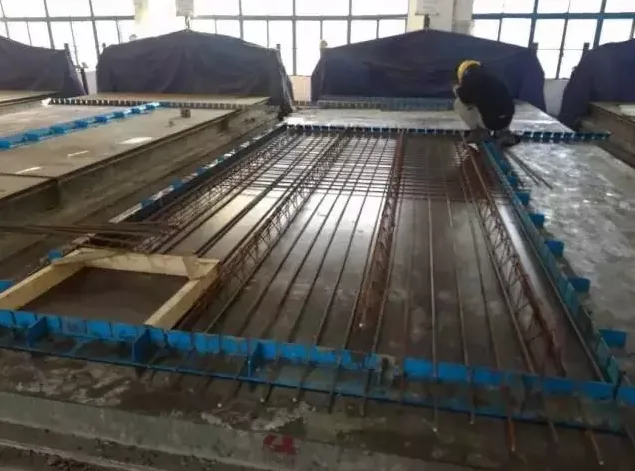
When binding steel bars, holes must be reserved.
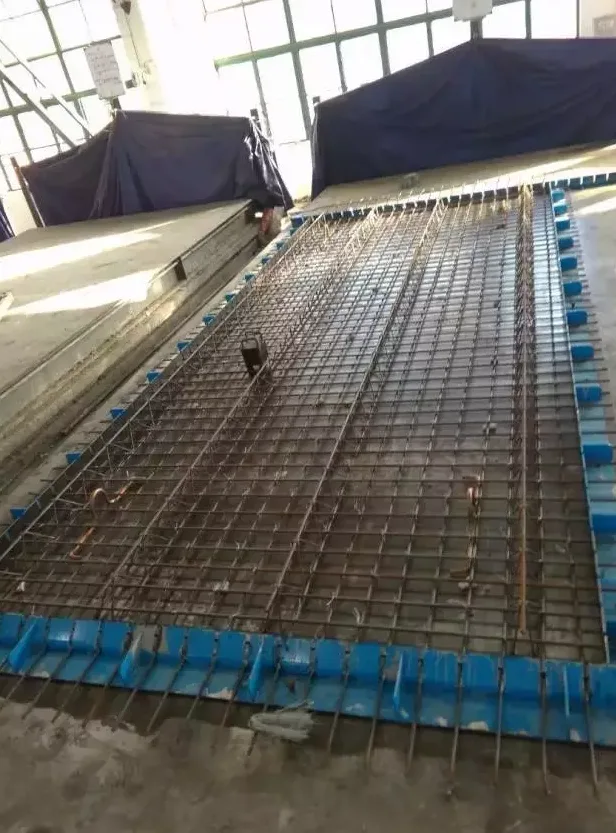
Hooks should be pre-embedded during steel bar binding.
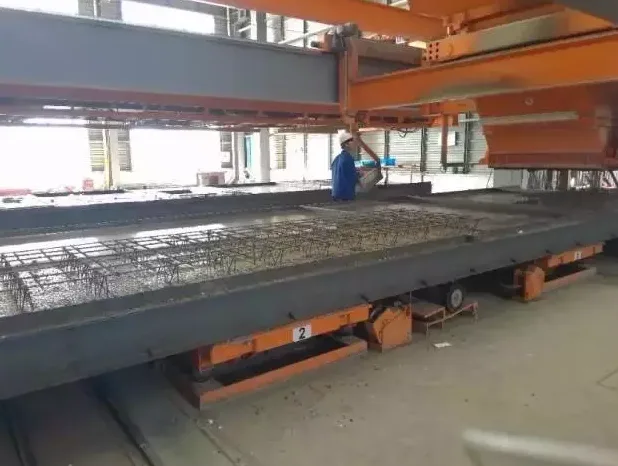
Concrete pouring is conducted on an assembly line.
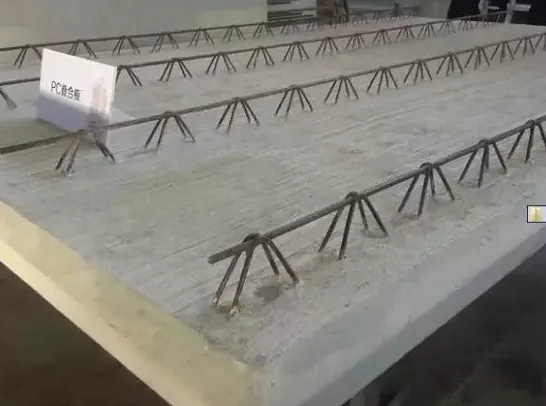
After demolding, the finished assembled panels are temporarily sorted and stacked in the factory, ready for transport to the construction site.
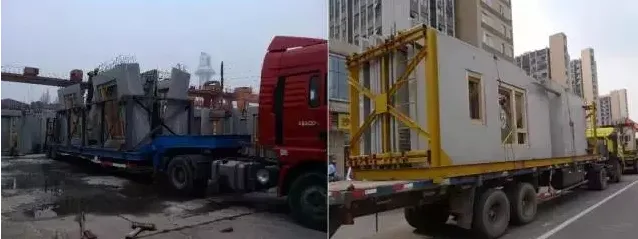
Finished components are loaded onto trucks and transported to the site.
Construction Process
Using prefabricated frame structures as an example: after completing the first floor, the previous floor’s columns are hoisted first, followed by the main beams, secondary beams, and floor slabs. Once all prefabricated components are lifted, steel bars are tied at connection points, and finally, concrete is poured to form nodes and cast-in-place layers of beams and slabs.
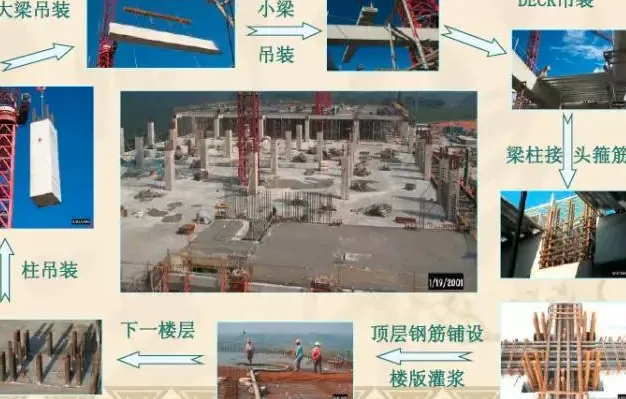
What is the most technically demanding step?
The answer: the lifting of prefabricated components.
To ensure a smooth lifting process, components must be stacked on-site in an organized manner that facilitates efficient handling—similar to arranging items carefully when moving.
How is this critical lifting step executed?
See the following illustration:
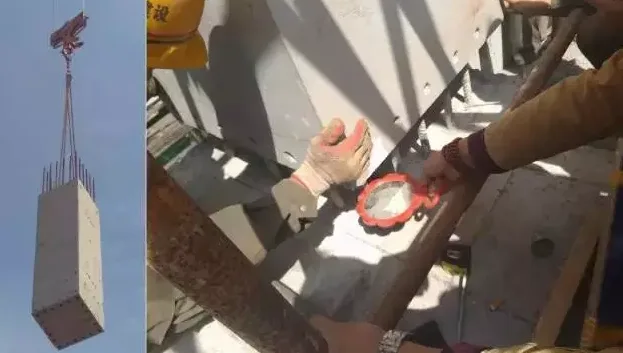
Hoisting a prefabricated column.
One notable feature in the image is a dressing mirror on the site. This mirror assists during column lifting by enabling workers to observe and align reserved steel bars in tight lower spaces through reflection, facilitating precise insertion.
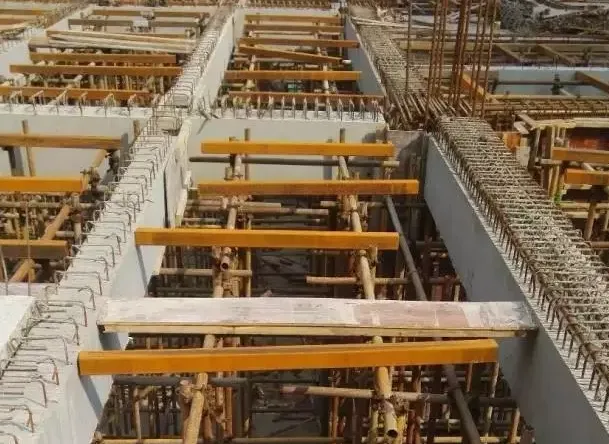
Hoisting a prefabricated composite beam.
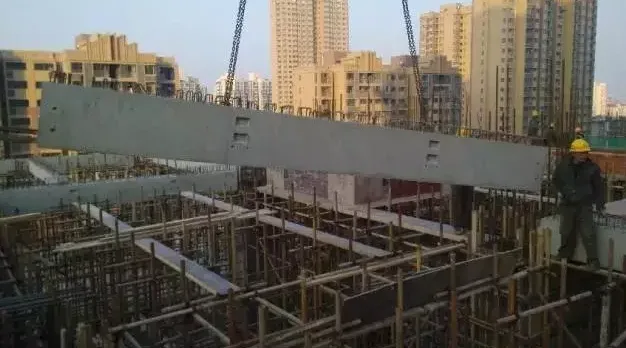
Hoisting a prefabricated composite panel.
For components with complex lifting requirements, pre-assembly or dedicated display areas can be set up on the BIM site for demonstration purposes.
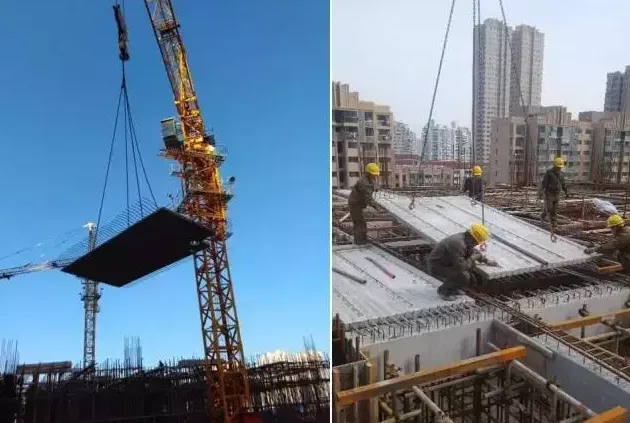
Pre-assembly of frame structure beams and a display area for shear wall residential buildings.
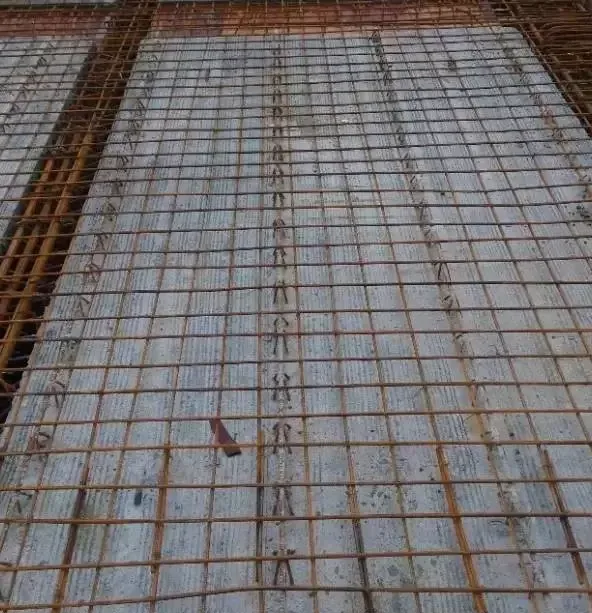
Once lifting is completed, steel bars for the cast-in-place layer are tied, preparing for concrete pouring.
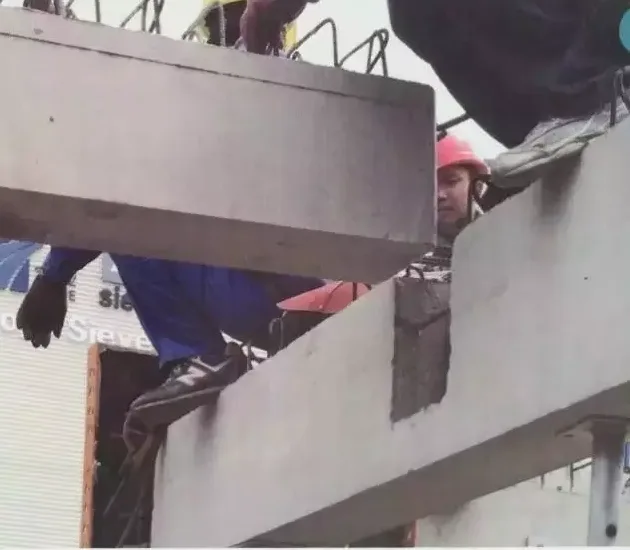
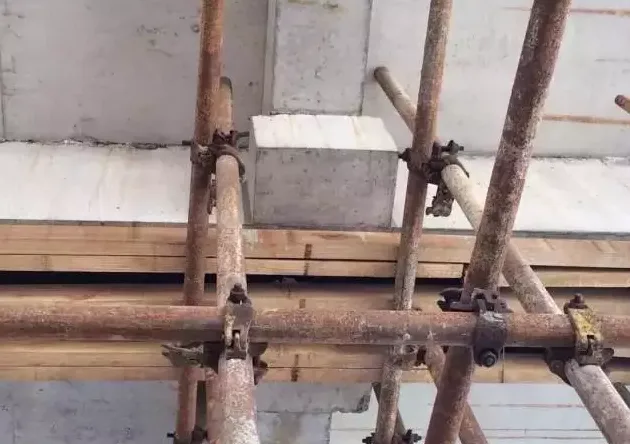
To strengthen the connection between prefabricated components and cast-in-place layers and ensure structural safety, key slots are either left on component surfaces or surfaces are roughened. Various connection methods exist; typically, floor slabs use a 7+8 system (70mm prefabricated slab + 80mm cast-in-place layer). The following images demonstrate different connection approaches between primary and secondary beams:
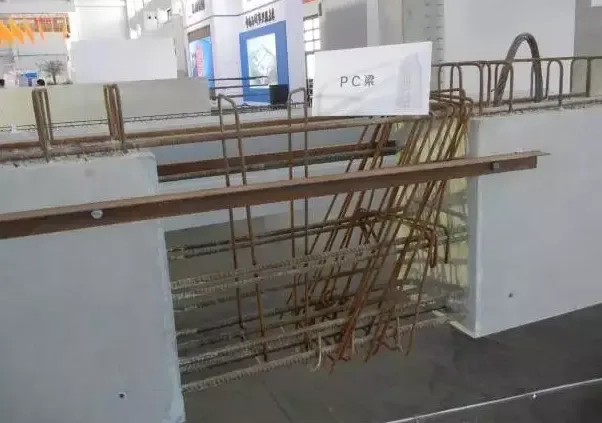
Primary and secondary beam edge connection node with reserved slot for main beam.
Connection node between primary and secondary beams with reserved post-pouring section for the main beam.
Primary and secondary beam connection node showing main beam cow legs installation.
How Are Errors Avoided When Handling Numerous Components?
To minimize mistakes and accelerate progress, each component carries a unique “ID card” with an identification number for easy tracking and management.
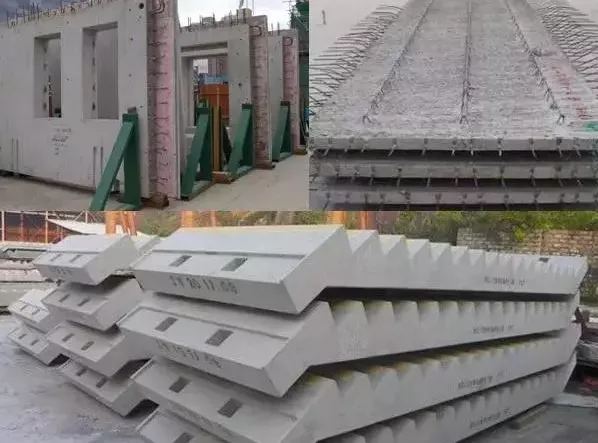
Key guidelines include:
● Prefabricated components should follow the principle of fewer specifications with more combinations.
● Exterior protective facade components should be divided into individual compartments whenever possible.
● Joints in prefabricated shear walls should be located where structural stress is minimal.
● For longer components, consider symmetrical centering during disassembly.
● To accommodate on-site demolding, stacking, transportation, and lifting, individual component weight should be as uniform as possible, generally not exceeding 6 tons, with height limited to floor height and length capped at 6 meters.
Compared to traditional cast-in-place buildings, prefabricated housing requires higher coordination across disciplines and early collaboration during design and construction phases.
Stakeholder considerations include:
● Architecture: Must account for external facade styles, insulation types, stair finishes, embedded window frames, ceramic tiles, stone detailing, and more.
● Equipment Specialists: Extensive refinement of drawings is required, especially for reserved holes and embedded piping in prefabricated components.
● Interior Decoration: Mechanical and electrical installation schedules need to be advanced significantly.
● Construction Teams: General contractors, lifting crews, and component manufacturers must engage early in the process.

During design, BIM simulation plays a crucial role in coordinating the placement and connection of reserved steel bars in prefabricated components with those in cast-in-place parts, greatly reducing misalignment and collisions during on-site assembly.
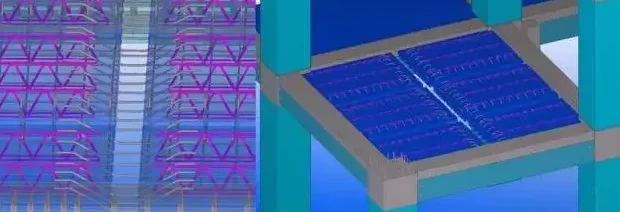
BIM simulation illustrating board reinforcement and joint details.
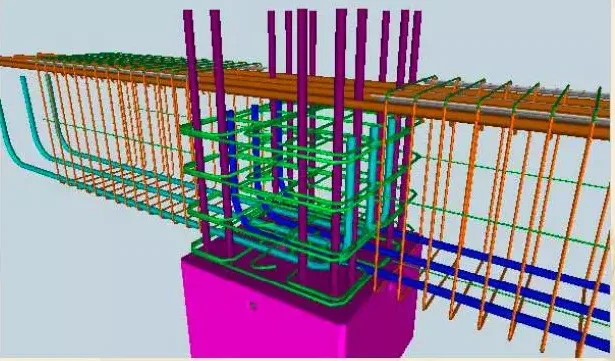
BIM simulation of reinforcement and connection nodes.
Prefabricated construction significantly influences existing building practices, particularly external wall insulation and stone facade installation. The following tables provide a clear comparison of advantages, disadvantages, costs, construction factors, and applicability of different methods.
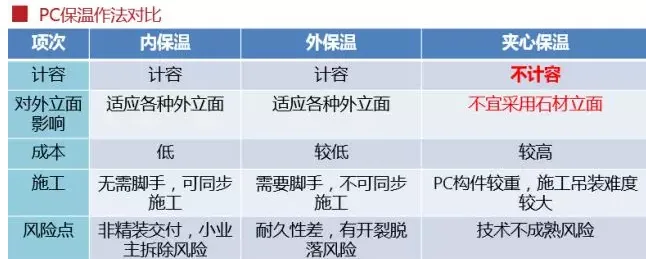
Comparison of insulation methods.

Comparison of PC stone facade construction methods.















Must log in before commenting!
Sign Up