
High costs hinder the growth and adoption of prefabricated buildings
The development of prefabricated buildings in China is not a recent phenomenon. Back in 1999, the State Council issued directives such as the “Opinions on Promoting the Modernization of the Housing Industry and Improving the Quality of Housing.” Shanghai, one of the earliest cities to pilot prefabricated housing projects, launched its first construction in 2006. Despite this early start, the high costs associated with prefabricated buildings have limited market size and enthusiasm, slowing down overall progress.
In theory, the materials needed to build a house should be relatively consistent across different construction methods, which would suggest similar costs. However, in reality, prefabricated construction tends to be significantly more expensive than traditional building methods. According to officials from the Municipal Construction and Building Materials Industry Market Management Station, the additional cost for prefabricated buildings in Shanghai ranges from 350 to 550 yuan per square meter compared to conventional construction. Moreover, the higher the prefabrication assembly rate—the proportion of prefabricated components relative to the entire structure—the greater the cost.
Why are prefabricated buildings more expensive?
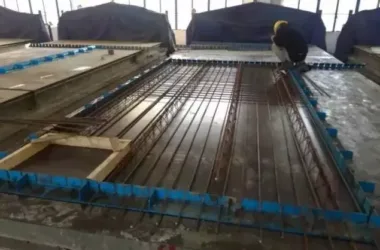
First, process costs contribute significantly. Prefabricated building technology demands complex processes, requiring substantial initial investment in research and development as well as specialized machinery for component production. These factors drive up the cost of components. Only when the volume of prefabricated buildings is large enough can economies of scale reduce these expenses.
Second, logistics costs play a key role. Transporting prefabricated components is cost-effective only when the factory is within approximately 100 kilometers of the construction site. Longer distances increase expenses and reduce cost efficiency. Additionally, the current industry chain—from planning and design through production, transportation, and construction—is not yet fully streamlined, adding further costs.
In recent years, Shanghai authorities have introduced various policies to lower prefabricated building costs. These include incentives such as building area rewards, where residential projects that voluntarily use prefabricated components can exclude certain prefabricated exterior walls (not exceeding 3% of the above-ground building area) from the total building area calculation. Direct subsidies also exist through special funds for energy-efficient construction. For example, residential projects with a prefabrication rate of 15% or more receive 60 yuan per square meter, while those with 25% or more receive 100 yuan per square meter. Public building projects meeting green building or high-standard energy-saving criteria may qualify for BIM-related support funds as well.
Expert insight: The high cost perception is often misleading
Within China, a common but flawed comparison pits the total cost of prefabricated housing against only the structural cost of traditional buildings. This approach overlooks important factors. Prefabricated buildings benefit from faster construction speeds due to the use of prefabricated components. Industrial manufacturing methods ensure better quality control, reduce resource waste, and save time during later finishing work, compared to on-site manual labor.
Prefabricated construction thrives on mass production and assembly, which offer clear advantages in large-scale projects. Furthermore, industrialized production significantly reduces wet work, noise, and dust on construction sites, contributing to environmental benefits that are difficult to quantify.
Therefore, the cost of prefabricated housing should be assessed comprehensively on a project-by-project basis rather than generalized.
Comprehensive strategies to address challenges in transitioning
Although prefabricated buildings are advancing rapidly across regions, challenges remain. High investment costs, low public awareness, multiple development constraints, and a chaotic market environment continue to restrict the sector’s growth.
Industry experts emphasize that the construction industry’s shift toward industrialization is at a crucial point, requiring coordinated planning to ensure healthy and scientific development.
First, raising public awareness and acceptance is essential. Increased publicity and guidance can help improve social understanding of prefabricated buildings.
Second, policies must be enhanced, focusing on standardization, inspection, acceptance procedures, and preferential incentives for residential industrialization. Experts such as Tang Fen and Liu Haiqun highlight the need to establish standardized technical and management systems for prefabricated construction. Developing national unified quality acceptance and component inspection standards will enable rapid replication. Encouraging policies should be more fully implemented to motivate enterprises, which will help reduce costs through economies of scale.
Third, stronger coordination and collaboration are needed among departments to address challenges like overlapping supervision and regulatory gaps. Prefabricated construction blurs the lines between factory and construction site, requiring updated regulatory frameworks. Kangzhuang points out that current industry management involves multiple departments with clearly defined roles, but the emerging prefabricated construction model risks fragmented oversight. Establishing a regulatory system for general contracting and implementing one-stop supervision for construction products is recommended.
Fourth, comprehensive planning is necessary to avoid rushed developments and new overcapacity. Some local governments blindly follow trends to attract investment, leading to confusion, excess capacity, and unhealthy competition. Tang Fen advises that local authorities should plan carefully and avoid turning housing industrialization into another “photovoltaic industry” scenario. Small and medium-sized enterprises should focus on specialized product development aligned with their technical strengths and financial resources, rather than attempting to build extensive factories covering the entire industry chain.















Must log in before commenting!
Sign Up