
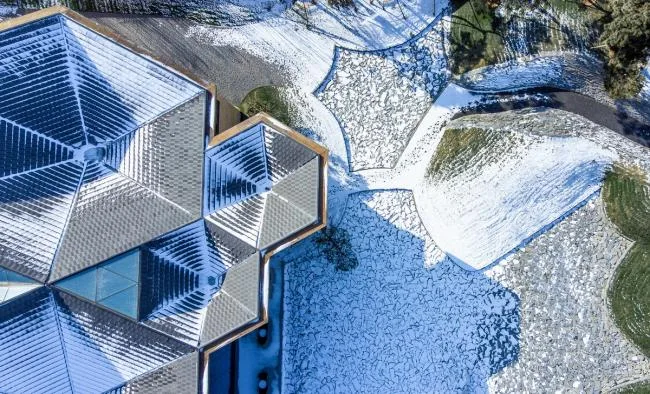
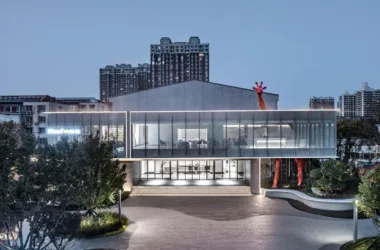
The design team took inspiration from the distinctive small-leaf Bodhi tree found on Bodhi Island, shaping the seaside building at Tangshan Bay to resemble a continuous Bodhi forest. Drawing from local cultural legends such as “The 19th Day of Tang King’s Residence” and “The Island of Eight Wonders,” the concepts of the “Eight Great Bodhi Trees” and “Nineteen Small Bodhi Trees” were combined to create a dynamic spatial experience. This forms an expansive and open “Bodhi Sea,” which serves as the iconic image of LAVERA and offers a unique destination for visitors from Beijing, Tianjin, and the surrounding Hebei region.
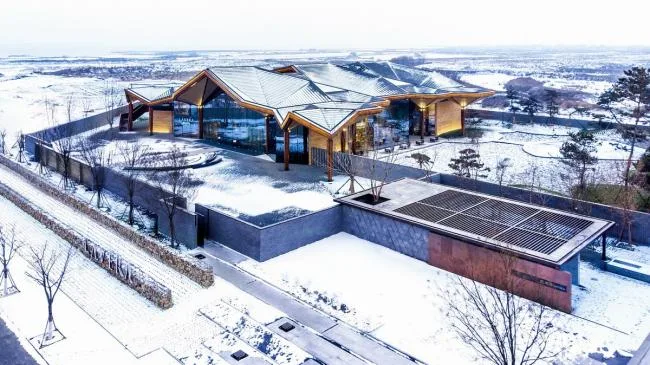
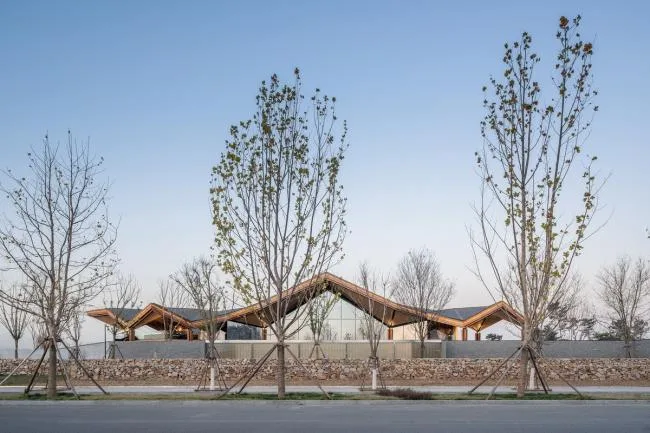
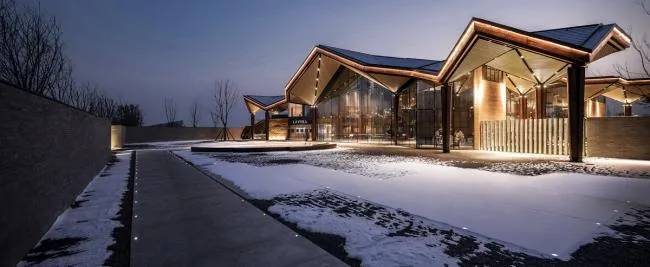
The northern Chinese coastline experiences extremely cold winters, but summers, though brief, are pleasantly mild. The building is oriented east to west, with low landscape walls limiting street views to the building’s undulating roofline. Entering through the landscaped entrance at the northeast corner of the site (BIM model), elements appear and disappear, creating a sense of discovery. After a short walk on the stone path, visitors pass through a circular shallow water pool before reaching the building—evoking the feeling of “approaching a mountain by following a water source.”
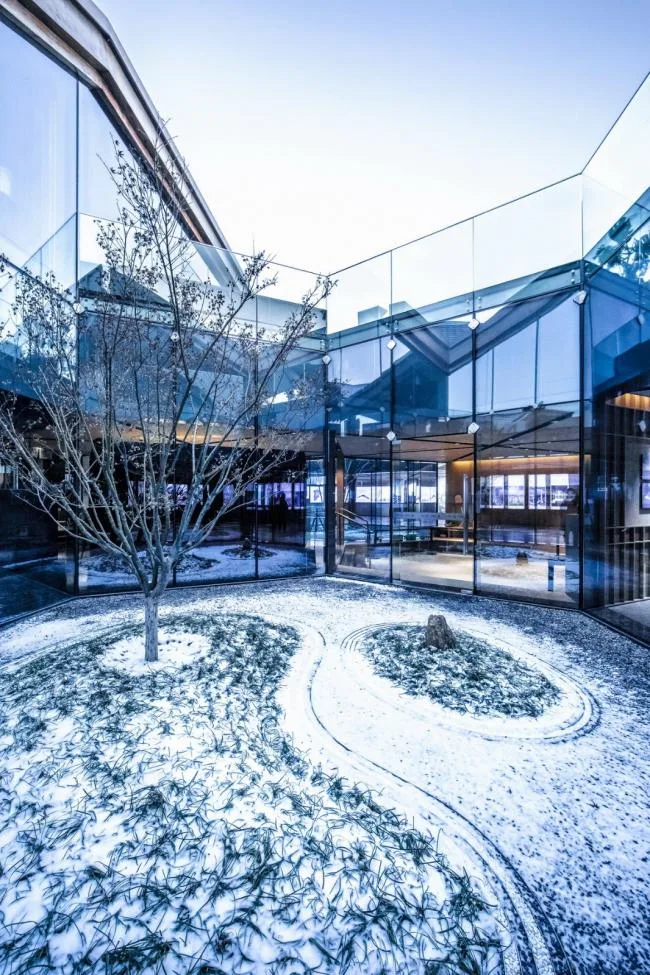
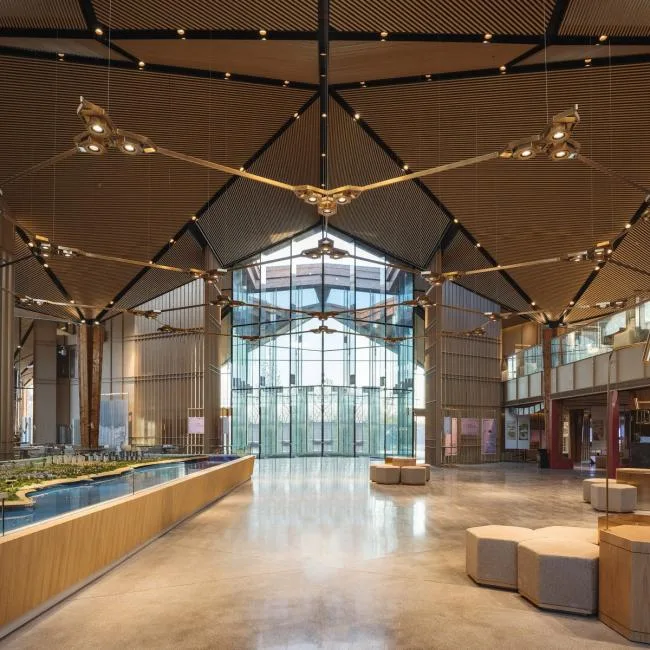
The entrance features a 13-meter-high atrium that guides visitors into two main flows. To the left is the film and television promotion area, divided by varying ceiling heights and partition walls into multiple hexagonal spaces. Two small courtyards on the south side ensure ample natural light in each area, fostering interactive and engaging experiences between interior and exterior spaces along the visitor route.
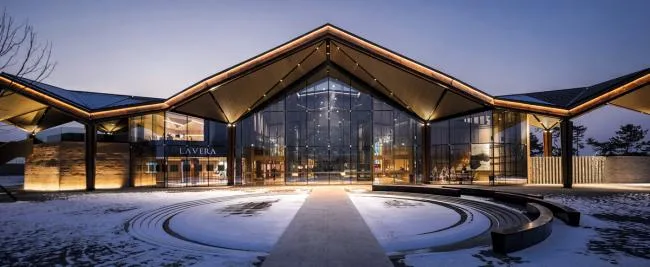
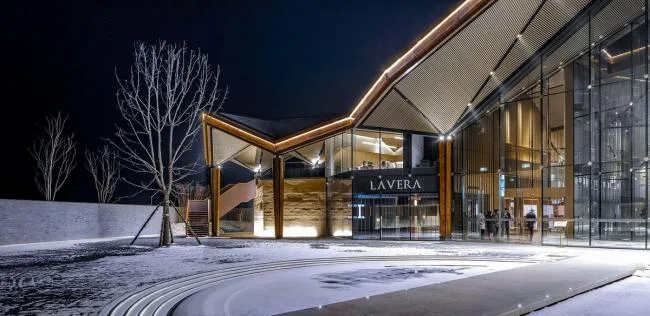
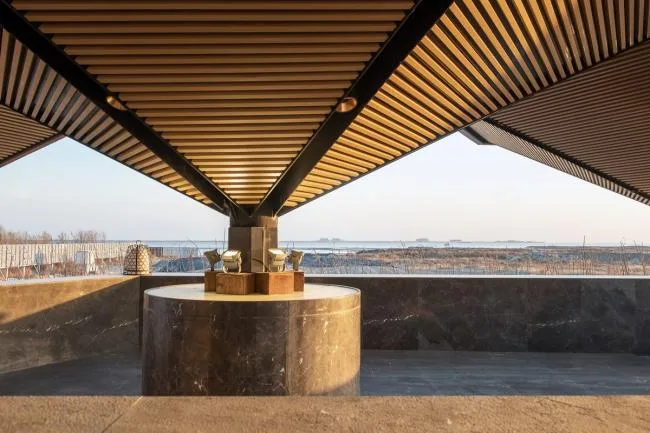
Following the U-shaped flow leads visitors to the building’s core: the model display area. This space measures 12 meters in height and spans 18 meters in both length and width. A glass curtain wall on the west side reveals an outdoor water mist installation, while the north side features a negotiation area enclosed by a half rammed earth solid wall and half glass curtain wall, highlighting local cultural traits. The flexible arrangement of hexagonal tree-top forms and enclosure structures blurs the boundaries between interior and exterior, extending the spatial experience outward.
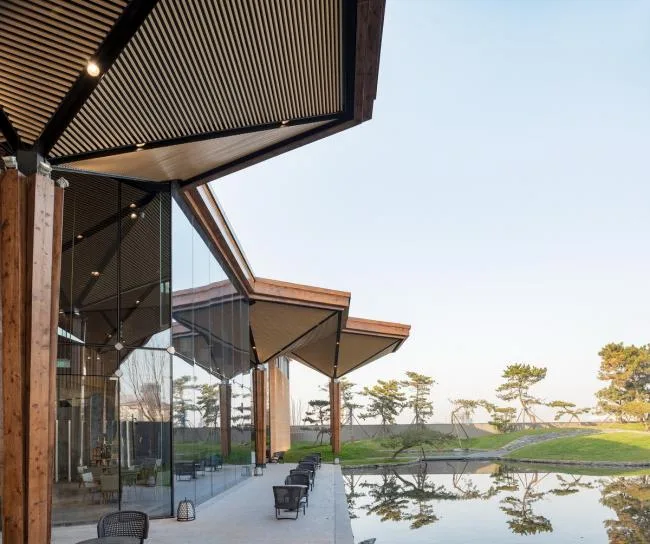
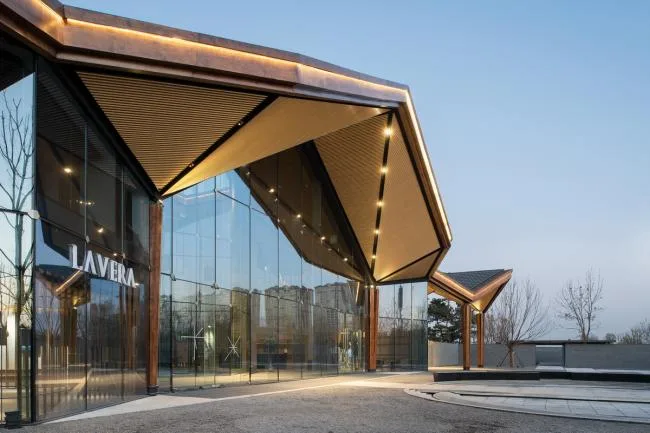
The design’s intent, whether through the use of small-leaf Bodhi elements as architectural motifs or local building materials like rammed earth and camphor pine common in Hebei homes, is to showcase the rugged and wild essence of northern China for BIM training purposes. The building’s refined appearance balances the solemnity of black steel, the natural texture of corroded panels, and the clarity of ultra-white glass, achieving a wild luxury style that authentically represents the LAVERA Experience Center in central and southern Tangshan.
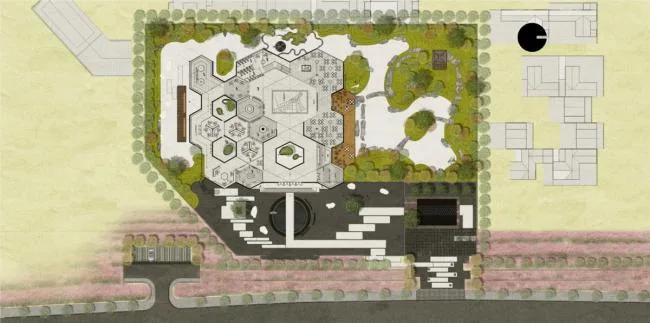
▲ General layout
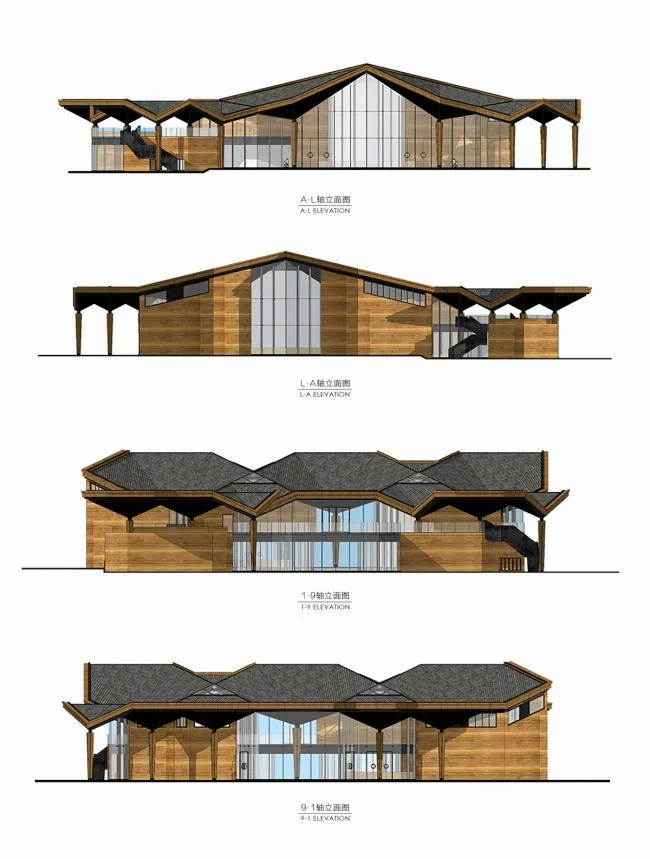
▲ Axis facade
Project Information:
Project Name: Lavina Experience Center
Designer: PTA Shanghai Botao
Project Type: Exhibition and Experience Center
Project Location: Haigang Avenue South, Leting County, Tangshan, Hebei Province
Lead Architect: Xu Guangwei
Design Team: Gao Song, Shao Zhufang, Yao Yi, Shu Qin, Shen Yu, Jing Mingliang, Guo Xin
Owner: Zhongnan Land
Land Area: 11,874 square meters
Building Area: 2,715 square meters
Design & Completion: October 2018
Project Cost: 40 million RMB
Landscape Design: Beijing Aoya Landscape Design Co., Ltd
Interior Design: Hangzhou Interior Architecture Design Co., Ltd
Photographer: Yihui Yinghua
Main Materials: Light gray aluminum panels, ultra-white glass curtain walls, rammed earth cladding












Must log in before commenting!
Sign Up