
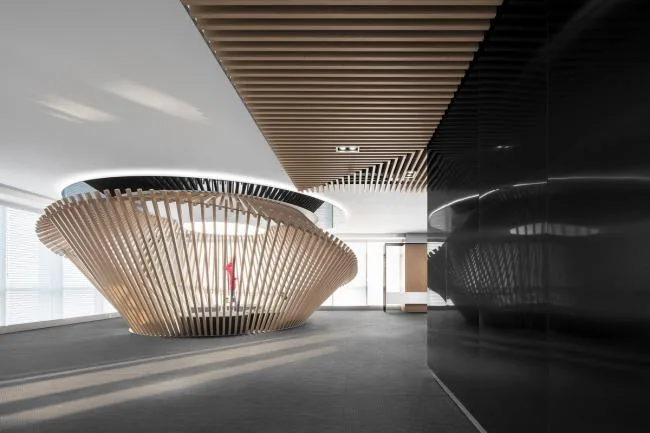
▲ Semi-Enclosed Leisure Area
The future office concept has rapidly evolved beyond traditional rigid office setups, becoming one of the fastest-growing workplace reform trends worldwide. These new office spaces are designed to accommodate increasing demands and dynamic work styles.
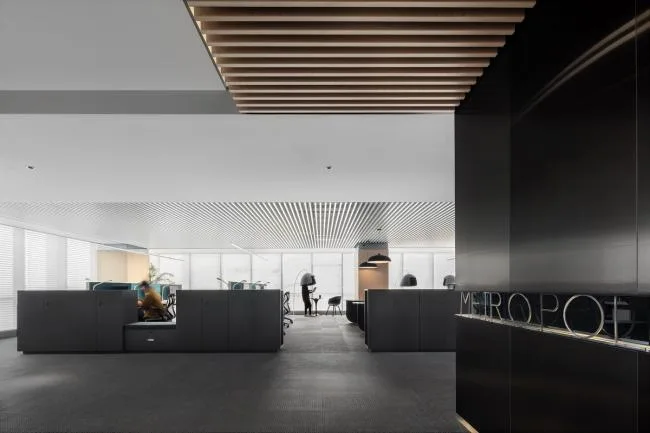
▲ Open Office Area
Located in the southern part of Future Science City, Changping, Beijing, this project is part of Poly Land’s “Hui” series and stands as China’s first large-scale integrated business model built atop a subway station in the Science City. This model floor was designed to serve as a collaborative hub for next-generation headquarters, joint offices, and creative workspaces utilizing BIM technology. Poly (Beijing) Real Estate Development Co., Ltd. partnered with CUN inch Design to innovate, redefine, and restructure the office environment.
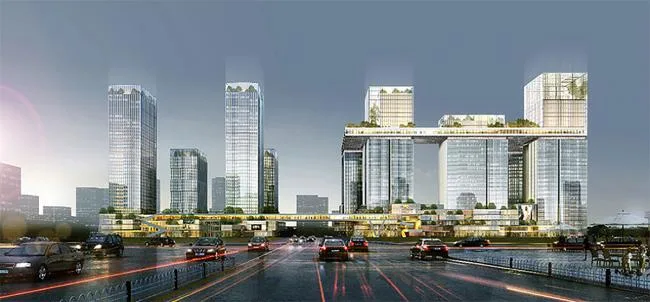
▲ Poly · Future Metropolis Planning Scheme
What is a Future Office?
Historically, office spaces primarily served institutional management needs, evolving into the grid-style layouts familiar to many. As work cultures have shifted, so have expectations—introducing demands for flexible “office landscapes” and mobile work environments.
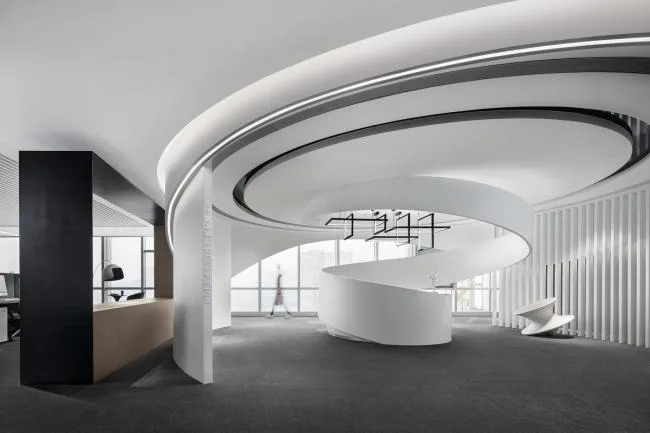
▲ Front Desk Reception Area
Designing spatial arrangements is just one way to shape the atmosphere; the true office system emerges from analyzing data and interactions. CUN inch DESIGN evaluates office spaces based on the activities of modern enterprises within limited areas—considering employees at various levels and their working habits in internet-based, emerging, and traditional office environments.
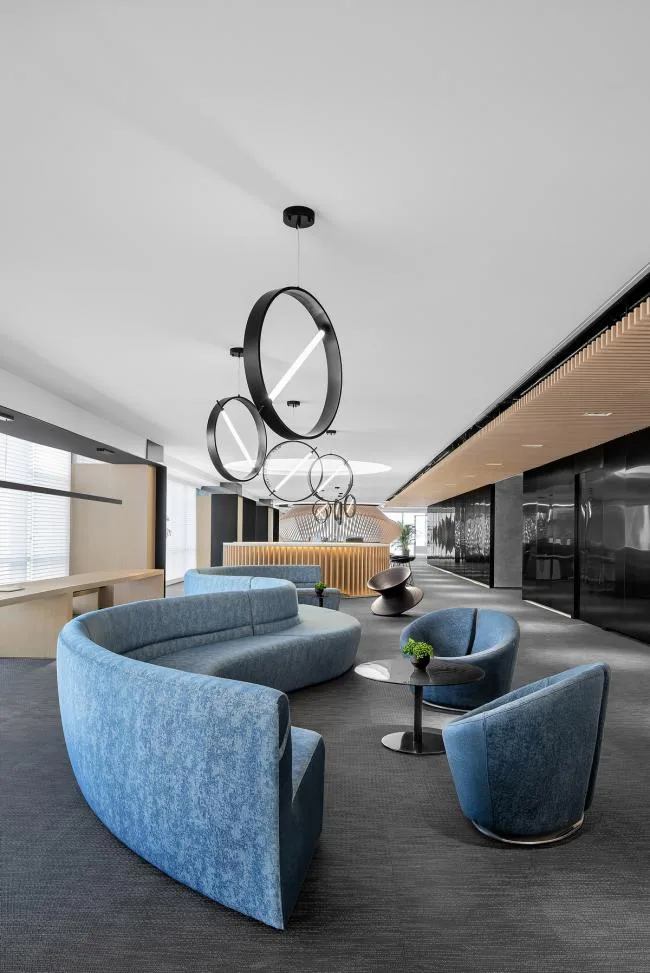
▲ Leisure and Reception Area
Data reveals that mid-level employees spend around 38% of their workday at their desks. Senior staff spend less time at their desks, while junior employees spend relatively more, but rarely exceeding 50%. From these insights, several design considerations arise.
The Three-Point Framework
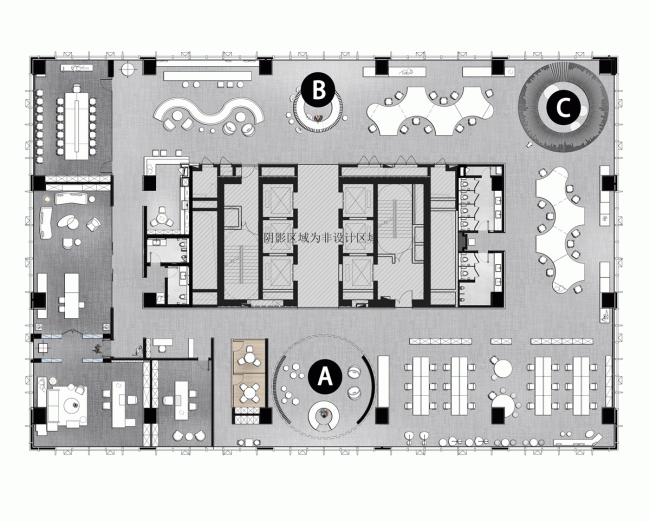
▲ Three-Point Framework
CUN inch Design focuses on creating spatial designs that remain relevant and valuable for 3 to 5 years. The key to innovative office design lies in fostering “connections”—the ideal interactions between employees, between employees and the company, and between the company and the outside world.
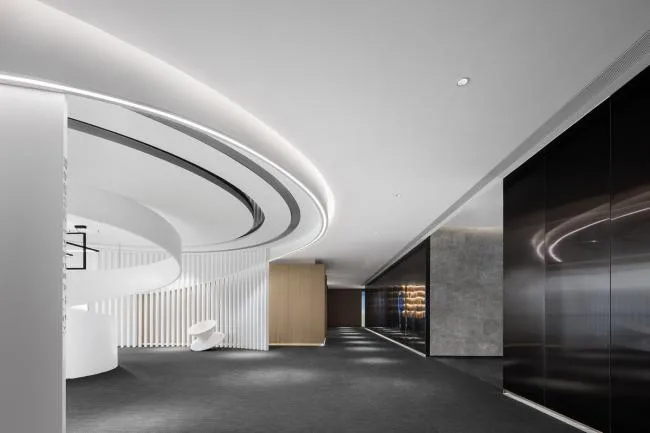
▲ Corridor
To support this, the space features three key points: 1. Reception Area; 2. Interconnection Points; 3. Service Locations.
1. Reception Area
The traditional rigid “front hall” design is replaced with a welcoming visual flow that guides guests directly into the reception space. Curved surfaces—whether continuous, overlapping, or standalone—create a soft, enveloping atmosphere that welcomes visitors as they move through the area.
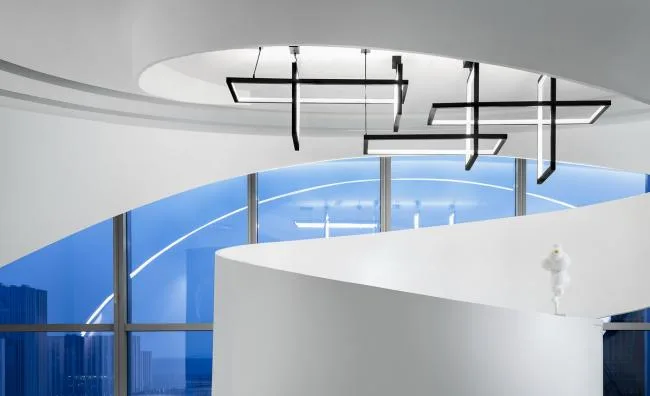
▲ Front Desk
The reception desk features a semi-enclosed curved design, forming the space’s first impression. Surfaces are painted in light tones, creating an organic form and a gentle ambiance that presents a modern, architectural feel.
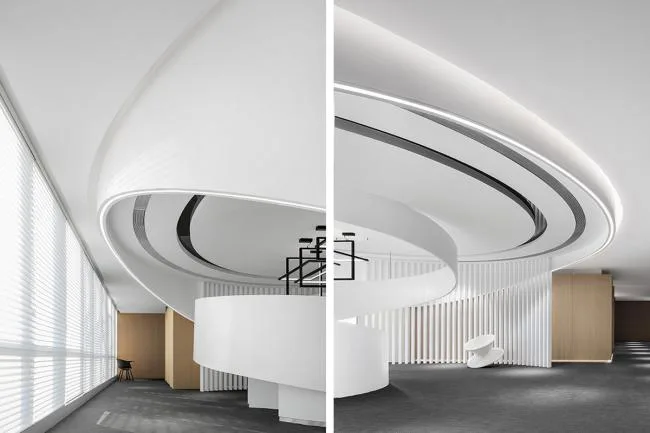
▲ Front Desk Reception Area
The design emphasizes spatial value through form, creating a relaxed environment that makes visitors feel appreciated and immediately conveys the company’s character. Instead of isolating guests in waiting rooms or rushing them to meeting spaces, this area strikes a balance that leaves a lasting first impression.
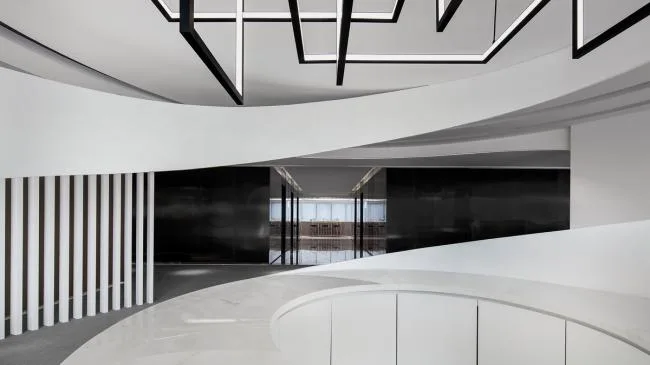
▲ Front Desk
This area also serves as the starting point for employees each day. Unlike traditional offices, it combines reception, socializing, and display functions, blending openness with privacy to alleviate internal space pressures.
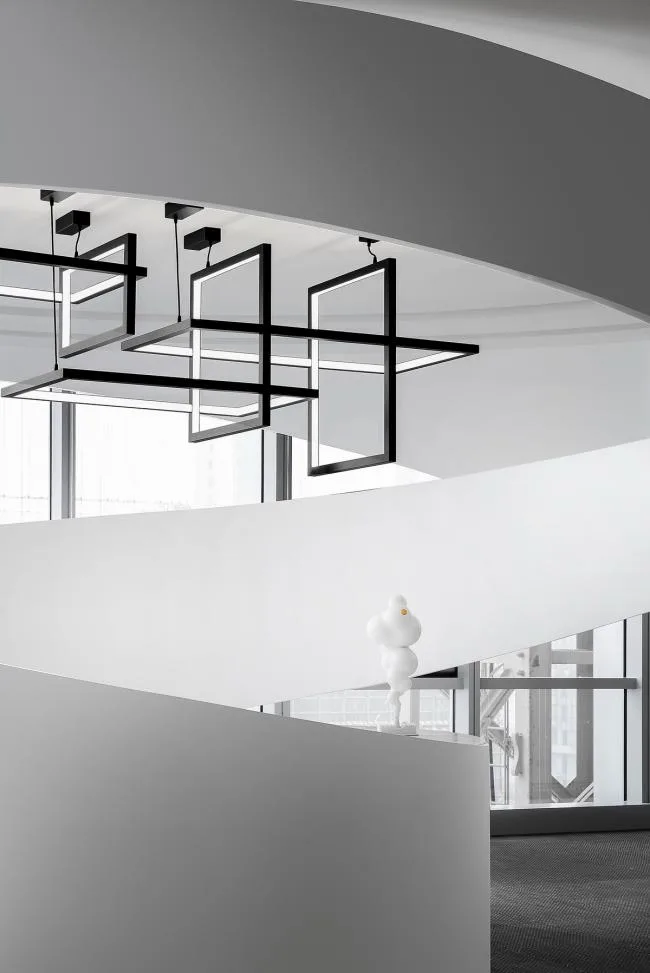
▲ Front Desk Display
2. Interconnection Points
The flexible office environment allows employees to find spaces that suit their work style anytime, fostering a strong sense of belonging, or “office connectivity.” Combining office methods with personnel arrangements creates a more efficient workspace, increasing floor area utilization, lowering costs, and enhancing flexibility.
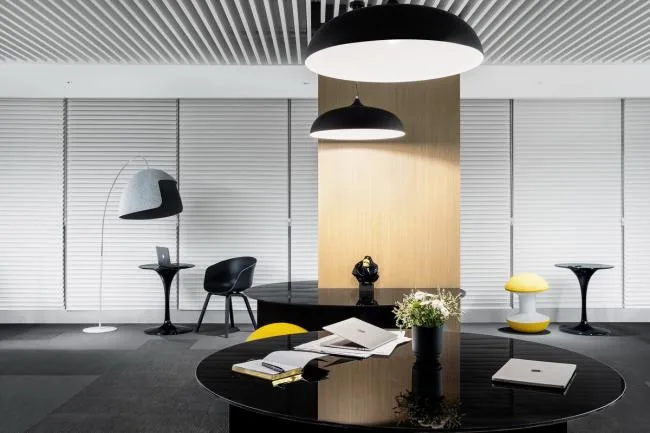
▲ Office Sharing Area
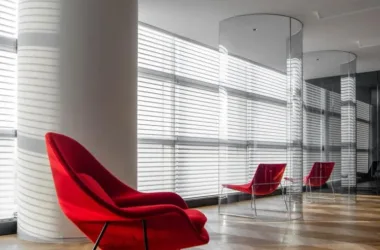
Revitalizing spaces requires both visual updates and functional integration, akin to breathing new life into the environment. The semi-enclosed leisure area acts as a key node, encouraging dynamic participation within the office.
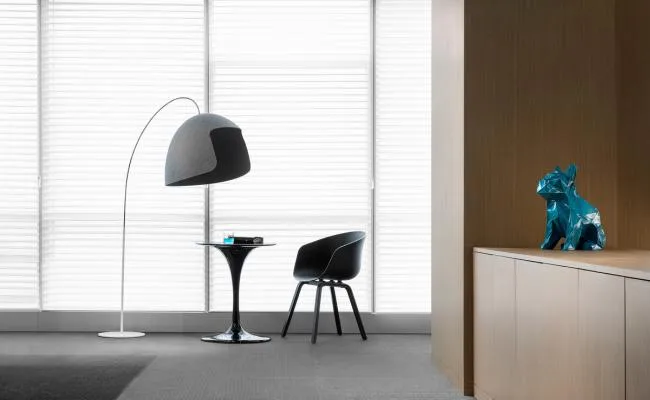
▲ Semi-Independent Telephone Space
The wooden undulating surfaces resemble the core gears of an office machine, serving both clients and employees through innovative environments. This space offers areas for breaks or focused group work.
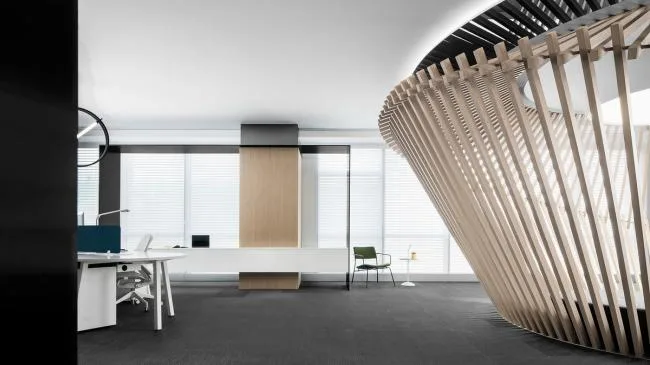
▲ Semi-Enclosed Leisure Area
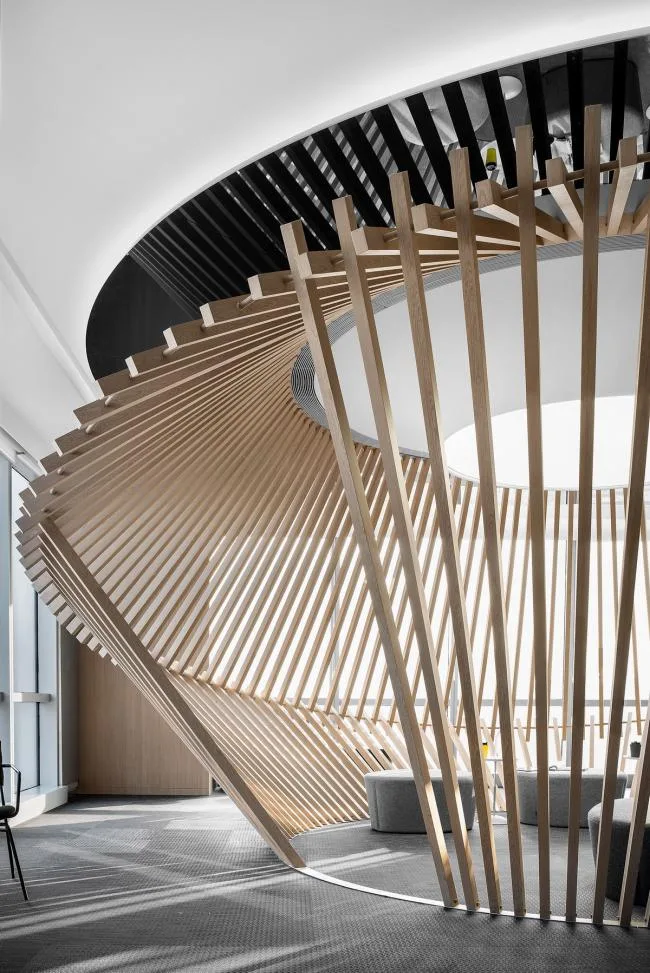
▲ Semi-Enclosed Leisure Area
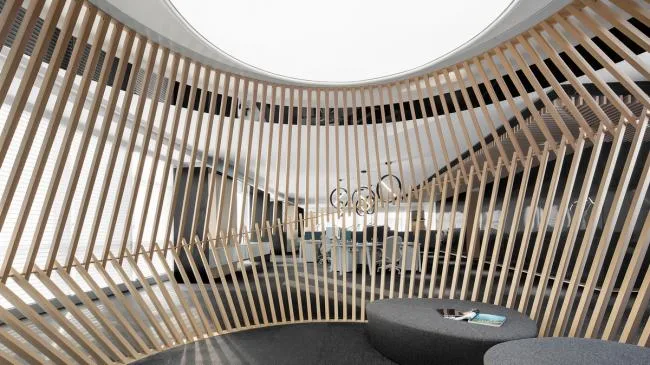
▲ Semi-Enclosed Leisure Area
3. Service Points
Our social and professional perspectives have shifted, with employees seeking a balance between work and life. They desire comfort and convenience integrated into their workplaces.
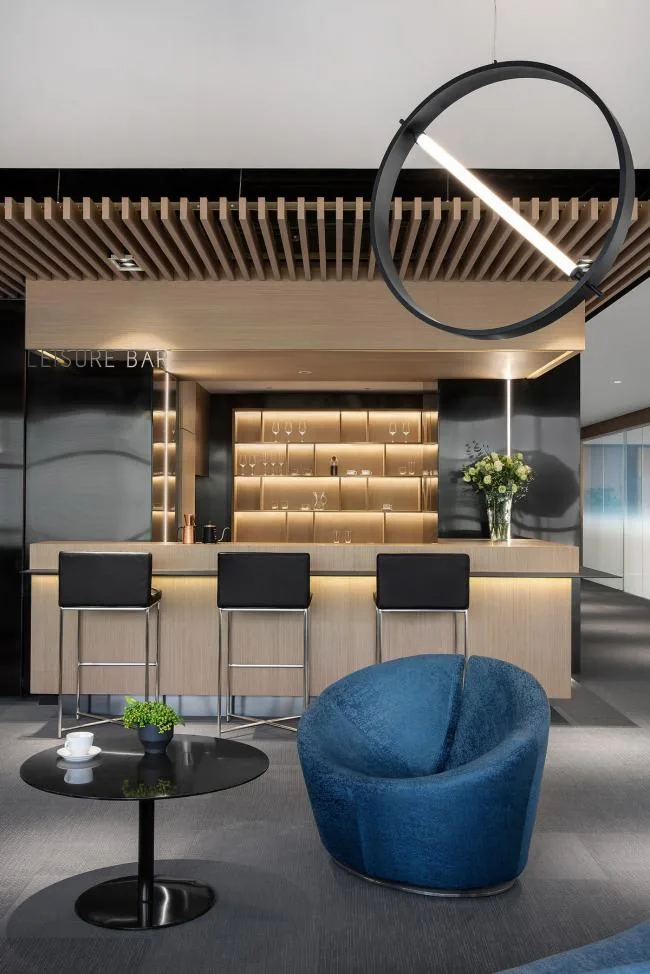
▲ Tea Room
Additionally, as enterprises diversify, offering high-quality community ecosystems and personalized, premium software and hardware services has become a key design focus for future offices.
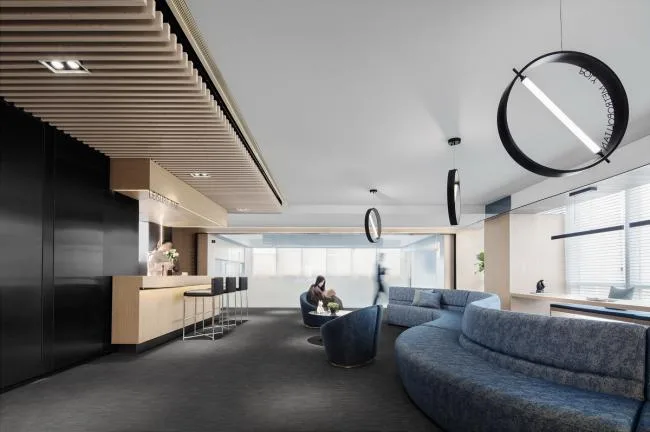
▲ Leisure and Reception Area
Service points emphasize leisure, negotiation, and smart office functions. As this space also serves as a model room, it allows visiting clients to experience the entire office system while facilitating business discussions. It serves both as an office and a sales/service hub.
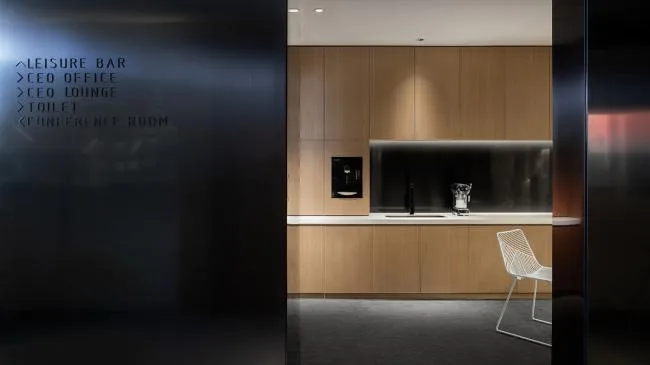
▲ Tea Room
Here, the office space goes beyond a mere workspace—it functions as a platform for sharing information with visitors and the outside world.
Three-Point Layout Impact
Establishing these three points effectively activates the entire spatial system. By breaking away from fixed patterns and stereotypes, the design integrates these elements dynamically and creatively, allowing seamless transitions between different zones.
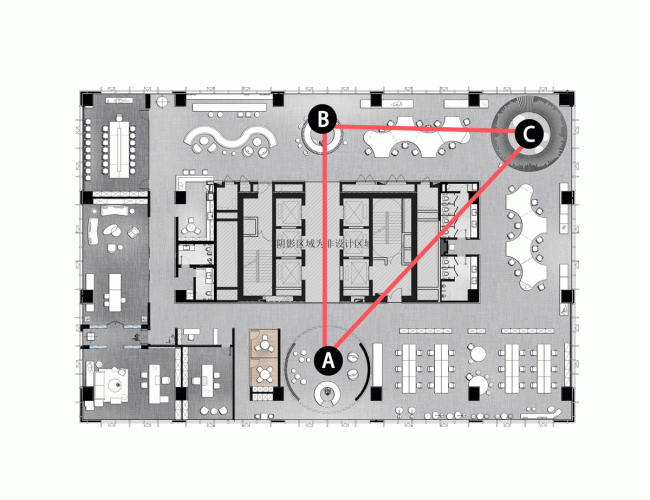
▲ Three-Point Layout Impact
The use of small space architectural techniques, modular combinations, interlocking elements, and linear lighting creates clean, streamlined spatial lines. The black core tube adds a technological feel while helping users maintain focus.
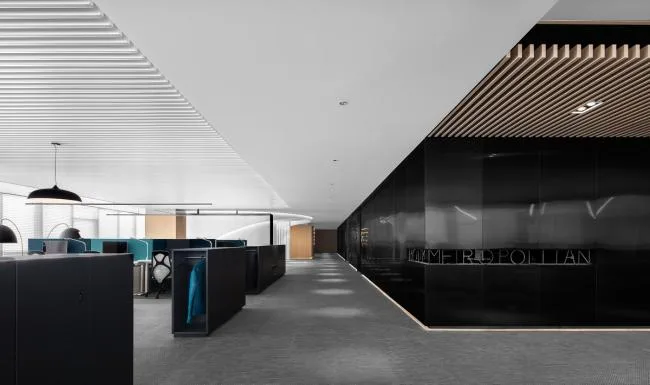
▲ Corridor
CUN inch Design created a custom circular light fixture for Future Daduhui, moving away from traditional forms and complex, layered designs. This fixture meets basic lighting needs while integrating spatial harmony and atmosphere through simple elements.
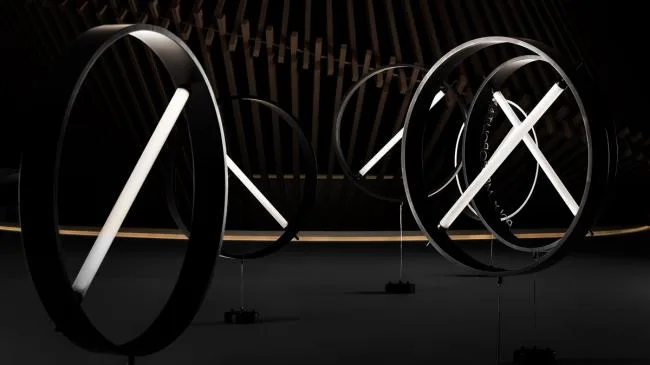
▲ Decorative Pendant Light
A VIP Area
Spatial divisions are achieved not only through design media but also by using elements that emphasize transparency and connectivity, ensuring reasonable and fluid separations.
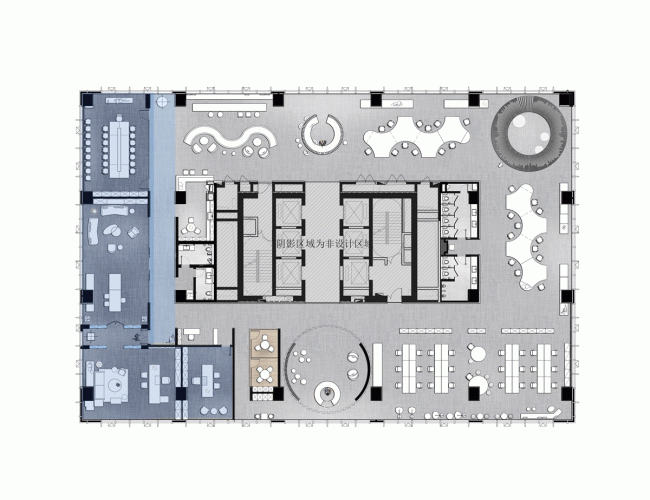
▲ VIP Area
The VIP corridor creates a clear division between the CEO’s office and leisure area. This custom design redefines the CEO office’s core value by integrating meeting, reception, and financial management spaces along the corridor, forming an efficient, independent executive zone within the overall office.
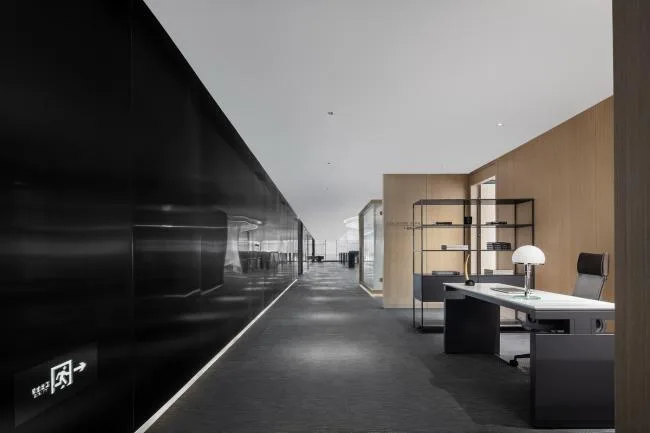
▲ Executive Assistant Office Area
The semi-transparent CEO reception area offers optimal lighting while preserving privacy.
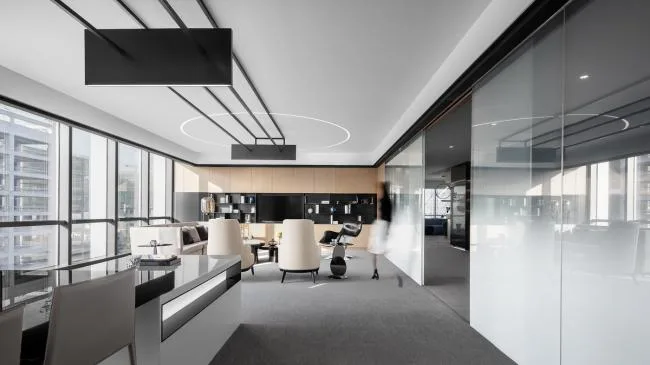
▲ President Reception Area
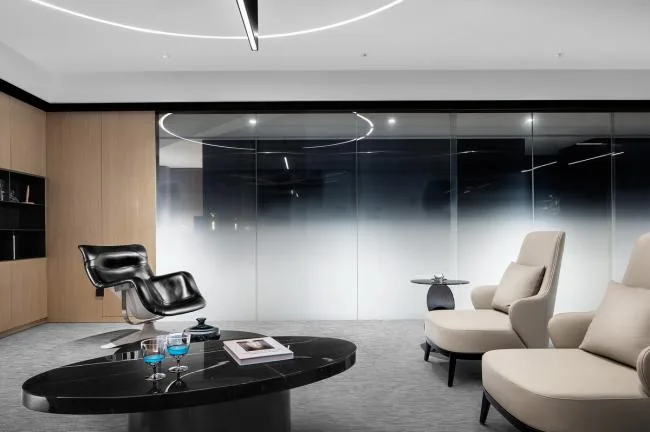
▲ President Reception Area
The geometric frame-style cabinetry, placed strategically, features customized blue acrylic panels. This royal blue accent stands out against the black, white, and gray palette, adding a personalized touch.
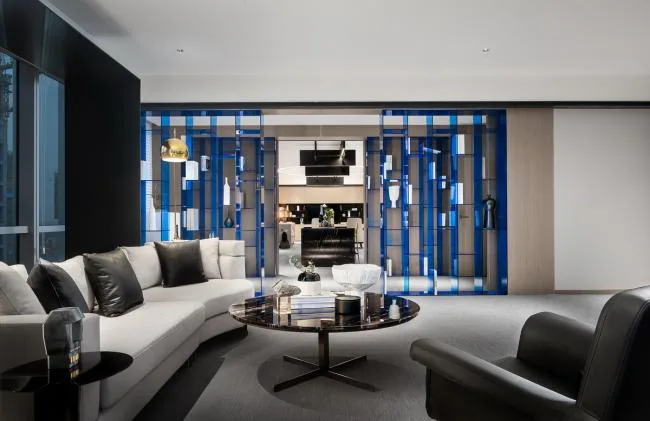
▲ President’s Office (BIM Work) Area
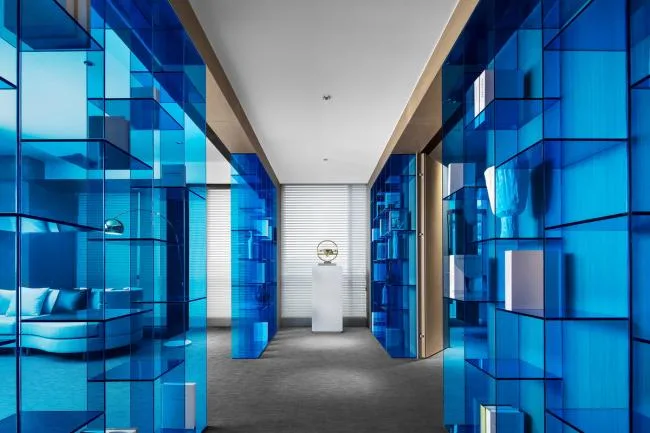
▲ President’s Office Entrance
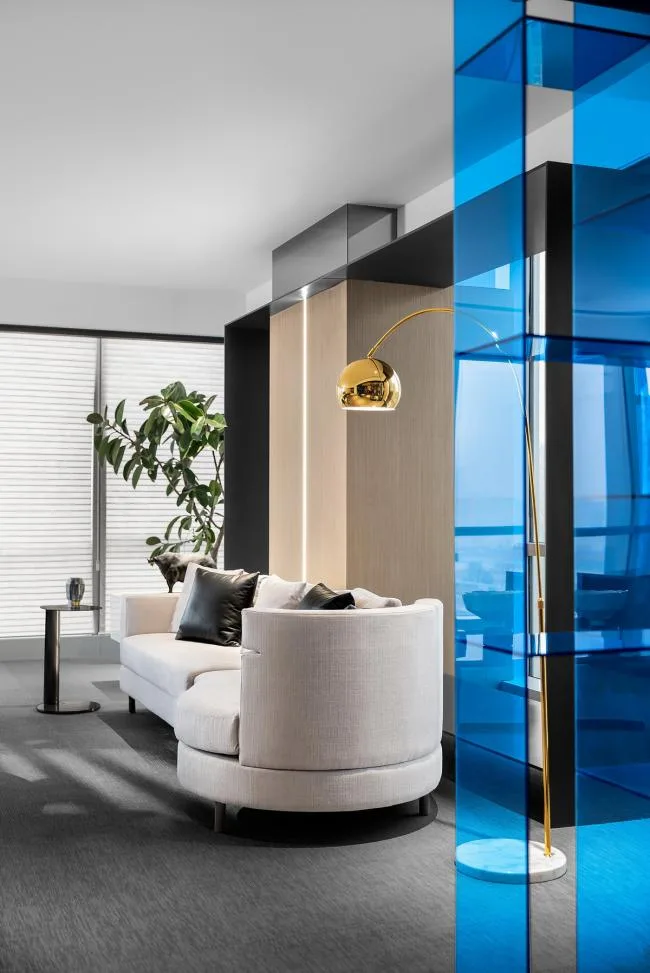
▲ President’s Leisure Area
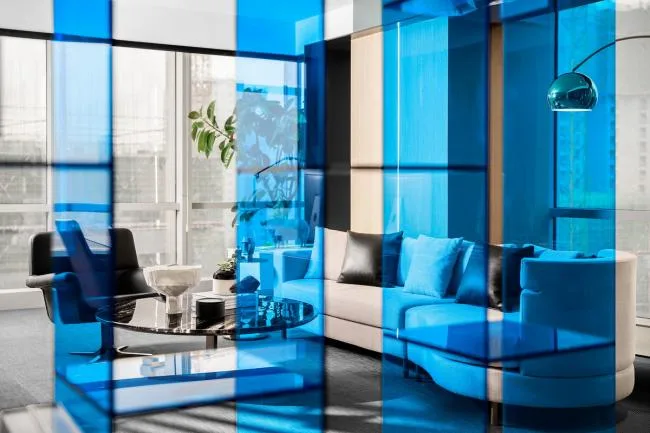
▲ President’s Leisure Area
Two-Line Reuse Concept
Often overlooked in office design is the area between windows and building columns. This project reuses a 1.5m window depth by designing overhanging blocks of varying lengths on columns. This softens the columns’ visual dominance and creates volume that extends along both sides of the indoor space, supporting flexible office activities.
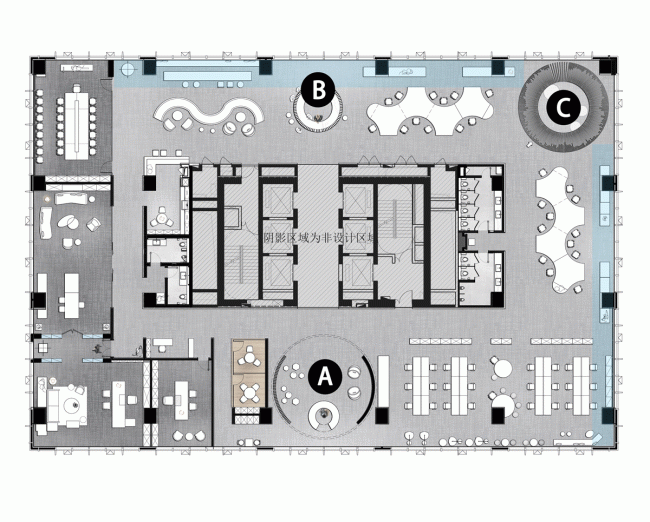
▲ Two-Line Reuse Concept
The Future of Office Spaces
In today’s era, social space is essential. Around us, repetitive grids and rigid structures have saturated office buildings and the hearts of countless professionals. There is a growing desire for spaces that inspire, break monotony, and foster connection.
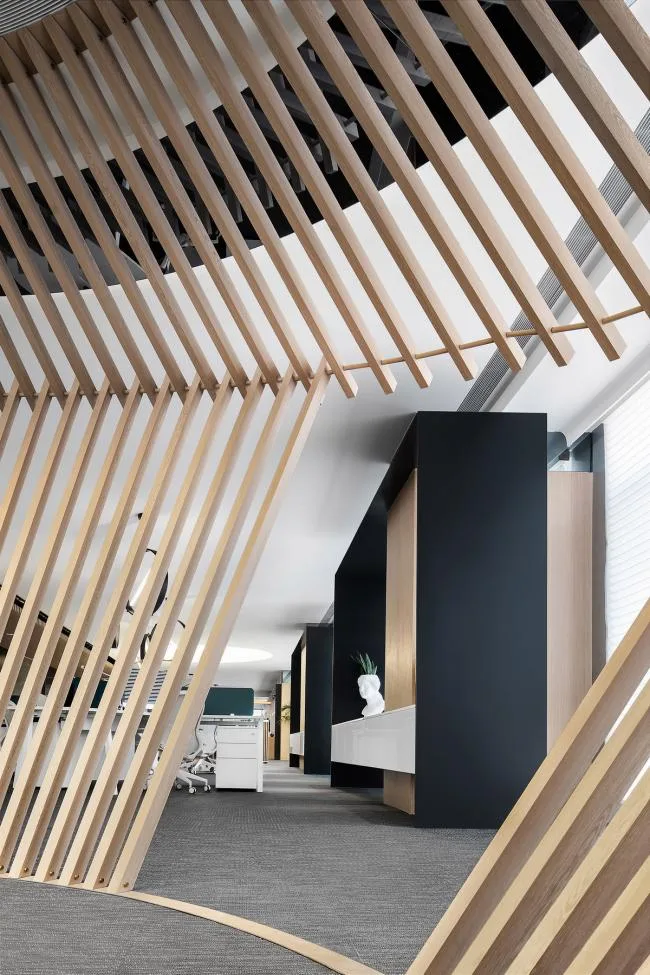
▲ Open Office Area
We spend the longest part of our day together in offices. By using data-driven design and thoughtful layouts, we can create spaces where people feel valued and inspired. That is the essence of the future office.
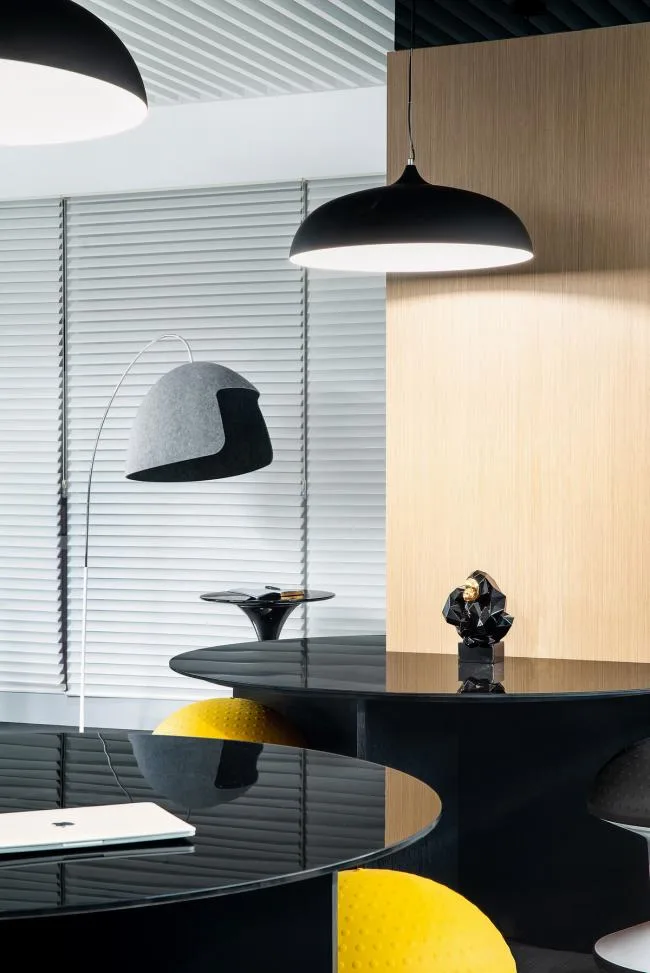
▲ Office Sharing Area Display
Project Information:
Project Name: Poly Future Daduhui Office Model Room
Location: Future Science City, Changping District, Beijing
Area: 1,400 square meters
Lead Designers: Cui Shu, Kong Weiqing
Soft Decoration Display: Kong Weiqing, Liu Jiajia
Owners: Poly (Beijing) Real Estate Development Co., Ltd., Beijing Future Science City Real Estate Co., Ltd.
Completion Date: October 2018
Materials: Wood veneer, blue acrylic, white metallic paint, brushed stainless steel, BOLON carpet, silver mirror, wood grain transfer printing, atomized glass, and more.
Photography: Wang Ting












Must log in before commenting!
Sign Up