
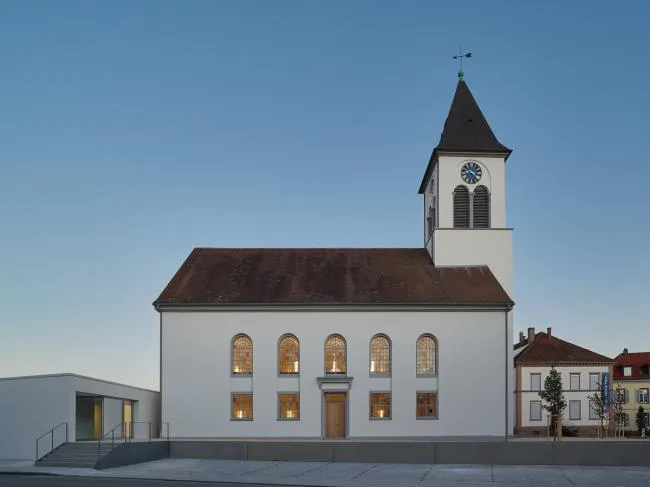
The oldest church in Kohl is situated at the central location of the diocese. The project involved expanding the government’s multifunctional parish center by constructing a new parish hall and renovating the Christus Kirche, originally designed by Hans Voss and built in 1822, a disciple of Viennese architect Brenner. The spatial design of the community center resembles a corridor, where the central focus is not the inner courtyard (BIM work), but rather the community activity hall.
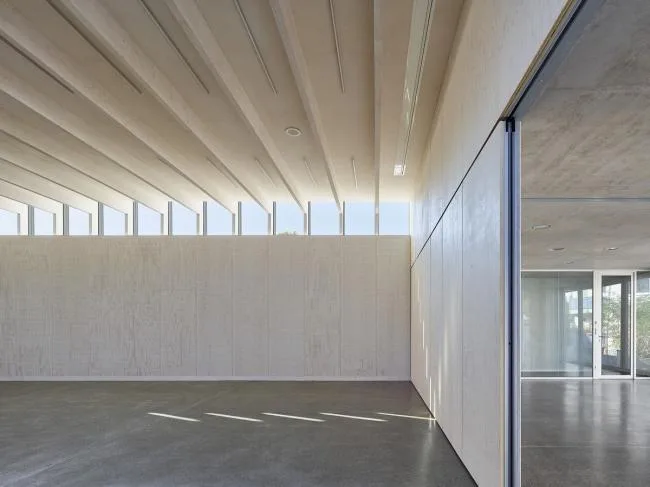
This central hall features a higher ceiling and is illuminated and ventilated by a side skylight (BIM building), creating an open, pillar-free space that is visible from the exterior.
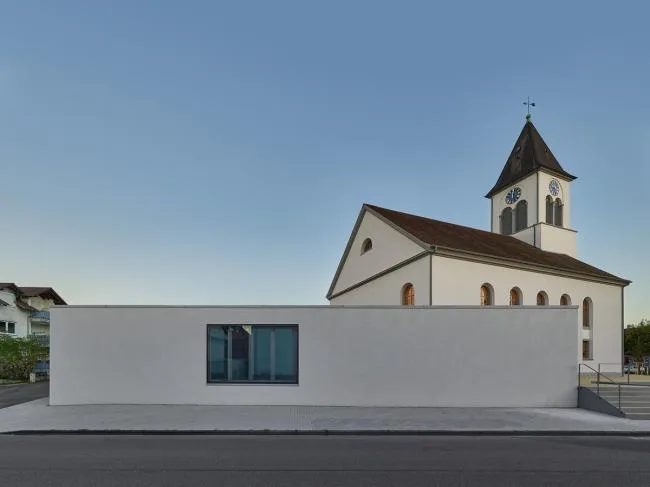
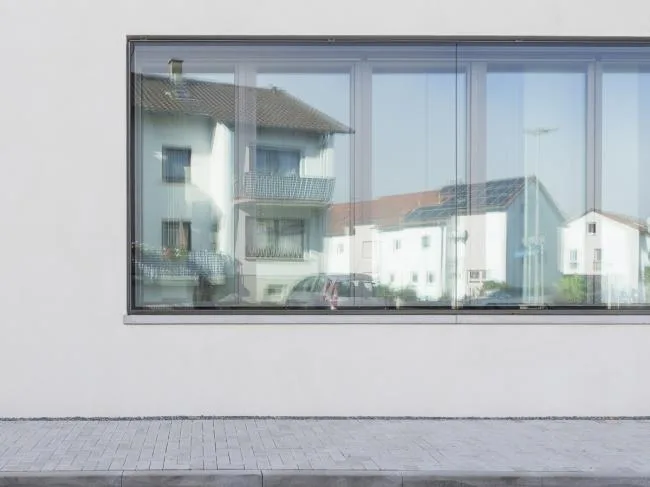
The building is surrounded by multiple entrances and a series of adjoining rooms aligned along a closed facade. This facade is intermittently broken up by two large windows that provide natural light to conference rooms, group spaces, and corridors.
The activity hall and its adjacent rooms can be combined in various configurations, ensuring maximum flexibility in use. Reflecting Weinbrenner’s classical style, the community center’s architecture employs consistent, clear geometric forms, precise detailing, effective use of natural light, and a purity and clarity of materials.
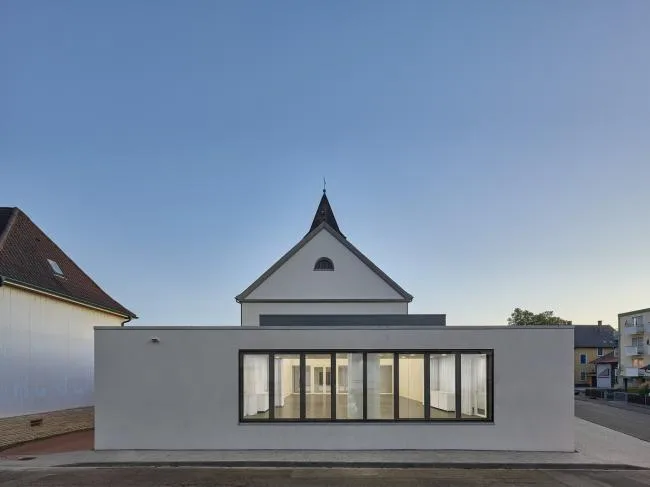
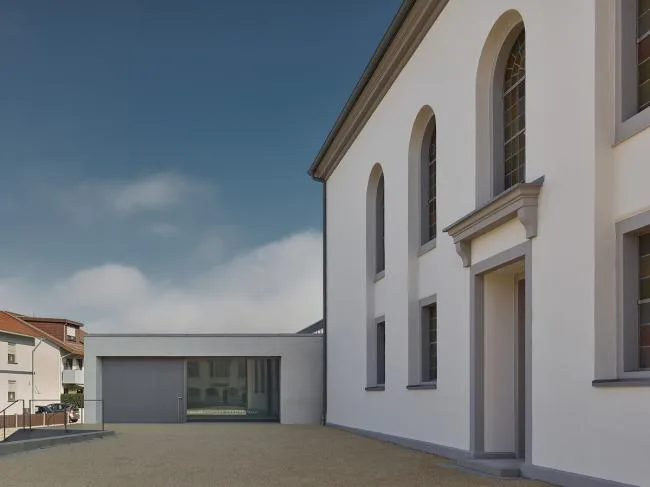
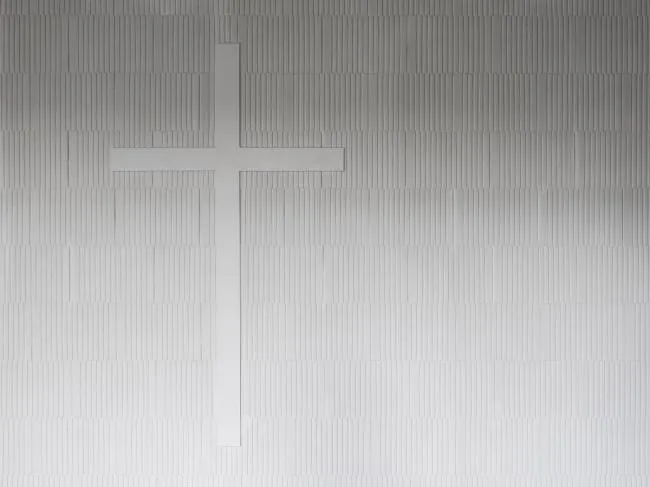
The new structure is built with vertically perforated insulated brick walls. Some bricks are partially coated with lime, while others are finished with filler, leaving the brick texture visibly employed as a decorative technique. The interplay between the bricks, their finishing, and the ever-changing natural light inside creates dynamic variations across the surfaces.
The large span of the event hall is supported by a system of beams and plywood ceilings. The wooden surfaces feature a subtle glaze that harmonizes with the color of the whitewashed walls.
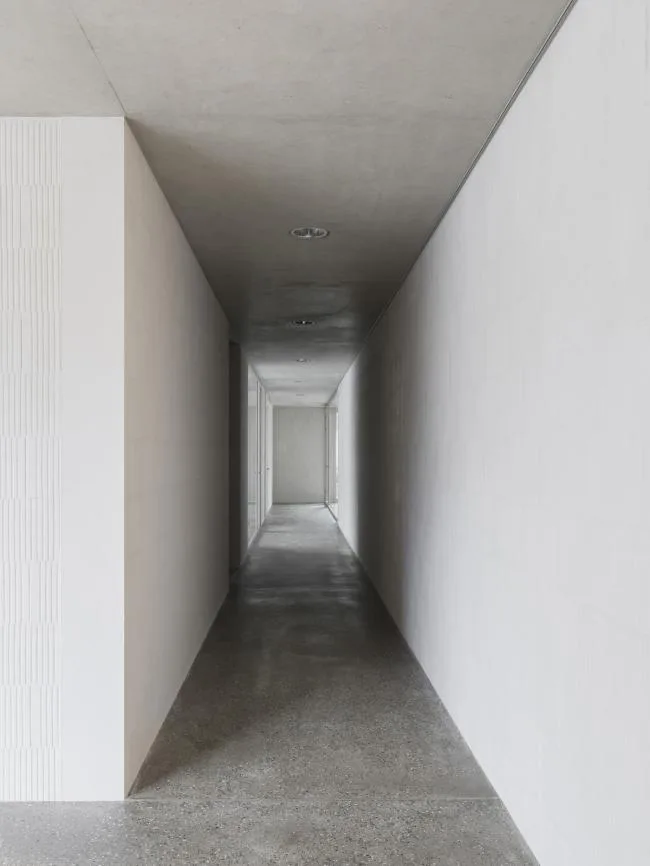
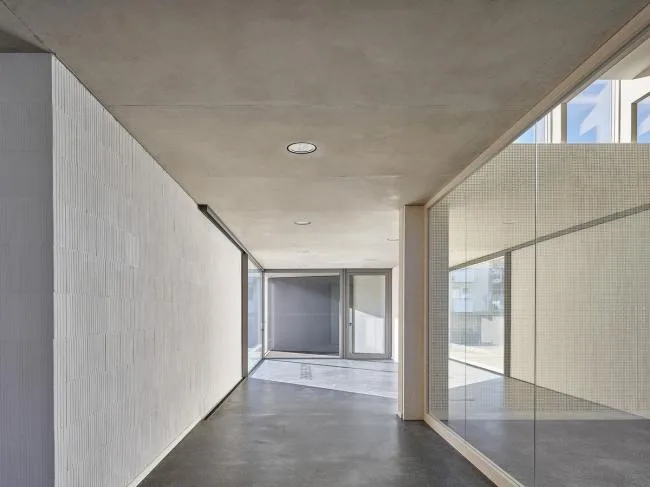
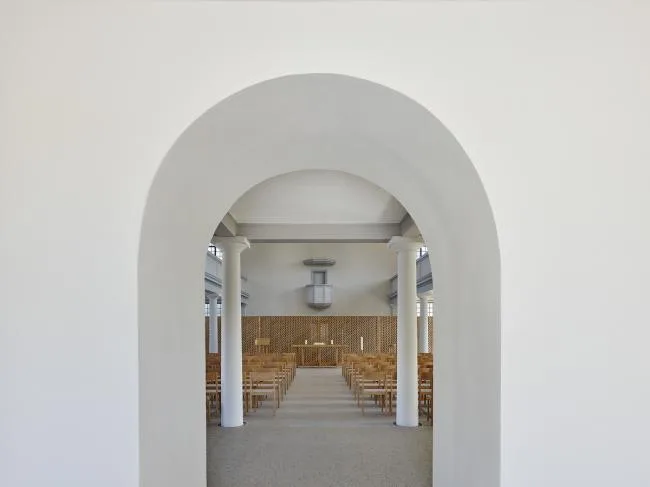
Horizontally arranged skylights modulate the daylight, creating an engaging play of light and shadow on the building’s surfaces. The restoration of the historic church aimed to reconstruct its original shape and colors, preserving the classical character and restoring its identity.
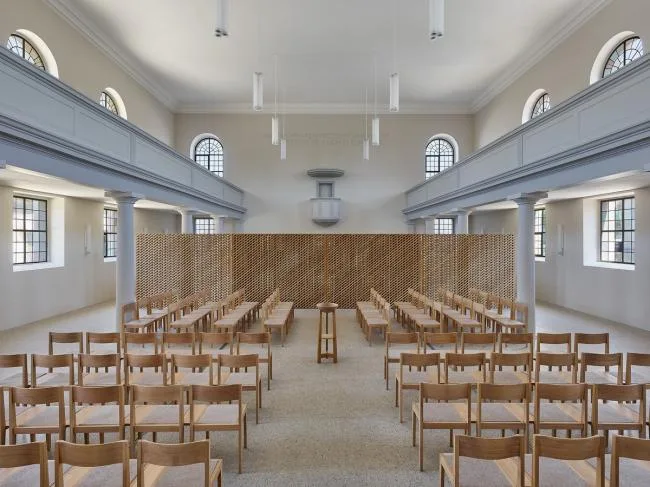
The fusion of modern interventions with the historic fabric has produced a new venue that bridges tradition and the future in both design and function. The original pews have been replaced with flexible seating to accommodate the church’s multifunctional use.
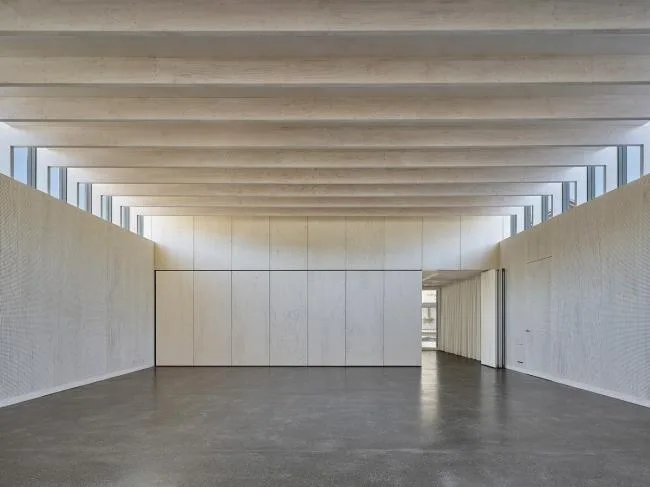
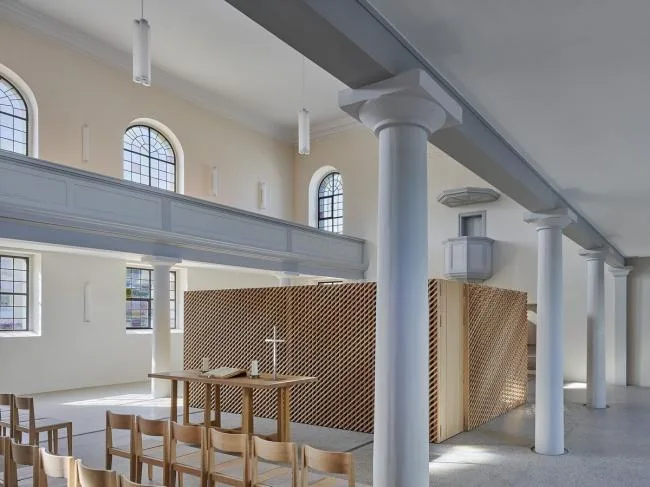
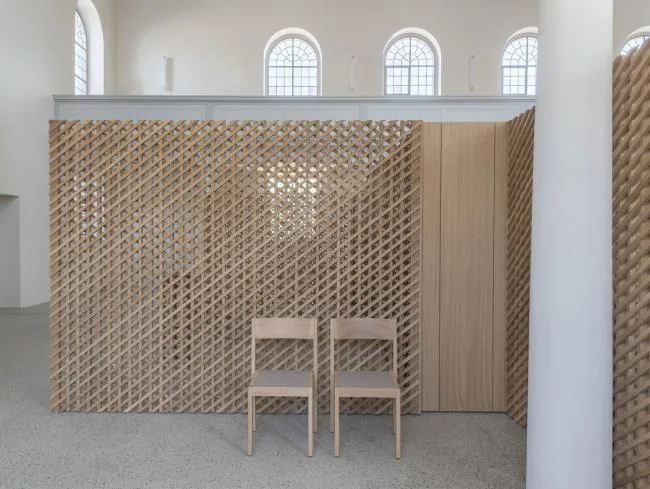
To maximize flexibility, all furnishings within the church are designed as movable pieces. The most significant new feature is a movable wall along the church’s longitudinal axis, which can be opened or closed to create different spatial layouts and proportions. This wall allows the division of smaller resting areas, giving the church multiple uses.
All fixtures are crafted from natural oak, providing a subtle contrast to the existing structure and restoring the bright, unified color palette.
Design Drawings:
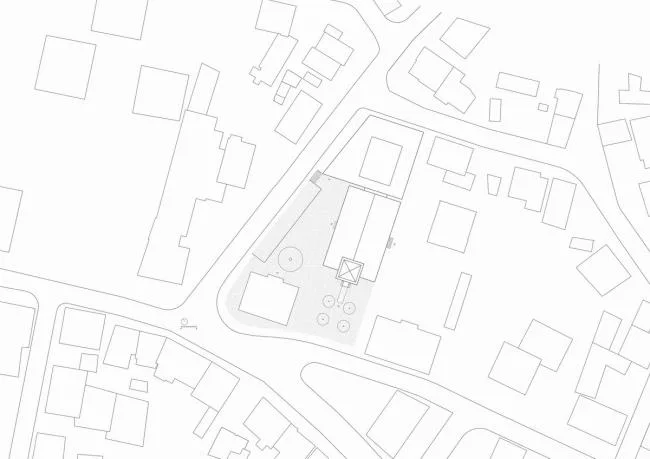
▲ General layout plan
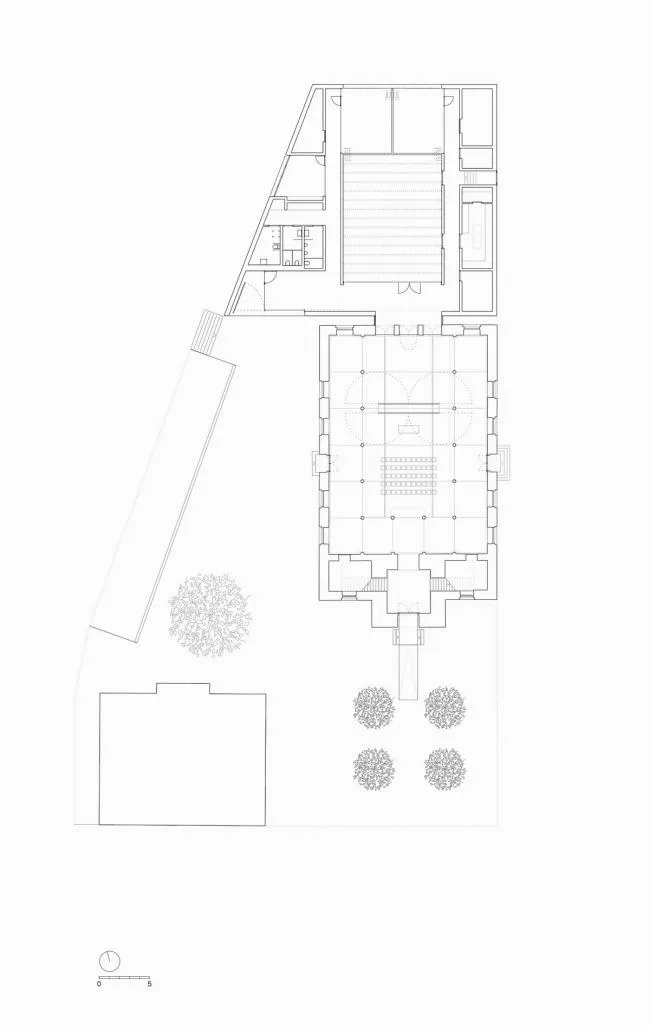
▲ Plan view
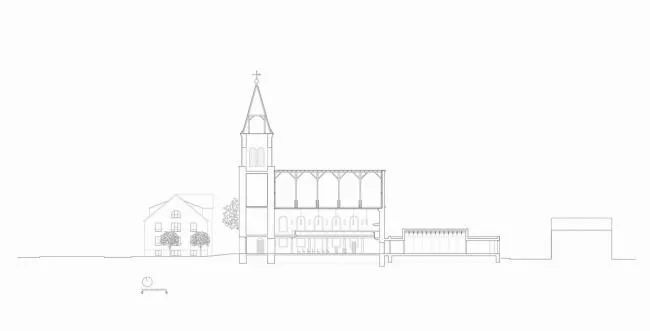
▲ Sectional view
Project Information:
Architectural Firm: VON M
Location: Kehl, Germany
Category: Adaptive Reuse
Design Team: Márcia Nunes, Timm Radt, Marcin Wasag
Building Area: 1,377 m²
Project Year: 2018
Photographer: Zooey Braun
Client: Evangelical Church Kehl
Construction: Engineering Bureau for Construction Rope












Must log in before commenting!
Sign Up