

On September 21st, SOHO China unveiled its latest architectural marvel, Bund SOHO, located in Shanghai. This project represents the integration of the historic Bund area and marks the first fully completed development in Shanghai’s Bund core zone in the past 60 years.
Project Overview:
Bund SOHO is situated in Shanghai’s Huangpu District, bordered by Zhongshan East Second Road to the east, Xin’an Road to the north, Yong’an Road to the west, and Xinkai Road and Renmin Road to the south. The total construction area covers 189,449 square meters. Six buildings are arranged along the site’s perimeter, creating a vibrant commercial pedestrian street complemented by additional retail spaces.
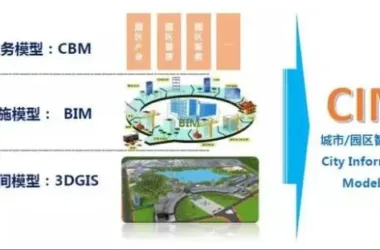
As a key landmark in SOHO China’s strategic development, Bund SOHO not only aims to deliver a high-quality commercial complex but also to establish a harmonious urban landmark that redefines the Bund’s skyline. To ensure the highest project standards, all stakeholders collaborated using Building Information Modeling (BIM), moving beyond traditional siloed workflows and establishing a 3D collaborative environment. This approach has laid the groundwork for improved project quality and efficiency, with BIM technology reducing construction and installation costs by approximately 10%.
Main BIM Technology: 5D Progress and Cost Modeling
The use of 5D simulation enables the project team to perform more precise and flexible analyses and optimizations of construction schedules. BIM facilitates accurate management, monitoring, and control of both design and construction progress. The 5D model compares actual progress against planned timelines, manages progress payments, and conducts detailed cost analysis.
Construction Calculation and Support
The general contractor uses BIM models to provide real-time feedback on-site conditions, streamlining design revisions and enhancing project management. BIM’s precise quantity takeoffs and cost calculations have shortened timelines for pricing and improved payment review efficiency.
Green Building Design Integration
The BIM model is imported into specialized green building analysis software to conduct environmental performance assessments. Analysis results are fed back into the BIM design model for iterative adjustments. This process ensures an optimal balance between sustainability and design goals through repeated evaluation and refinement.
Cloud Technology Implementation
By adopting a cloud-based collaboration platform, the project overcame the limitations of traditional local teamwork, such as information loss, duplication of effort, and error frequency. The cloud system enables seamless information sharing, full digitization, effective integration, automated processing, and early error detection, significantly boosting work efficiency.
3D Collaborative Design Process
A tailored 3D collaborative workflow was developed and continuously refined throughout the project, setting a standardized foundation for BIM-based teamwork across all phases of the development.
Since the initial release of Bund SOHO’s renderings in 2011, the project has sparked widespread debate due to its design similarities to the “Cloud Cake” and “Harmonica” buildings. Public concern has centered on the potential impact of this new architecture on the Bund’s traditional international style.
Located on Xinkaihe Road and Zhongshan East Second Road, the project borders the Bund International Architecture Complex to the north and is separated from Bund 8-1 to the south. The total floor area is approximately 190,000 square meters, comprising four high-rise buildings ranging between 60 and 135 meters tall. It stands as a major development for the South Bund area.

Viewed from Lujiazui Riverside looking toward the Bund, the buildings display a yellow-brown facade reminiscent of the Bund’s historic architecture. While the overall style remains consistent with the original renderings, some adjustments have been made at the building bases.
Yin Jie, Chief Architect of SOHO China, addressed public concerns by explaining two key modifications made during construction: First, the building orientation was altered to better align with the Bund’s historic structures. Second, the building bases were adjusted to match the height of the old Bund buildings, reinforcing visual harmony.
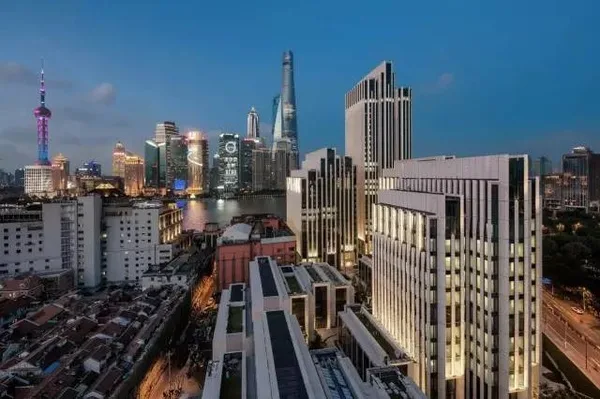
Public reaction to Bund SOHO’s modern design has been mixed. Many visitors and locals appreciate the building’s distinctive appearance and its nod to the Bund’s historical atmosphere. However, some feel the architectural style remains too contemporary, contrasting with the Bund’s traditional character. Additionally, the building’s height appears noticeably taller, leading to a somewhat abrupt visual impact.
Notably, part of Bund SOHO will adopt an innovative online leasing and rental auction model, allowing the market to determine rental positioning freely. Industry experts believe this approach could influence the regional office rental market dynamics.












Must log in before commenting!
Sign Up