
Owners of public infrastructure projects carry a significant responsibility to the community. They must deliver facilities that not only meet user needs but also minimize construction challenges. Studies show that when economically efficient measures are demonstrated, the public is more willing to support and invest in these projects. Furthermore, as public project owners increasingly turn to public-private partnerships and private financing, financial collaboration among stakeholders continues to strengthen, fostering greater cooperation throughout design and construction stages.
Dassault Systèmes offers a civil engineering design and construction industry solution based on its collaborative 3DExperience platform. This platform enables real-time, synchronized access to design models and project data from any location and across multiple disciplines. It creates an interactive environment where homeowners, engineers, and municipal designers can work concurrently, share information, and ensure quality and efficiency throughout the project lifecycle.
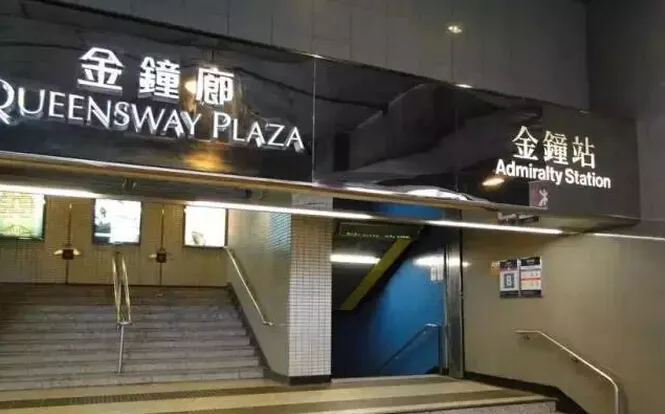
A notable example is Syntegrate’s expansion project at Admiralty Station, part of the eastern section of Hong Kong’s South Island Line—the city’s first subway interchange involving four lines. The continuous underground excavation and construction present substantial risks, especially given the proximity to the existing Island Line and Tsuen Wan Line, as well as the operational Admiralty Station. High population density and numerous underground structures nearby further complicate the project.
“The project owner, MTR Corporation, acknowledges that comprehensive BIM implementation from construction through operation can enhance investment returns. Kier Laing O’ is the general contractor for the Admiralty Station expansion, while the Rourke and Kaden joint venture (KLKJV), an early adopter of BIM technology, is a pioneer in applying BIM in construction. For this project, the joint venture uses Dassault Systèmes’ 3DExperience platform as its BIM solution.” Syntegrate works closely with the joint venture to optimize construction sequencing—from excavation coordination to concrete pouring and frame support. Through meticulous planning at each phase, the general contractor significantly reduces rework and avoids schedule delays in this complex undertaking.
In summary, the civil engineering design and construction industry solution addresses key challenges faced by large-scale infrastructure managers:
Minimize waste and rework: Unlike traditional methods, conceptual design models integrate manufacturing data, costs, quantities, specifications, and schedules. Over 75% of projects can be generated using customizable, reusable automatic templates.
Enhance work efficiency: A unified platform captures valuable knowledge from team members and clients, making critical information readily accessible and usable throughout the project.
Boost collaboration: Tools extend across conceptual design, engineering, manufacturing, construction, and ownership teams, ensuring simultaneous, real-time access to design models and project data, facilitating seamless engineering changes.













Must log in before commenting!
Sign Up