
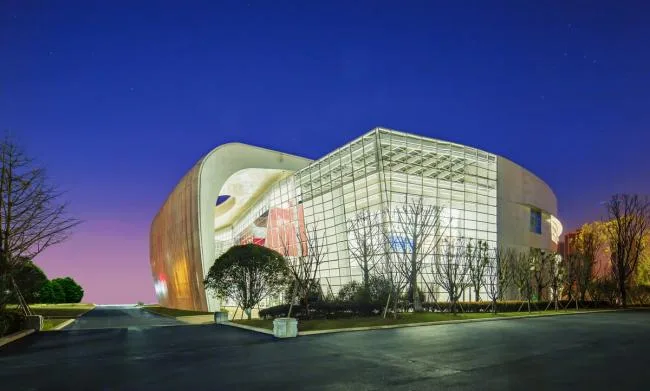
▲ Night view
Situated on the north-south axis of Chongqing Real Estate Vocational College within Chongqing University City, the library plays a crucial role in enhancing the campus layout. Its prime location and architectural scale make it the campus’s most significant landmark.
The overall design emphasizes harmony between the building and its surroundings, thoughtfully integrating the library into the campus road network. It reflects cultural and functional qualities appropriate for a library. The north facade serves as the backdrop for the Zhou Enlai statue along the campus axis, the south faces the sports field allowing full visual presence, the east side borders the dormitory area where noise and visual impact are carefully managed, and the west side looks out toward the Science and Technology Museum, offering clear, transparent views.
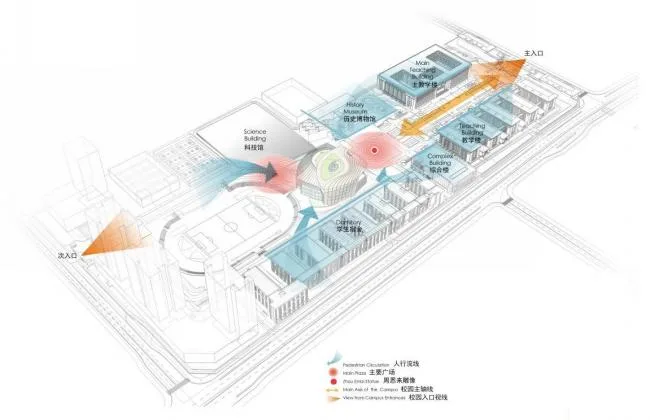
▲ Campus Planning Analysis Diagram
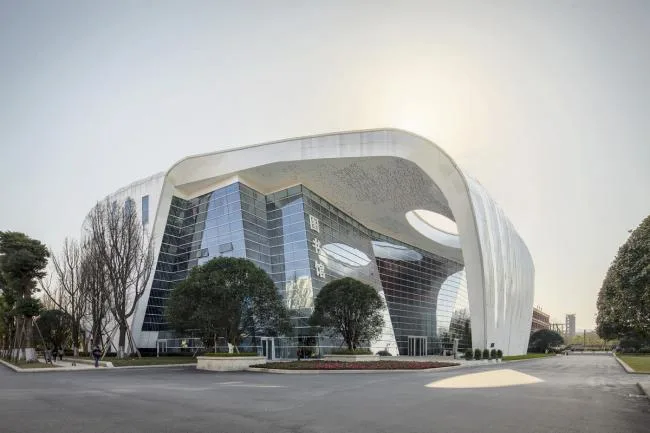
▲ Library Day View
The library features entrances on the north and southwest sides, with freight access on the east. The spatial layout highlights the building’s playful qualities, including a sunken plaza on the southwest side that cleverly utilizes underground space and facilitates access to subterranean levels.
Architectural Exterior Design
Inspired by the delicate shape of a lantern flower, the library’s form displays solid walls on the north and east sides, reminiscent of petals, branches, and leaves encasing the structure. In contrast, the west and south facades are composed of glass curtain walls, crystal-clear like lantern petals, with flowing curved surfaces that evoke the dynamic form of a blooming flower.
These elements complement the surrounding academic and residential buildings, establishing the library as a landmark and visual focal point across campus.
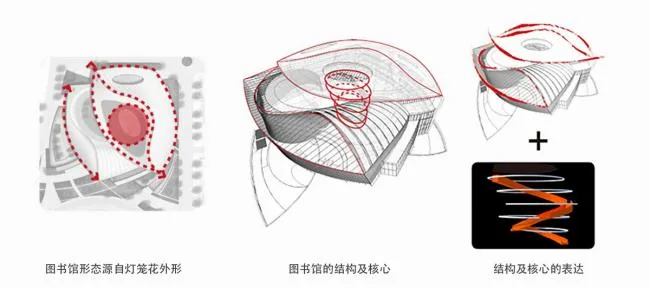
▲ Conceptual analysis diagram
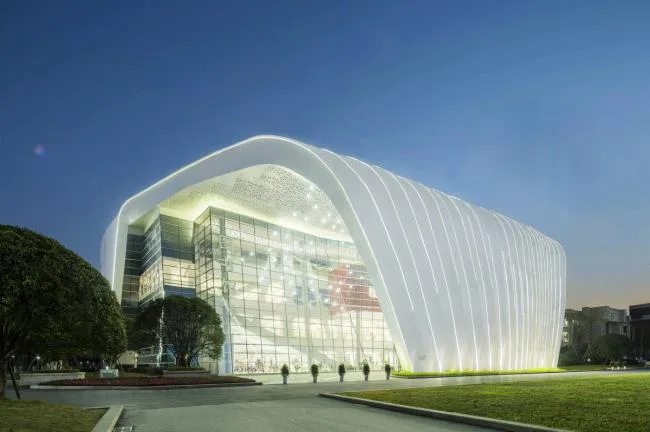
▲ Night view
The library’s facades combine glass curtain walls and perforated metal panels, creating distinctive characteristics on each side. The north facade, facing the main campus axis and the Zhou Enlai statue, employs the concept of a traditional Chinese “shadow wall” to form a transitional space leading into the library while providing an elegant backdrop for the statue.
The main northern entrance aligns with the endpoint of the campus axis, seamlessly integrating the building into the campus fabric. At the heart of the library, an elliptical atrium features a tiered retreat and a unique rotating staircase resembling a lantern flower bud, forming the core of the building.
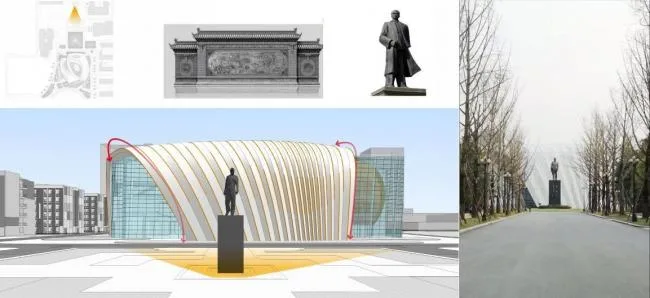
▲ North side spatial concept analysis diagram
Each facade’s materials and design elements serve specific functions: the north facade uses the “shadow wall” concept to create a welcoming transitional space and backdrop; the south facade overlooks the sports field and is openly designed; the west facade combines perforated panels and glass to create a horizontal wrapping effect and a clear visual corridor; while the east facade, facing the dormitory area, features aluminum panels and strip windows, offering a simple, closed facade that reduces noise and visual disruptions.
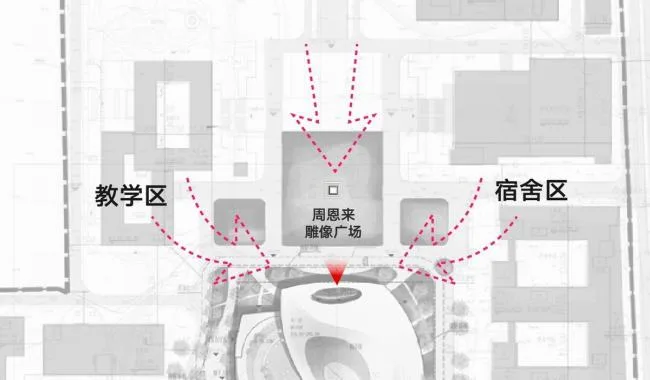
▲ Analysis diagram of the main entrance
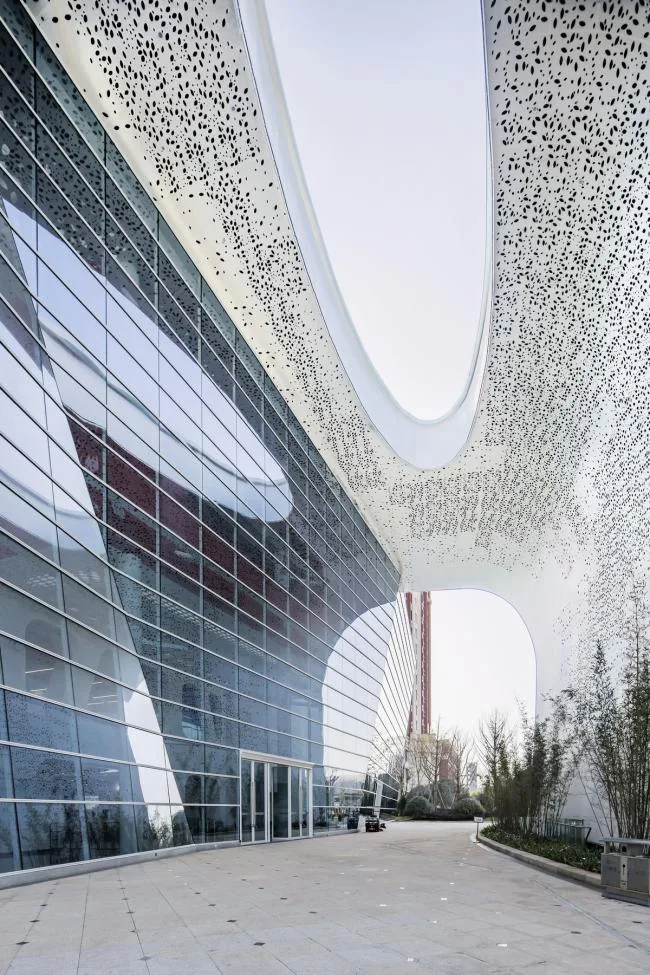
▲ Realistic view of the north main entrance
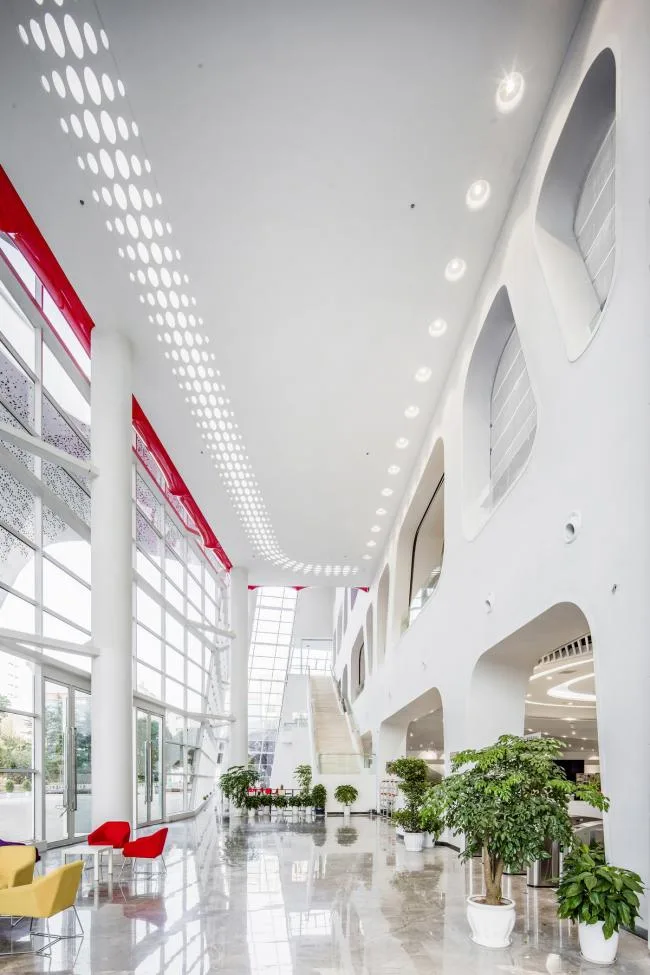
▲ Indoor entrance on the north side
The west facade, facing the Science and Technology Museum, is primarily a reading area. It features a combination of glass curtain walls and perforated aluminum strips that provide shading from direct sunlight. The density of the perforated panels gradually increases from north to south. The roof follows a gentle undulating shape, adding a distinctive architectural character.
The east facade, adjacent to the student dormitory, functions as a library service area with a simple exterior composed of aluminum panels and strip windows.
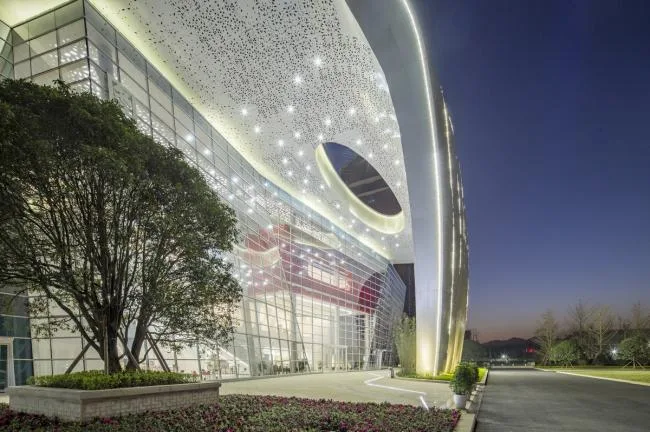
▲ Night view
Graphic Design and Functional Layout
The library spans four floors above ground and one underground level, totaling 24 meters in height. Its functional layout follows the principles of “dynamic spaces at the bottom and quiet zones at the top” vertically, and “transparency on the southwest and enclosure on the east” horizontally.
In planning the interior, orientation and natural light were key considerations. The design ensures that all areas receive ample natural light while meeting the distinct functional needs of each space.
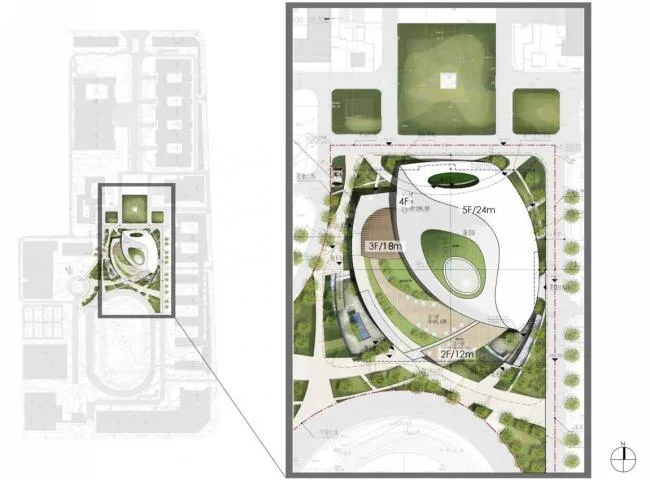
▲ General layout plan
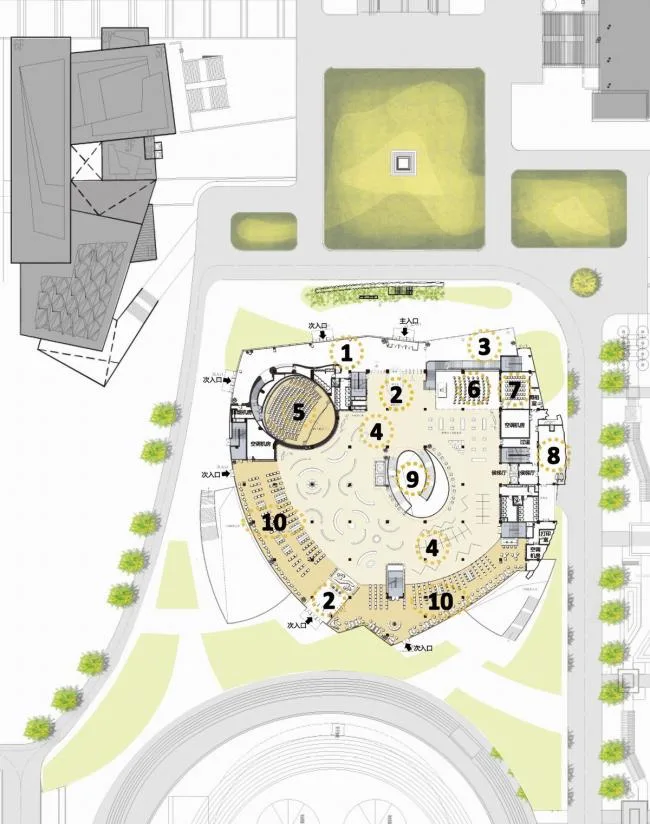
▲ First floor plan
The arrangement of each floor reflects the openness and efficiency expected of contemporary libraries, incorporating modern technology and management methods. The layout is compact and well-organized, ensuring easy circulation.
Functions such as book collection, integrated collection and reading, leisure reading, private study, and communication areas are thoughtfully distributed to promote interaction, privacy, and efficient retrieval.
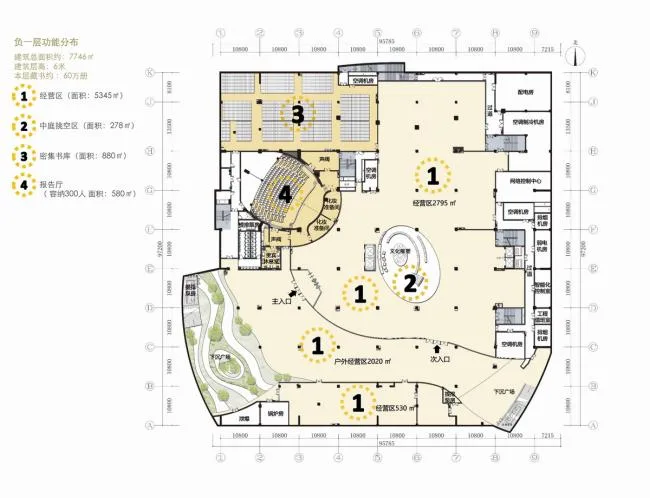
▲ Negative Floor Plan
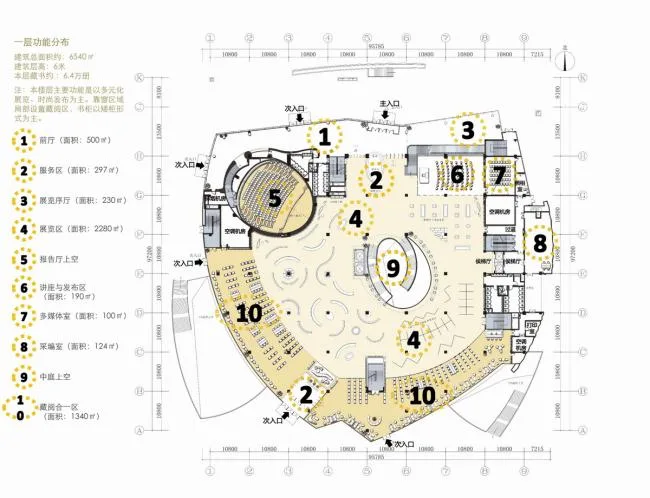
▲ First floor plan
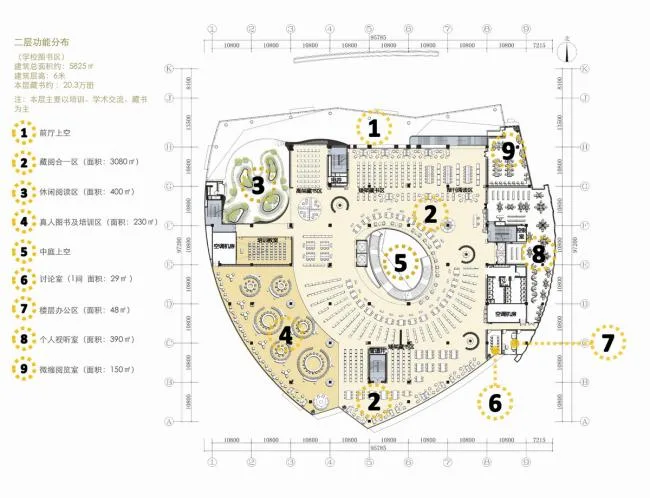
▲ Second floor plan
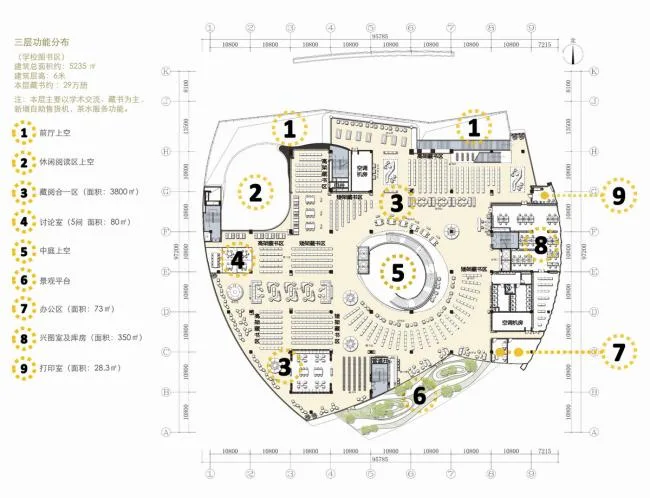
▲ Third floor plan
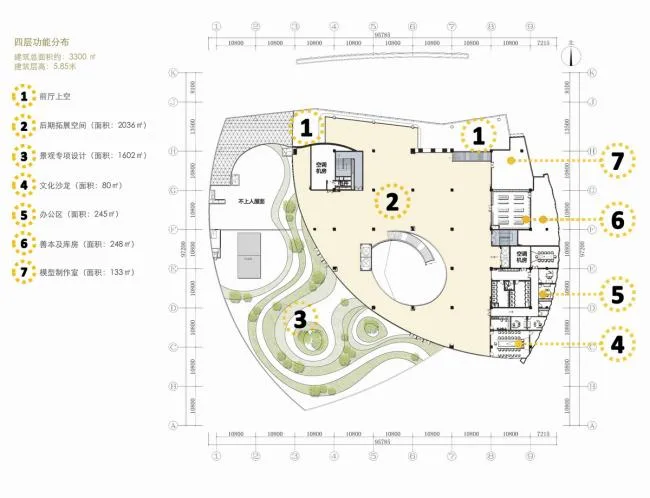
▲ Fourth floor plan
Space Design
1. Main Entrance Space
The main entrance, located on the north side, offers a tranquil transition from the outdoors to the interior, framed by towering bamboo groves. Sunlight filters through an oval opening in the roof, casting moving shadows on the adjacent wall that change throughout the day, enriching the minimalist facade.
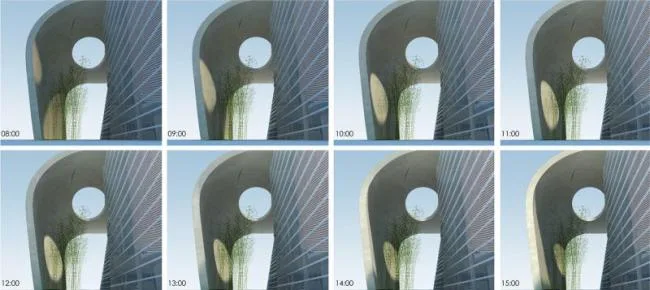
The roof opening creates shifting light patterns over time.
2. Courtyard Space
Modern lifestyles embrace cross-disciplinary integration, blending commerce with cultural spaces. Reflecting this, PHA introduced elements akin to commercial courtyards and dining areas into the library’s design.
The interlocking atrium and spiral staircase generate a dynamic central space. Unlike traditional libraries focused solely on knowledge transmission, this library emphasizes shared spaces and information exchange, with the spiral staircase connecting multiple levels within the atrium.
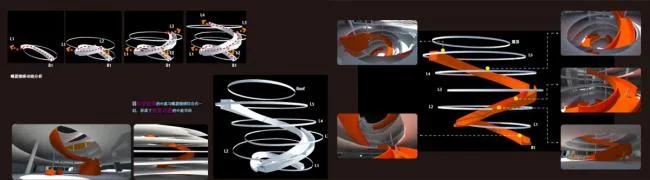
▲ BIM analysis diagram of atrium staircase
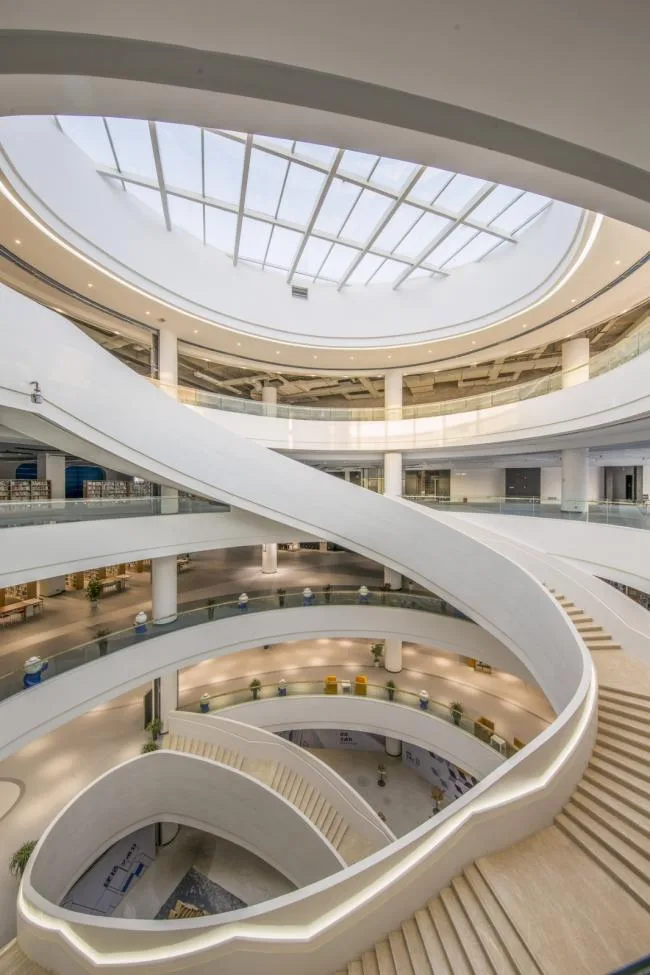
▲ Realistic view of courtyard staircase
3. Interior Design
The interior design integrates architectural motifs with graphic elements inspired by books, enriching their meaning and extending the architectural language into the interior space. This creates a harmonious, warm, and inviting environment for reading and social interaction.
The main entrance hall, soaring 18 meters high, features clean lines that form elegant curves. A red membrane structure shaped like a lantern serves as a visual focal point and wayfinding element.
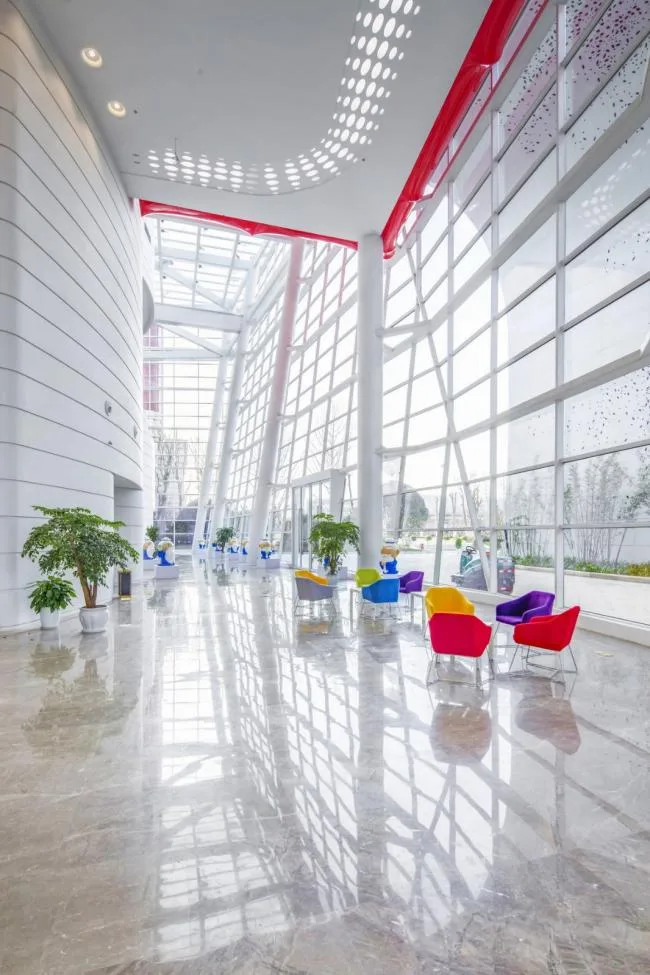
▲ Entrance lobby
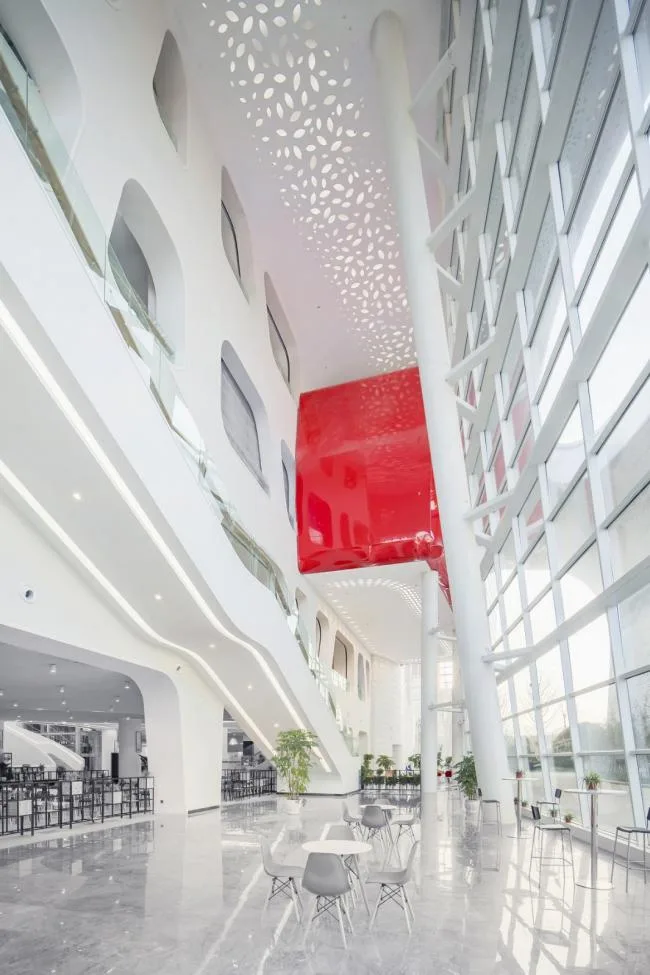
▲ Entrance lobby
Interior zones are carefully designed considering sunlight and landscape impacts on reading comfort, ensuring privacy where needed. The layout balances open shelving with window seating to minimize distractions. Leisure areas include group discussion and individual study rooms with varied furniture arrangements, supporting diverse academic and social activities.
Roof Design
The north roof exterior is fully clad in parallelogram-shaped aluminum panels, angled to create a jagged surface that plays with light and shadow throughout the day. LED light strips of varying lengths are embedded at the intersections of panels, concealed behind transparent acrylic plates, creating a waterfall-like illumination effect at night.
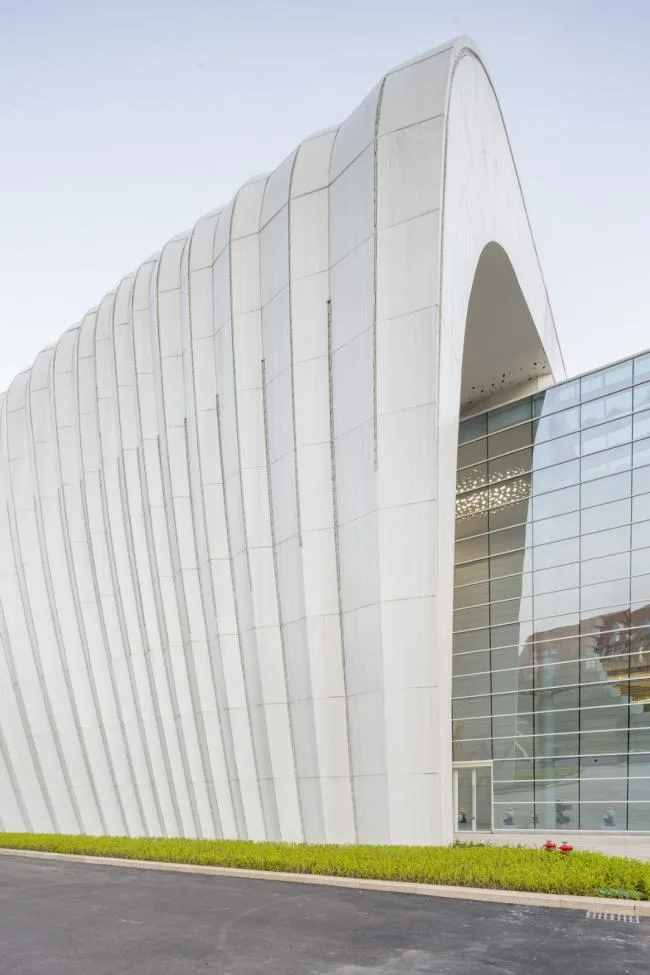
▲ Realistic roof view
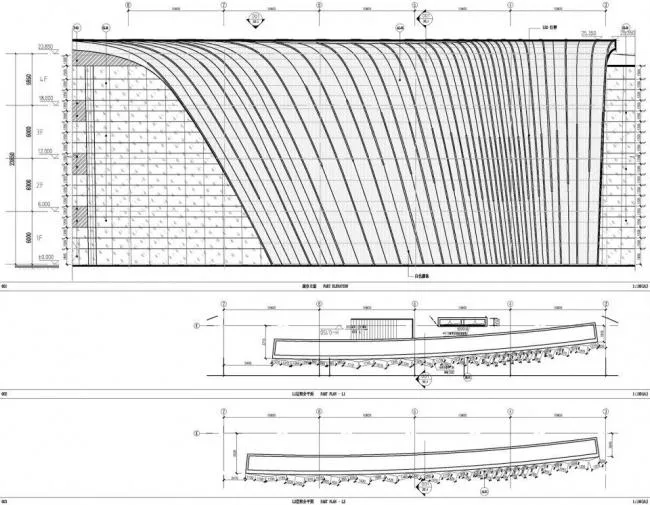
▲ Roof elevation view
Inside the expansive roof, the design draws inspiration from a “starry sky,” symbolizing students’ quest for knowledge. The elliptical roof opening represents a galaxy’s center, surrounded by denser “starlight” patterns closer to the opening. This effect is achieved using four distinct patterns of perforated aluminum plates, designed with varying densities of “petals” and “circles,” arranged to form a “nebula”-like motif.
All aluminum panels measure 2000mm by 1200mm, including four perforated patterns and one solid panel. Together, these five patterns compose the inner surface of the northern roof cover.
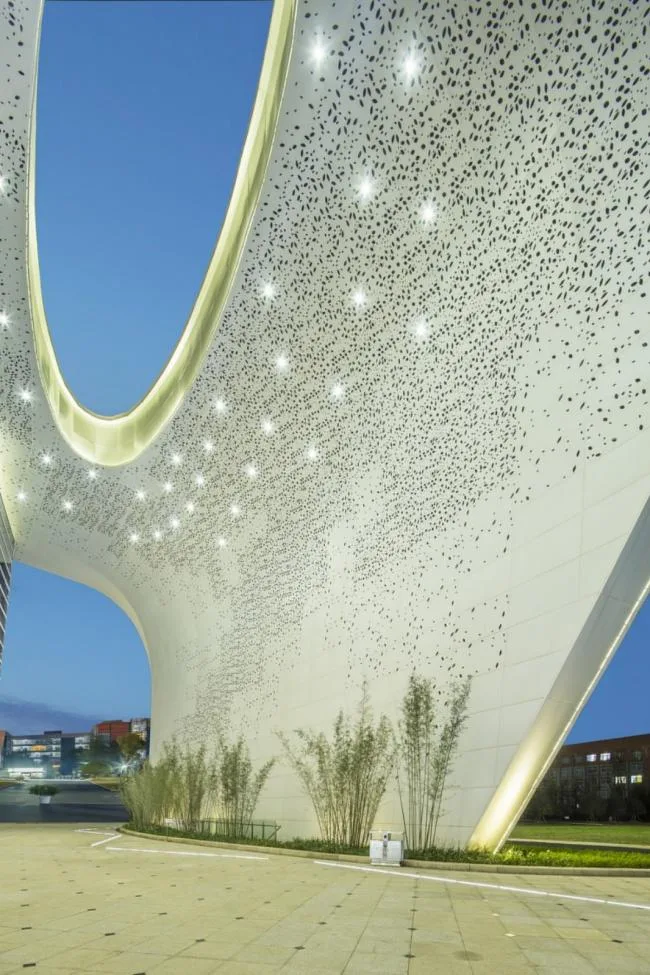
▲ Lighting effects
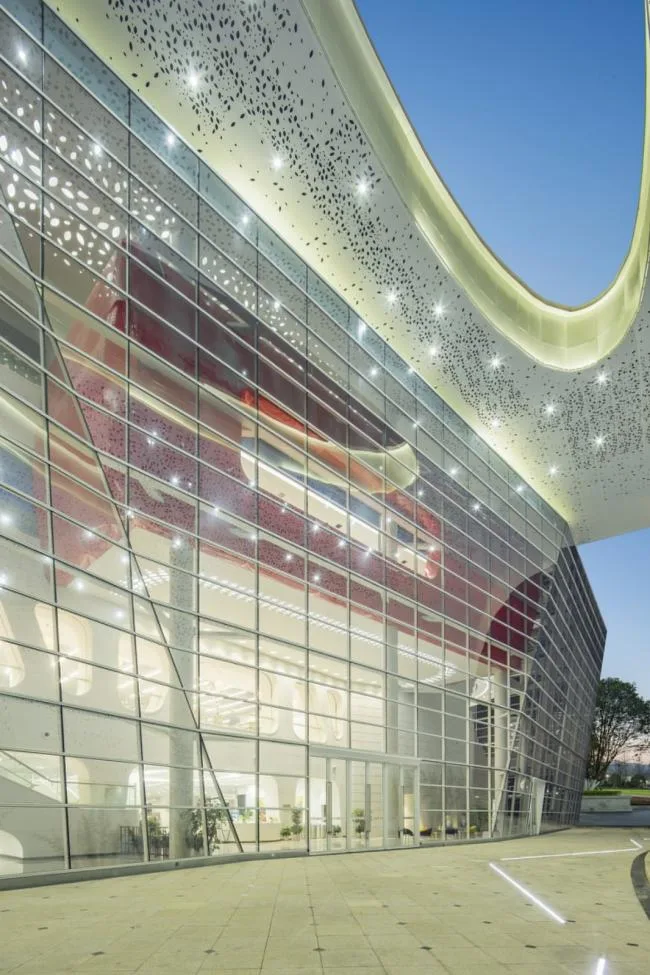
▲ Lighting effects
The four perforated panel patterns (labeled A, B, C, D) are complemented by their 180-degree rotated variants (A’, B’, C’, D’), totaling nine unique panel types. Lighting is distributed evenly behind these panels, with higher perforation areas receiving more light sources. During installation, panels were randomly oriented to break repetitive patterns, creating a natural, slanting starlight effect when illuminated at night.
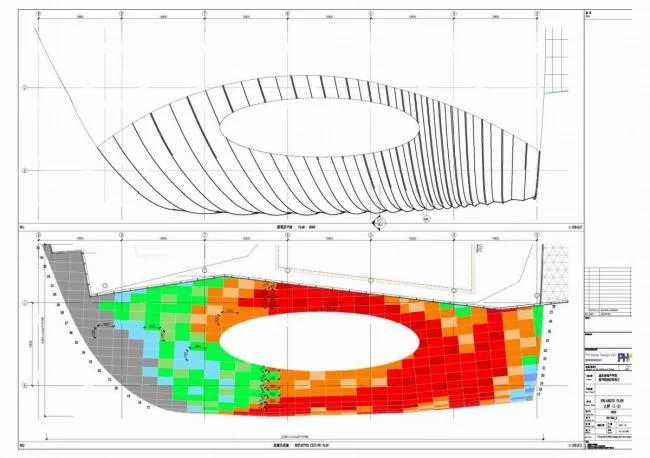
▲ Distribution of aluminum panels on the inner roof surface
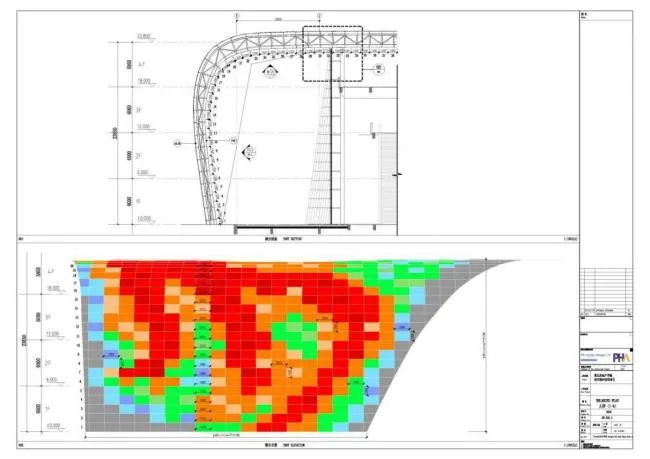
▲ Distribution of aluminum panels on the inner roof surface
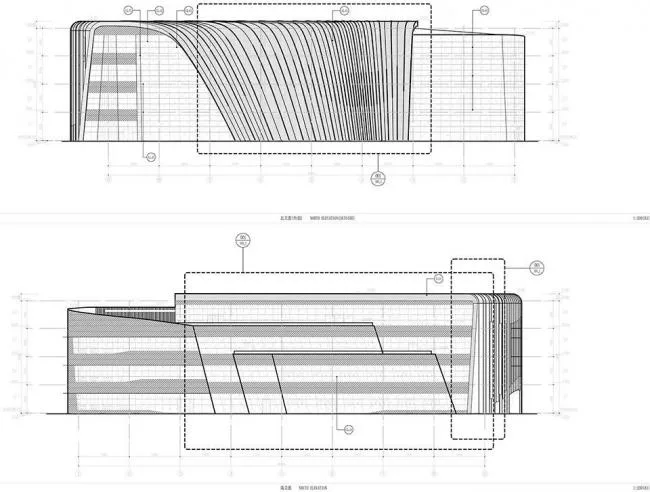
▲ North and South Facades
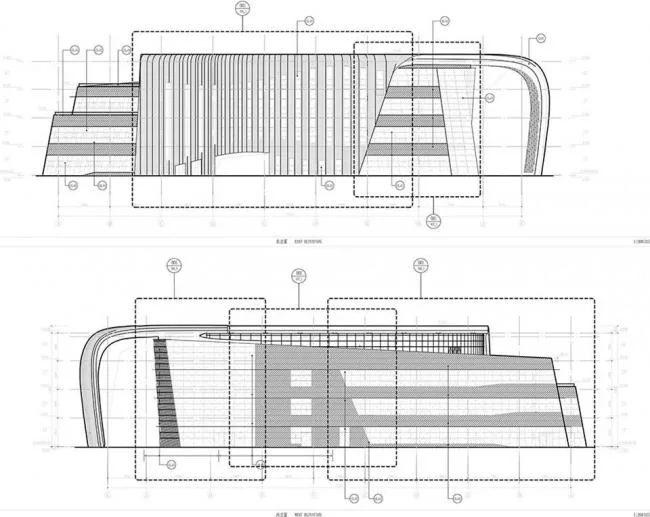
▲ East and West Facades
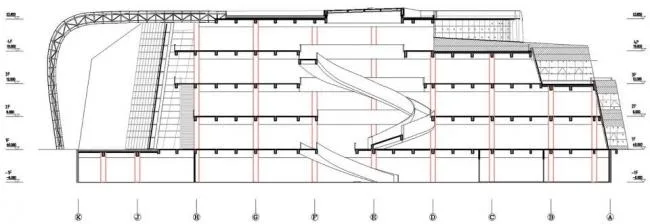
▲ Sectional view
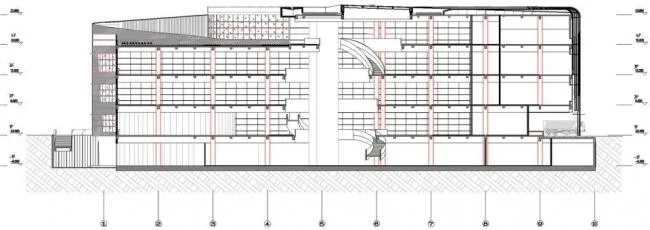
▲ Sectional view
Project Information:
Designer: Paiang International Architectural Design Consultant
Location: Chongqing University City, Chongqing, China
Category: Library
Lead Architect: Xu Ziping
Design Team: Xu Ziping, Wu Jianzhao, Li Xu, Luo Leixin, Wang Jiachen, Xiang Junda
Building Area: 28,064.29 square meters
Project Year: 2015
Structural Systems: Frame shear wall, pipe truss, steel structure
Floors: 4 above ground, 1 underground
Awards: 2016 Asia Pacific Real Estate Awards – Five Star Best Public Service Building in China; 2018 A&D Building+Design Award – Best Public Space












Must log in before commenting!
Sign Up