
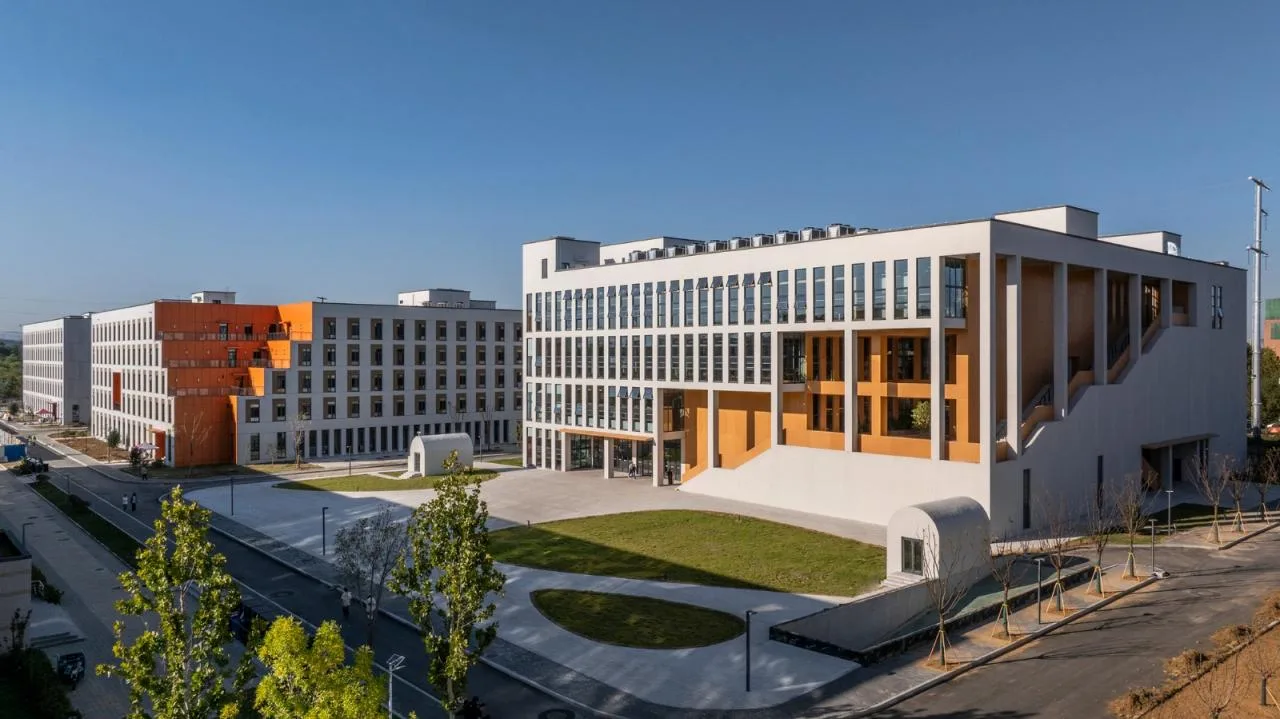
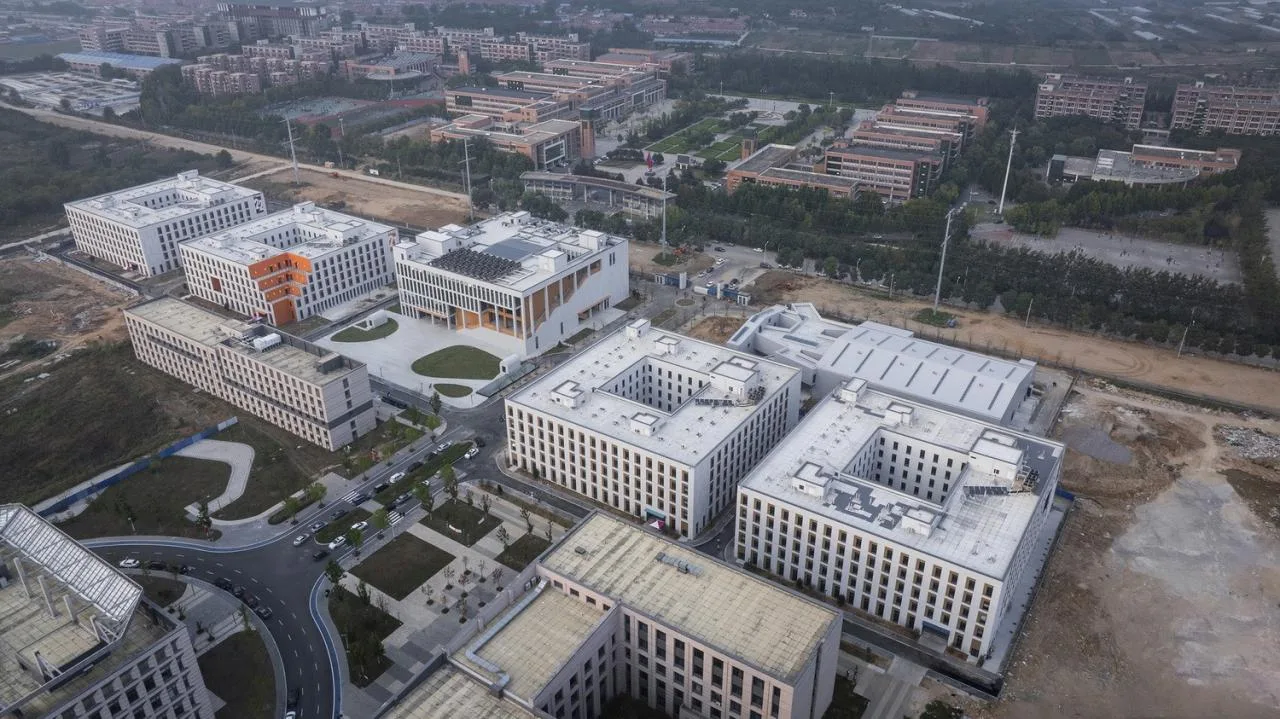
1. Project Overview: Yantai City University of Science and Technology is situated in Fushan District, Yantai City, Shandong Province, China. The project site covers an approximately trapezoidal area, measuring about 600 meters east to west and 400 meters north to south. The southern edge borders the completed Phase I development, with a planned land area of 351 acres. Combined with the 150 acres from Phase I, the university will span a total of 501 acres.
Currently, five buildings have been completed in Phase II-1, including a centrally located library, two teaching buildings, a sports hall, and a dormitory. These total approximately 60,000 square meters of constructed space. Before starting Phase II-2, adjustments were made to the overall campus plan for this 351-acre area. The goal was to reorganize the layout around the existing buildings and road networks to create a student-centered, open campus environment that reflects the school’s new educational philosophy: “student-centered, learning everywhere, innovation everywhere”.
Phase II-2 will be developed in stages, featuring six main buildings: one cafeteria, four dormitories, and one equestrian facility. The total construction area will reach about 88,000 square meters, with roughly 80,000 square meters above ground.
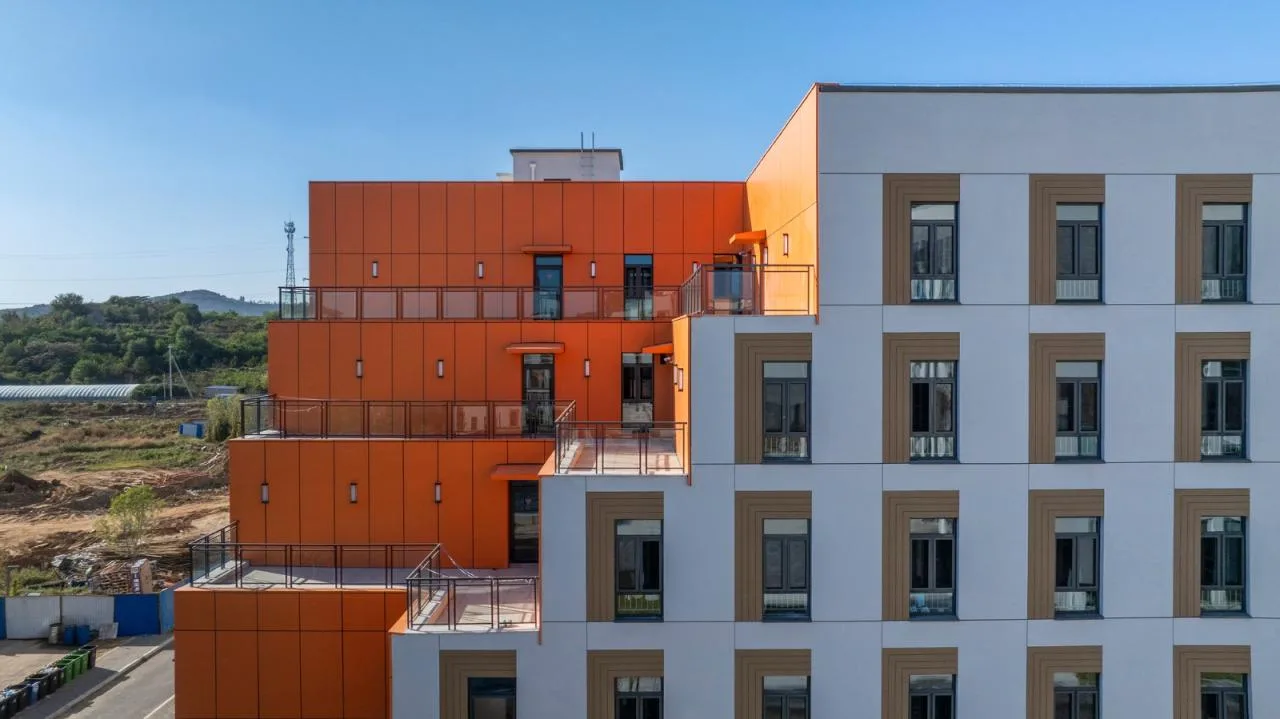
2. Adjusting the Original Plan: The campus planning is centered around students. In today’s society—defined by knowledge sharing and open information—the role of universities is rapidly evolving. The focus shifts from merely transmitting knowledge to producing it, from centralized academic inheritance to collaborative innovation across disciplines.
This transformation affects the campus itself, moving from an “ivory tower” to a “knowledge marketplace.” It also changes the role of students, from apprentices to knowledge creators, and shifts management from teacher-centered to student-centered.
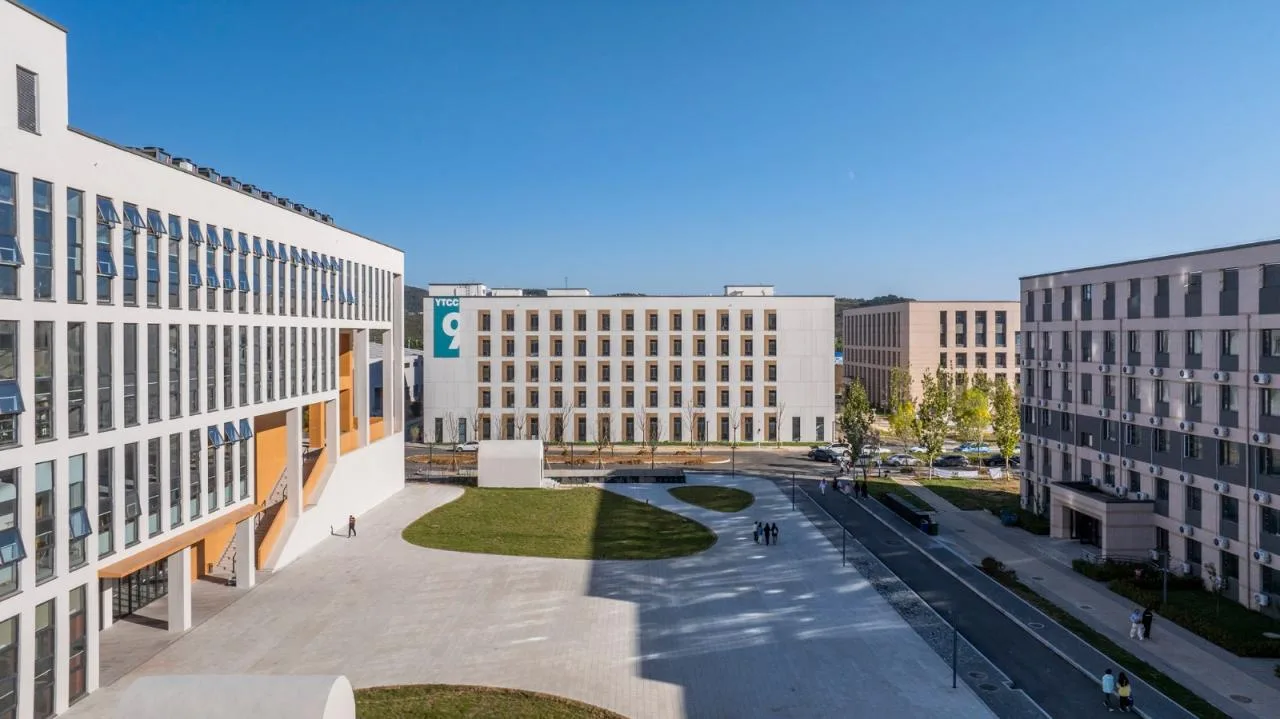
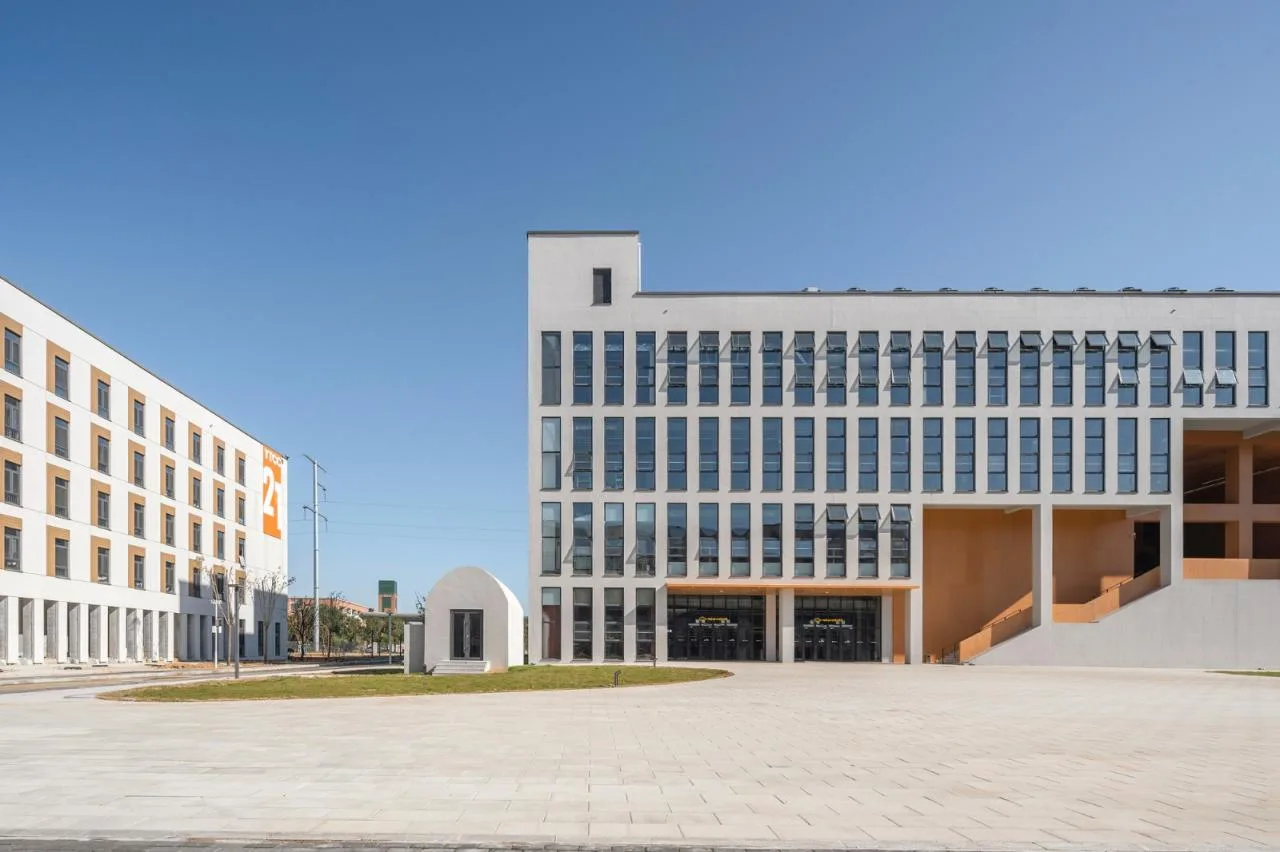
The rise of mobile and open information networks means libraries no longer hold the exclusive role as knowledge providers. Instead, ubiquitous public spaces blend learning with daily life, work, and leisure. The campus breaks down barriers between disciplines, fostering collaborative and interdisciplinary innovation.
Consequently, the revised plan shifts from a single central axis focused on the library to a decentralized, multi-centered, community-oriented open campus.
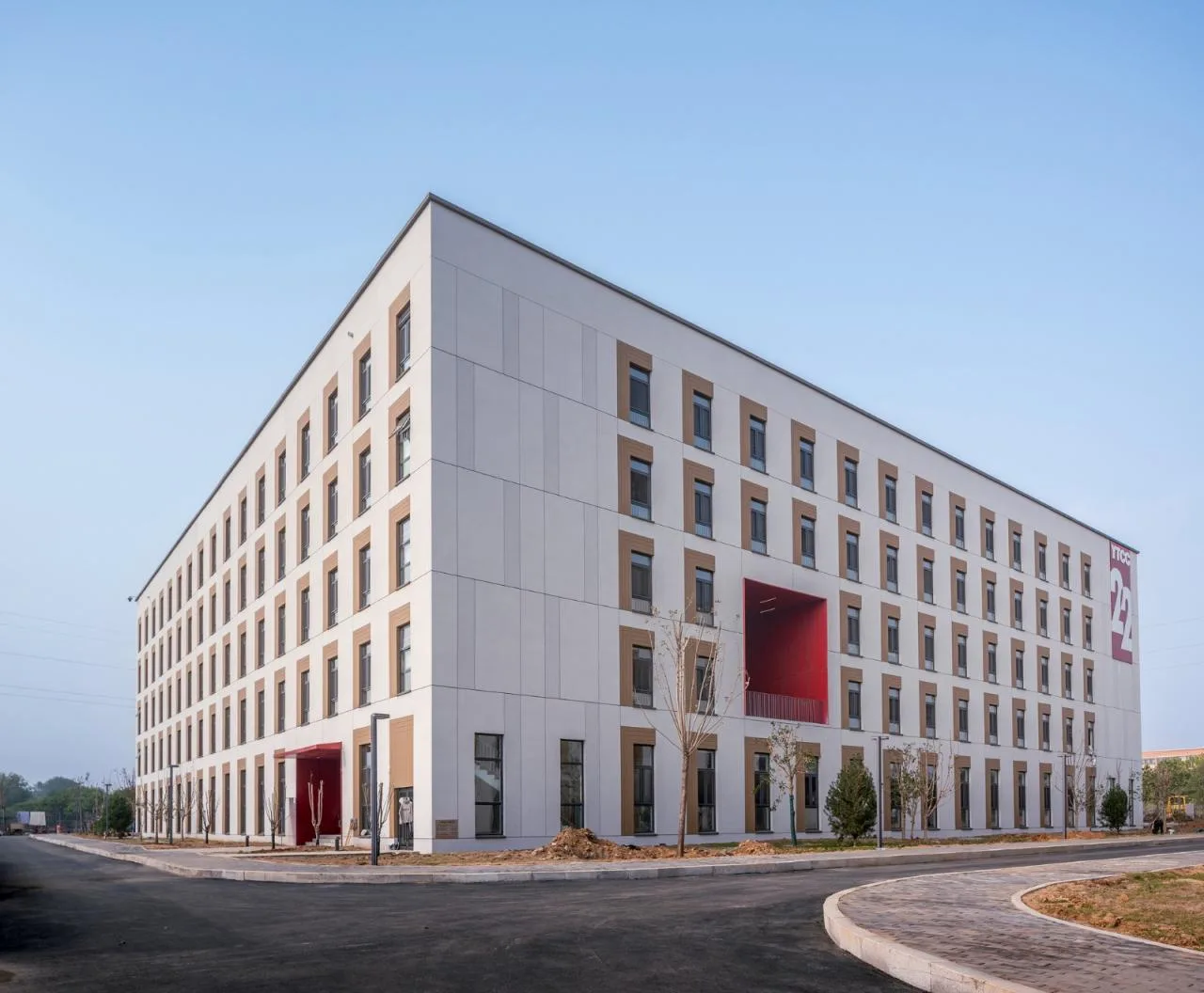
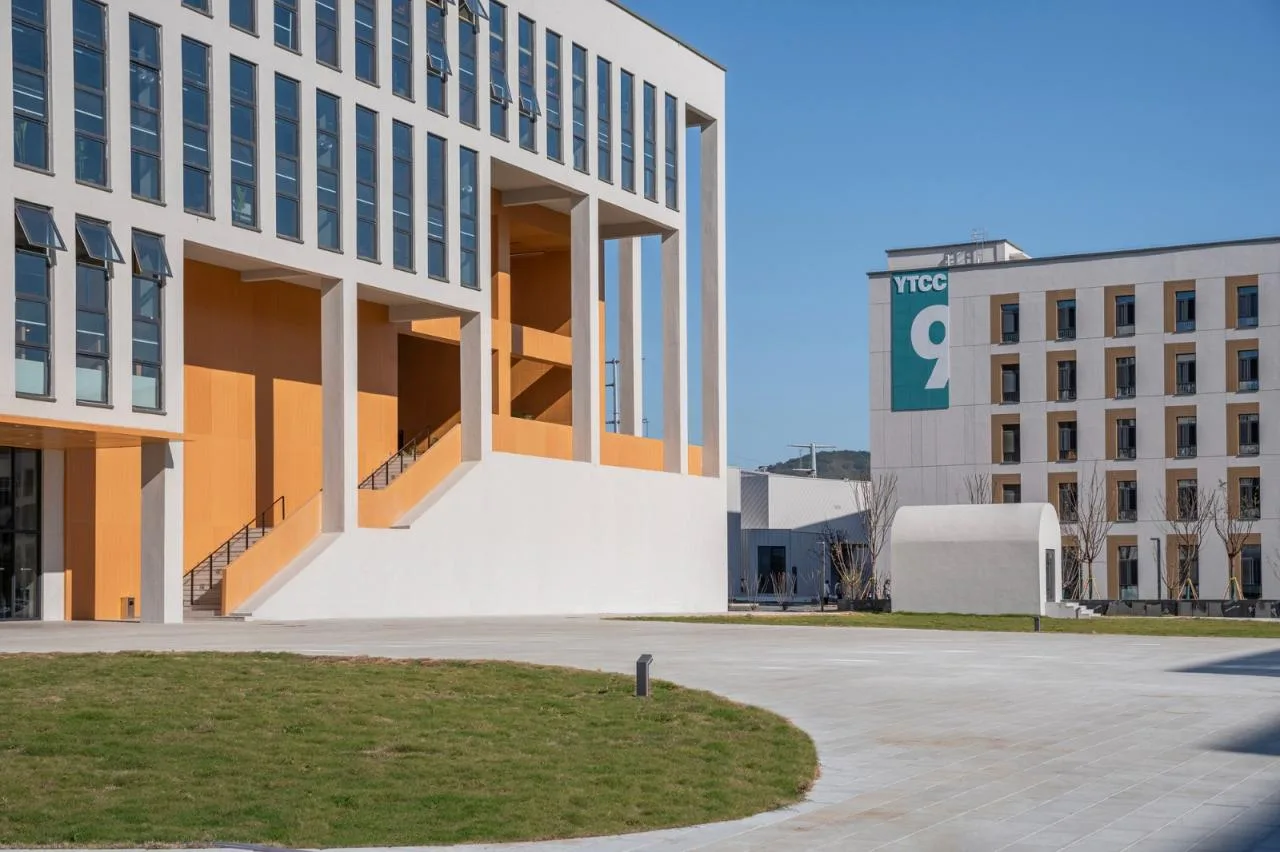
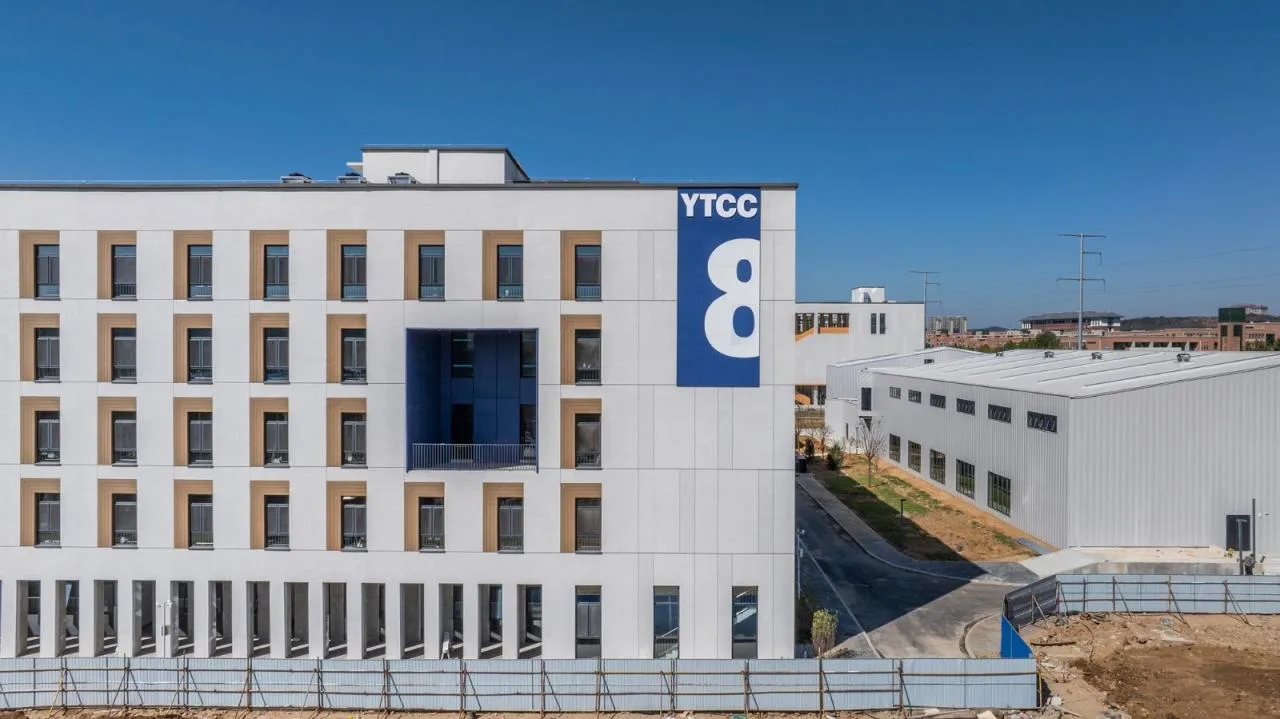
3. Design Strategy: The new campus plan treats the university like a city, emphasizing the integration of life, education, and urban planning. University is a critical transitional stage, where students move from a family-centered, introverted lifestyle to a more urban, extroverted one. Campuses play a key role in helping students become responsible, engaged citizens.
The original plan positioned the library at the geometric center, with a wide main road crossing the campus in a cross axis—favoring motor vehicles. The new layout retains the main entrance but introduces a slow-traffic system, prioritizing pedestrian experience to improve campus life quality by calming vehicle speeds.
The circulation forms a loop around the campus boundary, facilitating some separation of pedestrian and vehicular traffic internally.
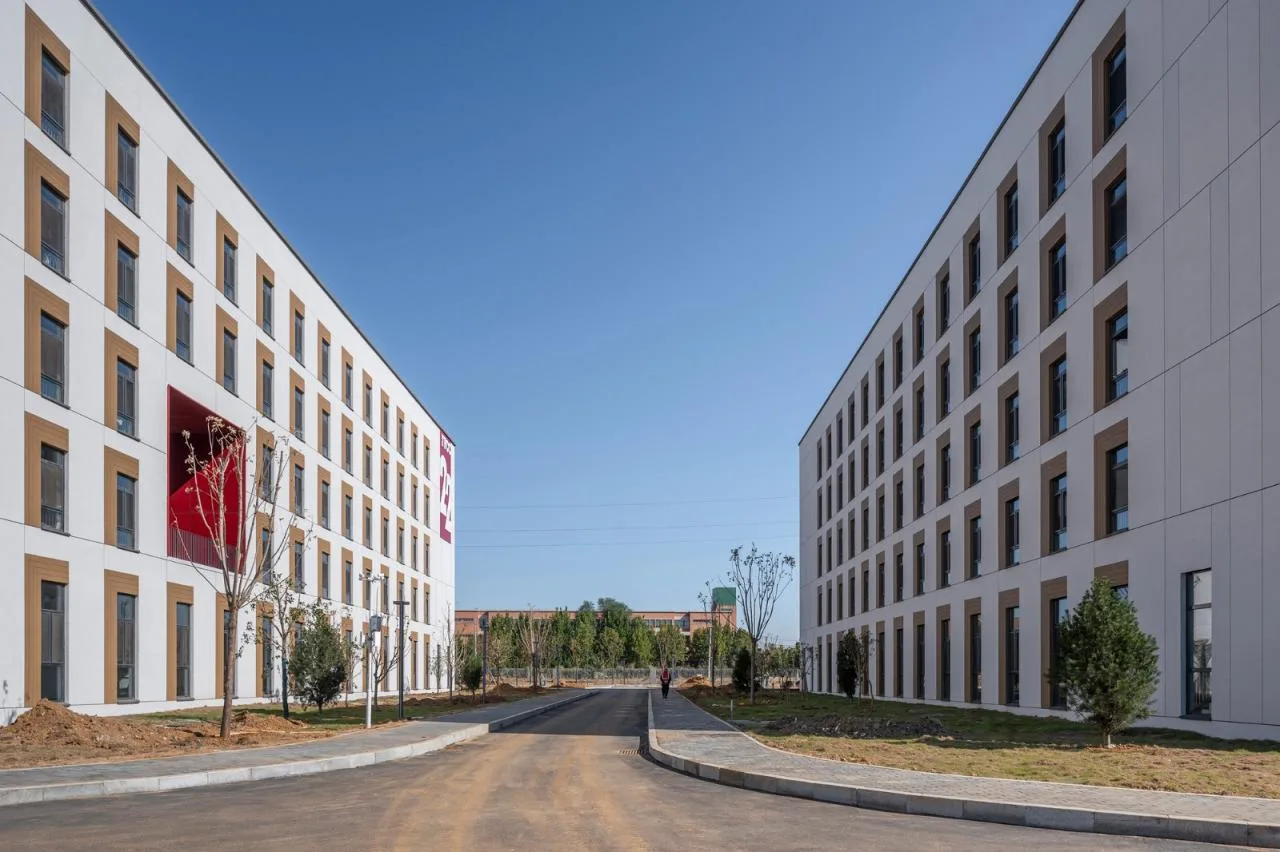
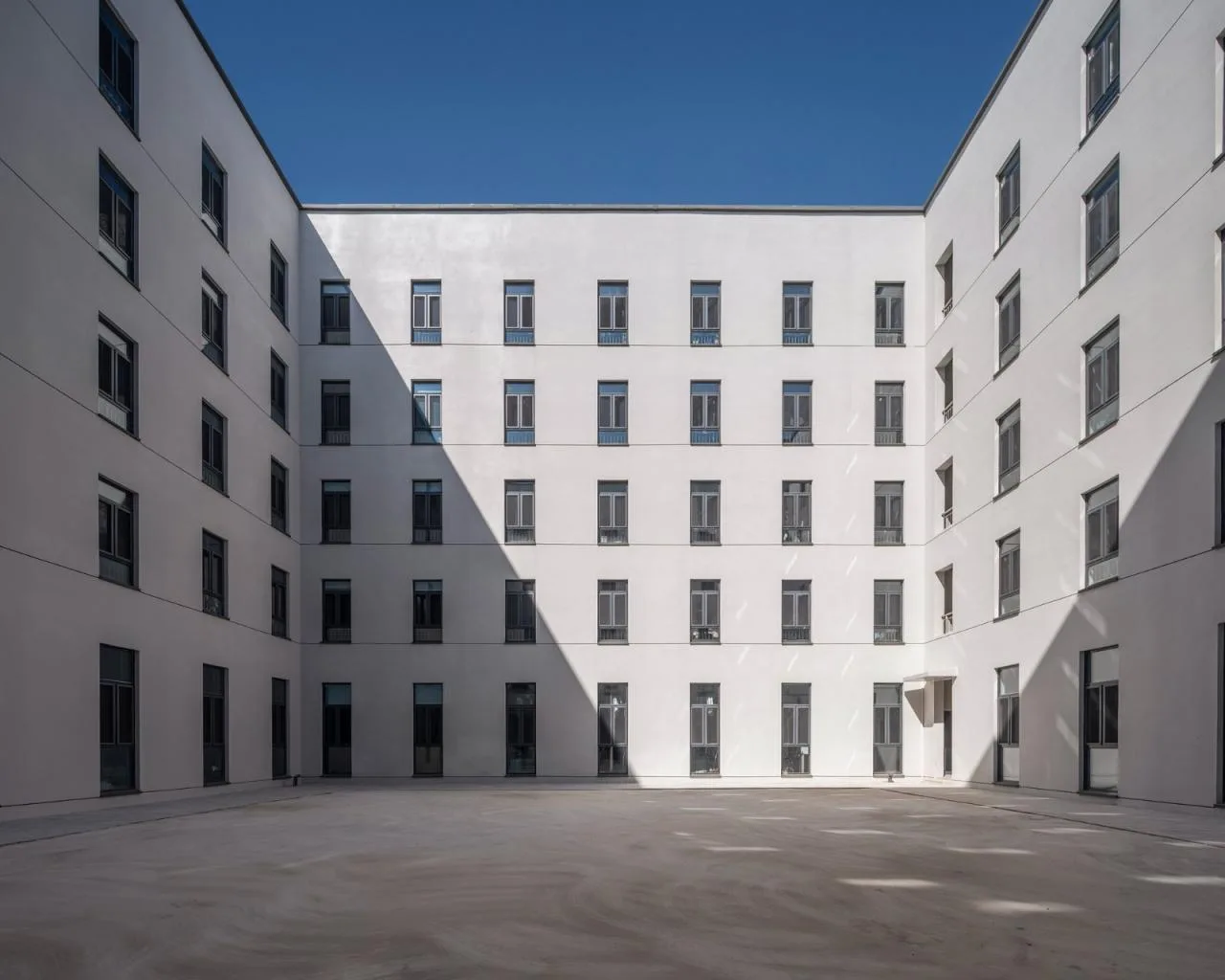
4. Spatial Planning: The campus adopts a “multi-center, community-style” open block layout, organizing building functions to foster an “open, green, shared, and vibrant” campus life. Building units are shaped like a mouth, enclosing inner courtyards that connect seamlessly to external spaces, becoming integral parts of the open campus environment.
Even enclosed dormitories offer inner courtyards accessible through open foyers. This breaks the traditional division between enclosed and open spaces, dividing the campus into two main areas: open communication spaces and closed functional spaces.
Closed spaces provide distinct functions, while open spaces integrate these functions into communities. Squares, streets, and gardens act as multiple centers of the “city” block, while each building’s courtyard forms diverse community spaces.
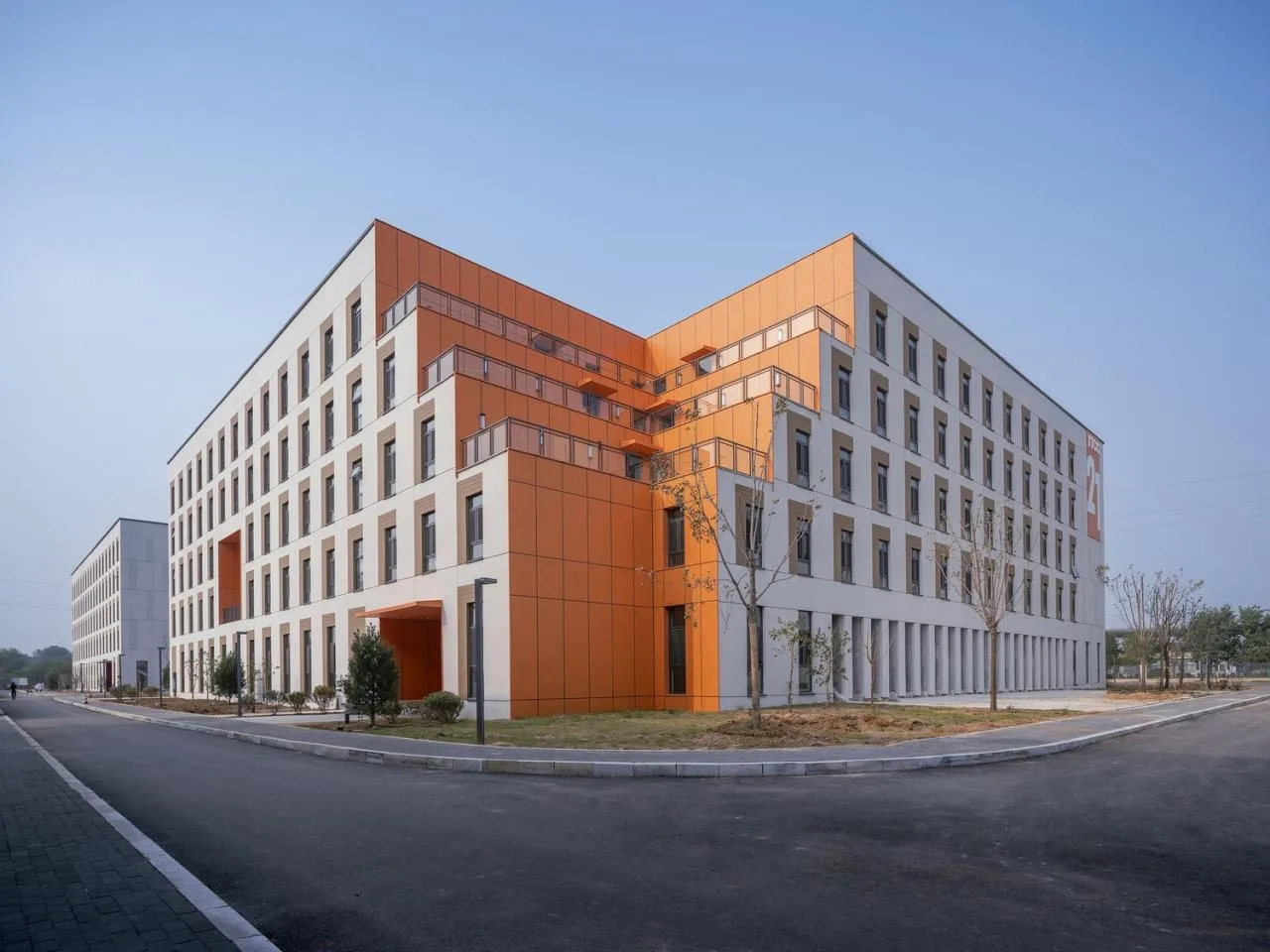
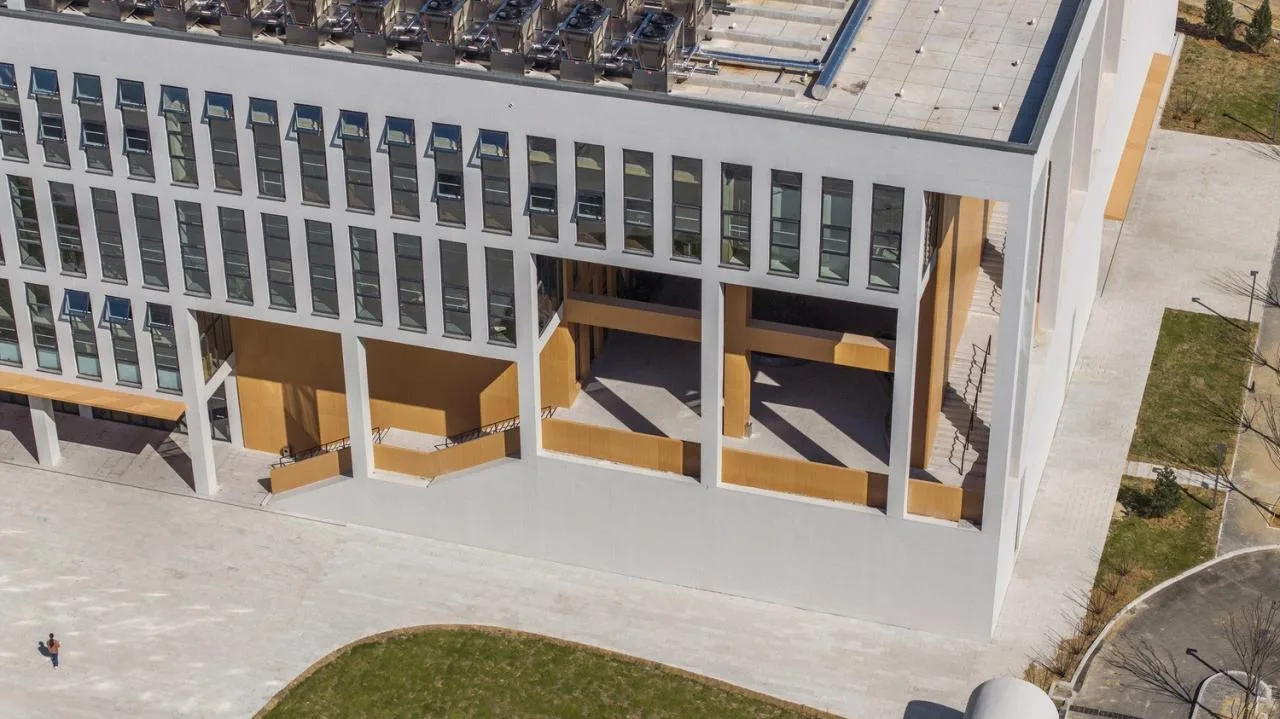
The four dormitory buildings on the southwest side, together with the existing library and gymnasium, form the “Vibrant Neighborhood.” The two dormitories on the north side, alongside the cafeteria and existing dormitory, create the “Campus Farm Block.” The northeast side’s two dormitories, five teaching, training, and office buildings, a first-level equestrian arena, and an existing teaching building form the “Campus Square Block.”
The two teaching buildings on the southeast side, together with an existing teaching building, create the “Tree-Lined Avenue Block,” a key spatial node connecting Phase II and Phase I. Each block centers on public spaces with diverse functions, moving away from single-use zoning to encourage interaction and collaboration between colleges and disciplines.
The library, teaching buildings, gymnasium, equestrian arena, and campus farm collectively support university life and education.
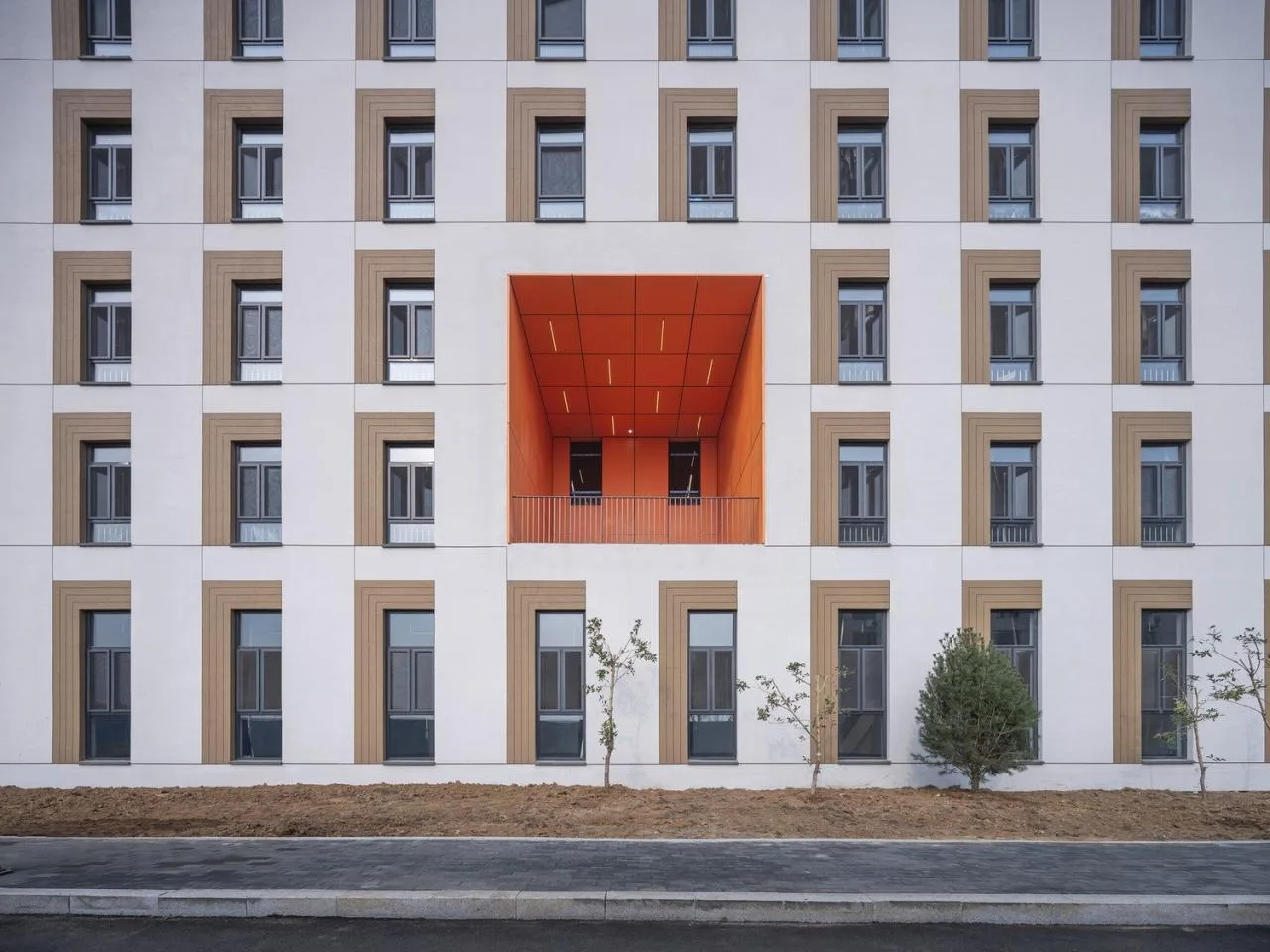
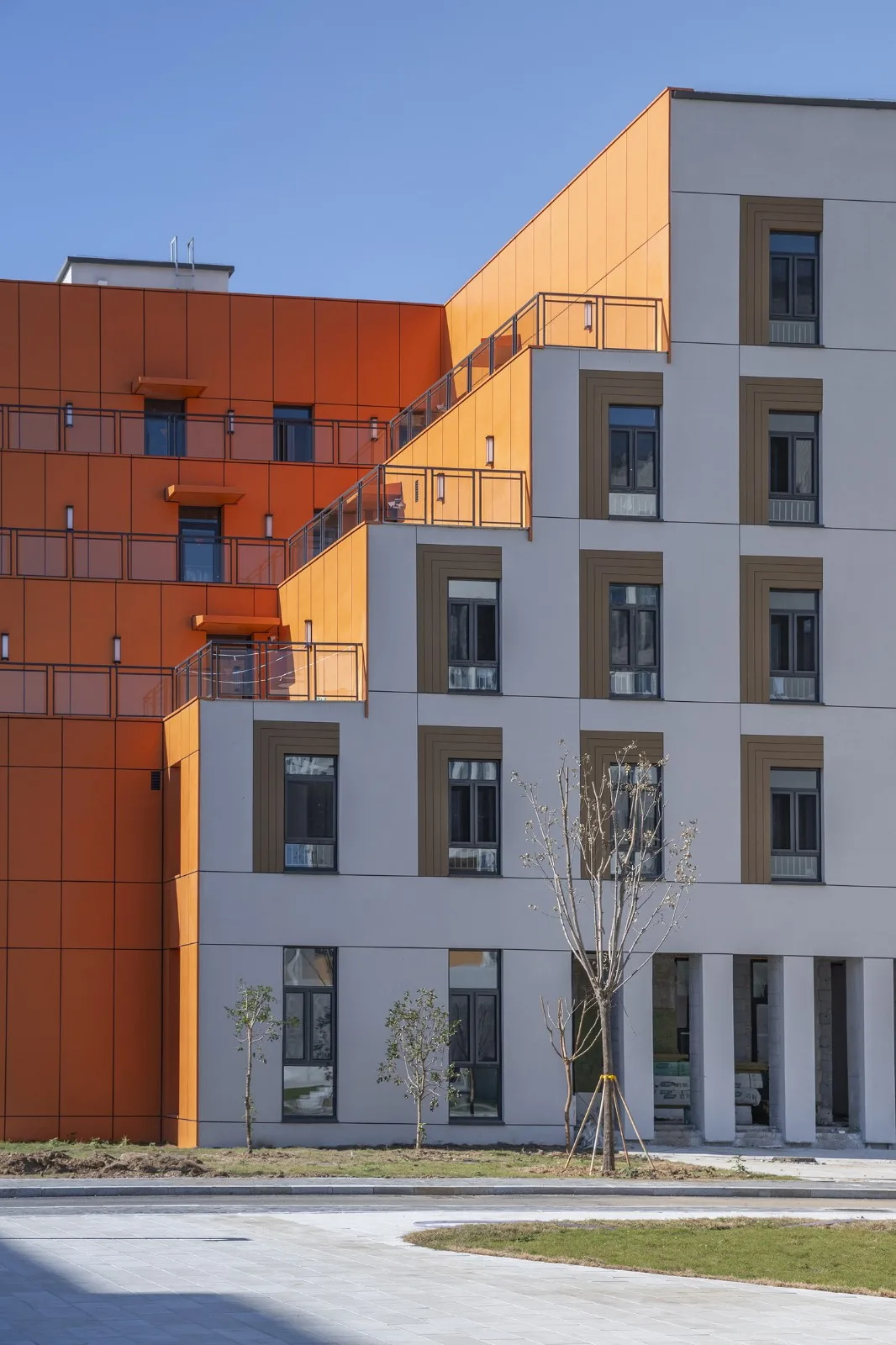
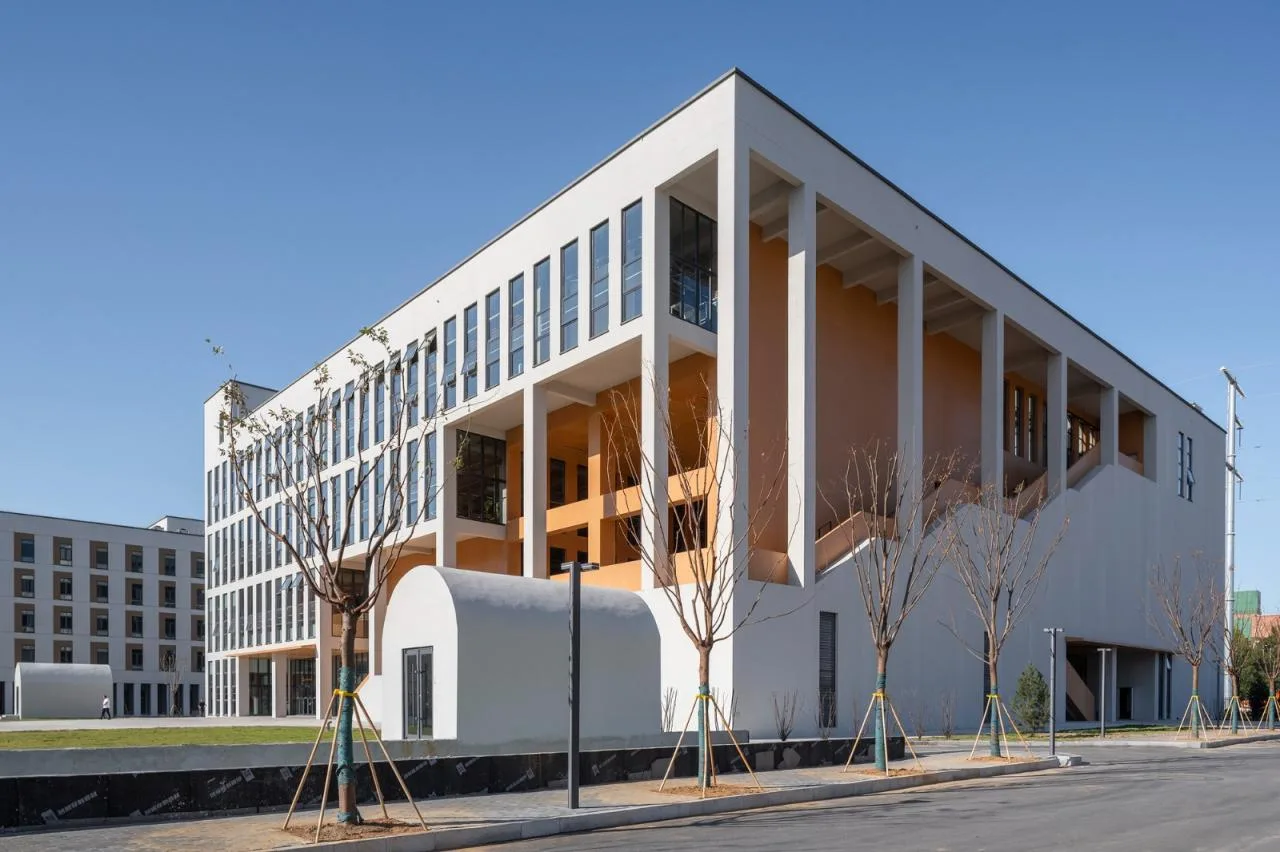
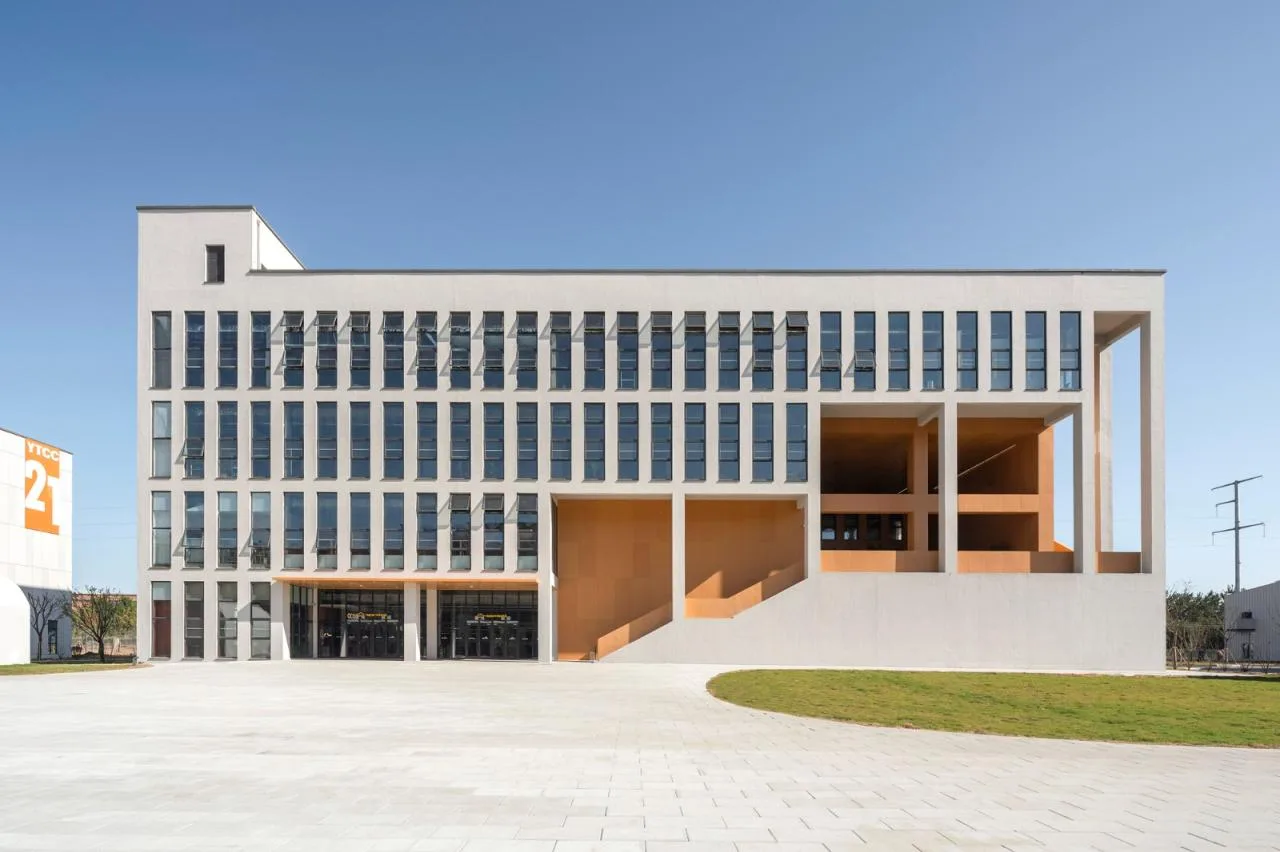
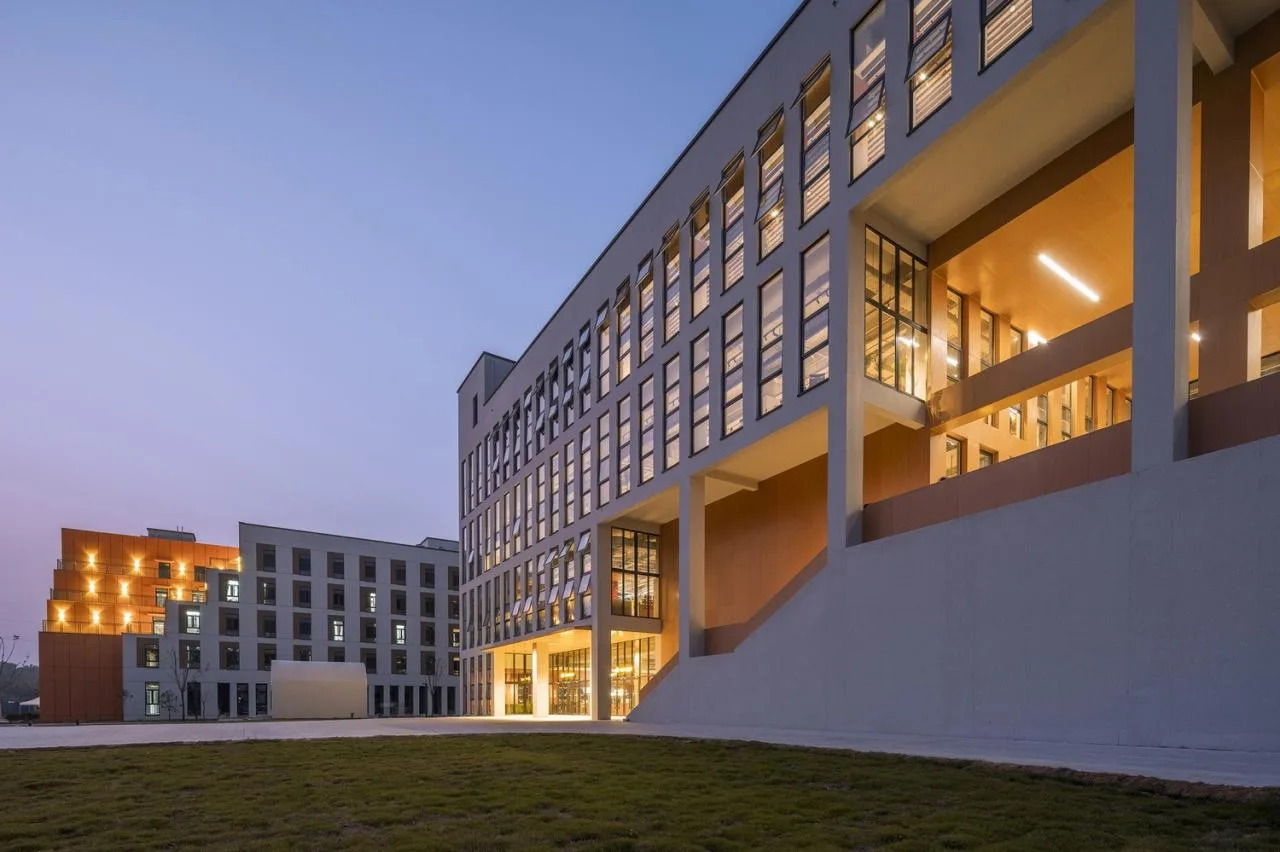
5. Cafeteria: The newly designed cafeteria, a hub for campus life, is located near the north gate. It features four above-ground floors and one underground level, totaling about 14,100 square meters of above-ground space.
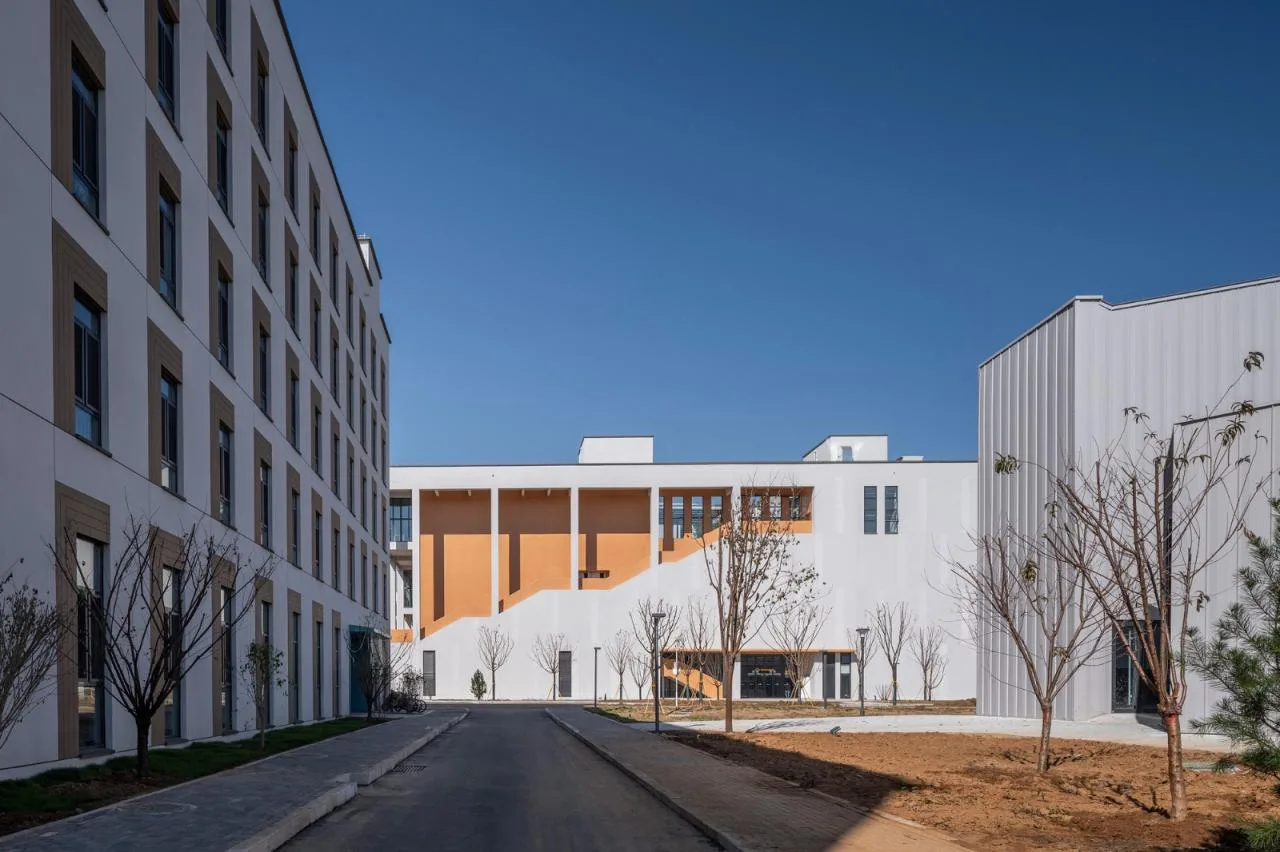
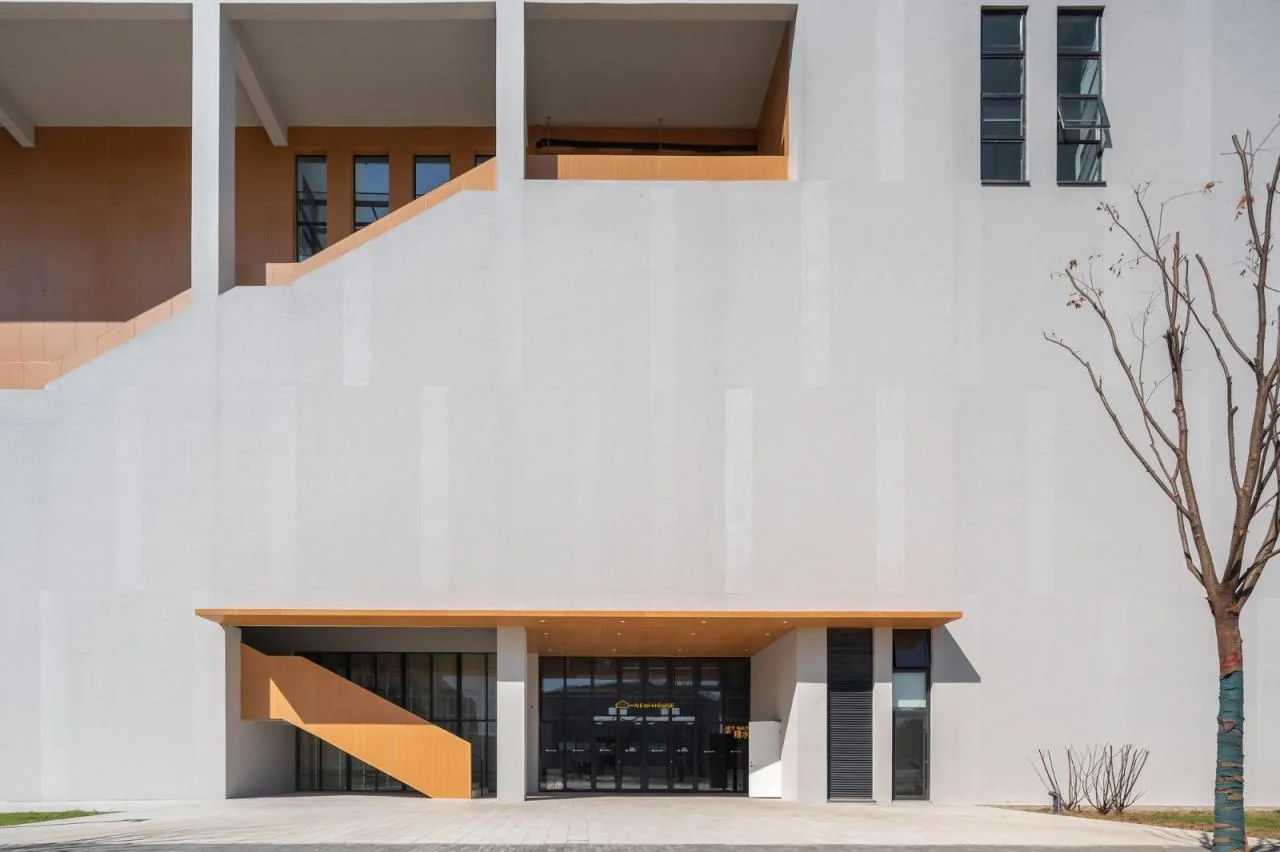
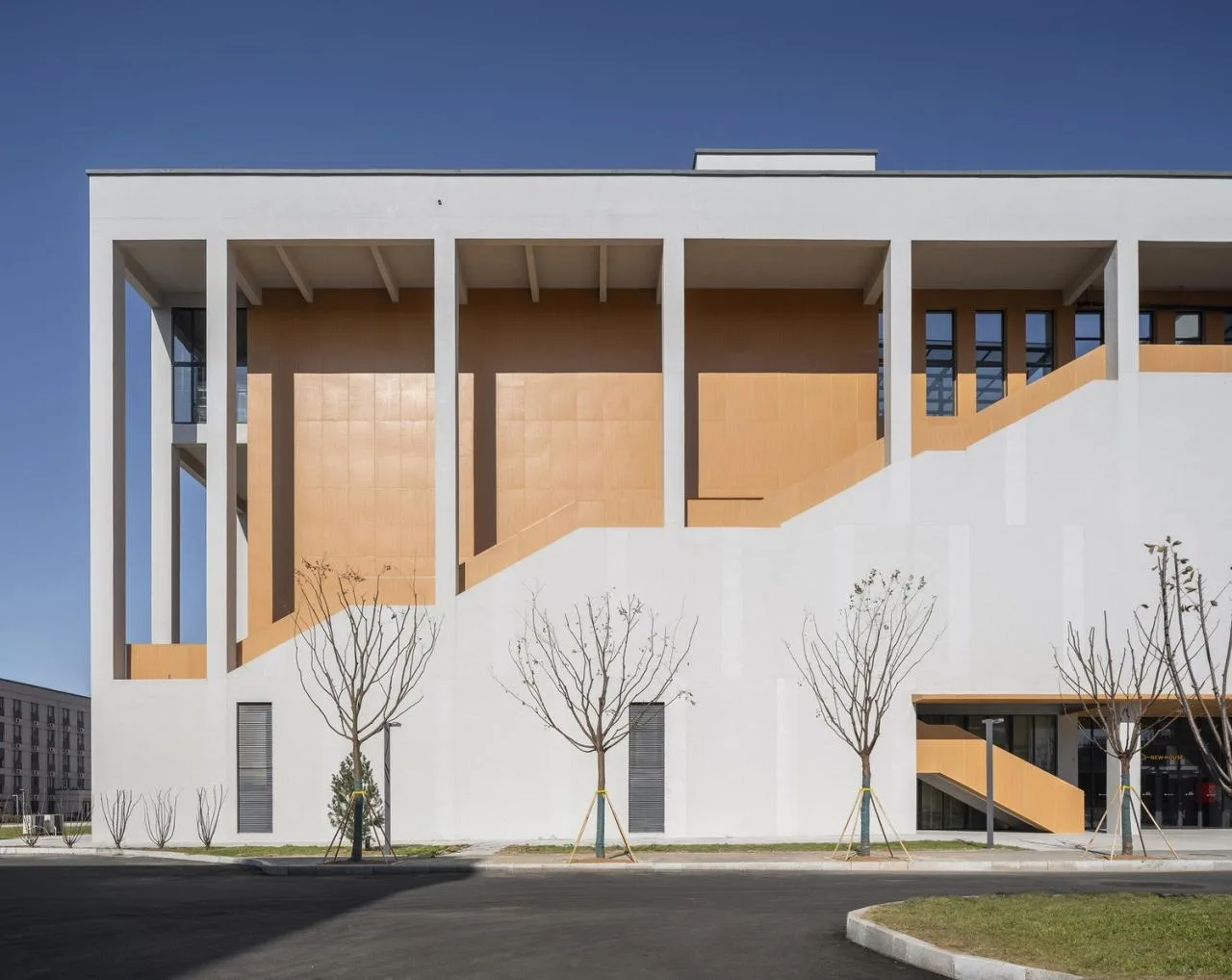
A continuous staircase embedded along the south facade extends to the east facade, connecting floors one through four. This staircase area forms an integrated part of the cafeteria’s open communication space, acting not only as circulation but also as a collection of urban public space prototypes: a corridor, a second-floor plaza, a third-floor courtyard, and a rooftop garden.
This cube-shaped cafeteria comprises two parts: enclosed functional spaces providing breakfast, lunch, and dinner for thousands of students, and open communication spaces fostering campus community life. These diverse spaces—indoor, outdoor, and semi-outdoor—connect to create an outward-facing living environment within the campus.
Throughout the day, the cafeteria hosts a variety of activities: open lectures, flea markets, club events, birthday parties, exhibitions, project promotions, dances, and outdoor movies. Its function extends beyond meals, serving as a generator of campus life and face-to-face interaction.
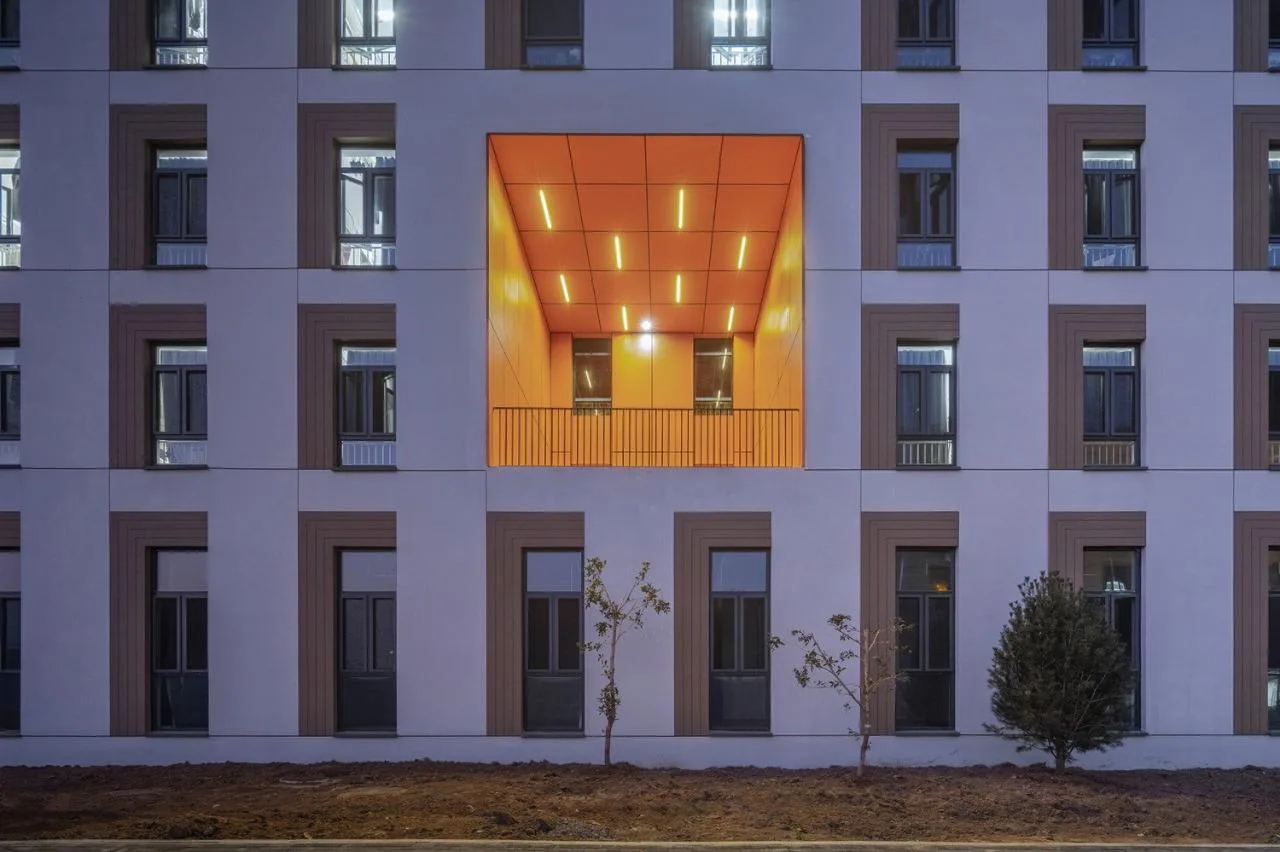
Architecturally, the structure’s volume is articulated through spatial cuts and material contrasts: the exterior walls are hand-painted, while the interior cut surfaces are clad in aluminum panels, creating smooth, tactile spaces dedicated to public interaction.
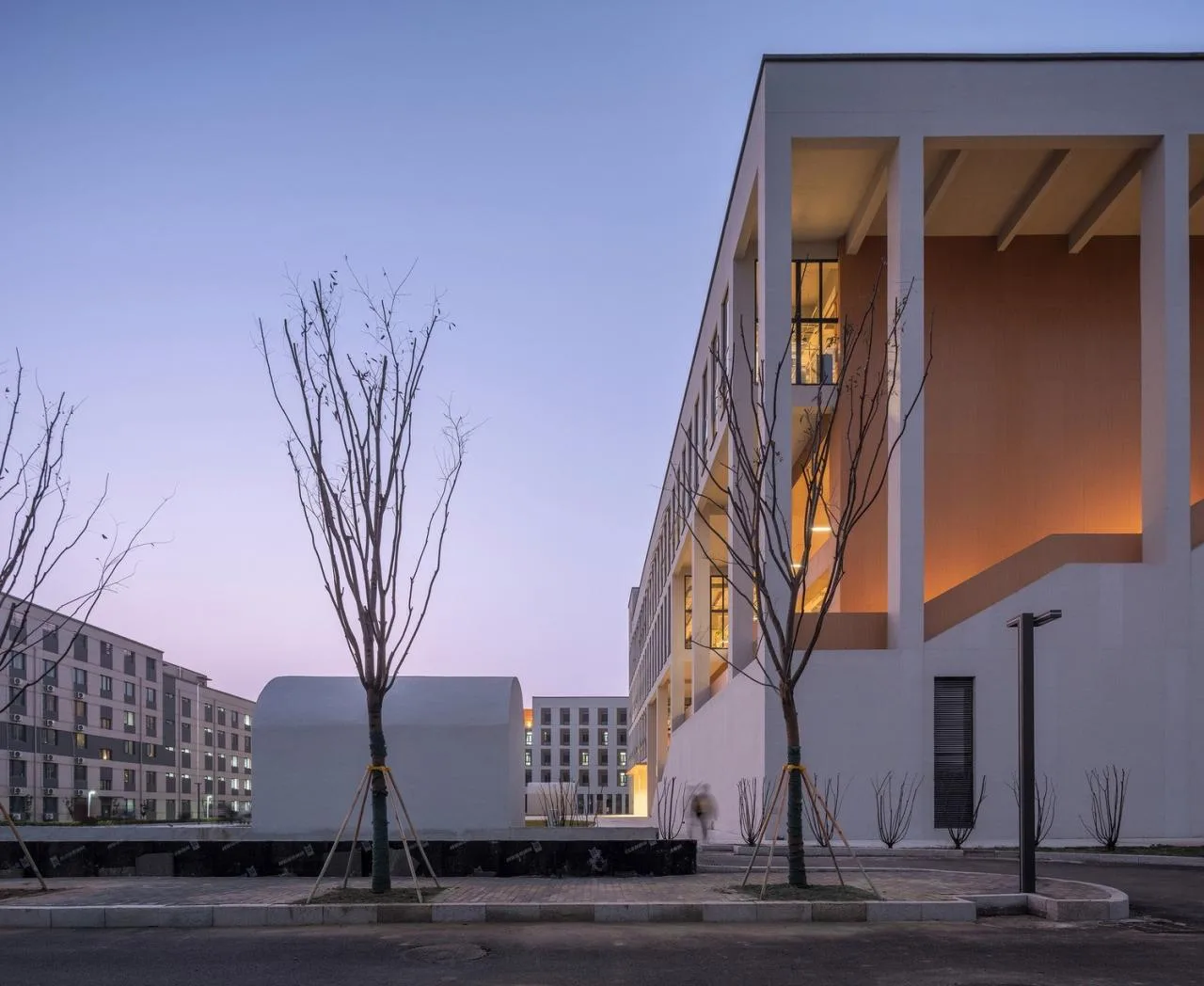
6. Landscape Design: The landscape concept for Phase II-2 embraces open blocks and a free-flowing, seamless campus environment, strengthening the “multi-center, community-based” open block idea.
This phase’s landscape design builds on the overall campus landscape, considering site-specific functions and atmosphere to create a cohesive outdoor environment.
The avenue linking the north gate to the existing Phase II-1 library is designed as a broad, majestic tree-lined boulevard. This connects visually and spatially with the southeast tree-lined avenue block and the eastern entrance avenue, forming a continuous green corridor through the campus.
To prioritize pedestrian movement inside the campus, the road along the perimeter serves vehicular traffic at higher speeds, with parking spaces located near the fence. This reduces traffic inside the campus. Both sides of this perimeter road are lined with roadside trees, creating a recognizable and pleasant circular tree-lined route.
In contrast, internal roads between blocks are designed as pedestrian-friendly single lanes without roadside trees, integrating the open blocks into a compact whole. Trees and shrubs are strategically placed for aesthetic, shading, and separation purposes, offering a free and open landscape while optimizing construction costs.
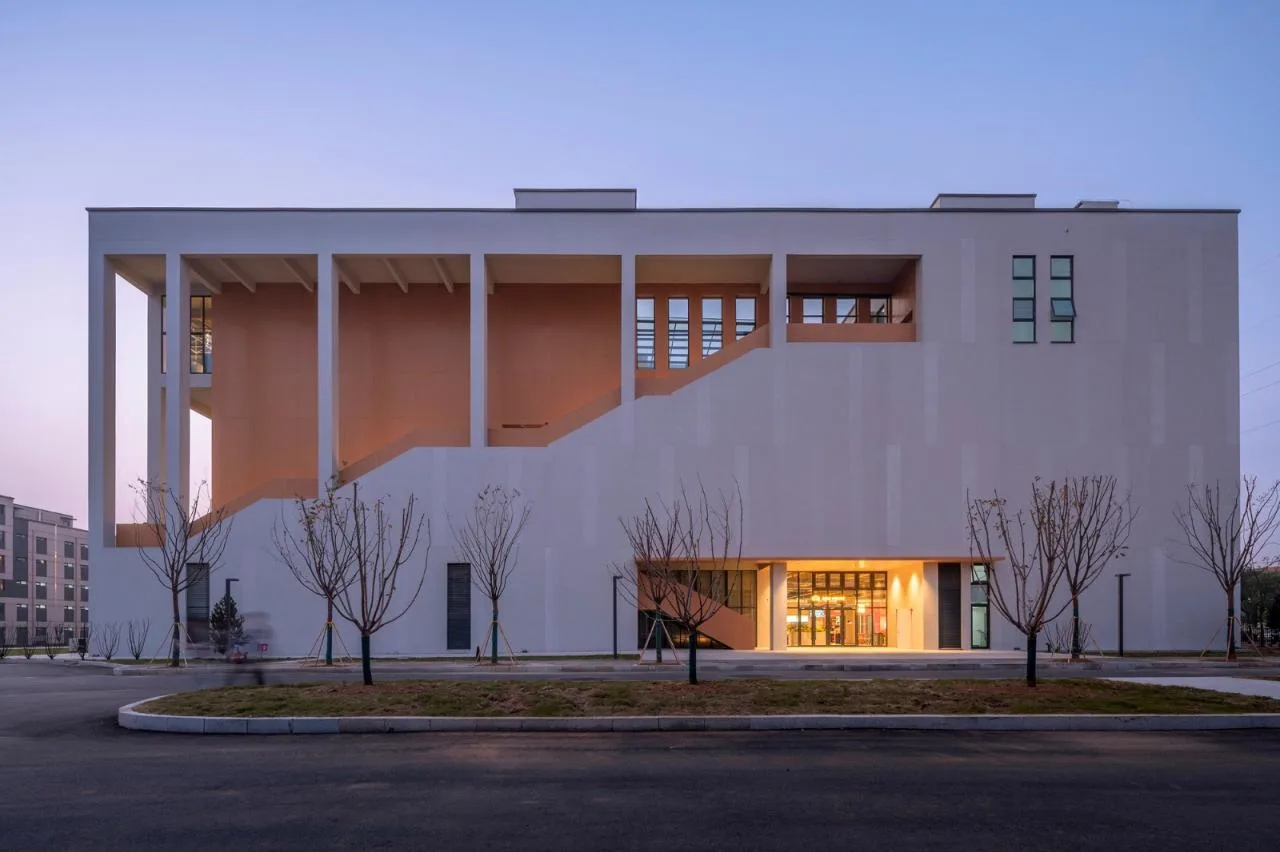
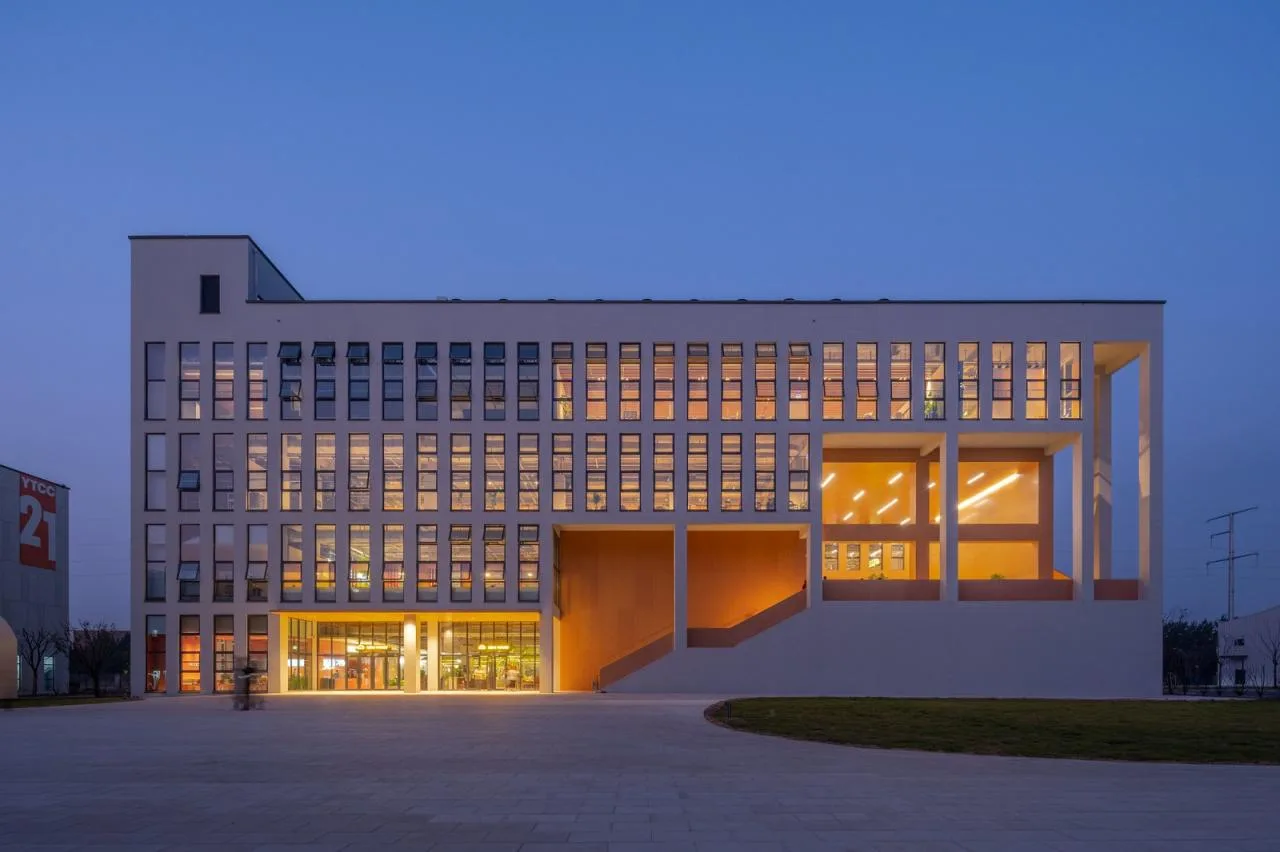
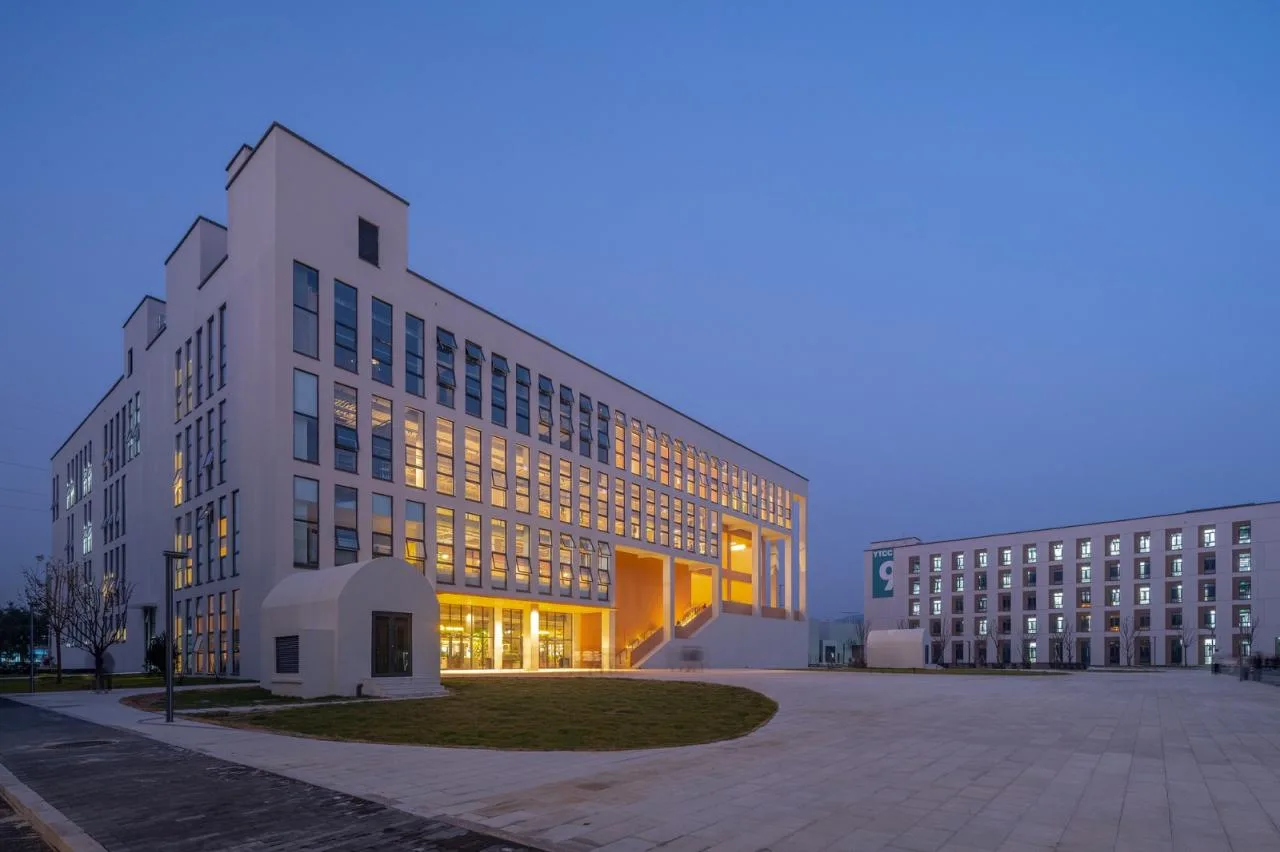
The large square south of the cafeteria and the green space northwest of the equestrian venue represent two key open campus areas: an outdoor “stage” for campus life and a tranquil “garden” for faculty and students.
The square acts as an extension of the cafeteria’s public space, where students and staff gather daily. It accommodates high traffic during meal times and serves as a venue for festivals and campus events. The design features a flat, streamlined lawn square that is both vibrant and simple.
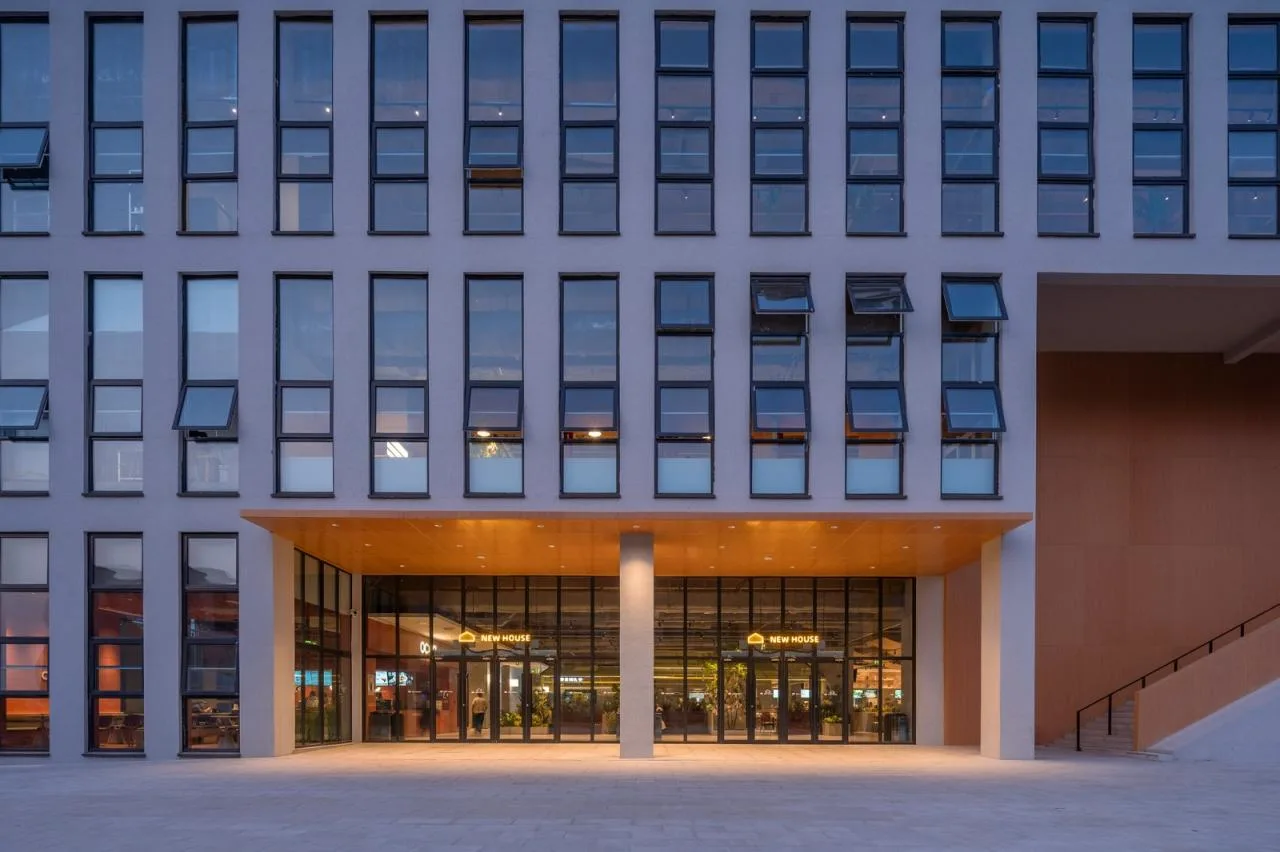
Careful vertical and paving details ensure that the two main entrances (south and east) from the square to the cafeteria are step-free, allowing smooth access for people with disabilities. Similar landscape details are applied at dormitory and equestrian arena entrances, reflecting the campus’s open and accessible design philosophy.
The green garden space offers a quiet retreat with large trees dotting a flat lawn, providing a scenic spot for relaxation and walking. The design balances visual openness and public accessibility, ensuring safety while supporting occasional festive activities.
Project Drawings
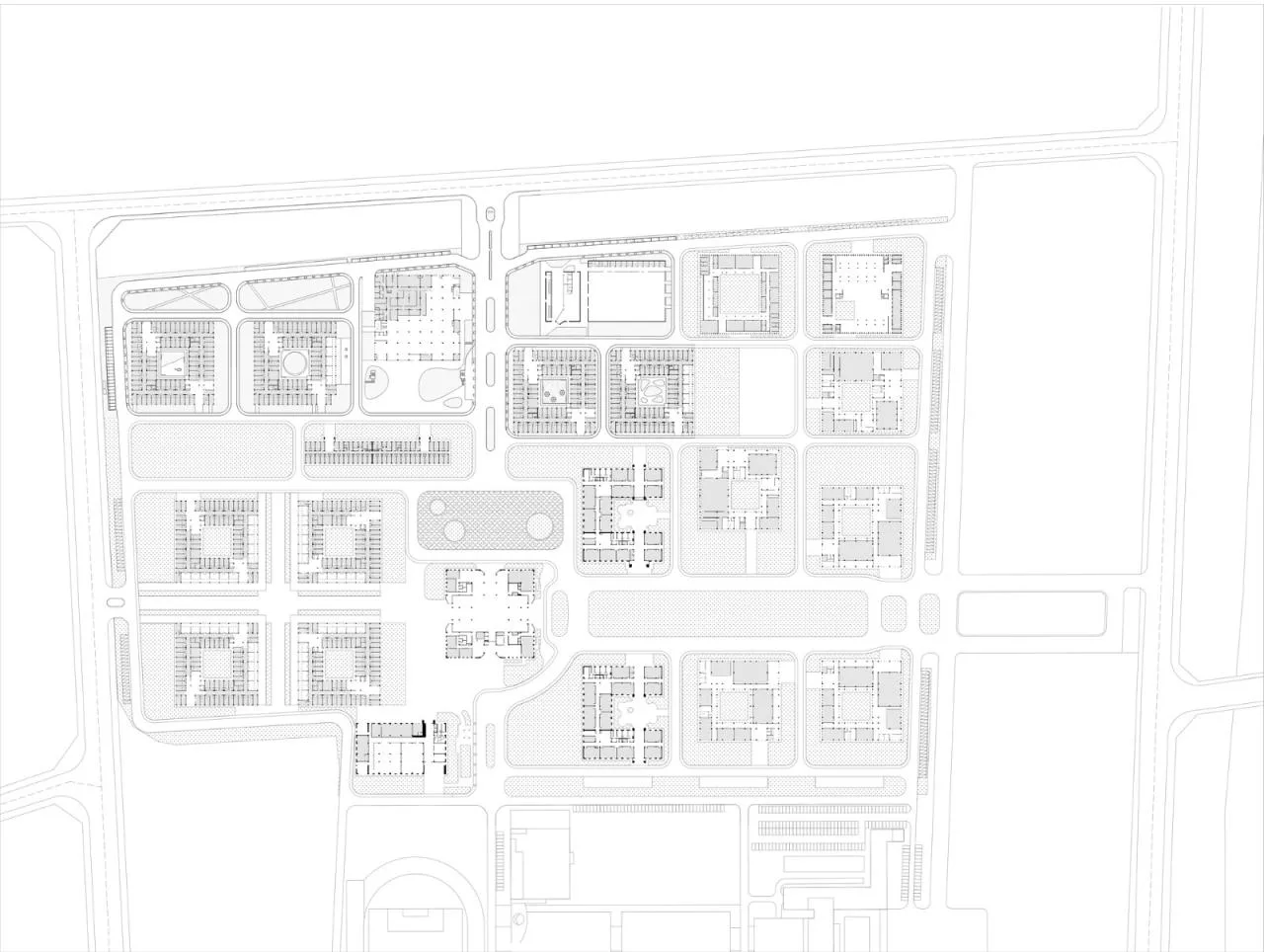
△ Site Plan
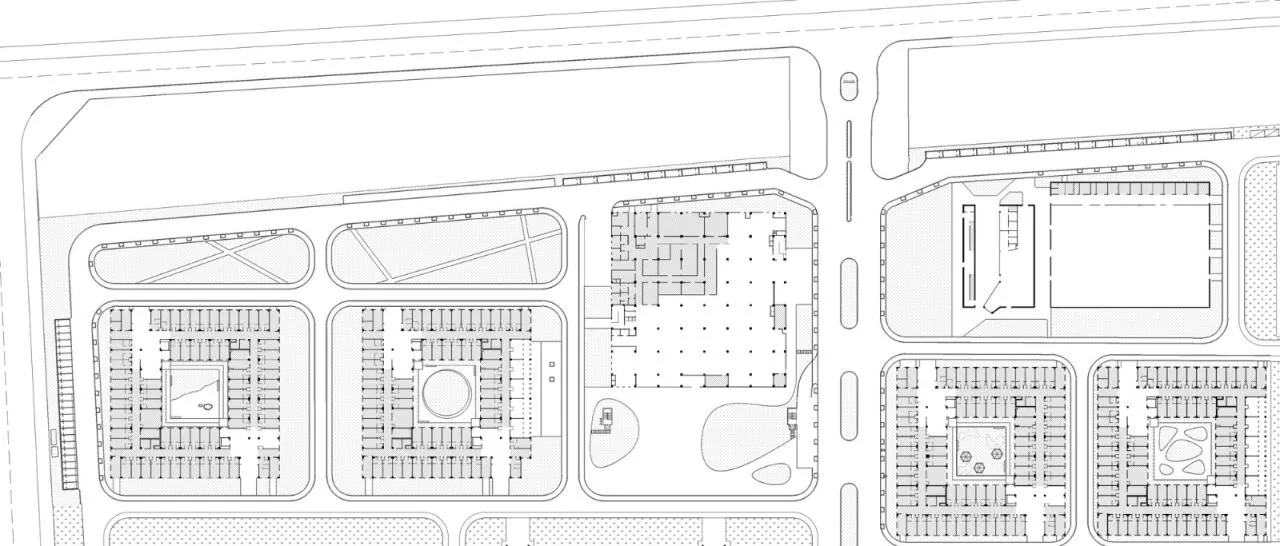
△ General Layout Plan
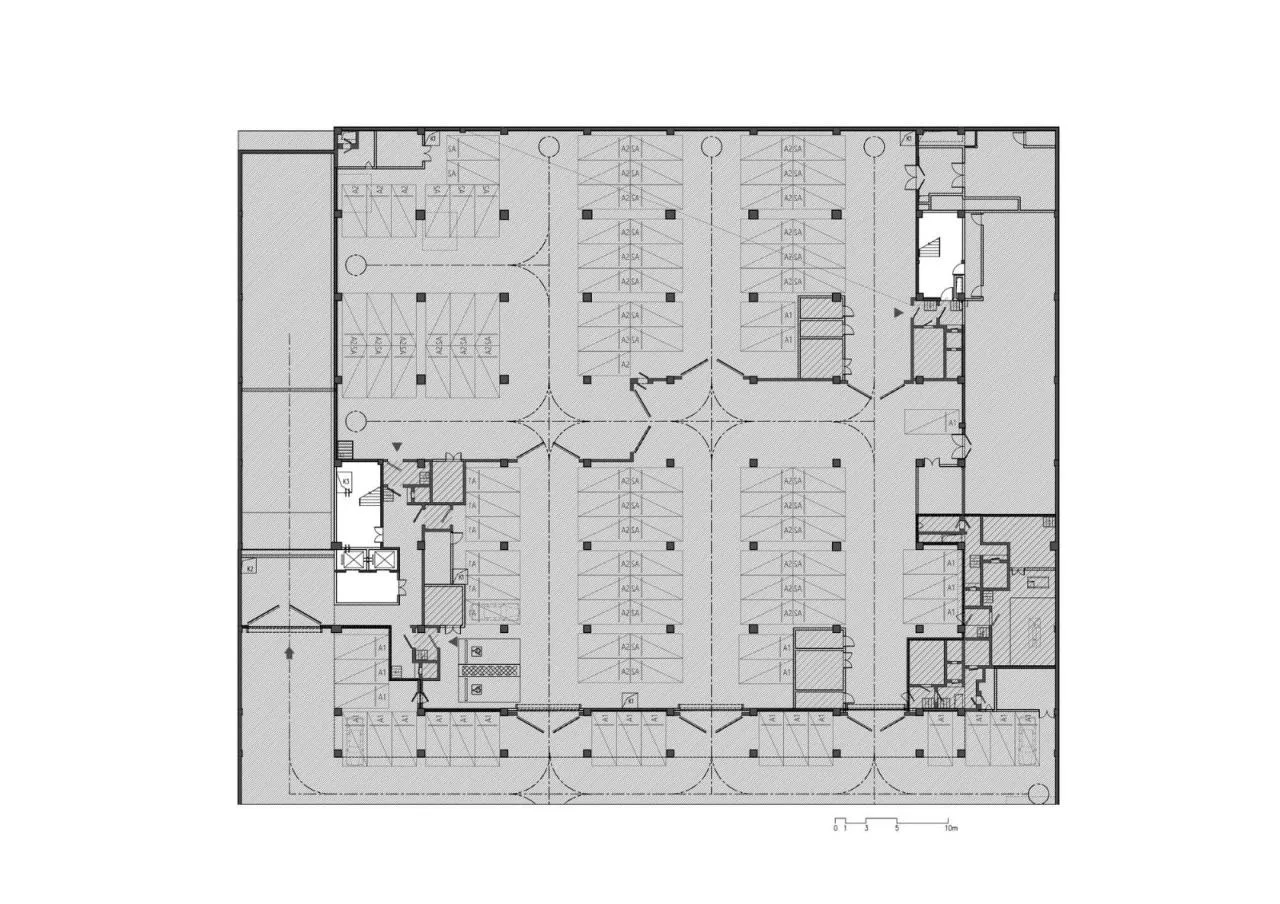
△ Underground Floor Plan
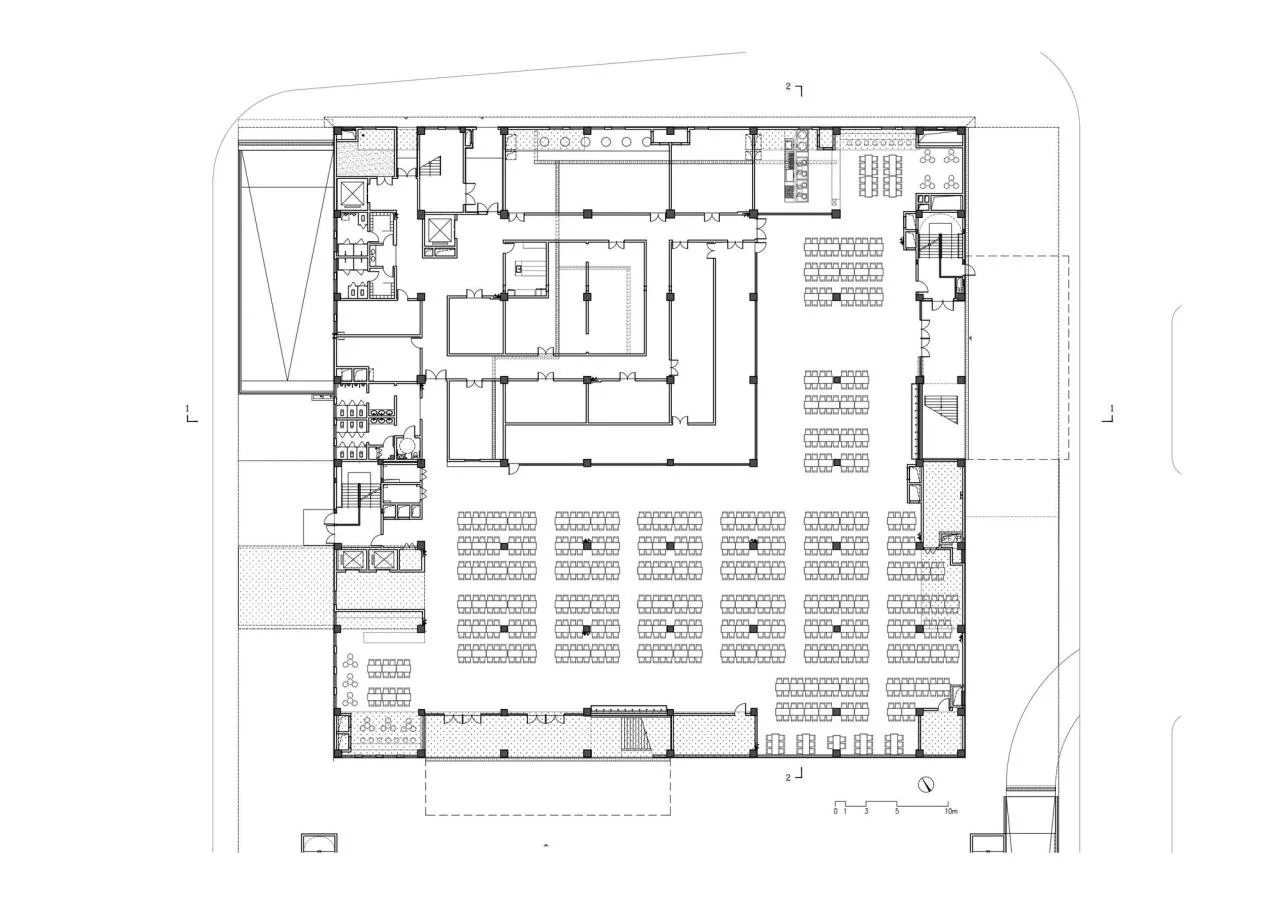
△ First Floor Plan
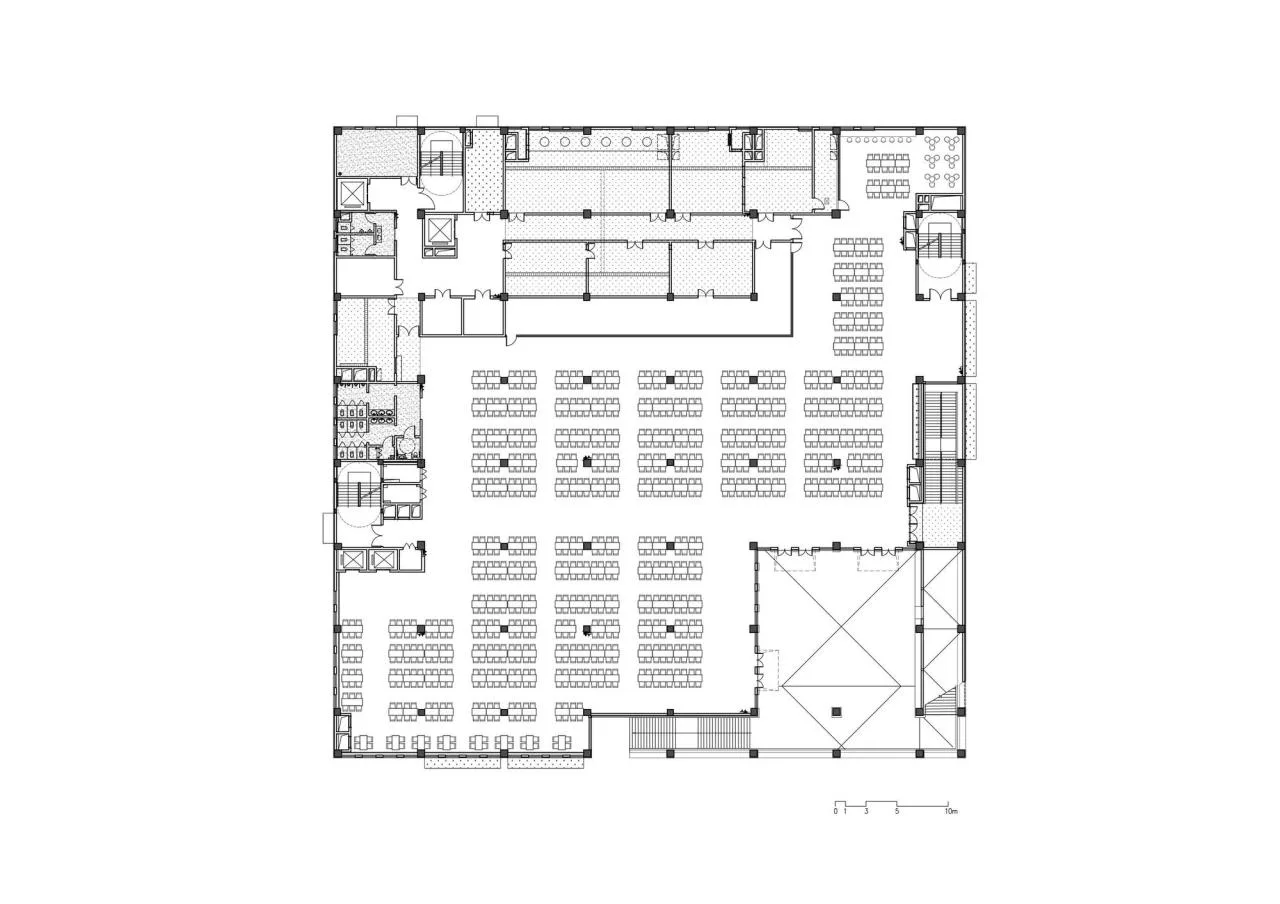
△ Second Floor Plan
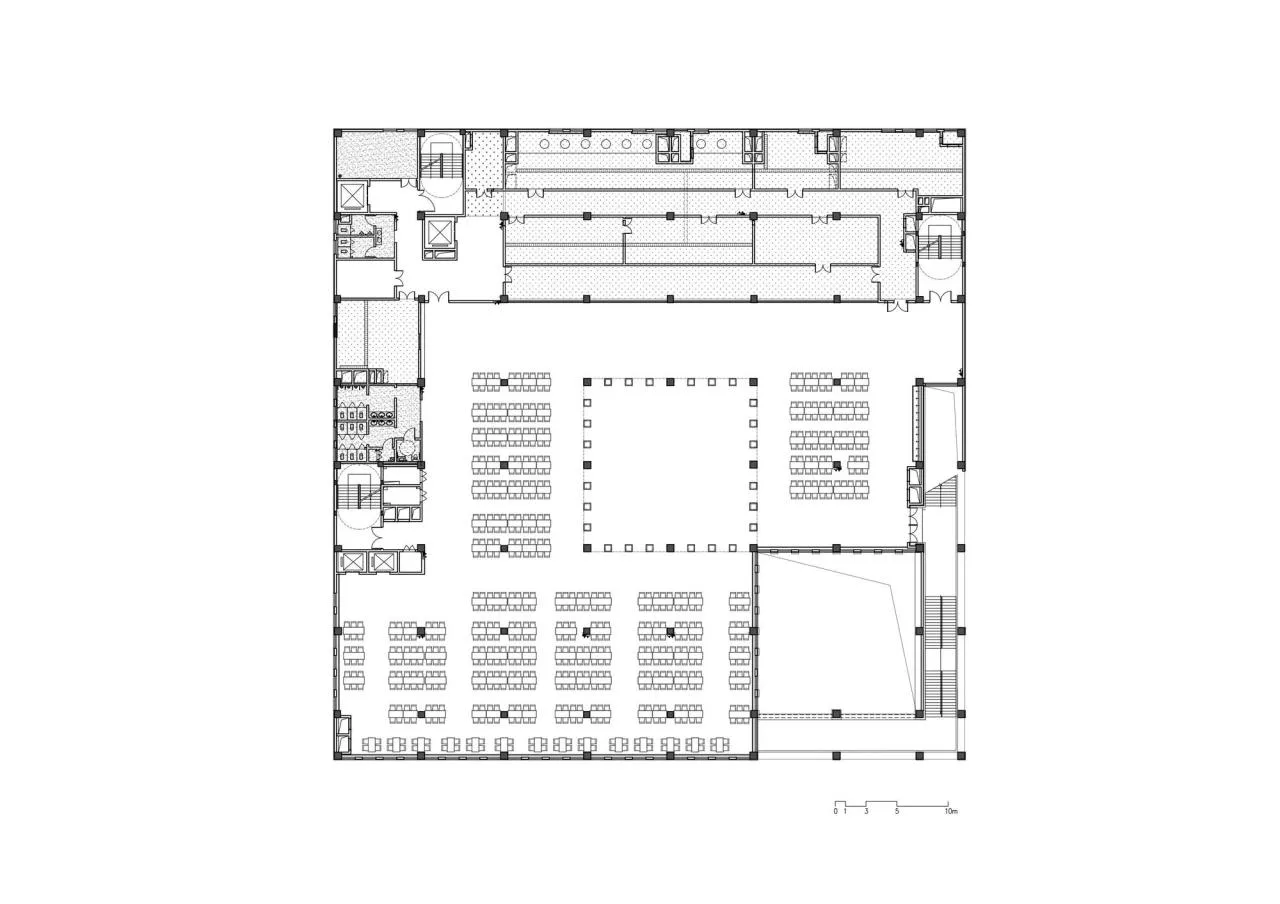
△ Third Floor Plan
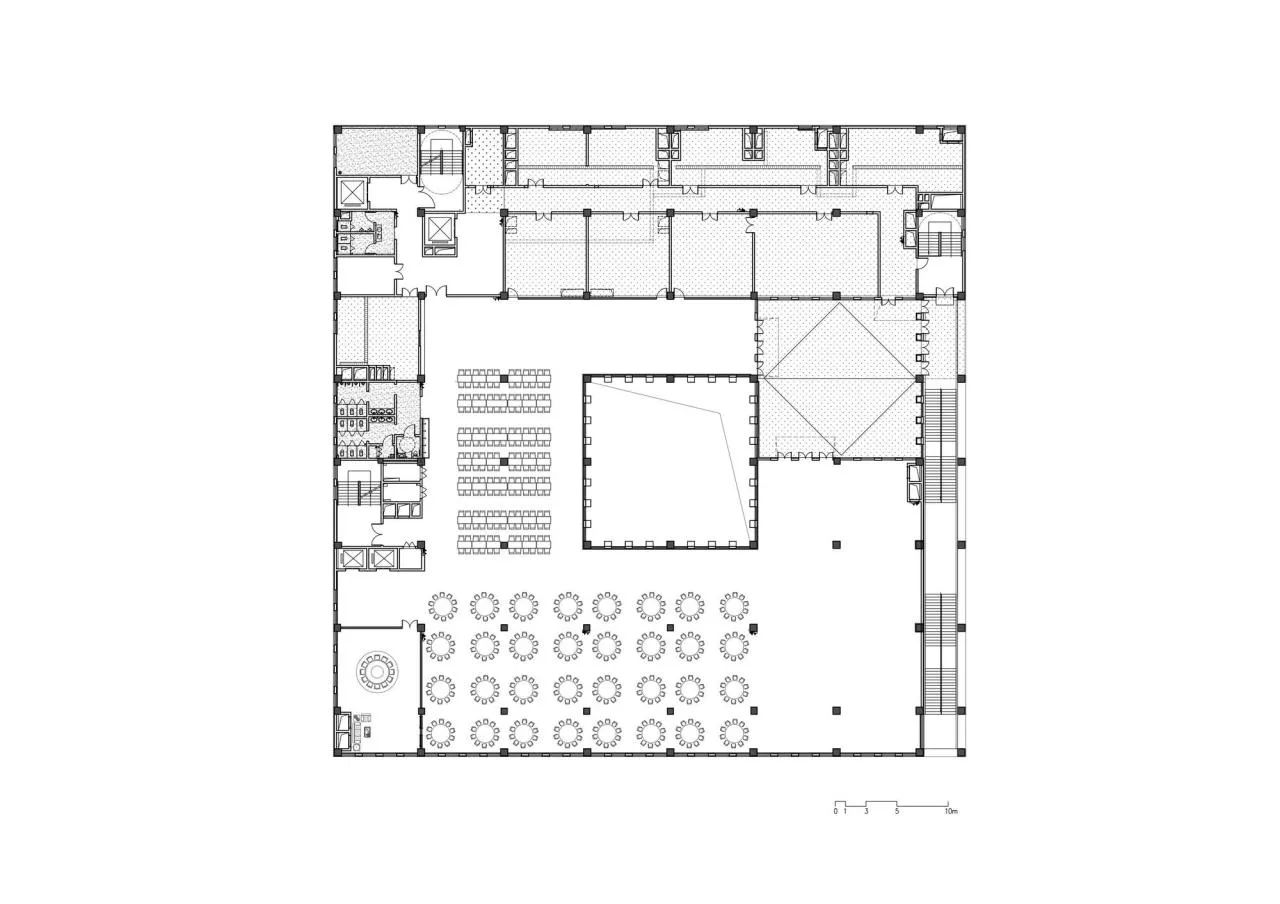
△ Fourth Floor Plan
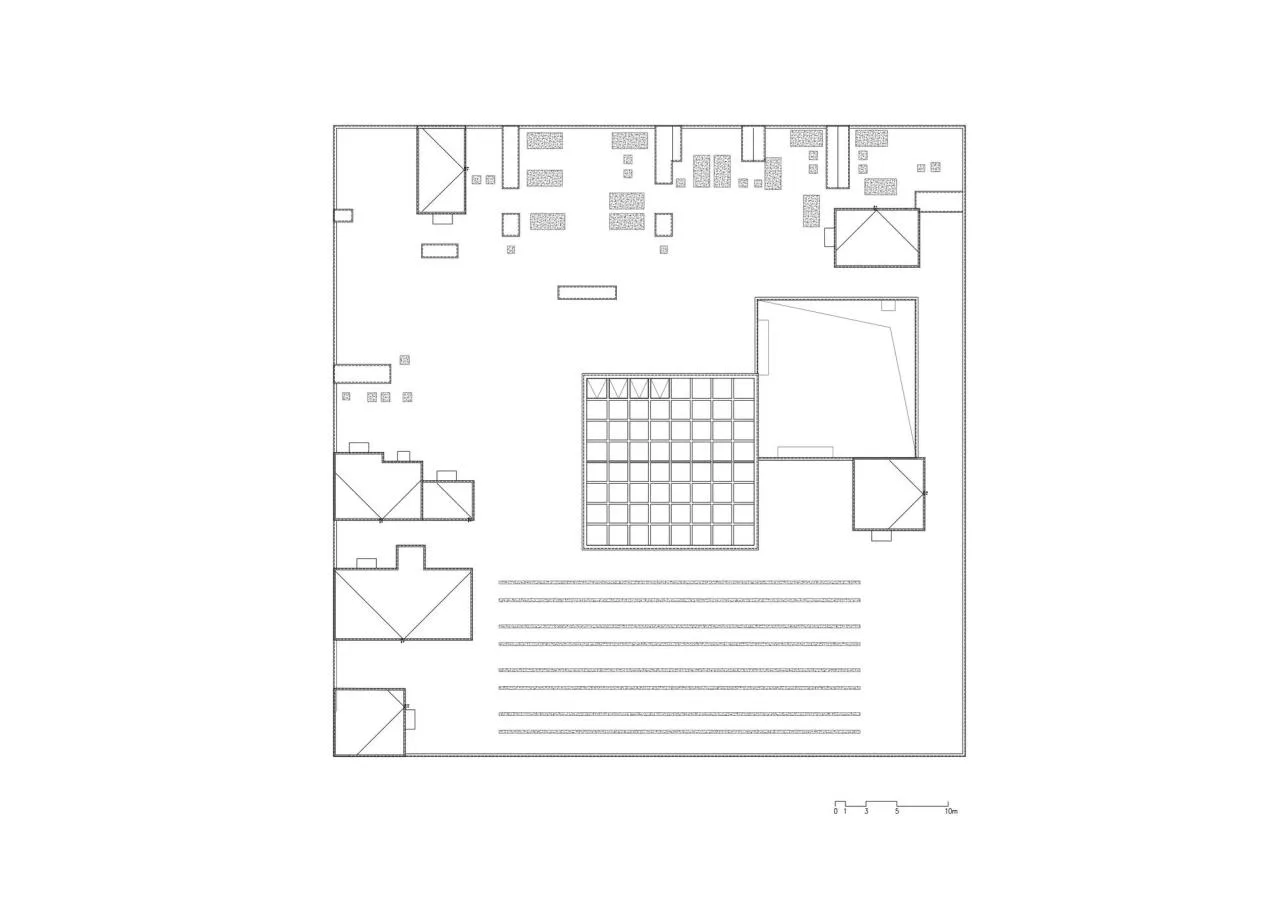
△ Roof Plan
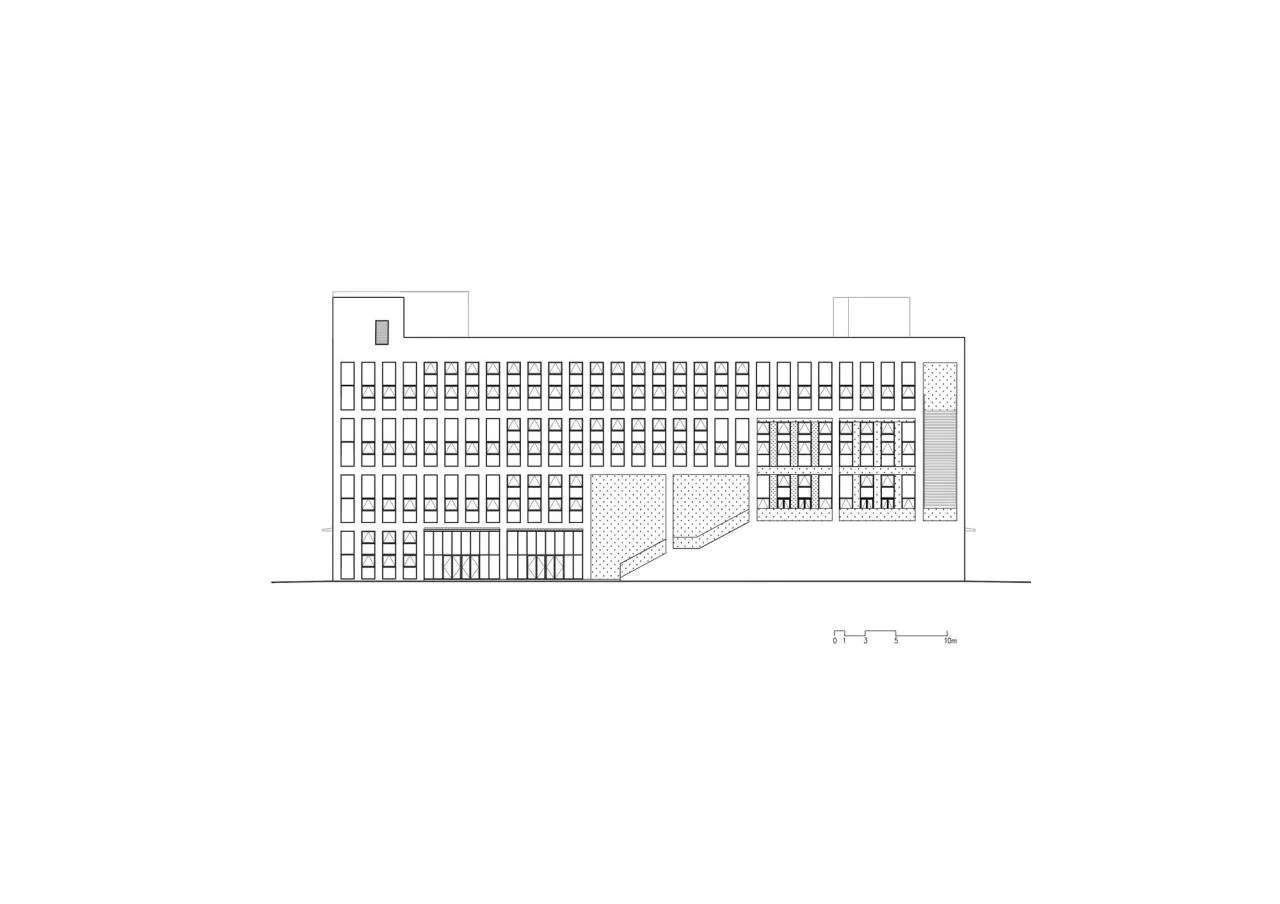
△ Elevation Drawing
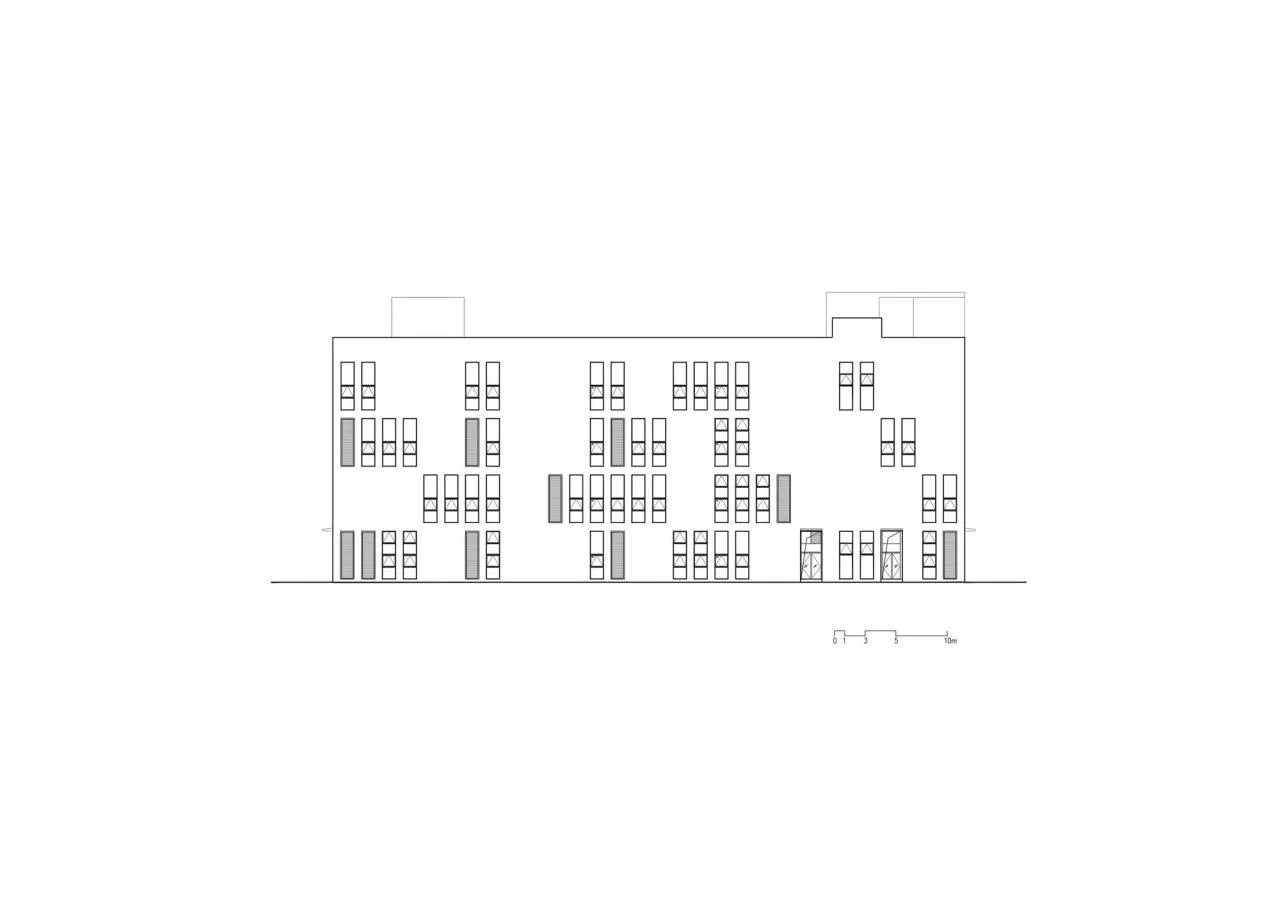
△ Elevation Drawing
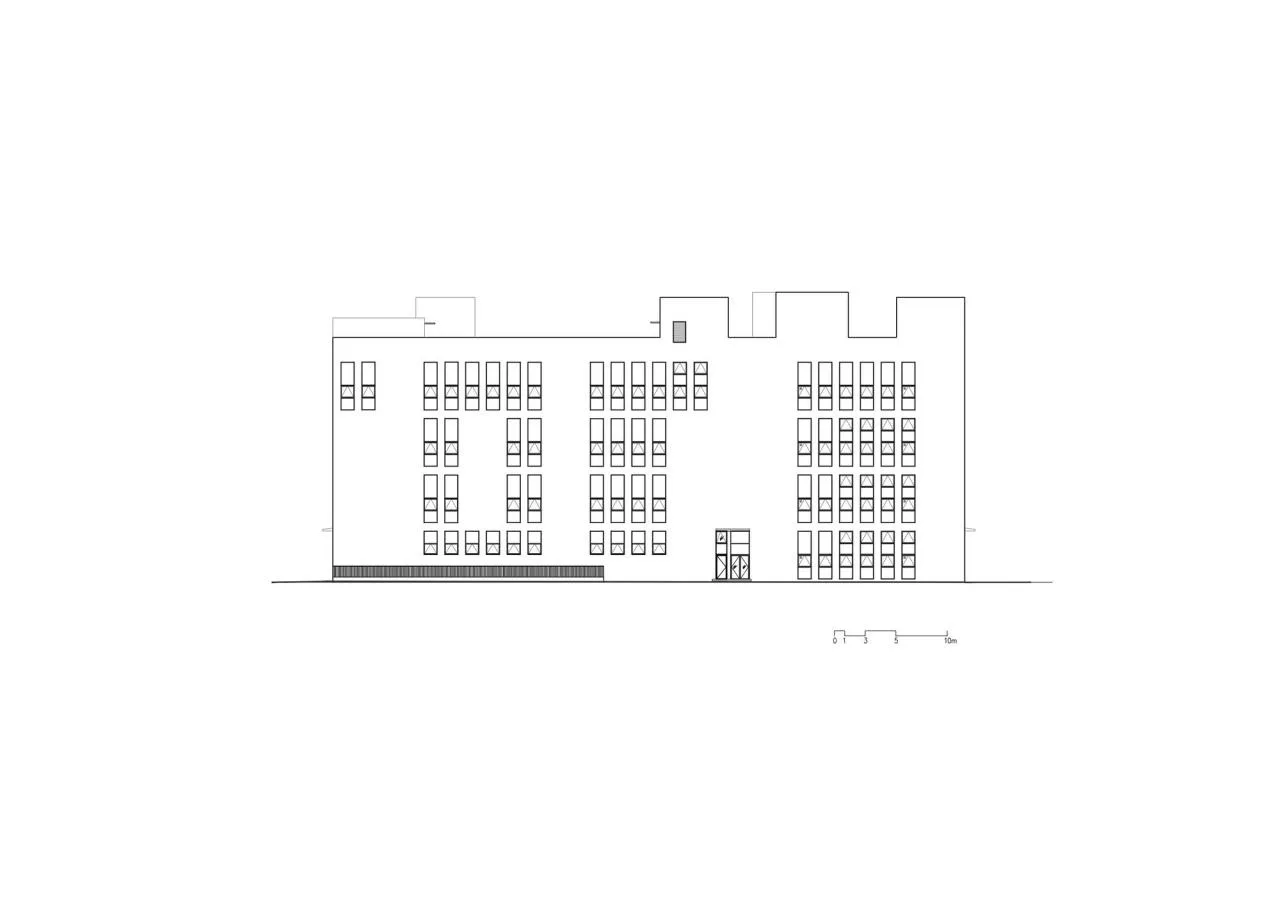
△ Elevation Drawing
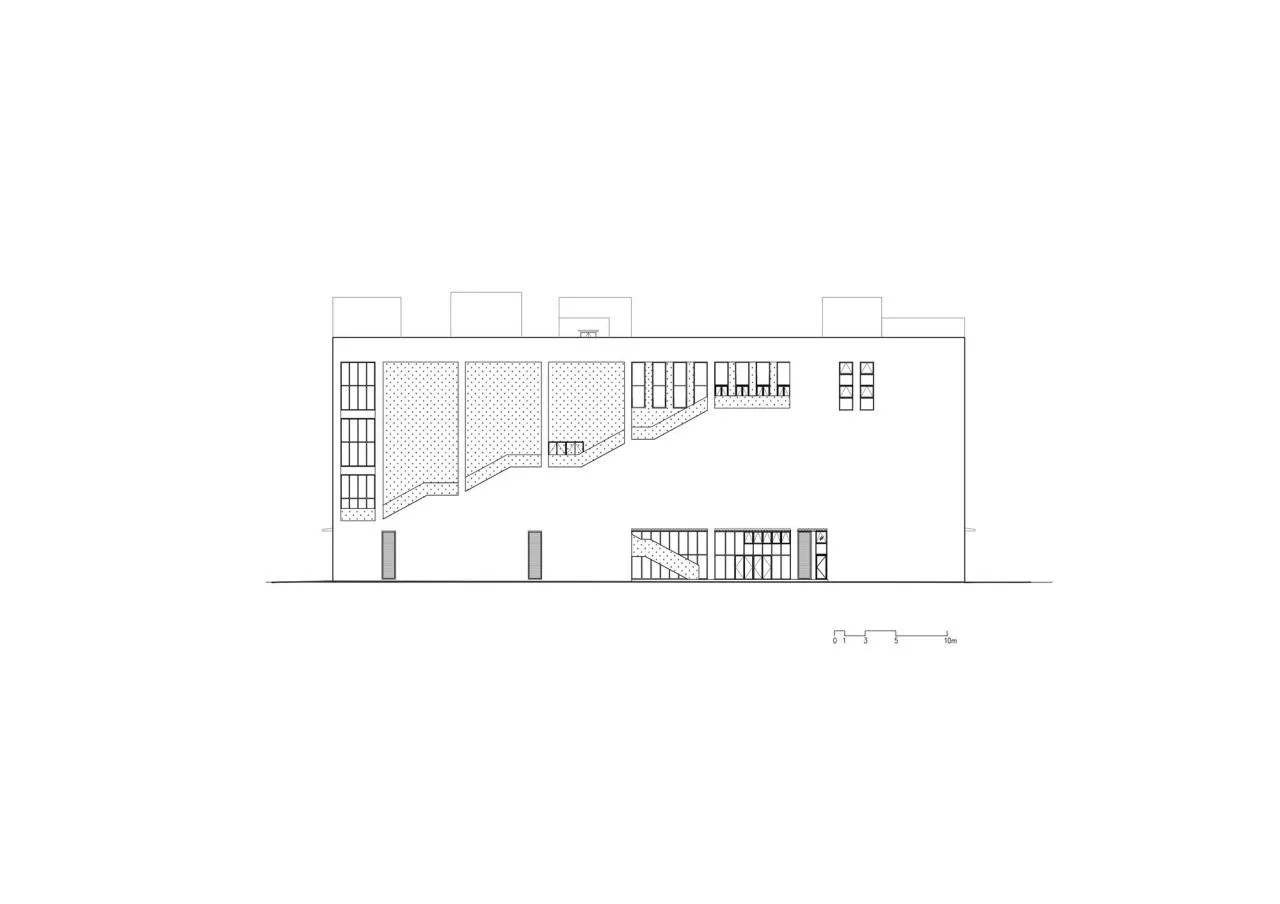
△ Elevation Drawing
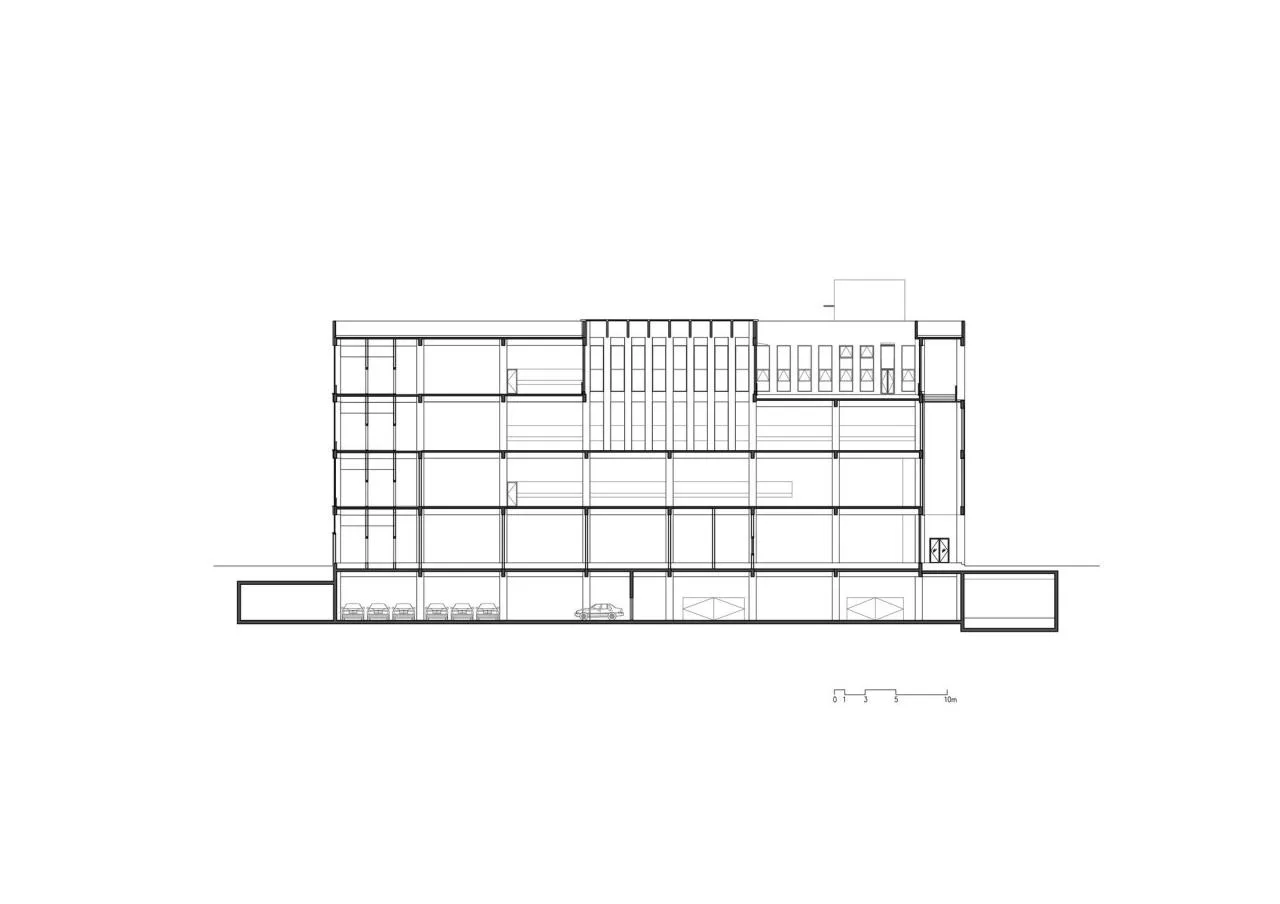
△ Section Diagram
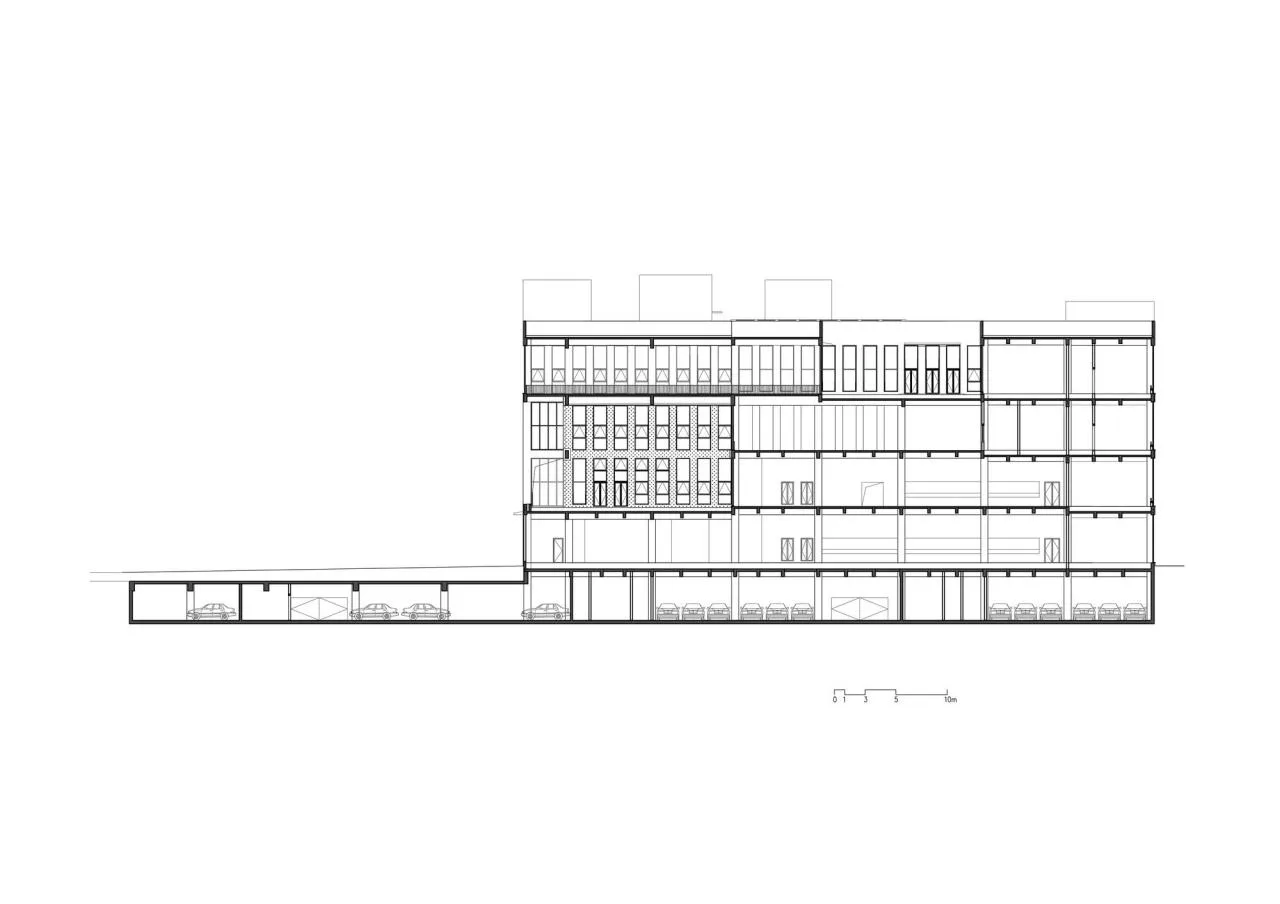
△ Section Diagram
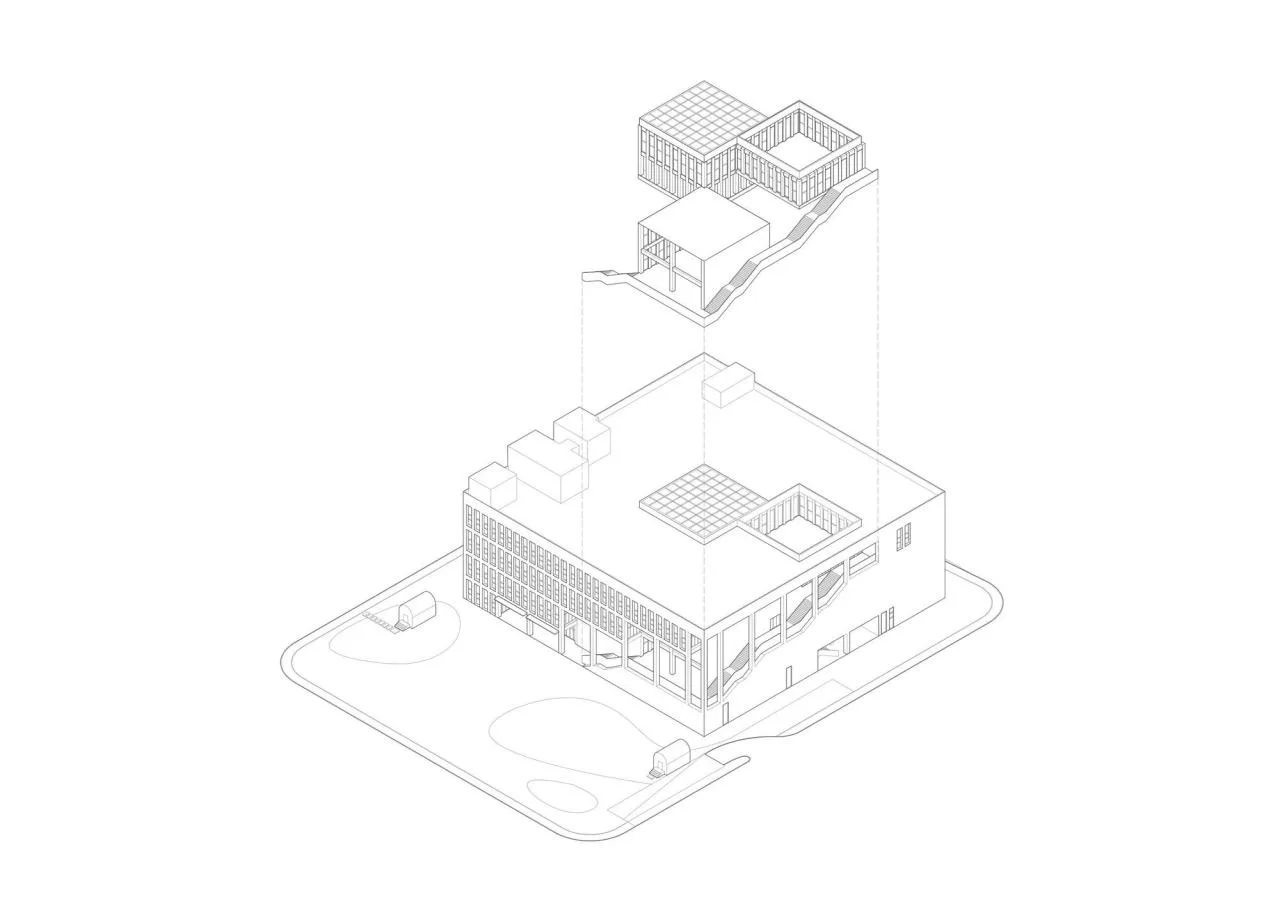
△ Analysis Chart
Project Information
Architect: Super City Architecture
Area: 88,281 m²
Project Year: 2024
Photographer: Jin Weiqi
Lead Architects: Che Fei, Zhang Xuefeng
Design Team: Zhao Shiguang, Mu Gaojie, Jie Yitong, Sun Xiao, Chen Haifeng, Chen Yu, Zhang Yaowen, Huang Mingrun
Construction Drawing Design: Tongyuan Design Group Co., Ltd
Sponge City Special Design: Beijing Beijian University Architectural Design and Research Institute Co., Ltd
Client: Yantai City Science and Technology Vocational College
Location: Yantai, China














Must log in before commenting!
Sign Up