

Chongqing Raffles City, a monumental landmark in Chongqing, heavily relies on BIM technology. Like many major projects worldwide, this development incorporated BIM throughout its design and construction phases to support bidding and project execution. In particular, both the general contractor and subcontractors at all levels were required to prepare BIM content as part of their technical bids. Below are some illustrative examples.
Overview of BIM Engineering Applications
1.1 Project Overview
Located between Chaotianmen and the Monument to the People’s Liberation in Chongqing’s Yuzhong District, Chongqing Raffles Plaza overlooks the confluence of the Yangtze and Jialing Rivers. This urban complex integrates a large shopping center, upscale residences, office buildings, apartment-style hotels, and star-rated hotels. Due to the project’s large scale, complex steel structure, high-grade concrete requirements, and intricate mechanical and electrical systems, the general contractor must demonstrate strong coordination and management capabilities across multiple disciplines.
1.2 Mandatory Requirements and Key Responsibilities of the General Contractor
1.2.1 Utilizing BIM Technology to Enhance Model Development
The detailed design phase involves numerous stakeholders. BIM technology is strategically employed to organize and coordinate this process efficiently. The general contractor is responsible for deepening the BIM model throughout the contract period, covering disciplines such as architecture, structural engineering, and mechanical and electrical system embedding.
(1) Principles of Organizational Coordination in Design Deepening
The responsibility for detailed design follows the principle: “Those responsible for construction are also responsible for model deepening.” The general contractor answers directly to the client for all detailed design work.
(2) Organizational Coordination for Detailed Design
1) The general contractor manages and coordinates the organization, planning, technology, and interfaces involved in the detailed design, ensuring consistency and integration at the project-wide level.
2) They also handle technical coordination with mechanical and electrical subcontractors, leveraging BIM to detect and resolve clashes and conflicts between systems.
3) Key Focus Areas for BIM Deepening Design Among All Parties
The general contractor establishes a dedicated management team responsible for overseeing and coordinating all detailed design efforts. The final BIM model is submitted to the client upon completion.
1.2.2 Production of BIM Model Drawings
The general contractor updates the BIM model in alignment with the project schedule to ensure construction drawings reflect the latest model at LOD 400 level. They hold full responsibility for the model’s accuracy and its consistency with 2D drawings. 2D drawings are generated directly from the BIM model to minimize discrepancies, and any 2D drawings not produced from the BIM model are clearly identified.
1.3 BIM Application Technology Solution for the Project
1.3.1 Principles of Practicality and Feasibility
The solution emphasizes a close integration of BIM technology with construction management. It also focuses on incorporating and analyzing data throughout the construction process to ensure that BIM as-built models effectively support future operation and maintenance.
1.3.2 Content of the BIM Application Technology Solution
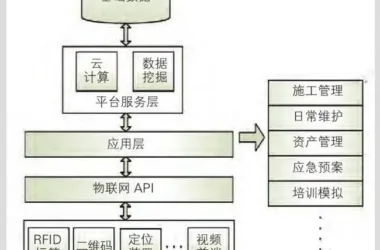
(1) This project plans to implement the Guanglian Da BIM Engineering Management 5D Collaborative Platform.
……













Must log in before commenting!
Sign Up