
As the inaugural BIM engineering pilot project by the Shenzhen Municipal Public Works Bureau and a landmark of the Shenzhen High-tech Industrial Park, the Venture Capital Building is situated in the park’s southern area. This super high-rise Grade A office tower rises to 202.4 meters and encompasses a total construction area of 93,513.53 square meters. The building features 3 underground floors and 44 above-ground floors, serving as an investment center that integrates office space, venture capital, and supporting services.

Besides implementing BIM for the Venture Capital project, the initiative also undertakes research tasks. It addresses architectural design requirements by leveraging BIM to enhance collaboration, proposing localized drawing standards and BIM-based family libraries, and classifying the BIM information database.
Summary of BIM Technology Applied in the Venture Capital Building
BIM Model Maintenance
Maintaining a BIM model aligned with the project’s construction progress involves aggregating information from various teams onto a BIM platform. This approach eliminates information silos by organizing and storing project data alongside a 3D model, enabling seamless sharing among all stakeholders throughout the project’s lifecycle.
The BIM consulting effort for the Venture Capital project commenced in April 2013. Zhubo Design’s BIM team first established project-specific BIM standards, then developed and refined comprehensive project information. Tailored services were provided to meet the diverse needs of different disciplines and participants, covering the full building design model, integrated pipeline construction model, roof steel structure comparison model, refrigeration room adjustment model, hyperbolic bending diamond-shaped glass processing simulation, lobby decoration model, and more.
By effectively managing and utilizing model data, a solid foundation was laid for improving work efficiency, controlling costs, and enhancing project quality. BIM consulting not only established standards, planning, management, and secure model data for the owner but also created significant added value for the project itself.
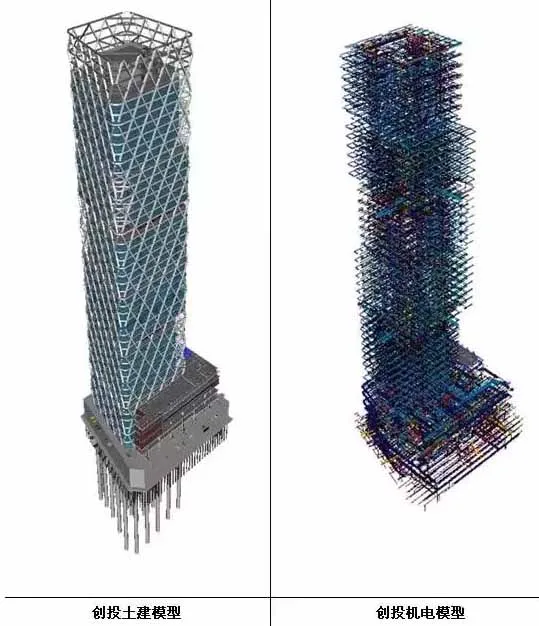

Solution Demonstration
During BIM implementation, with the goals of optimizing owner investment and building performance, BIM quickly identified potential issues by analyzing detailed building components. An opportunity for optimization was found in the crown section of the building’s outer steel structure top. Consequently, two comparative schemes were presented to the project investor for decision-making.
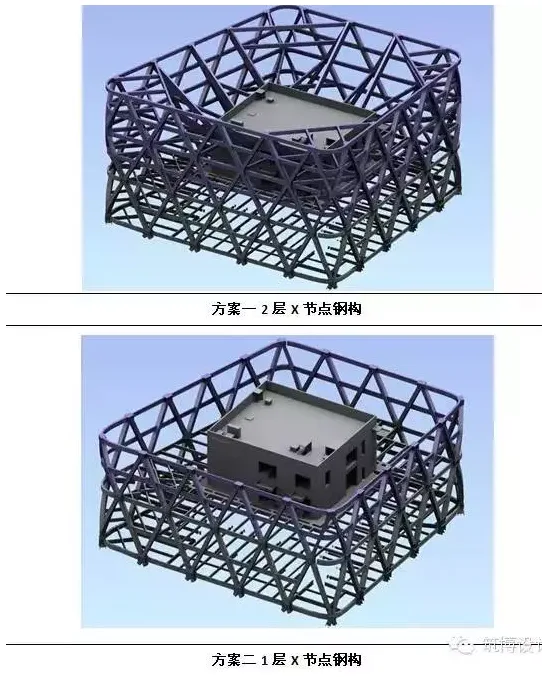
BIM models enabled owners to browse and compare options in real time, supplemented by rendered images from multiple angles. This allowed investors to quickly assess cost and timing aspects of investment plans, greatly enhancing interaction with designers during spatial and installation evaluations, and helping establish consensus between owners and designers.
Visual Design
BIM offers designers 3D visualization tools, enabling a “what you see is what you get” workflow. More importantly, it encourages 3D thinking throughout architectural design. It also empowers owners and end-users to understand the potential of their investment without technical barriers. Visualization in BIM presents traditional linear components as three-dimensional physical graphics, improving design quality through error checking, omission detection, and detailed design based on visual models.
This approach led to several important discoveries and adjustments:
- Adjustment of sleeve heights for over 60 non-pressurized pipelines passing through walls;
- Identification and modification of approximately 40 floor slab opening sizes;
- Correction of over 30 openings for pressurized louvers in stairwells and reserved fire hydrant boxes;
- Resolution of more than 30 mismatches between curtain wall, building louvers, and functional requirements;
- Detection of nearly 100 issues, including mismatched drawings, incorrect valve layouts, missing pipeline diagrams, reversed system connections, and labeling errors; insufficient net height in the refrigeration room preventing equipment installation; lack of emergency ventilation in distribution and refrigeration rooms; inadequate installation space for six water tanks; conflicts between smoke exhaust ducts and fire-resistant rolling shutters; cooling units in elevator machine rooms; visual and functional impacts from inspection areas; conflicts between LED displays and steel beams; and ventilation shaft dimensions not meeting air volume needs. All these issues were corrected promptly through BIM consulting recommendations and design changes.
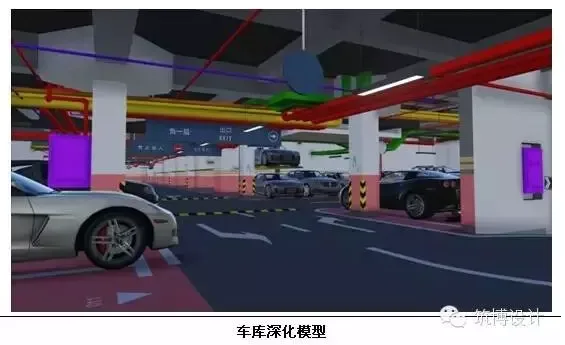
- Identification of 23 functional issues and over 20 signage and lighting inadequacies in garage detailed drawings;
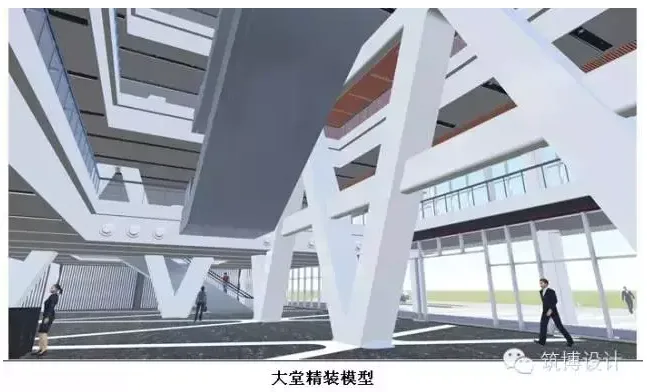
- Over 40 unreasonable design points in the lobby and 11th floor were addressed;
- More than 30 issues related to insufficient installation space, aesthetics, and external pipeline usage were identified and resolved;
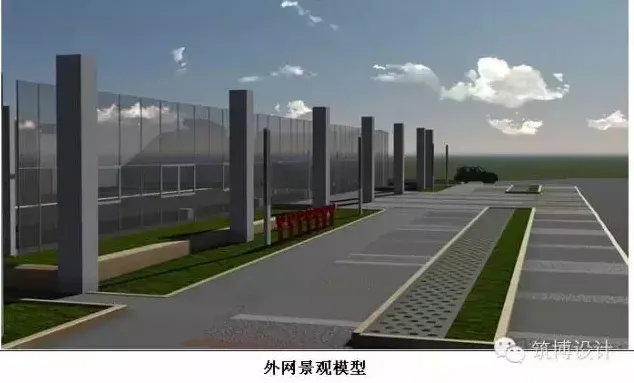
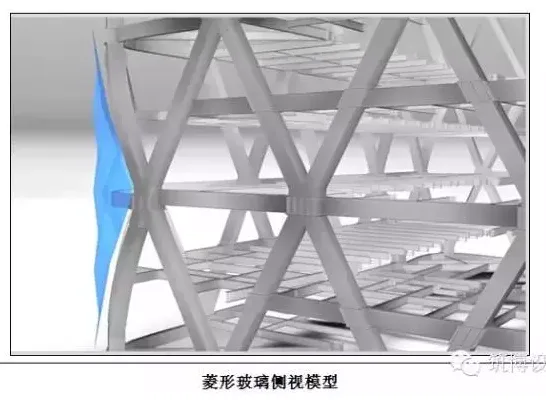
Deepening the hyperbolic curved diamond-shaped glass node model uncovered two major design drawing errors. These were promptly communicated, halting glass curtain wall fabrication. Through active BIM model analysis and collaborative discussions with the curtain wall detailing team, revised drawings were developed, adjusting processing plans for nearly 4,000 square meters of glass curtain wall.

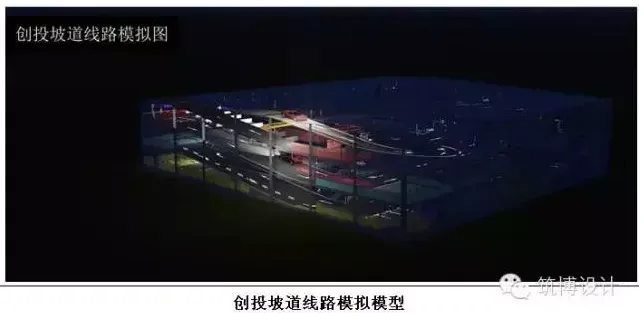
- Developed and refined basement signage system models, created vehicle animations, and conducted traffic flow analysis;
- Assisted property owners in precise building area calculations;
- Proposed 224 optimization suggestions for version 11, covering around 400 points across over 486 pages of presentations. These recommendations were directly implemented during construction through engineering letters and design changes.
Co-Design
Collaborative design represents a modern architectural approach, enabling professionals from various disciplines and locations to work together online. Given the multidisciplinary nature of the Venture Capital project, collaboration is vital. The BIM model employs a central-plus-local model strategy, where engineers work on local models on their computers and synchronize changes to a central model in real time. This ensures seamless data transmission and interaction.
Model file security is managed uniformly by the project leader, overseeing naming, paths, and permissions. BIM’s technological advantages will expand collaboration from design phases to the entire building lifecycle, involving planning, design, construction, and operation, thereby enhancing overall project benefits.
Pipeline Integration
Using BIM, designers build integrated models across disciplines, easily detecting clashes and conflicts within a virtual 3D environment. This significantly improves design accuracy and efficiency, reduces construction conflicts, lowers change requests, and enhances site productivity—thereby reducing cost overruns and delays.
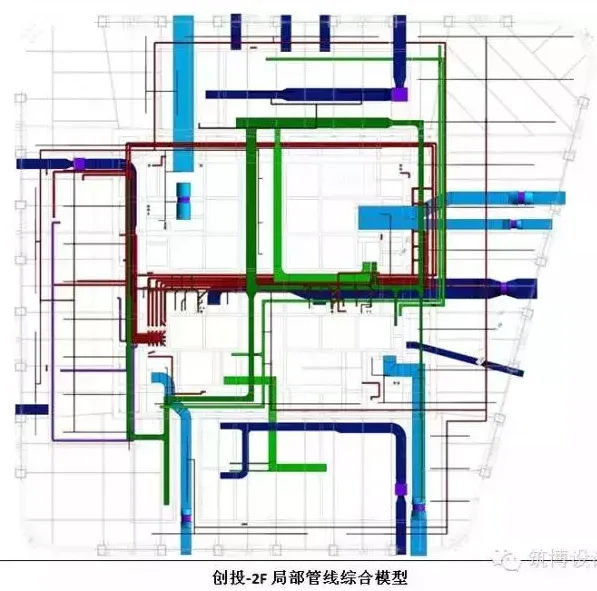
Although BIM’s application in pipeline integration for this project is basic, it played a crucial role by uncovering and resolving over 3,500 pipeline clashes, including minor issues. It identified more than 40 areas with insufficient net height and over 80 locations with incorrect pipeline sizes, systems, or directions.
By adjusting pipeline dimensions, design concepts, system directions, and limiting equipment size for complex nodes, over 300 meters of pipeline length were saved. The integration effort produced 1,195 detailed drawings based on 2D mechanical and electrical plans, all delivered to the construction team. The project received unanimous praise from the construction party, owner, and stakeholders during execution.
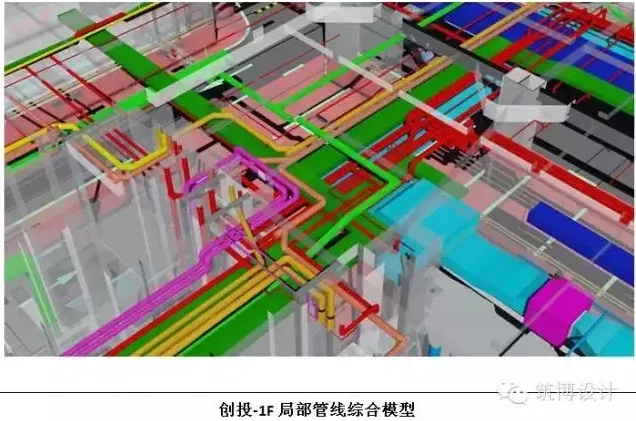
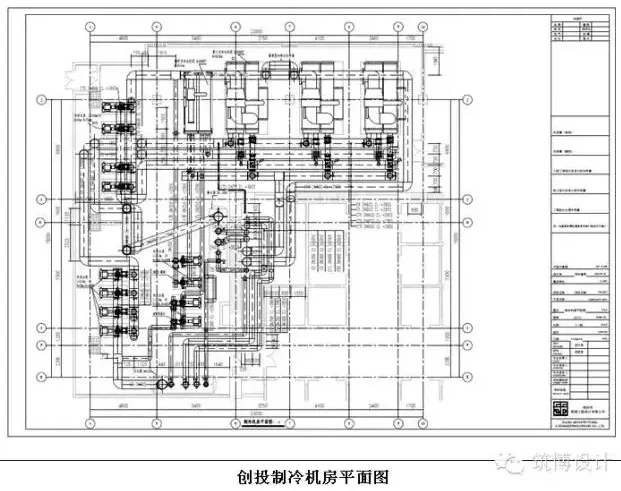
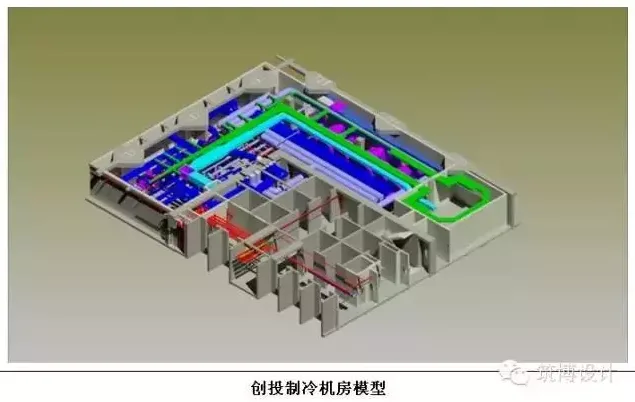
A notable example is the refrigeration room’s optimization. Original designs suffered from insufficient net height, incorrect water collector connections, flawed equipment foundation layouts, inadequate maintenance channels, and poor integration of main pipelines with equipment characteristics. These issues resulted in restricted installation space. To resolve this without compromising building functions, the building wall was moved outward by 400mm, increasing maintenance space.
Significant adjustments were made to pipeline directions, sequences, equipment, and pump locations. Due to the computer room’s low net height, all equipment was verified against planned purchases. Zhubo Design BIM Consulting provided two BIM model solutions, with the final plan chosen after multiple BIM meetings.
The BIM team’s involvement coincided with pre-embedded construction reserved for the computer room. Early identification of issues allowed them to halt initial foundation work and adopt a later pouring method after finalizing the BIM model, preventing costly rework. After comprehensive review, detailed 3D plans, elevations, and sections of the refrigeration room were issued, ensuring smooth project execution.
Construction Progress Simulation
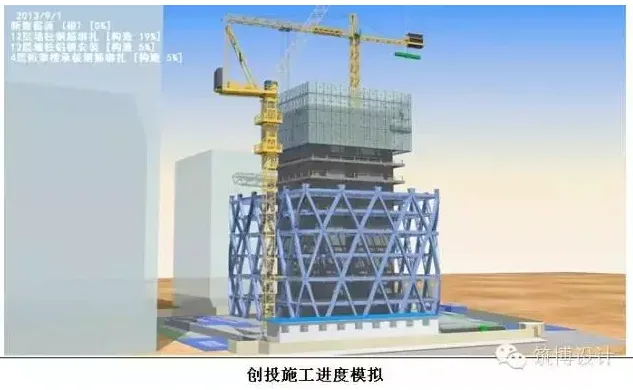
Construction is highly dynamic and complex, especially as project scale and intricacy increase. By linking BIM with the construction schedule, spatial and temporal data are combined into a 4D (3D + time) model. This visual model accurately reflects the entire building process, enabling optimized planning, progress tracking, resource management, and site arrangement.
Such simulation helps unify and control progress, resources, and quality to shorten timelines, cut costs, and improve outcomes. In the Venture Capital project, 4D construction simulation was employed to predict and manage project progress effectively.
Construction Organization Simulation
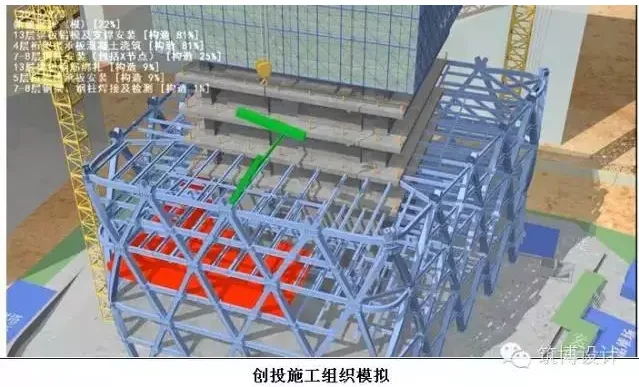
Scientific management of construction depends heavily on organization, coordinating work, resources, and preparation at each stage. BIM simulates the feasibility of key or challenging project components and optimizes construction and installation plans on monthly, daily, and hourly bases.
BIM also supports simulation and analysis of construction guidance measures, such as complex processes, innovative techniques, and site layout, improving plan feasibility. It can be integrated with construction rehearsals to enhance manufacturability of complex systems like templates, glass assemblies, and anchoring.
By simulating construction organization, project management gains clear insight into schedules, installation sequences, challenges, and critical points. The construction team can then refine plans to improve efficiency and safety. The BIM team simulated sequences for core tube structures, outer steel frames, composite floors, concrete structures, and complex steel installations to provide direct process guidance to construction leaders.
Construction Site Coordination
BIM integrates comprehensive building information and offers a 3D communication platform. Compared to traditional workflows where teams sift through piles of drawings onsite, BIM dramatically improves efficiency.
The Venture Capital project benefits from on-site BIM consulting services, with the project leader present for over 60 days. The BIM site studio provides an interactive communication platform for all parties, sometimes delivering real-time on-site guidance via BIM terminals.
By comparing BIM models with actual site conditions, issues are promptly resolved. Project personnel can easily discuss plans, demonstrate feasibility, mitigate risks, reduce changes, shorten construction time, control costs, and boost site productivity.
Delivery of Completed Model
At project handover, property management requires not only design and completion drawings but also detailed operation and maintenance documentation reflecting real equipment status and installation.
BIM integrates spatial and equipment parameter data, offering owners comprehensive building information. The connection between BIM and construction records enables inclusion of concealed engineering data, facilitating future property management and renovations.
The BIM completion model for the Venture Capital project is progressing systematically. Currently, the model is updated with design changes, construction adjustments, and equipment parameters, with a full update expected within two months after project completion.
Maintenance Plan
Throughout a building’s lifecycle, its structural elements (walls, floors, roofs) and equipment (systems, pipelines) require ongoing maintenance. Combining BIM models with operation and maintenance management systems leverages spatial positioning and data recording for effective maintenance planning.
Dedicated personnel can be assigned for specialized tasks, reducing unexpected operational issues. Historical maintenance records of critical equipment enable early assessment of equipment status, emphasizing the role of a comprehensive completion model in guiding maintenance.
The BIM consulting team at Zhubo continues to collaborate with the owner to develop BIM-based applications for operation and maintenance management, ensuring long-term building performance and efficiency.














Must log in before commenting!
Sign Up