
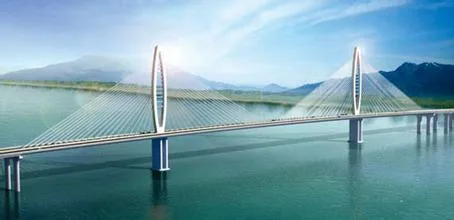
Reflecting on 2014, Guangdong officially entered the era of high-speed rail with the opening of the Guiyang-Guangzhou and Nanning-Guangzhou high-speed railways. The Second Guangzhou Expressway now connects Hunan, opening up a new economic corridor. The Zhaohua Expressway forms the outer ring of the Pearl River Delta, directly linking to Baiyun Airport and expanding the airport’s economic influence. Despite construction challenges, the Guangzhou-Foshan-Zhaocheng rail transit and expressway projects have progressed steadily. Additionally, construction has begun on the Shankun and Shanzhan expressways. The 2000-ton waterway regulation project from Xijiang Jieshou to Zhaoqing has been completed, with plans underway for a 3000-ton waterway expansion and upgrade. Meanwhile, the Yuejiang Bridge—the third elevated bridge on the Xijiang River—is currently under construction. Overall, Zhaoqing’s comprehensive transportation network is expanding, gradually forming a three-dimensional system.
This year marks the final year of the Twelfth Five-Year Plan. Guangdong Province plans to invest 12.87 billion yuan in transportation infrastructure, including 10.01 billion yuan for highway construction, 2.11 billion yuan for rail transit, 500 million yuan for highway stations, and 250 million yuan for water transportation. With a focus on highways, Guangdong aims to accelerate transportation infrastructure development, improve service levels, and fully meet the objectives of the Twelfth Five-Year Plan while laying the groundwork for the Thirteenth Five-Year Plan.
Guangfo Zhaocheng Railway Set to Open by Year-End
On June 18th, the Guangfo Zhaoqing Intercity Line entered its track-laying phase as two 30-ton steel rails, each 500 meters long, were smoothly and precisely installed on the ballastless track of the Zhaoqing Avenue Grand Bridge with the assistance of a tractor. According to the construction schedule, rail welding, precise track adjustments, and rail polishing are expected to be completed by the end of August. Static acceptance will follow in September, with joint debugging and testing in October, aiming for an opening by November.
The Guangzhou-Foshan-Zhaoqing intercity railway uses state-of-the-art cross-section designs and seamless technology, ensuring high comfort and safety. For example, its elastic fasteners can exert a clamping force of 7 tons, effectively handling thermal expansion and contraction of the rails to maintain stability at all times.
The railway line runs westward from Foshan West Station on the Guiyang-Guangzhou railway, passing through Shishan, Sanshui, Dasha, Lianhua, Zhaoqing East, and Dinghu, finally reaching the urban area of Duanzhou in Zhaoqing. The total length is 79.717 kilometers, with 10 stations: Shishan Station, Shishan Industrial Park Station, Sanshui Station, Yundonghai Station, Dawang Station, Dasha Station, Zhaoqing East Station, Dinghu Station, Dachong Station, and Zhaoqing Station. Track laying covers 162.25 kilometers, including 156.65 kilometers of ballastless track and 5.6 kilometers of ballasted track. The entire track laying is expected to be completed by July 31st.
Accelerating Integration into the Pearl River Delta Core
Over the past two years, the Guangfozhao Economic Cooperation Zone has been a key focus during joint mayoral meetings within the Guangfozhao Economic Circle. Thanks to the collaborative efforts of Guangzhou, Foshan, and Zhaoqing, the zone’s overall development plan has been approved by the Provincial Development and Reform Commission. The three cities aim to optimize resource allocation, leveraging Guangzhou and Foshan’s strengths in management, industry, capital, and branding alongside Zhaoqing’s resource advantages (notably in Huaiji). Together, they are building a high-level, efficient cooperation zone that shares benefits based on equal rights and responsibilities.
In early April, Guangdong’s municipal government met with the Provincial Railway Construction Investment Group Co., Ltd. to discuss accelerating the Guangzhou-Foshan-Zhaocheng rail transit project. Guangdong Mayor Lai Zehua expressed gratitude for the group’s strong support, particularly highlighting the anticipated opening of the Guangfo Zhaocheng Rail Transit by year-end. Enhanced transportation connectivity has accelerated Zhaoqing’s integration into the Pearl River Delta’s core, boosting business confidence and strengthening the public’s resolve for prosperity and well-being.
Yuejiang Bridge Construction Gains Momentum
On June 25th, at Yuejiang Bridge’s north side wharf construction site, workers were busy organizing equipment and using measuring tools to ensure precision. Giant cylinders were placed on the steel structure wharf. The two bridge piers on the north side near the main bridge pier have been completed with cement pouring, and the piers have taken shape. The steel structure’s main beams on another pier are finished, with underwater cement pouring also complete. Construction is actively progressing on the water surface.
The Xijiang River’s flood season has posed significant challenges. Rising water levels have submerged the wharf, halting construction, and floodwaters have damaged the site considerably. The construction team plans to accelerate work once the flood season ends, focusing next on piers 38 and 39 and implementing T-shaped rigid frame construction.
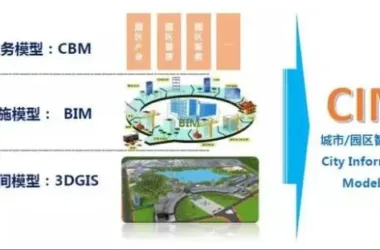
Numerous temporary structures and machinery are involved in the Yuejiang Bridge project. Flooding has limited available construction time and space, while many reserved and embedded parts add complexity to site layout. To address these challenges, the construction team has adopted advanced Building Information Modeling (BIM) technology.
According to project leaders, the main bridge pier construction is the most complex and risky part of the substructure. Using BIM models of the steel platform and suspension box, the team conducts dynamic simulations aligned with the construction schedule to guide technical planning and execution. BIM also helps identify and correct design errors before construction begins. Additionally, comparing detailed model workloads with drawing-based workloads helps detect inconsistencies in work estimates.
Transportation Network Boosts Development on Both Riverbanks
The Yuejiang Bridge is a crucial element of Zhaoqing’s “On Both Sides of the River” policy, supporting eastward expansion and southern connections. It plays a vital strategic role in promoting economic and social development and enhancing Zhaoqing’s competitiveness. Once opened, the bridge will resolve transportation challenges across the Xijiang River and foster greater integration and exchange between Duanzhou and Gaoyao. This integration will optimize resource allocation, accelerate economic growth on both sides, and strengthen Zhaoqing’s image and competitiveness.
The integrated development of Duanzhou and Gaoyao represents a golden opportunity for Zhaoqing’s leapfrog growth, maximizing its role as a gateway city linking the Pearl River Delta and the Southwest. Government bodies are urged to adjust plans to seamlessly connect both sides of the river, adopting differentiated yet integrated development strategies.
Historically, administrative divisions and economic systems have caused some separation between Duanzhou District and Gaoyao City. To achieve true integration, it is essential to analyze each area’s unique competitive advantages, define functional roles, clarify industrial adjustments, and accelerate major transportation projects. Equalizing basic public services and facilities, optimizing industrial layouts, and promoting resource integration will support industrial transfer, cluster formation, and population growth. These efforts aim to enhance urban agglomeration, carrying capacity, influence, and competitiveness, building a modern metropolis suited for business, living, tourism, and riverfront development. Ultimately, this will strengthen urban economies of scale and concentrate production factors in city centers, fostering coordinated development and faster economic growth on both sides of the river.
The Yuejiang Bridge under construction, together with the existing Zhaoqing and Xijiang Bridges, effectively links Duanzhou and Gaoyao, providing vital support for the ongoing “On Both Sides of the River” development strategy.












Must log in before commenting!
Sign Up