
The BIM design team at Zhongfang Construction was established in October 2007, making it one of the earliest architectural design agencies in China to form a dedicated BIM department. In May 2008, the team pioneered the completion of China’s first professional BIM design project using Revit—the Shanghai Huangpu Center. Zhongfang Construction emphasizes the seamless integration of BIM design with engineering design, ensuring that BIM outputs fully support on-site construction implementation.
In December 2009, the Shanghai Huangpu Center won the first national award in the Innovation Cup BIM Architecture Design Competition.
BIM Design for Xuhui Commercial Plaza
Location: Yangpu District, Shanghai
Building Scale: 6 floors above ground, covering 6,600 square meters
Building Height: 26 meters
Building Type: Large commercial office building
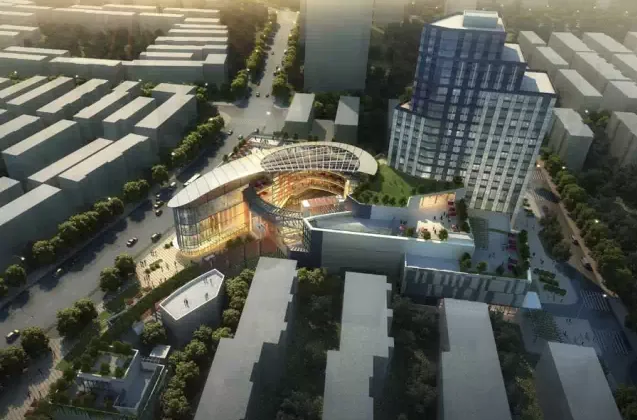
The project is situated at the intersection of Dahushan Road and Kongjiang Road in Shanghai’s Yangpu District. The operational Shanghai Metro Line 8 runs diagonally through the site, with the Anshan Xincun subway station located within the project boundaries. The development consists of a 79.5-meter-tall, 21-story apartment-style office building alongside three multi-story commercial buildings ranging from 2 to 5 floors.
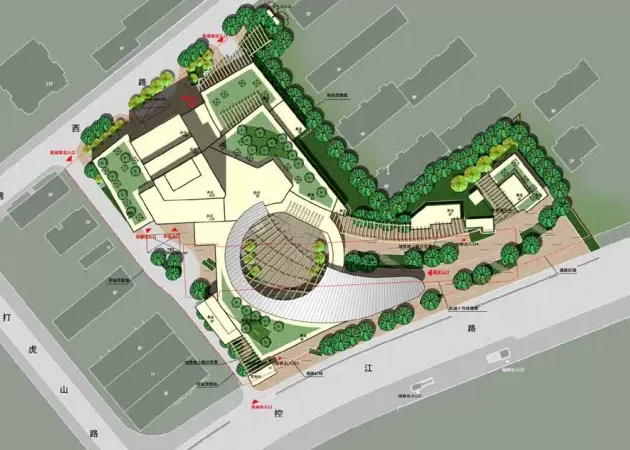
The Application of BIM Technology
This project leverages advanced BIM technology to foster close collaboration between structural and architectural disciplines. BIM was crucial in optimizing the design and layout of the connecting structures and the large roofs above the subway station. The design aimed to reduce structural weight, minimize negative impacts on the settlement of existing subway stations, and ensure uninterrupted subway operations.
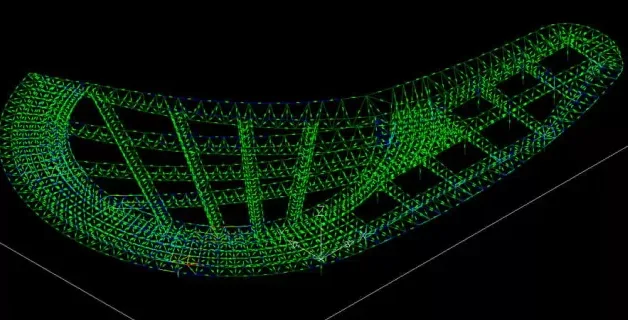
Internal Force Verification
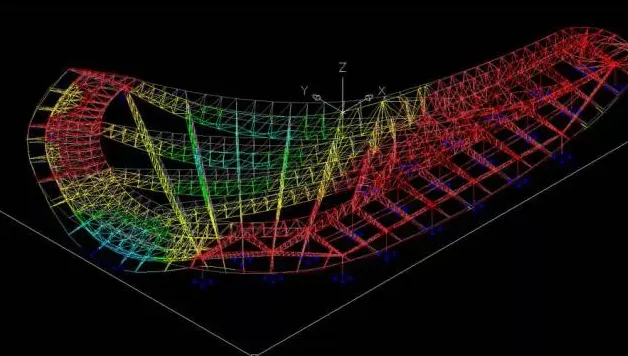
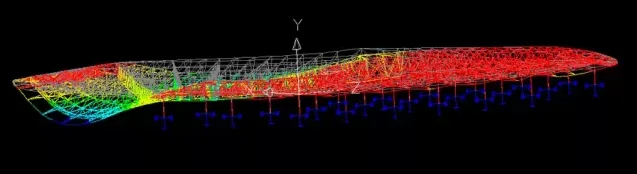
Structural Displacement
The BIM design scope for Xuhui Commercial Plaza included the digital modeling of a uniquely shaped steel structure roof. A combination of BIM and digital design techniques was used to create a smooth, curved surface shape.
Based on the architectural form requirements, the team completed the coordinated design of the structure and assessed the stress rationality to ensure structural integrity.
More than 6,000 distinct structural members were linked and numbered, with spatial coordinates provided for each component. This detailed digital model facilitated precise product fabrication and on-site assembly by the construction team.
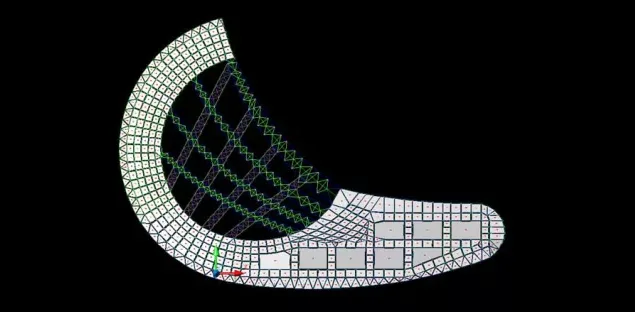
Load Analysis
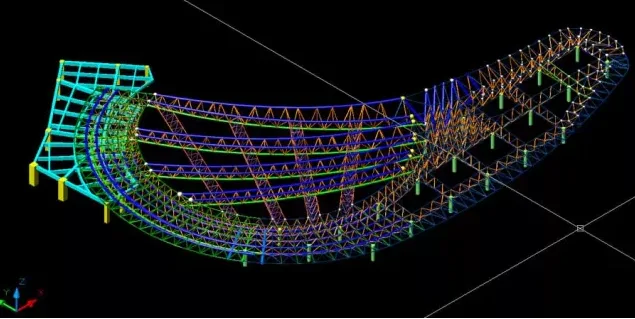
Physical Model
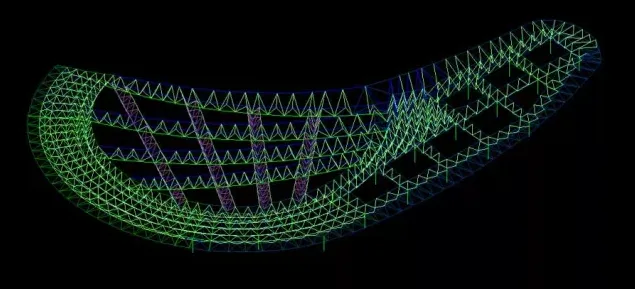
Wireframe Model














Must log in before commenting!
Sign Up