
1. Project Overview
1.1 Overview of the Data Industry Park
The second phase of this comprehensive development in a data industry park features structures primarily composed of frames, frame shear walls, and raft foundations. The total building area is 81,000 m², with 69,000 m² above ground and 12,000 m² underground. The building consists of one underground floor, four above-ground podium floors, and tower floors ranging from five to twenty-three levels. The podium building reaches a height of 26.8 meters, while the tower building stands at 96 meters.
The building’s layout and functions are as follows: the underground first floor serves as a parking garage with a capacity of 364 vehicles and houses equipment rooms. The above-ground podium floors accommodate department stores, while the tower floors above serve as office spaces along pedestrian commercial streets.
The installation works include systems such as water supply, drainage, fire hydrants, sprinklers, power supply and distribution, lighting, lightning protection and grounding, fire alarms and fire linkage, weak current systems, HVAC, fresh air, and smoke prevention and exhaust. Most pipelines and equipment are concentrated in basements, equipment rooms, public corridors, and pipeline shafts. The dense pipeline network and complex building structure present significant construction challenges.
Given the strict quality requirements aiming for provincial excellence, the Yangtze Cup, national excellence, and the Luban Award, the project decided to adopt BIM technology to guide its design and construction as a pilot initiative.
1.2 Impact of BIM Technology
BIM technology brings several benefits to construction enterprises during the construction phase, including:
- Visualization of design effects;
- Verification of model accuracy;
- Four-dimensional simulation and construction progress monitoring.
By creating a 3D information model using professional software, the completed project can be visualized virtually. This offers perspectives and insights beyond what traditional 2D drawings provide. Additionally, BIM supports effective construction planning, reduces rework, controls costs, promotes green and low-carbon construction, and enhances overall project management.
1.3 Scope of Application
The technology was applied specifically to the air conditioning room within the data park industrial park.
2. Application Process
2.1 BIM Software and Hardware Requirements
2.2.1 Software Installation Requirements
In line with project demands, professional BIM software was installed, requiring AutoCAD 2010 or newer. The minimum software configurations for this pilot project included:
- AutoCAD 2014, 64-bit operating system;
- MagiCAD (for AutoCAD) version 2014.4, 64-bit operating system;
- Navisworks Manage 2014, 64-bit operating system.
2.2.2 Hardware Configuration
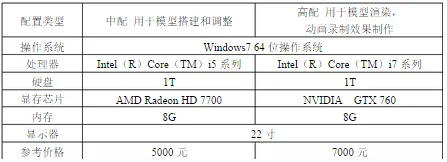
To accommodate the software requirements, the project department was equipped with appropriate computers for model building and adjustments. High-end workstations at the company headquarters handled model rendering, animation recording, and post-production tasks.
Pilot Project Hardware Configuration Table 1
2.2 Purpose of Using BIM Technology in the Data Park Industrial Park
BIM technology guides the entire construction process, allowing the BIM model and corresponding construction drawings to be continuously used throughout the project stages. The BIM model developed during the design phase is directly utilized during construction, enabling design optimization and detailed development.
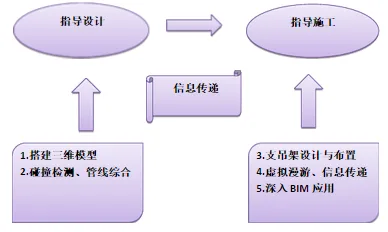
Figure 1: Purpose of Using BIM Technology
2.3 Scope of Application
2.3.1 Pipeline Integration
During the pilot project’s construction, BIM-based professional software was employed for detailed design and comprehensive pipeline layout. This approach ensured reasonable space utilization, resolved pipeline clashes, and met national regulatory standards throughout the process. System requirements were fulfilled while avoiding excess pipe fittings to minimize system resistance. Adequate maintenance space was reserved to support the procurement and production of pipe fittings, as well as the fabrication and installation of supports and hangers.
2.3.2 Collision Detection
At the construction deepening stage, 3D modeling enabled automatic collision detection, providing timely feedback to on-site teams. This early detection minimized pipeline conflicts and on-site rework, significantly reducing costs and improving efficiency. It also supported low-carbon construction practices, shortened construction duration, prevented unnecessary cost increases from errors, and enhanced overall construction quality.
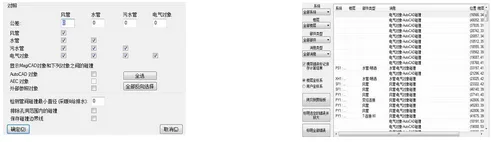
Figure 2: Collision Detection Process & Result
2.3.3 Collision Handling
Once collisions were automatically detected, the 3D model was updated with specific design adjustments to eliminate conflicts. This proactive approach greatly reduced labor and material costs by guiding both design and construction. The following examples illustrate typical collision points in this data park project.
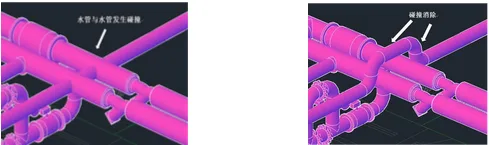
Figure 3: Water Pipes Before and After Collision Resolution
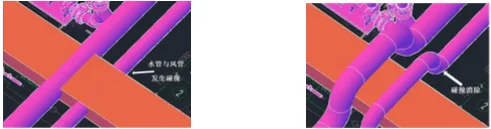
Figure 4: Comparison of Water and Air Pipes Before and After Collision Resolution
2.3.4 Material List Comparison
Traditional 2D designs rely on semi-manual material list compilation, which varies in accuracy depending on equipment and pipeline complexity. Smaller pipes and components often reduce precision, and compiling these lists requires significant time and labor. For example, a data industrial park project typically takes four specialists 3 to 5 days to complete the material list.
With BIM, material lists are automatically generated once the model is accurately built, ensuring precise and efficient material accounting without the need for additional manual effort.
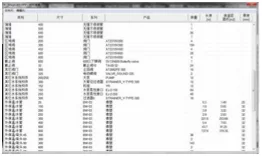
Figure 5: Material List Statistical Results
2.3.5 Automatic Generation of Reserved Holes
Common quality issues during the pre-embedded stage of construction and installation include omitted holes, missing sleeves, or inaccurate pre-embedded placements. This often leads to mechanical and electrical pipelines being installed before holes are drilled in the walls, causing delays, increased costs, structural damage, and safety risks.
This data park project uses BIM hole reservation technology to accurately pre-locate reserved holes for pipelines passing through concrete panels, secondary partitions, and floor slabs. This coordination with civil engineering units reduces unnecessary complications.
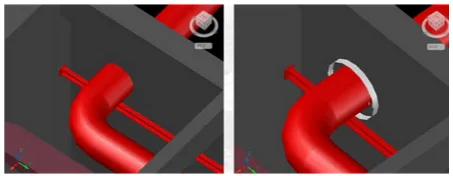
Figure 6: Hole Reservation
2.3.6 Layout of Supports and Hangers
Supports and hangers are critical components in mechanical and electrical pipeline systems, providing load-bearing, displacement control, and overall structural support. Proper design and placement reduce pipeline stress and optimize support loads.
In this data park project, BIM technology was used to deepen the design of supports and hangers comprehensively. The pipeline layout not only demonstrates clear hierarchy but also ensures precise horizontal and vertical alignment, improving aesthetics. Additionally, the steel quantities for supports and hangers were accurately calculated.
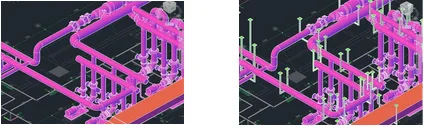
Figure 7: Support and Hanger Layout Comparison Before and After
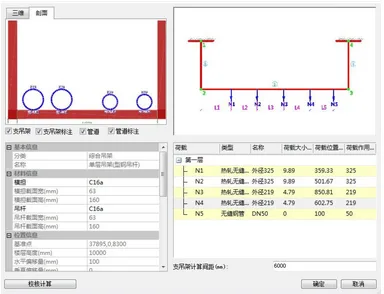
Figure 8: Support and Hanger Statistics and Verification Calculations
3. Highlights and Limitations of BIM Technology Application
3.1 The Main Value and Significance of BIM in This Project
By building detailed 3D models, the relationships among mechanical and electrical equipment, pipelines, and civil structures are clearly visualized, allowing simulation of post-construction effects. This offers several benefits:
- Helps mechanical and electrical designers navigate complex architectural spaces;
- Optimizes building space through integrated pipeline planning;
- Accurately reflects the spatial requirements for pipelines and equipment, addressing issues often overlooked in traditional designs;
- Detects and resolves pipeline collisions, an unattainable goal with 2D design methods;
- Automates material list generation and consumption statistics;
- Simulates construction processes, reducing rework and enabling efficient scheduling of materials and labor;
- Enables realistic walkthrough animations that enhance communication with owners and support project presentations and promotions.
3.2 Technical Highlights of BIM in This Project
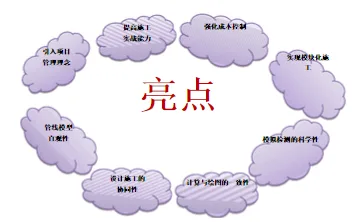
Figure 9: Technical Highlights
3.3 Challenges in Early Modeling and Their Impact on Later Applications
Early modeling errors and incomplete details can limit BIM’s effectiveness in later stages. Currently, BIM is mostly used for pipeline integration, collision detection, and spatial visualization, focusing on 3D functionalities. Models may be built roughly without setting additional parameters or meeting strict accuracy standards. Typically, only primary equipment and main pipes are modeled, with smaller branches, end devices, or less critical facilities often omitted.
While BIM is increasingly assisting 2D design, the models are not always used for final delivery or comprehensive information transfer, resulting in shorter design times but underutilizing BIM’s full potential. To fully leverage BIM for detailed data extraction and applications, models need to be built with high accuracy and detail.
4. Conclusion
BIM technology offers a comprehensive solution for the construction and installation industry by overcoming limitations inherent in traditional design software. It significantly enhances design and coordination efficiency across disciplines.
Applying BIM to the second phase of the data park project enabled 3D visualization of electronic drawings. Features like collision detection improved departmental efficiency, ensured project schedules, reduced costs, and enabled refined whole-process control. Overall, BIM enhanced project management capabilities and strengthened core competitiveness.













Must log in before commenting!
Sign Up