
“In the past, supervising construction sites required on-site inspections one by one, limiting the number of visits to just a few times a day from morning till night. Now, with this system, sitting in front of a computer, one can clearly monitor the safety status of all construction sites and focus on visiting only those with safety hazards, greatly improving efficiency.”
This mobile video surveillance system, which impressed Zhu Min, the chief engineer of Qingdao Safety Supervision Station, was implemented by the Qingdao Urban and Rural Construction Commission. It exemplifies how technology is enhancing safety and embodies the results of a strategic approach.
With the sweeping tide of the “Internet” era, the Qingdao Municipal Commission of Urban and Rural Development has actively pursued an innovation-driven strategy within the construction industry. This has guided the island city’s construction sector to embrace the digital age, accelerating integration with the Internet in areas such as industry supervision, construction technology, and enterprise development, revitalizing what was once a traditionally “heavy” industry.
Since the deployment of mobile video surveillance systems at construction sites throughout Qingdao, Zhu Min’s work has become much more organized. As of this year, 138 construction sites in Qingdao have installed these systems. Utilizing 4G technology, they transmit real-time images to computers and mobile devices, enabling management personnel to view the sites anytime and anywhere.
At the second phase of the Qingdao University Affiliated Hospital construction site in Laoshan District, I observed the system firsthand. It consists of three fixed cameras monitoring the site entrance, the office and living areas, and the construction area respectively. The cameras at the entrance and office/living areas have fixed angles and focal lengths, while the camera covering the construction area is adjustable.
“The construction area camera should be installed at the highest point. Currently, during the foundation pit construction stage, it is mounted on adjacent high-rise buildings. Once the main construction begins, it will be moved to the top of the tower crane,” Zhu Min explained as he accessed the remote monitoring platform on his phone. The live feed displayed the construction site clearly, even revealing the company name on workers’ uniforms in the foundation pit. Zooming out, the entire site became visible.
In addition to fixed cameras, mobile electronic “eyes” will be used during the main construction phase. When detailed inspection is needed, safety supervisors can require site safety officers to wear helmets equipped with cameras to patrol the site. These devices can instantly record, transmit, and store images from various angles and areas of the site. This not only significantly increases the efficiency of safety supervision but also encourages on-site safety officers to diligently fulfill their responsibilities, while promoting respectful and safe behavior among workers.
“Beyond monitoring construction safety, the mobile video surveillance system can also help manage project timelines, control dust during construction, and oversee construction waste disposal. By the end of the year, we plan to integrate more data, aiming to achieve multitasking capabilities where one device can manage multiple functions,” Zhu Min added.
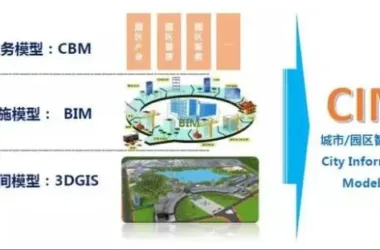
Enterprises are also actively adopting new technologies to improve themselves. For instance, the internationally recognized BIM (Building Information Modeling) technology has been embraced by several projects in Qingdao, including the Qingdao Art School, Beer City renovation, Haitian Hotel renovation, and Sino-German Ecological Park. This technology enables intelligent operation and management.
Statistics show that BIM technology can reduce design changes by 40%, shorten cost estimation time by 80%, and cut construction periods by 7%. By identifying and resolving conflicts early, it can lower contract prices by 10%. In the Beer City renovation project, BIM’s collision inspection revealed over 400 issues and resolved more than 80 design defects, resulting in cumulative savings of nearly 1.8 million yuan.
The employment model is also evolving under the influence of Internet thinking. Guided by the Qingdao Municipal Commission of Urban and Rural Development, a local company developed the “Working Treasure” mobile app, which is currently in preliminary promotion. This platform aims to create an online labor market for the construction industry.
Through this app, migrant construction workers can post job search information and salary expectations, while construction companies can list job vacancies and hiring needs. When matches are found, employment intentions can be quickly confirmed, enabling direct contact between companies and workers. This helps eliminate illegal practices such as unauthorized subcontracting, layered subcontracting, and wage arrears.
Looking ahead, Qingdao plans to further integrate construction industrialization with Internet technology. Construction industrialization, a necessary step toward low-carbon transformation, represents the future development path of the industry.
A representative from the Qingdao Municipal Commission of Urban and Rural Development stated that, thanks to technological innovation, Qingdao’s construction enterprises already possess significant technical reserves, providing a solid foundation for promoting industrialized construction. Currently, the city is studying and refining policies, regulations, and technical standards for this industrialization, exploring a unique Qingdao model to transform the construction industry.














Must log in before commenting!
Sign Up