
At East China Normal University, the Lihua River holds a special place as the campus river and a vessel of cherished memories. The deep connection to the Lihua River is firmly embedded in the hearts of the university community.
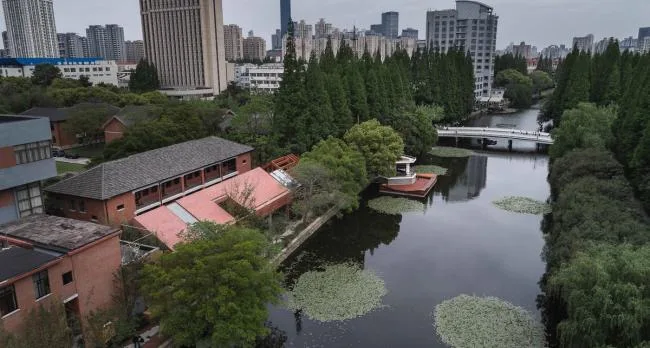
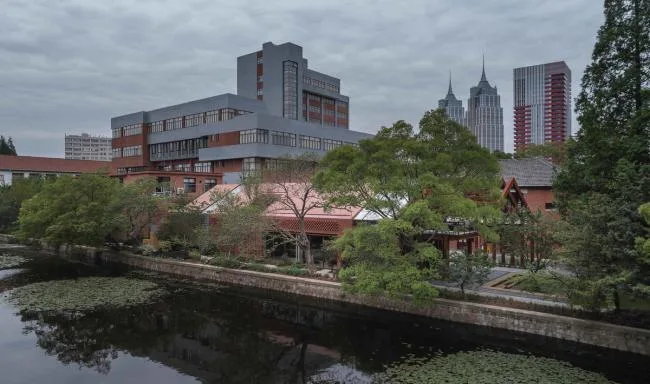
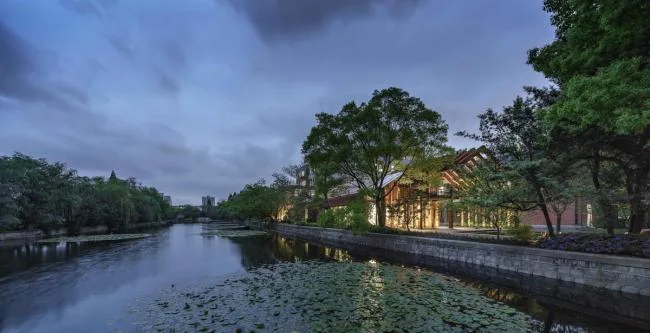
Project Location
This project is situated on the banks of the Lihua River within East China Normal University. The river borders the site to the west, while Lihua Road lies to the east. The area extends south to Lihong Bridge and north to the Power Department. Along the river, the student dormitories, teaching buildings, and faculty residences are arranged sequentially from north to south. The project site is located in the heart of the teaching building zone, which also serves as the central axis of the campus’s cross-shaped spatial layout.
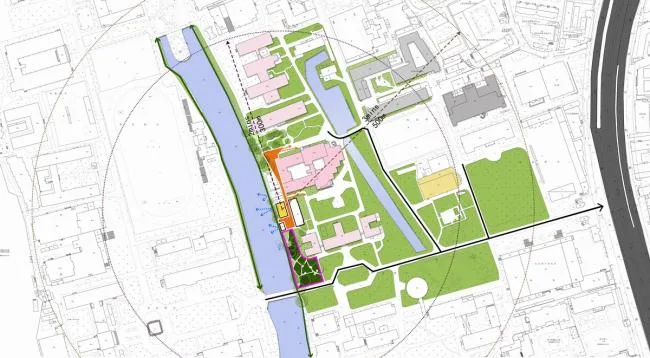
Situation Analysis
The textbook building on the site, constructed in the 1940s, is a protected historic structure. However, as the campus has developed, its original function has become obsolete. The side pavilion is relatively enclosed and lacks a compelling spatial atmosphere, leading to inefficient use of space. Additionally, the site’s overall potential to capitalize on the scenic riverside landscape has not been fully realized.
Renovation Concept & Multi-Functional Integration
The renovation aims to unify the surrounding spaces and introduce diverse functions such as reading areas, display zones, tea tasting spots, and relaxation spaces. The design preserves the original architectural form while catering to the needs of students, faculty, and the public. The goal is to transform a merely passable space into a vibrant, livable environment that enhances the quality of the riverside experience.
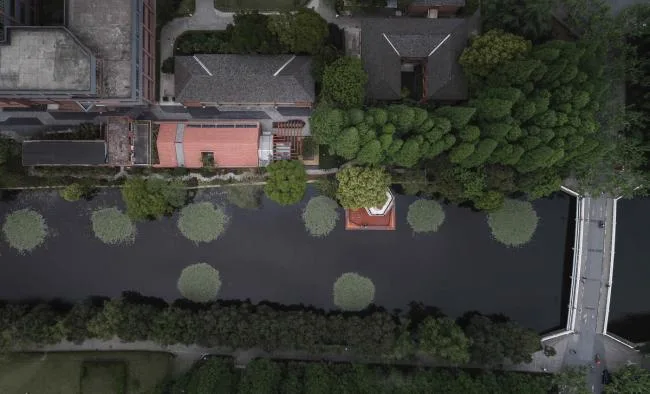
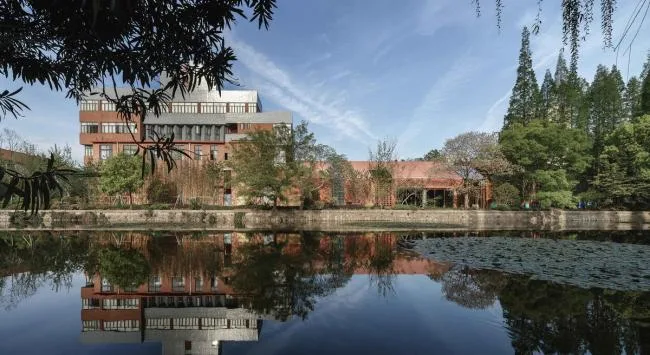
Book Bar Renovation Design
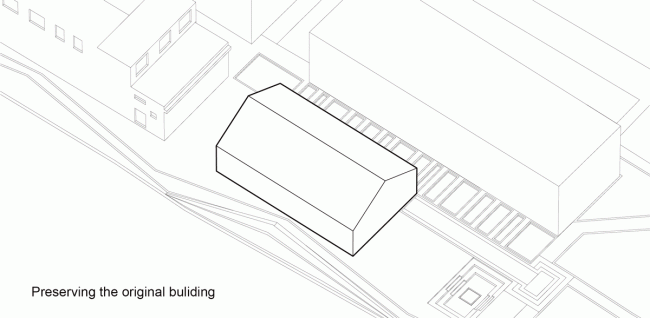
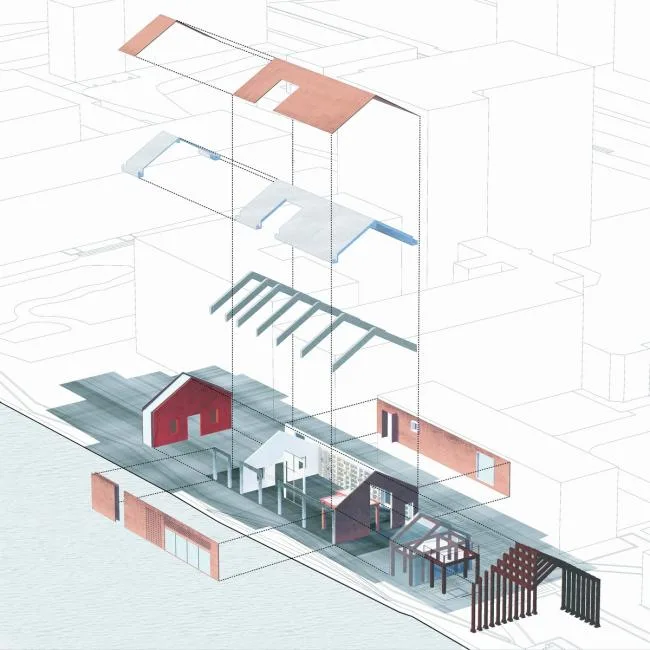
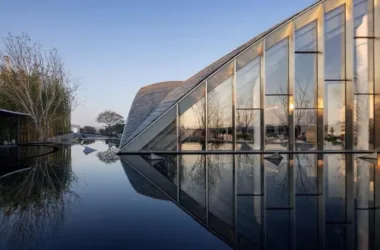
The original textbook building was a single-story structure, insufficient to accommodate the functional requirements of the new book bar. The renovation retains the original architectural form while adding partial extensions to enhance functionality and respond to the surrounding environment. The design continues the original sloping roof style and incorporates glass rooms and steel frames to expand usable space and create a distinctive entrance.
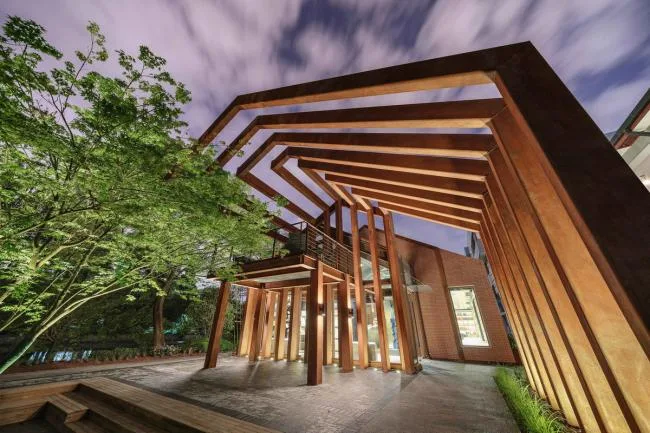
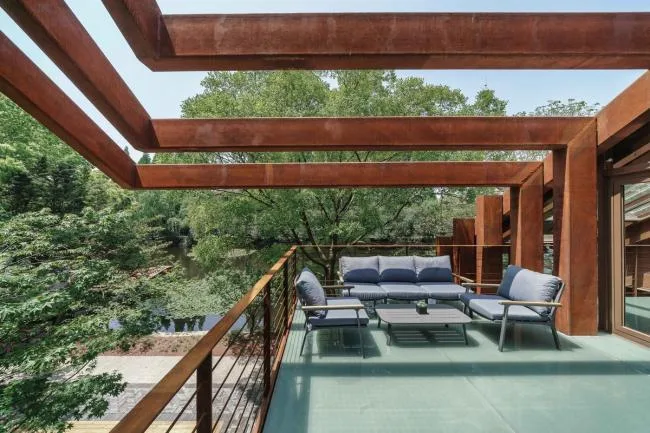
This space integrates multiple functions, including reading, exhibitions (BIM design), tea tasting, and relaxation. By adding a second floor and entrance glass rooms, the renovation respects the original structure while adapting to new functional demands.
A glass room is introduced as a buffer zone at the book bar entrance, addressing the limited indoor area. Utilizing the space beneath the sloping roof’s eaves and inserting partial mezzanines enhances space efficiency. This approach creates a private area for contemplation and communication, contrasting with the open layout on the first floor.
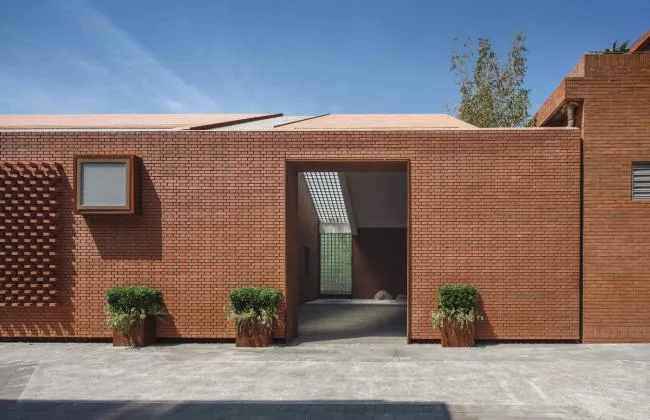
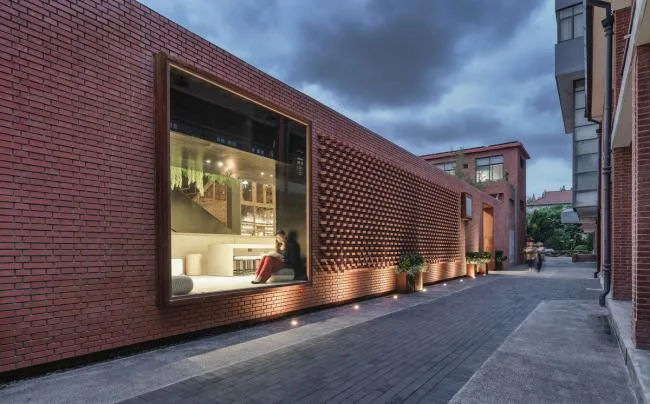
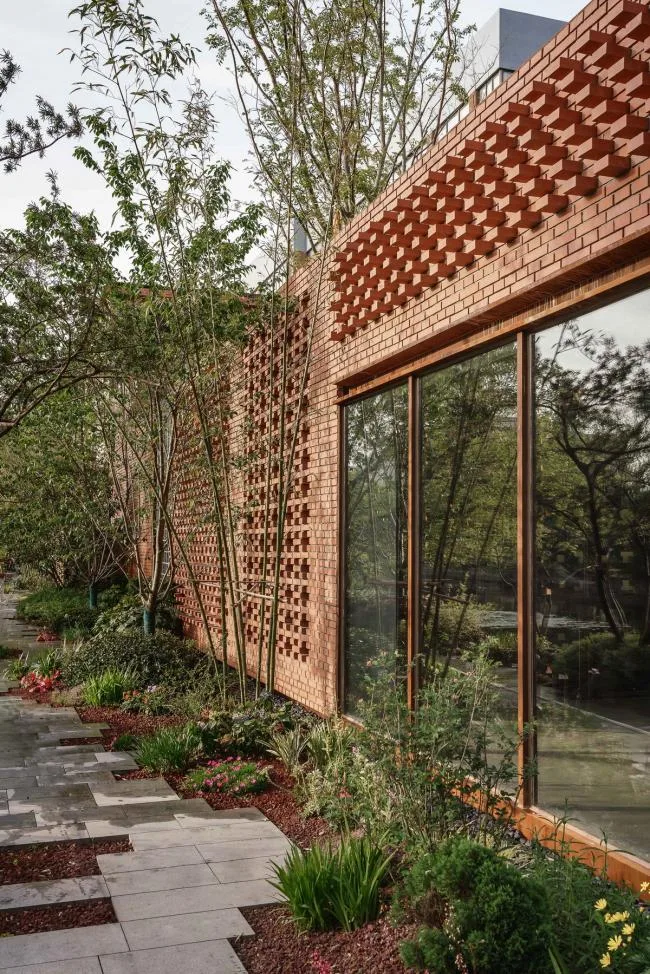
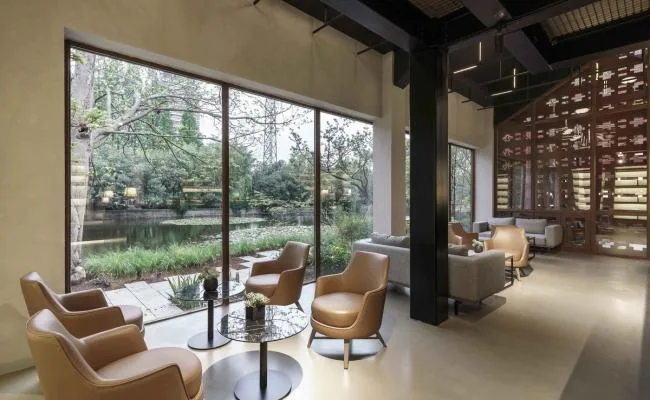
Functionally, the first floor opens towards the riverside landscape, creating an open space that maximizes the scenic views. It features reading and social areas, along with simple refreshments like coffee and snacks, catering to visitors’ needs.
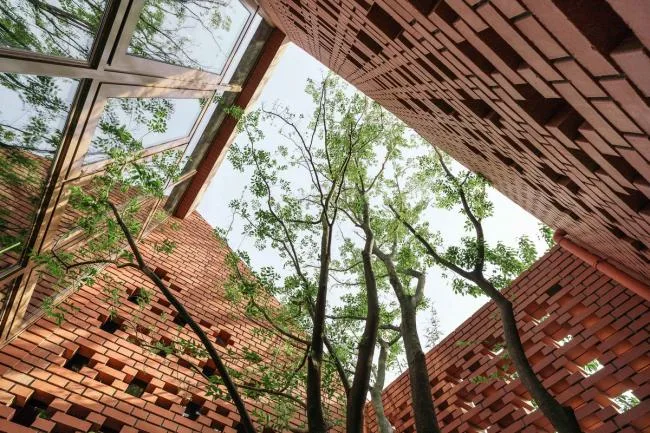
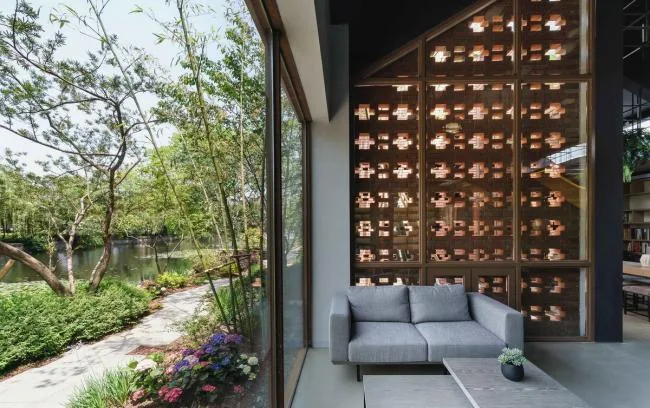
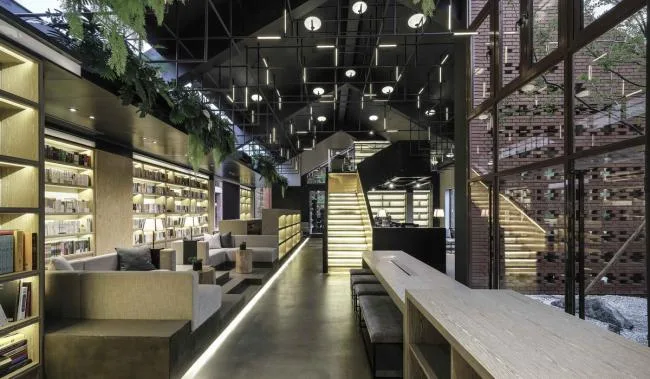
The interior is designed as a quiet reading zone, with a staircase dividing the space into public and private areas. This clear zoning provides visitors with a sense of presence and belonging. Additionally, the inclusion of a side courtyard introduces layered spatial complexity to the otherwise rectangular layout.
Side Pavilion Renovation
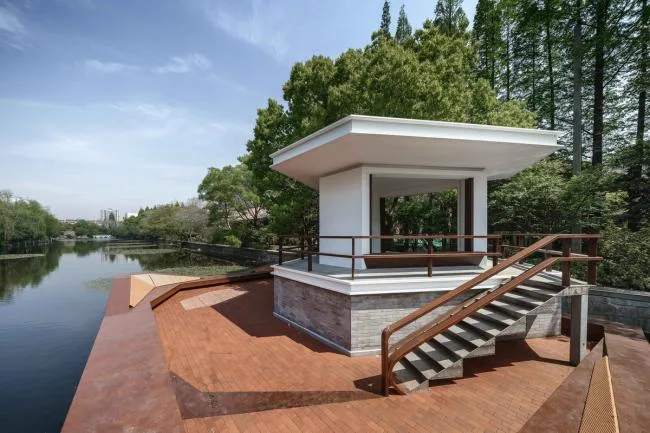
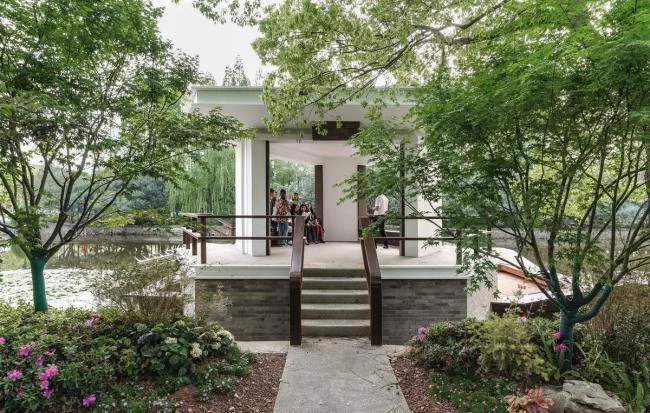
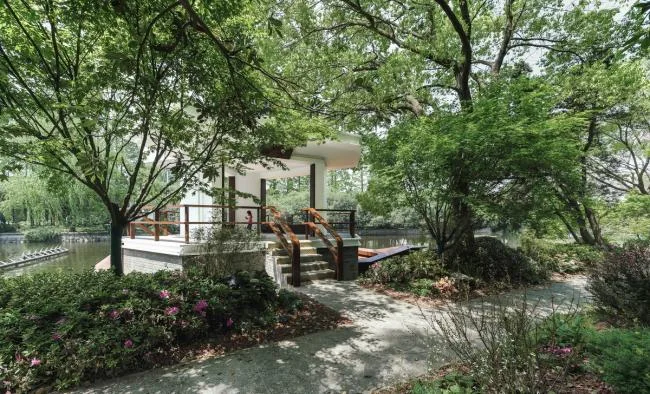
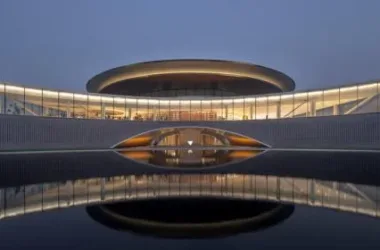
The renovation of the side pavilion focused on preserving the original structure as much as possible. The existing glass doors and windows were removed to open up the space. The base received a broken line treatment, transforming it into a sculptural symbol—a ship of history—reflecting the proud legacy of Huashi University. It floats along the river like a lantern of hope.
Use of Traditional Architectural Symbols and Materials
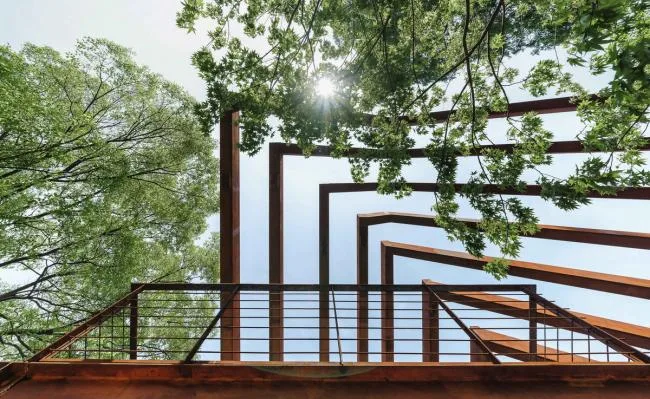
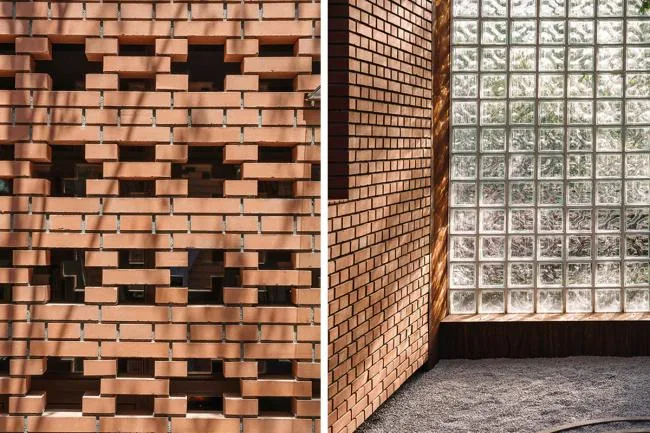
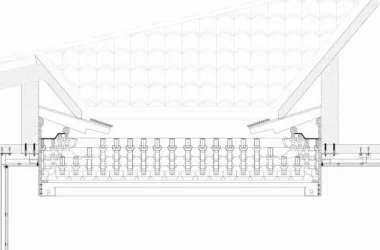
The renovation extracts and reinterprets the slope of the original textbook building’s roof as a symbolic element, preserving spatial unity. This approach fosters continuity and recognition of the place’s history through careful attention to materials, proportions, and details.
Path Accessibility & Spatial Continuity
For optimal path accessibility, the design integrates architectural and landscape restoration concepts. Architectural motifs derived from building lines help organize key nodes. By folding the linear riverside trail, the renovated book bar connects organically with the side pavilion and adjacent cedar forest. Combined with a waterfront platform, landscape ornaments, and leisure seating, this enriches the spatial experience along the riverside walkway.
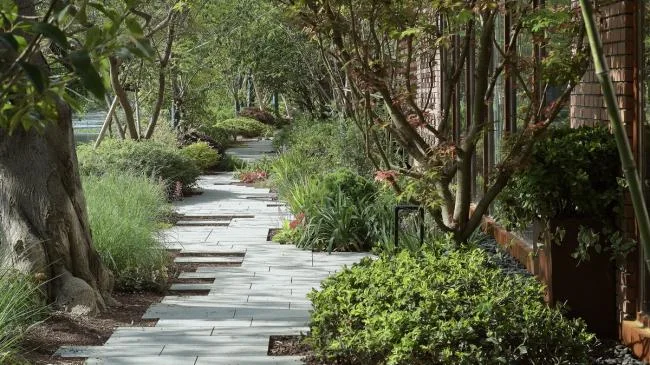
▲ Forest Path
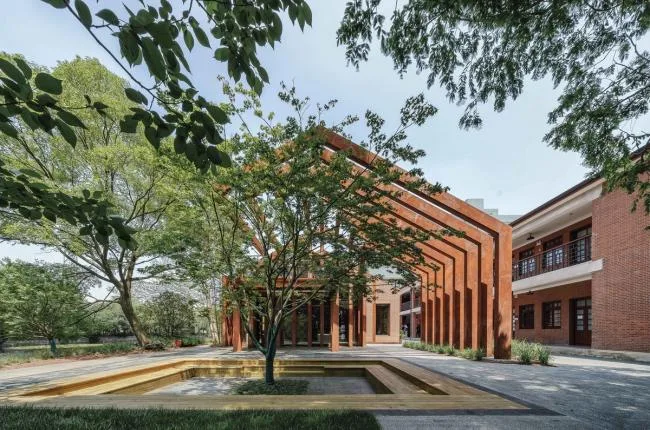
▲ Sunken Plaza
A sunken plaza is positioned between the book bar and the side pavilion, serving as a gathering spot. The varying step heights naturally create seating areas for rest. Planting elm trees in the center provides shade and enhances the spatial cohesion.
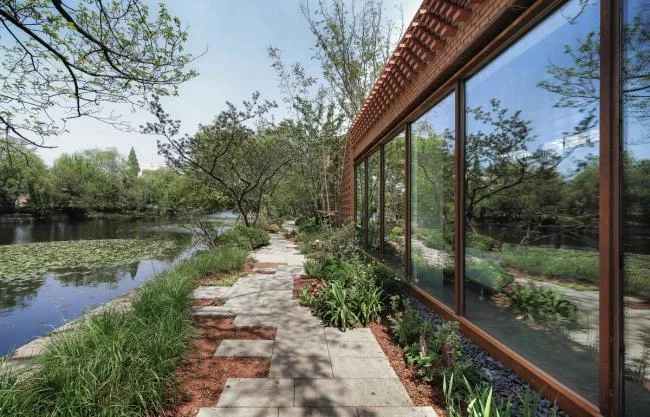
▲ Riverside Landscape Trail
Next to the book bar, various recreational spaces are arranged at different scales, breaking the monotony of the riverside walkway. These appropriately sized spaces foster a strong sense of belonging.
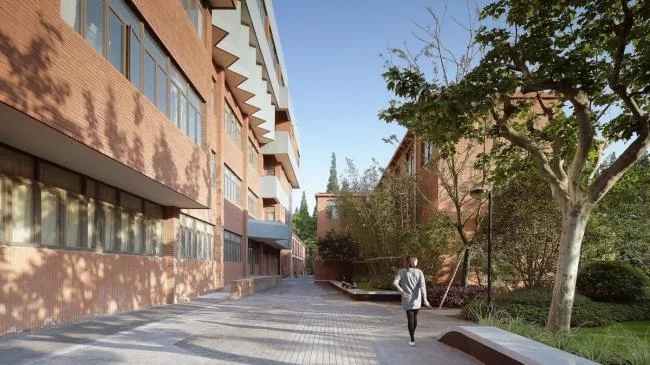
▲ Small Path Between Buildings
Between the book bar and the administrative building, a narrow path utilizes folded linear paving to guide visitors through the space.
Technical Drawings
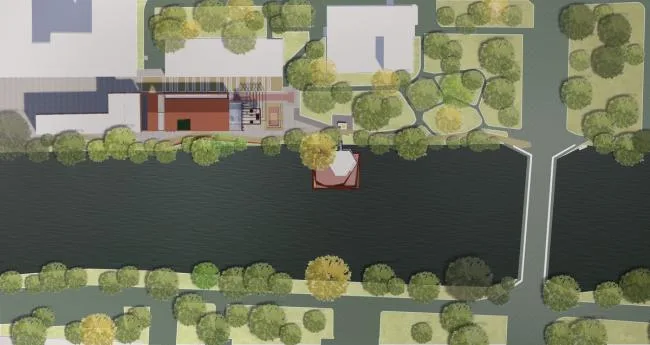
▲ General Layout Plan
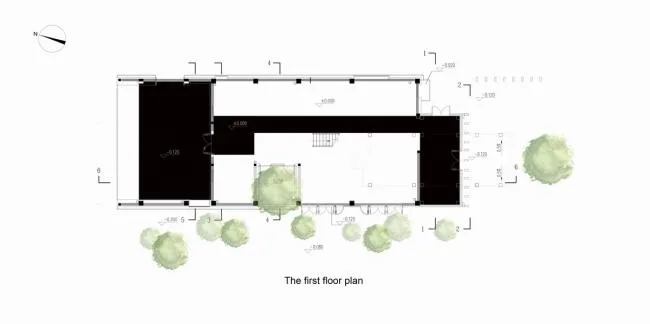
▲ First Floor Plan
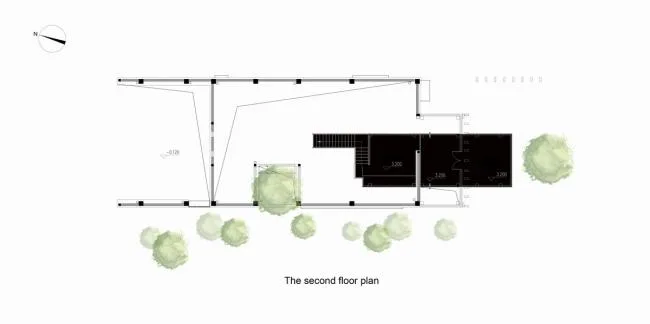
▲ Second Floor Plan
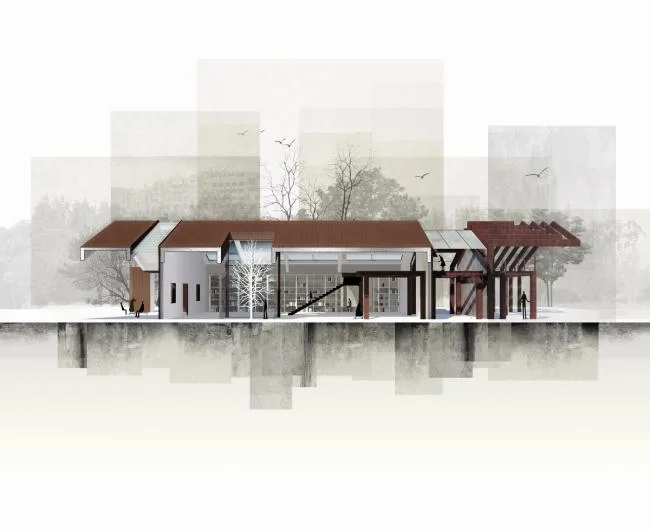
▲ Perspective Sectional View
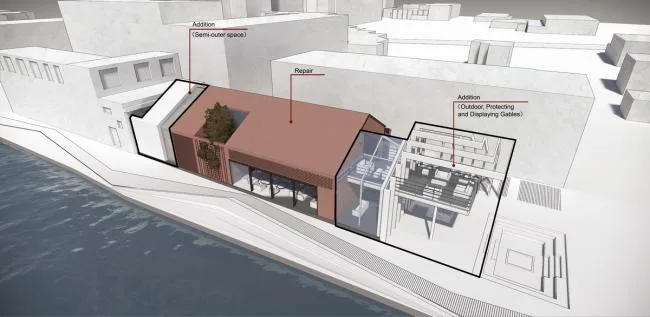
▲ Axial Side View
Project Information:
Project Name: Lihua River Book Bar, East China Normal University
Location: Lihua River, East China Normal University
Type: Cultural
Owners: East China Normal University, Xuhui Group Co., Ltd.
Architectural Design: Shanghai Riqing Architectural Design Co., Ltd.
Landscape Design: Shanghai Riqing Landscape Design Co., Ltd.
Interior Design: Zhao Muhuan Interior Design Research Laboratory
Design Director: Song Zhaoqing
Owner Team: Xiao Yanhang, Lin Junyi, Li Junjie, Sun Shiyu
Architectural Team: Li Sheng, Shi Zheyu, Li Yingchao, Liu Yueyi, Ou Xing
Landscape Team: Zhang Yihong, Ben Qiang, Xie Weifeng, Wang Xiaoyan, Wu Beili, Chen Jie
Interior Team: Zhao Muhuan, Wang Yingjian, Duan Jenny
Building Area: 388 square meters
Design Duration: 16 months
Completion: November 2018
Photography: Zhang Qianxi












Must log in before commenting!
Sign Up