
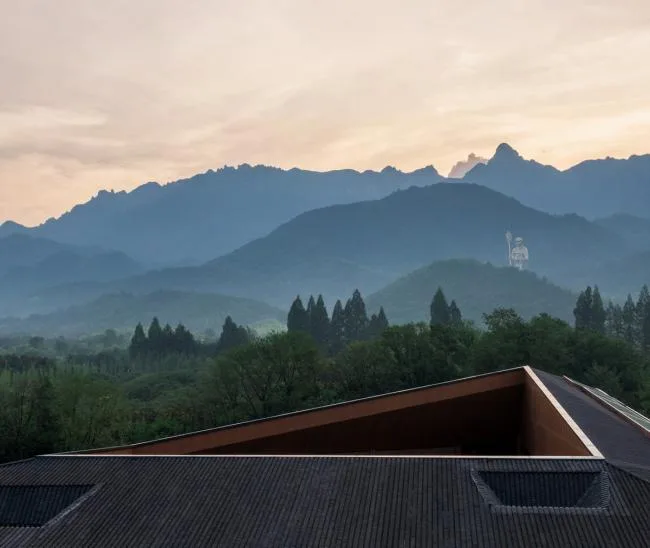
My first encounter with Jiuhua was on a cloudy day. The mountain’s outline was clear but lacked grandeur, leaving me somewhat disappointed. Then, as the sky suddenly cleared, the mountains revealed themselves with layered peaks and ridges, truly deserving the title of the “Number One Mountain in the Southeast.”
At the mountain peak, a bronze statue rests quietly underground, standing the test of time alongside the mountains, rivers, and villages. Since the late Tang Dynasty’s Kaiyuan era, the Jin Dynasty’s Ksitigarbha, Zhuoxi, and Jiuhua temples have been renowned for over 1,600 years. Jiuhua’s distinct peaks and ridges blend harmoniously with Buddhist culture, forming a unique style.
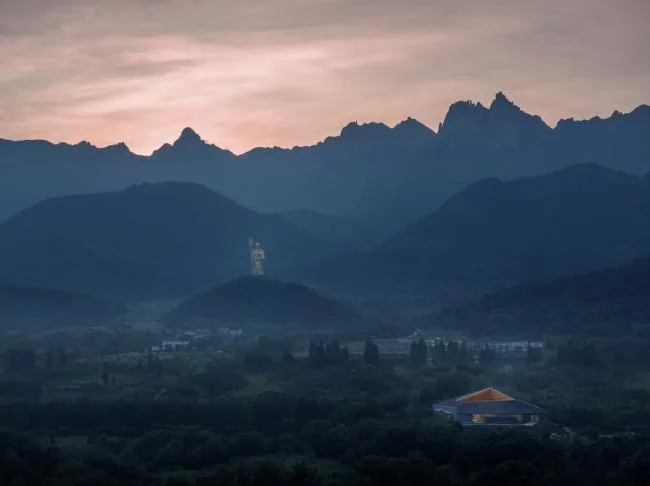
Photography: Ziran Architecture Photography
Adjacent to the underground bronze statue lies Lianhua Town. Though small, it resembles a village, with natural textures as its lifeblood and clusters of buildings arranged in groups of three or five, creating a cohesive settlement. It serves not only as a resting point for tourists climbing mountains and worshipping Buddha but also as a gathering spot where friends cook, drink, and chat amid the green mountains and flowing waters.
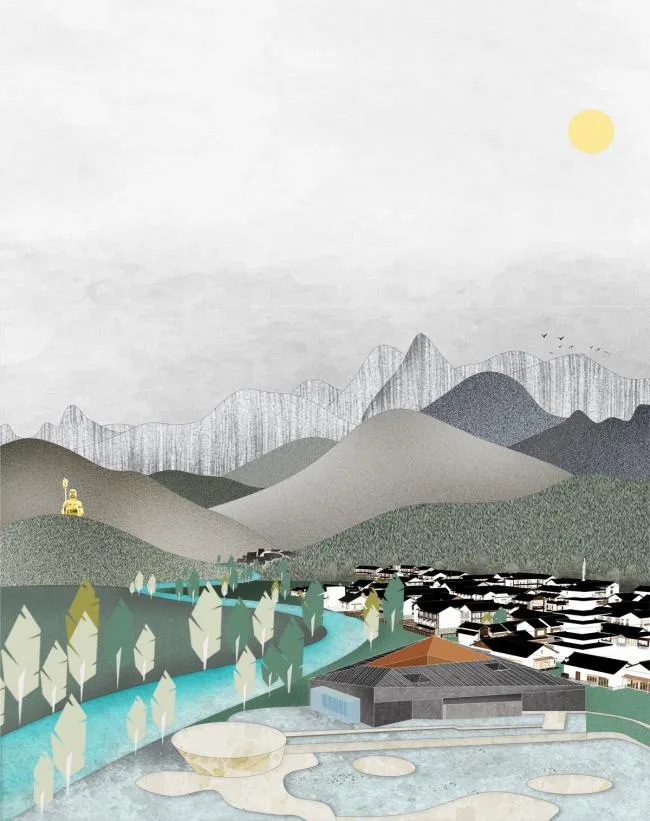
▲ Analysis chart
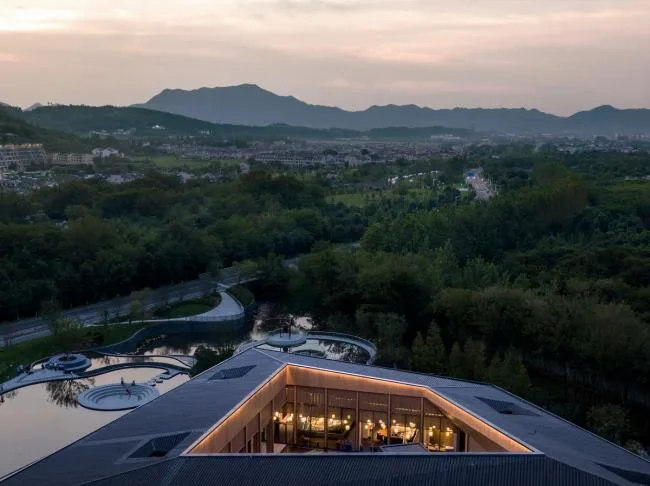
Photography: Ziran Architecture Photography
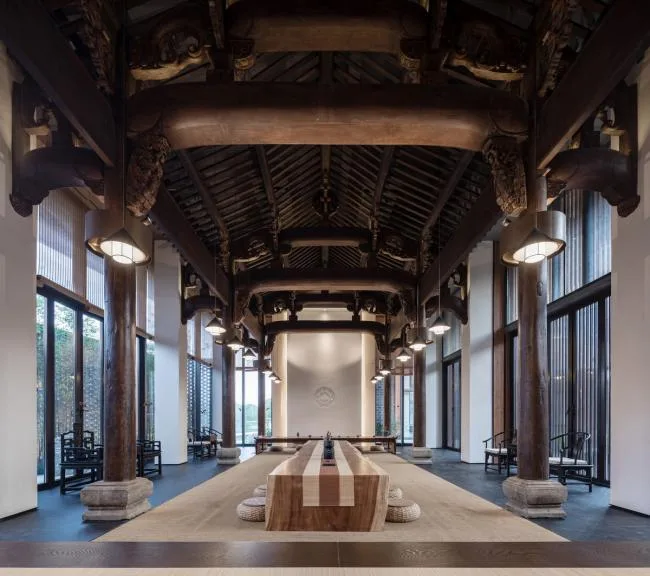
Photography: Ziran Architecture Photography
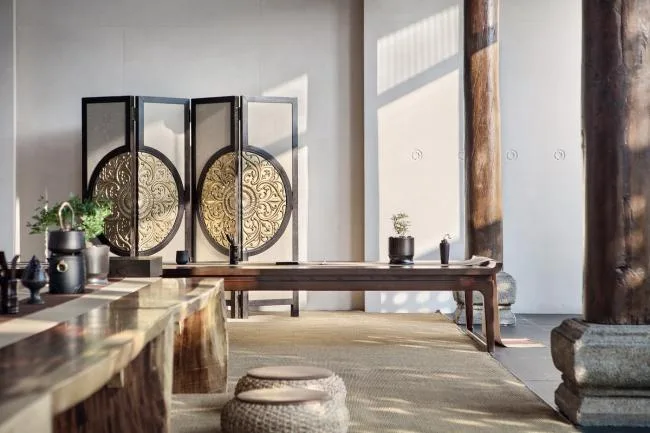
Photography by Zhang Qilin
Zhengqing and Yashan Temples mark the entrance to Lianhua Town. In Chinese culture, a tree, a well, and a crowing rooster symbolize the image of a village entrance, evoking a strong sense of homesickness. For this town, we have provided spacious squares, expansive water surfaces, a bell, and that iconic tree.
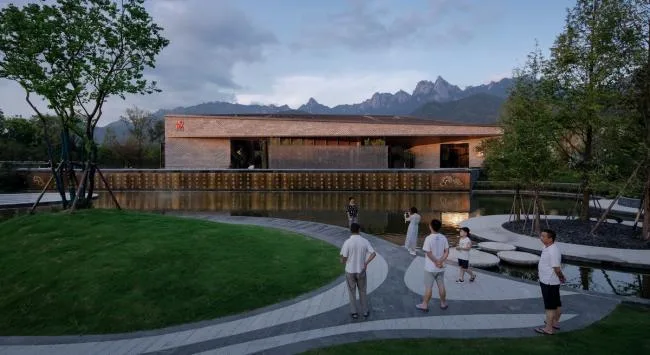
Photography: Ziran Architecture Photography
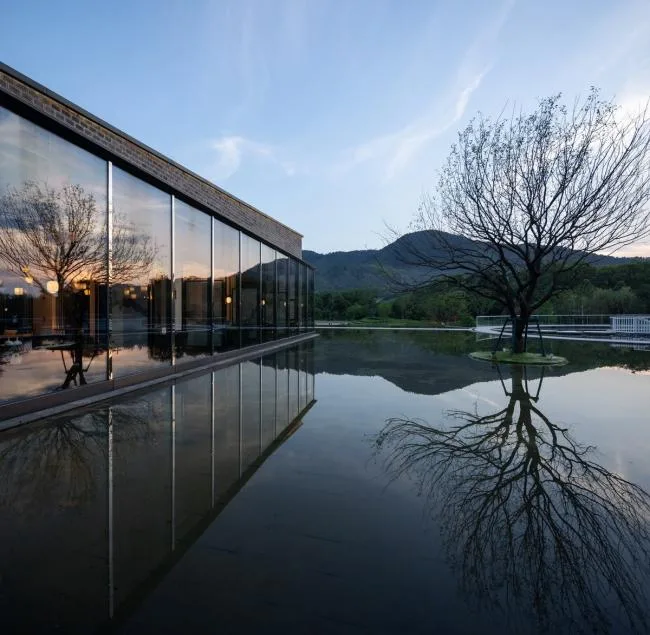
Photography: Ziran Architecture Photography
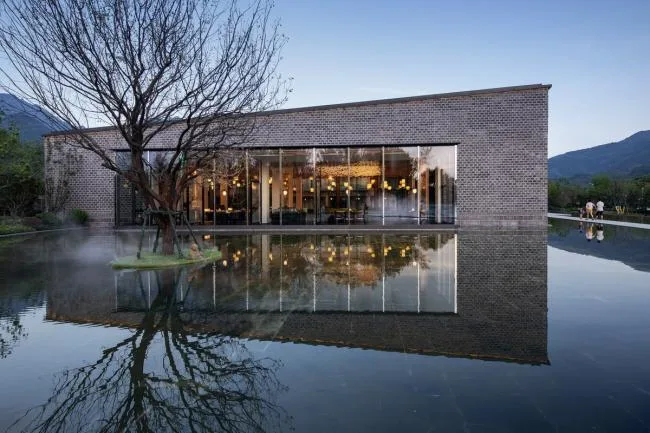
Photography: Ziran Architecture Photography
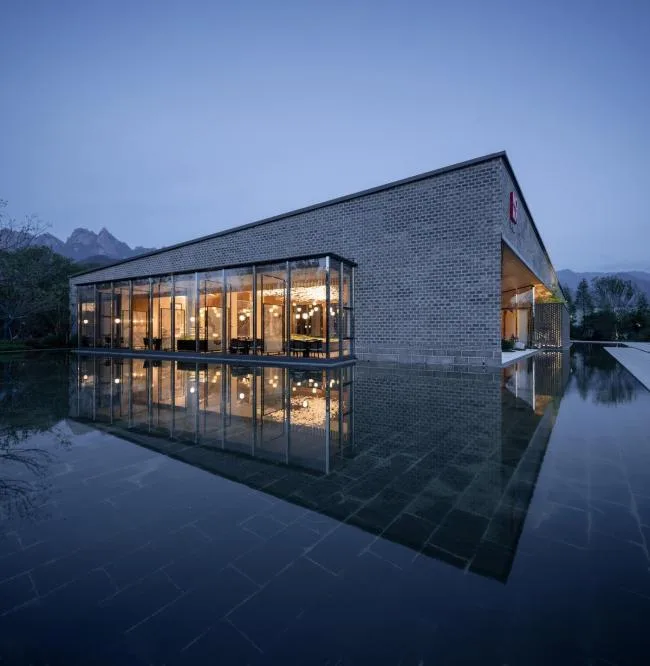
Photography: Ziran Architecture Photography
The architecture does not fragment into the natural environment but is positioned as a whole on the water’s surface. It feels as if the seasons’ scenery flows into the complex, or time spills over from the mountains, waters, and sky into the space. The environment is crafted by people, while the Zen spirit emerges from within.
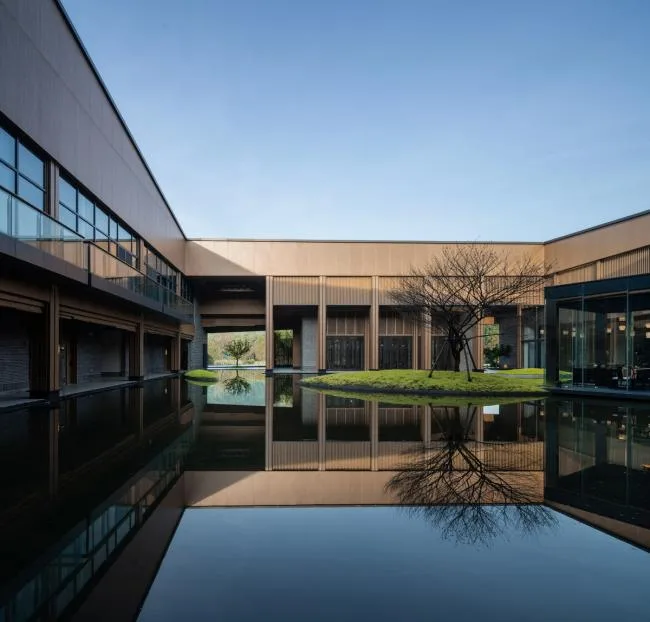
Photography: Ziran Architecture Photography
The Zen temple presents itself simply and unadorned, yet it is enriched by the passage of time — much like villages and Buddha statues born from human interaction with nature over different eras, inevitably merging with the environment.
The building’s roof spirals upward, sloping, with its highest point at the southeast corner of the site, accommodating the local two-story layout effectively.
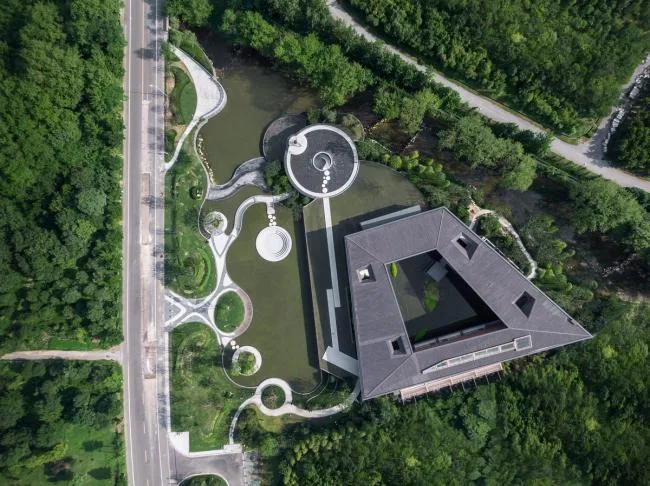
Photography: Ziran Architecture Photography
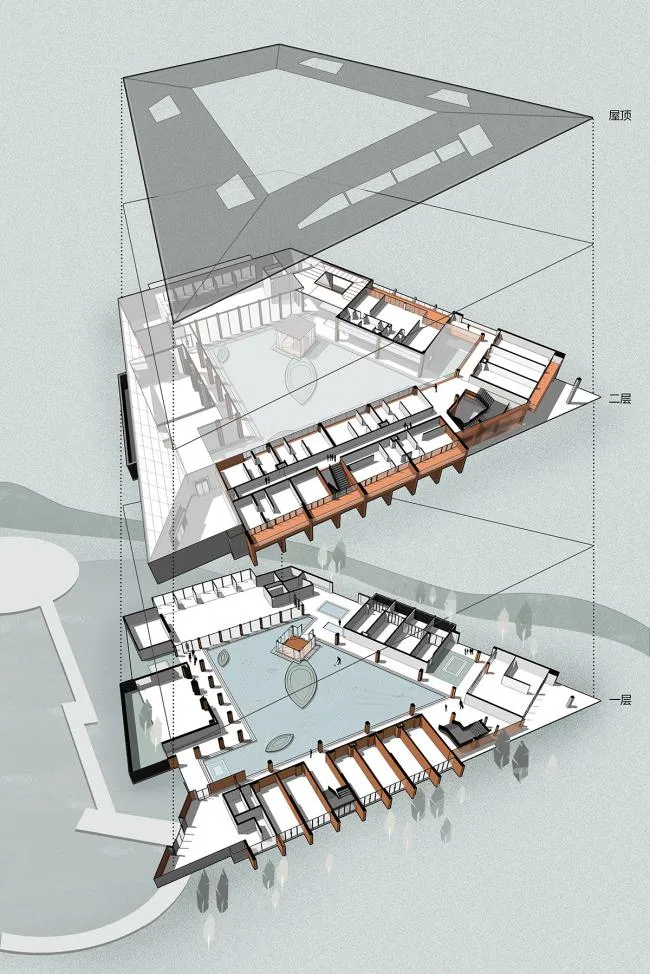
▲ Analysis chart
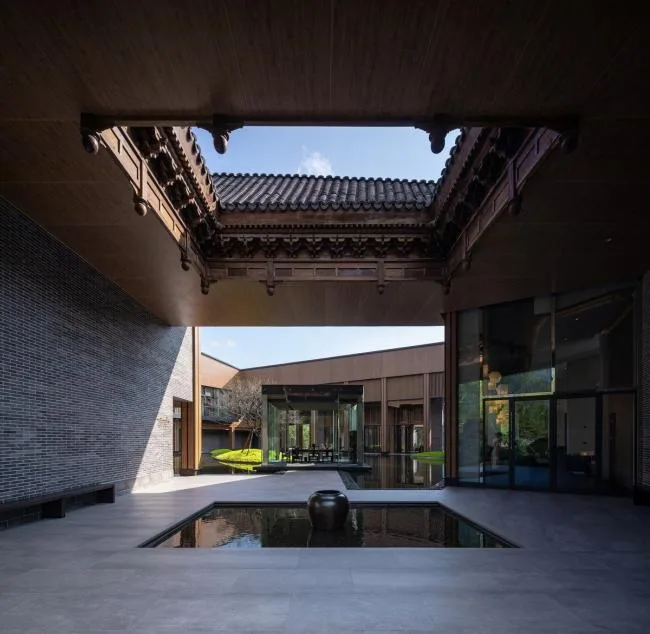
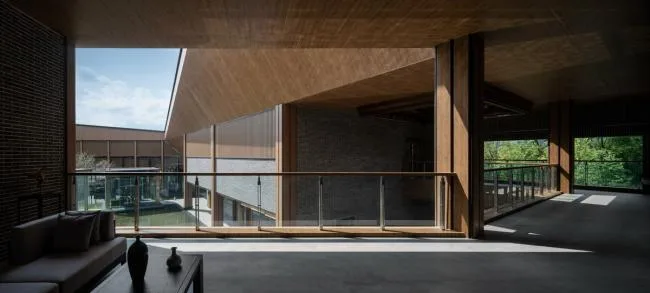
Under the unified roof, the building’s functions are clearly defined and fully open, with a courtyard nestled within, blurring the line between indoors and outdoors. Both the courtyard’s interior and exterior are water surfaces, reflecting the Zen lifestyle on the outside and the mountain’s wind and rain on the inside.
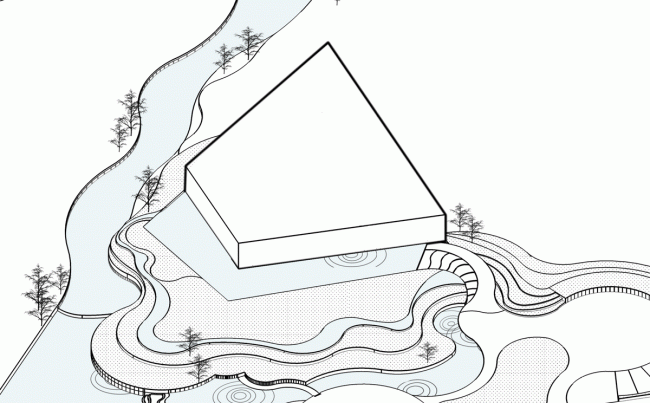
▲ Analysis chart
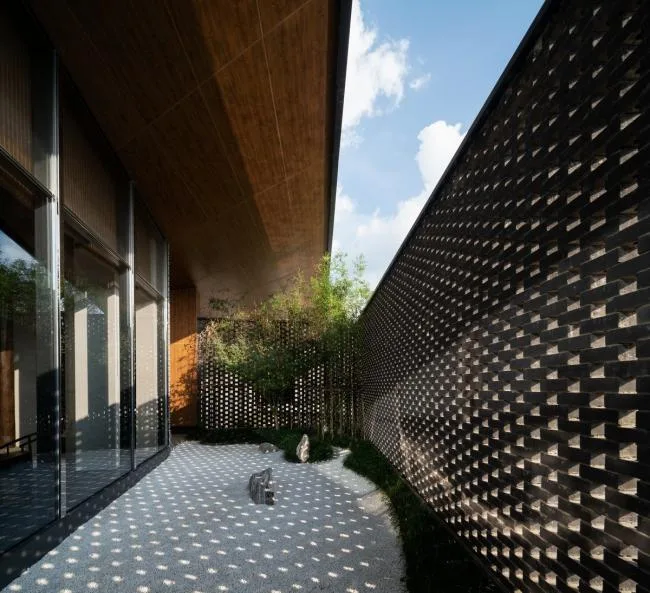
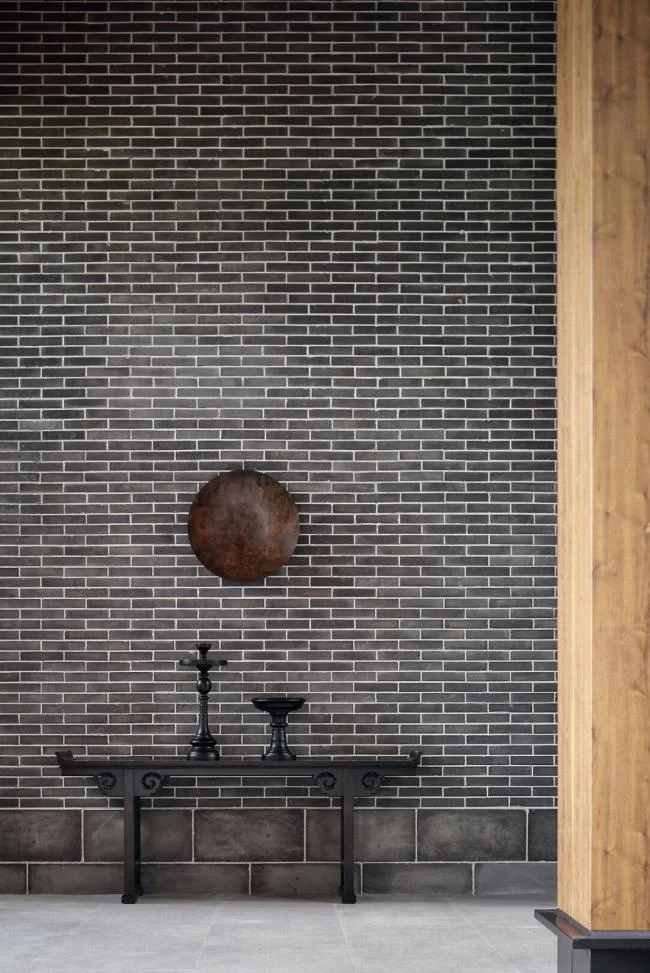
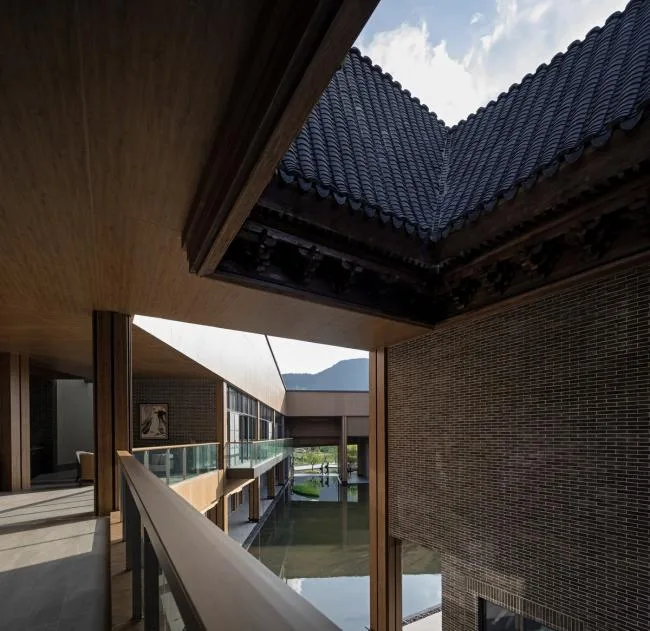
The building features a two-tone palette of gray and wood: gray on the exterior and warm wood tones inside. Decorative bricks form hollow brick walls, topped with small blue tile roofs. The design blends simplicity and stability, perfectly fitting the rural setting.
Photography: Ziran Architecture Photography
Photography by Zhang Qilin
Photography by Zhang Qilin
The interior (designed by BIM engineers) extensively uses wood-colored aluminum panels and glass, which exude warmth under sunlight. The materials seamlessly transition from inside to outside under the eaves; the wooden ceiling color extends outward and reflects off the water. Gray bricks form corridors and surrounding courtyards, emphasizing flow and continuity within the space.
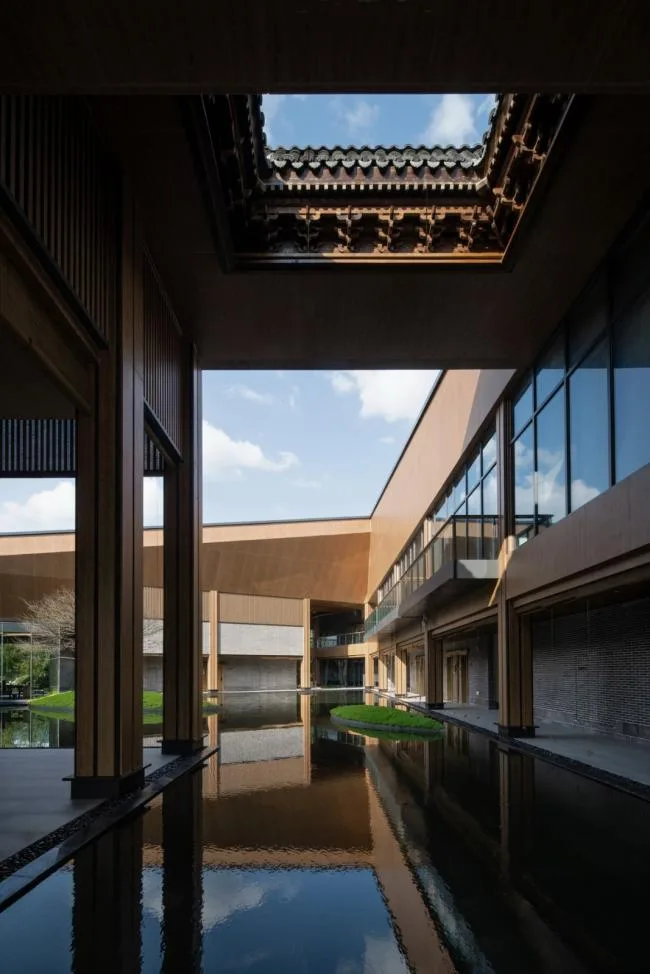
Photography: Yes (BIM Tutorial) – Architectural Photography
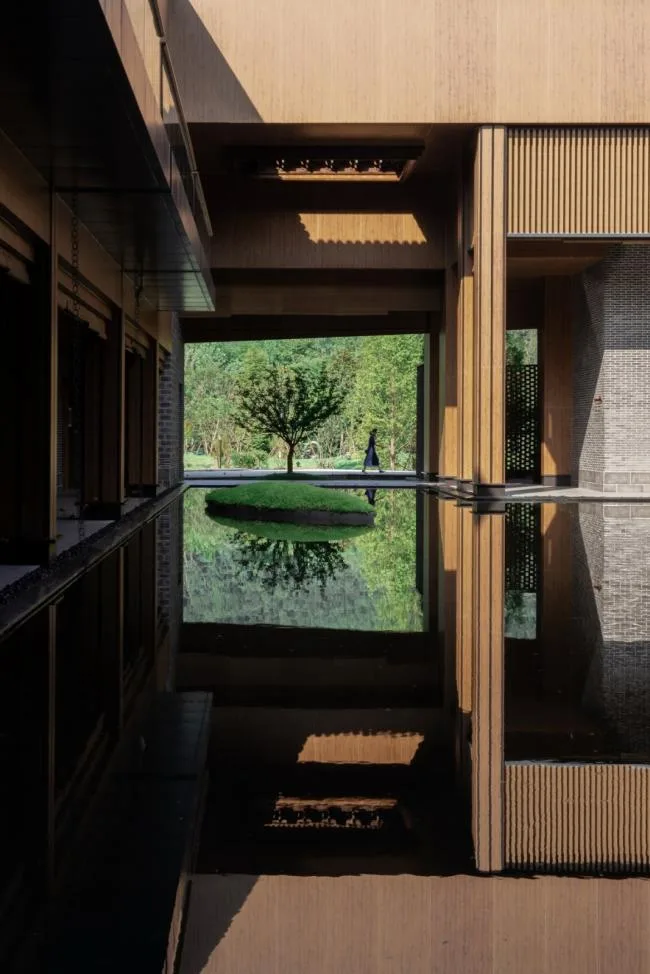
Photography: Ziran Architecture Photography
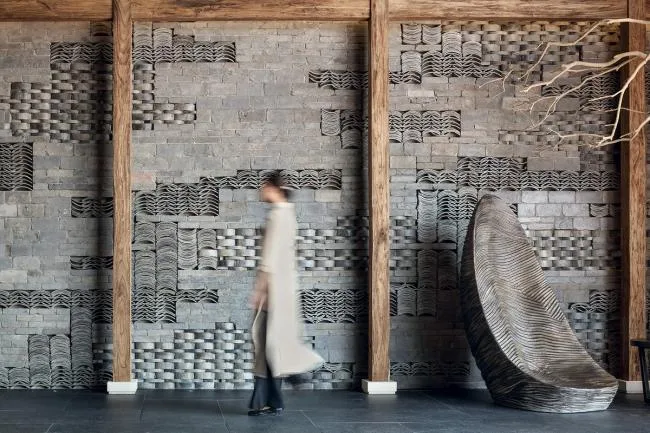
The courtyard’s refinement relies on the artisans’ skill. The steep roof enhances light and shadow effects, but fixing the small blue tiles presents a significant challenge. The courtyard is constructed with imported pineapple lattice logs, forming a classic four-water-return hall at its center — a construction process that bridges ancient craftsmanship and modern techniques.
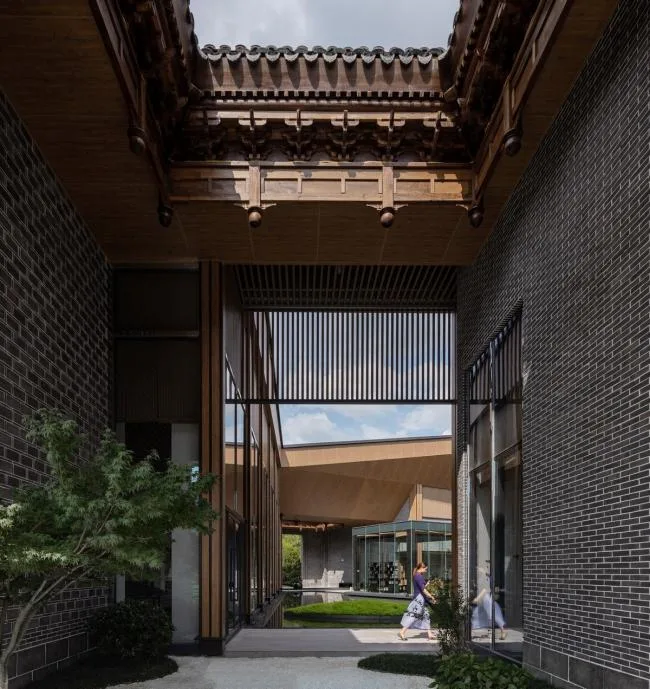
Photography: Ziran Architecture Photography
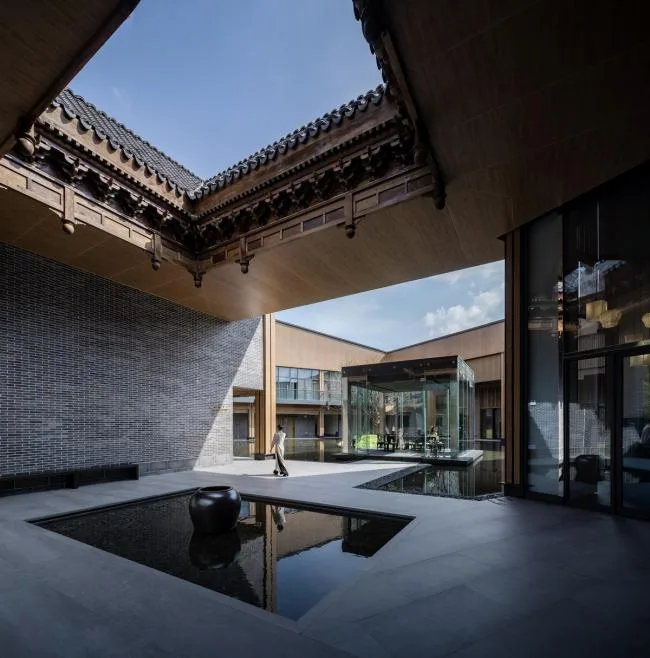
Photography: Ziran Architecture Photography
Photography: Ziran Architecture Photography
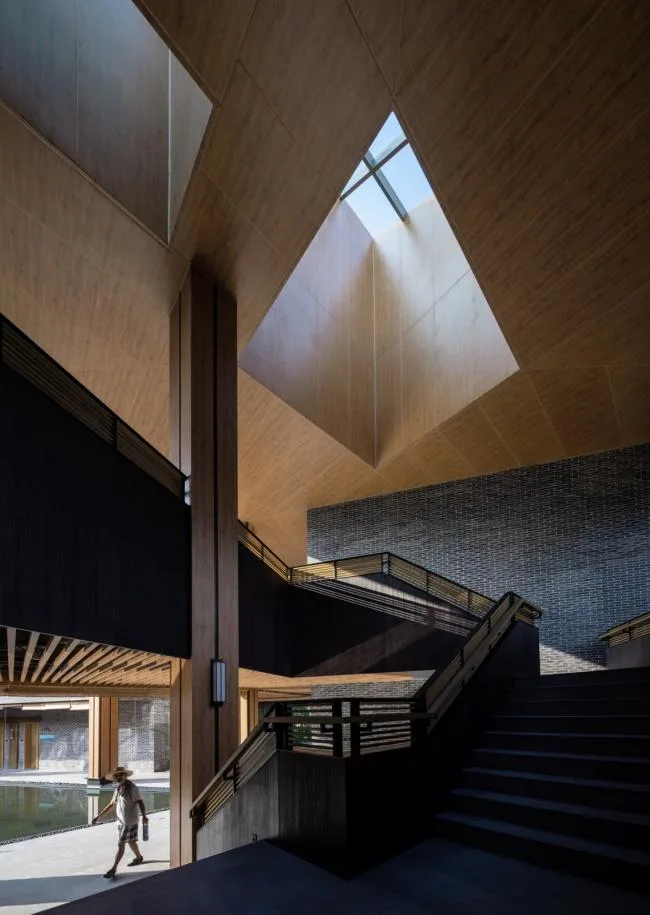
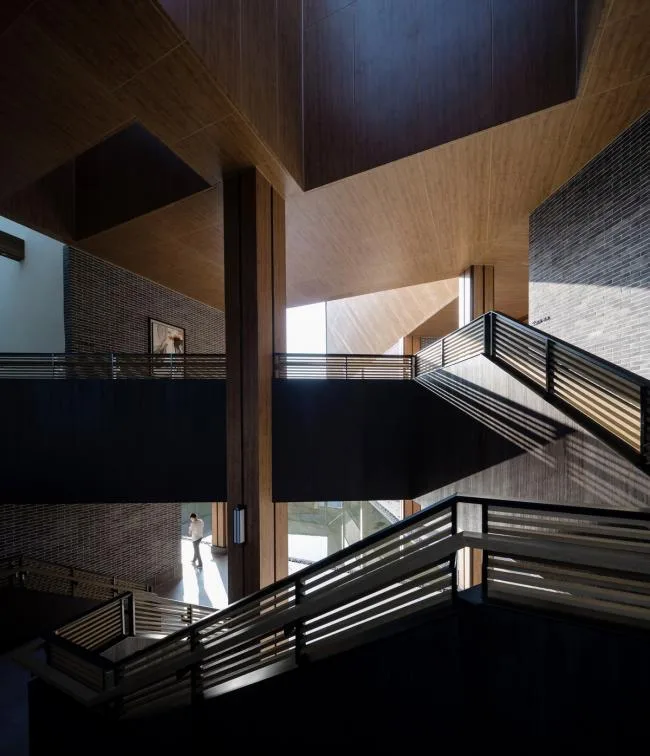
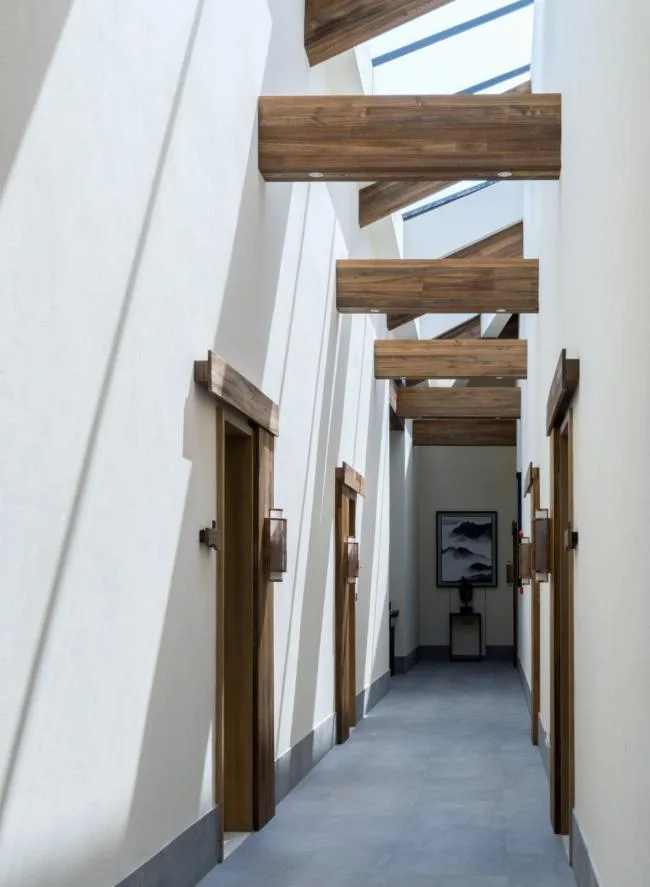
The building’s primary function is a hotel, with rooms located on the south and east sides, offering views of the mountains and Buddha worship areas. On the second floor, rooms are arranged horizontally, creating an internal walkway where skylights naturally illuminate the space. These skylights extend to the stairwell, forming several square and rectangular window wells. The changing light creates a surprisingly vibrant atmosphere.
Photography: Ziran Architecture Photography
Photography: Ziran Architecture Photography
Photography: Ziran Architecture Photography
Photography: Ziran Architecture Photography
Photography: Ziran Architecture Photography
Conclusion
Architecture defines the function of spaces and their users. Inspired by Chinese Zen and tea culture, Zhengqinghe Ya Chan Temple creates a spatial experience that balances height and breadth, weaving natural landscapes and human culture into its design. Whether for relaxation or spiritual elevation, the town’s significance lies in allowing each visitor to interpret and experience it uniquely.
Photography: Ziran Architecture Photography
Project Drawings
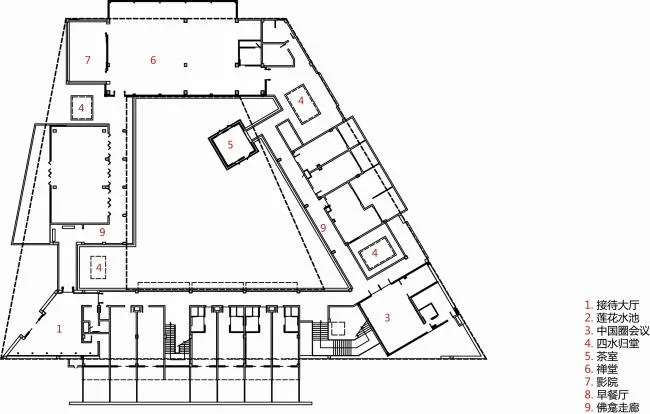
▲ First Floor Plan
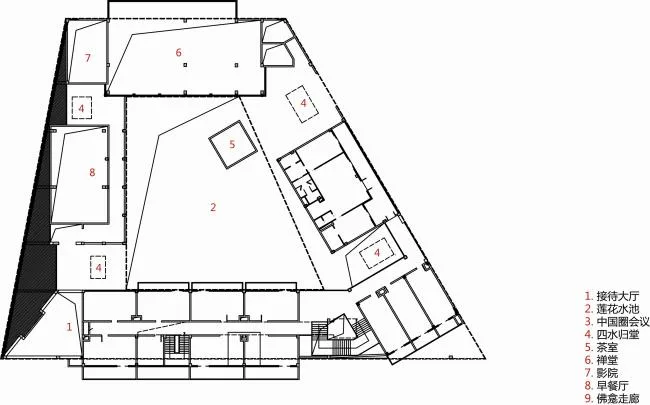
▲ Second Floor Plan
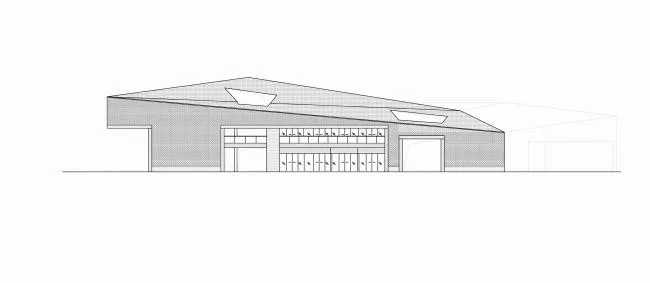
▲ South Elevation View

▲ West Elevation View
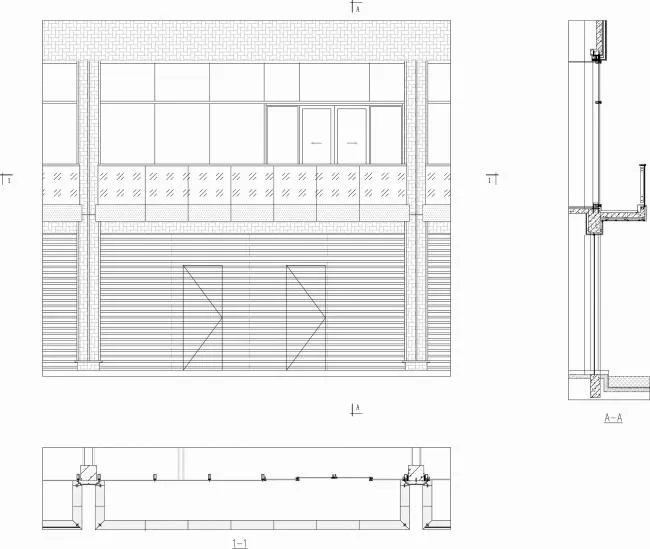
▲ Node Sample
▲ Entrance Node Sample
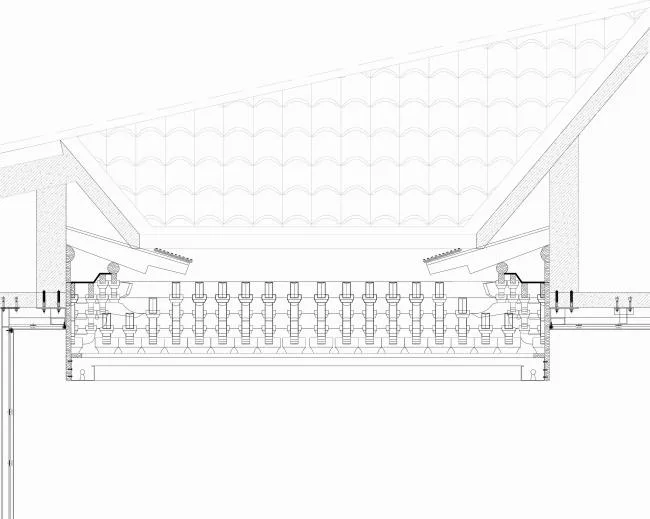
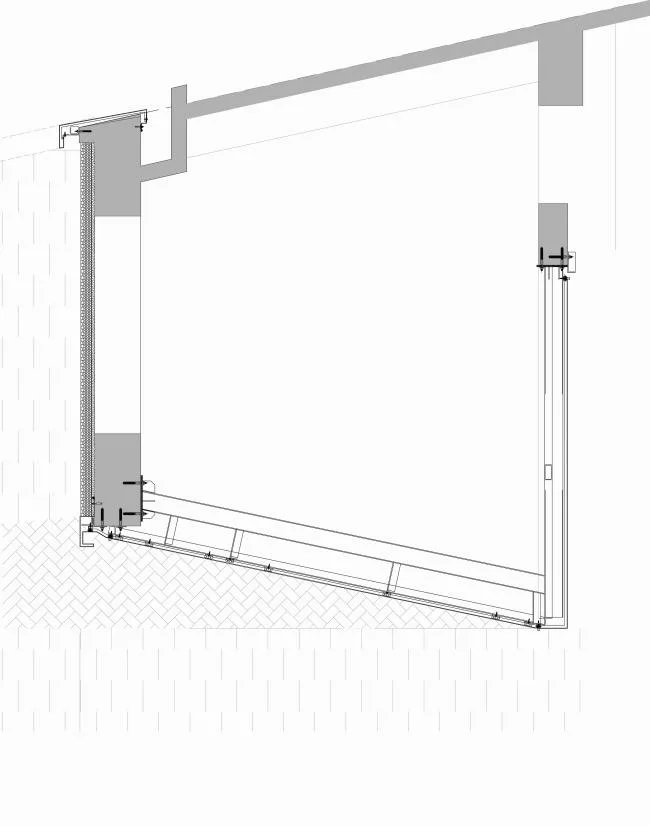
▲ Skylight Node Detail
Project Information
Project Name: Zhengqing Heya Zen Monastery
Location: Jiuhua Mountain, Chizhou, Anhui, China
Project Type: Hotel
Owner: Contemporary Real Estate (Anhui)
Owner Team: Tu Lijun, Wei Shixing, Wang Qi, Sheng Jin
Architectural Design: Shanghai Riqing Architectural Design Co., Ltd
Design Directors: Song Zhaoqing, Xiong Xing
Design Team: Lin Qionghua, Wei Yiming, Wang Junzhang, Zhiwu
Architectural Construction Drawings: Anhui Horizon Architectural Design Co., Ltd
Landscape Design: Guangzhou Shanshui Bide Landscape Design Co., Ltd
Interior Design: PAL Design Firm
Soft Decoration Design: HDESIGN
Building Area: 2,850 square meters
Completion Date: May 2019
Architectural Photography: Schran Images of Architecture Photography; Zhang Qilin













Must log in before commenting!
Sign Up