
 © CAAI
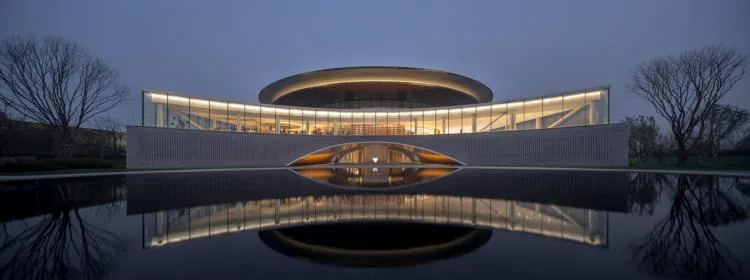
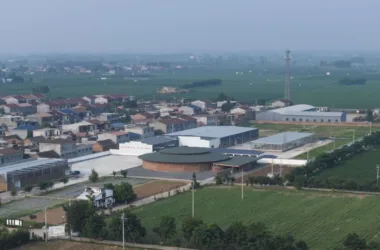
This project is located in the future land and air transportation hub of Henan Province, which serves as the core area for the city’s southern expansion plan. During the early planning and design phase, inspiration was drawn from the ancient text “Zhou Li · Kao Gong Ji” and local Central Plains cultural symbols. The goal was to connect the past with the present, creating a “national style urban peach blossom garden” that embodies the spirit of Zhengzhou at an urban scale.
 © CAAI
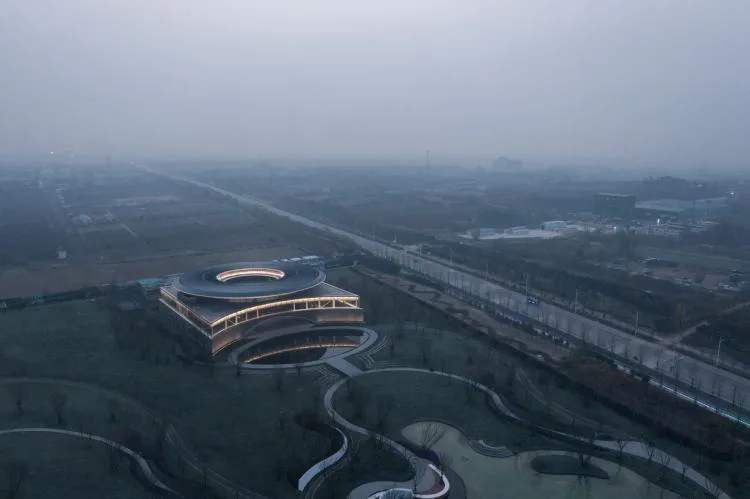
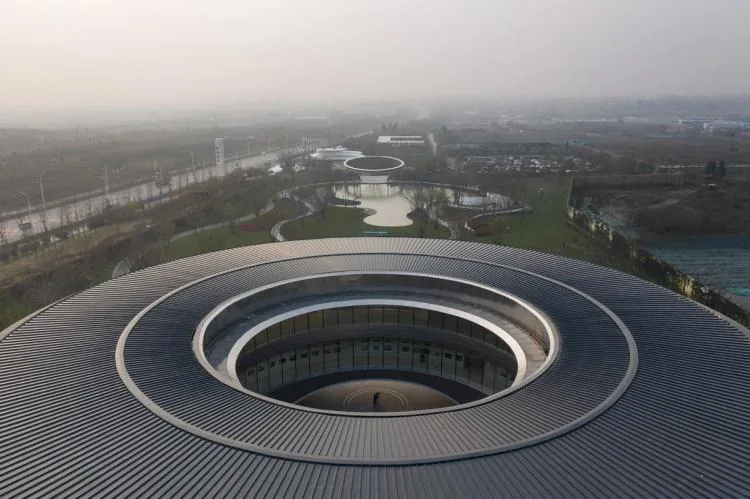
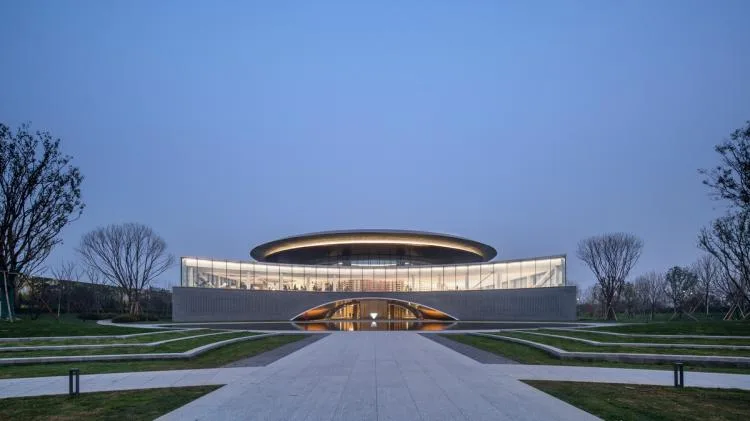
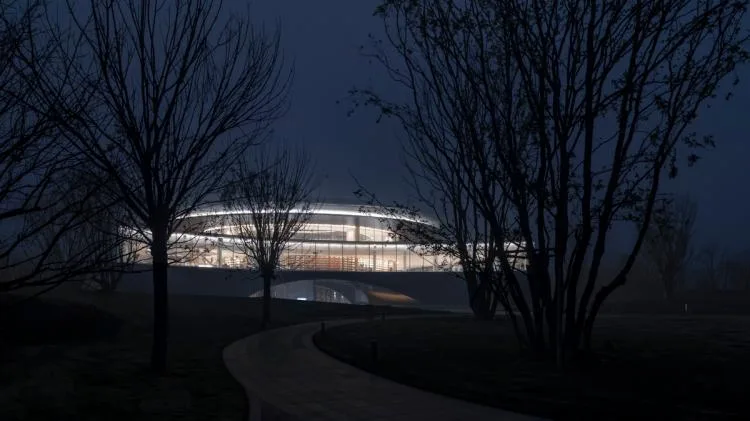
The overall site follows a garden planning concept of “South Garden and North Garden.” In the southern garden, the design incorporates principles of traditional Chinese garden design, positioning the key buildings as the starting point of a sequence that opens towards the city, creating urban public living rooms. The building’s front features a circular arc that embraces the main garden ahead.
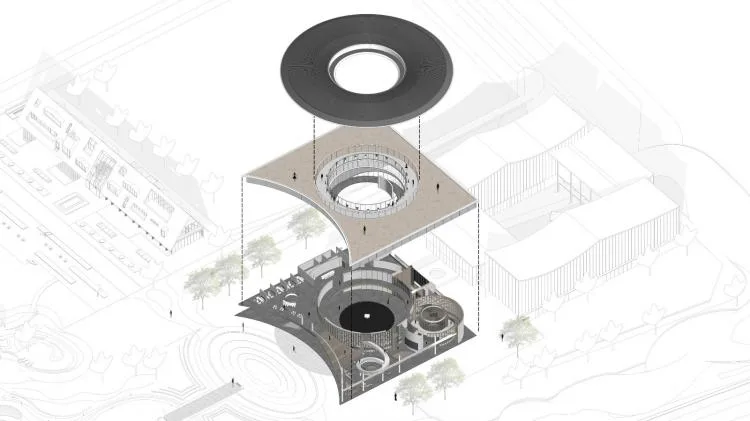
△ Axonometric Diagram
 © Mingjing
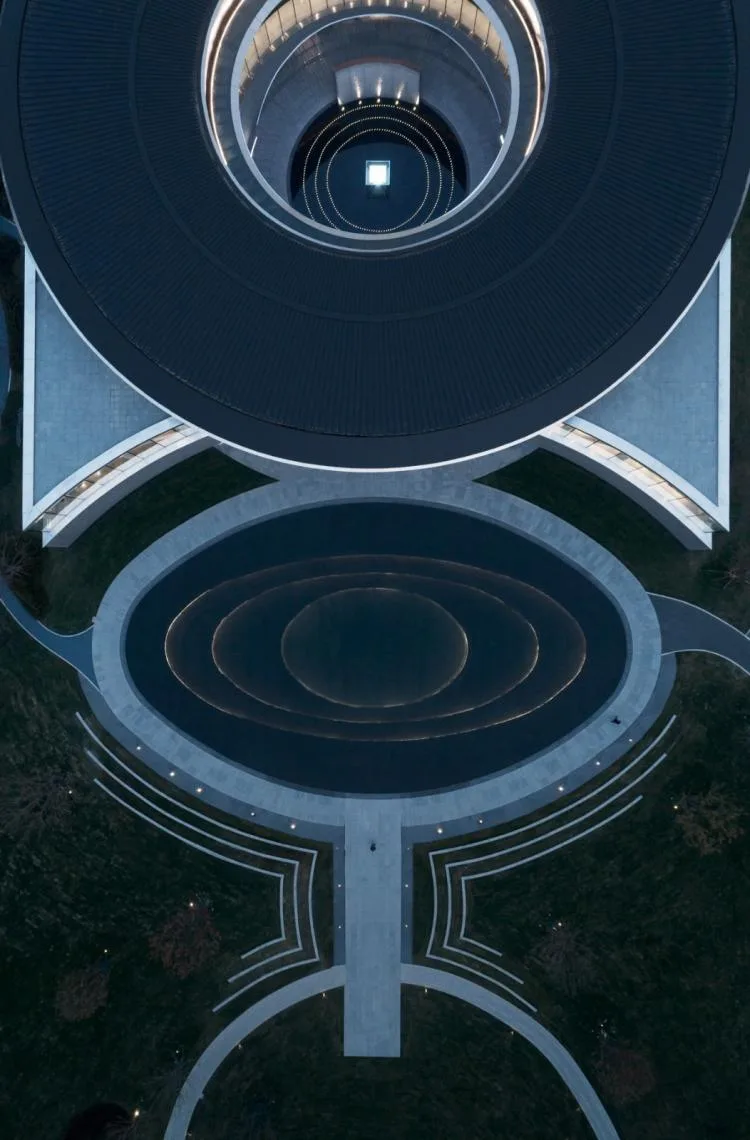
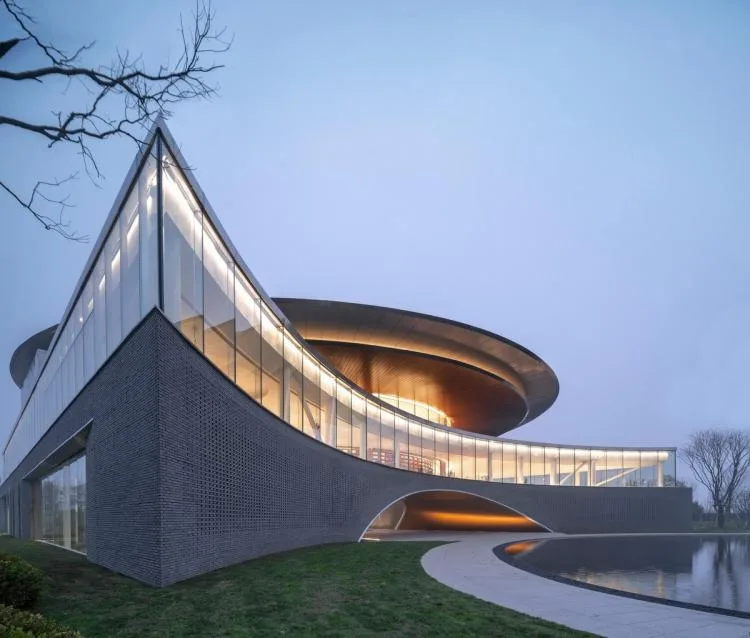
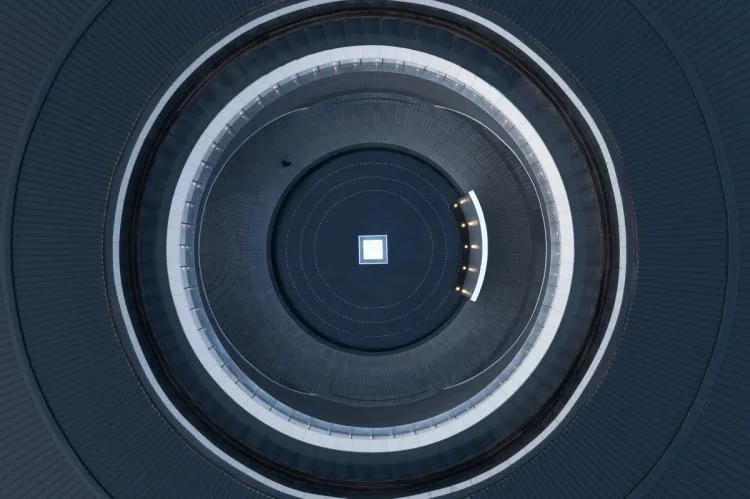
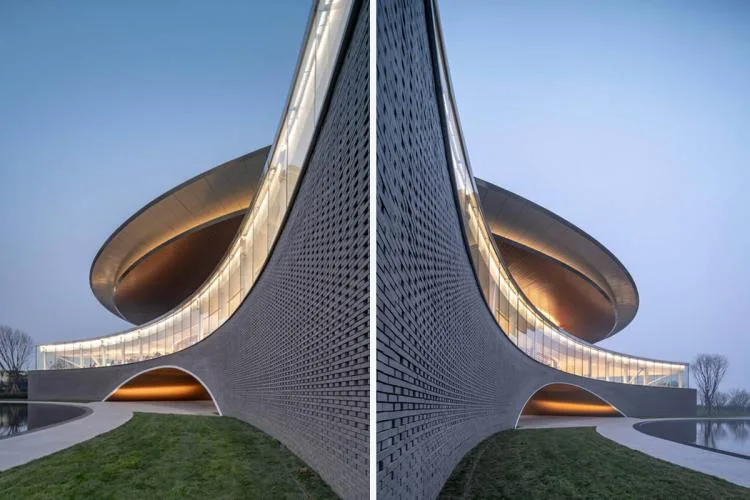
The design reflects the relationship between architecture and traditional Chinese cosmology, embodying the formal concept of “three arcs, two mouths, and a beam of light.” The space between the first dome arc and the second square arc represents the passage of time and space, with the third entrance arc serving as the central focus of the facade sequence. When reflected on the water, these curves form an eye that symbolizes the intersection of time and space transformation.
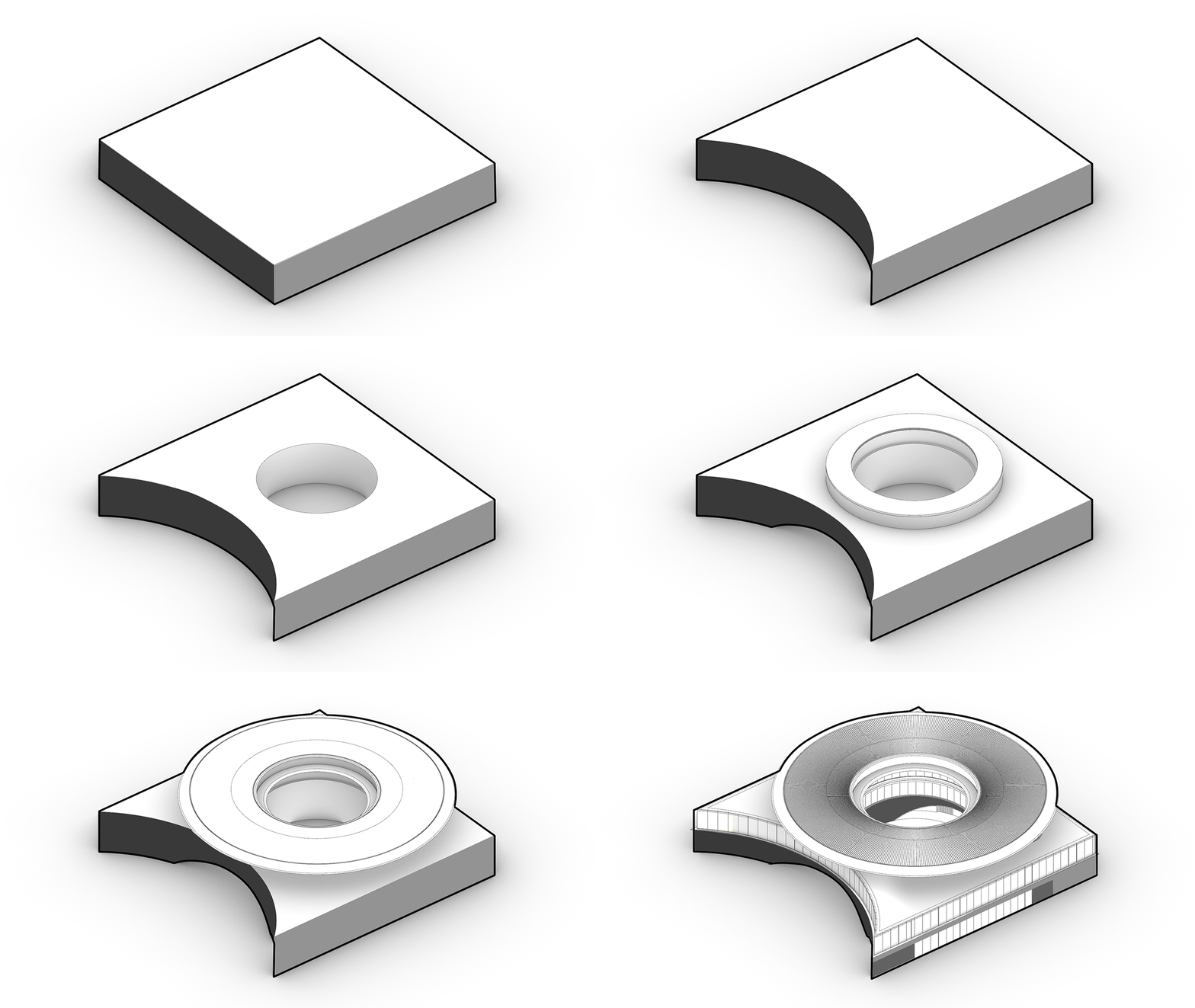
△ Shape Analysis Diagram
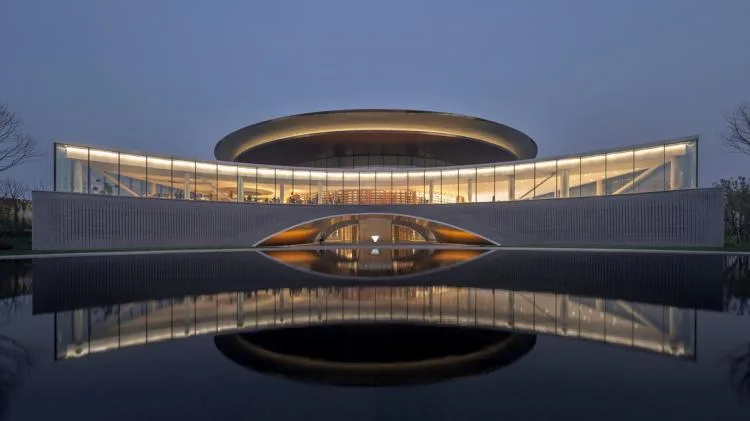 © CAAI
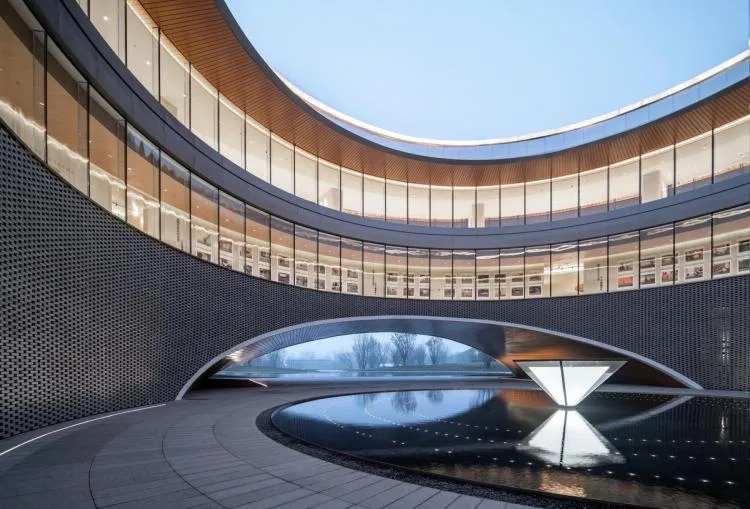
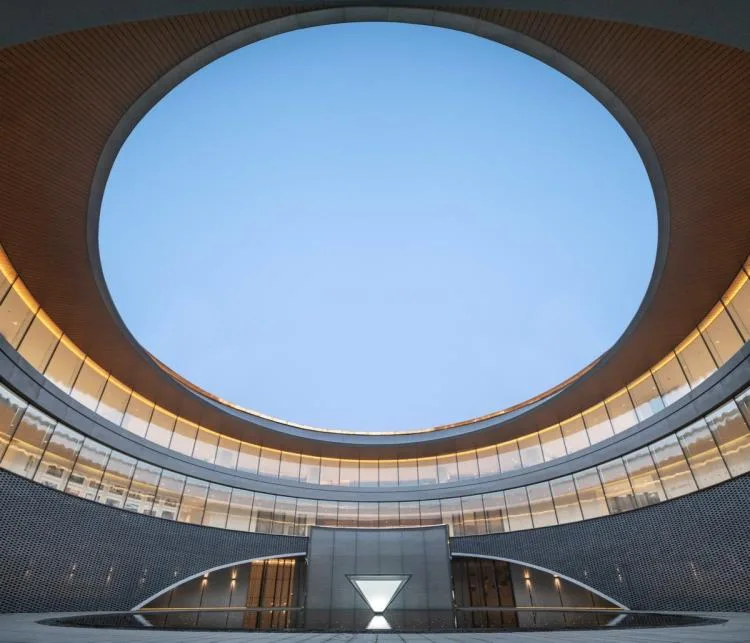
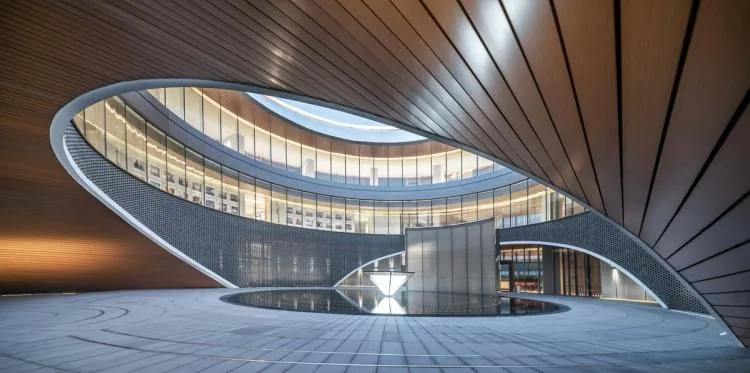
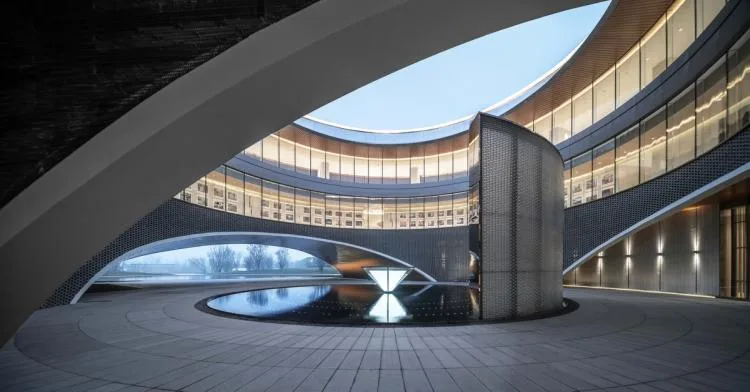
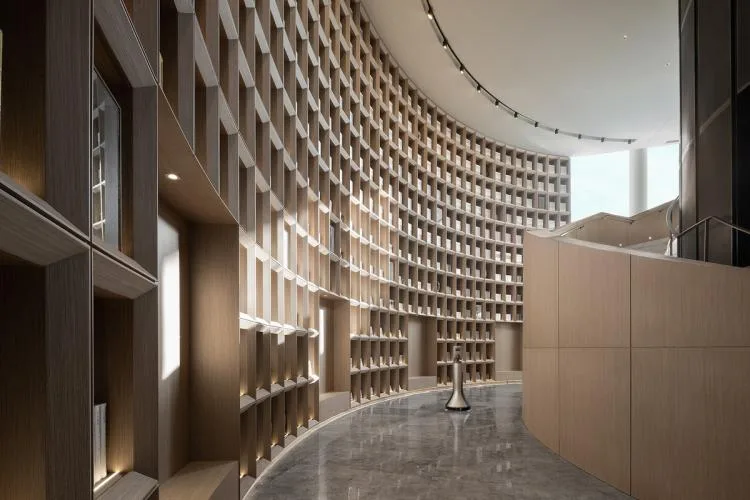
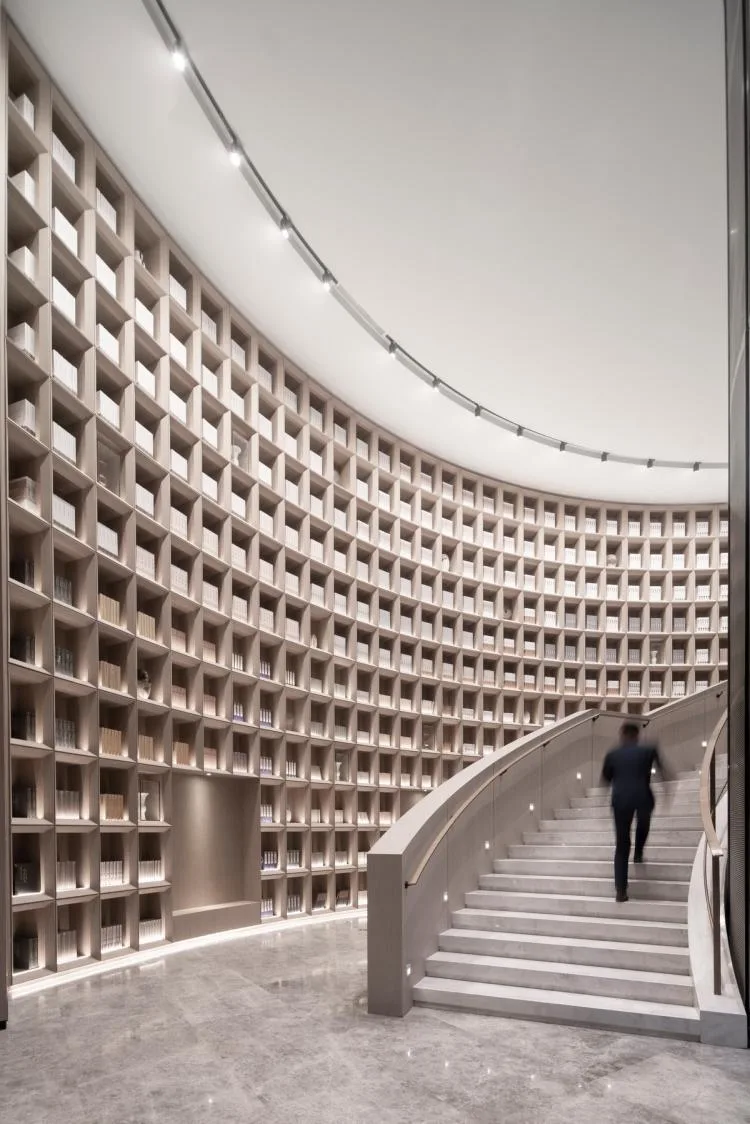
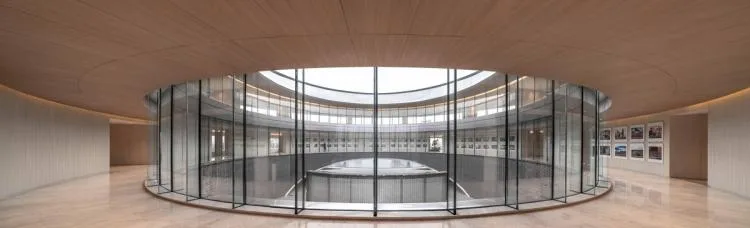
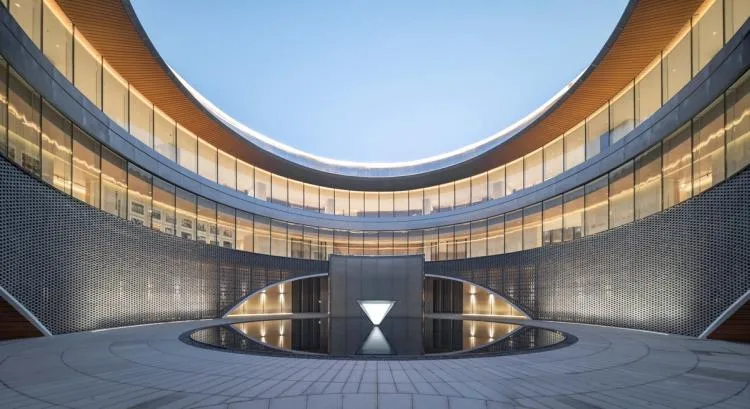
The building features two openings: one facing the garden to the west, and another opening upwards to the sky. The entrance encourages pedestrian gathering and frames the sky, evoking a sense of reverence and contemplation. The circular interior space draws inspiration from the traditional Chinese courtyard, symbolizing the connection between heaven and earth and creating a unique spatial dimension where time and space blend.
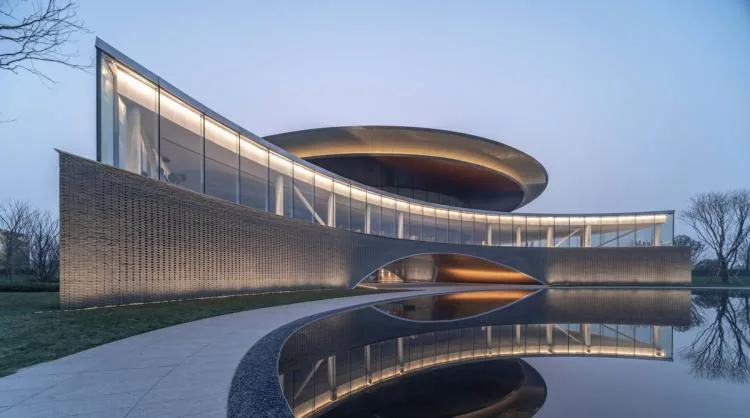
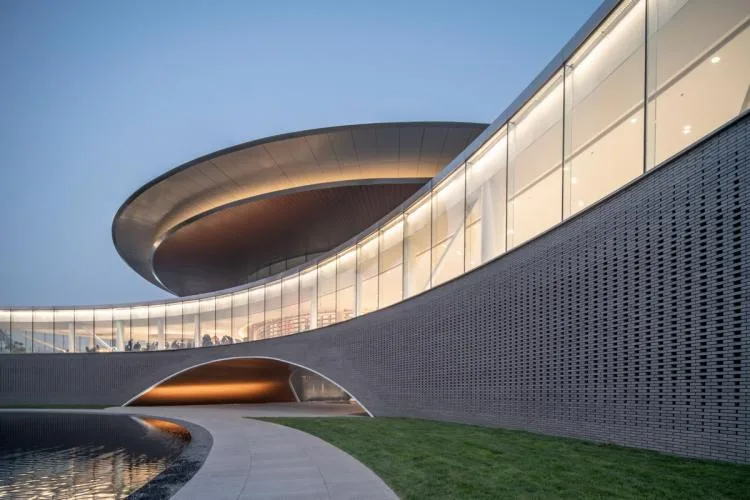 © CAAI
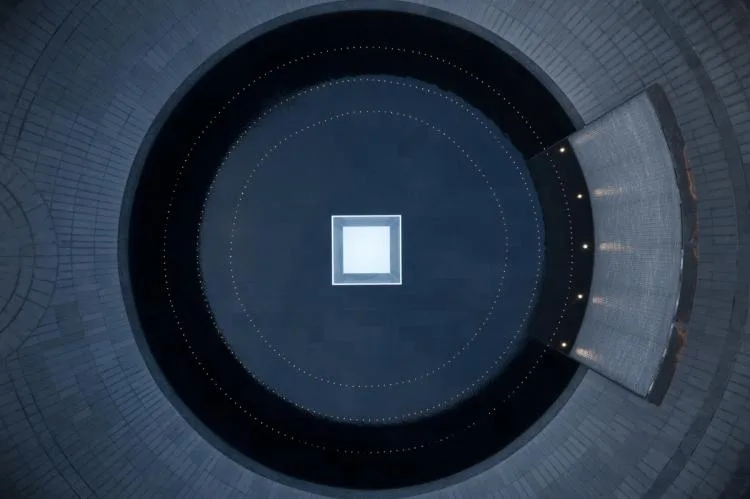
At the heart of the courtyard stands an original art installation titled “Time Container,” positioned at the intersection of spatial elements. Its triangular pyramid contrasts with the circular courtyard, merging straight and curved lines, light and shadow. Together with its reflection, it evokes the passage of time, reminiscent of an hourglass.
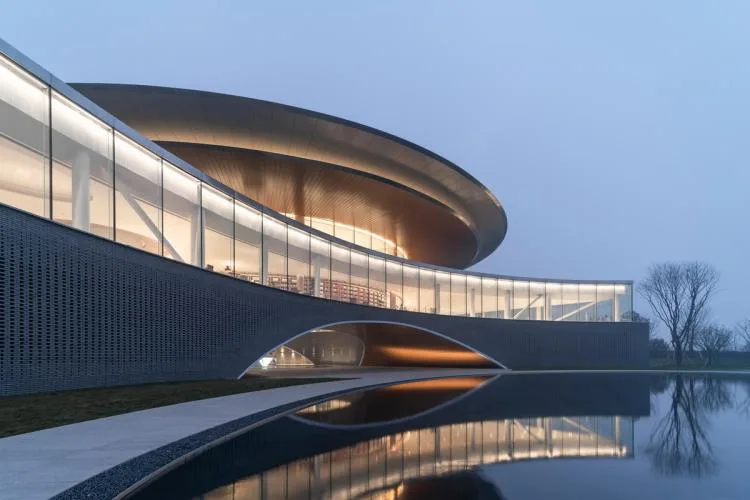
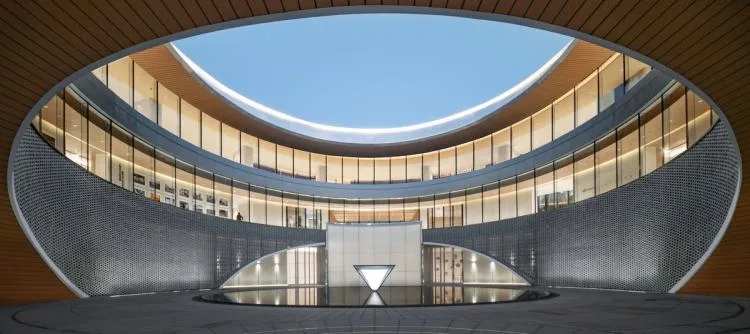
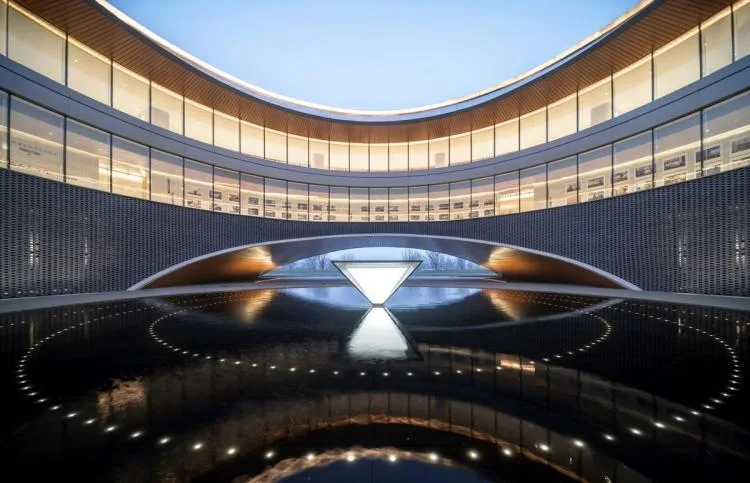 © CAAI
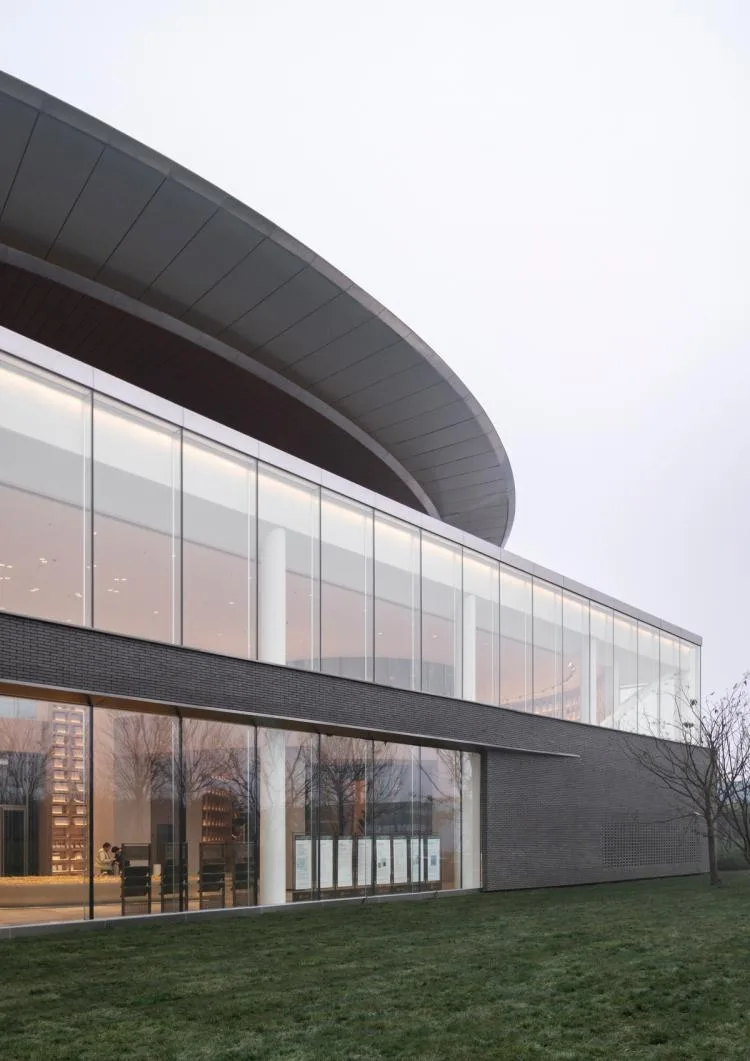
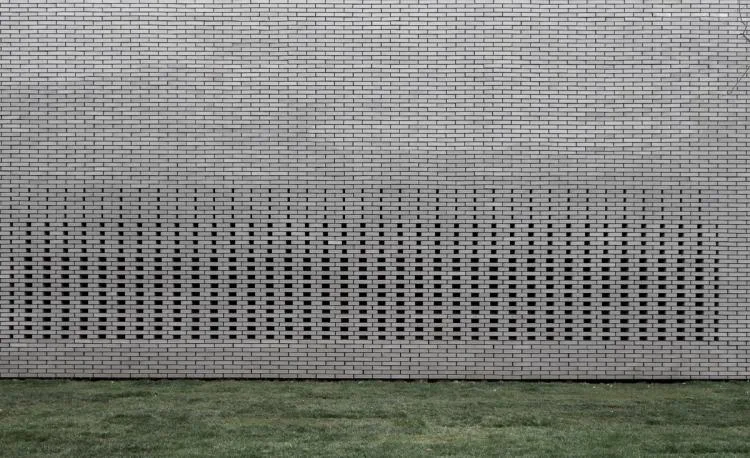
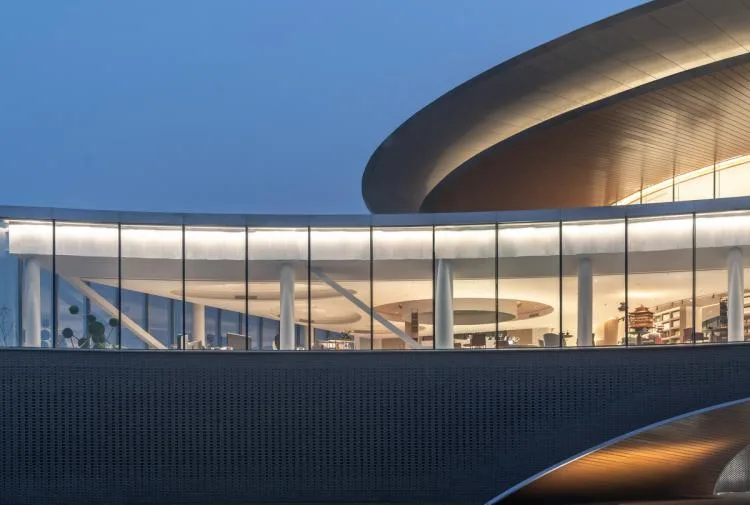
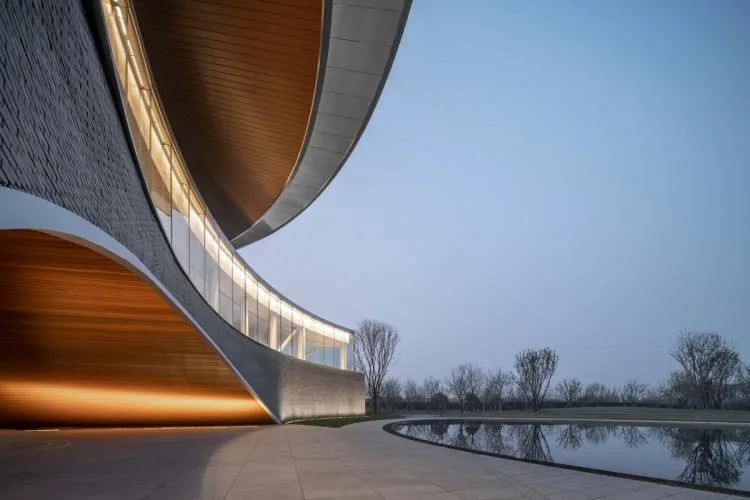
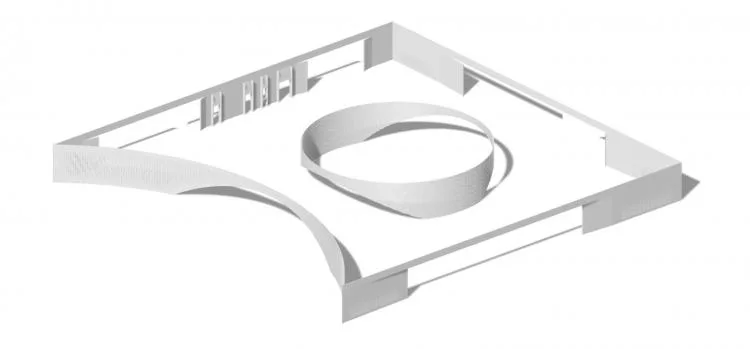
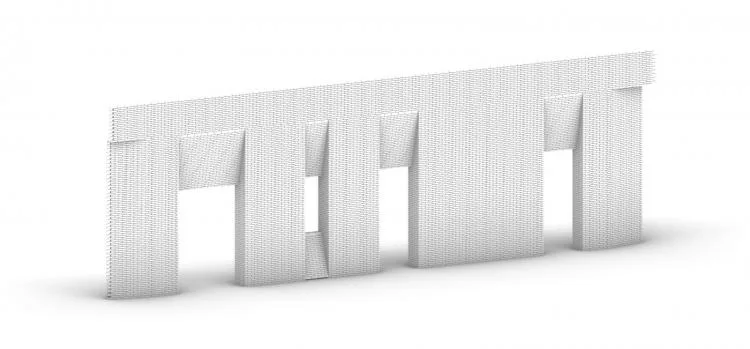
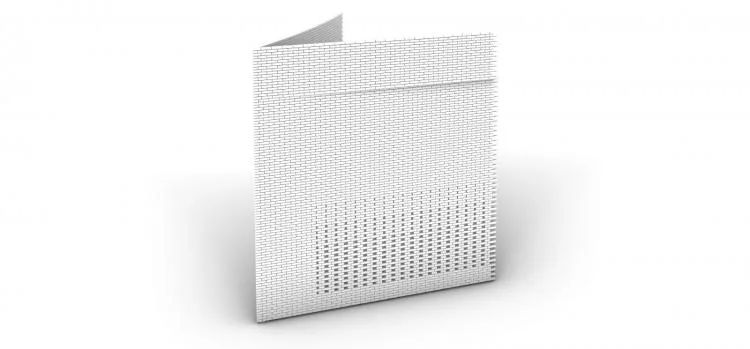
For the form and materials, the design aims to capture the unique beauty of the East, emphasizing “richness” and “subtlety” in terms of color and integration. Instead of simple and direct aesthetics, the rich textures offer nuanced complexity. Matte materials were carefully chosen, including frosted ceramic tiles, matte composite aluminum panels, and brushed stainless steel, arranged in a vertical composition based on their glossiness characteristics.
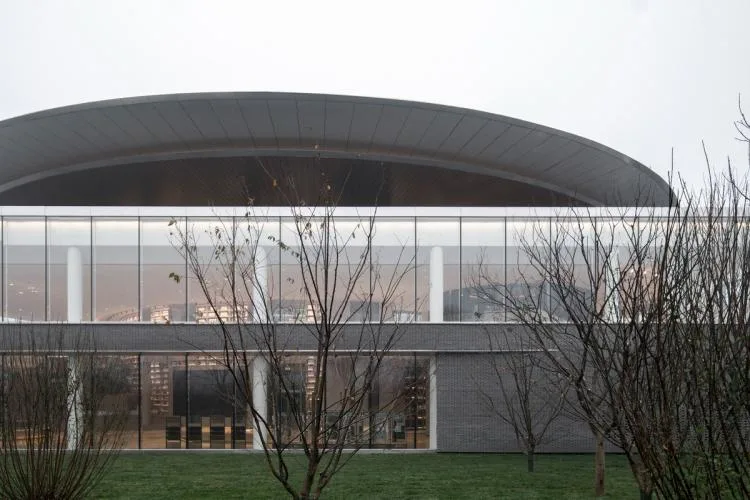
 © CAAI
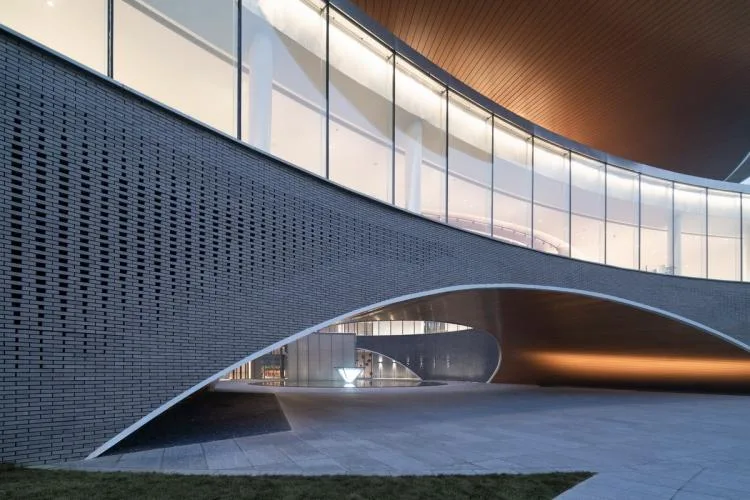
The ground floor features a façade composed of square brick walls with intersecting curves on the exterior and cylindrical brick walls on the interior, built using 100,000 ceramic bricks. The texture gradient is achieved through a combination of large solid staggered brick arrangements and areas with gradient hollowing. Sharp angles at corners and window junctions enhance the crispness of detail.
 © CAAI
The arched ceiling’s structural system is a spatial composite grid that functions as the primary curtain wall frame supporting the wood-grain arched ceiling below, while also forming part of the building’s main load-bearing structure. Above this are large interior stair spaces and a double-column system supporting the three-story roof overhang, posing significant structural challenges.
 © CAAI
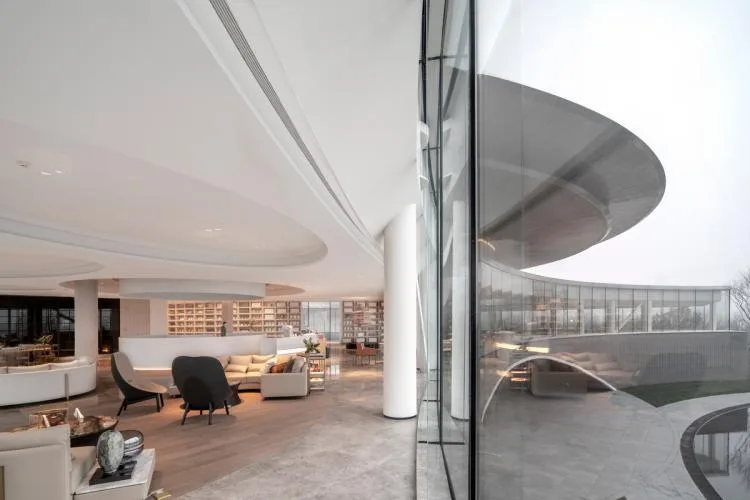
To achieve the dramatic overhang and lightweight effect, two innovative structural systems were implemented: a cylindrical double-column system and a roof composite truss system. The overhang extends up to 12 meters, with the thinnest section measuring only 15 centimeters. The roof is clad in dark gray-blue aluminum-magnesium-manganese standing seam panels, harmonizing with the sky and earth when viewed from above.
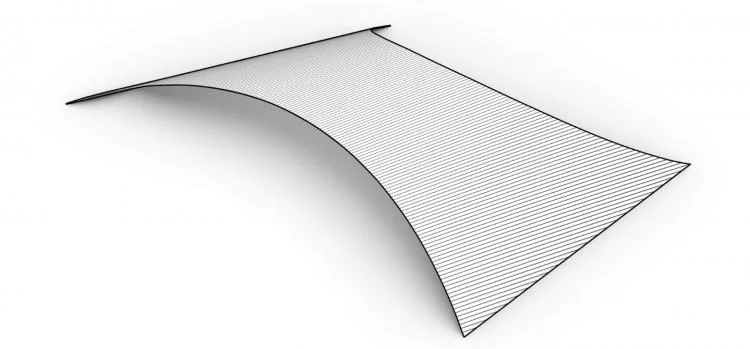
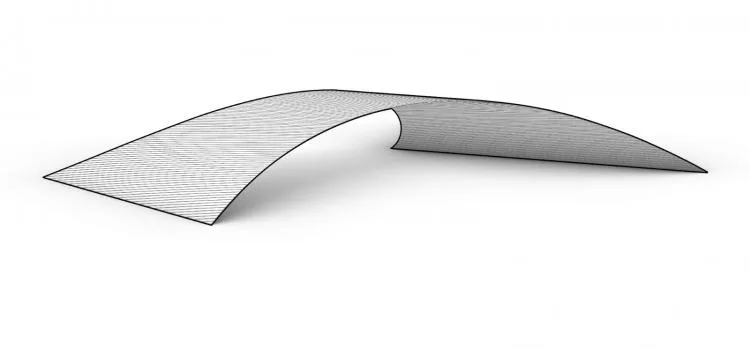
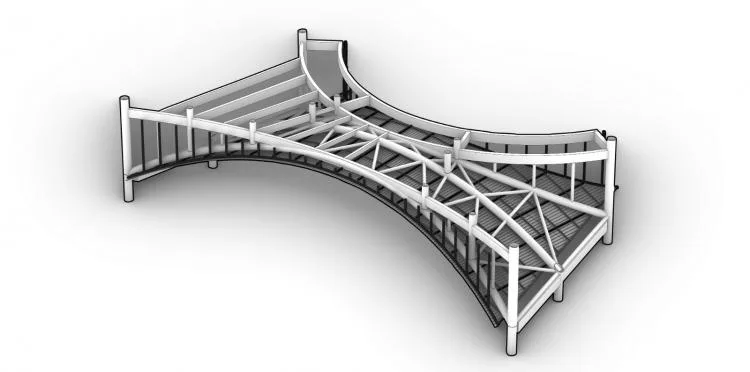
△ Structural Analysis
© CAAI
© Mingjing
© CAAI
 △ Material Analysis 1
 △ Material Analysis 2
 △ Material Analysis 3
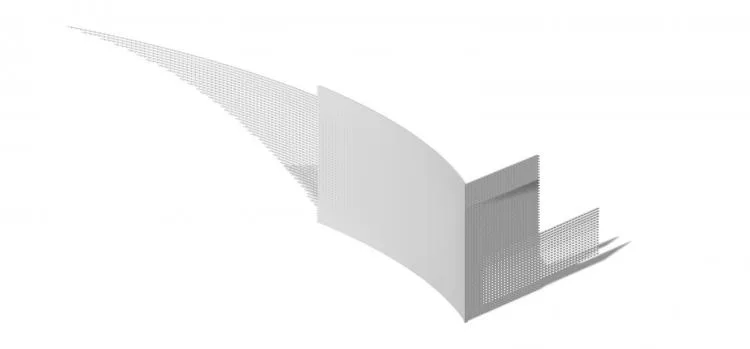 △ Material Analysis 4
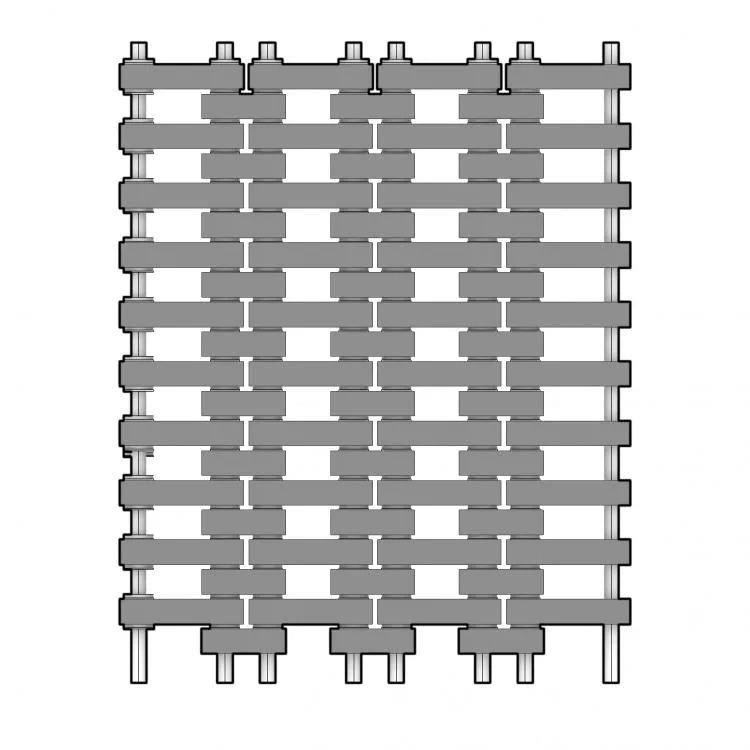 △ Material Analysis 5
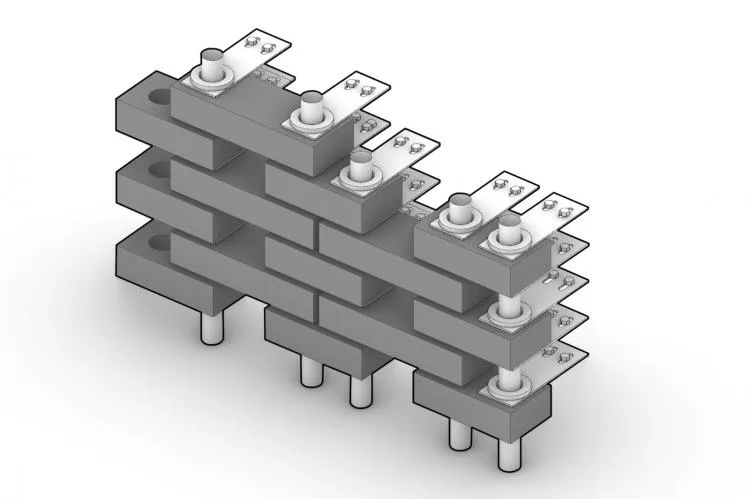 △ Material Analysis 6
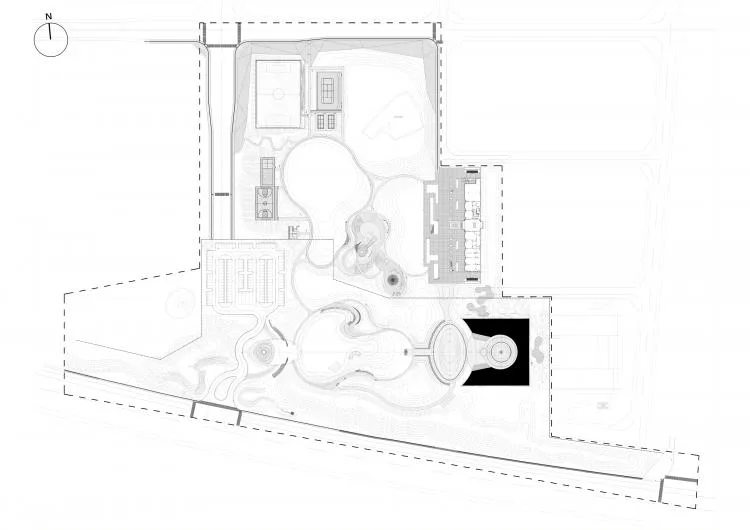 △ General Layout Plan
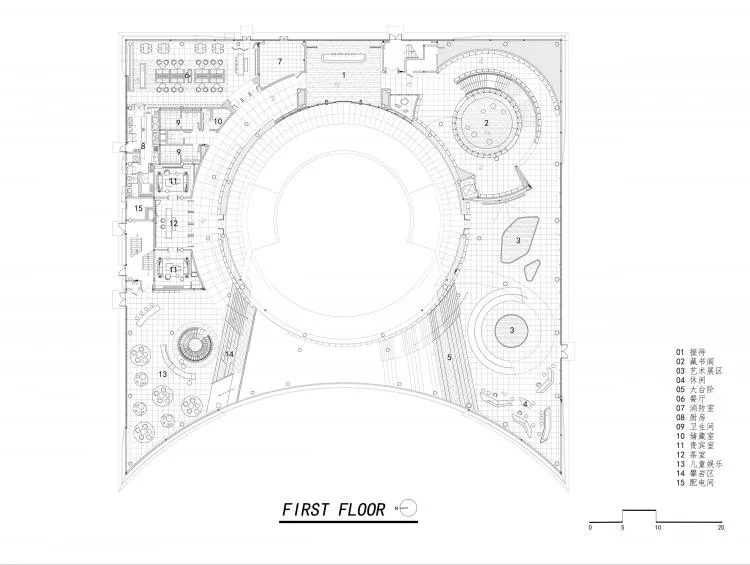 △ First Floor Plan
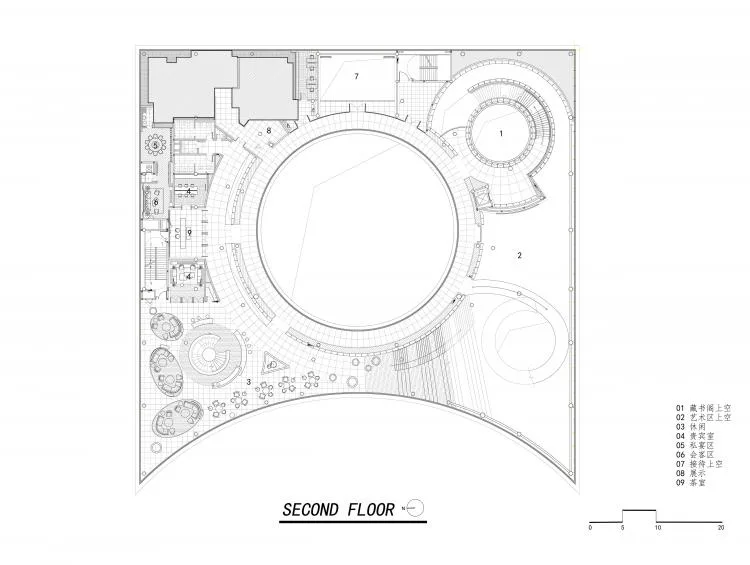 △ Second Floor Plan
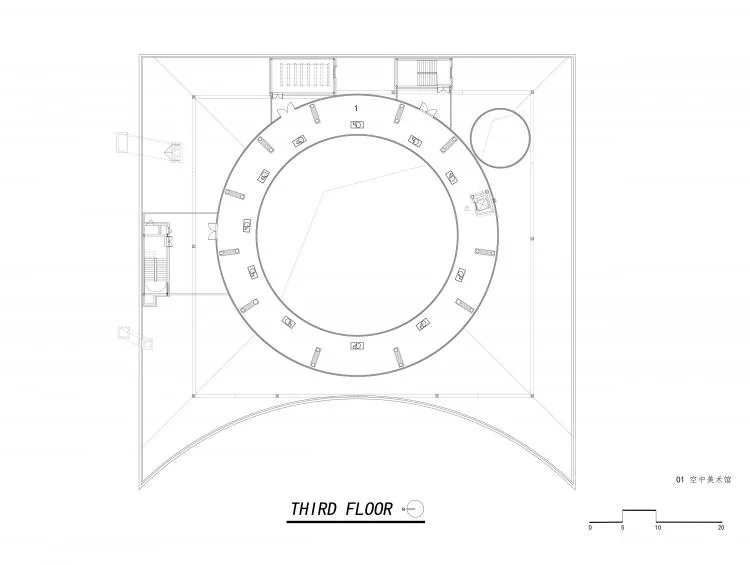 △ Third Floor Plan
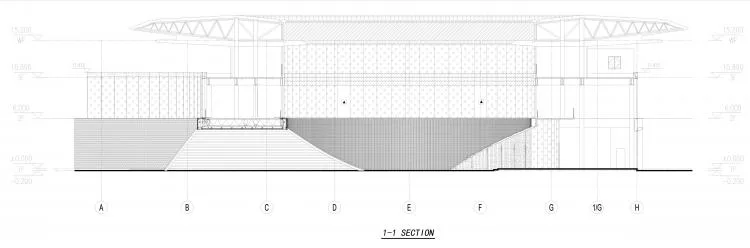 △ Section 1-1
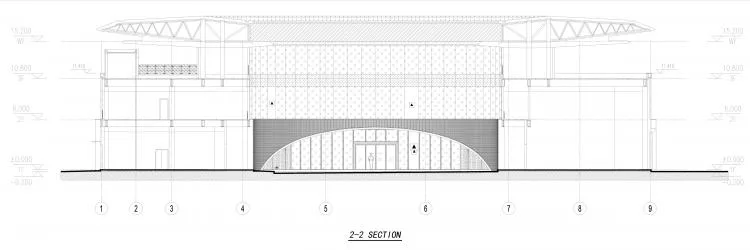 △ Section 2-2
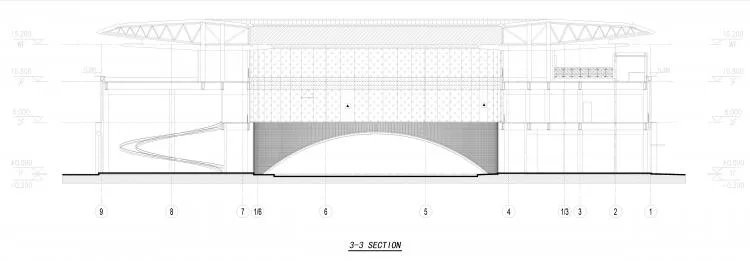 △ Section 3-3
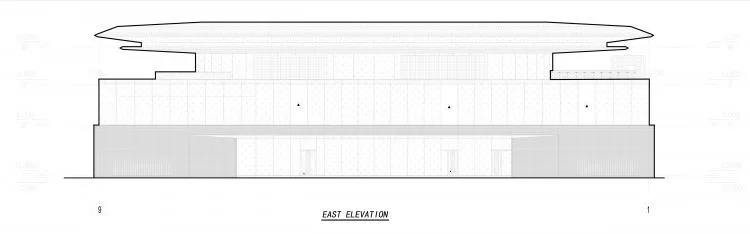 △ East Elevation
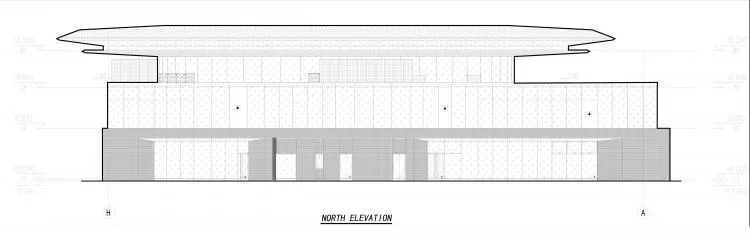 △ North Elevation
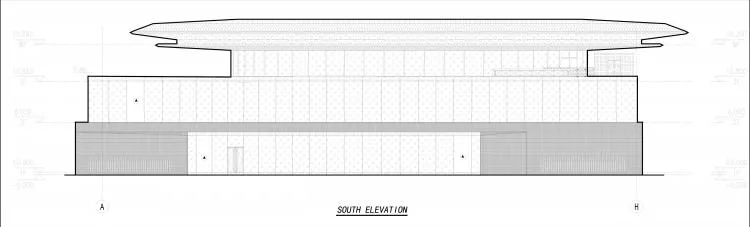 △ South Elevation
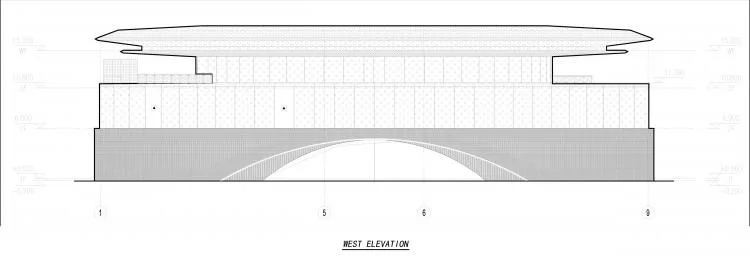 △ West Elevation
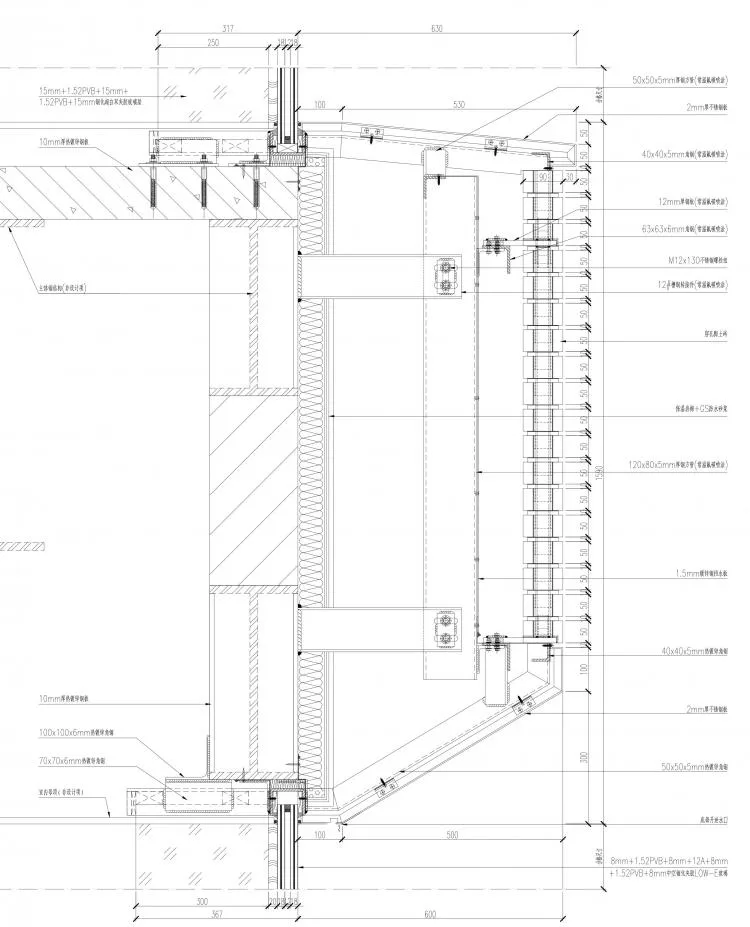 Node Detail 1
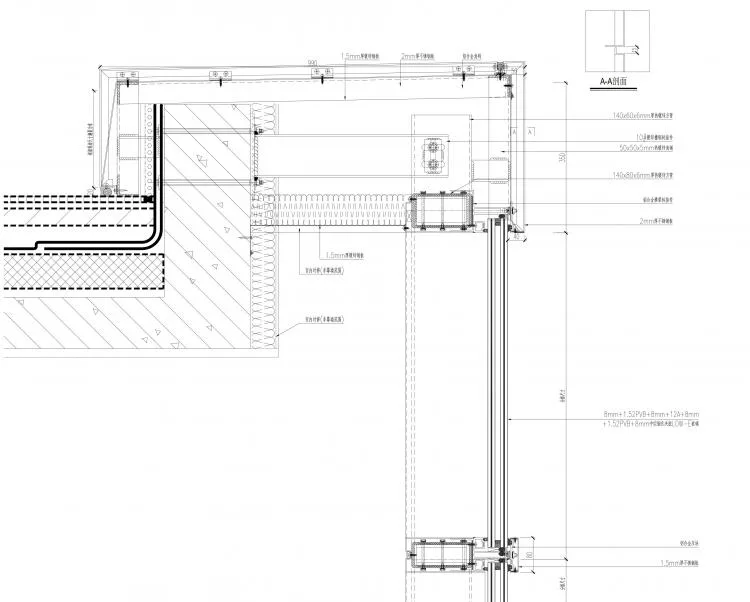 Node Detail 2
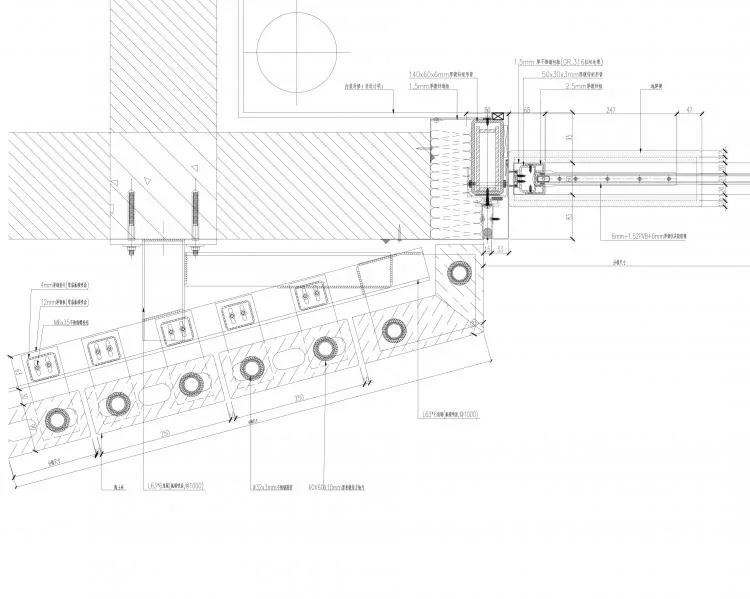 Node Detail 3
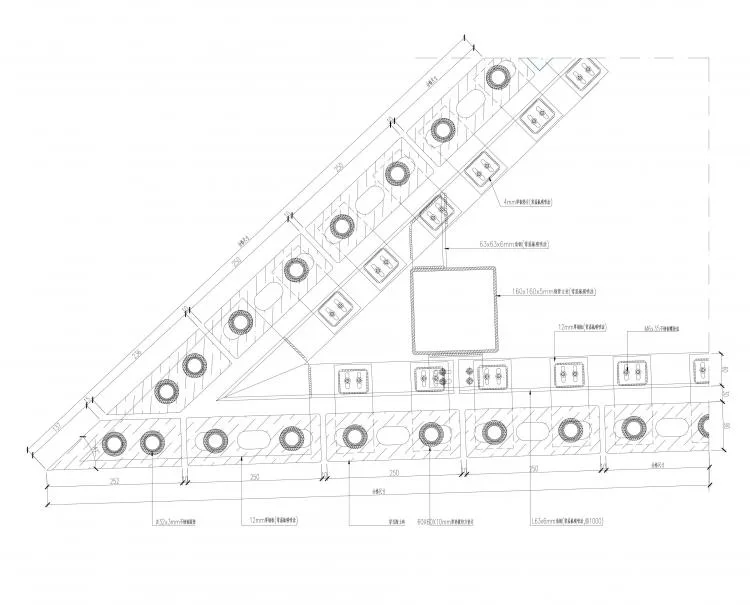 Node Detail 4
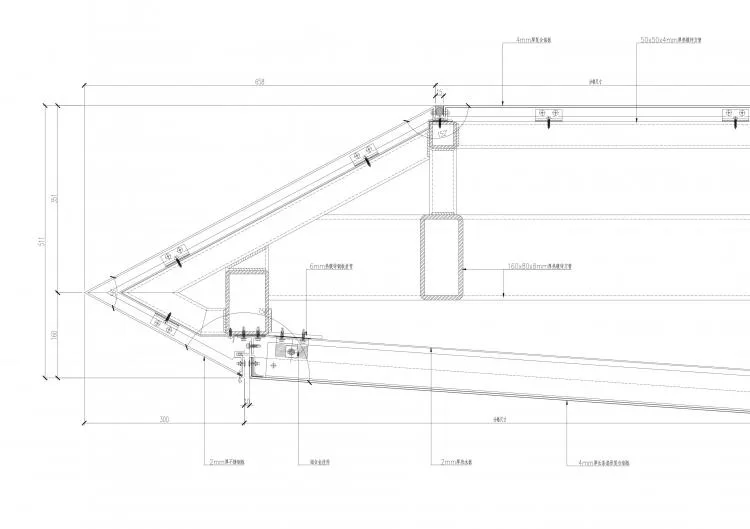 Node Detail 5
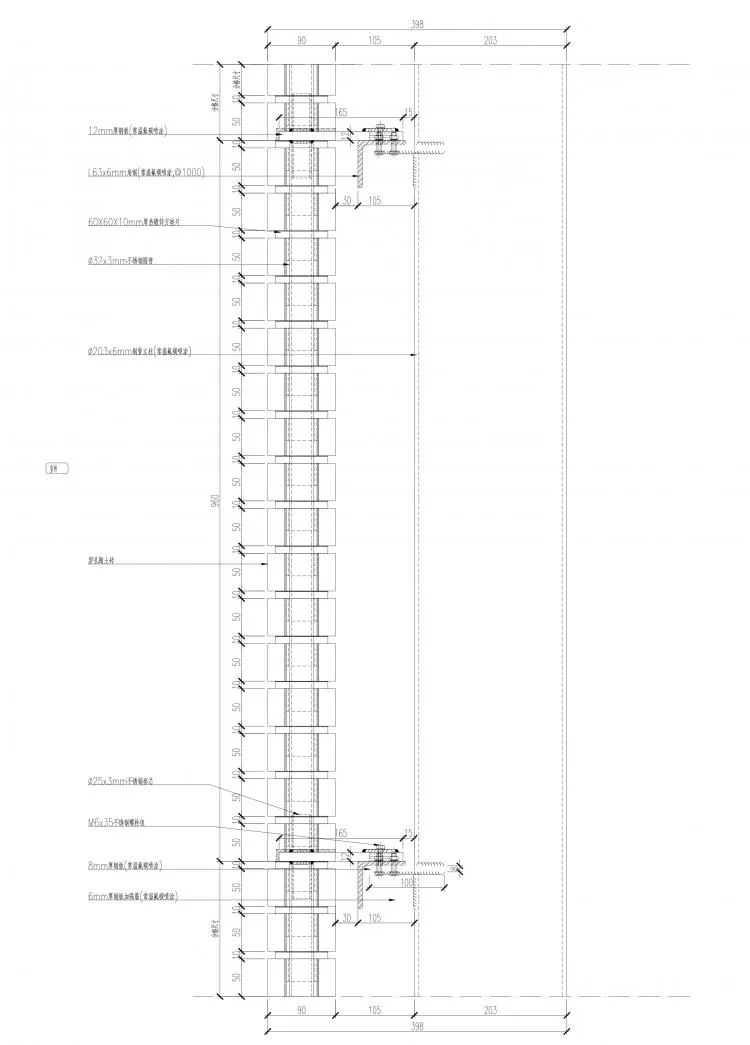 Node Detail 6
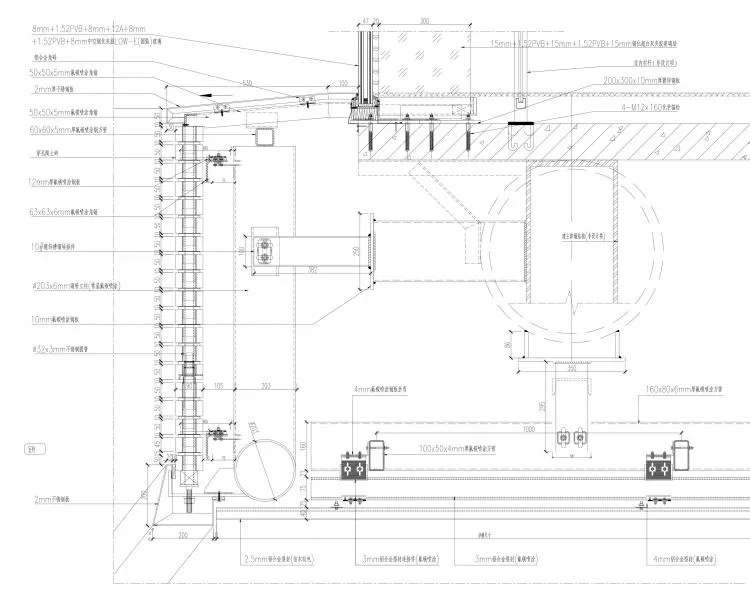 Node Detail 7
Project Information
Project Name: Jianye Blue Ocean Zhengfeng Hotel Complex
Location: 800 meters west of the intersection of Zhonghua North Road and Lianhua Road, Zhengzhou, Xinzheng City, north of the road
Owner: Jianye Residential Group (China) Co., Ltd
Project Company: Henan Bailihui Industrial Co., Ltd
Architectural Design: Shanghai Riqing Architectural Design Co., Ltd
Project Managers: Song Zhaoqing, Zhao Jingxin
Design Team: Zhang Duo, Chen Liangpeng, Ji Linjuan
Owner Team: Zukeqian, Wang Guohua, Zhao Ting, Liu Kuan, Han Qian, Wang Mengdi
Landscape Design: Guangzhou Shanshui Bide Design Co., Ltd
Interior Design: Lingjie Architectural Design Consulting (Shanghai) Co., Ltd
Curtain Wall Design: Kempes Curtain Wall Engineering Consultant (Shanghai) Co., Ltd
Curtain Wall Construction: Henan Jianxiang Decoration Engineering Co., Ltd
Lighting Design: Shanghai Color Dot Lighting Design Firm (General Partnership)
Building Area: 5,110 square meters
Design Period: October 2019
Completion Date: November 2020
Architectural Photography: Xingzhi Imaging, Mingjing Architectural Photography












Must log in before commenting!
Sign Up