
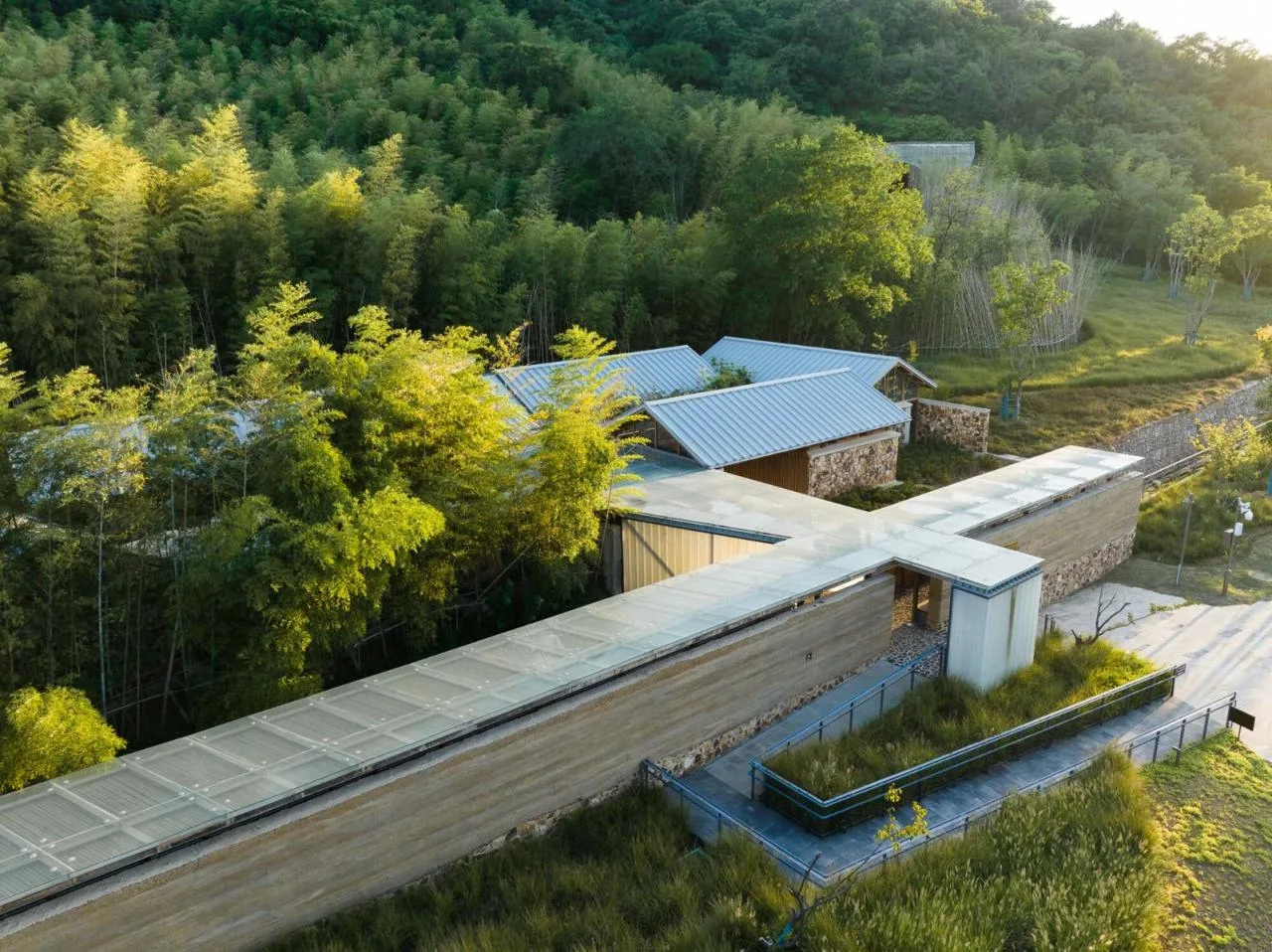
Project Background: The initial request from the client in 2017 was straightforward: “Let’s build a bigger restroom on this vacant land.” The Tangshan Ancient Ape Man Cave Scenic Area in Nanjing is renowned for its discovery of ancient ape man sites and remains a popular tourist destination on the city’s outskirts. The mountainous terrain includes a flood discharge channel running east-west along the northern slope, marking the source of Tangshui River, known as Tangshan’s mother river.
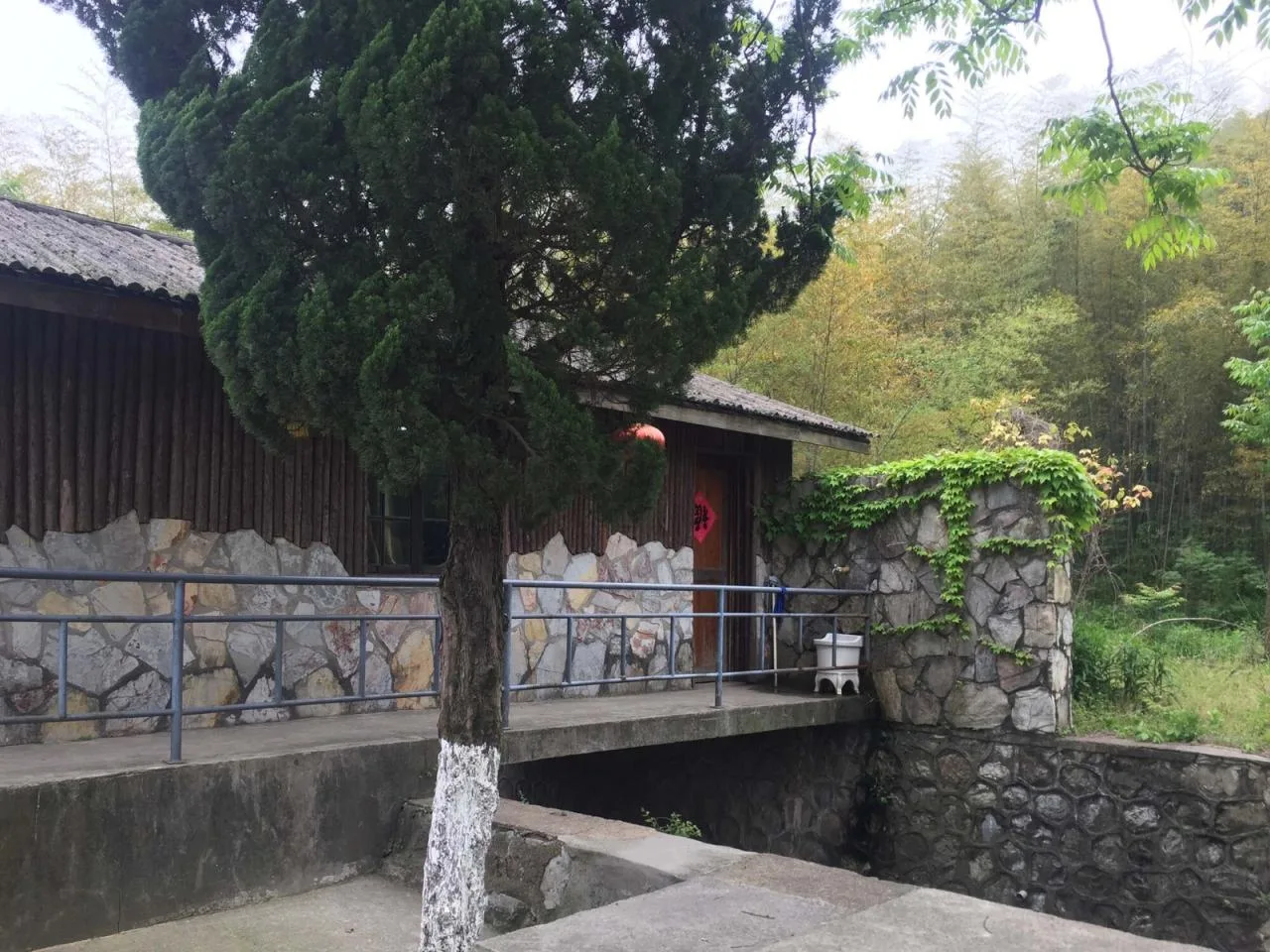
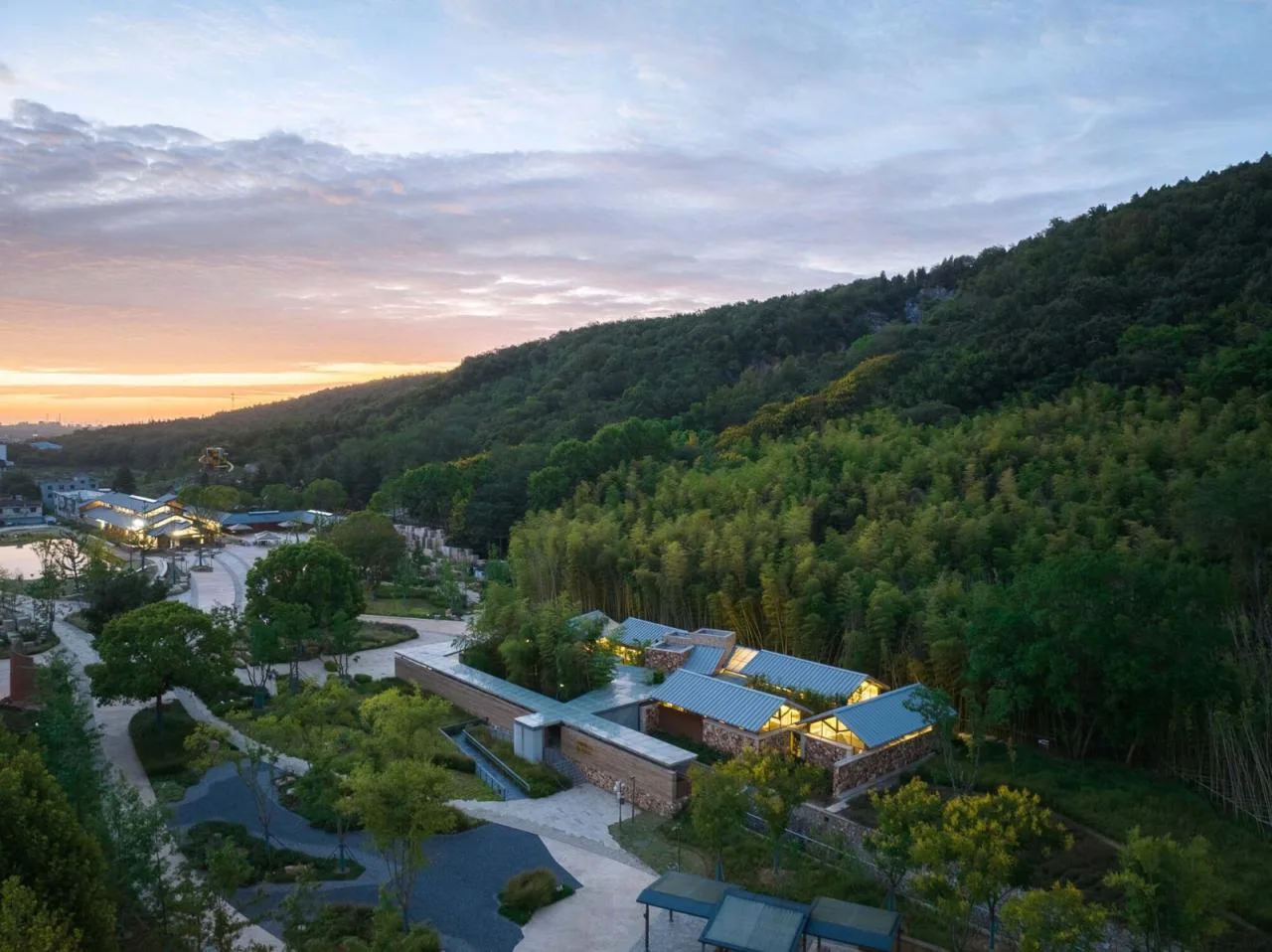
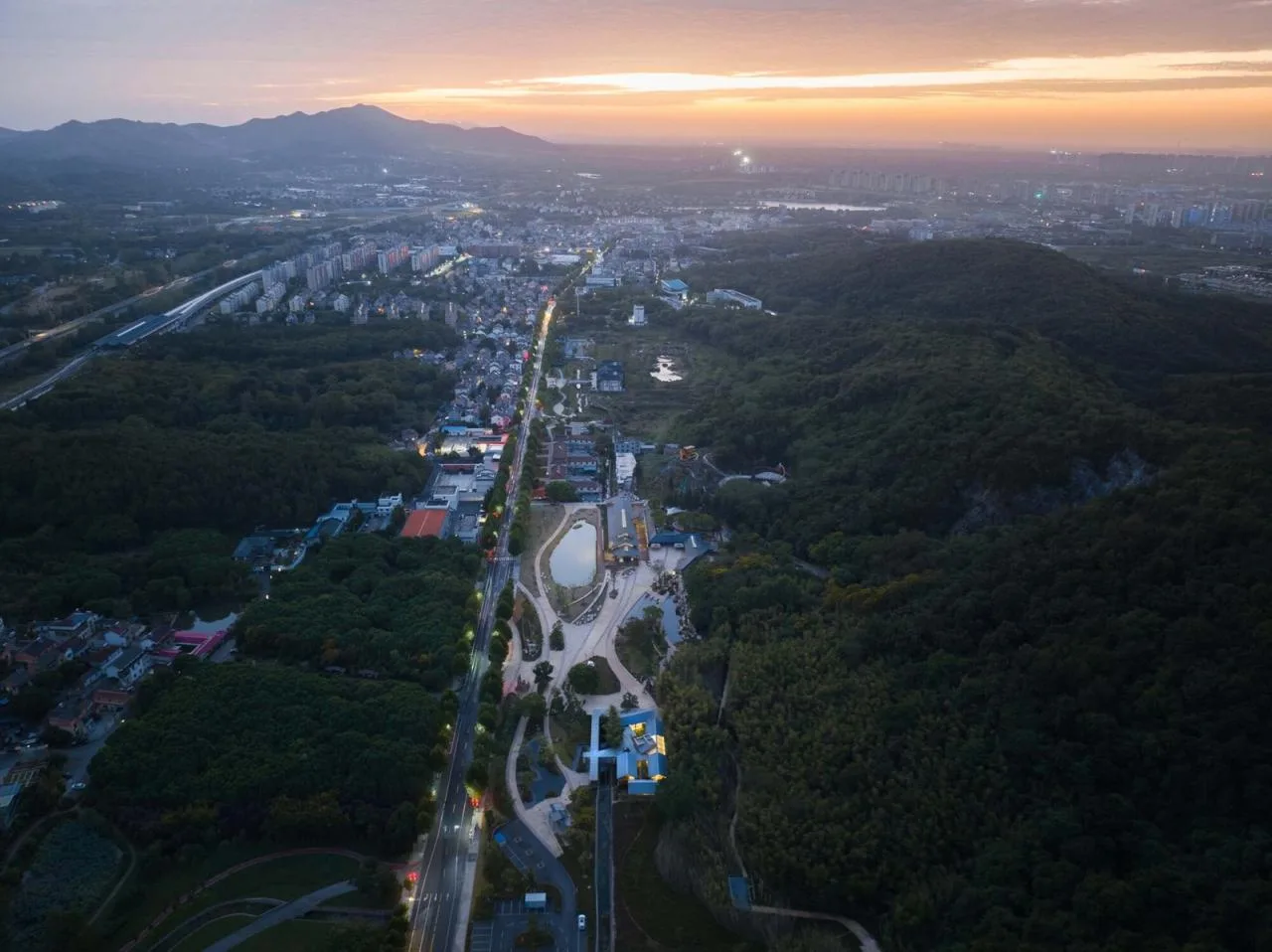
The project site is located at the base of the northern mountain slope, in a narrow, elongated space between the spillway and the city road. Limited land availability and outdated service facilities have long challenged the scenic area. The current task involves relocating the simple ticket office and management office adjacent to the original parking lot to a slightly larger site across a canal, and constructing a public restroom for visitors.
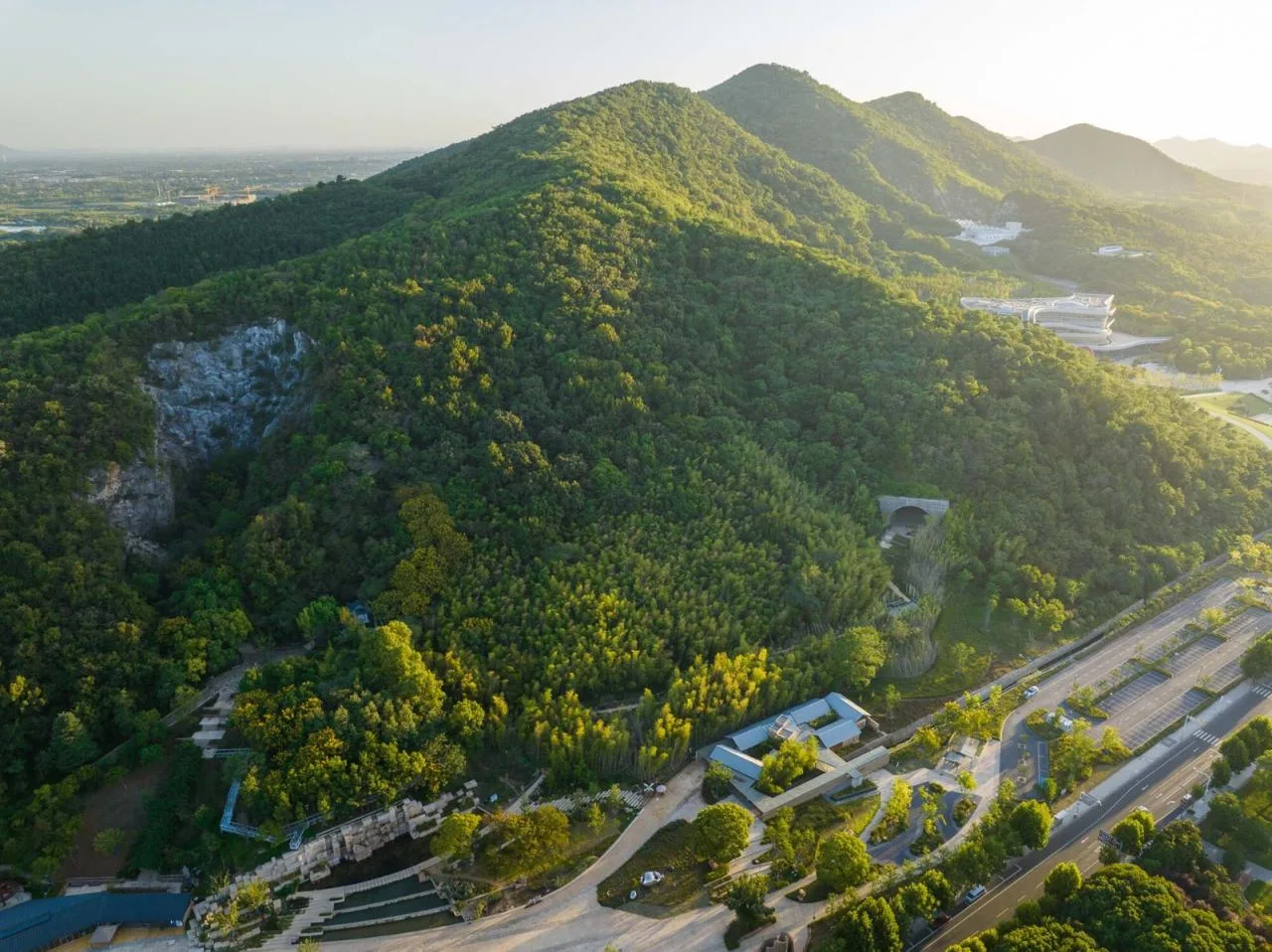
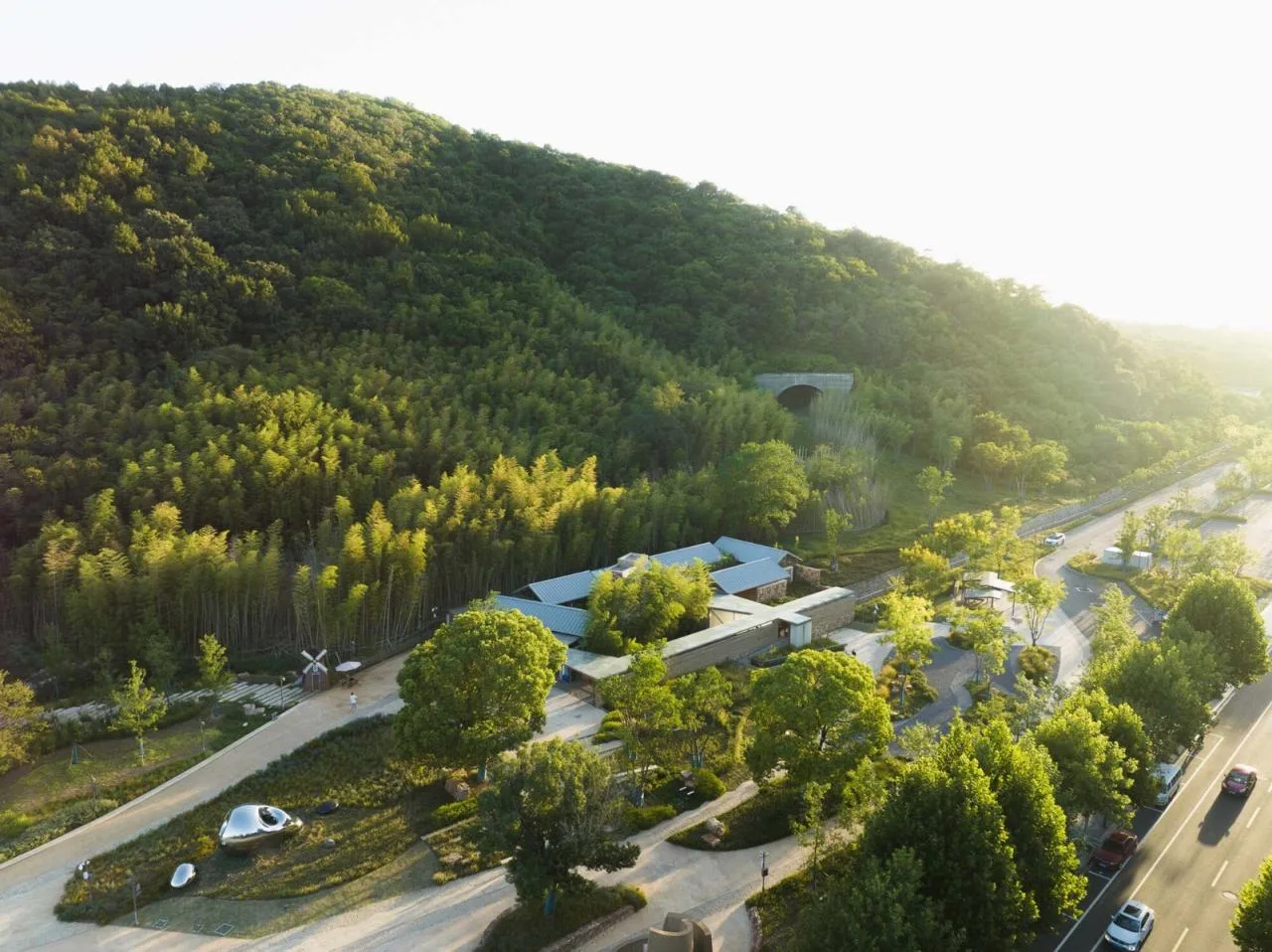
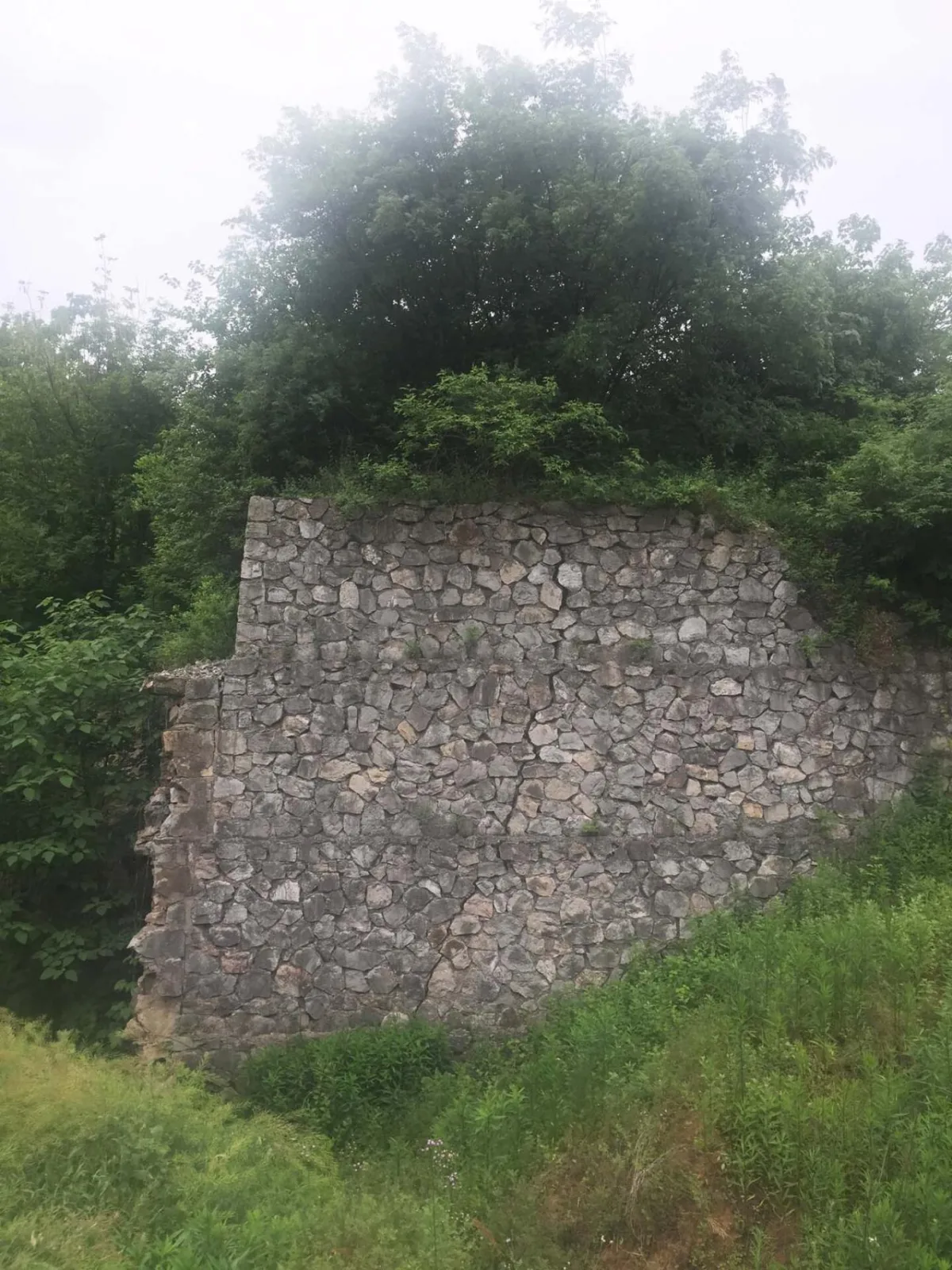
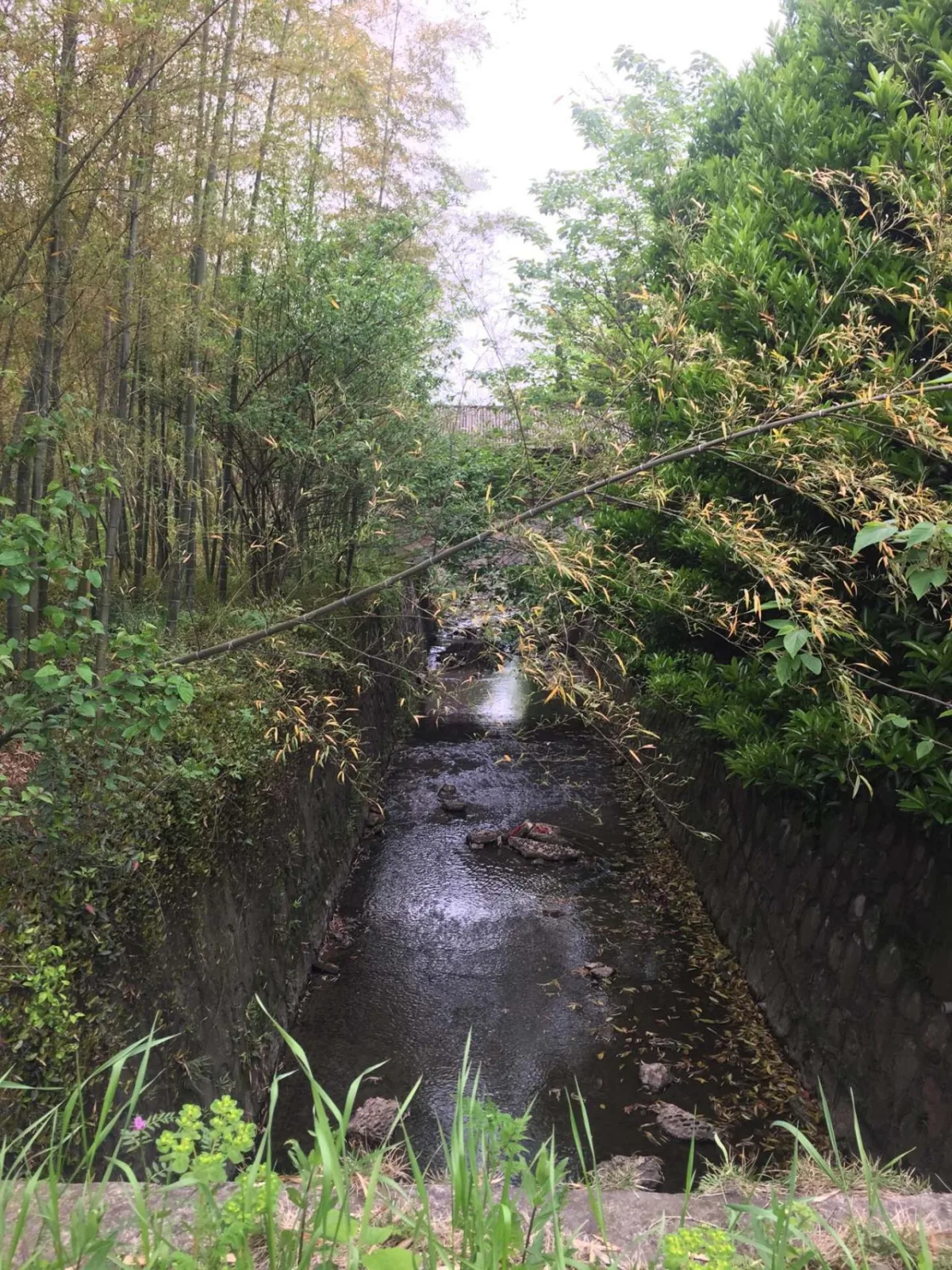
Relocating the ticket office and expanding the restroom may seem like a simple task, but it presented a unique challenge. Could we move beyond mere functionality and create a more regionally and contemporarily engaging experience for visitors? Inspired by the site’s native elements, we focused on the bamboo forest and the water channel, especially the latter. The flood control measures include high rubble retaining walls along the channel, whose moss-covered stones and water stains under plant shadows give the gully a secretive, hidden quality.
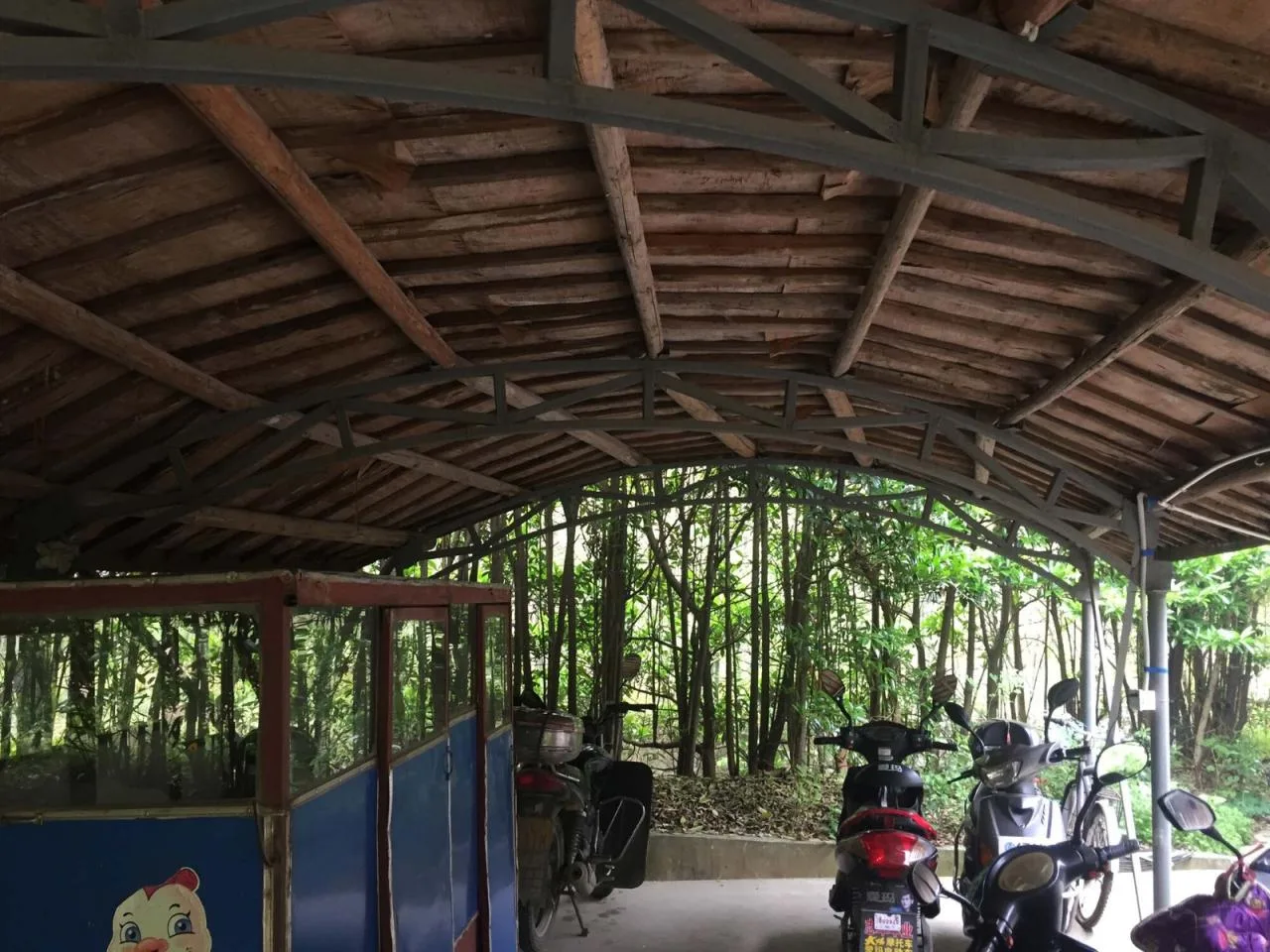
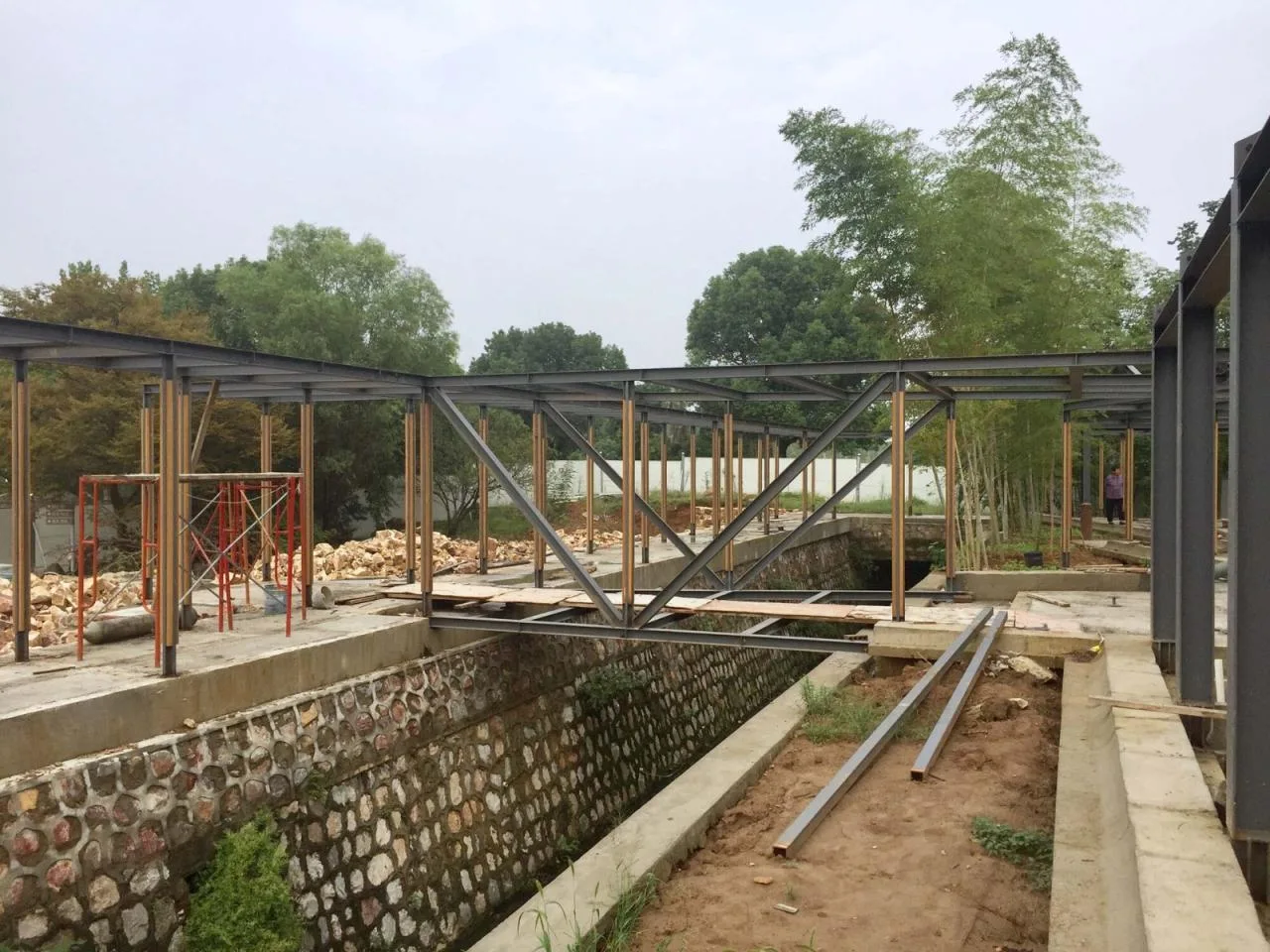
Though the main entrance square conceals the channel as it transitions into an underground culvert, two notable features remain: the management office spanning the spillway, which boldly crosses the canal, and the employee e-bike shed, composed of steel columns, truss arches, and wooden rafters that harmonize with the surrounding dense bamboo trunks. These man-made elements illustrate how nature becomes scenic through interaction with people.
The design team sought to embody these spatial memories and “retell” them, allowing users to engage physically and emotionally with the place’s history and character.
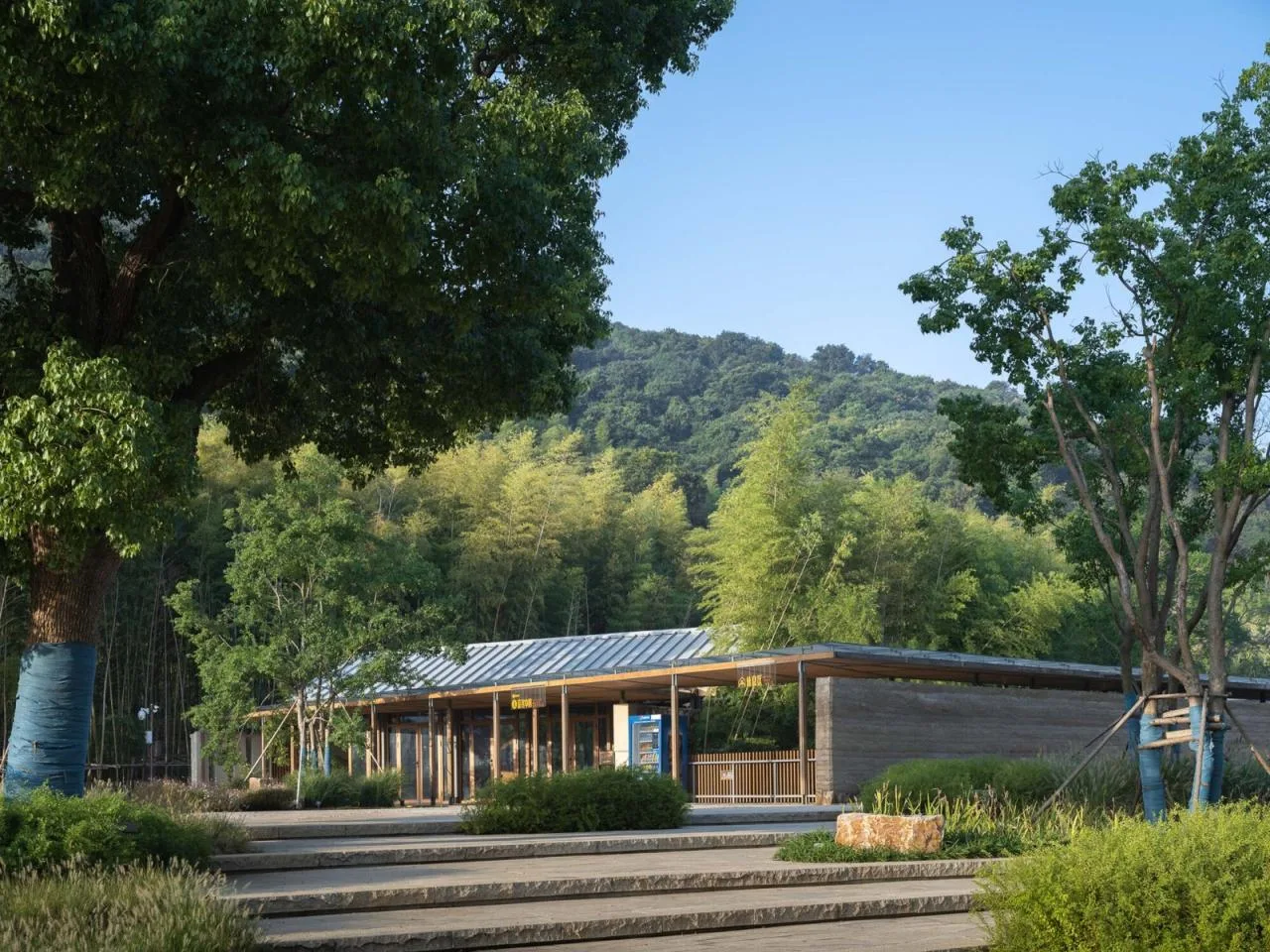
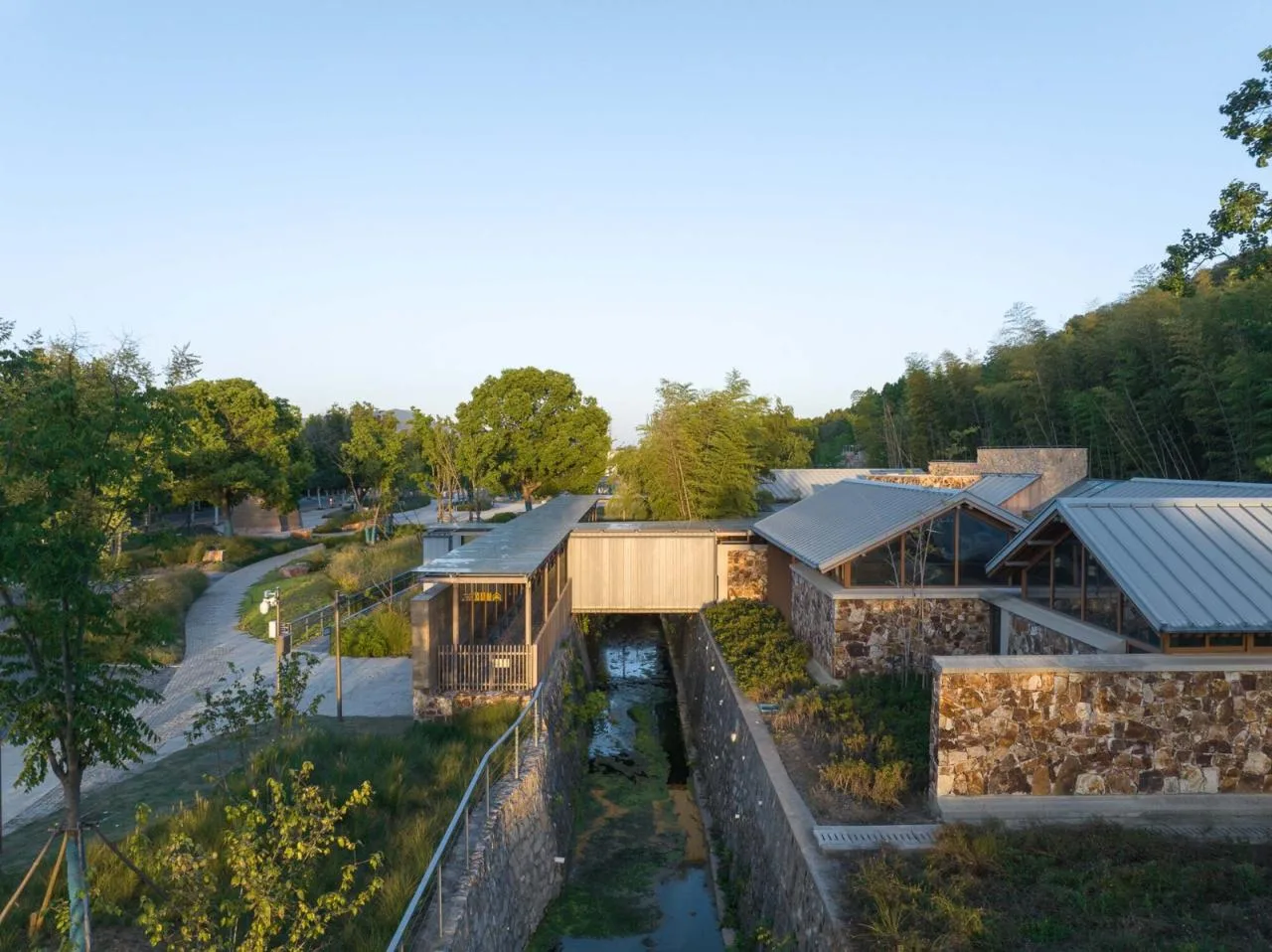
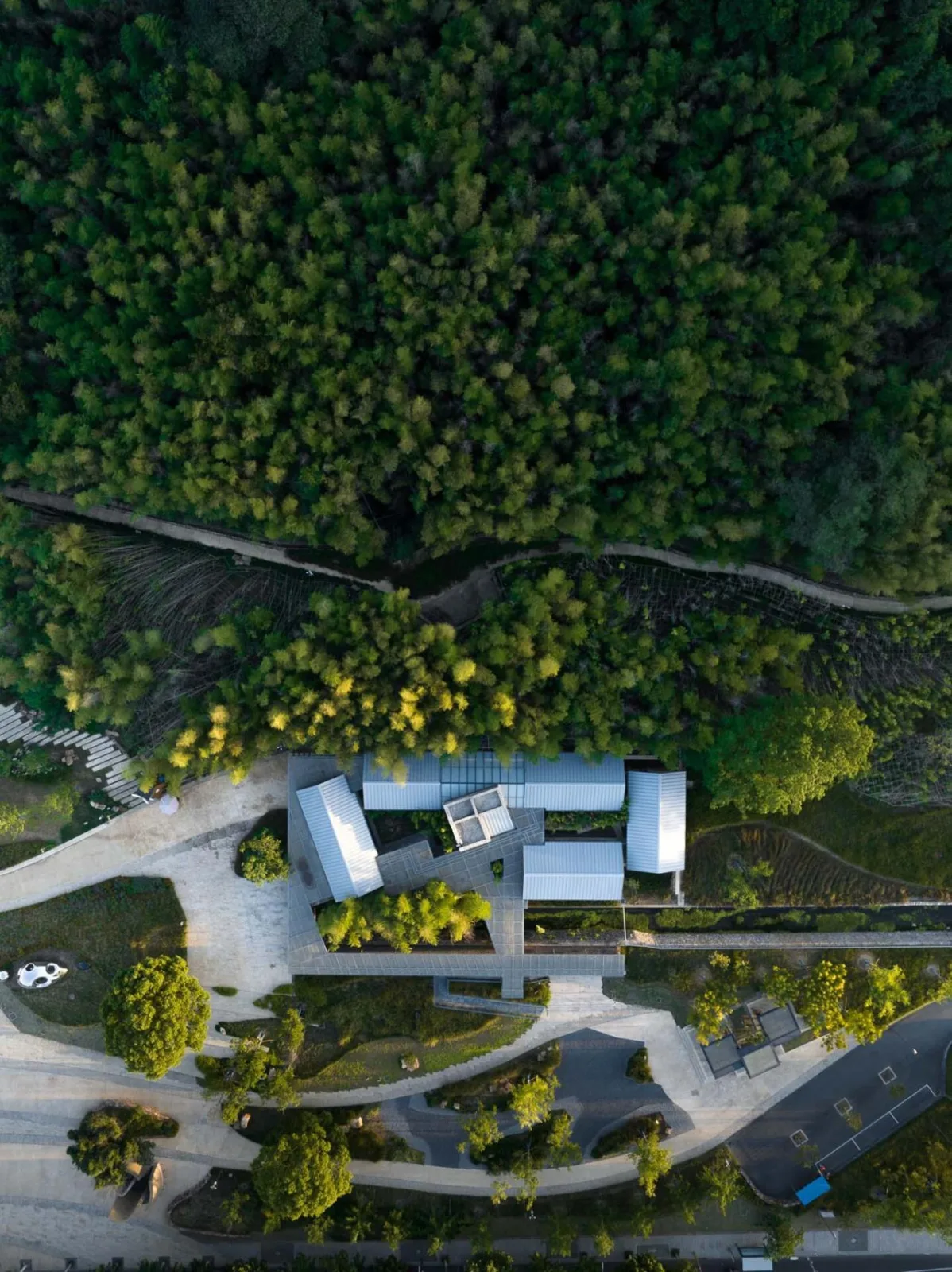
After thorough on-site analysis, we identified two main pedestrian flow paths: one crosses the canal, mostly used by visitors entering from the parking lot, and the other leads from the main entrance square into the site. These two nearly perpendicular paths span only about 20 meters but create an opportunity for intriguing spatial interplay.
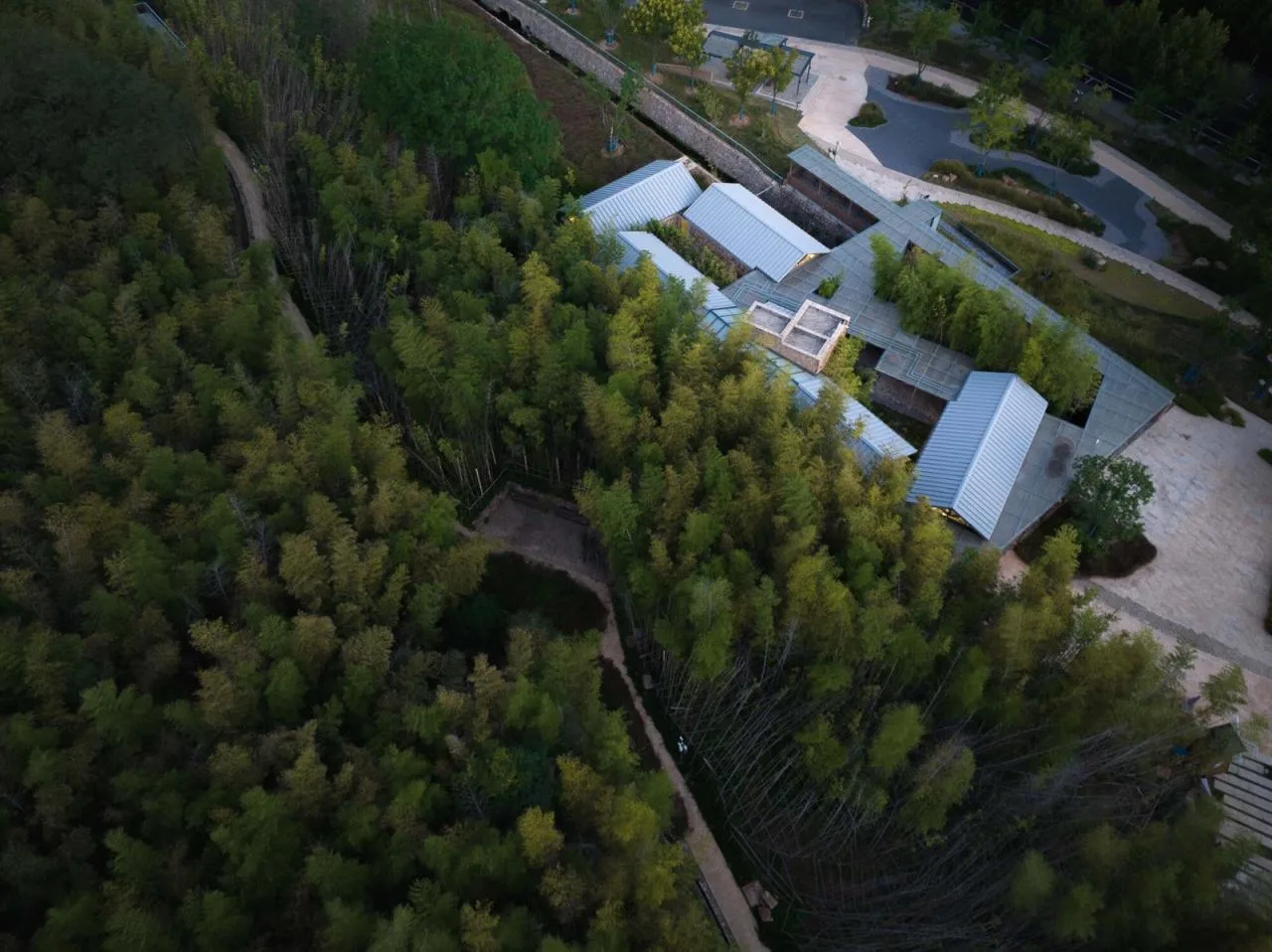
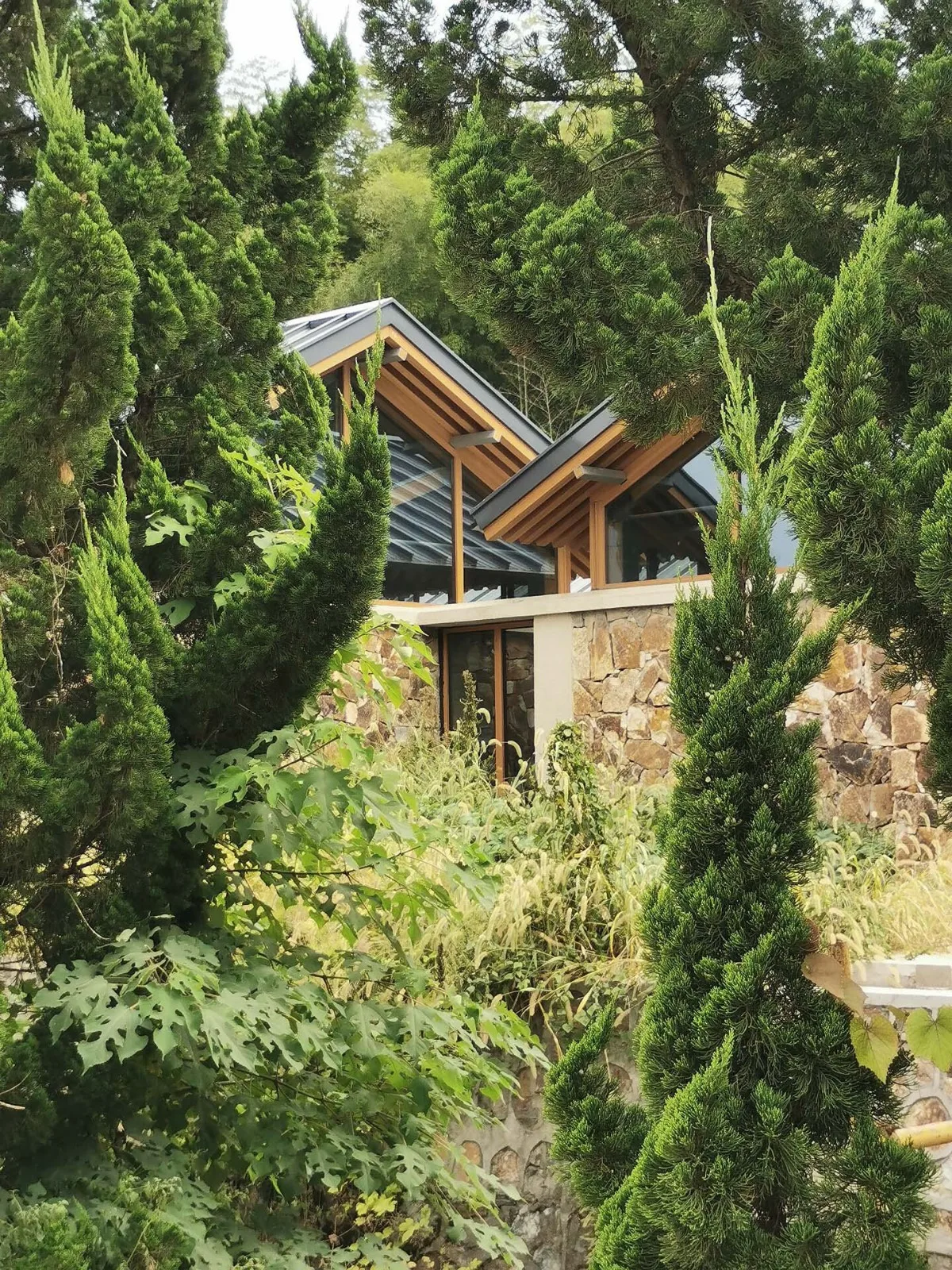
Our design leverages the existing ditch and adjacent bamboo grove, drawing inspiration from traditional garden folding corridors. We created three parallel flow lines along the ditch: a rest and waiting path on the north side, a circulation route to the restroom on the south side, and an internal office flow path near the bamboo forest. To address the approach from the scenic area’s entrance, some building volumes were rotated slightly along the east-west axis, softening directional perception. The interplay between these volumes disrupts visitors’ sense of spatial hierarchy, offering a unique experience.
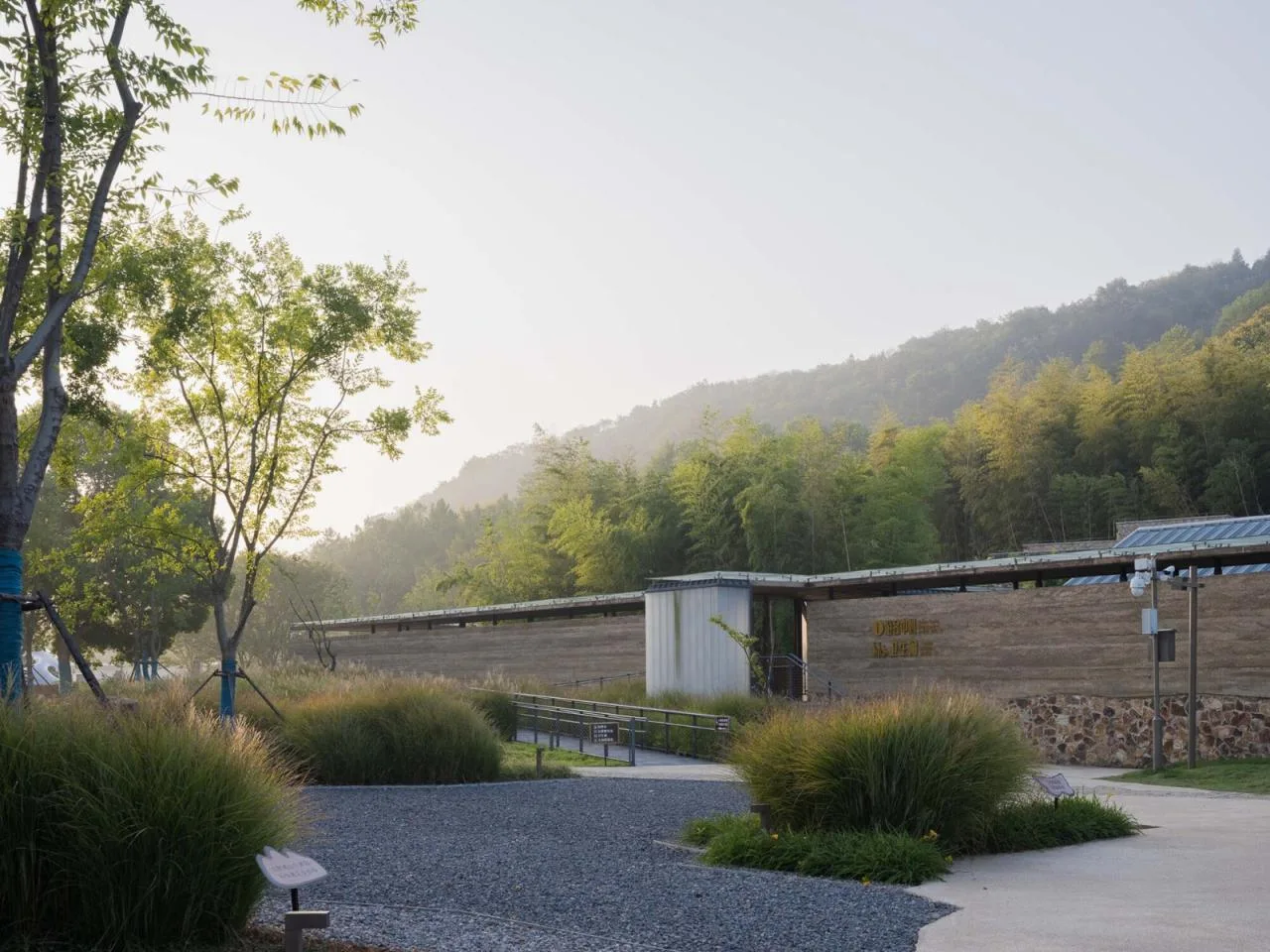
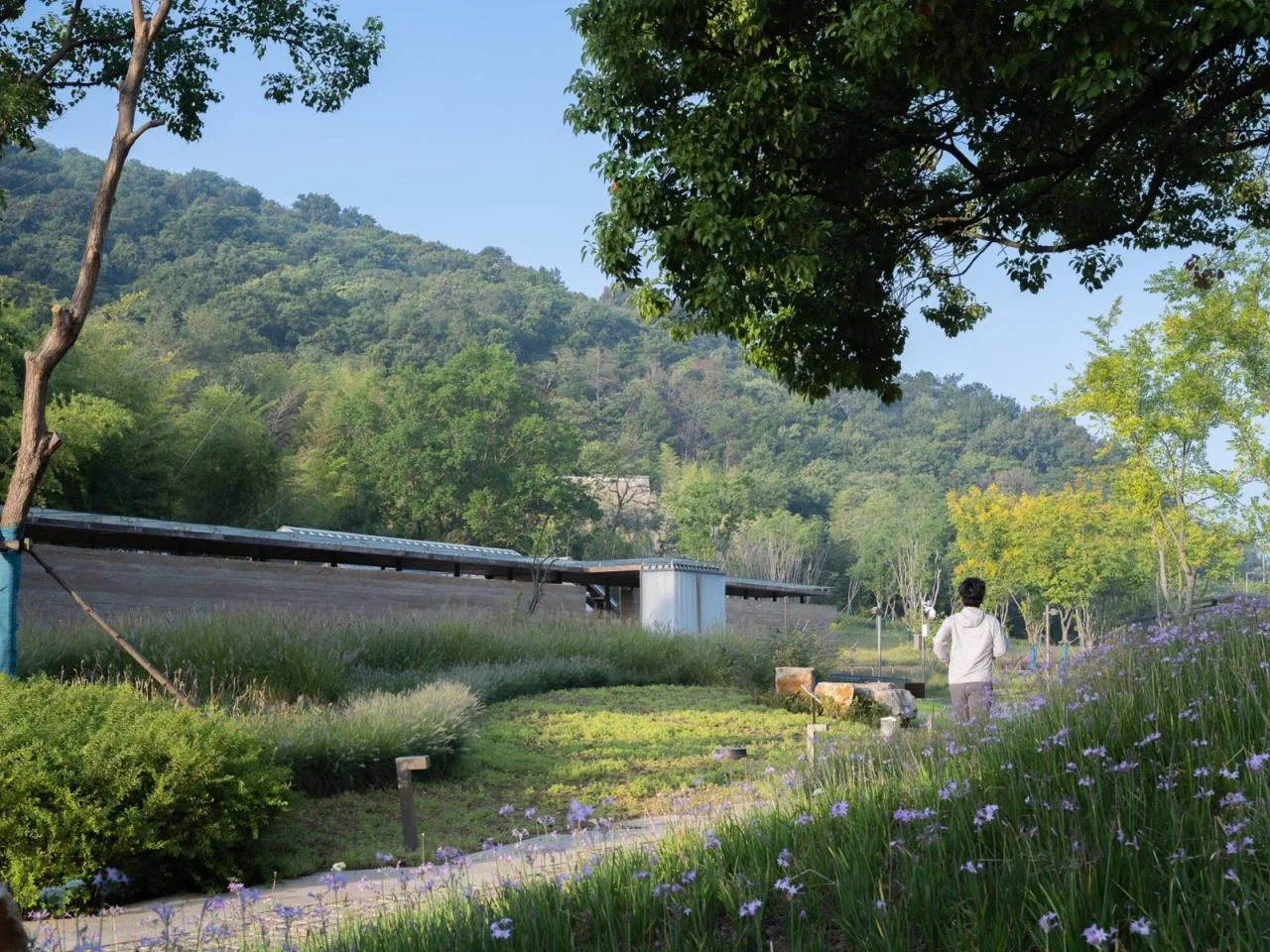
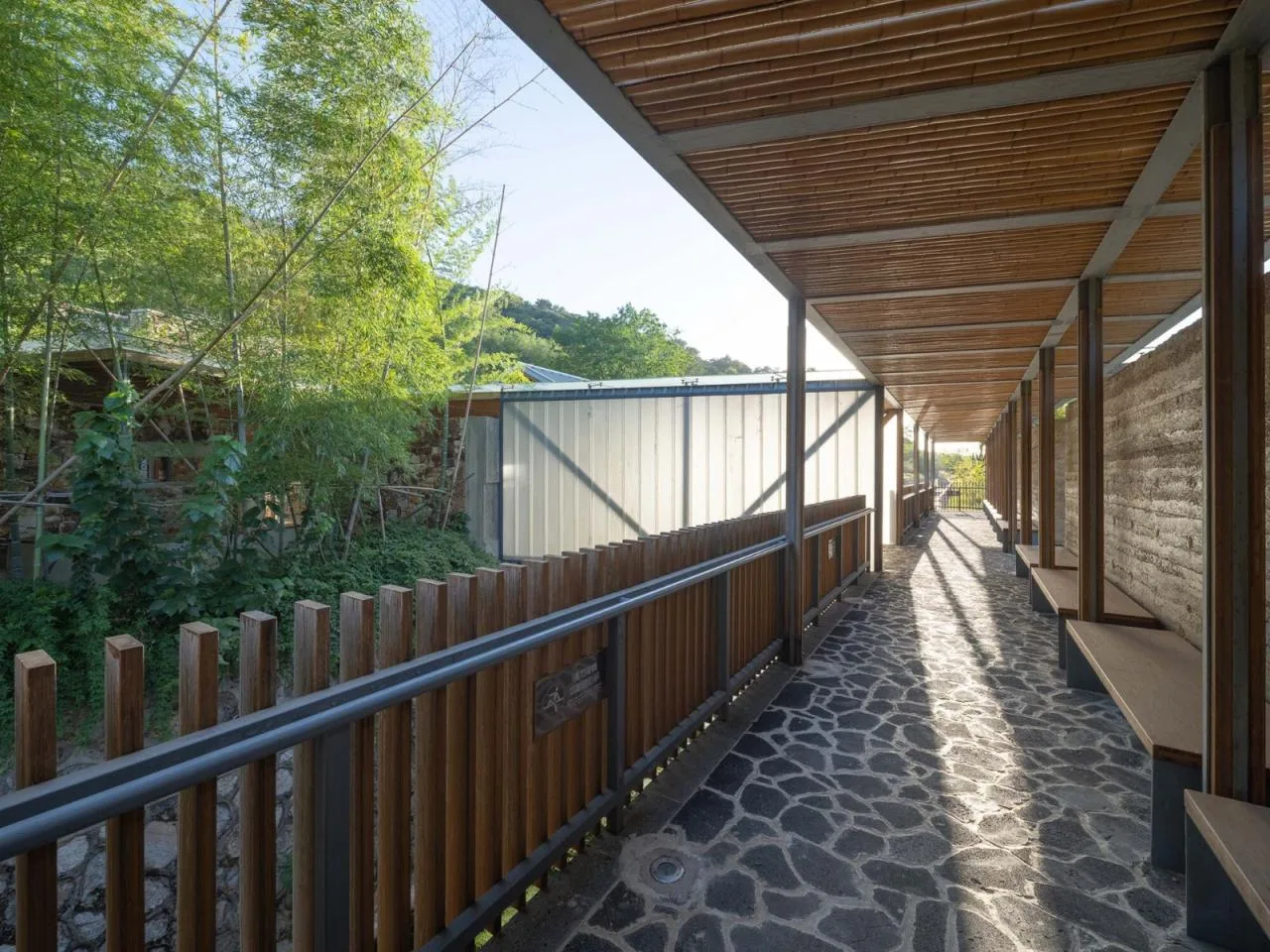
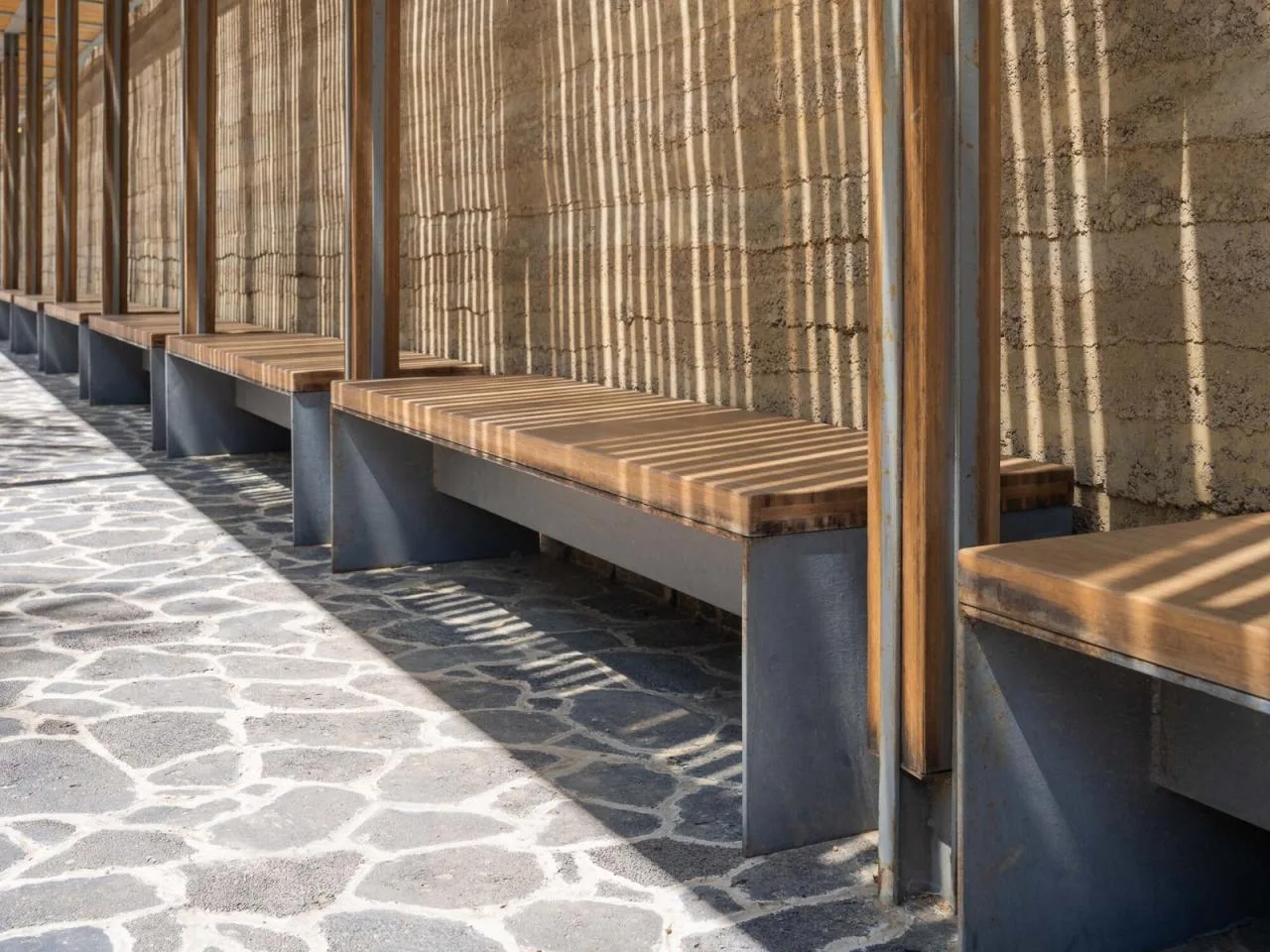
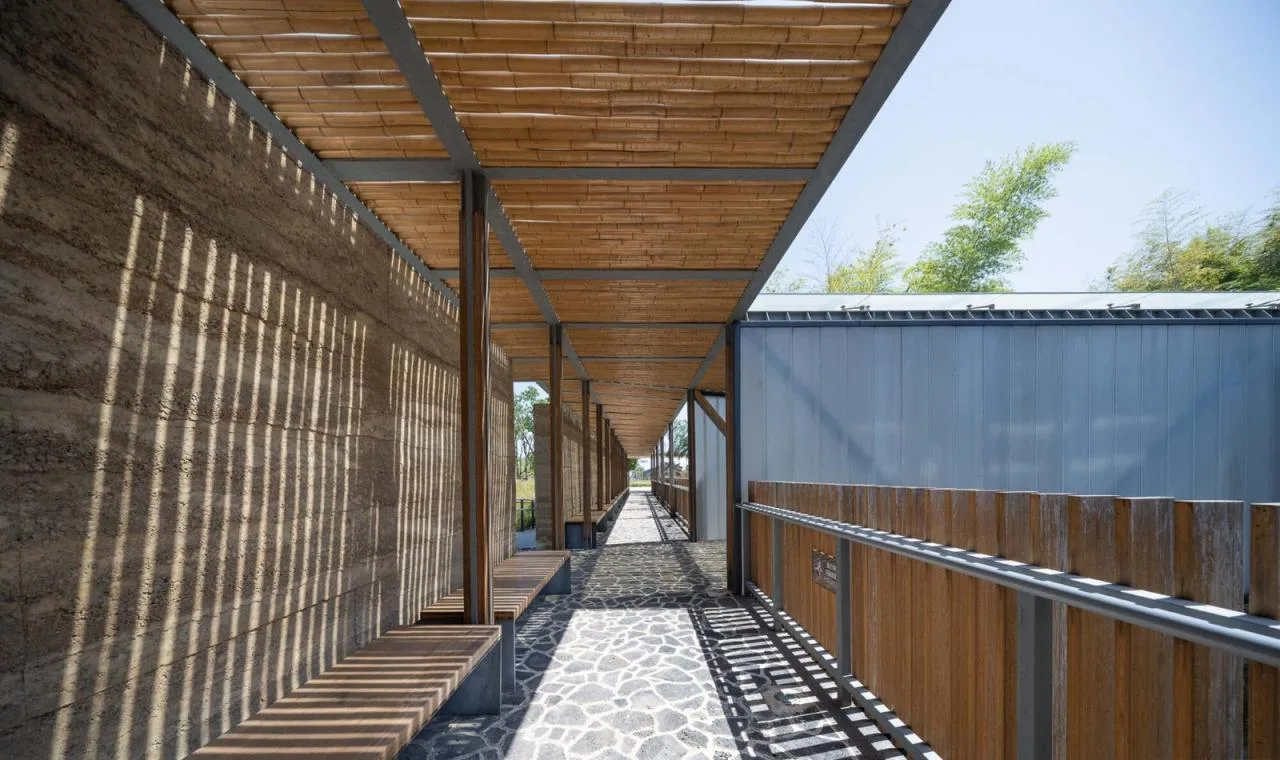
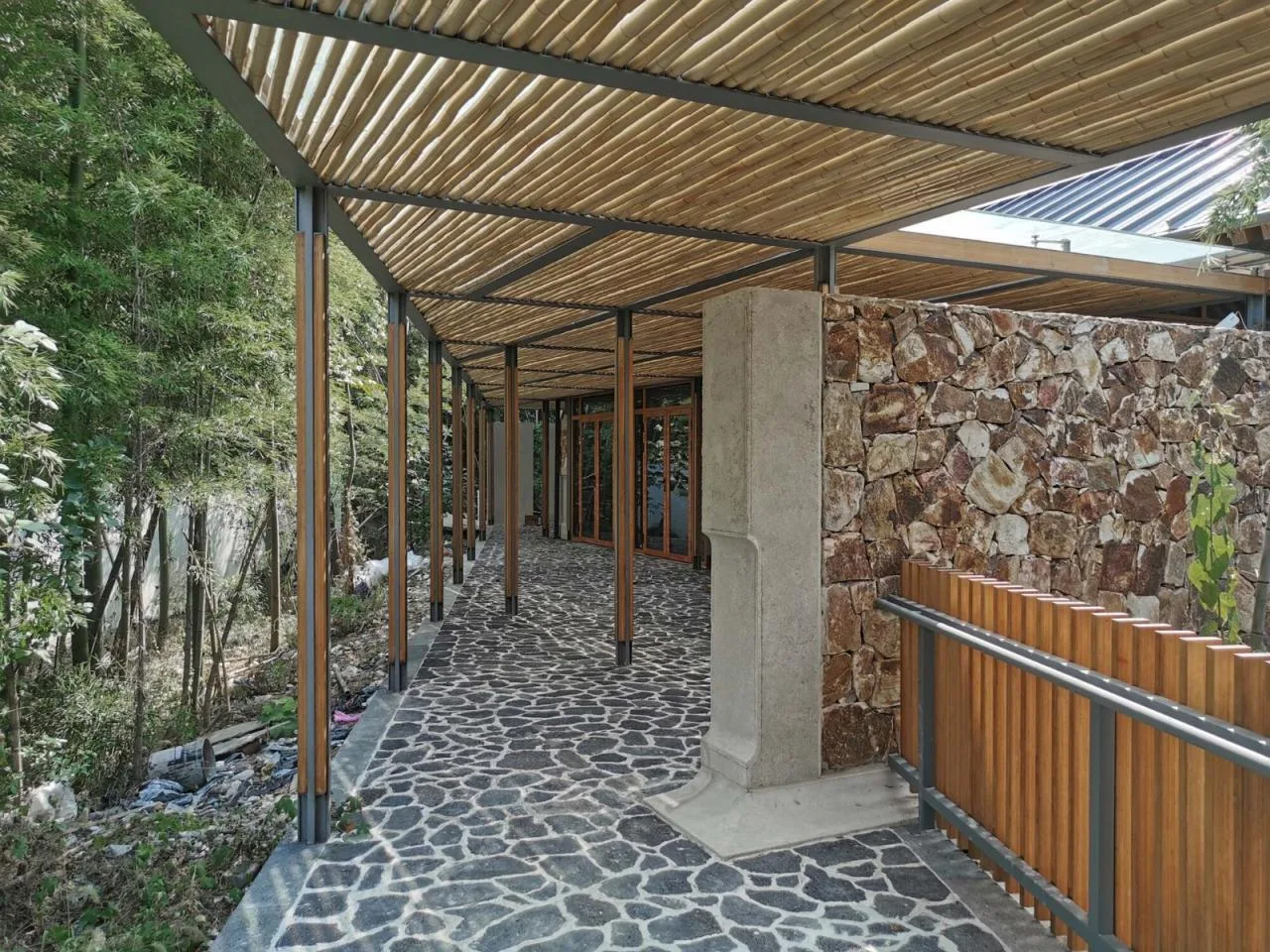
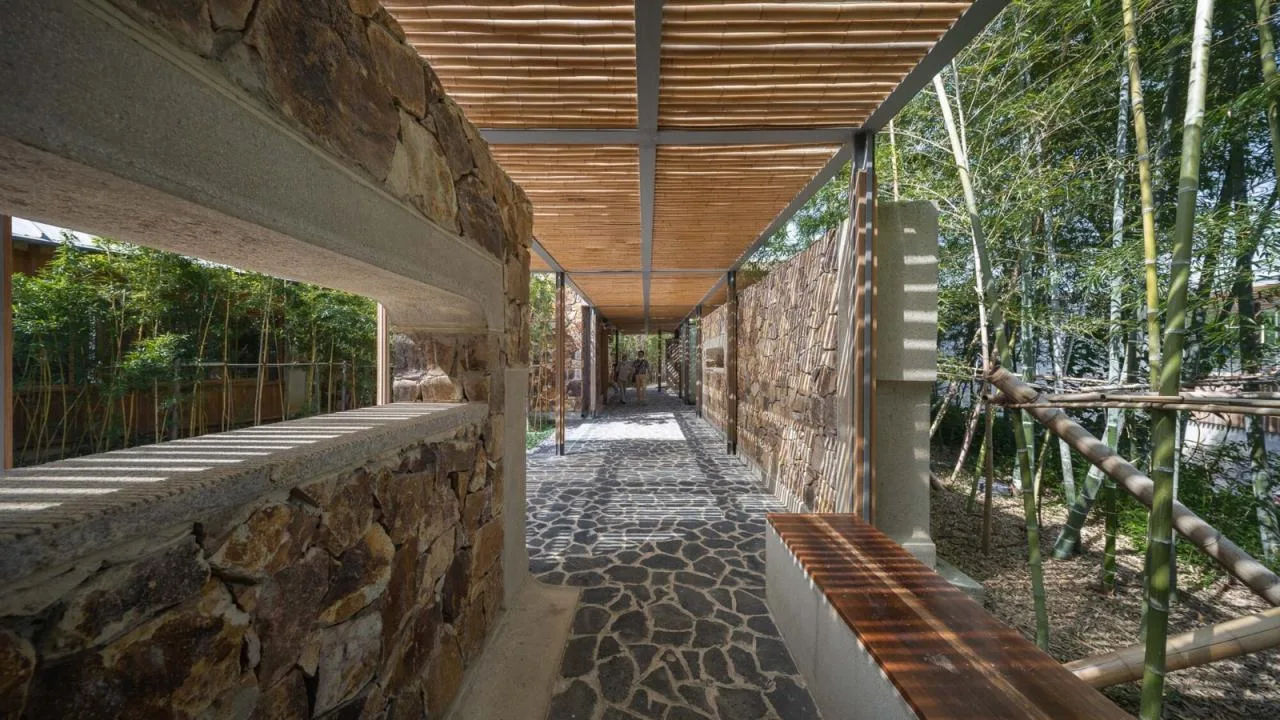
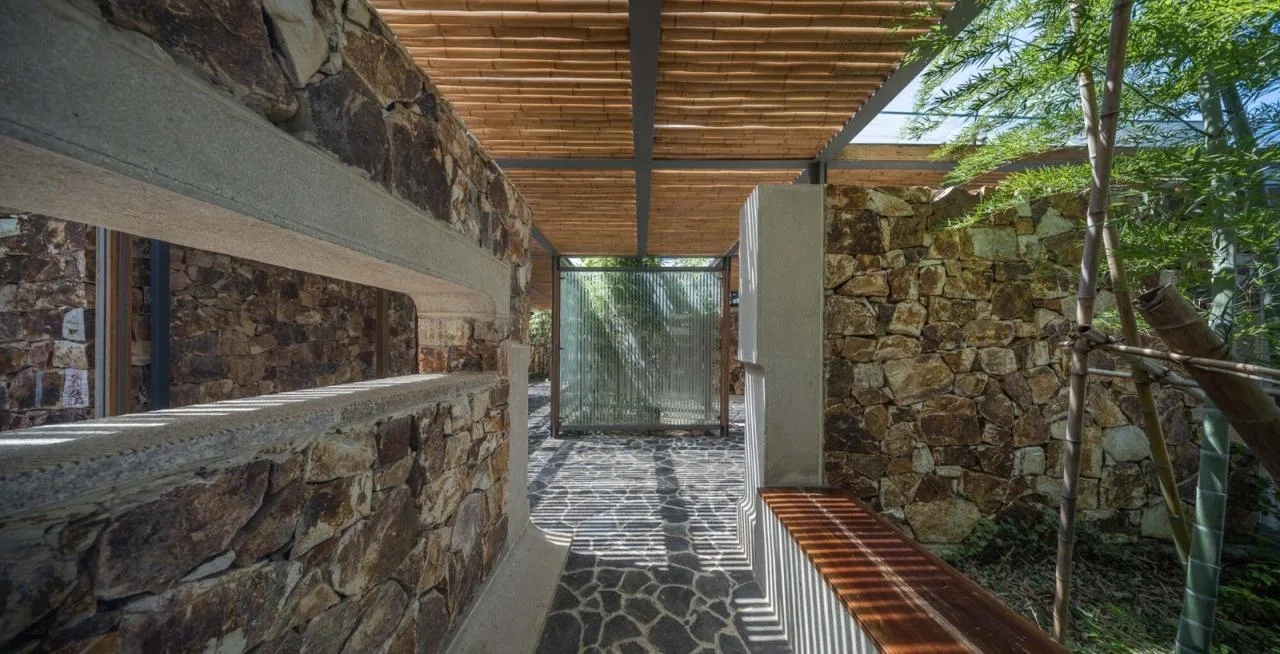
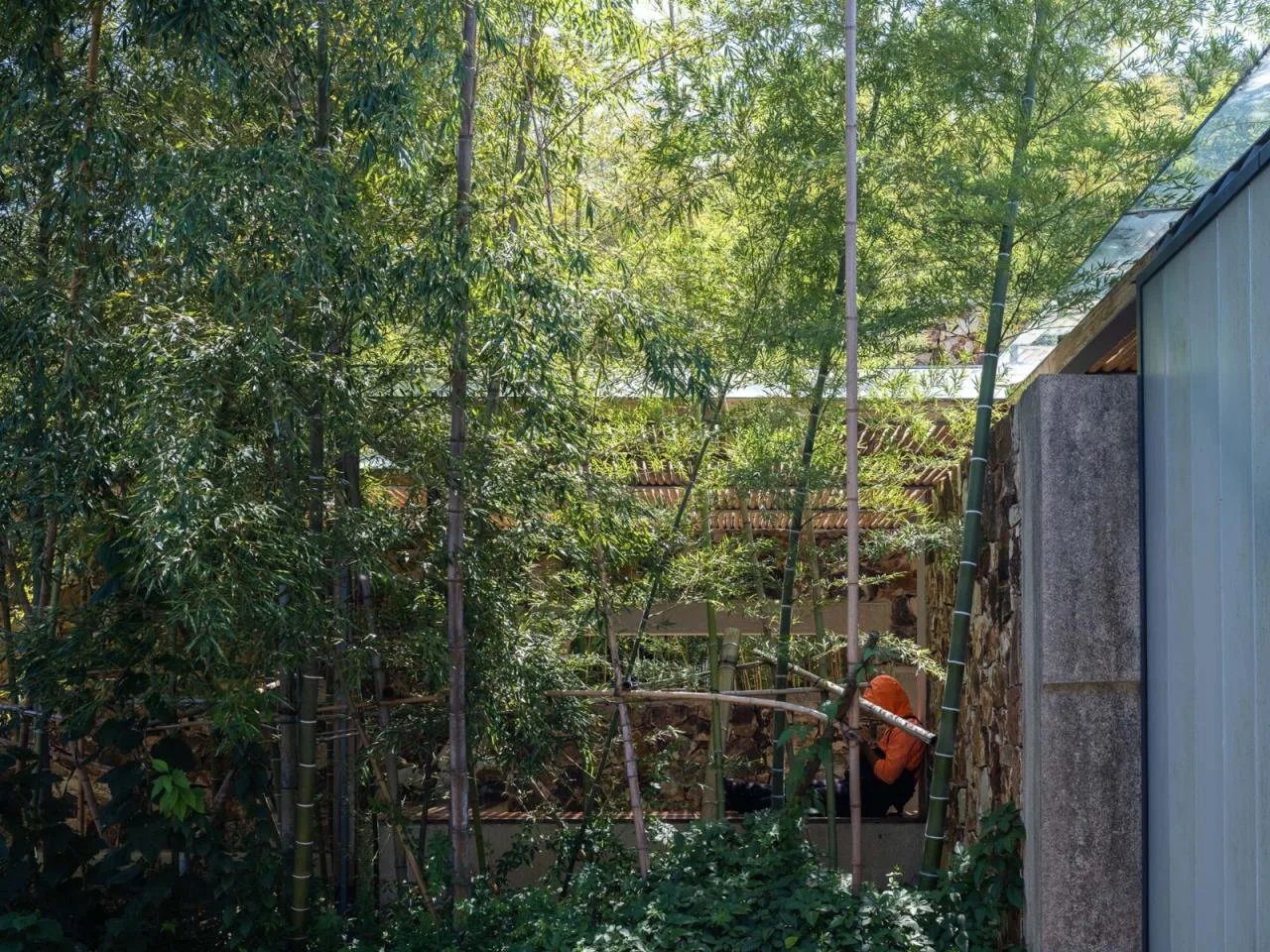
Originally overlooked, the canal element now serves as a central feature, engaging visitors through various designed spaces. At the canal’s transition into a culvert, users can view the entire waterway and the architecture nestled among plants. Alongside the canal, a steel corridor shelters a row of benches against a long earth wall, turning the canal into an observatory. On the opposite bank, preserved bamboo groves host corner benches, inviting visitors to rest or nap amidst nature’s comfort.
A lantern-shaped corridor bridge crosses the canal, echoing the earlier management building that spanned this waterway. Constructed from steel and U-shaped glass, it blurs spatial and directional cues, making crossing feel like entering an unfamiliar realm. This secretive atmosphere recalls the initial impression of discovering the hidden gully, offering future visitors a captivating, layered experience.
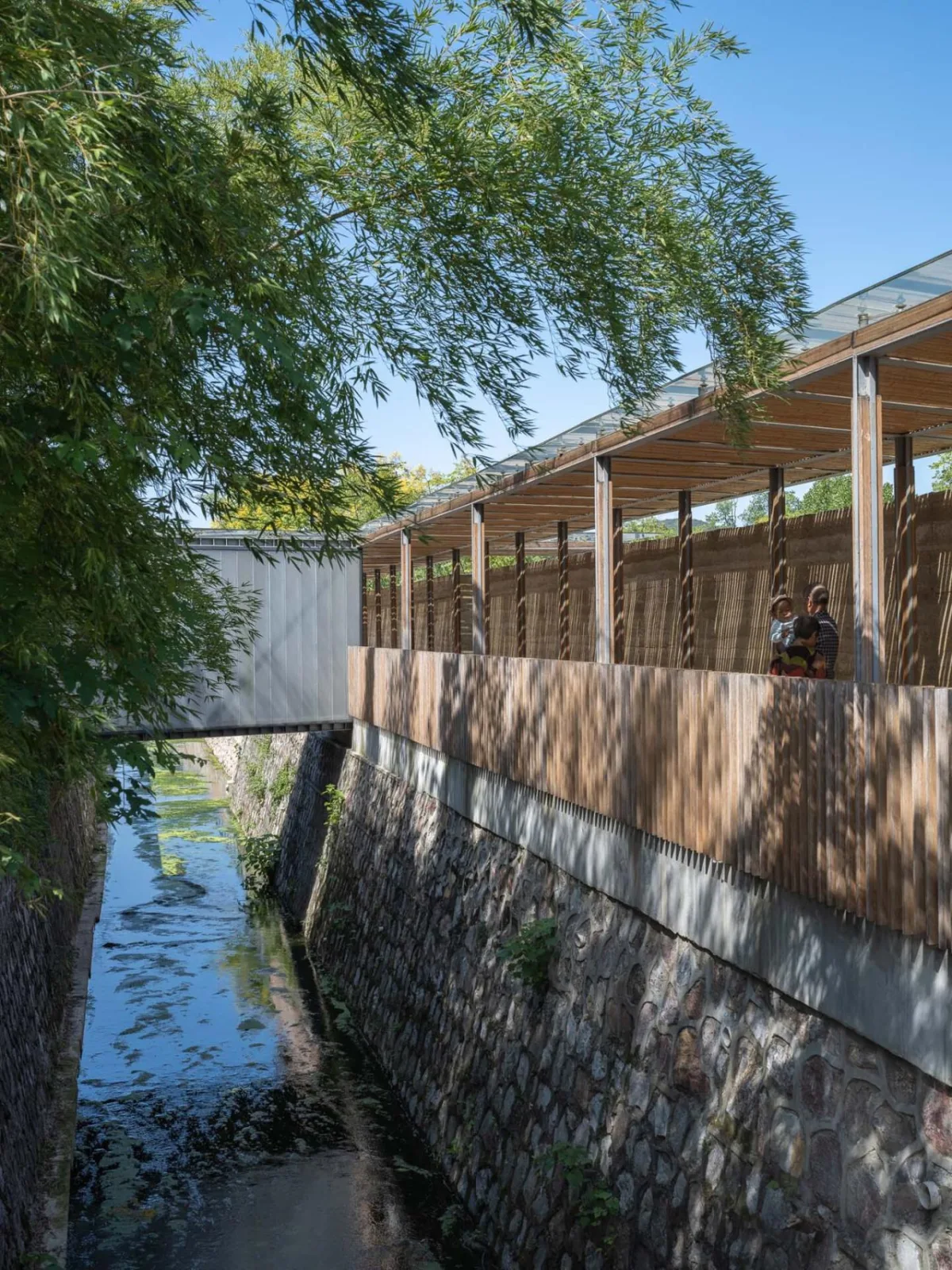
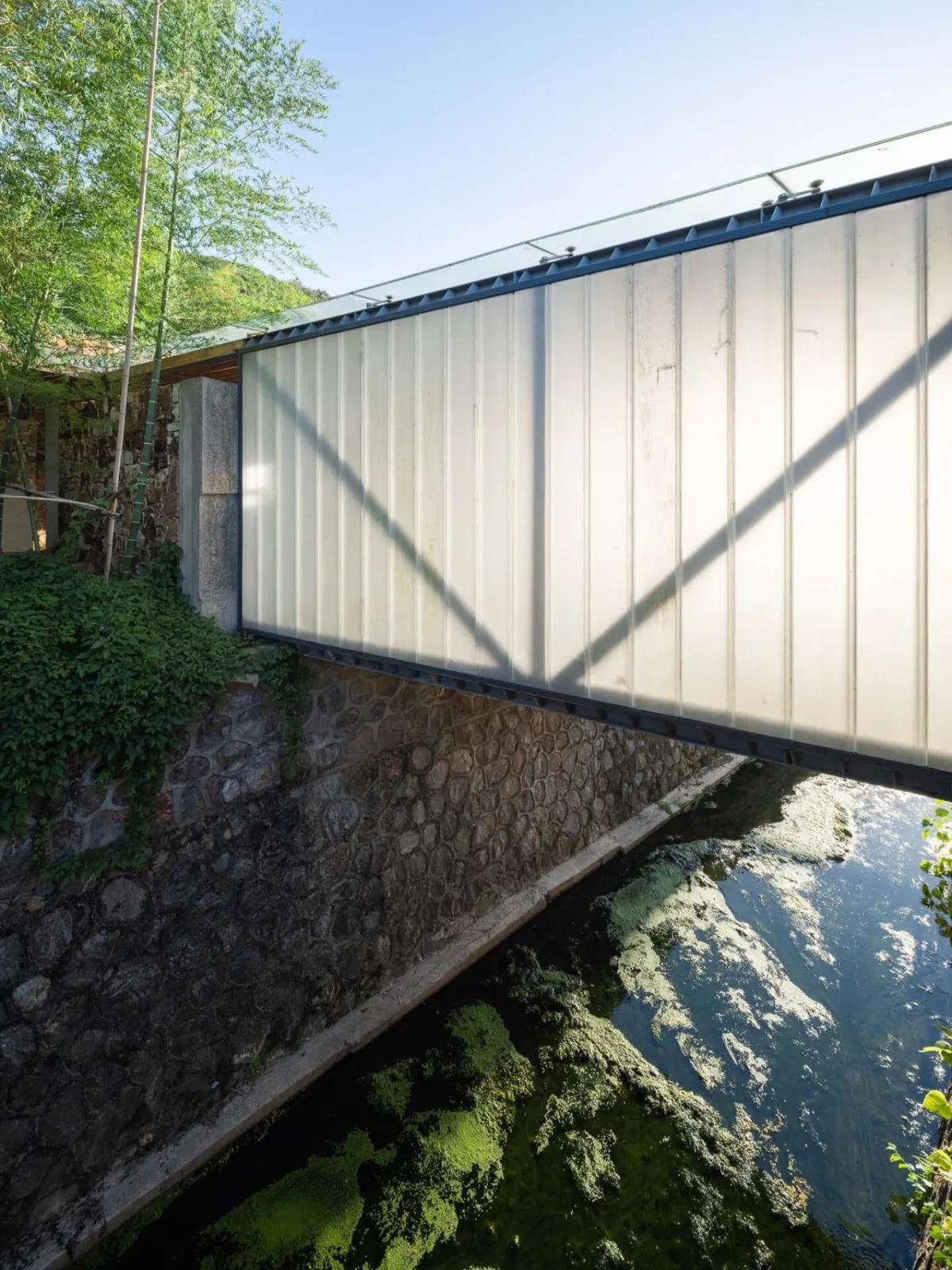
Dividing the space into smaller sections encourages visitors to linger and explore. Walls play a vital role in shaping this experience by providing both separation and connection between architectural elements, bamboo forests, and water channels.
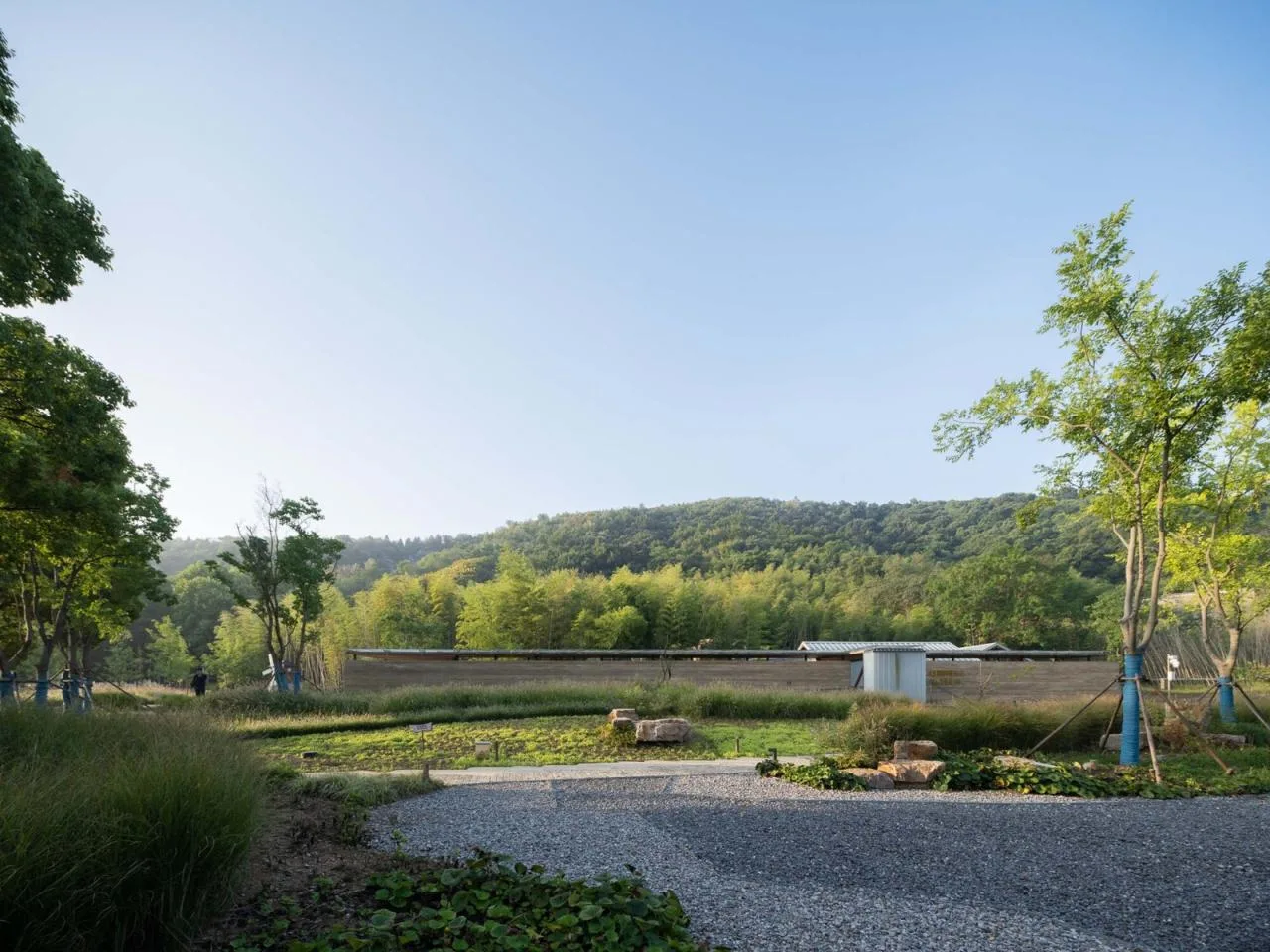
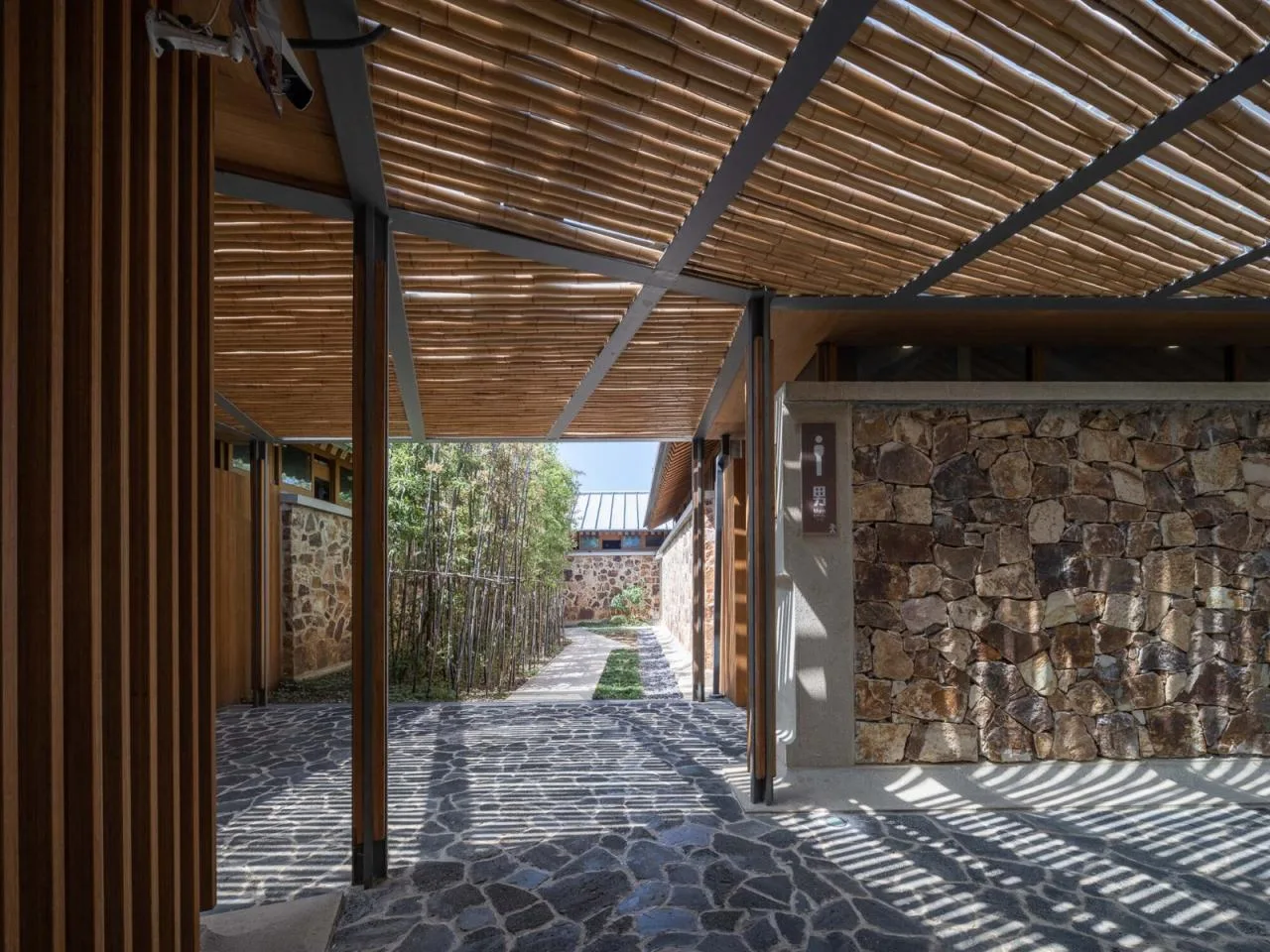
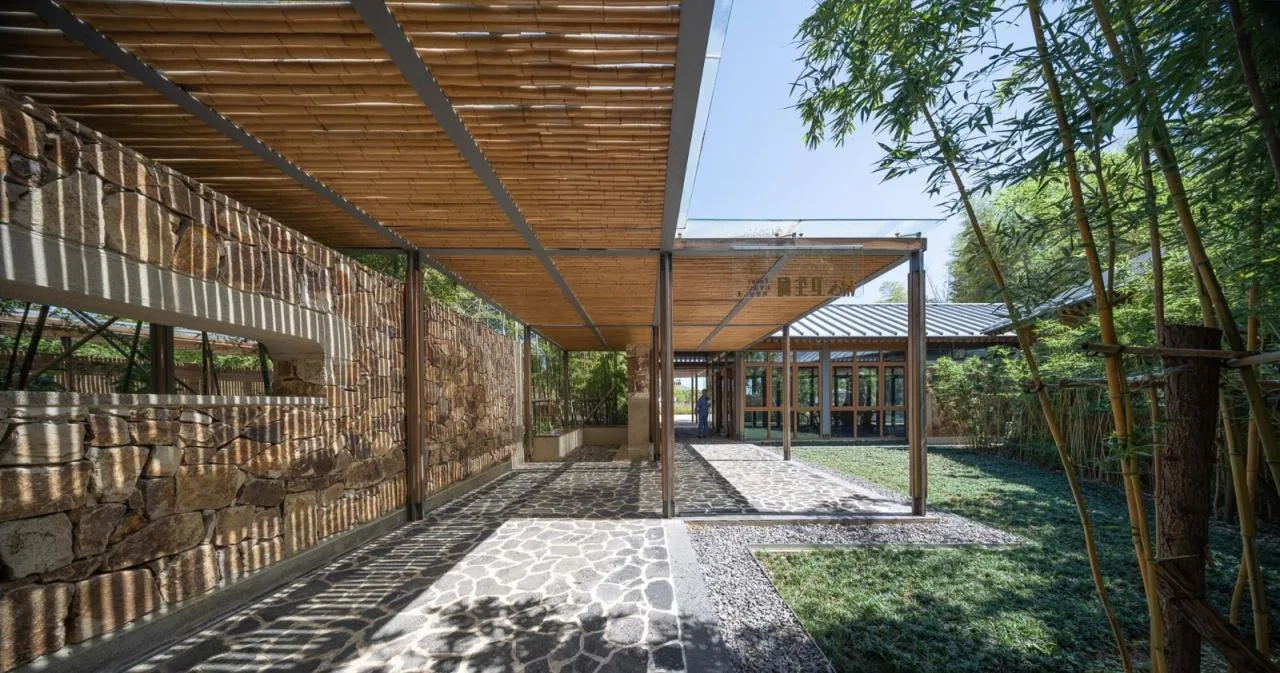
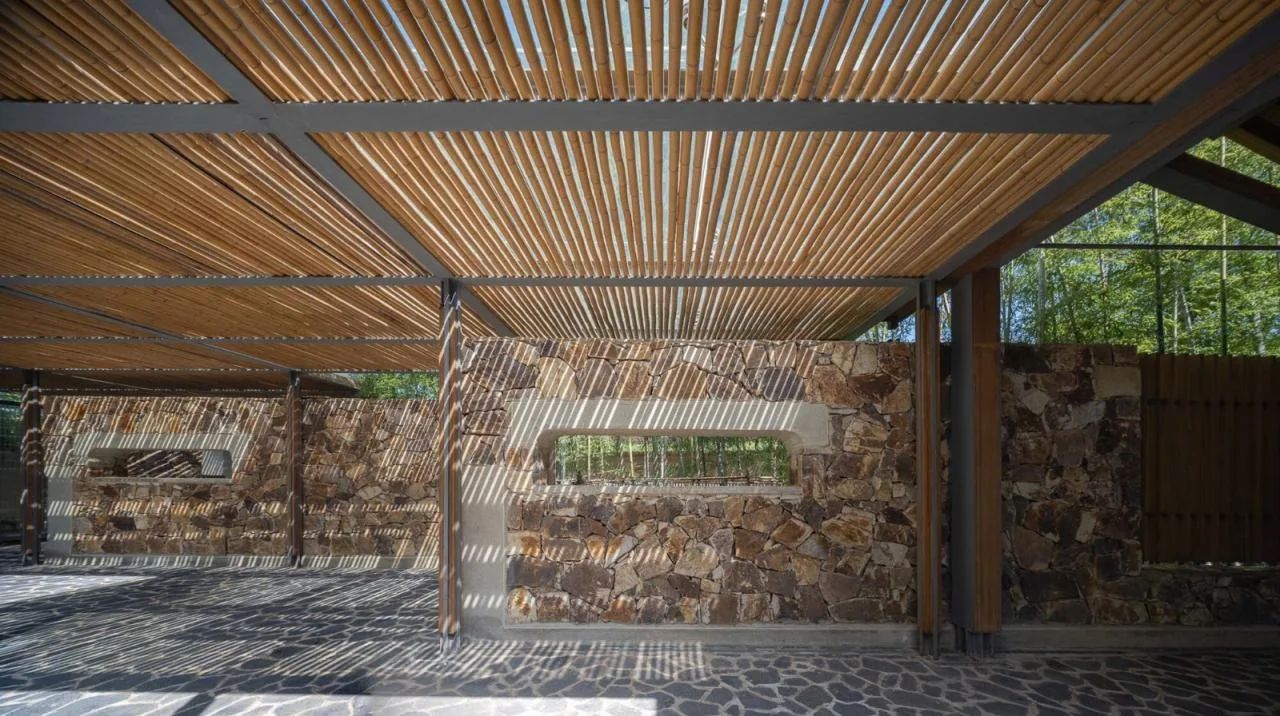
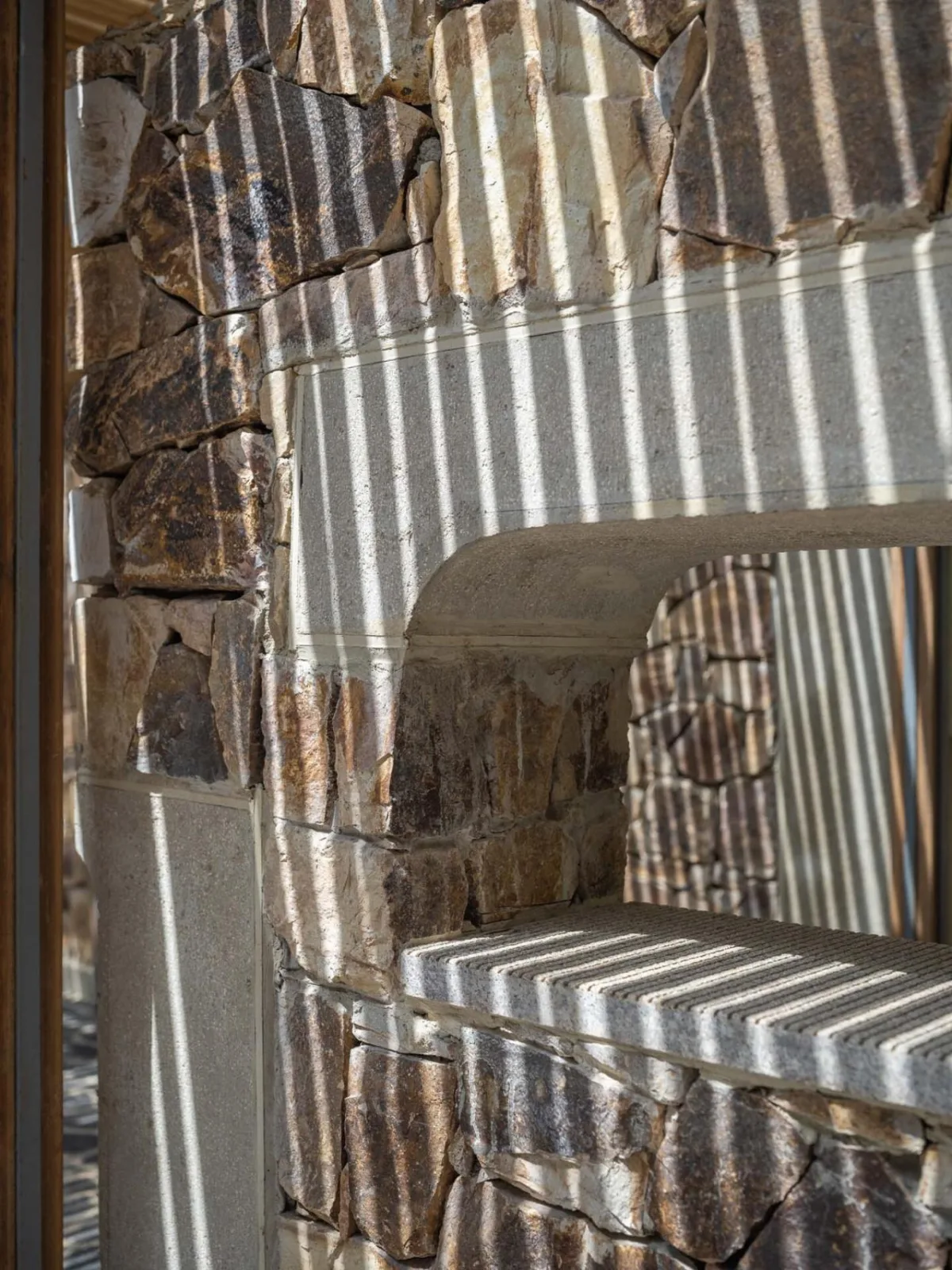
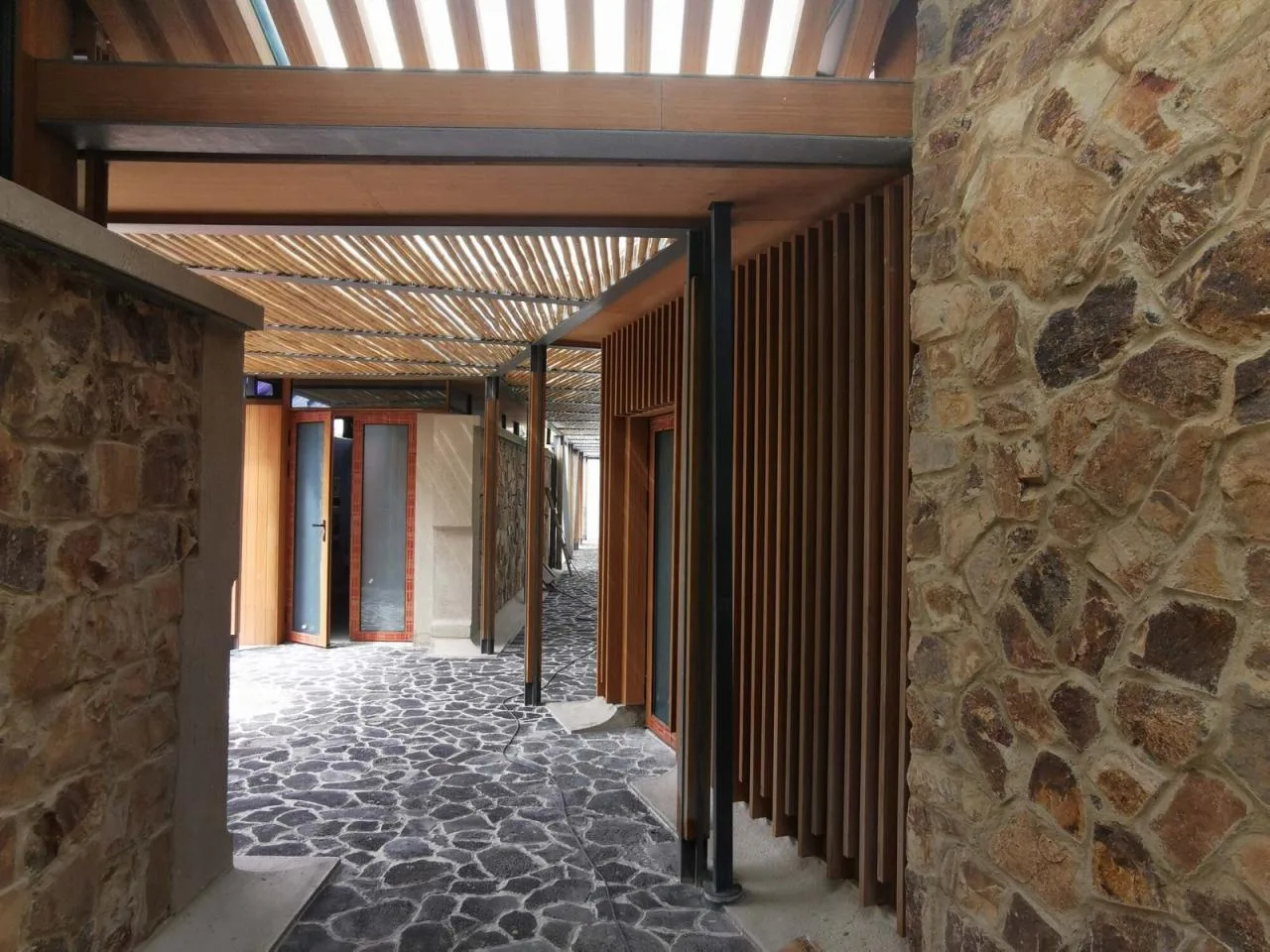
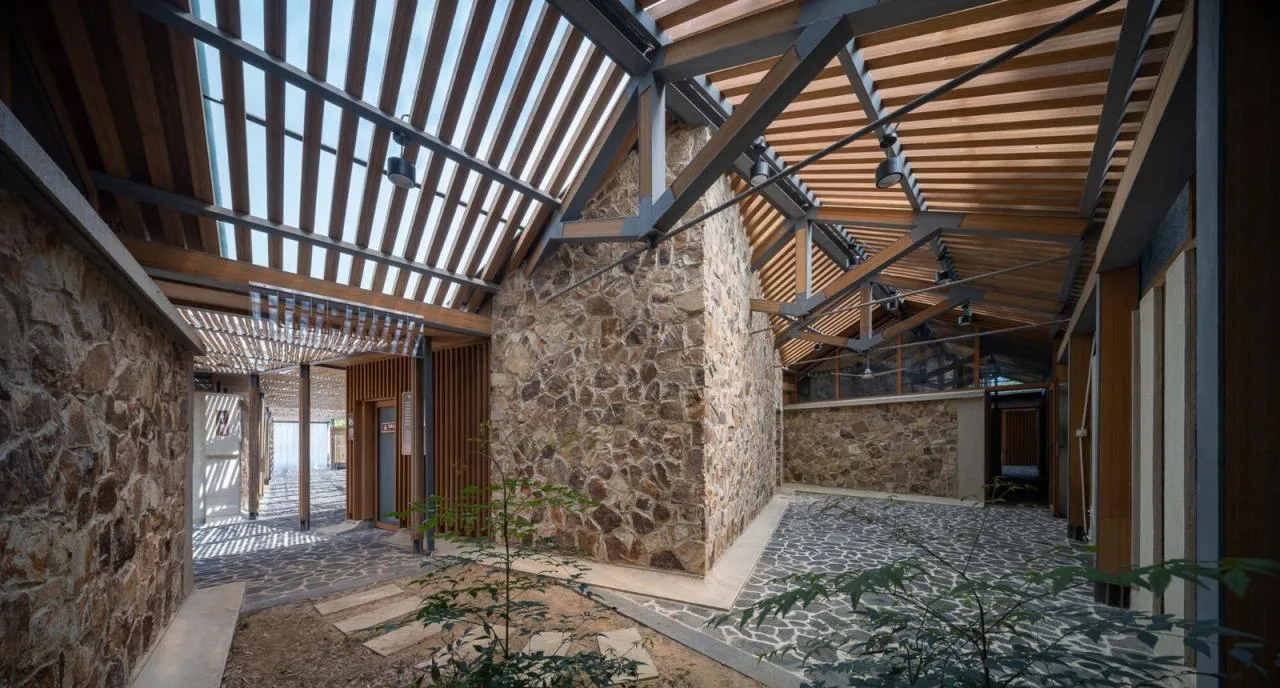
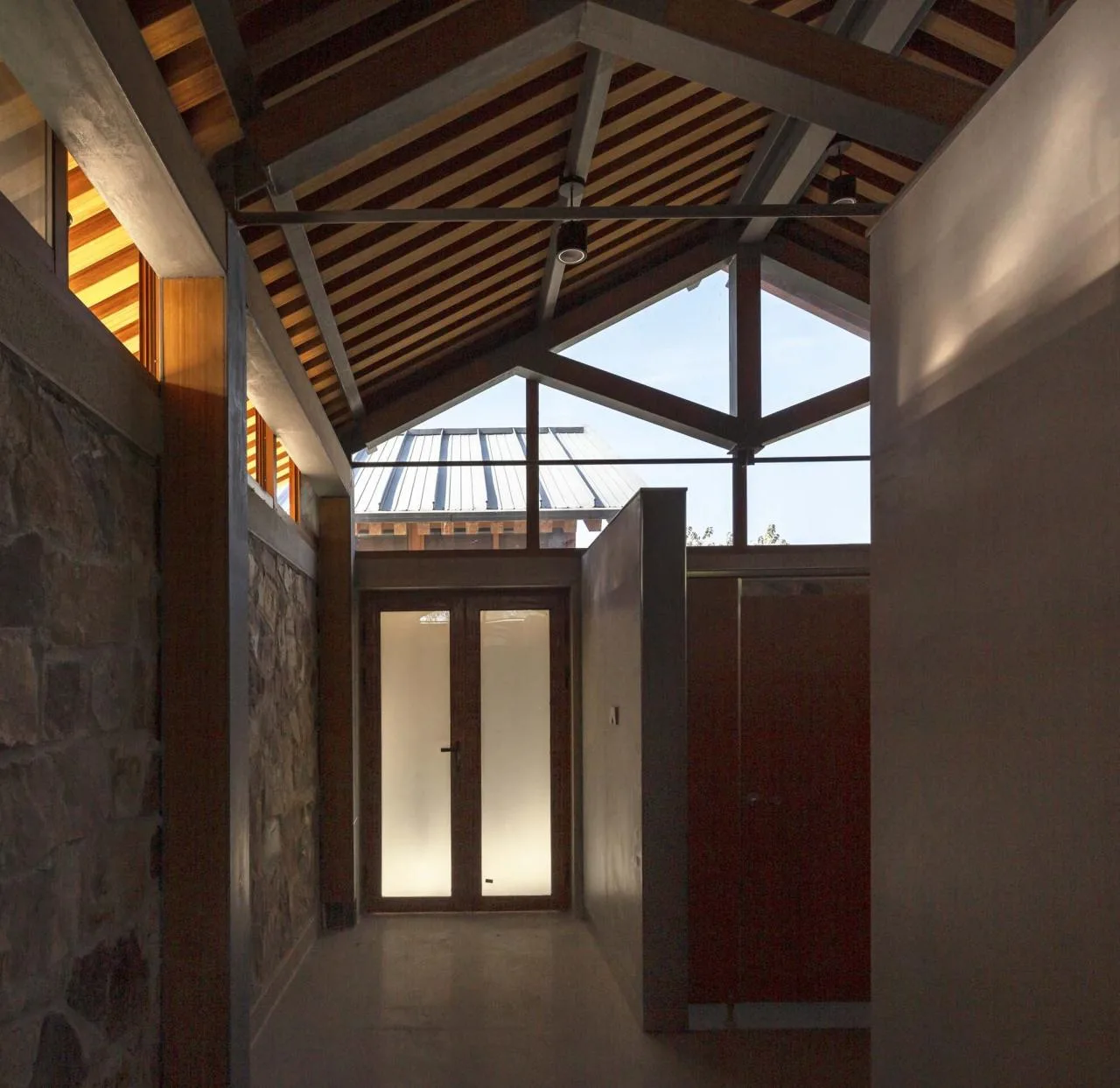
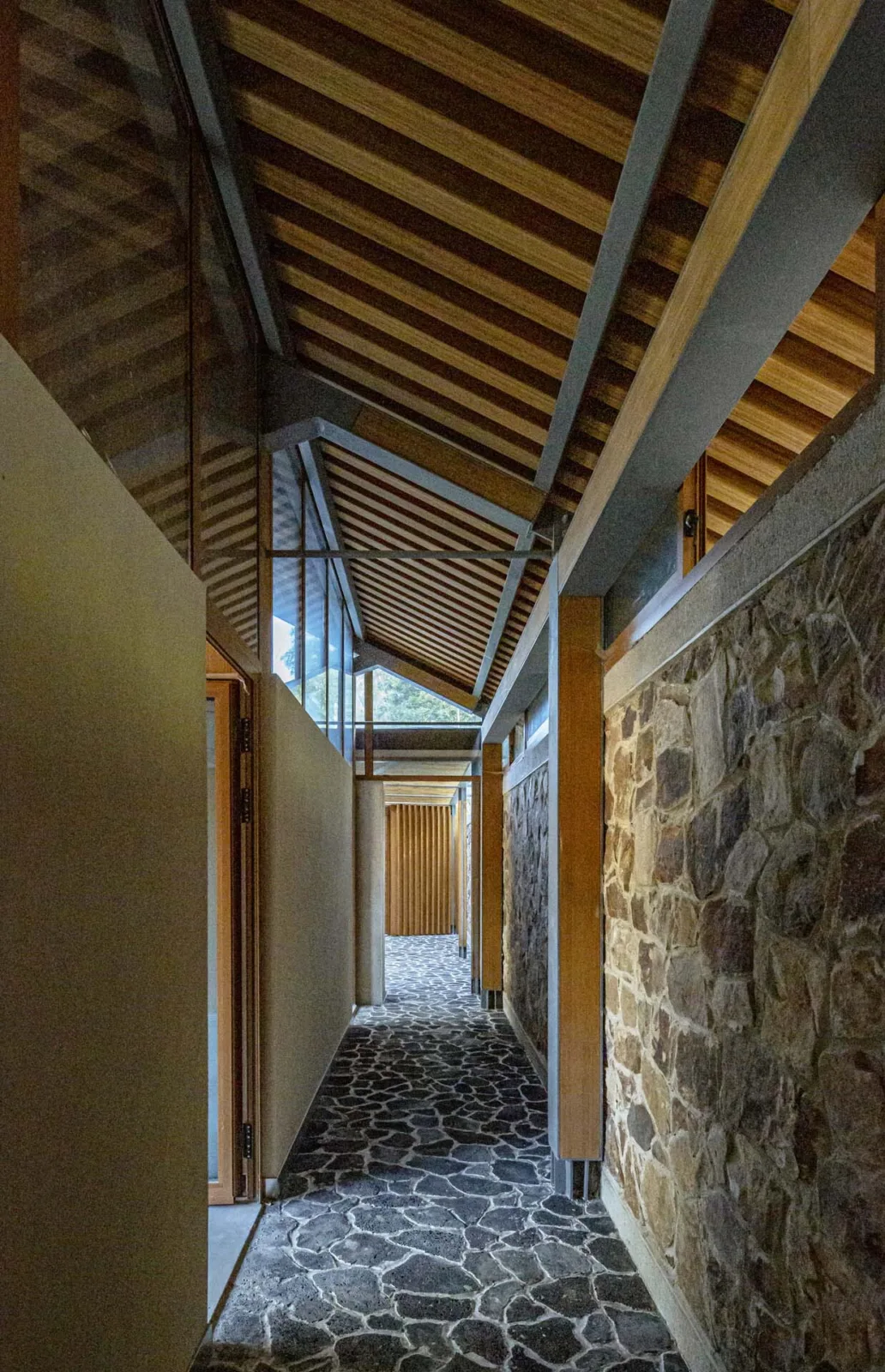
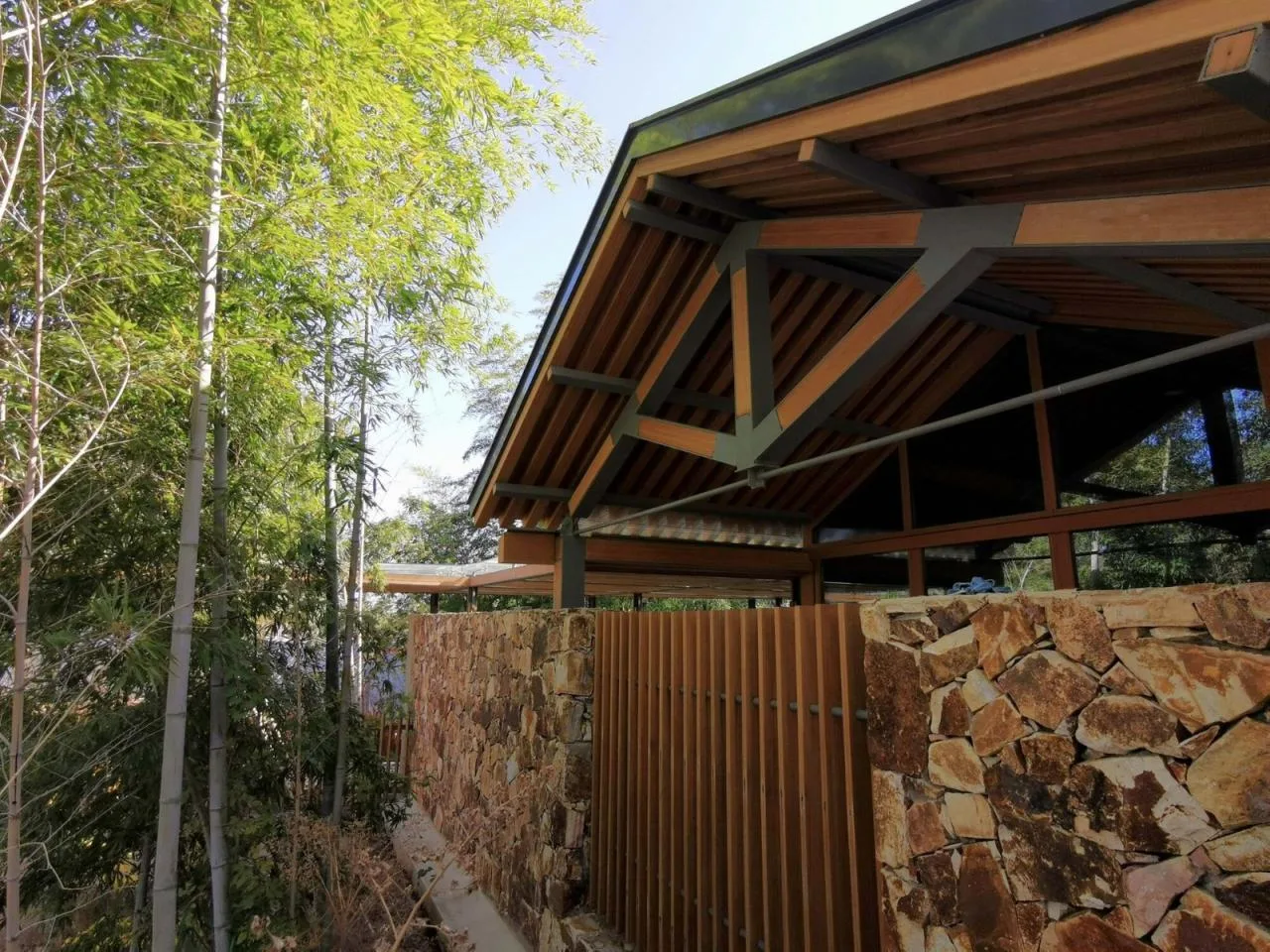
A long rammed earth wall to the north separates the site from the busy parking lot and city road, with only a small entrance allowing access. This wall hints at the tranquility and elevation within the site and establishes a strong sense of identity. On the south side, a long rubble wall separates indoor areas from the dense bamboo forest. Vertical spaced windows and gaps between the herringbone roofs allow swaying bamboo shadows to penetrate the interior, integrating nature into the built environment.
Together, these two long walls frame a garden by the bamboo forest and canal at the mountain’s base. The walls vary in length, shape, texture, and transparency, serving as backdrops for plants and canvases for light and shadow play.
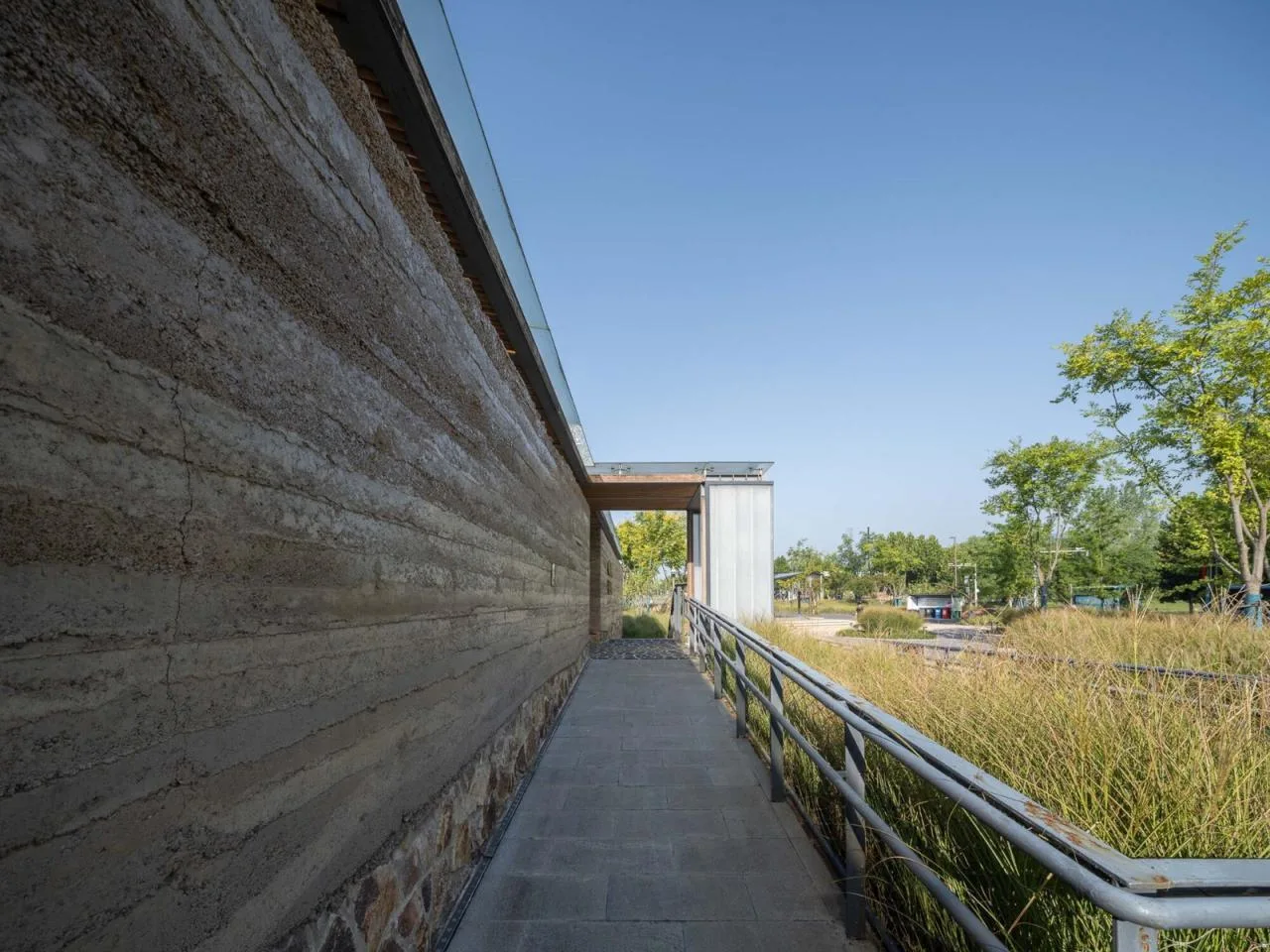
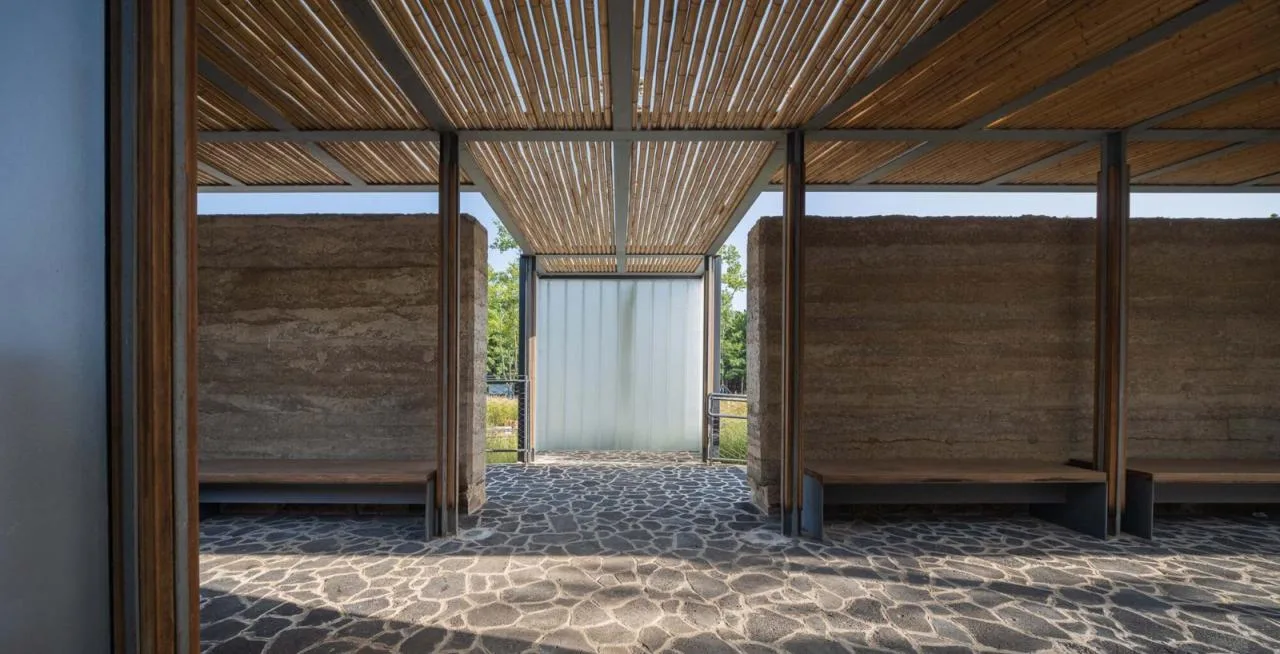
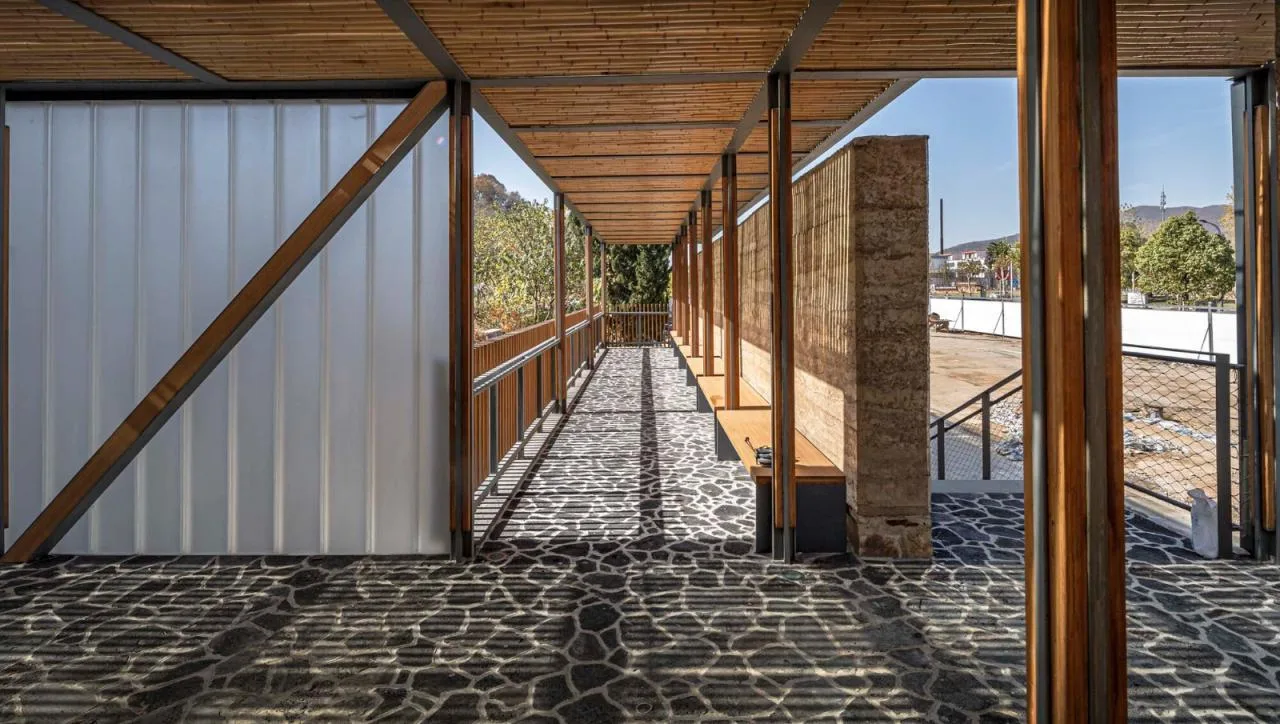
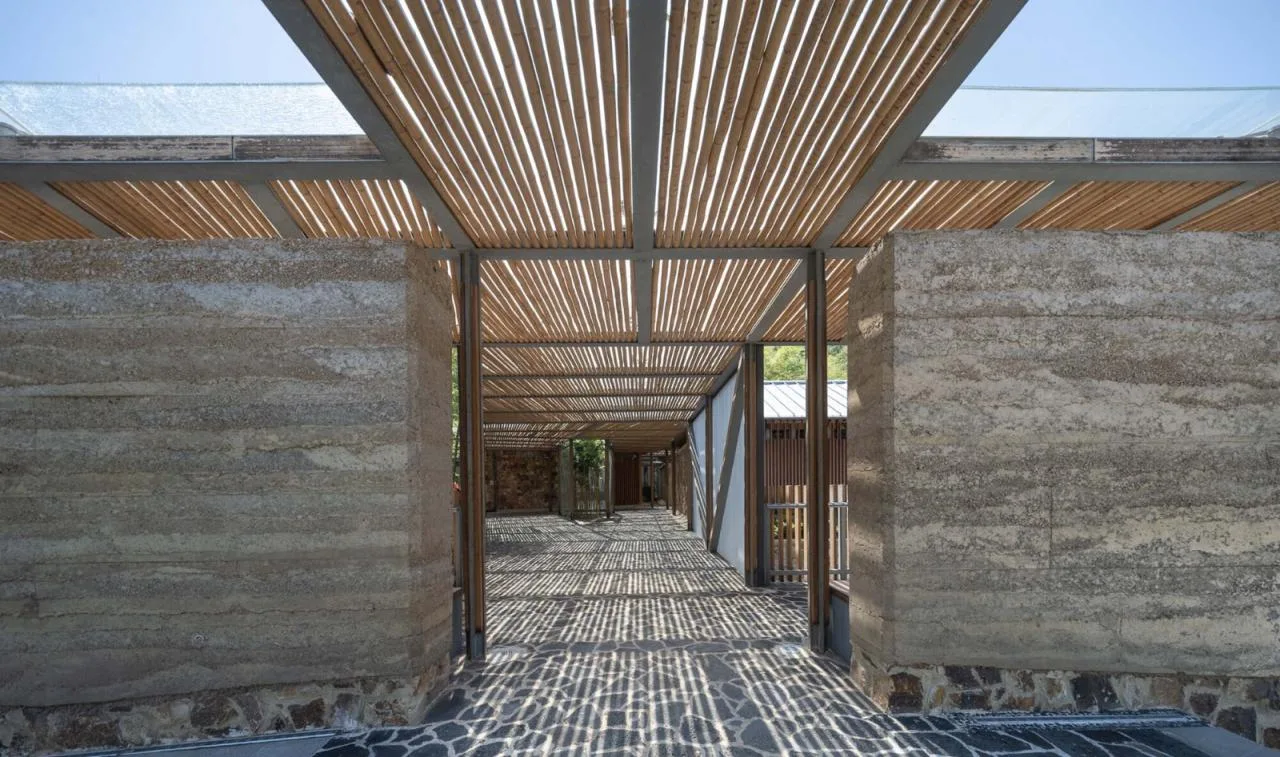
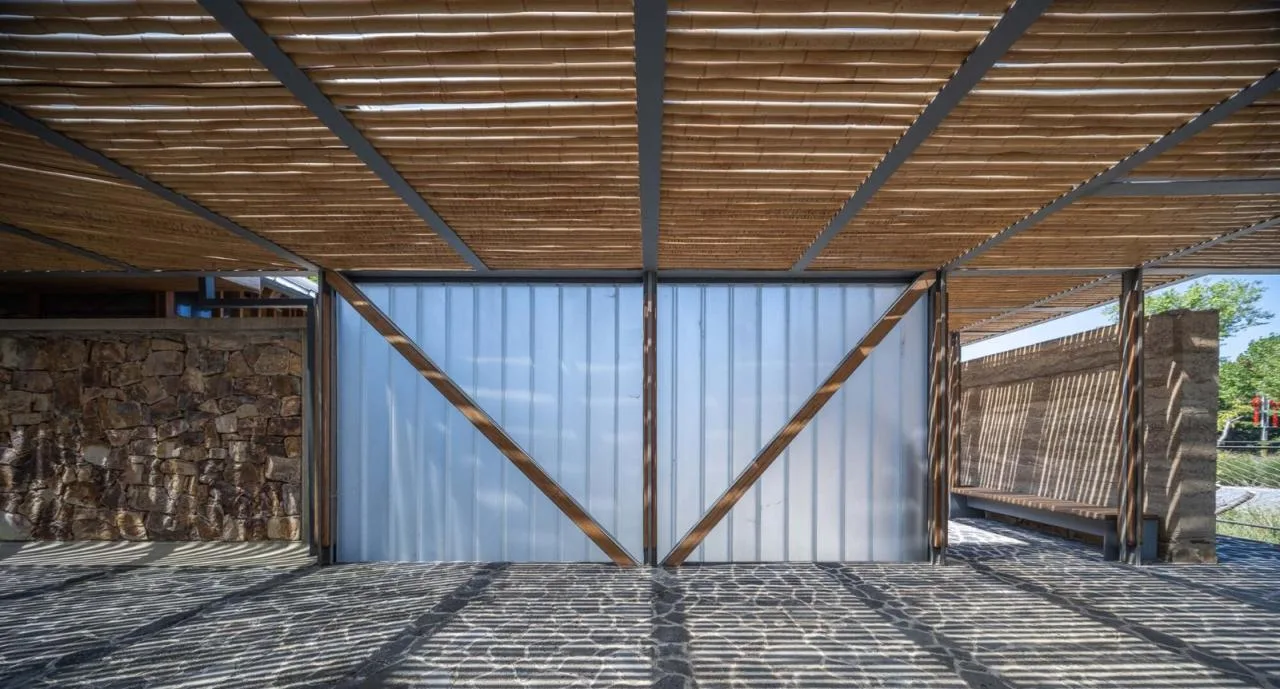
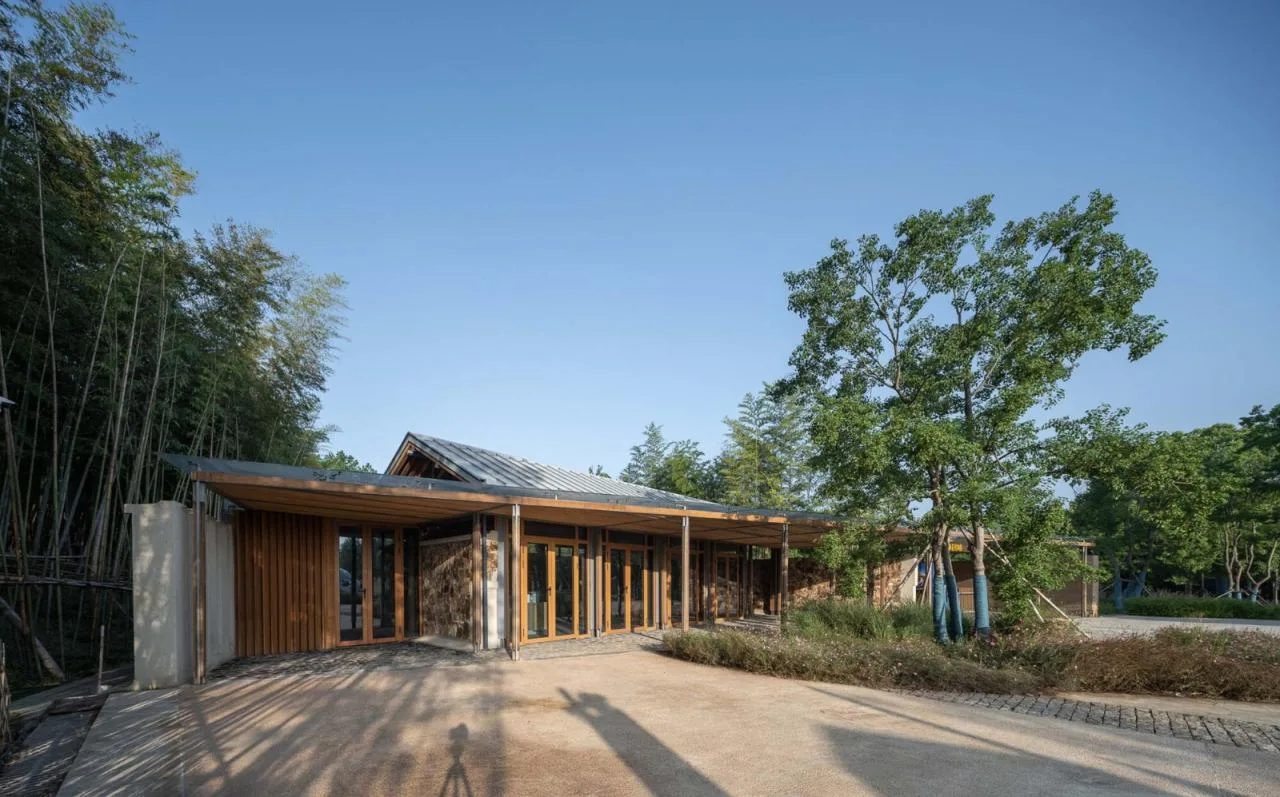
Building construction records local and contemporary context through structure, materials, and craftsmanship. Local construction involves using readily available materials, feasible building methods, and easy maintenance, fostering a deep connection between people and place beyond appearances.
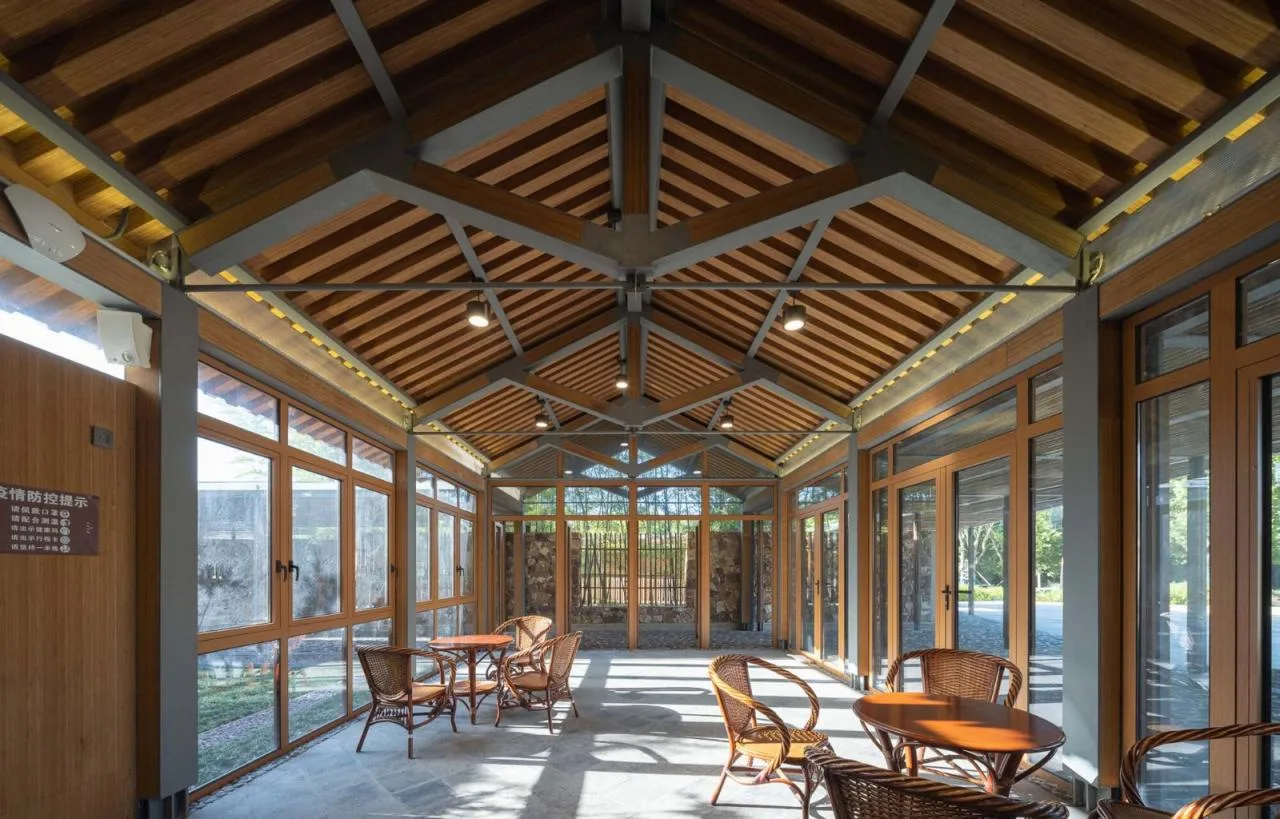
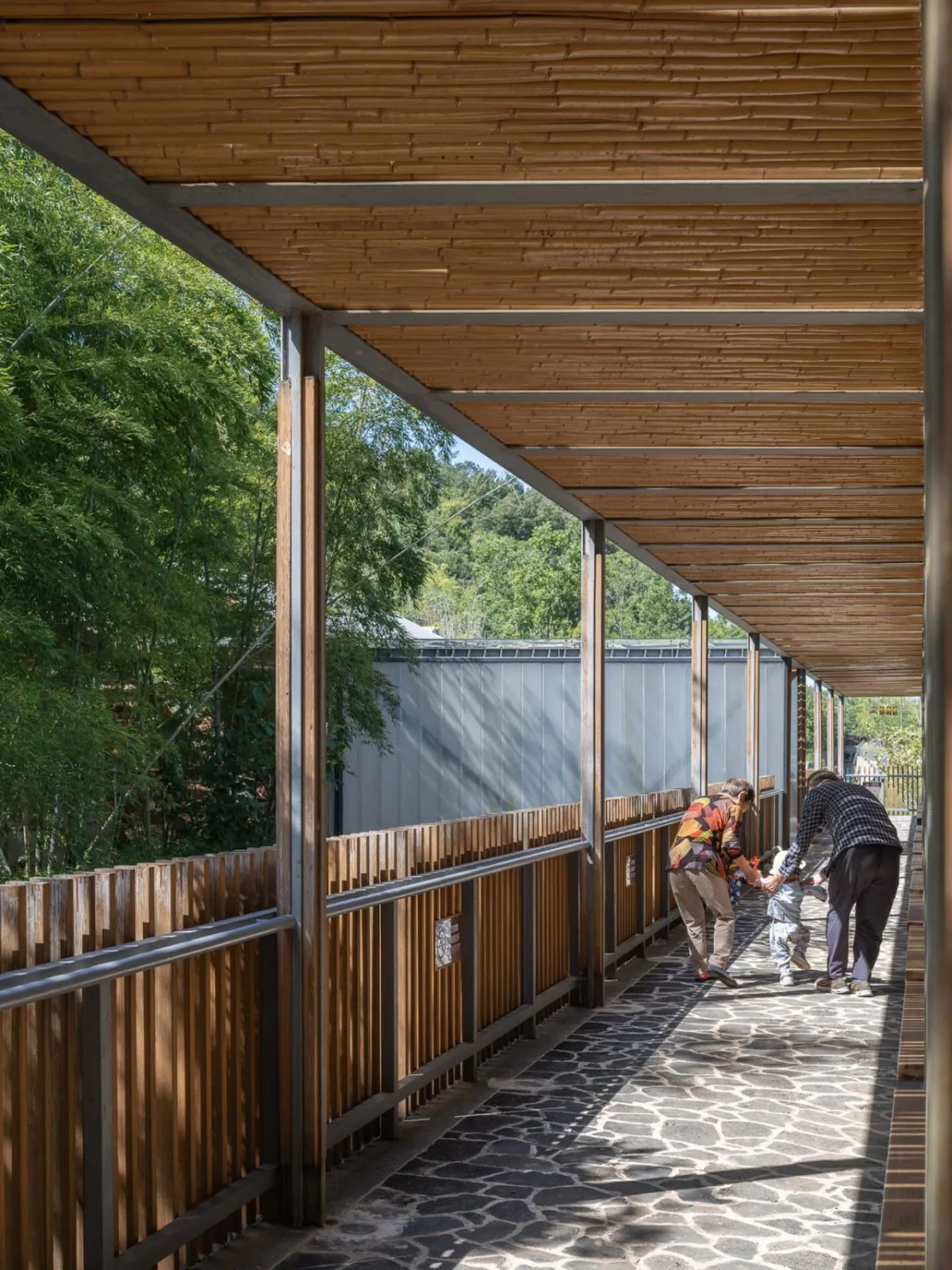
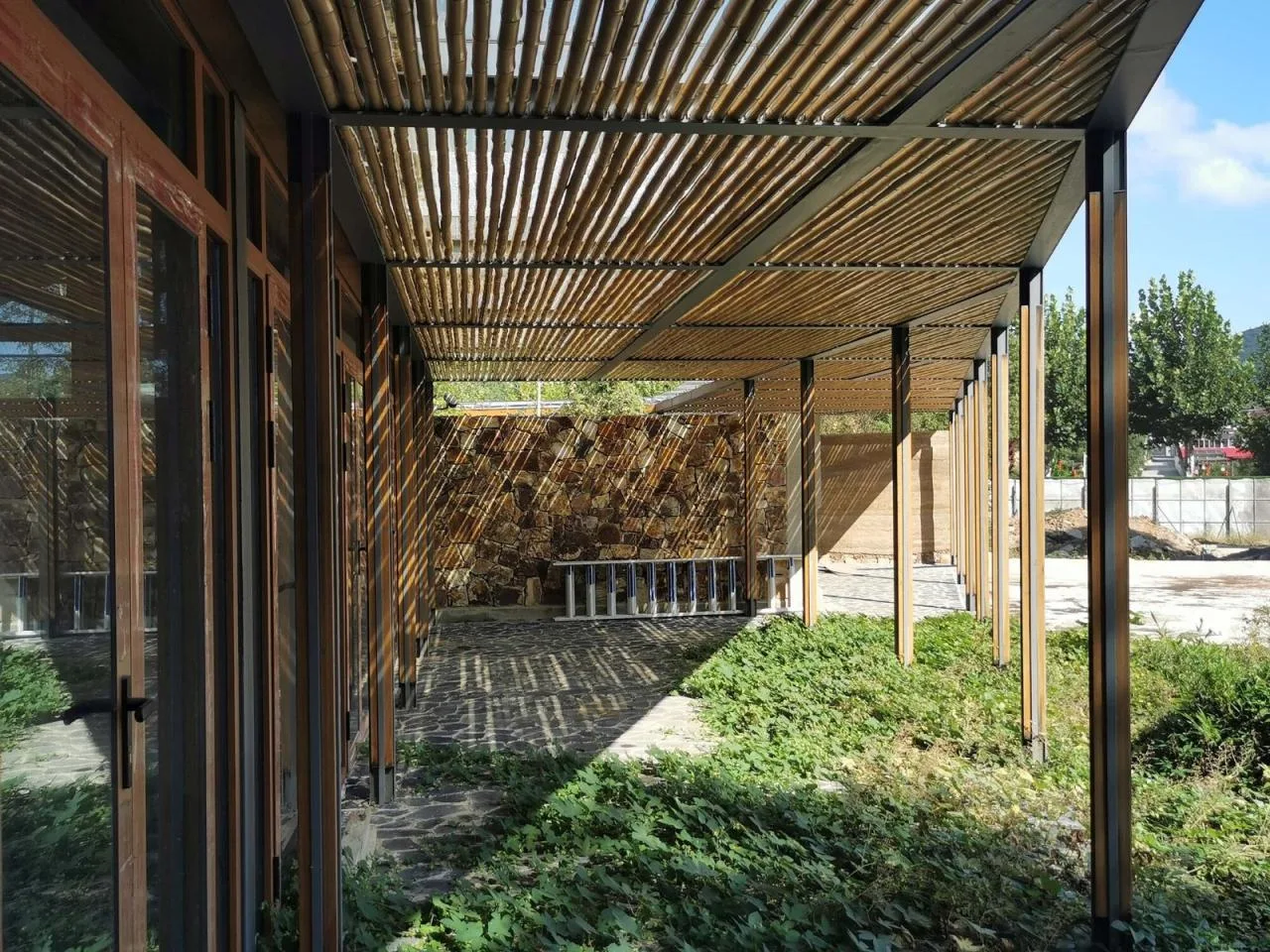
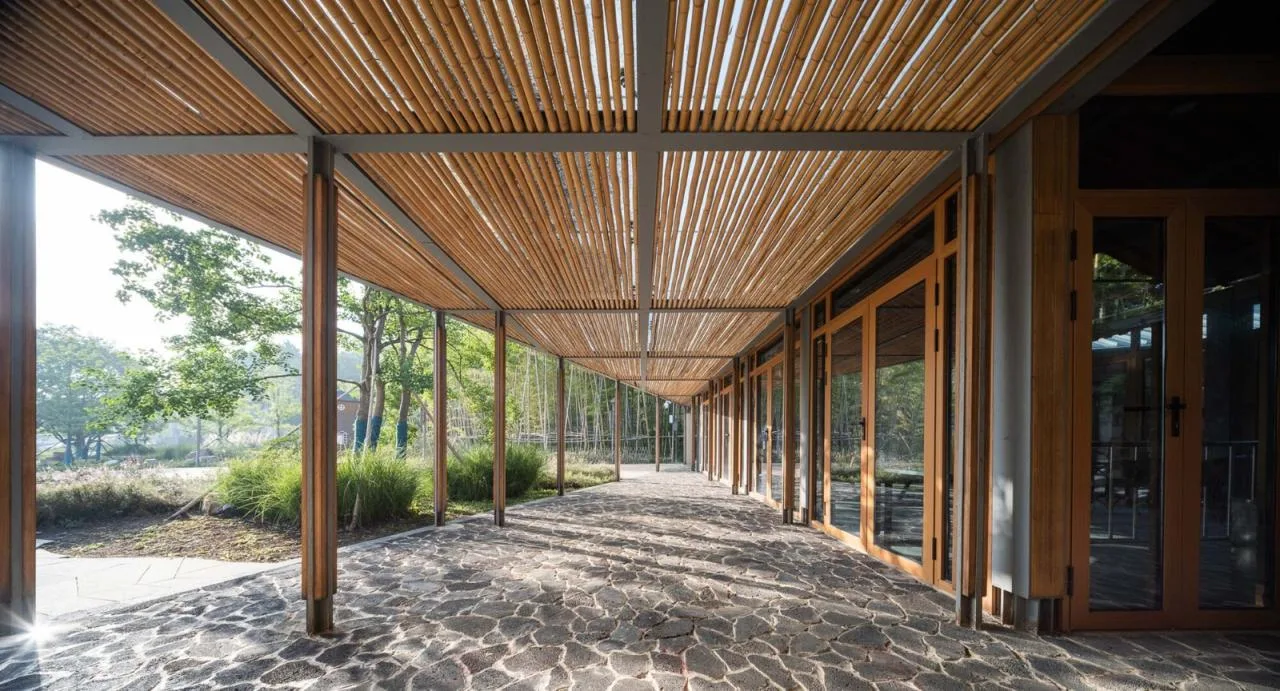
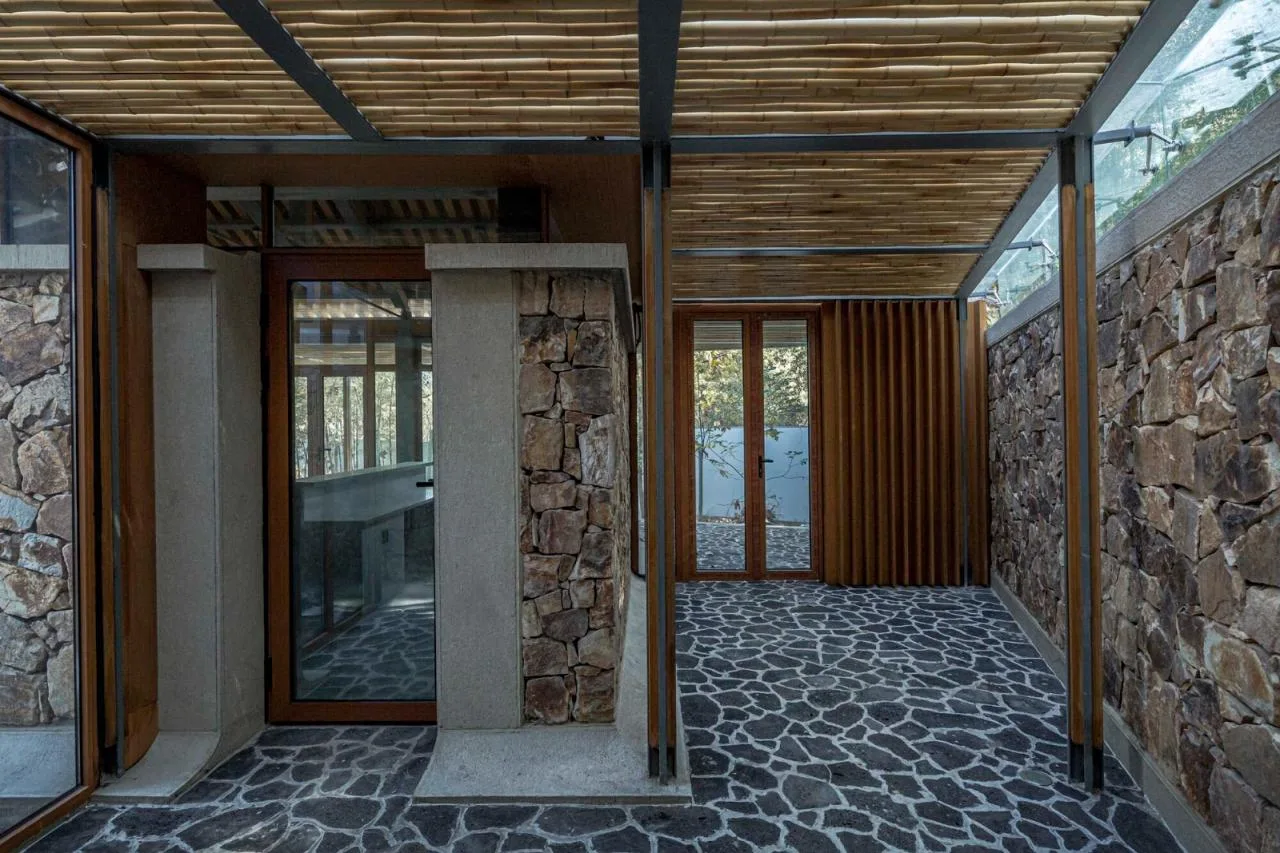
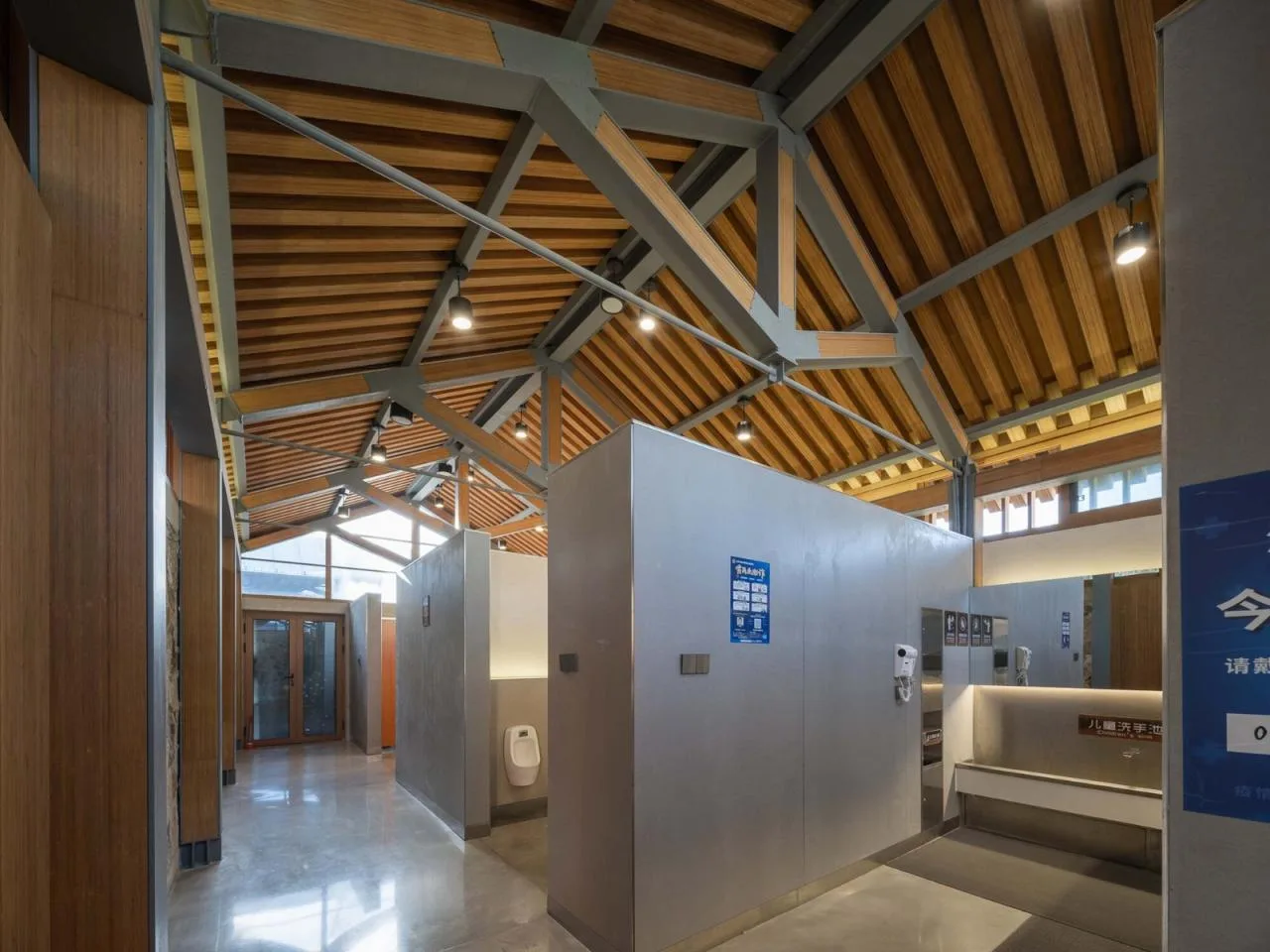
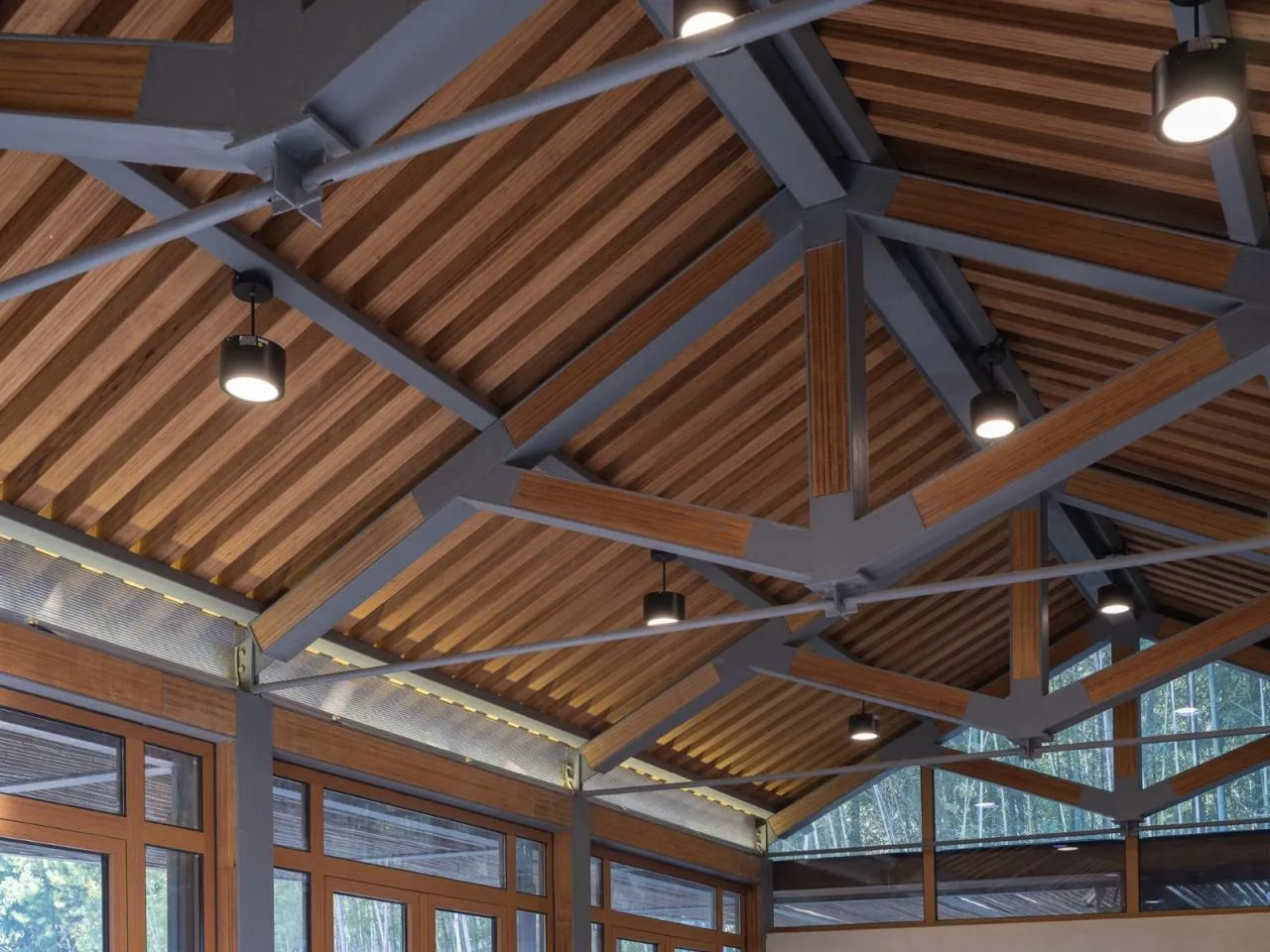
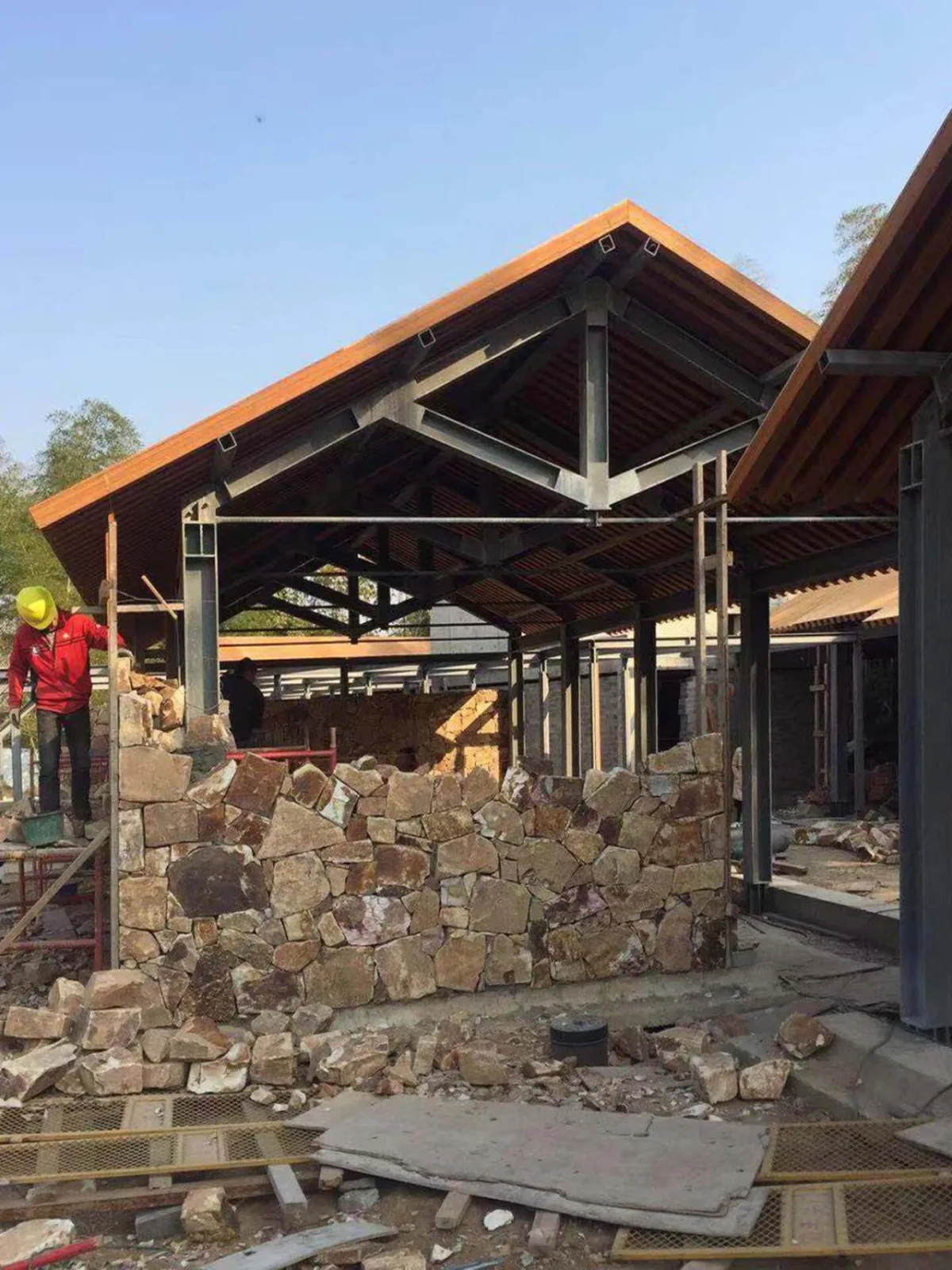
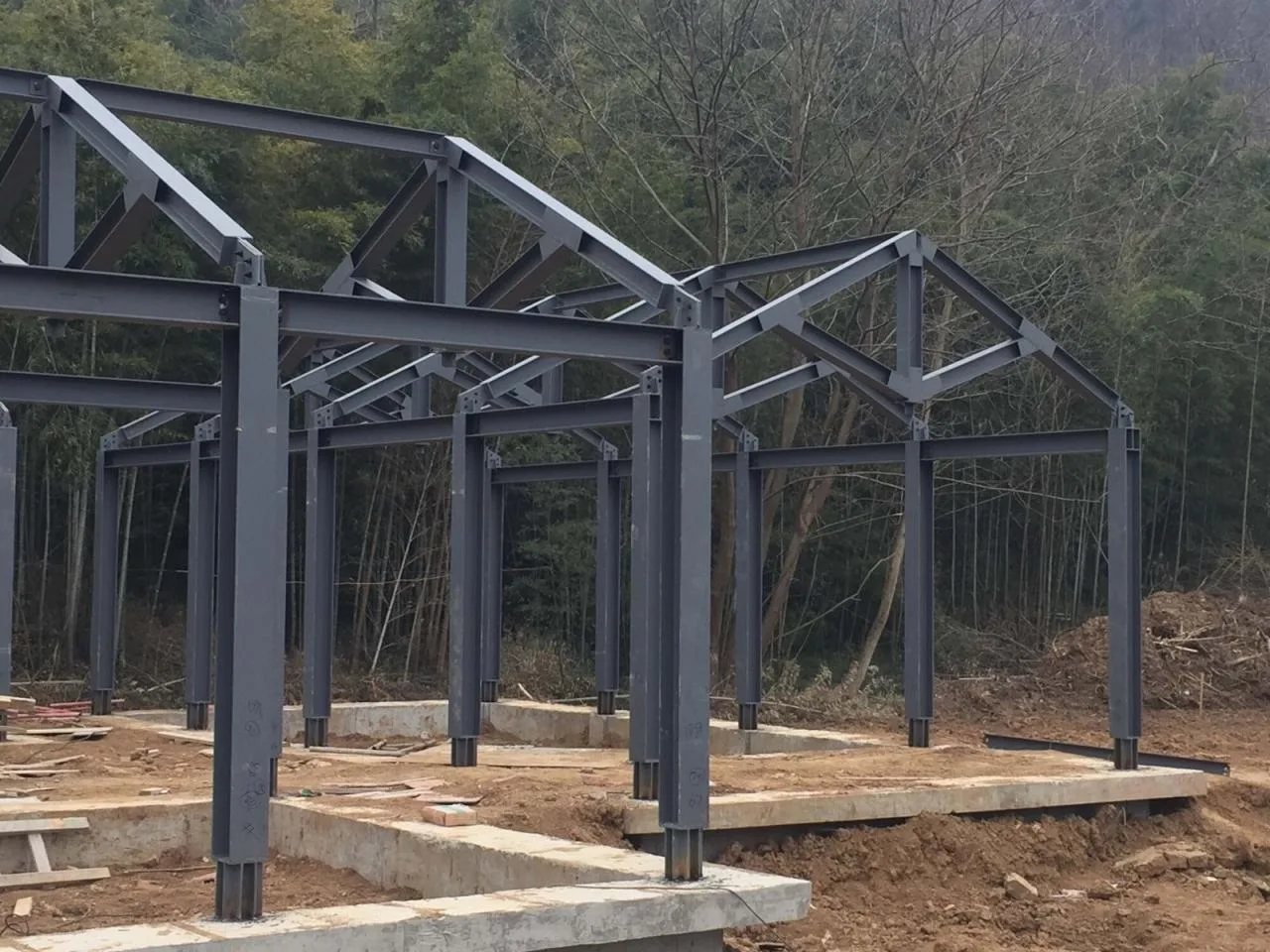
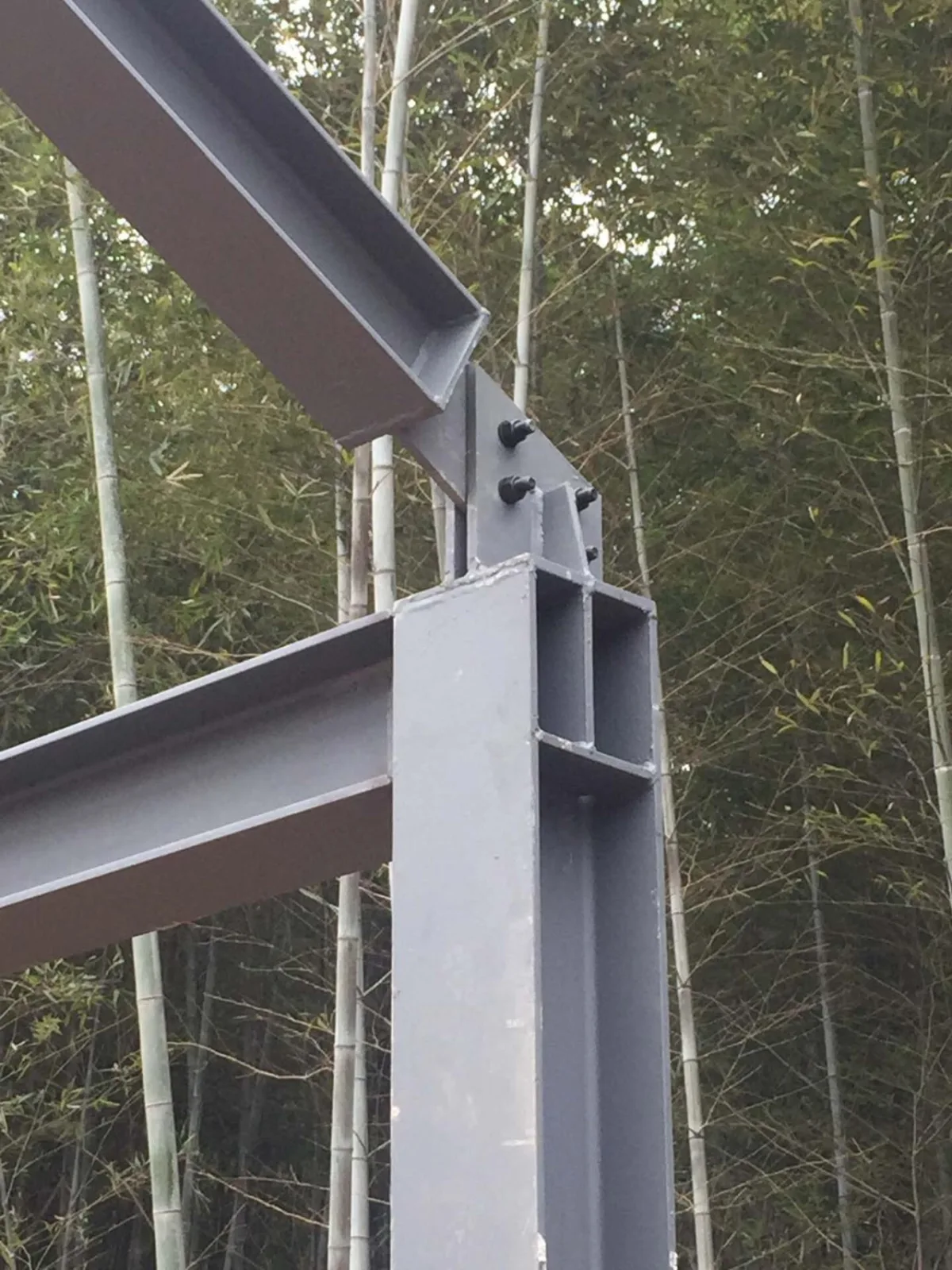
Key construction strategies for this narrow canal-adjacent site include lifting and compaction. The building’s sloping roof uses small triangular steel trusses with hinged connections to columns. Prefabricated offsite, these trusses are lifted and welded with tie rods on-site to resist lateral forces, ensuring precise assembly. Steel purlins, glued bamboo rafters, and bamboo roof boards showcase visible construction details, responding to the original carport’s character.
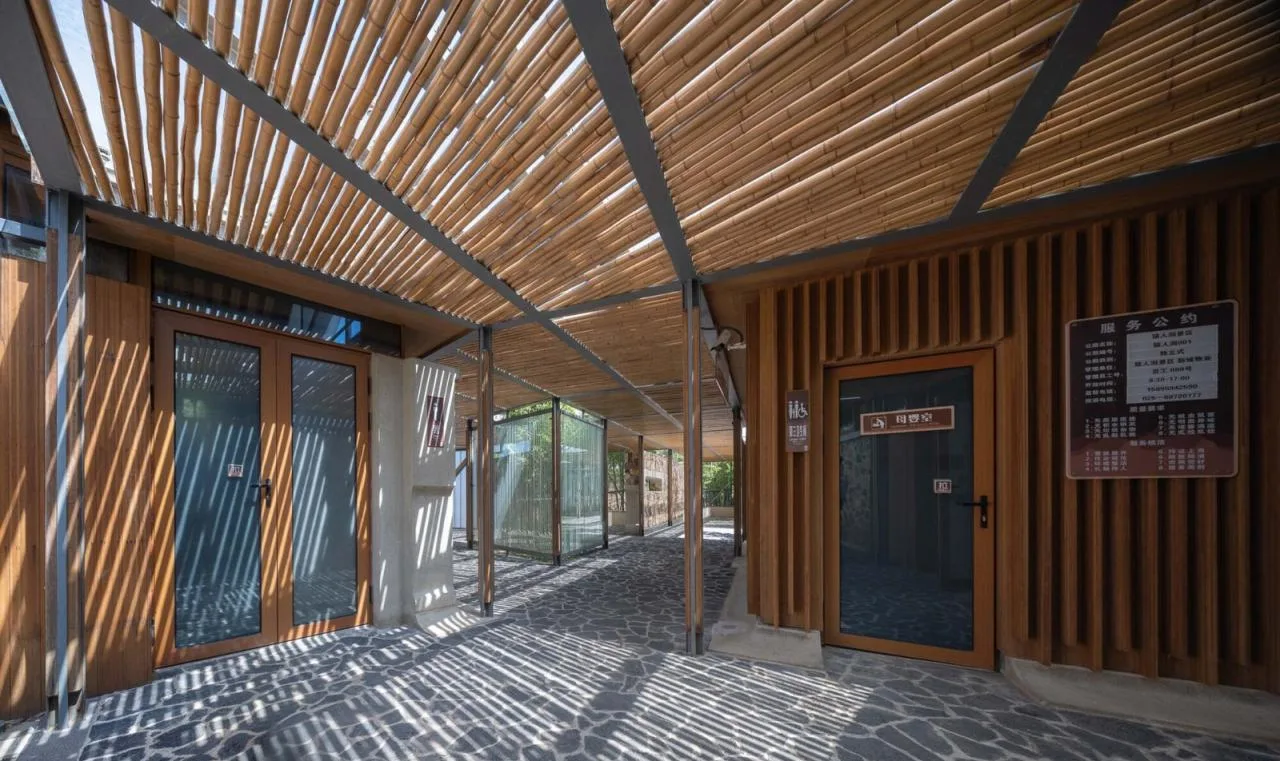
Corridors connecting the modern sloped roof structures feature cross-shaped steel columns (112×112 mm cross-section) supporting steel beam glass roofs shaded by bamboo louvers. To resist torsion, a small flange is welded at the web plate ends, with the resulting cavity filled with glued bamboo, giving the columns a refined, slender appearance. The transparency and structural clarity complement the surrounding bamboo’s natural strength.
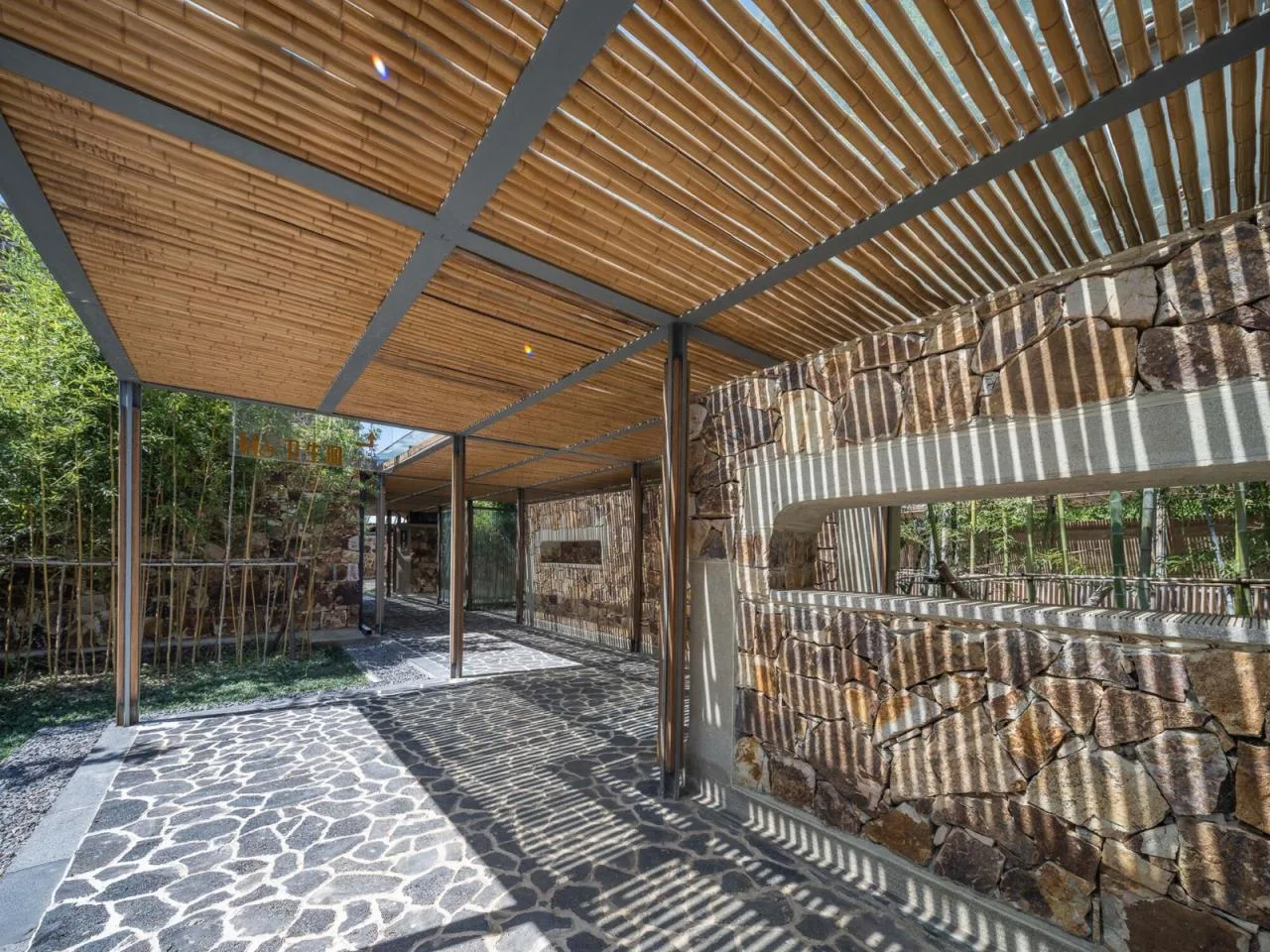
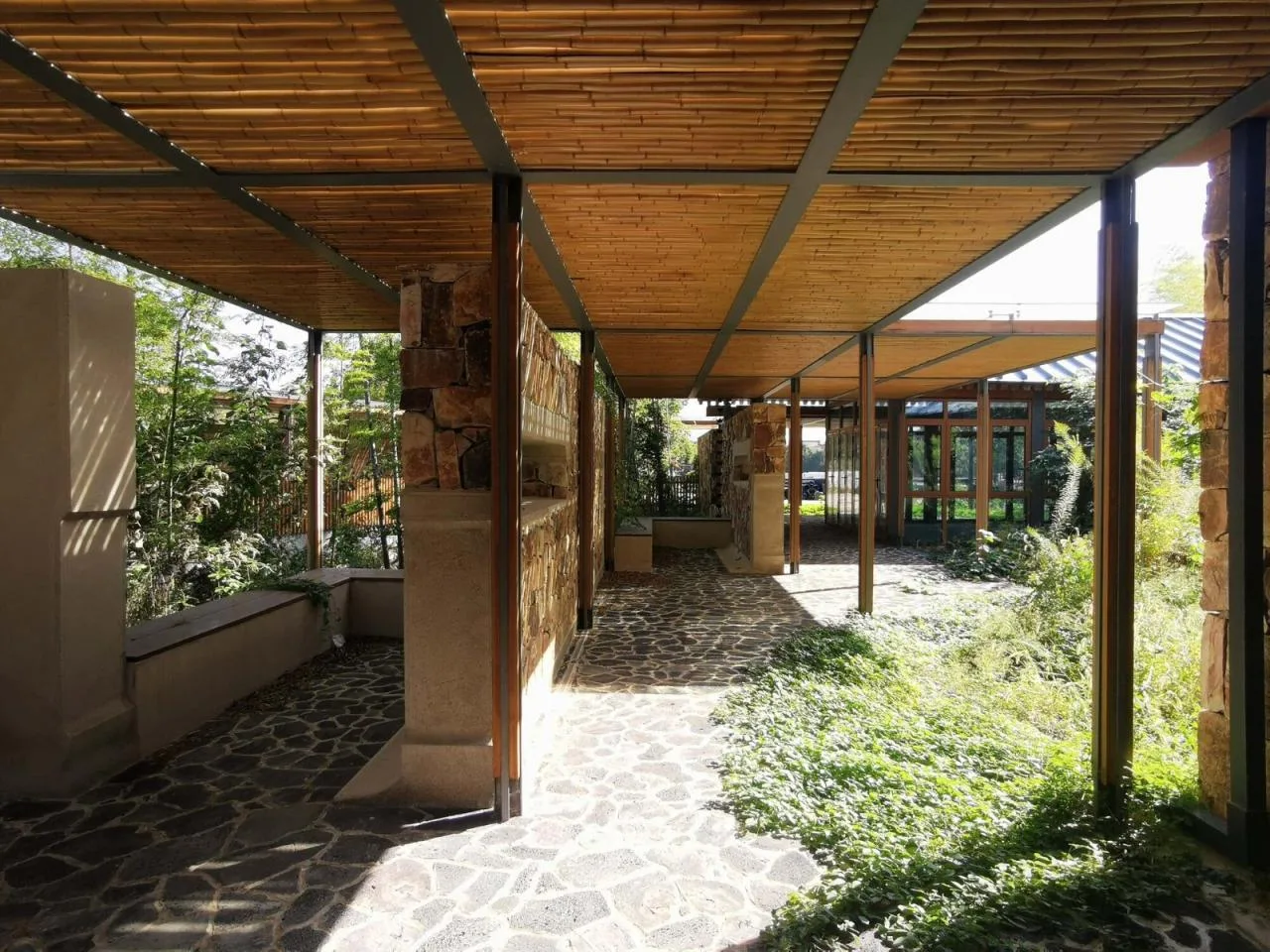
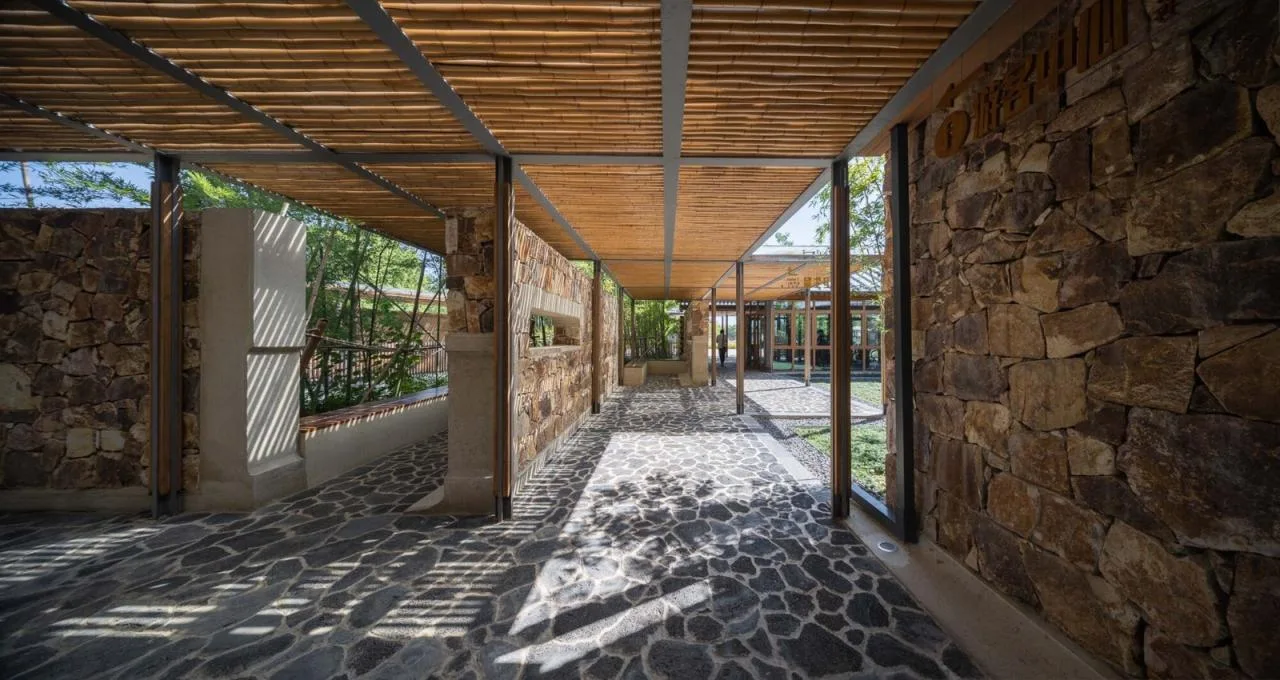
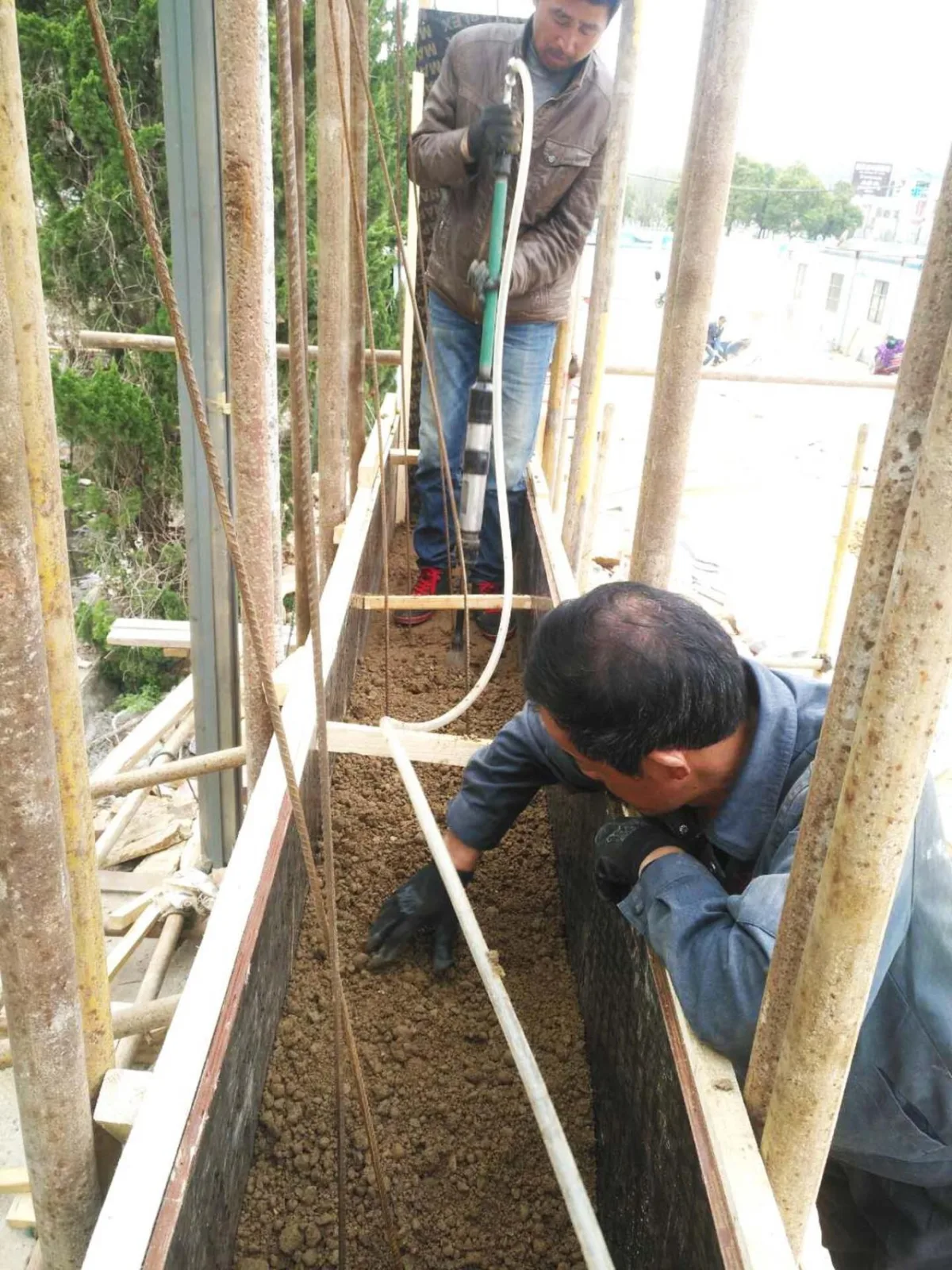
The project employed compaction and masonry techniques for rammed earth concrete walls and rubble walls respectively. Rammed earth concrete walls are made by mixing soil, sand, stones, and cement in precise ratios, reinforced with steel bars, and compacted layer by layer using handheld pneumatic hammers. Compared to traditional rammed earth, these walls offer higher strength and moisture resistance.
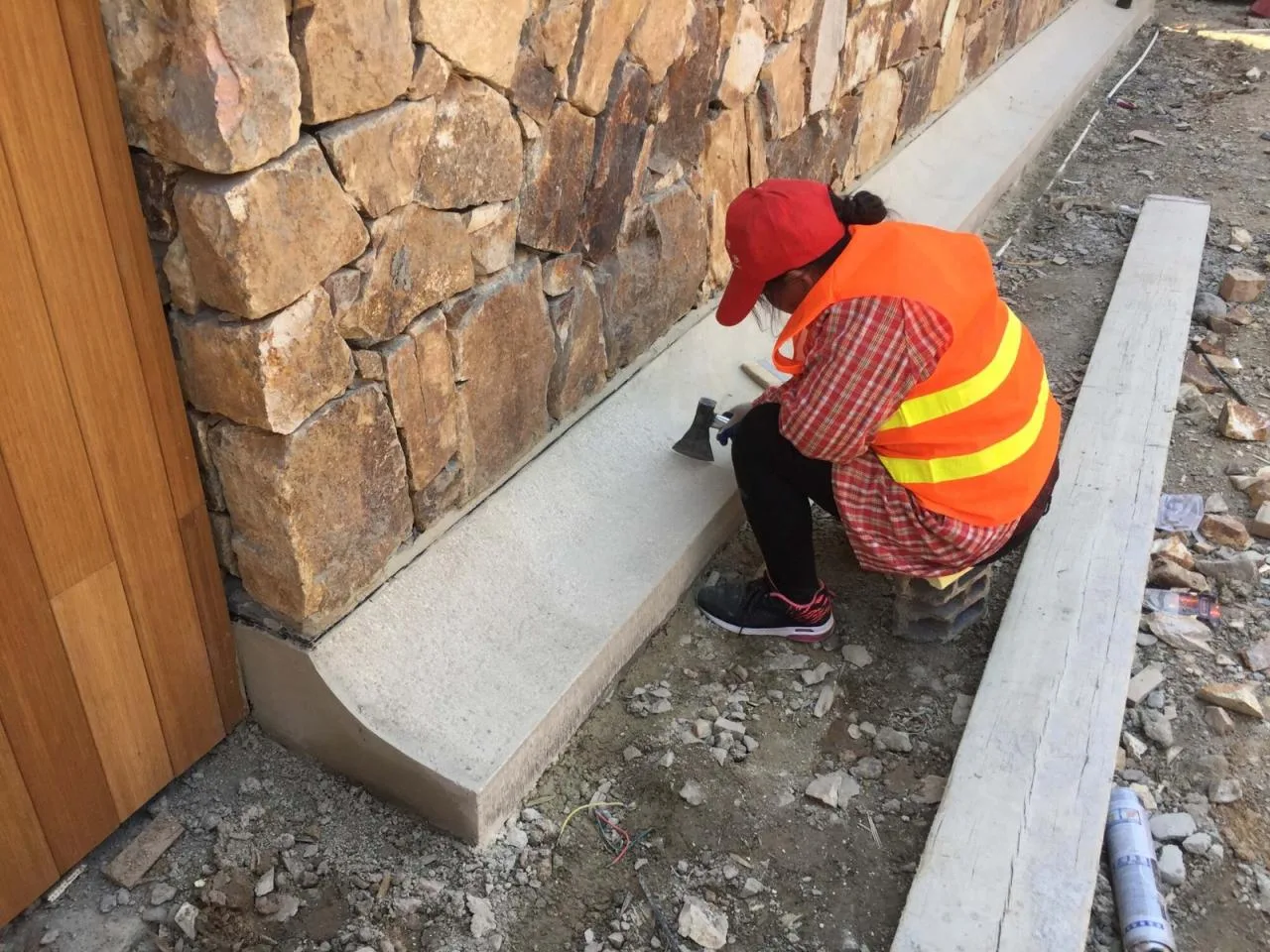
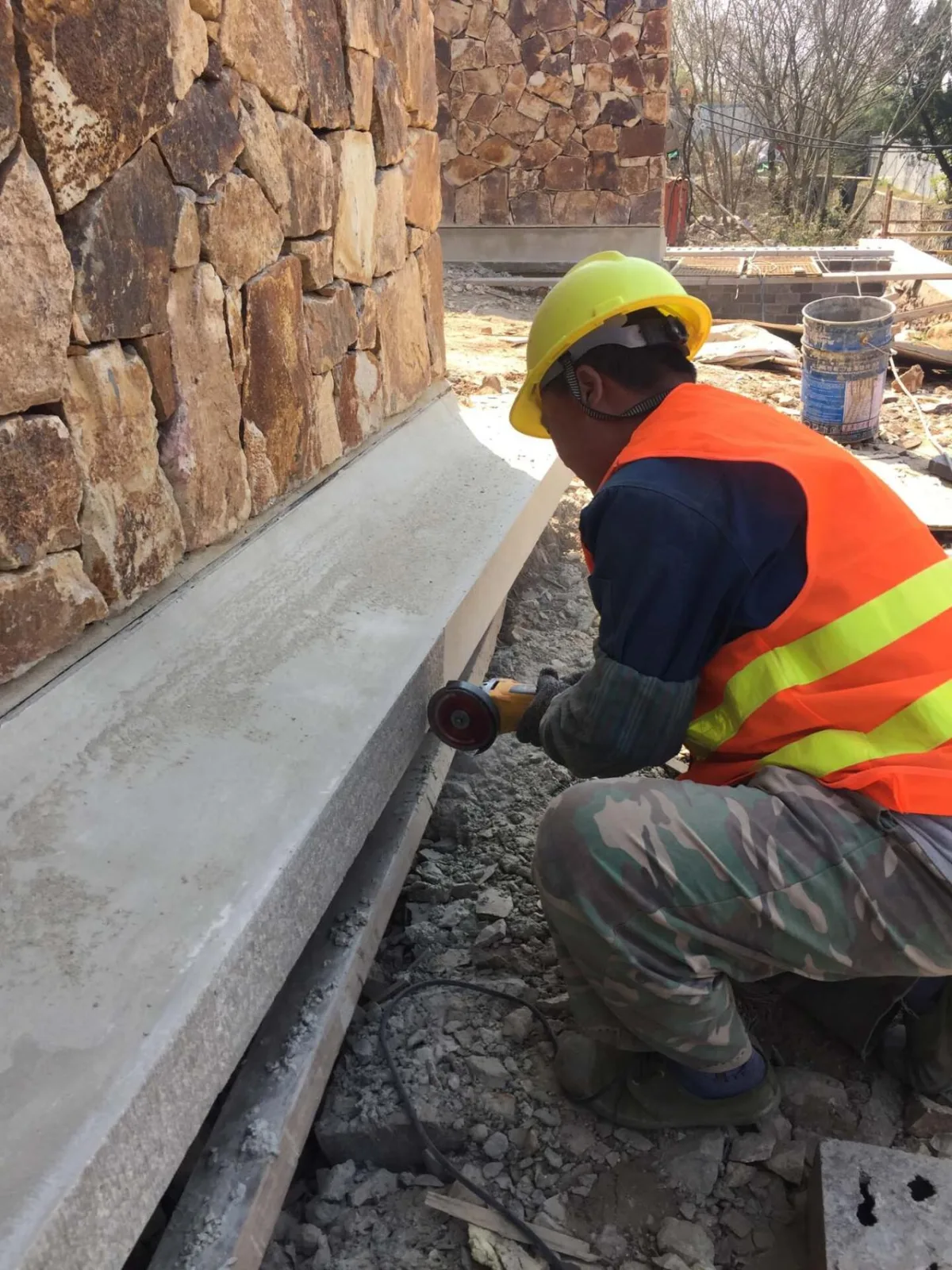
Rubble walls focus on concrete components in the base, lintels, top pressure, and corner reinforcements. A plastering technique using chopped axe stones, popular in the 1970s and 1980s, adds a distinctive textured finish. Interestingly, modern workers replaced traditional axes with electric grinding wheels for shaping the stones, blending tradition with innovation. The project embraces both controlled and spontaneous construction approaches as essential parts of on-site craftsmanship.
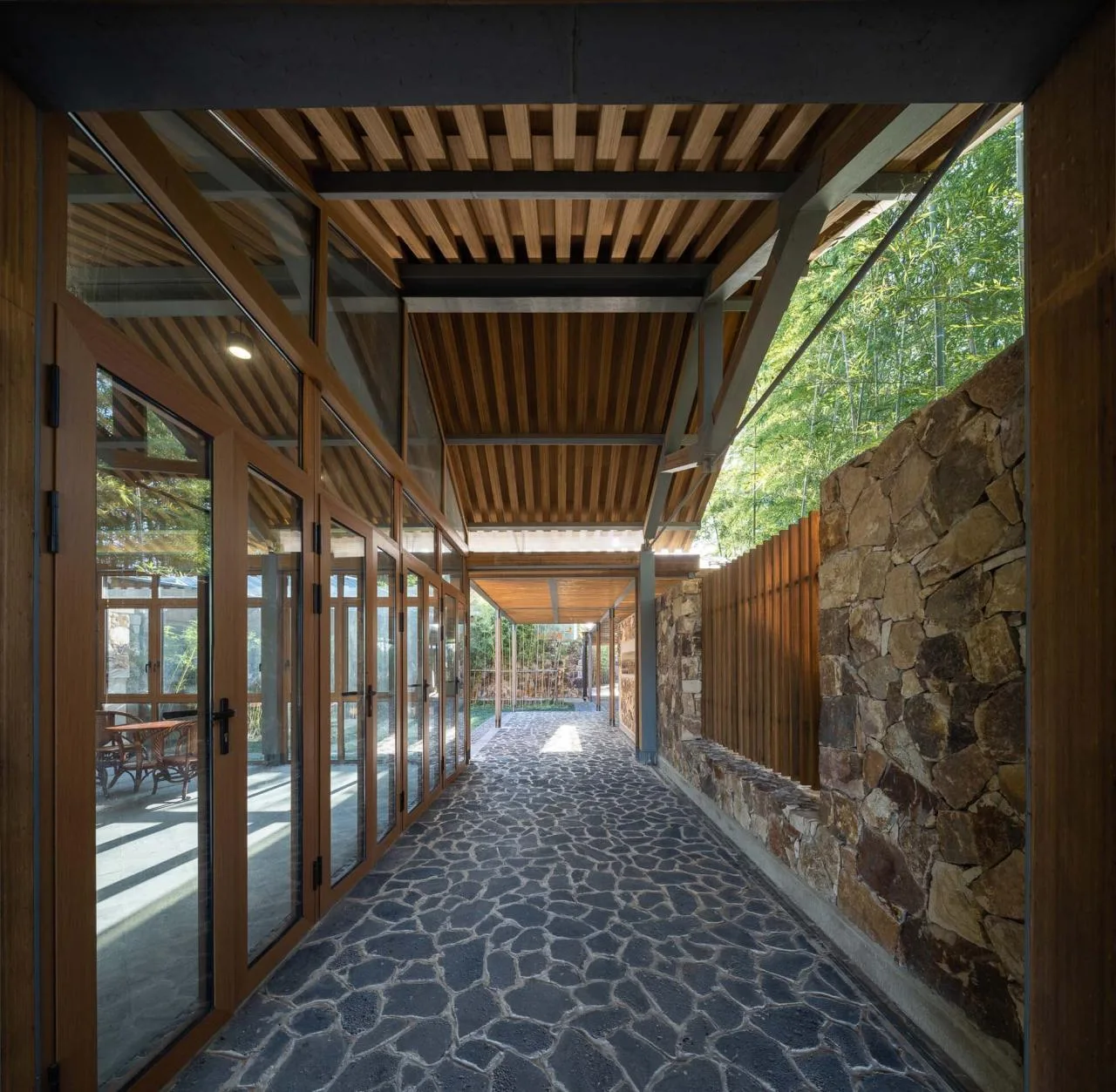
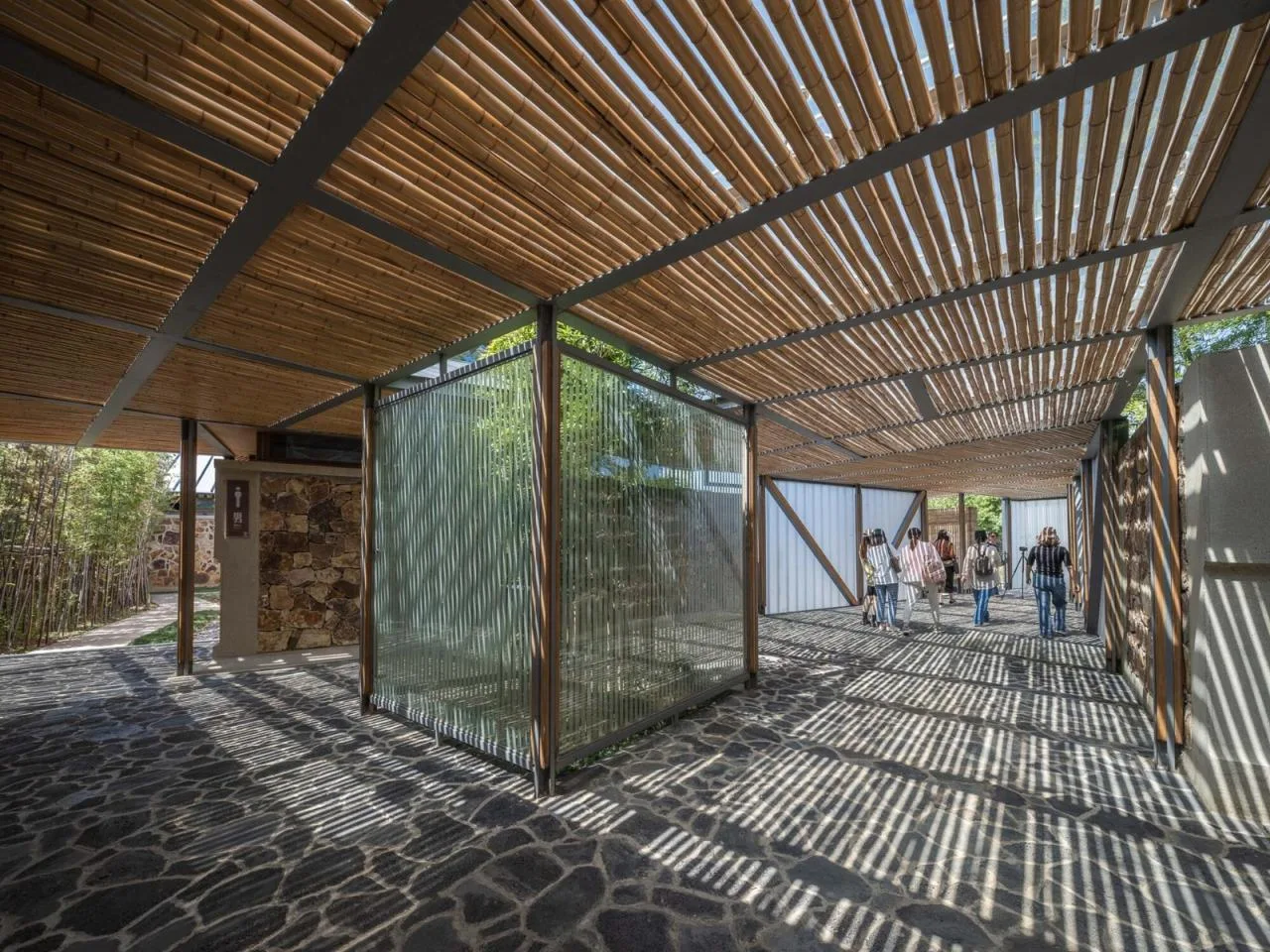
Completed in 2019, the project originally served as a ticket office and public restroom. To address peak visitor flows, a flexible tidal restroom area was designed, usually closed but convertible to men’s or women’s facilities during busy periods.
However, the outbreak of COVID-19 at the end of 2019 delayed the opening for three years. During this time, the scenic spot’s role evolved, with the mountain foot entrance becoming a community park open to local residents. The building’s functions adjusted accordingly, maintaining the restroom while repurposing spaces for a visitor water bar and property management office. The building’s adaptable structural form accommodates these changes seamlessly.
What impressed me most during a post-completion visit was how nature began reclaiming the space. Overgrown plants flooded the building, creating a simple, wild atmosphere. Surrounded by blue sky, light and shadow, earth, rocks, and greenery, I felt transported—almost like being in Dali—despite pandemic restrictions keeping me close to home.
I am grateful for the professional collaboration between Hassell, the landscape design company for the city park, and the architect, who showed deep respect for the architectural concept and welcomed the integration of architectural elements. This project embodies a design language that transcends short-term functionality, preserving and extending the site’s memory through architectural and landscape narratives.
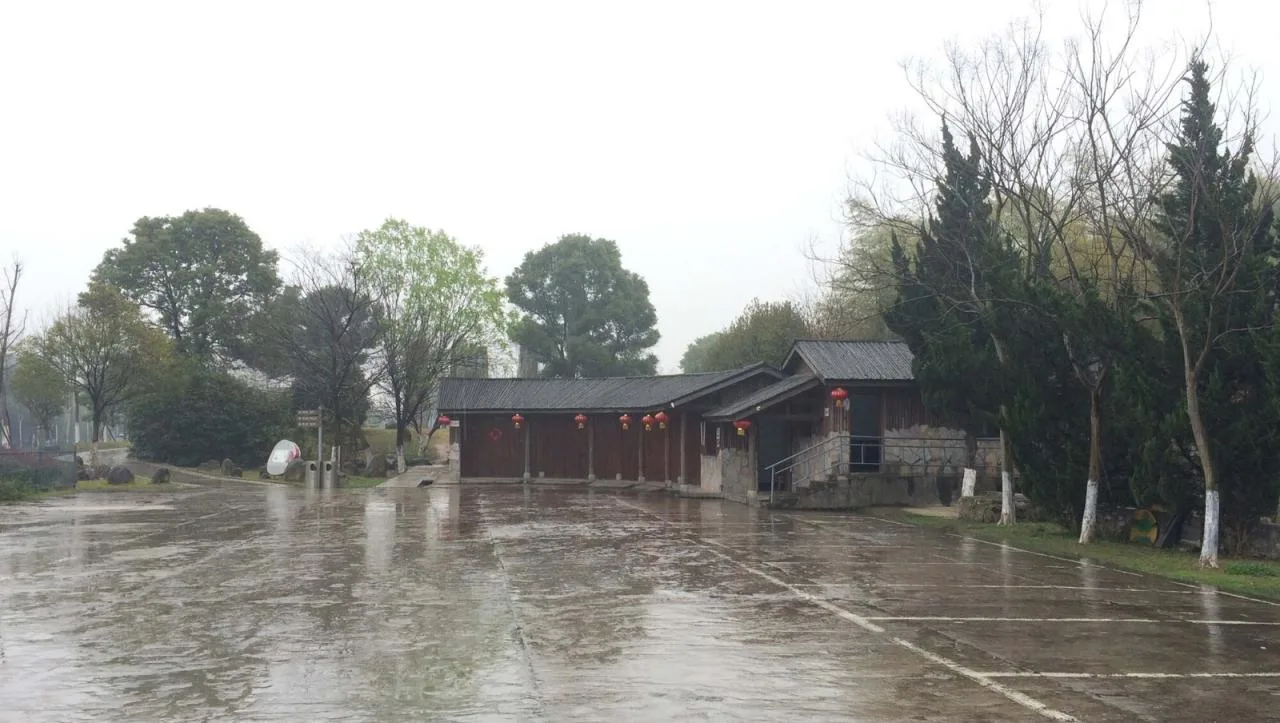
Walking Towards the Heart — “He Louxuan”
“He Louxuan” is a pavilion designed by renowned architect Feng Jizhong, situated in Fangta Garden, Songjiang, Shanghai. Functionally, it serves as a tea pavilion for visitors to rest and for tea players to entertain, yet its form is decidedly modern.
Its resonance among Chinese architects lies in its relaxed, effortless approach to creating a contemporary, local architectural expression without being entangled in identity dilemmas. “He Louxuan” represents an attitude worth embracing in architectural design — one that balances tradition with modernity naturally.
Project Drawings
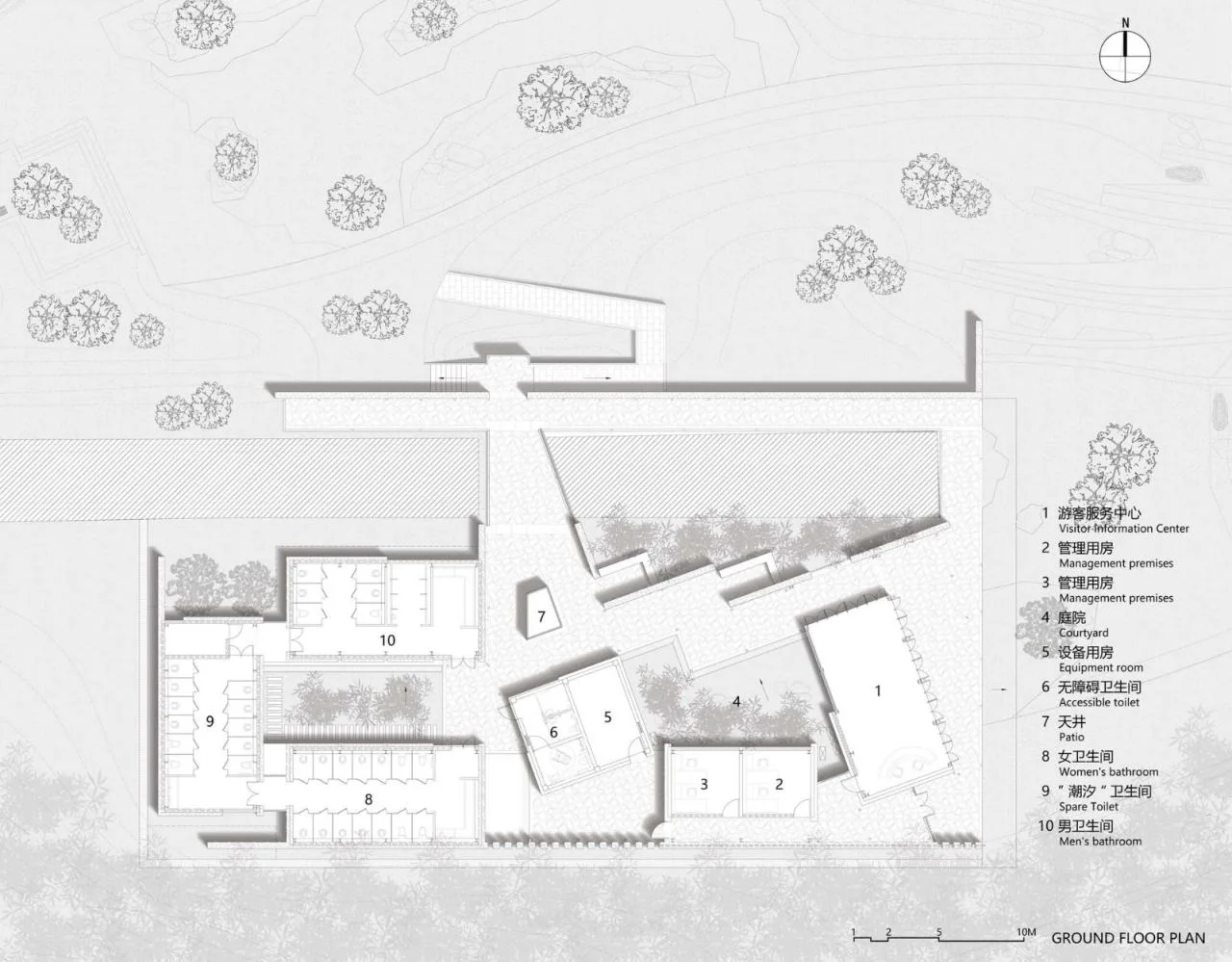
△ Plan View
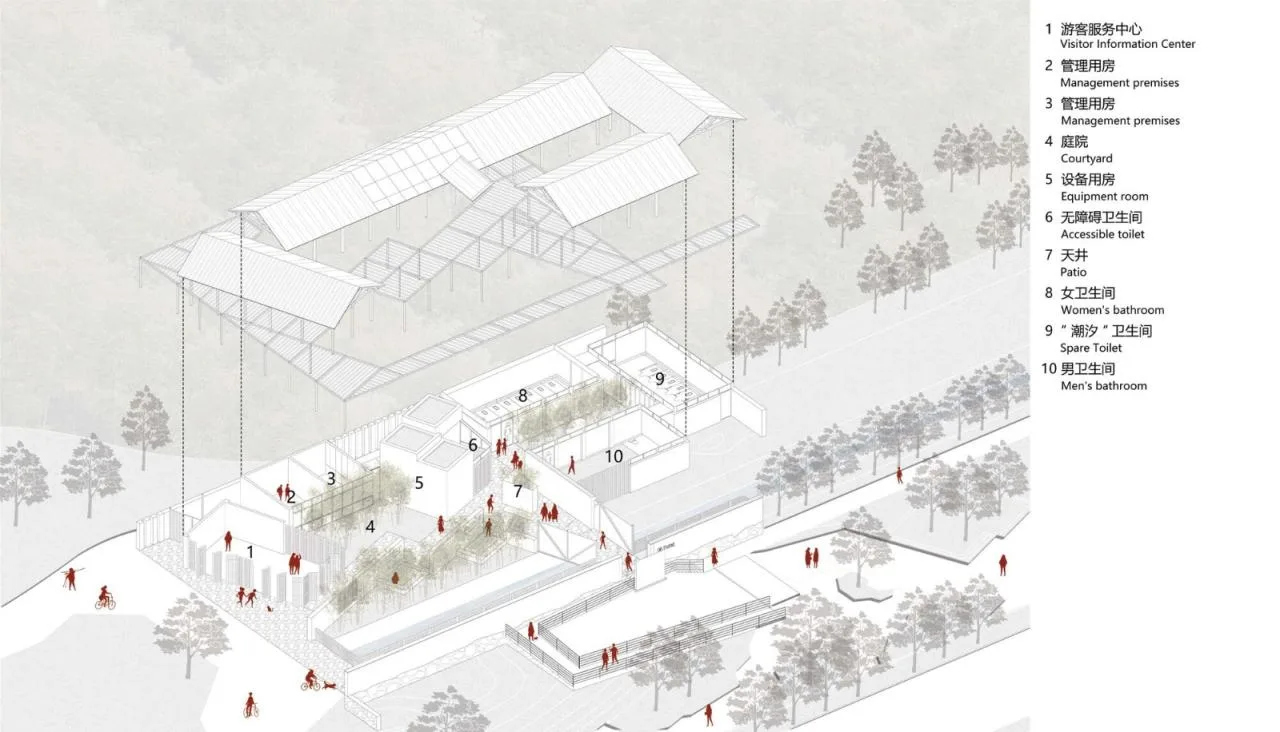
△ Functional Zoning Diagram
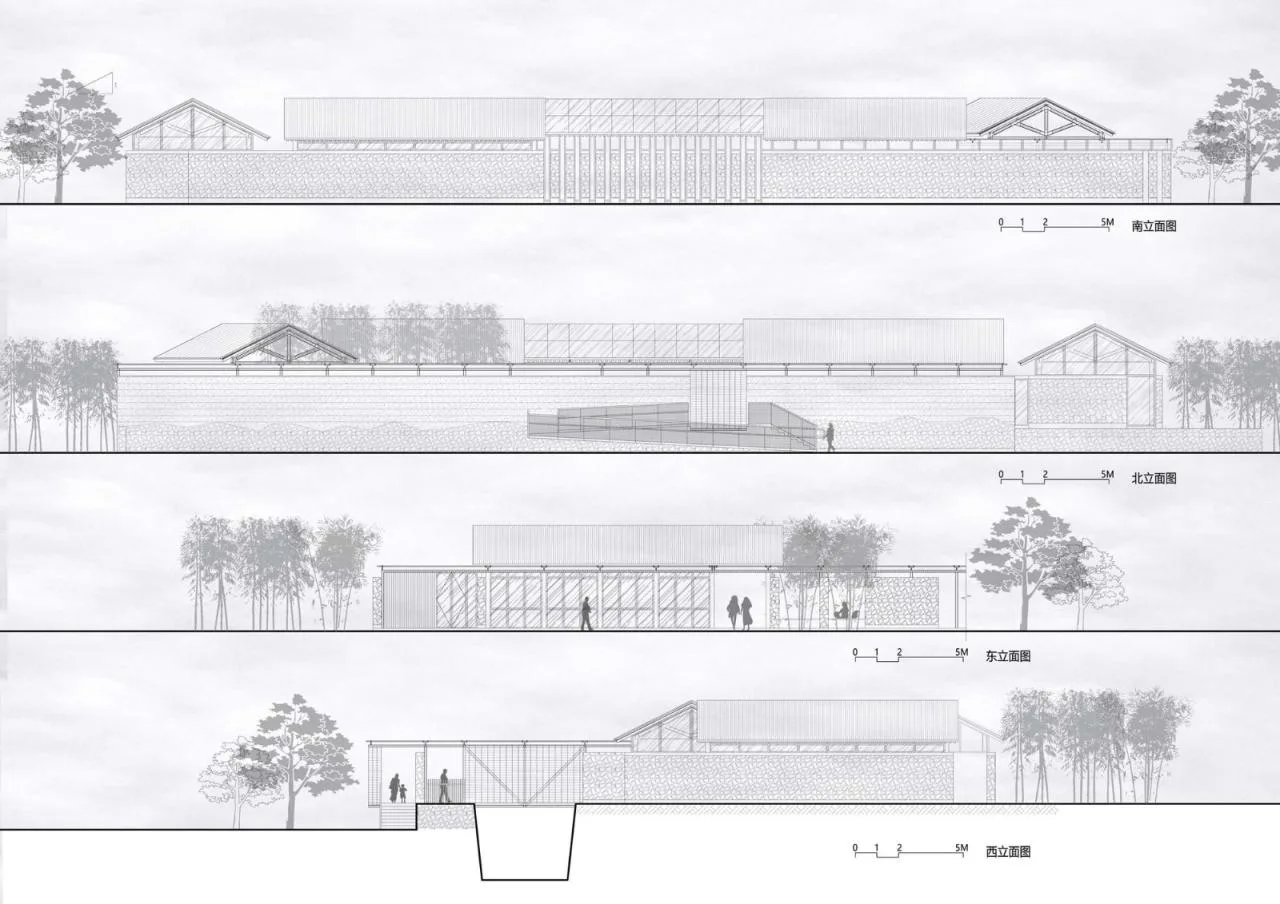
△ Elevation Drawing
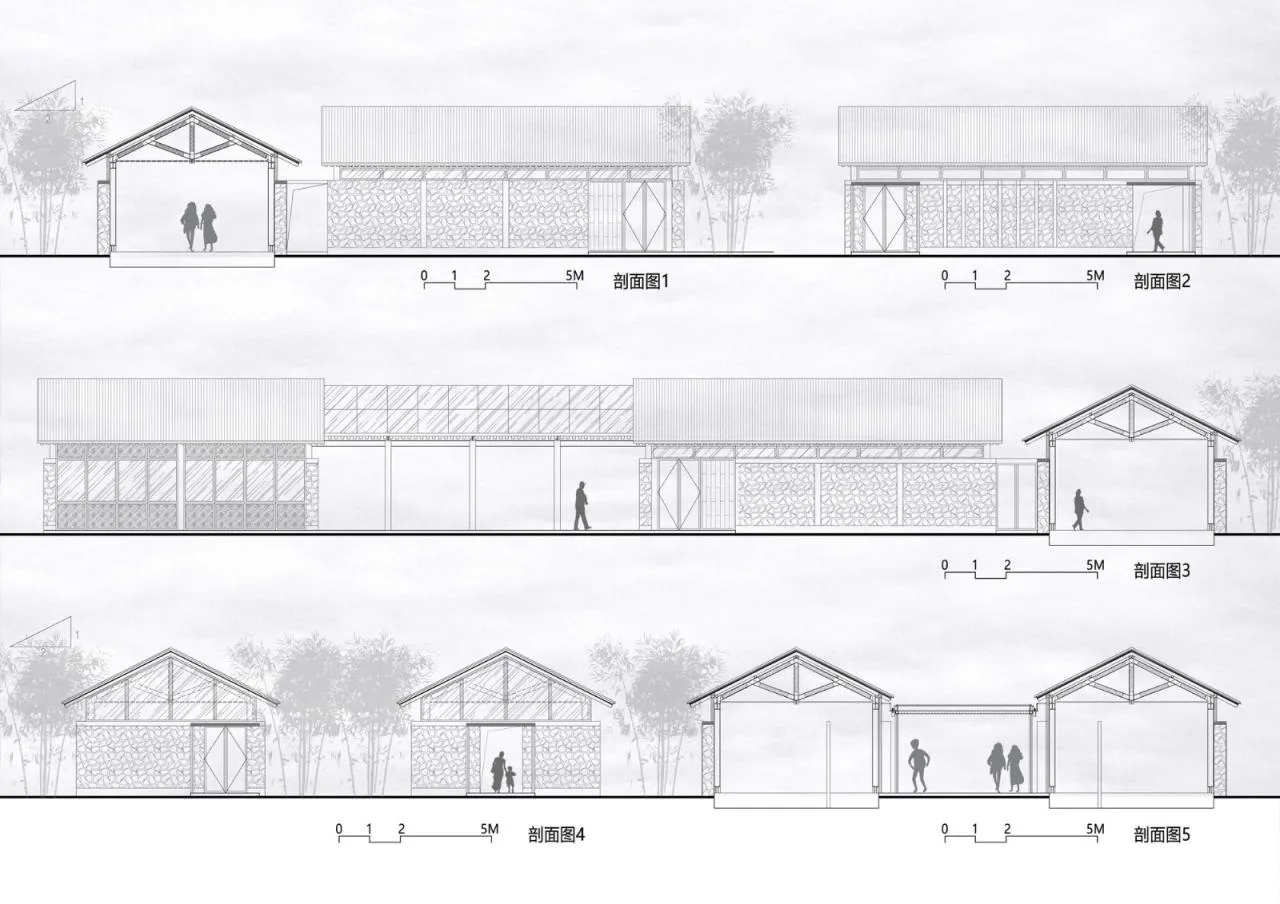
△ Section Diagram
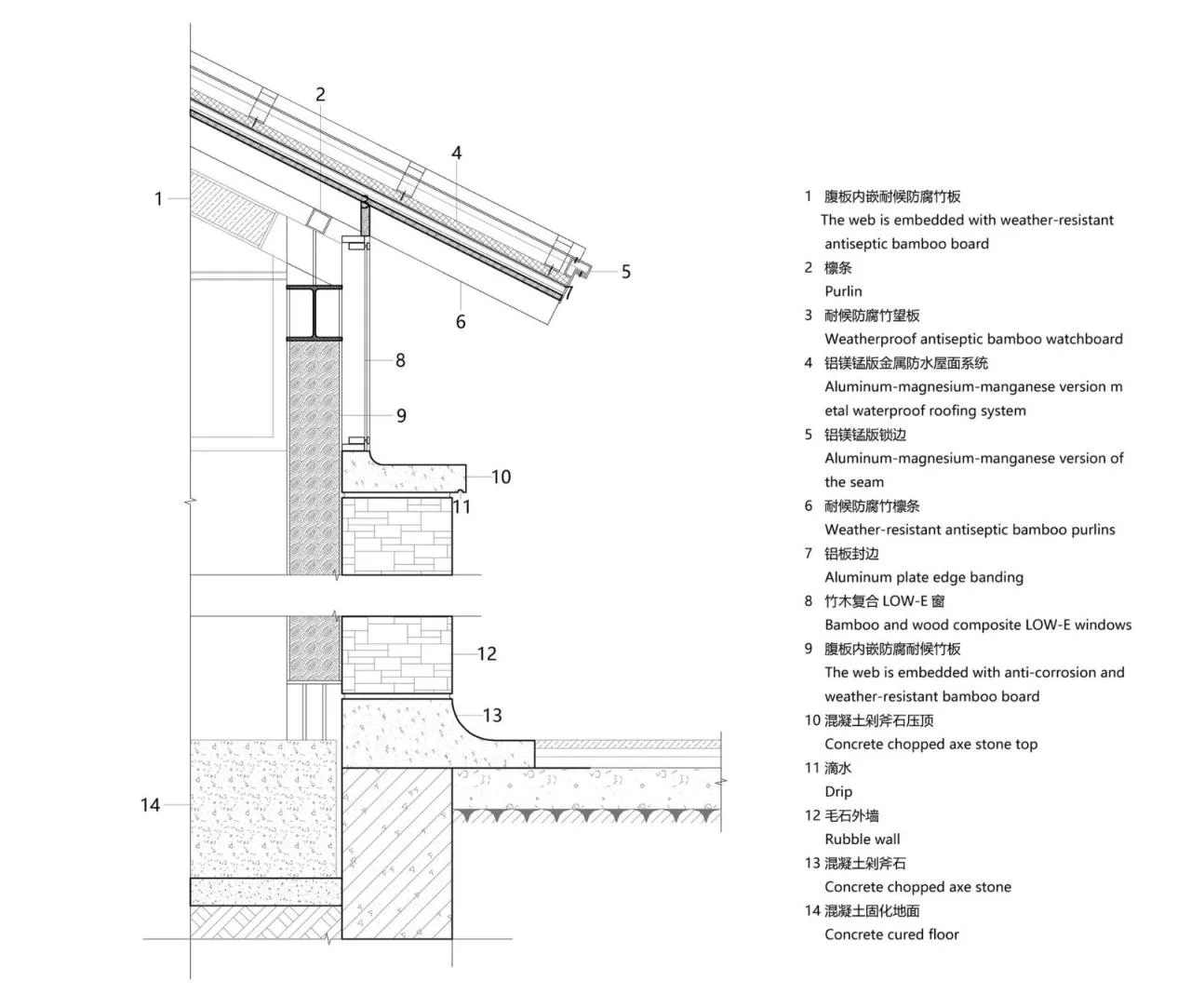
△ Detailed Drawing
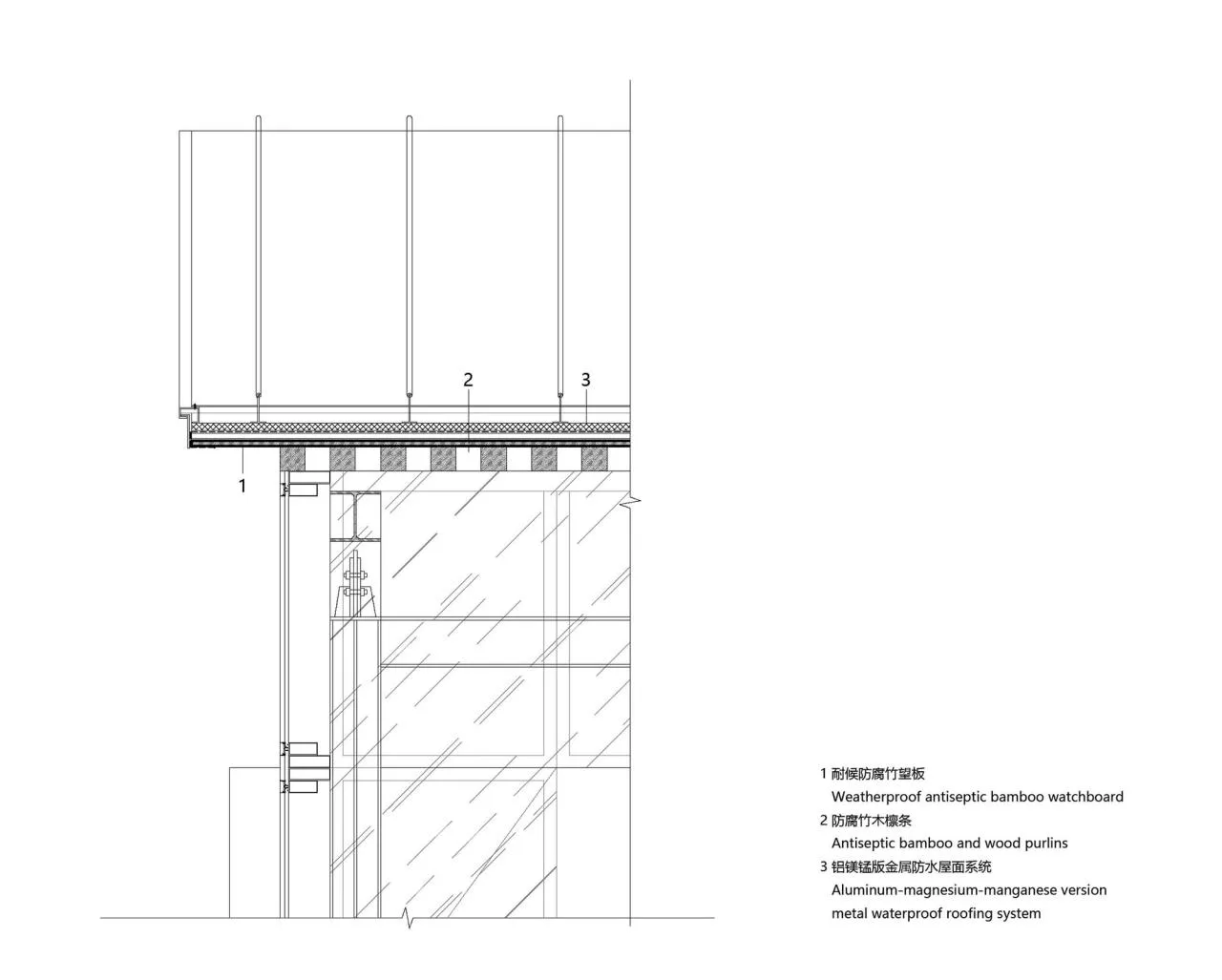
△ Detailed Drawing
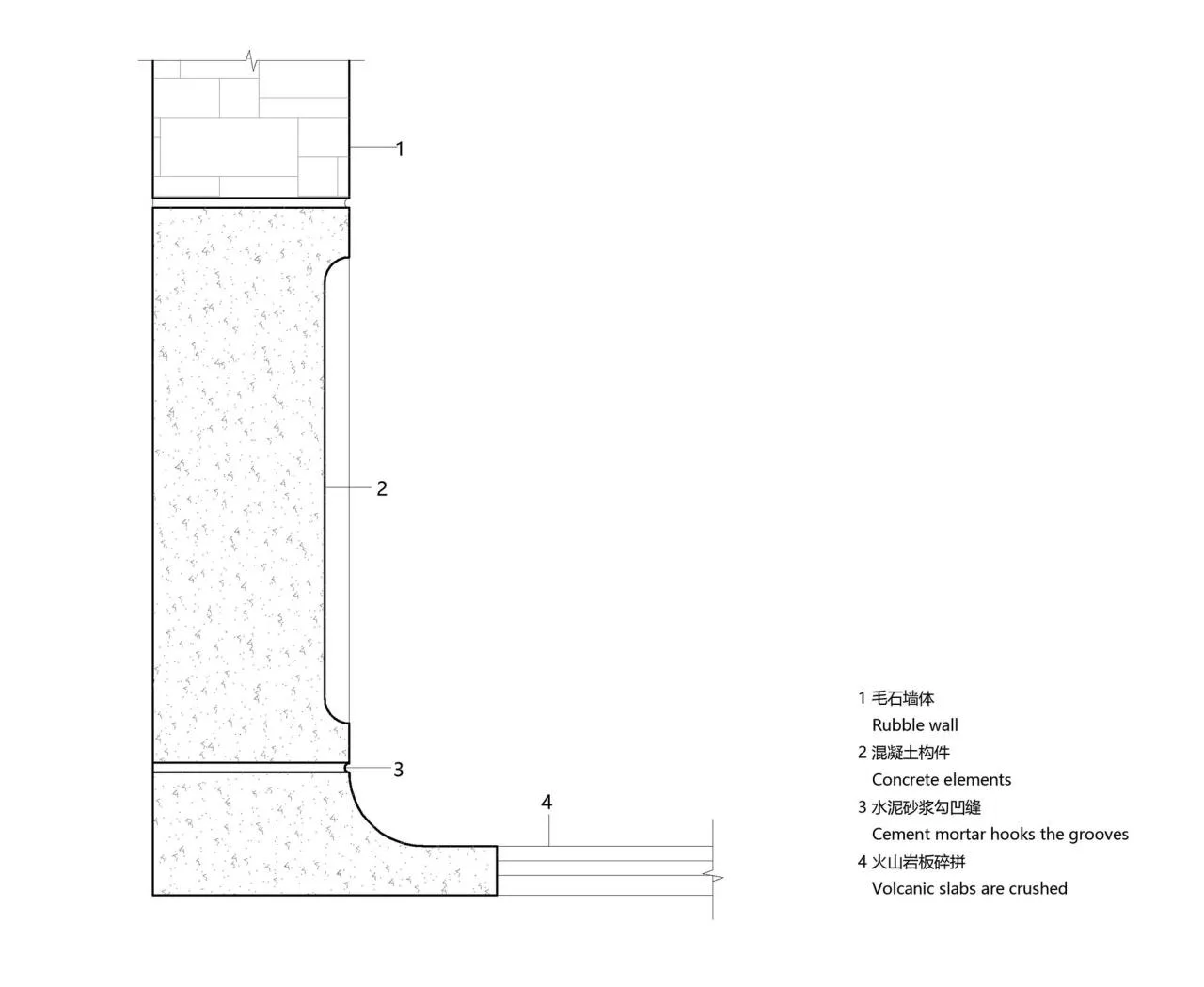
△ Detailed Drawing
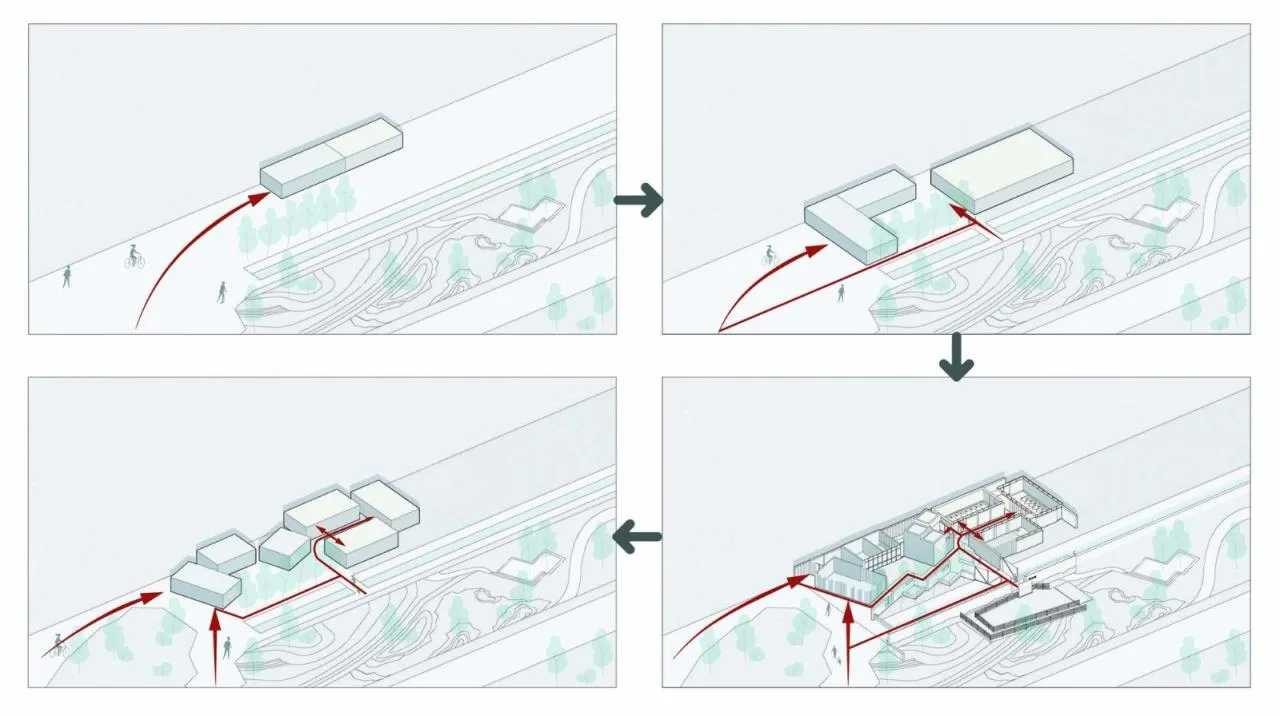
△ Project Generation Diagram
Project Information
Architect: Architectural Technology and Art (ATA) Studio, Southeast University Architectural Design and Research Institute
Area: 800 square meters
Project Year: 2019
Photographer: Timeraw Studio, ATA Studio, Zhongning
Lead Architect: Li Zhu
Design Team: Li Zhu, Wang Jiajun
Principal: Nanjing Tangshan Construction Investment Development Co., Ltd
Structural and Electromechanical Design: Yigou Studio, Comprehensive Fifth Institute of Southeast University Architectural Design and Research Institute Co., Ltd
Landscape Design: Hassell Shanghai Office
Construction Contractor: Tangshan Branch of Nanjing West Road and Bridge Group Co., Ltd
Location: Nanjing















Must log in before commenting!
Sign Up