
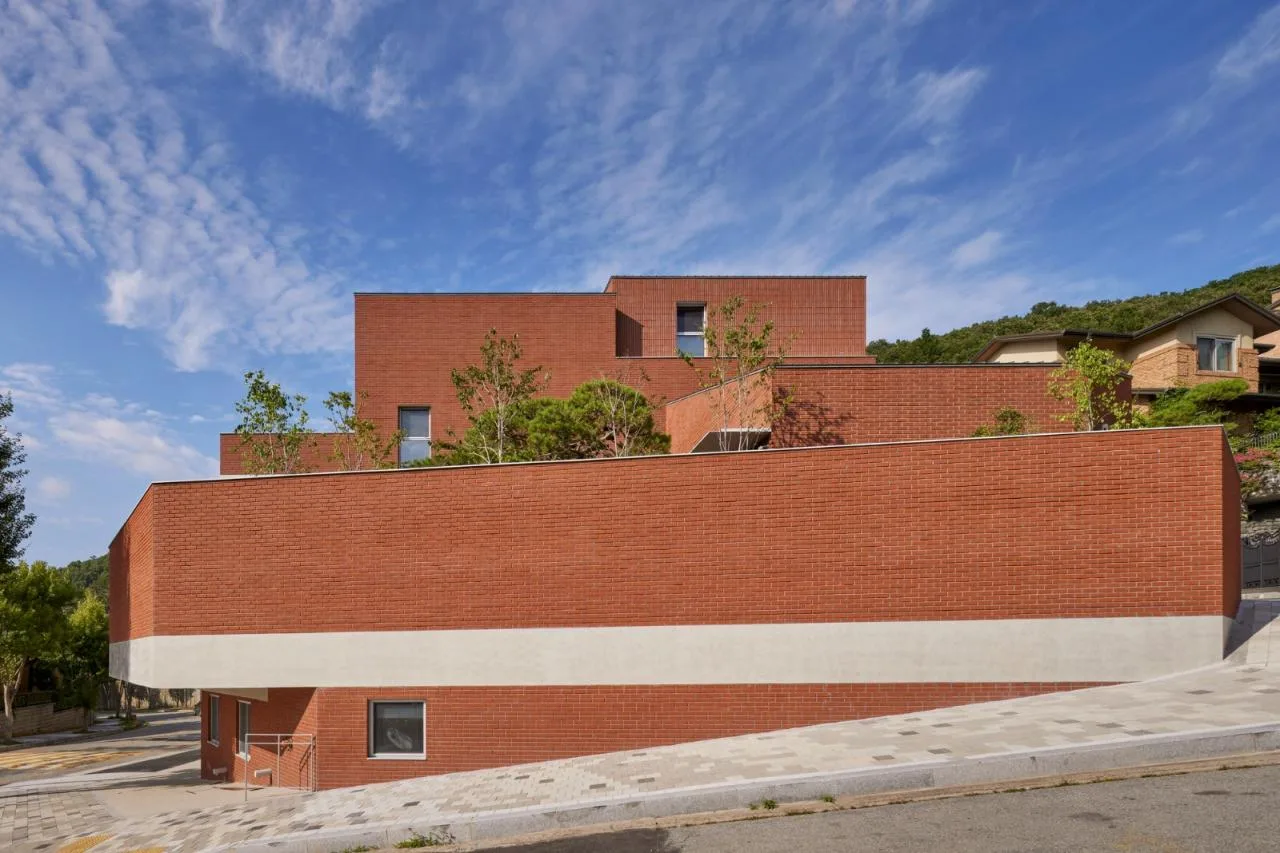
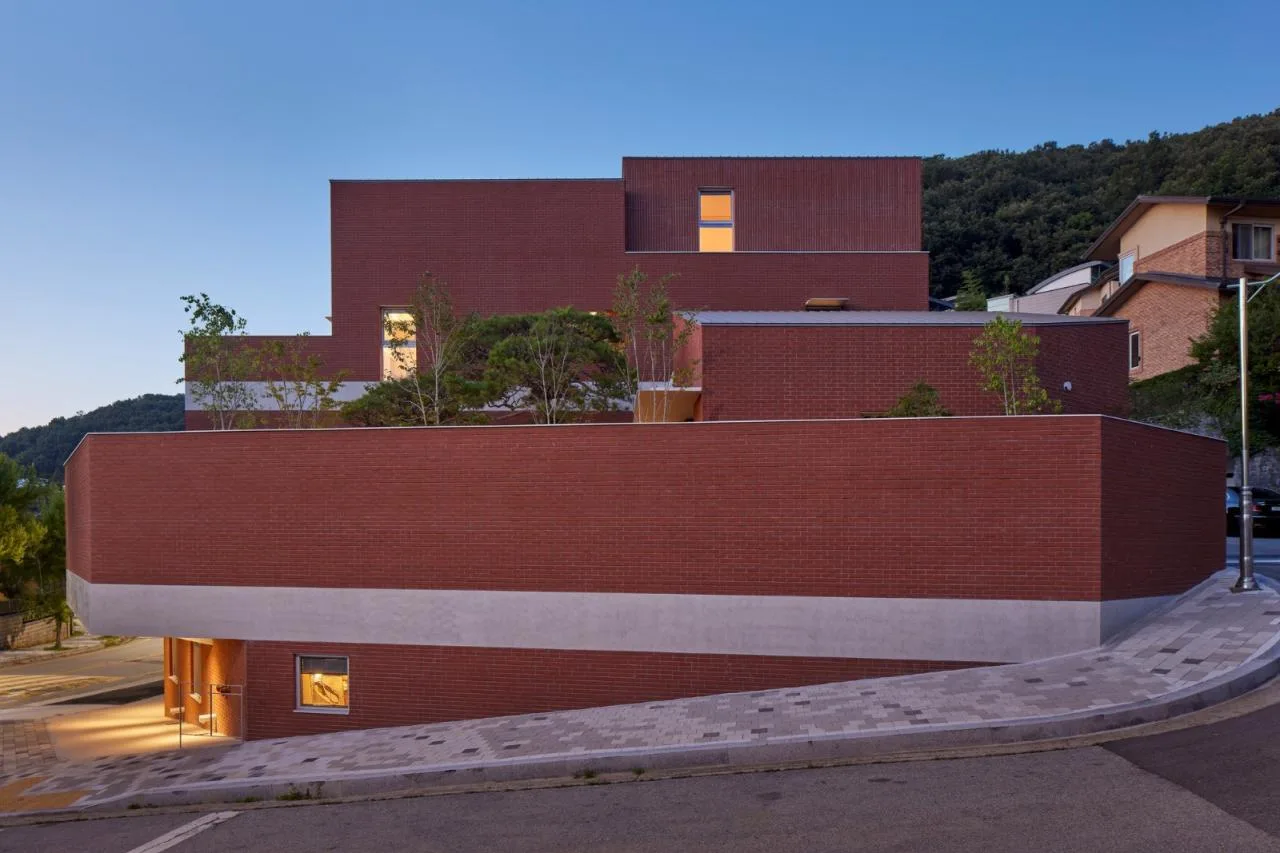
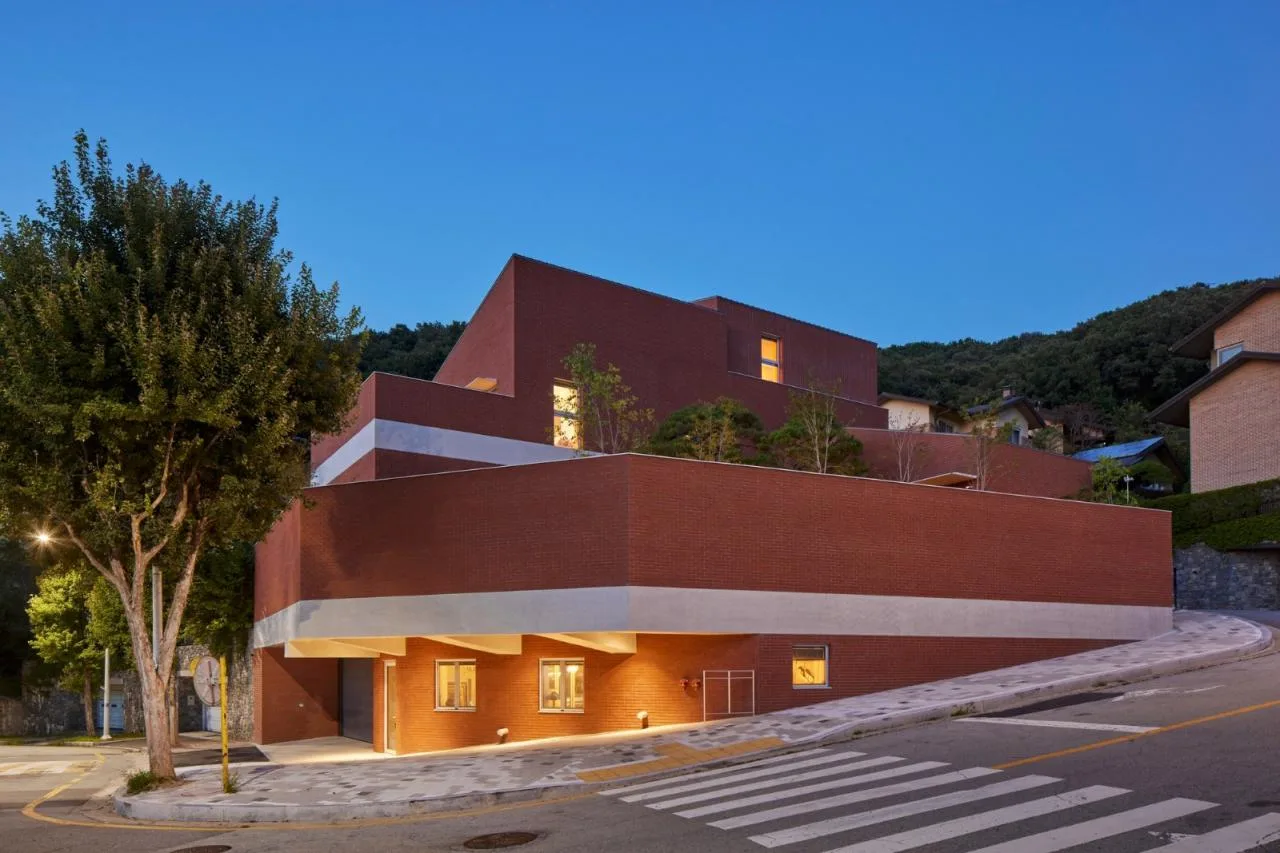
The family chose to demolish their old home and rebuild a new residence on the same site. Having lived there for many years, they were intimately familiar with the site conditions and their ideal vision for the home. The plot is situated on a street corner, surrounded by slopes on three sides, with a height difference of 4.9 meters between the east and west sides. It is nestled among similar small residential buildings.
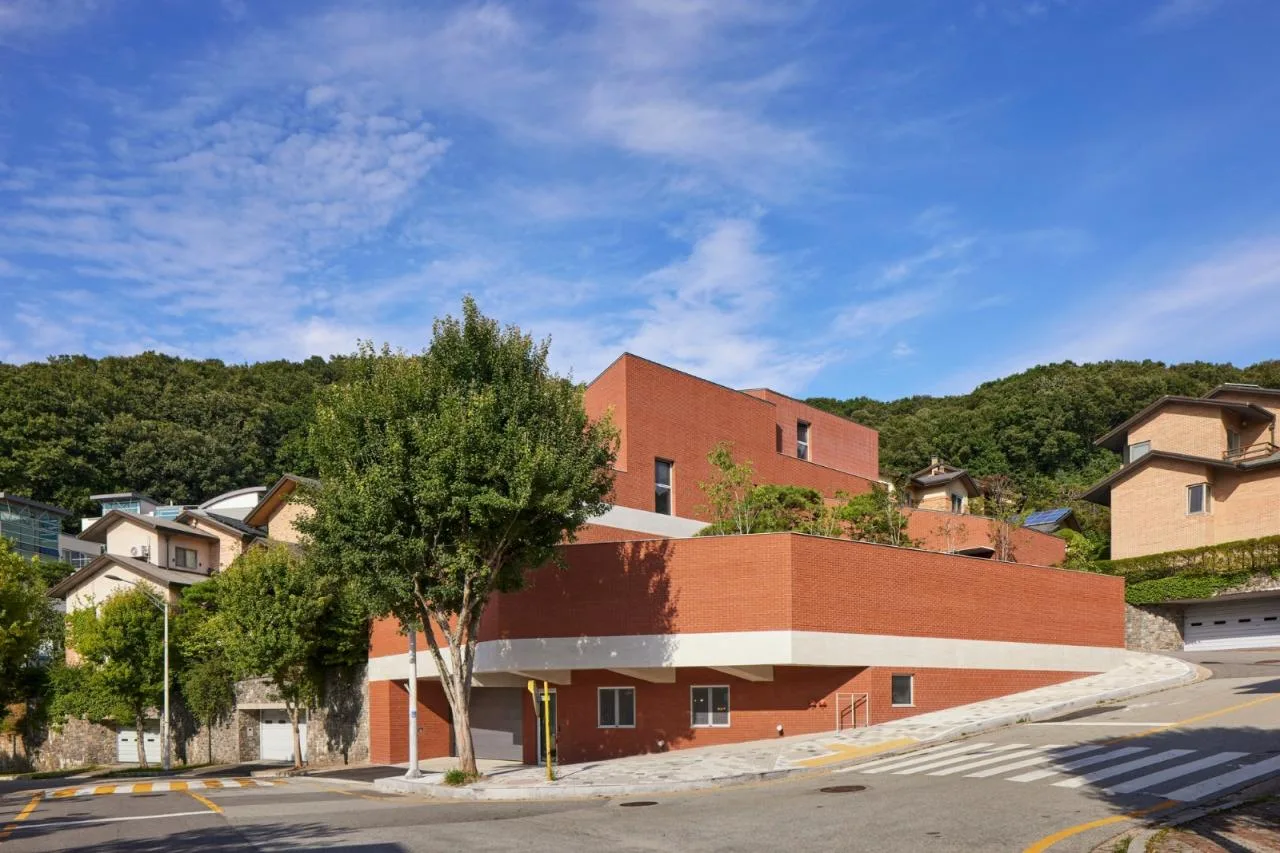
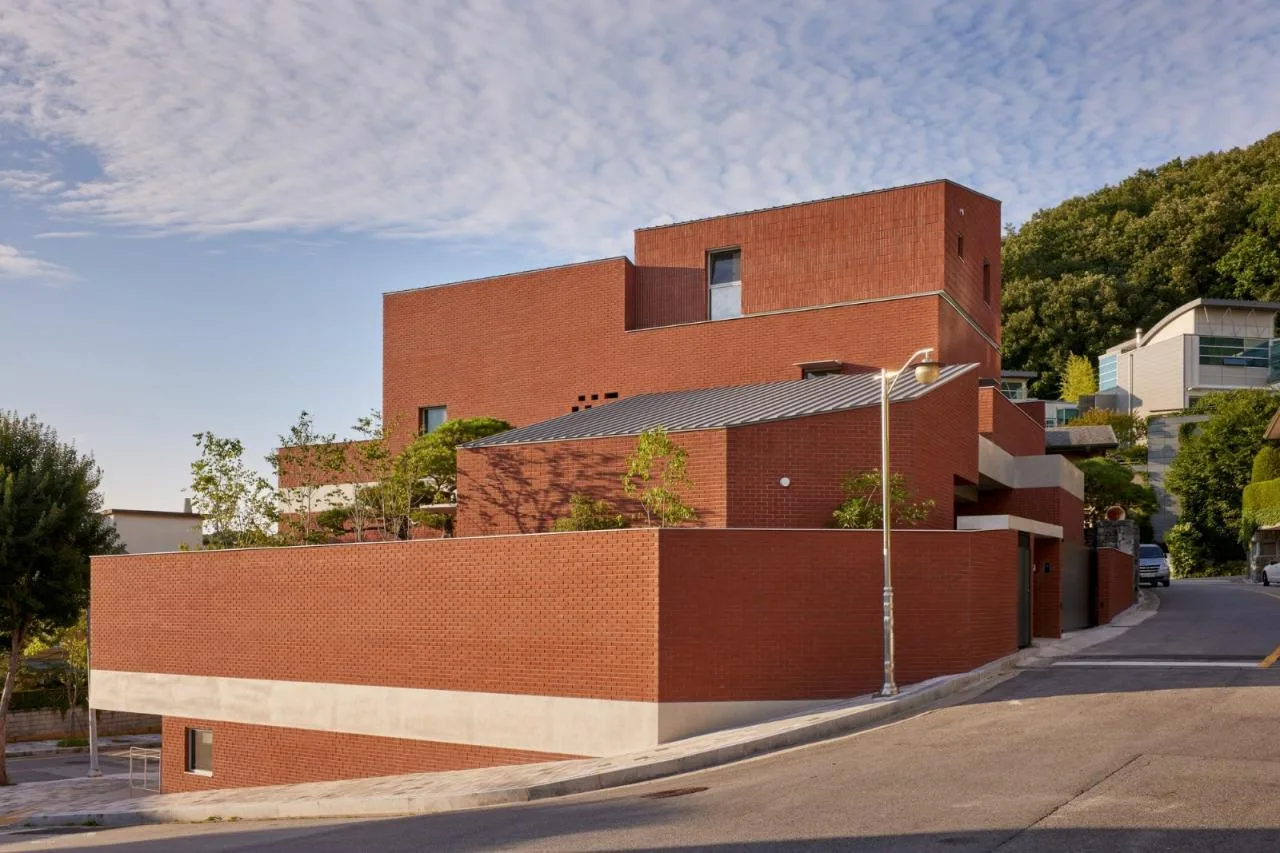
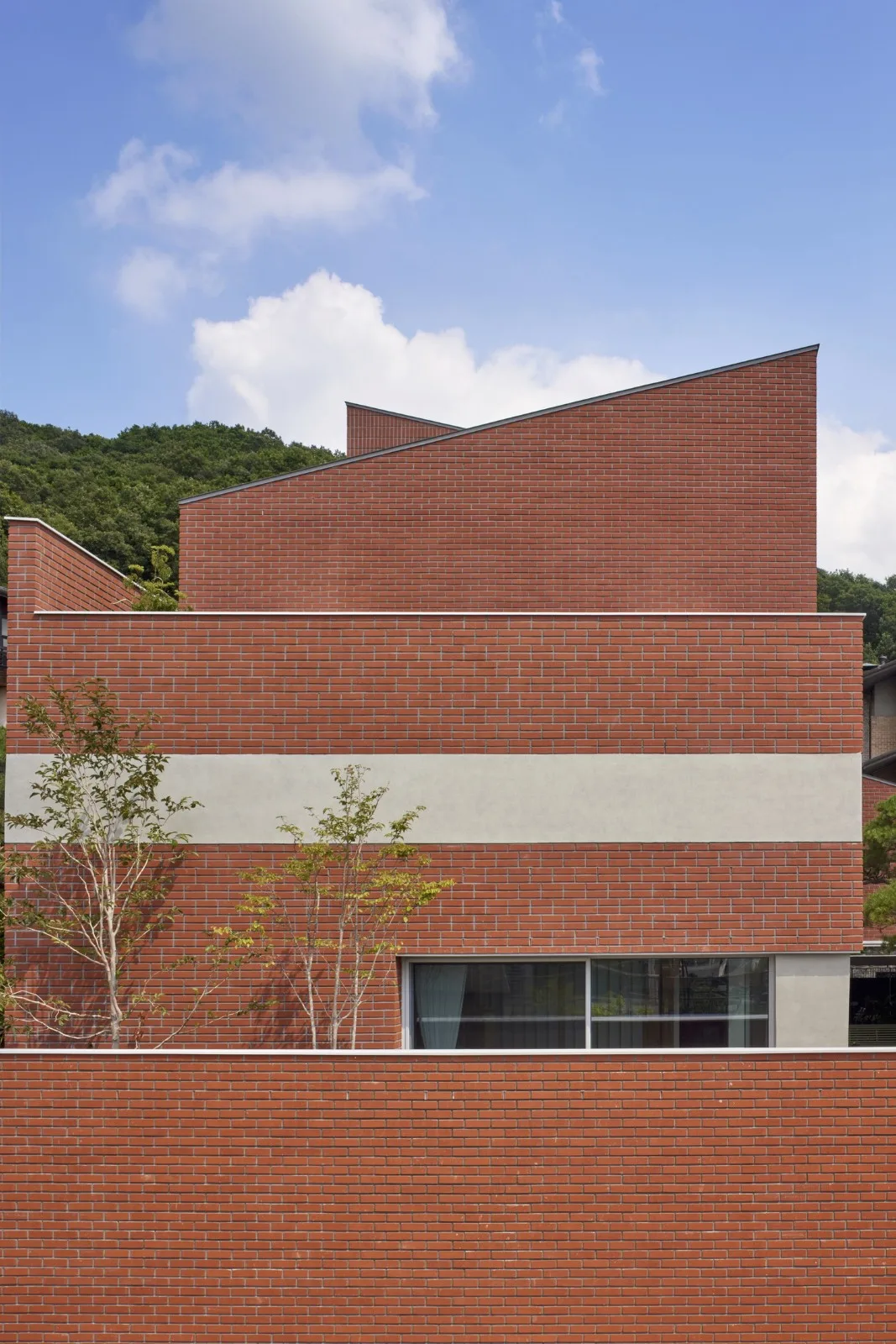
One of the main design challenges was determining the scale of the residence. Initially, the homeowner wanted the house to be larger than the neighboring buildings. The original design was for two floors, but later expanded to three. Local regulations requiring sloped roofs further increased the building’s apparent size. Additionally, solid walls enclosing the property to ensure privacy intensified the sense of enclosure imposed by the residence on its surroundings.
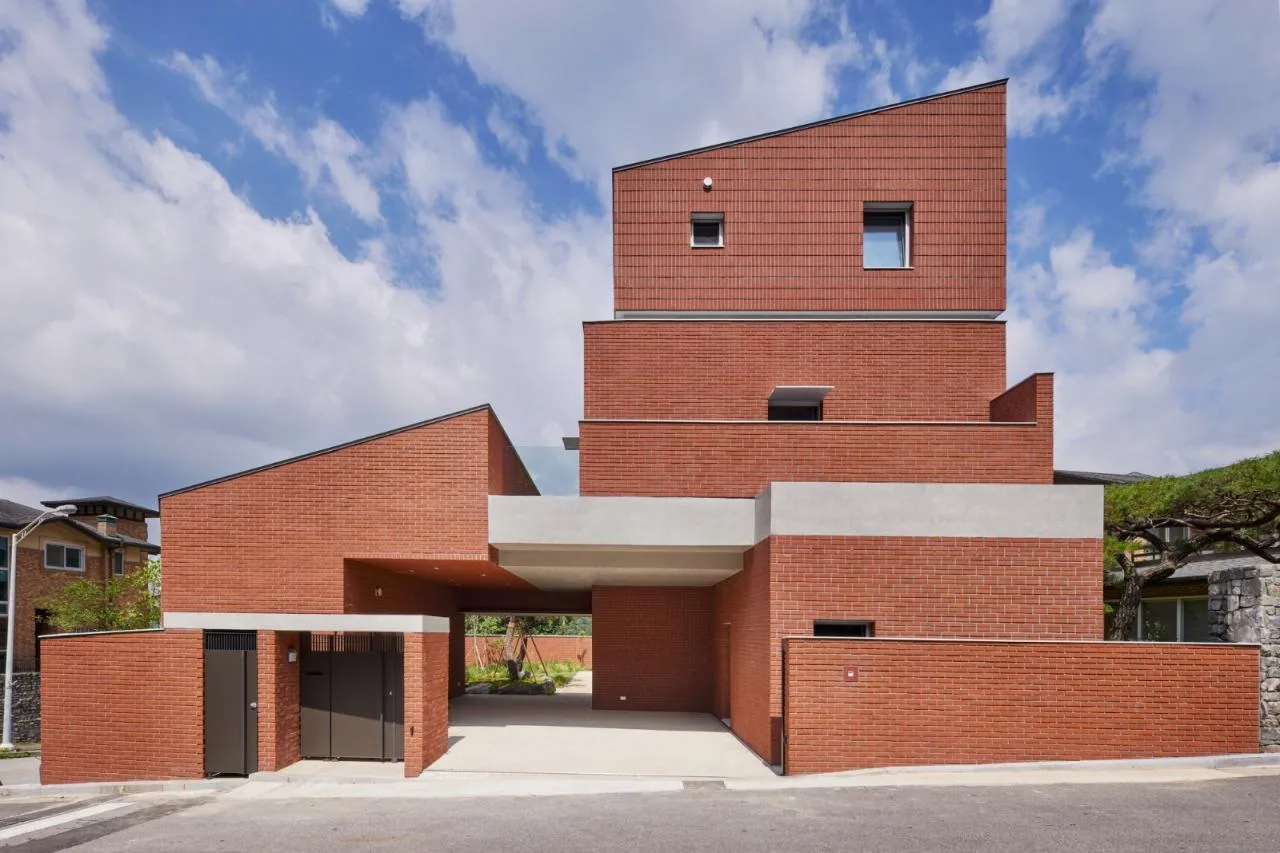
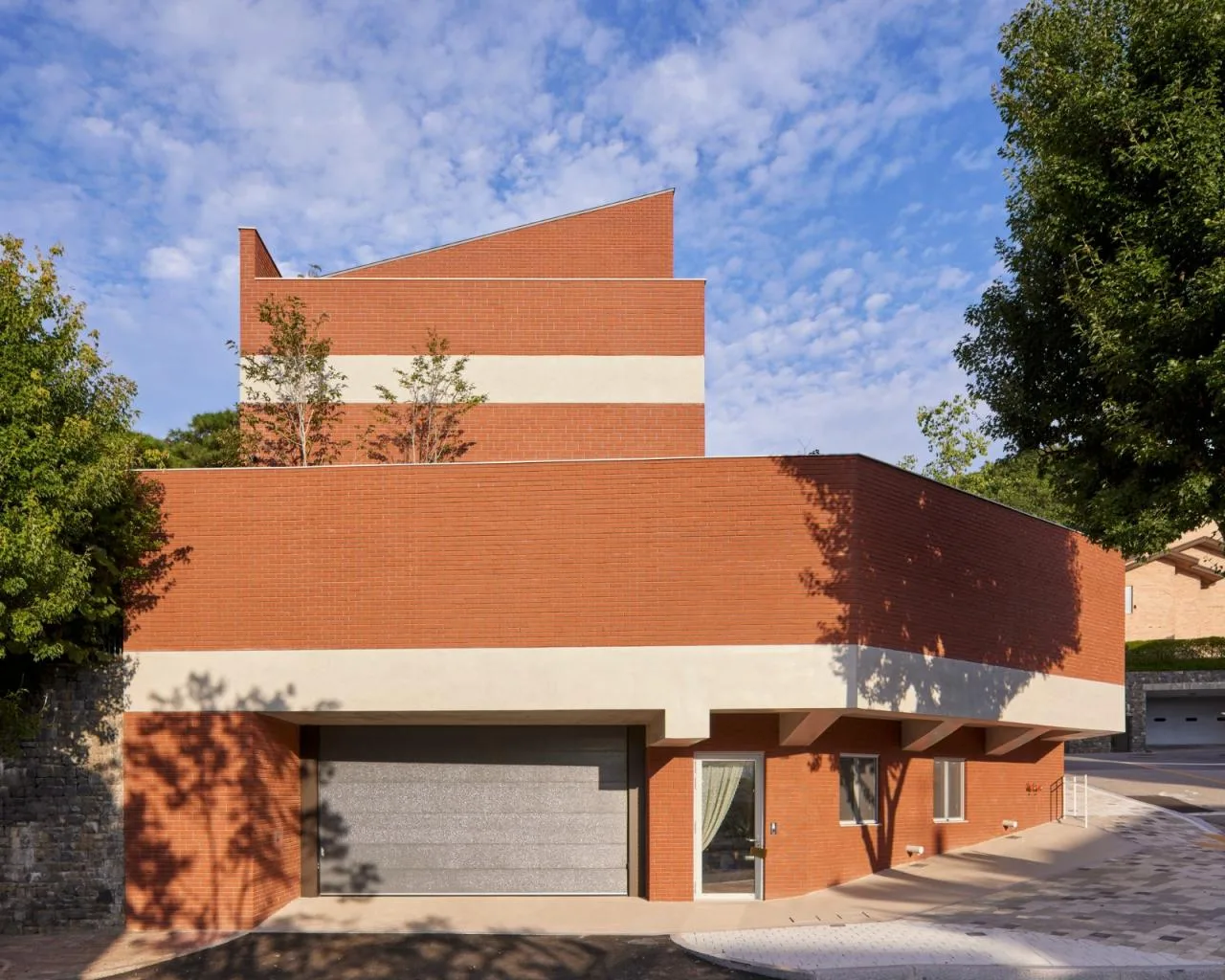
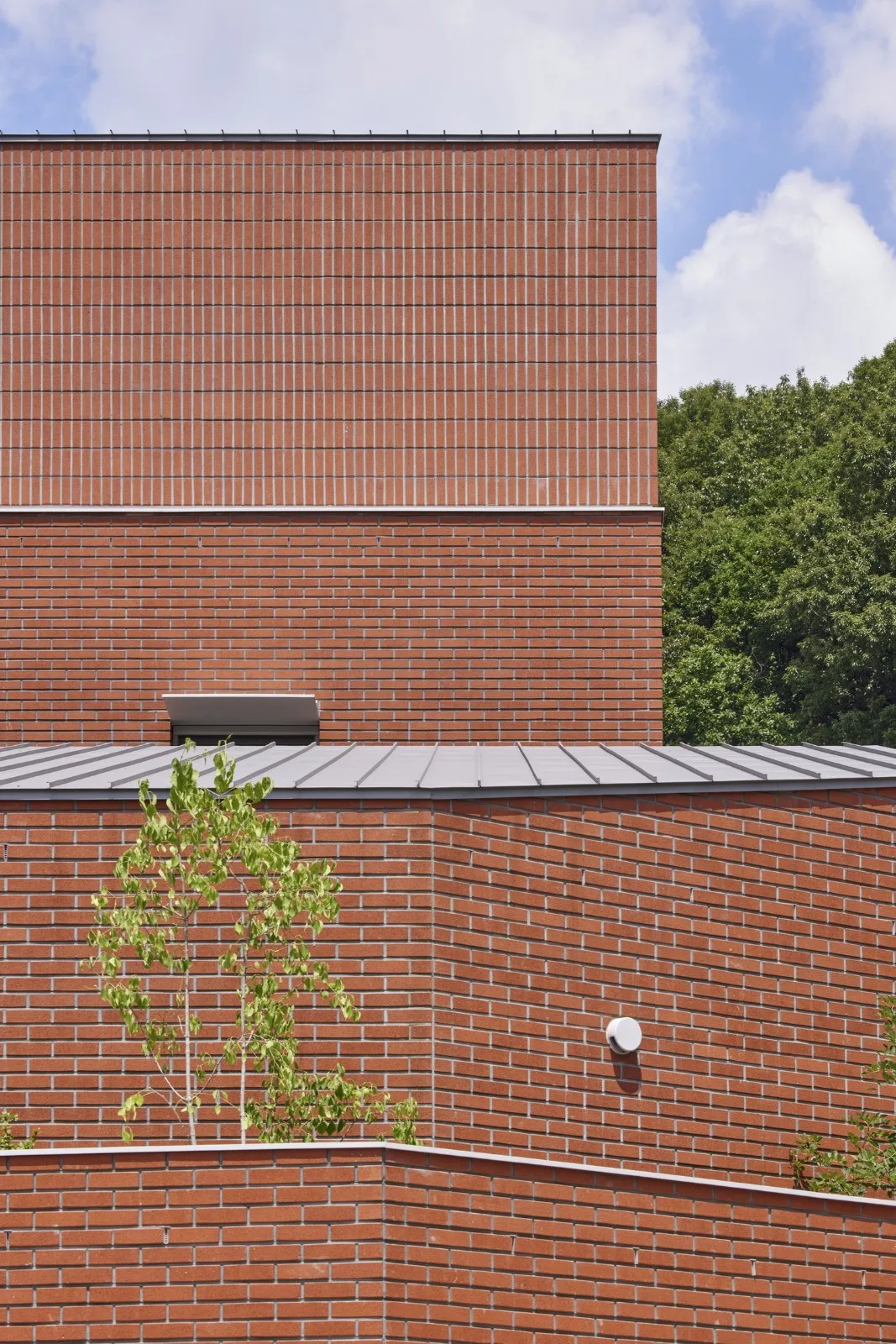
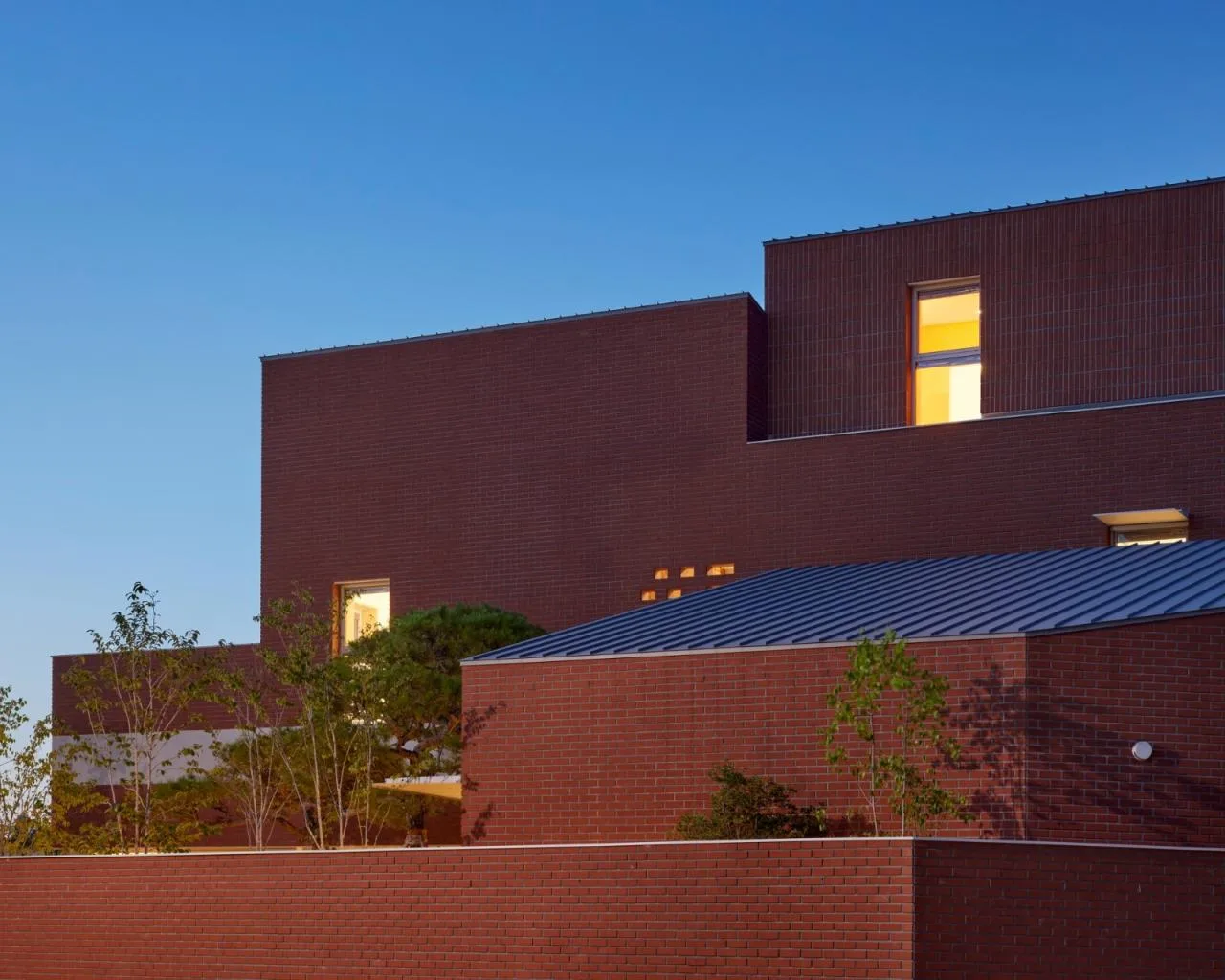
Local builders typically use brick materials and design segmented volumes and roofs rather than a single mass. We embraced this approach to integrate the building into its context while addressing the challenge of its large volume. The design breaks the building into smaller parts, allowing the three-story section to protrude above the second-floor roof, with roofs oriented in different directions. Although constructed from a single conventional material, the building uses embedded concrete flat noodles to separate floors and three distinct masonry techniques for the exterior walls.
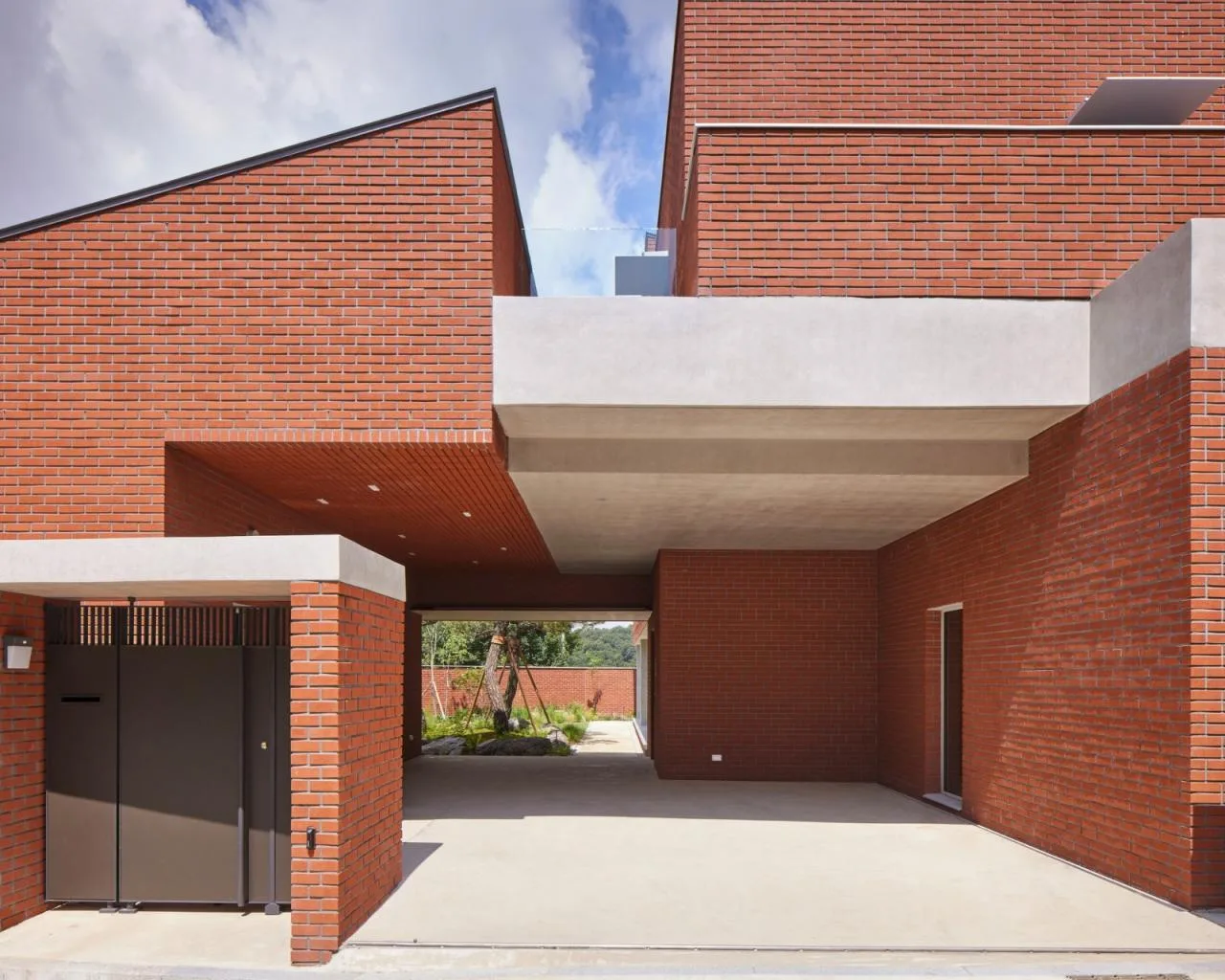
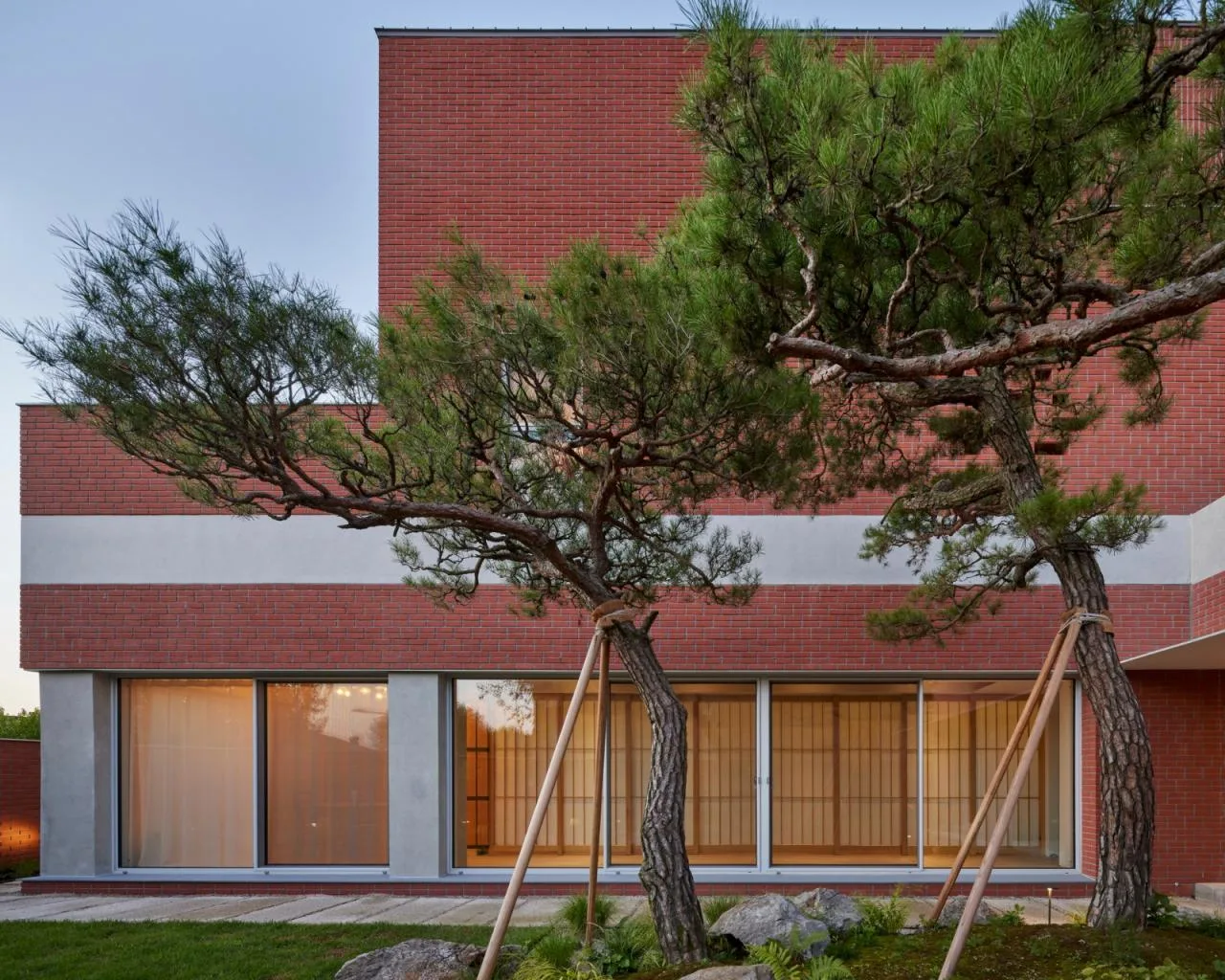
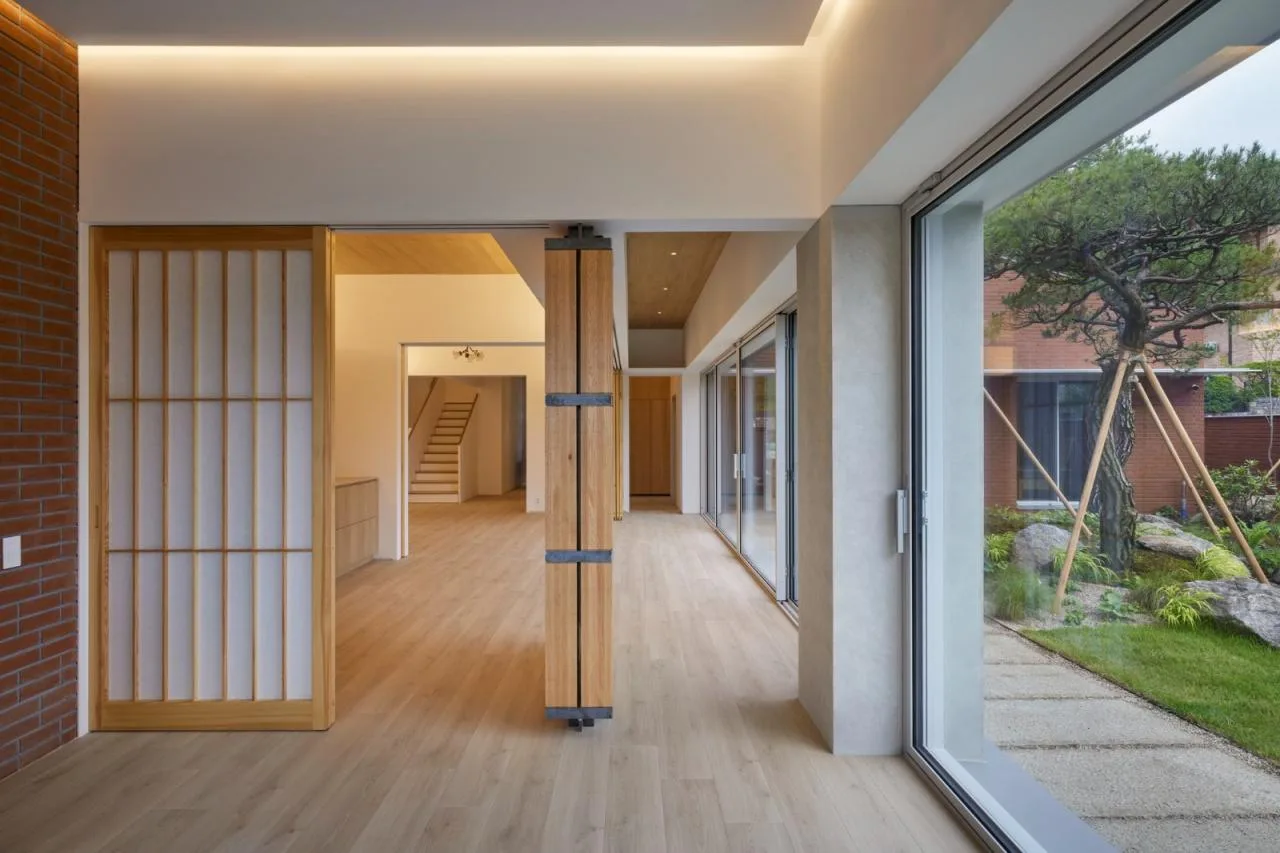
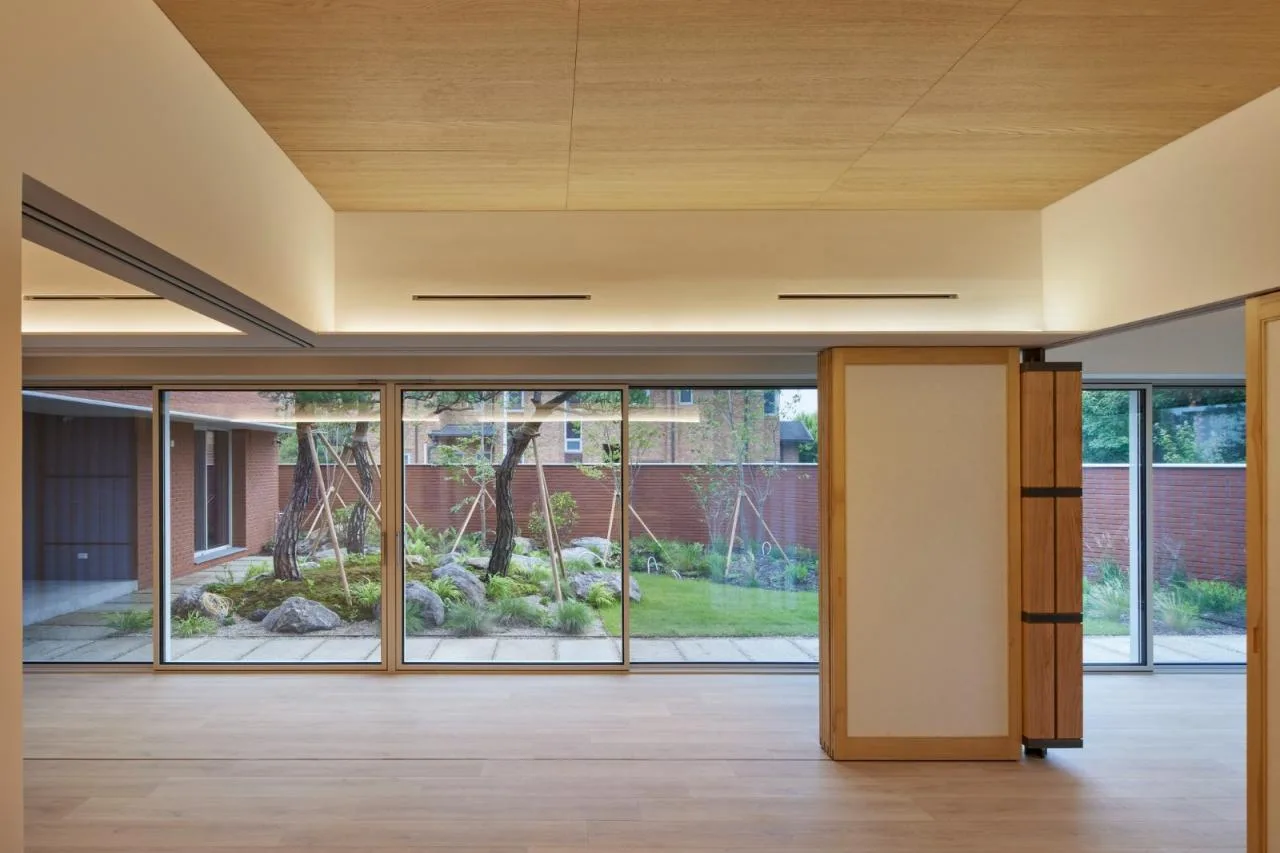
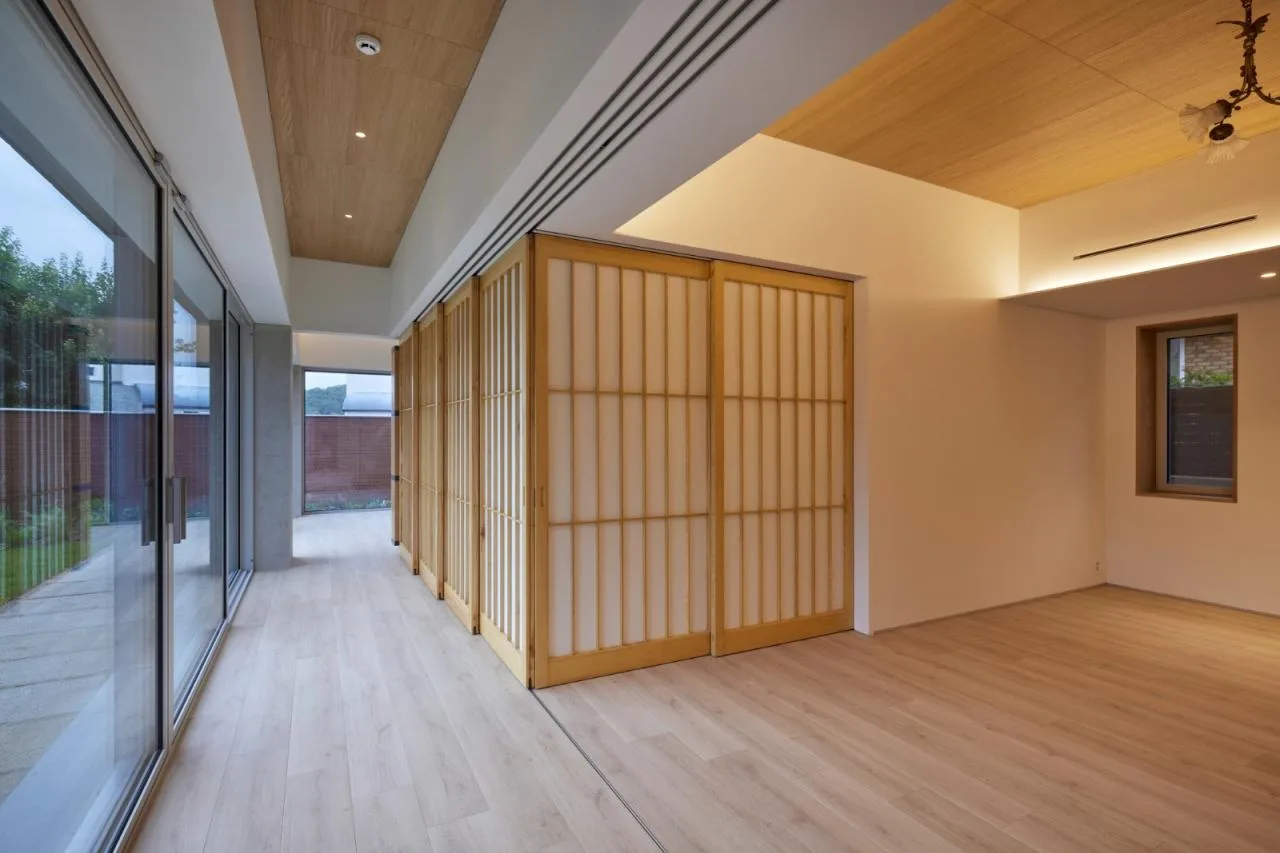
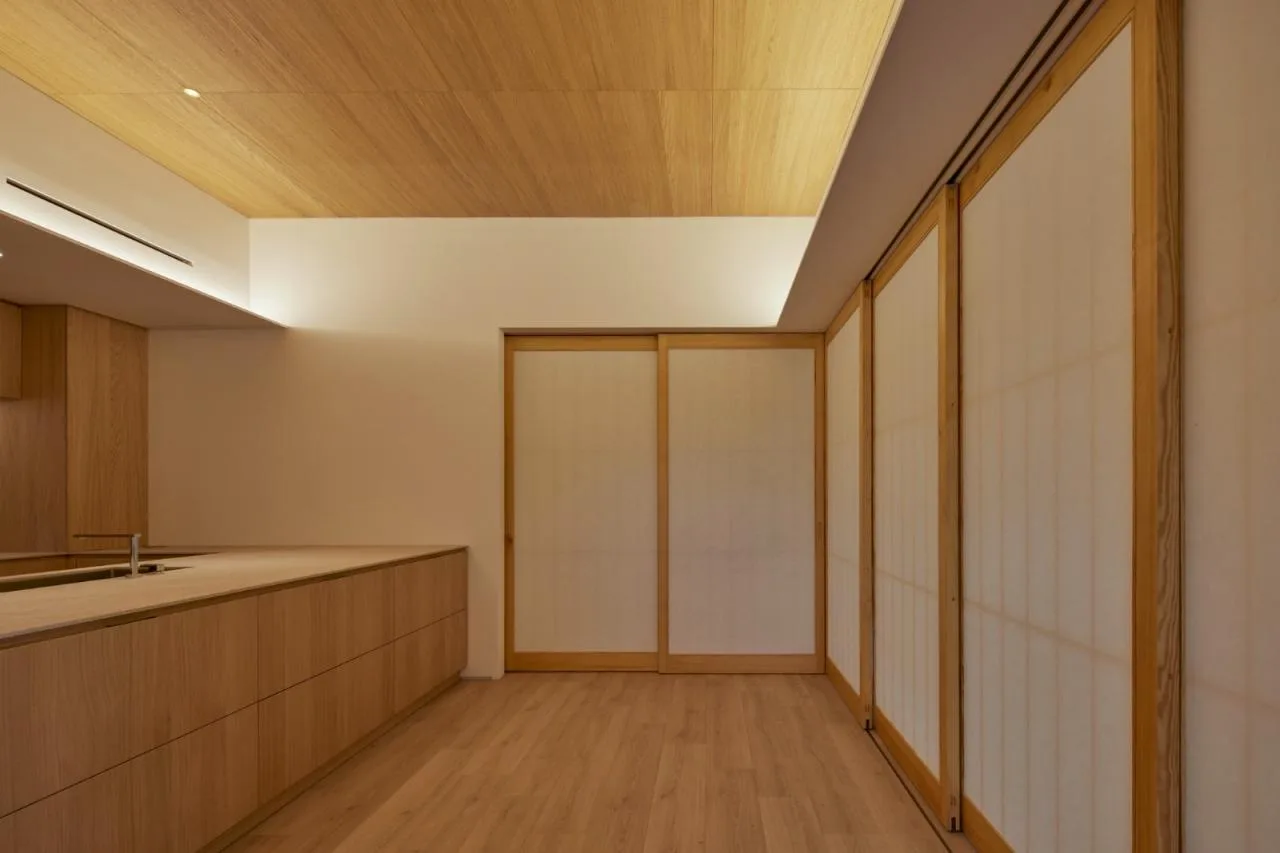
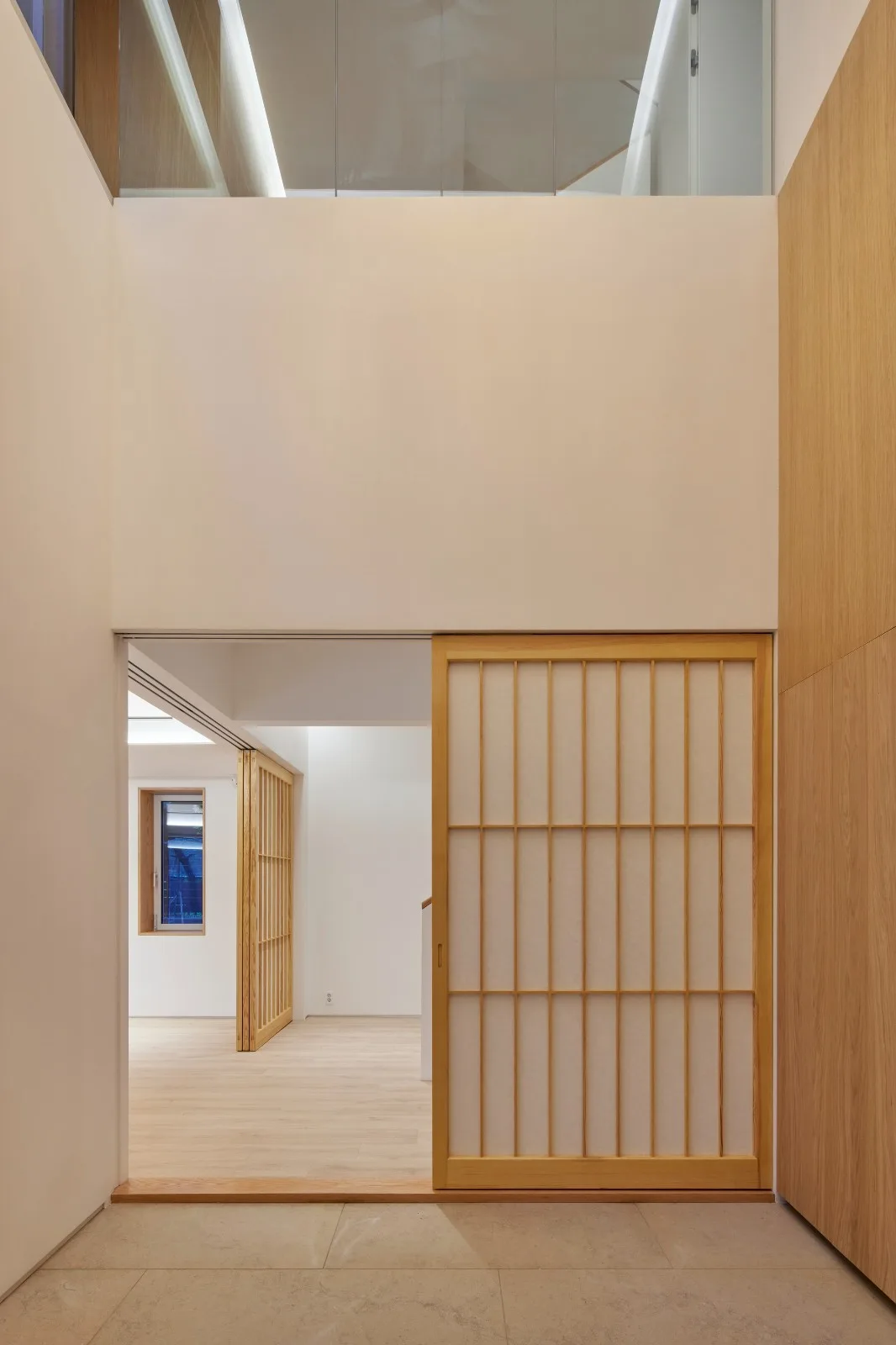
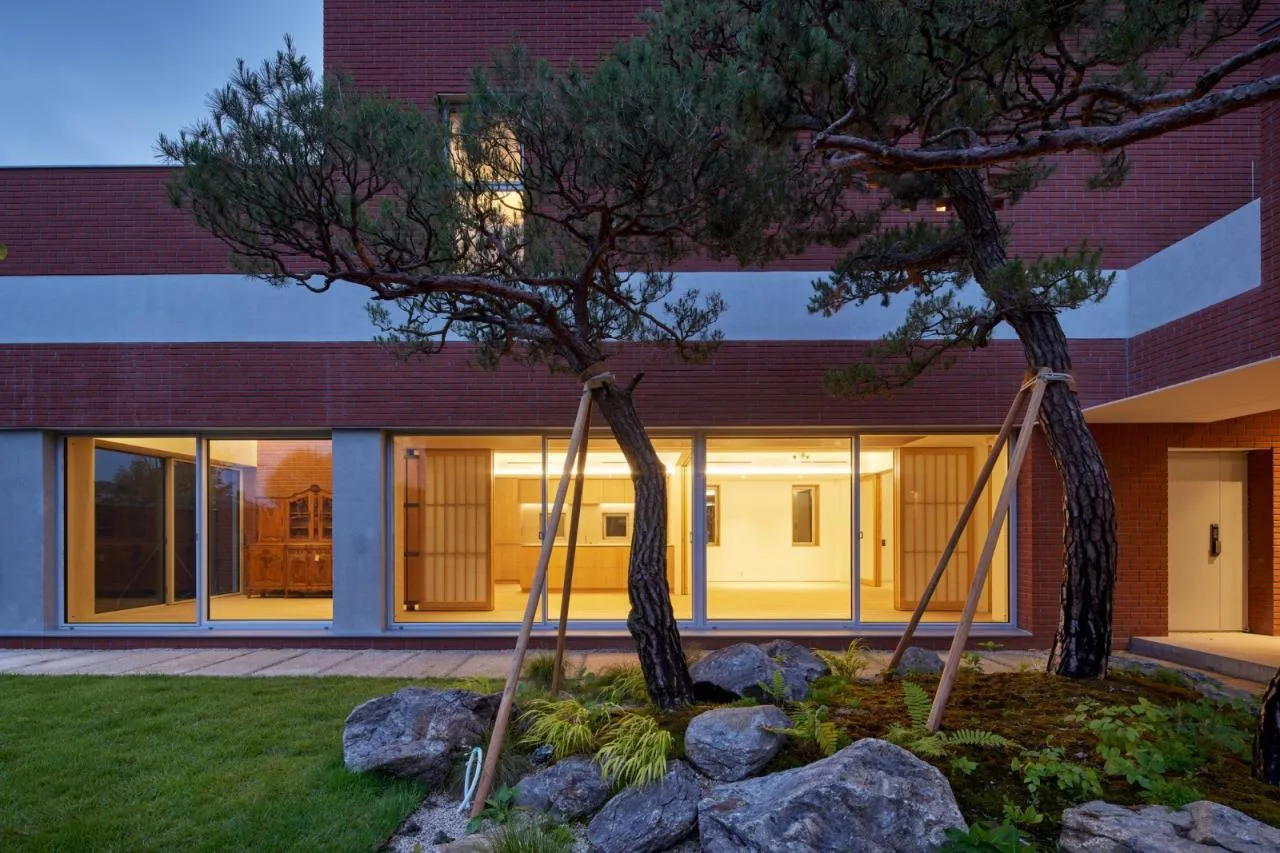
Red bricks have long been a classic material for residential buildings in South Korea. By blending local and foreign elements, the architecture strikes a balance between avant-garde and traditional. A notable example is the combination of pillars with traditional Korean sliding doors. The columns are sized to frame four pairs of doors and are segmented into four vertical parts with several iron hoops. The steel columns at the center reference designs by Mies van der Rohe, combined with wood and metal details inspired by Carlo Scarpa, while the iron hoops are a common feature in traditional Korean architecture.
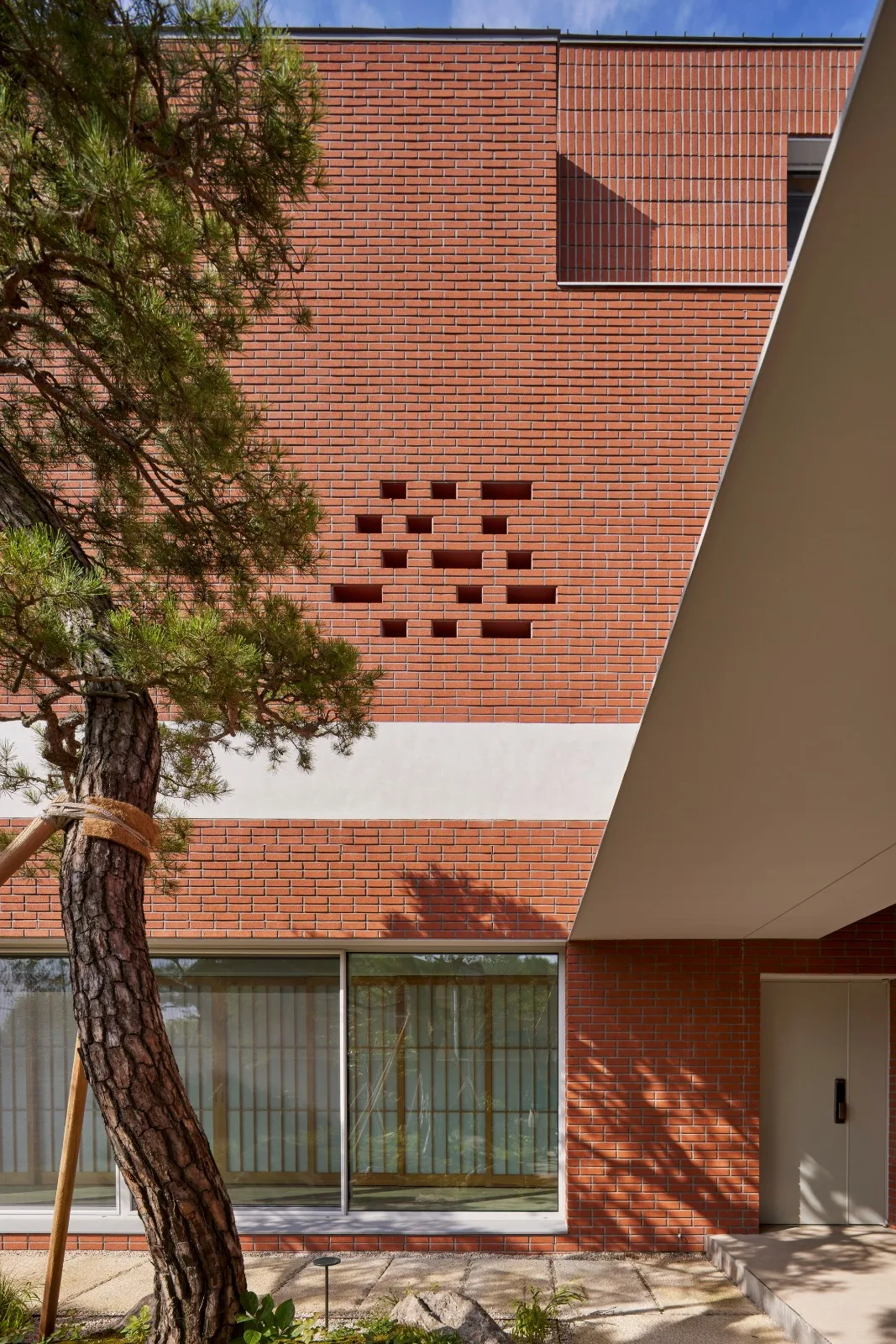
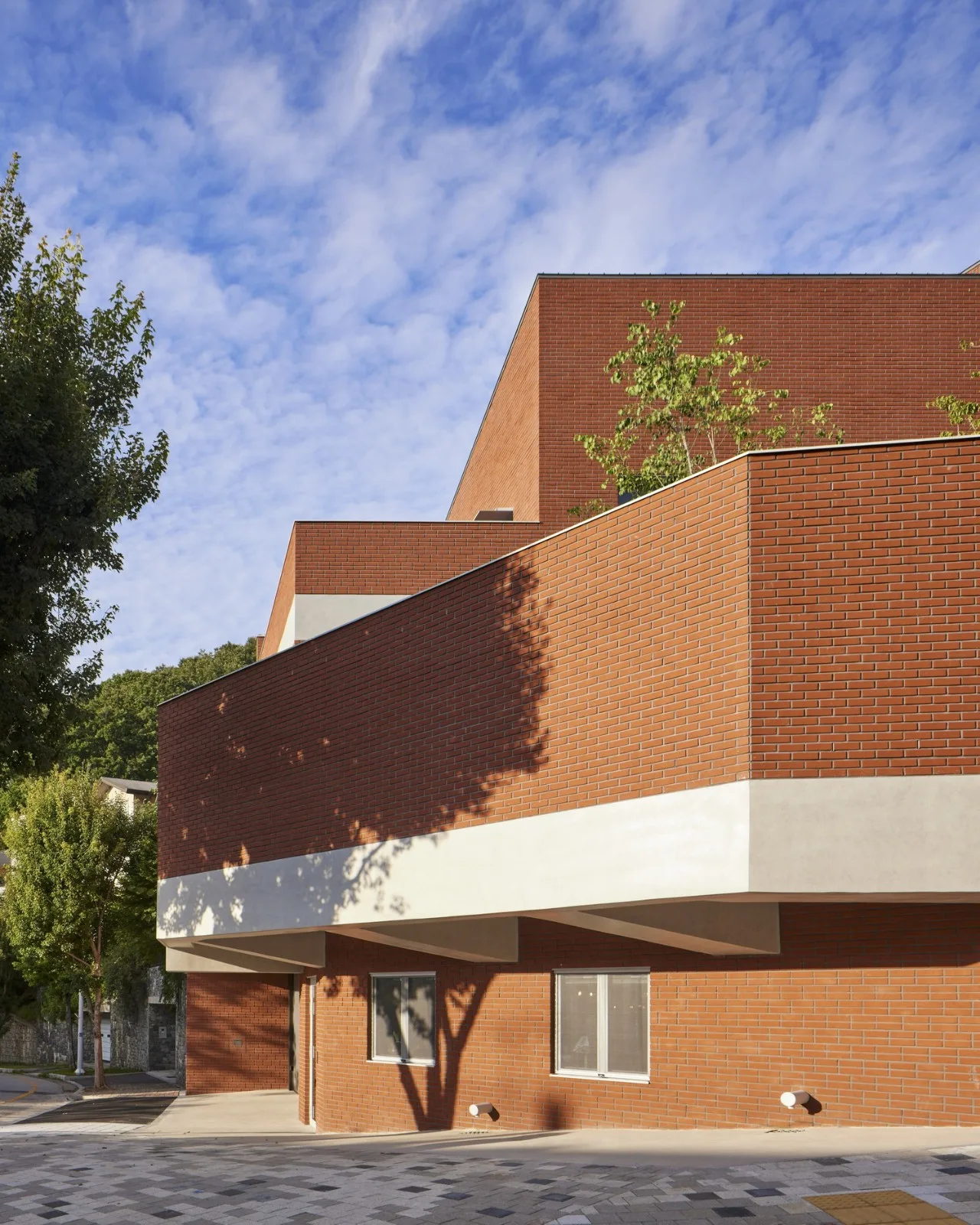
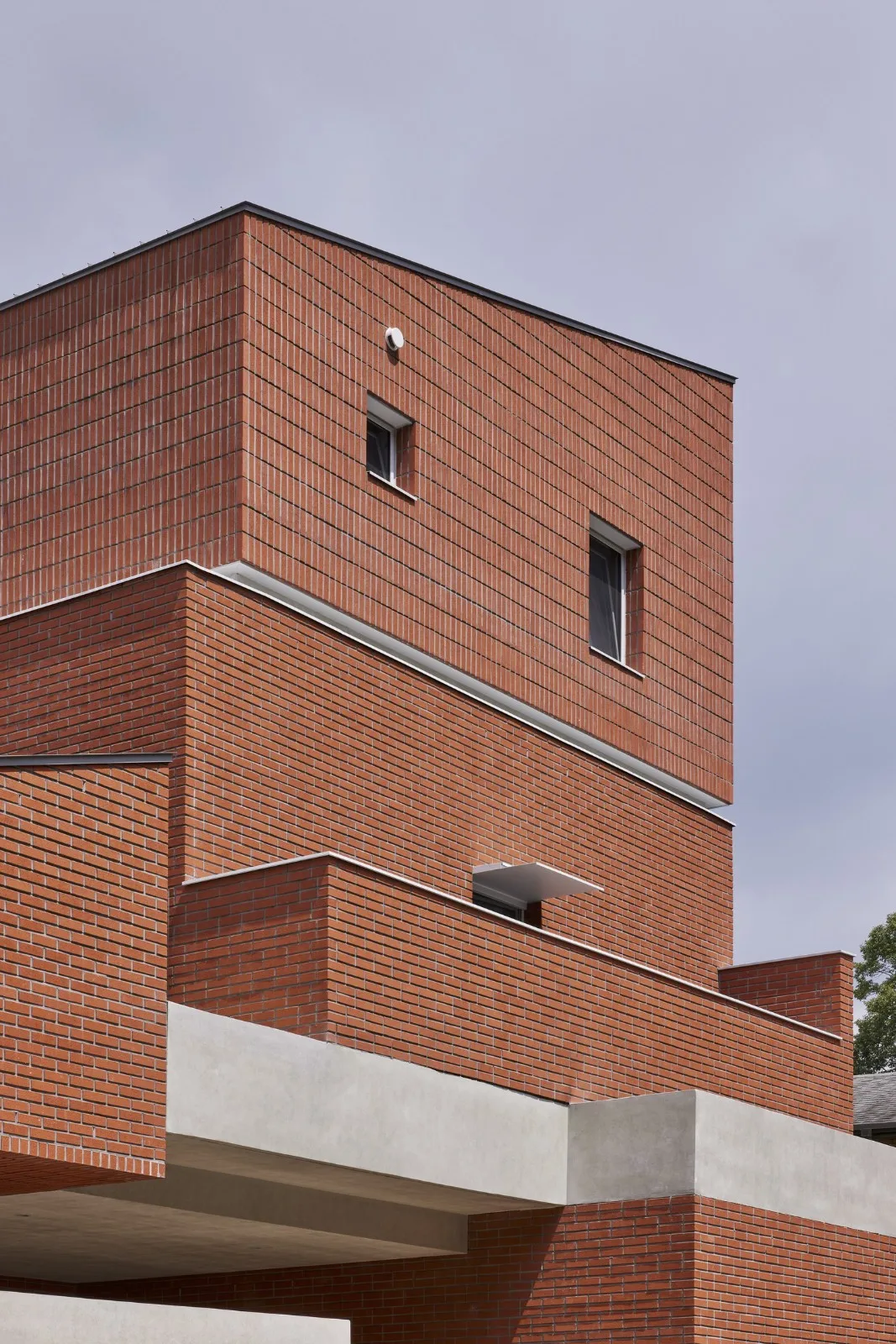
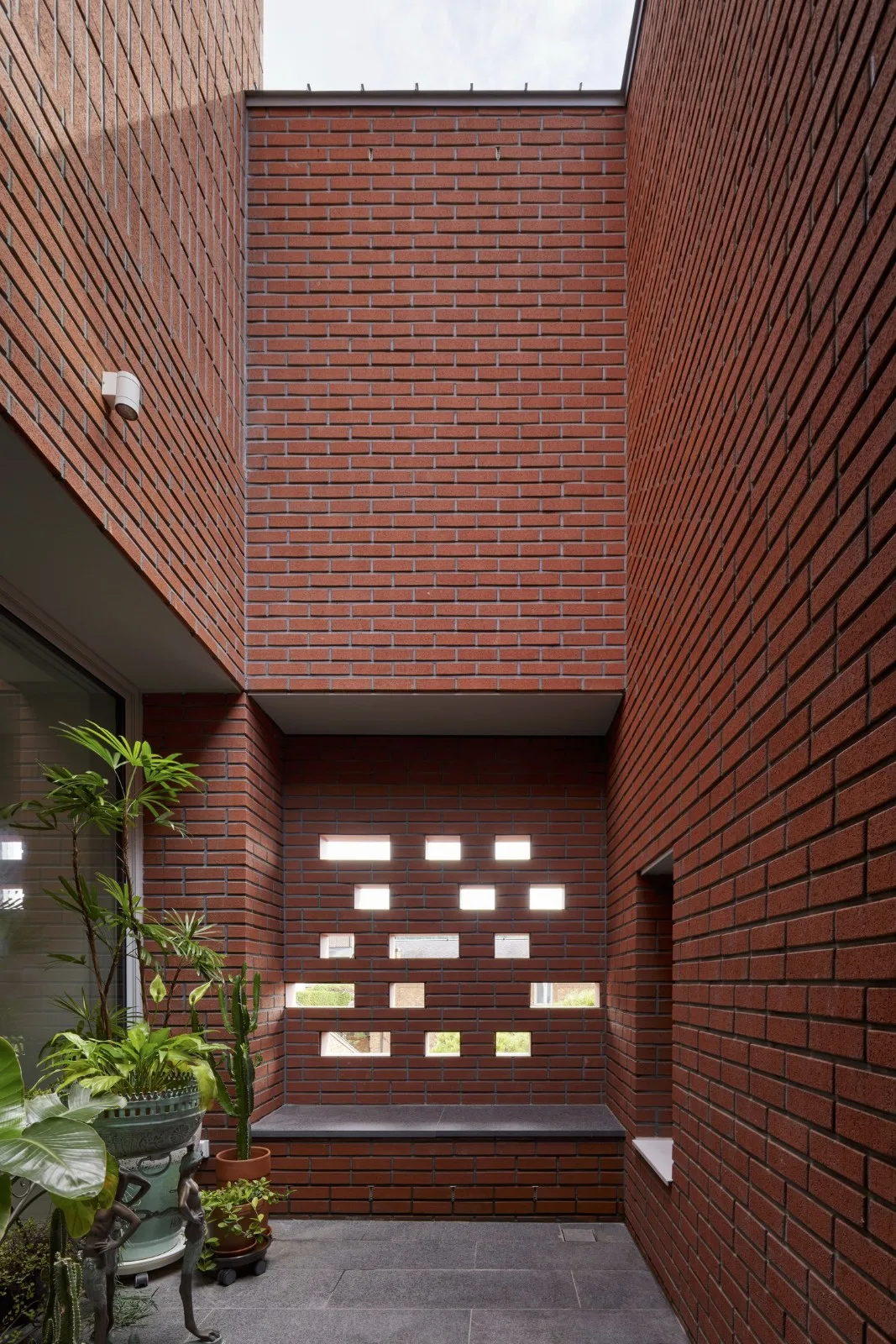
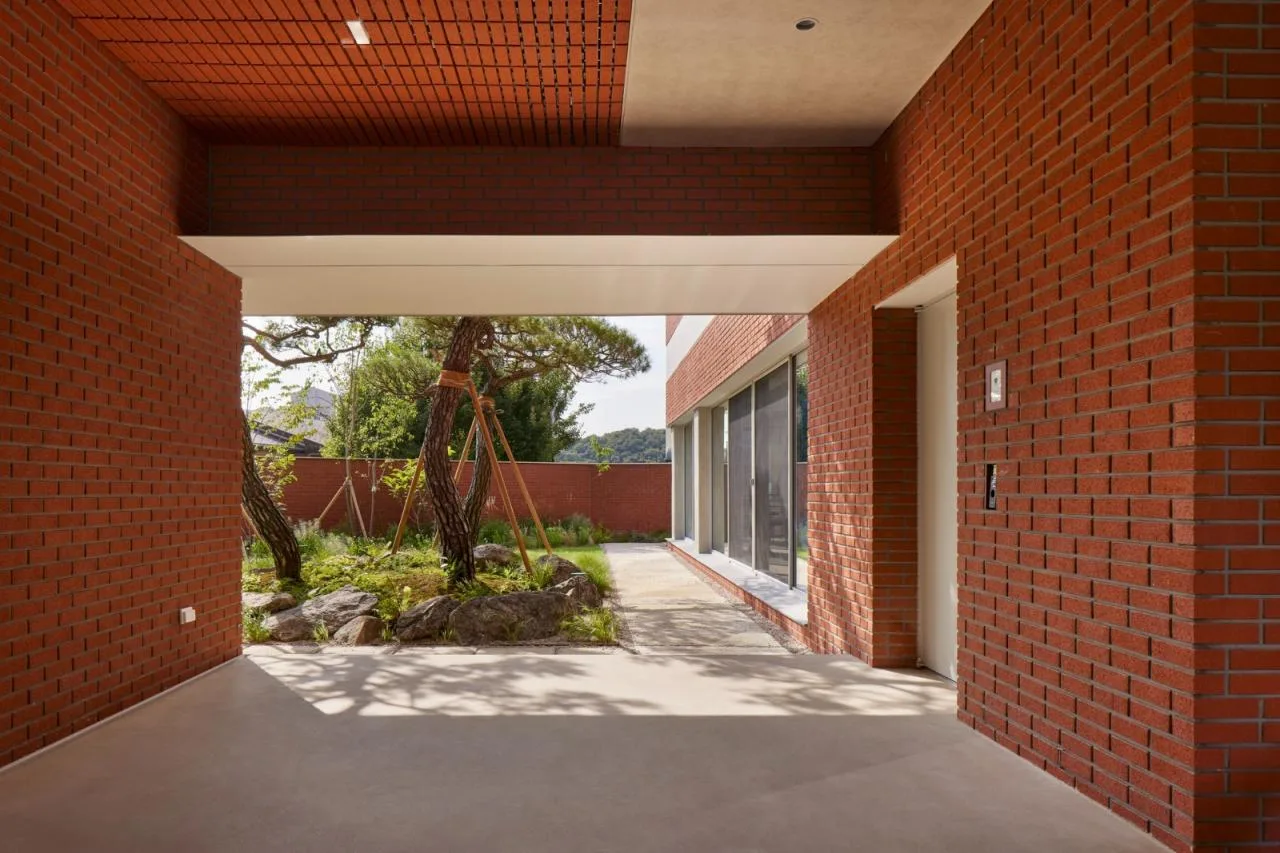
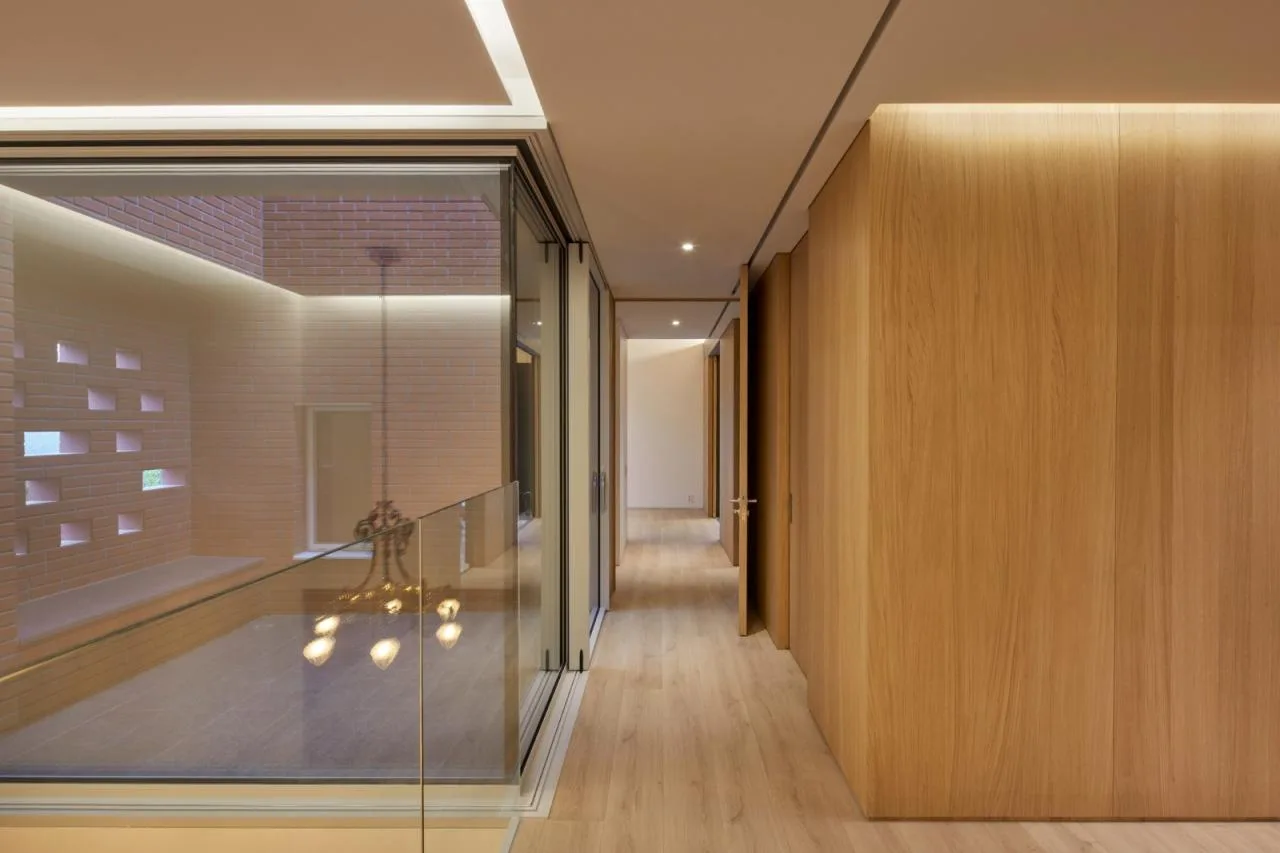
Beyond architectural features, visual openness and privacy were key design priorities. Since the family enjoys outdoor activities, they wanted easy access to outdoor spaces from every part of the house while maintaining privacy. To achieve this, the ground floor walls were replaced with sliding doors that separate the family activity areas and allow flexible opening to the courtyard. The second floor is designated as private, featuring minimal window openings and low terrace walls that shield most windows, yet every room can still access outdoor space via terraces. The lobby connects seamlessly with the courtyard, providing natural light and ventilation despite lacking direct exterior windows. These strategies preserve privacy without the need to close windows or draw curtains.
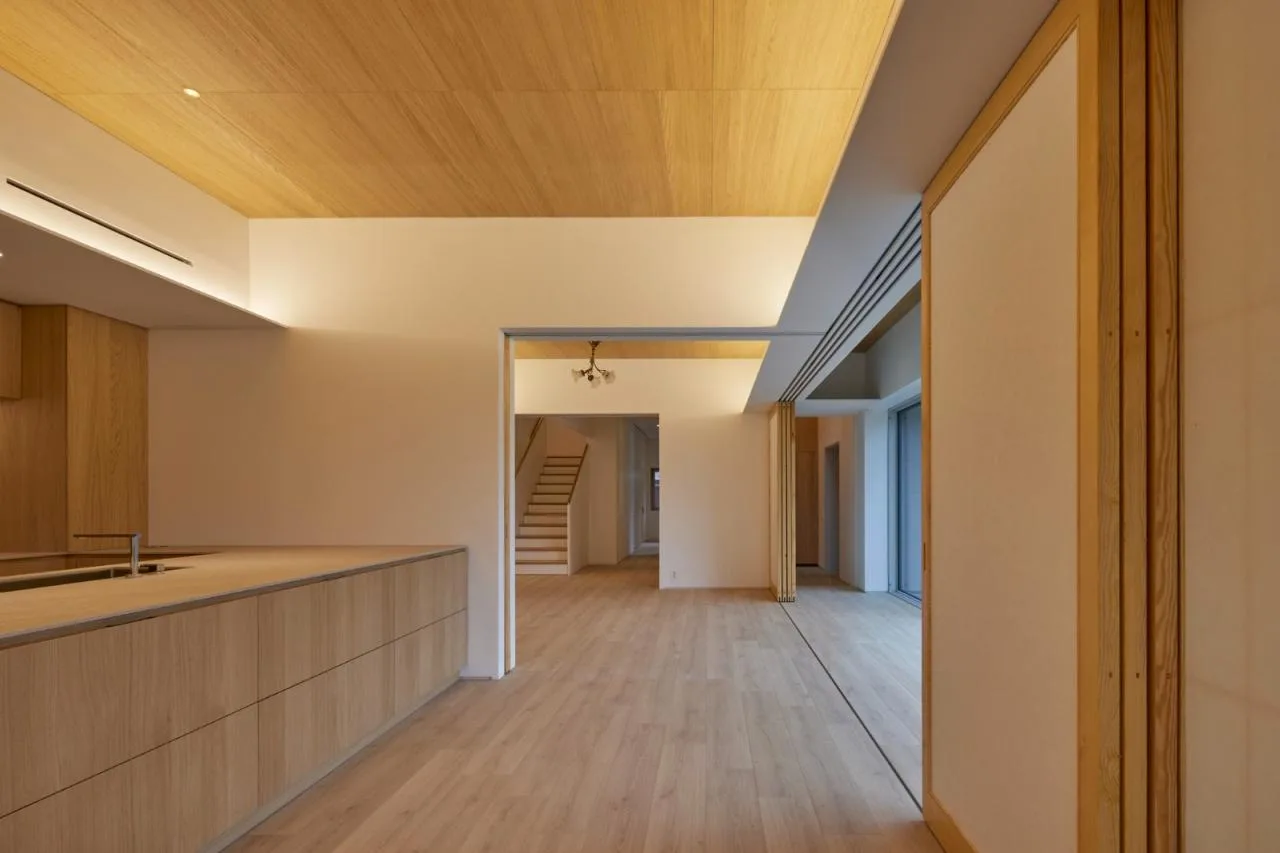
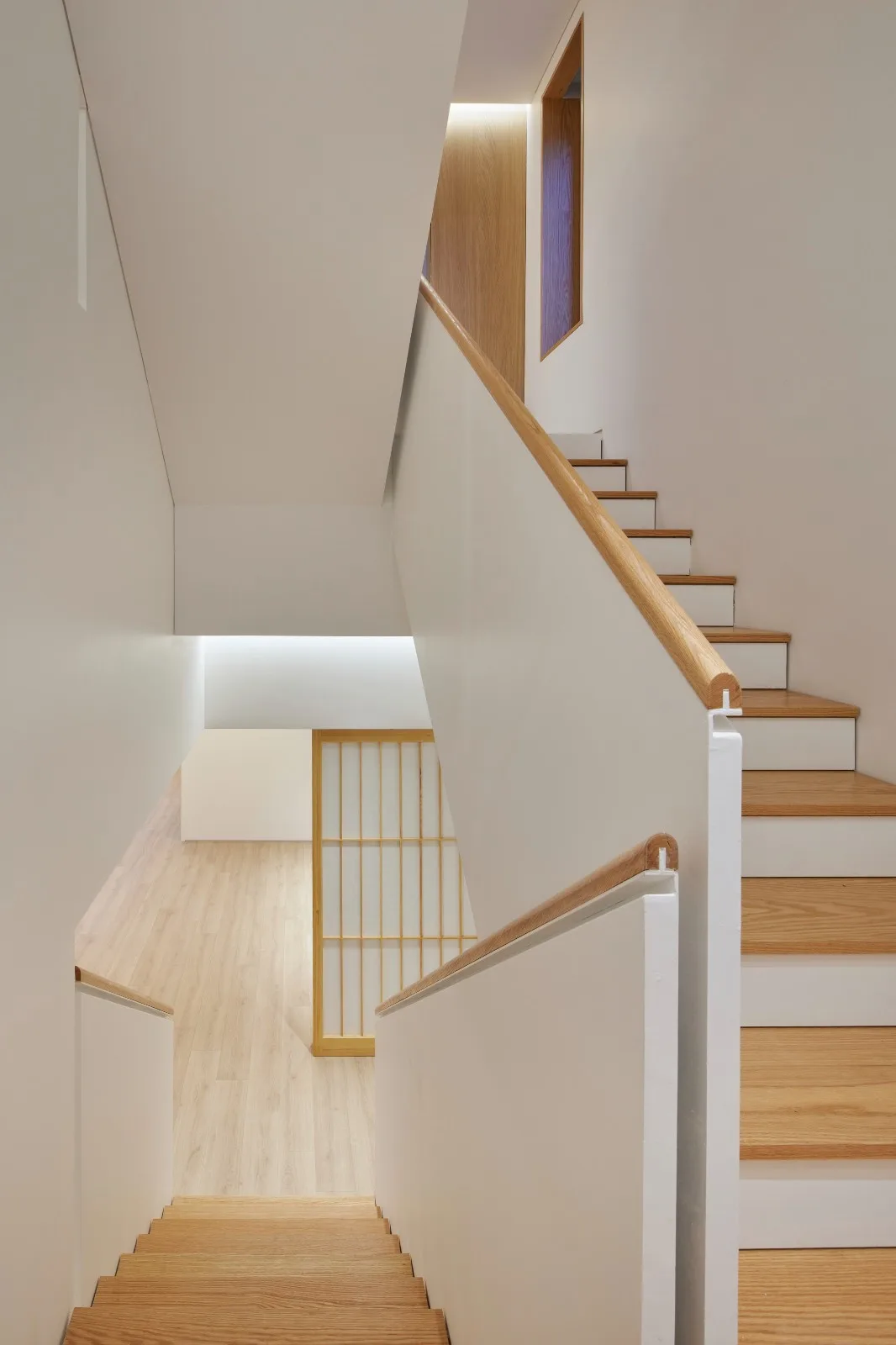
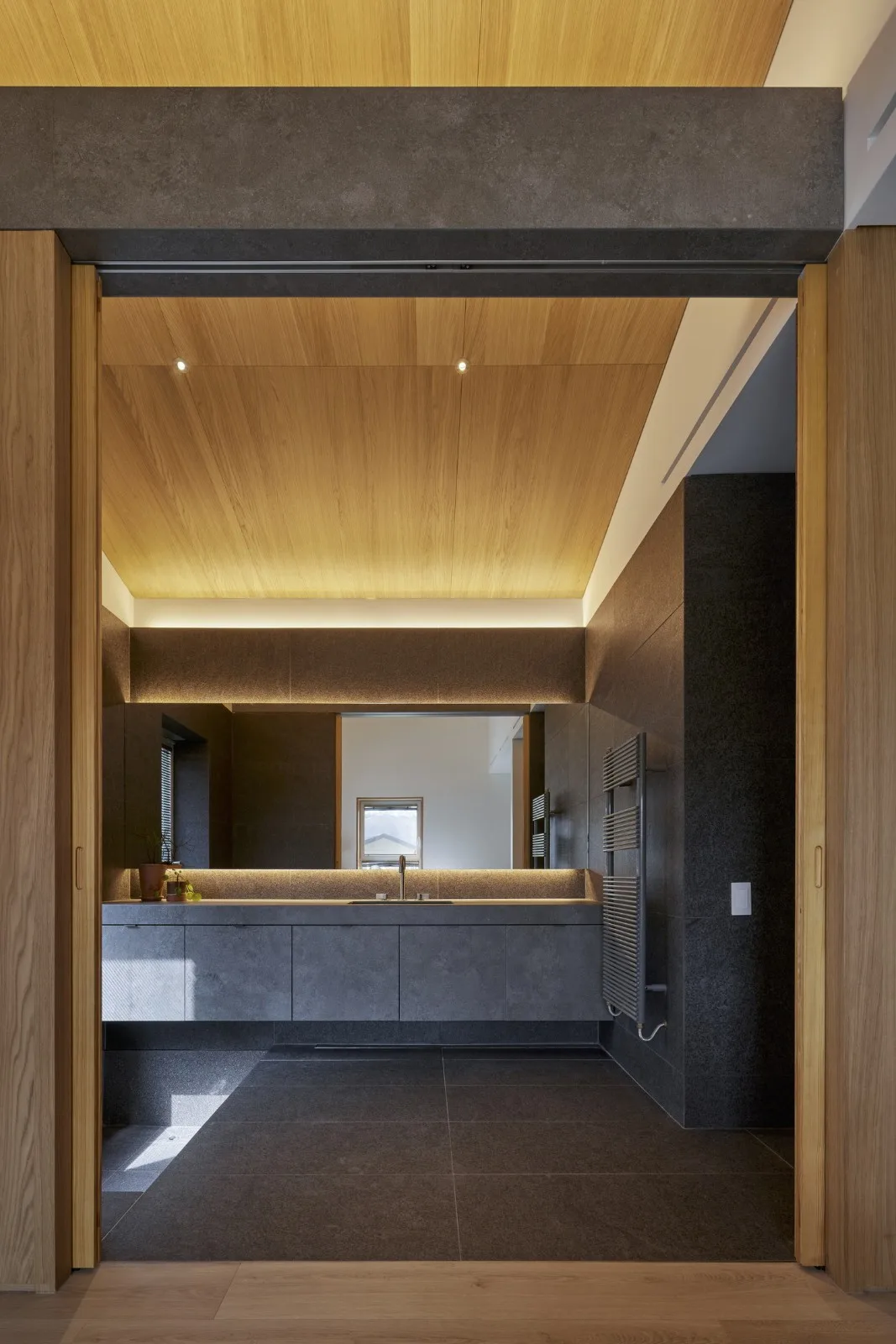
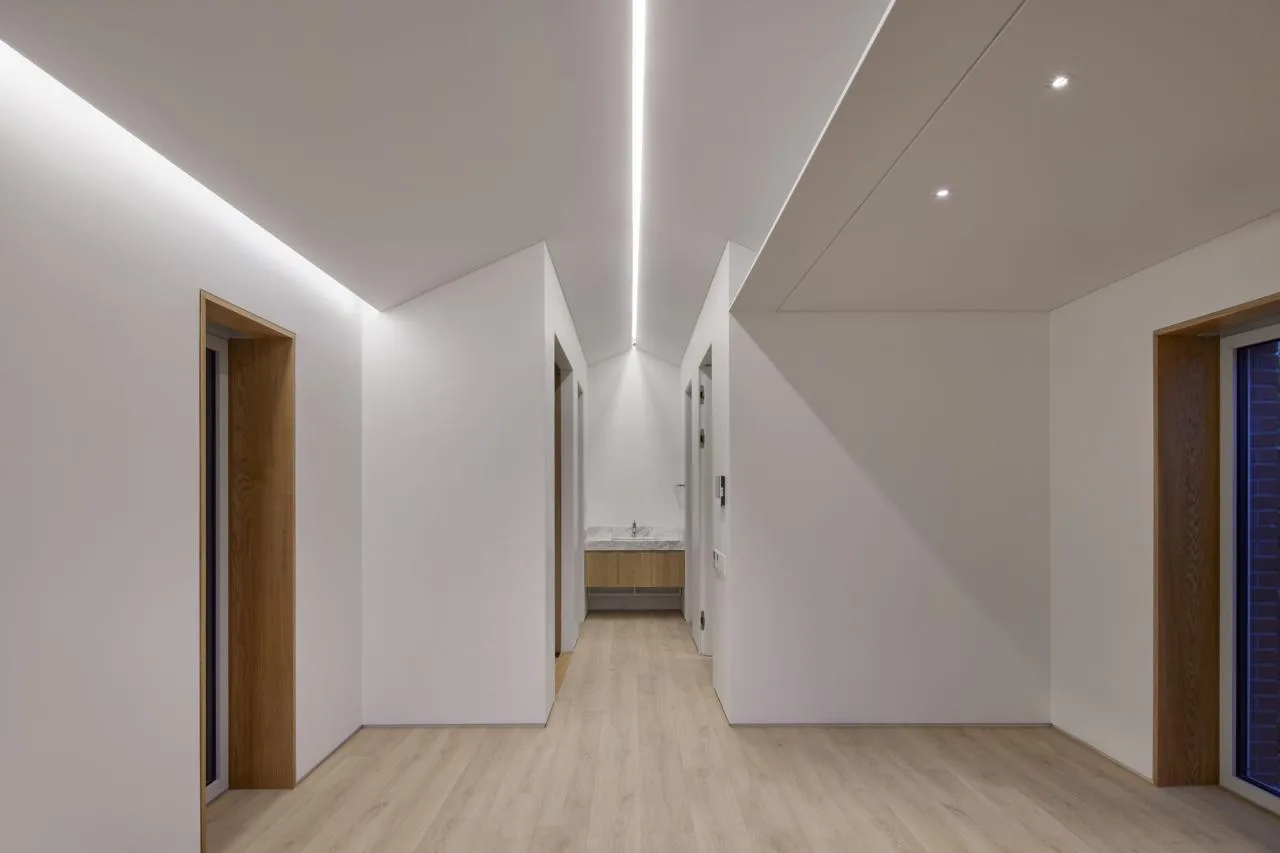
The interior design promotes openness and fluidity across rooms and floors. The entrance space’s elevation connects upper and lower levels. A semi-open design between the master bedroom and bathroom allows visual continuity even when the door is closed. Specially treated doors can dissolve traditional boundaries between rooms when open. These design choices create a residence with seamless connectivity in all directions.
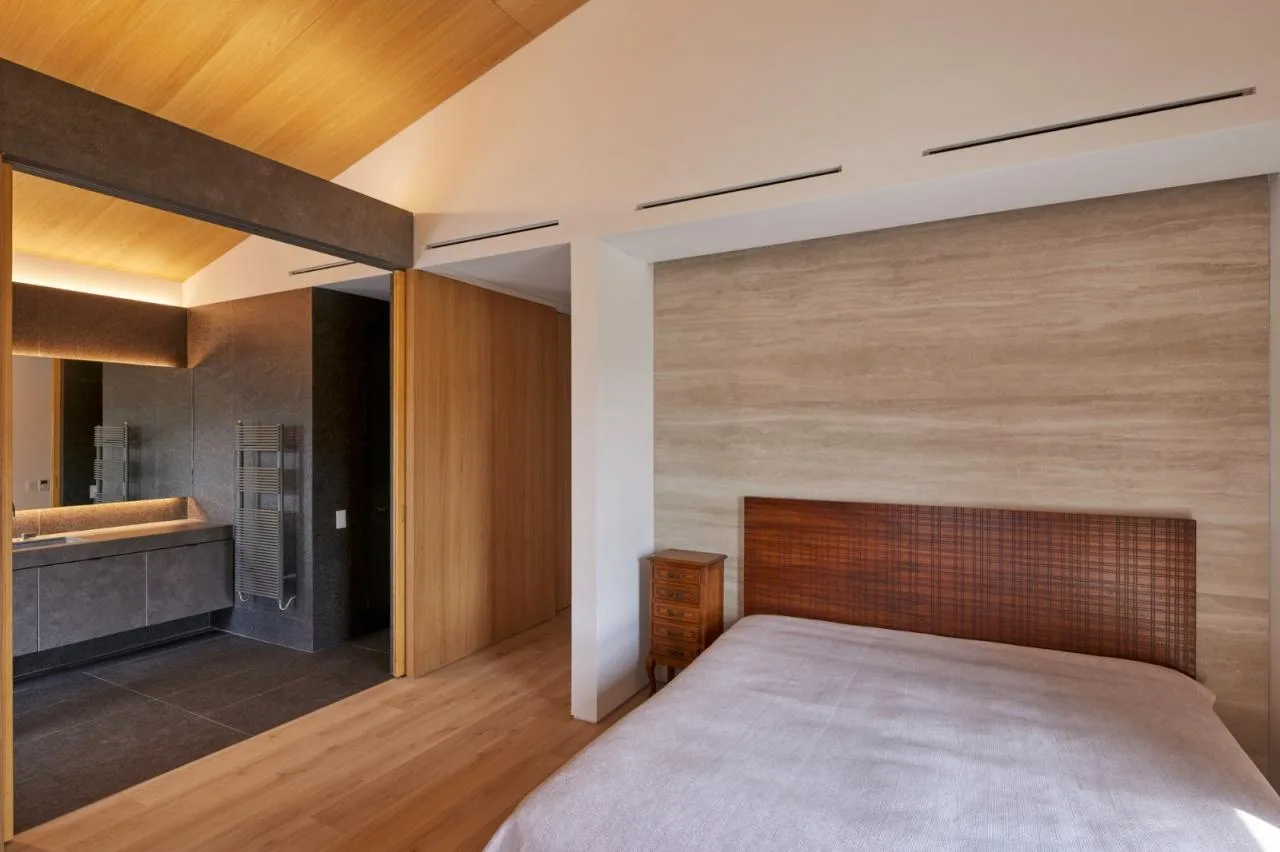
Traditional elements help the building harmonize with its surroundings and ensure comfort, while contrasting modern features address diverse needs. Jeokhoje creates modern spaces using traditional techniques enhanced by foreign technologies. The building’s scale and character blend with the neighborhood, resolving tensions between visual openness and privacy. Although inspired by local materials and forms, the project expresses a fresh, innovative identity. It successfully balances individual and community interests through the integration of traditional and modern elements.
Project Drawings
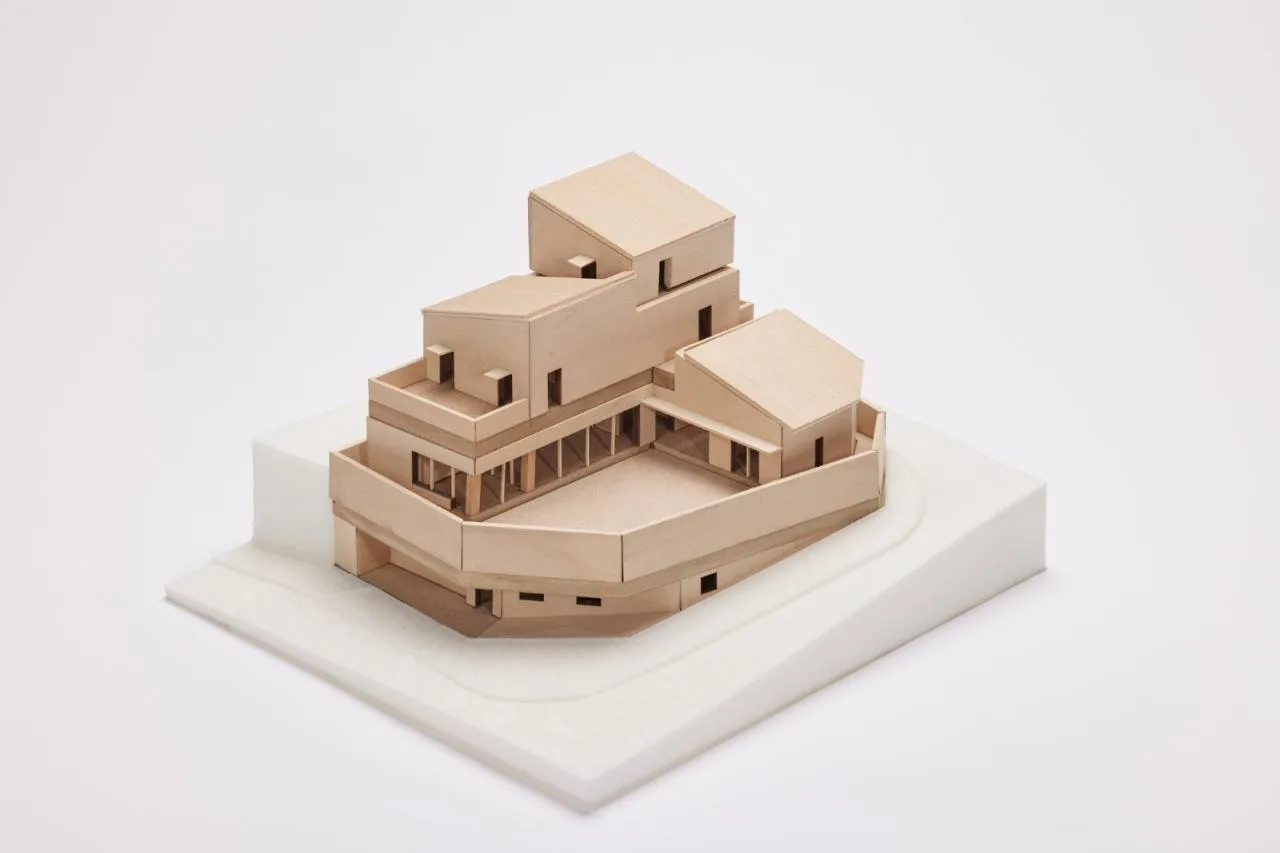
△ Model diagram
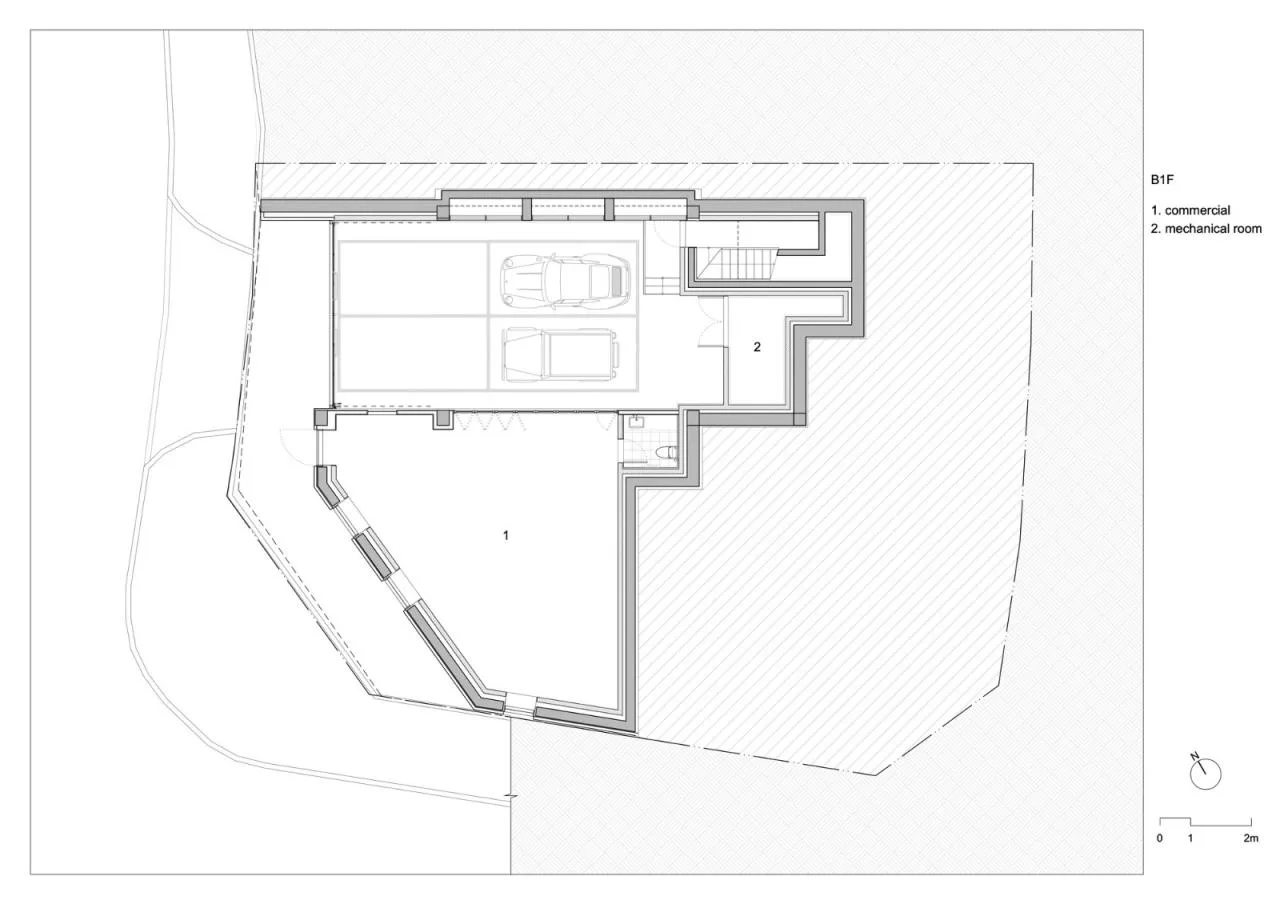
△ Basement Floor Plan
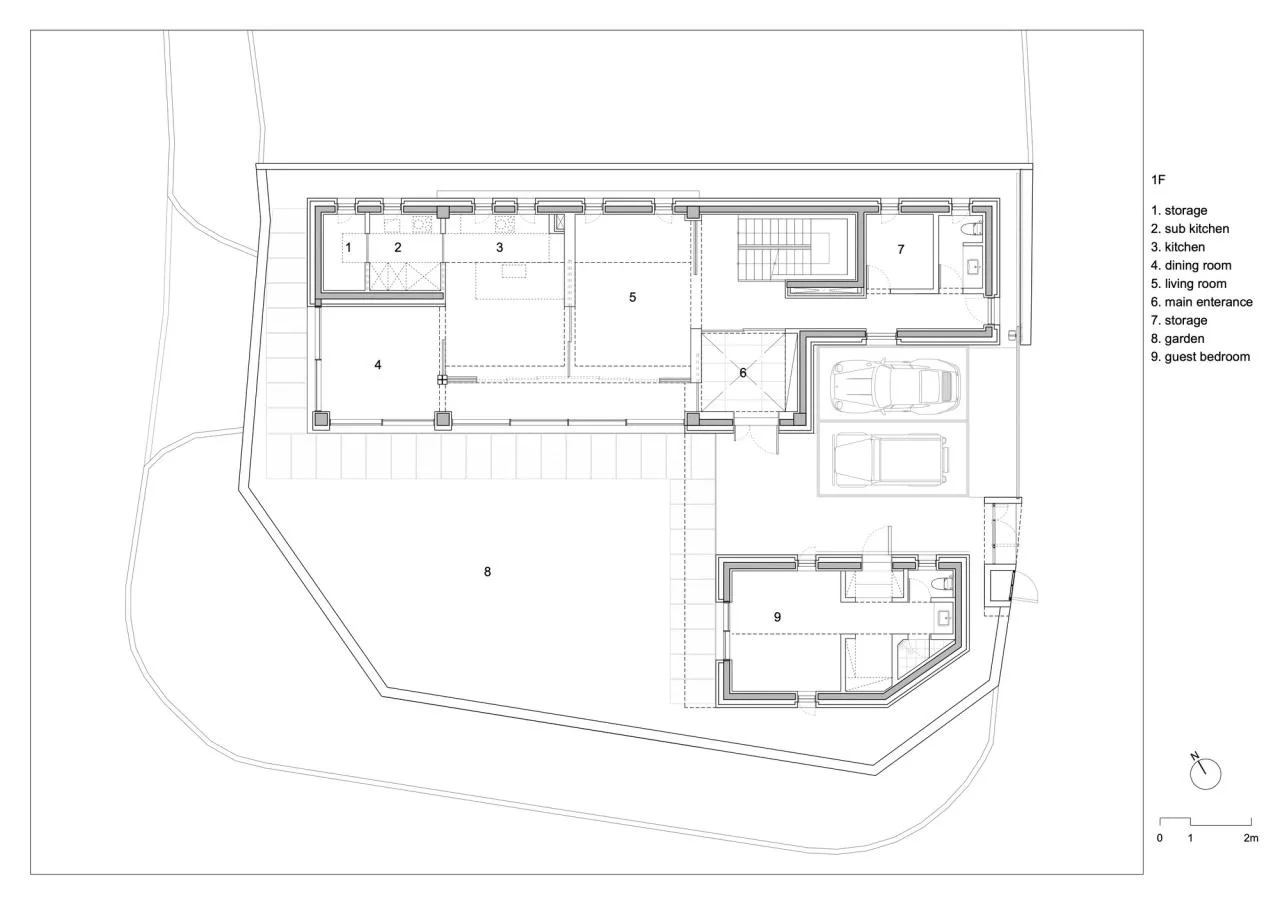
△ First Floor Plan
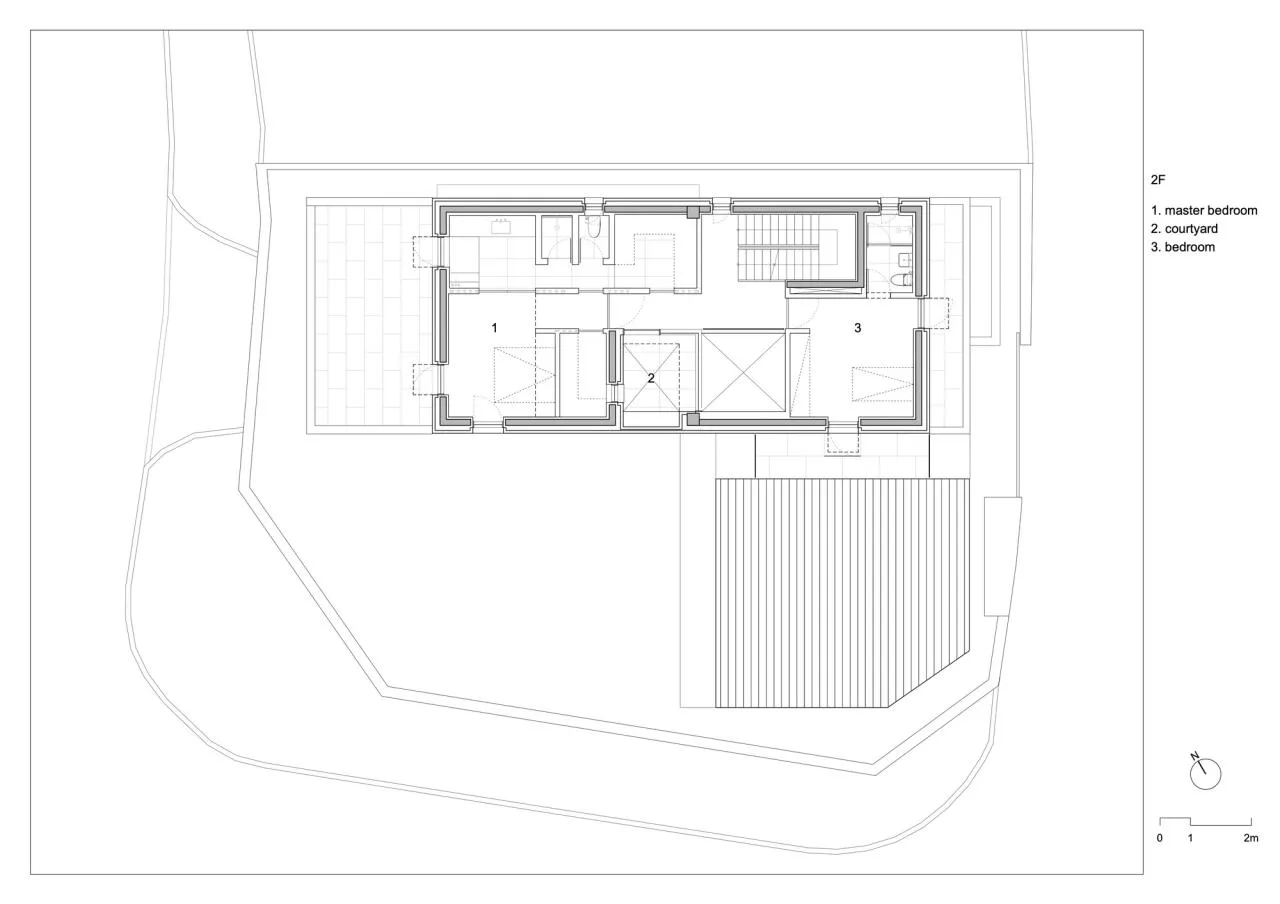
△ Second Floor Plan
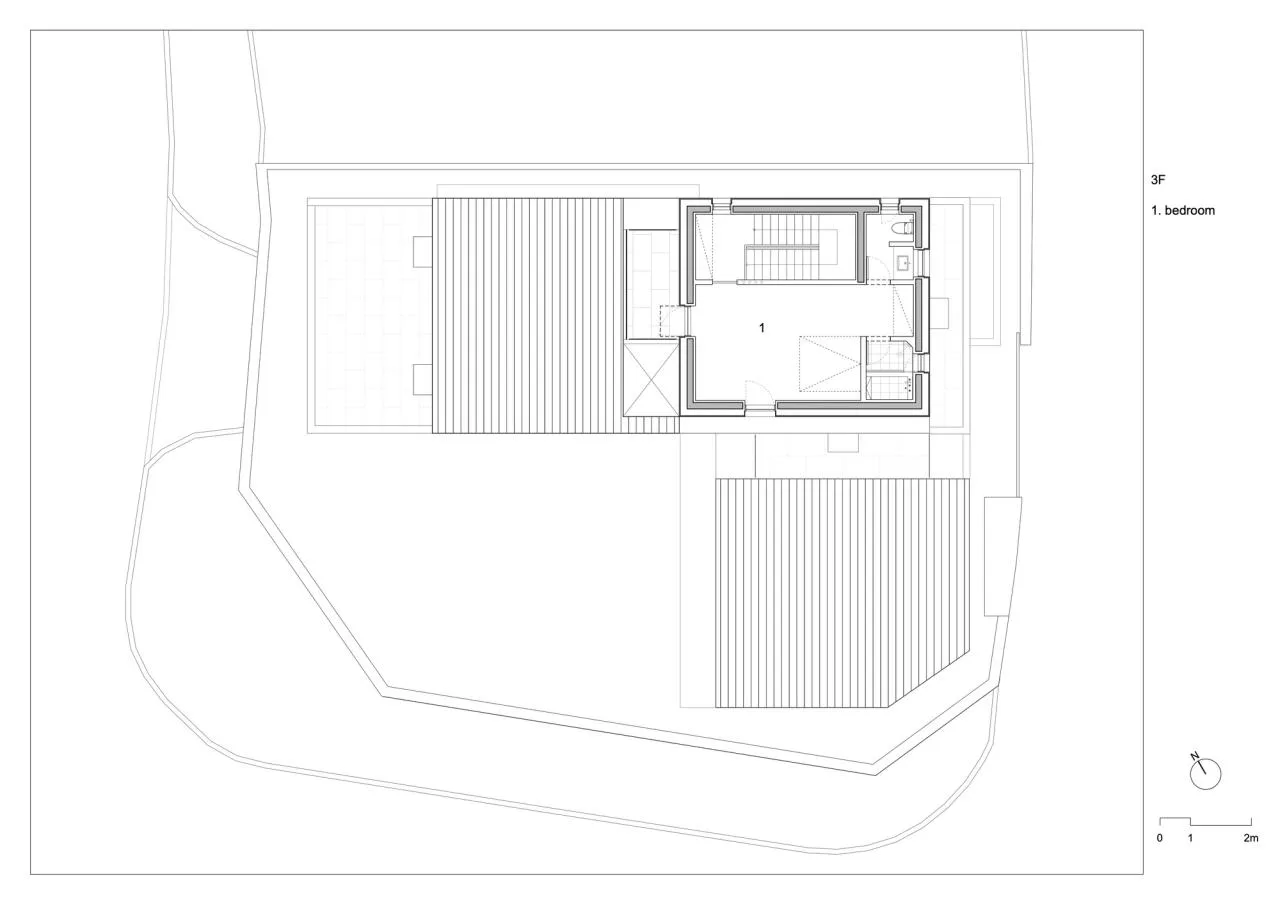
△ Third Floor Plan
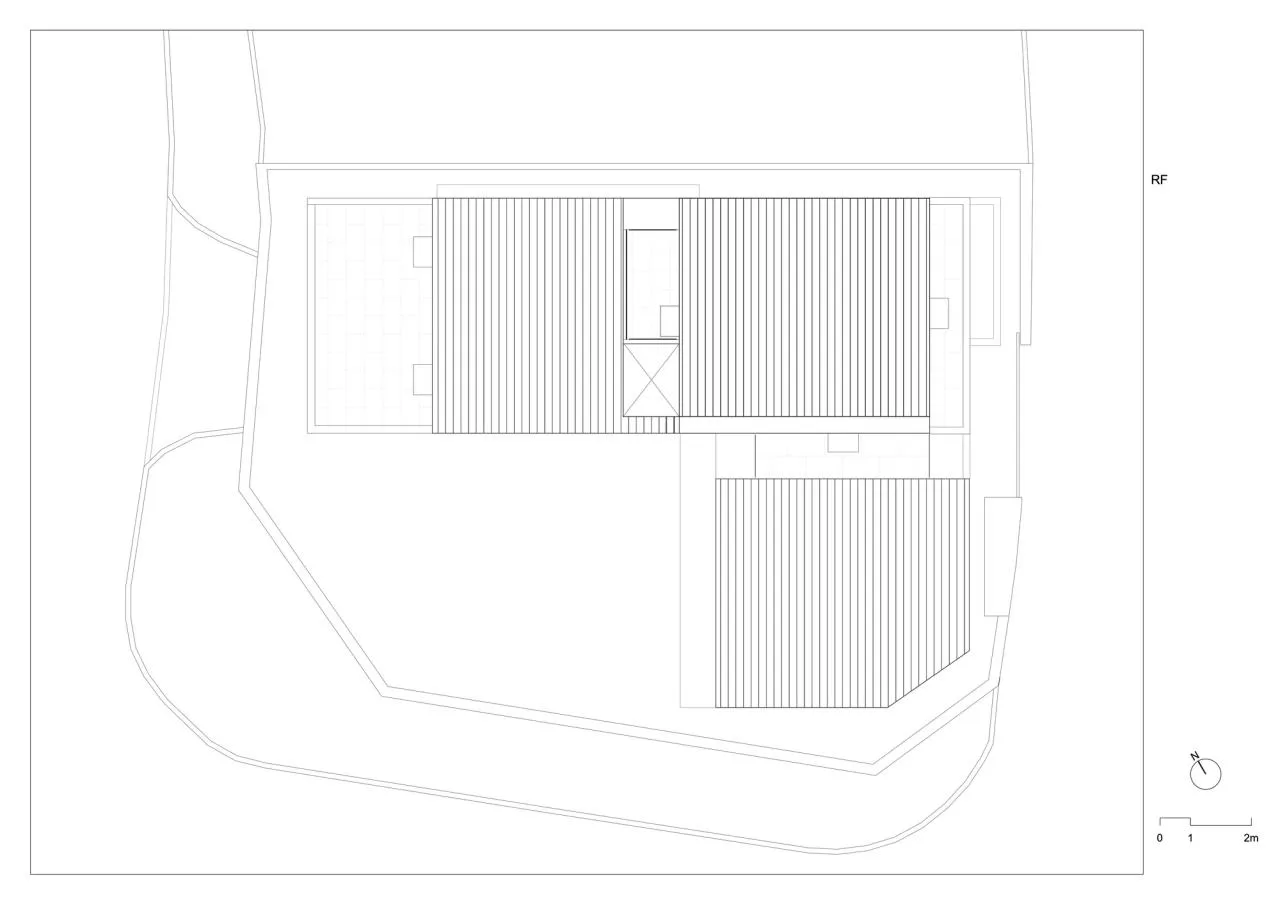
△ Roof Plan
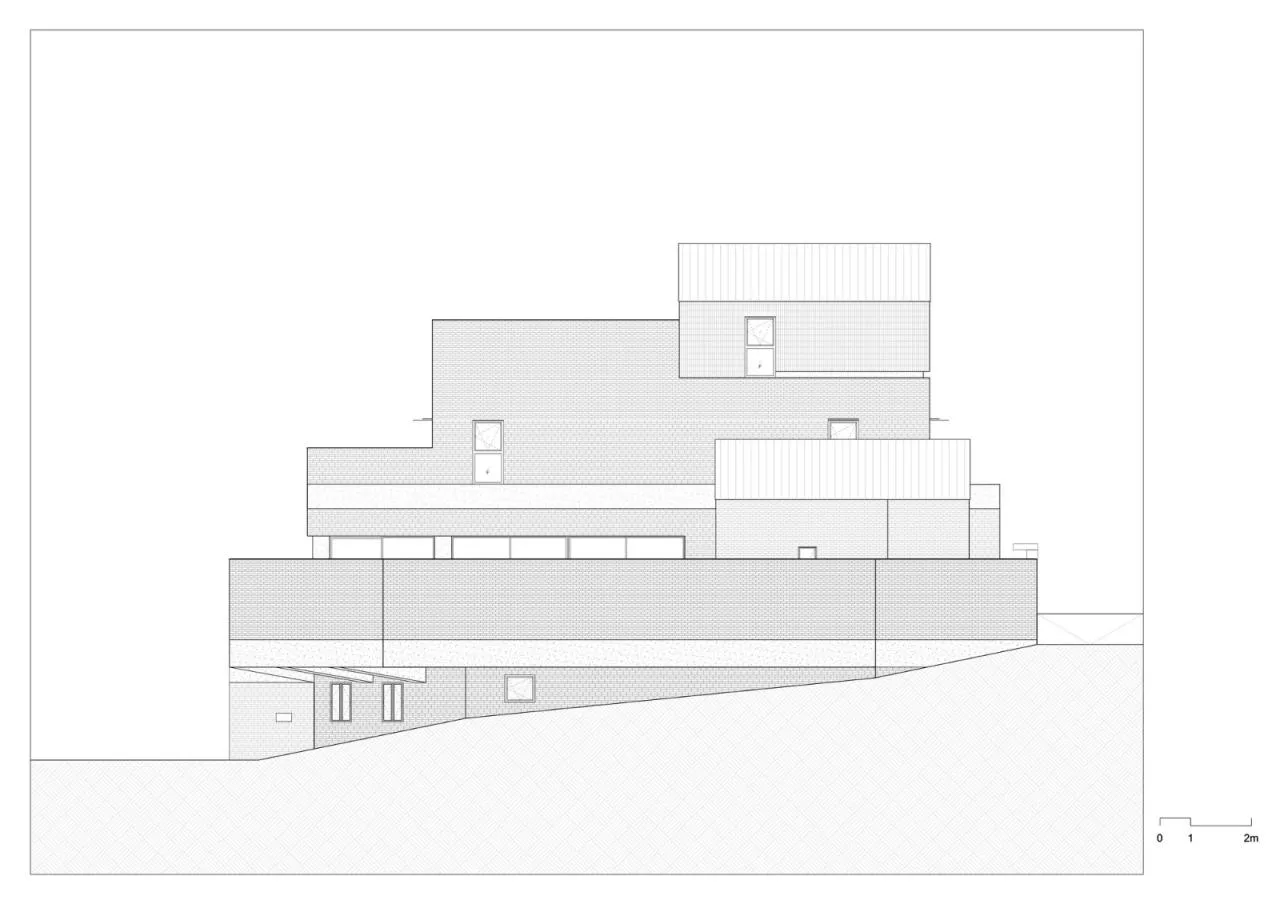
△ Elevation Drawing
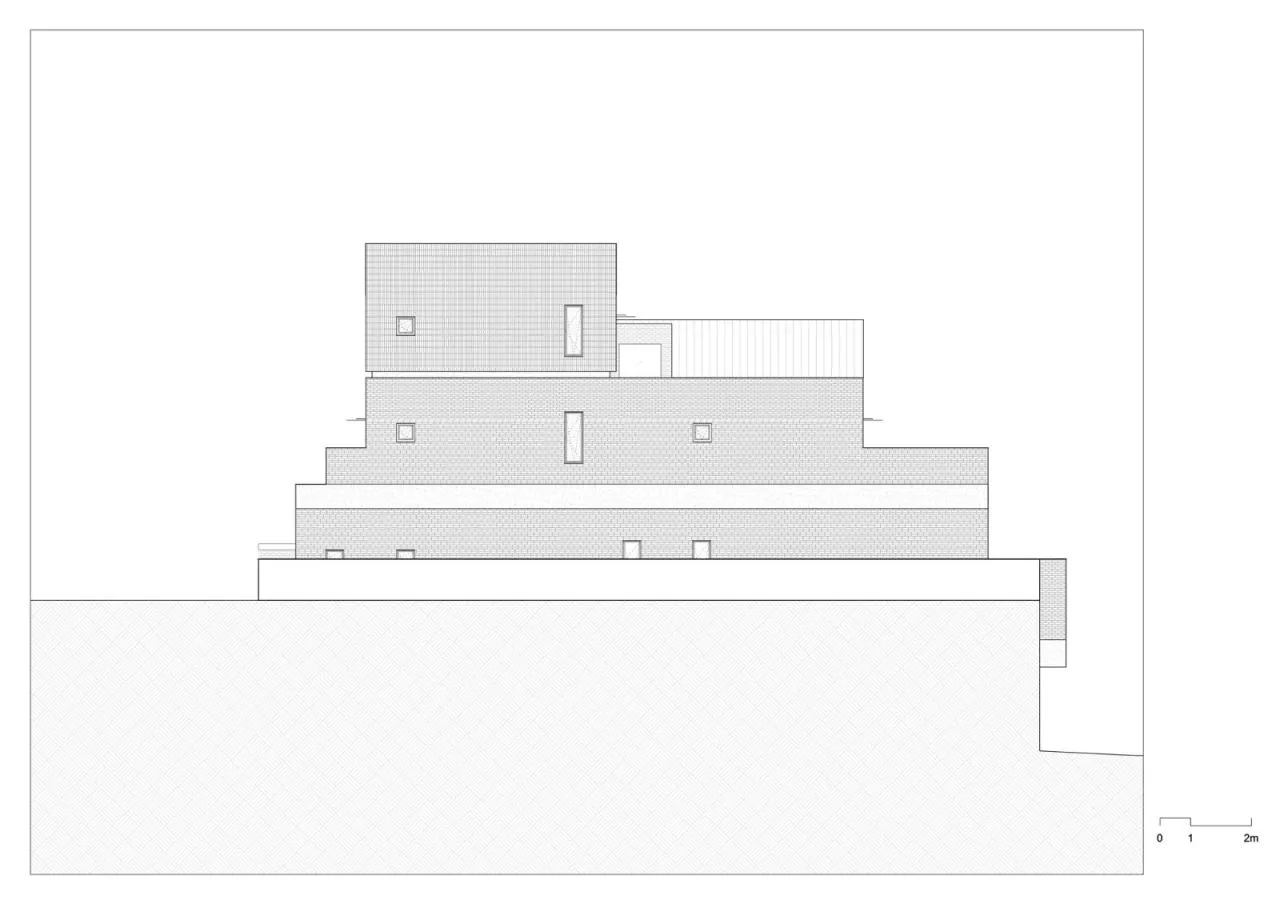
△ Elevation Drawing
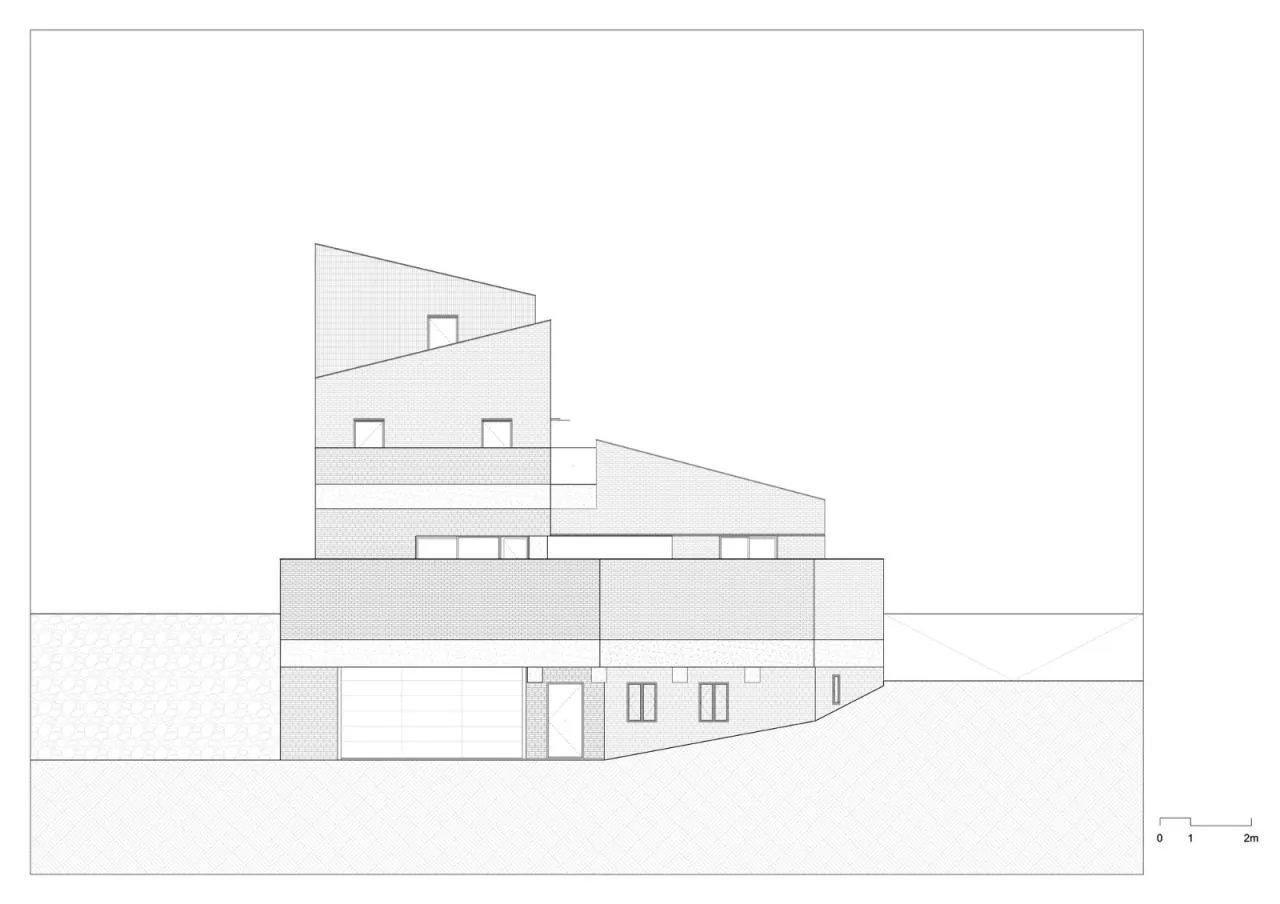
△ Elevation Drawing
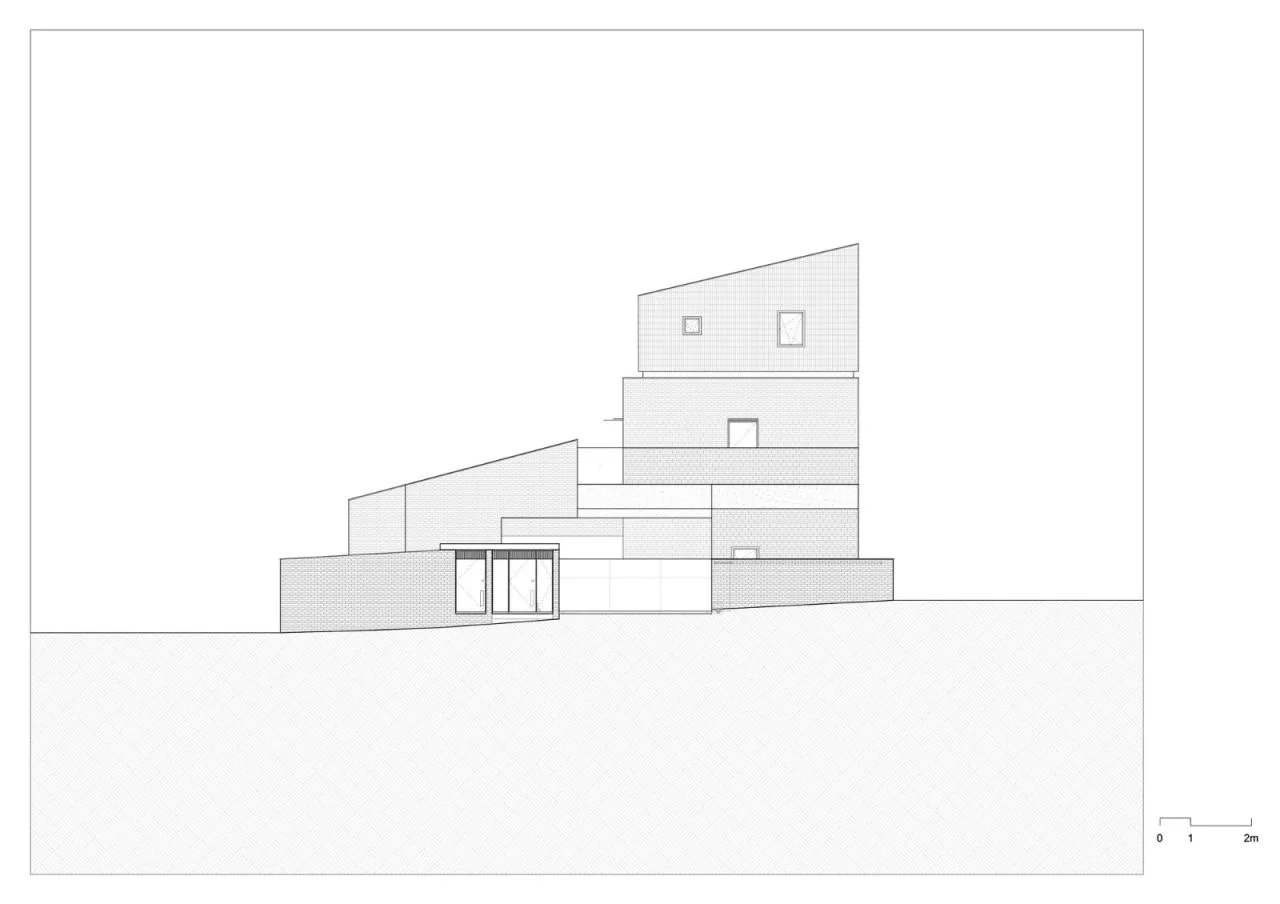
△ Elevation Drawing
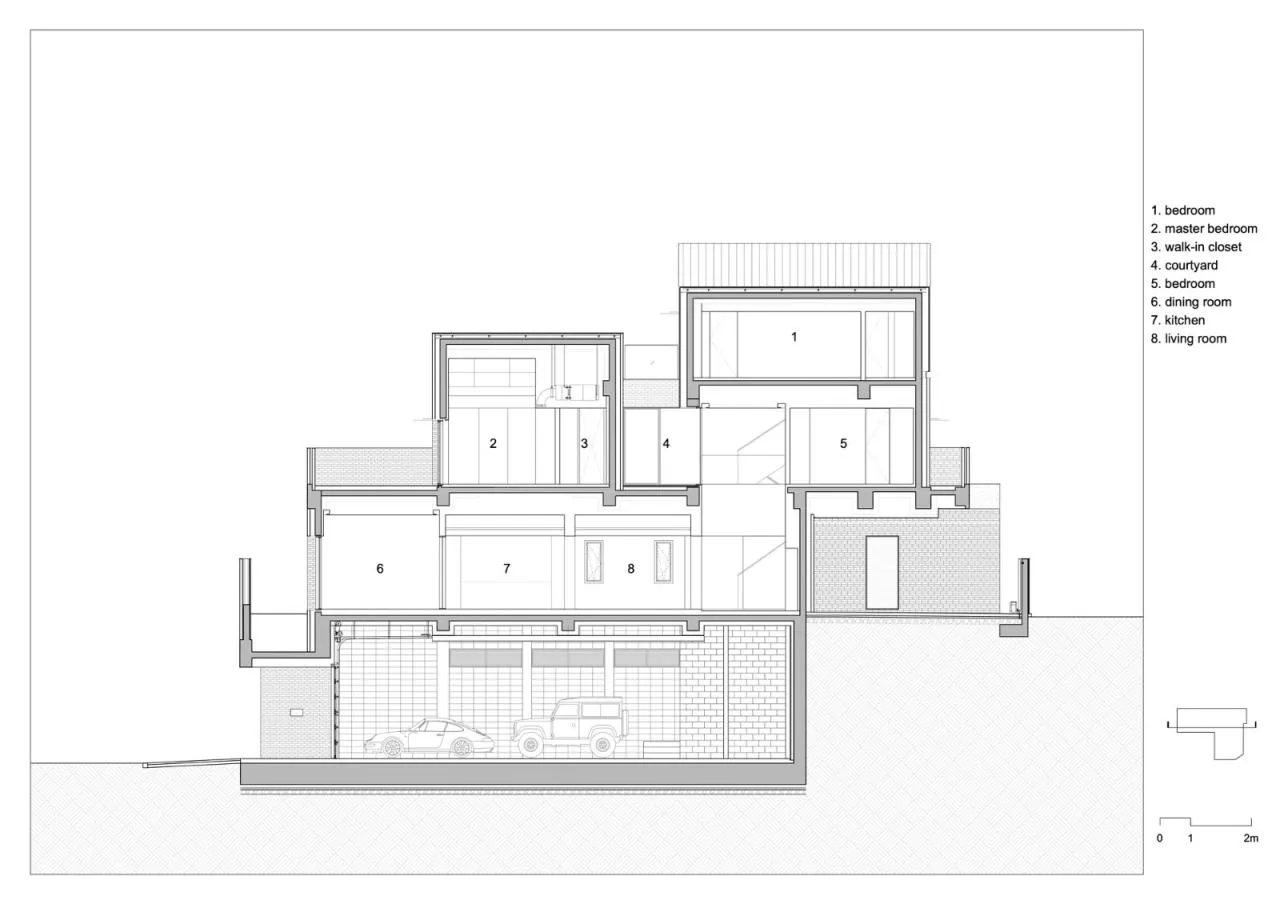
△ Section Diagram
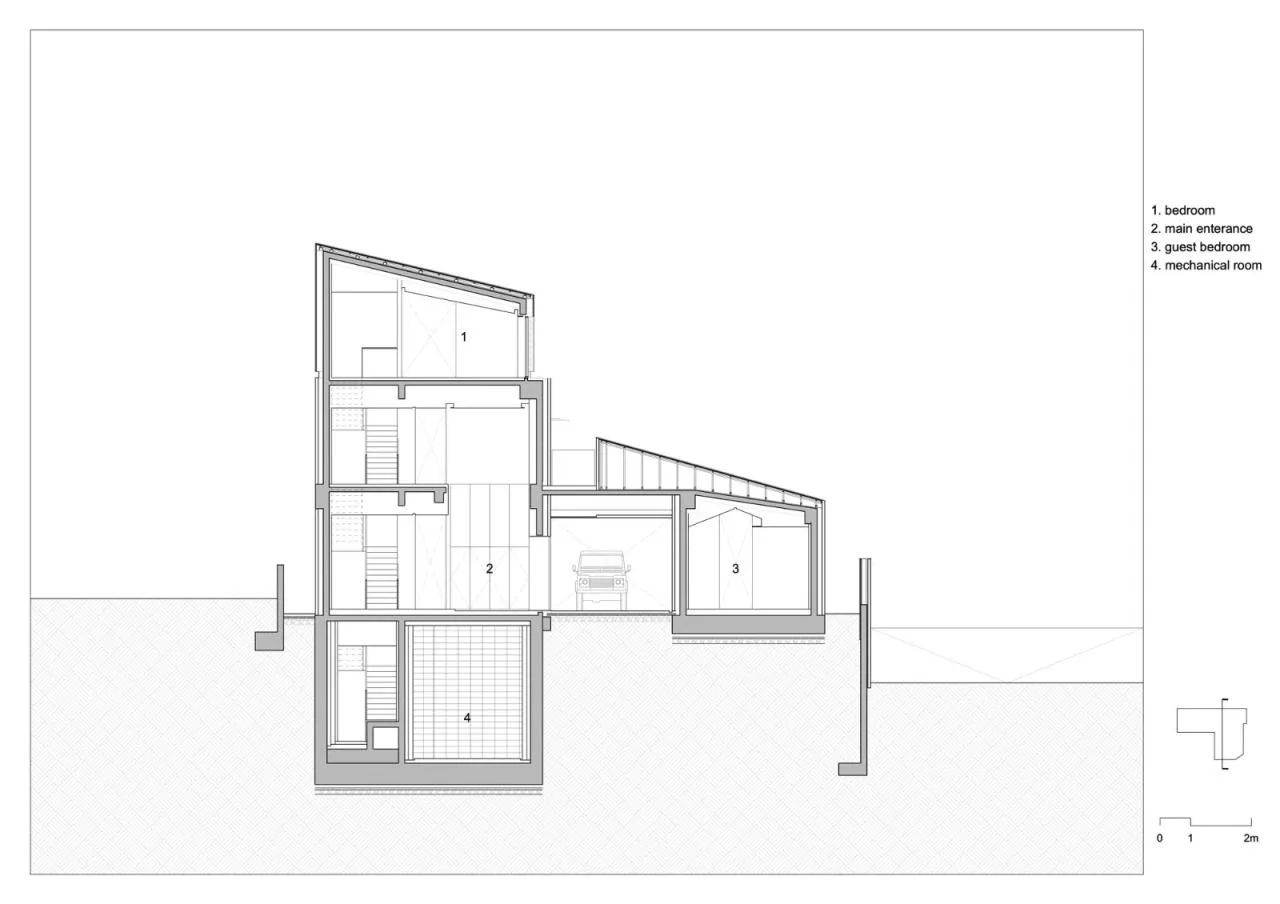
△ Section Diagram
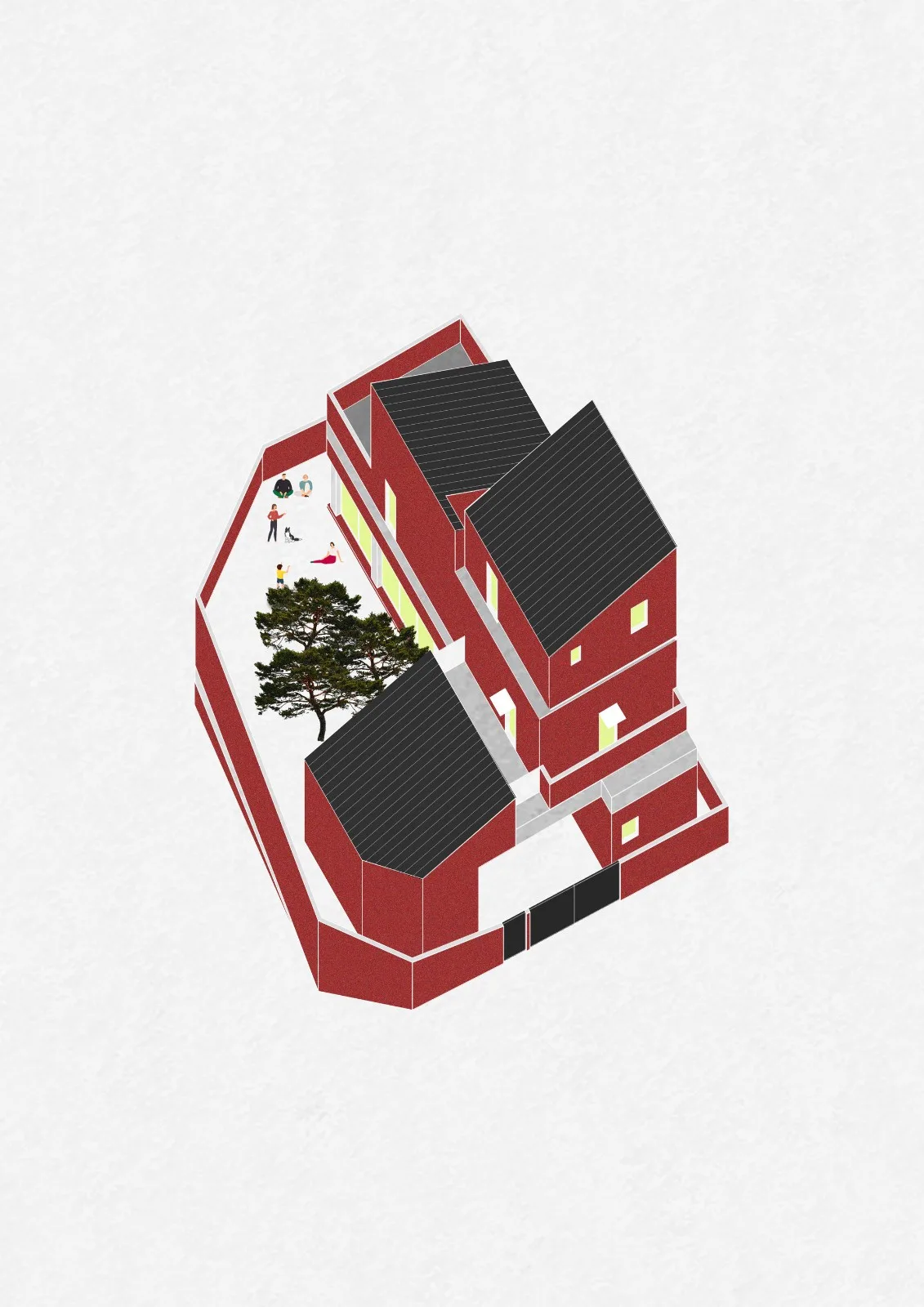
△ Axonometric Diagram
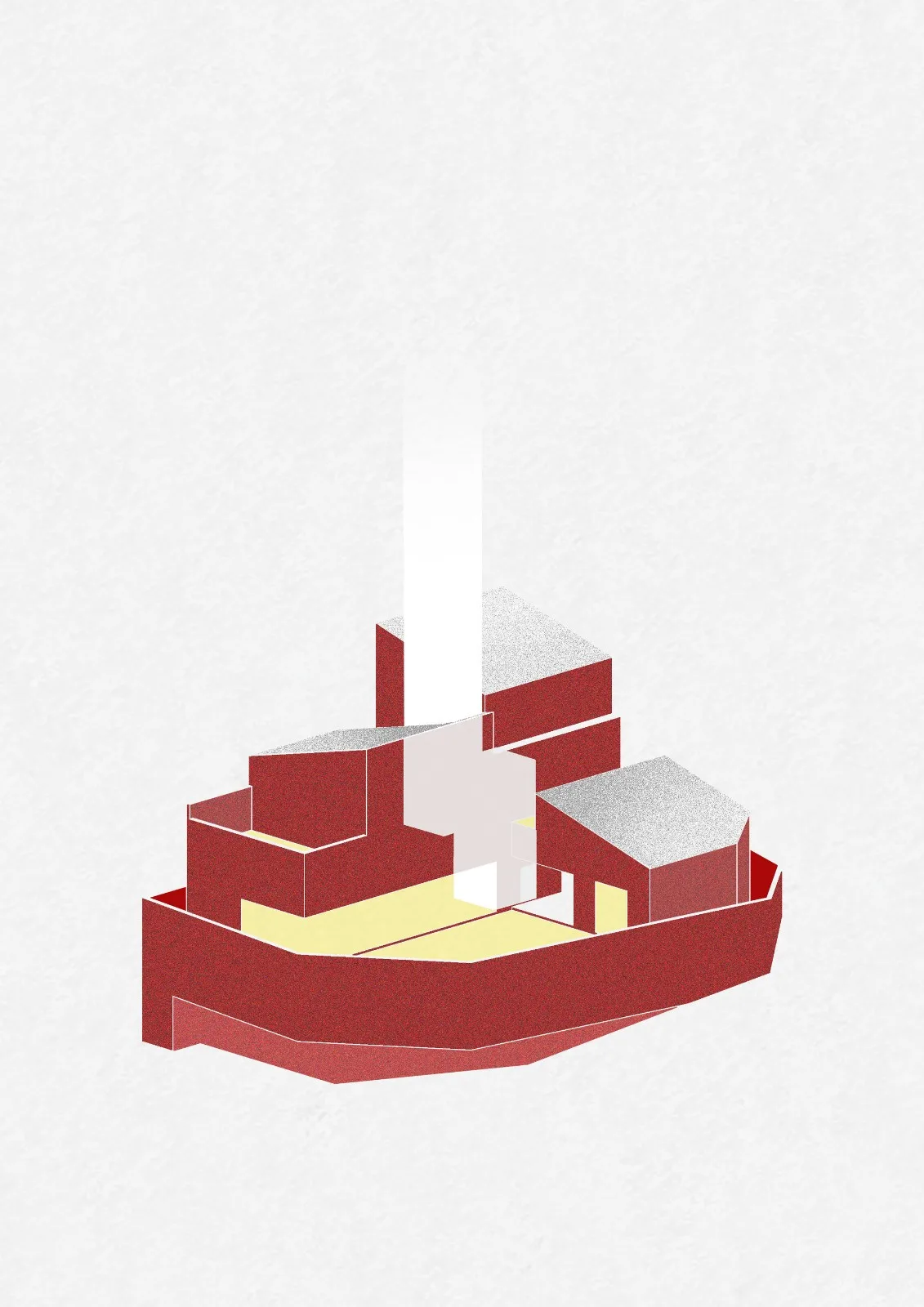
△ Axonometric Diagram
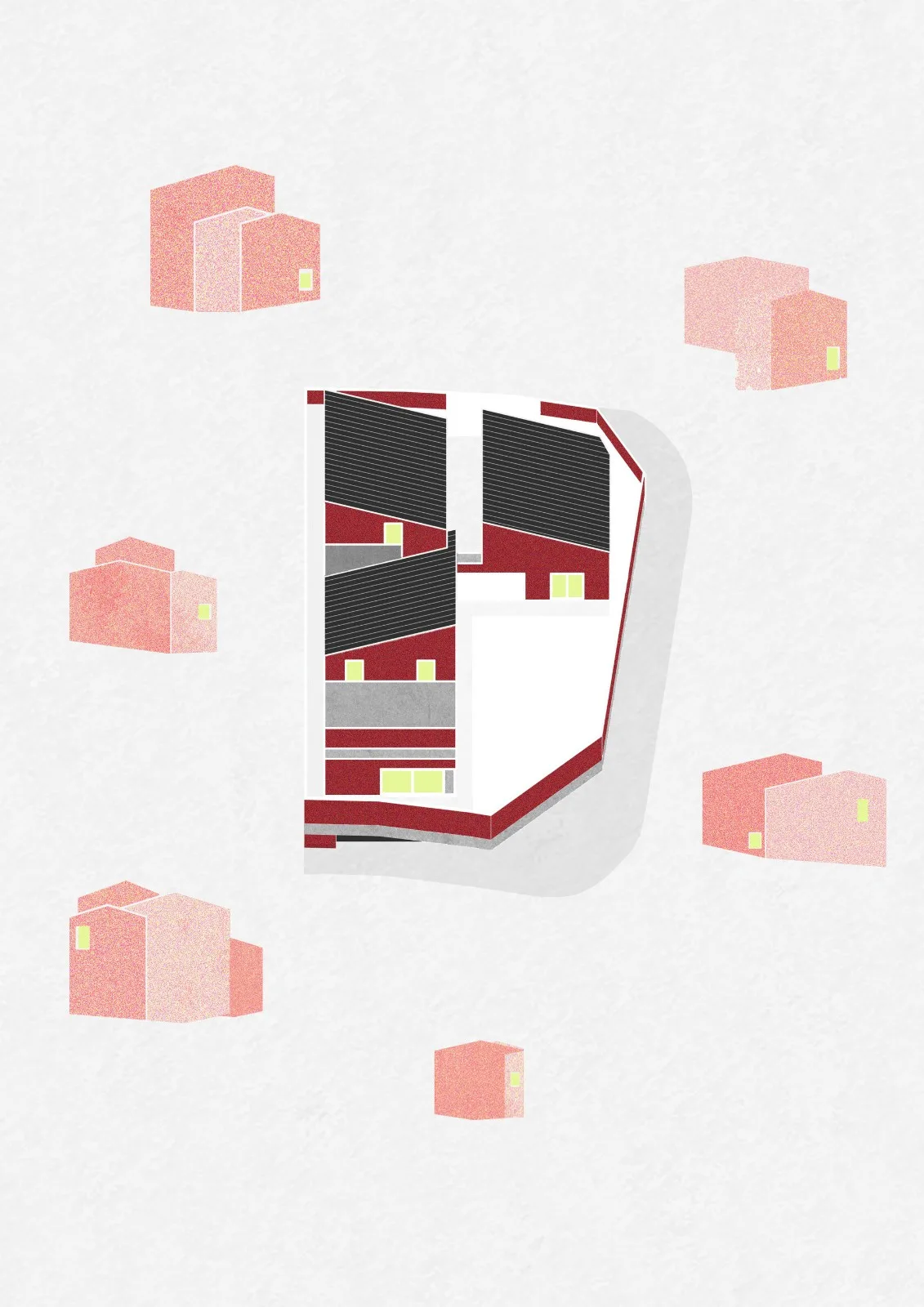
△ Axonometric Diagram
Project Information
Architect: NOMAL
Area: 572 m²
Project Year: 2022
Photographer: Roh Kyung
Architects: Minyuk Chai, Bokki Lee, Seyeon Cho
Architectural Design: NOMAL
Construction Contractor: Jayeon & Woori
Structural Engineer: The One Engineering
Mechanical Engineer: Chung Lim Mechanical Engineering & Consultant
Communication Equipment: Woo Lim Electrical Engineering & Consultant
Landscape Partner: Yeonsudang
Civil Engineer: Dong In G Tech Co
Location: Seongnam-si, South Korea













Must log in before commenting!
Sign Up