
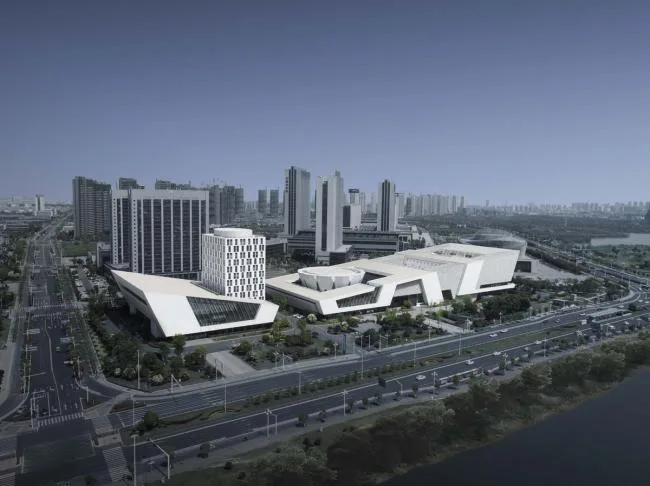
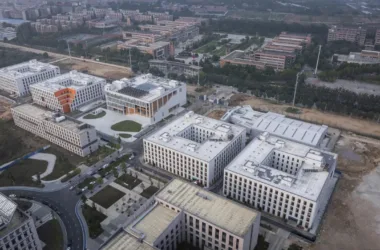
▲ Northwest Aerial Photography of the Four Pavilions: Shi Wei and Wang Fen
Overview
Huai’an, a national historical and cultural city, was once the “capital of water transportation”. The urban pattern is dumbbell shaped, with the main city in the northwest and the ancient city in the southeast connected by Xiangyu Avenue. In 2008, the government decided to build an ecological business new city in the middle of the “dumbbell” area. In the same year, the “Four Pavilions” were first located on the northeast side of Xiangyu Avenue in the new city, on the banks of the Millennium Canal, with a land area of 5.44 hectares and a total construction area of 86500 square meters. The main function is to plan exhibition halls, libraries, cultural centers, art museums, and their supporting buildings. The construction site is a rectangle parallel to Xiangyu Avenue, 350 meters long and 160 meters wide, divided into two relatively independent areas: the urban museum site in the northwest and the cultural center site in the southeast. Planning requirement: The four pavilions should be uniformly set back 60 meters from Xiangyu Avenue to form the main display area. As a large-scale debut project, how can it lead the new city style, echo the cultural context of the old city, and form local affinity?
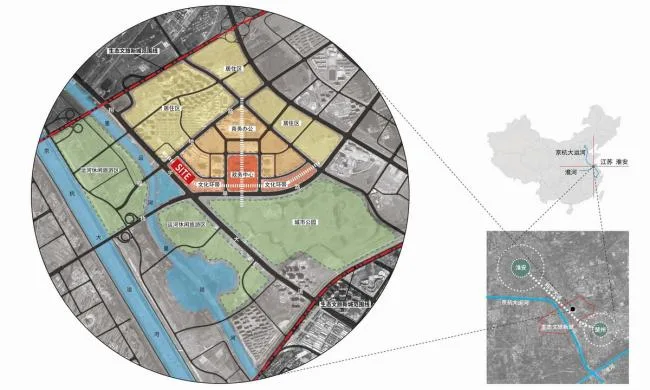
▲ Location analysis of the four pavilions in Huai’an
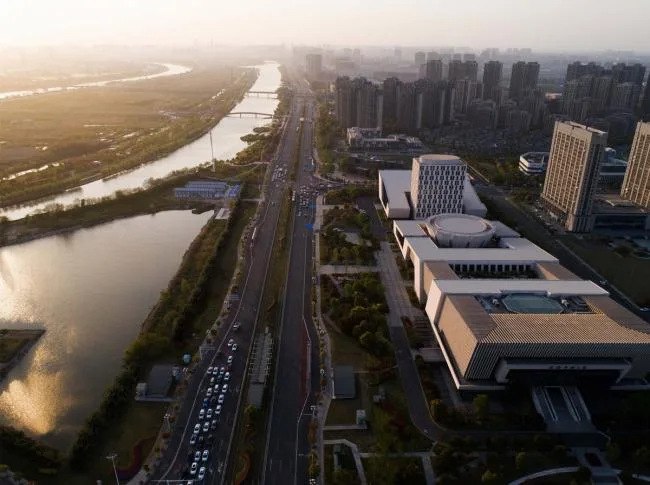
▲ Li Canal and Four Pavilions under Sunset Photography: Shi Wei and Wang Fen
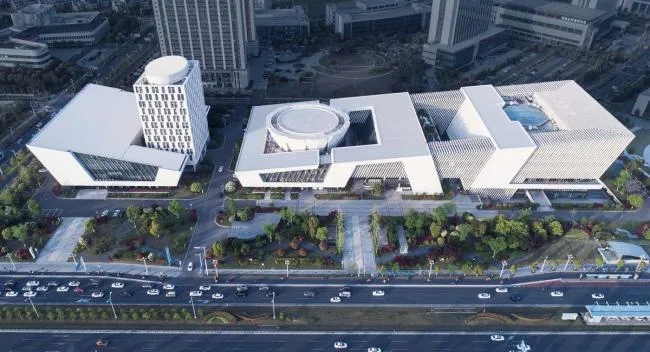
▲ Urban Open Space Photography along Xiangyu Avenue: Shi Wei and Wang Fen
Design difficulties
Integration of commonality and individuality: As a multi museum joint construction project, it is necessary to showcase the overall atmosphere and simplicity, while also taking into account the diverse needs of individuals. The integration of history and modernity: It is necessary to conform to the trend of the new city, inherit the cultural context of the ancient city, and echo traditional architecture with modern architectural language. The integration of practicality and symbolism: balancing function and image, responding to different functions of each museum with diverse symbolic techniques, and increasing local affinity. The integration of architecture and environment: It is necessary to form a landmark that stands out from the crowd, while leaving landscape green veins and visual corridors for adjacent blank plots.
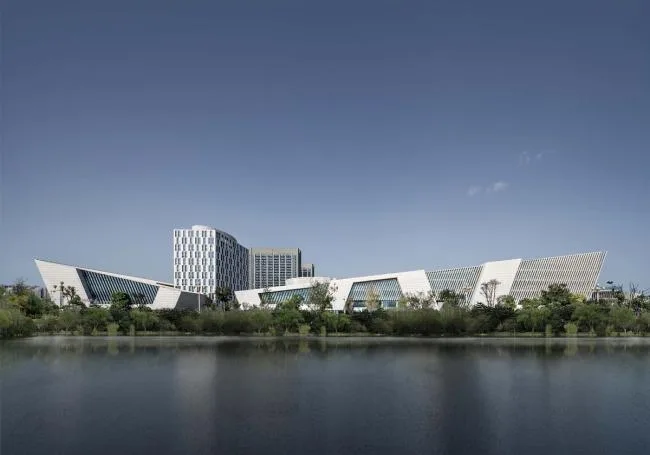
▲ Viewing the Facade of the Four Pavilions from the Li Canal Photography: Ma Yuanwang Fen
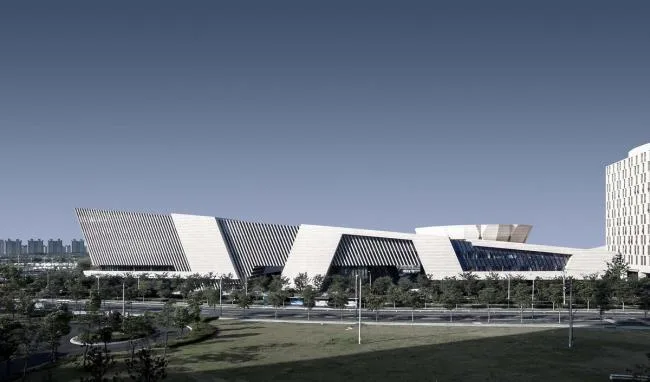
▲ Culture Museum Photography: Ma Yuan
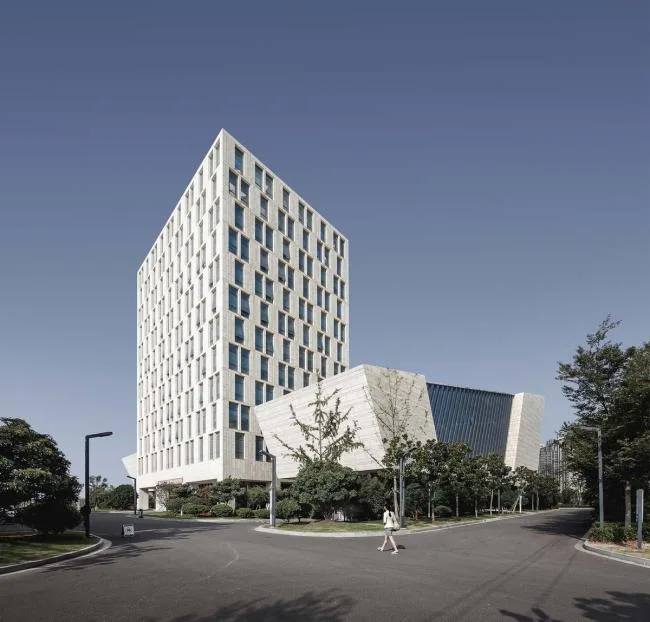
▲ City Museum Photography: Ma Yuan
spatial form
Virtual real interaction: The functions of each museum have different requirements for natural lighting and ventilation, such as lobbies, art salons, creative rooms, reading rooms, music halls, exhibition halls, etc. The exterior facade is matched with glass curtain walls, stone louvers, large solid walls, etc., in order to achieve the integration and differentiation of virtual and real elements.
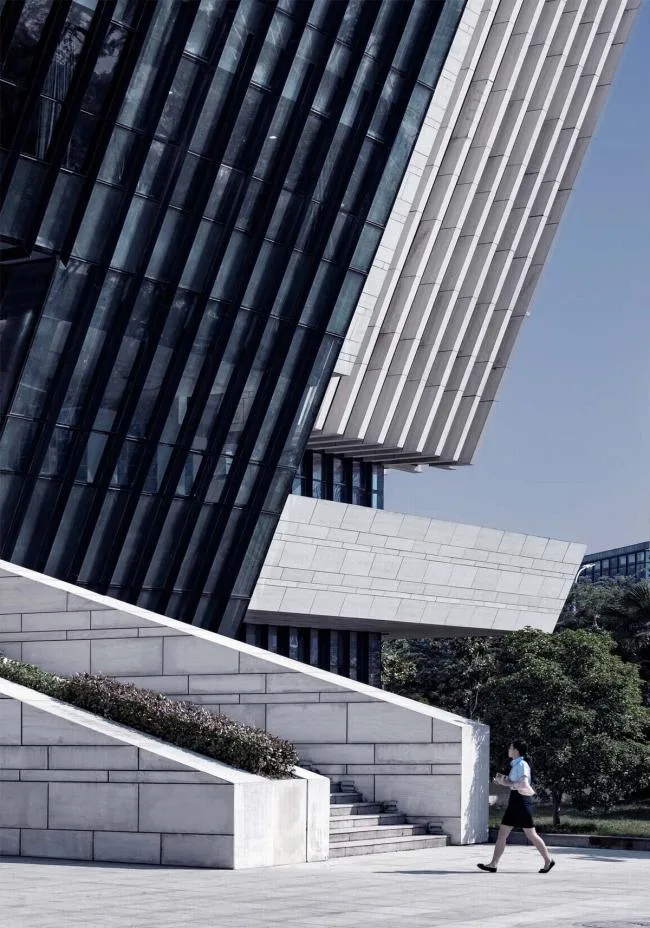
▲ Realistic and Virtual Photography of Library Facade: Ma Yuan
Cultural heritage inheritance: Modern technologies such as large-span, large-span, and wide and narrow staggered dry hanging honeycomb stone are used to echo the historical architectural style of the old city, including sloping courtyard houses, eaves gray spaces, clear water wall jointing, eaves and rafters, etc.
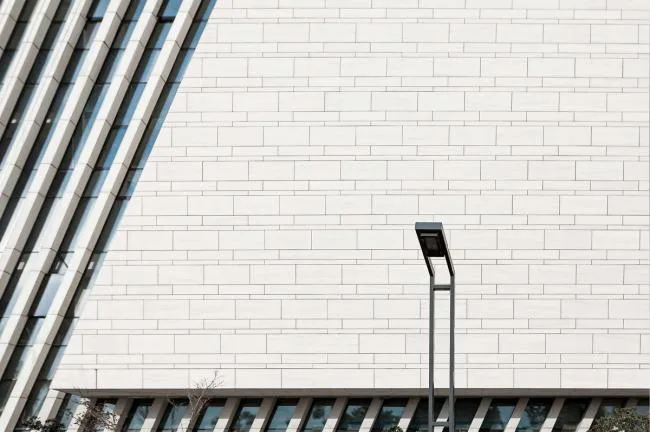
▲ Wide and Narrow Seam Dry Hanging Honeycomb Stone Photography: Ma Yuan
Local symbolism: The overall design of the “Four Pavilions” is inspired by the distinctive canal boats in Huai’an, known as the “capital of water transportation”. The inspiration for the City Museum comes from the heavy ancient city buildings, and the shape of the music hall is composed of 12 “petals”, symbolizing the blooming of the city flower roses in Huai’an.
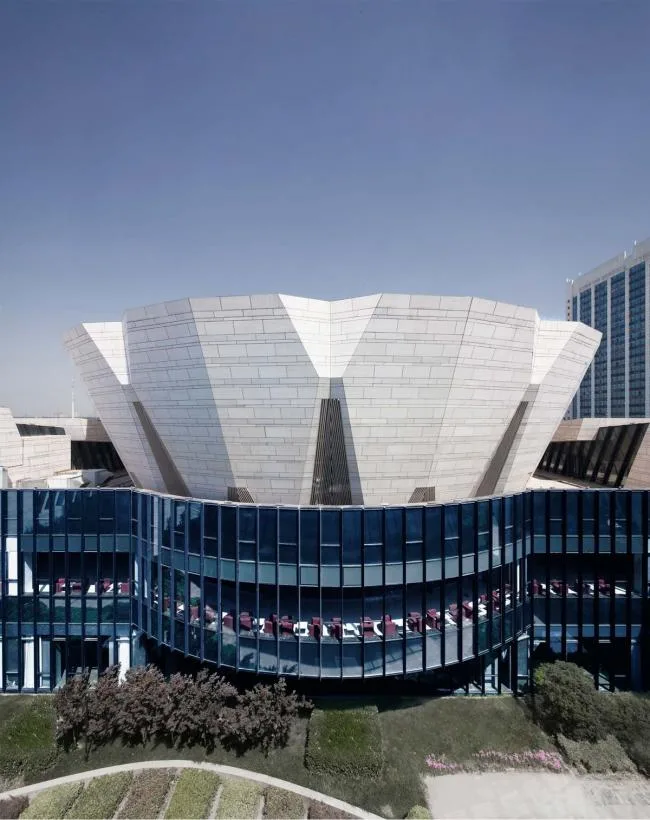
▲ Concert Hall Photography: Ma Yuan
Landscape infiltration: By lowering the central part of the building, each pavilion is separated into a courtyard, supplemented by various grey spaces, achieving indoor and outdoor integration, and infiltrating with the surrounding urban open spaces, leaving a landscape green vein and a visual corridor for adjacent undeveloped plots.
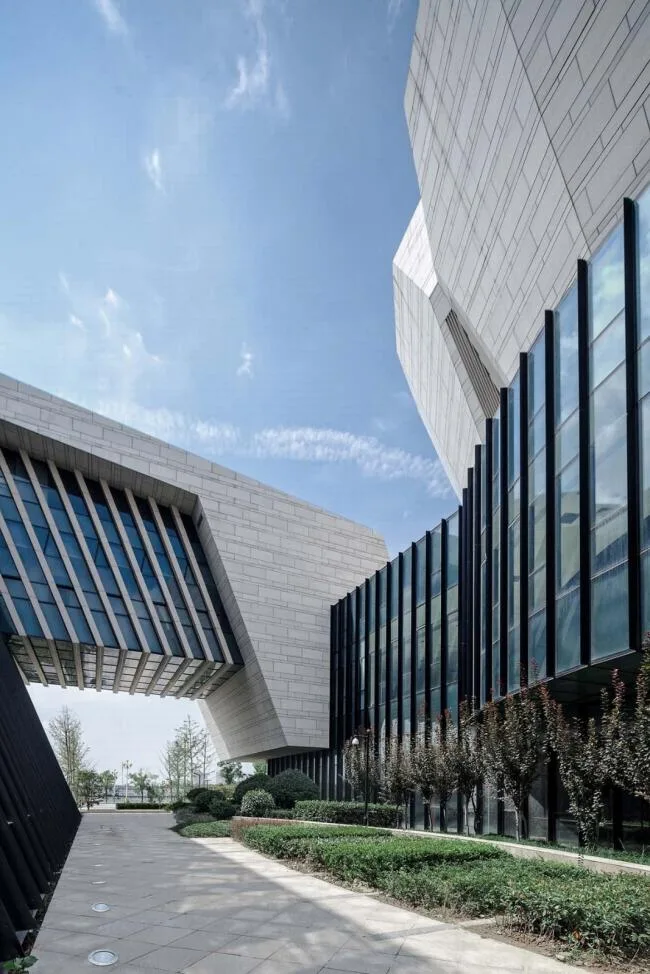
▲ Cultural Center Courtyard Photography: Ma Yuan
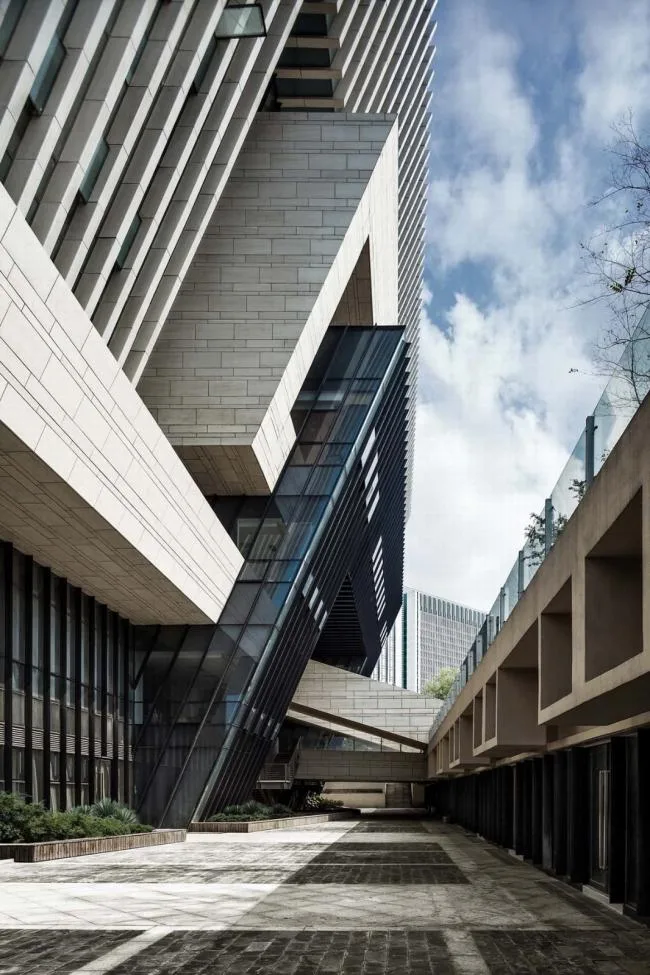
▲ Library sunken courtyard photography: Ma Yuan
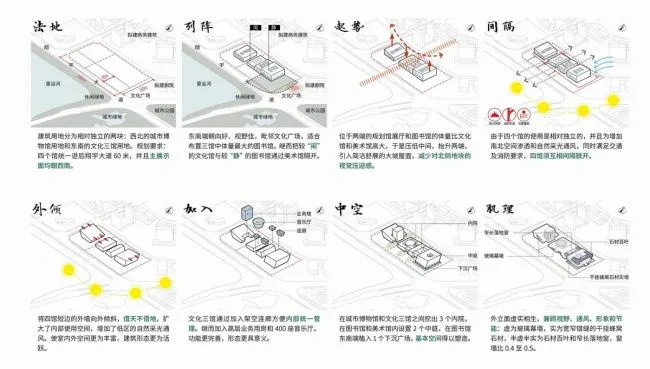
▲ Form Generation of Huai’an Four Pavilions
Professional cooperation
Layered outdoor space: In order to obtain more outdoor landscape space and increase the penetration of indoor and outdoor spaces, the building combines outward sloping walls, with multiple balconies, terraces, rooftop gardens, and grey spaces stacked layer by layer. The 80 meter long reinforced concrete structure has a overhang of 12 meters.
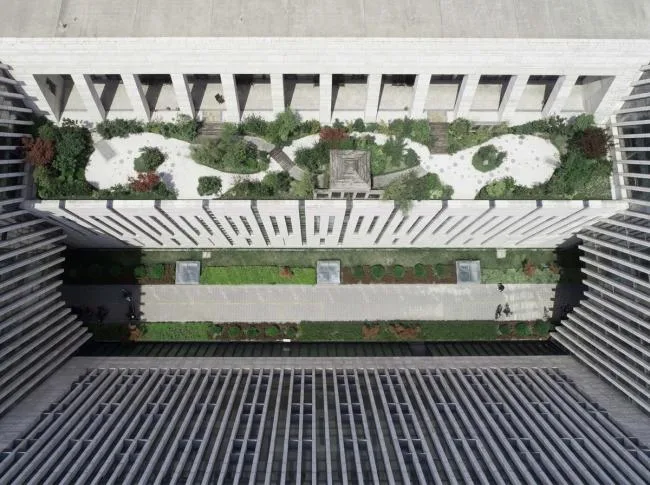
▲ Courtyard and rooftop garden photography: Shi Wei and Wang Fen
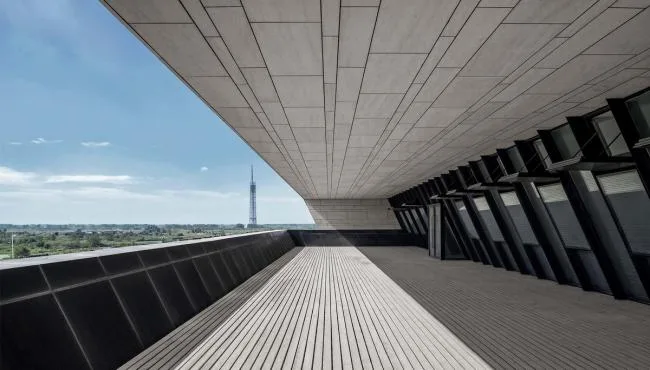
▲ Library Terrace Photography: Ma Yuan
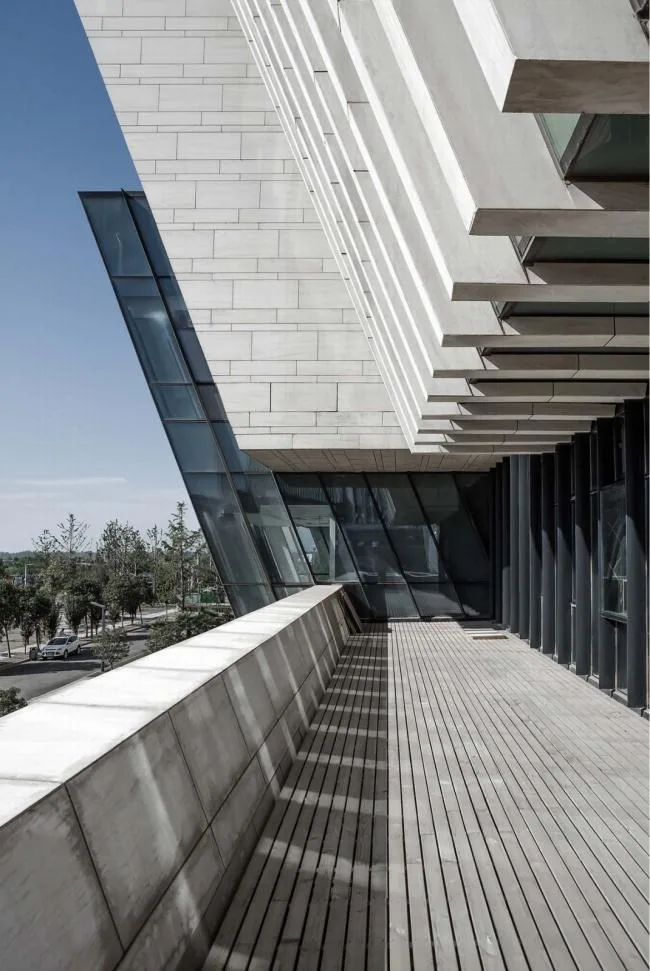
▲ Library eaves and balcony photography: Ma Yuan
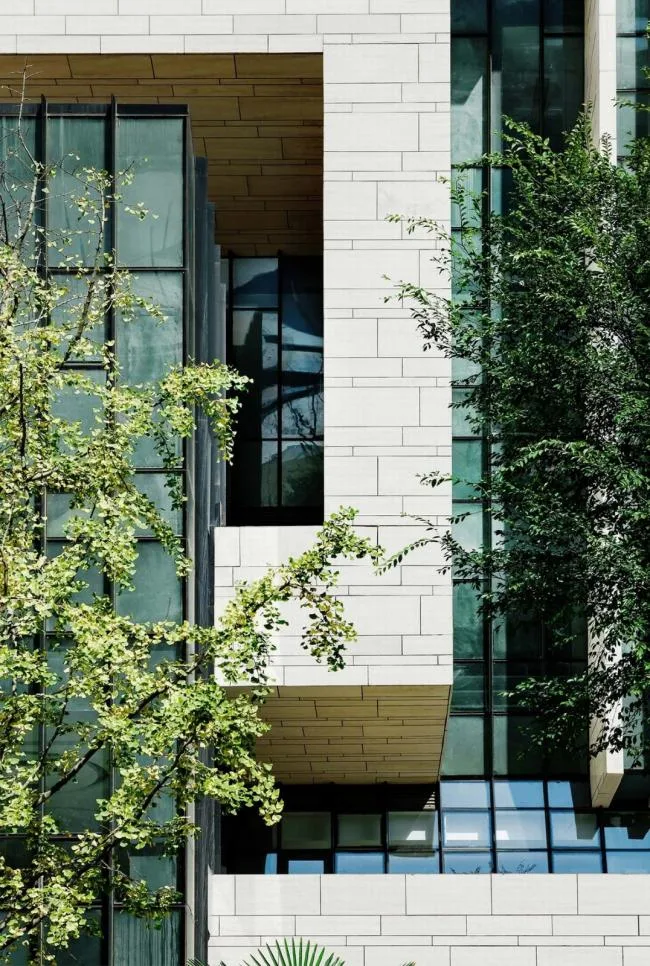
▲ Balcony photography at different elevations in the library: Ma Yuan
Organic integrated equipment installation: Taking the music hall as an example, the plan is nearly rectangular, about 10 meters high, and large HVAC equipment needs to be arranged on both sides. Therefore, the plan is integrated into a circle, and combined with equipment ventilation, the exterior walls are uniformly covered with louvers, resulting in 12 outward sloping walls that resemble blooming rose petals.
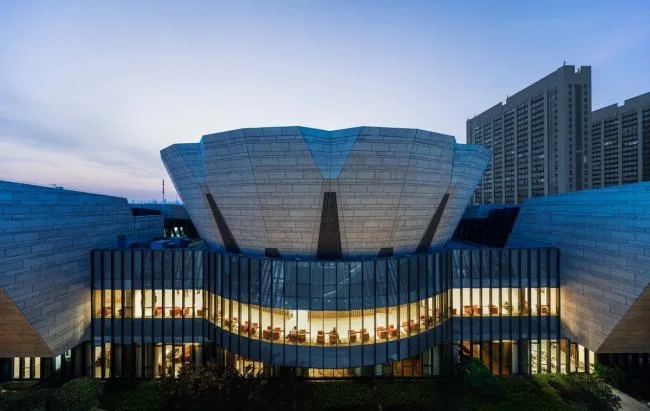
▲ Night Scene Photography of Concert Hall: Ma Yuan
Clean Fifth Facade: By utilizing the parts of the sloping roof that are higher than the flat roof, cleverly designed vertical shafts and machine rooms for the roof, and then shielded the equipment and pipelines from the roof through a lightweight sunshade structure, ensuring the beauty of the fifth facade.
Detail design
Wide and narrow staggered seams: The exterior walls of exhibition halls, music halls, bookstores, etc. are mainly solid walls. Inspired by the wide and narrow jointing of the exterior walls of Zhou Enlai’s former residence in Chuzhou, the stone is 1350 to 1800 in length and hung horizontally in three widths of 150/300/600, with staggered joints of 1/3. To ensure the simplicity of large solid walls, especially the safety of outward sloping walls, dry hanging honeycomb stone with light weight and large block surface is used.
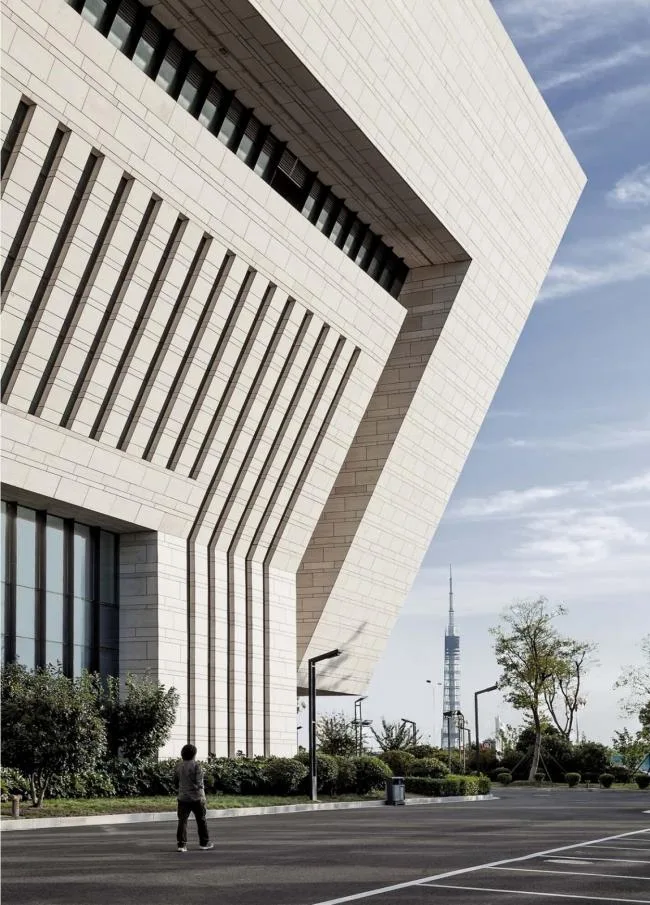
▲ Northwest Facade Photography of City Museum: Ma Yuan
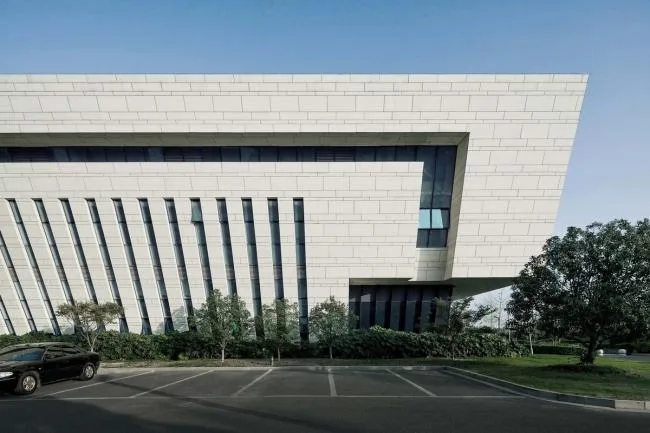
▲ Northwest facade photography of the cultural center: Ma Yuan
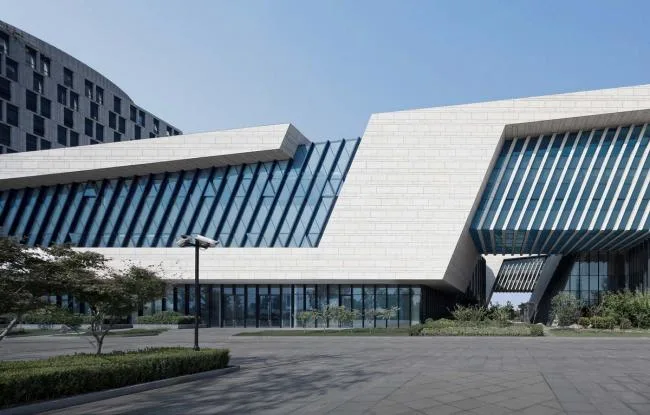
▲ Partial photography of the facade of the cultural center: Ma Yuan
Stone blinds: Reading rooms, studios, etc. use a combination of “stone blinds” and glass curtain walls, balancing functionality, visibility, image, and energy efficiency. Splice the honeycomb stone panels into a continuous cylindrical component with a width of 300 by 450, and then arrange it horizontally at a center distance of 1050. The width of the window opening is about 750.
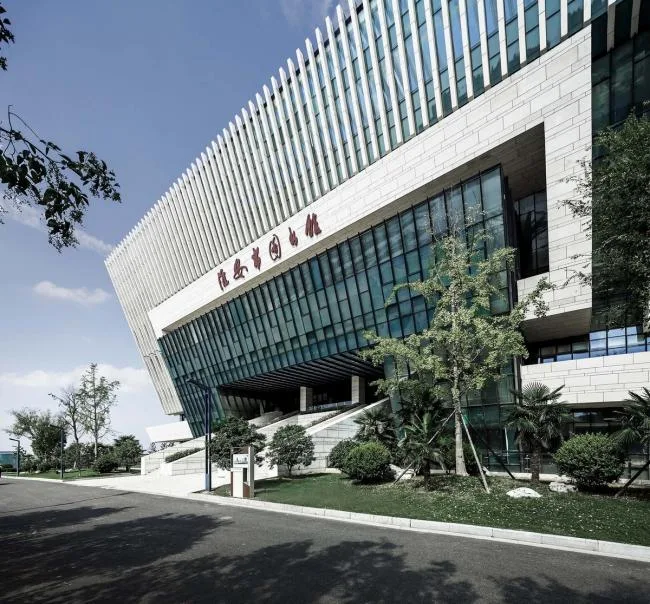
▲ Southeast facade photography of the library: Ma Yuan
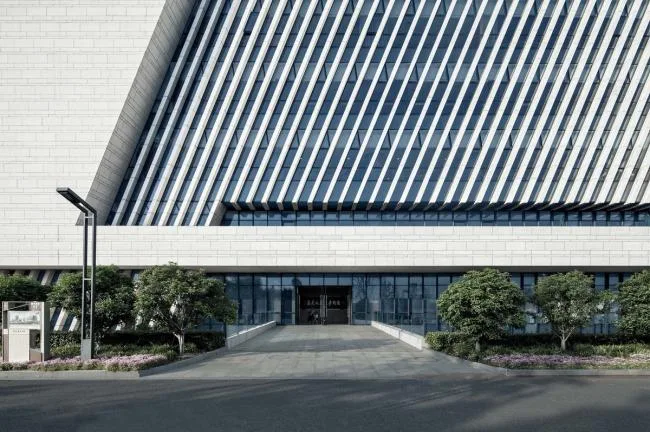
▲ Southwest facade photography of the library: Ma Yuan
Under the eaves space: The bottom of the overhanging “stone louvers” is vertically integrated into the glass curtain wall, similar to the effect of traditional sloping roof buildings with overhanging eaves and bottom rafters, giving this modern cultural building some cultural heritage to the under eaves space.
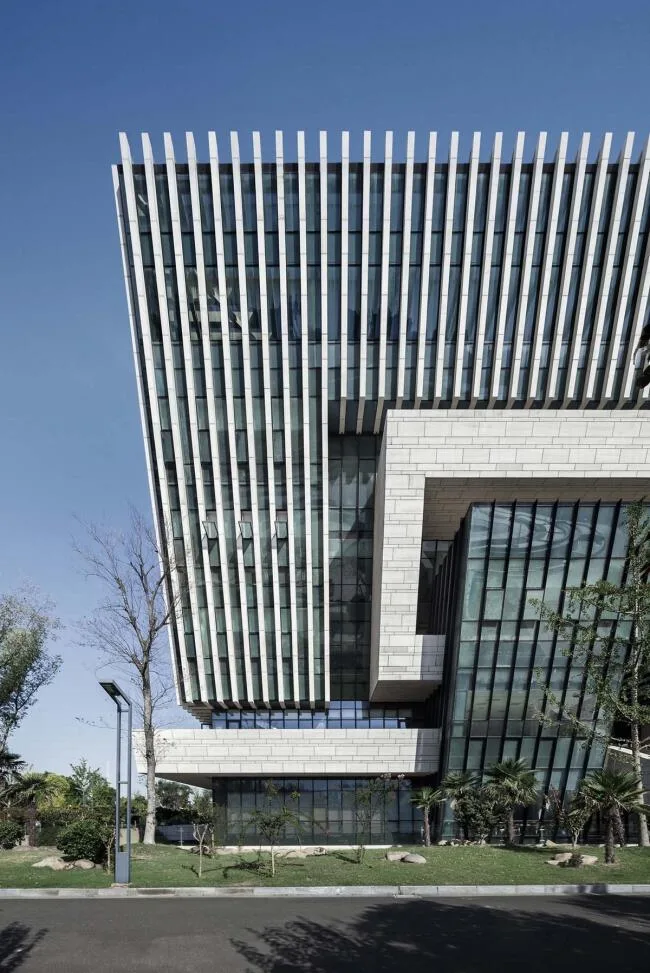
▲ The facade of the library is like layers of pages. Photography by Ma Yuan
Conclusion
From design to completion, it takes ten years to polish a “ship”, hoping that the “Four Pavilions” will be like a “cultural aircraft carrier” sailing into the cultural life of thousands of households, leading Huai’an to a brand new future.
Indoor:
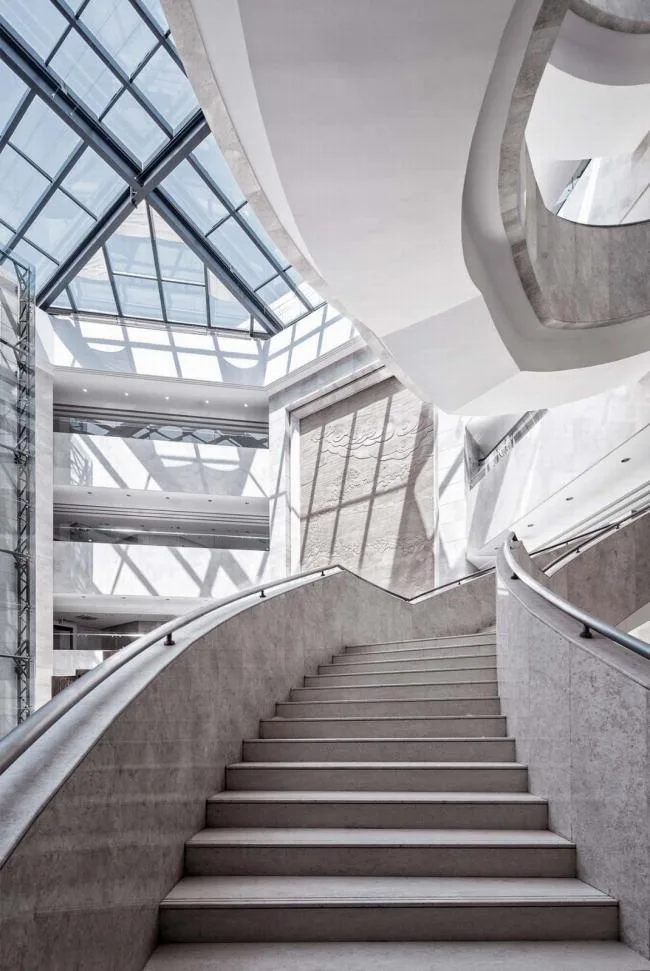
▲ Library atrium staircase photography: Ma Yuan
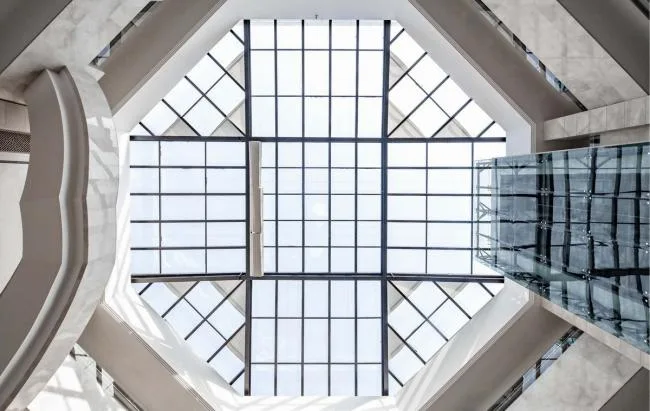
▲ Library Courtyard Photography: (BIM Engineer) Ma Yuan
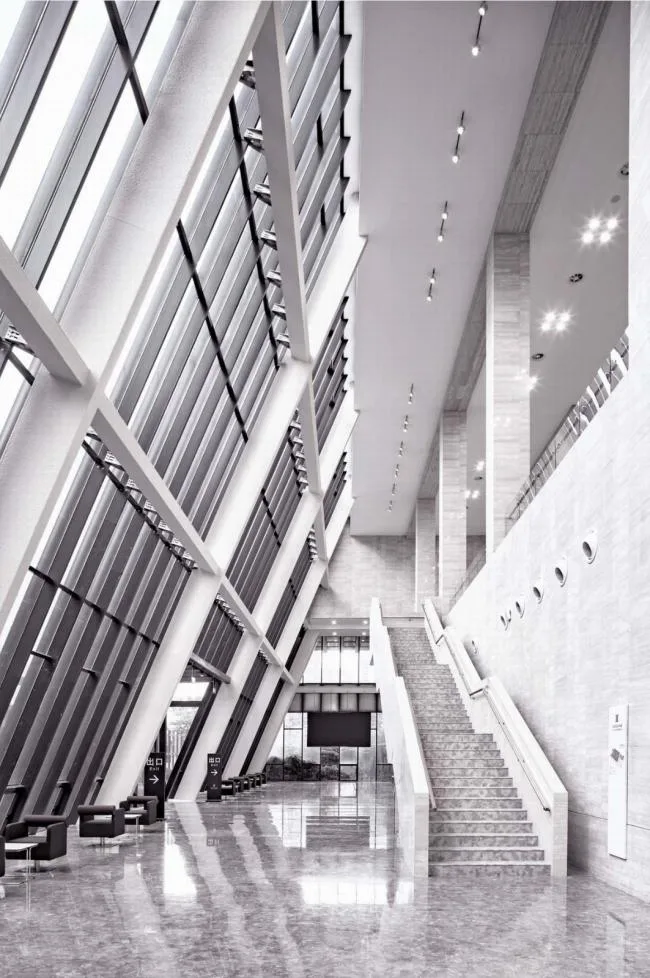
▲ Gallery side courtyard photography: Ma Yuan
(BIM Tutorial)Design drawings:
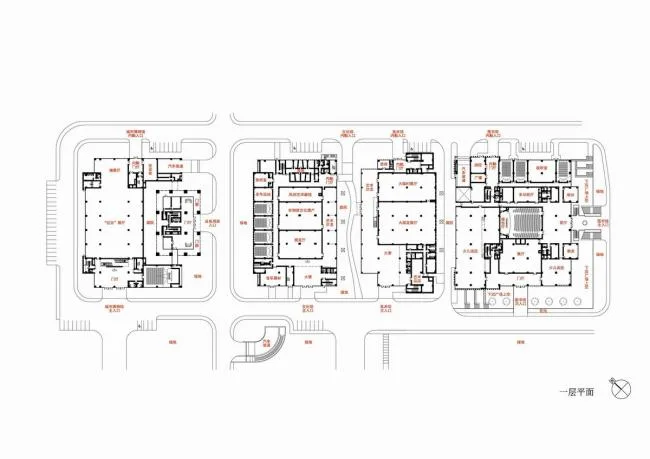
▲ Plan of the First Floor of Huai’an Fourth Building
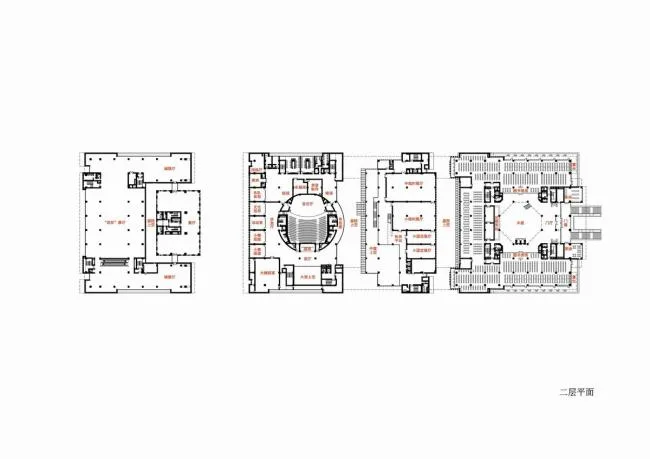
▲ Plan of the Second Floor of Huai’an Fourth Building
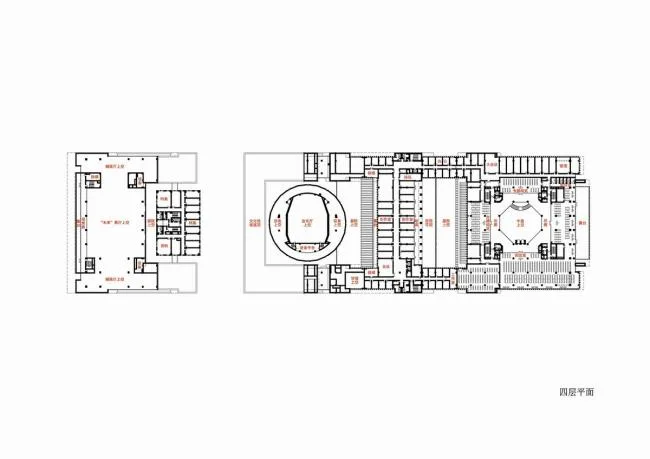
▲ Floor Plan of Huai’an Fourth Building
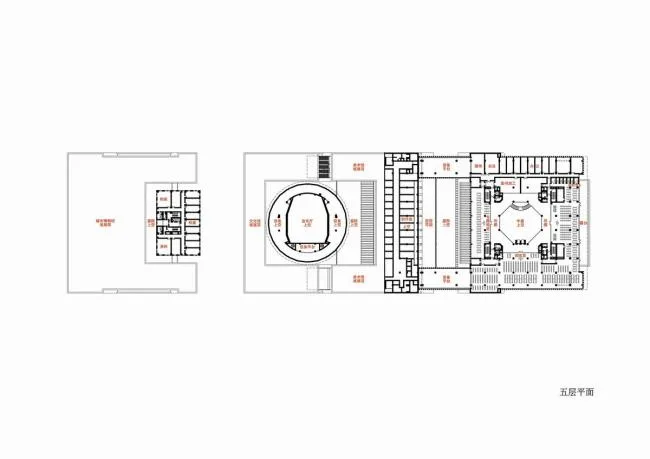
▲ Plan of the Fifth Floor of Huai’an Building 4
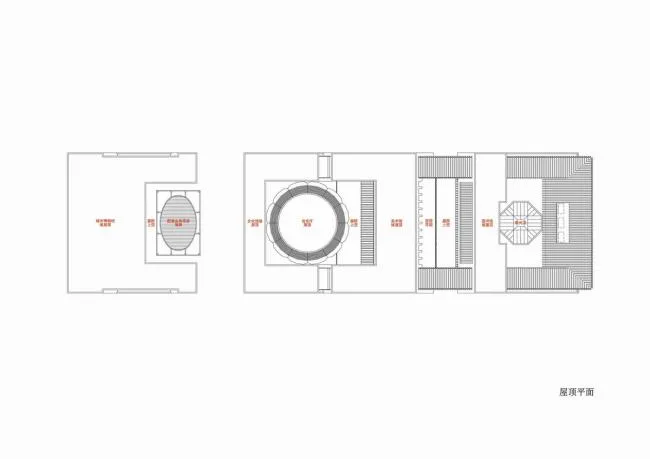
▲ Roof Plan of Huai’an Fourth Building
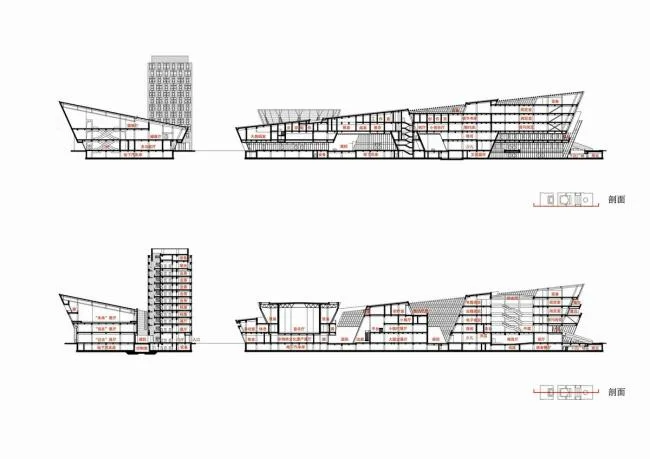
▲ Huai’an Four Pavilions Section
Project Information:
Designer: Tongji University Architectural Design and Research Institute
Address: Huai’an City, Jiangsu Province, China
Category: Cultural Center
Project Manager: Wang Wensheng
Principal Creator and Project Manager: Shi Wei
Client: Huai’an New City Investment and Development Co., Ltd
Building area: 86500.0 square meters
Project Year: 2017
Photographer: Ma Yuan












Must log in before commenting!
Sign Up