
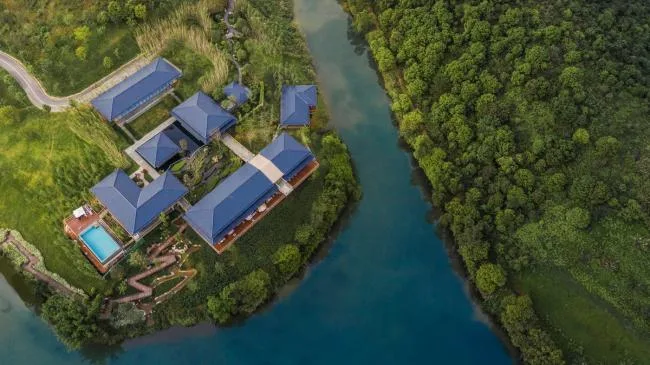
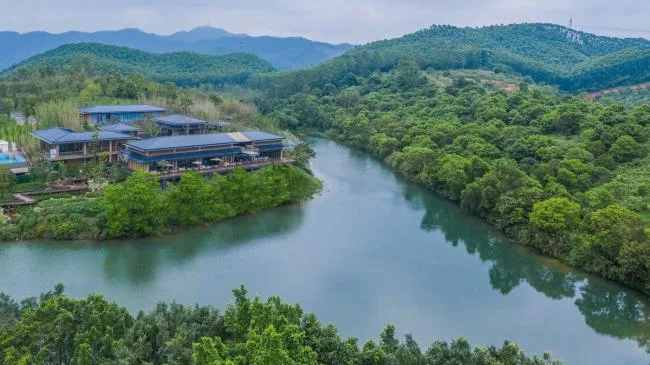
The overall project is located in Gaoming Genghe Town, a key city in the Guangdong Hong Kong Macao Greater Bay Area – the core of the Pearl River Delta Shinkansen Airport Economic Circle in Foshan. The planned land area of the project is more than 1200 acres, and it aims to create a natural cultural and artistic village in South China with the concept of “regaining wild life”. It is a South Vietnamese style tourist resort town that integrates leisure, sightseeing, vacation, entertainment, consumption, culture, art, and natural education.
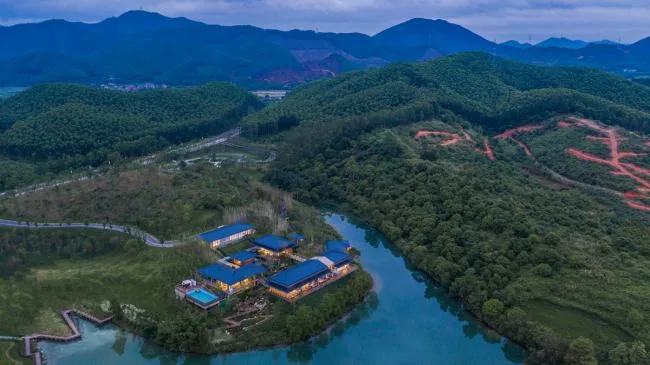
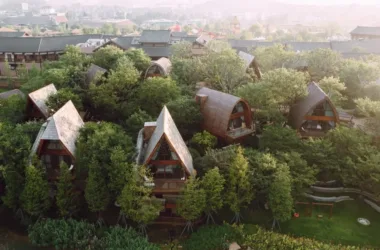
This project is the first phase of the open “Shiye Art Space”, showcasing the project experience to customers. The entire project is developed along the hillside, with a total construction area of over 1200 square meters and a single story courtyard style structure.
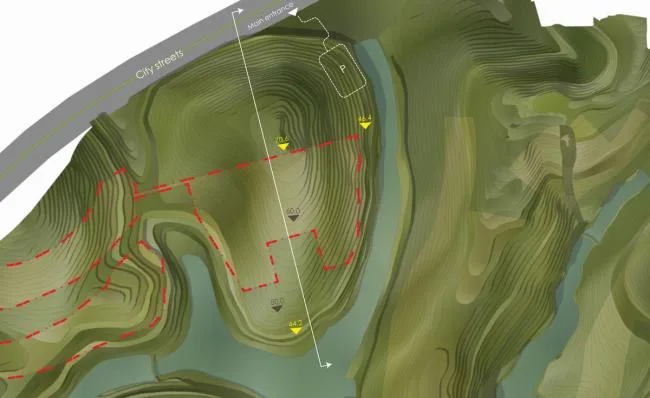
▲ Site Plan
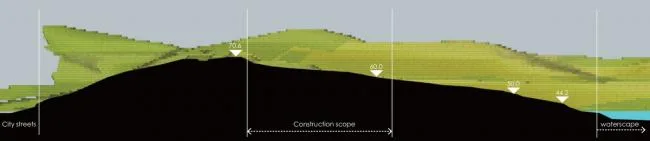
▲ Topographic profile
Three stages of conceptualization
Slope ornaments: For slope ornaments, there are usually two ideas: one is landscape architecture embedded in the mountain, and the other is suspended architecture floating in the air. Following these two ideas, the design team quickly developed their concept for BIM training. From the perspective of the purity of the concept and the uniqueness of the experience, the former approach is more creative.
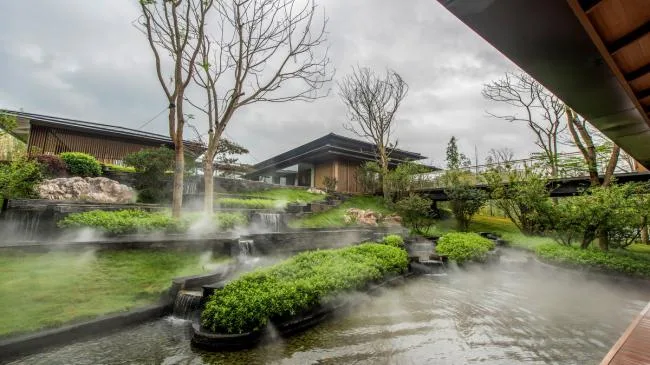
Floating courtyard: However, difficulties were encountered in deepening the concept. Landscape architecture involves significant excavation of mountains, which increases the difficulty and cost of construction. More importantly, we seem to have experienced some alienation from the original Lingnan town. Returning to the original idea, the courtyard style layout should be the main tone of the space, taking advantage of the terrain but being independent of each other. This gave rise to the idea of a ‘floating courtyard’.
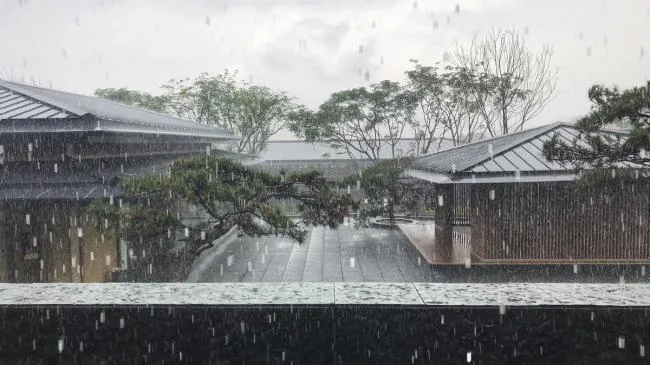
▲ Rain Effect Picture
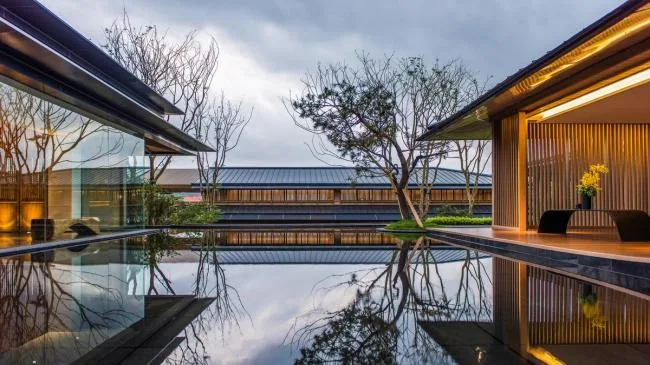
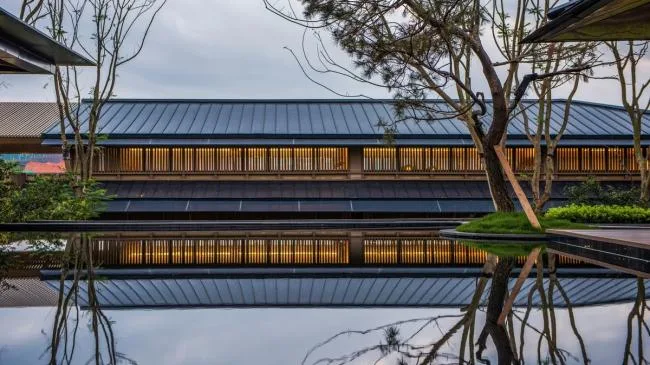
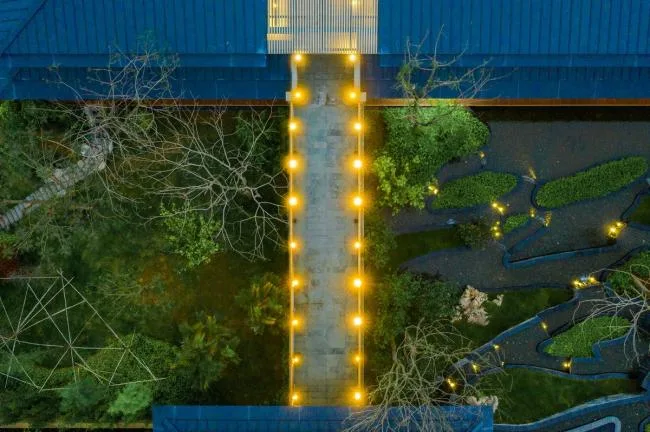
Explosive point: After determining the direction of the “floating courtyard”, the design team reorganized the design logic. The foundation of the project lies in the landscape view of this land, which is the high point of the water scenery in the viewing area. The depth of the view is very large, and the surrounding landscape vegetation is very good. Therefore, it is necessary to focus on the landscape view and make high-quality landscapes the ignition point of the project. Through the deduction of landscape paths, ultimately, an “axis bridge” facing the landscape becomes the core breakthrough point of the project, serving as a link connecting the entire space.
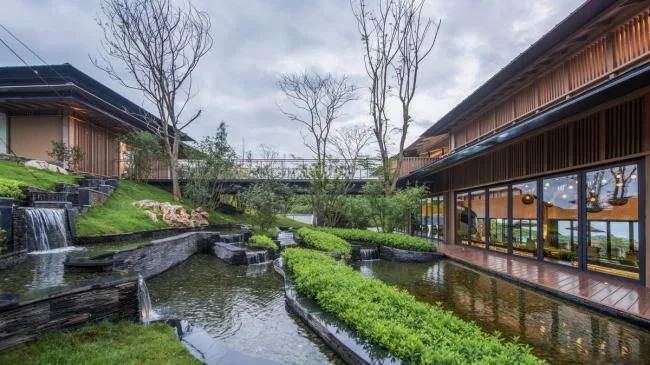
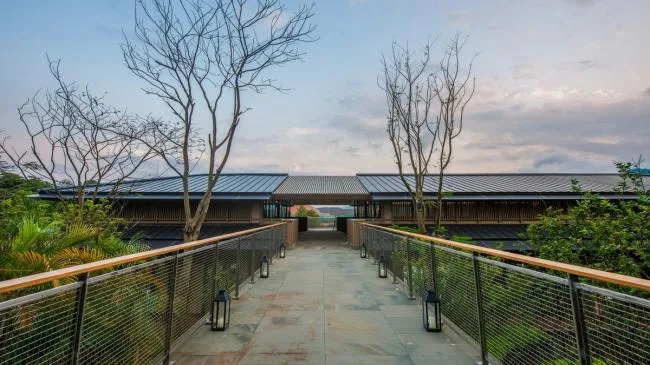
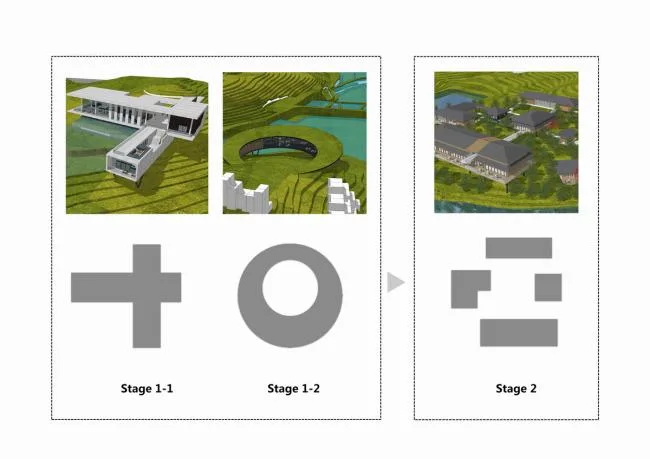
▲ Concept map
Path Experience
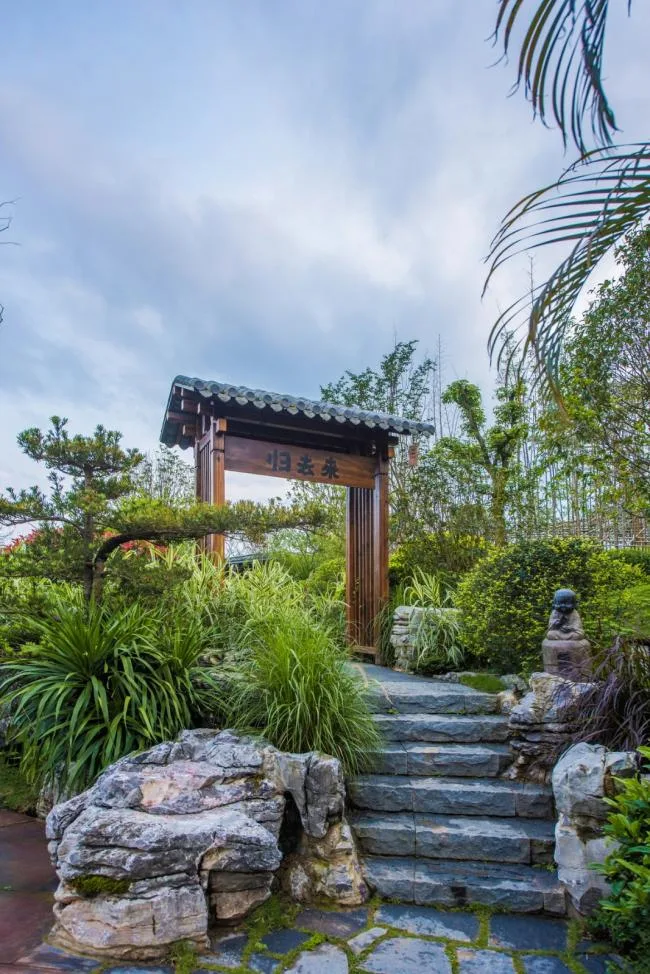
Ascending along the path by the water’s edge, a small mountain gate can be faintly seen under the shadow of trees. Passing through the mountain gate, the stone slabs gradually leveled and entered the open courtyard. The automatic door slowly opened, and this was the reception hall. After a brief pause, I turned around and found a straight path extending into the distance.
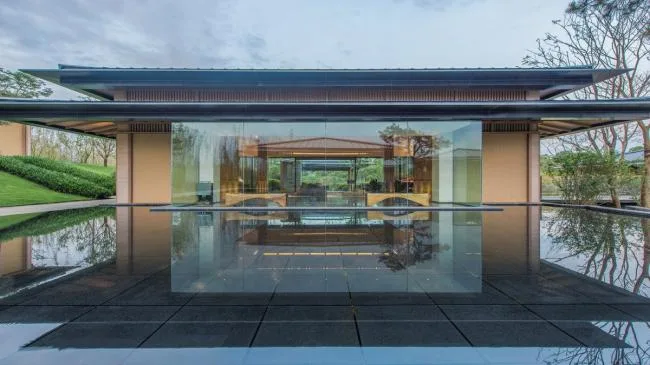
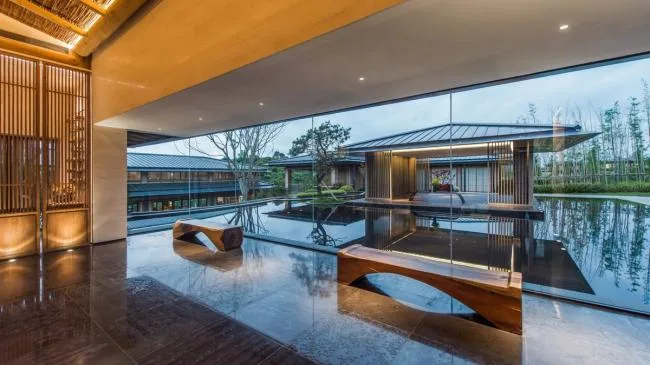
Step out of the door and walk along the pedestrian bridge. The surrounding terrain gradually descends, with flowers, plants, and trees lingering around. Pass through a low roof and reach the end of the axis overpass. We are already floating on the forest, with winding lake surfaces, thousands of acres of hills and forests in front of us, and silhouettes of mountain foothills in the distance. Believe in this moment, there will be some waves in the viewer’s heart.
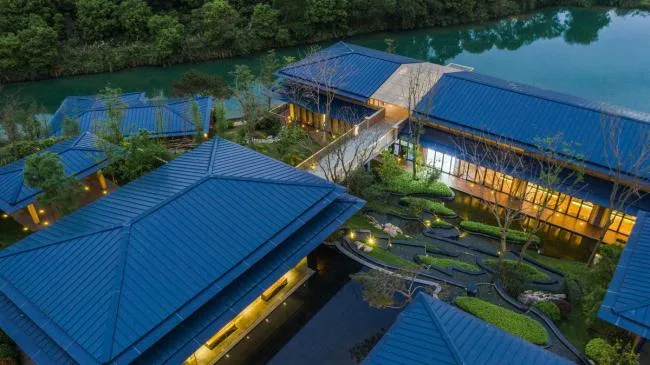
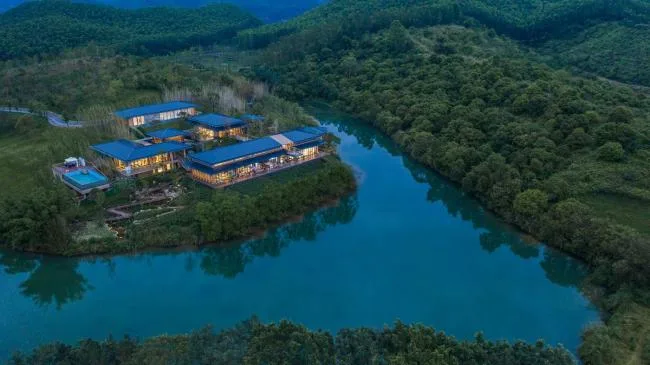
spatial organization
The entire ‘floating courtyard’ is centered around an ‘axis bridge’. In front of the entrance reception area, after climbing a certain height using the height difference of the venue, the pedestrian bridge is level with the reception hall, directly pulling the audience to the end of the viewing point. These are activities on a completely flat surface, completed in one go. Through the spiral staircase inside the exhibition hall building, people are directed into the interior for experience and visit.
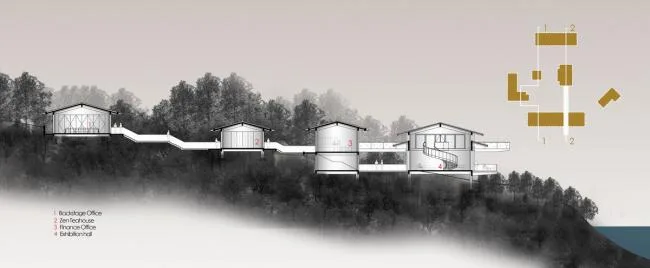
▲ Sectional view
The exhibition hall, communication hall, rest area, and logistics area are four independent buildings that revolve around the central courtyard. The courtyard is organized along the natural terrain, with the north higher and the south lower, gradually sloping into the water surface. The building is elevated on a natural sloping courtyard, with the exhibition hall as the highest point. The courtyard center is designed with an open-air tea room as the core of the courtyard’s spirit.
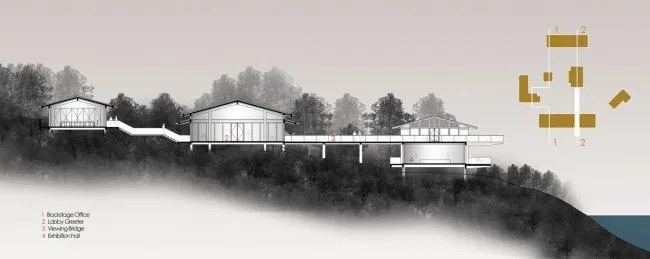
▲ Sectional view
Facade control
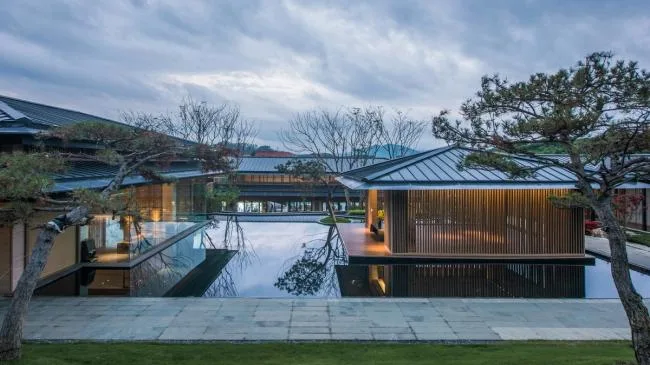
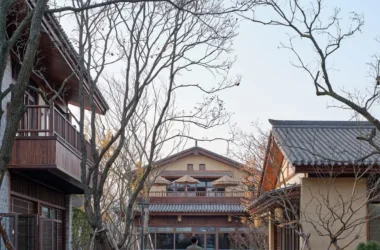
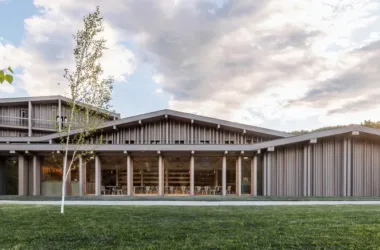
The courtyard building is constructed in the form of a single story four slope roof. In order to increase the refinement of the building and reduce the weight of the roof, the method of using a metal roof was adopted. The wall material is mainly made of anti rammed earth coating and imitation wood veneer, creating a lightweight wood texture, and the color selection is relatively bright. The use of a large number of wooden louvers and grilles weakens the separation between walls and doors and windows, enhances the overall integrity of the building, and also increases the atmosphere of the grey space. The Shiye Art Space is ultimately presented in the form of a “floating (BIM designed) courtyard”.
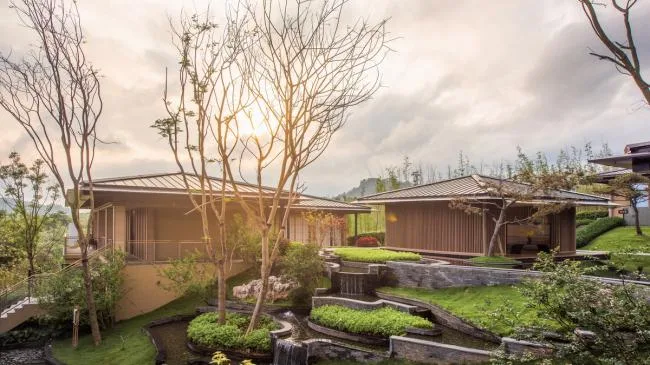
Design drawings:
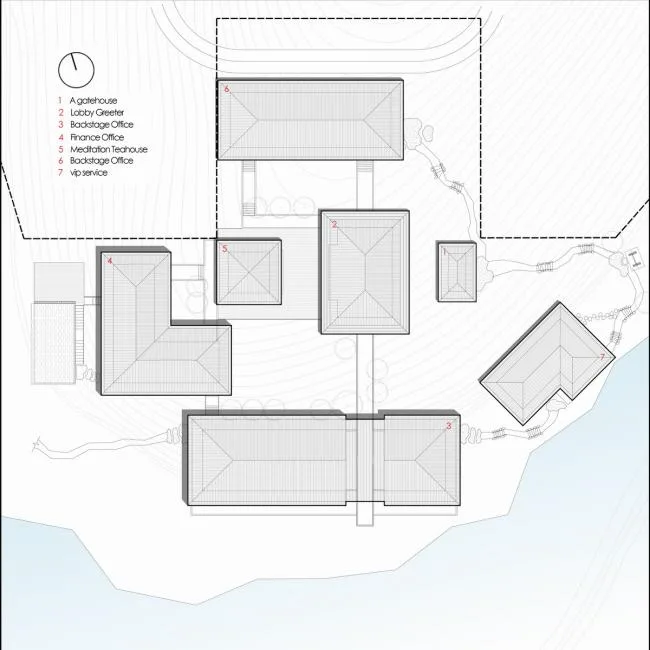
▲ General layout plan
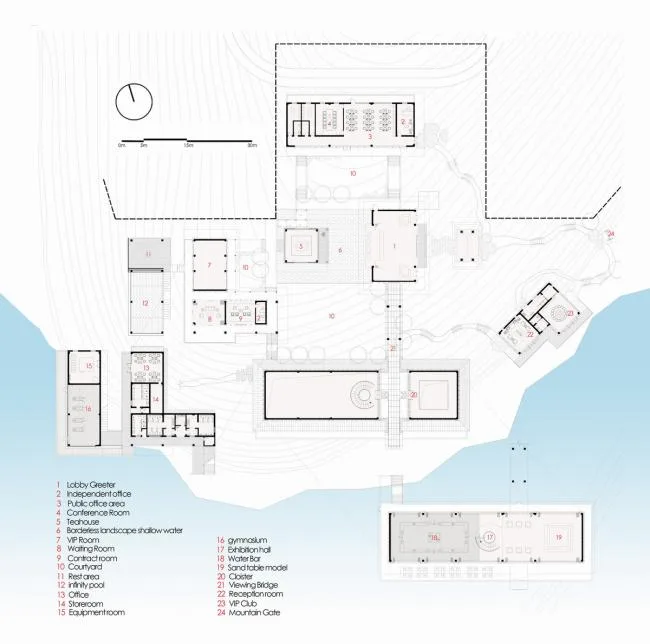
▲ Plan view
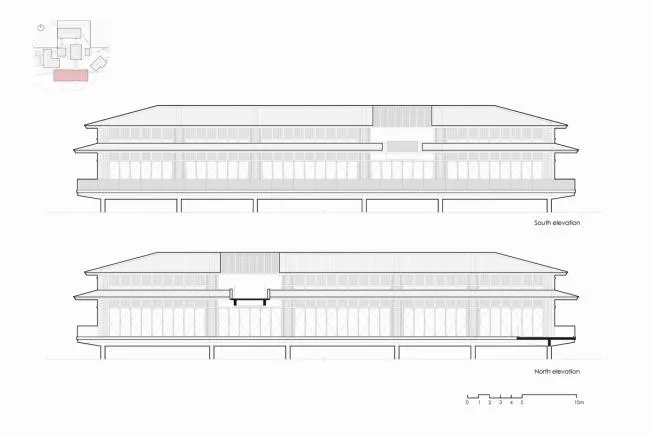
▲ Elevation view
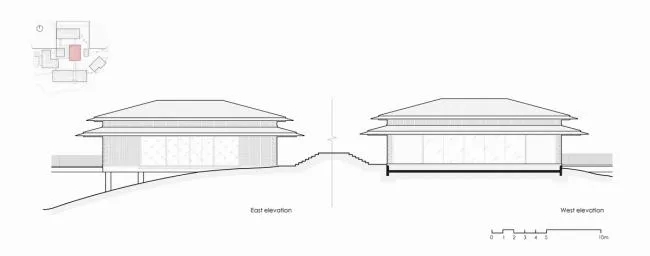
▲ Elevation view
Project Information:
Designer: M.A.O
Address: No. 200 Genghe Avenue, Gaoming District, Foshan City, Guangdong Province, China
Category: Visual Arts Center
Development company: Greenland (Hong Kong)
Landscape Design: Lab D+H
Interior Design: MATRIX DESIGN
Building area: 1273.0 square meters
Project Year: 2018
Photographer: Calm Lu













Must log in before commenting!
Sign Up