
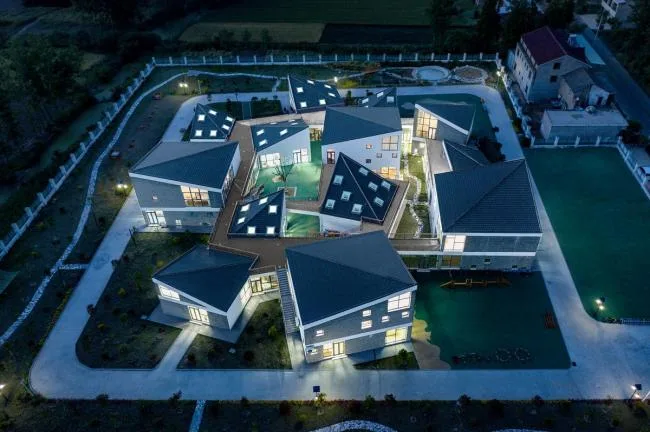
▲ Aerial view of the project: Wu Qingshan
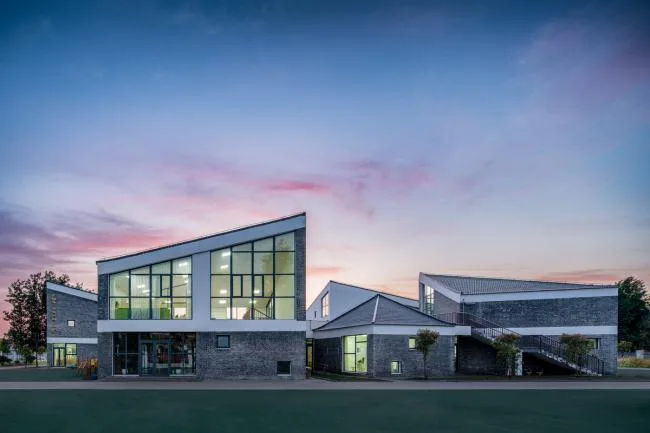
▲ Architectural facade photography: Wu Qingshan
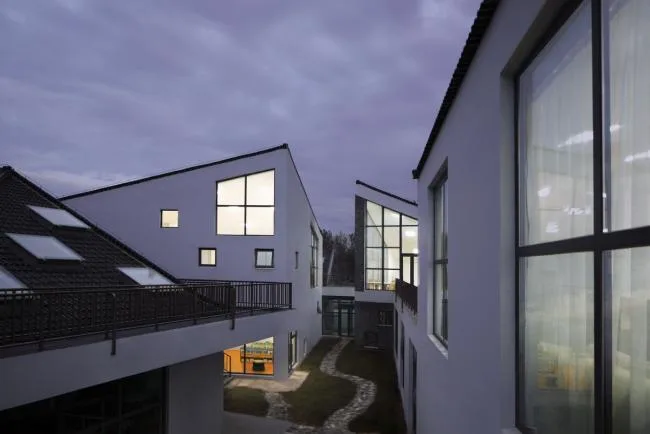
▲ Indoor and outdoor spatial relationship photography: Liu Minling
In recent years, Jiangsu Province has taken the lead in advancing high-quality preschool education across both urban and rural areas, including places where educational resources were once limited. In 2015, the Funing County government commissioned Crossboundaries to design a central kindergarten for Beisha Village, aiming to address the shortage of early childhood education locally.
Funing County, located on the northern Jiangsu plain and adjacent to the Su water network, has long valued culture, education, and morality. Known as the “Land of Jianghuai Joy,” the area’s seasonal agricultural cycles remain central to local life. The expansive fertile fields surround scattered houses and human-made structures, creating a distinctive rural environment.
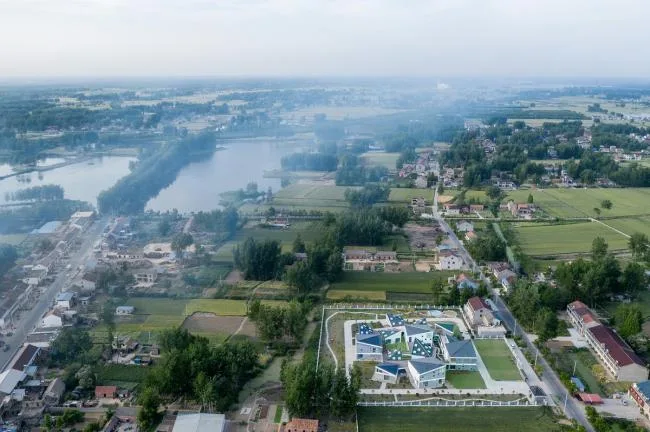
▲ Reflecting the native texture of Jiangsu’s plain villages. Photography: Wu Qingshan
Traveling to Beisha, the view outside the window reveals an endless fertile plain with a misty horizon, occasionally interrupted by rows of trees and houses. This flat, boundless landscape is typical of rural Jiangsu. Yet, stepping into the village, the expansive flatness gives way to a rich spatial experience. Towering trees form natural “colonnades,” dividing the sky and fields into a layered collage. Walking through these tree-lined paths toward the villages evokes an enchanting feeling, akin to exploring a peach orchard. The trees complement the two- to three-story cottages, with sloping roofs and brick walls, creating a harmonious rural atmosphere.
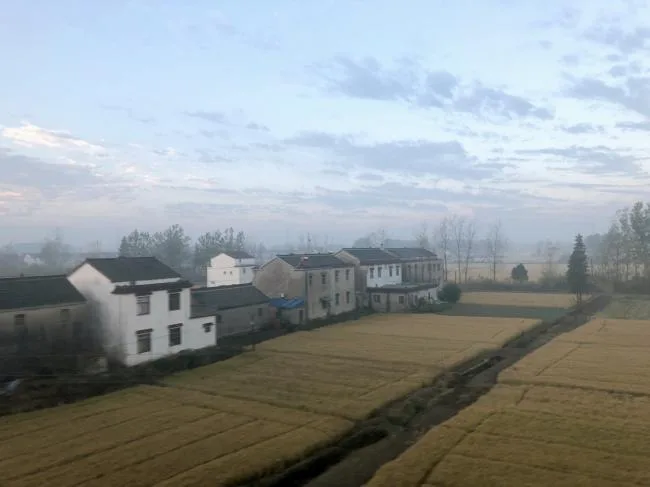
▲ Typical rural Jiangsu landscape seen from the train window. Photography: Hao Hongyi
This serene landscape sets the stage for the design of the North Sand Kindergarten by Crossboundaries.
Miniature Village Concept
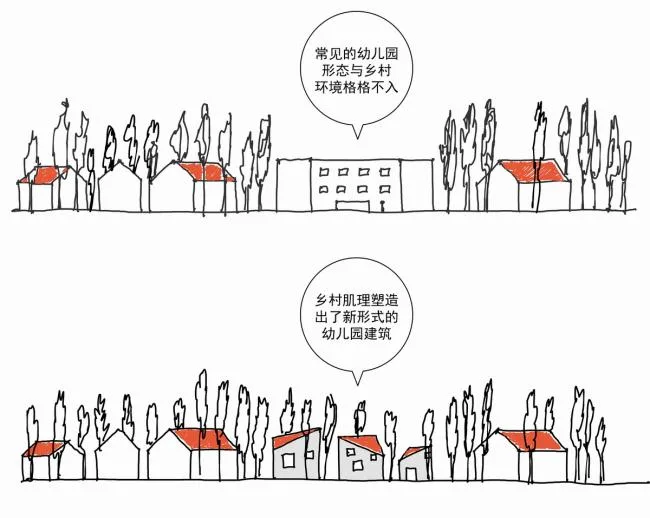
The core of this design lies in its thoughtful control of scale. The overall volume required for the kindergarten is divided into several “cottage-style” structures. These cottages are clustered together around multifunctional outdoor activity spaces, fostering a close connection between indoor and outdoor environments.
This spatial arrangement not only echoes the original rural texture but also provides an enriching environment for early childhood education. As Chen Heqin, the father of modern early childhood education in China, once said, “Nature and society are living textbooks.” Children learn best through direct interaction with nature and society, by personal observation and experience. The designer’s role is to create such opportunities and environments for children.
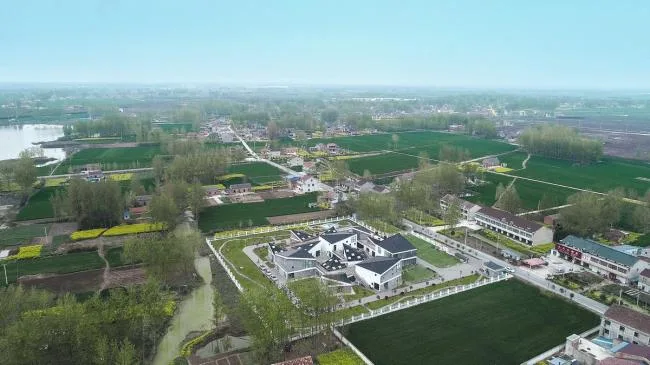
▲ The total building volume is segmented into several “cottage-style” structures. Photography: Hao Hongyi
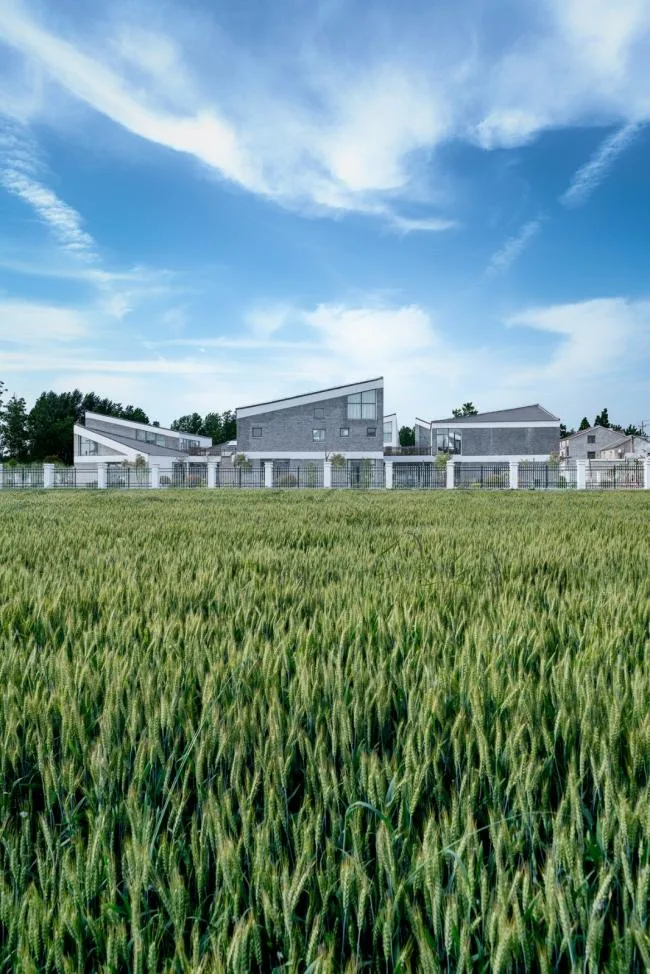
▲ Architecture and surrounding environment. Photography: Wu Qingshan

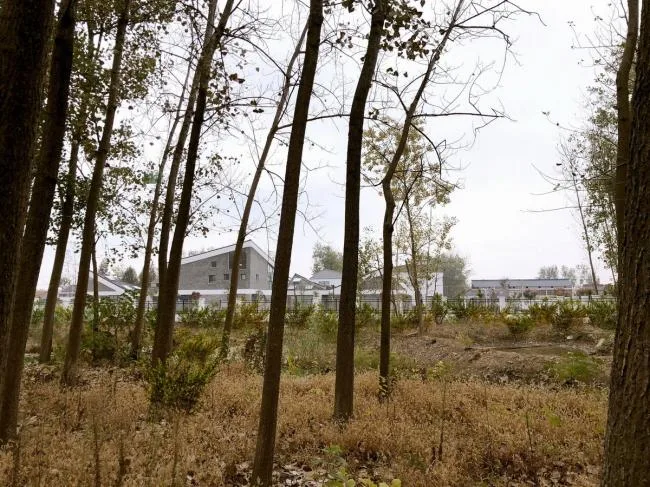
▲ Seamlessly integrated into the rural texture
This “cottage-style” kindergarten resembles a small village, designed at a child-friendly scale that evokes a sense of familiarity and comfort. The intriguing spatial relationships spark curiosity and encourage exploration. Upon arrival, children first notice the central main activity area. As they wander between the cottages, they discover small, hidden play areas scattered in front of and behind the buildings—places where they can freely learn or play hide-and-seek, just like in a real village.
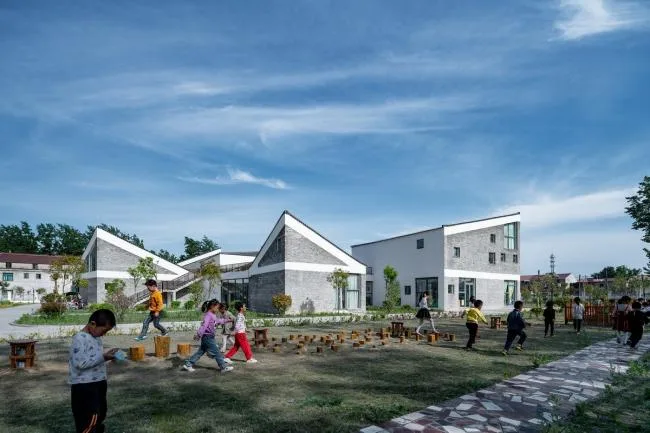
▲ Children engaging in activities in the park. Photography: Wu Qingshan
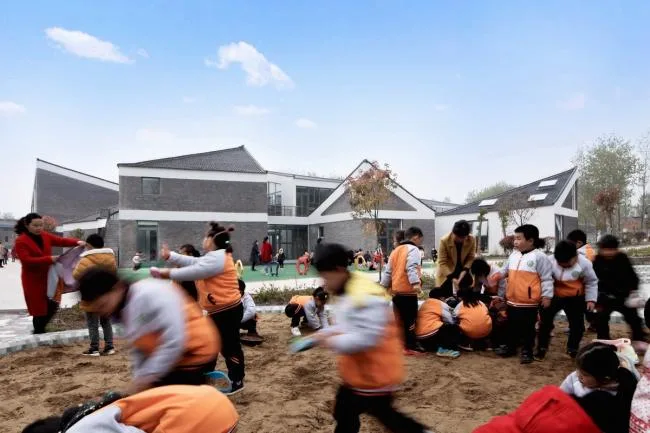
Kindergarten designed as a miniature village, offering children a comforting and familiar environment. Photography: Hao Hongyi
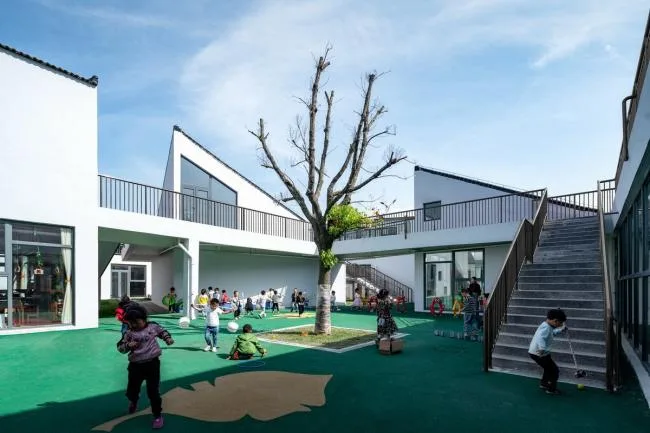
Children can learn or play hide-and-seek everywhere, just like in a traditional village. Photography: Wu Qingshan
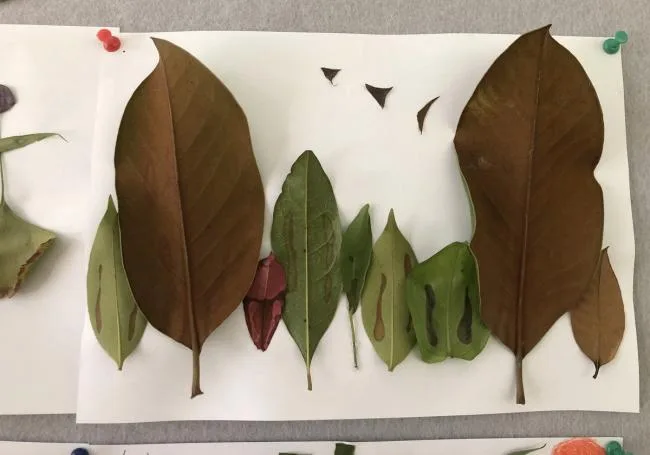
▲ Nature through the eyes of kindergarten children. Photography: Hao Hongyi
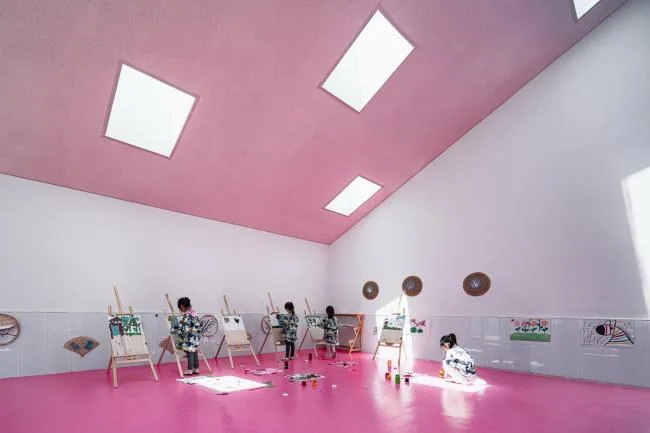
▲ Indoor painting and photography: Wu Qingshan
During visits to nearby villages, many kindergartens were found to follow a typical “teaching building” style—large, high-rise blocks that isolate children from the environment and limit their views. These monotonous, repetitive facades impose an “urban logic” onto the rural setting, making them feel like outsiders rather than a “second home.”
Many local children are “left behind” when their parents leave to work seasonally in cities, missing much of their children’s early years. For these children, the kindergarten truly serves as their second home, a place that should feel familiar, comfortable, and warm.
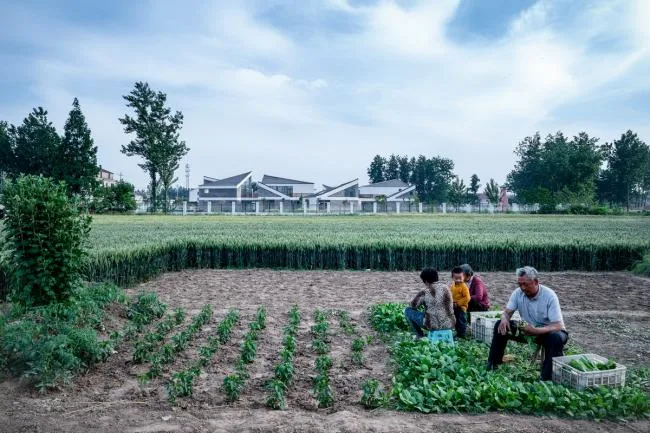
For many left-behind children living with grandparents, kindergarten is like a second home. Photo by Wu Qingshan
The Joy of Exploration
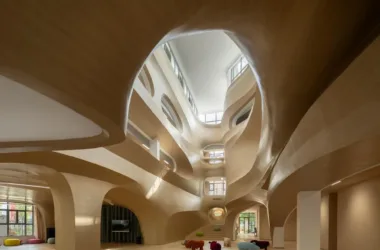
The second-floor walkway not only connects different areas but also serves as an activity platform for children. Upon reaching the second-floor terrace, children’s eyes are drawn to the undulating sloped roof, evoking the sensation of being in a valley nestled beneath a canopy of trees.
This subtle shift in perspective allows children to observe their surroundings from new angles, broadening their spatial experiences daily.
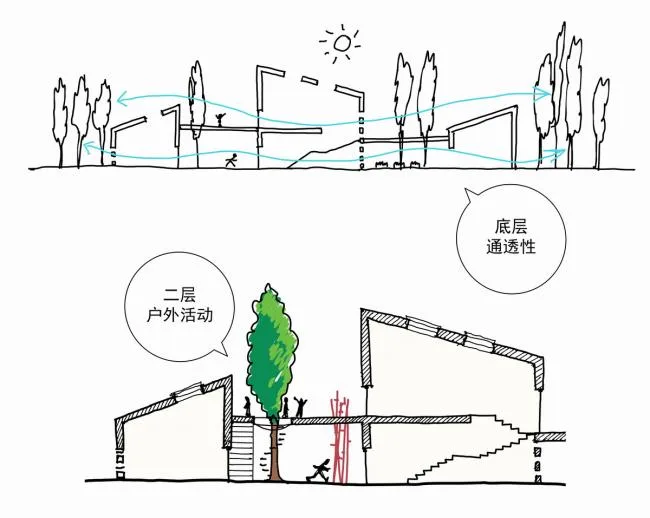
▲ Group space characteristics
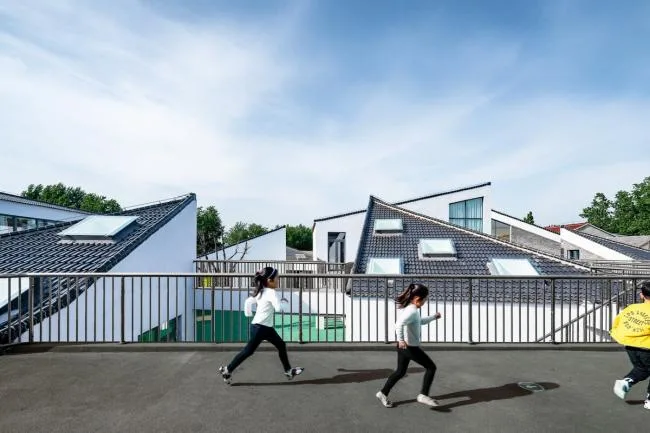
The undulating roof creates a valley-like atmosphere, encouraging children to view their environment from different perspectives. Photography: Wu Qingshan
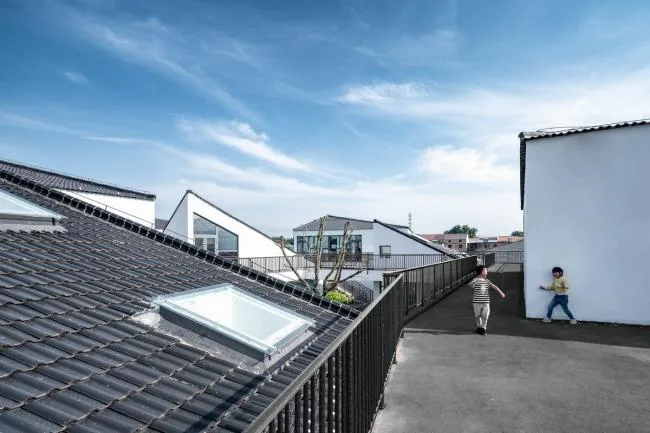
▲ Playful spaces abound. Photography: Wu Qingshan
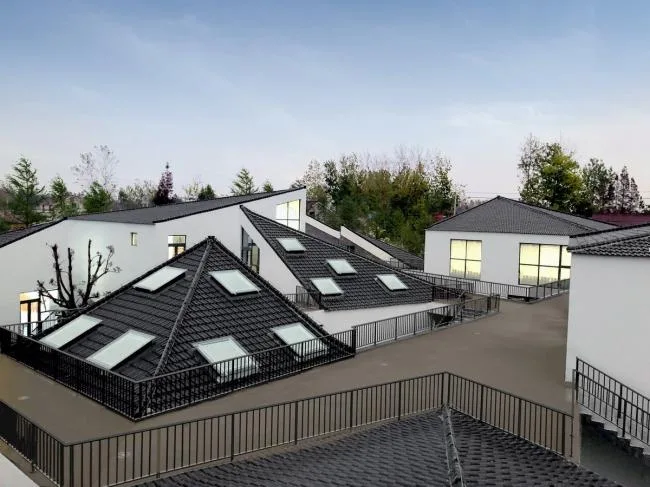
▲ Undulating roof detail. Photography: Hao Hongyi
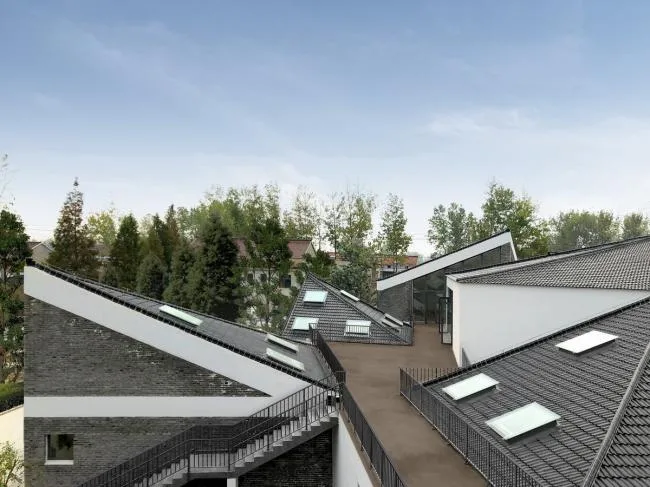
▲ Undulating roof detail. Photography: Hao Hongyi
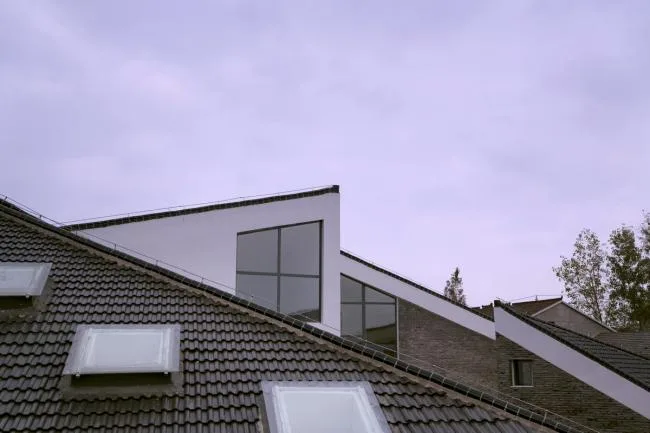
▲ Layered roof design. Photography: Hao Hongyi
The exterior materials are locally sourced old green bricks and white plaster, with each cottage featuring a unique appearance. Multiple square windows on the ground floor face each other, creating visual connections between buildings and their small courtyards. This arrangement introduces dynamic views and activities into the children’s field of vision, fostering a transparent and engaging indoor-outdoor relationship.
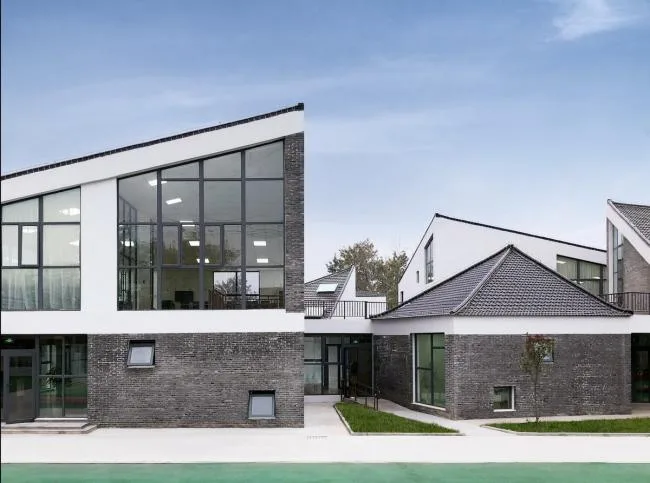
▲ The facade uses locally available old green bricks and white plaster, each cottage distinct. Photography: Hao Hongyi
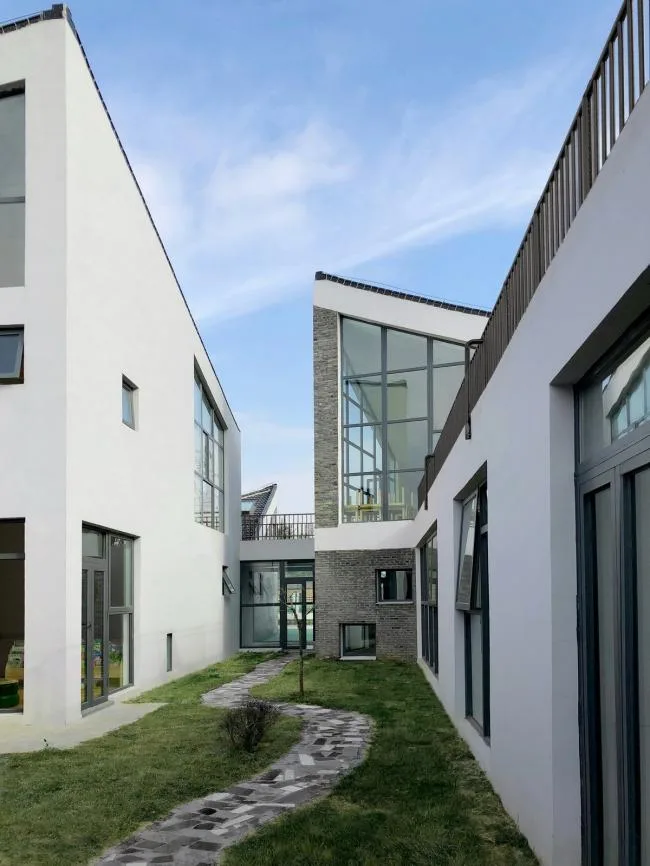
Multiple square windows on the ground floor face one another, creating a transparent and engaging indoor-outdoor connection. Photo by Liu Minling
Since their completion in 2018, these kindergartens have become not only a child’s paradise but also a vibrant social hub for the village. Parents and grandparents gather here, fostering harmonious community interactions during pick-up and drop-off times.
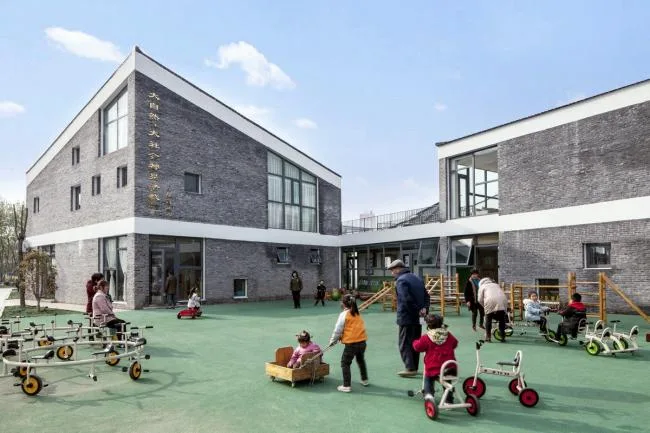
Kindergarten serves as both a child’s paradise and a popular social space for villagers. Photography: Hao Hongyi
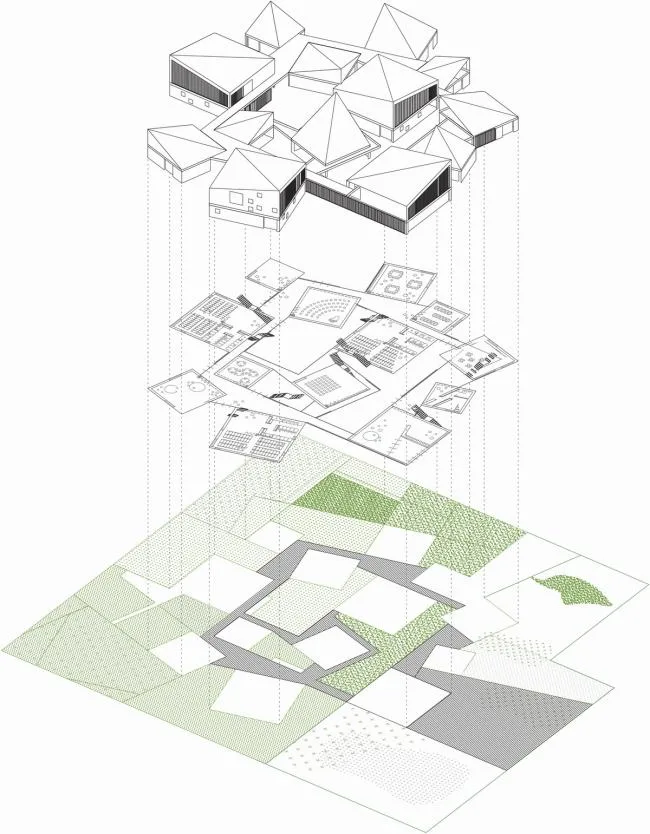
▲ Axonometric diagram
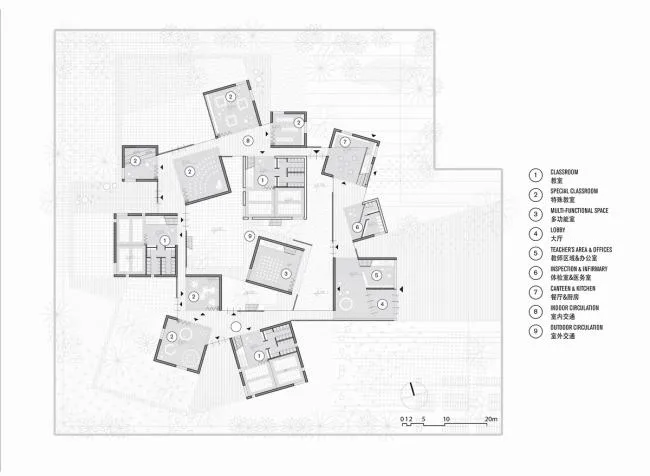
▲ First floor plan
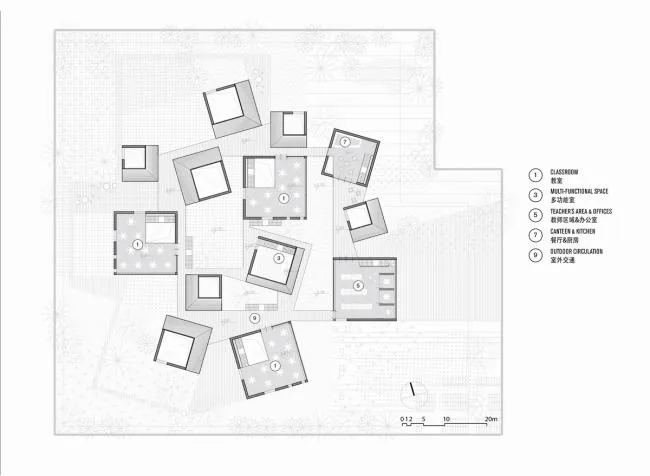
▲ Second floor plan
Project Information:
Location: Beisha Village, Funing County, Jiangsu Province, China
Client: Education Bureau of Funing County, Jiangsu Province
Total Construction Area: 2,815.4 square meters
Capacity: 300 students
Design Period: December 2015 – September 2016
Construction Period: April 2017 – August 2018
Completion: August 2018
Designer: Crossboundaries, Beijing
Partners: Binke Lenhardt, Dong Hao
Design Team: Tracey Loontjens, Alan Chou (Zhou Yelun), Andra Ciocoiu, Hao Hongyi
Photography: Wu Qingshan, Hao Hongyi, Liu Minling












Must log in before commenting!
Sign Up