
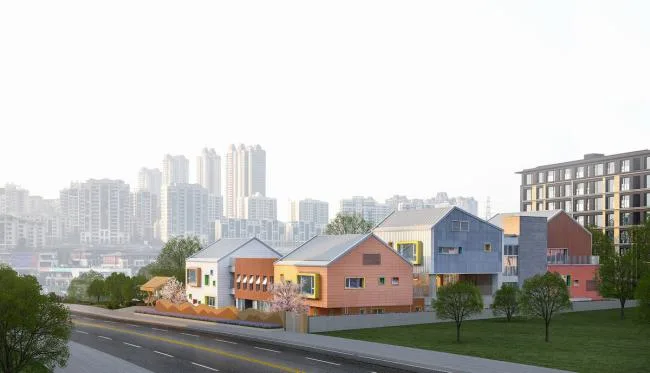
▲ Architecture and Surrounding Areas (Realistic Synthesis)
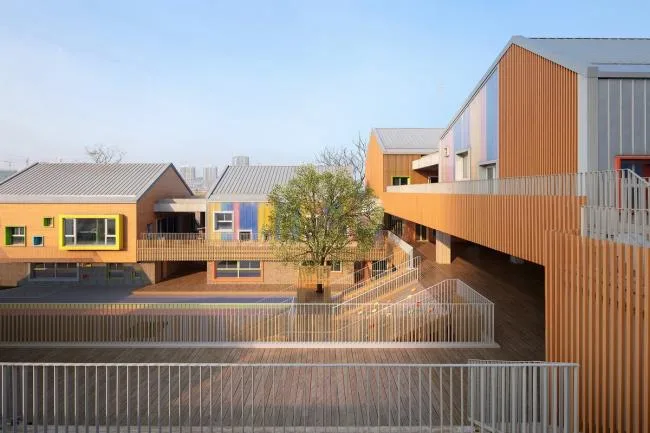
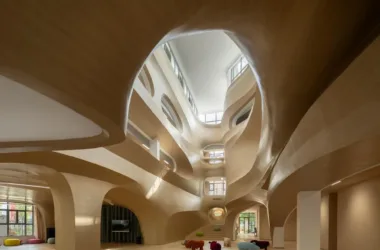
▲ View of the atrium from the rooftop grandstand (real scene synthesis)
Limitations and demands
Chongqing York North County Kindergarten is located in the North District of Yorkshire, Liangjiang New Area. The land is adjacent to the existing high-rise residential area across the city road to the south, with residential areas under construction on the north and east sides, and a city park on the west side. The interior of the site is relatively flat with little height difference. The project is a 9-class kindergarten with a land area of 3330 square meters and a total construction area of 2701 square meters. The land area of the project is relatively limited compared to its class size. For the kindergarten, having a pleasant space is necessary. How to create a safe, healthy, caring, and child friendly educational space under limited land conditions is a basic problem that architects need to face.
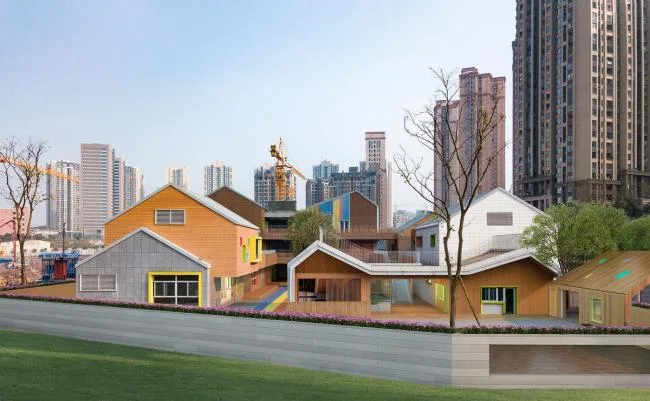
▲ Building West Facade (Realistic Synthesis)
This project is a community supported kindergarten, which belongs to the public private investment model of cooperation between educational real estate and prestigious schools. At the beginning of the project, in addition to achieving good communication with the owner unit, communication with the kindergarten is also quite important. The architect hopes to obtain their basic demands from frontline educators in the kindergarten and use their teaching philosophy as the basis for spatial design. The kindergarten has proposed an open teaching philosophy of “love and fun”, which includes three points: breathing (green nature), facing the future (exploratory spirit), and infinite possibilities (individual development). The kindergarten does not want children to grow up in a greenhouse, but hopes that they can feel the atmosphere and temperature of nature. Based on the specific situation of the land use and the educational philosophy of the kindergarten, the architect proposed the concept of “village”, hoping that after the kindergarten is built, it can become an “urban village” that children can freely explore.
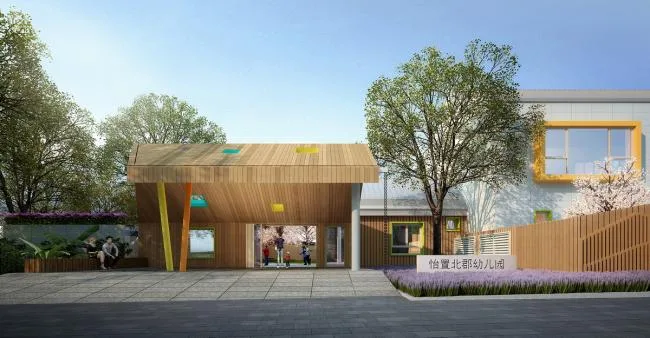
▲ Main entrance and road rendering
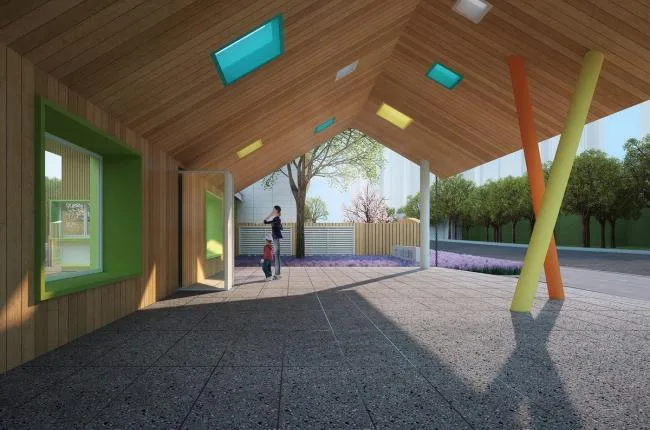
▲ Rendering of the main entrance waiting area
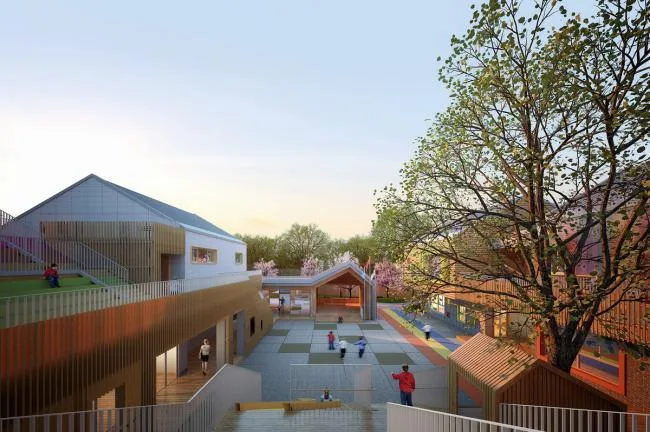
▲ Grand staircase overlooking the courtyard and small stage rendering
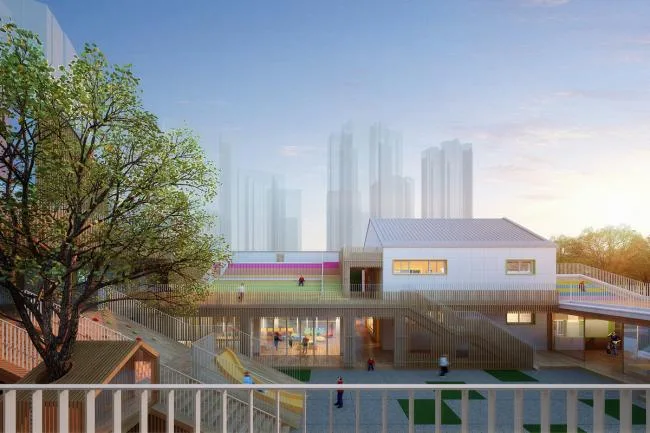
▲ Rendering of the second floor corridor looking towards the atrium and large steps
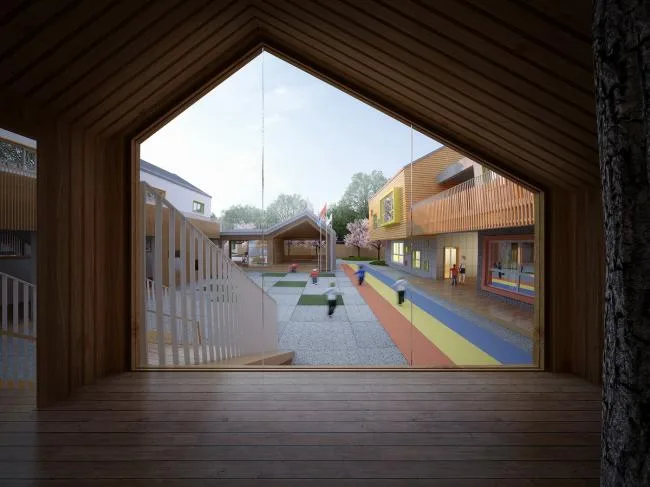
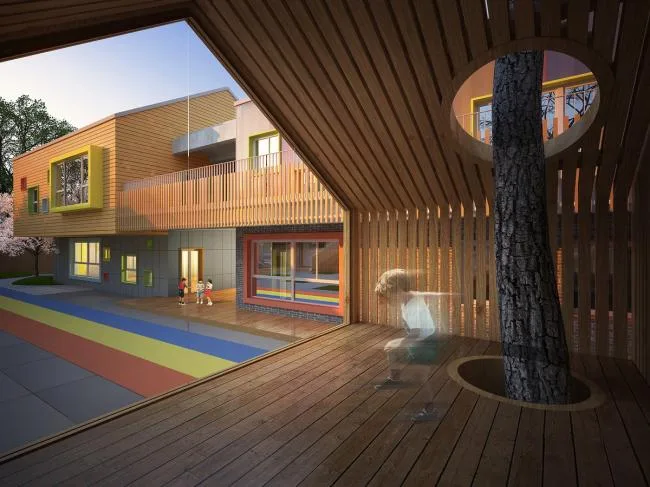
▲ Tree house rendering
Concept and Space
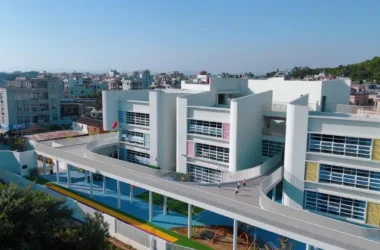
This is a vertically arranged “village” where children can experience the scene of the village at different elevations. The overlapping design of architectural space and activity areas also resolves the contradiction of limited land use, promotes the separation of various units, and forms a “neighborhood relationship”. Considering the landscape resource advantages of the western urban park, the main building ultimately presents a U-shaped courtyard layout, with classes arranged as independent blocks stacked together, leaving gaps between the blocks to maintain a “free breathing” state. Architects hope that each class can form a concept of “home”, and each living and teaching room is a unique and abstract small house. They hope that BIM friends can establish a sense of belonging in the park: each class is not only relatively independent in form, but also different in material, making each class unit more personalized and identifiable.
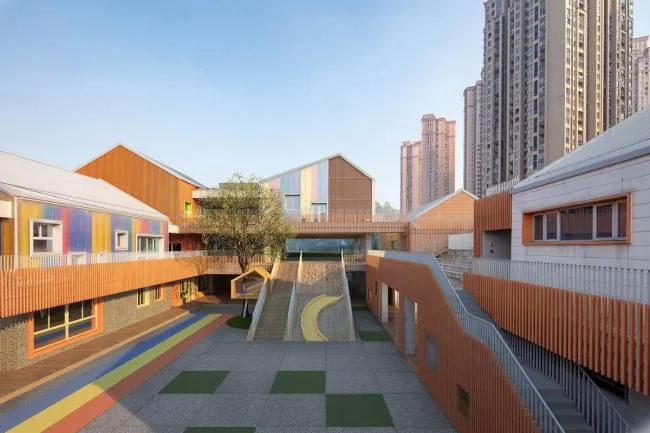
▲ Architectural Courtyard (Realistic Synthesis)
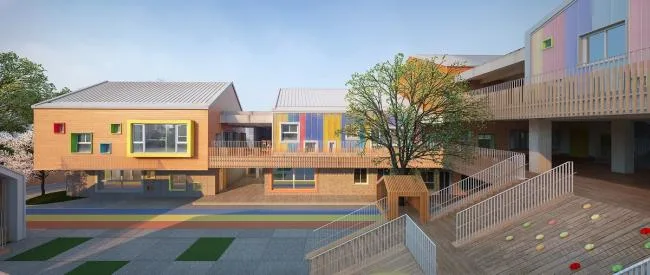
▲ Grand staircase and building atrium (real scene synthesis)
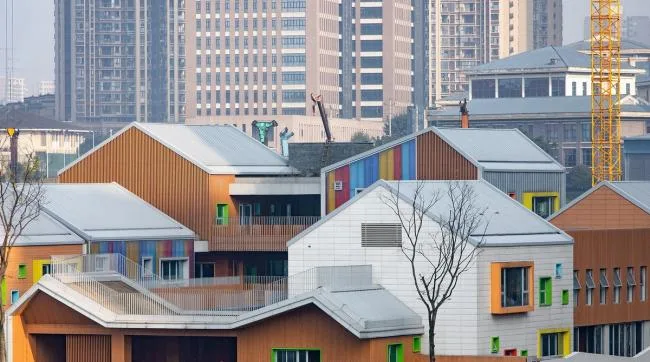
▲ Architectural Appearance
Fun Space Design: Inspiring Children to Explore
Diversified teaching courses are designed to stimulate children’s imagination and creativity, while also placing more demands on spatial design. In addition to setting up regular children’s living units, music and sports rooms, medical areas, and shared classrooms to meet basic teaching needs, the architect also created more open teaching spaces: such as setting up an elevated activity platform on the second floor, setting up a small stage to become the “visual focus” of the front and back courtyards, designing a large staircase grandstand space in combination with the central courtyard, and setting up activity areas such as treehouses, slides, and sloping climbing areas for children to play in; Fully utilize the roofs of the first and second floors as outdoor expansion activity areas; The gaps between classes are also formed as fun spaces for children to play after class, with a large number of multi-functional fun spaces set up, providing the possibility of open spaces for children’s spontaneous play and situational teaching. In terms of design, an attempt was made to improve the efficiency of the use of the sound and body room space. Combining with the site environment, the north and south interfaces of the sound and body room were connected, making it possible to become an open and transparent multifunctional composite space: when closed, it can be used as an independent teaching space, and when open, it can be combined with the courtyards on both sides of the north and south to become a multifunctional teaching place.
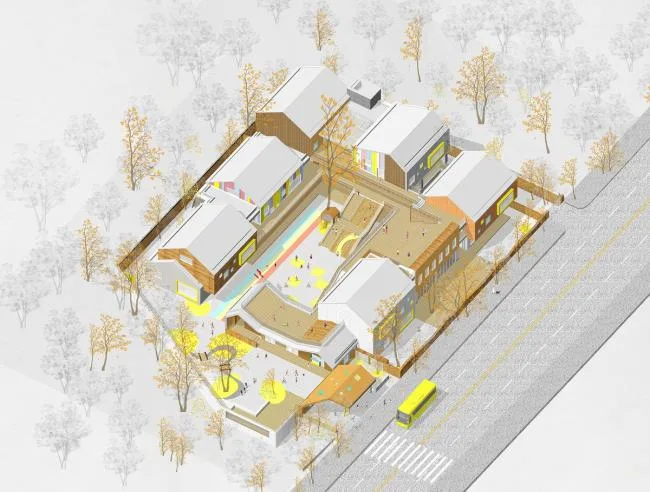
▲ Aerial illustration
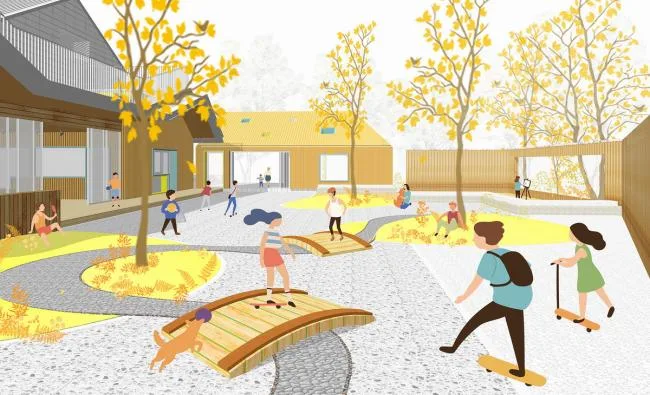
▲ Illustration of Front Yard Playground
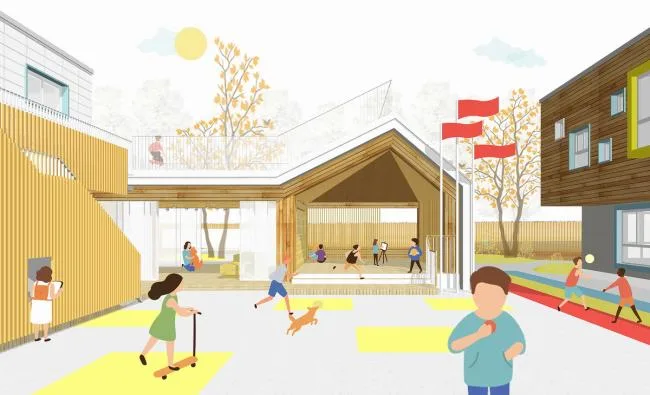
▲ Illustration of Small Stage and Central Courtyard
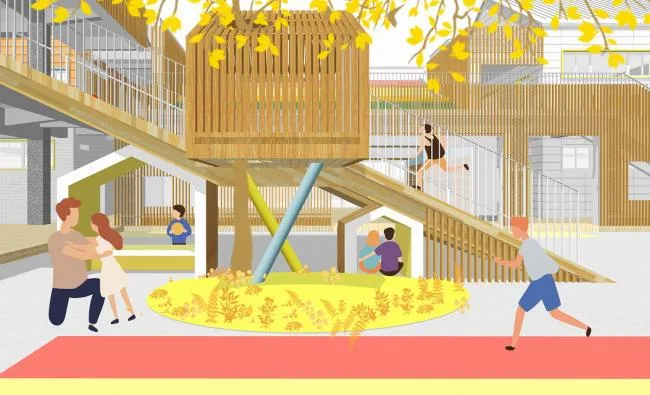
▲ Illustration of Large Steps and Tree Houses
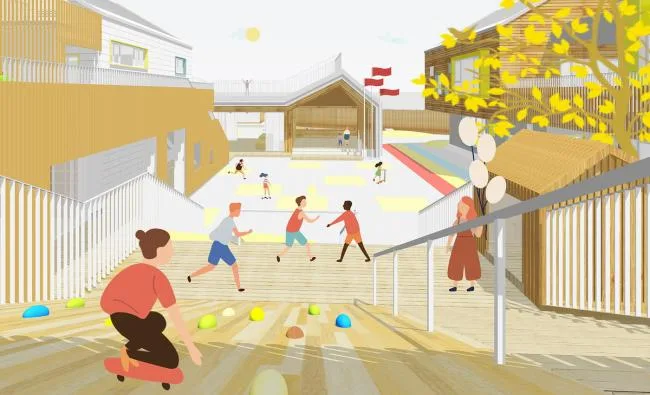
▲ Large staircase overlooking the courtyard and small stage illustration
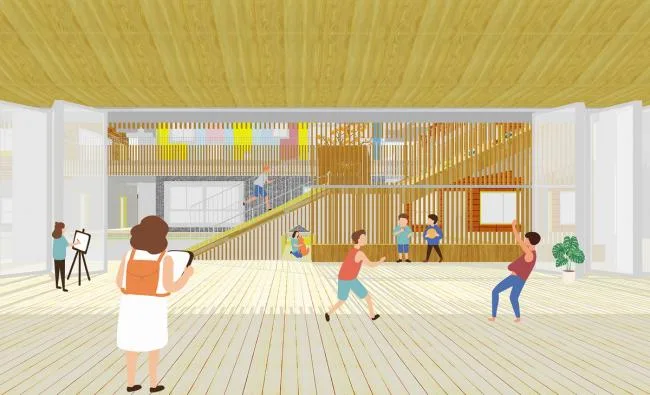
▲ Illustration of the sound and body room looking towards the courtyard
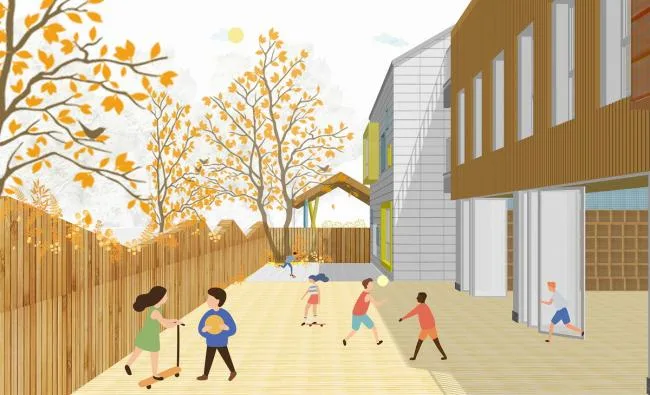
▲ Sound and Physical Studio and Side Courtyard Illustration
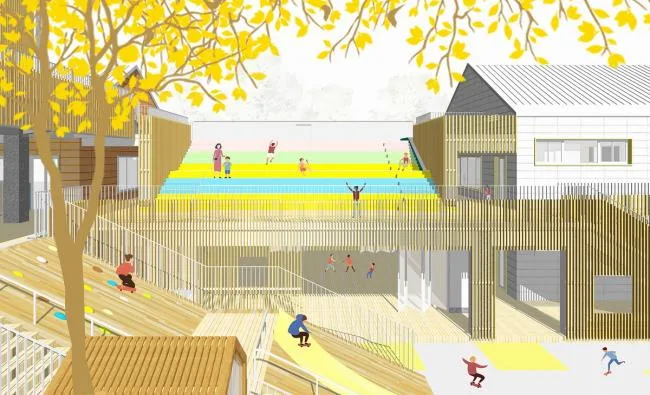
▲ Illustration of the second floor corridor looking towards the courtyard
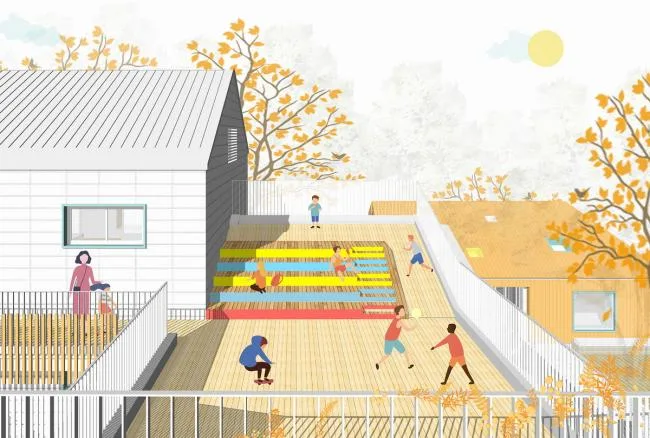
▲ Illustration of the activity venue on the roof of the lobby
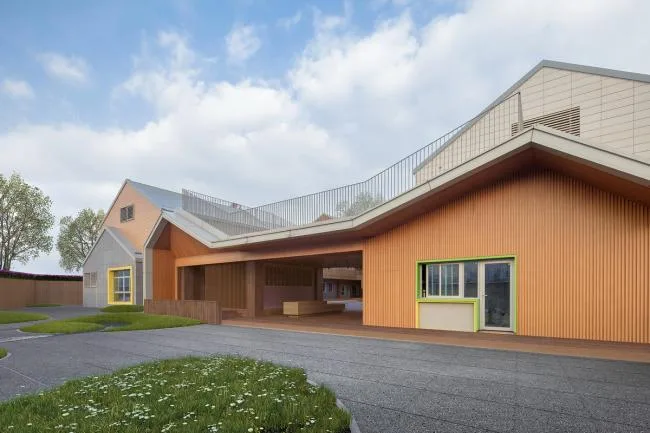
▲ Front yard and building (real scene synthesis)
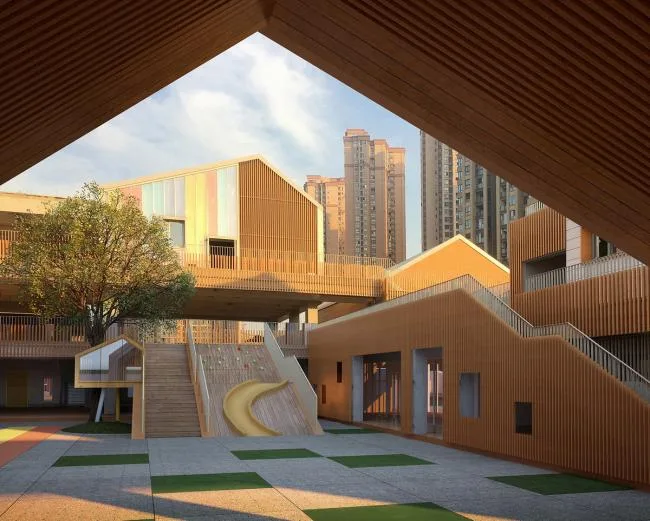
▲ Small Stage Looking towards the Courtyard (Realistic Synthesis)
Basic teaching units
After multiple communications and exchanges with the park, the basic teaching unit’s layout adopts an integrated design of activity rooms and bedrooms. The bathroom, dressing room, and bed storage space on one side of the mountain wall form a “service space system”. In addition to fixed furniture and storage space in the service space system, there are no other fixed furniture in the plan. We hope to have a more free activity space, and teachers can flexibly arrange furniture according to different activity scenarios. The principal said, “We hope to gradually cultivate children’s living habits through the process of furniture arrangement, so that they (the senior and junior classes) can gradually learn to organize their own living and learning tools.” A 900mm high reading table has been set up on the side of the core unit near the mountain wall, enriching the vertical space of the interior, and the elevated part has also become a storage space for beds.
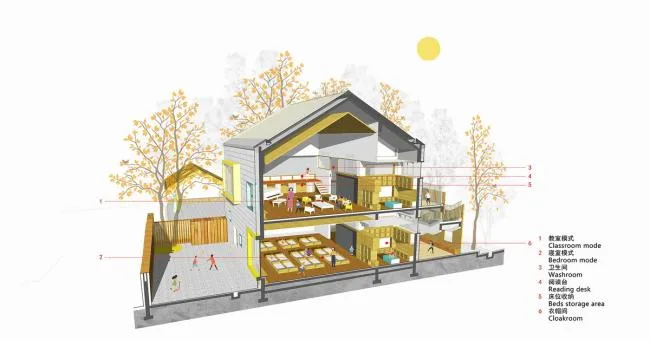
▲ Basic Teaching Unit: Sectional Perspective Illustration
Combining the protruding windows of different sizes on the exterior facade of the building, observation windows of different heights were set up indoors according to the physical scale of children, inspiring them to observe the outdoor courtyard space from different perspectives.
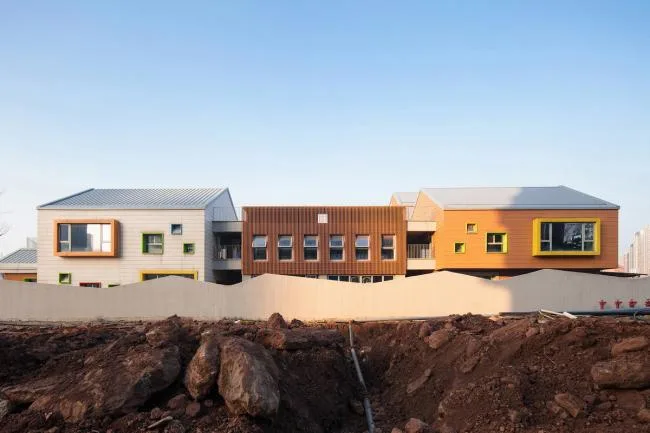
▲ South facade of the building
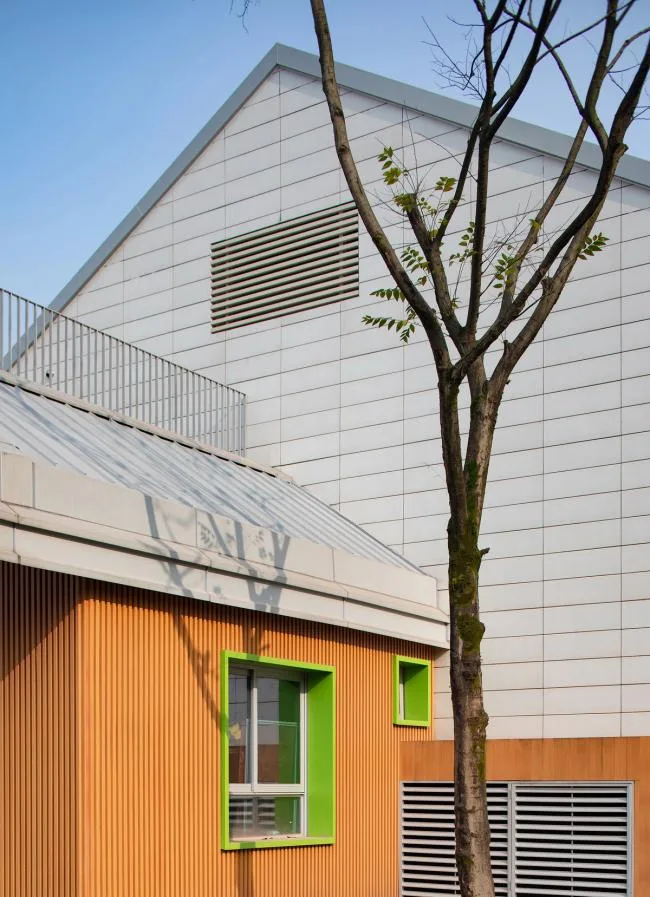
▲ Building Parts
Material expression
Every class is a ‘home’, each home has its own personality, and children form a sense of belonging to their classroom from an early age – ‘I live in a wooden house, you live in a brick house’, each volume has a unique material. The architect attempted to use different materials in the facade system: ceramic panels, red bricks, blue bricks, imitation wood materials, cement fiberboard, polycarbonate panels. By using polycarbonate sheets, we explore the possibility of creating an atmosphere with semi transparent materials in kindergarten educational spaces, allowing them to reflect colorful rhythms under sunlight. The architect used aluminum magnesium manganese sheet metal roofing system in the roof system, which unified the colorful facade system with a relatively simple roof, creating the illusion of “snow scenery”.
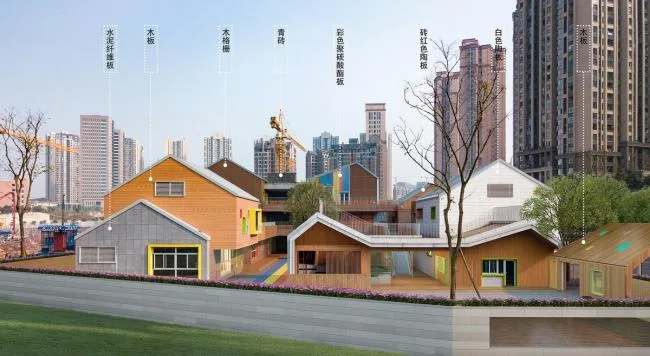
▲ Building West Facade+Material Distribution Map (Realistic Synthesis)
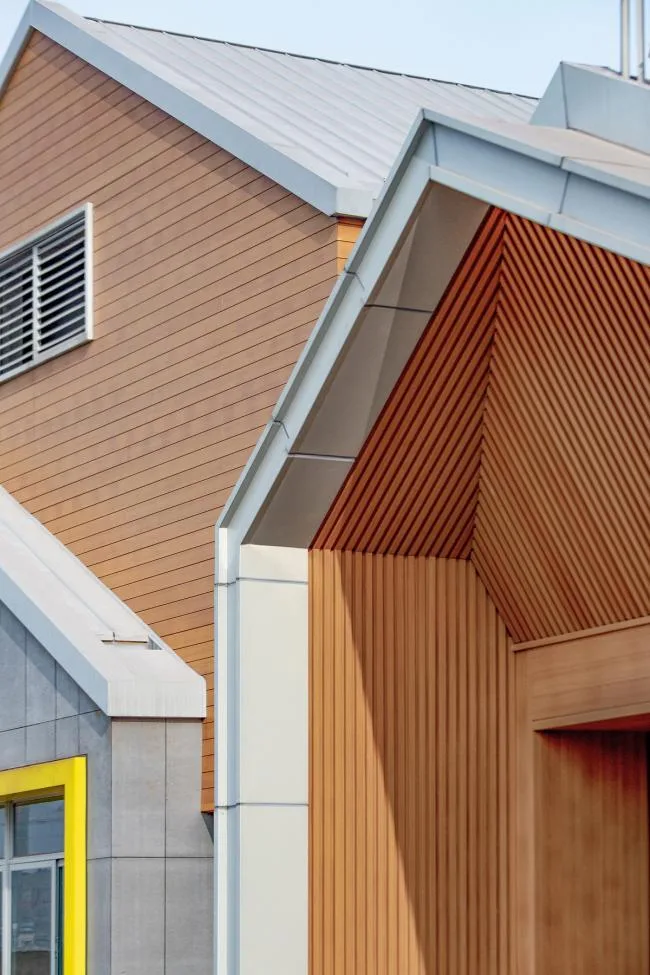
▲ Roof relationship
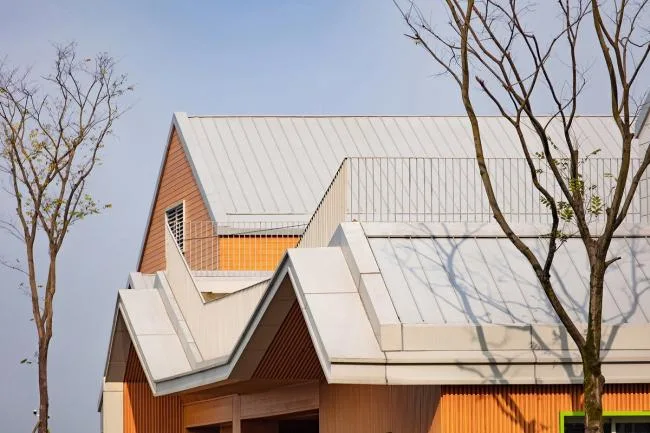
▲ Entrance hall and metal roof
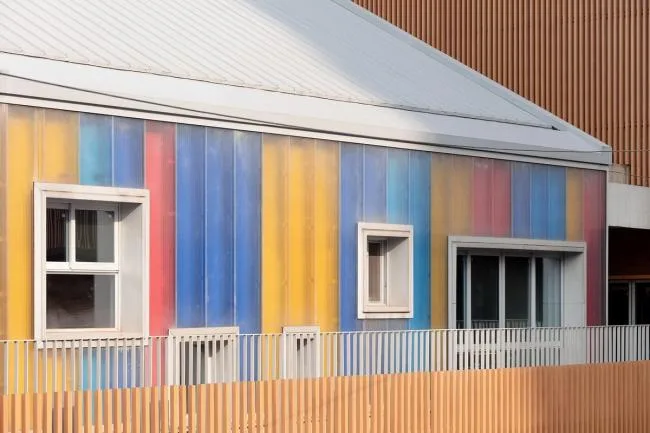
▲ Color polycarbonate panel facade
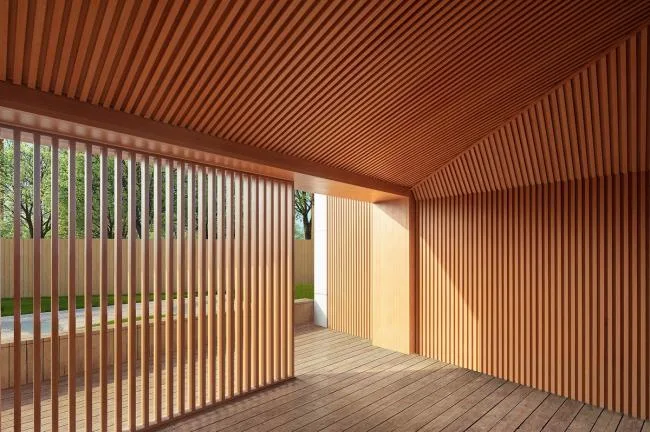
▲ Inside the Small Stage (Realistic Synthesis)
Control of completion degree
The project began design in May 2016. Yuanxiang Architecture not only completed the architectural scheme design, interior concept design, and landscape concept design, but also served as the overall control of the entire design process. Over the past two and a half years, it has been deeply involved in the design quality control of the entire process of building construction drawing design, curtain wall construction drawing design, landscape deepening design, and interior deepening design. During the deepening design, it carefully controlled the details and materials, and completed dozens of on-site inspections and guidance during the construction period, ensuring that the design concept was ultimately presented with a high degree of completion. At present, the architectural part of the project has been completed and accepted, waiting for the construction of landscape and interior design. Due to the project being temporarily in a semi construction state, in order to more fully express the architectural concept, some of the images in the article are presented in the form of “real scene synthesis” using on-site photos and landscape renderings.
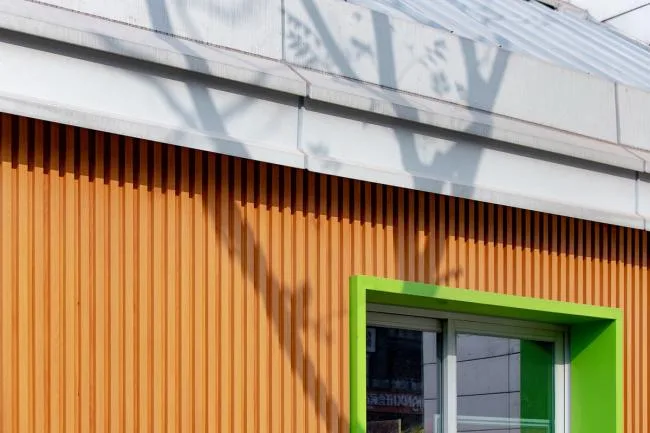
▲ Architectural details
Architectural model:
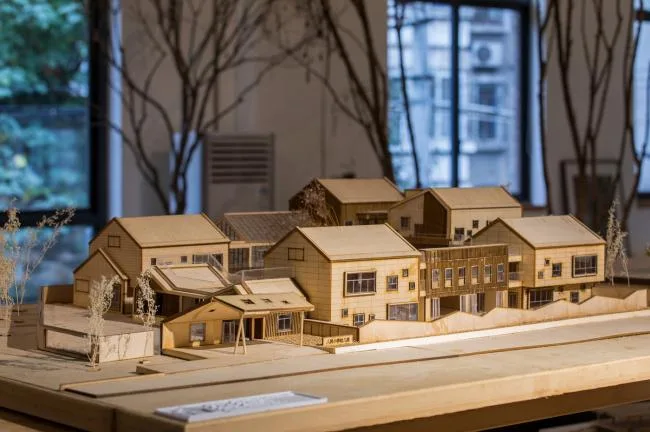
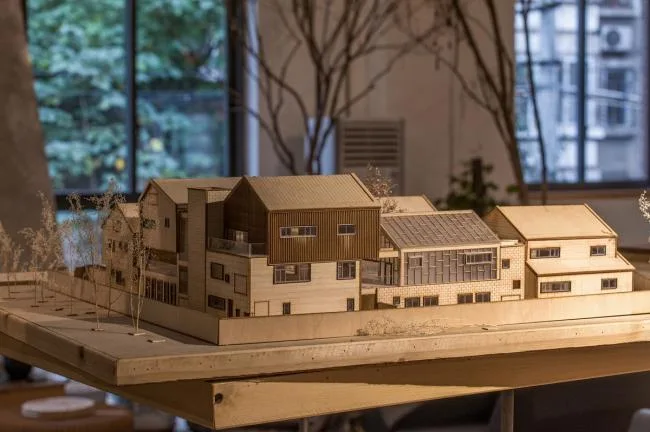
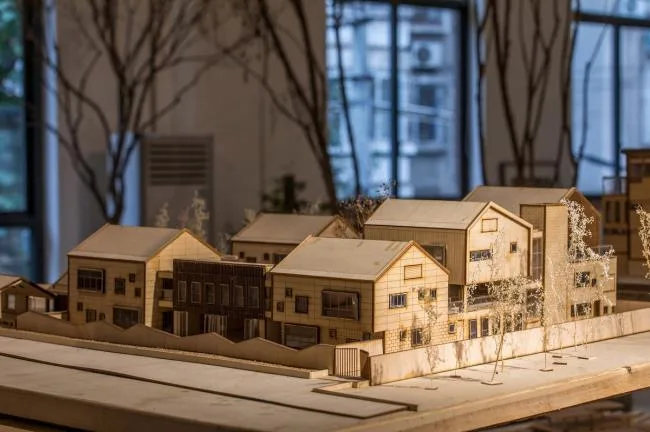
▲ Photography: Existence of Architecture – Architectural Photography
Design drawings:
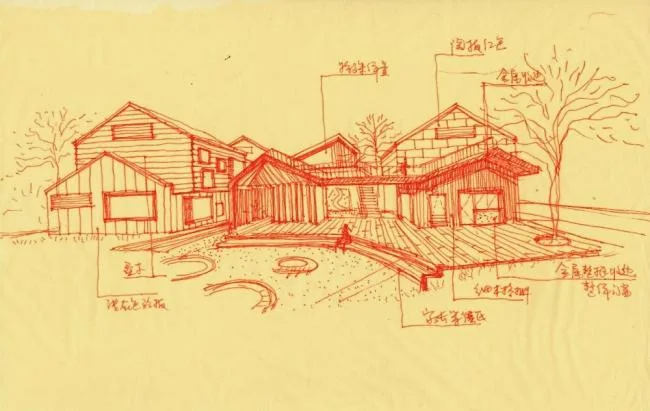
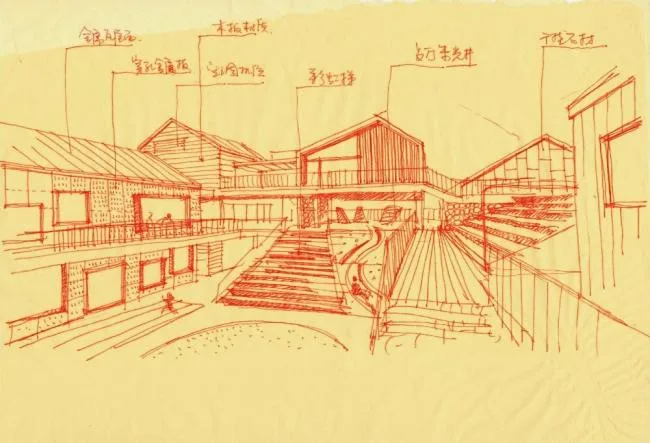
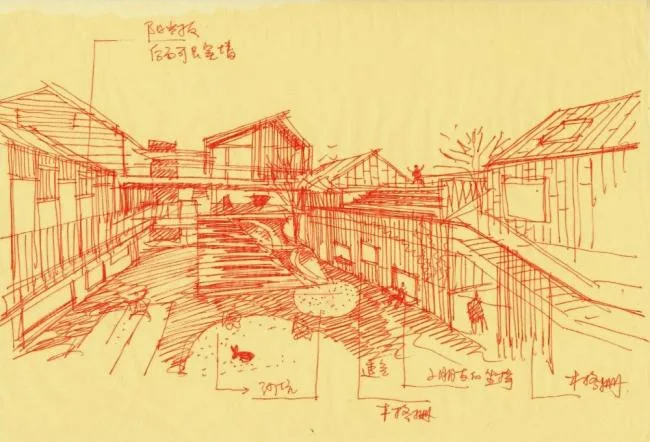
▲ Sketch
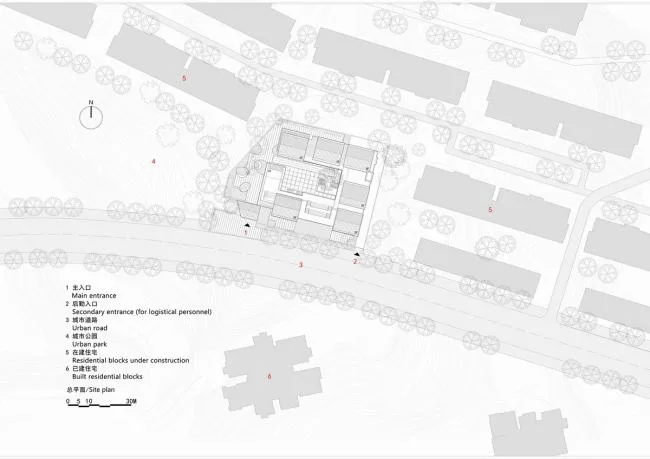
▲ General layout
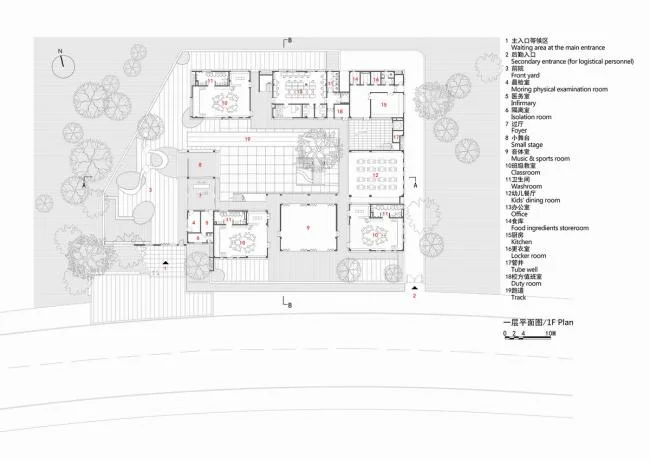
▲ First floor plan
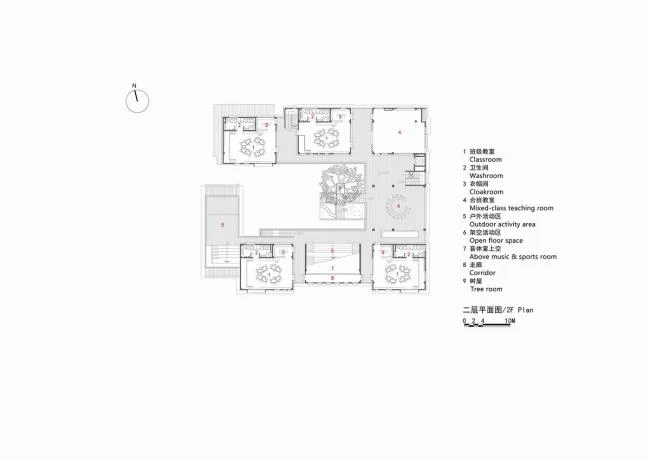
▲ Second floor plan
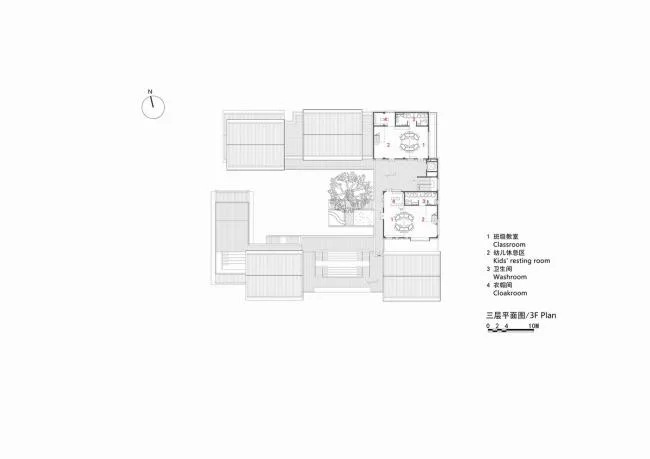
▲ Third floor plan
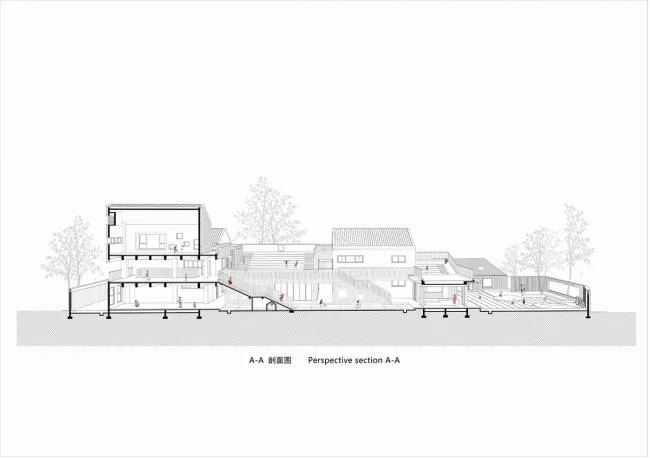
▲ Sectional perspective A-A
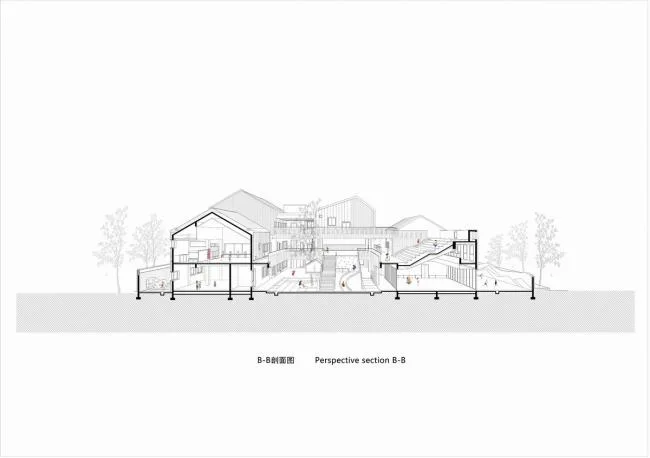
▲ Sectional perspective B-B
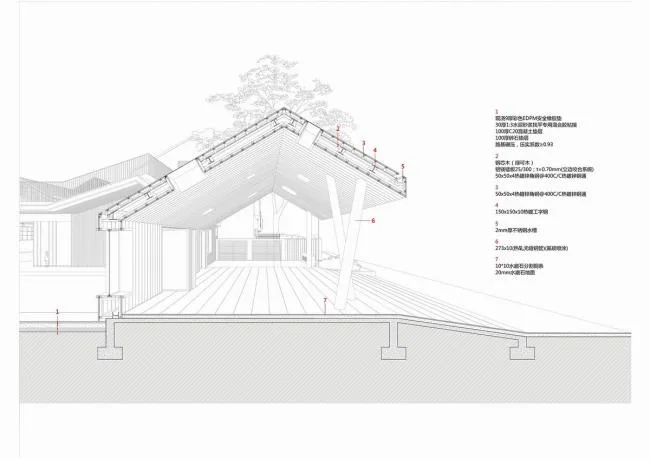
▲ Detailed drawing of the wall of the waiting area at the main entrance
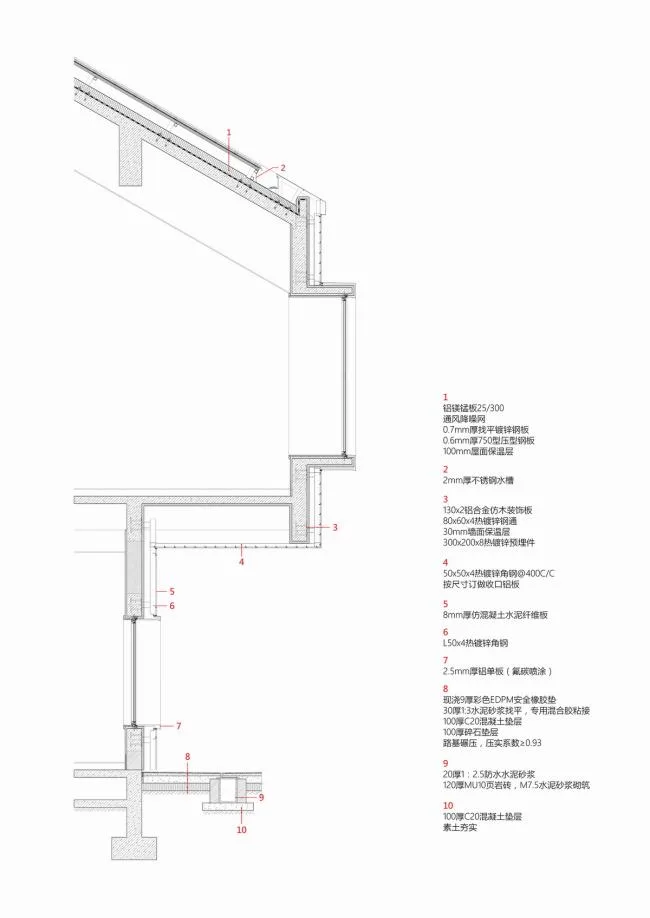
▲ Wall body sample 01
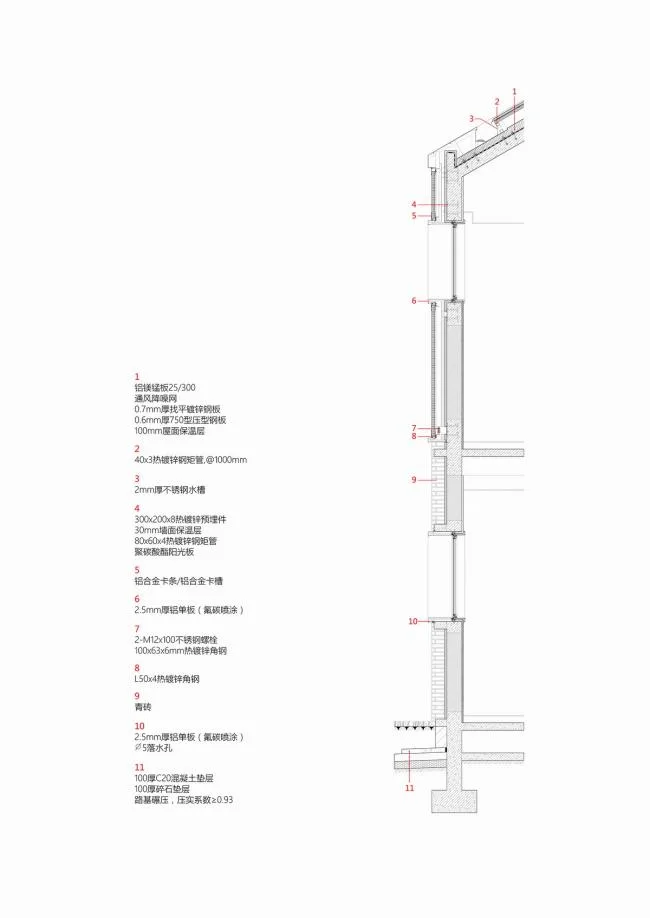
▲ Wall sample 02
Project Information:
Project Name: Chongqing York North County Kindergarten
Project address: York North County, Yihe Road, Liangjiang New District, Chongqing
Design Unit: IDO Yuanxiang Architecture
Architectural Design: Chen Jun, Su Yunfeng, Zong Dexin, Li Jian, Chai Kefei
Construction drawing unit: Chongqing Design Institute
Architecture: Deng Hongbo, Ma Xiaojing, Hu Longhua Plot plan: Lai Tao
Structure: Zhu Haichao, Xu Xiangqian Water supply and drainage: Lanpeng Electric: Hu Yi, HVAC: Wu Zhiyong
Curtain Wall Construction Drawing Unit: China Machinery United Engineering Co., Ltd
Curtain Wall Design: Xiong Lianbo, Yan Zheng, Zhao Yu, Chen Qingshu
Owner: Hong Kong Land
Management team: Zheng Haichuan, Tang Zhaohui, Liu Ying
Built status: The building is completed, and the landscape and interior are awaiting construction (BIM building)
Design time: May 2016 September 2017
Construction time: April 2017 to October 2018
Building area: 2701 square meters
Land area: 3330 square meters
Landscape Design Unit: Daoyuan Landscape
Landscape Design: Zhou Xuemei, Chen Wenlong, Mo Yihai
Interior Design Unit: Yixi Kindergarten Design and Research Office
Interior Design: Jiao Qiao, Chen Nuo, Jin Qingjin, Xie Guofei
Photography by DID STUDIO
Rendering: Shangzhu Technology
Realistic synthesis: DID STUDIO+Shangzhu Technology












Must log in before commenting!
Sign Up