
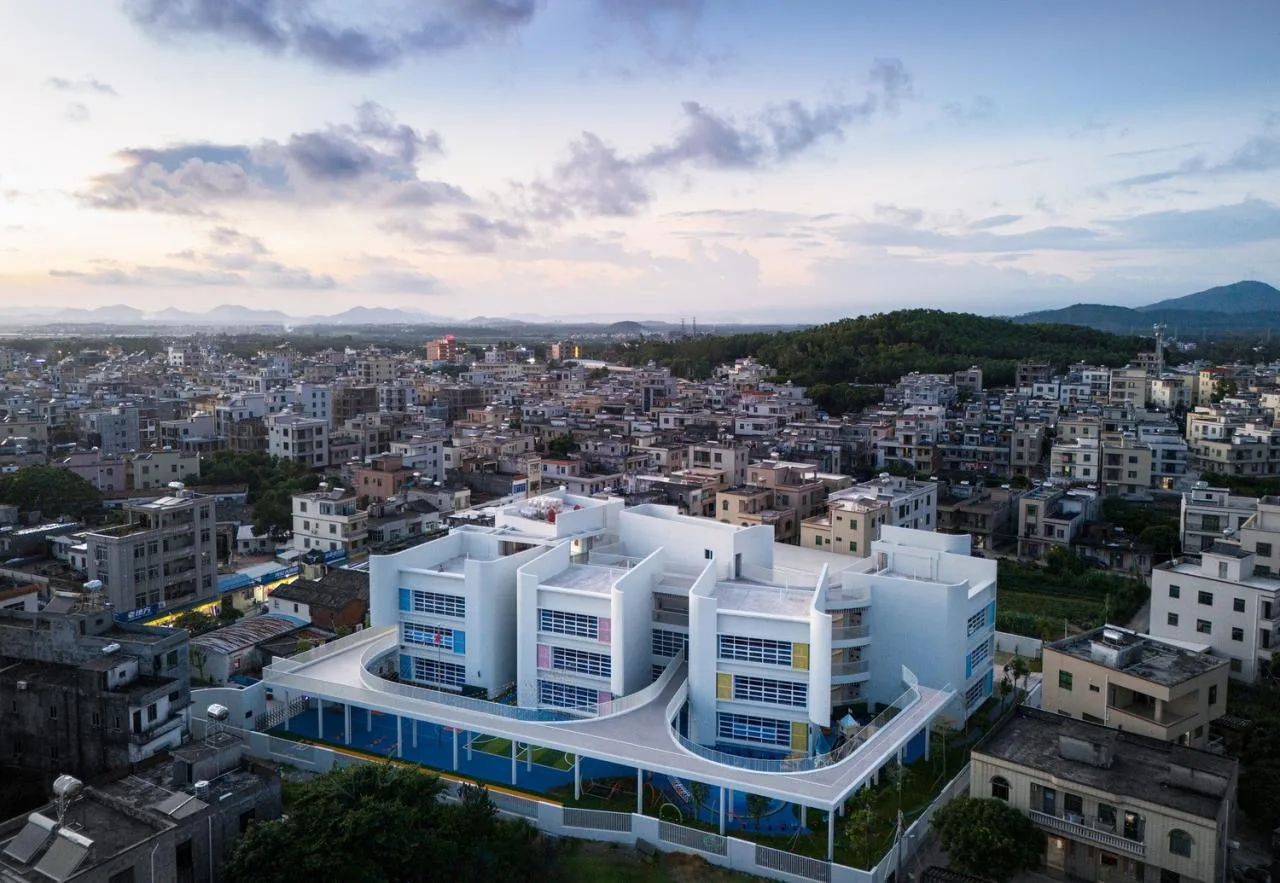
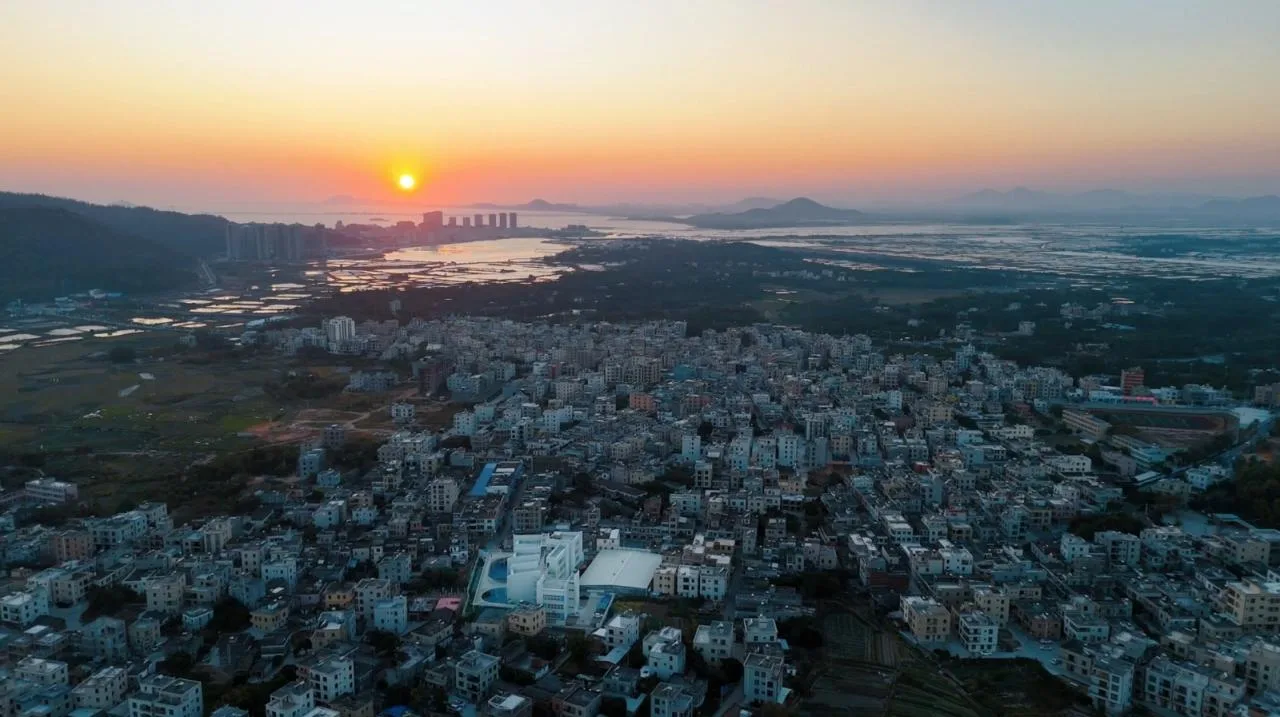
Shucun Kindergarten is situated in Shaba Town, Yangxi County, in western Guangdong Province. This coastal rural kindergarten lies adjacent to the scenic Moon Bay. The site covers 4,567 square meters, with a total built-up area of 4,405 square meters. The facility includes 12 children’s living rooms and specialized activity rooms for music, art, science, and reading, complemented by outdoor and semi-outdoor play areas.
This project aims to bridge the educational gap between rural and urban areas in Yangxi County by fostering the development of quality basic education for rural children. The goal was to establish a model rural kindergarten that embodies the vision to “create Yangjiang and face the future.” Supported by the design team from the Architectural Design and Research Institute of South China University of Technology, the kindergarten was developed as a low-energy, high-quality facility with distinct coastal cultural elements, all within strict site and budget limitations. It was honored with the Silver Award for Educational Architecture at the 2023 IDA International Design Awards.
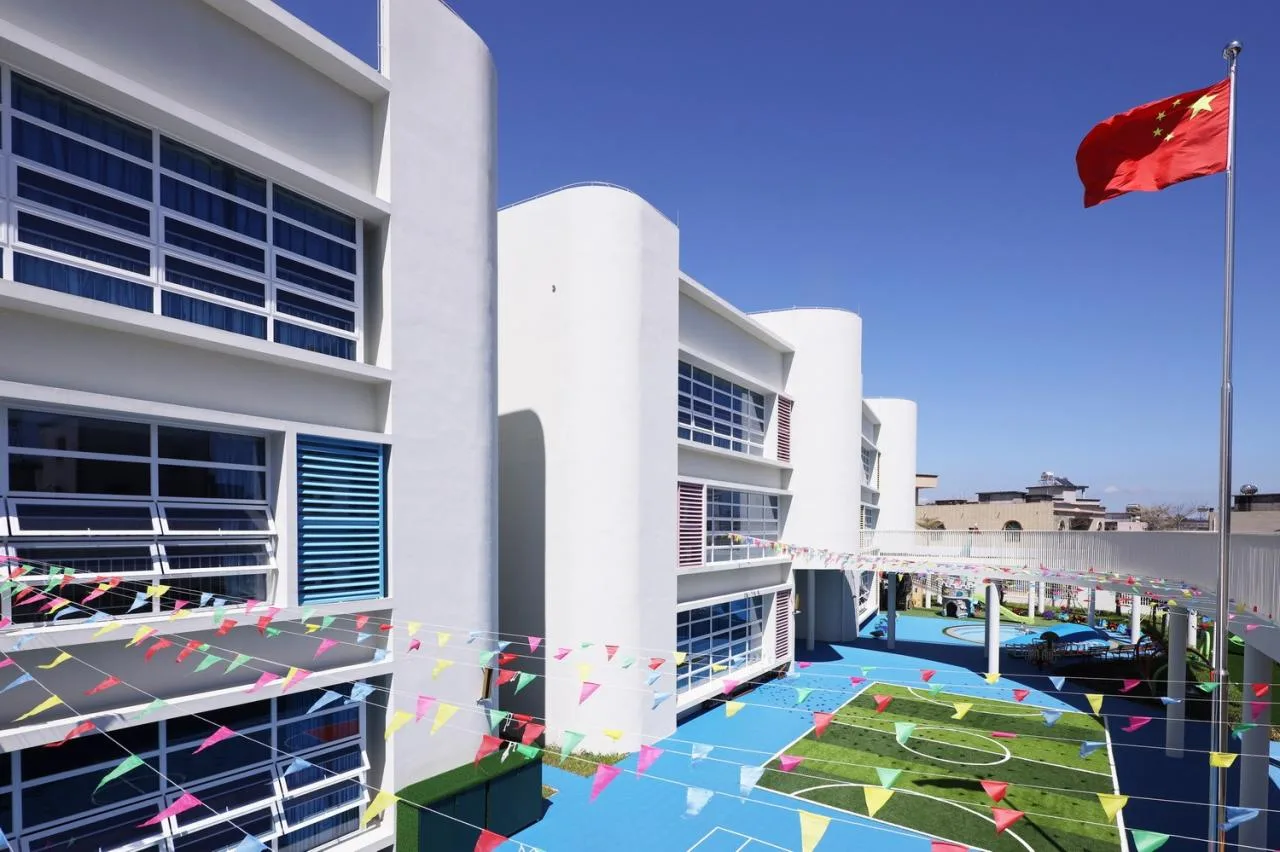
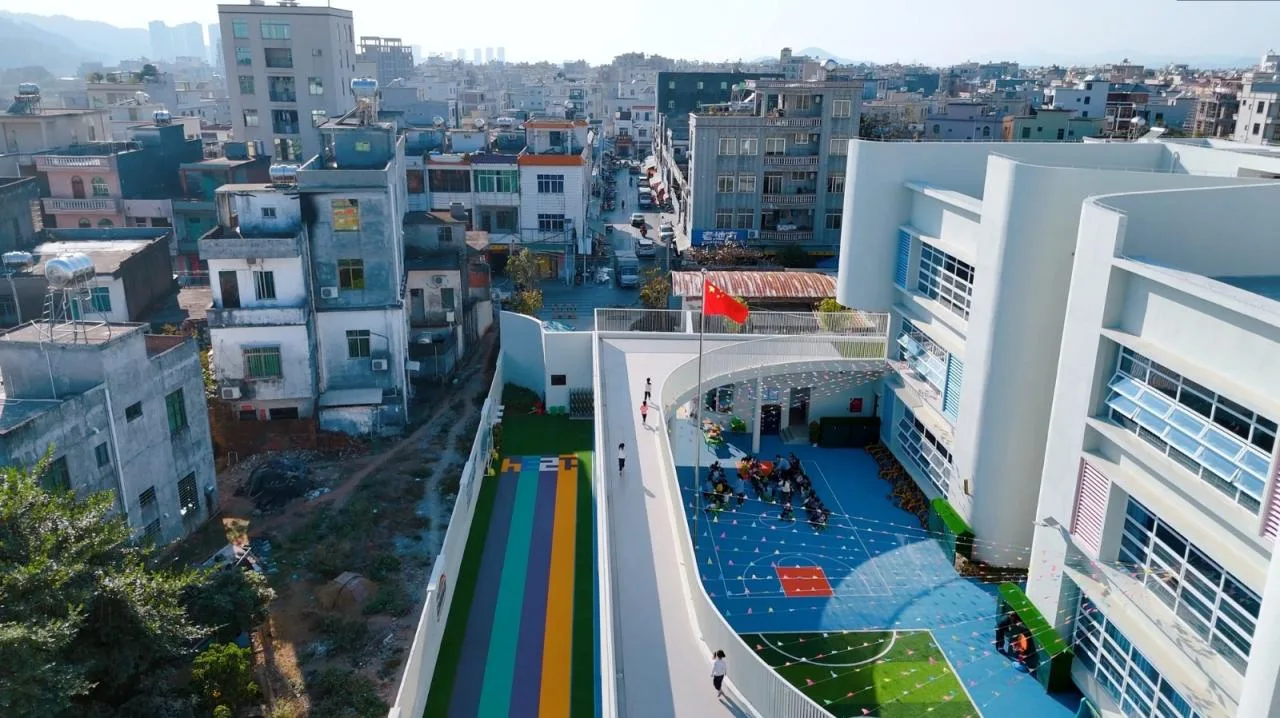
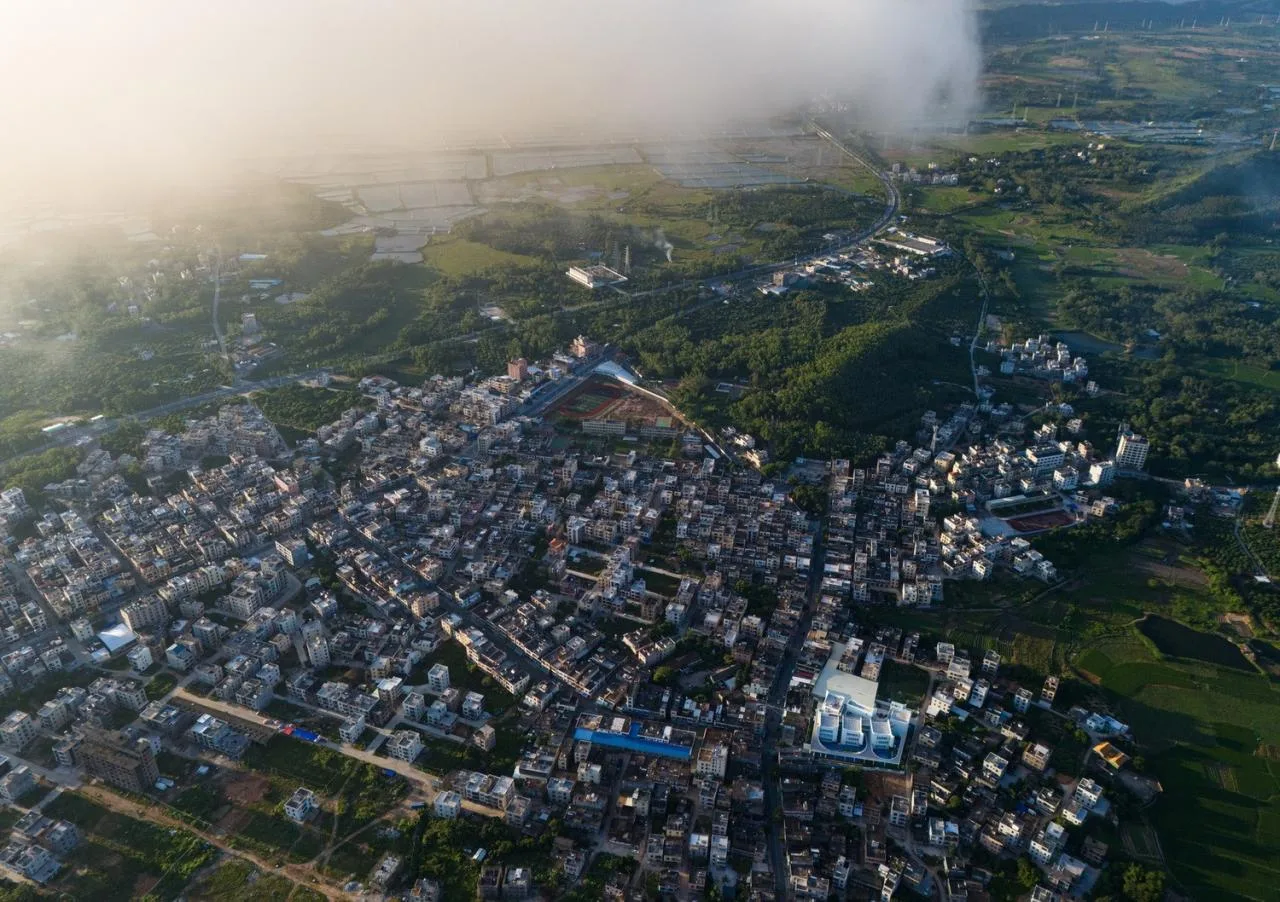
The site is located within a typical rural center in western Guangdong, surrounded by a dense network of secondary and branch roads that serve standalone rural homes. The kindergarten’s entrance faces the junction of two main village roads, an essential passage for villagers and transportation. To enhance safety and accessibility, the entrance was recessed 17 meters inward. This design not only improves pedestrian and vehicle flow and reduces hazards during children’s daily arrivals and departures but also creates a comfortable waiting area for parents and a gathering space for local residents.
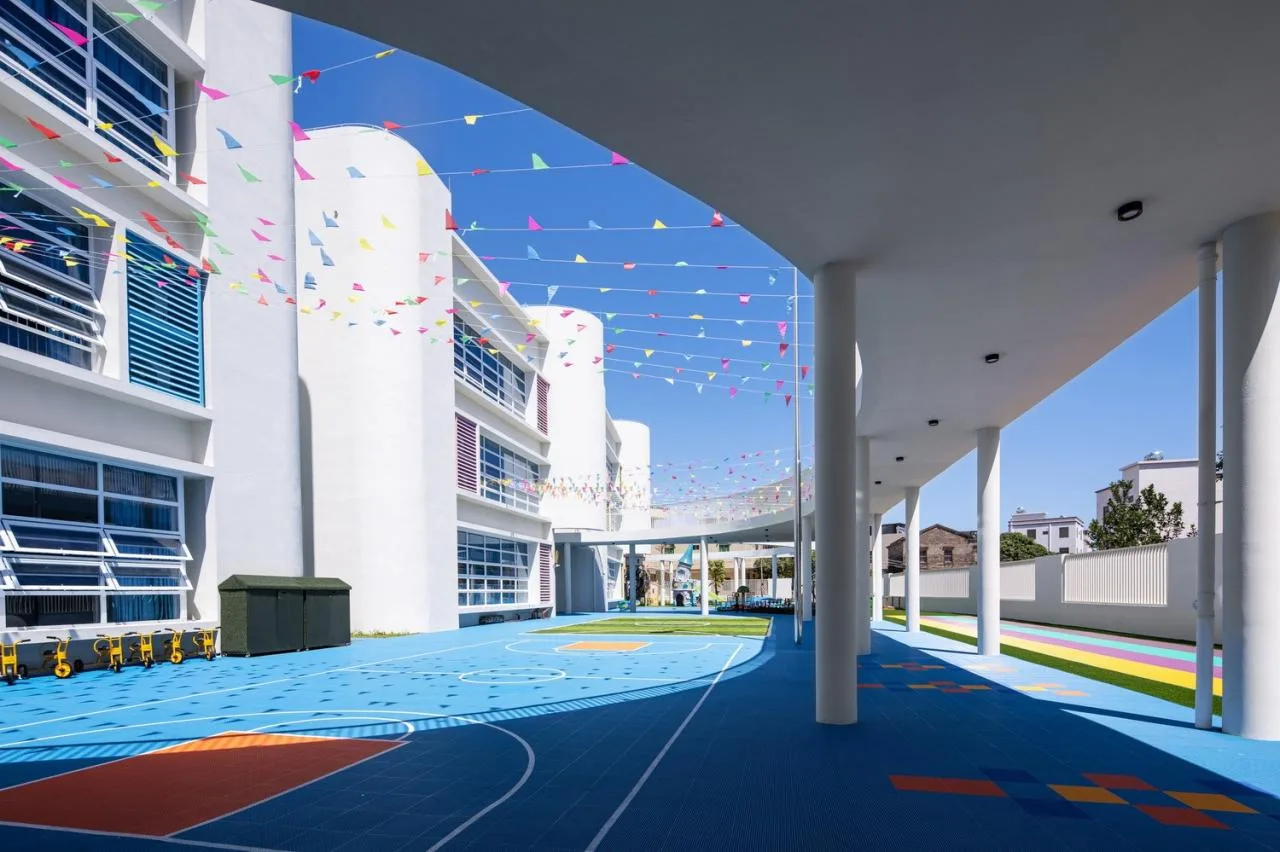
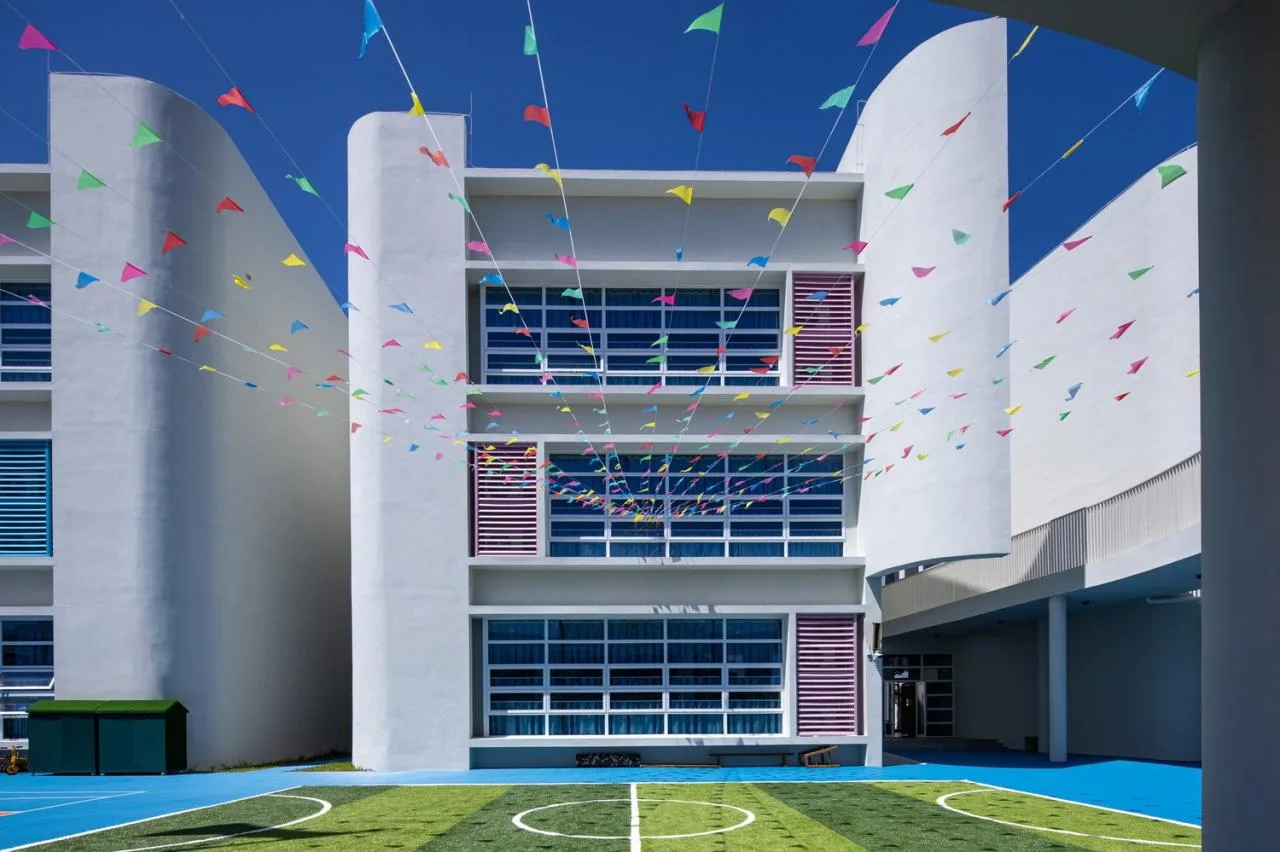
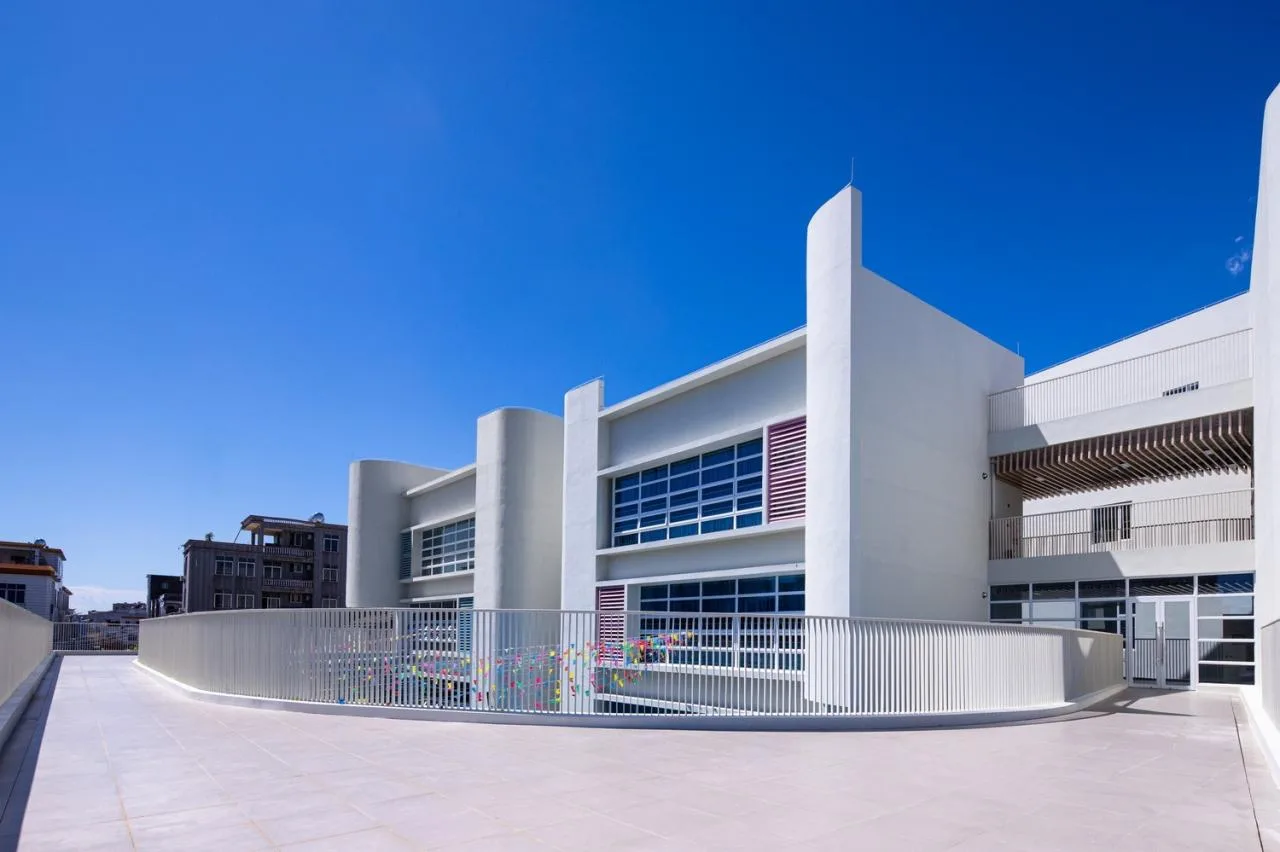
The design concept centers on “simplicity, purity, and harmony with nature.” The building consists of several modular square volumes that appear to organically emerge from the site. Elevated corridors define the perimeter, blending naturally with the surrounding rural houses, which primarily feature square forms. The entire structure is painted in pure white, creating a serene and natural educational environment that contrasts beautifully against the blue sky and white clouds by Moon Bay.
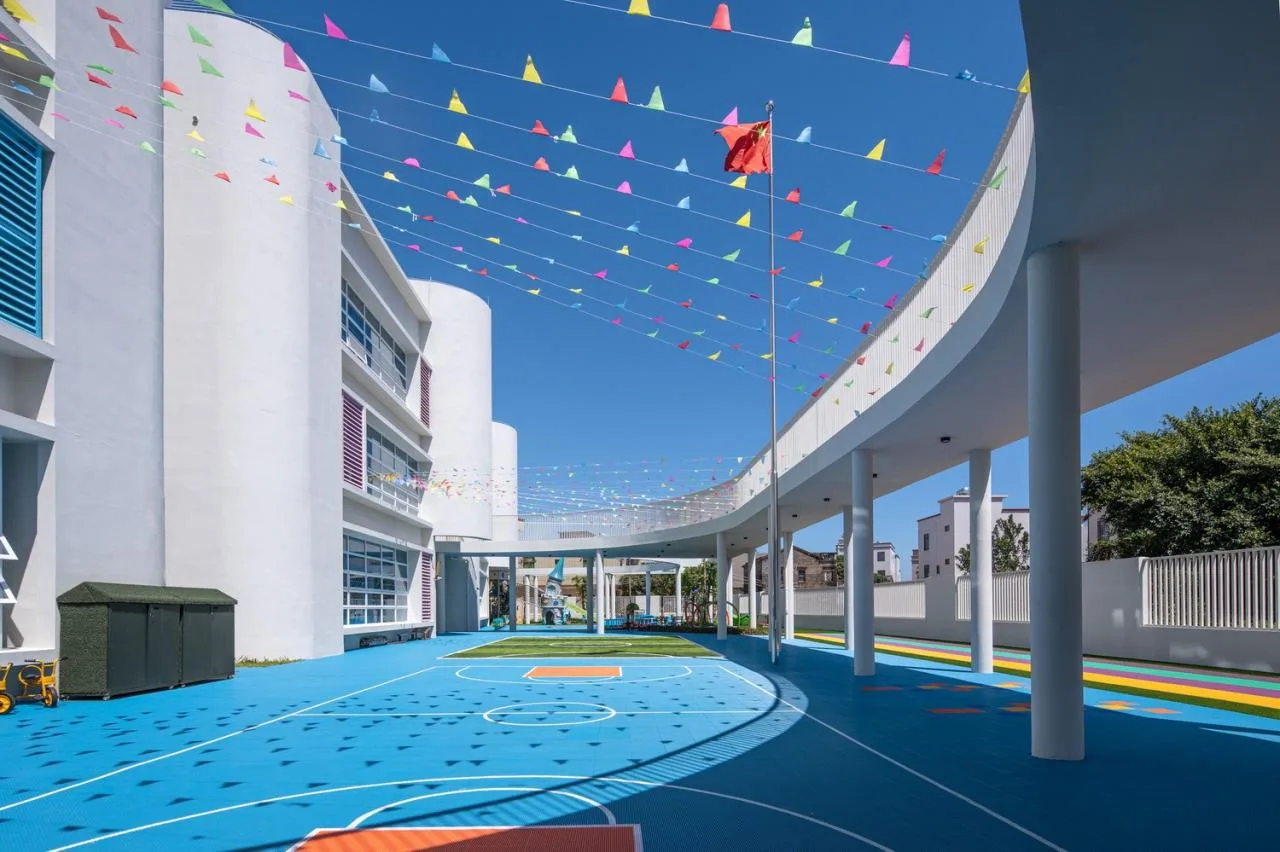
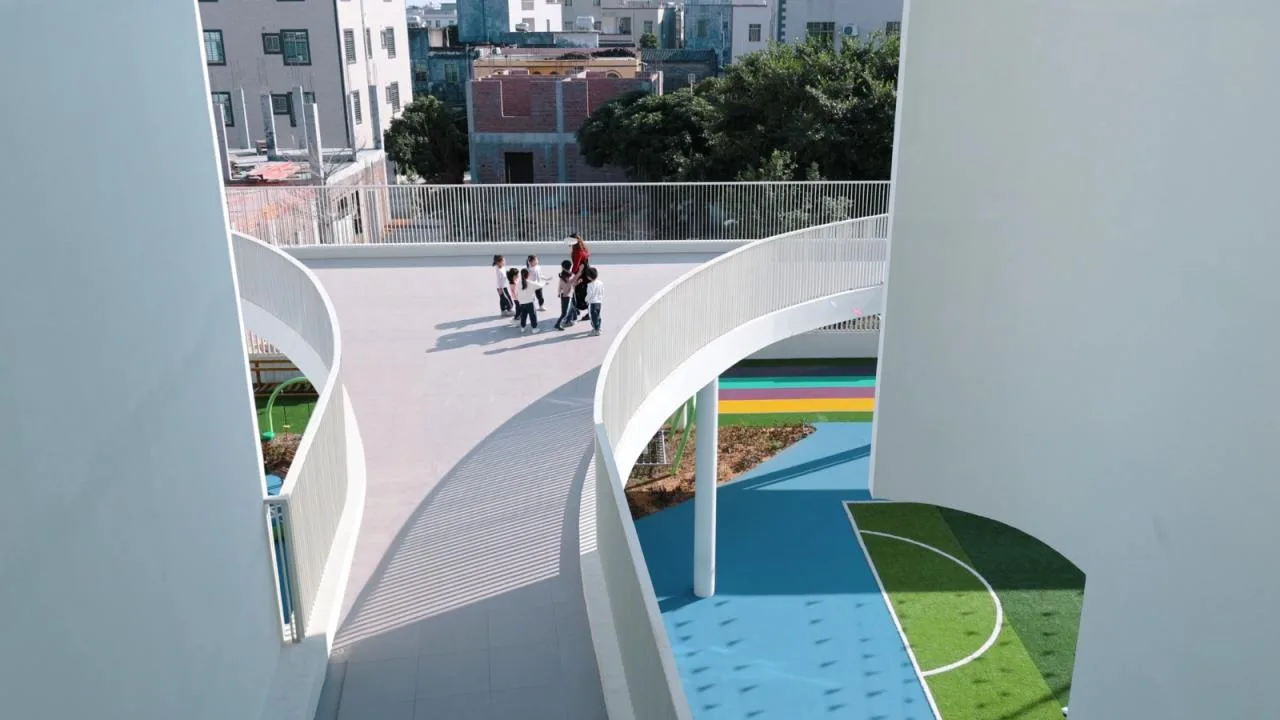
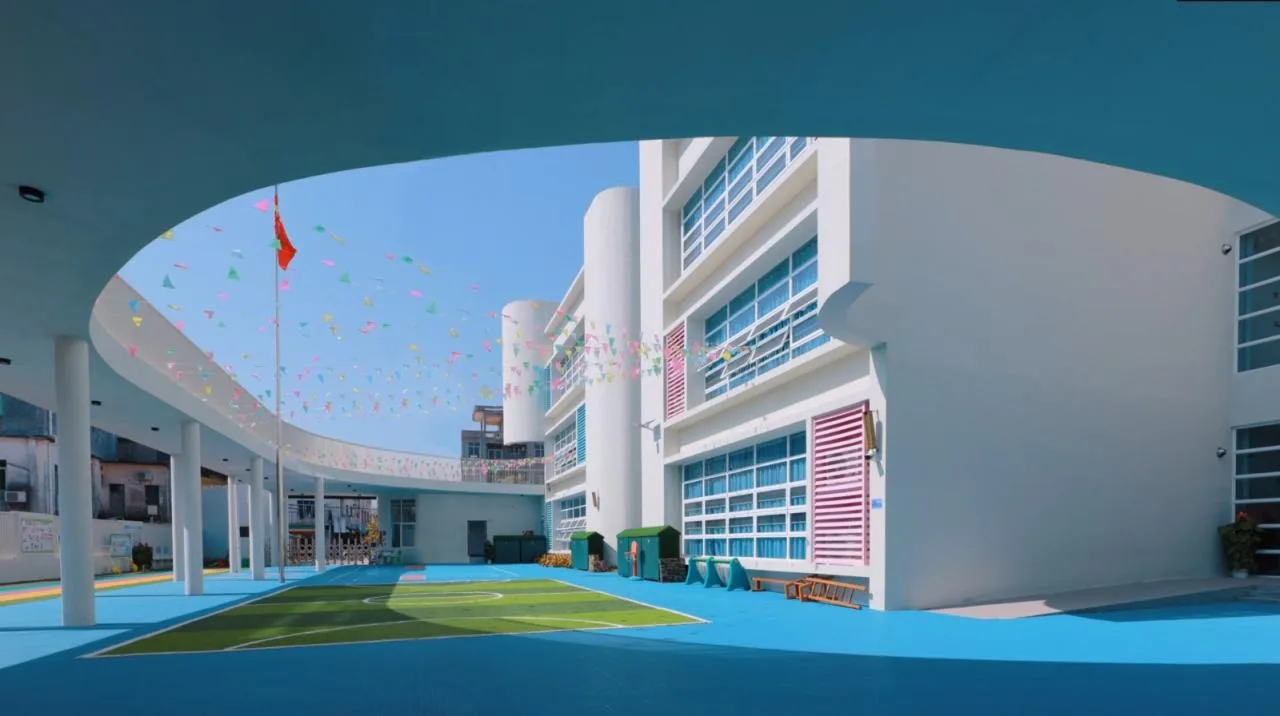
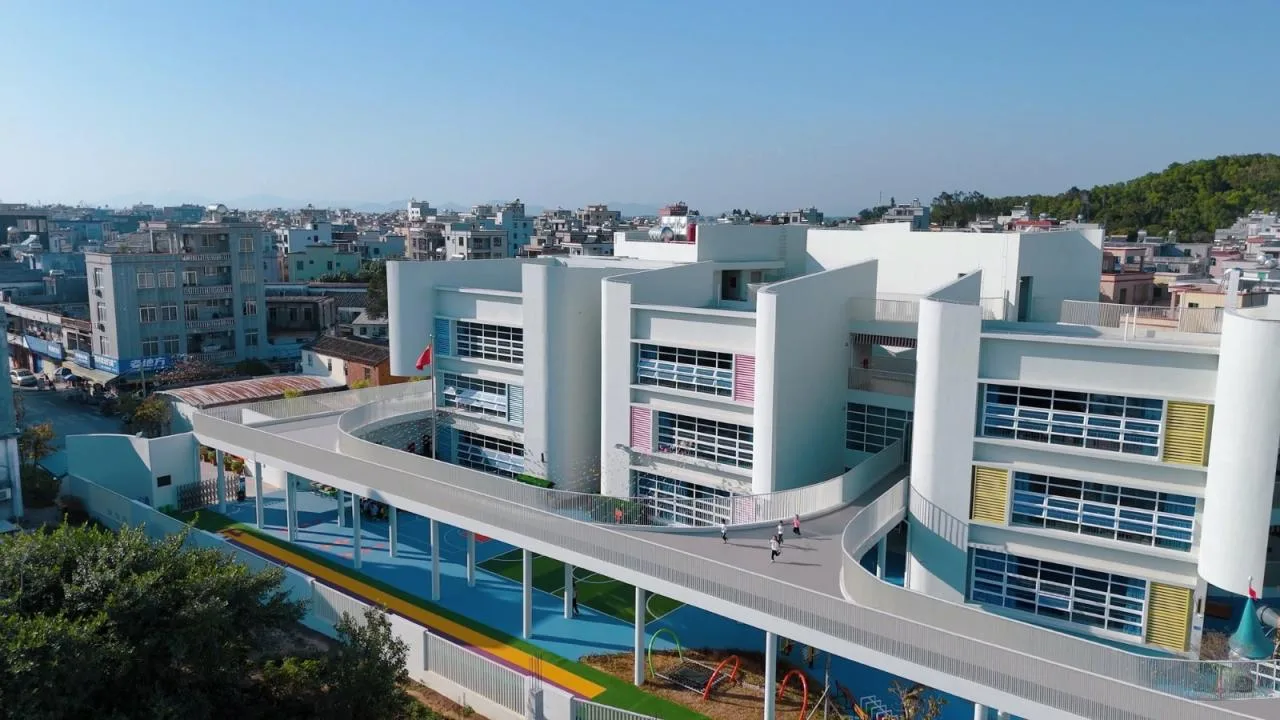
To highlight the local marine culture, the design draws inspiration from ocean ripples and biological curves. The second-floor corridor features curved forms that create a surrounding atmosphere within the site. Main teaching spaces reflect typical rural architectural textures through modular boxes arranged in a fragmented, twisted manner, connected by corridors in a fishbone layout.
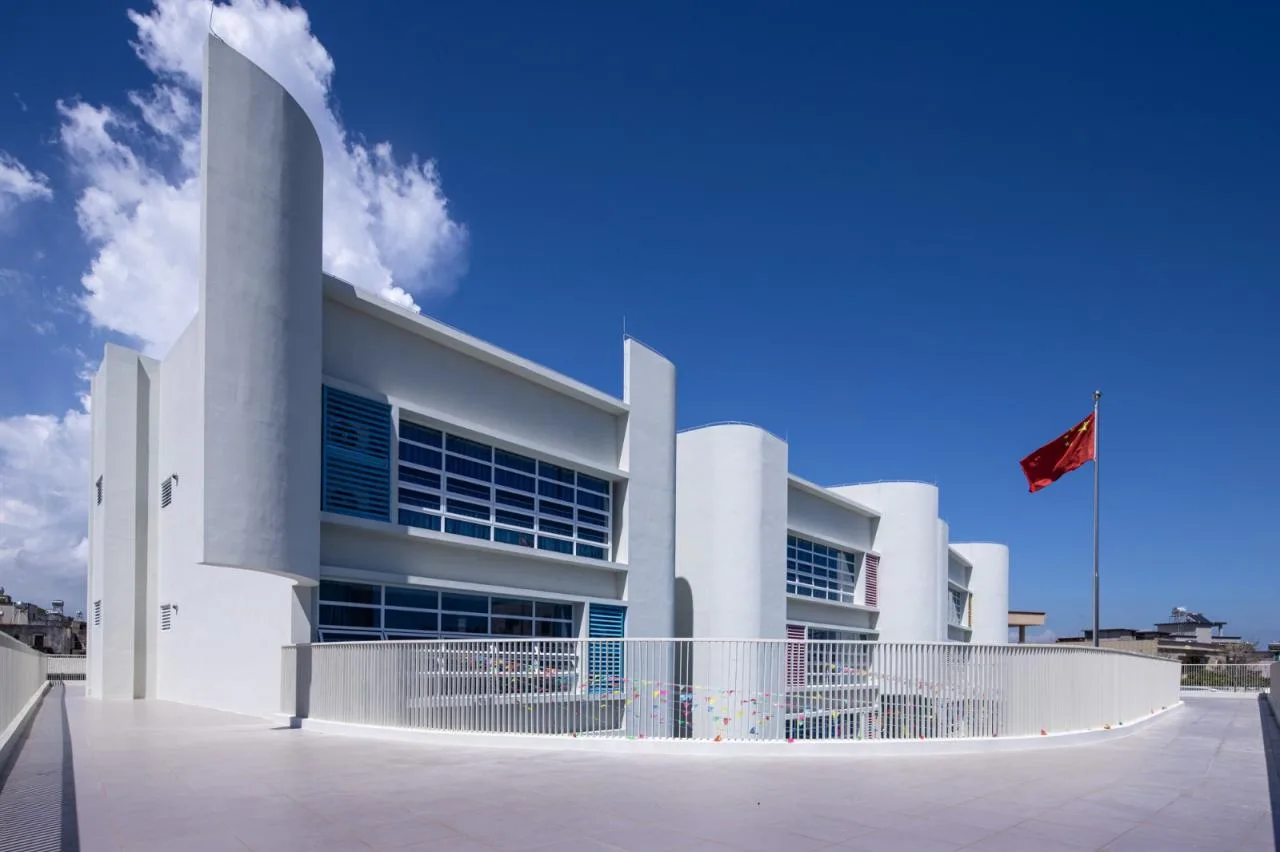
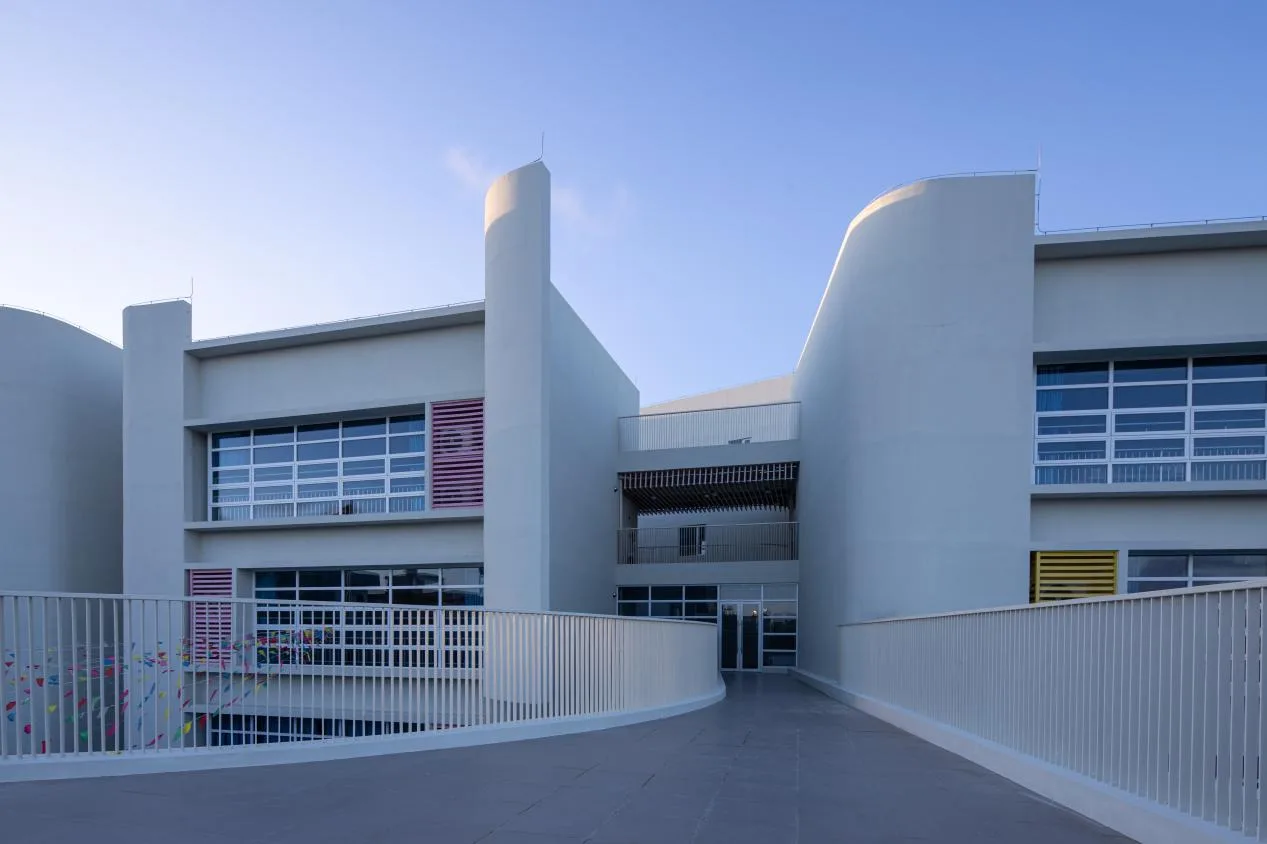
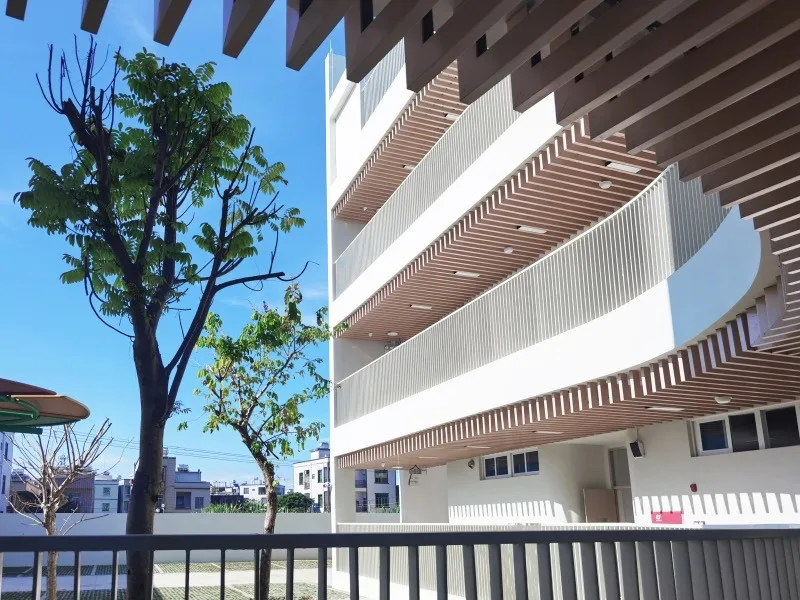
The design skillfully incorporates elements inspired by wind, sails, and waves, combining clean volumes with simple, modern techniques. Curved mountain walls simulate the movement of sea breezes, while sharp, crisp lines create a flowing visual effect that enhances the building’s dynamic and lightweight appearance.
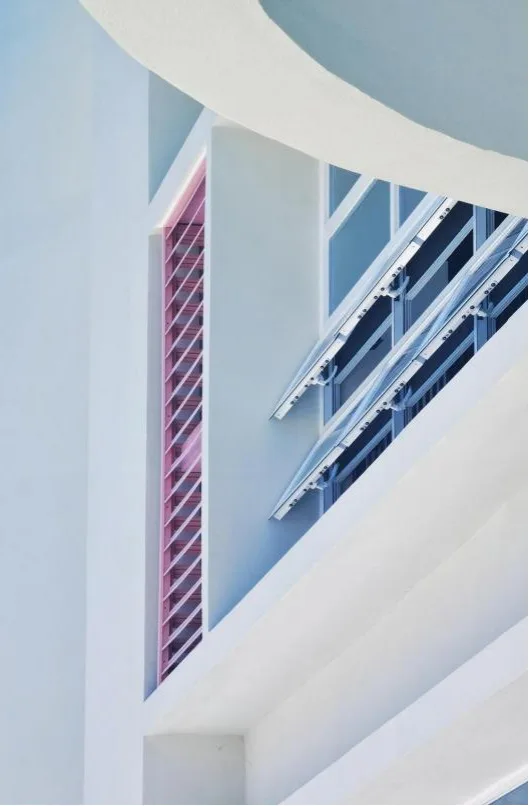
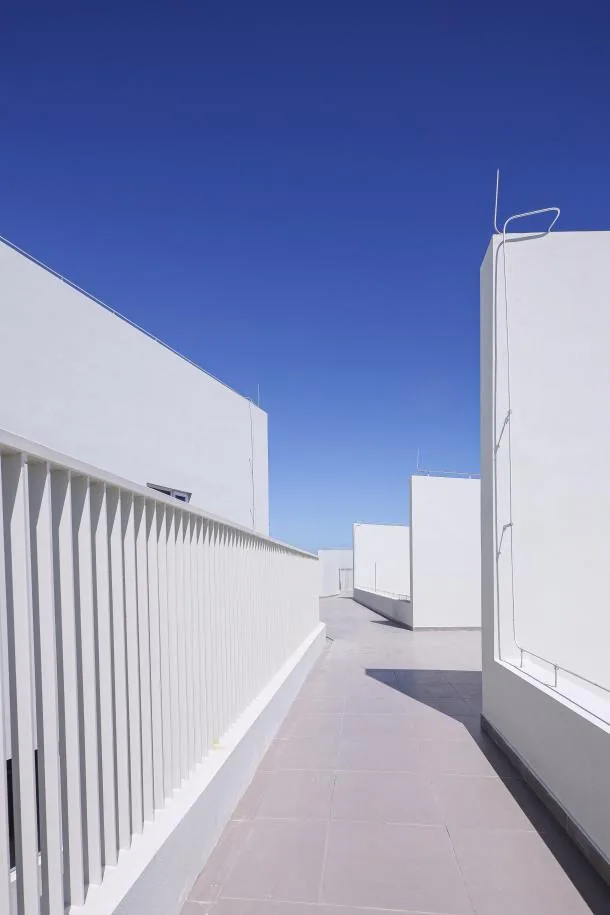
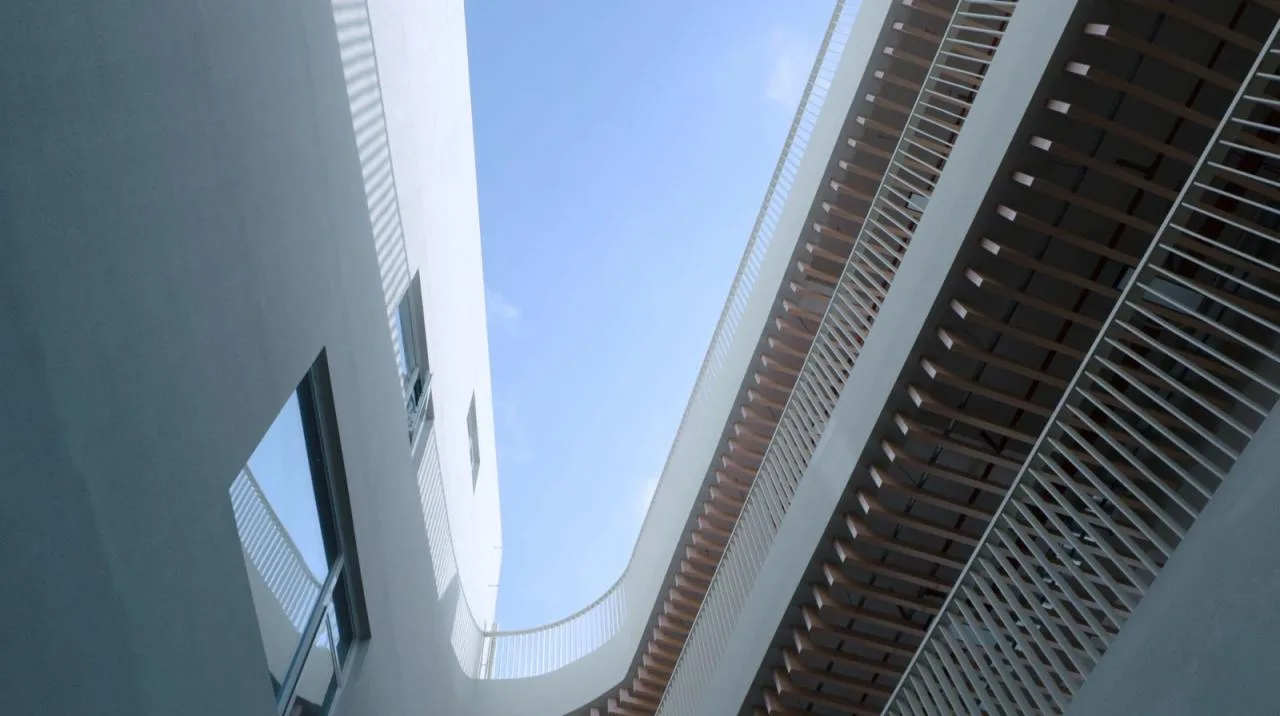
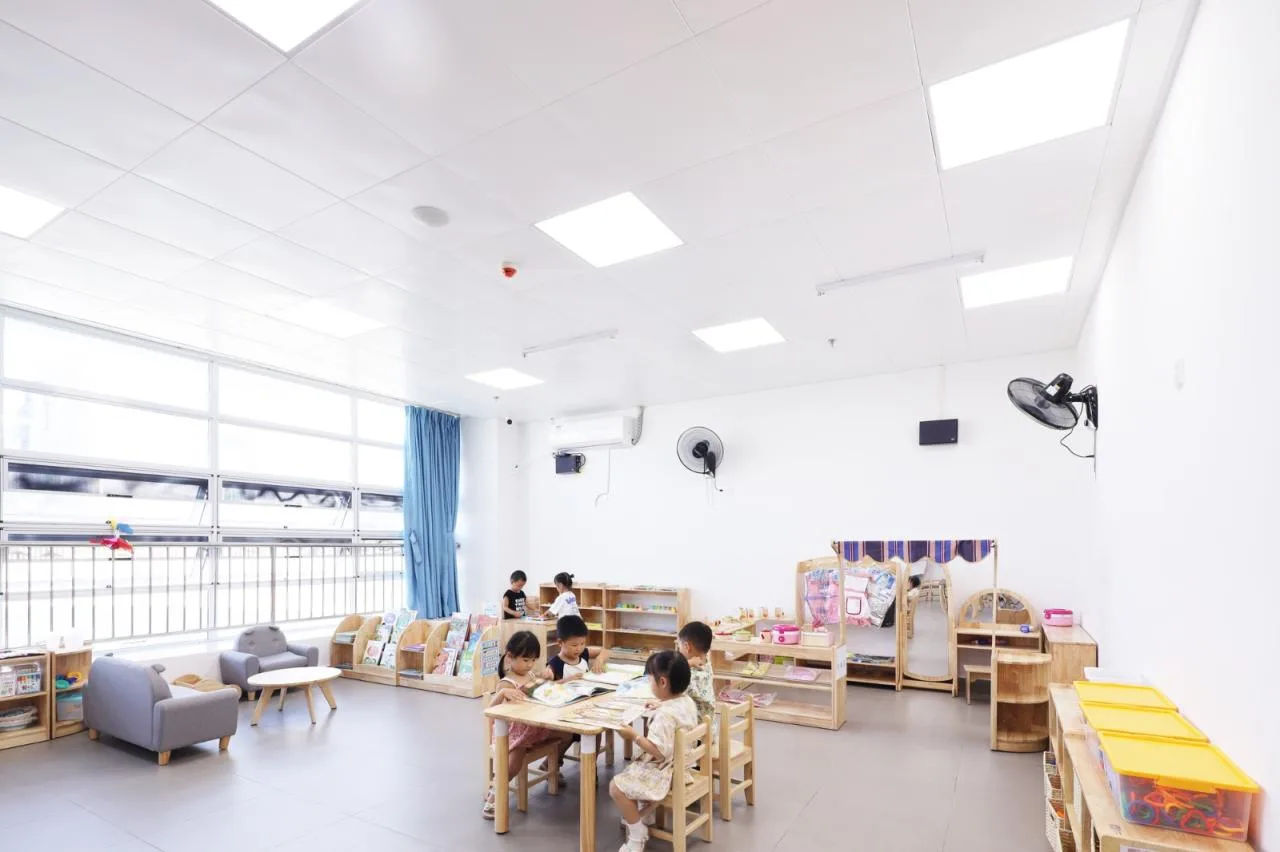
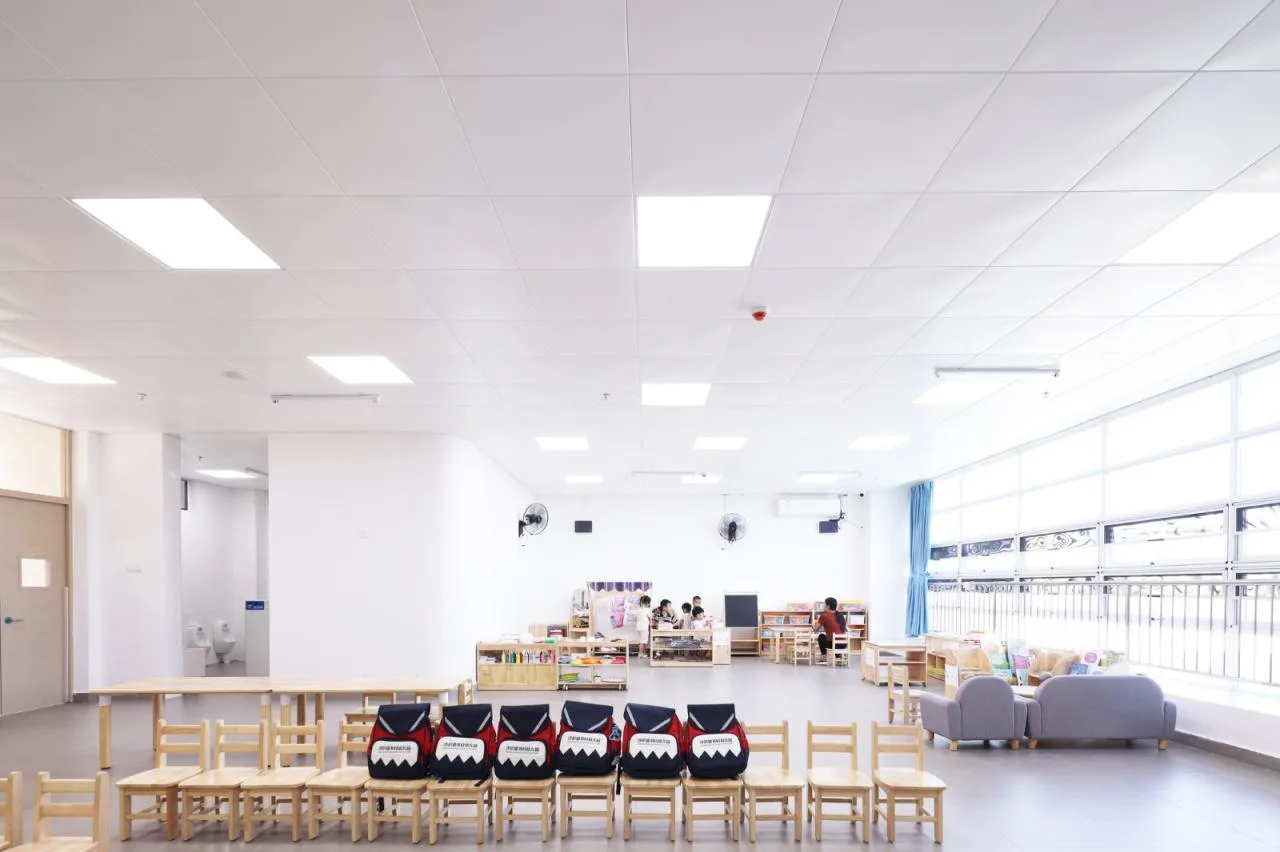
Large glass windows installed on the walls of the children’s living rooms allow ample natural light and expansive views, seamlessly connecting the indoors with the outdoor environment. This design increases spatial transparency, facilitates air circulation, and promotes a healthy learning atmosphere through thoughtful window placement and opening mechanisms.
To create a lively and engaging atmosphere, the exterior grille is painted in bright red, yellow, and blue hues. Under the seaside sunlight, these colors combine with the curved mountain walls to produce a rich interplay of light and shadow, enhancing the building’s visual depth and playful charm while fulfilling both aesthetic and practical purposes.
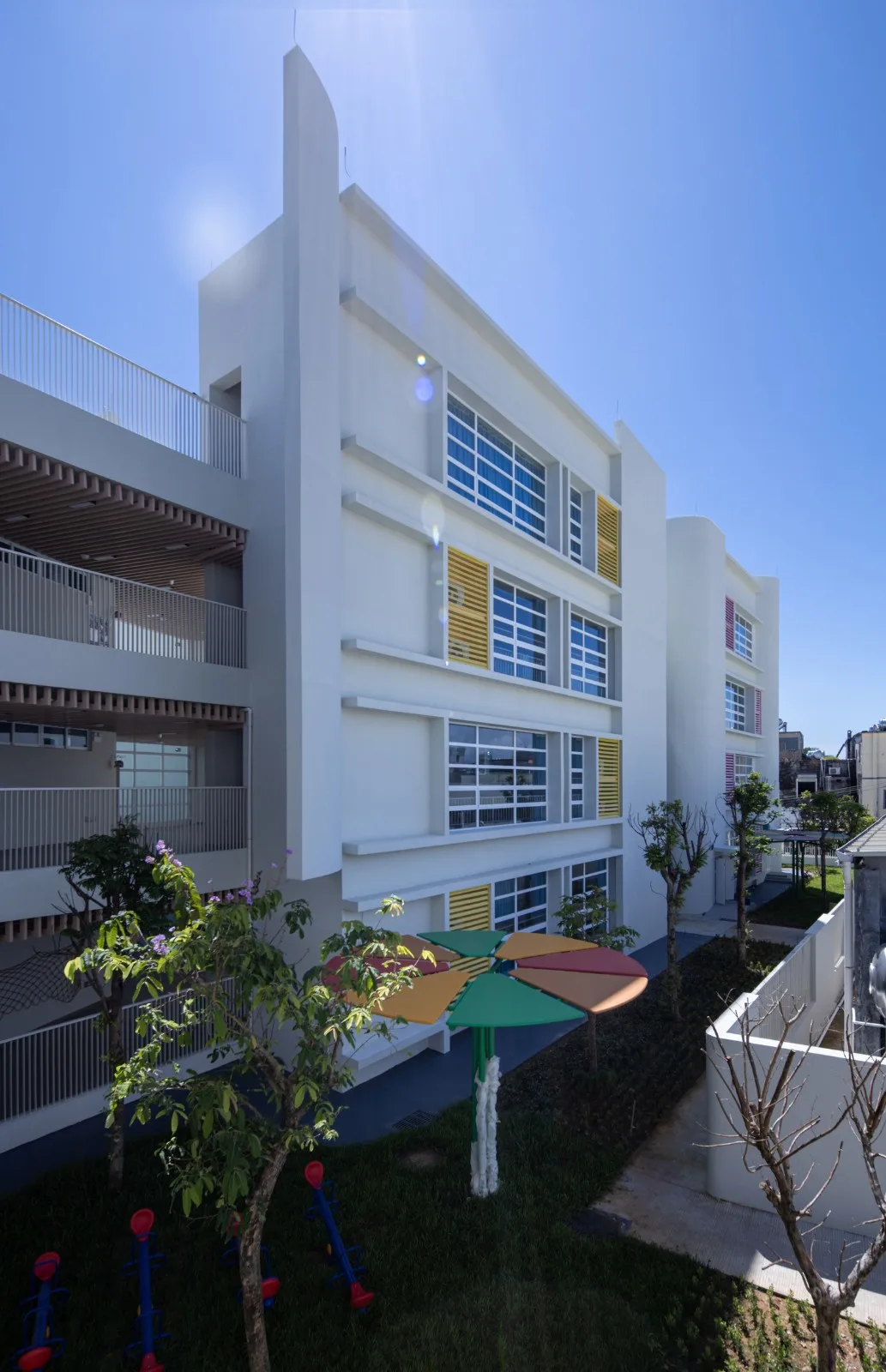
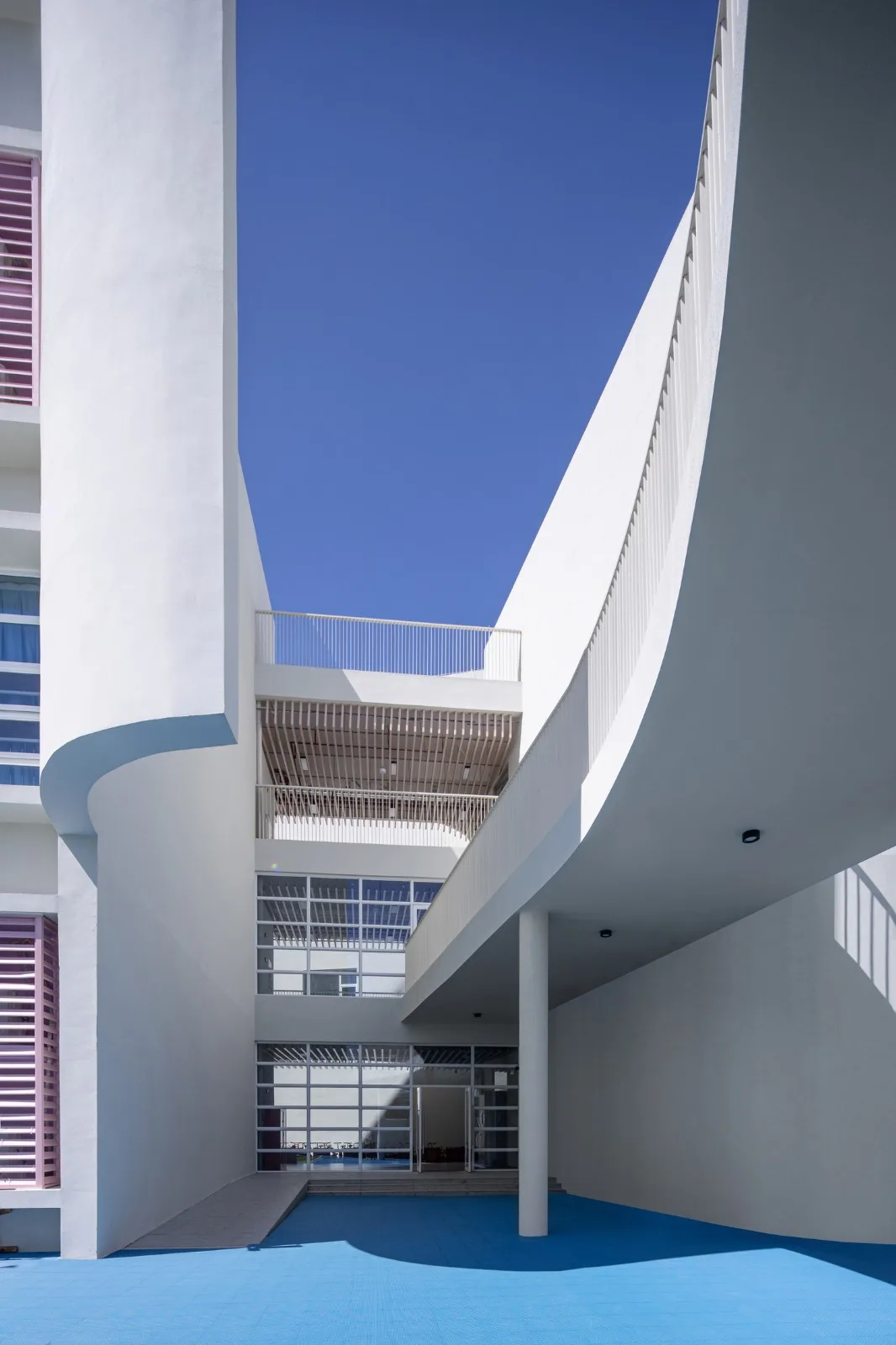
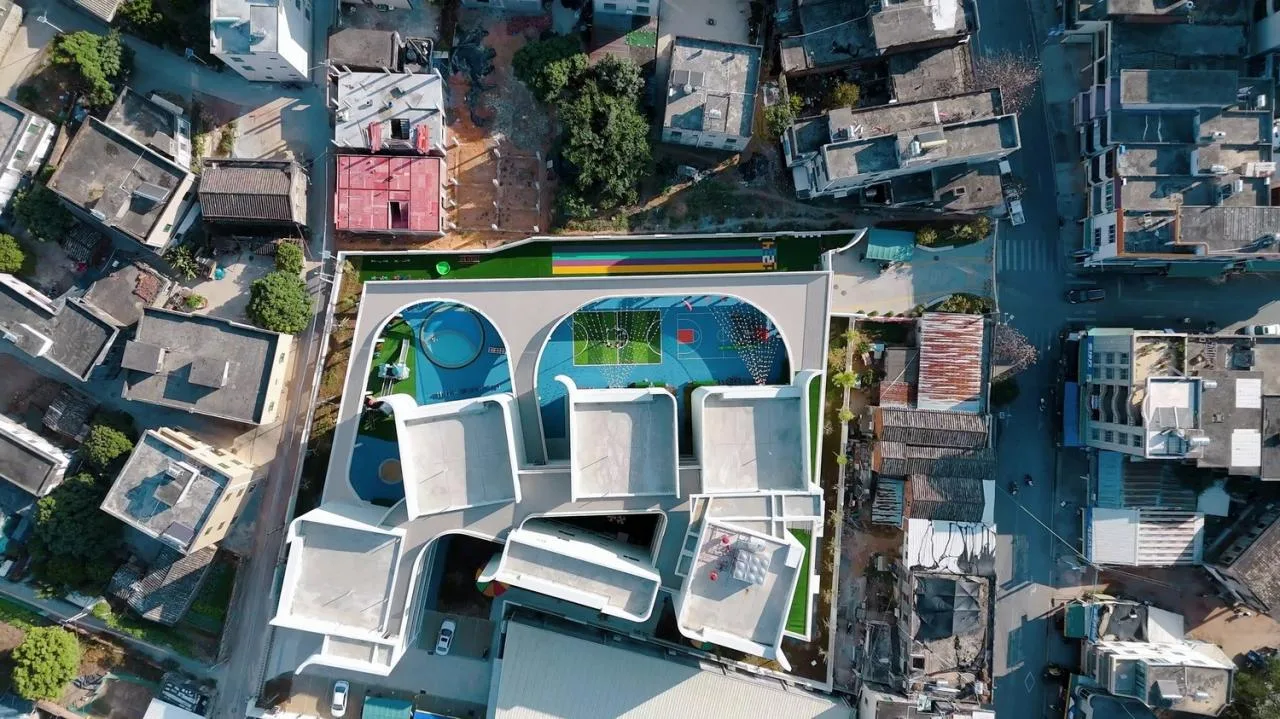
Yangxi County experiences hot, rainy summers and frequent typhoons. To address these conditions, the kindergarten features an overhead corridor that links various functional modules. This provides a sheltered grey space on the first floor for protection against wind and rain, while the second floor offers an open platform for activities and distant views. This design improves space utilization, maintains the continuity of children’s activities, and creates a natural ventilation corridor that enhances the local microclimate. The interior layout is flexible, adaptable to various teaching activities, and encourages open play areas to inspire children’s creativity and imagination.
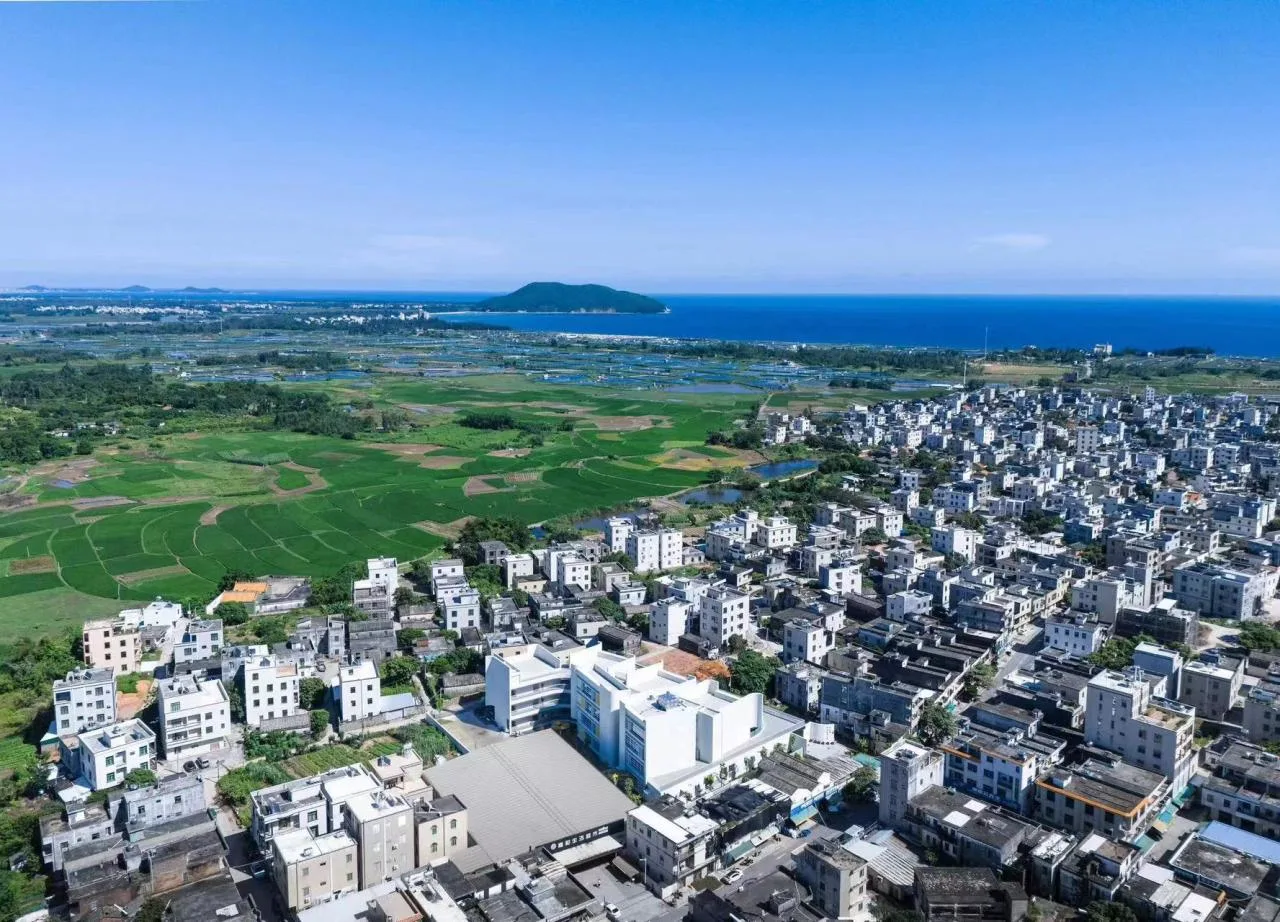
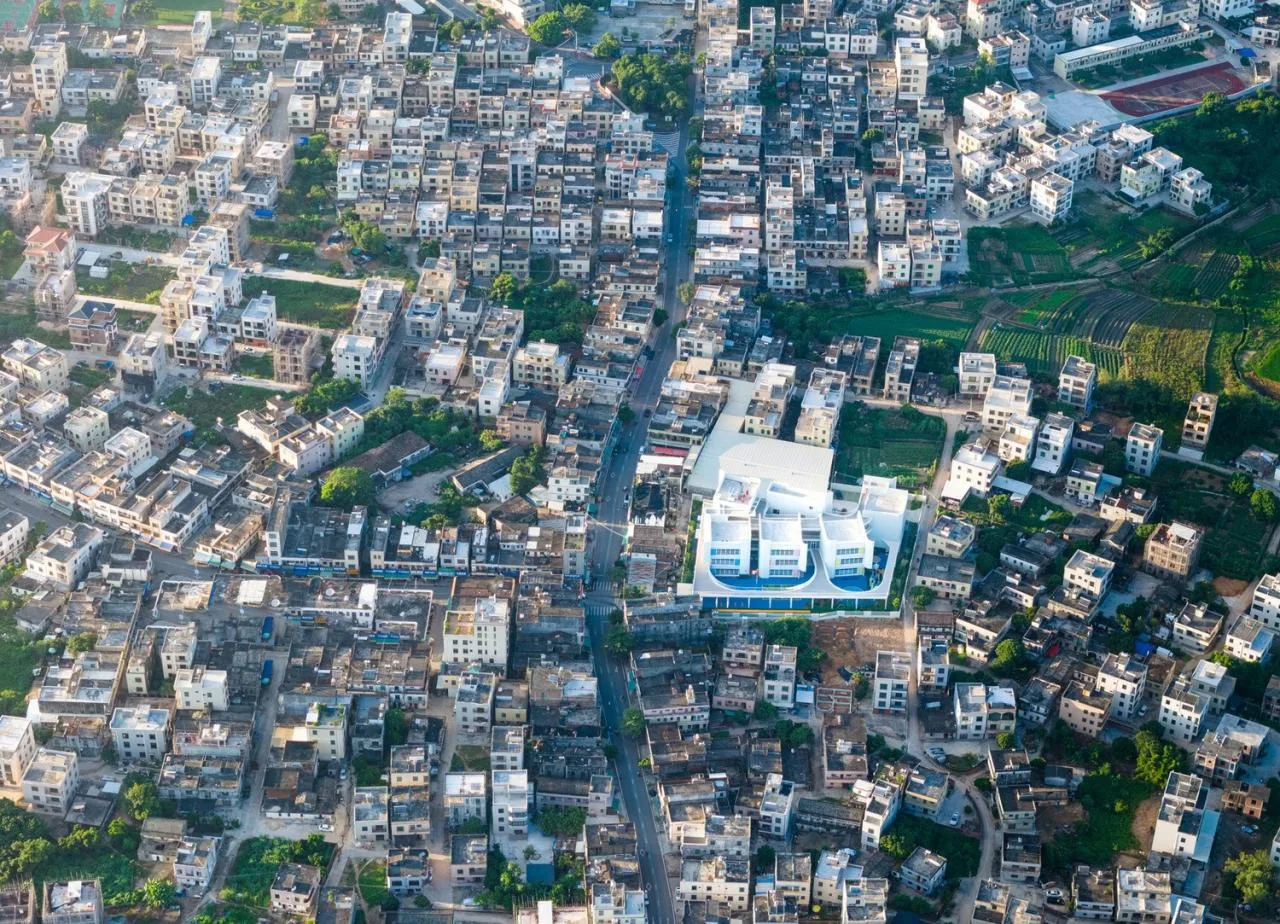
The construction uses reliable, mature frame structures and locally sourced materials to reduce costs and complexity. Passive energy-saving strategies are prioritized, including solid east-west mountain walls, south-facing eaves to minimize sun exposure, overhead corridors for shelter and ventilation, and preservation of existing vegetation. These measures create a comfortable, safe, and environmentally friendly space for learning and play.
Project Drawings
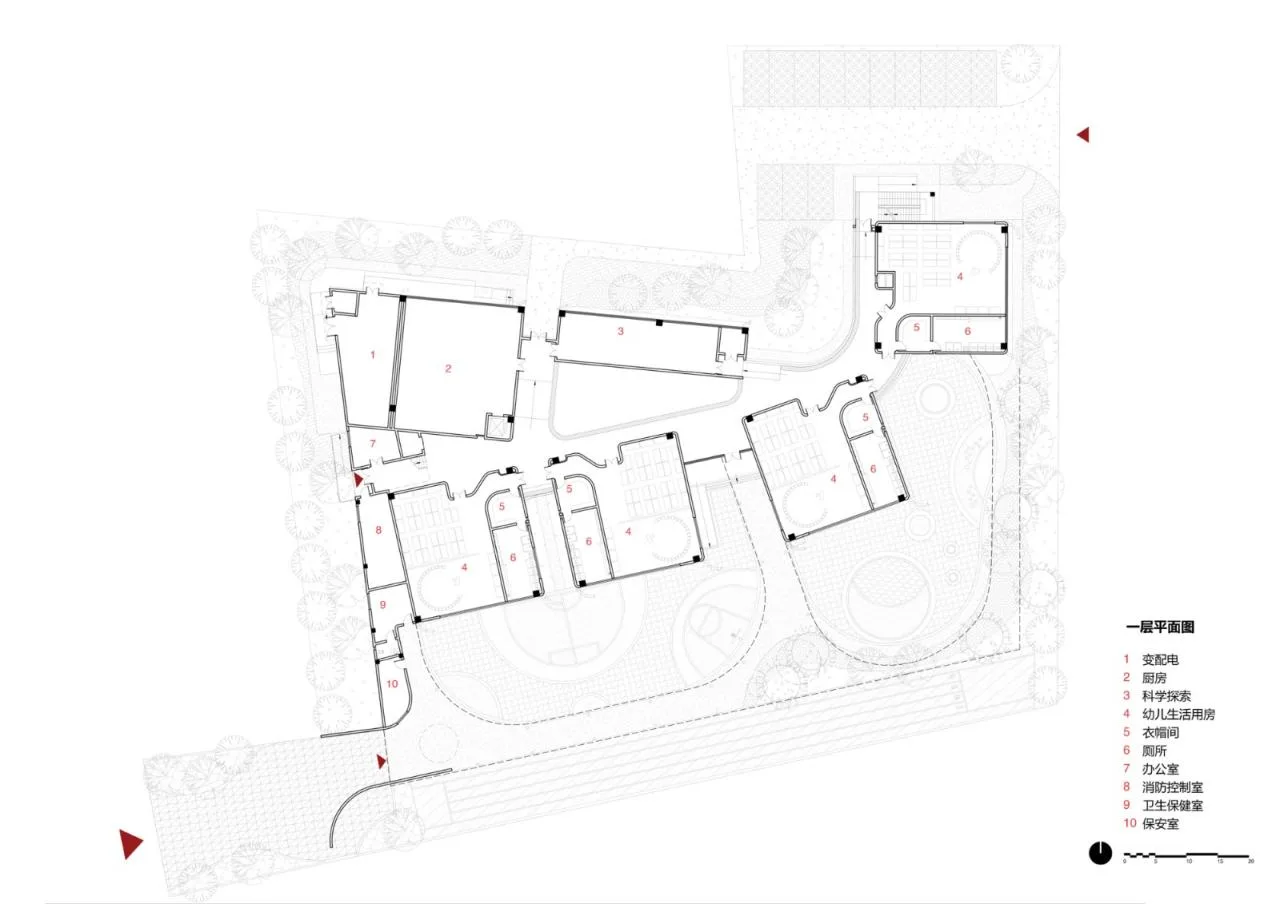
△ First Floor Plan
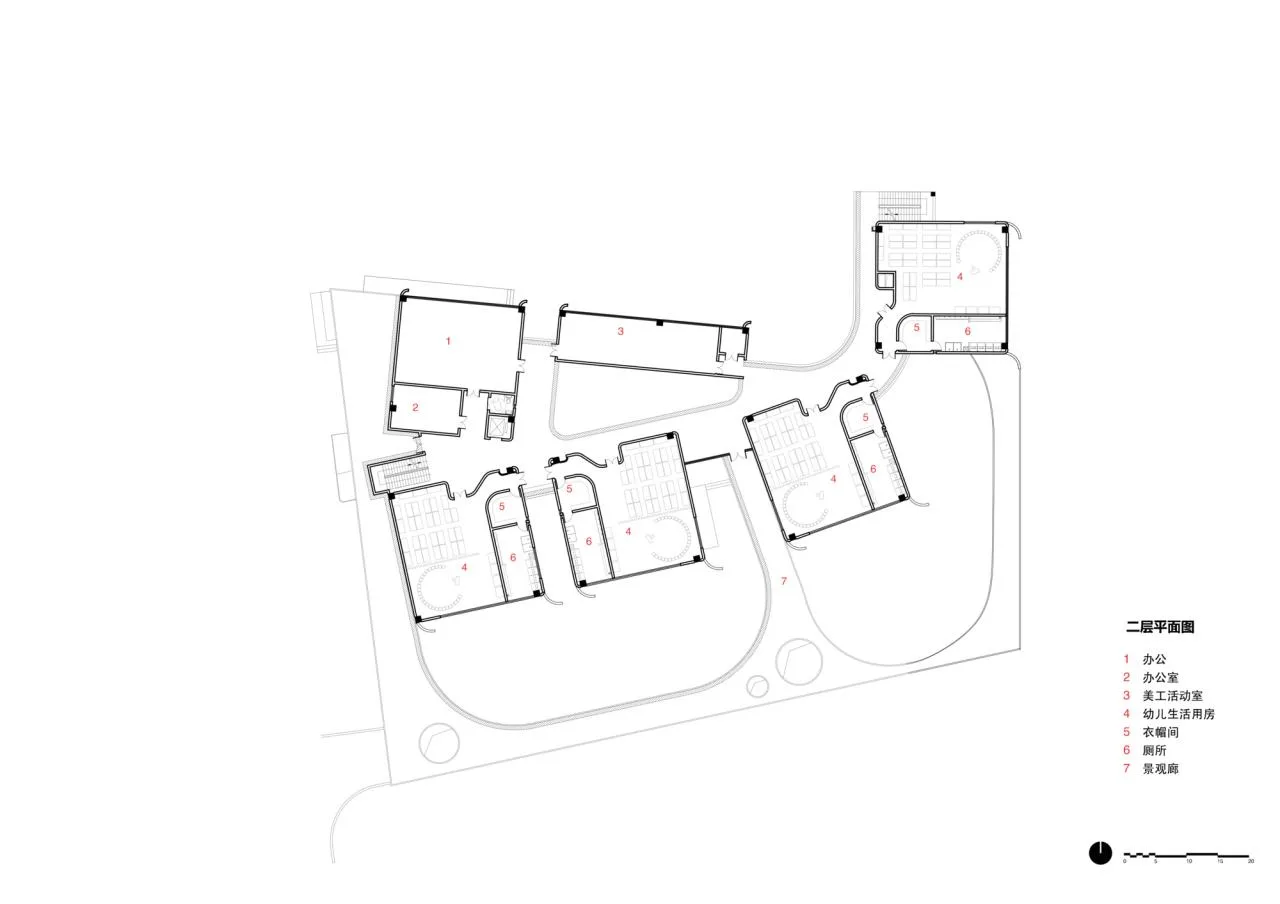
△ Second Floor Plan
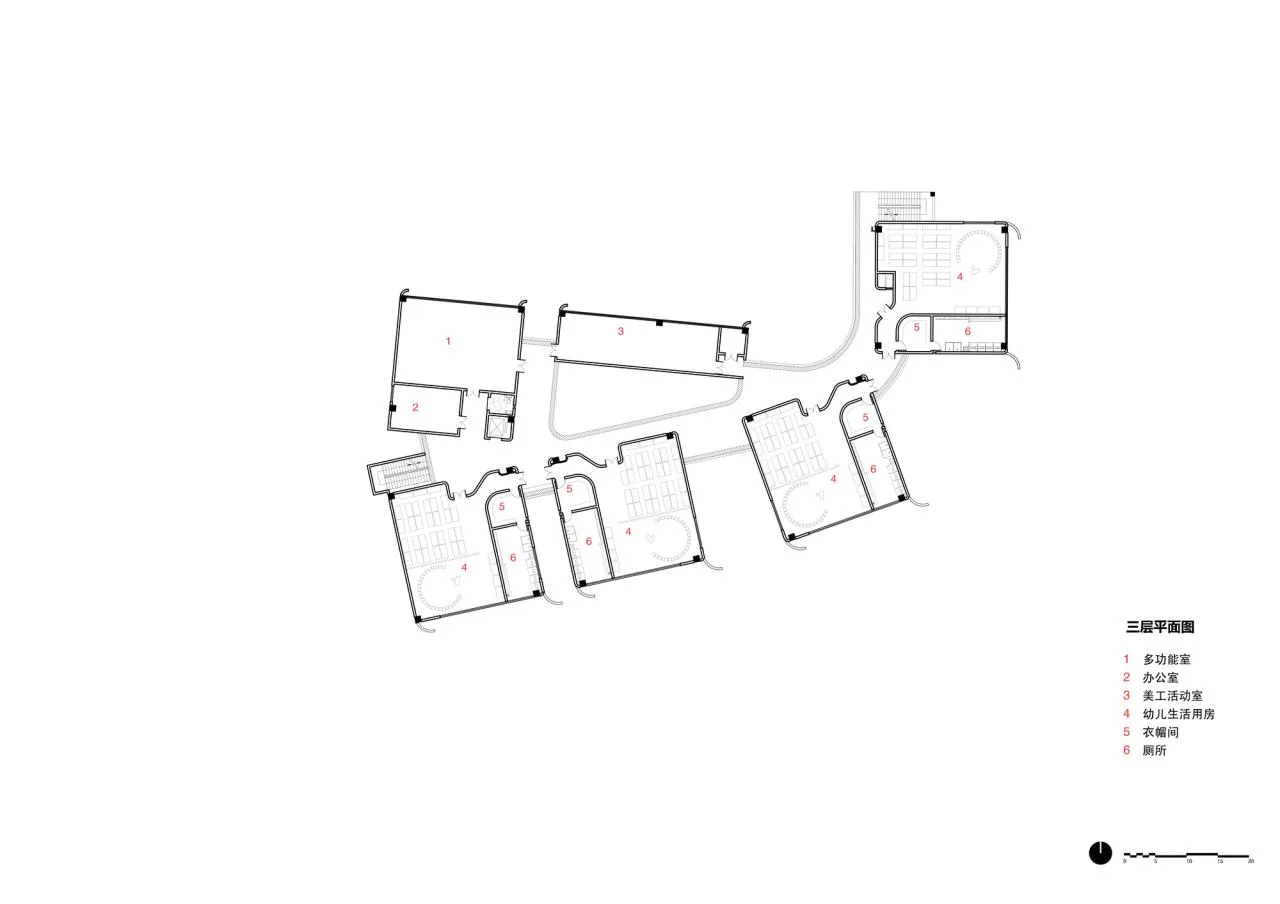
△ Third Floor Plan
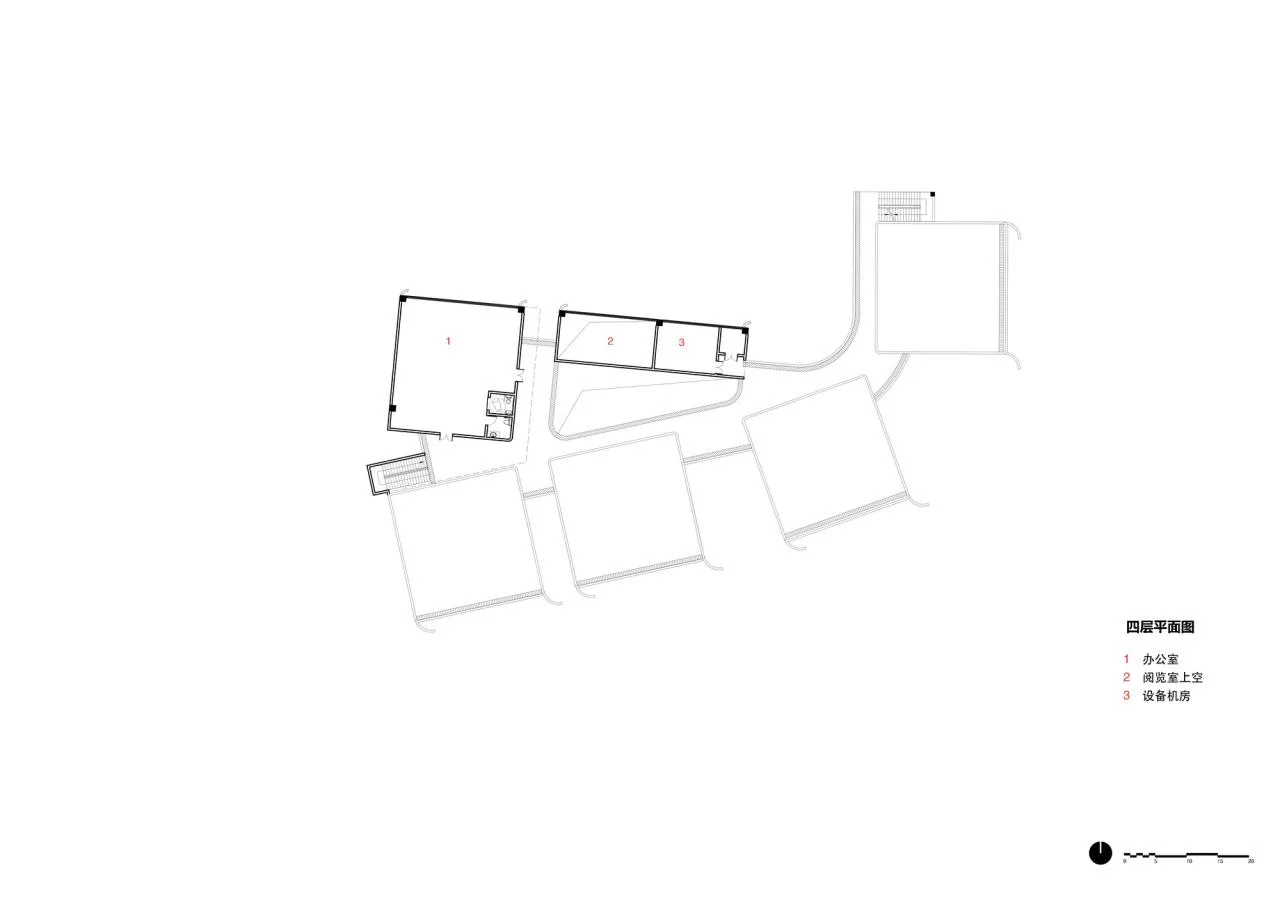
△ Fourth Floor Plan
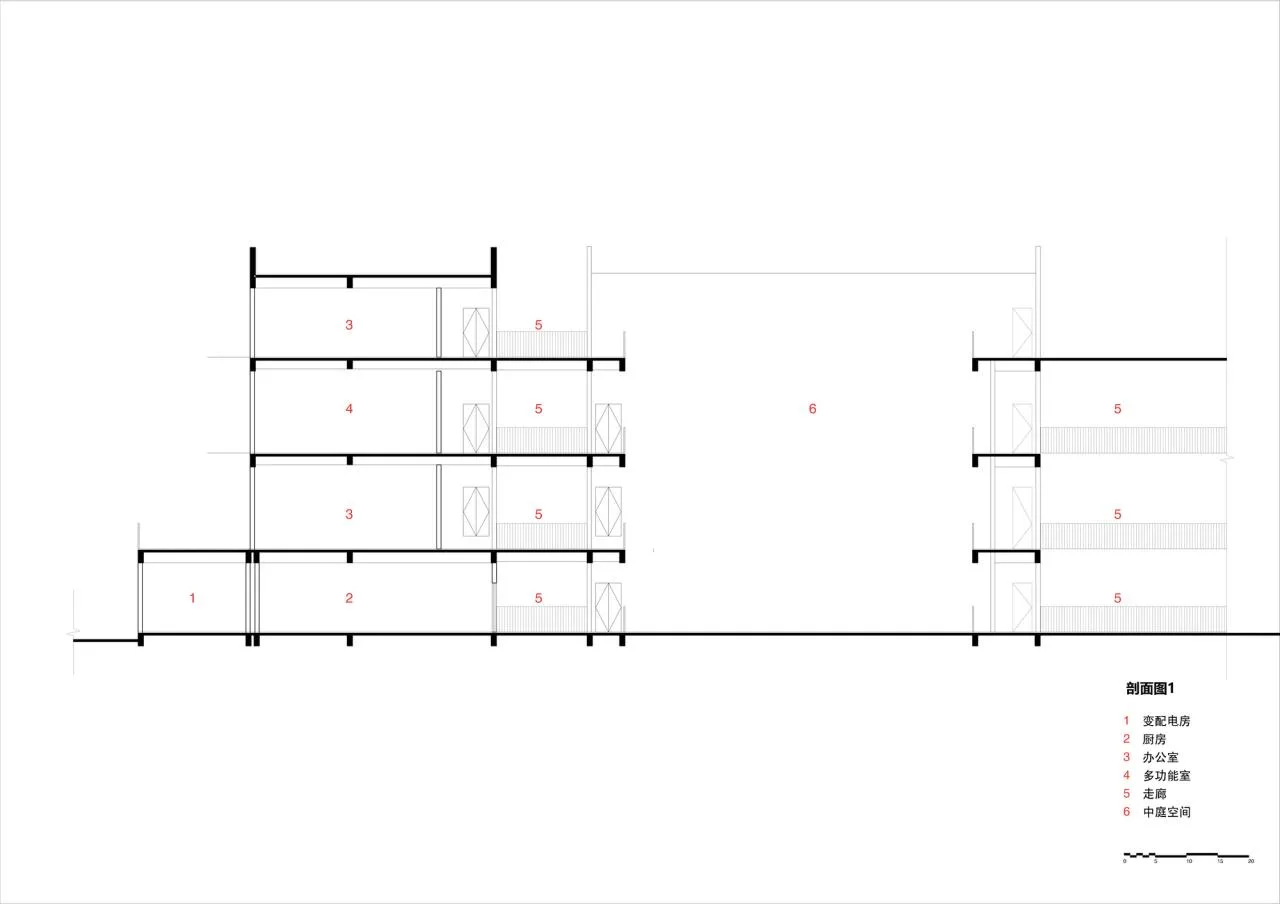
△ Section Diagram
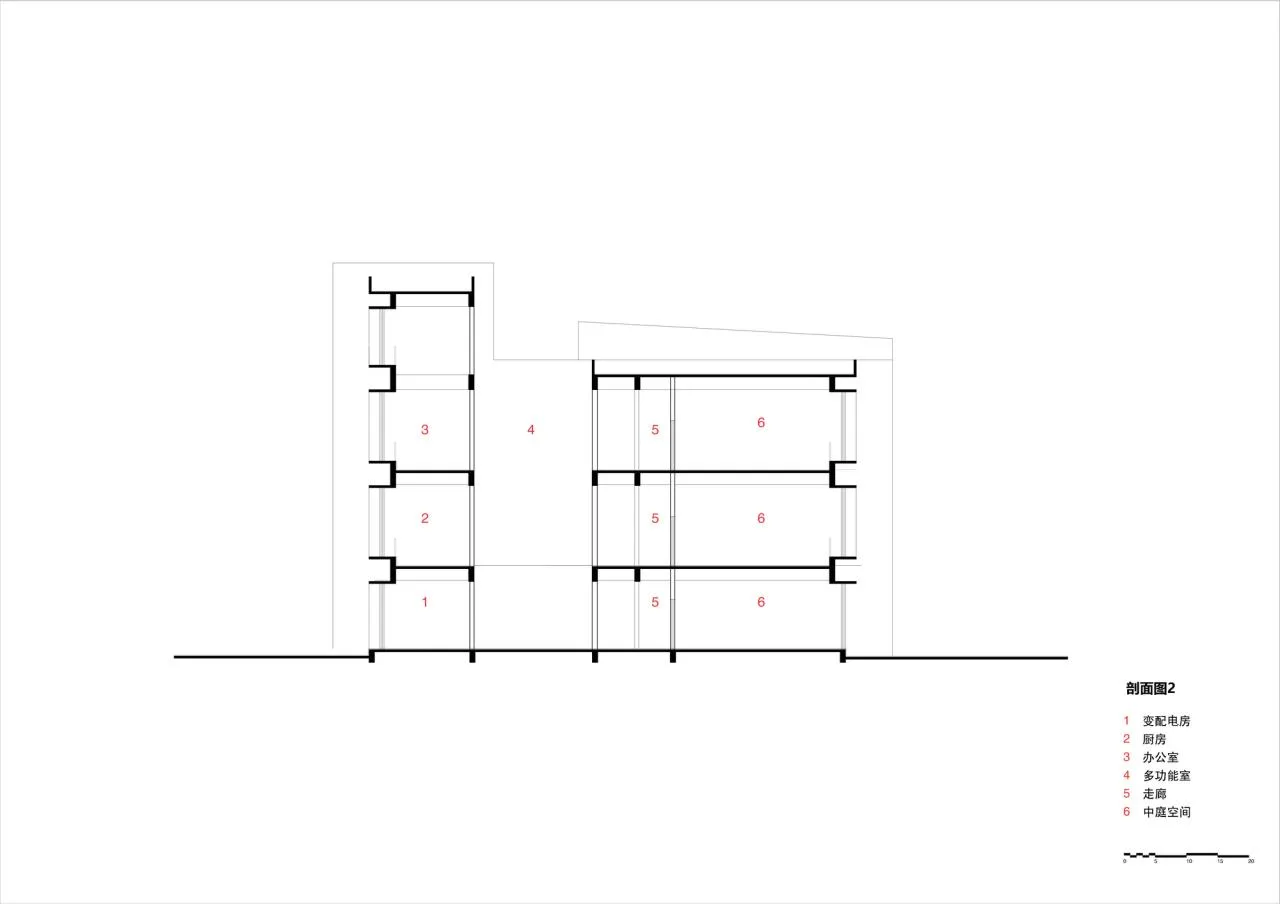
△ Section Diagram
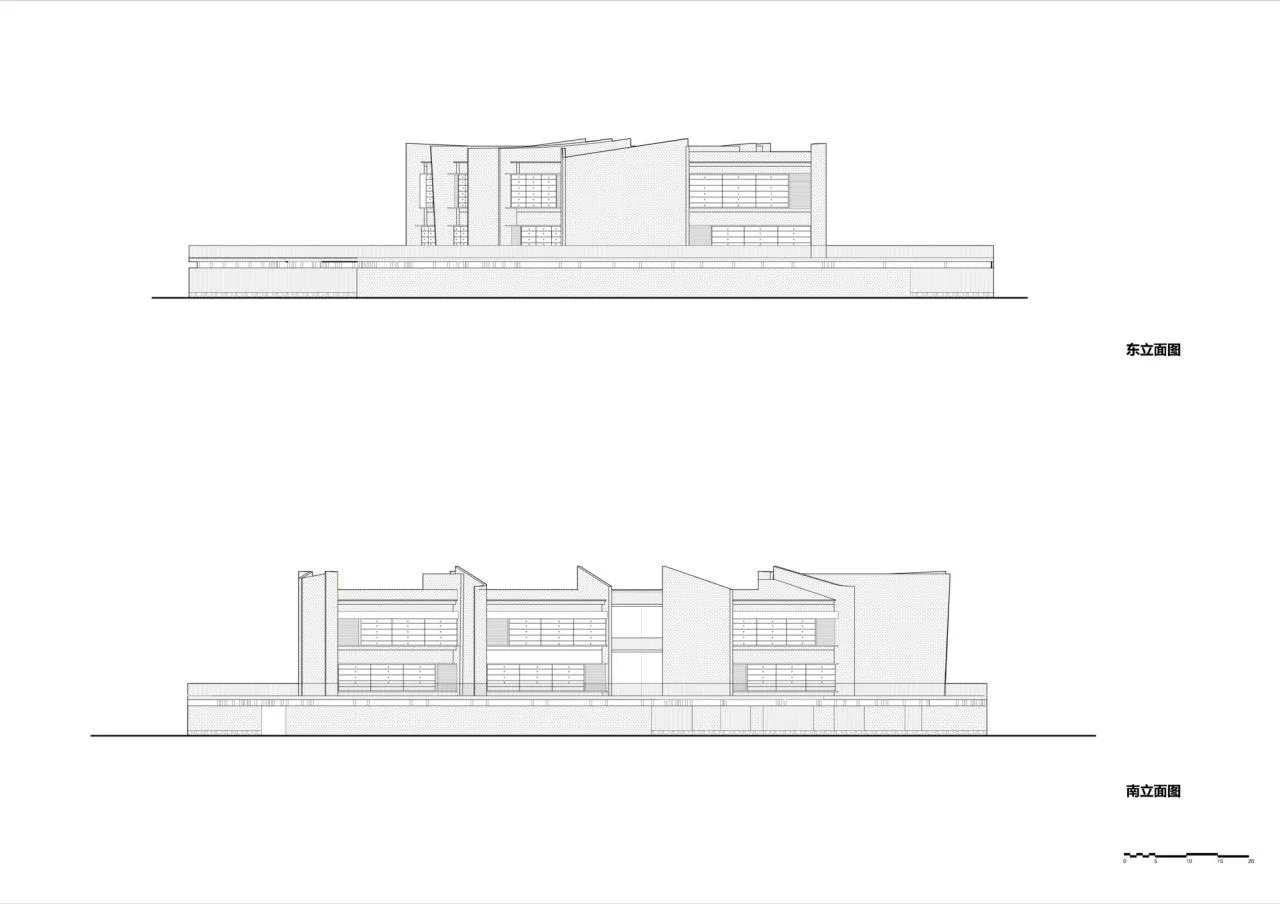
△ Elevation Drawing
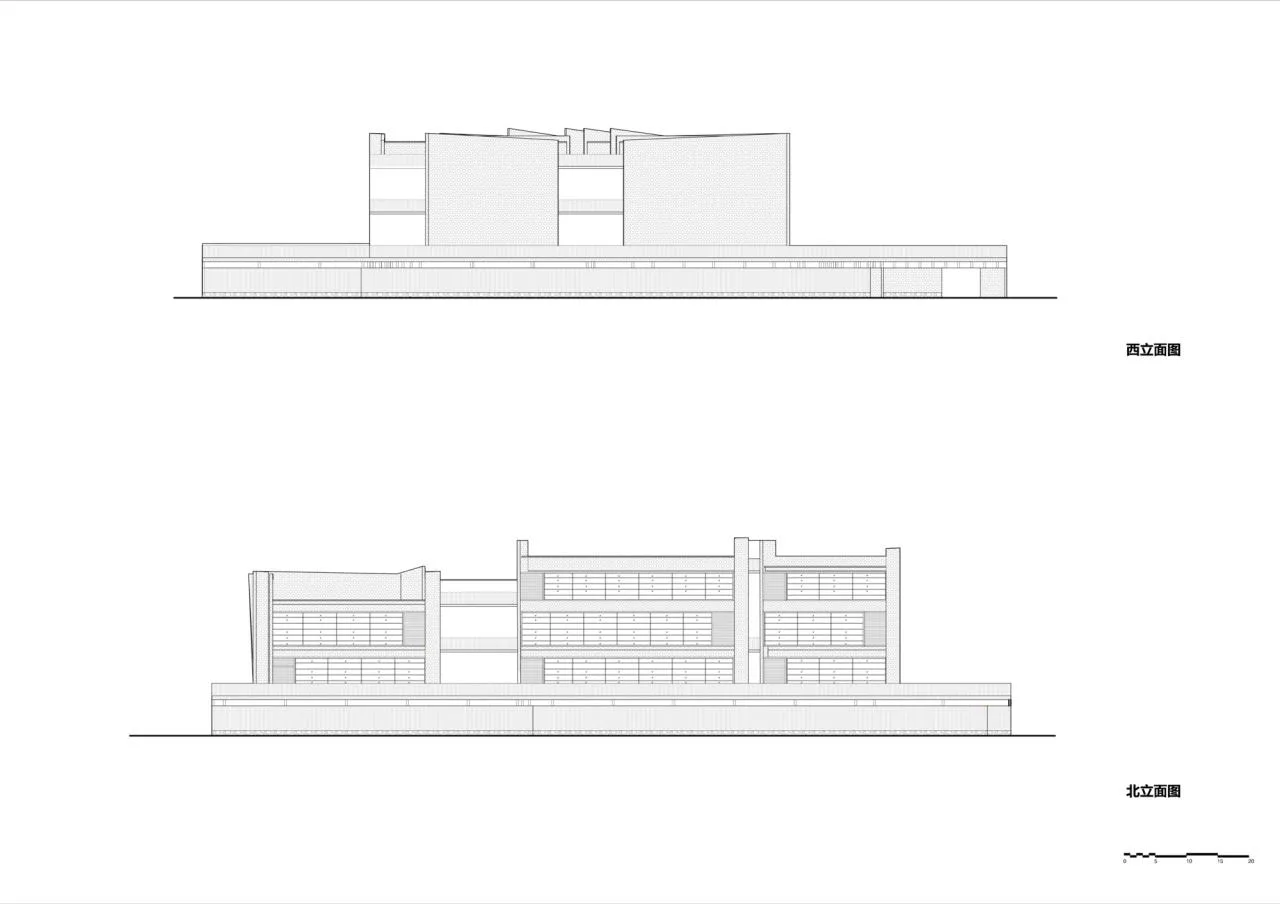
△ Elevation Drawing
Project Information
Architect: South China University of Technology Architectural Design and Research Institute Co., Ltd
Area: 4,405 m²
Project Year: 2023
Photographer: Xu Mian
Manufacturers: China Resources, Nanbo, Haomei
Lead Architects: Qiu Jianfa, Bao Ying, Xie Junlin
Design Team: Qiu Jianfa, Bao Ying, Xie Junlin, Cao Yunye, Huang Xueying
Collaborative Designer: One Party Design Group Co., Ltd. (Construction Drawings)
Landscape Design: South China University of Technology Architectural Design and Research Institute Co., Ltd
Construction Company: China Railway 20th Bureau Group Co., Ltd
Principal: Yangxi County Education Bureau
Location: Yangjiang















Must log in before commenting!
Sign Up