
Abstract: This article explores the current status of information technology applications in construction enterprises and provides an overview of the development of integrated design and construction in China’s construction industry. Based on the characteristics of enterprises that integrate design and construction, the architecture of enterprise information systems is analyzed. Preliminary investigations and research into the informatization of integrated design and construction are discussed, emphasizing that the integration of design and construction relies heavily on information technology support.
Keywords: Integrated design and construction; information technology promotion; BIM
Classification number: TU17 Document identification code: A Article number: 1007-9599 (2010) 06-0000-02
Research on Informatization of Design & Construction Integration
Yang Jing (Capital University of Economics, Beijing 100070, China)
This paper presents the application of information technology in construction enterprises and discusses the development of integrated design and construction within China’s construction sector. From the perspective of integration, the architecture of information technology is analyzed. Through preliminary investigation into information technology for integrated design and construction, it is highlighted that the integration of design and construction requires substantial support from information technology.
Keywords: Integration of design & construction; informatization; BIM
Implementing integrated design and construction fosters cross-interaction and complementary optimization mechanisms throughout the design and construction process via effective division of labor and cooperation, ultimately achieving optimal economic benefits. This contracting model is widely used internationally. Research and promotion of integrated construction models are ongoing in China’s construction industry. Effective use of information technology enables rapid transmission of changing information to enterprise management, facilitates “online management,” enhances responsiveness and problem-solving, reduces management and labor costs, and improves economic efficiency.
1. Overview of Information Technology Application in Chinese Construction Enterprises and Integrated Design and Construction Development
(1) Integration of Information Technology and Design-Construction Enterprises
China’s construction industry is experiencing a crucial transition from traditional to modern construction. The expansion of management scope poses significant challenges to the management capabilities of Chinese construction enterprises. Achieving modern management and strengthening core competitiveness through informatization has become a common goal among these enterprises. According to a survey of more than 1,400 construction enterprises nationwide, by 2008, 45.83% had implemented information technology systems. Among these, enterprises with special qualifications had a 78.06% informatization rate, while first-class enterprises had a rate of 43.51%. Despite these improvements, there remains a considerable gap between the information technology penetration rates of Chinese and foreign construction enterprises, and overall penetration is still relatively low.
Currently, few Chinese construction enterprises implement integrated design and construction models. The main obstacles include lack of market environment, management policies, suitable organizational models and experience, and insufficient integrated construction capabilities. Improving integrated design and construction development in China requires focusing on the informatization of construction processes and enterprise management.
(2) How Integrated Design and Construction Enterprises Approach Informatization
In recent years, many industrial production enterprises in China have adopted information management, greatly enhancing productivity. However, construction enterprises’ adoption of information technology to improve productivity is lagging behind. Information technology construction is not only a technological upgrade, but also a renewal of thinking and management innovation. The informatization process of integrated design and construction enterprises is wide-ranging, deep, and involves large volumes of information, making it a complex system engineering task. This gradual process must be tailored to each enterprise’s actual situation, with the ultimate goal of improving collaborative management, operational efficiency, and creating value.
2. BIM (Building Information Modeling) Enables Integrated Design and Construction
(1) The Beginning of the Information Revolution in Integrated Design and Construction
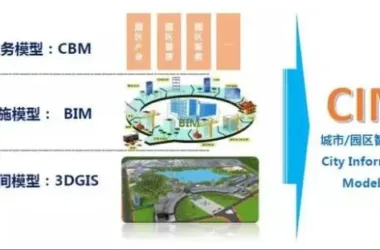
Examining domestic and international construction industries, the use of information technology has greatly increased efficiency and clarity in design and construction processes. The widespread adoption of CAD (computer-aided design) technology marked the first revolution in engineering design, moving from manual to electronic drawing. BIM (Building Information Modeling) represents the second revolution, shifting from 2D drawings to 3D design and construction. For the construction industry as a whole, BIM signifies a true information revolution.
(2) BIM Application in Integrated Design and Construction Projects
BIM’s core technology utilizes computer-generated 3D models forming a database that encompasses not only architectural design information, but also the entire process from design to construction and through the end of the building’s lifecycle. BIM consistently provides comprehensive, reliable, and coordinated information regarding project scope, schedule, and costs. The system keeps information updated and accessible in a digital environment, allowing architects, engineers, construction personnel, and owners to fully understand the project. This contributes to improved project quality and increased revenue throughout design, construction, and management stages.
BIM’s application extends beyond design, covering all phases of the project lifecycle. It is continually being improved across the construction industry, from upstream to downstream enterprises, to achieve full information management and maximize its benefits. During the design phase, BIM enables disciplines such as architecture, structural engineering, plumbing, HVAC, and electrical to collaborate using a single model, facilitating genuine 3D integrated design. Integrating design into a shared building information model makes conflicts between structures and equipment visually apparent; engineers can freely inspect the 3D model, identify issues, and make timely adjustments, significantly reducing construction waste. This greatly promotes integrated design and construction processes.
In the construction phase, BIM provides synchronized information on quality, progress, and costs. The technology enables visual simulation and management throughout the construction cycle, supports construction personnel in quantifying building elements, quickly devises site usage plans or owner-driven adjustments, improves documentation, and enhances construction planning. Ultimately, more construction funds are invested in the building itself rather than administration. BIM also improves revenue and cost management during operation and management stages, offering transparency and convenience for developers, investors, and homeowners.
The BIM information revolution profoundly impacts all aspects of integrated engineering design and construction. It demonstrates clear benefits in coordinating design, shortening project schedules, reducing costs, improving workplace safety, and promoting sustainable building projects. According to a report from AEC software giant Autodesk, sales of Revit, its flagship BIM software, tripled between 2005 and 2008. Although BIM still has some distance from becoming an industry standard, there is broad consensus in the industry that now is the time to act.
3. Other Approaches to Achieving Integrated Informatization in Design and Construction
Recognizing the significant advantages of informatization for construction enterprises, leading software providers both in China and abroad have offered solutions for the construction industry. Aveva is a trusted global leader in engineering IT solutions. Aveva’s integrated design and construction method consolidates all equipment engineering and PDMS 3D design data into a single model database, with no additional basic software needed. The data are fully controlled and can be used throughout various engineering stages, supporting fast and accurate design.
Oracle also provides comprehensive integrated solutions for the engineering, design, and construction industry. To help enterprises address challenges, Oracle offers a unified data model, enabling customers to develop targeted recommendations for project execution, asset management, procurement cost control, and facility maintenance. Oracle’s business suite is designed to integrate enterprise resource planning with projects, providing a thorough information solution for integrated design and construction.
4. Summary
The implementation and development of integrated design and construction demand robust support from information technology. Through project information platforms, rapidly changing information is transmitted to enterprise management, enabling “online management,” fast response, problem-solving, reduced management and labor costs, and improved economic efficiency. Major IT software vendors have provided varying degrees of solutions for the informatization of integrated design and construction, but a truly comprehensive solution must be developed based on China’s actual needs and conditions.
References:
Lv Chunling, “Discussion on the Development of Information Management in the Construction Industry.” Enterprise Finance, 2008,7
Li Dequan, Zheng Xiang, “Research on the Integrated Development of Design and Construction in China’s Construction Industry.” Architecture, 2009,7
Lai Shouhong, “Integrated Mode and Work Procedure of Engineering Design and Construction.” Highway Traffic Technology, 2006, 8,4
Wei Guangke, Fan Lanfen, “Research and Exploration on Informationization Construction of Construction Enterprises.” Computer and Modernization, 2009,12
Li Dequan, Zheng Xiang, “Research on the Integrated Development of Design and Construction in China’s Construction Industry.” Architecture, 2009,7
BIM Building Information Model: The Information Revolution in the Construction Industry [7]
Aveva strengthens the integrated engineering and design approach of Aveva Plant with two new products [8]
Engineering and construction companies use Oracle family of solutions to improve competitive advantage
Source: Computer CD Software and Applications













Must log in before commenting!
Sign Up