
In 2017, the educational innovation leader “Yitu Education” commissioned Crossboundaries to design a dedicated new campus for Yitu School. This move aimed to better support and expand their educational innovation experiment, which had begun two years earlier in three borrowed classrooms within a middle school.
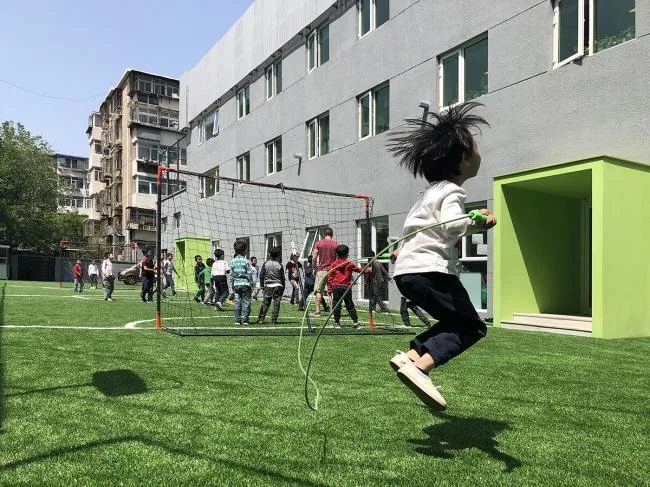
After the new campus opened, Li Yinuo, Yitu School’s founder, shared that this campus — designed with the concept of “putting children at the core” — has received widespread love and praise. Many children affectionately call it their ‘home.’ Even the former Finnish Education Counsellor in China remarked that in his six years here, this was the first school he had seen closely resemble Finnish education.
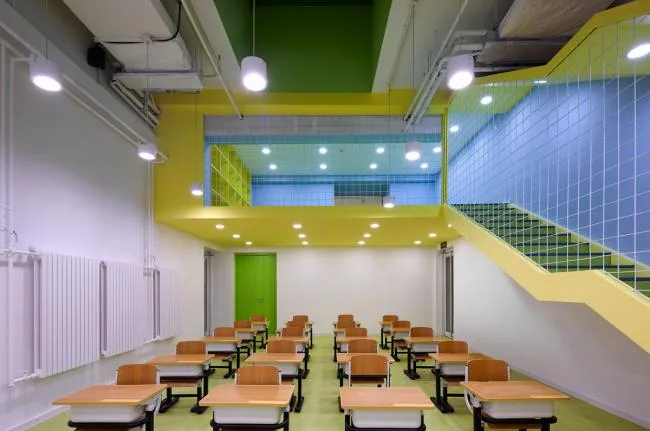
Yet, few would have imagined that this school was transformed from a former boiler room in just five months.
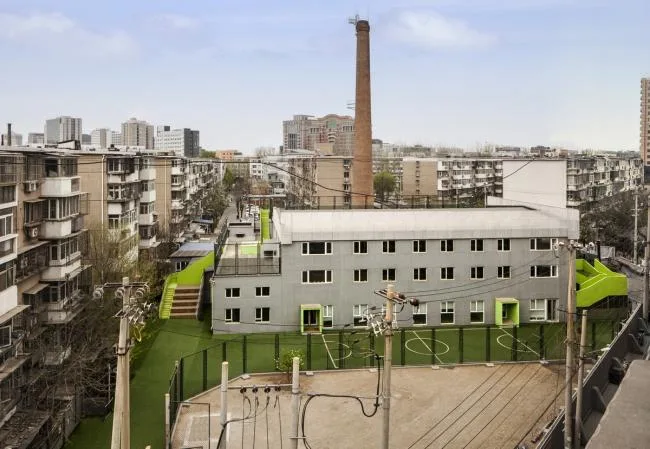
Challenge of a ‘Single Soil’
When selecting the site, the school carefully chose and leased a small, three-story industrial building that previously served as a boiler room. Their goal was to transform it, within limited time and budget, into a teaching facility capable of accommodating 200 students and meeting the innovative educational needs of the local community.
The new campus covers only 2,600 square meters and is located in a densely built old residential neighborhood. The main building is surrounded by multiple add-ons and auxiliary structures. The campus environment is cramped and disorderly, surrounded by dense residential buildings. Inside, conditions are challenging: as an industrial building, some areas suffer from poor natural lighting. Each floor has only one glass window on the outer wall, with a few small air windows positioned high up on the opposite side.
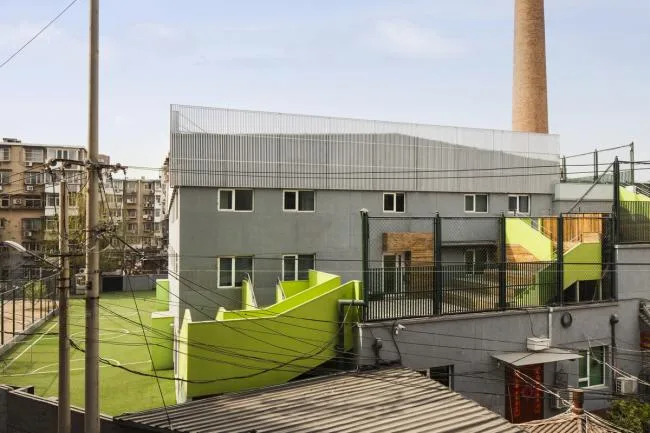
Crossboundaries’ Design Solution
While ensuring essential outdoor facilities, we focused heavily on enriching and energizing the indoor spaces.
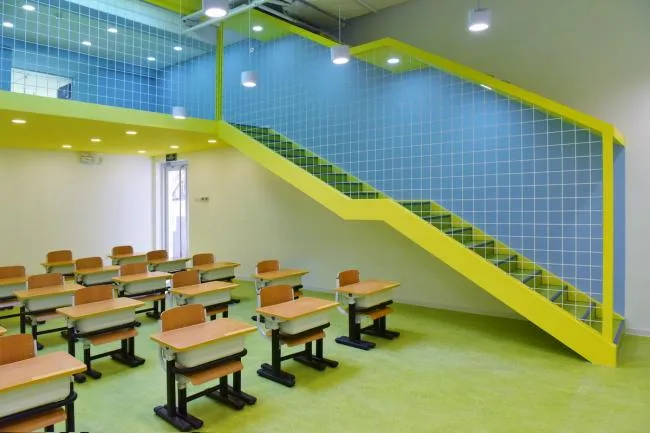
We began by reinforcing the building’s structure and removing the old office layout of a central corridor flanked by rooms. Classrooms were positioned on the side with ample natural light, while special-purpose rooms like dance, art studios, and laboratories were placed on the dimmer side.
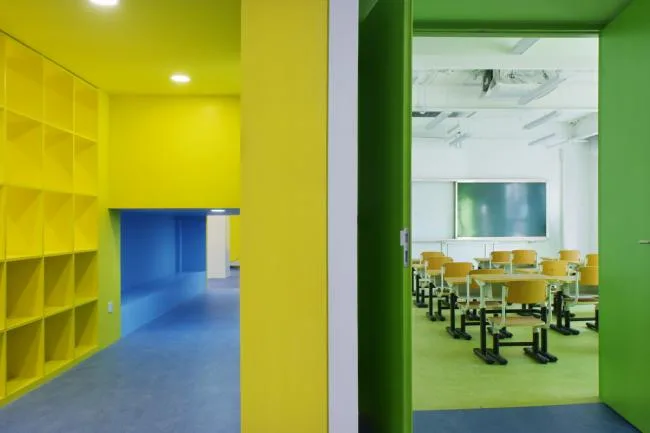
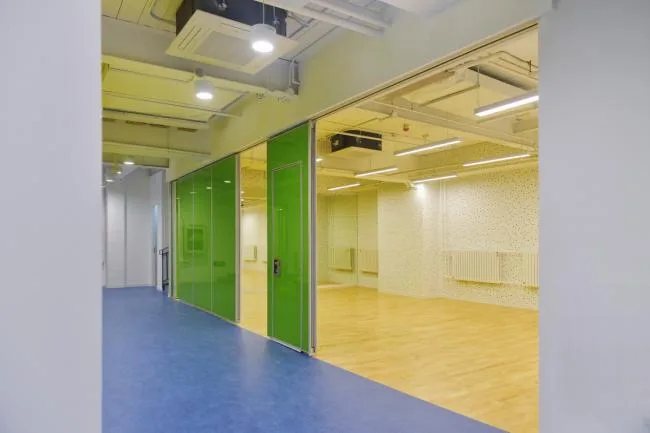
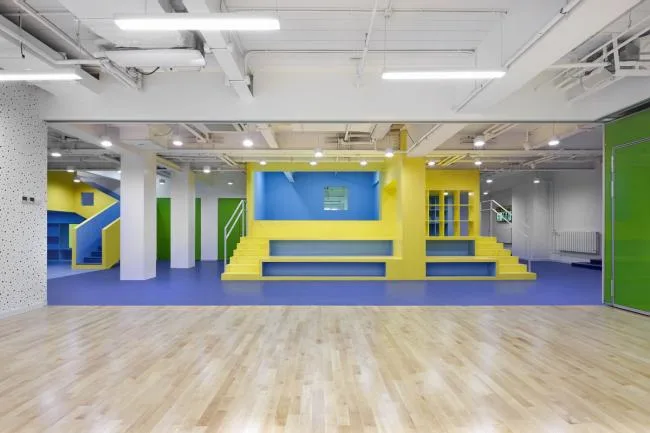
Following these changes, the spacious corridors on each floor became the highlight of our design response to Yitu’s educational philosophy. We customized several multifunctional integrated modules in different shapes and with rich experiences for various spaces. These act like small “peninsulas” extending from classrooms, offering informal learning, socializing, and activity areas for children and teachers beyond traditional classrooms.
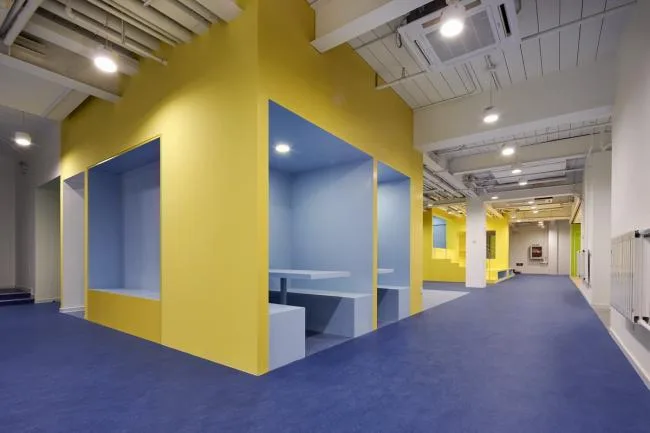
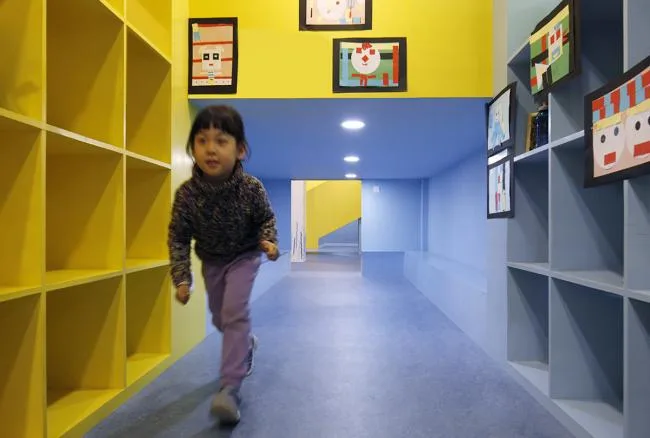
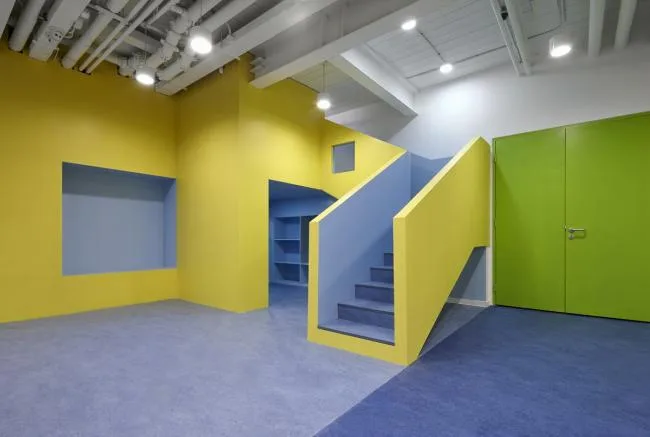
The spatial experience within these ‘Peninsula’ modules is diverse, accommodating both group activities and individual needs. For example, the staircase area within one module serves as a small gathering spot where children can sit comfortably. It can also connect with the adjacent dance studio to create a performance space. Within the modules, we thoughtfully included cozy, semi-hidden nooks perfect for quiet conversations among friends or solitary reading moments.
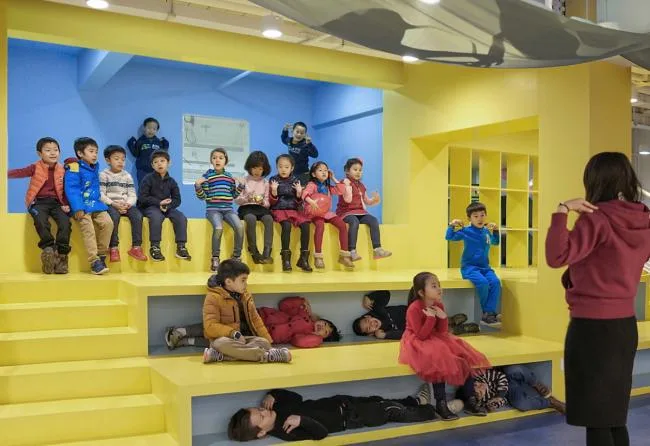
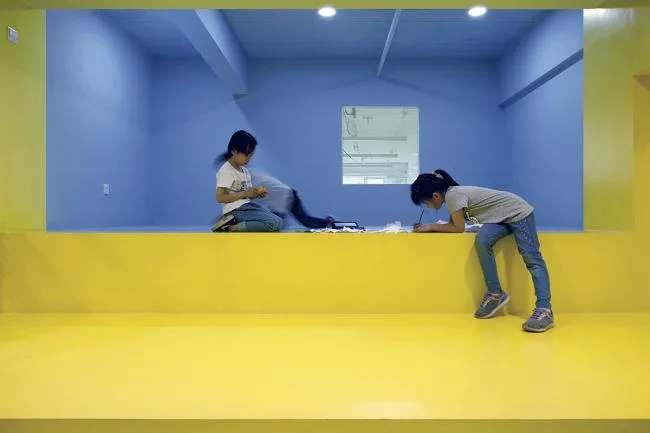
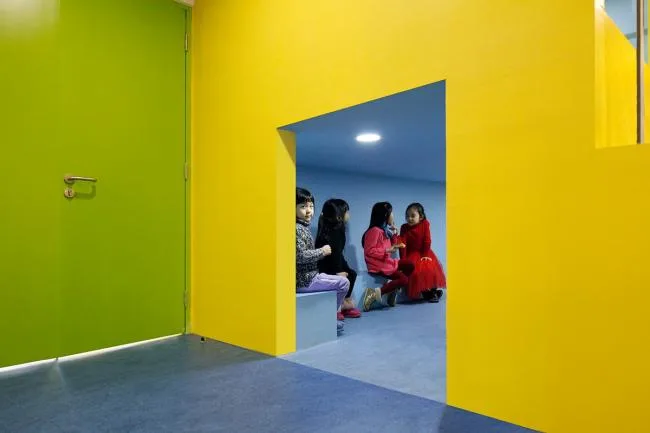
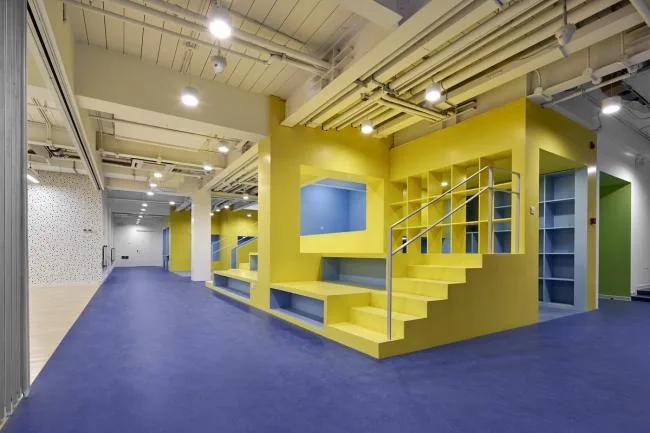
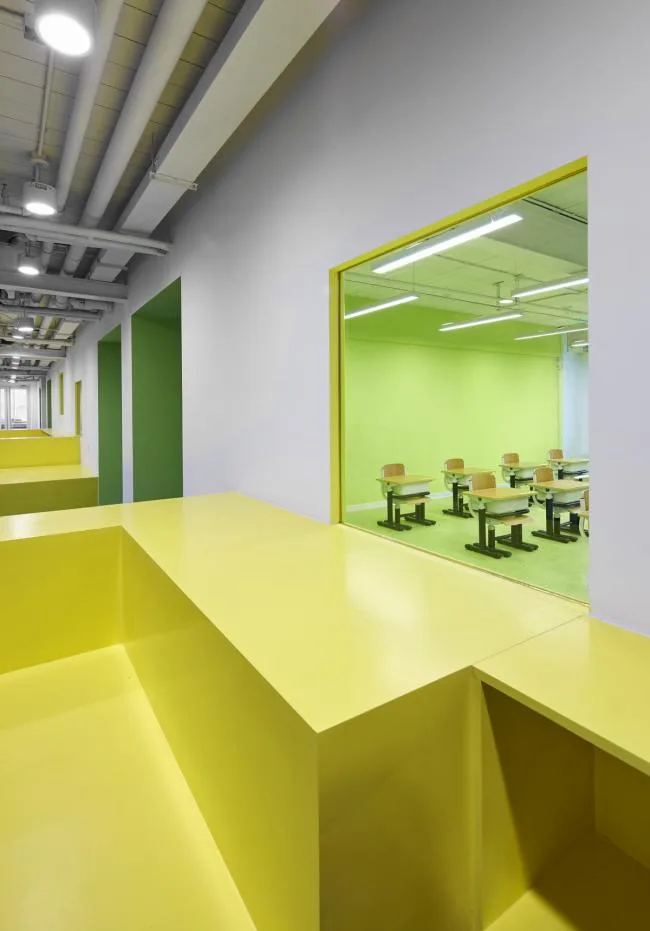
Between these integrated modules and classrooms, numerous small windows are staggered to foster visual connections and encourage interaction across different spaces. This design avoids visual blind spots and enables teachers to better supervise children who are engaged in various areas simultaneously.
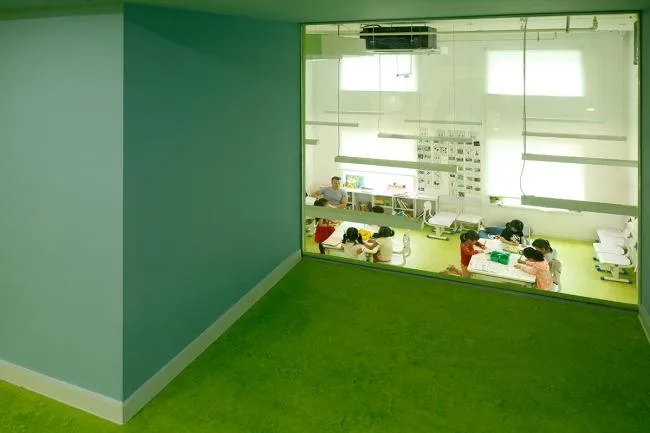
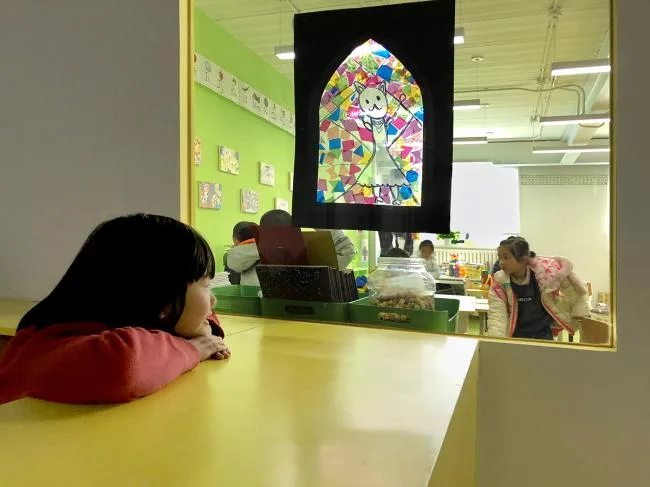
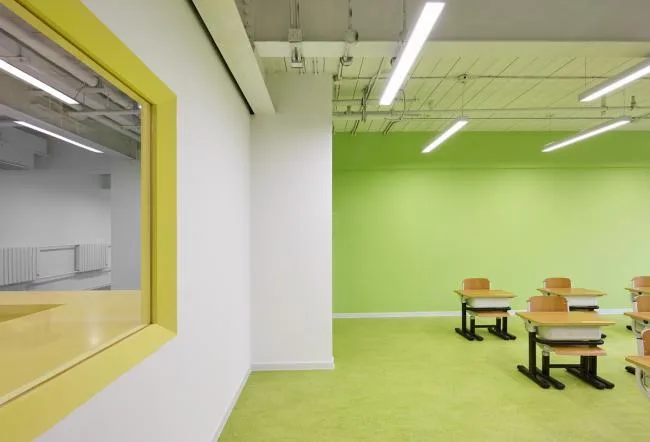
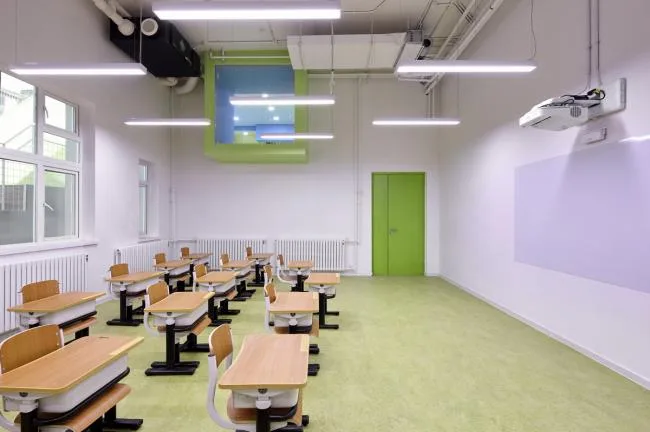
Li Yinuo once wrote in an article (“China’s Education Needs to Return to Common Sense”, 2018) that the heart of building a good school is to create an environment of goodwill, security, and mutual support, with respect as its foundation. Guided by this philosophy, our design not only respects children’s nature but actively encourages movement, exploration, curiosity, and interaction. Spaces are scaled to foster intimacy and to nurture children’s sensitive emotions when needed.
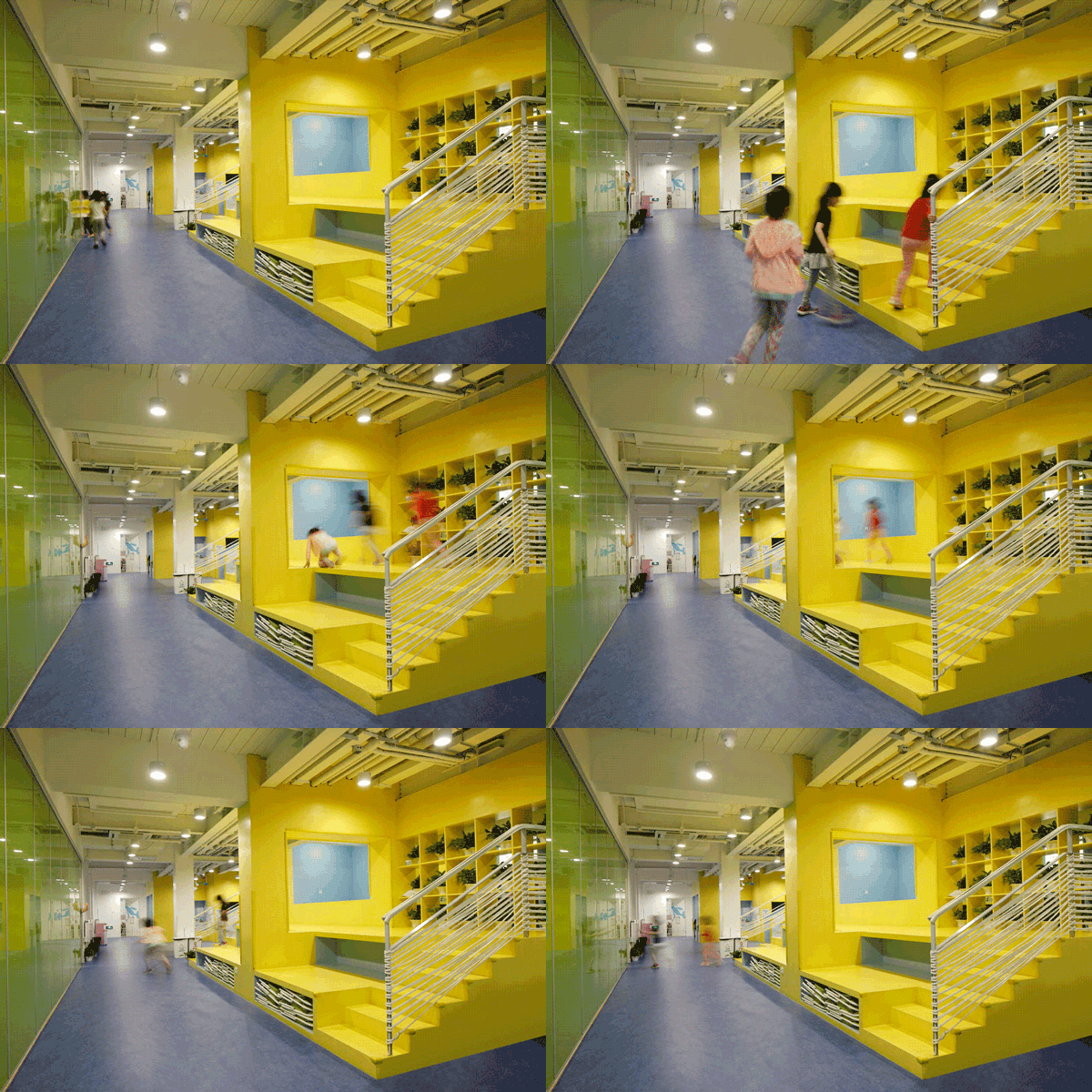
Moreover, these modules serve not only to blend teaching and play but also address practical constraints. Due to site limitations, the three-story building could not house separate facilities like a library, auditorium, or study rooms. Instead, we cleverly integrated these functions into the “Peninsula” modules, helping our clients maximize space efficiency.
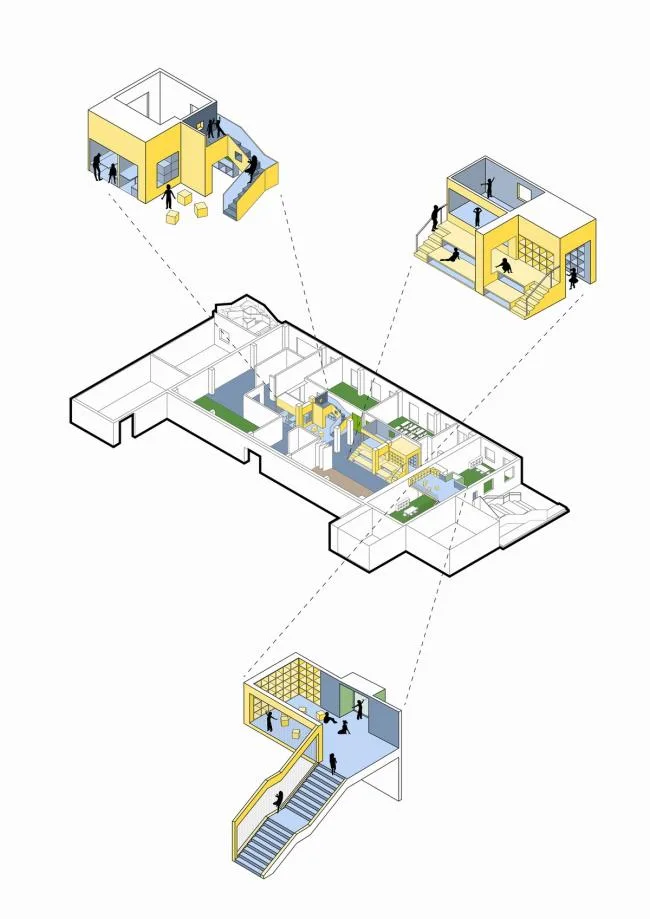
The “Peninsula” module on the first floor
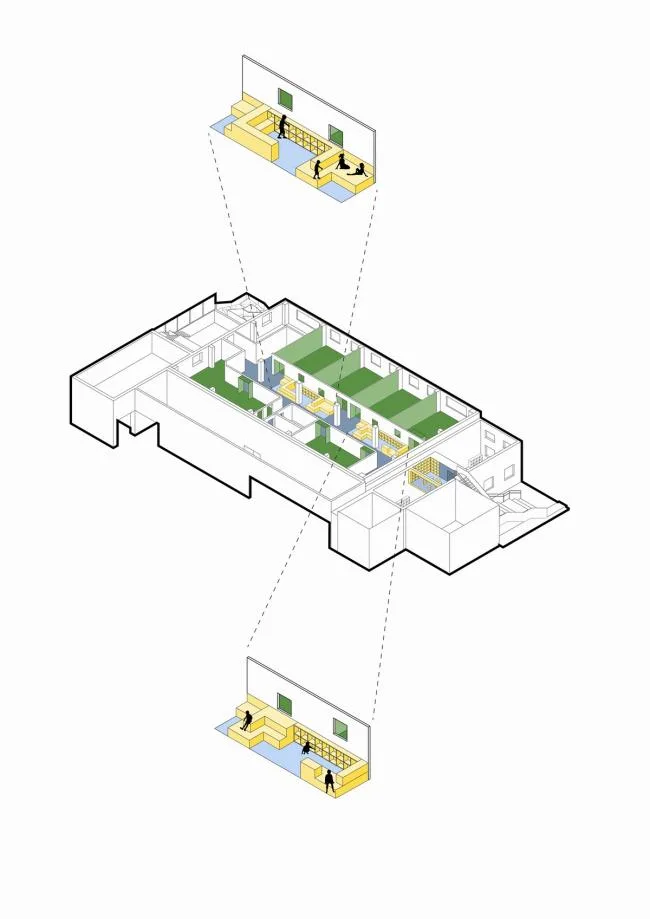
The “Peninsula” module on the second floor
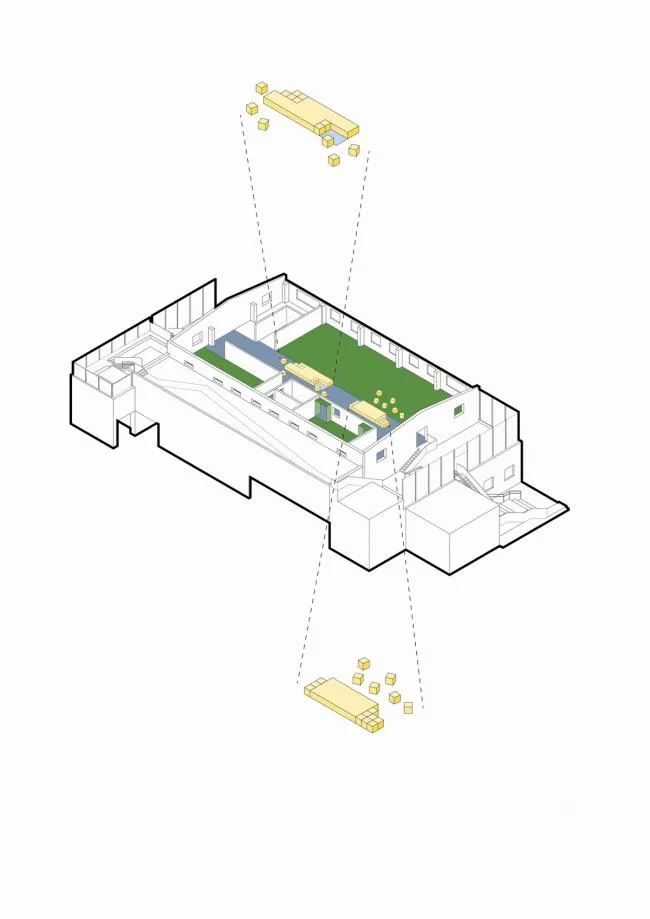
Three-tiered ‘Peninsula’ module
At Yitu School, Crossboundaries employs their signature color palette to create a pleasant, orderly atmosphere. The classrooms feature the iconic green of “Yitu,” while the modules are brightened by a lively yellow, complemented by a neutral gray-blue. This combination provides rich visual layers that suit both active and quiet uses.
Despite the limited outdoor space, we maximized its potential. A circular sports track approximately one kilometer in length, called “One Soil Green,” connects the ground-level activity area with four rooftop platforms. This space supports various outdoor activities such as running, games, leisure, small performances, and rooftop gardening. It also clearly defines this unique campus within its densely packed surroundings.
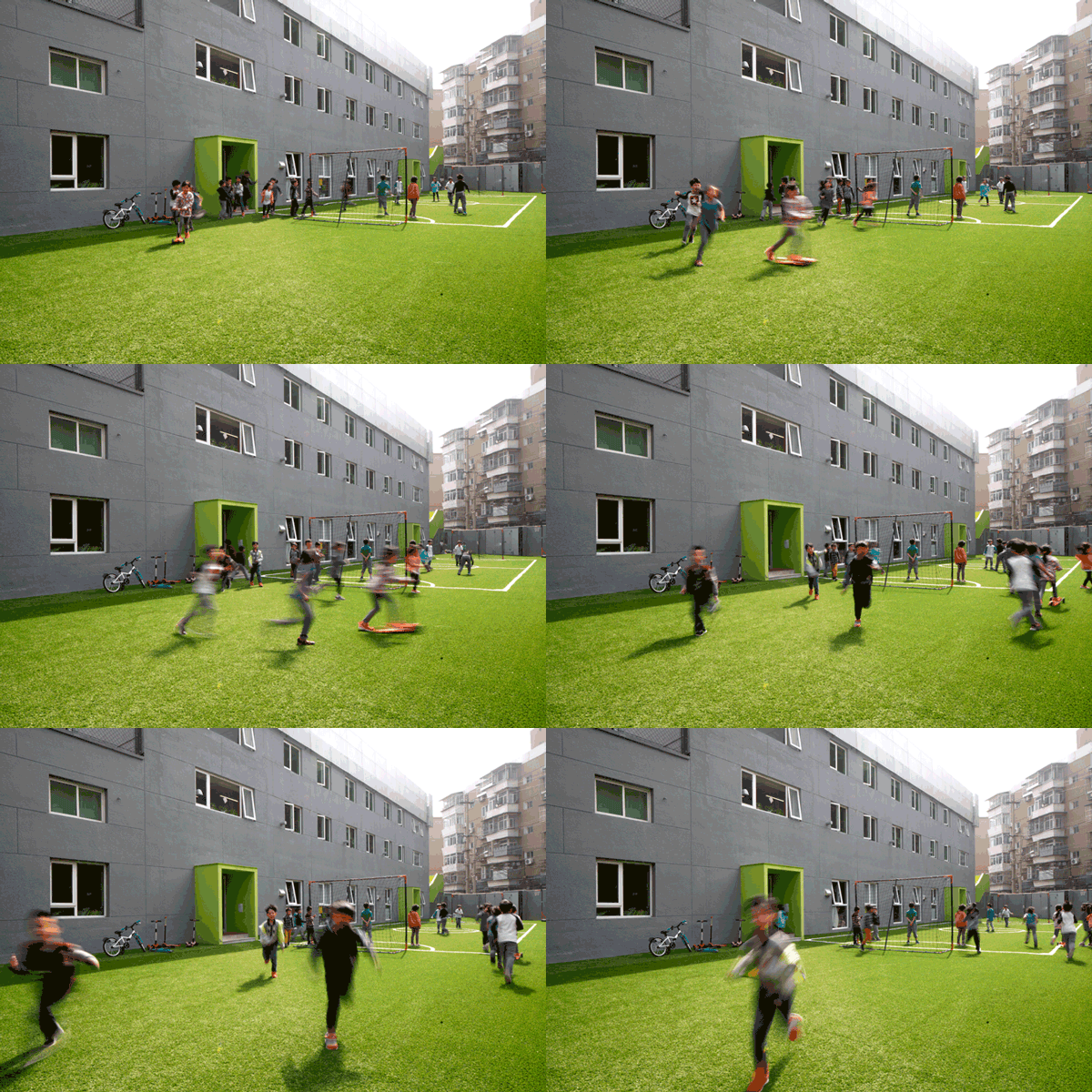
The entire design embodies Yitu School’s unique vision: to provide a healthier, more enjoyable personal experience for teachers and students, enriching their direct interactions.
Design Drawings:
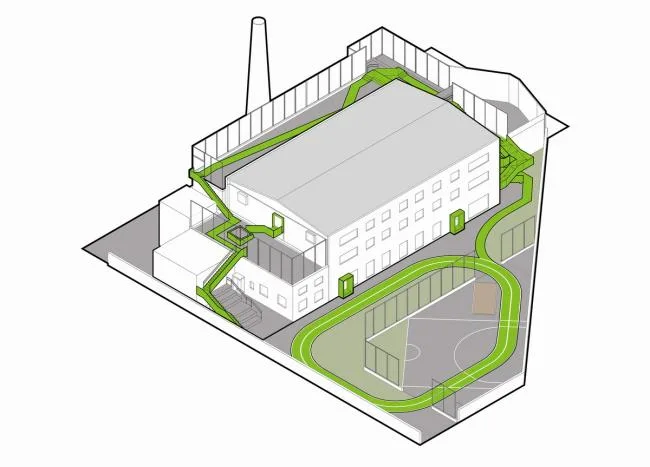
Axonometric Drawing
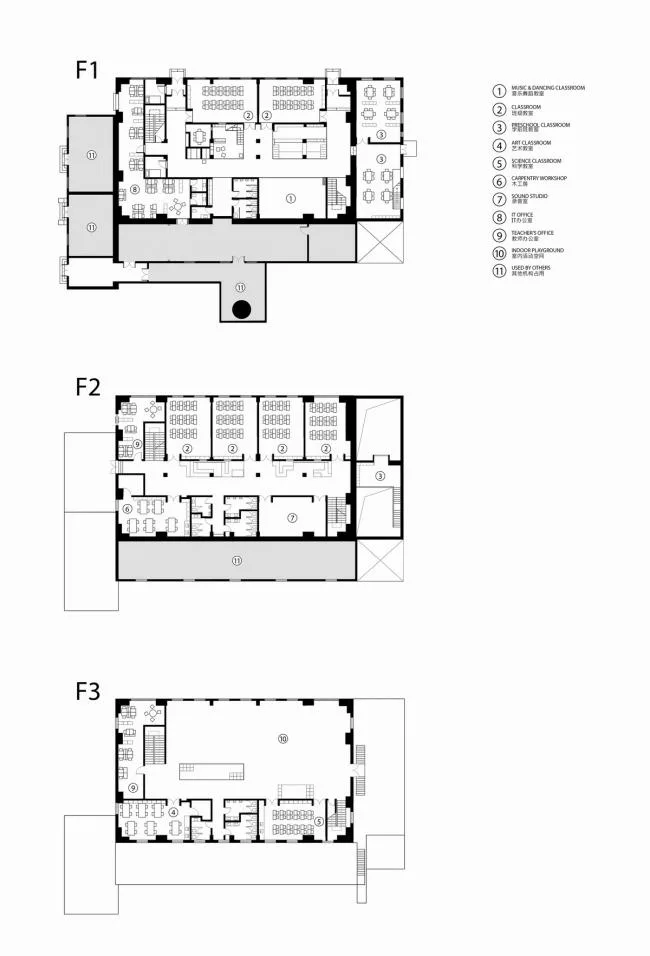
Floor Plans and Functions
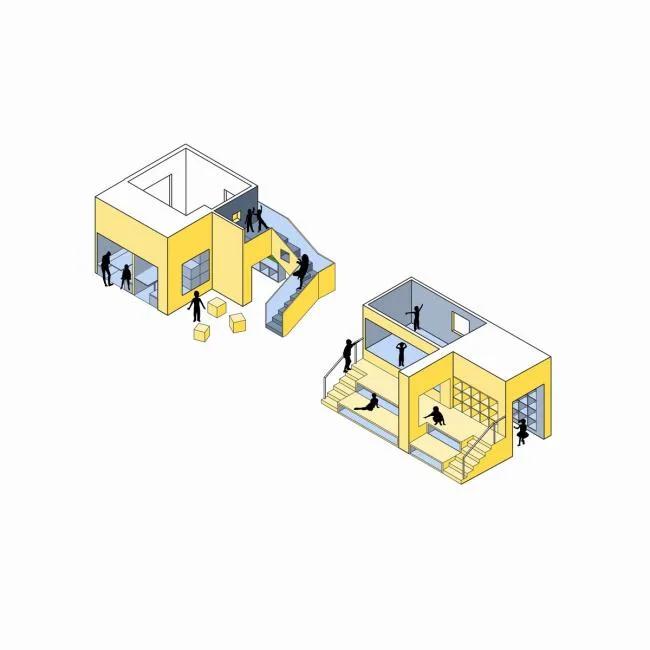
‘Peninsula’ Module 1
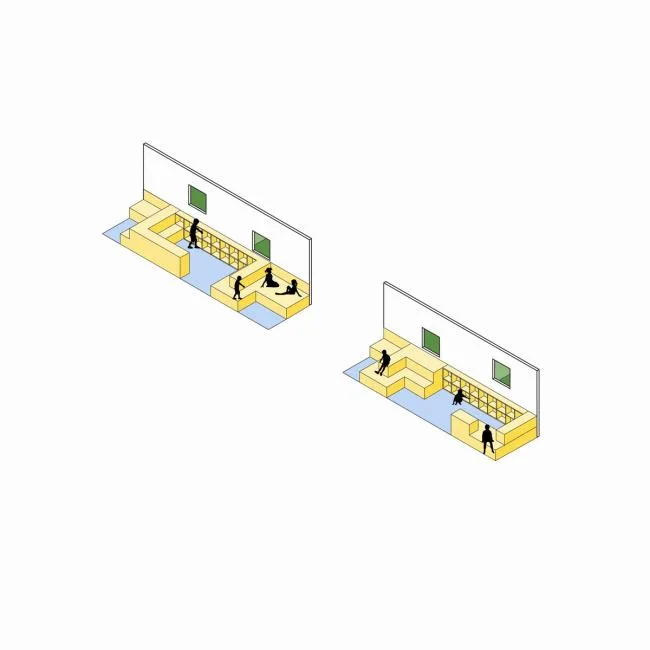
‘Peninsula’ Module 2
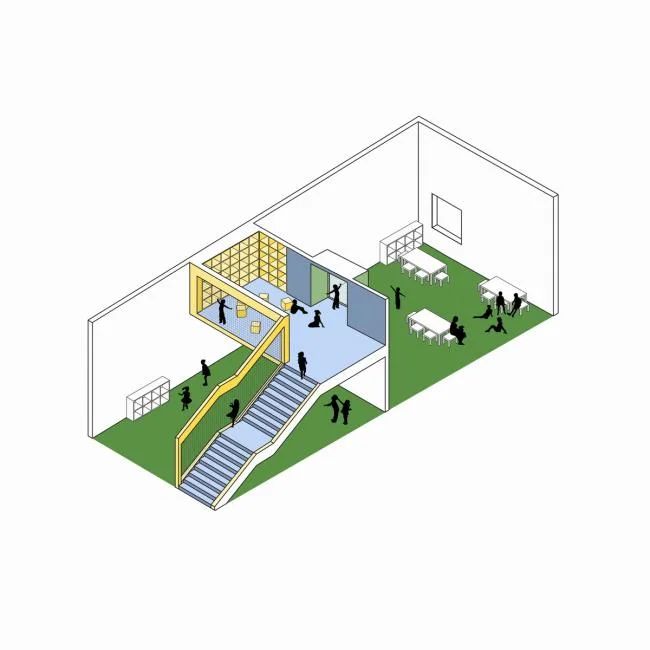
‘Peninsula’ Module 3
Project Information:
Location: Beijing, China
Client: Yitu Education
Site Area: 2,600 square meters
Total Floor Area: 2,100 square meters
Capacity: 200 students
Design Period: May 2017 – August 2017
Construction Period: June 2017 – June 2018
Completion Date: July 2018
Designer: Crossboundaries, Beijing
Partners: Binke Lenhardt, Dong Hao
Design Team: Cui Yurou, Xiao Zaiyuan, Wang Xudong
Construction Contractor: Beijing Yihao Architectural Decoration Design Engineering Co., Ltd.
Photography: Yang Chaoying, Liu Minling, Hao Hongyi, Xuan Li, Wang Lei, Rao Gang












Must log in before commenting!
Sign Up