
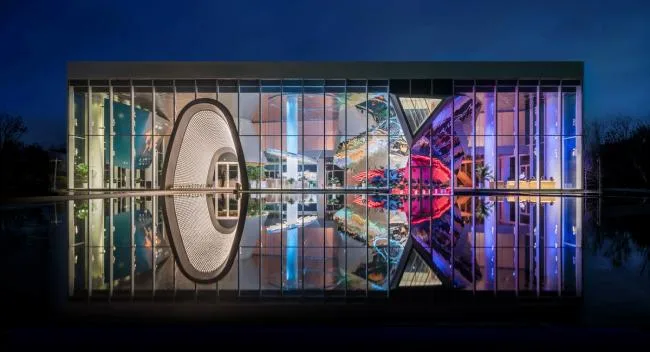
As urbanization rapidly advances in China, an increasing number of developers are expanding into third- and fourth-tier cities. Exhibition centers have become vital platforms for these developers to showcase their brand strength and design philosophy. Developers aim to attract customers and boost sales through outstanding display center designs.
However, most exhibition centers serve a single purpose and often face demolition or renovation after their sales cycle, resulting in significant resource waste. This project seeks to rethink the exhibition center as a unique functional building, with the goal of enhancing sustainability through design and transforming it into a public facility for future communities and cities.
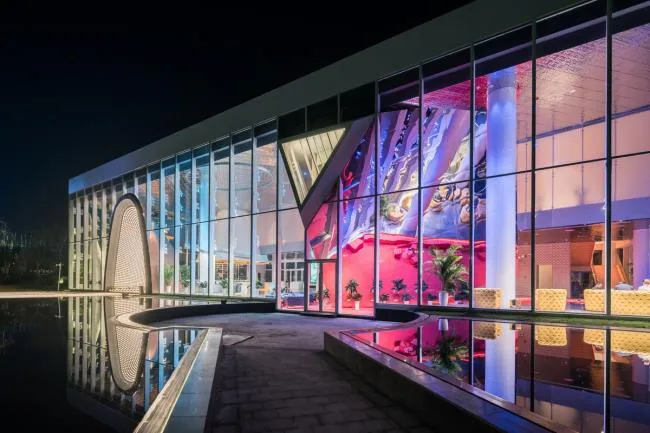
This project is situated at the corner of Guangzhou Road and Minjiang Road within the Development Zone of Heze City. Positioned to become the future city center of Heze, its strategic location anticipates the project becoming a landmark symbolizing the city’s future growth. The design expresses a vision of a better life in future urban environments, emphasizing human-centered approaches and sustainability, while creating an engaging urban public space for local residents.
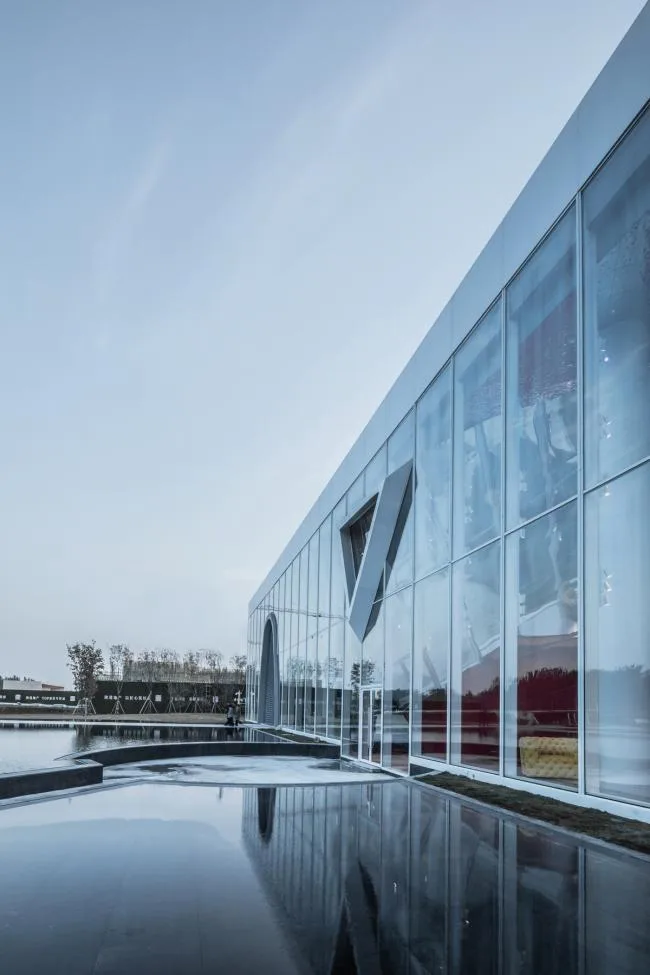
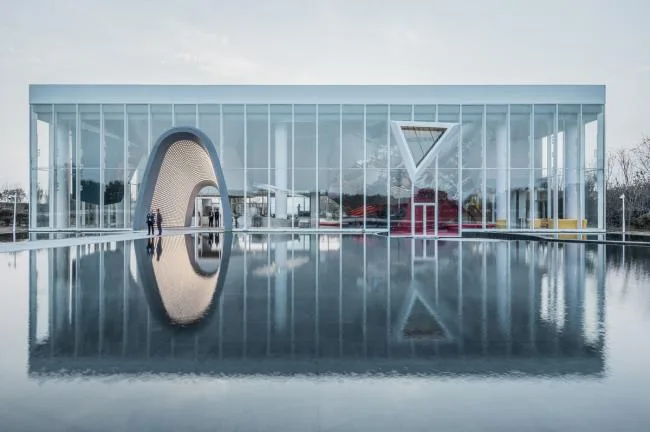
The architectural concept draws inspiration from the artistic formalism of the 1920s, reflecting the era’s social and technological transformations. It aims to illustrate the interconnectedness between physical and virtual spaces in the information age. As more activities unfold in virtual environments without gravity, the building’s design features objects that appear to float in an unstable state.
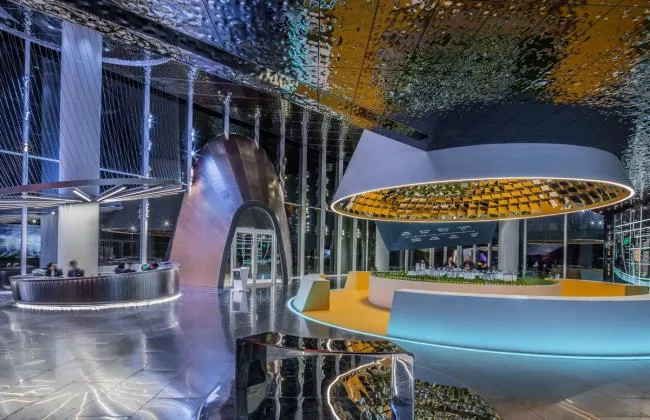
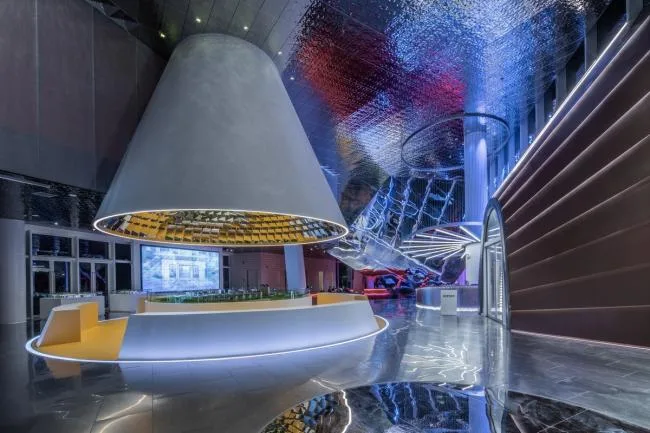
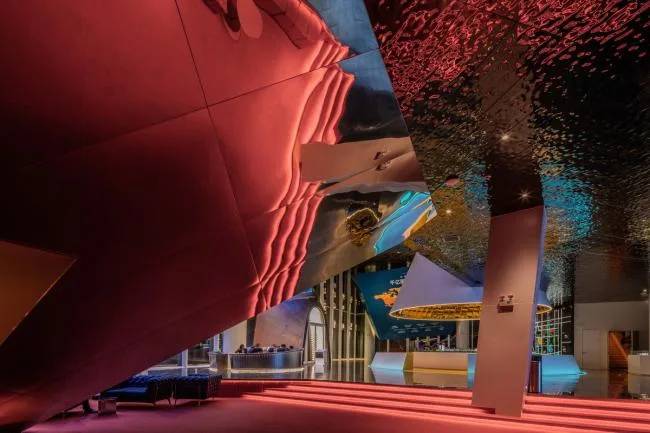
Each floating object uniquely represents a specific function: the entrance is shaped like a horseshoe, the sand table area resembles a large lens, the negotiation space takes the form of a diamond, the corporate brand area is crafted from bluestone, and the office zone is represented by an orange box.
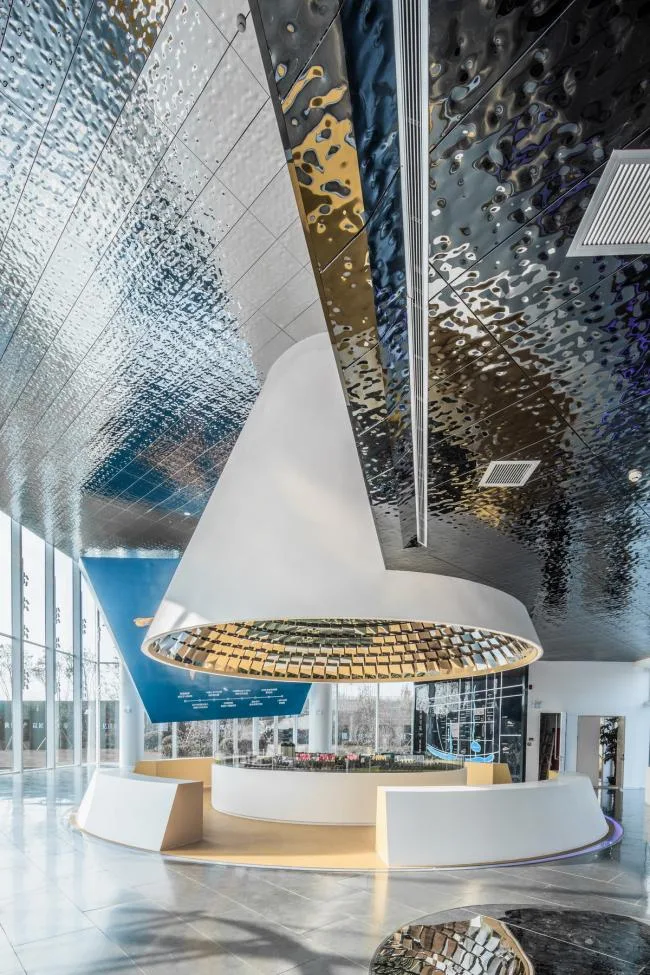
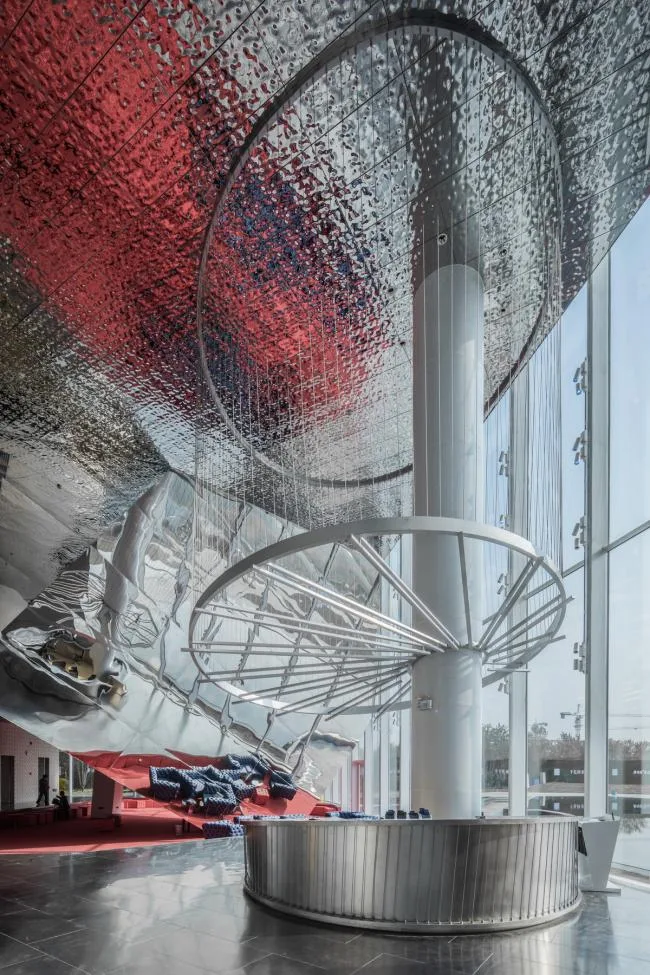
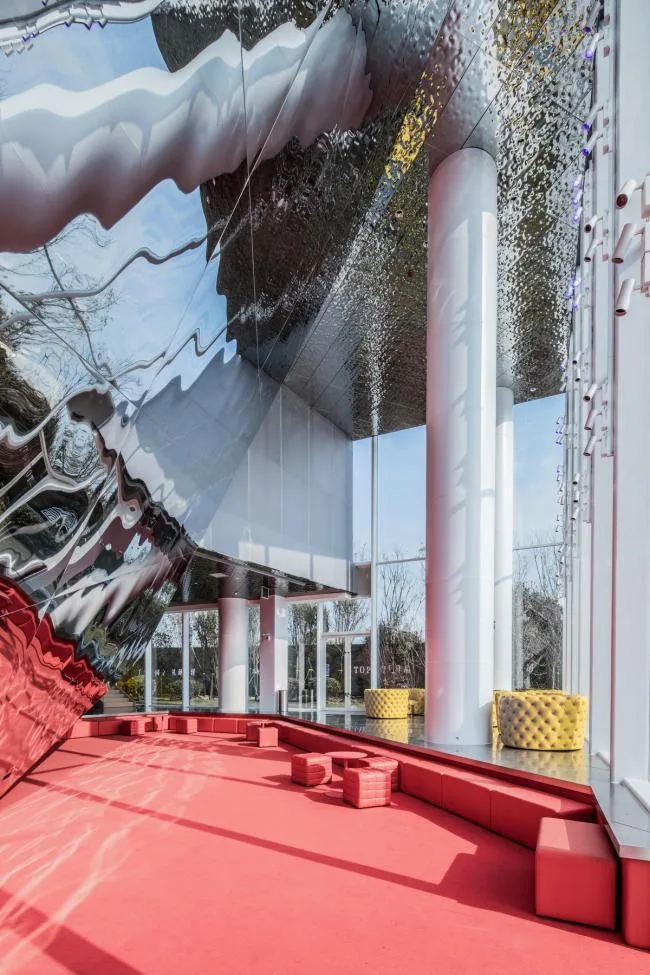
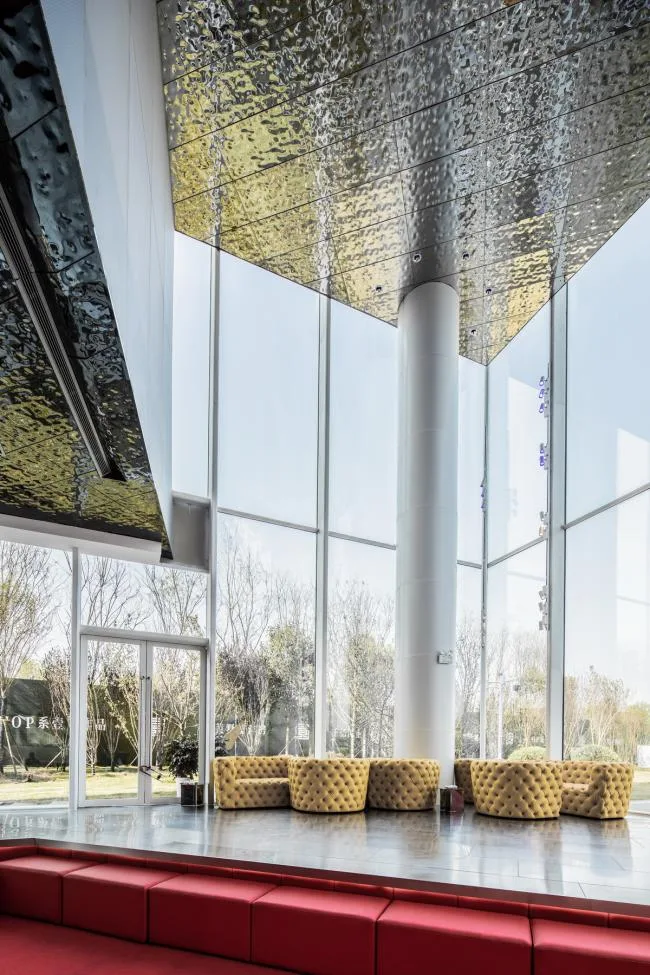
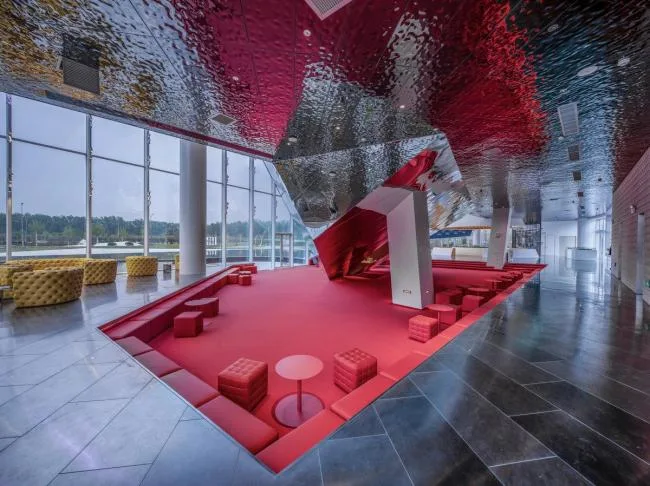
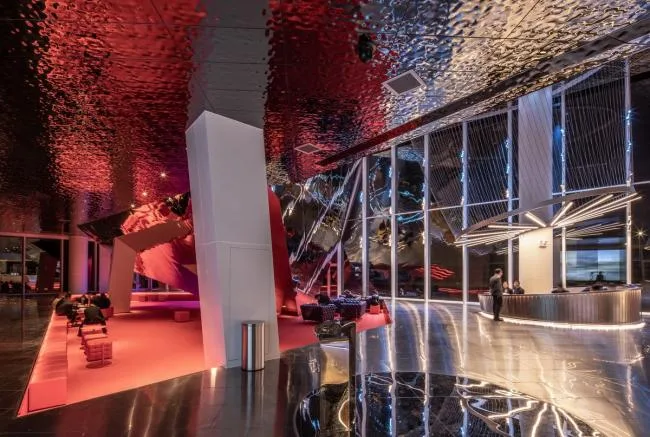
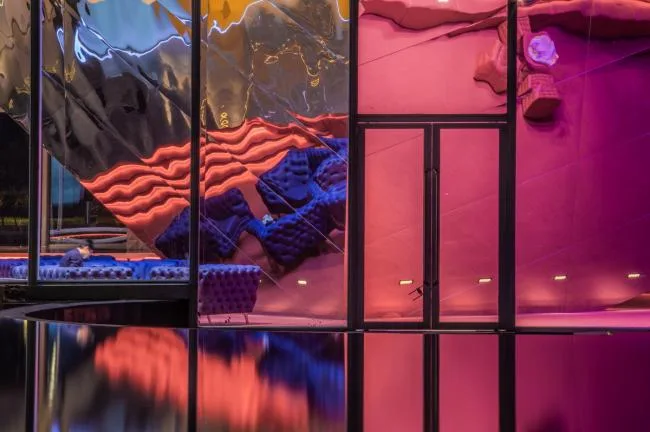
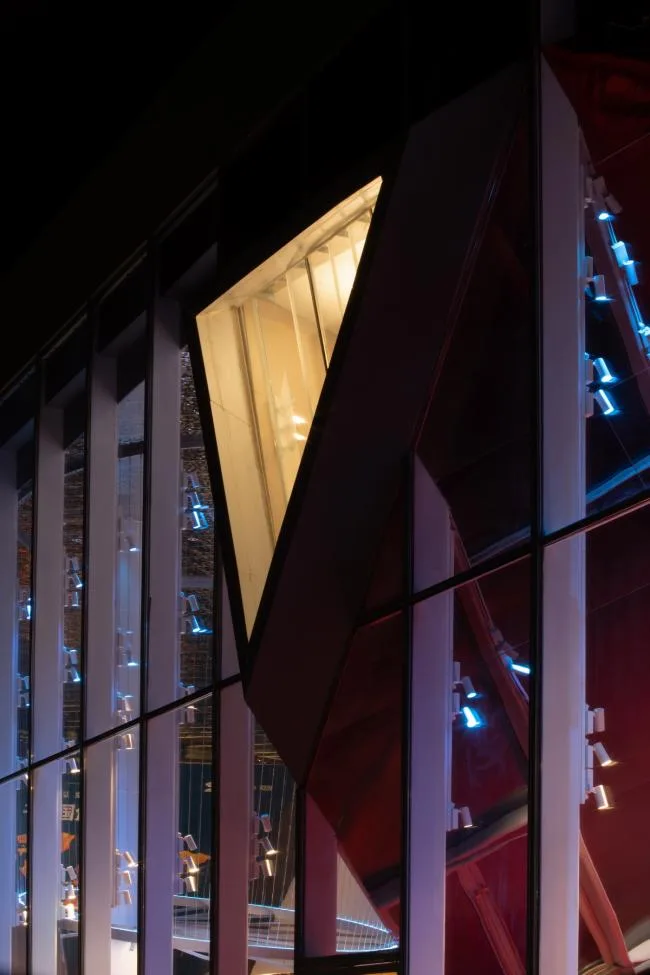
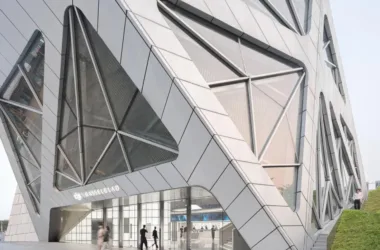
The floating objects create a rich, layered spatial experience that welcomes residents in an open and dynamic way. Some elements interact with the glass facade, leaving marks that contribute to the building’s unique architectural identity. The facade itself is constructed from fully transparent ultra-white glass, allowing clear views between the interior and the external urban environment. This transparency fosters seamless integration with the city, resulting in a vibrant public space that stands apart from conventional sales offices.
The interior space features numerous stainless steel panels with varying reflectivity and textures, while objects are assigned distinct colors. This design results in a lively interplay between people, space, objects, light, images, colors, and materials. Visitors experience constantly shifting light and shadow, evoking a sense of immersion in a virtual world that is novel, unique, and striking.
This project represents a re-examination and deconstruction of the unique real estate phenomenon surrounding sales offices. By leveraging BIM architectural design, it seeks to transcend the traditional single-function sales office, better serving the local community, enhancing public life quality, and inspiring aspirations for a better future. It aims to make a positive contribution to the community as a whole.
Design Drawings:
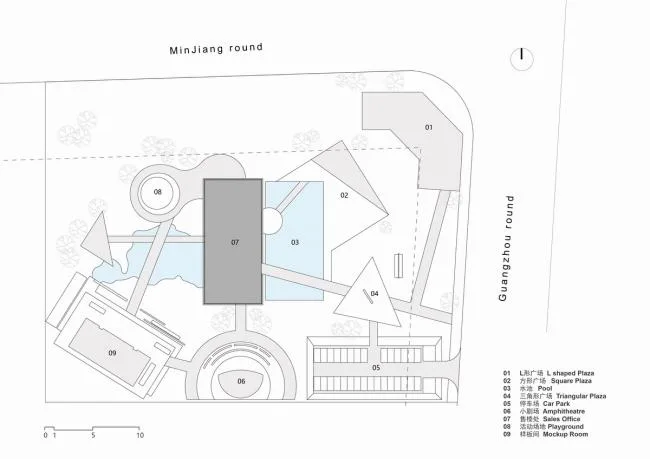
Master Plan
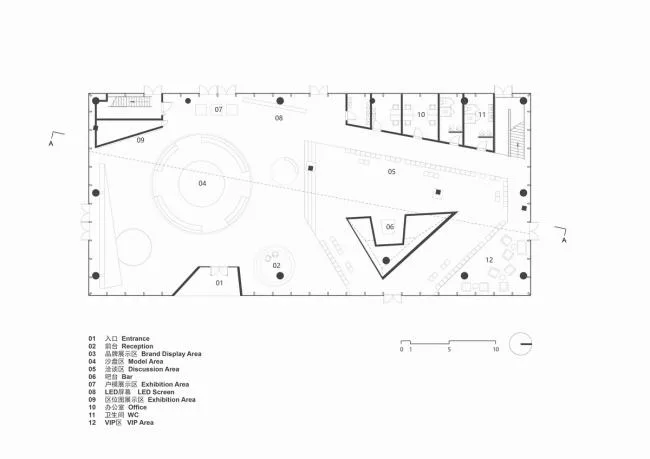
Ground Floor Plan
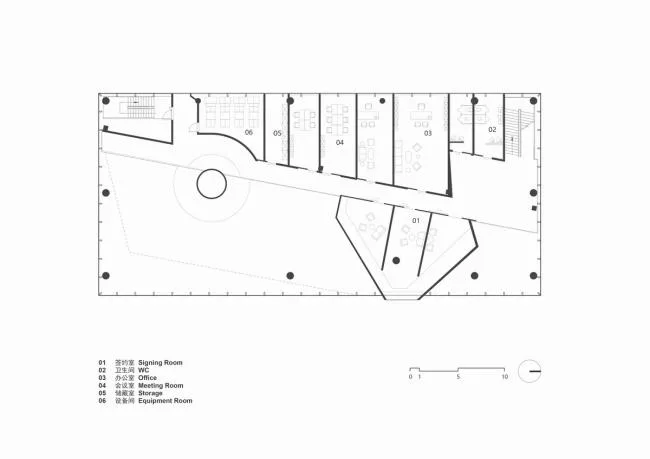
Second Floor Plan
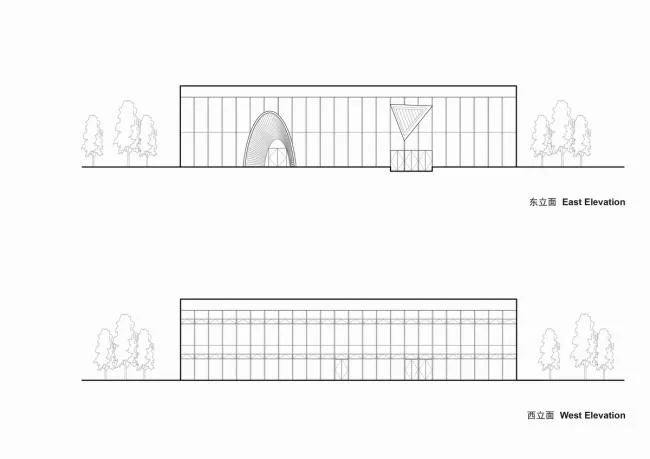
Elevation Drawing
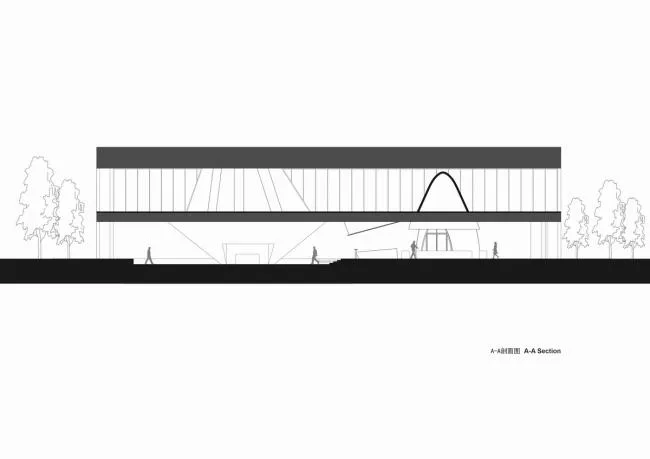
Sectional View
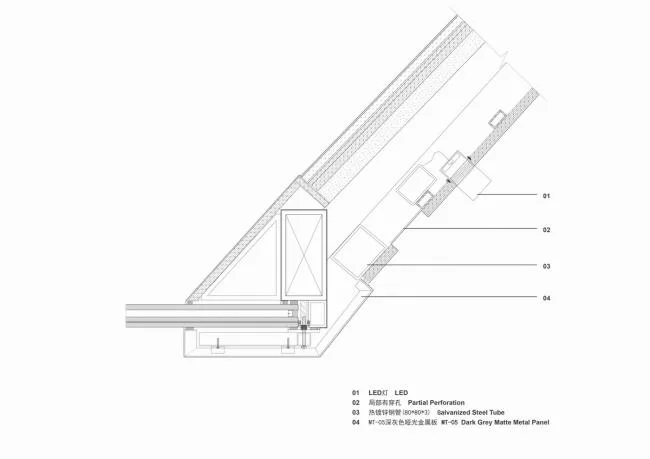
Main Entrance Node
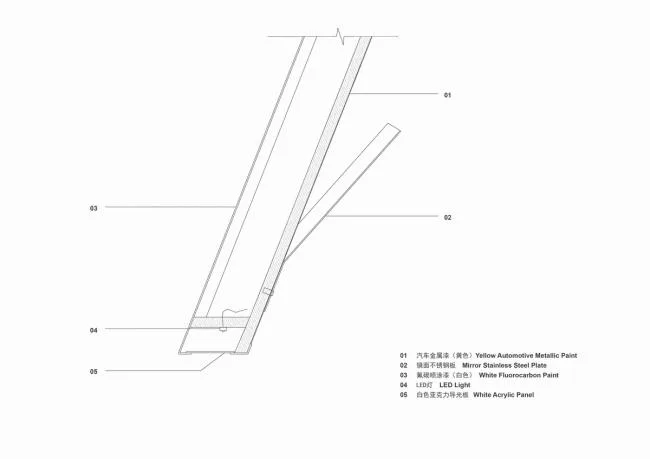
Sand Table Area Node
Project Information:
Project Name: No.1 Guangzhou Road Courtyard
Project Address: Southwest corner of the intersection of Guangzhou Road and Minjiang Road, Heze City, Shandong Province
Designer: AOE | Construction Team
Lead Designer: Wen Qun
Design Team: Huo Mingwang, Li Gen, Du Jing, Liu Chen, Yang Kaiqi, Chang Xiaodan, Niu Zhuojun
Owner: Shaanxi Construction Engineering Group Co., Ltd
Land Area: 1,056 m²
Building Area: 1,560 m²
Design Year: 2018
Completion Year: 2019
Cost: 15 million RMB
Lighting Design: Puri Lighting Design
Structural Coordination: Shandong Dawei International Architectural Design Co., Ltd
Main Materials: Honeycomb panels, stainless steel, sound-absorbing panels
Photographer: Huang Ligang












Must log in before commenting!
Sign Up