
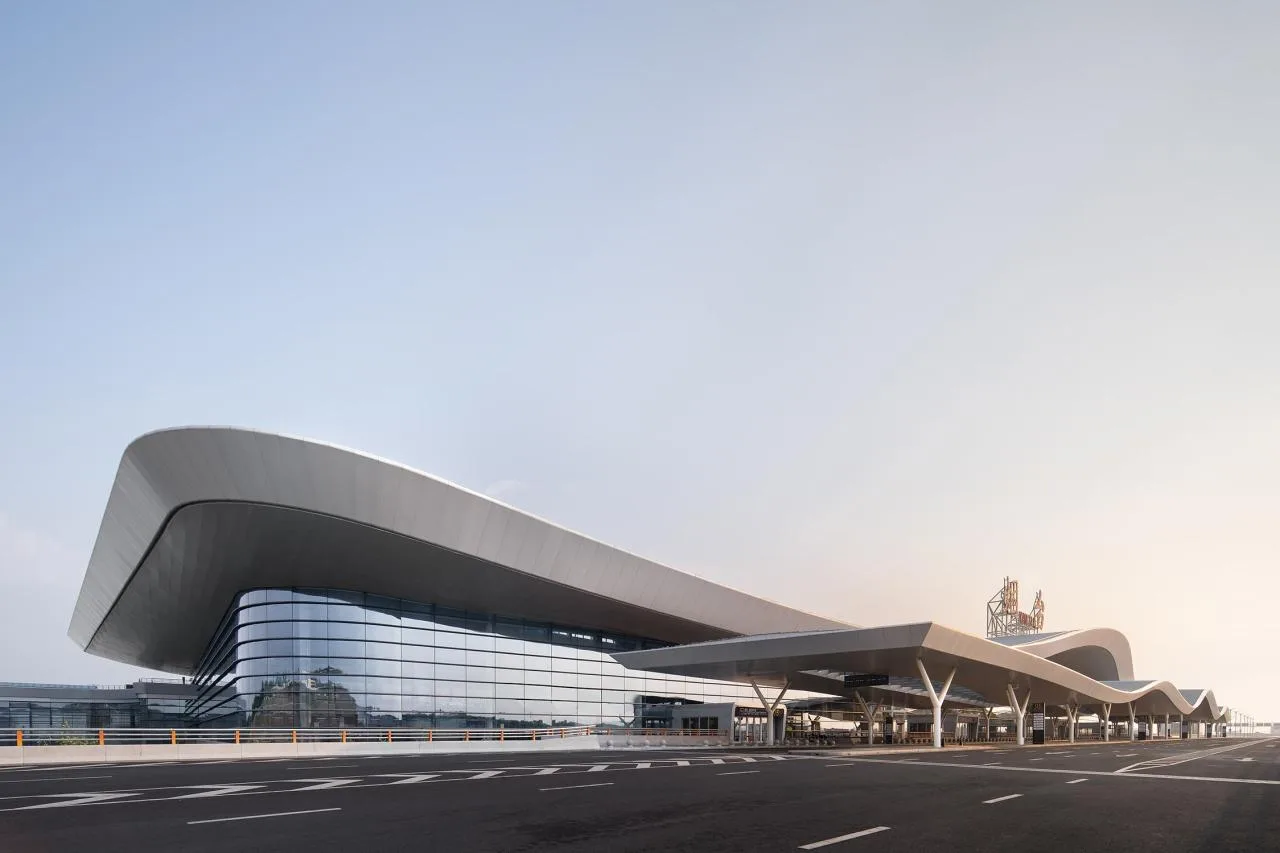
△ Yantai Penglai International Airport Phase II Building Exterior ©️ 404NF STUDIO (Cover Recommendation)
Yantai Airport aims to become a regional hub for Northeast Asia and a key gateway for Japanese and Korean air cargo transportation, fully supporting urban development. The new Terminal 2 (T2) will open at midnight on June 28, 2024. Once operational, the airport will accommodate an annual passenger capacity of 23 million and handle 200,000 tons of cargo and mail.
The China Southwest Architectural Design and Research Institute Co., Ltd., as the consortium leader, collaborated with Aedas and Shanghai Civil Aviation New Era Airport Design and Research Institute to form an international team. Together, they designed the T2 terminal, providing robust technical support for developing an international, comprehensive, three-dimensional transportation hub that serves as a city gateway for Yantai.
Master Plan
The project embraces a planning philosophy centered on being comprehensive, ecological, efficient, flexible, and intelligent. It adopts a dual-harbor layout with the main building parallel to the runway, allowing phased construction and flexible usage. The design fully utilizes the terrain, featuring a staggered airside and landside layout to enable seamless one-stop transfer across multiple transportation modes.
Efficient Operations: The terminal features a shallow harbor layout parallel to the runway, balancing efficient aircraft operations on the airside with smooth passenger flows on the landside. A four-slide layout minimizes interference between parking positions. The harbor reserves space for temporary waiting or remote parking, improving layout flexibility and operational efficiency.
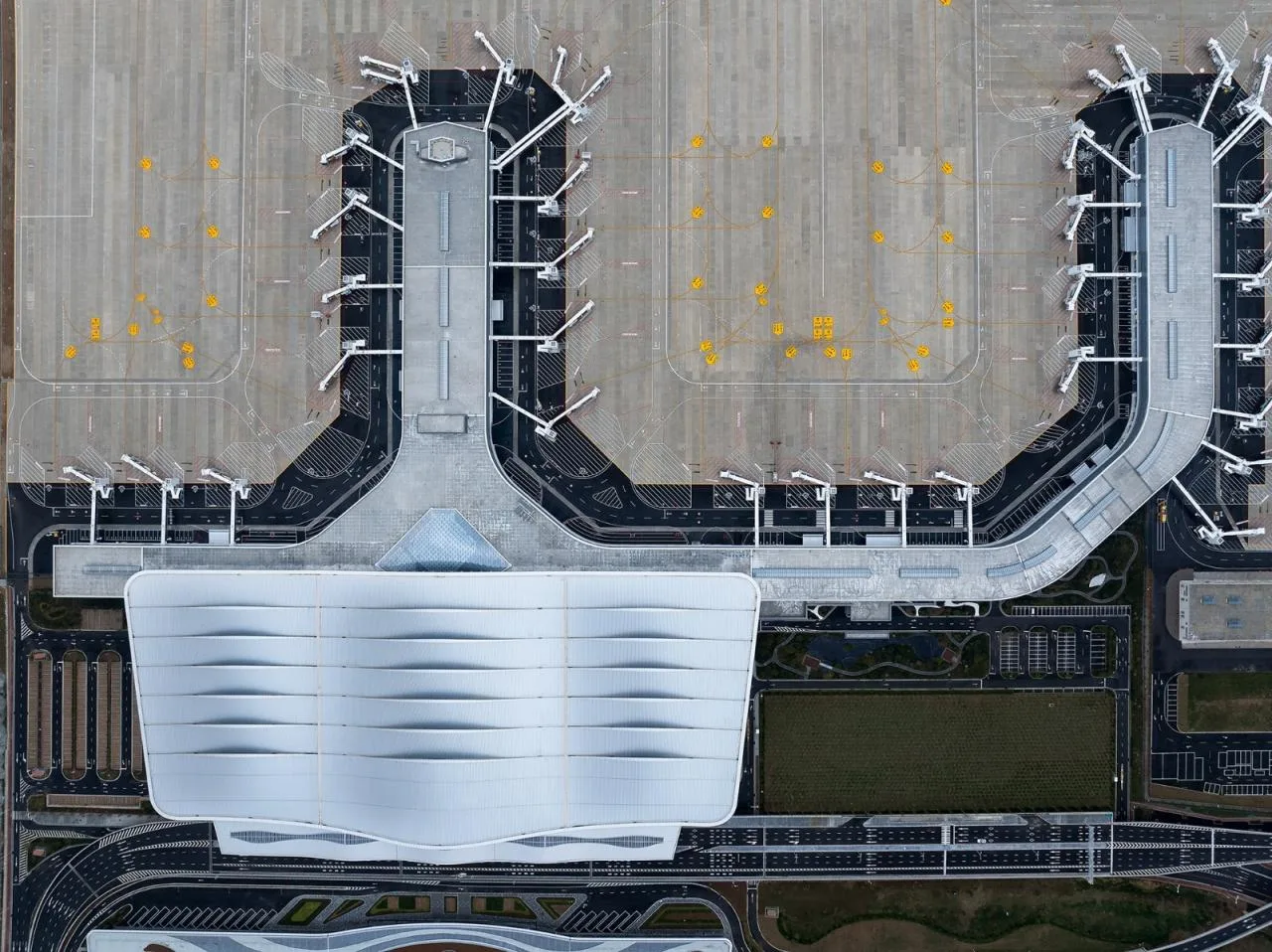
Top view of Terminal 2 ©️ 404NF STUDIO
Orderly Development: Expansion plans will commence once passenger throughput reaches 12 million. This includes the construction of the T2 South Concourse, South Station Yard, a second runway, and a parking building, along with new overnight accommodation and an information center. The southern corridor’s configuration can be flexibly adjusted to meet aviation business growth and balance international and domestic traffic, ensuring long-term, adaptable development.
Air-Rail Intermodal Transport: The second phase introduces urban rail transfer, reserving station buildings and transfer halls adjacent to the terminal. This connection creates a seamless air-rail intermodal system, enhancing airport capacity and expanding its service radius, enabling zero-transfer between air and rail travel.
Flexible Parking Positions: To address a shortage of E-class aircraft stands, combined parking positions have been introduced to maximize utilization. As a gateway to Japan and South Korea, all nine international stands support internal transport and can be converted flexibly into domestic stands. This facilitates staggered international and domestic use, offering convenient express and transfer services. The innovative plan grants operators and airlines considerable flexibility.
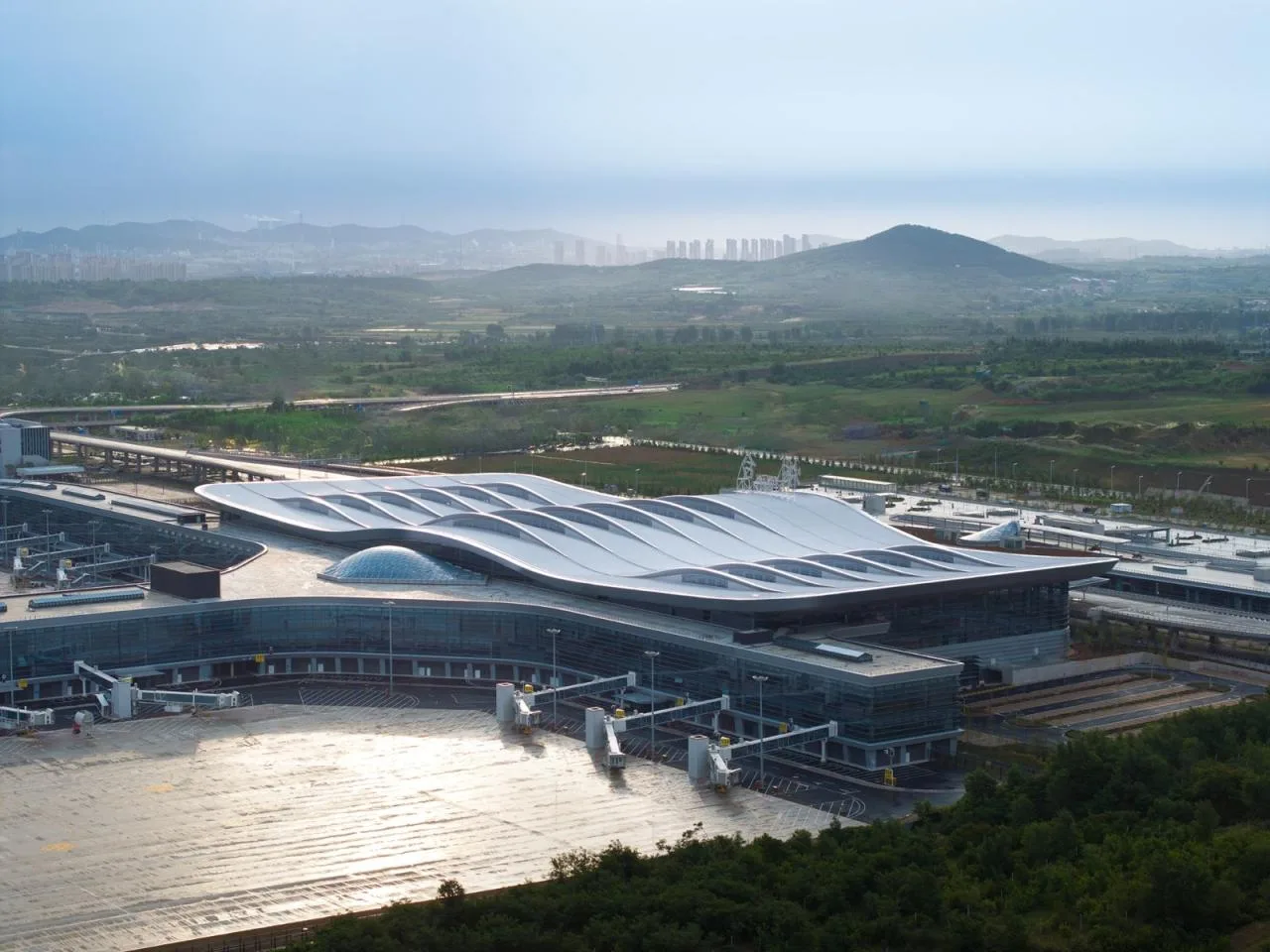
Bird’s-eye view of Terminal 2 and its surrounding mountains ©️ 404NF STUDIO
Terrain Adaptation: Early planning involved in-depth research on terminal configuration to fully utilize and adapt to the terrain. The design features a staggered layout and raises the roadside elevation to match the reception hall mezzanine, minimizing site excavation.
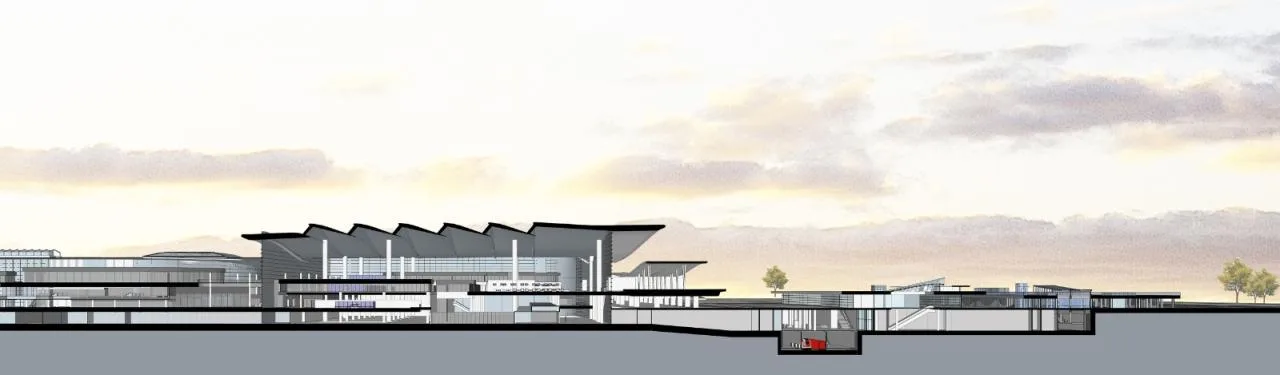
△ Airport sectional view © China Southwest Architectural Design and Research Institute Co., Ltd
Design Inspiration
The overall design of Terminal 2 draws inspiration from the phrase “the holy scenery of the misty sea, the immortal mountain on the clouds,” reflecting the majestic Kunyu Mountain near Yantai. The T1 terminal’s “surging white sand” motif complements this mountain and sea culture. The terminal’s silver metallic roof undulates like a mystical mountain shrouded in clouds, light and elegant. The airside harbor follows a winding coastline shape. The finger gallery roof uses a concrete form to save costs and reduce rain leakage risks, while maintaining optimal indoor ceiling heights to lower energy consumption.
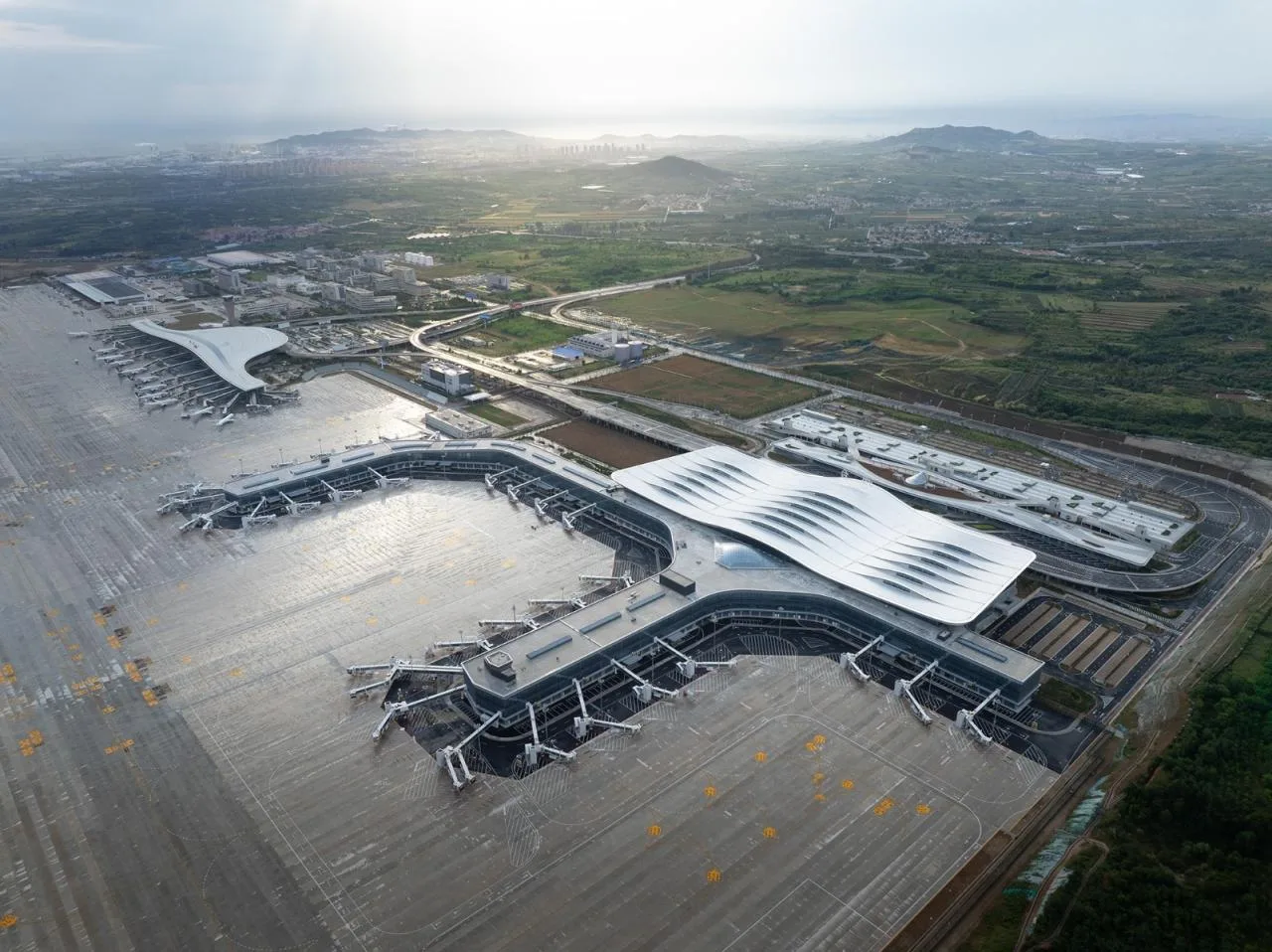
The “surging white sand” design of Terminal 2 complements Terminal 1 ©️ 404NF STUDIO
Interior Decoration: The terminal’s design reflects Yantai’s local culture. The check-in hall draws inspiration from changing mountains and rivers, integrating soft, picturesque ink-wash landscapes into its architecture. Skylights align with the main roof’s shape, creating layered waves that bathe the interior in natural light and guide passengers naturally. The large ceiling structure uses hyperbolic perforated honeycomb aluminum panels, combining rigidity, strength, and dynamic curvature. This blend of technology and aesthetics results in a light, transparent indoor space.
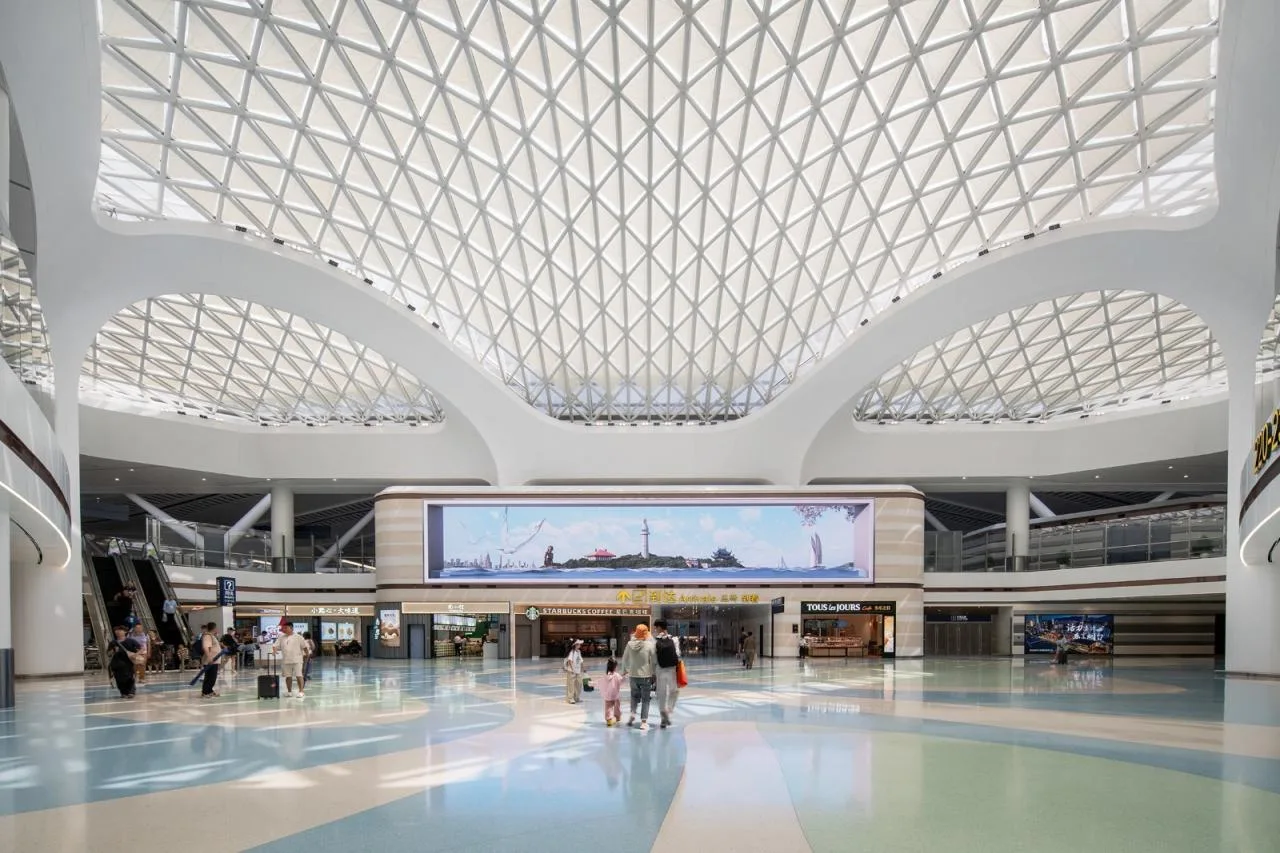
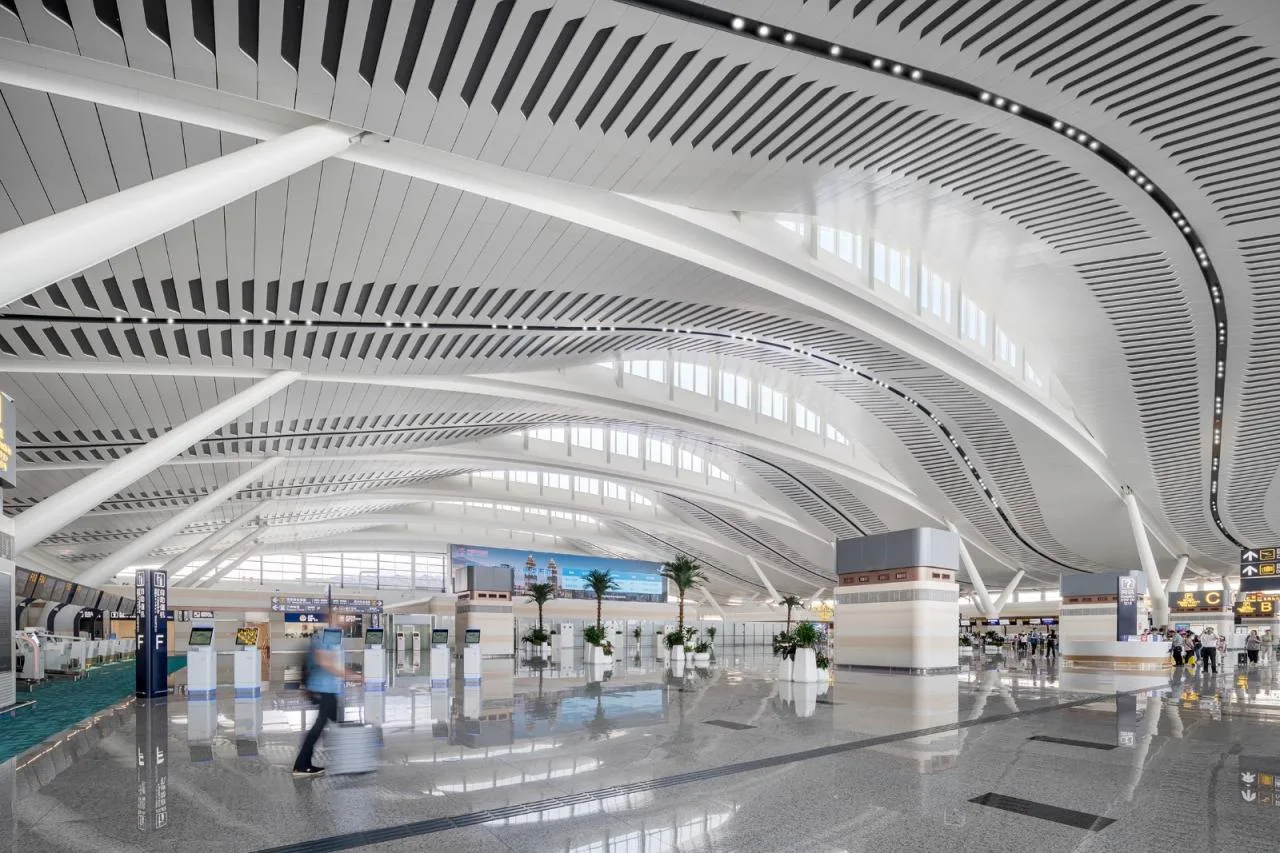
Skylight design in the check-in hall ©️ 404NF STUDIO
Located at the central node of the airside harbor, this iconic space symbolizes the ocean culture of working from sunrise to sunset and returning home. Both domestic and international passenger flows revolve around this area. The sustainable design includes a triangular electric sunshade on the glass dome, fulfilling sunshade needs while symbolizing “blooming in the port city, fairyland Yantai.” At night, point-like lighting in the atrium ceiling flickers like stars under the Milky Way, immersing passengers in a magical Penglai fairyland and creating a memorable travel experience.
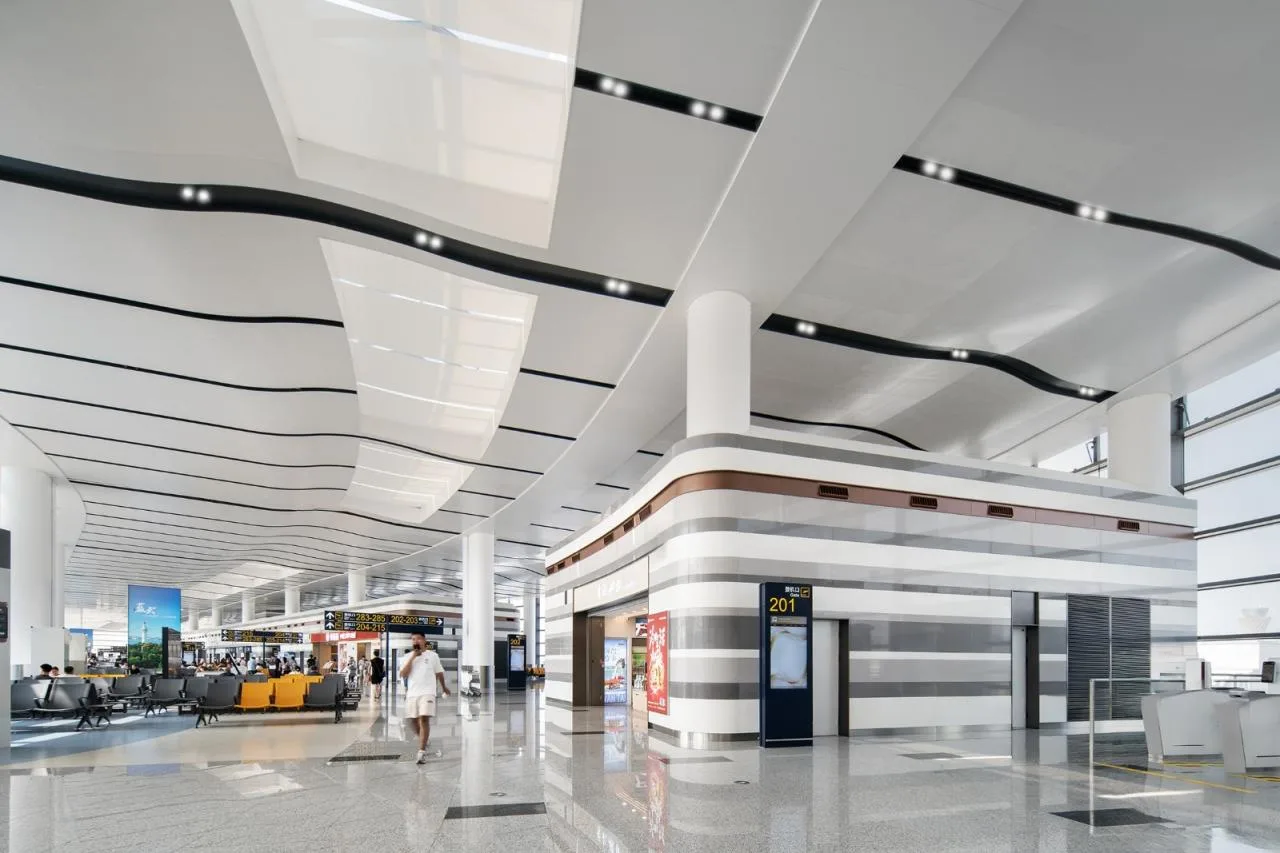
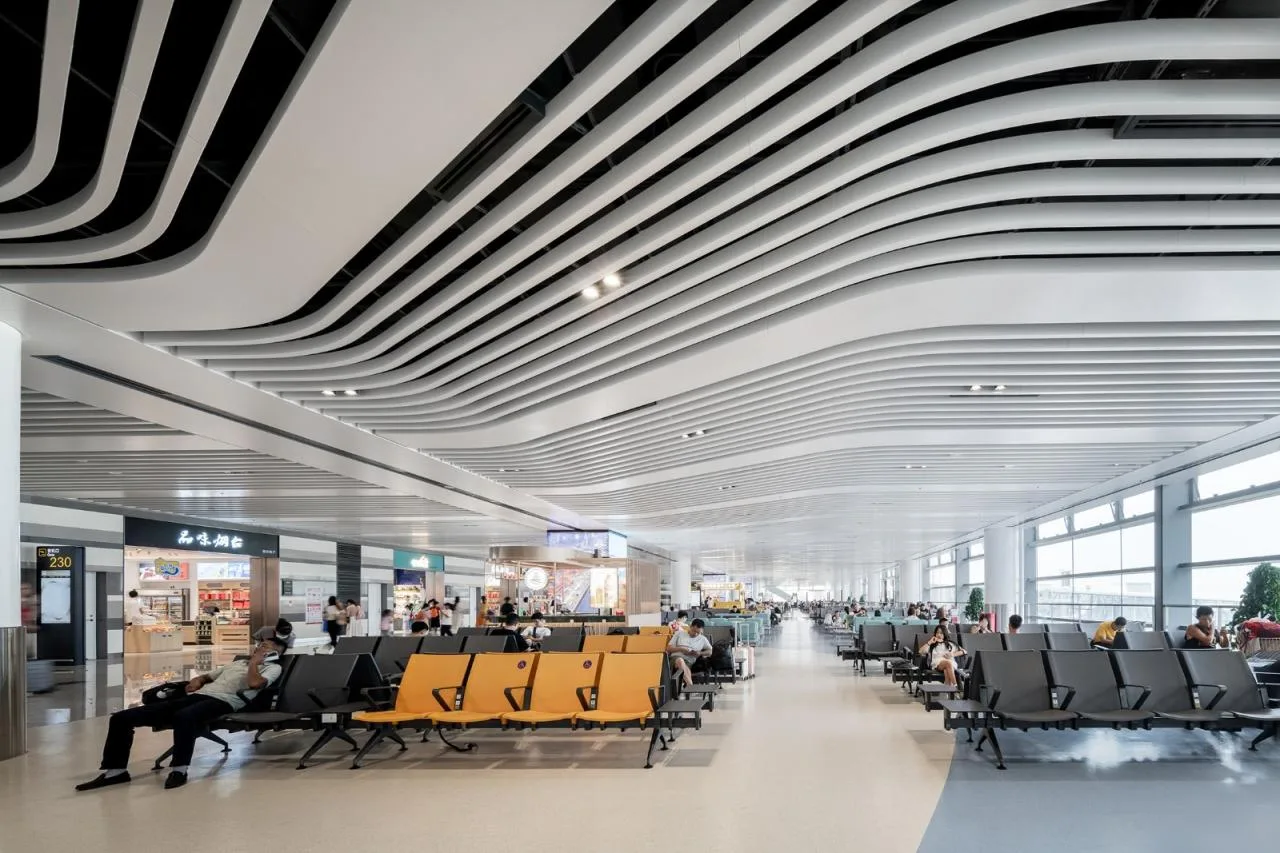
△ Interior space of airside harbor ©️ 404NF STUDIO
The finger gallery is inspired by the diverse island landscapes. Its suspended ceiling features a wave-like structure, while the commercial facades evoke the unique rock layers of the islands. Waiting areas include distinctive landscaped leisure zones where passengers can relax, business travelers can work, and children can play.
The mast design in the baggage claim hall symbolizes the historic Maritime Silk Road. By opening the upper space with skylights and landscaping, the baggage retrieval area transforms from a confined space into a harmonious environment where architecture and nature coexist. Integrated advertising and greenery showcase Yantai’s unique character and hospitality to travelers.
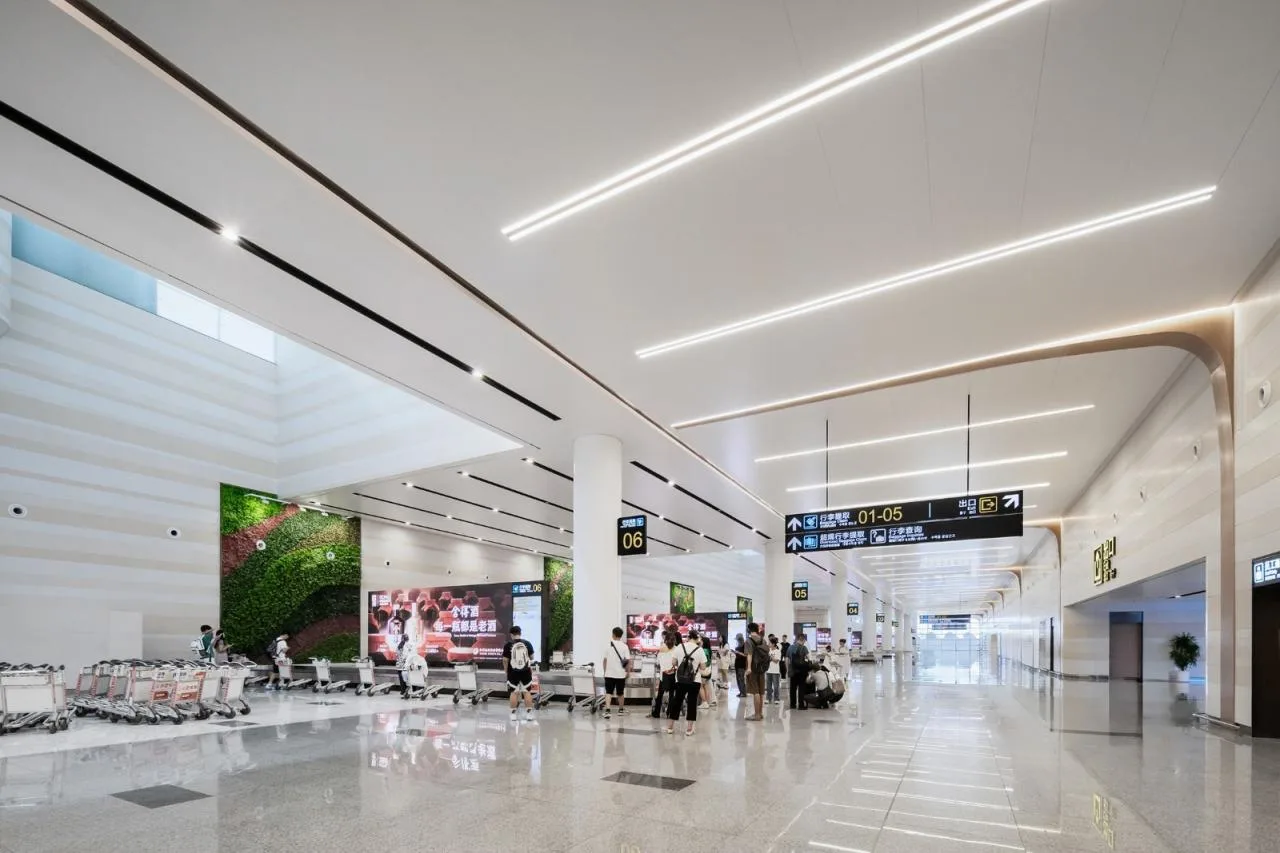
△ Baggage claim hall ©️ 404NF STUDIO
Design Highlights
Gateway Hub: As a regional hub and key gateway to Northeast Asia, Yantai Penglai International Airport includes transfer stands within the terminal to streamline international operations and enhance the airport’s appeal. The transfer facilities are compact and efficient, ensuring passengers enjoy smooth and convenient connections. This supports Yantai’s role as a regional aviation center offering superior passenger services.
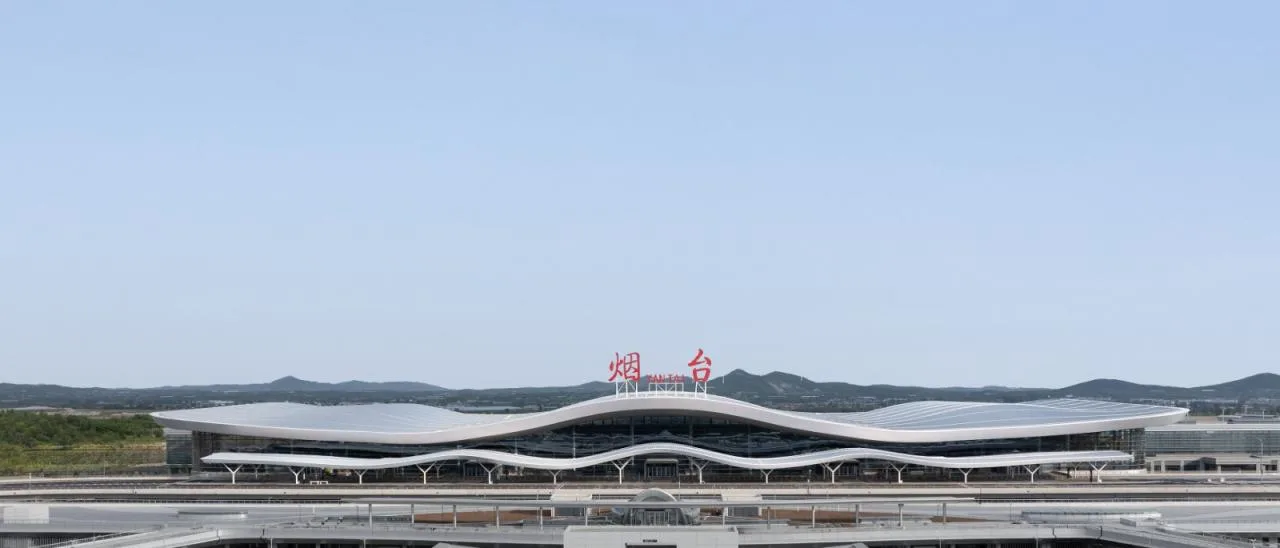
△ Facade view ©️ 404NF STUDIO
Green Airport: The design prioritizes ecological sustainability and low carbon energy use. The terminal features a hollow truss structure with downward-tilted skylights that gently diffuse natural light and improve ventilation, creating a comfortable environment. Skylights along the corridor roof optimize the indoor microclimate. Controlling interior ceiling height reduces energy consumption, embodying green ecological principles.
The baggage claim area benefits from abundant natural light and scenic views, offering passengers a bright and pleasant waiting space. The open design enhances transparency and fosters a natural, eco-friendly atmosphere.
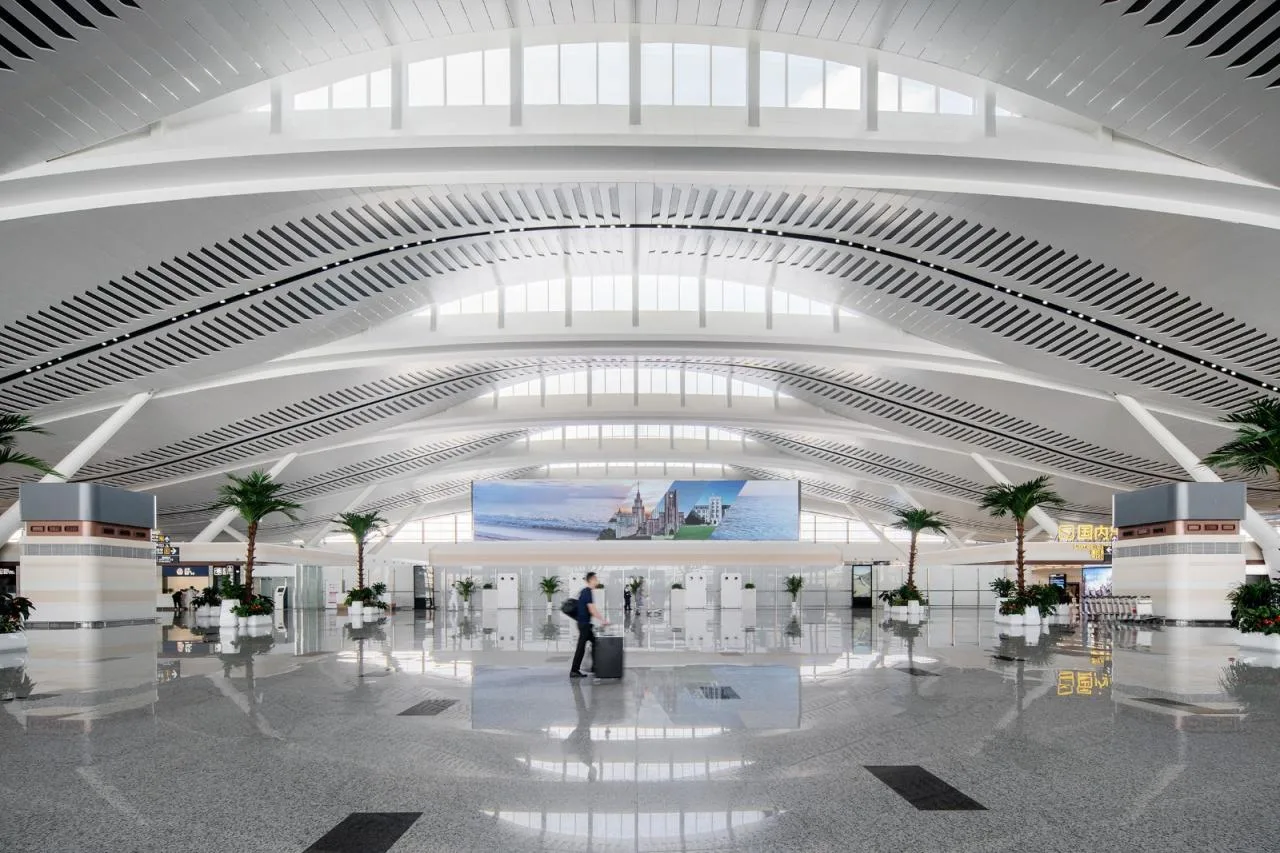
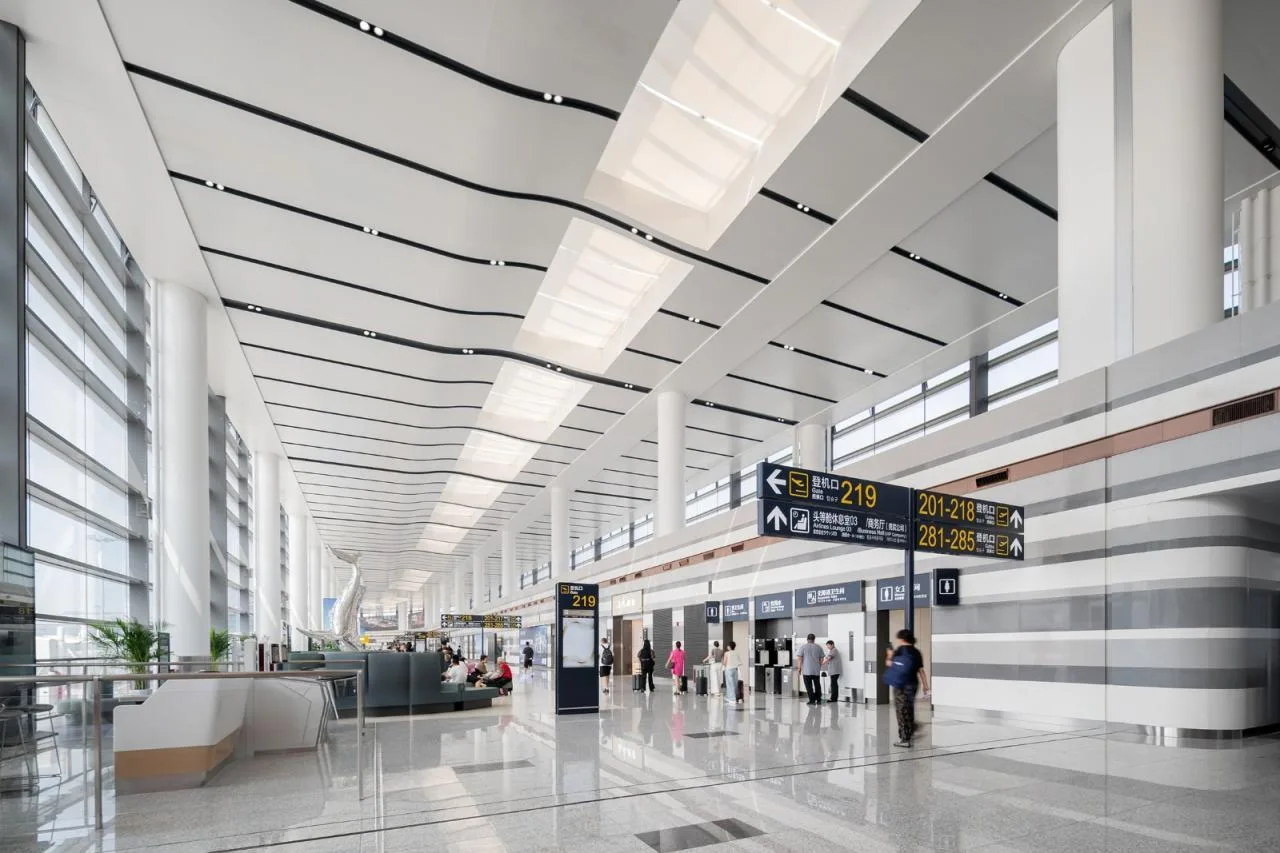
△ Transparent, eco-friendly airport environment ©️ 404NF STUDIO
Smart Airport: Terminal 2 is equipped with advanced intelligent facilities to offer passengers convenient and efficient services. Self-service check-in kiosks speed up procedures, reducing queues and wait times. An intelligent security screening system streamlines checks using high-tech methods. International arrivals use automated inspection with intelligent image recognition for luggage, further optimizing customs clearance.
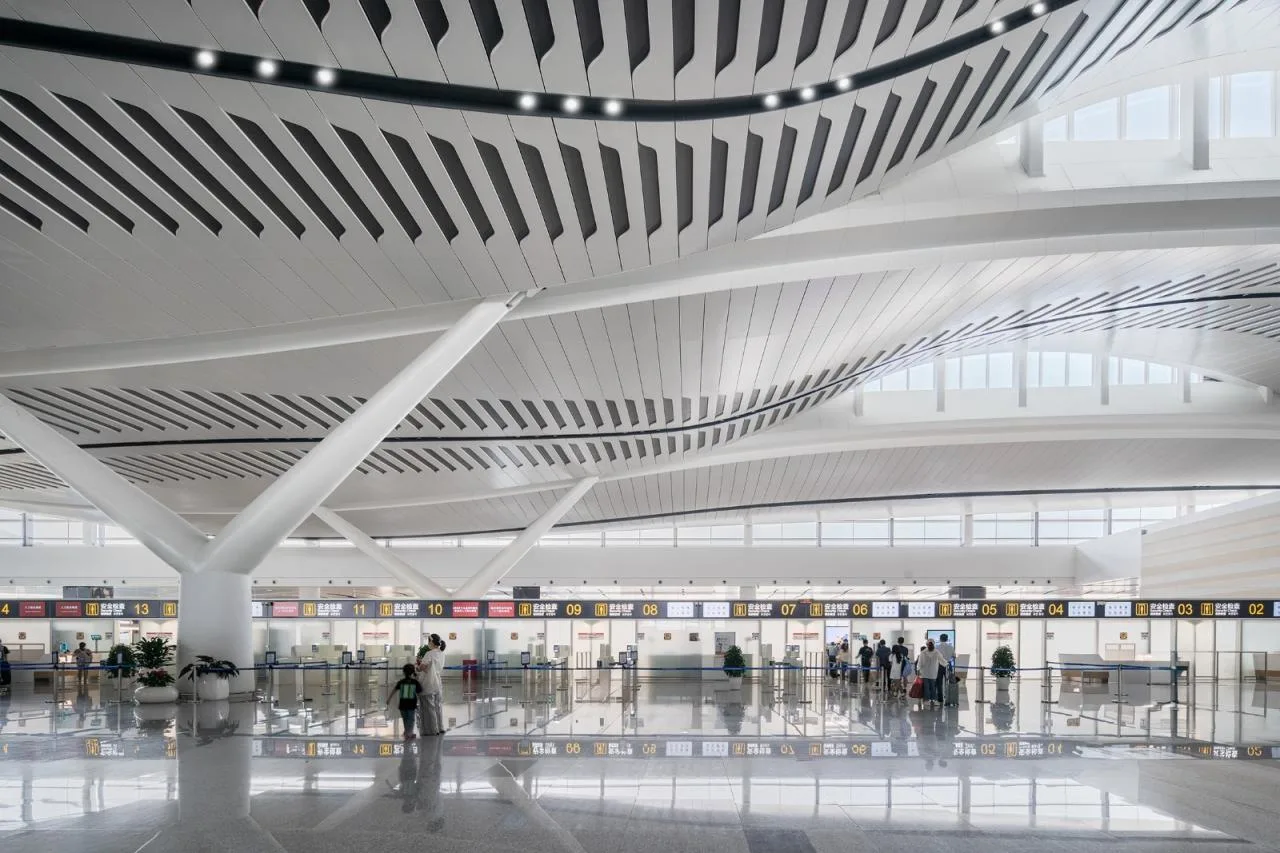
△ Streamlined roof design ©️ 404NF STUDIO
Human-Centered Design: The terminal prioritizes passenger comfort by minimizing vertical elevation changes during arrivals and departures, reducing excessive floor transitions and travel fatigue. Passenger flow and indoor cultural exhibitions highlight Yantai’s rich heritage. Exclusive VIP lounges and two cabin lounges offer premium services for VIPs, business class passengers, and cardholders. Considering Yantai’s cold, snowy climate, indoor waiting areas for taxis and buses improve traveler comfort.
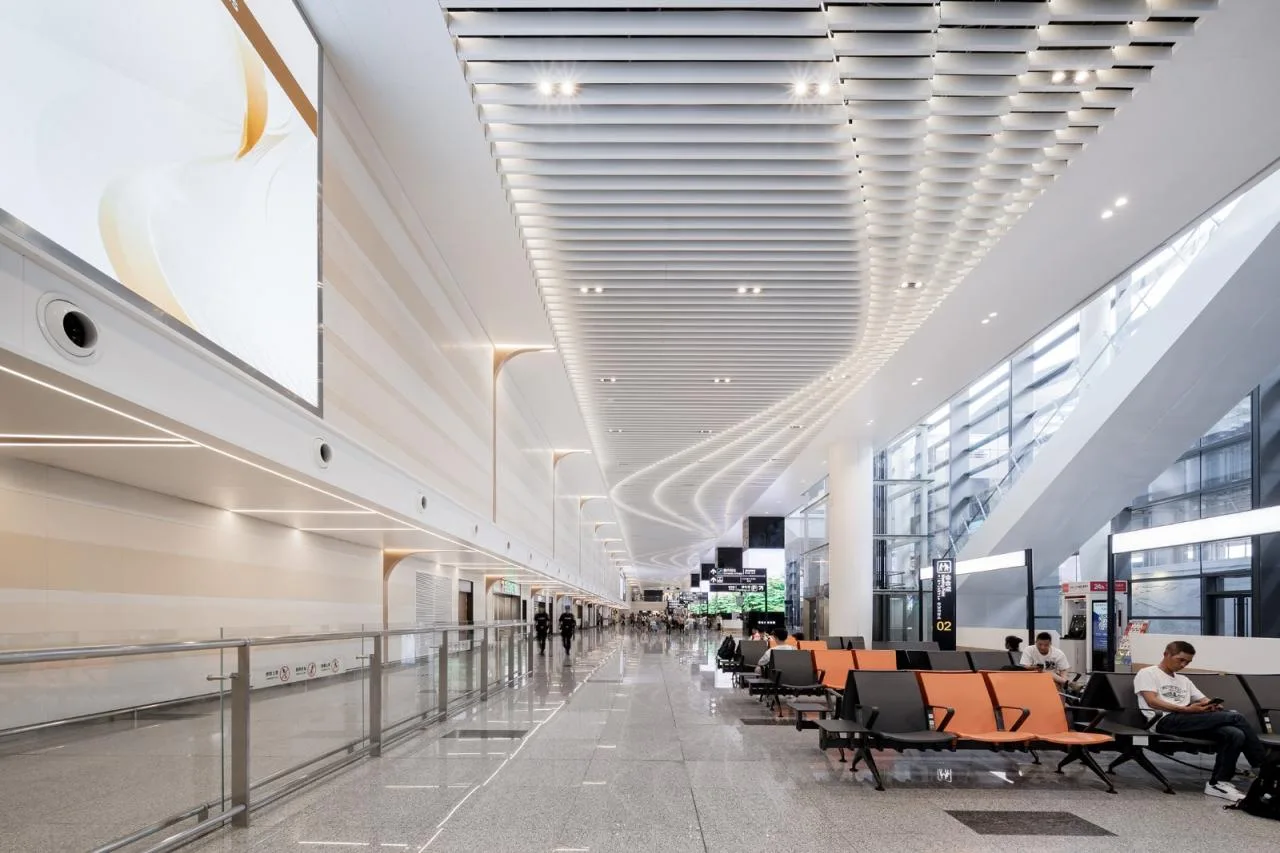
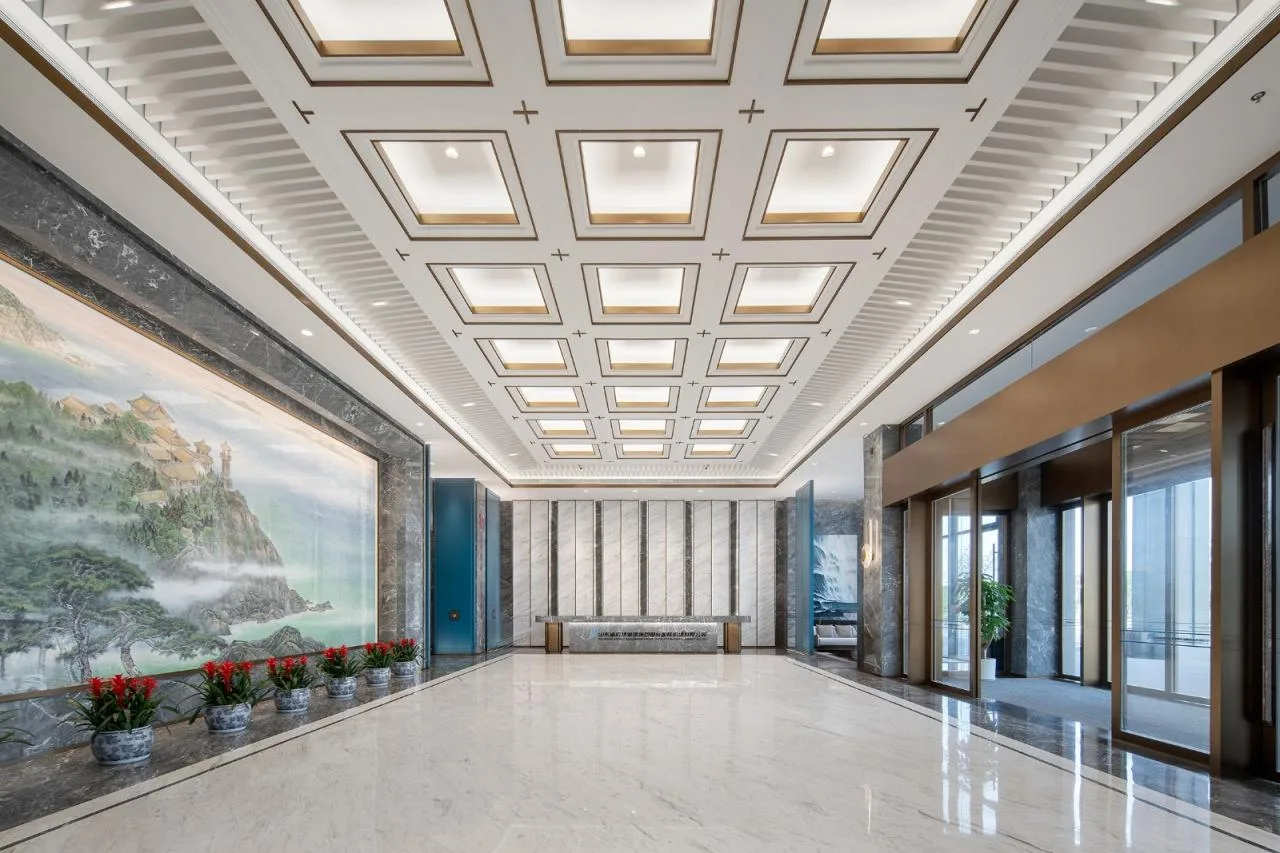
△ Airport lounge spaces ©️ 404NF STUDIO
Featured Commercial Spaces: The terminal strategically arranges commercial areas to maximize revenue outside of aviation. Two city exhibition halls, “Micro Drunk Yantai” and “Fresh Yantai,” showcase local culture and products. A mixed-use commercial zone along the passenger flow includes dining, retail, leisure, and entertainment options, creating a richer and more diverse travel experience.
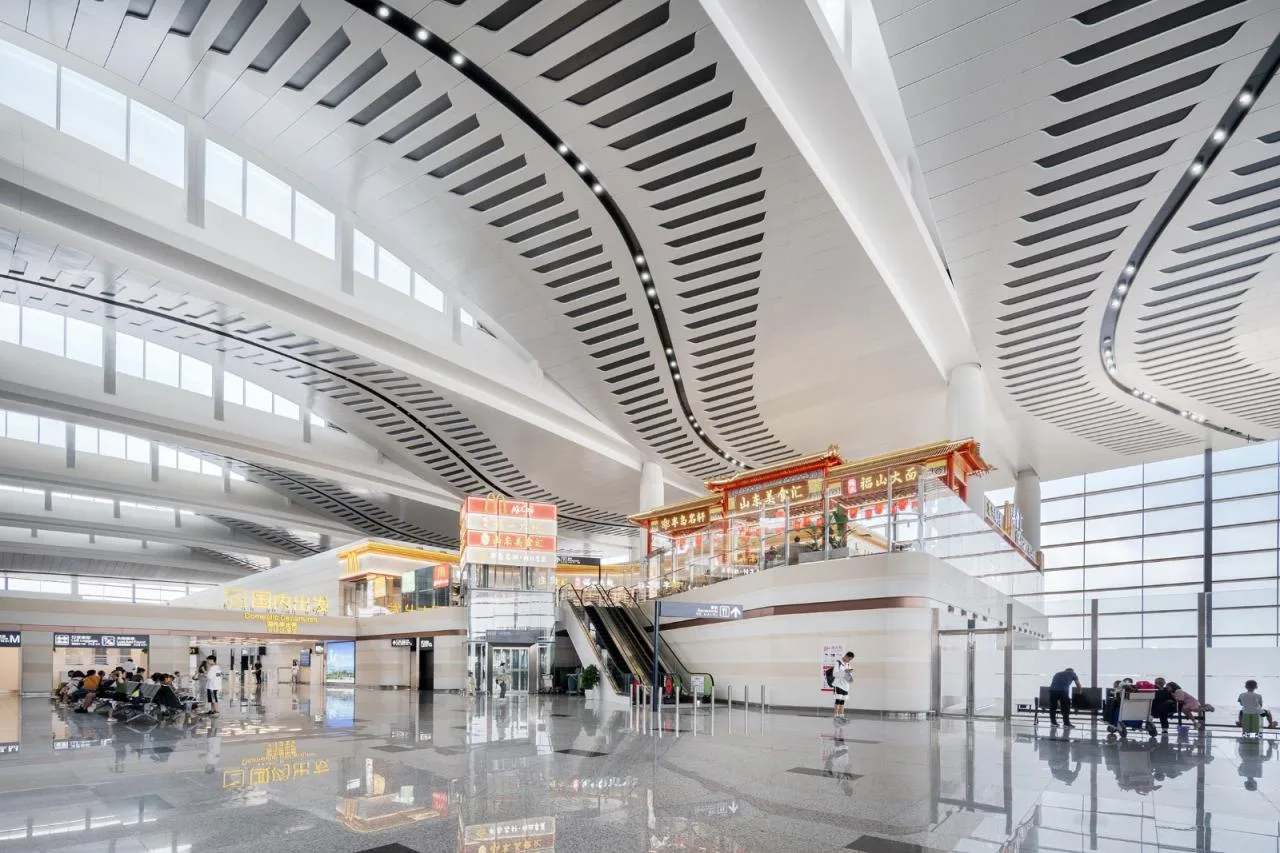
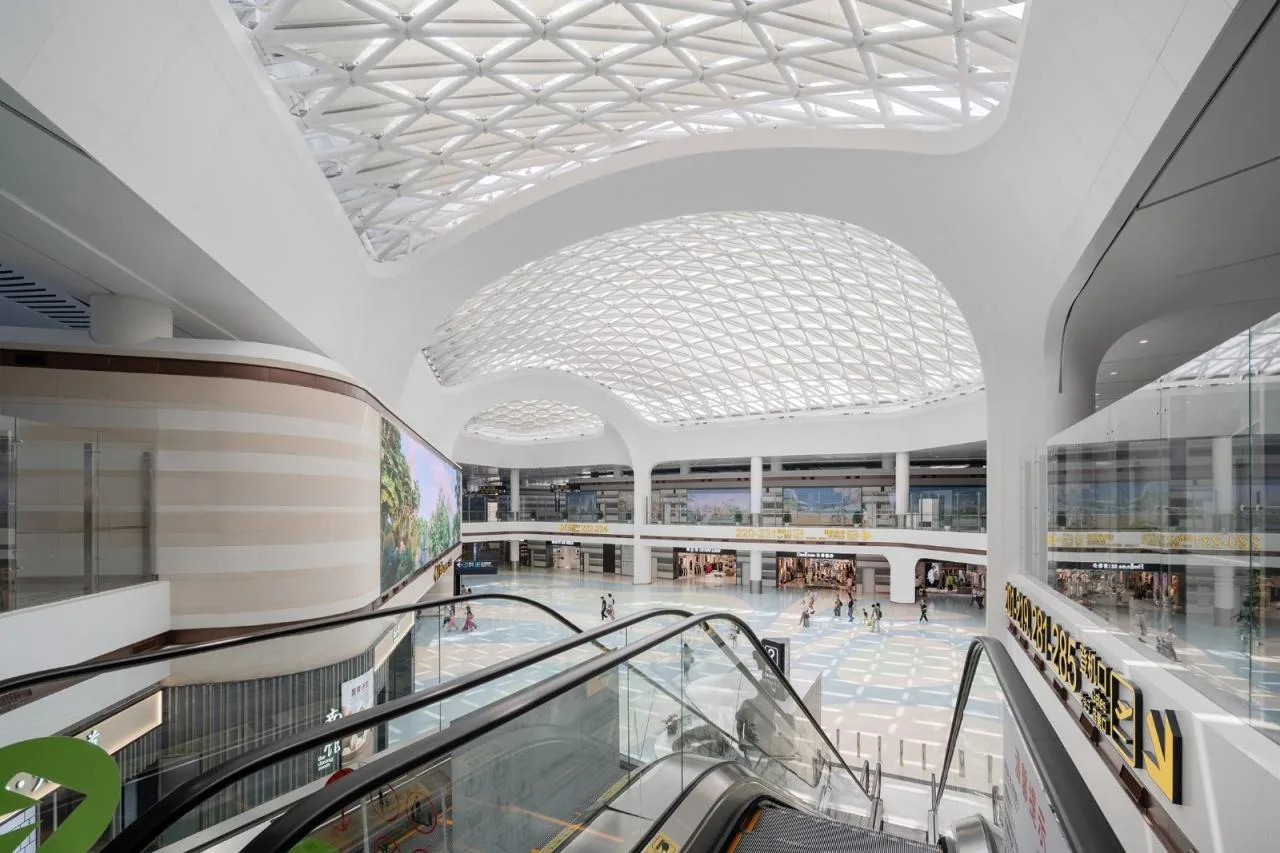
△ Overall internal terminal space ©️ 404NF STUDIO
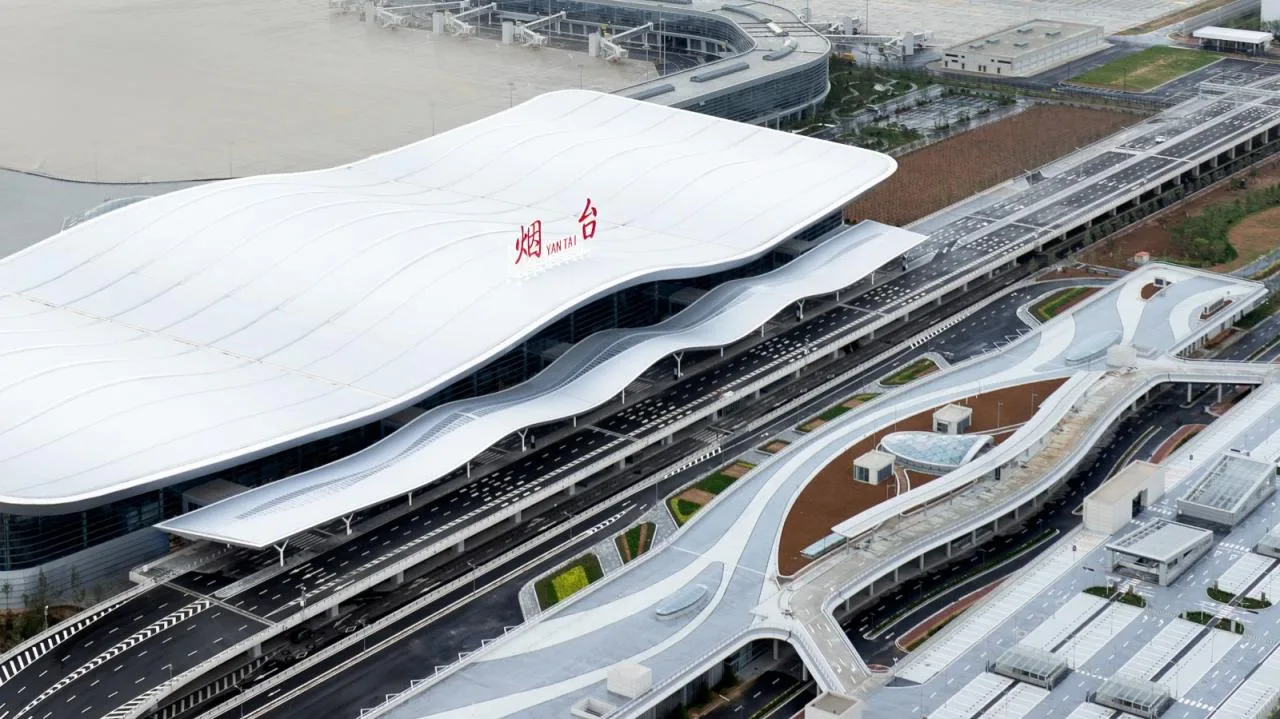
△ Aerial view of Terminal 2 ©️ 404NF STUDIO
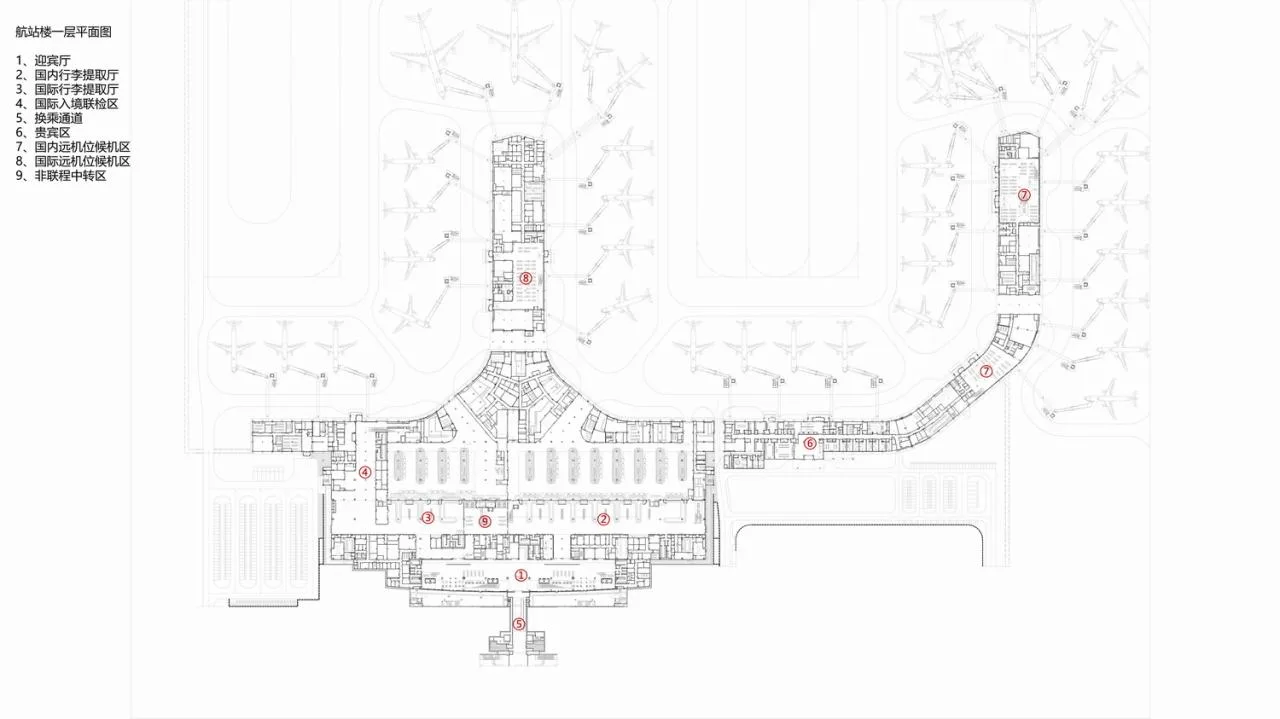
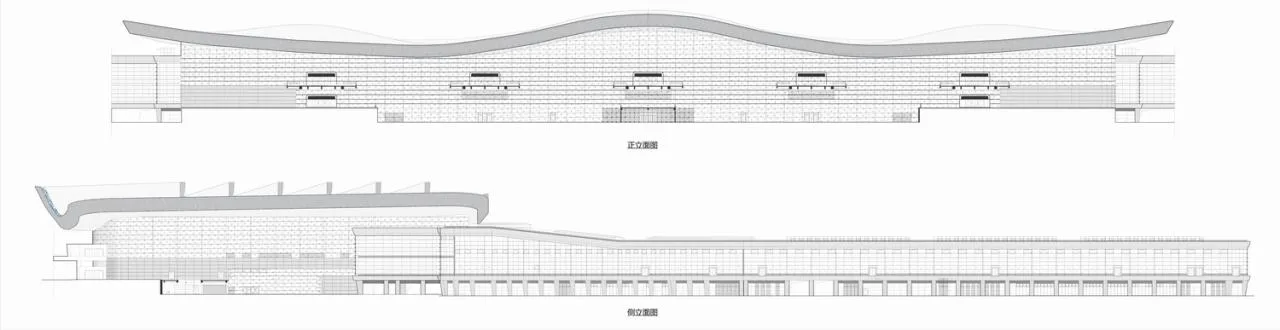
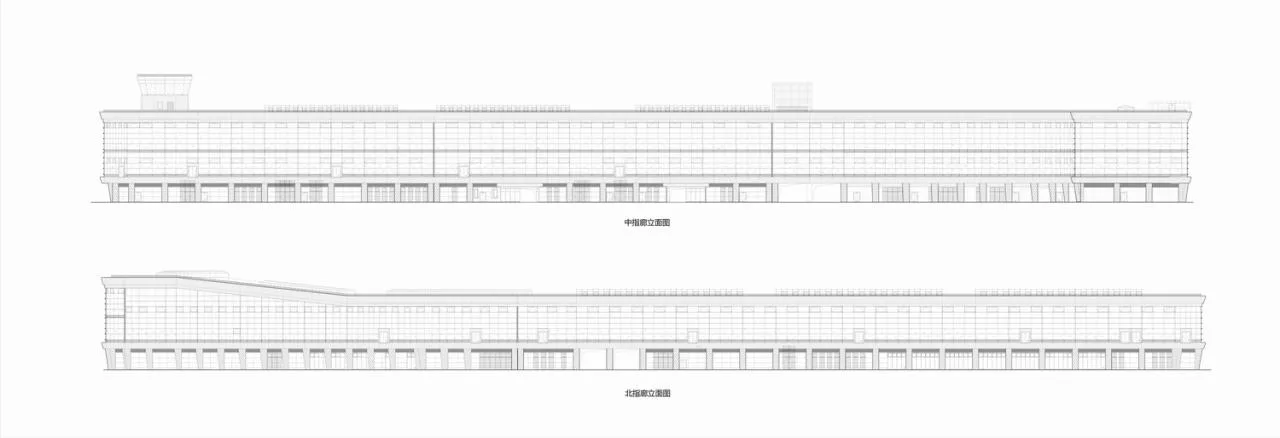
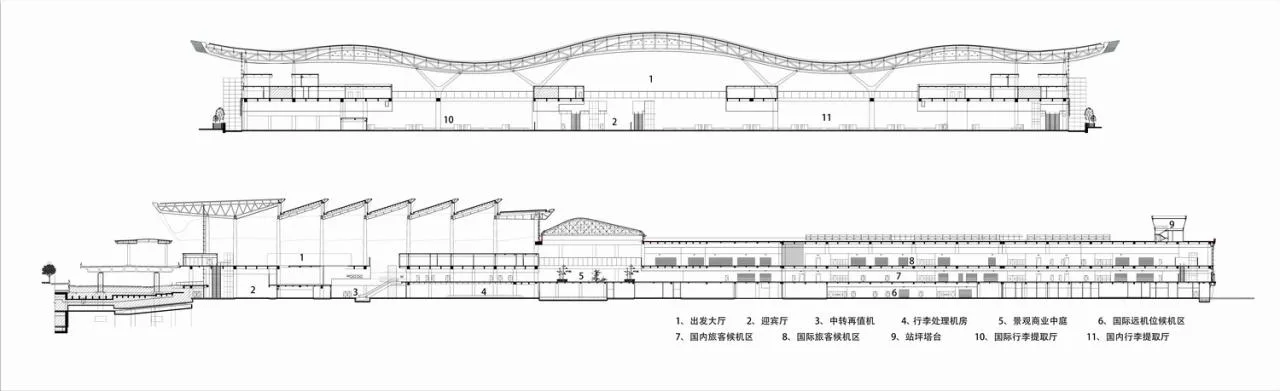
Project Drawings
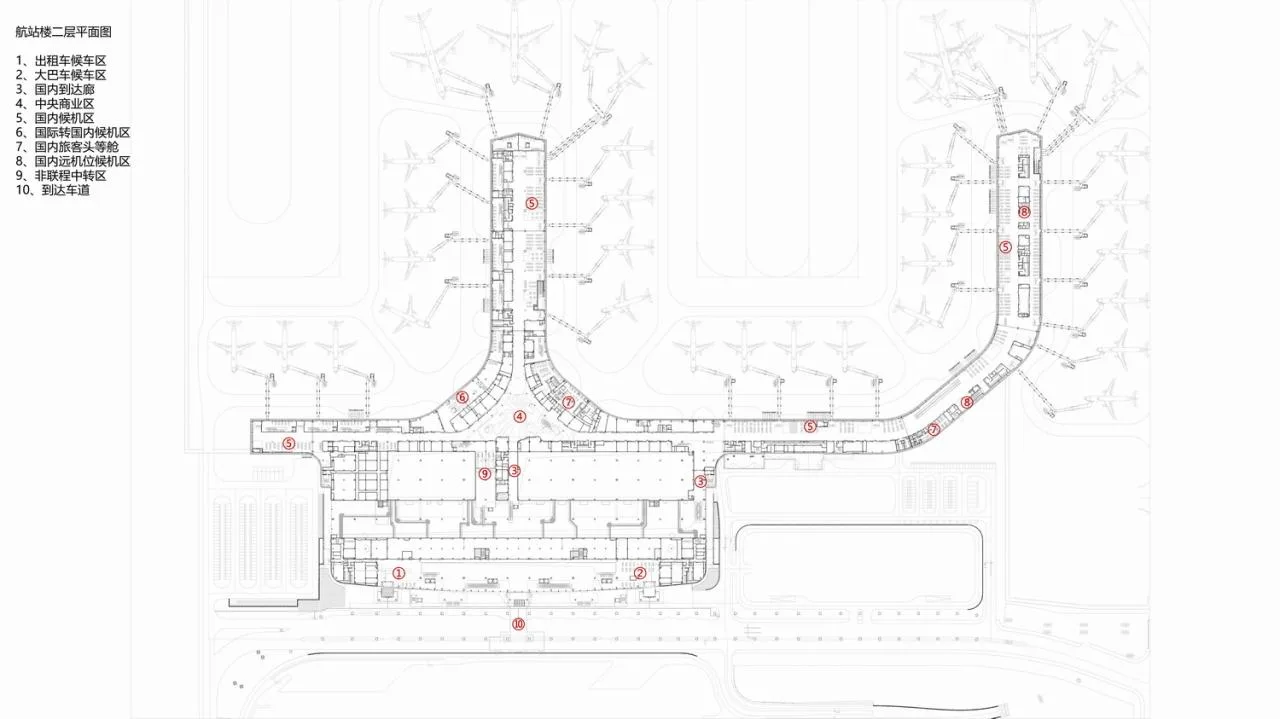
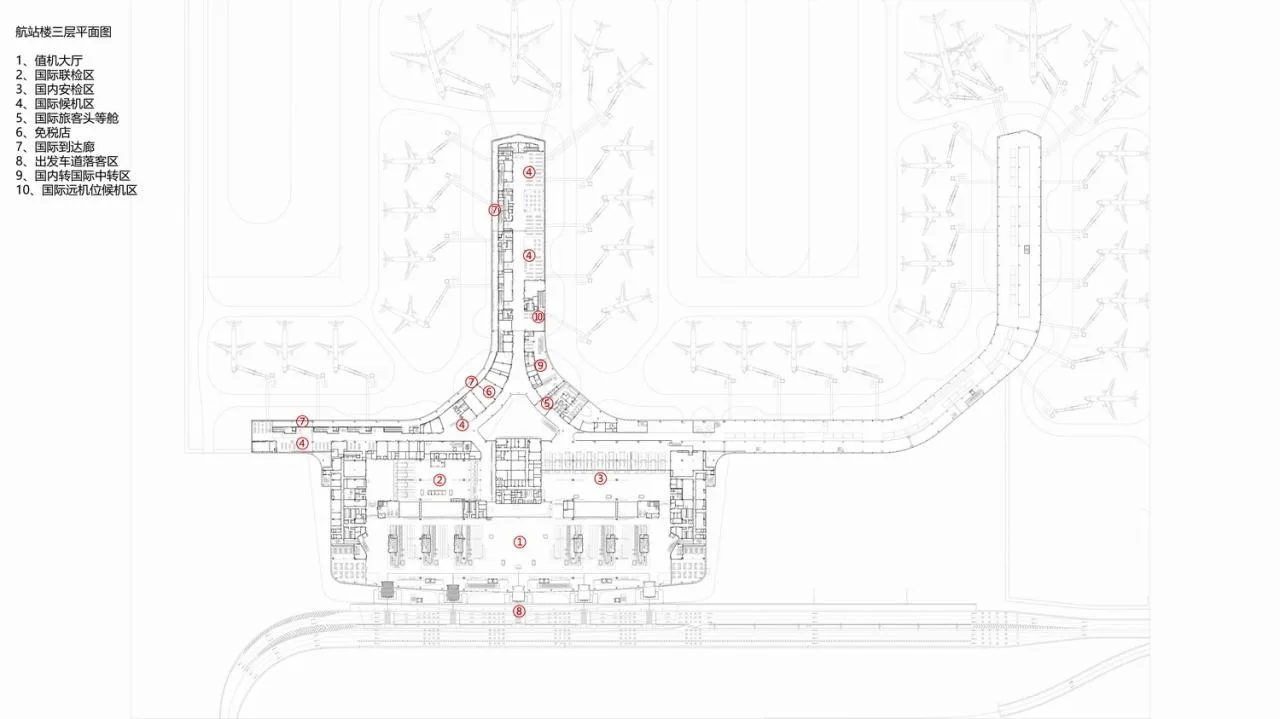
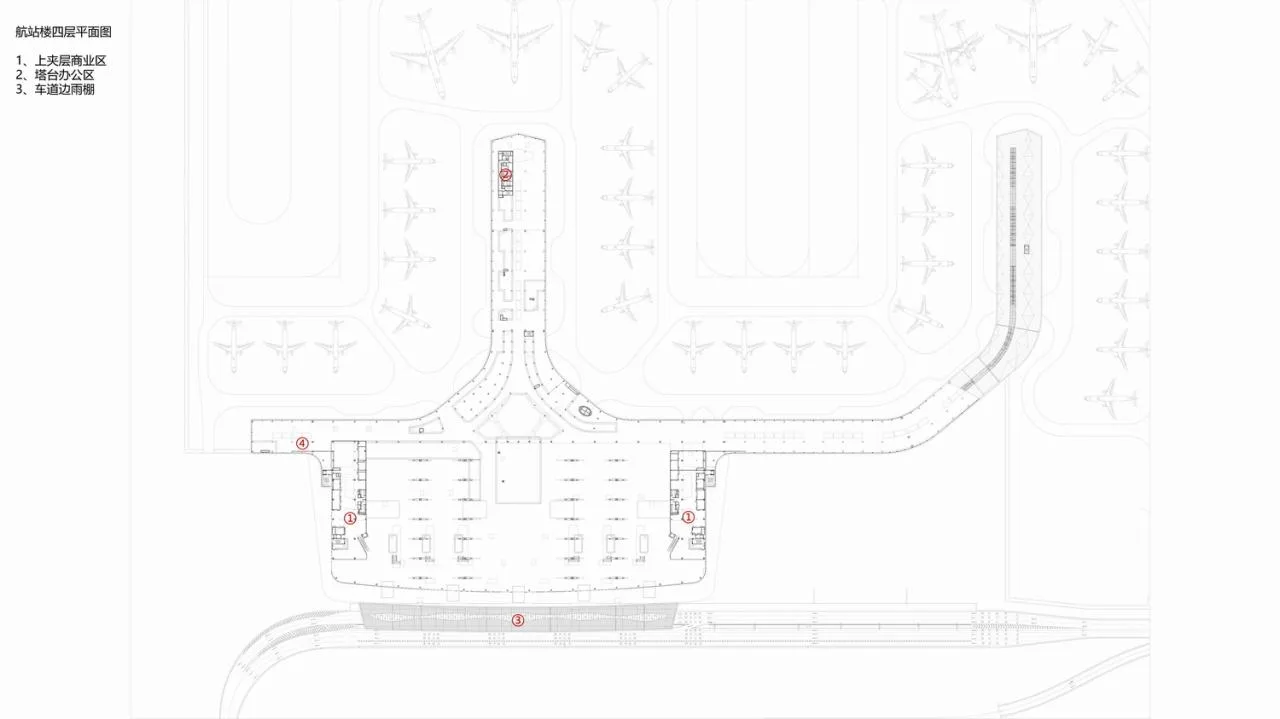
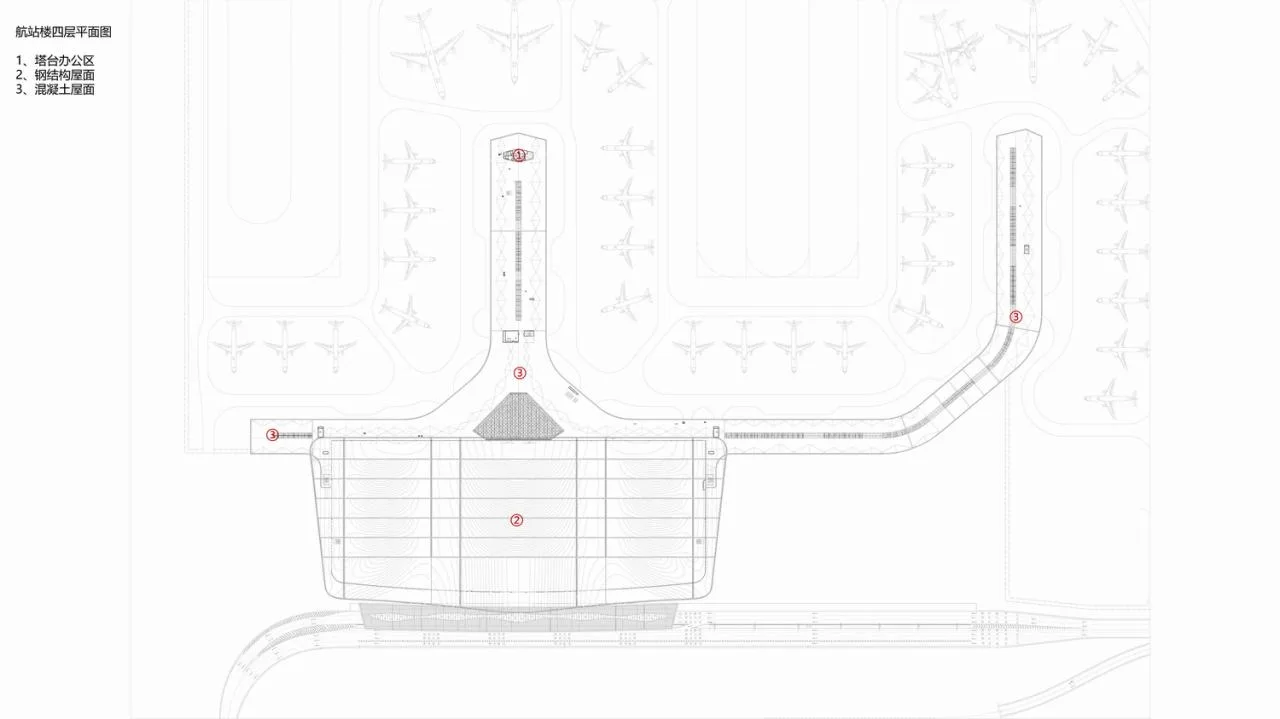
Project Information
Project: Terminal 2 and Terminal Area of Yantai Penglai International Airport Phase II
Location: Yantai, China
Consortium Lead: China Southwest Architectural Design and Research Institute Co., Ltd
Consortium Members: Aedas; Shanghai Civil Aviation New Era Airport Design and Research Institute
Owner: Shandong Airport Management Group Yantai International Airport Co., Ltd
Building Area: 172,000 m²
Completion Year: 2023
Project Team:
Project Managers (China Southwest Architectural Design and Research Institute): Chen Rongfeng, Pan Lei
Aedas Project Leader: Tang Zhouxing
Project Leader (Shanghai Civil Aviation New Era Airport Design and Research Institute): Ma Jingtao
Architecture Team (China Southwest Architectural Design and Research Institute): Approved by Liu Yi; architects include Zhou Li, Xu Kaitian, Duan Fei, Liu Gang, Liu Wei, Xu Yanrui, Wang Jiuyan, Hou Yonglu, Zhou Fangfang, Hao Zhijin
Structural Engineers: Chen Zhiqiang, Xia Xun, Han Xia, Ma Yongxing, Hu Yang, Chen Haowei
HVAC Specialists: Hou Yubo, Liu Hai, Sun Haitao, Liu Zhaohai, Xu Shan, Rong Xiangyang, Yang Ling, Chen Tong
Water Supply and Drainage: Zhang Huidong, Li Haichun, Liu Peng, Guo Xianqiang, Zhang Jing, He Pengfei, Zhang Nuoxu
Electrical Engineering: Hou Jian, He Jie, Hou Likui, Wang Gongsheng, He Xishuo
Low Current Systems: Yin Ruihong, Li Jiali, Zhou Hailin, Zou Xuan, Lu Jiaming
Curtain Wall Specialists: Dong Biao, Cai Honglin, Zhang Guoqing, Li Guo, Cheng Chao, Wang Jin
Interior Decoration Team: Xu Wanqiang, Qu Tao, Sun Kang, Li Yanjie, Sun Luyu, Xiang Gaoting
Landscape Architecture: Chen Tao, Ren Kunlun, Chu Fuyao, Zhao Jun
Municipal Engineering: Wang Weidong, Li Yinxiang, Sun Zhijie, Yan Jiedong, Wang Xiaojie, Chen Hongqing, Liu Chengqi, Fang Haoxing
Decoration Design Consultant: Zhongshi Engineering Design Co., Ltd
Luggage System: Beijing AIFLOG Engineering Consulting Co., Ltd
Lighting Design: Gala Lighting Design Studio
Photography: 404NF STUDIO















Must log in before commenting!
Sign Up