
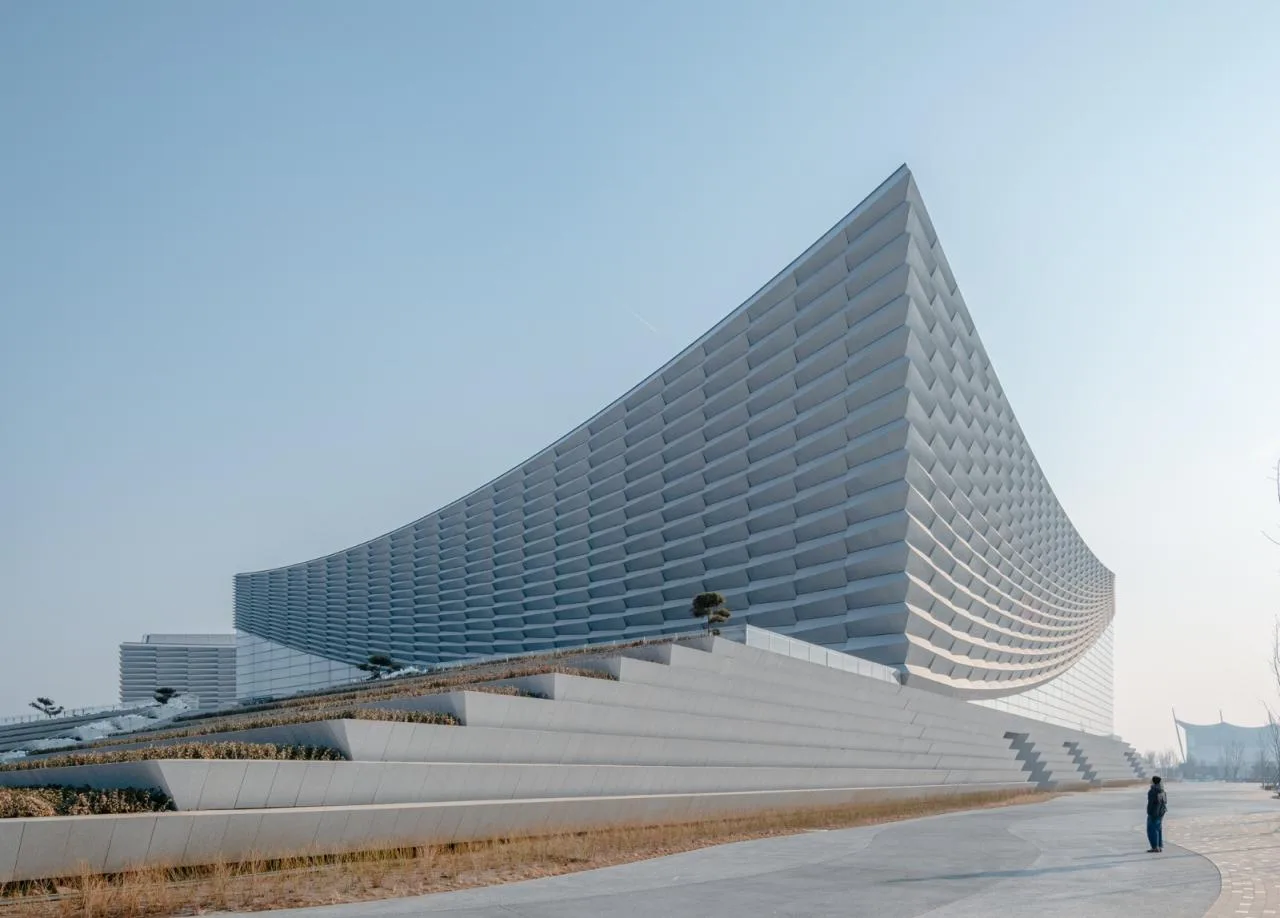
The Cultural Granary of Beijing’s Urban Subcenter
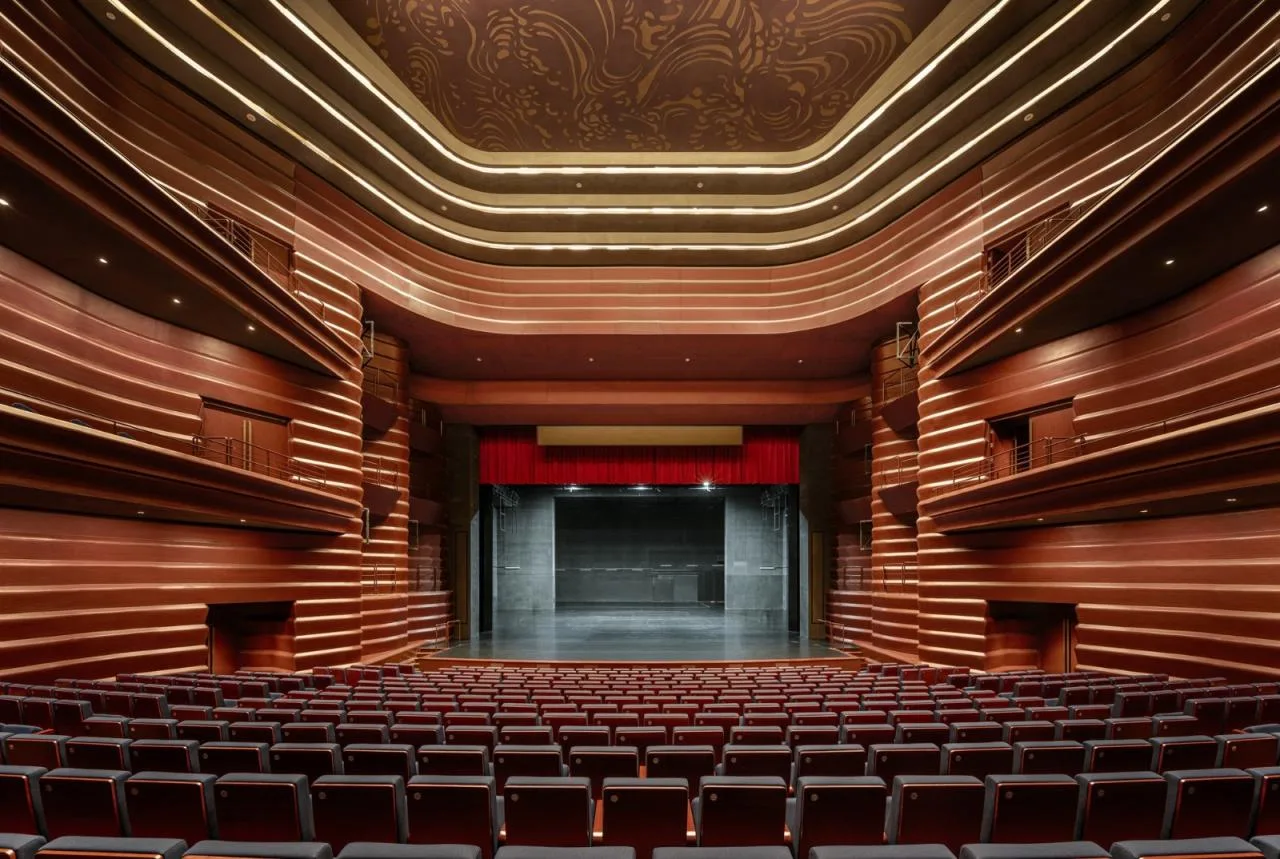
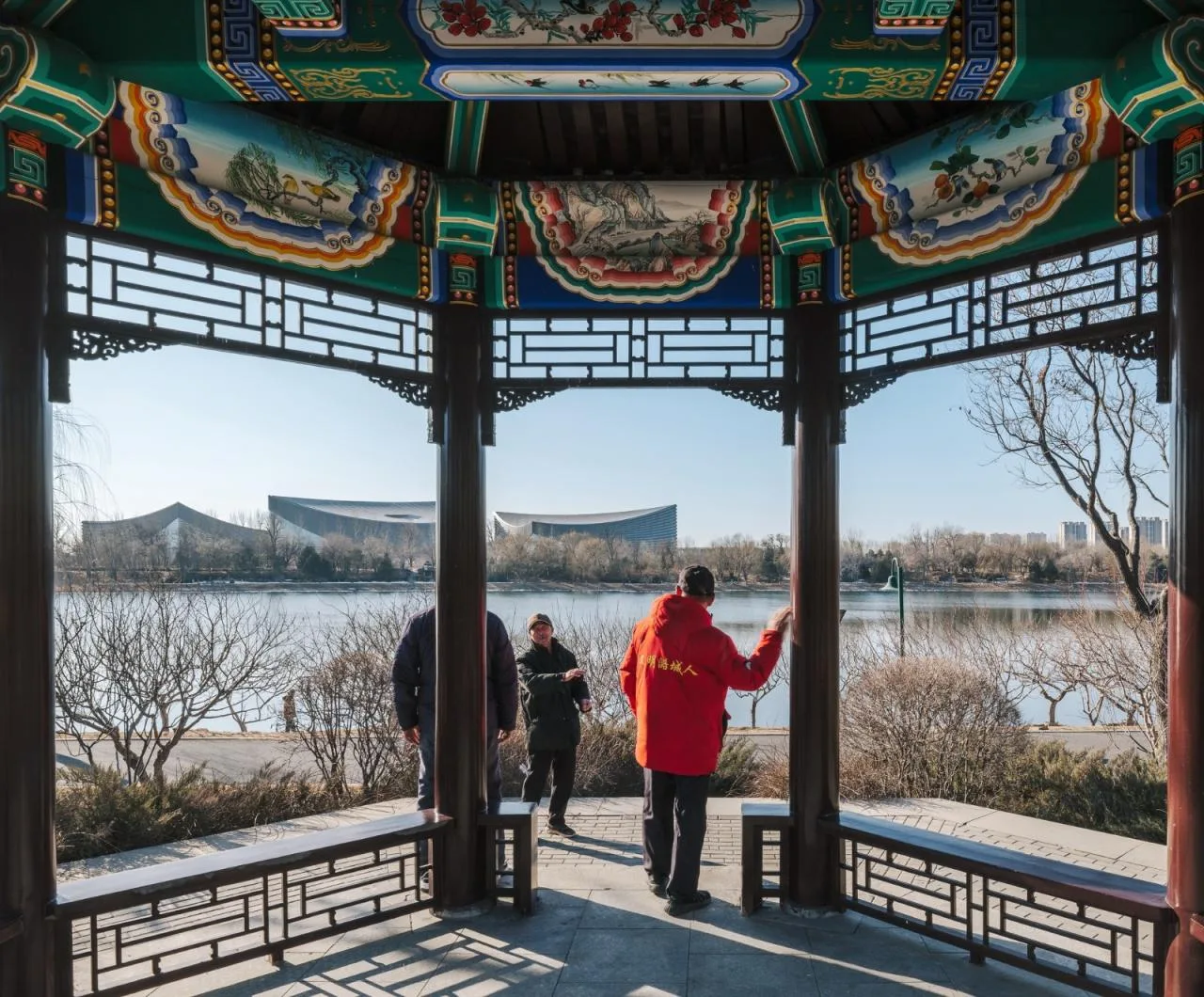
Situated on the banks of the UNESCO World Heritage Site Grand Canal, the Beijing Art Center is a world-class performing arts complex. It features an opera house, a concert hall, a theater, a small theater, and an open-air Green Heart theater. Annually, the center hosts nearly a thousand diverse performances and events.
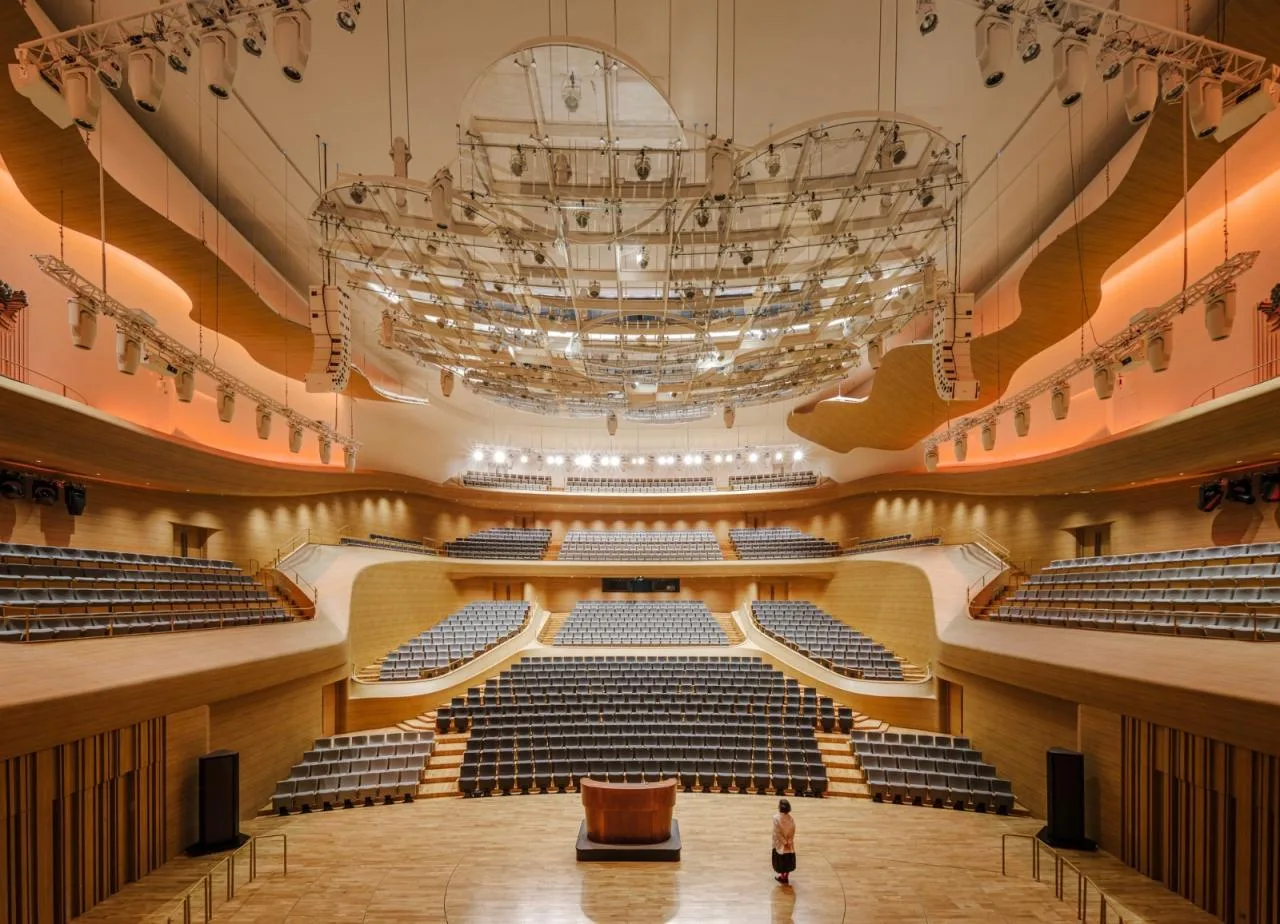
Located in Tongzhou District, the eastern gateway to Beijing, the center sits at the northern starting point of the Grand Canal. It is part of the urban green heart cultural cluster, surrounded by museums, libraries, parks, and green spaces. The Beijing Art Center accommodates a wide variety of performances, ranging from traditional Chinese drama to opera, orchestral music, stage plays, dance, and more.
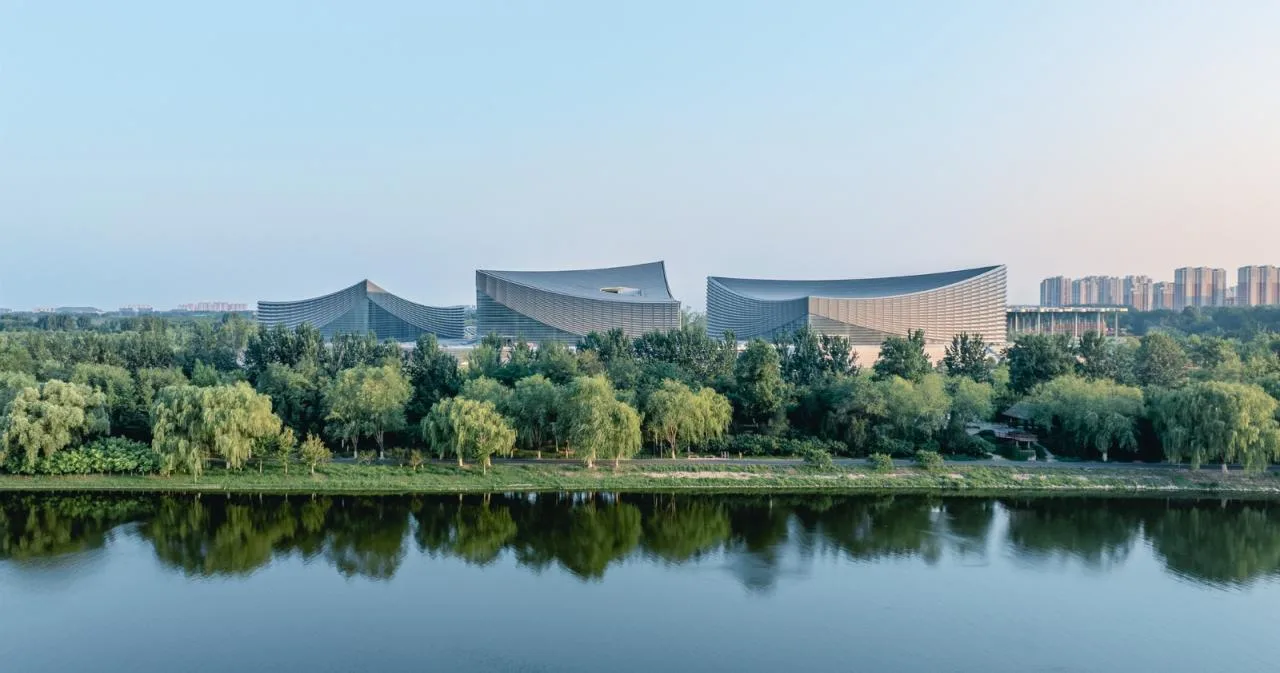
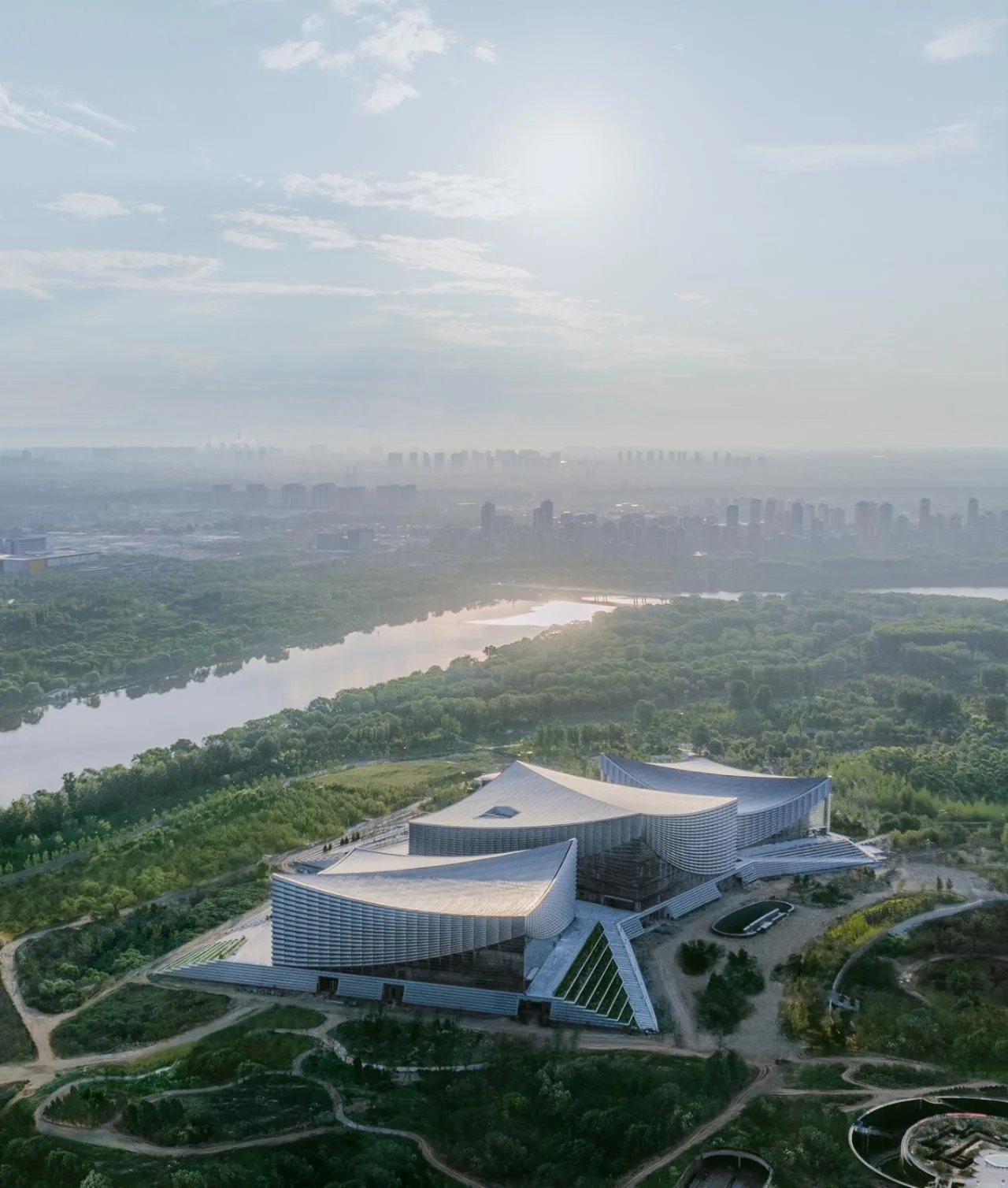
We consider this project a true “cultural container.” Chief architect Chris Hardie explains, “This site once housed the Tongzhou granary, storing grain for the capital. Today, we aim to create a ‘cultural granary’ that carries both local and global culture, serving as a vital hub to promote the growth of art and culture in Beijing.”
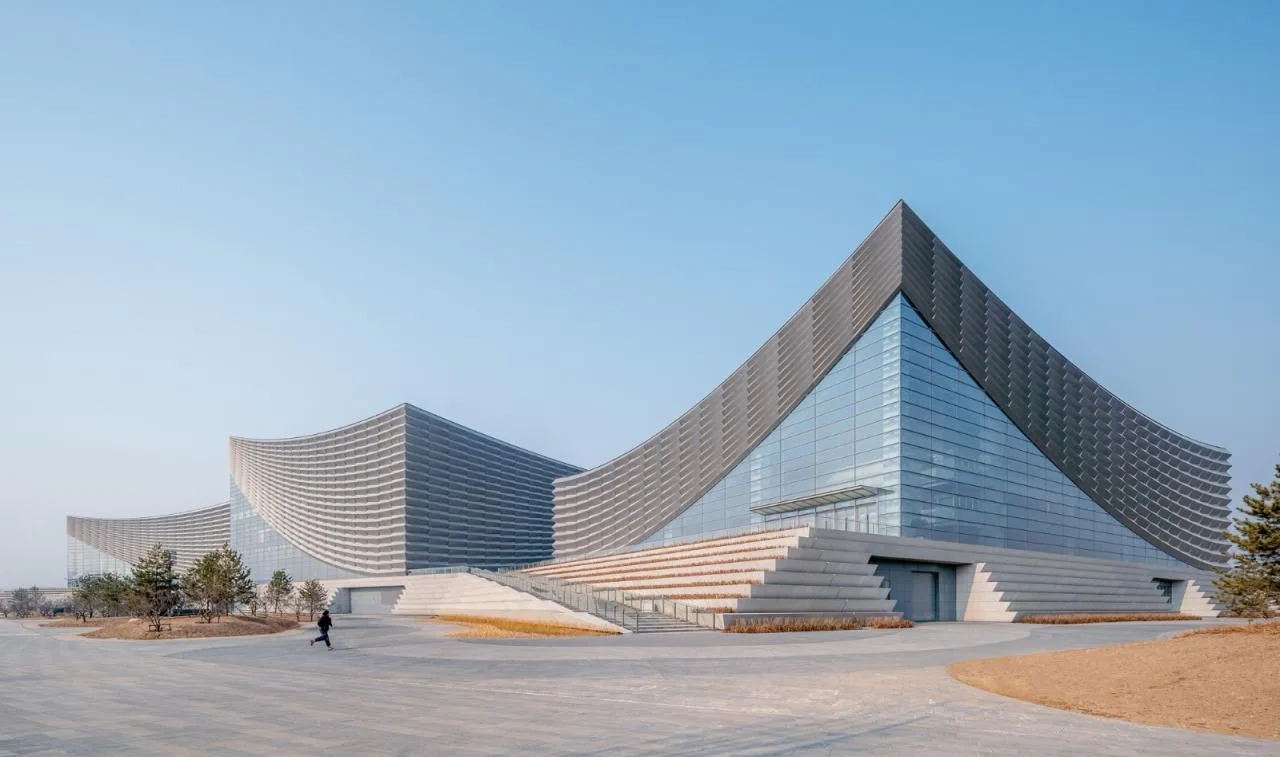
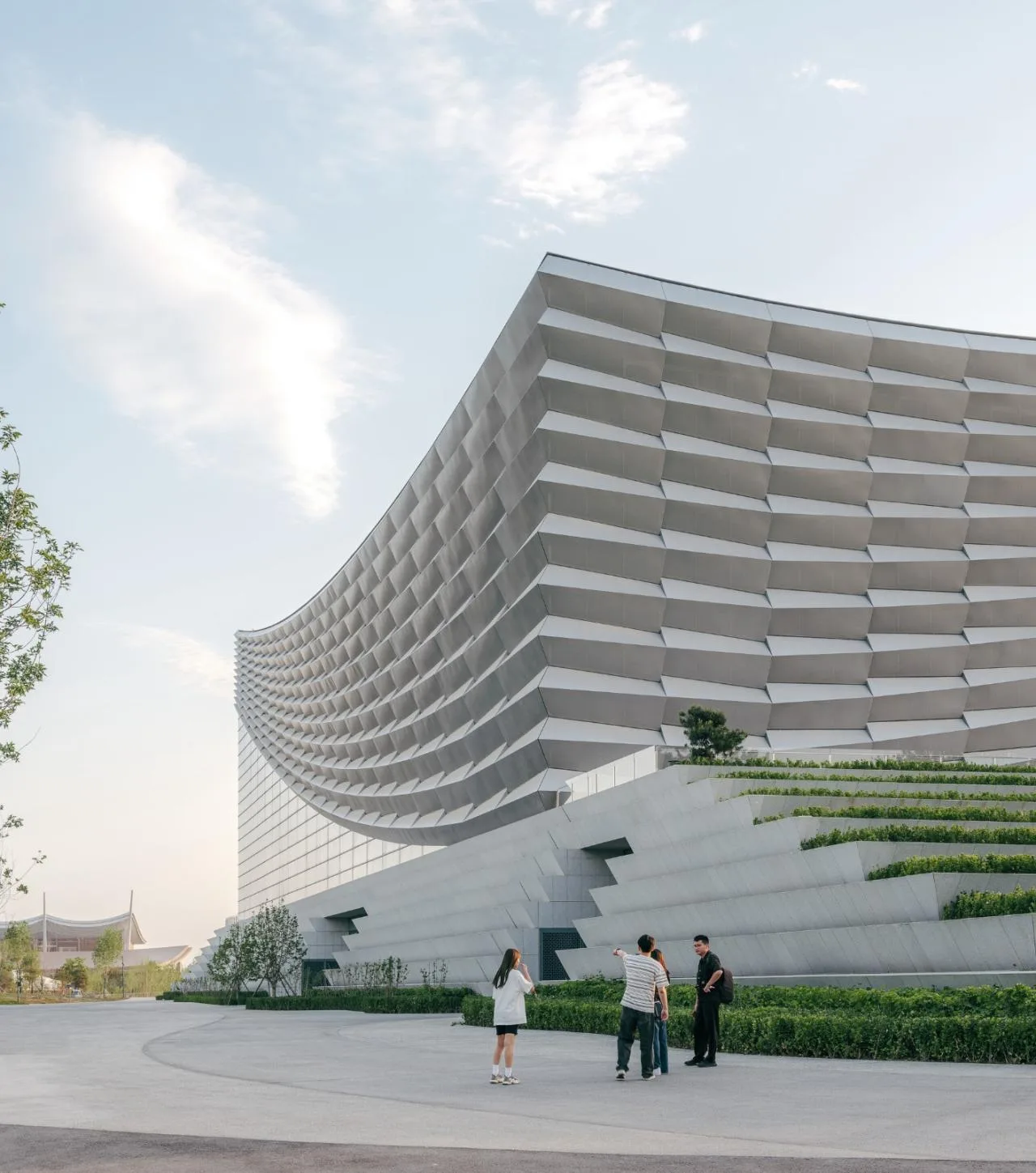
The design employs a subtle, symbolic, and poetic approach to portray a cultural and artistic community harmonizing with its environment and citizens. It connects the site’s distant past with a bright future. Positioned at the heart of the Green Heart Cultural Cluster, the Performing Arts Center is envisioned as three glowing lanterns along the Beijing-Hangzhou Grand Canal. The sculptural volumes representing opera, drama, and music draw inspiration from Tongzhou’s transportation history and cultural heritage, reinterpreting the ancient granary along the canal.
The architecture echoes the roof shape of the historic granary, while also metaphorically resembling an opening theater curtain and the sails of ships navigating the canal. A shared platform connects the three theater volumes, with gently extending steps leading outward in multiple directions. This platform expands the theater lobby’s public space, deeply integrating the building’s interior with the surrounding landscape and the Grand Canal.
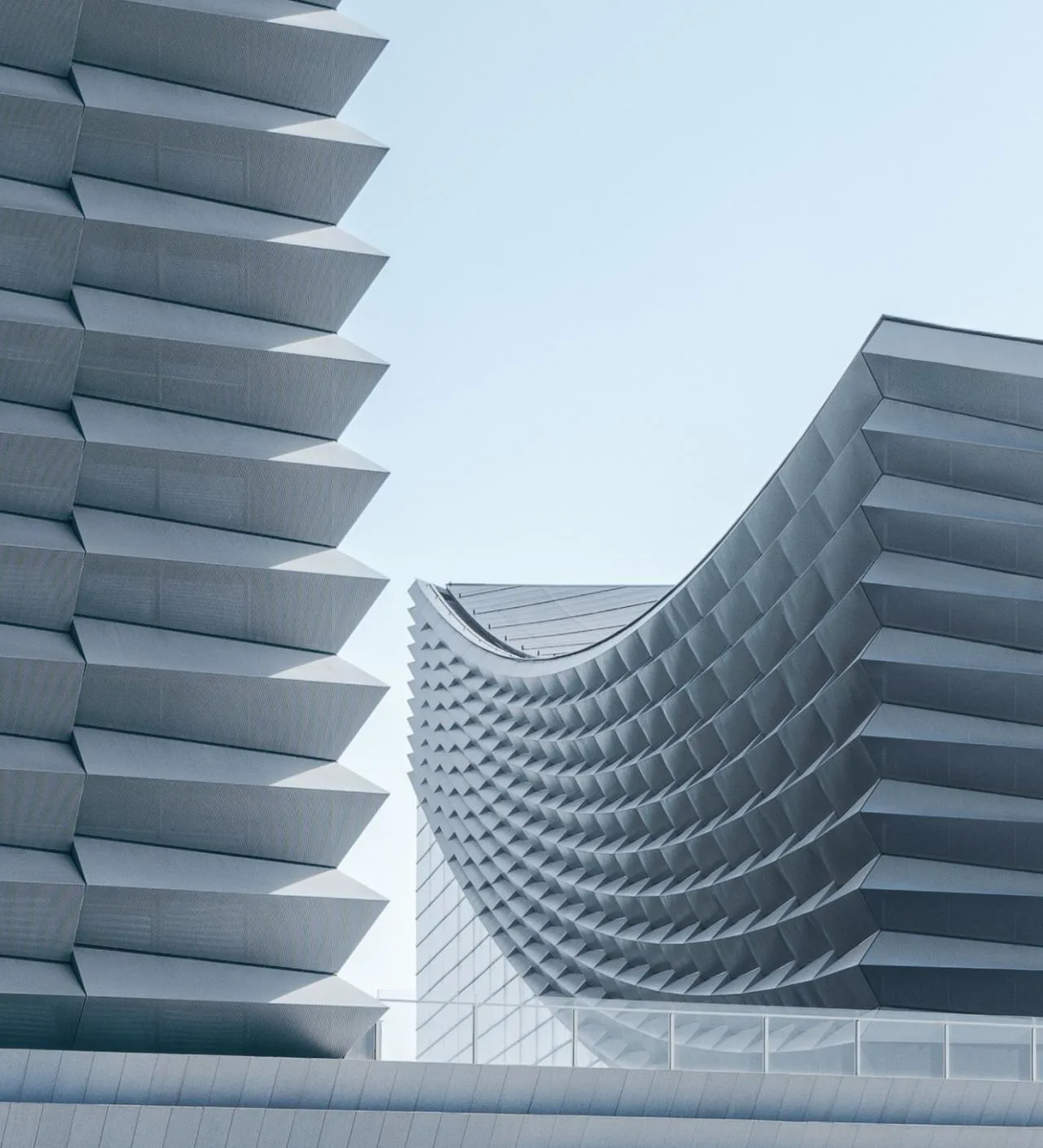
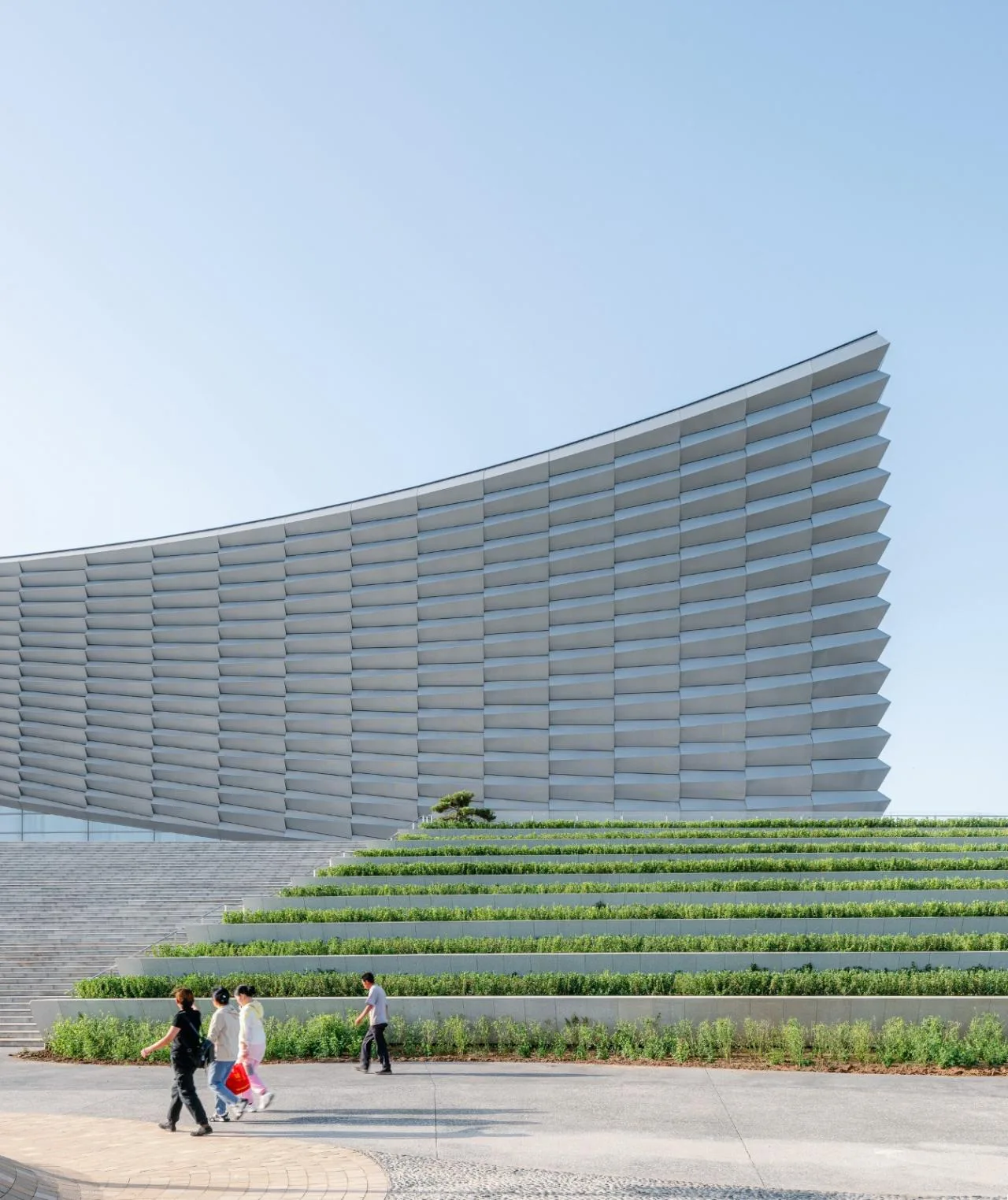
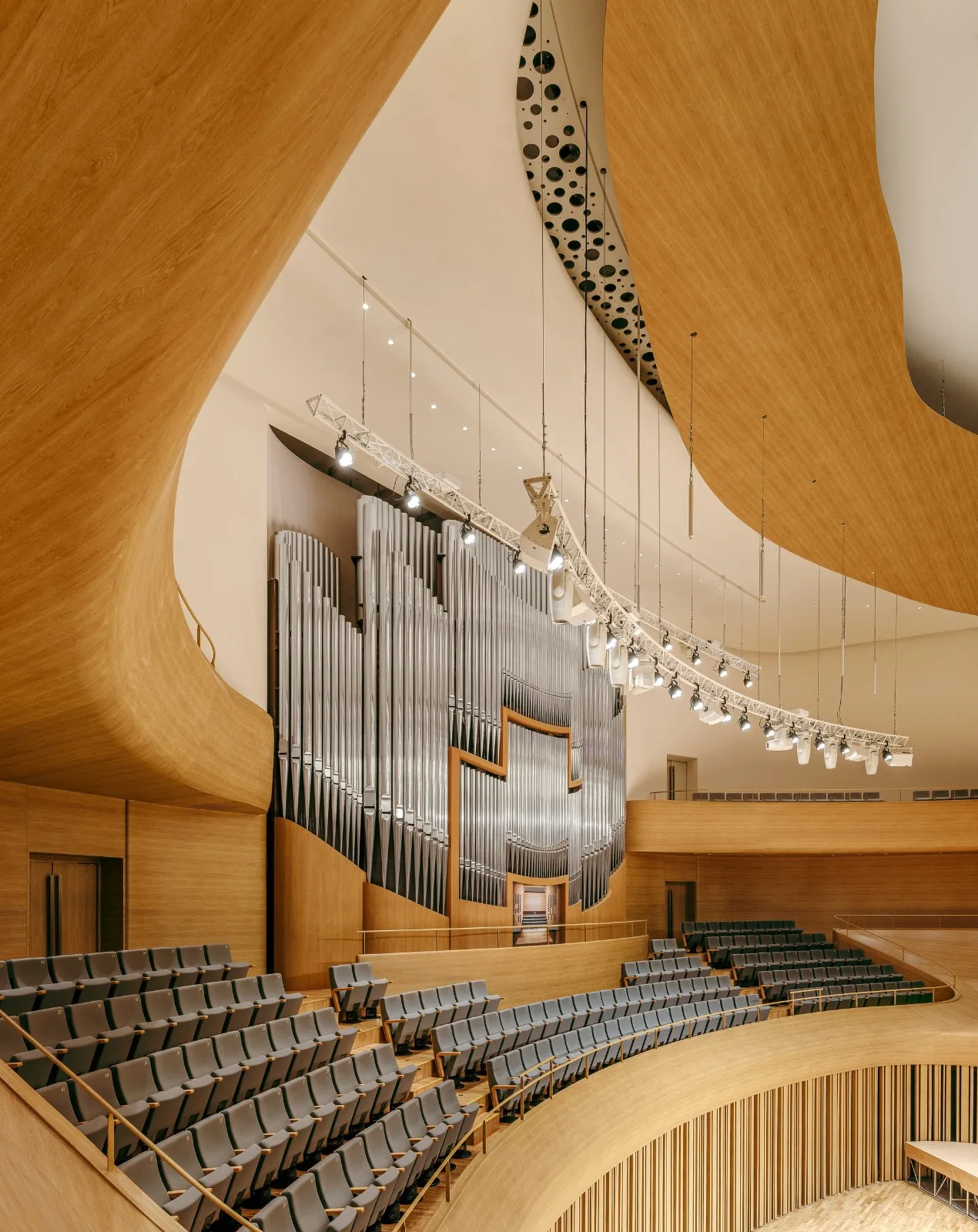
Each theater container features unique design elements tailored to its function. For example, the opera house’s shape is optimized for acoustics, as noted by project director Chen Chao. Despite their individual identities, the three containers seamlessly integrate, resembling three lanterns by the water that warmly welcome visitors.
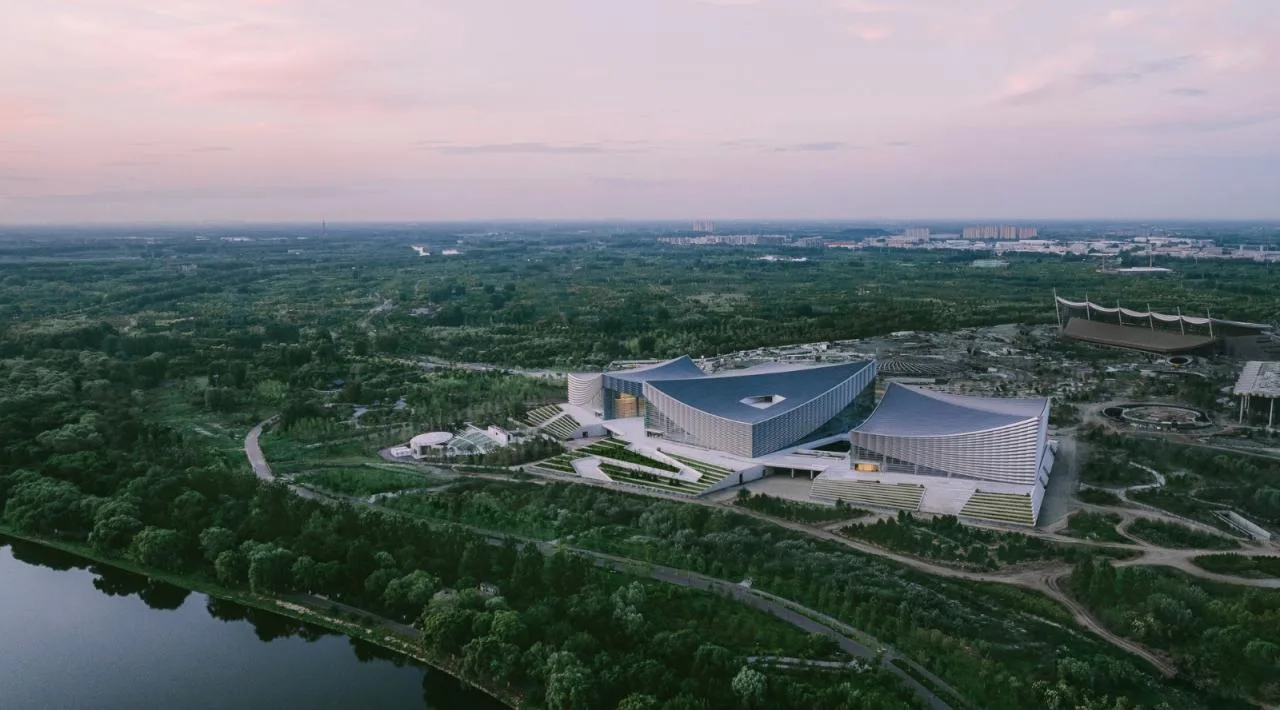
The Grand Canal stretches approximately 2,000 kilometers and was first constructed in the 5th century BC. As a UNESCO World Heritage Site, it has acted as a vital artery connecting northern and southern China, fueling cultural and economic development for thousands of years. Warehouses and commercial vessels have long operated on both sides, with goods arriving from the south to Tongzhou warehouses before being distributed to Beijing.
Today, this new “cultural granary” reverses the ancient logistics flow, inviting city residents to experience the cultural treasures along the canal’s banks.
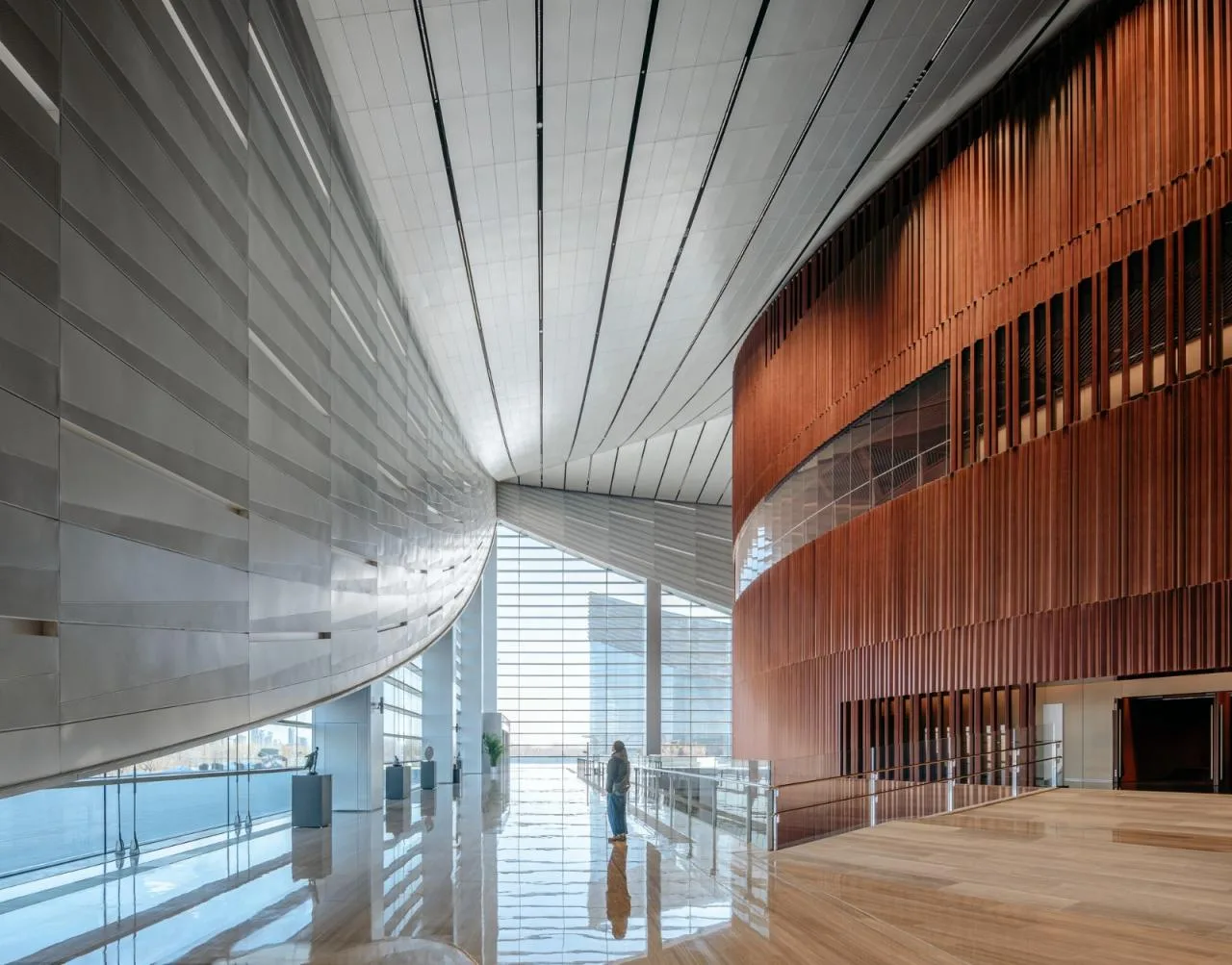
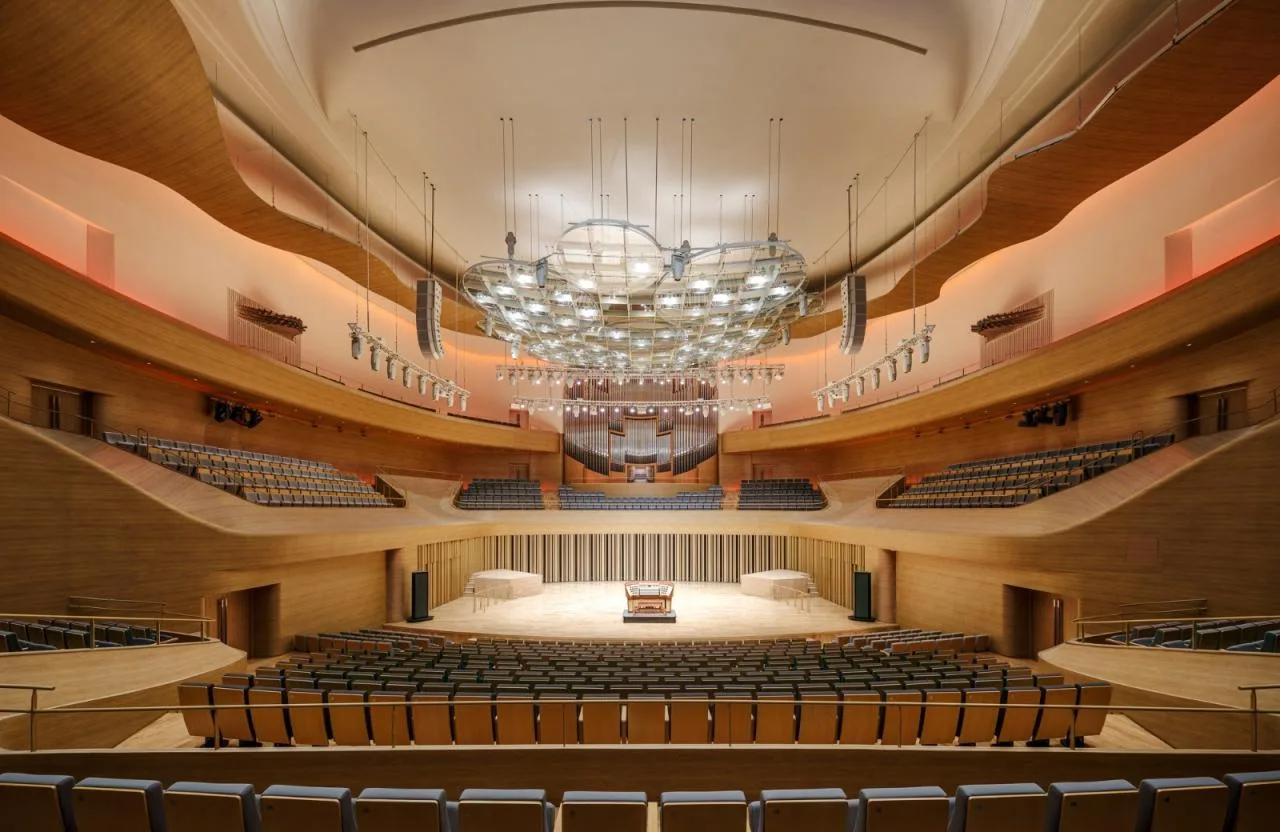
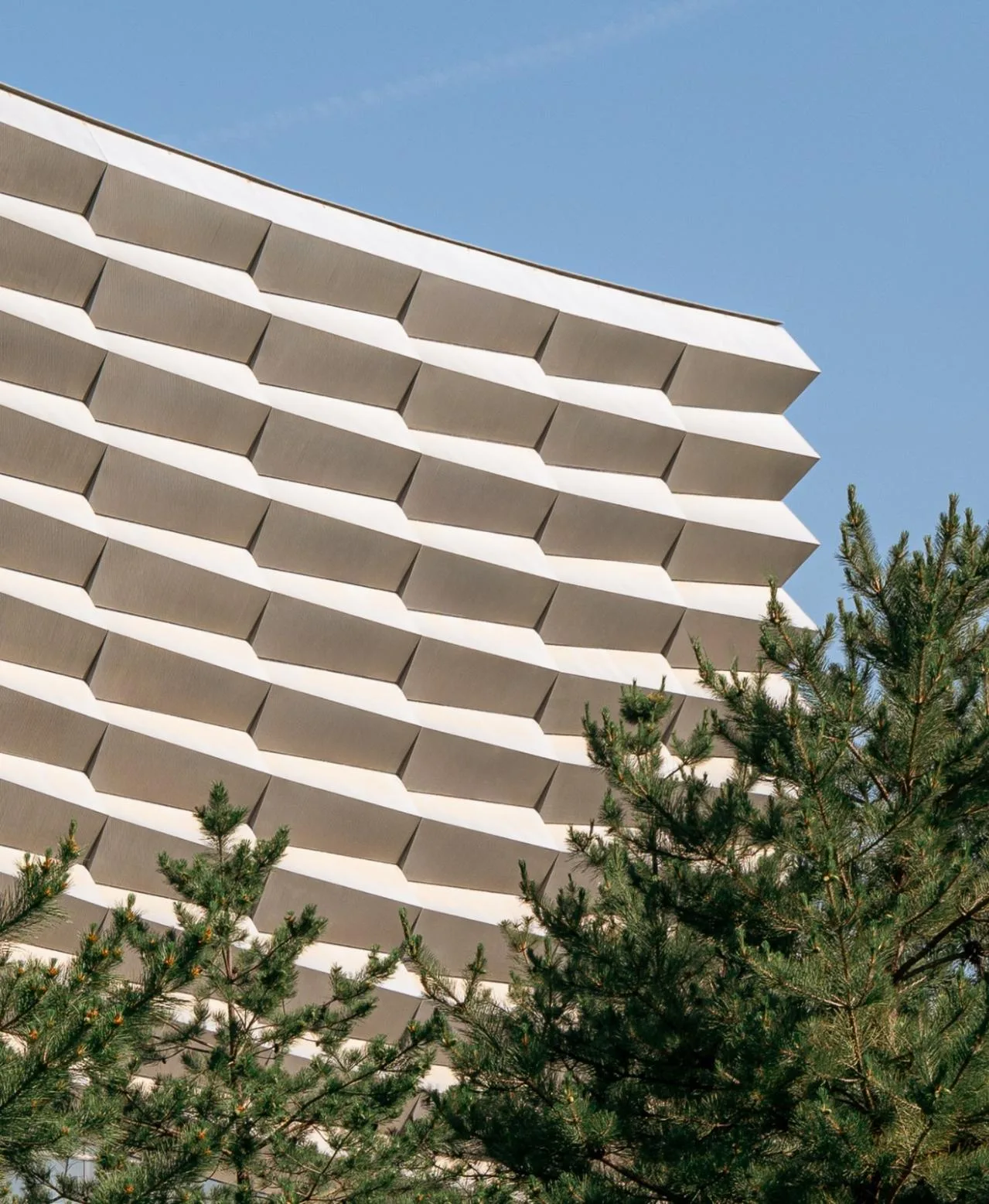
The project’s sustainable design focuses on the health of people and urban ecosystems, adhering to China’s three-star green building standards. The exterior is clad with perforated triangular aluminum panels that act as shading devices, improving the thermal performance of the walls by 20% over local energy-saving requirements.
In addition to passive design elements like the high-performance building envelope, the center utilizes a regional energy system dominated by ground source heat pumps, achieving a renewable energy usage rate of 60%. Air purification systems integrated into the HVAC units and pollutant monitoring in public areas ensure excellent indoor air quality. All buildings use top-tier water-saving fixtures.
The entire Green Heart Park has been planned as a “sponge city,” with surrounding green spaces and permeable paving creating a porous landscape that absorbs and regulates rainwater. Irrigation, street and garage cleaning, and toilet flushing all use reclaimed municipal water, significantly reducing water consumption.
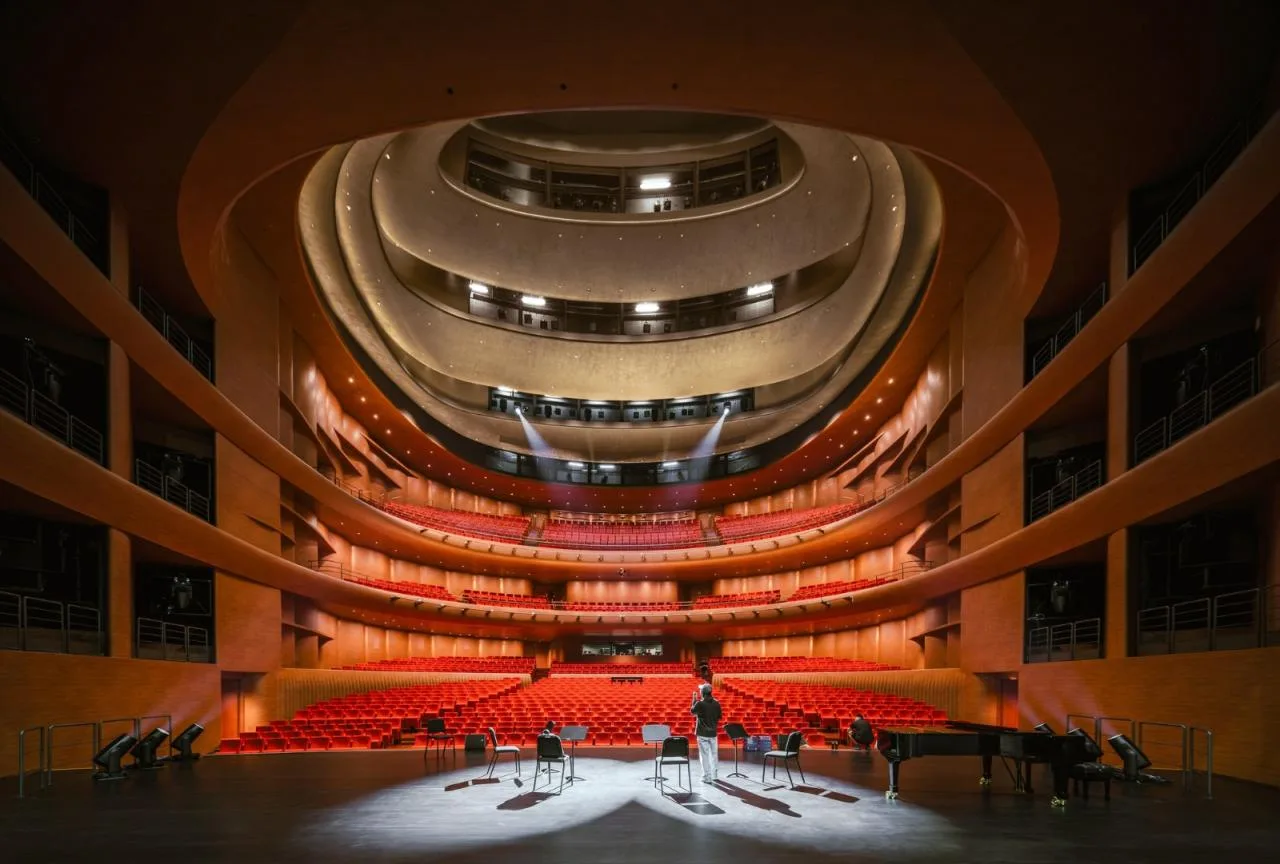
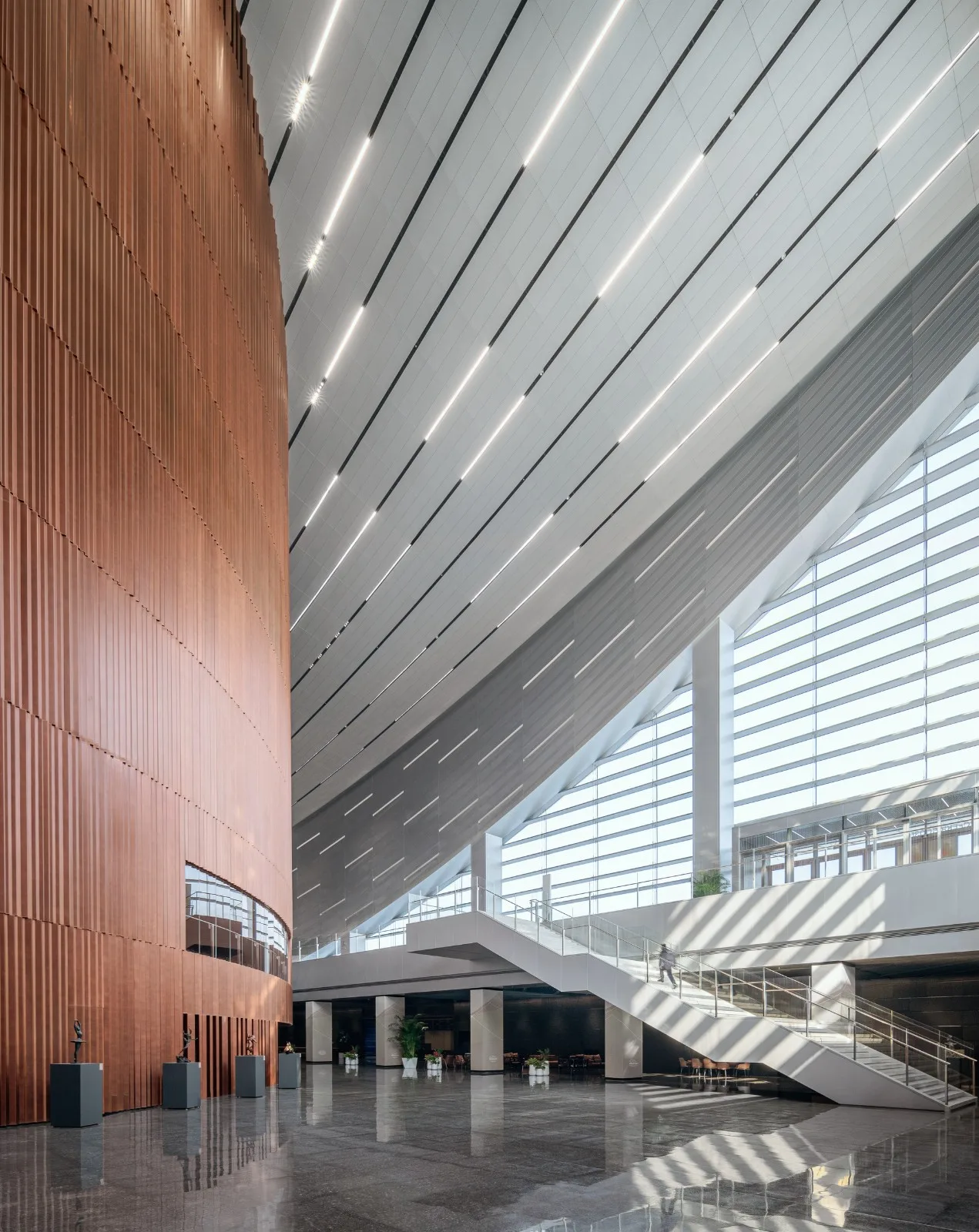
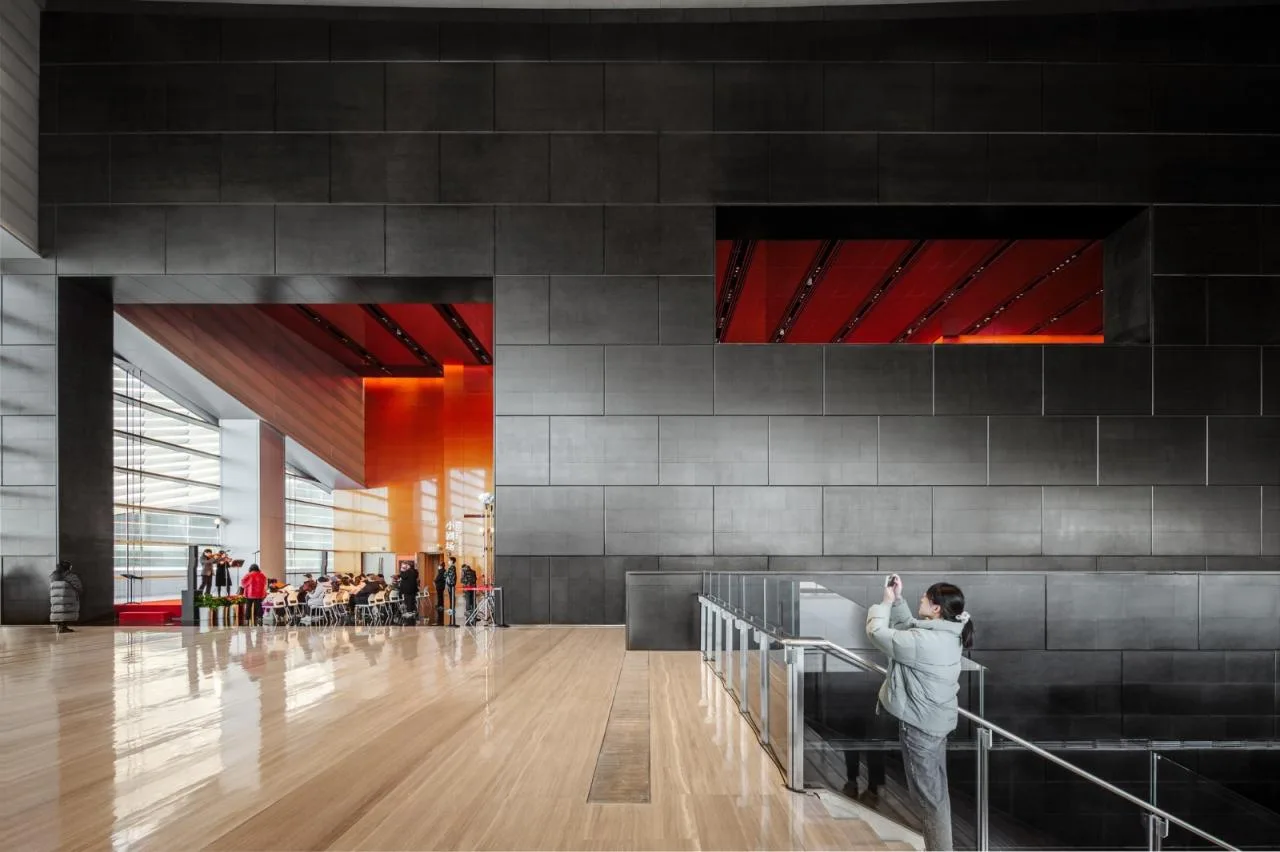
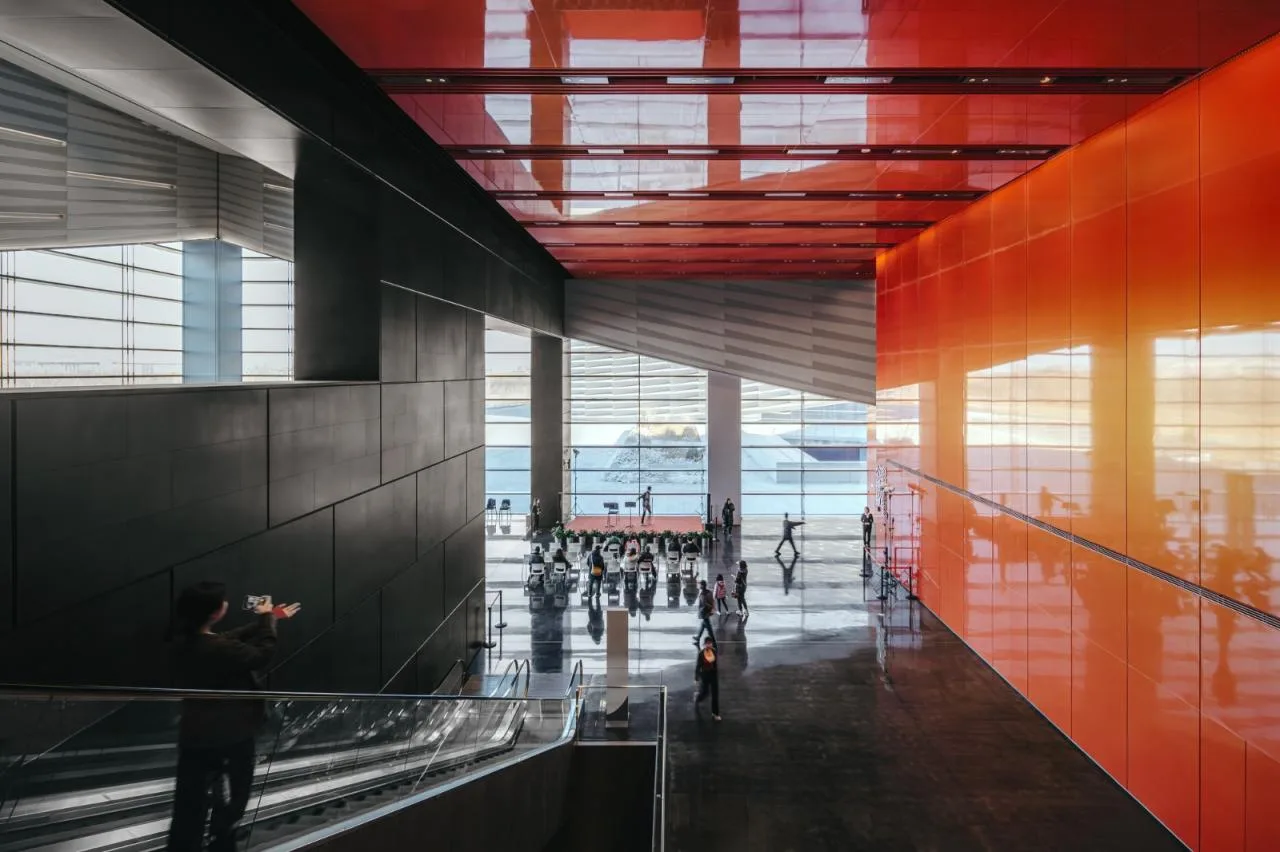
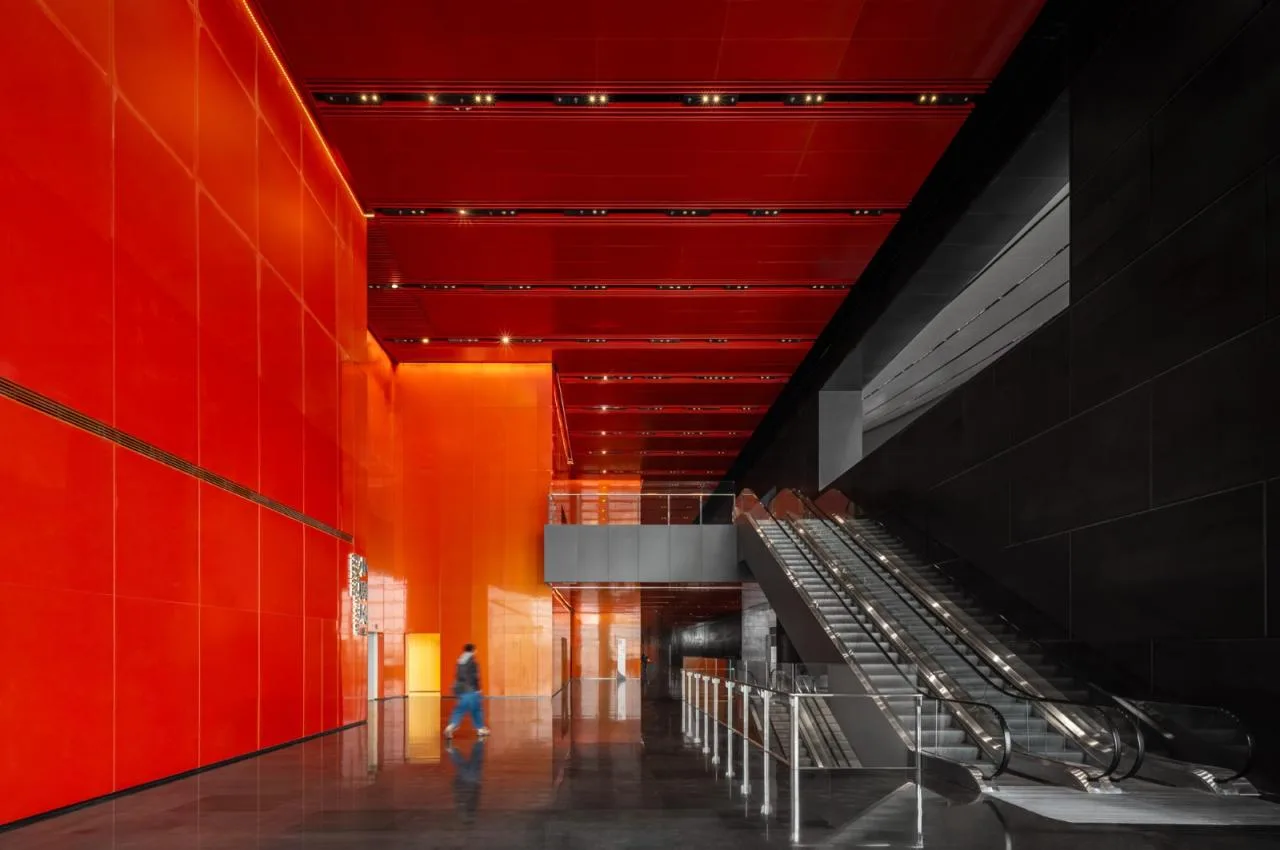
Below the Green Heart Cultural Cluster, a subway station ensures convenient public access. Well-designed ramps and stairs connect the station to the various performance spaces. The theater, library, and museum are linked underground through shared facilities such as parking, retail, dining, and sunken gardens.
The platform level connecting the three theaters remains open to the public, offering a welcoming space to stroll and enjoy panoramic views of Tongzhou and the Grand Canal. James Lu, Director of Will Asia, remarked, “I’m delighted to see visitors coming and going at the Beijing Art Center, fostering countless exchanges along this historic waterway. This project reflects Beijing’s vision and dedication to art and culture as a city.”
Project Information
Architects: Perkins&Will, Schmidt Hammer Lassen
Area: 861,112 ft²
Completion Year: 2024
Photographer: Zhu Yumeng
Design Team: Schmidt Hammer Lassen and Perkins&Will
Location: Tongzhou District, Beijing














Must log in before commenting!
Sign Up