
Before constructing prefabricated concrete structures, the construction team must provide a quality and safety technical briefing to all technical staff and on-site operators. Based on the project’s characteristics, schedule, and the types and weights of components, appropriate lifting machinery and equipment should be selected. All lifting equipment must hold valid manufacturing licenses and product qualification certificates.
Component Transportation and Stacking
Unless specified otherwise in the design, the concrete strength during component transportation should be at least 75% of the concrete’s design strength grade value. The transportation and stacking plan for prefabricated components should cover storage site requirements, transportation routes, fixation methods during transport, stacking and support protocols, and measures to protect the finished products. Special quality and safety precautions must be applied when handling large components such as ultra-tall, ultra-wide, or asymmetrically stiff elements.
The stacking site must be flat, stable, and equipped with proper drainage systems. Prefabricated components should be stored separately according to type, specifications, parts used, lifting sequence, stress conditions, and inspection status. Bottom and interlayer cushion blocks should be placed evenly and vertically aligned on a solid foundation. Components must never be placed directly on the ground.
Construction Technology of Prefabricated Components
1. Prefabricated Wall Panels
Construction process: Base cleaning → Measurement and layout → Correction of exposed connecting steel bars → Installation of gaskets and elevation adjustment → Lifting and positioning of prefabricated wall panels → Installation of temporary supports → Adjustment of horizontal position and vertical alignment.
When lowering the prefabricated wall panel, stop approximately 1000mm above the floor. Operators should guide the panel by hand to ensure smooth descent. Use a mirror to check if the connecting steel bars on the lower layer align precisely with the steel bar sleeves at the base of the wall panel. Slowly lower the panel onto the gasket and pause; verify if all steel bars fit the holes and confirm the wall is positioned according to the control line.
Use a plumb bob and tape measure to check the verticality of the wall at both ends, ensuring proper installation. After securing diagonal supports and adjusting the wall’s verticality and level, unhook the lifting hooks. Verticality tolerance should be within 5mm, and the component’s axial position within 8mm.
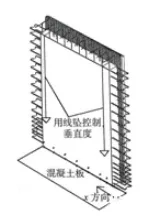
Fine adjustments to horizontal position and perpendicularity are made using short steel pipe slant support rods to align the base of the wall panel. The long steel pipe slant supports, equipped with adjustable devices, control the horizontal displacement at the top of the panel.
2. Laminated Boards
Technological process:
Base cleaning → Measurement and layout → Support system installation → Elevation adjustment → Hoisting and stacking of floor slabs → Elevation rechecking → Slab joint treatment → Installation of mechanical and electrical pipelines → Steel bar binding → Concrete pouring → Removal of formwork supports.
Ensure the structural base is clean and free of oil or debris. If exposed connecting steel bars protruding from shear walls are bent or misaligned, they must be corrected promptly to avoid interference with composite panel installation.
Independent Support Layout: According to the composite panel layout plan, mark support points on the floor slab and vertical operation lines at each room corner. Set an elevation control line at 1.000m on the surrounding shear walls for post-installation verification and adjustment.
Lifting Process:
Before installation, align the laminated board to the standard height and adjust the support beneath to ensure levelness. When lifting the composite panel to the designated height, pause briefly about 500mm above the working surface. Construction personnel should hold and guide the panel, aligning it with the slab’s edge and the wall’s placement lines. Avoid any conflict between reserved steel bars on the panel and those on the wall.
Lower the panel slowly and steadily; rapid or forceful placement is prohibited to prevent surface shaking or cracking. Use small wooden blocks for position adjustments—never pry directly on the board’s edges to avoid damage. The allowable deviation is no greater than 5mm. Recheck the installation position using the wall’s elevation control line and adjust with an independent support frame if needed.
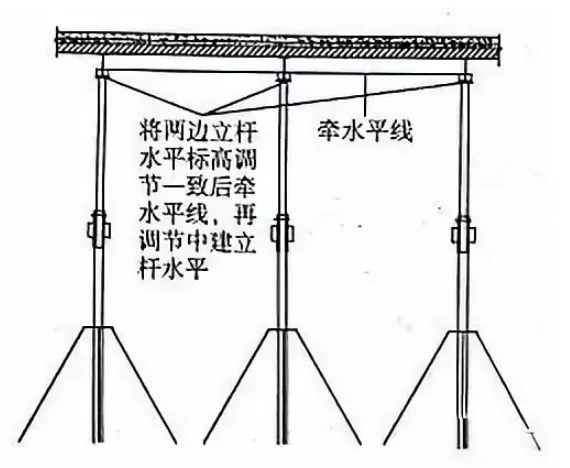
3. Installation of Prefabricated Stairs
Technological process:
Construction preparation → Hoisting of prefabricated staircase → Installation → Grouting → Finished product protection.
Before hoisting the stairs, mark longitudinal and transverse position control lines at the upper and lower stair beams and platforms, including a control line at 1.000m elevation. According to design requirements, level and smooth the ladder beam position on the horizontal plane using 20mm thick M15 cement mortar before installation. This step must be completed prior to lifting, and the mortar strength must meet structural design standards at the time of lifting.
Clean the ladder beam base course before installation. Brush the lower ladder beam with plain cement slurry, then cover with two layers of plastic film. Install 50mm thick polystyrene flat noodles as cushioning. Install stair treads from top to bottom in vertical sequence, pausing about 500mm above the working surface. Construction personnel should guide the stair treads carefully, aligning edges with the control lines and reserved dowel holes. Lower the stairs slowly to avoid shock.
Once roughly in place, use a pry bar to fine-tune the stair treads until they are correctly positioned and level. Check elevation carefully before releasing the hoisting hooks. After floor slab installation, grout the reserved steel bar holes at the top of the stairs and seal any gaps at the ends.
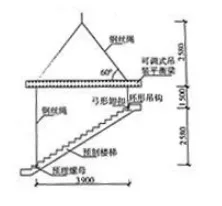
After completing the installation and connection of prefabricated stairs, protect the finished product by fully covering it with wooden plywood.
Article source: Prefabricated technology













Must log in before commenting!
Sign Up