
If the construction of the main structure is not carried out properly, it will have a significant impact on the project schedule and it will be difficult to rework. To avoid various safety accidents, it is not only necessary to carry out construction organization design and technical disclosure according to requirements, but also to pay attention to the following 5 taboos.
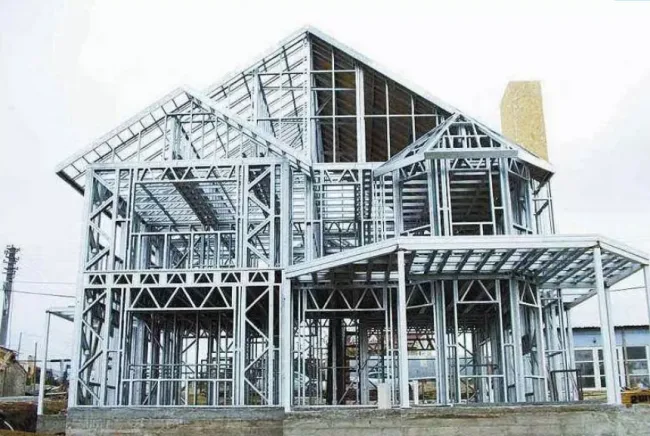
Reinforcement engineering
Suitable for:
(1) Reinforcement binding must be fully tied, and jumping or missing binding is strictly prohibited; Steel bars with a diameter not exceeding 1mm must be connected by binding, and electric slag pressure welding is prohibited; Template positioning bars require reserved insertion bars before concrete pouring, and it is strictly prohibited to weld them directly onto the main bars.
(2) Attention should be paid to the spacing between the main reinforcement and the hoop reinforcement when binding the steel bars of the ground beam with snap line control; Cement pads are used at the bottom, and plastic or other pads are used on both sides of the beam to control the thickness of the protective layer; The binding wire is bent towards the inside of the beam.
(3) When binding the bottom steel bars, a line should be drawn on the ground to control the spacing between the main bars; Cement or crushed marble pads are used at the bottom, and plastic or other pads are used on the sides to control the thickness of the protective layer; Determine the upper and lower positions of the bidirectional steel bars in the upper and lower rows according to the design requirements; The spacing between the erection bars meets the requirements of the construction plan to ensure that the upper bars do not collapse; The binding wire must not be missed; If the upper and lower rows of steel bars are arranged in double layers, a short steel bar not less than 25mm should be placed between the two rows of steel bars.
(4) When binding the wall reinforcement, the spacing between the wall reinforcement is controlled by horizontal and vertical ladder reinforcement; Using cushion blocks to control the thickness of the protective layer, the cushion blocks are arranged in a plum blossom pattern; Determine the position and spacing of the hook reinforcement; The relative position of horizontal and vertical bars meets the requirements of the drawing; The binding wire is bent towards the inner side of the wall; The steel bar hook is facing towards the inner side of the concrete; Ladder bars should be installed in the middle of the double-layer steel mesh to fix the spacing between the steel bars.
(5) When connecting steel sleeves, the steel bars are cut using a toothless saw, and the end faces are straight; The steel sleeve is qualified, the steel thread processing tooth shape is full, and there are no defects such as broken teeth or bald teeth. After the thread processing is completed, a protective cover should be installed for protection; The socket connection adopts a torque wrench connection, and the tightening torque value meets the specification requirements; Check one by one, mark with paint after passing the inspection.
(6) To avoid the displacement of steel bars in shear walls and columns, it is required to set at least two horizontal positioning steel bars, such as horizontal ladder bars for shear walls and positioning stirrups for frame columns (if they can be controlled in place, ladder bars on shear walls may not be set, not mandatory), with one at the middle and one at the top.
(7) When welding steel bars with electric slag pressure, the welding process and parameters need to be formulated in advance before construction; The axis of the steel bars must not be offset, the steel bars must not be bent, and the steel bars must not have undercutting or unwelded phenomena; Require uniform welding of the package, without pores, burns, or dripping of the package.
(8) During the pouring of top concrete, protective measures should be taken for the steel bars to prevent deformation caused by trampling. For example, temporary passages should be set up using steel pipe springboards, wooden springboards should be laid on the steel mesh, and finished horse stools should be set up. A dedicated person should be assigned to supervise the pouring process and promptly restore the deformed and displaced steel bars.
Avoid:
(1) When the wall height is less than 3m, it should be repaired at least 7 days after the masonry is completed. The mortar at the junction of non load bearing walls and concrete should be full and dense, and the steel mesh should be set in place. Strengthen the maintenance work of “slurry throwing” before plastering the wall. Otherwise, it may cause cracks in non load bearing walls.
(2) The thickness of the floor slab should not be less than 120mm, and the thickness of the kitchen and bathroom should not be less than 90mm. The reinforcement of the floor slab should be selected with a small diameter and small spacing. The spacing between stressed steel bars should not exceed 150mm, the spacing between upper stressed steel bars at the corner of the slab should not exceed 100mm, and the spacing between distributed steel bars should not exceed 200mm. Double layered bidirectional steel bars should be installed at the external corners of the roof and floors, with a spacing of no more than 100mm and a diameter of no less than 8mm. Double layered bidirectional steel bars should be used for large-span floor slabs. Otherwise, it may cause cracks in the cast-in-place concrete floor slab.
(3) In order to enhance the overall integrity of the wall, the 1-2 layers of the brick wall are constructed with M10 mixed mortar, ensuring the fullness of the mortar during masonry, and the vertical joints must also be full. Place 1 layer of Ø 4 @ 60 steel mesh every 3 bricks in the 1-2 brick walls. The joints of the mesh steel bars are spot welded, and the steel bars should extend 200mm into the columns on both sides. When laying, lay a layer of mortar first, scrape the mesh flat, and then scrape another layer of mortar to ensure that the upper and lower mortar of the mesh reaches 4mm. Otherwise, it will cause “eight shaped joints” in the walls and corners of the window.
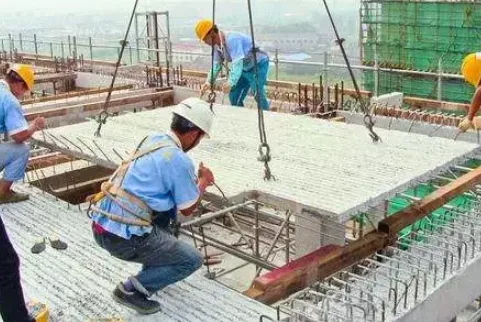
template engineering
Suitable for:
(1) When using wooden formwork, the joints of the formwork should not leak grout, and hard joints should be used; The template should be coated with isolation agent before use.
(2) When using the roof formwork support system, the steel pipe fasteners used must have a quality certificate; The prefabricated assembly specifications and spacing of the main and secondary keels at the bottom of the template meet the design requirements; The top plate uprights should be kept in the same straight line; When setting up poles, square wooden blocks must be placed at the bottom of the poles to prevent damage to the concrete of the lower floor.
(3) When using full steel formwork and group assembled steel formwork, the joints of the formwork should not leak grout; Before using the template, it should be coated with isolation agent; The deviation of template installation should comply with the specifications.
(4) The formwork for concrete structure engineering should be removed and its surface cleaned, and any defects in the concrete structure should be rectified.
(5) In any case, there shall be no less than 3 sets of top formwork and no less than 2 sets of wall formwork. The shear wall shall not have less than “five tie rods”, and the concrete joints between the outer walls or stairwells shall be uniformly embedded with special bolts in the beams or walls before pouring the lower layer of concrete. At the same time, the outer formwork of this part shall be lowered by 100-150mm, and sponge strips shall be used to ensure that the formwork of this part is reinforced and tightened tightly, and to prevent leakage and misalignment.
(6) Concrete slabs (or waist beams), structural columns, etc. must be constructed according to design requirements, and frame columns must be installed on both sides of the entrance door. The position of reinforcing bars for the slab (or waist beam) should be accurately calculated, firmly planted, and the distributed bars should be tied according to the spacing requirements. Reasonable cushion blocks should be set to ensure that the longitudinal bars are located at the center of the slab (or waist beam); When pouring concrete for structural columns, it is required to uniformly make drainage channels. During the process, an inserted vibrator is used in conjunction with a template to ensure compaction. After removing the template, excess concrete is removed to ensure a beautiful final shape.
Avoid:
(1) The template and its support must have sufficient bearing capacity, stiffness, and stability. Before the concrete strength reaches 1.2N/mm ², it is not allowed to step on, stack or install formwork and supports on it.
(2) The construction joint of the wall should be located in the 1/3 section of the lintel span of the doorway. When using large formwork, it is advisable to leave vertical joints at the junction of vertical and horizontal walls. Otherwise, it will cause the concrete construction joints to not comply with the regulations.
(3) Cracks caused by the combined effect of foundation back pressure and temperature shrinkage stress of brick masonry; The grade of the masonry mortar is too low, the overall integrity of the wall is poor, and temperature changes cause cracks in the wall due to expansion and contraction. The removal of the window lintel template was too early, causing deformation of the lintel and resulting in cracks at the window corners. Otherwise, it will cause “eight character joints” to appear on the walls and corners of the window.
Basement waterproofing membrane engineering
Suitable for:
Grassroots treatment and application of base oil; Set up additional layers according to regulatory requirements; Roll laying and adhesion; After the roll material is laid, the protective layer should be poured in a timely manner to ensure the quality of the finished product.
Avoid:
When there is severe groundwater seepage in the soil layer or quicksand layer of manually excavated cast-in-place piles, the height of each section of the retaining wall should be reduced, and the nearby pile holes without quicksand should be excavated deeper to function as a water collection well. At the same time, early strength agents should be added to the retaining wall concrete, or steel casing, prefabricated concrete sinking wells, etc. should be used as the retaining wall.
Masonry structure engineering
Suitable for:
(1) Before masonry, various brick materials need to be moistened with water in advance according to the corresponding requirements; Snap the line to control the position of the masonry; Control the number of layers of blocks with a skin pole; The masonry joints are full, and the top sloping bricks are dense; The bottom platform is built with sintered ordinary bricks or porous bricks, and the bottom platform of rooms with waterproof requirements such as bathrooms and kitchens needs to be poured with concrete.
(2) The placement of structural columns, specifications of steel bars, spacing, etc. meet the design requirements; The construction column should be poured densely and the strength should meet the requirements of the specifications; The construction of column brick masonry should be equipped with horse teeth according to the prescribed requirements.
(3) The slanted brick plug is constructed with solid bricks; Solid bricks are treated with corner cutting at both ends; The rigorous inclined brick plug is inserted as the brick wall masonry is built, and the vertical angle is not easy to be too large.
(4) The length, cross-sectional dimensions, steel bar specifications, spacing, etc. of prefabricated beams should meet the design requirements; Prefabricated beams should be poured and compacted to meet the required strength specifications; During the installation of the beam, control and positioning should be controlled.
Avoid:
(1) Before construction, bricks and blocks should be watered and moistened two days in advance, and should not be poured or used on site. It is strictly prohibited to use dry bricks on walls.
(2) The mortar used for masonry should be mixed and used immediately, and the mortar should be used up within 3 hours after mixing. When the maximum temperature during construction exceeds 30 ℃, the mortar should be used up within two hours. The hardened mortar shall not be mixed with water again, and overnight mortar shall not be used.
(3) Before painting, the surface of the masonry should be moist and free of BIM tutorial floating water. It is best to wet it 2-4 hours in advance.
(4) When plastering, about 95% of the thickness should be applied at once, and the surface should be basically flat and uniform. If the thickness of the painting exceeds 20mm, layered construction is required, that is, the surface layer construction should be carried out within 2-4 hours after the base coat.

Stairs, public areas, and kitchen and bathroom drainage engineering
Suitable for:
(1) The construction joint of the staircase must be left at one-third of the staircase section, and it is strictly prohibited to leave it at the staircase beam. At the same time, the thickness of the protective layer of the steel bars should be controlled.
(2) The concrete construction joints between layers such as walls and columns must be chiseled, and the chiseling time should not be too early. It is uniformly required that after the shear wall reinforcement is tied and before the wall formwork is closed, the surface floating slurry should be chiseled off to expose the concrete stones, and finally cleaned to ensure the quality of the joint.
(3) The construction of secondary structures in public areas, like indoors, should also follow a template system, especially for water and electricity reservations and control of fire door openings, ensuring accurate positioning and consistent size; It is strictly prohibited to use fine aggregate concrete to fill the joints at the top of the secondary structure (except for those with special requirements in the local area), and it should be uniformly changed to inclined masonry (including interlocking blocks), with an inclined masonry angle of 45 °~60 °. The inclined brick masonry can only be carried out after 7 days of completion of the masonry project. Before masonry construction, control lines must be marked. It is strictly prohibited to build directly with beams or walls, especially at corners such as bay windows and air conditioning panels. Wall control lines should be marked at a distance of about 375px from the wall as control lines for marking and squaring during plastering.
(4) The main drainage, smoke exhaust (air) ducts, pump pipes, and reserved holes for discharge holes in the kitchen and bathroom are all retained using trapezoidal (or rounded) templates. For reserved holes in pump pipes, the upper opening must be no larger than 300mm × 300mm, and the lower opening must be 250mm × 250mm; the upper opening size of the pay off hole must be no larger than 200mm × 200mm, and the lower opening must be 150mm × 150mm.
(5) It is strictly prohibited to backfill indoor and outdoor soil in one go. It must be compacted layer by layer to ensure that the compaction degree meets the design requirements and avoid overall collapse in the later stage.
Avoid:
(1) During the structural construction phase, there is a significant deviation in the height and width dimensions of the steps. When painting the surface layer, there was no careful marking operation, and instead, the plastering was carried out according to the height.
(2) The support piers for buried drainage pipes are unstable or the spacing exceeds the requirements of construction specifications. Due to backfilling and other construction activities, the pipeline is damaged or partially forms a slope.
(3) Failure to seal the pipeline outlet in a timely manner; The quality of the drainage plastic pipe fittings is rough, and the internal injection film is not completely removed, resulting in a reduction in pipe diameter. Causing pipeline blockage and even failure to clear, the pipeline had to be cut off and redesigned for installation.
Article source: Architectural Technology Magazine














Must log in before commenting!
Sign Up