
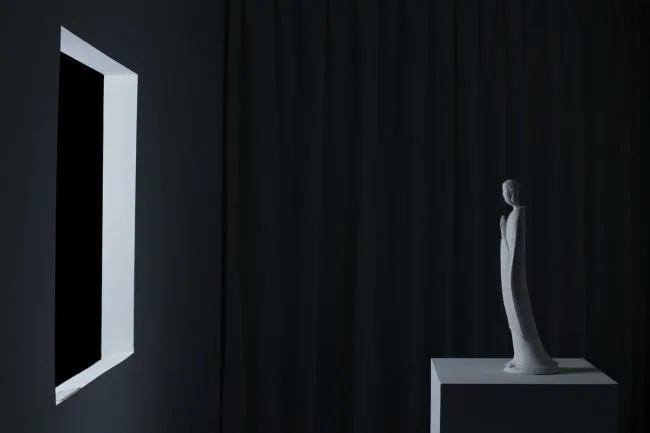
This exhibition is housed within the Hanshan Art Museum in Suzhou. We were honored to be commissioned by Buddha statue artist Jiang Sheng, in collaboration with BIM Learning, to design an exhibition space centered around the theme of “Extreme Bliss”.
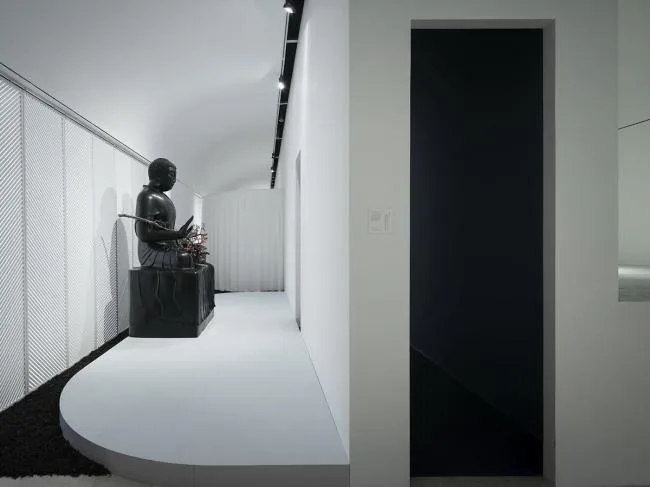
The main exhibition area is a rectangular hall approximately 35 meters long and 7 meters wide. The original space featured extensive curved surfaces, with a narrow gap running along the center of the ceiling, revealing the exposed structural elements above. This initial impression guided our design approach.
Given the sacred nature of the Buddha statues, we aimed to imbue the space with a profound sense of reverence. We also wanted the overall atmosphere to feel peaceful, serene, and introspective—qualities that echo Jiang Sheng’s artwork. To achieve this, the spatial design was intentionally subdued to ensure that visitors’ visual focus remains on the Buddha statues themselves, rather than on the surrounding environment.
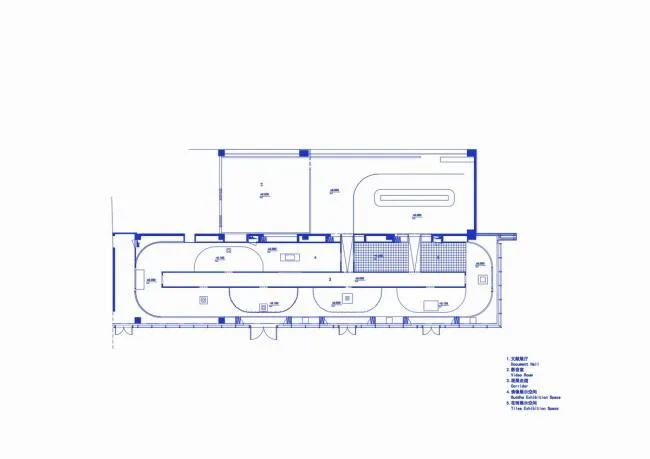
Floor plan
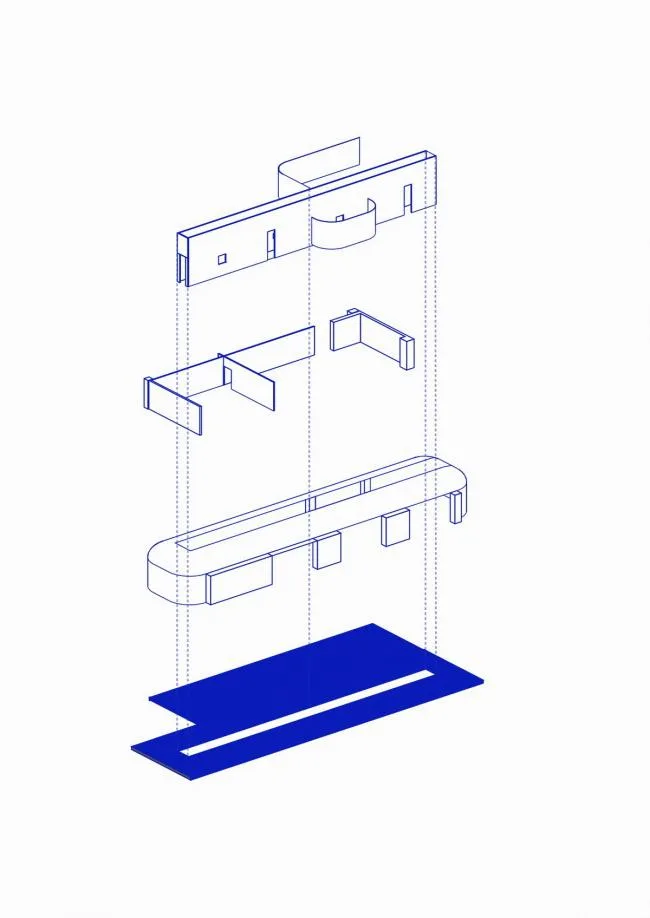
Analysis diagram
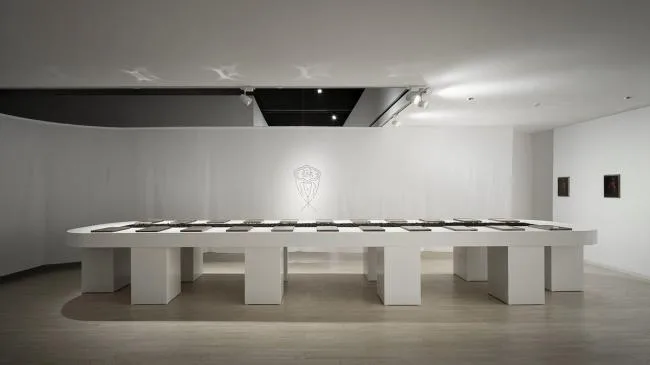
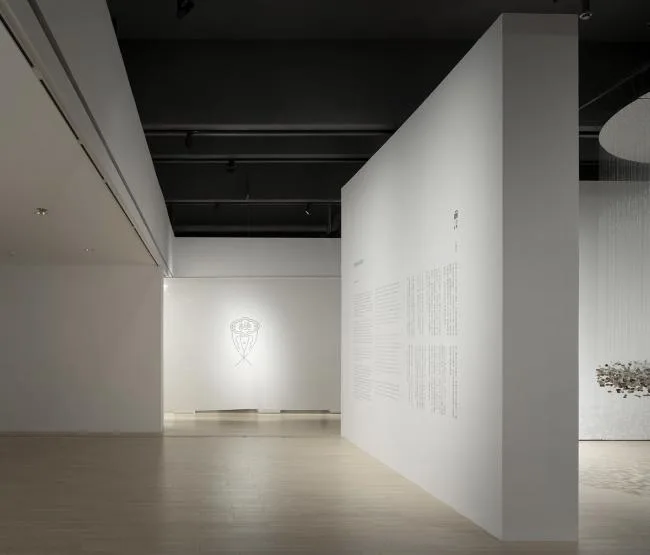
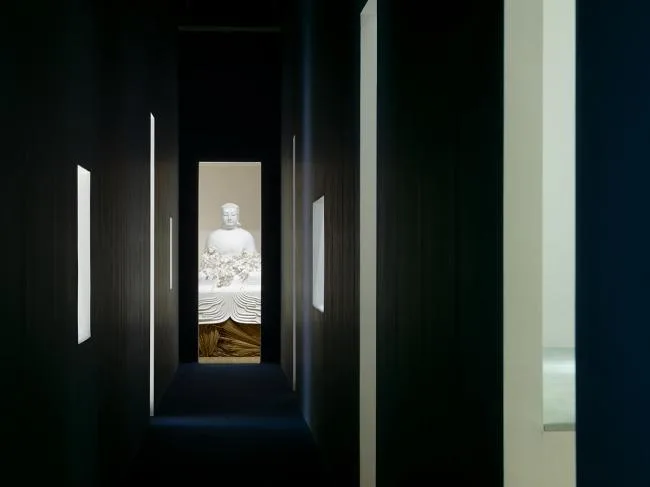
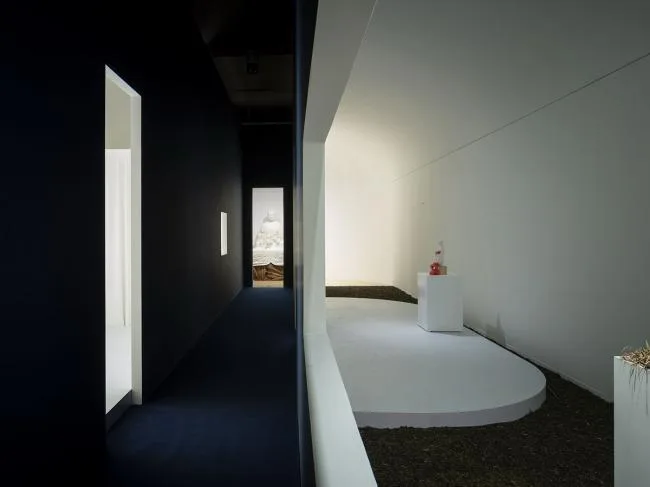
To achieve this, we introduced a dark, narrow volume at the center of the exhibition hall, serving as the main pathway for viewing. This structure is embedded within the ceiling opening (the BIM building). The long, dimly lit corridor is designed to minimize distractions, focusing visitors’ senses on the two Buddha statues at the corridor’s end. This focused environment encourages spiritual concentration.
The corridor is 1.4 meters wide, allowing two people to walk side by side comfortably. Its interior walls are painted a deep blue, emitting a subtle velvet-like texture in the absence of direct lighting. The tactile experience is enhanced through a raised tile installation along the corridor walls, which visitors can touch and closely observe. Inspired by the elegant hems of Buddha statues, these light green tiles resemble ripples on water, evoking a sense of inner calm and tranquility.
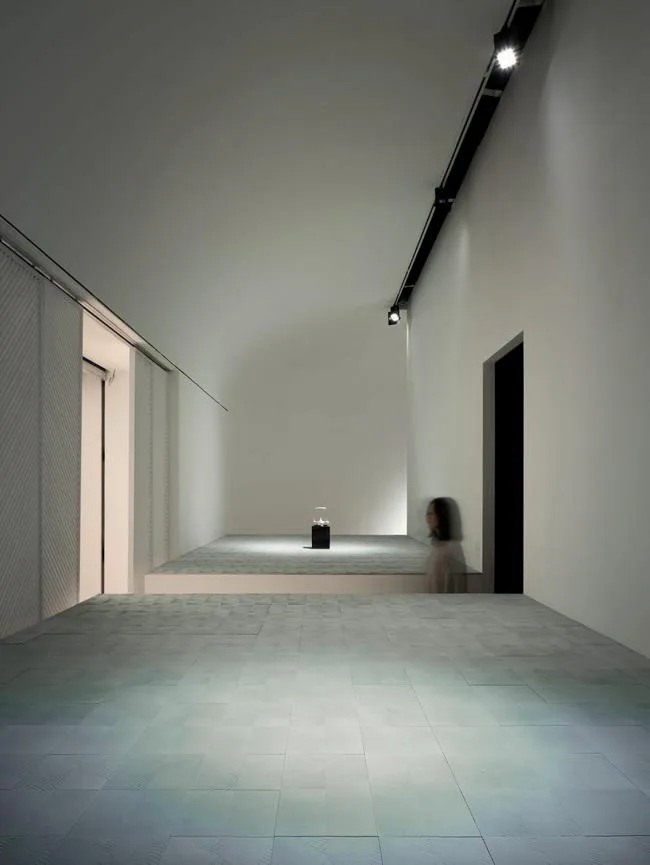
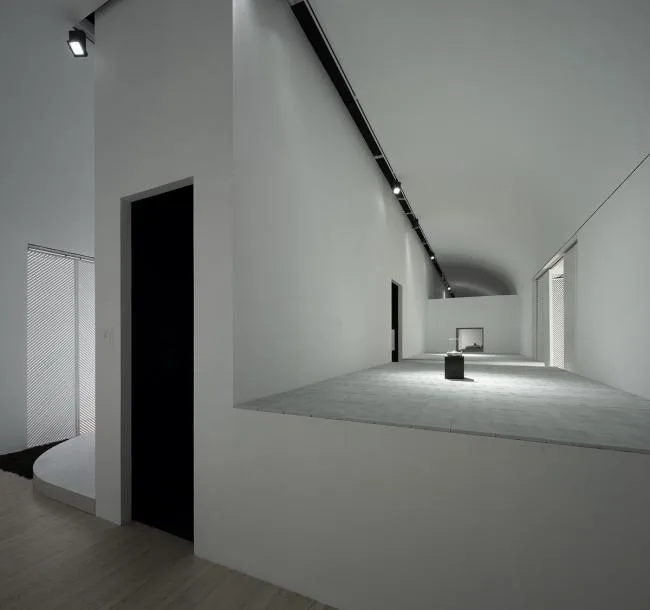
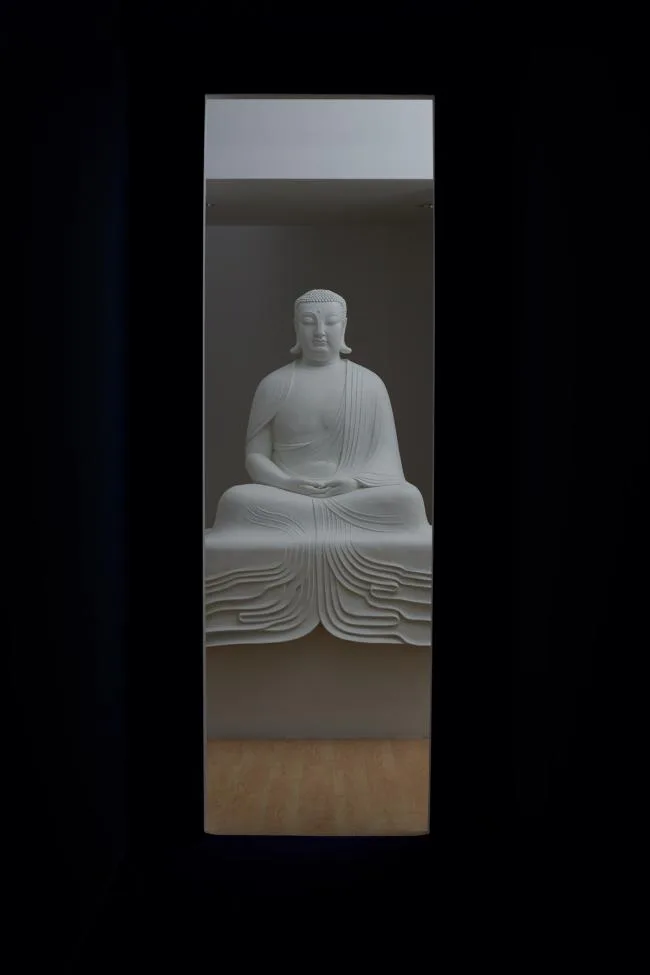
The Buddha statues are arranged around this central corridor, positioned in the brighter outer spaces. Visitors view these sculptures through windows and doorways built into the corridor walls, employing a framing technique reminiscent of traditional Suzhou gardens. Standing before these openings, visitors see the Buddha statues as framed compositions. Notably, the tall white Shakyamuni Buddha at the corridor’s end is partially visible through a slender doorway, revealing only fragmented views until one approaches closer, offering a dynamic and intimate viewing experience.
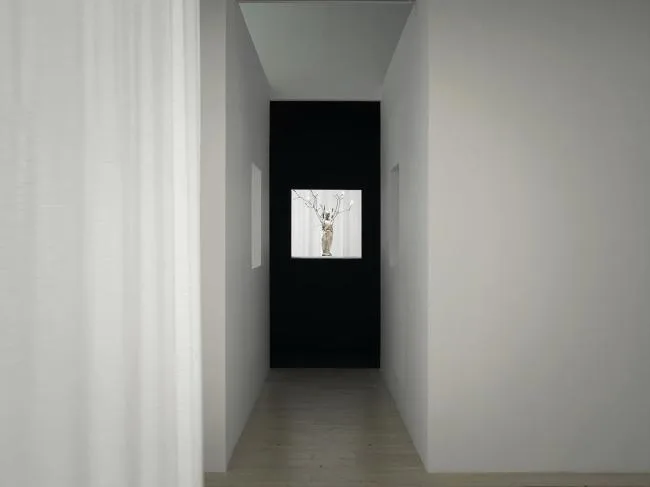
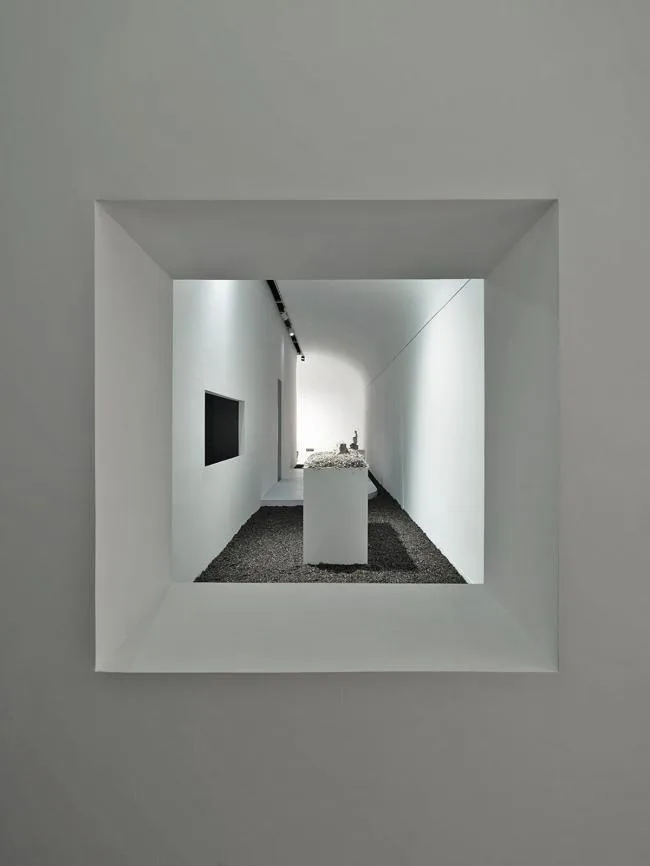
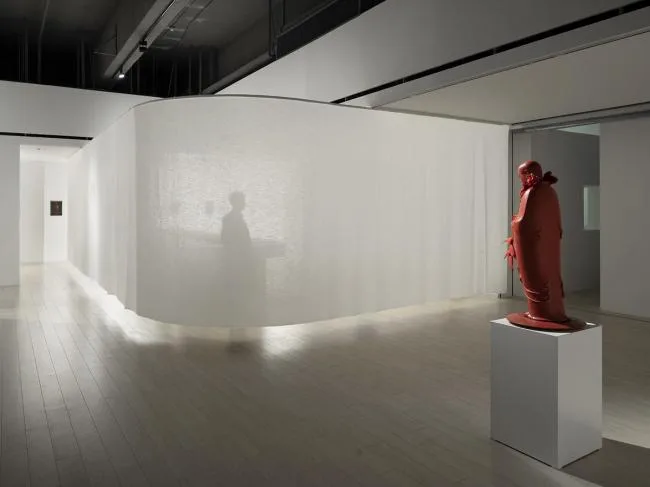
Outside the corridor, curved platforms mirror the venue’s architectural curves. Some platforms are enclosed with white semi-transparent curtains, creating private display areas for individual Buddha statues, while others remain open. Entering the curtained spaces allows visitors a moment of solitude with the statues, enhancing the feeling of tranquility. The open platforms provide a broader perspective, allowing appreciation of the visual hierarchy between the statues and the surrounding space.
We also introduced a subtle olfactory element by spreading dried Mount Wuyi yellow leaves on the floor. These leaves release a gentle fragrance throughout the space, adding a sensory dimension. Their dark yellow hue resembles withered earth, contrasting with the fresh flowers adorning the Buddha statues. This symbolizes the inevitable cycle from life to death. The white curtains fall directly onto these leaves, blurring the boundary between indoor and outdoor environments.
Project Information:
Function: Exhibition
Design Firm: Inter Building Design
Design Period: October 2018 to December 2018
Construction Period: January 2019
Location: Suzhou, Jiangsu
Area: Approximately 260 square meters
Team: Xiao Lei, Ziye Yousi, Wang Han, Alessandra Troisi, Eleonora Nucci, Pedro Manzano Ruiz
Type: Indoor
Status: Completed
Photographers: Ghana Yongyi, Wan Peng












Must log in before commenting!
Sign Up