
Located on the south side of the tallest building in the Xintiandi Business District, this project sits amidst the bustling Huaihai Middle Road, where both pedestrians and vehicles rush by. Unlike traditional construction projects, this design is a spatial installation—a garden—that emphasizes two key themes: “home” and “micro park.”
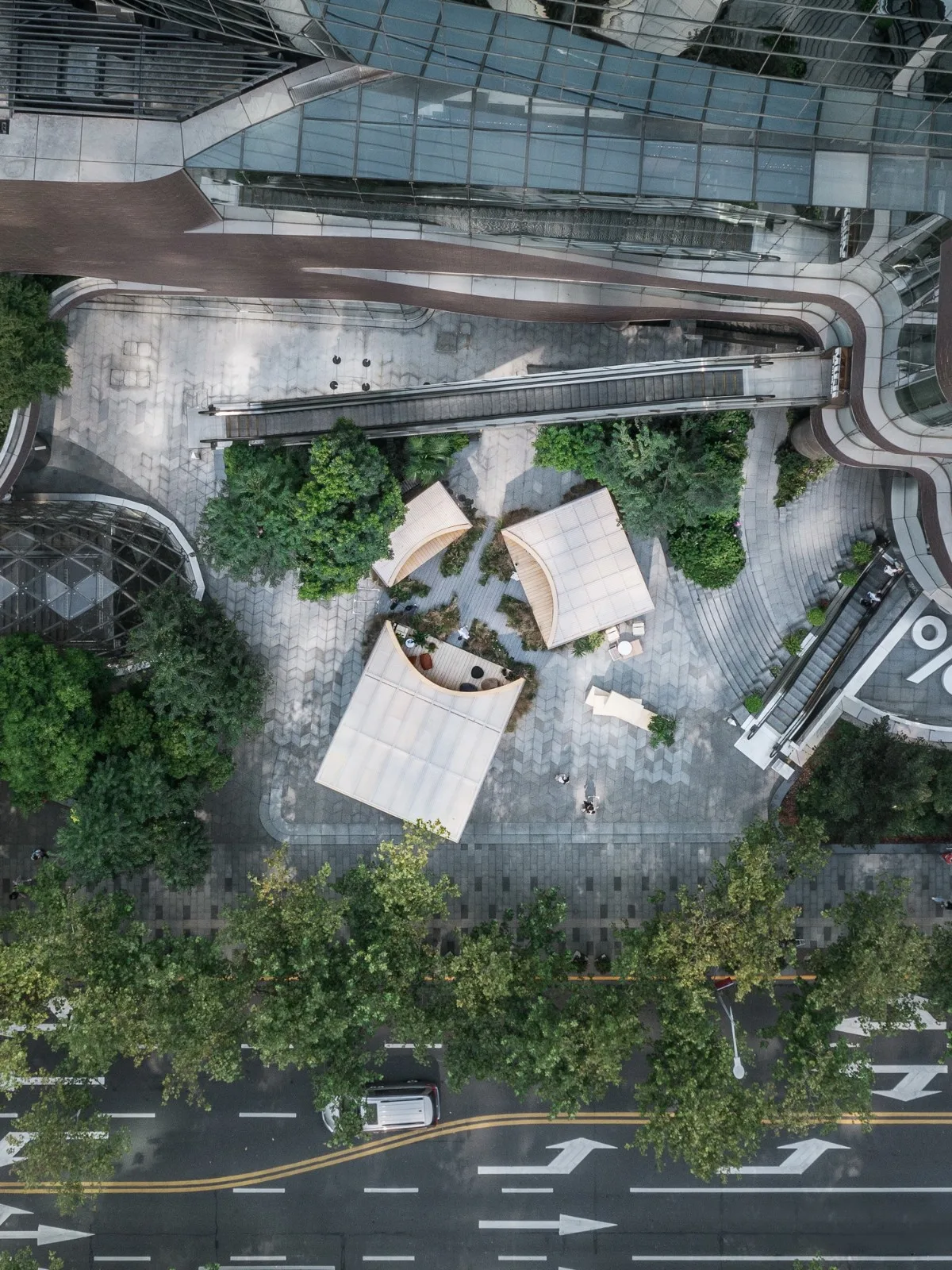
Within this vibrant cityscape, the various spatial elements of the installation seem to “embrace” one another.
In the spring of 2022, Shanghai’s lockdown due to the epidemic redirected citizens’ focus back to their homes. While outdoor activities declined, urban flora and fauna continued to thrive peacefully. As part of the 2022 Xintiandi Design Festival, this installation explores and reconstructs the connections between people, home, and nature. Amid the noisy, fast-paced environment, the project creates a space for pause and reflection, encouraging visitors to reconsider the meaning of “home” during increased time spent indoors.
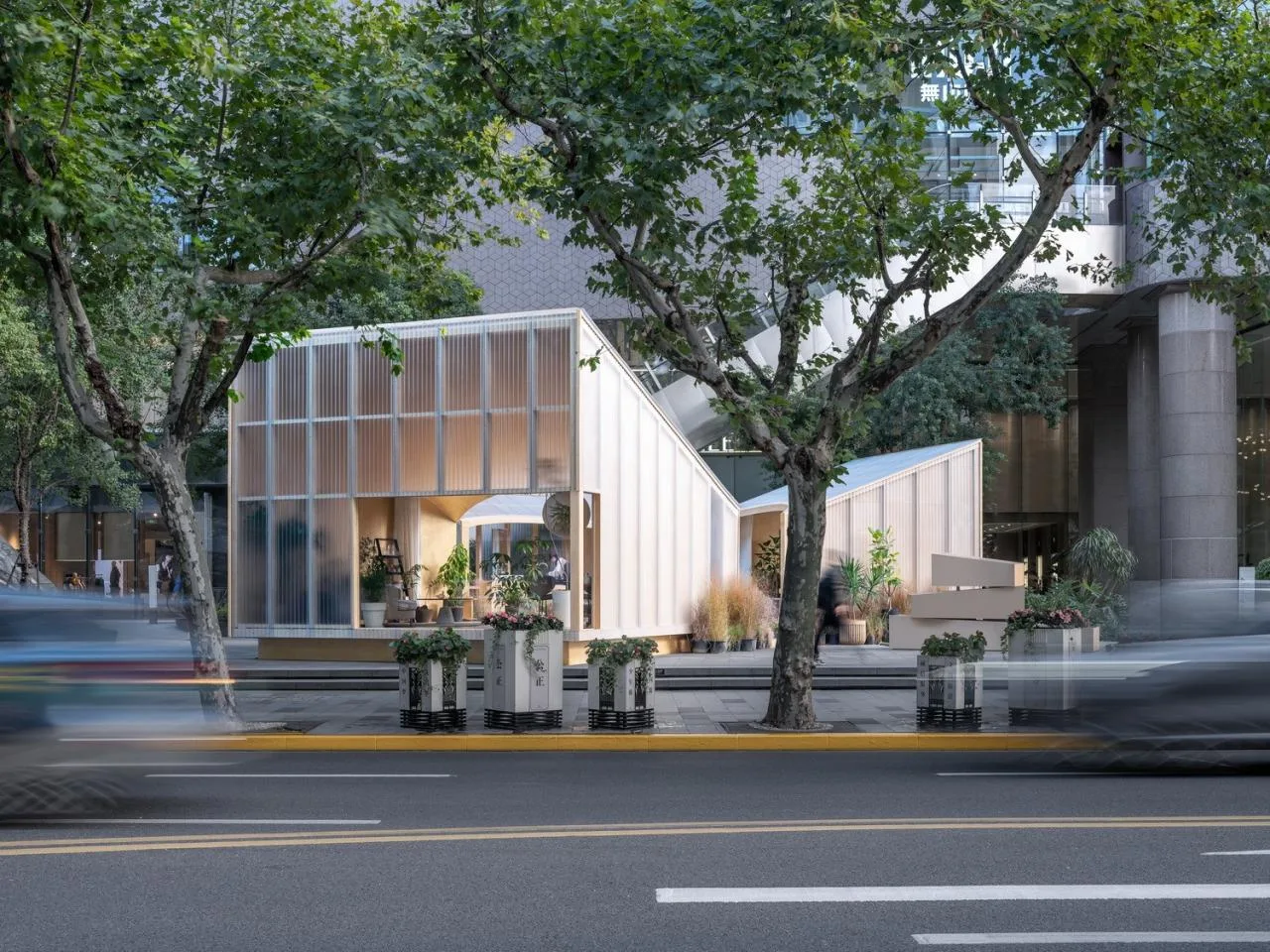
△ The installation’s spatial components reflect nuanced variations within the concept of “home.”
Surrounding Home
Intersecting pedestrian paths cut through the site, prompting the architect to use existing traffic flows to divide the space into three enclosed volumes. These represent the deconstructed basic rooms of a home: the living room, bedroom, and bathroom. Each volume varies in size—small, medium, and large—based on its function. Their orientation balances visual permeability along the flow lines and street facades.
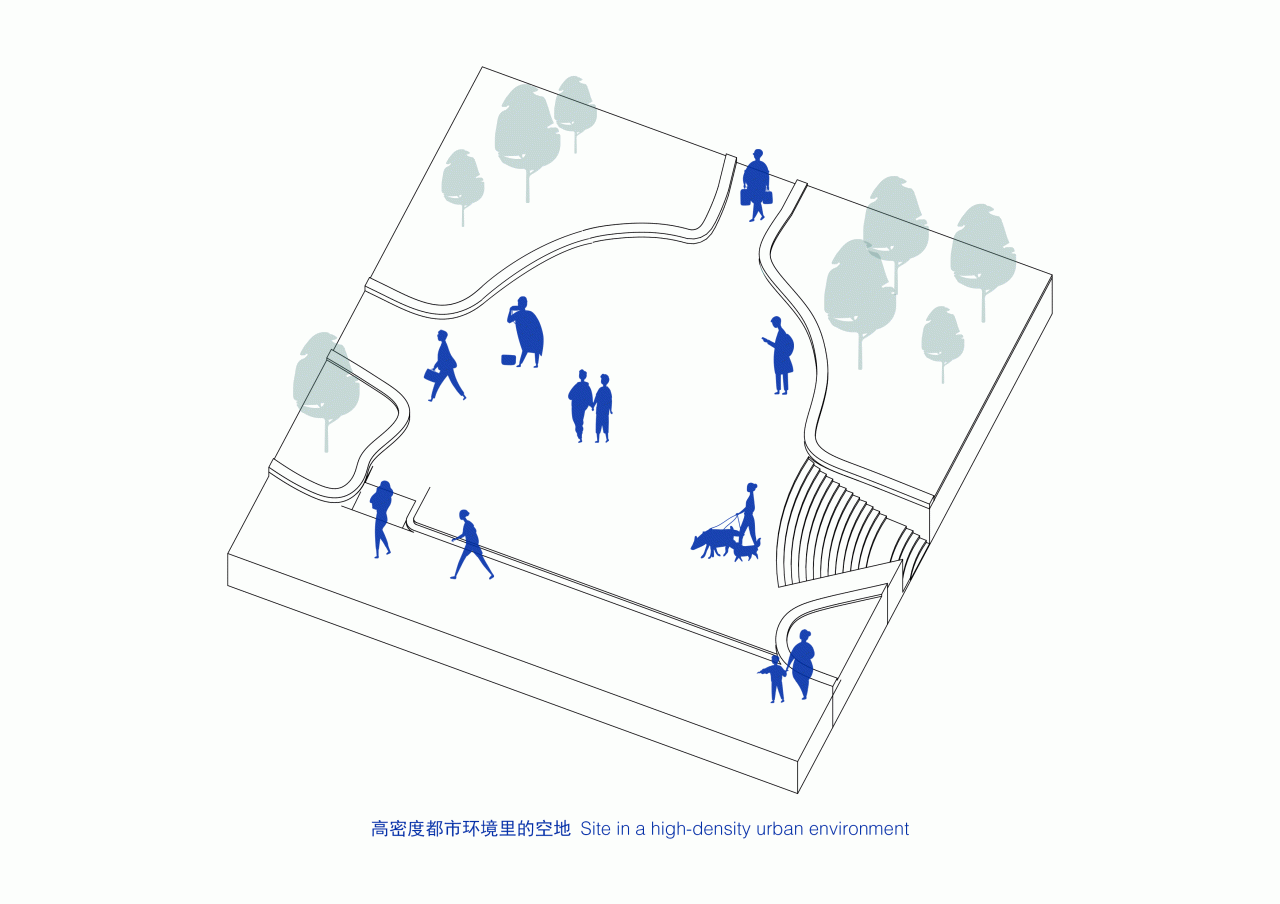
Conceptual analysis
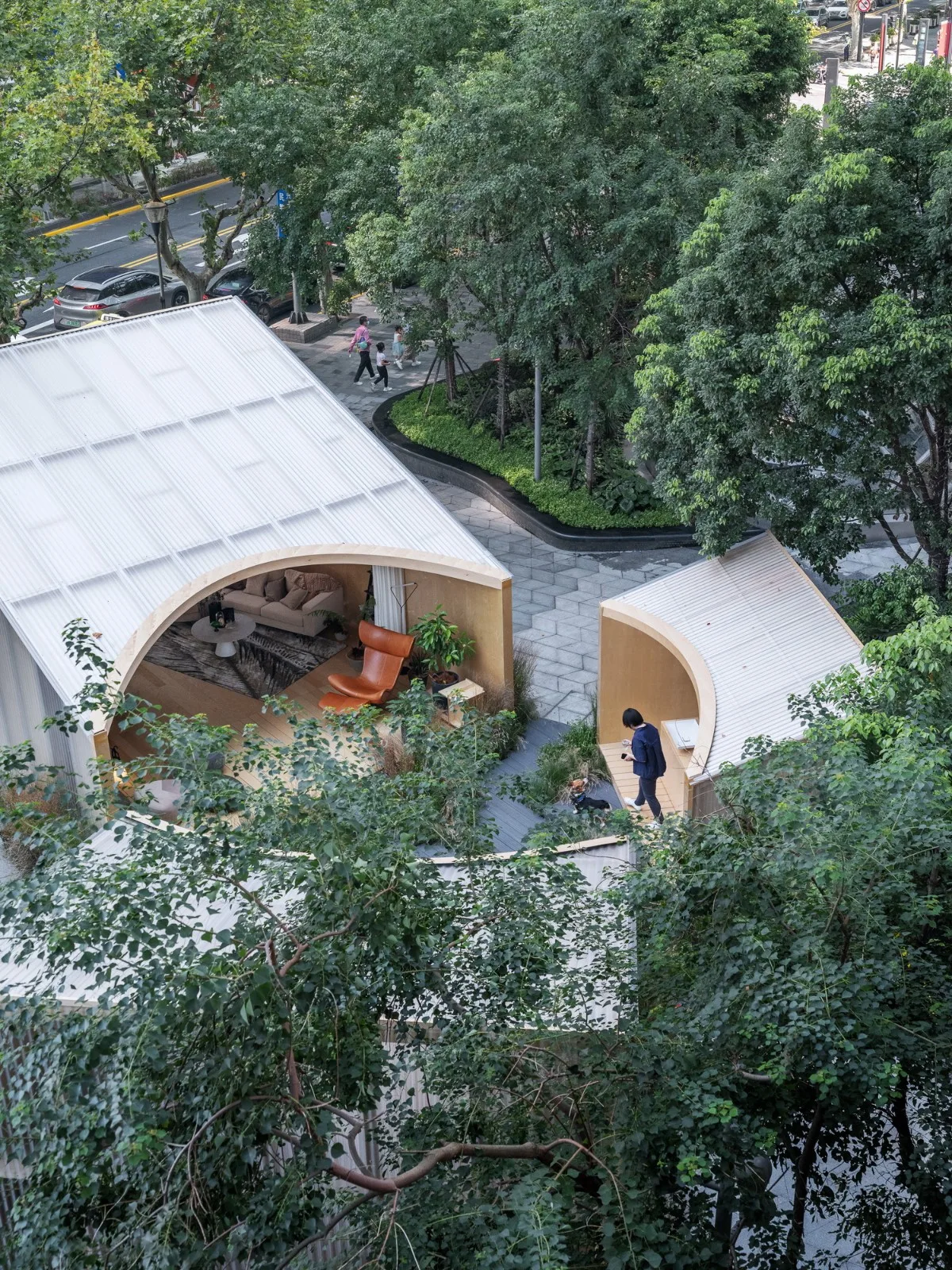
The installation’s design maintains the existing site flow with an “enclosed but not fitting” form.
Each room addresses different sensory and privacy needs, resulting in height variations within the spaces. Under strict height limits, the floor heights range from 2.45 meters to 5 meters. The three sloping roofs not only create a centripetal “home” but also channel rainwater into the courtyard’s green plants. The ‘home’ components and three main entrances remain unobstructed, allowing visitors to surround, enter, and leave intersecting footprints both inside and outside the installation.
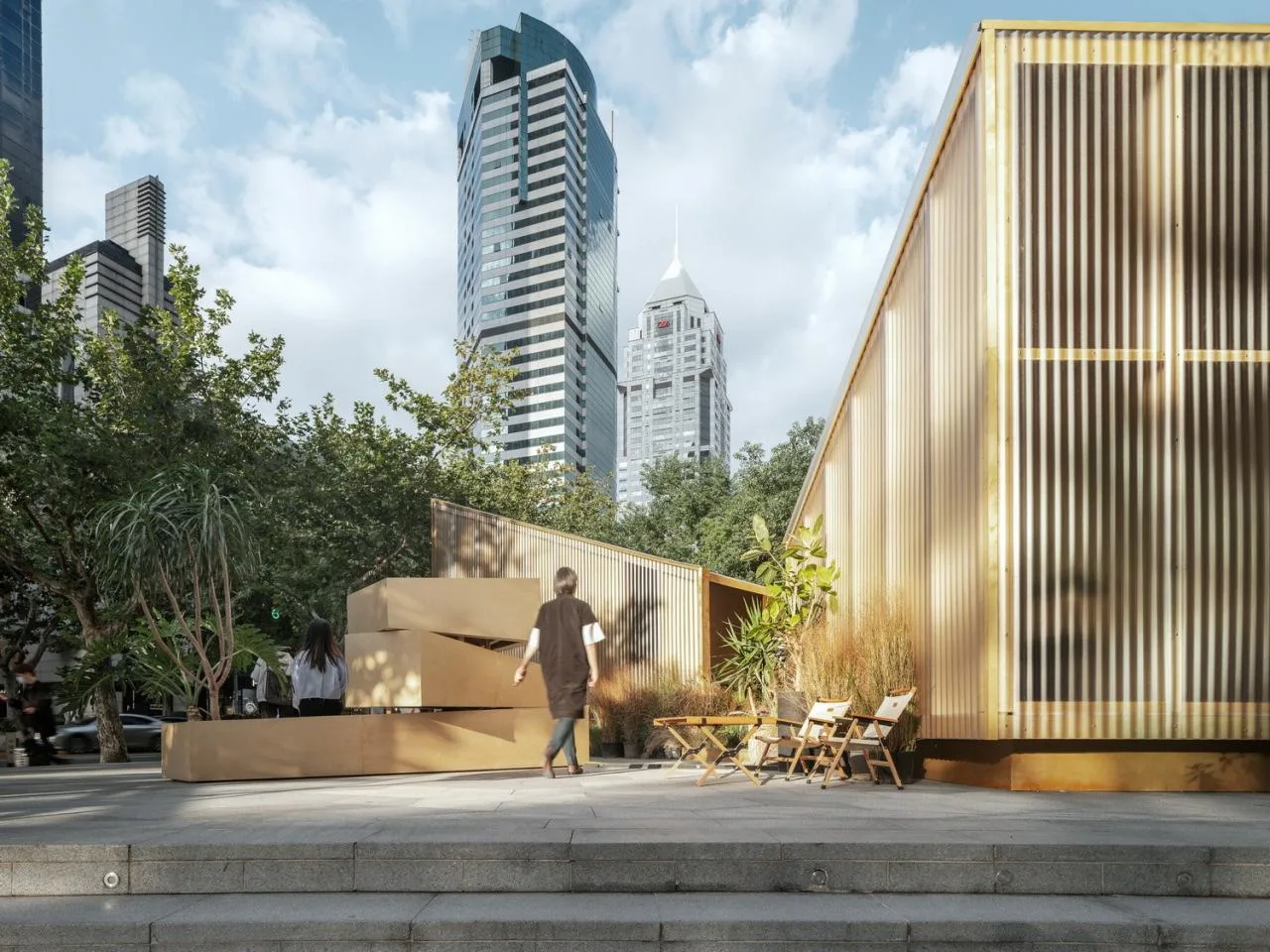
The centripetal sloping roofs effectively collect rainwater into the inner courtyard garden.
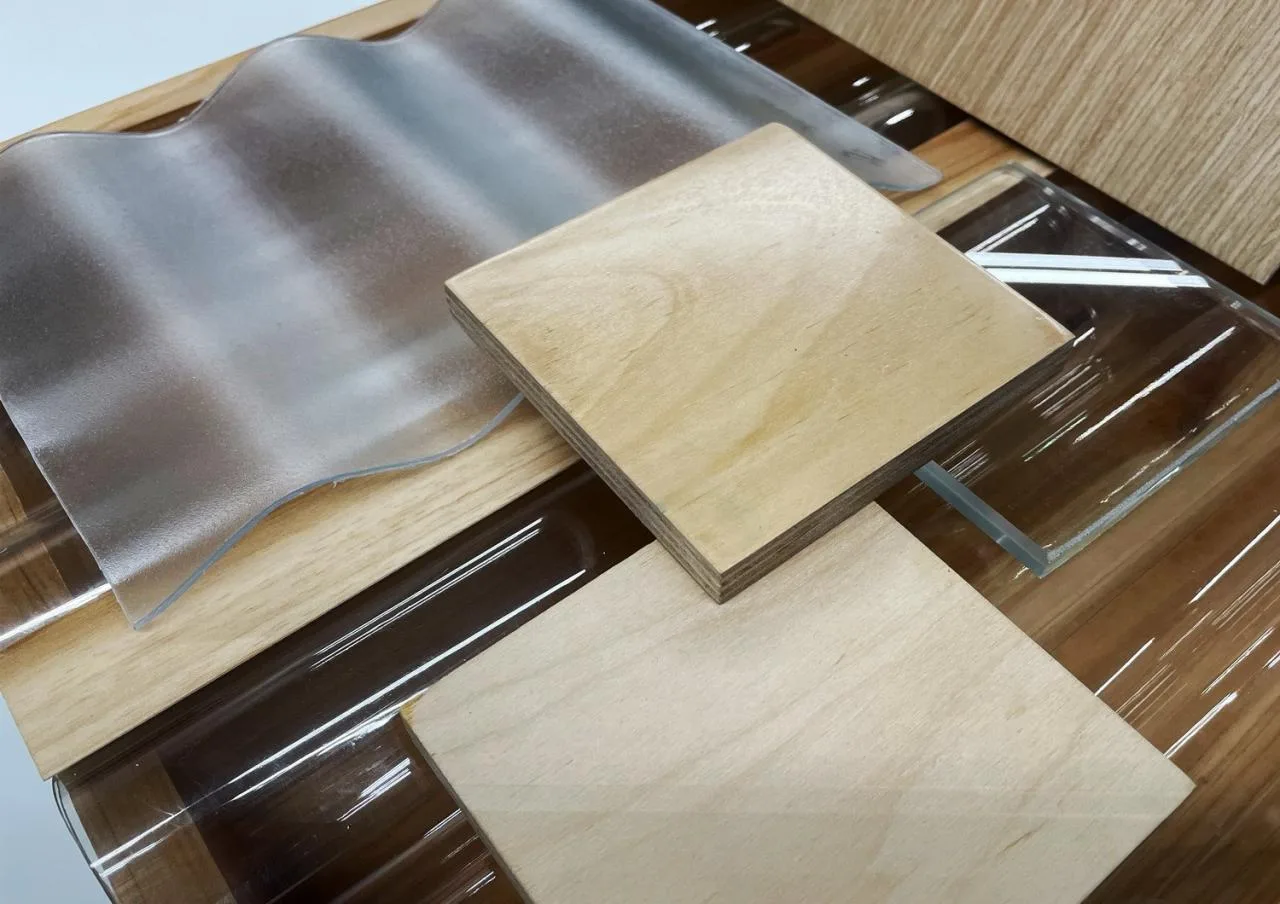
The facade combines laminated wood and frosted wave boards, creating a layered contrast between interior and exterior, solid and translucent. The keel structure is exposed through a reverse design, simplifying the interior facade while echoing the vertical growth of surrounding trees. Strategically placed window openings enhance local transparency and invite natural light inside. Continuous visual bands between window groups evoke a feeling of “home,” blending plants and urban scenery to spark curiosity and imagination among passersby.
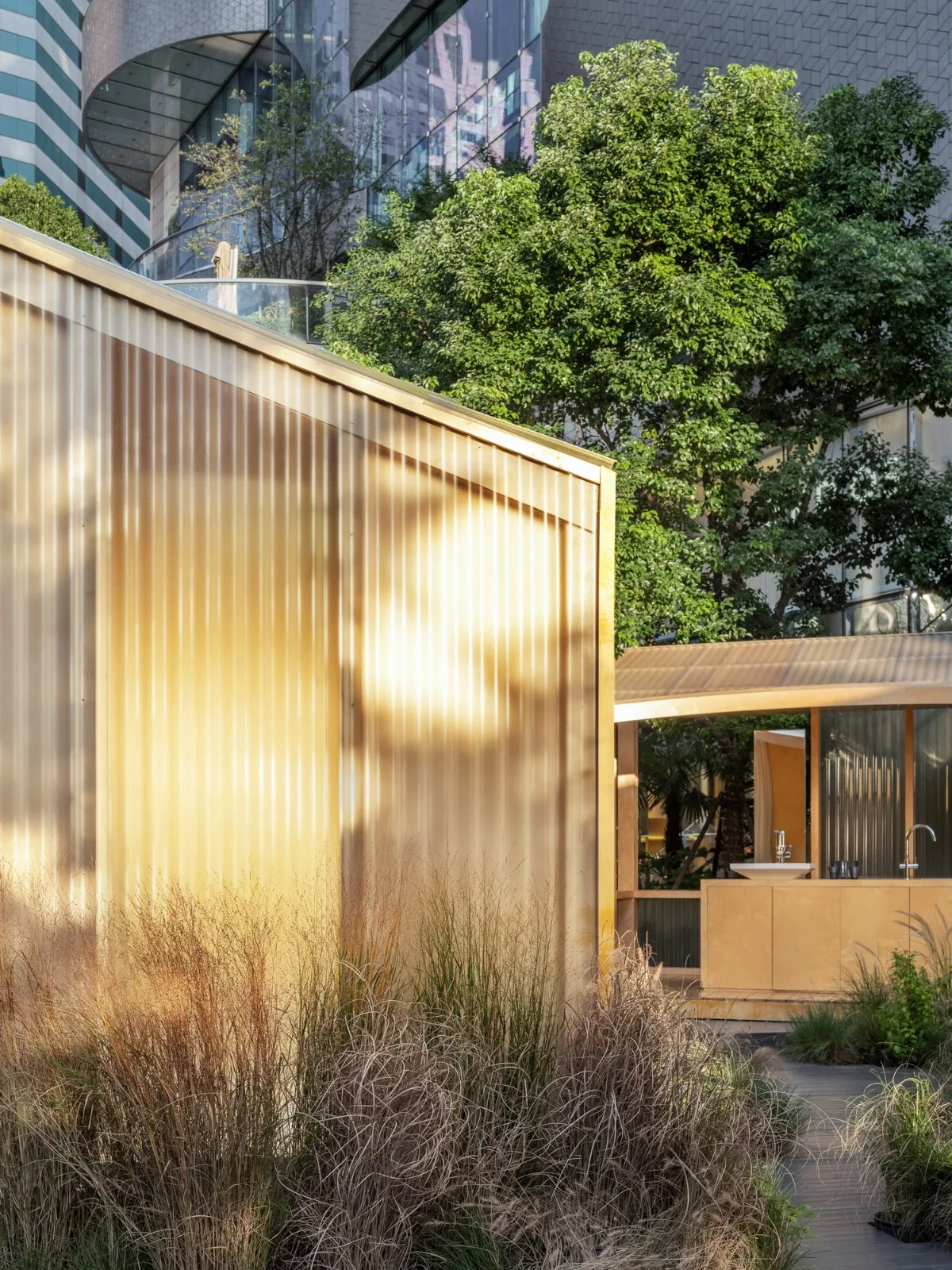
△ West entrance facade: vertical keels and frosted boards create dual-layered decorative surfaces.
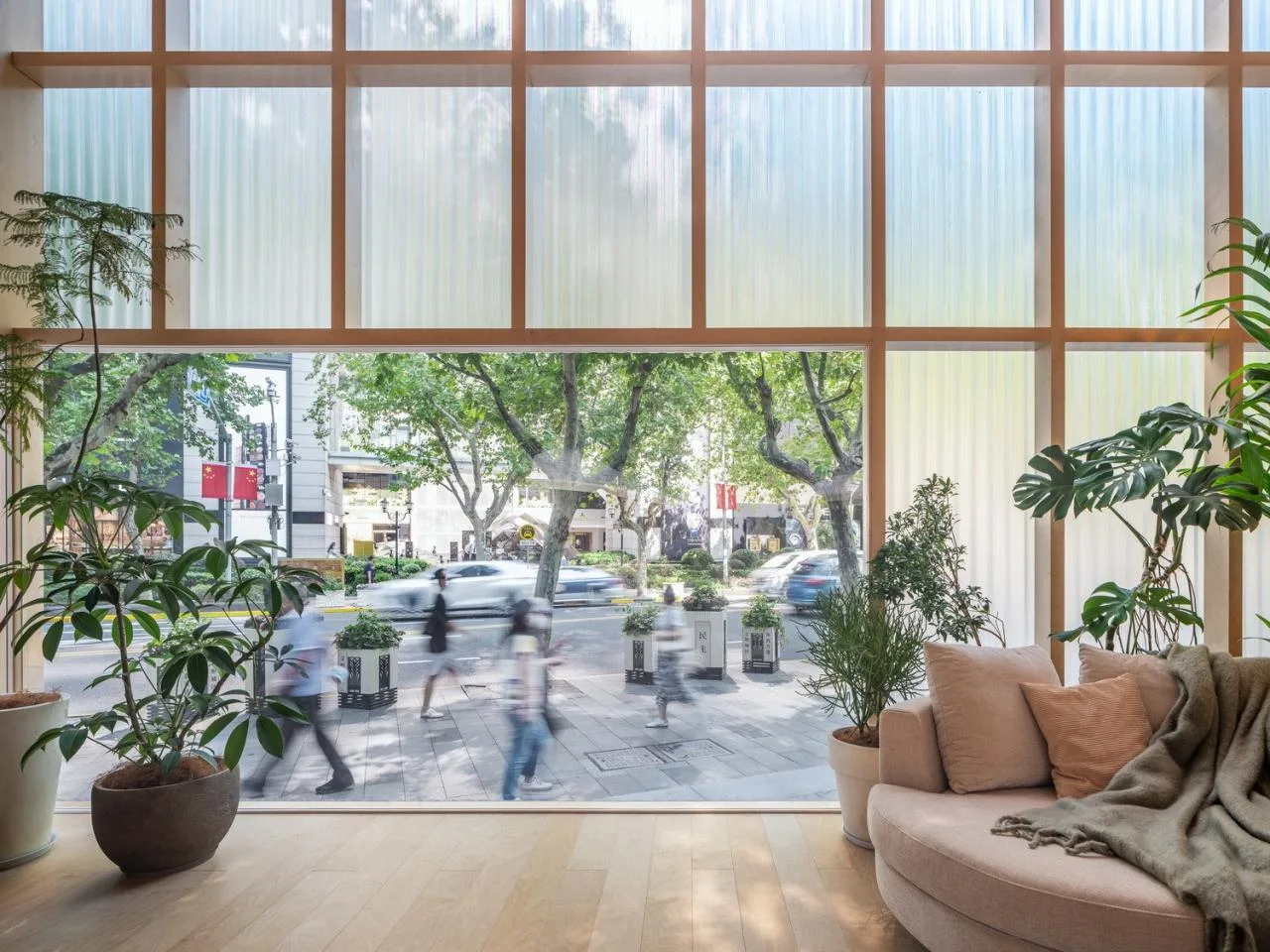
△ Facade window openings offer glimpses inside, inviting curiosity among pedestrians.
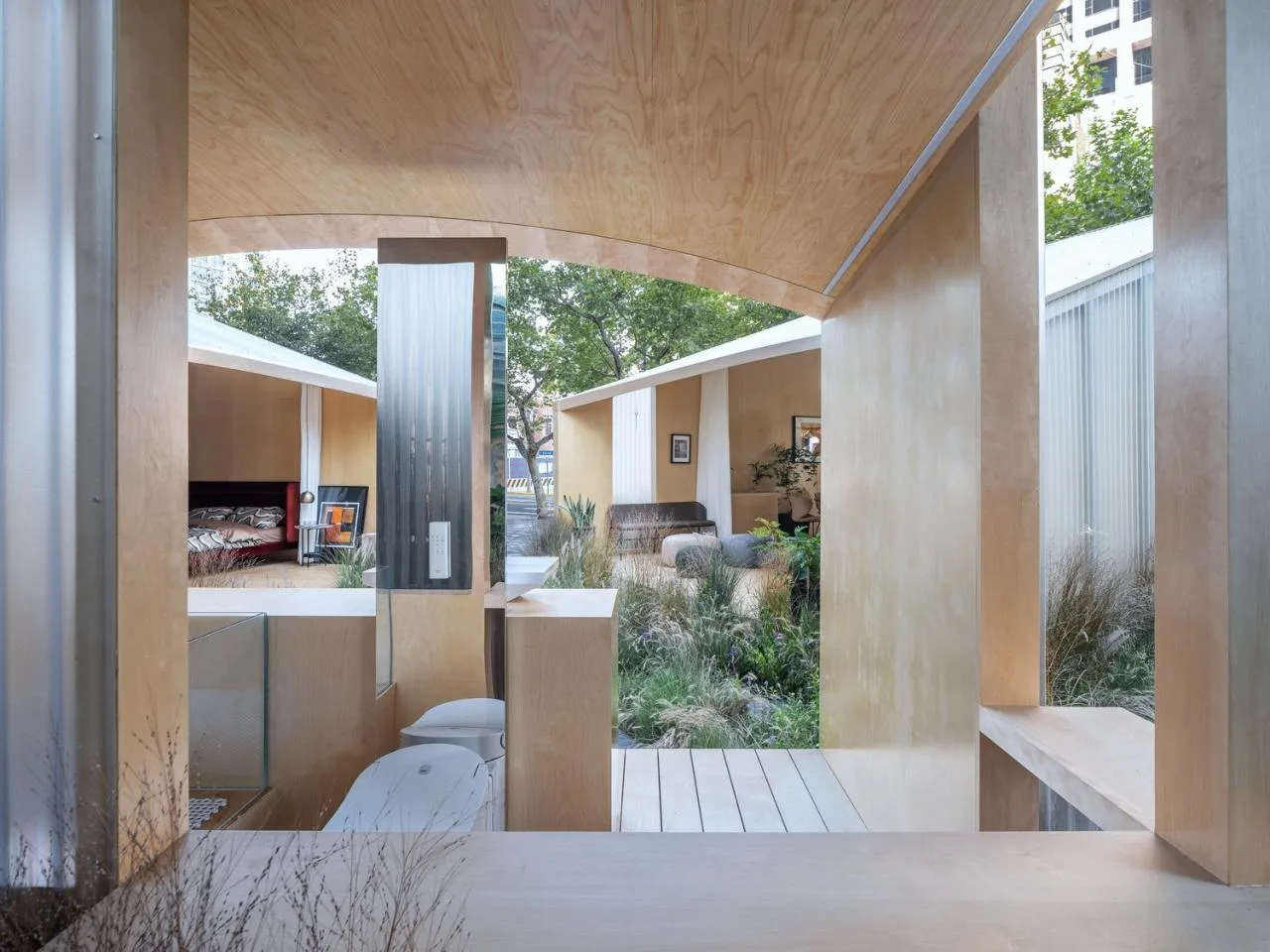
△ Bay windows add depth and enhanced views within the limited SPA space.
Between Edges and Sides
At the entrance, visitors encounter various components embodying “home” naturally emerging from the central public area—a micro park lush with greenery and the hub for related activities.
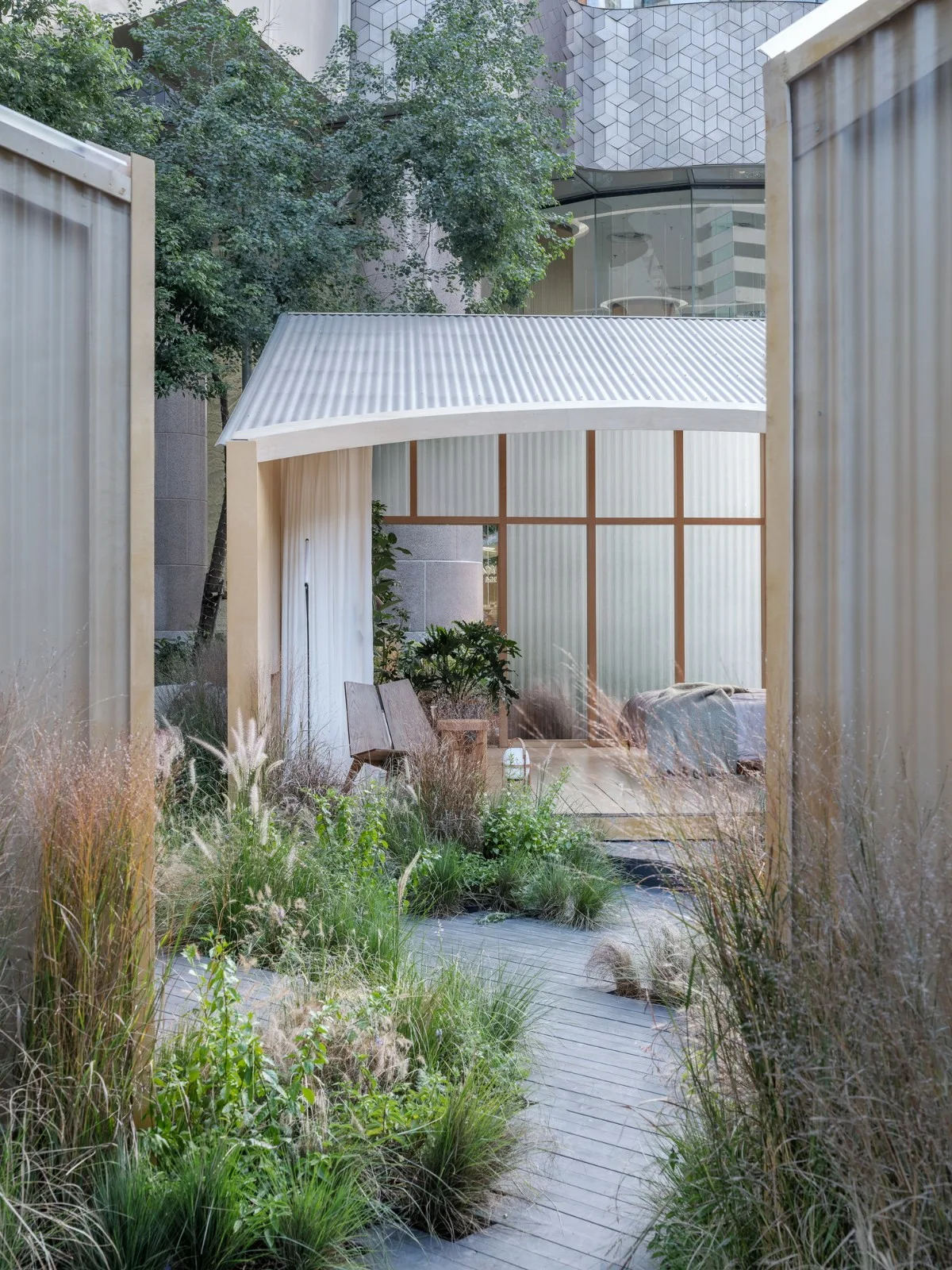
The courtyard’s eaves and corridors maintain a harmonious balance.
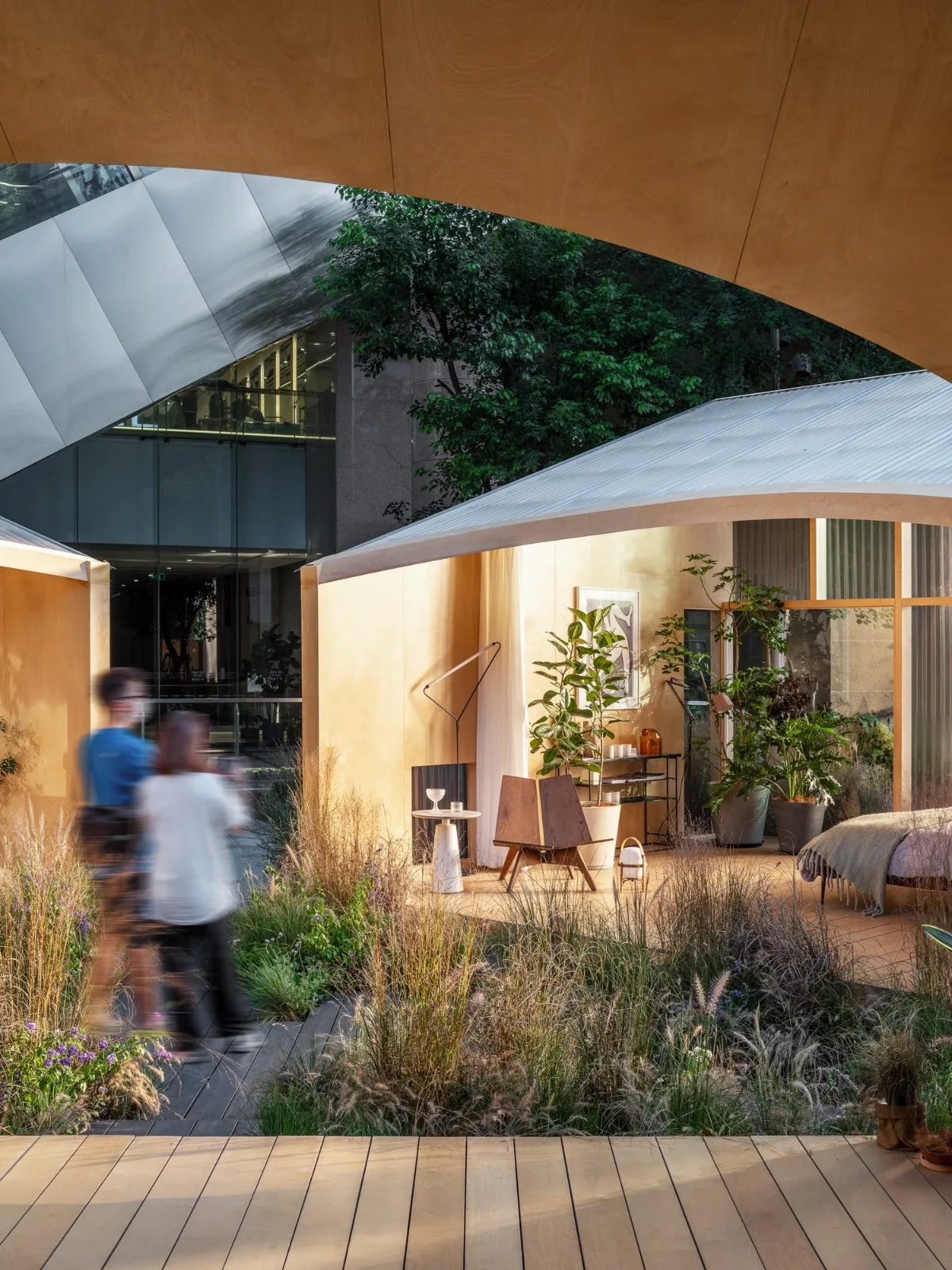
Previously designed furniture by Jianzhu includes leisure chairs and floor lamps that complement the “Jianyuan” space.
To accommodate temporary, low-tech construction needs, drought- and low-fertilizer grasses dominate the planting. An anti-corrosion wooden path guides visitors through the garden, encouraging exploration and collective activities.
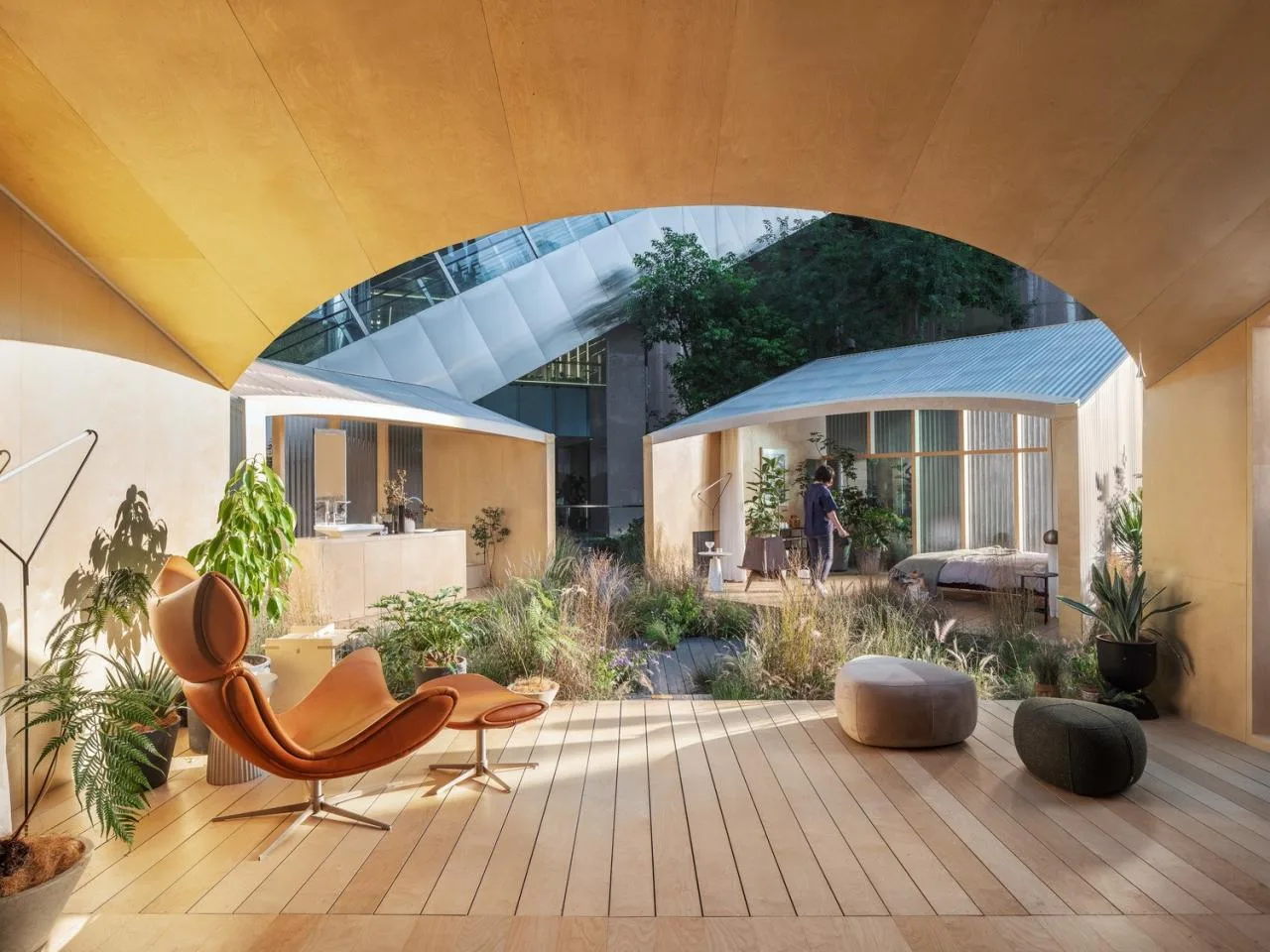
Nature and home intertwine through the eaves and corridors.
The design draws inspiration from the traditional Japanese architectural concept of “engawa,” a transitional edge space that neither fully separates nor isolates the indoors from outdoors. Architect Kisho Kurokawa described it as a “third domain” that mediates between inside and outside. Reflecting this, each room is raised 0.45 meters, with three curved roofs of 3.5-meter radius creating covered yet open eave corridors. This design fosters a harmonious balance where nature and home seamlessly interact.
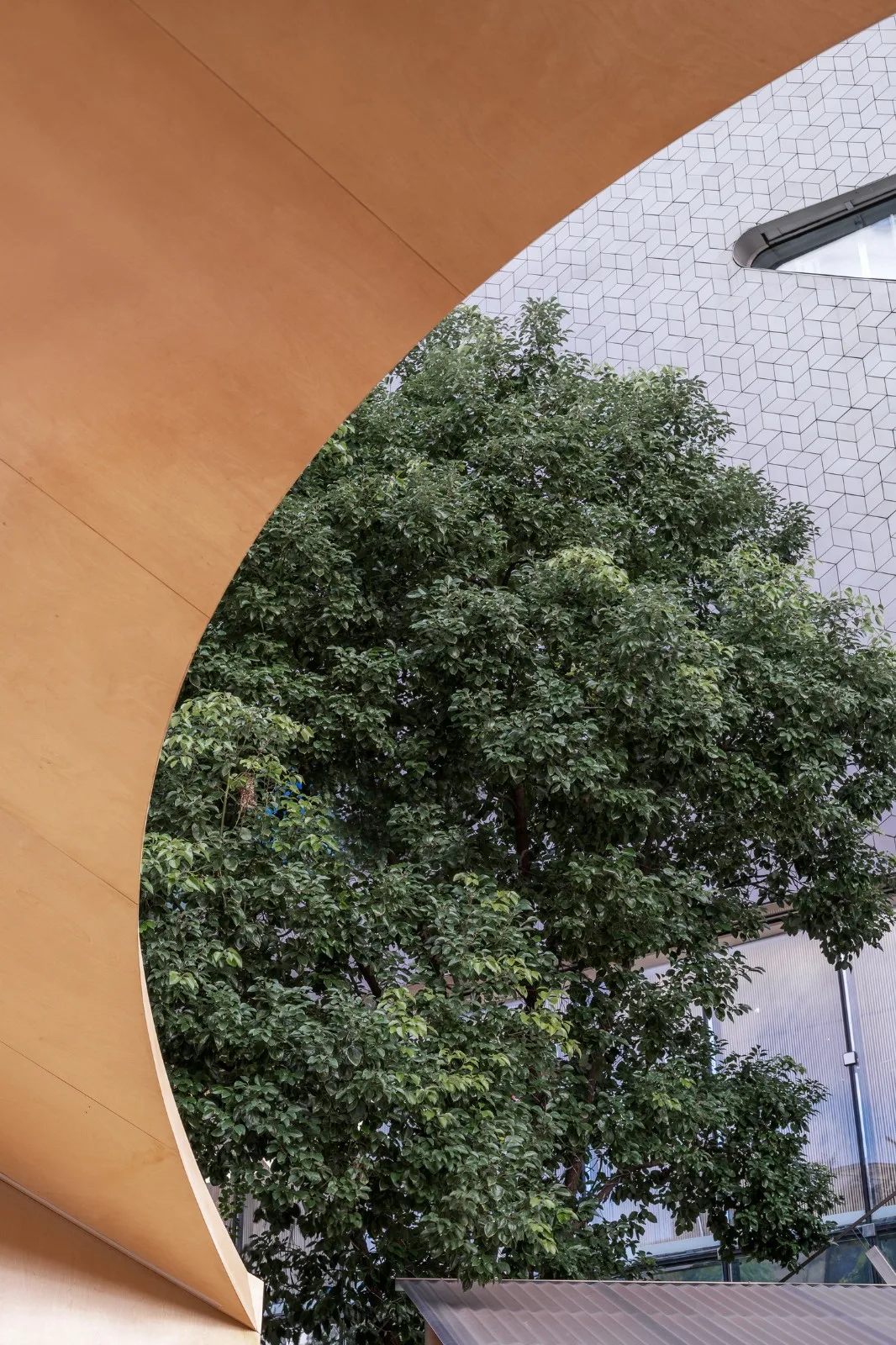
The curved eave roofs elegantly frame the urban landscape.
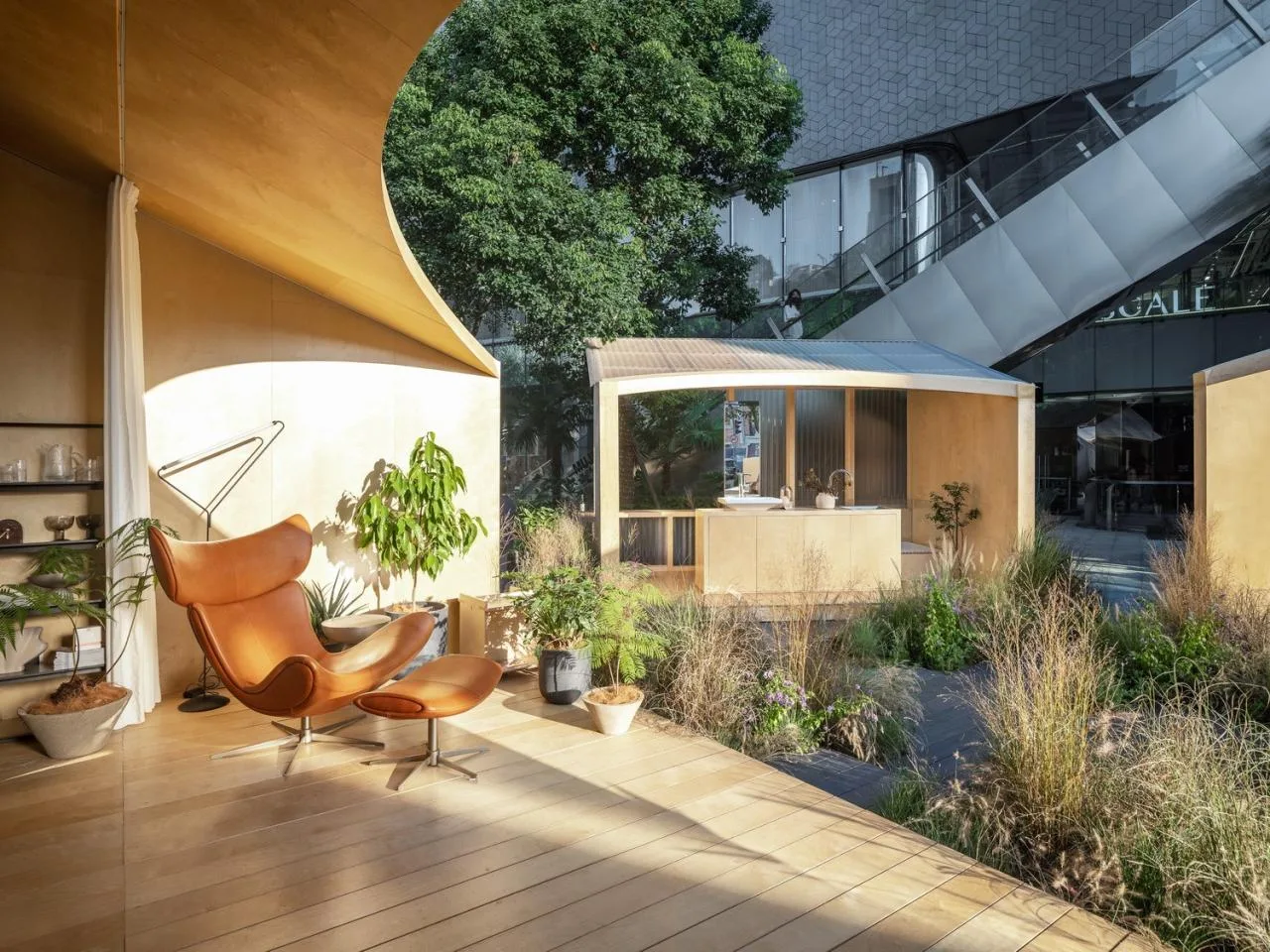
Inside, light, plants, and furniture take center stage.
The irregular shape of “Jian Yuan” reduces external noise. Sitting under the eaves, visitors hear gentle wind chimes while surrounding plants cluster close to their knees. From an elevated perspective, the home’s components and micro park connect intimately through eaves and corridors, embracing visitors and offering comfort.
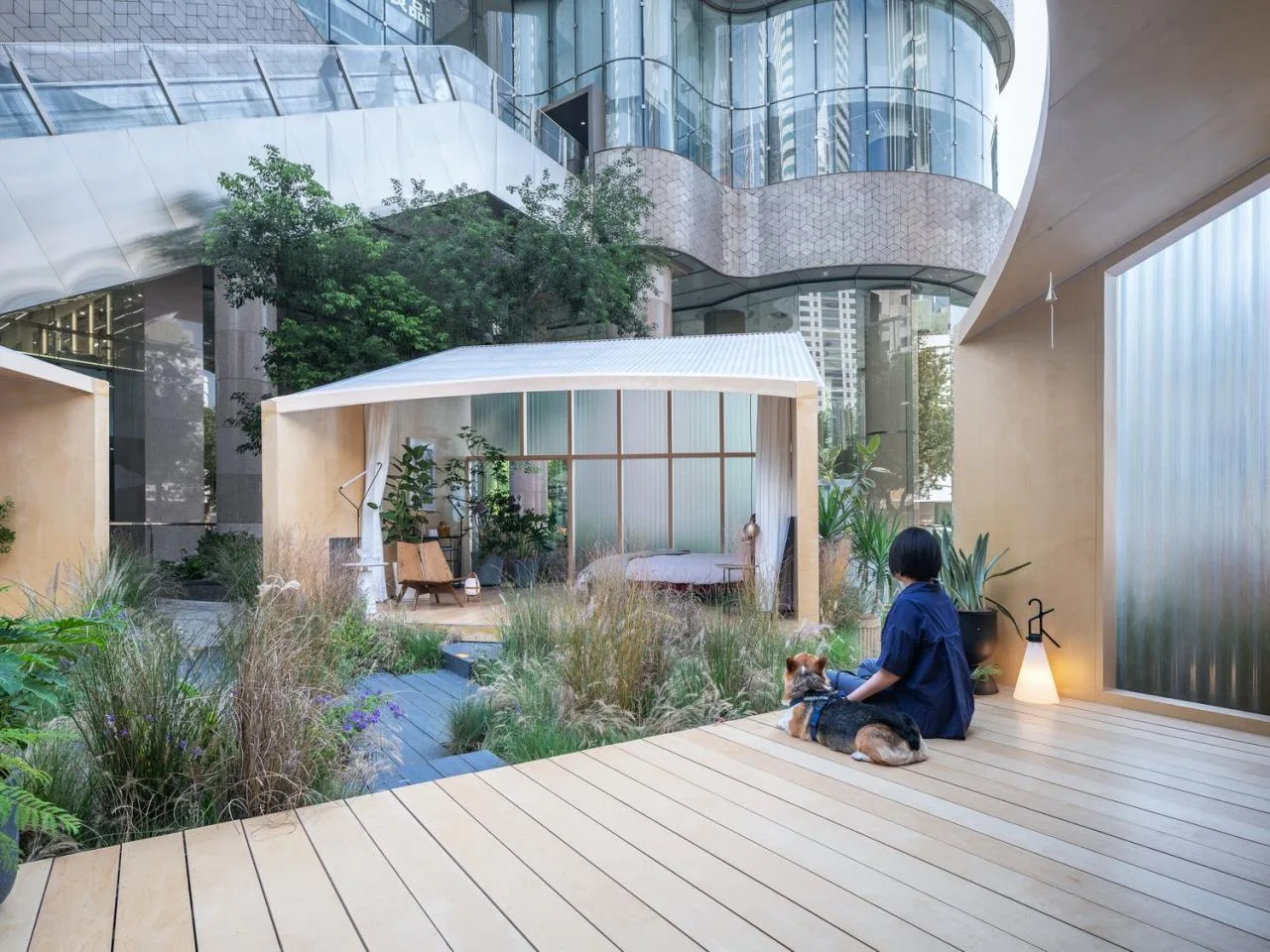
The Flowing Room
As visitors move between spaces, the installation’s subtle boundaries allow nature to flow freely between indoors and outdoors. Small shrubs and trees inhabit the eaves, creating a controlled but lively environment that fosters a sense of “life-loving” delight. Interior decoration is minimal to highlight light, plants, and furniture as the space’s key elements.
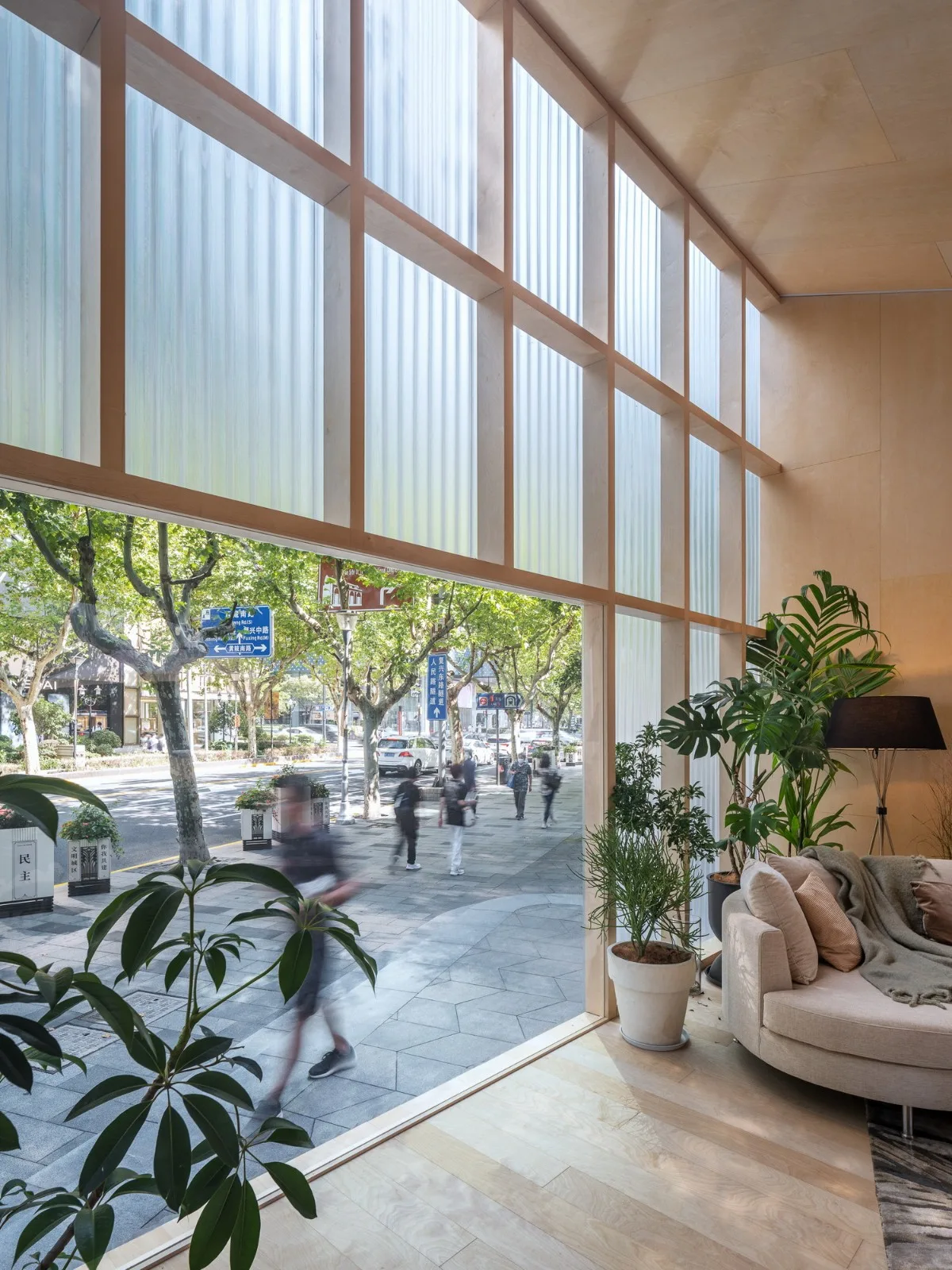
△ Facade window openings offer partial visibility, sparking curiosity among passersby.
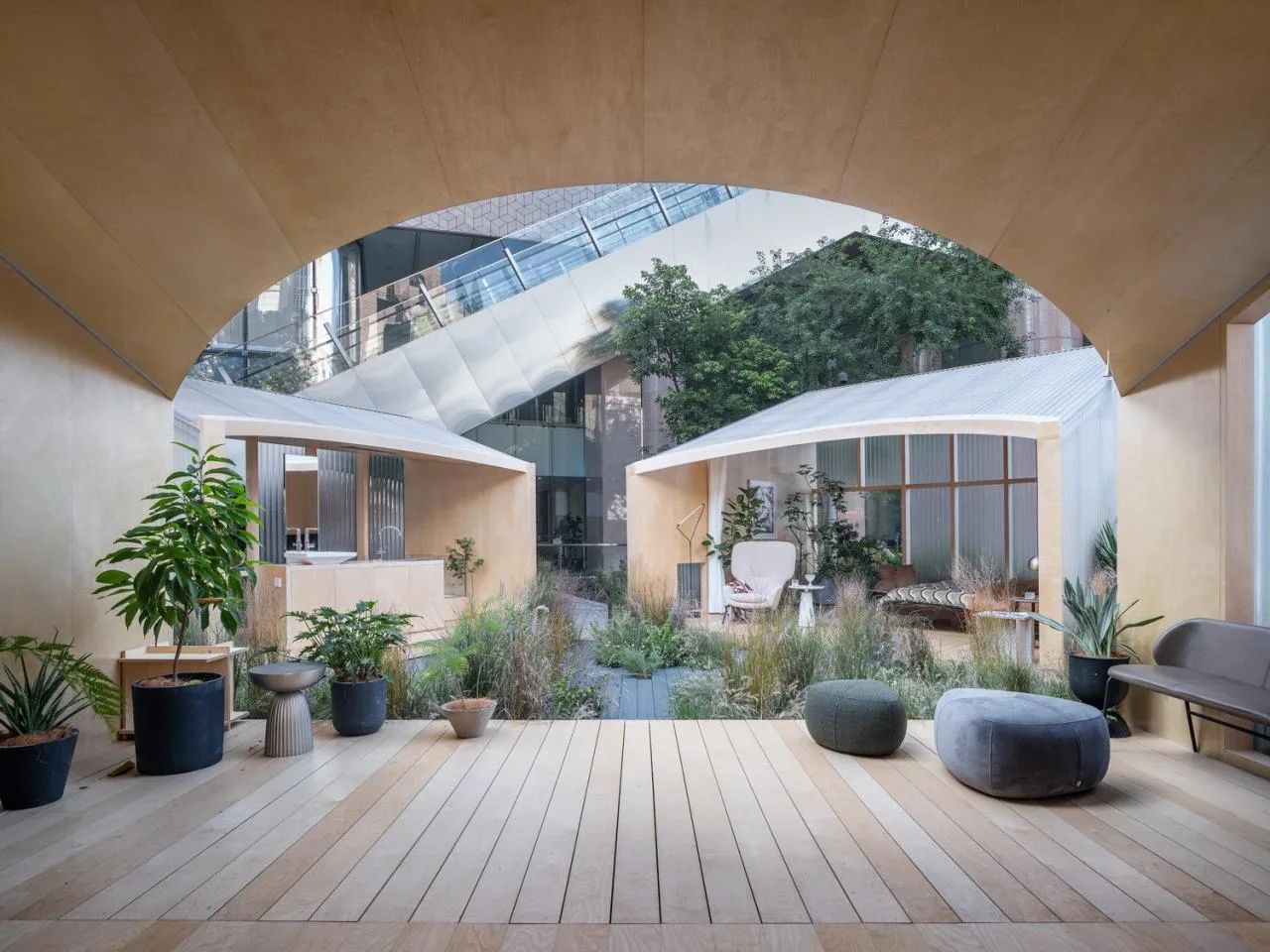
Indoor functional zones are distinguished solely by varying plywood assembly methods.
By removing the “fourth wall,” the installation’s transparency welcomes daylight by day and reveals soft lamp shadows by night. This creates layered interpretations and experiences across the living room, bedroom, and bathroom. The calm, warm atmosphere encourages visitors to envision limitless possibilities for home and life within a confined space.
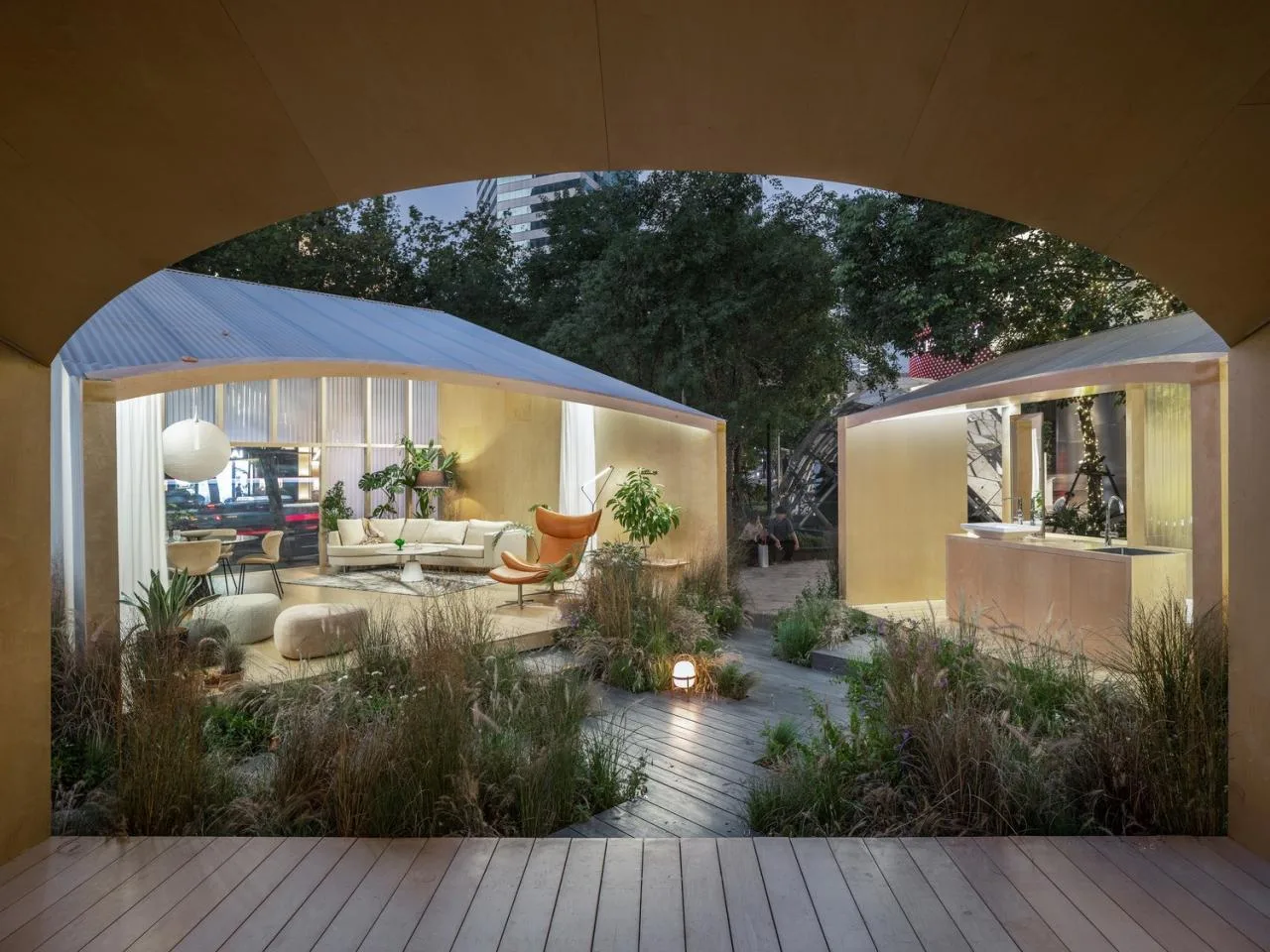
Anti-corrosion wood creates staggered pathways in the courtyard guiding visitors.
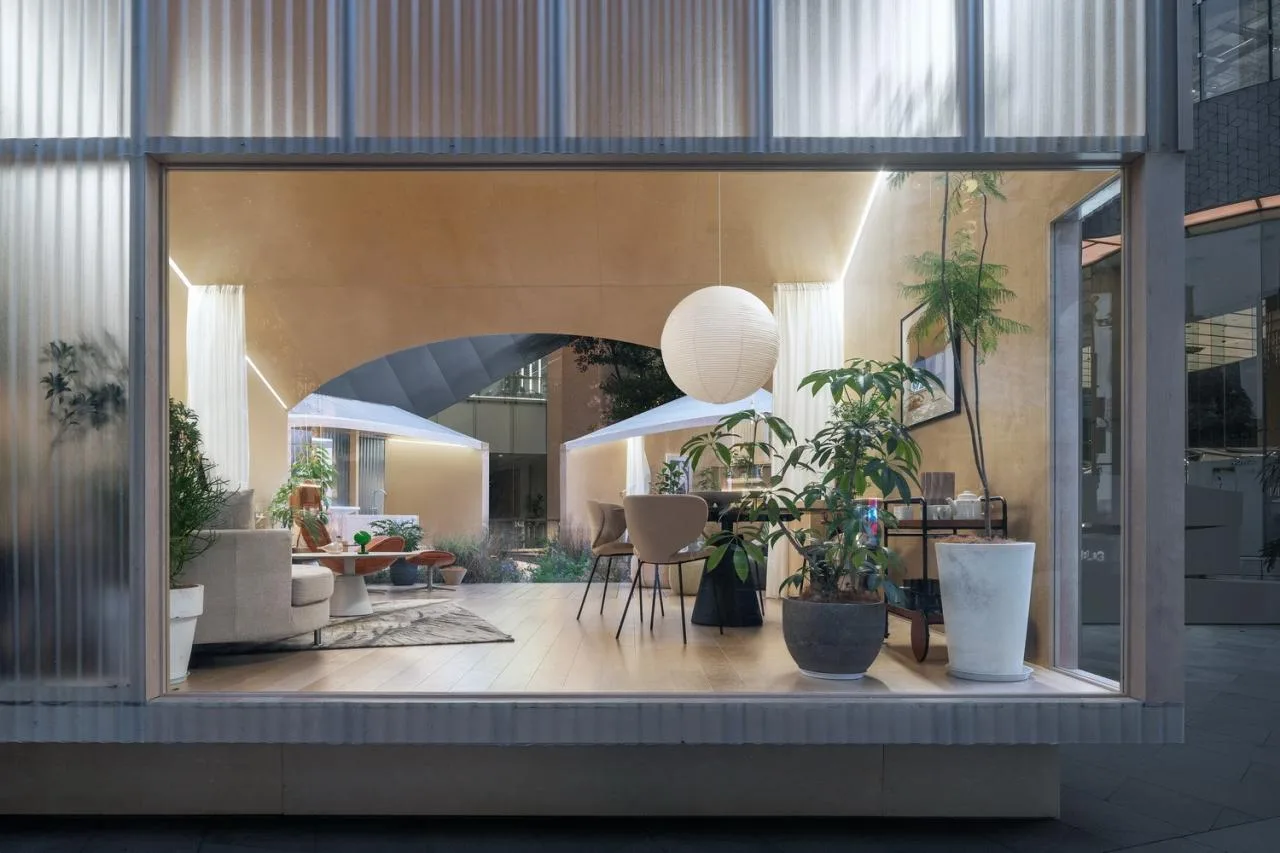
The installation emits soft light and shadows at night.
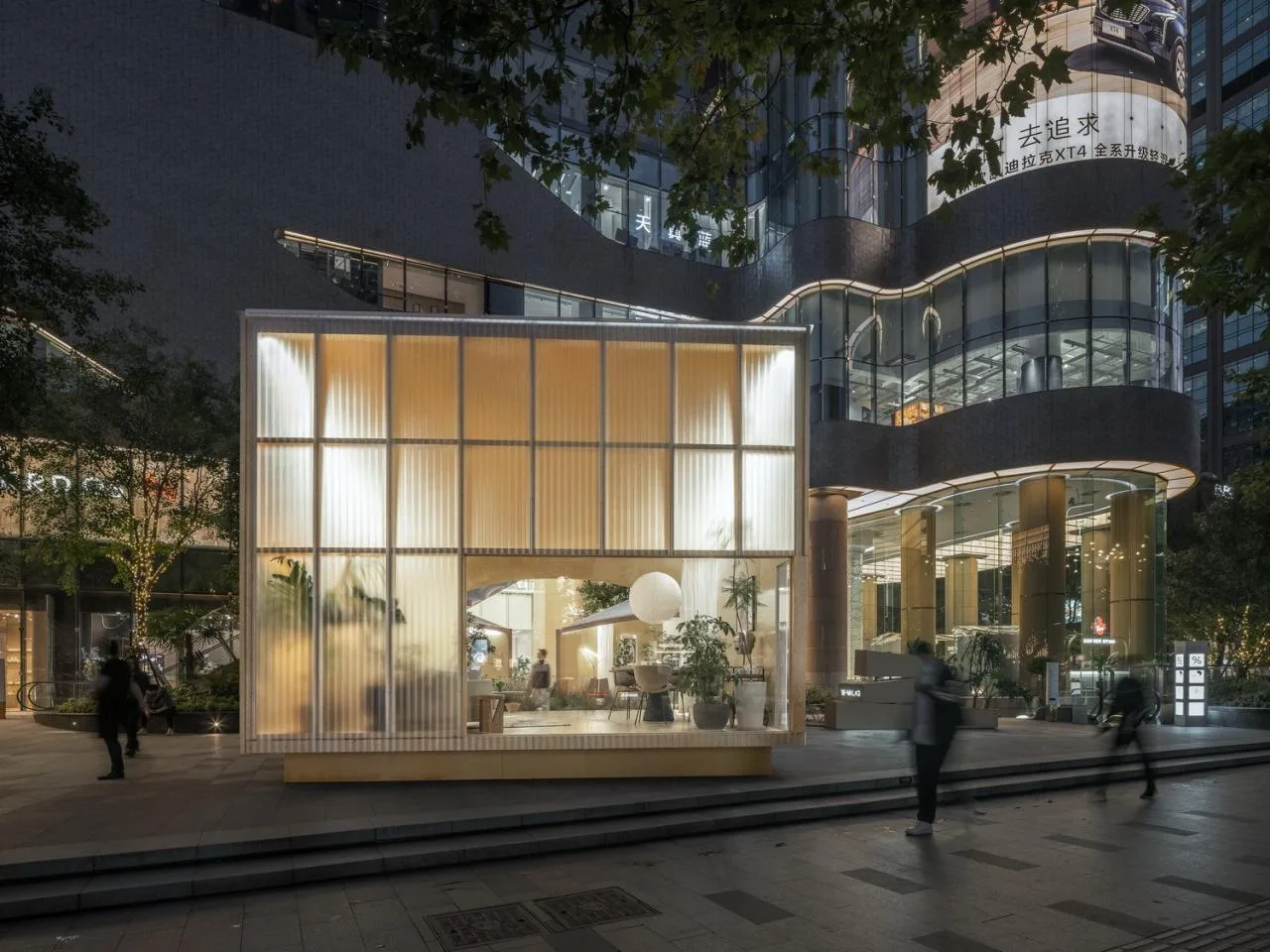
The installation offers a quiet, warm “home” atmosphere amid busy city streets.
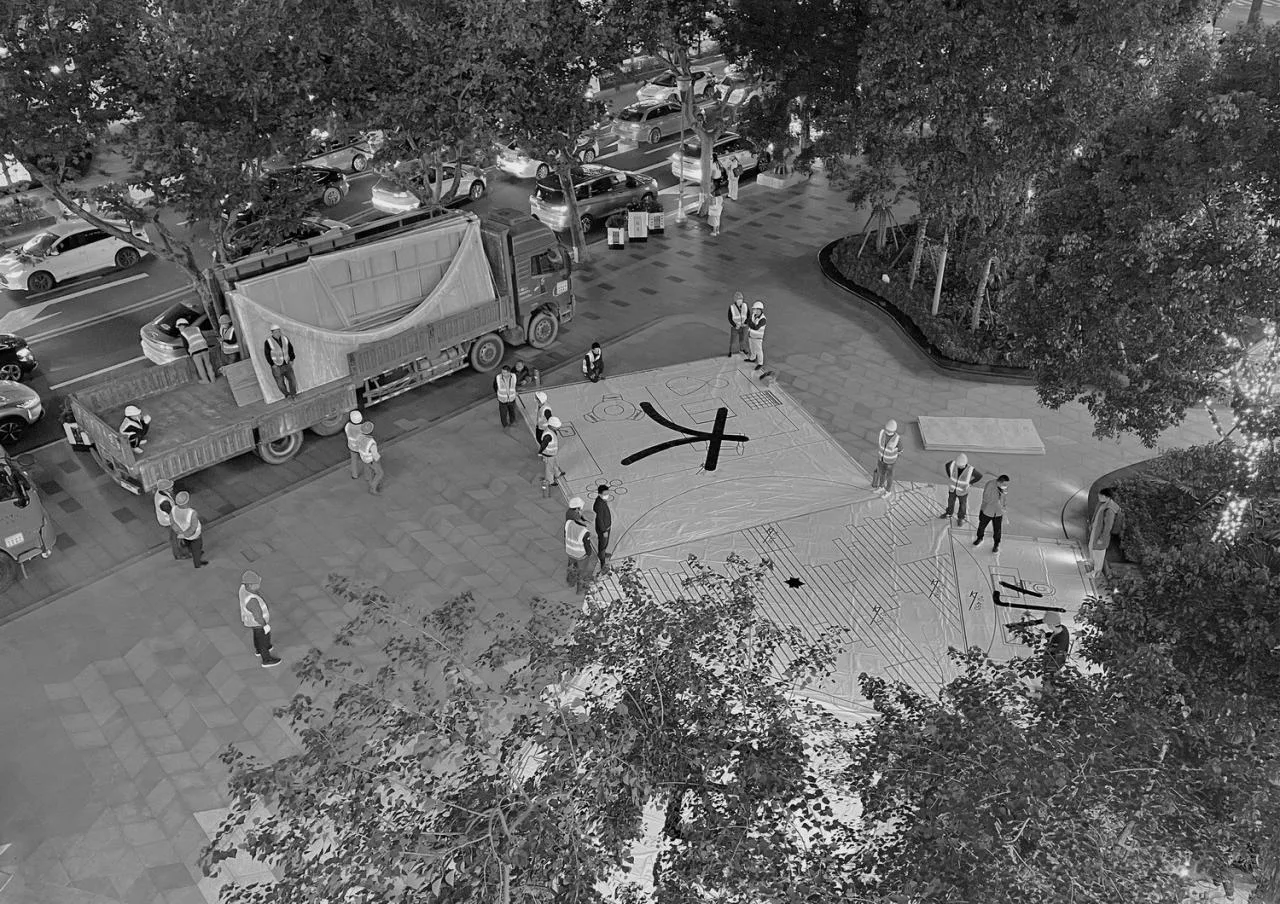
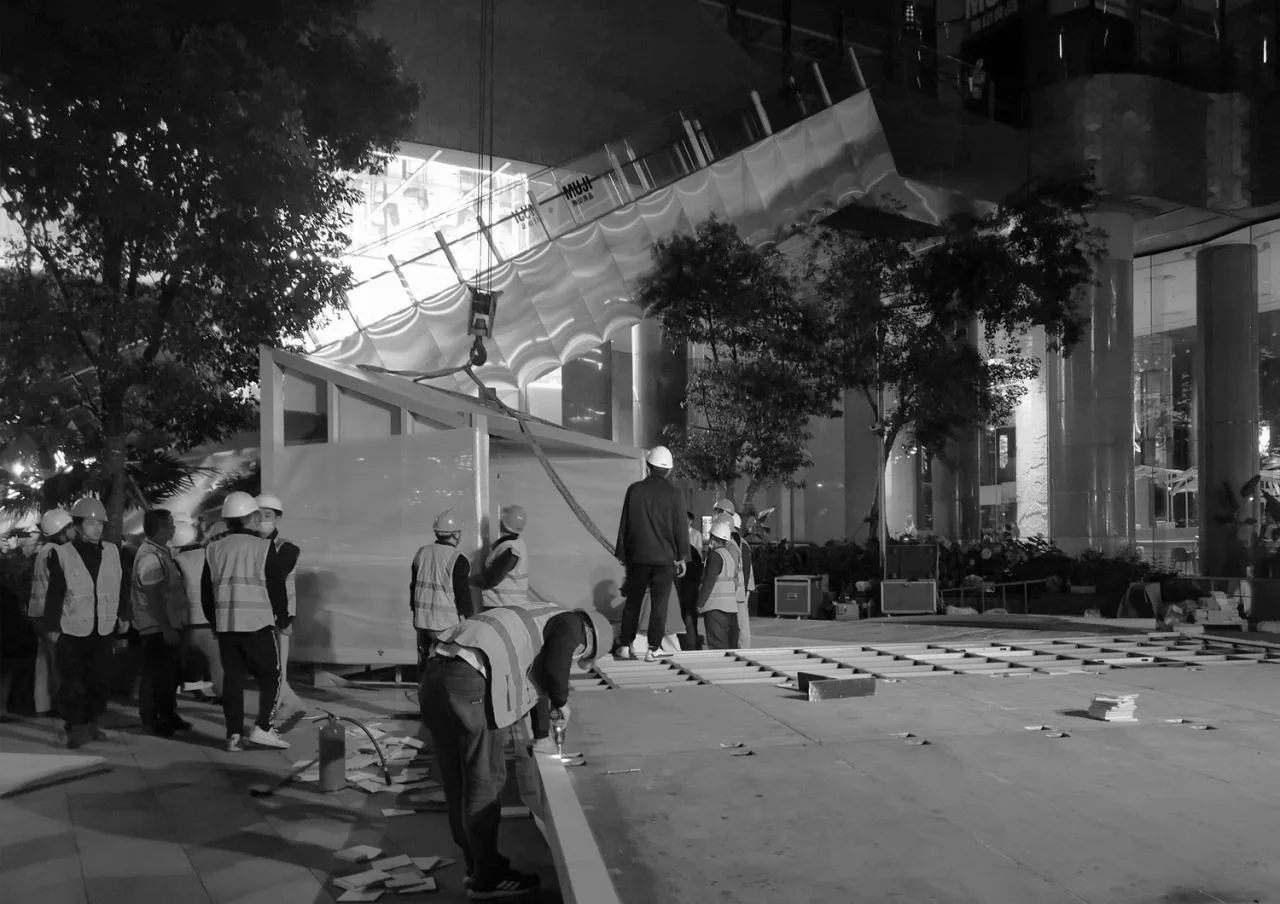
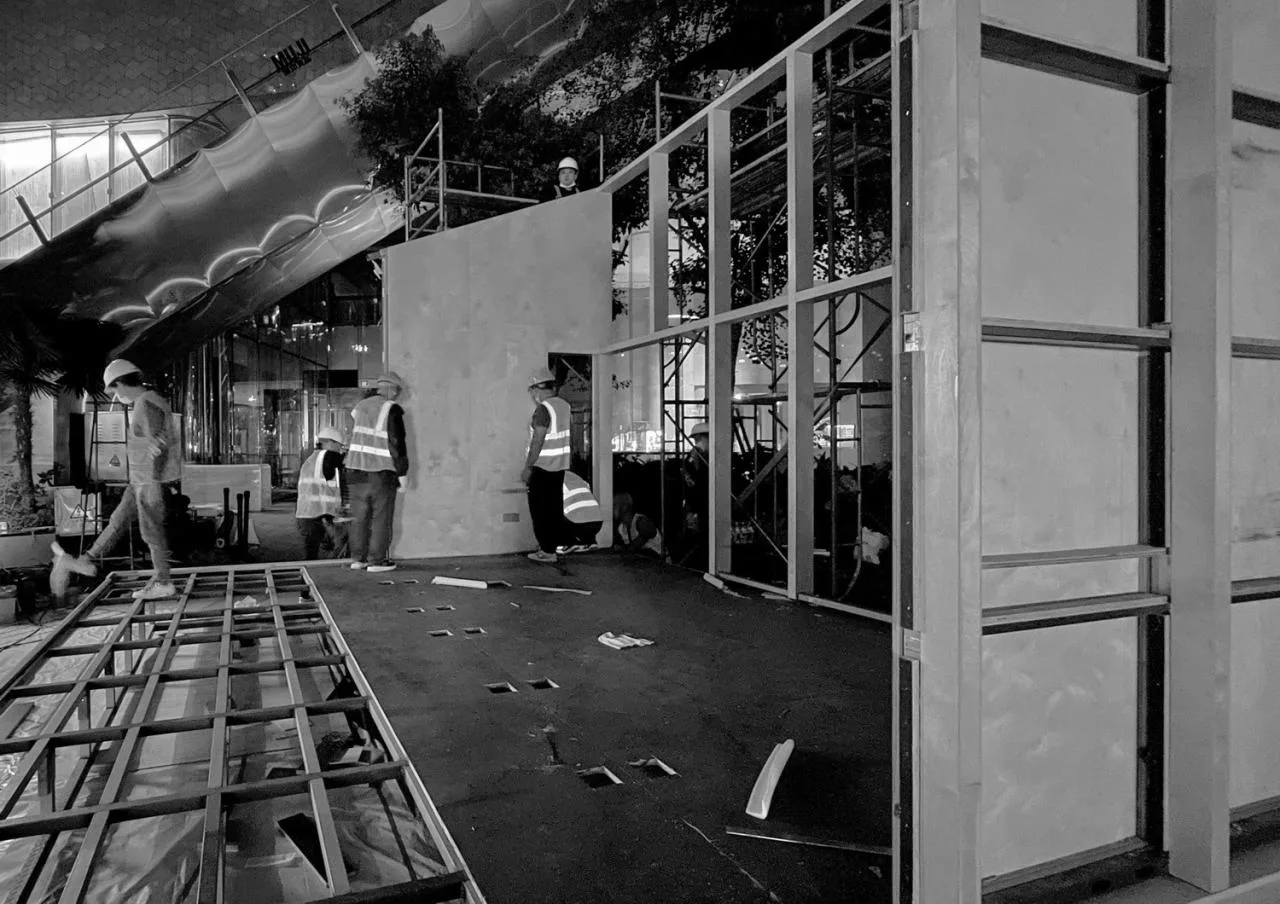
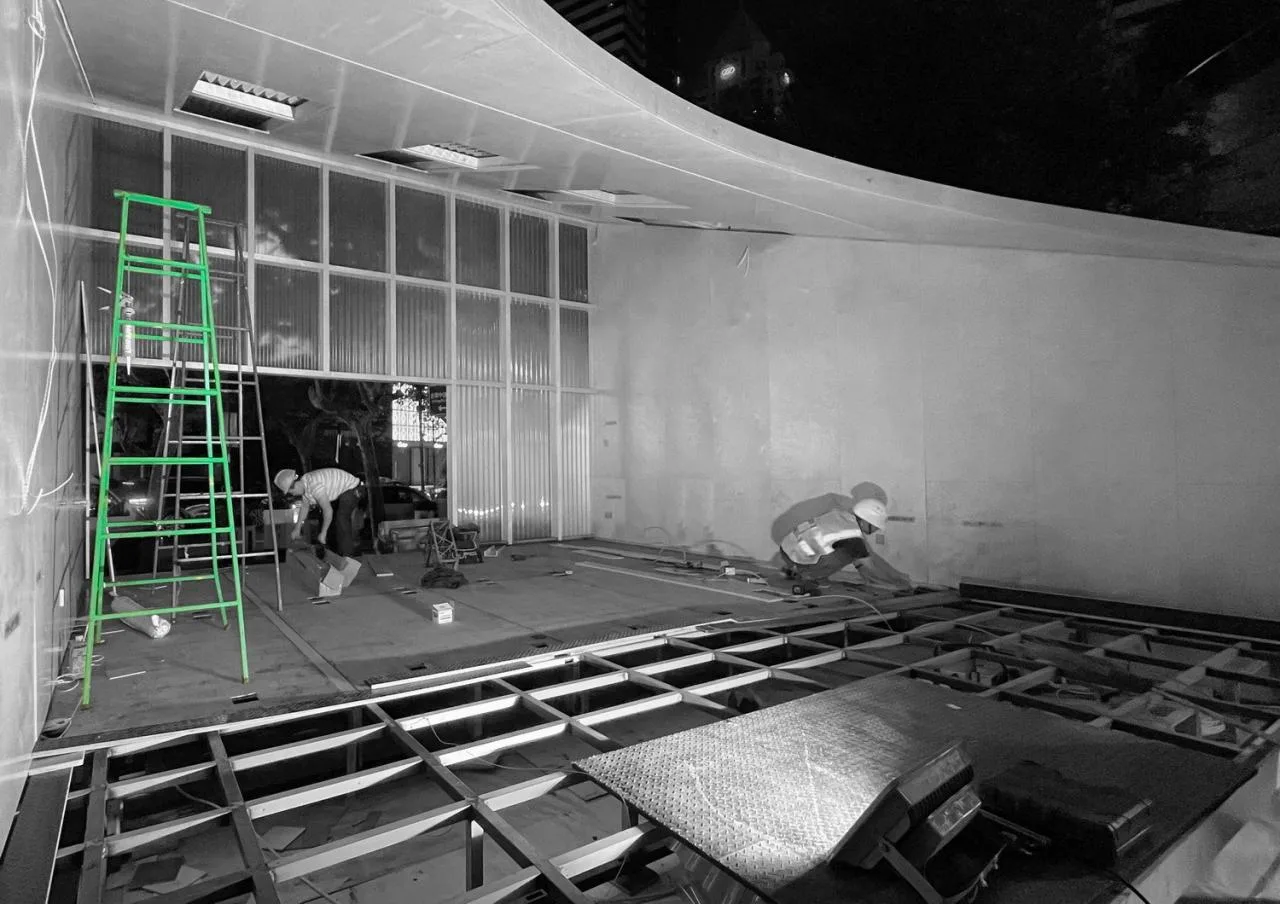
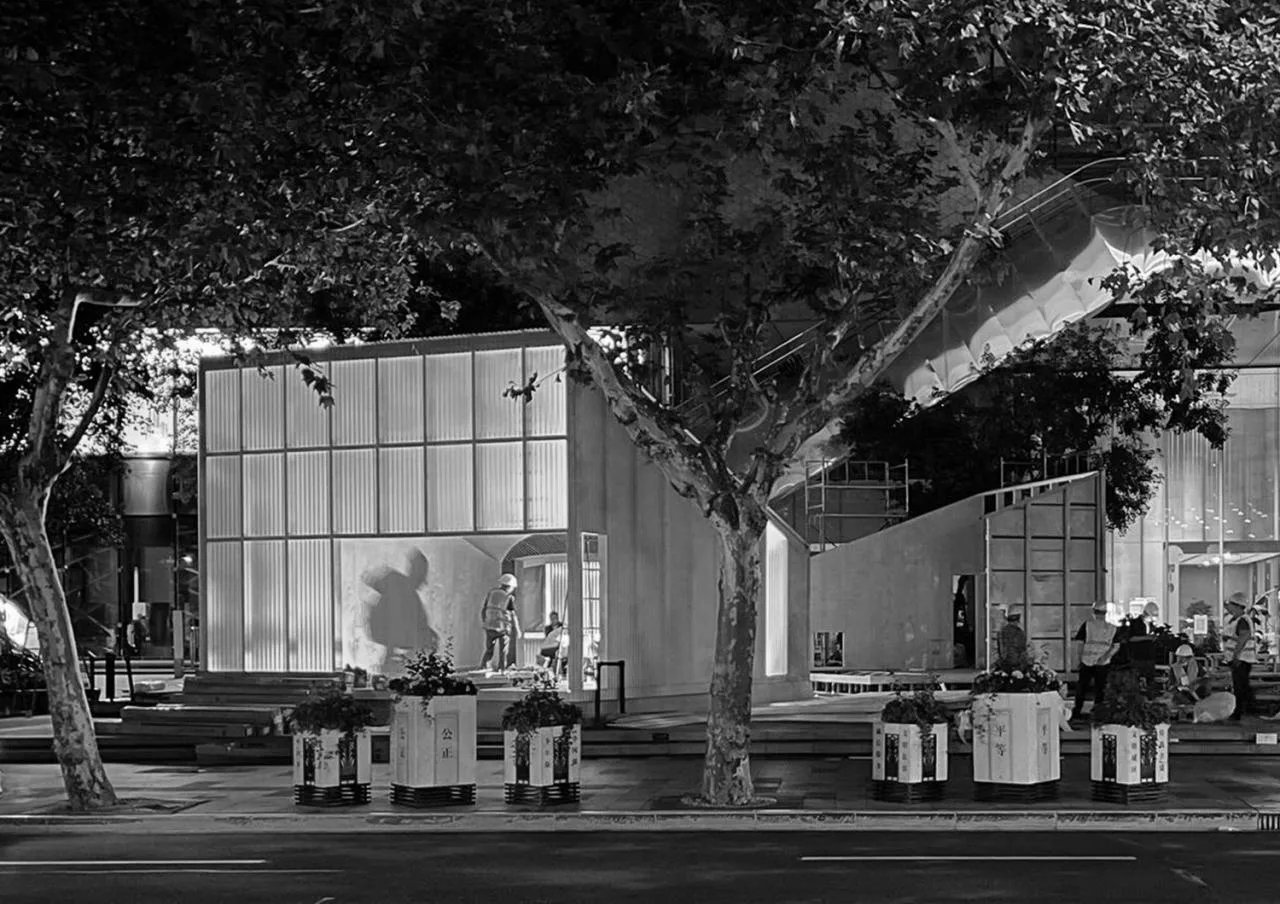
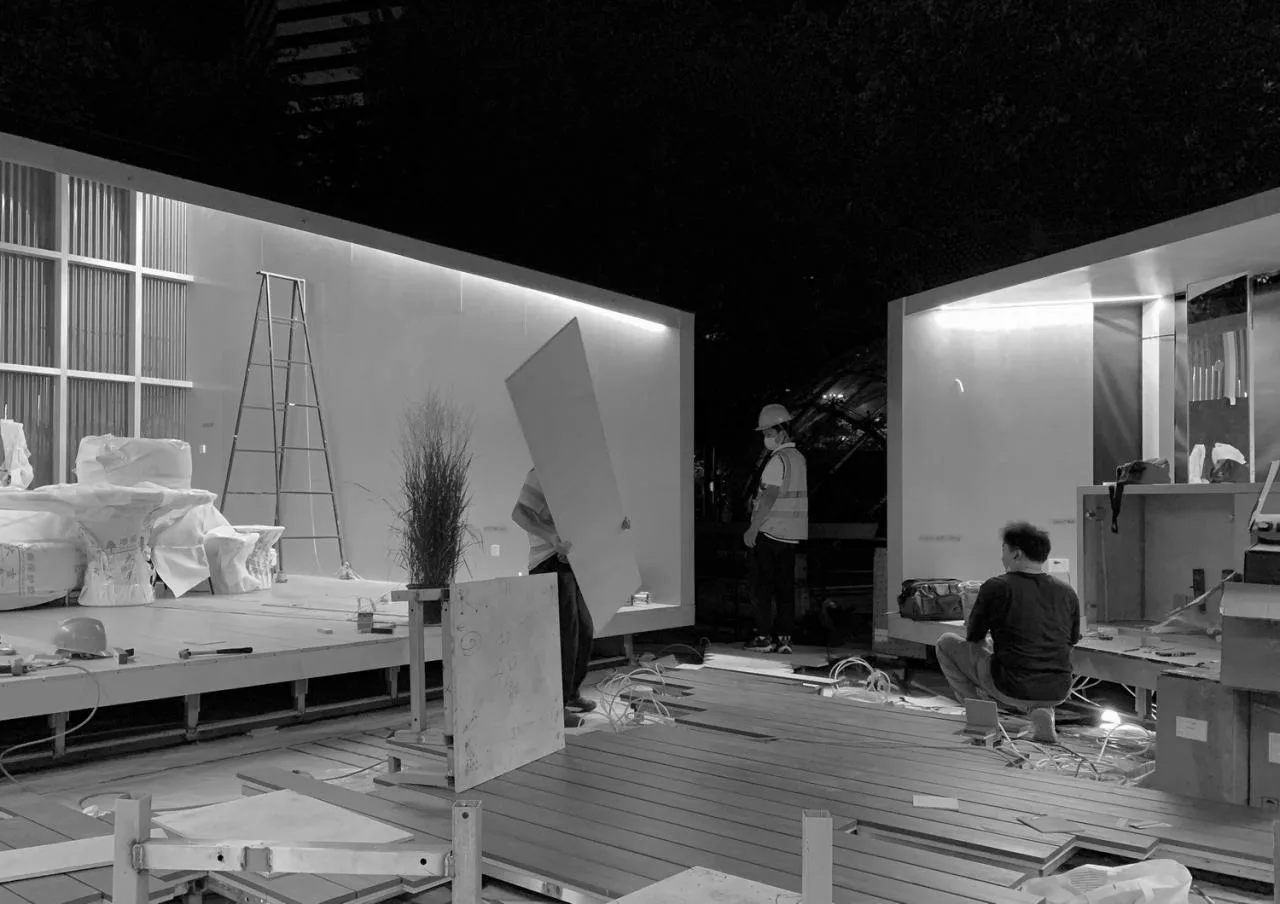
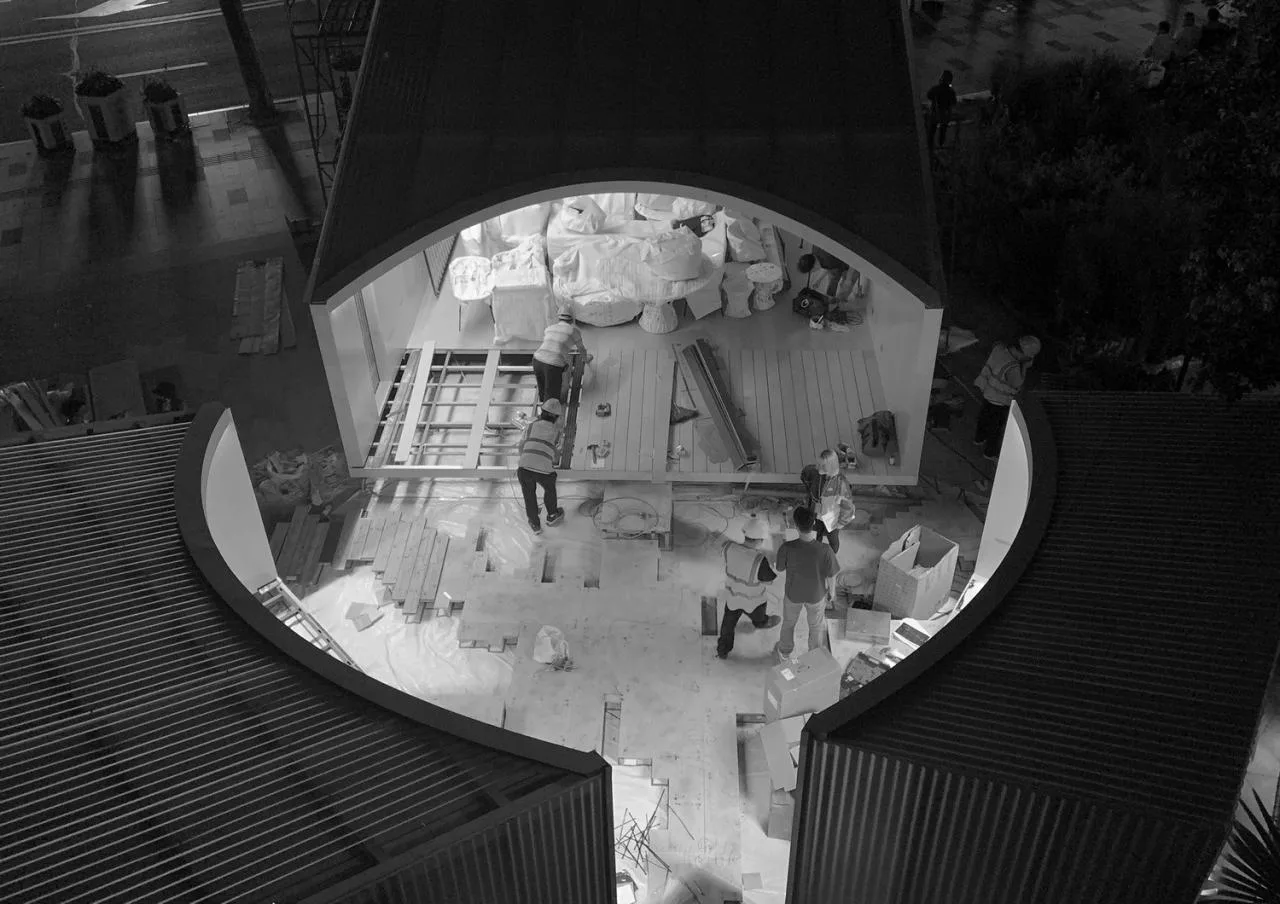
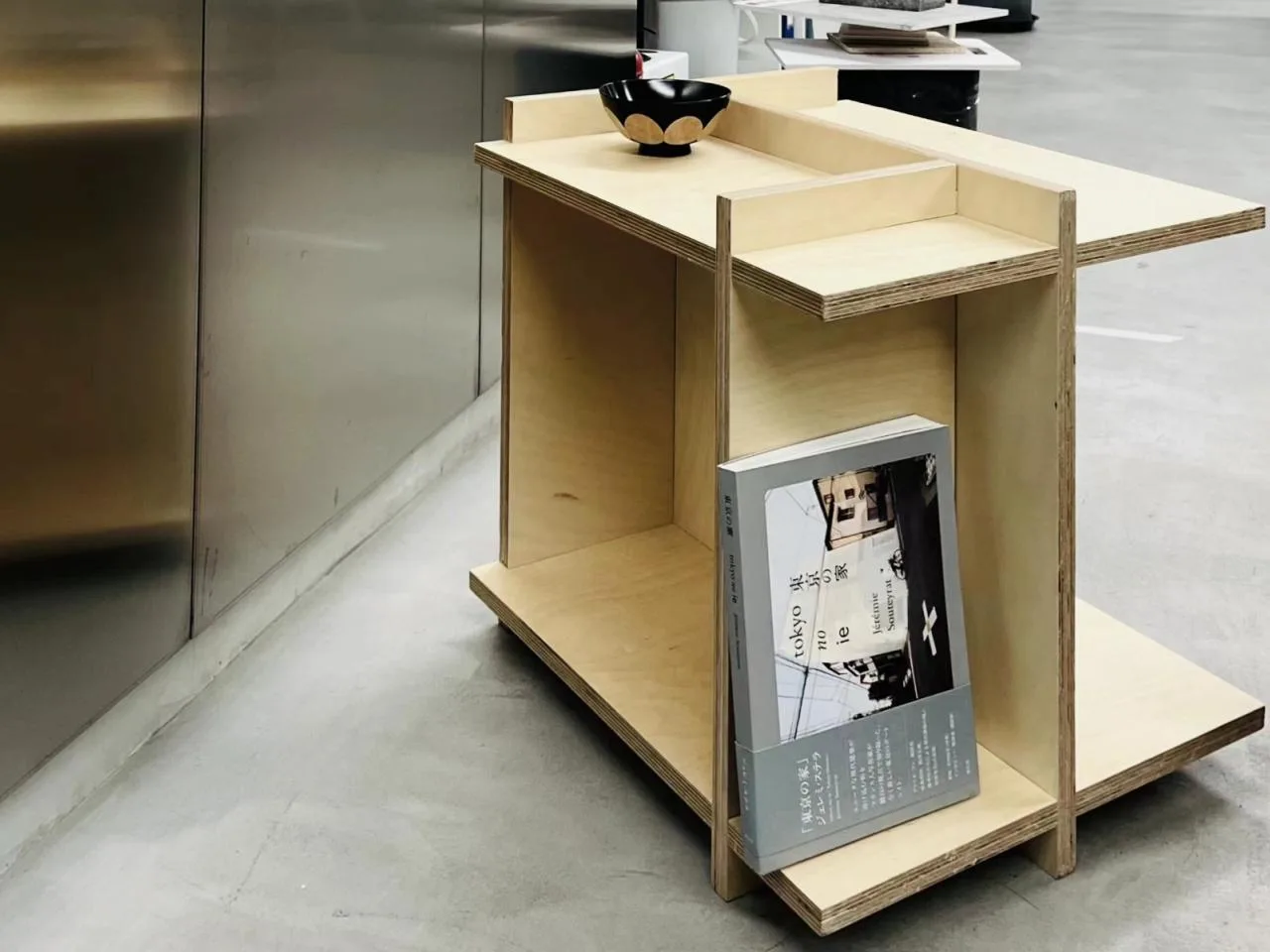
Due to the installation’s short three-day duration and night-only construction, the team opted for prefabricated components to simplify on-site assembly. After the exhibition, all potted plants were reused, and plywood materials were repurposed through “dismantling, cutting, and reassembly” to create new furniture pieces, ensuring sustainability.
Project Construction Images
Project Drawings
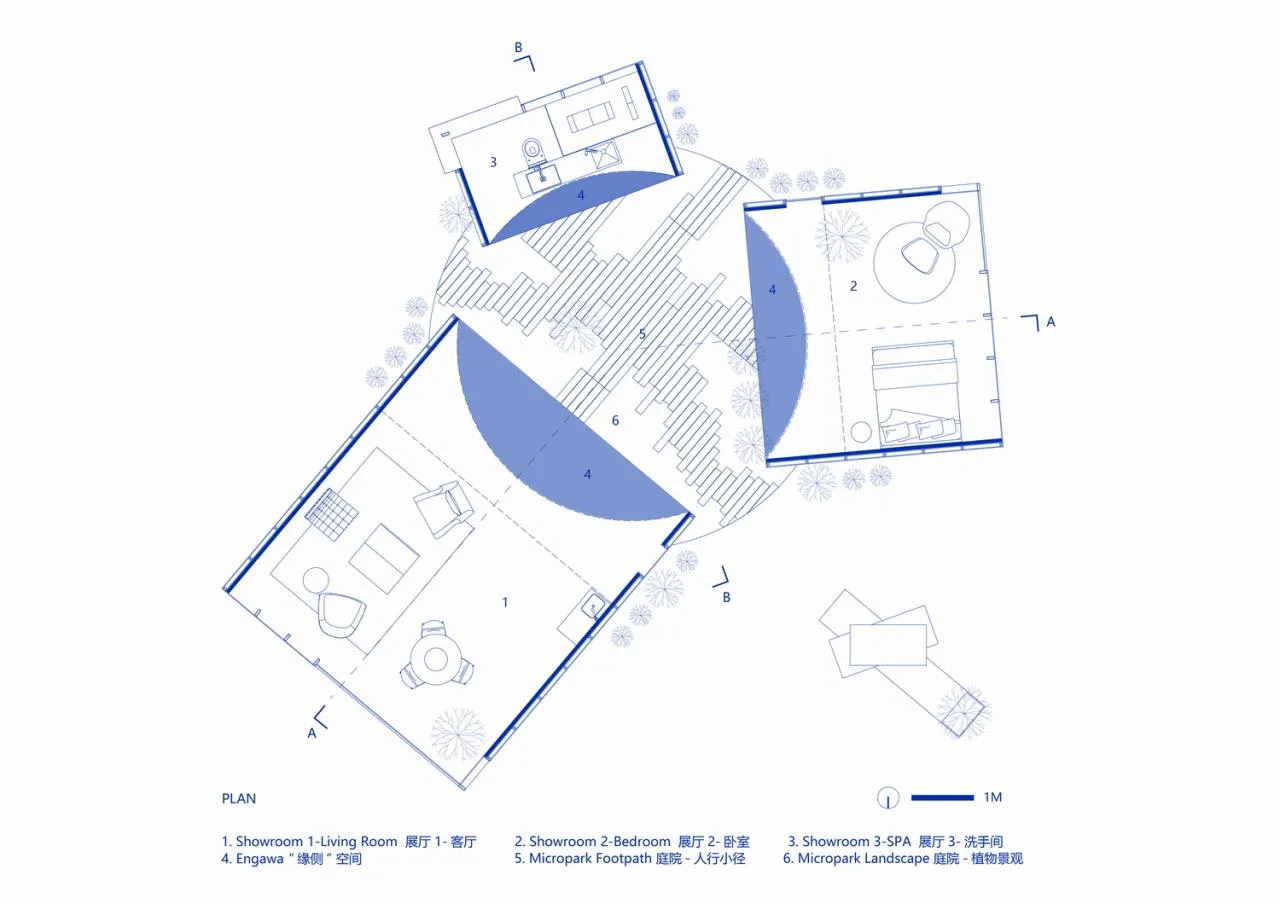
△ Plan view
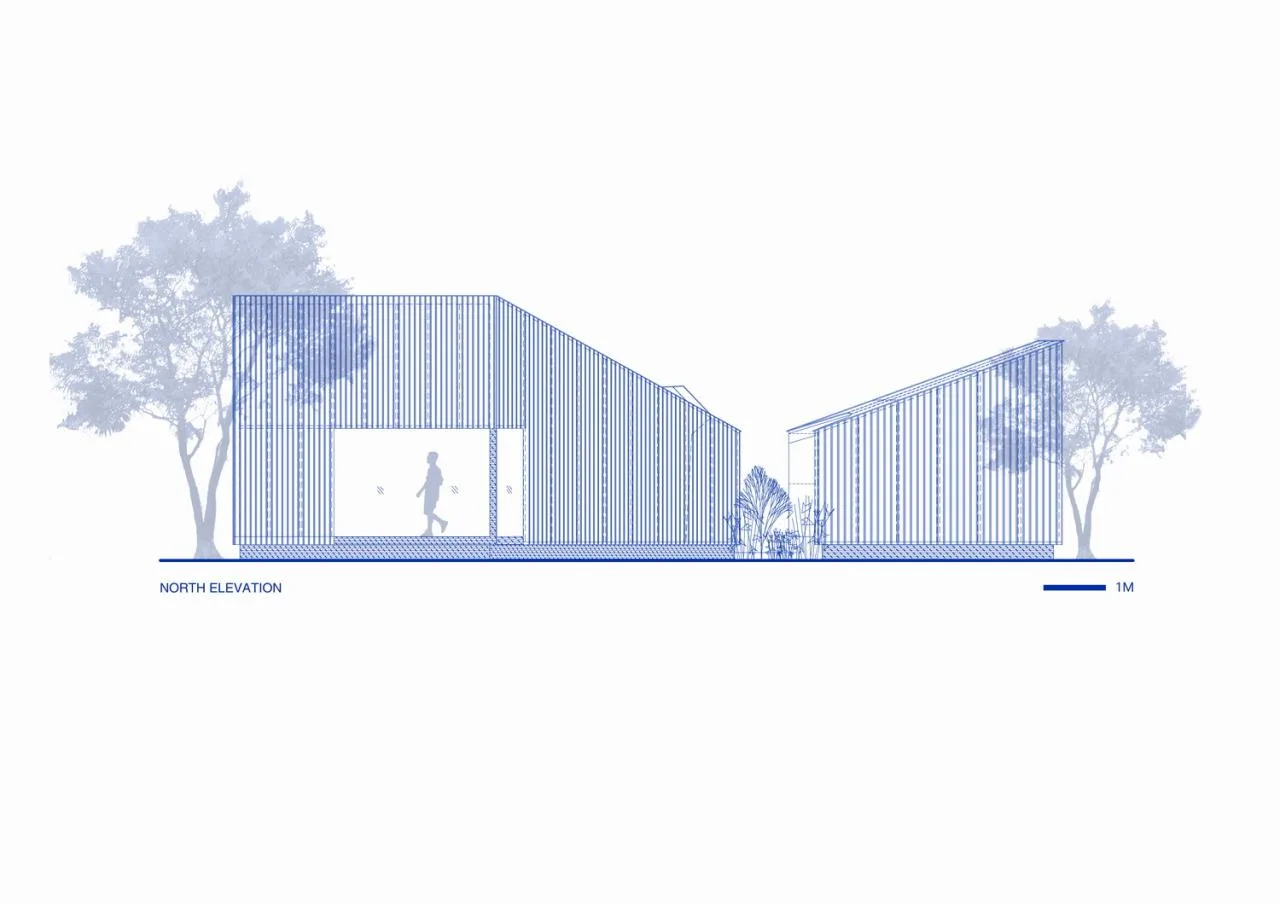
△ Elevation drawing
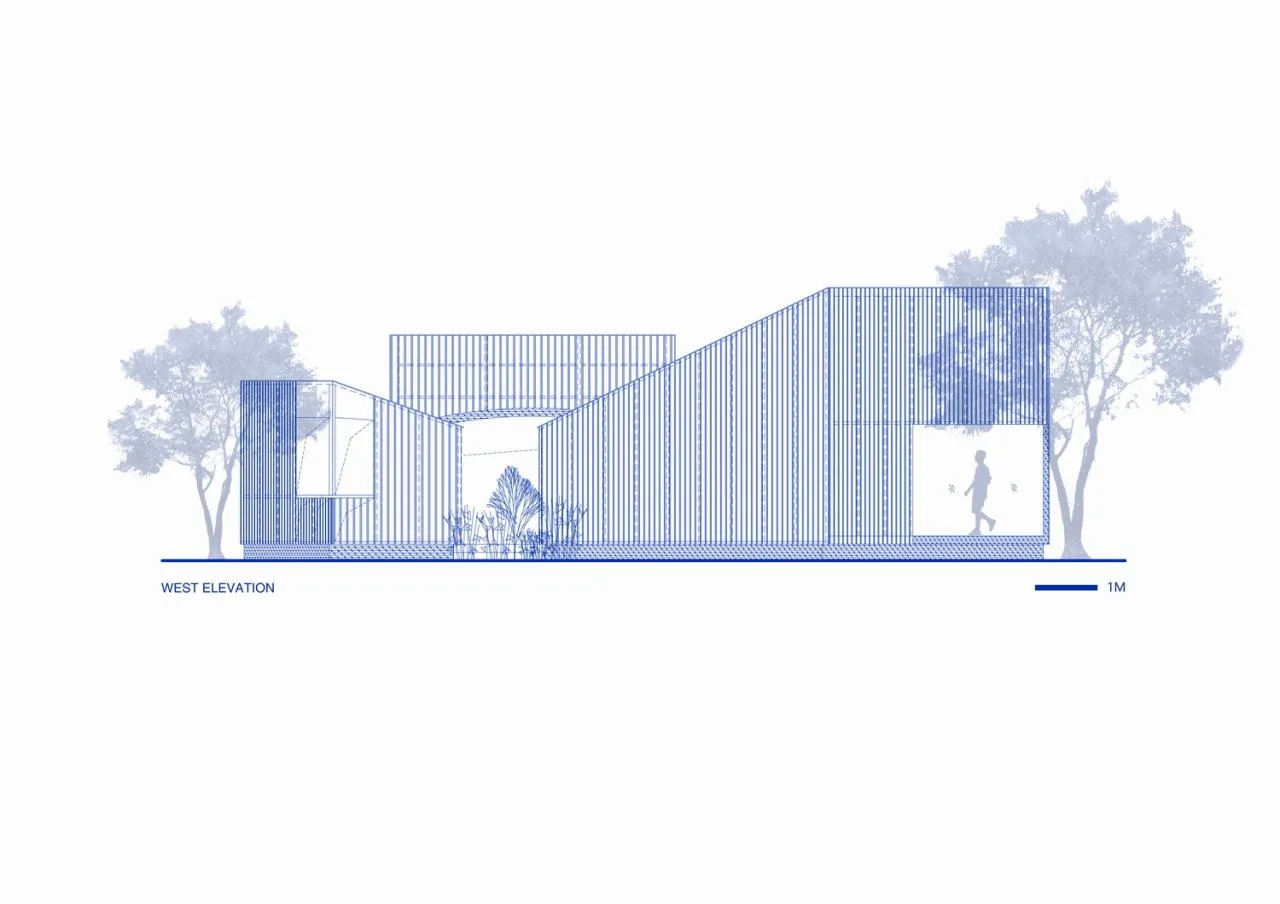
△ Elevation drawing
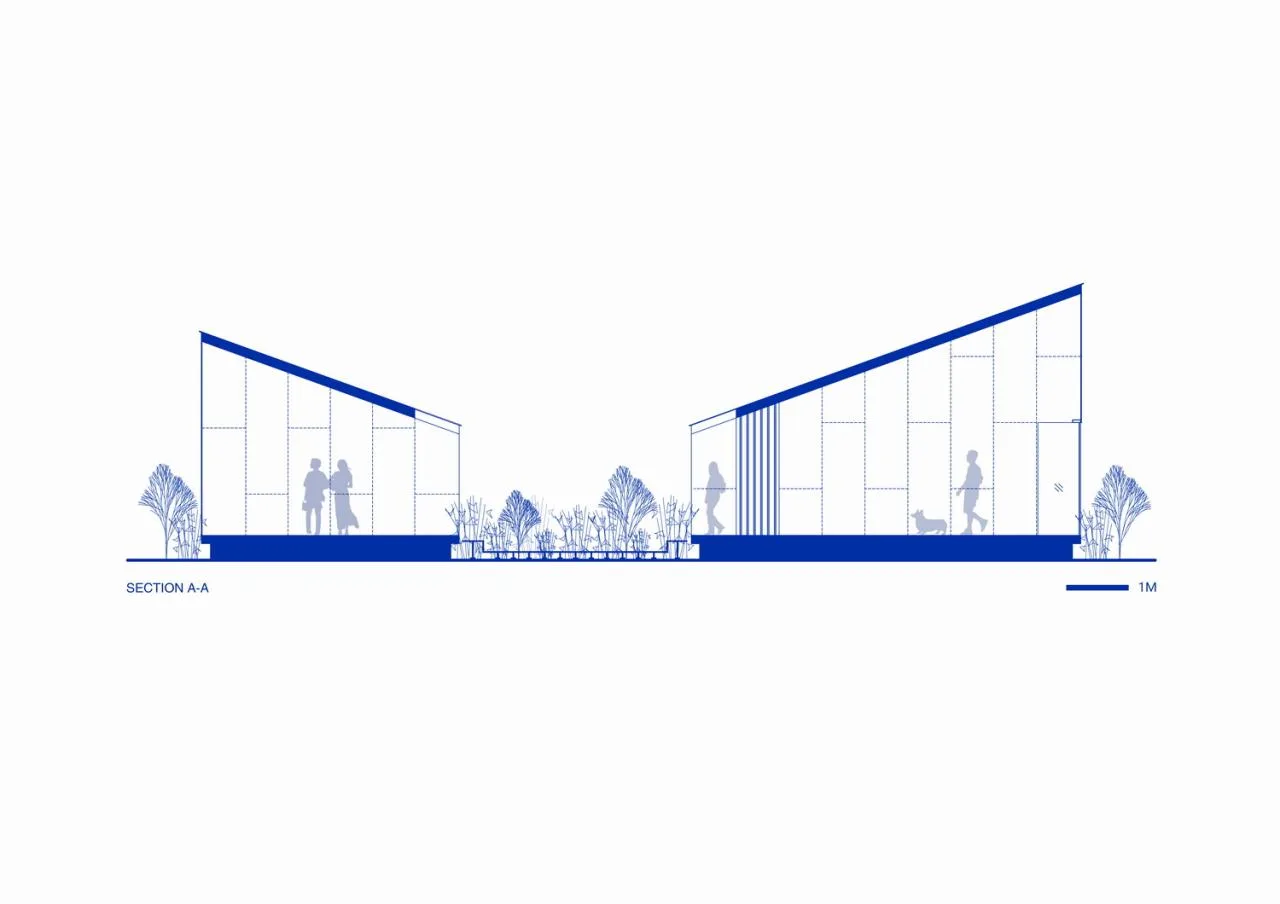
△ Section diagram
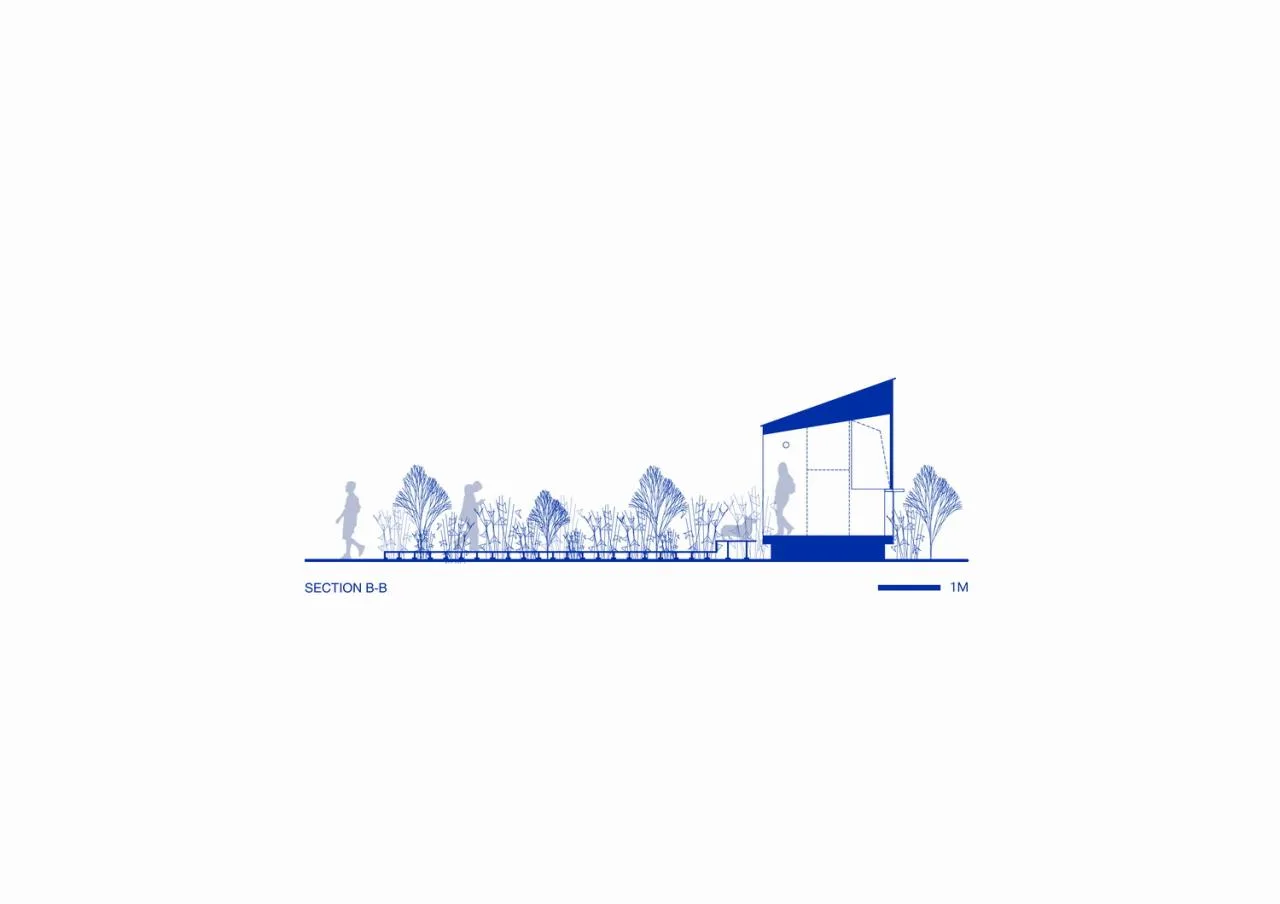
△ Section diagram
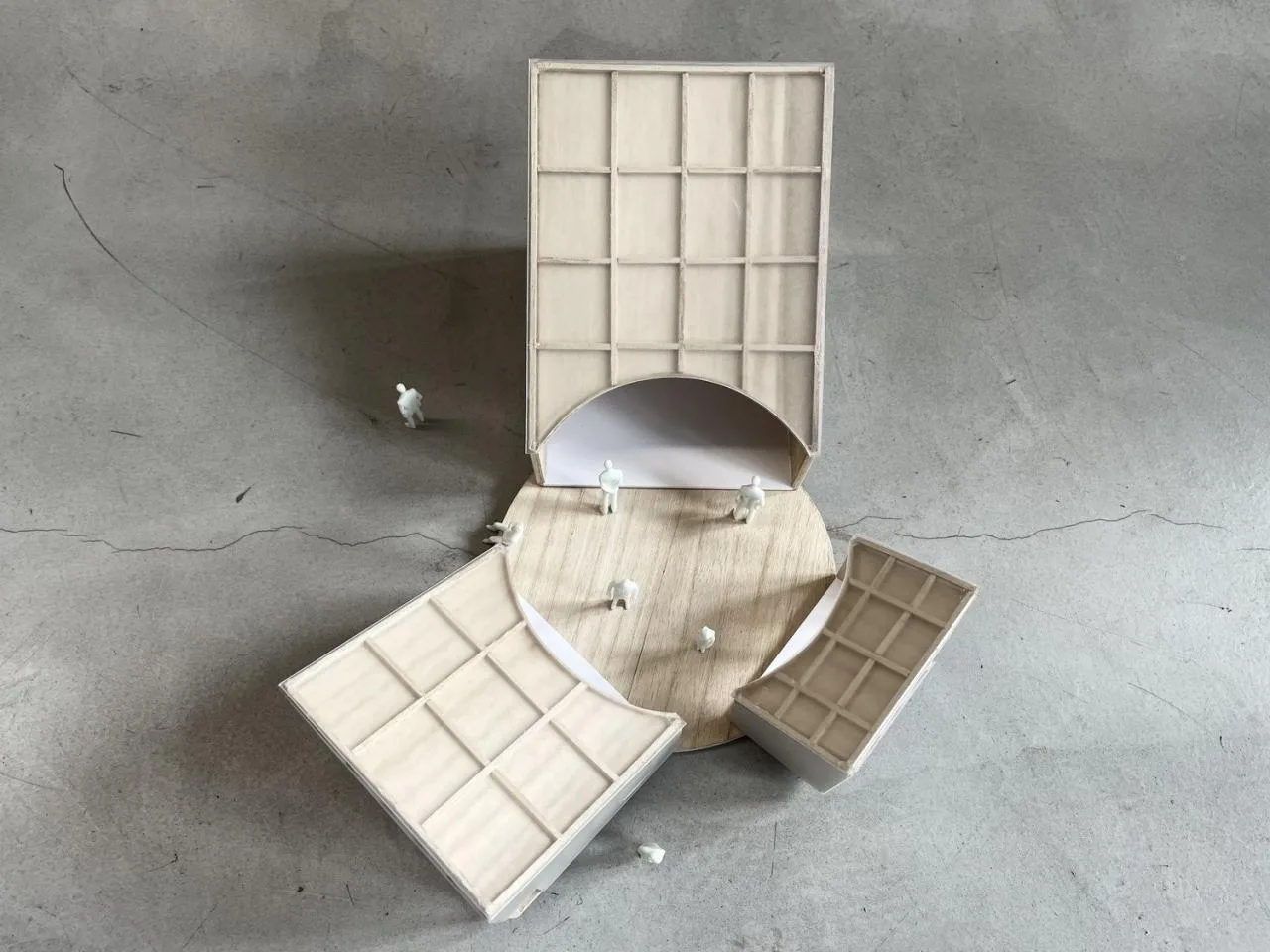
△ Model diagram
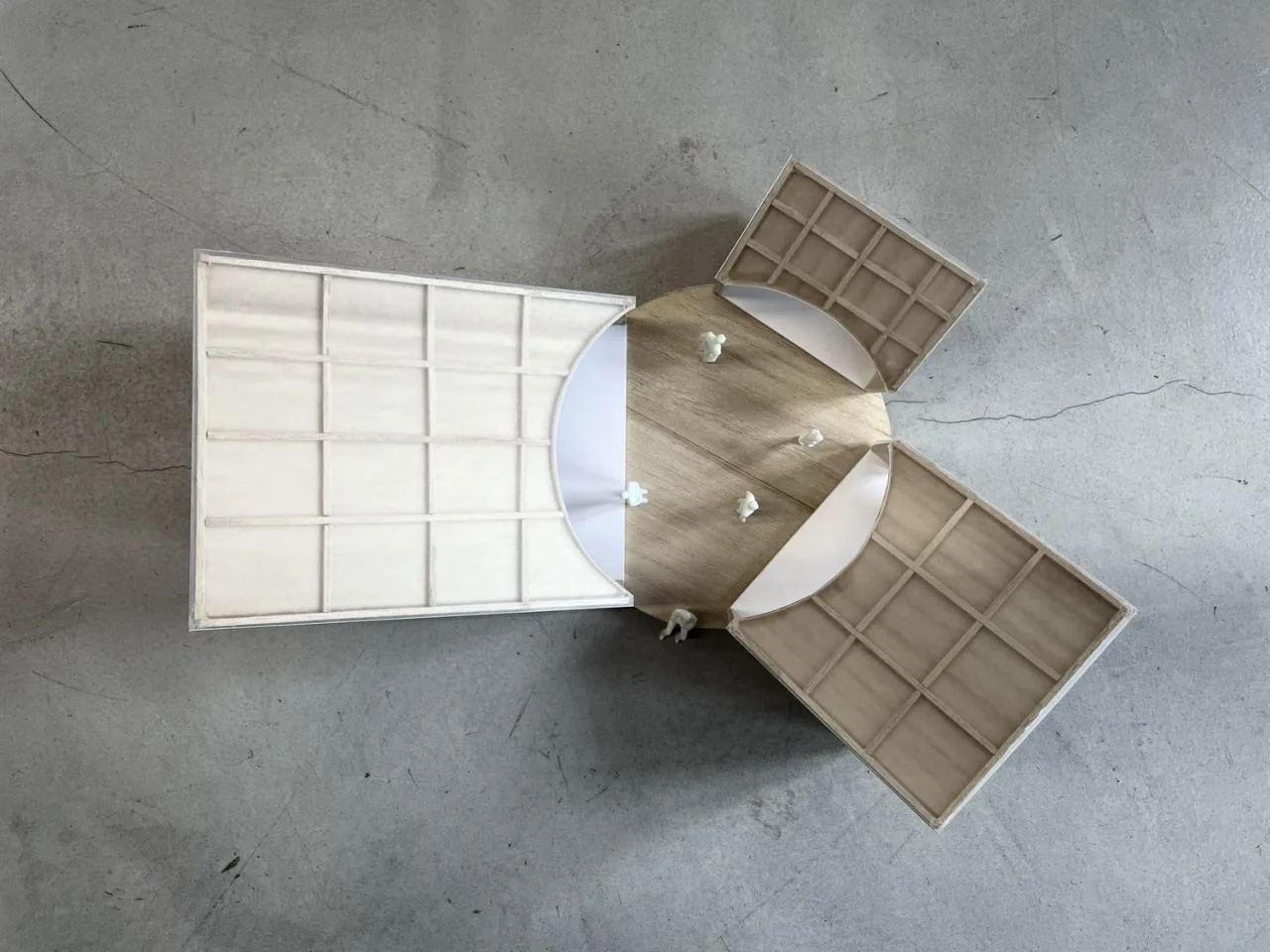
△ Model diagram
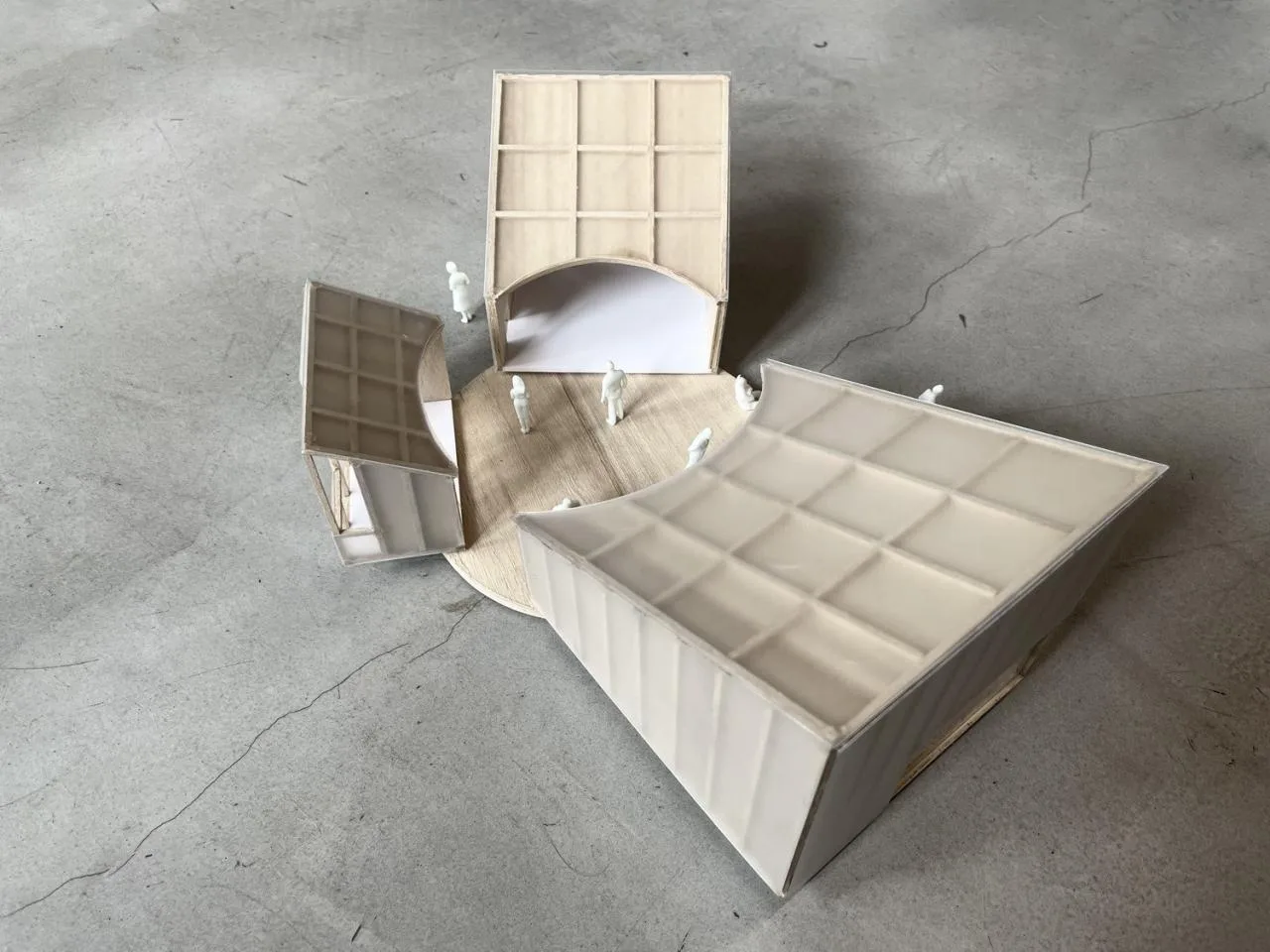
△ Model diagram
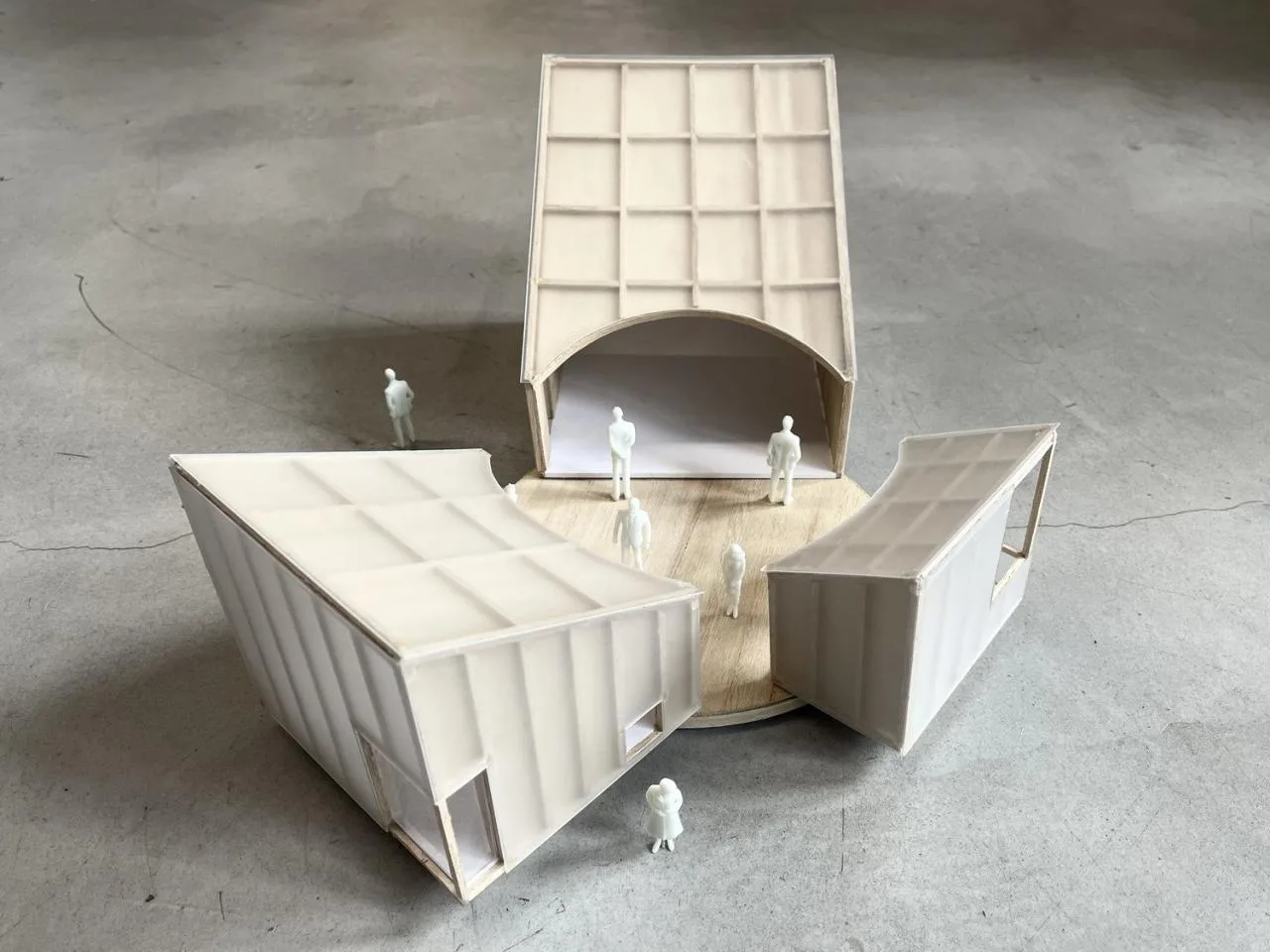
△ Model diagram
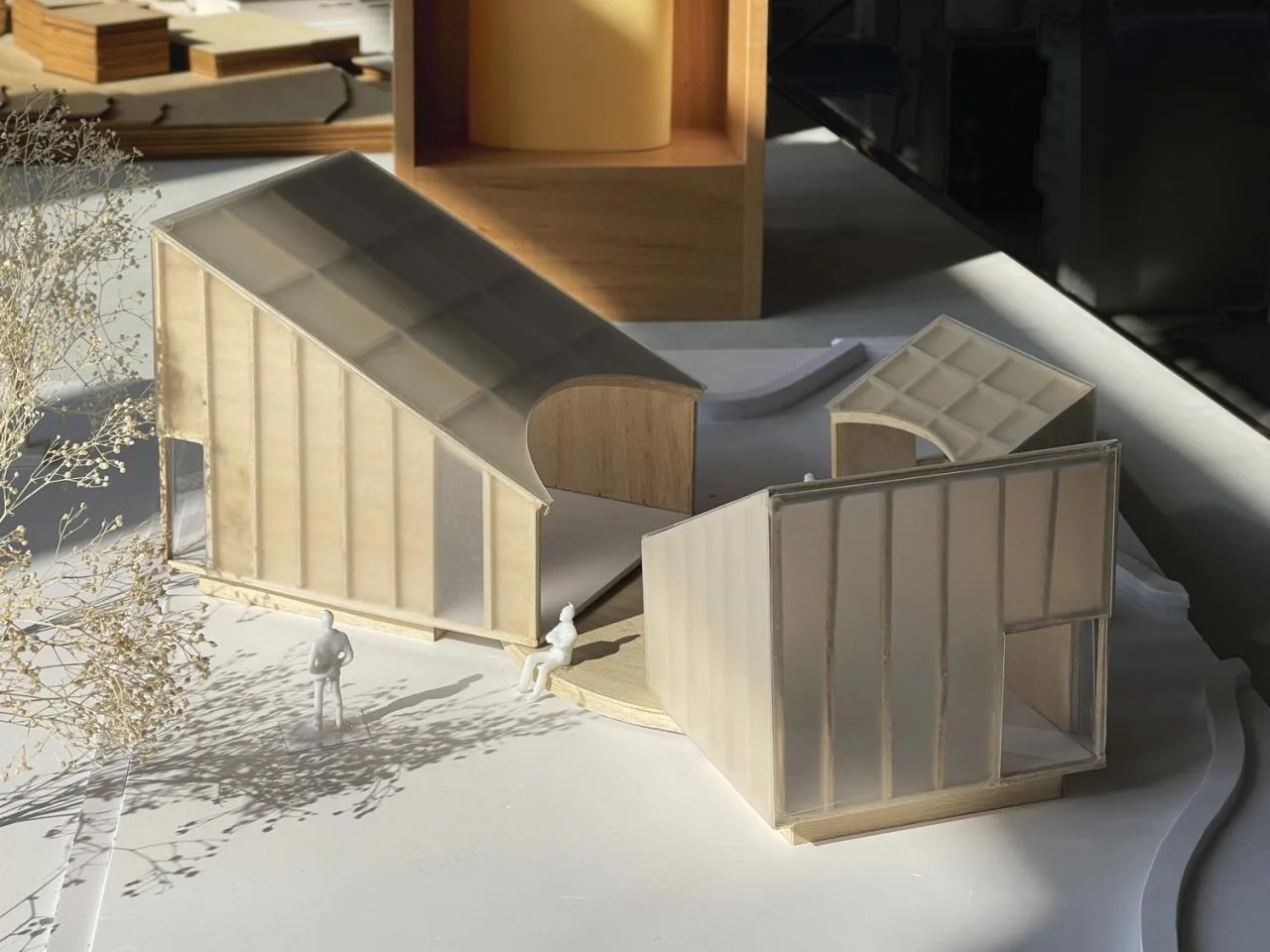
△ Model diagram
Project Information
Project Name: Jian Yuan | Space Installation in the Bustling City
Function: Exhibition
Design Period: March 2022 – September 2022
Construction Period: September 2022
Location: Shanghai
Building Area: 90 SQM
Team: Xiao Lei, Ziye Yousi, Deng Zhaojing, Yang Yuqiong, Shen Ruijie
Partners: Construction Land Group, Landscape Execution Preface Landscape
Type: Installation
Status: Built
Photographer: Studio FF















Must log in before commenting!
Sign Up