
Architecture serves as the vessel for a city’s collective memory. In the face of rapid urban development, architects continually grapple with the challenge of harmonizing the old and new within urban renewal projects. Their goal is to create fresh narrative spaces that inject vitality and surprise into traditionally quiet, historic communities. Renovation represents a rebirth for architecture, and for architects, this project transcends mere expansion of a teaching building. It becomes a medium to weave the future while fostering dialogue between past and present spatial dimensions.
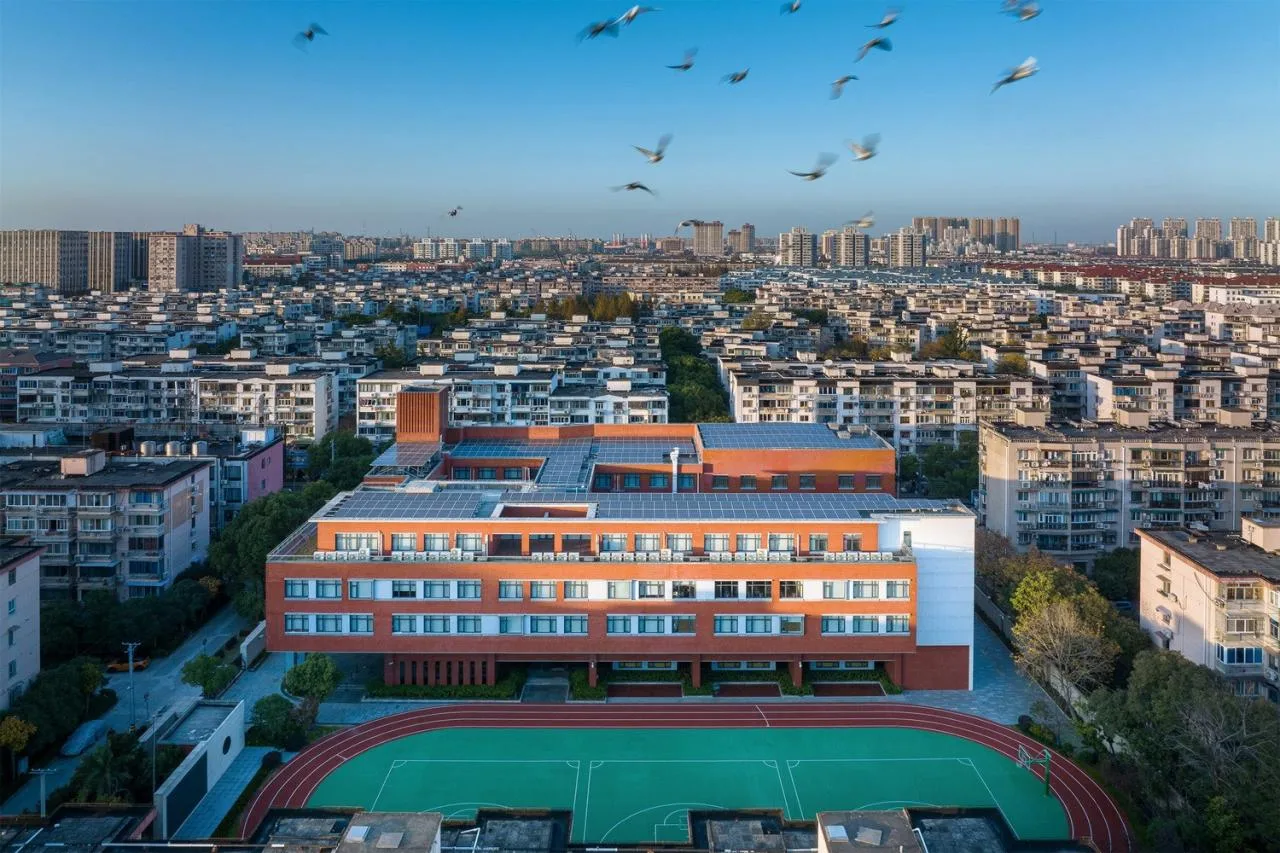
Aerial view of the school’s south side © TANGXUGUO
Project Background
The Lansheng Fudan Middle School’s Guohe Road Campus is situated at 128 Guohe Village, in Shanghai’s Yangpu District. This renovation project is based on the original teaching building of Guohe New Village First Primary School. The campus occupies an area of 6,820 square meters, located north of Guohe Road, flanked by internal roads of Guohe Village on the east and west.
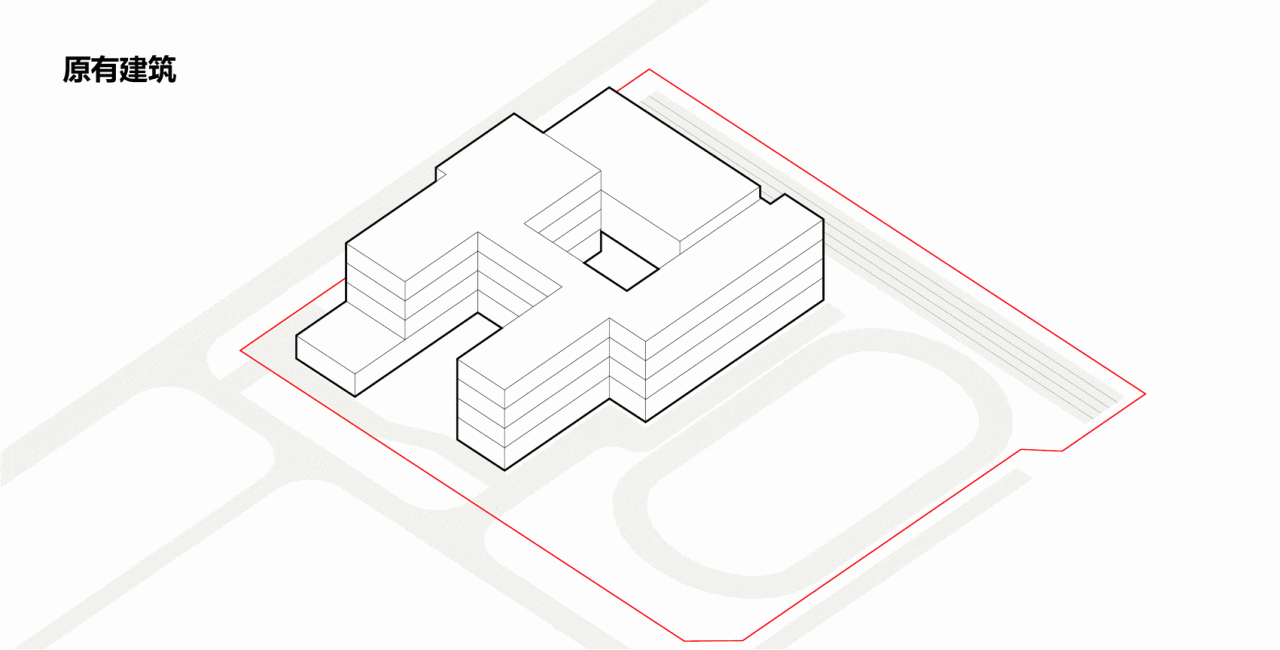
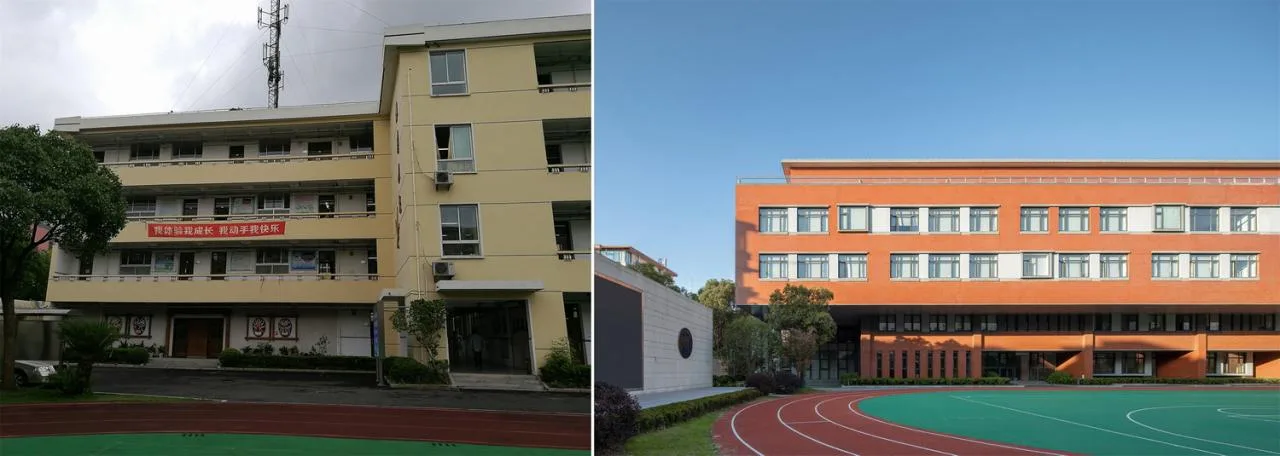
The original structure is a four-story “I-shaped” teaching building positioned on the north side of the site. Additionally, a one-story indoor playground and another single-story building are located respectively on the east and west sides. The south side features a cement playground, tightly enclosed by dense, older residential neighborhoods.
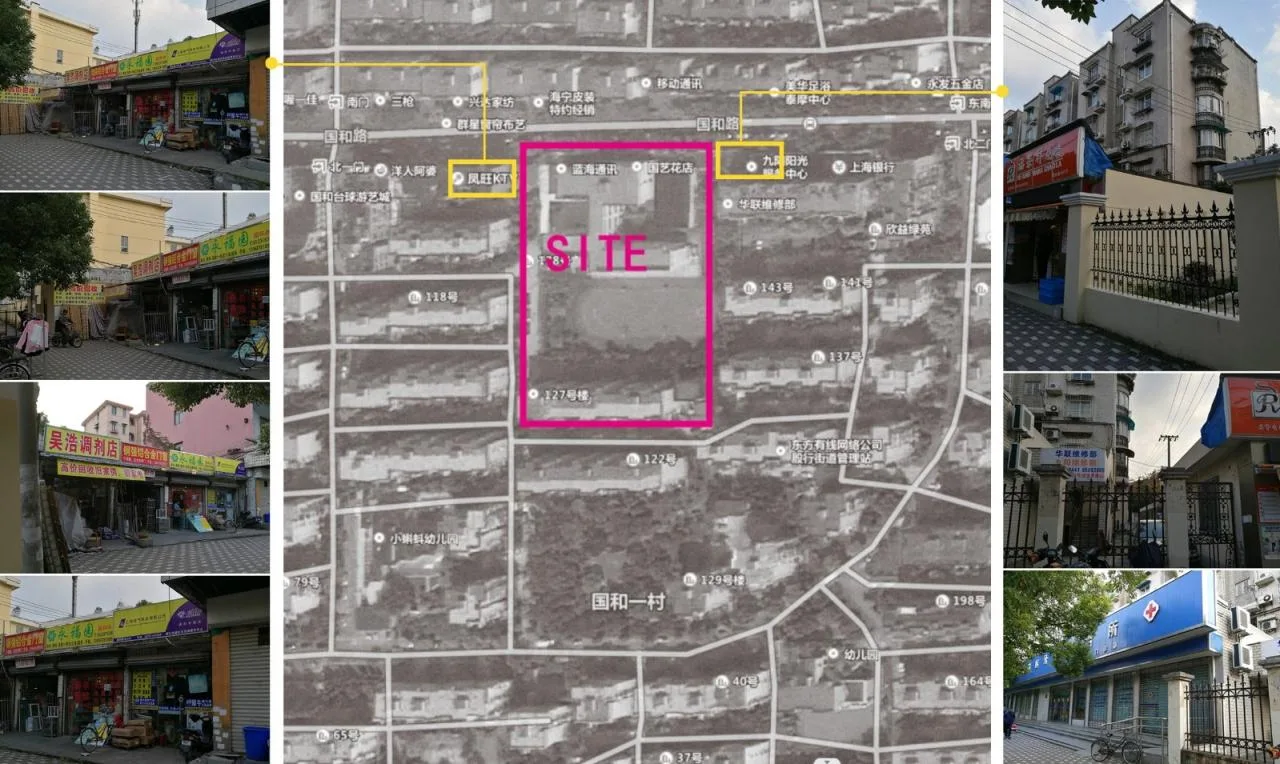
△ Surrounding conditions before renovation
To meet the evolving educational demands of Shanghai’s modern junior high schools, this renovation aims to expand teaching and auxiliary spaces—including specialized classrooms, offices, student dormitories, and activity rooms designed to nurture elite students. The key challenge is to preserve the original building’s structure while thoughtfully integrating new functions, creating a seamless fusion of old and new that forms innovative teaching modules.
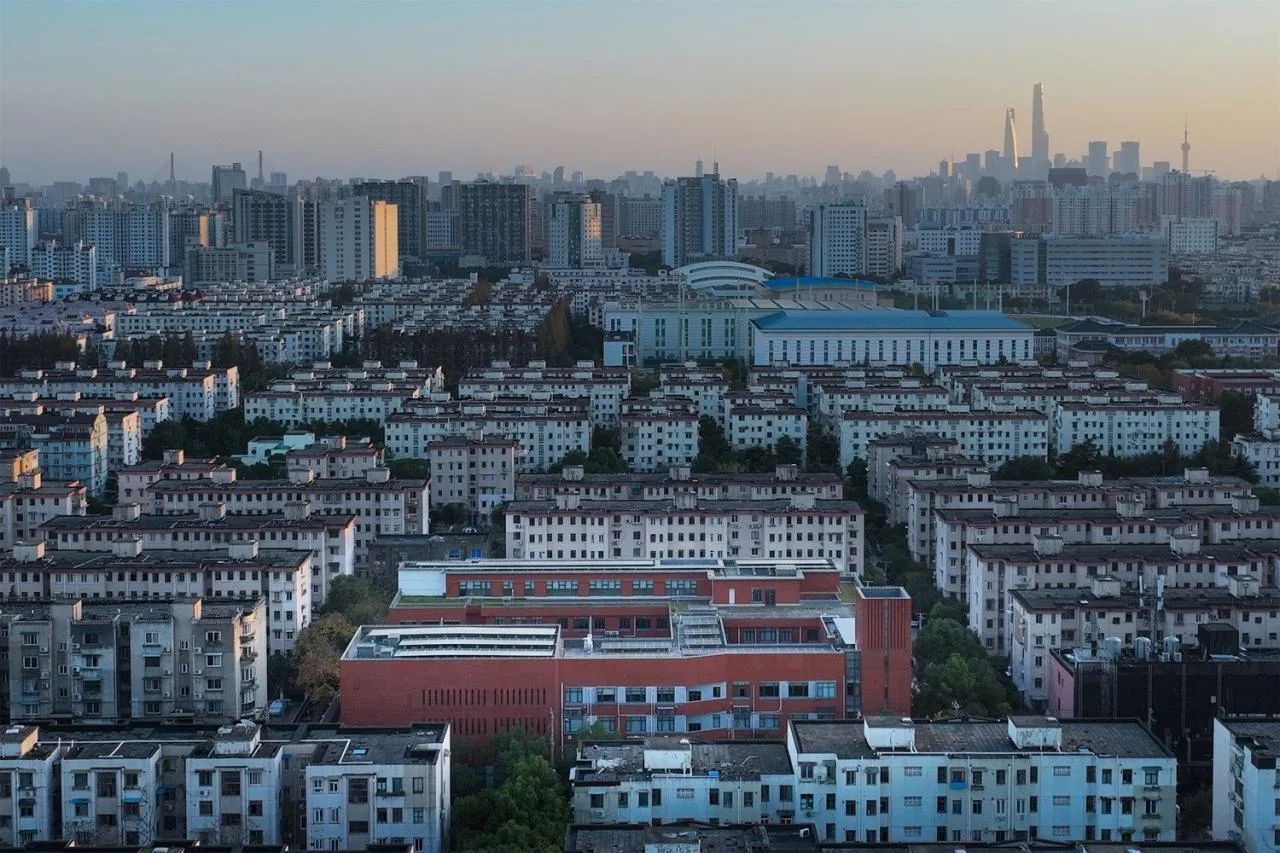
A new teaching building nestled among old residential areas © TANGXUGUO
Function Optimization
This renovation maintains the school’s original spatial framework, removing a temporary sports facility while reorganizing the building layout to minimize conflicts between the teaching building and nearby residences. It enhances the main building by adding missing functions and creating flexible teaching environments alongside open, inviting activity spaces—supporting a modern educational approach.
The original “I-shaped” building featured its main entrance on the west side, with four floors of standard classrooms lining the south-facing outer corridor. Specialized classrooms and a standalone gymnasium occupied the northeast corner, while the cafeteria, teacher offices, and shared classrooms were located on the northwest side. This layout was compact and clearly zoned.
Post-renovation, the functional zones are more logically arranged with improved circulation. The gymnasium and activity center are positioned on the east side, while teaching spaces occupy the north and south wings—the south side hosting regular classrooms benefiting from optimal natural light and views, and the north side dedicated to experimental teaching areas. Auxiliary functions such as cafeteria, dormitories, and offices are situated on the west side.
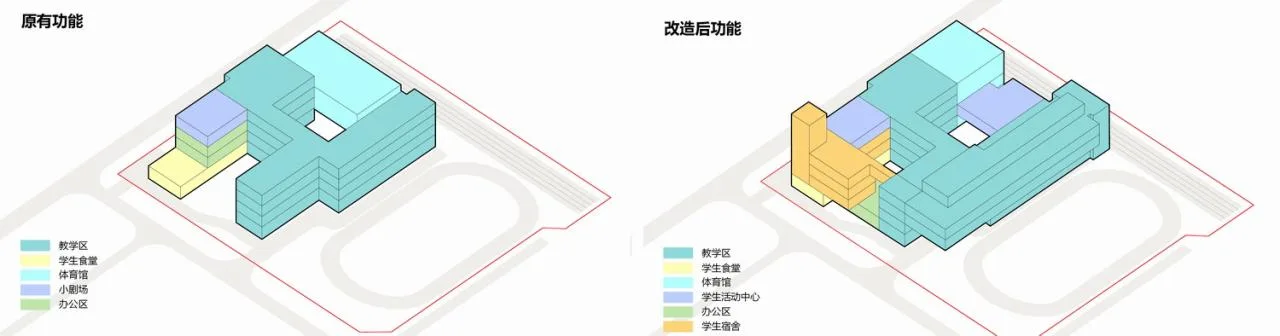
△ Functional layout comparison: before and after renovation
The renovation also relocates the campus’s main entrance from within Guohe Village to Guohe Road on the north side. A new two-story entrance hall enhances campus accessibility and strengthens the building’s presence.
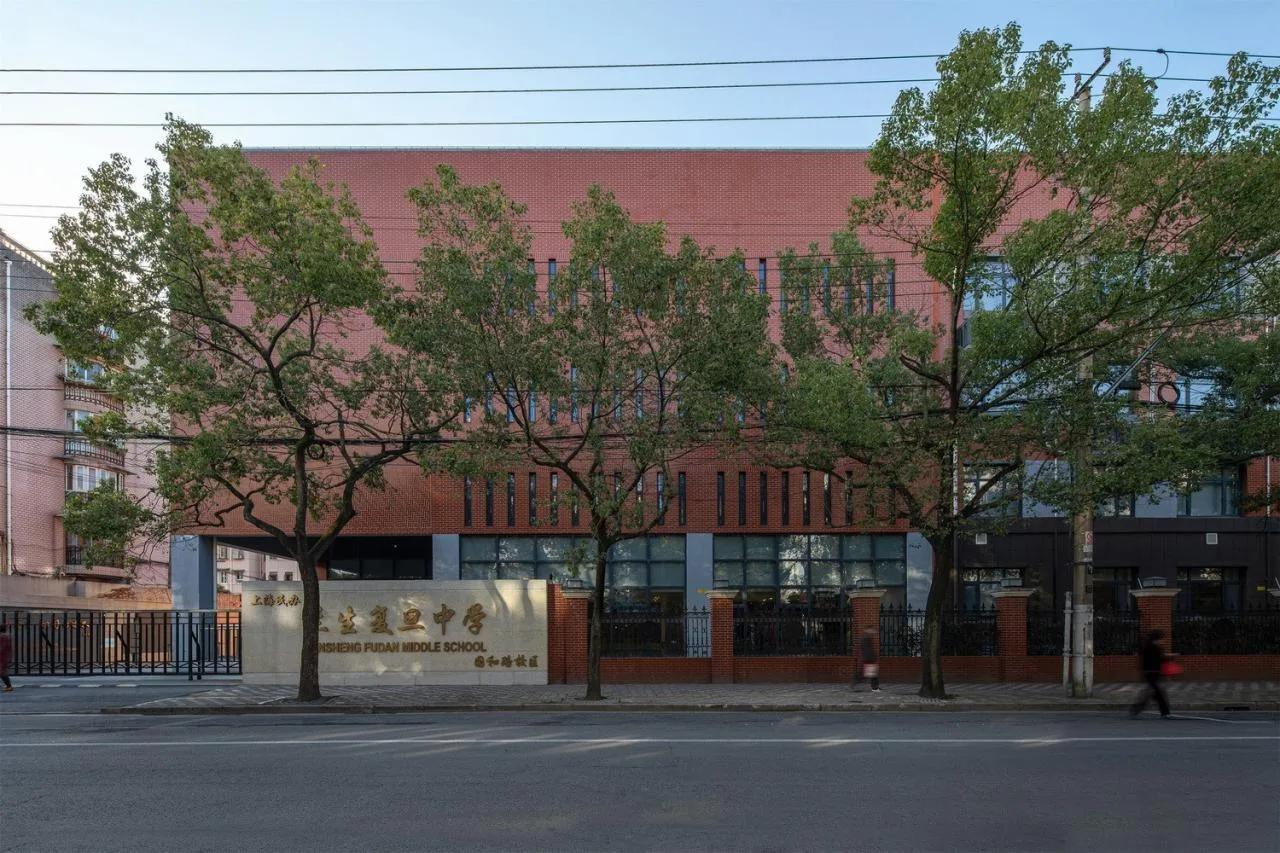
North facade of the teaching building © TANGXUGUO
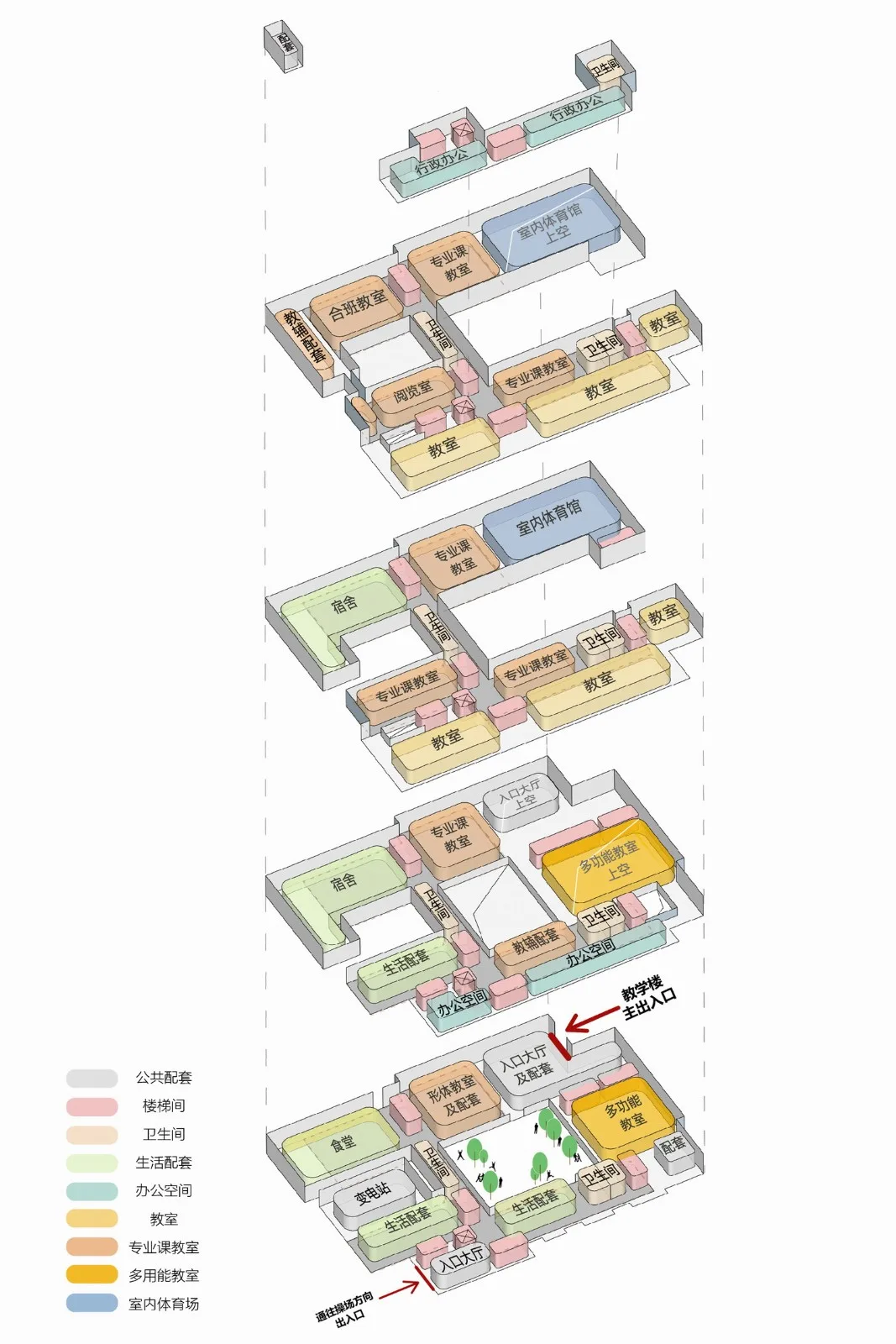
△ Functional flow diagram
The new gymnasium is located on the third floor at the northeast corner of the teaching building, replacing the old gym after its demolition. This space connects with the two-story entrance hall and the newly added student activity center on the east side, together forming the school’s dedicated sports activity zone.
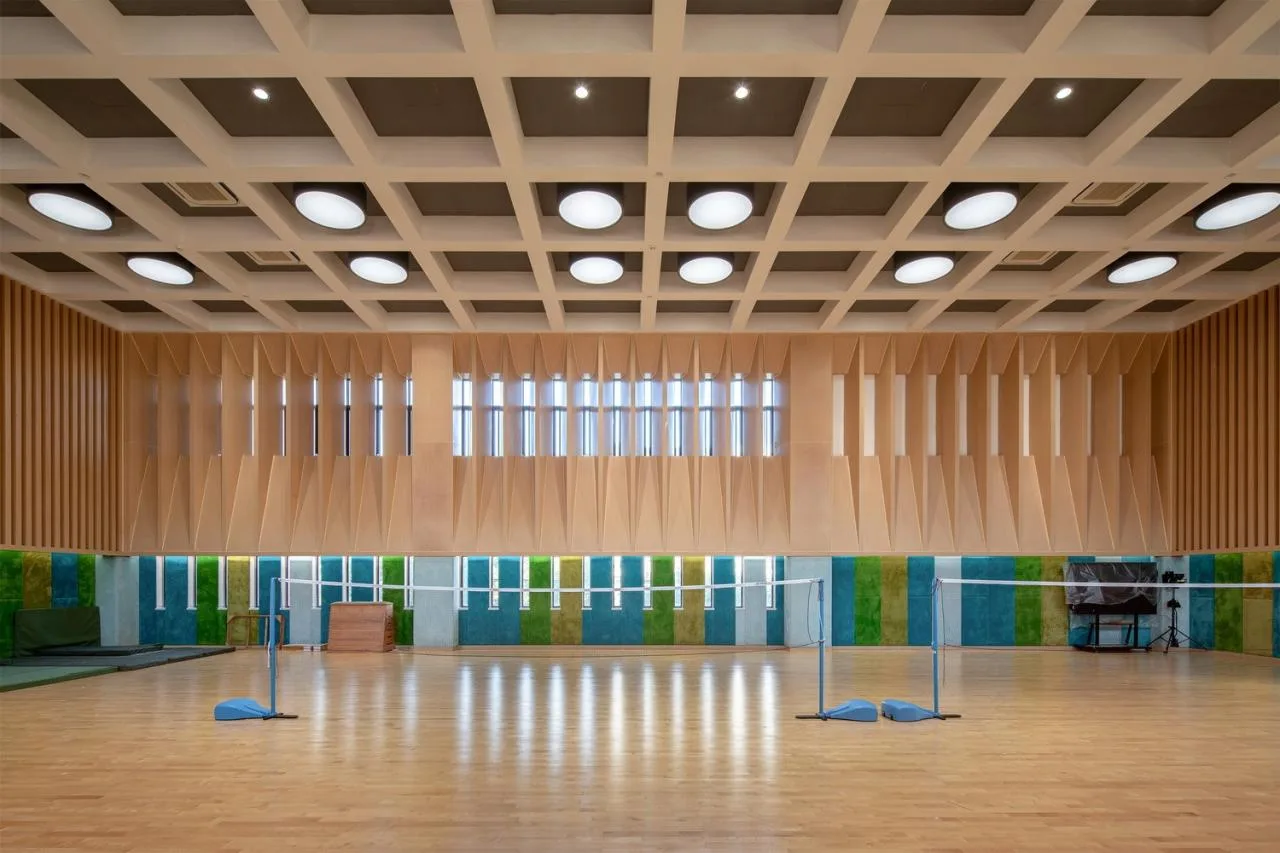
Indoor gymnasium at the northeast corner after renovation © TANGXUGUO
Maintaining the campus’s spatial logic and preserving the original playground, the newly added L-shaped section’s third and fourth floors are designated for regular classrooms. Elevated classrooms provide quiet, sunlit learning spaces with expansive views—important in a dense residential setting. Existing classrooms have been repurposed for specialized, elective, and experimental use, addressing the previous shortage of such spaces.
The office area moved from the original north side to the southwest corner, offering a more private environment near student classrooms, which supports teachers’ needs for focused workspace and facilitates efficient teaching management.
Located adjacent to residential areas and separated from busier campus zones, the west side houses a three-story dormitory building with four rooms per floor, added above the northwest cafeteria. Combined with eight renovated dormitories converted from former offices, the school now offers a total of 20 dormitory rooms. The comprehensive building’s fourth floor includes activity rooms for teachers and technology labs.
The campus layout thoughtfully separates dynamic and quiet zones, ensuring smooth circulation without cross-flow. This open, flexible design leverages courtyards and open spaces created by the interplay of old and new structures, encouraging connection between functional areas and enriching diverse activity opportunities for students and staff.
Spatial Experience
As students progress into middle school, their innocence gradually gives way to increasing social engagement—a concept aligned with American educator John Dewey’s idea that “school is society.” Middle school mirrors a simplified society where social needs become more prominent.
The Hall of Light: A Spacious, Welcoming Entrance
The two-story entrance hall offers a bright and expansive space, creating a ceremonial atmosphere that subtly strengthens teachers’ and students’ sense of belonging. Serving as a key transitional space, it bridges indoor and outdoor environments and invites natural light through clear glass doors, revealing a glimpse of the central courtyard’s greenery.
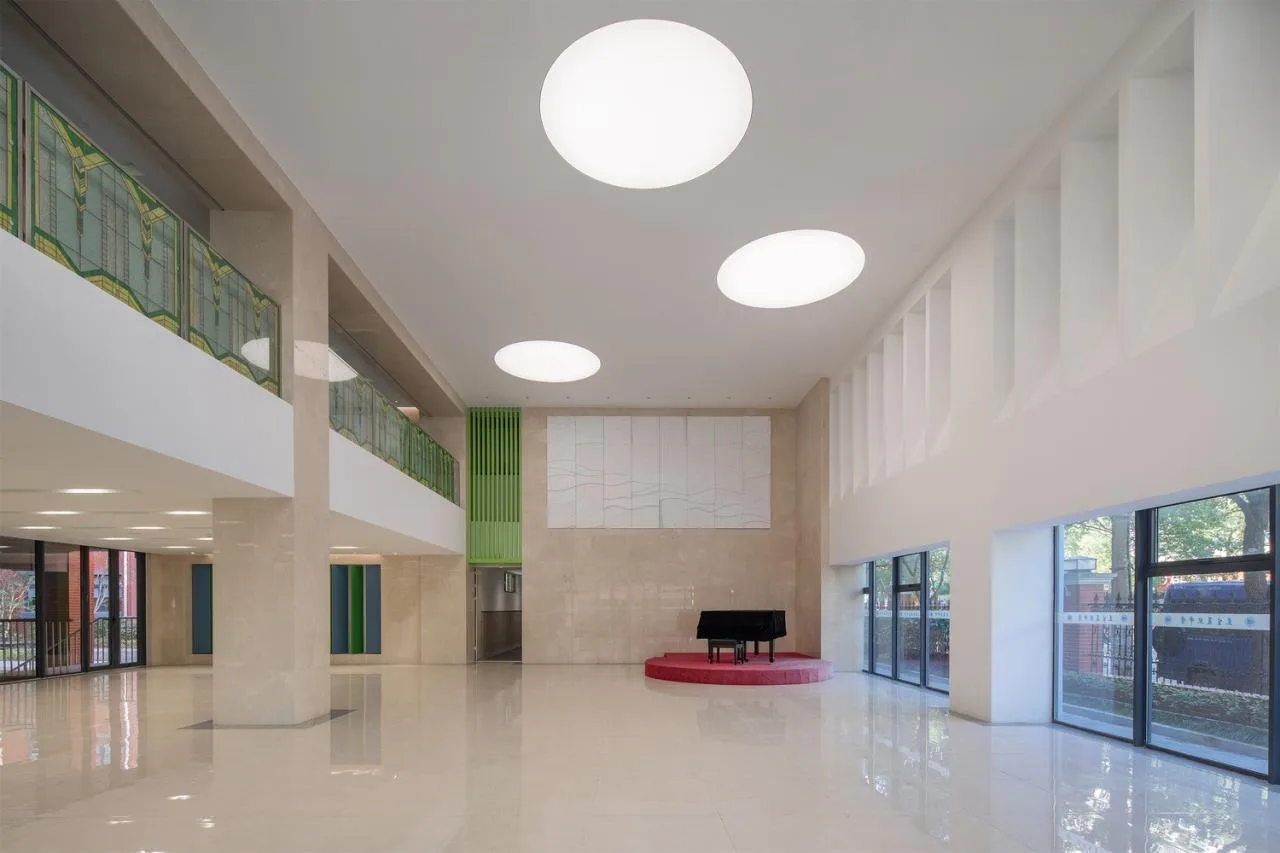
△ Tall entrance hall at the main campus entrance © TANGXUGUO
Informal Gathering Spaces: Bright, Diverse Corridors
To address the original building’s lack of public spaces and narrow corridors, the redesign emphasizes creating informal communication areas. These spaces foster transparent, varied environments that offer students engaging spatial experiences beyond mere passageways. Corridors serve as vital social hubs where students form groups, cluster, and even play—activities unsupported by the building’s previous linear layout.
Corridors were widened, sunlight introduced, window systems optimized, and spatial nodes designed to provide high-quality “zero distance” activity zones for breaks. These enhancements transform corridors into vibrant, inviting environments.
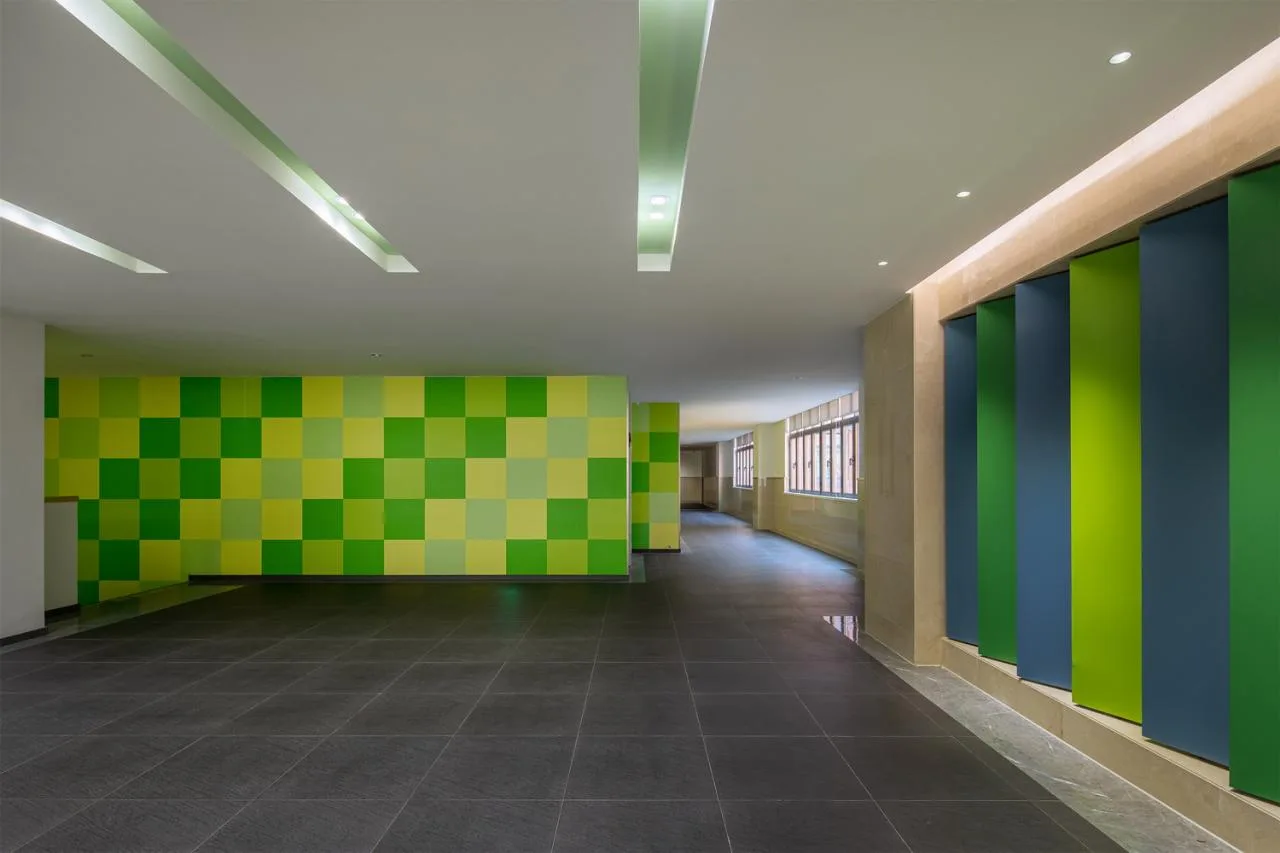
△ Enlarged localized activity space © TANGXUGUO
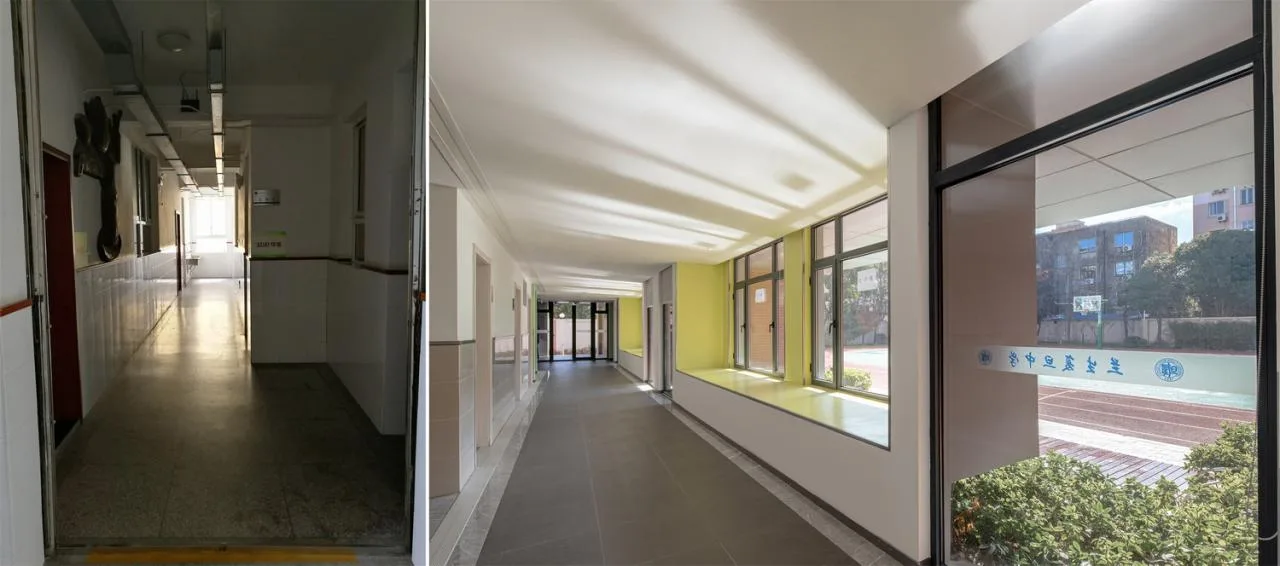
Sunlit corridor space © TANGXUGUO
Informal Activity Venue: A Courtyard Embracing Nature
Respecting children’s natural inclination for freedom, a shared, open central courtyard was created by enclosing the gymnasium, multifunctional classrooms, and older buildings. This courtyard complements the orderly structure of the teaching building, blending steps, landscaping, and vegetation to foster a relaxed atmosphere that eases academic pressures. This space embodies the “student-centered” design philosophy, fostering connection and affinity within the campus.
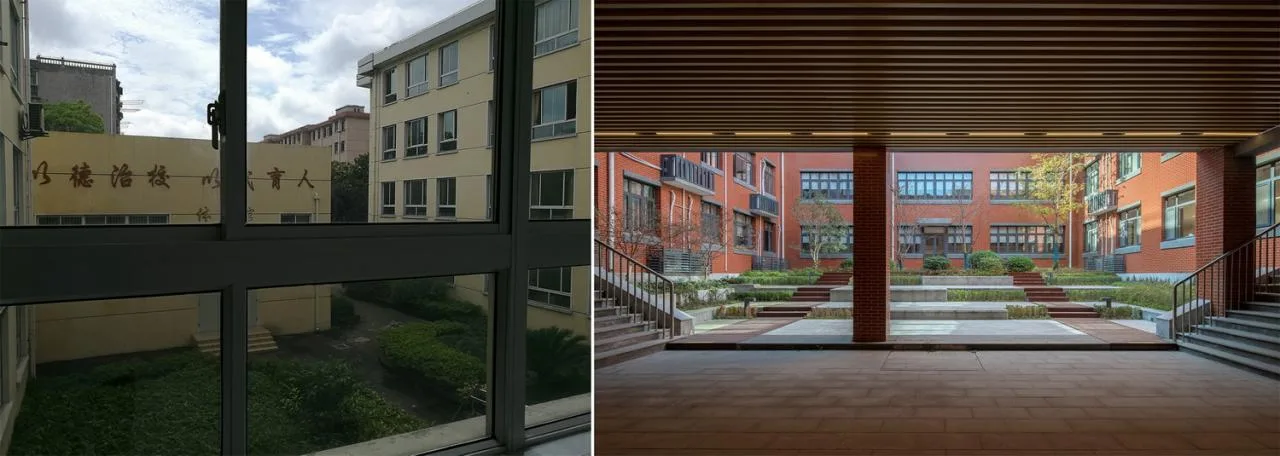
Sunlight and greenery bring vitality to the central courtyard © TANGXUGUO
“Wind and Rain Runway”: Elevated, Independent Space
The elevated area beneath the three-story classroom wing adjacent to the playground serves as a transitional zone between indoor and outdoor spaces, as well as a boundary between active and quiet campus zones. This design preserves the original playground’s size while offering a sheltered sports area. Inside, the corresponding space provides a restful spot for students during breaks.
Bay windows enrich the corridor’s spatial hierarchy, letting in soft natural light and creating an open, engaging environment. This tall, gray-toned corridor combined with bay window seating and the central courtyard forms an ideal “informal learning” space where students can relax, self-regulate, and find moments of solitude—making it the most “natural” space on campus.
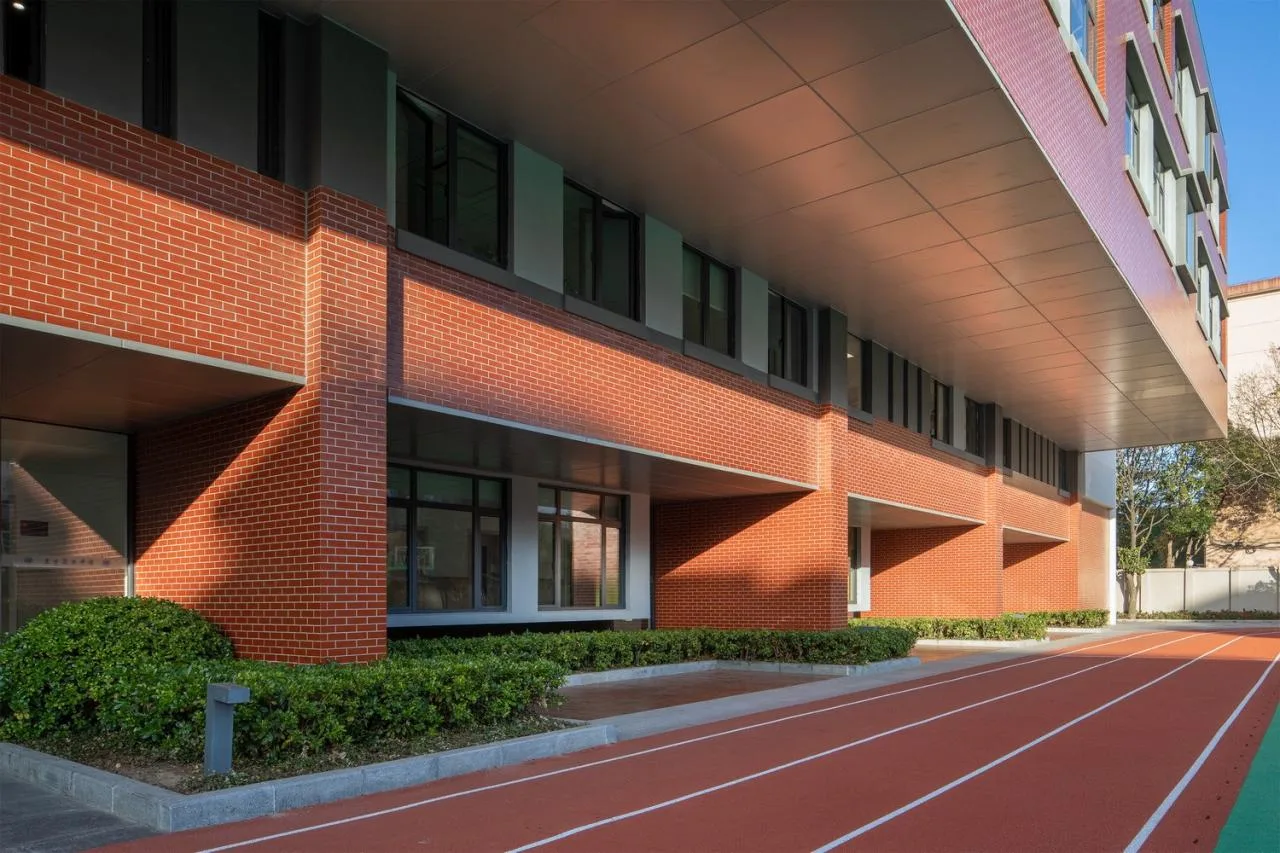
△ Informal activity space © TANGXUGUO
Quiet Auditorium: Bright, Comfortable Meeting Space
The school’s new gymnasium and multifunctional hall cater to large indoor sports and gatherings. The gym features soft ambient lighting and flame-retardant colored velvet padding below two meters for safety and improved acoustics. The multifunctional hall, seating 240 people, is equipped with advanced facilities, providing a premium venue for school-wide events.
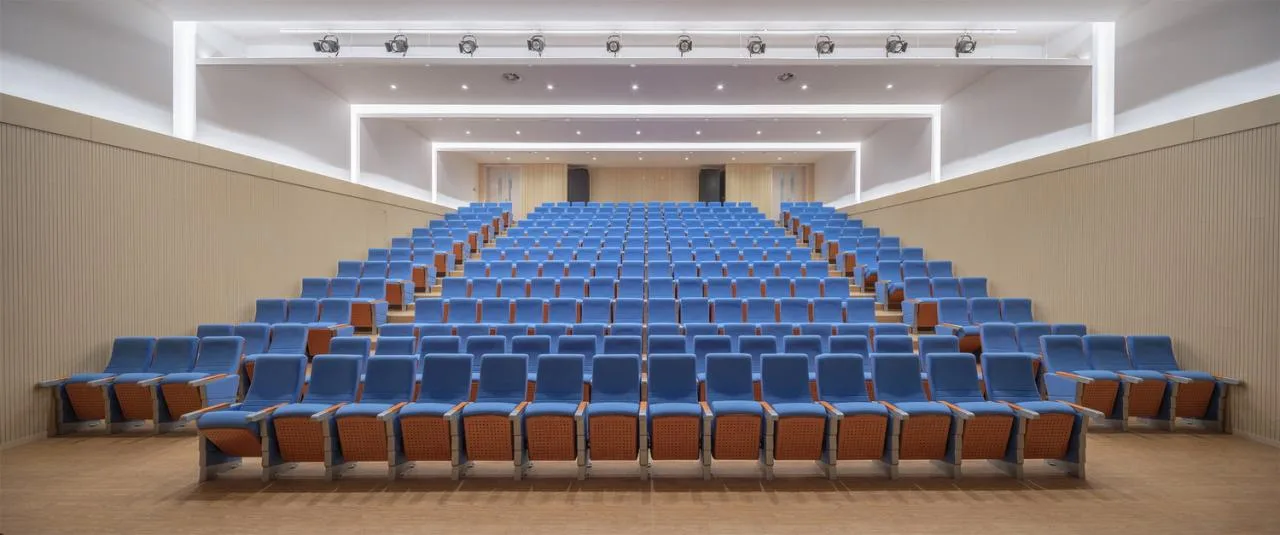
Bright and comfortable multifunctional hall © TANGXUGUO
Facade Design
The original “I-shaped” building with a traditional single corridor layout lacked a strong volumetric presence and had incomplete facades. This renovation interweaves old and new blocks to create a layered facade, enhancing neatness, coordination, and enclosure, resulting in a continuous and cohesive visual effect.
The facade combines red decorative bricks with white aluminum panels and stone, blending historical character with modern elements. Simple lines and rhythmic tiling express the campus’s rich cultural heritage. Diverse window designs reflect the building’s varied functions, creating a stable yet lively, diverse yet orderly campus appearance.
South facade teaching spaces appear to float © TANGXUGUO
The newly added south facade features staggered blocks creating a floating effect that harmonizes the building’s various components. White perforated aluminum panels at the southeast corner add sculptural volume, complementing white window walls in the teaching areas. This color balance softens the overall facade, giving the building a welcoming character.
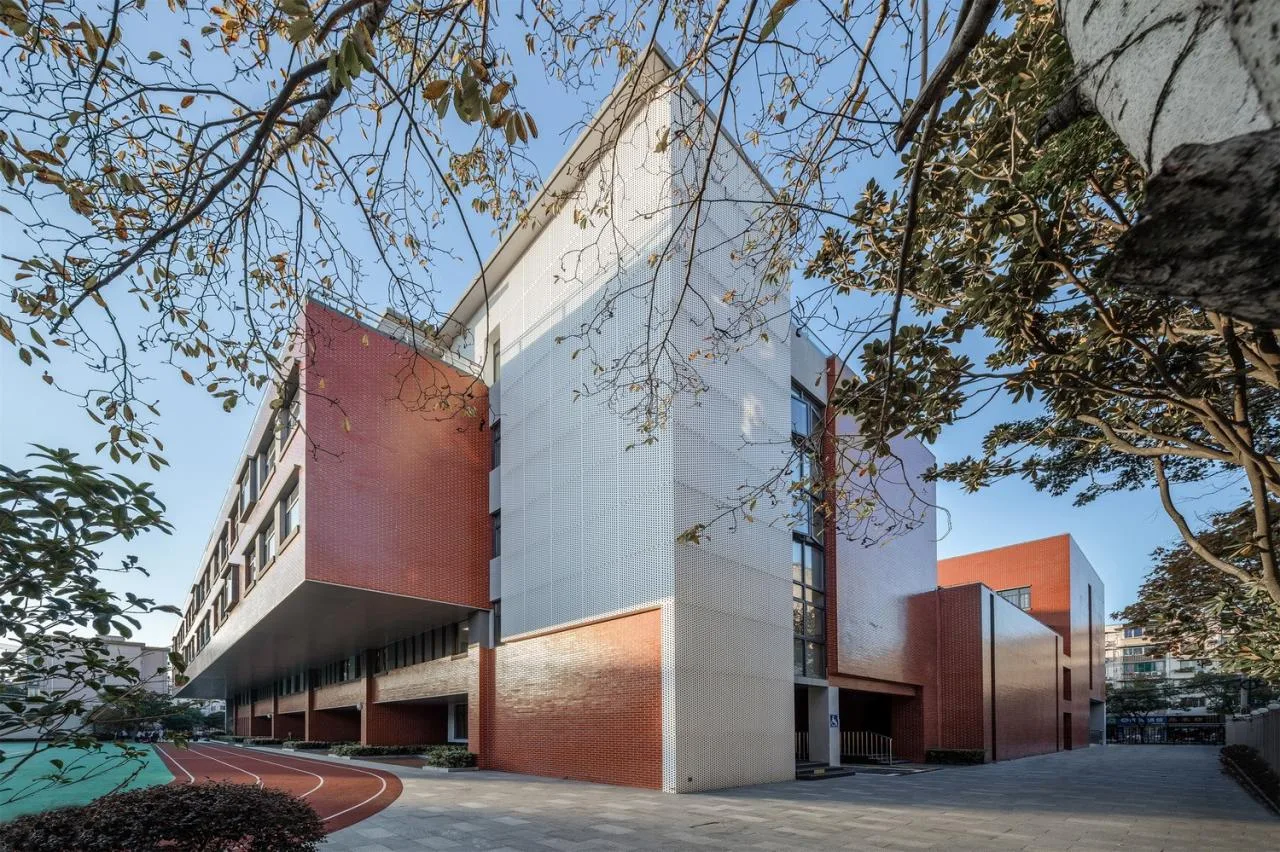
△ Overlapping east and south block facades © TANGXUGUO
The north facade faces the city, featuring a solid red volume nestled among greenery that brings fresh vitality to the neighborhood. A rhythmic iron gate enhances the campus entrance identity. The combination of dark gray paint on the first floor and a cantilevered main entrance reduces the building’s street-side massiveness. Vertical strip windows in the gymnasium introduce soft light while minimizing glare, supporting safe student activity.
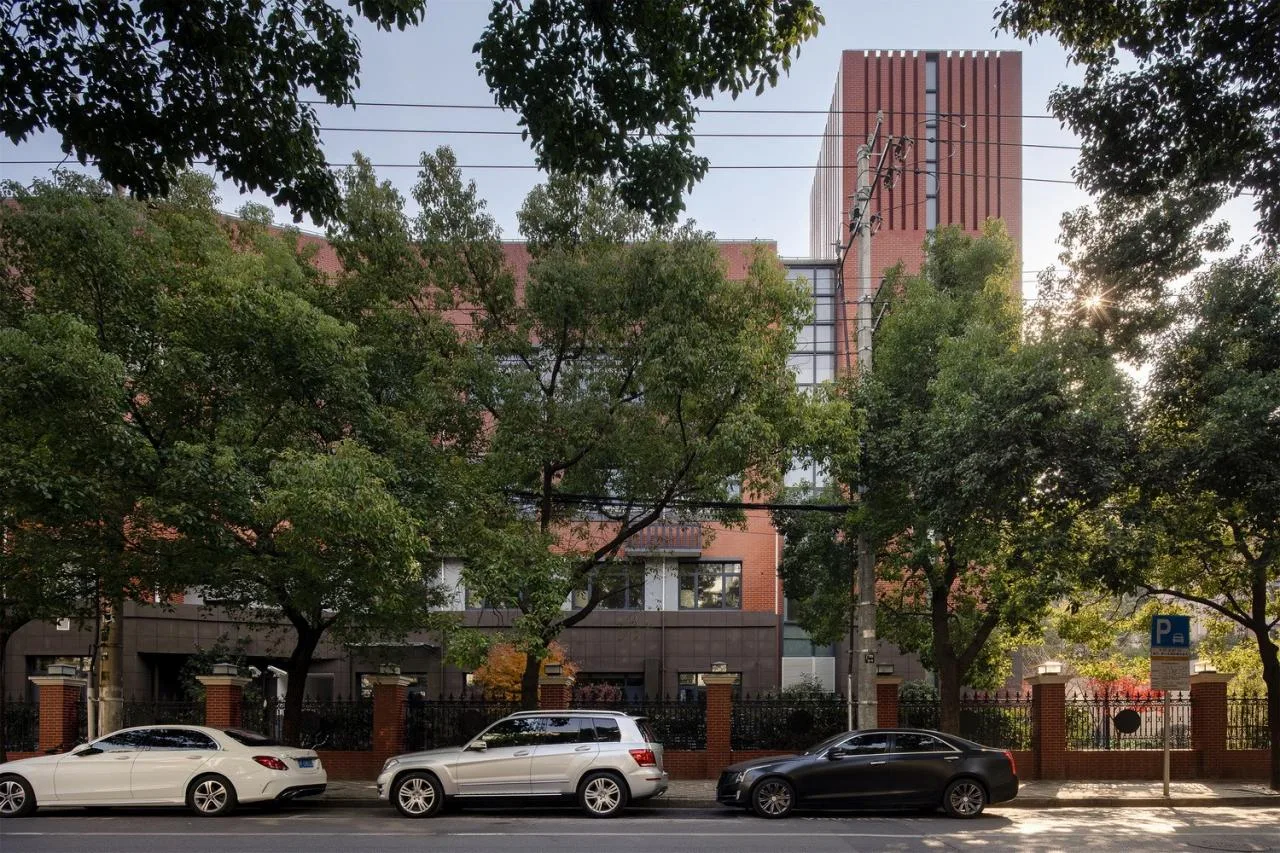
North facade detail © TANGXUGUO
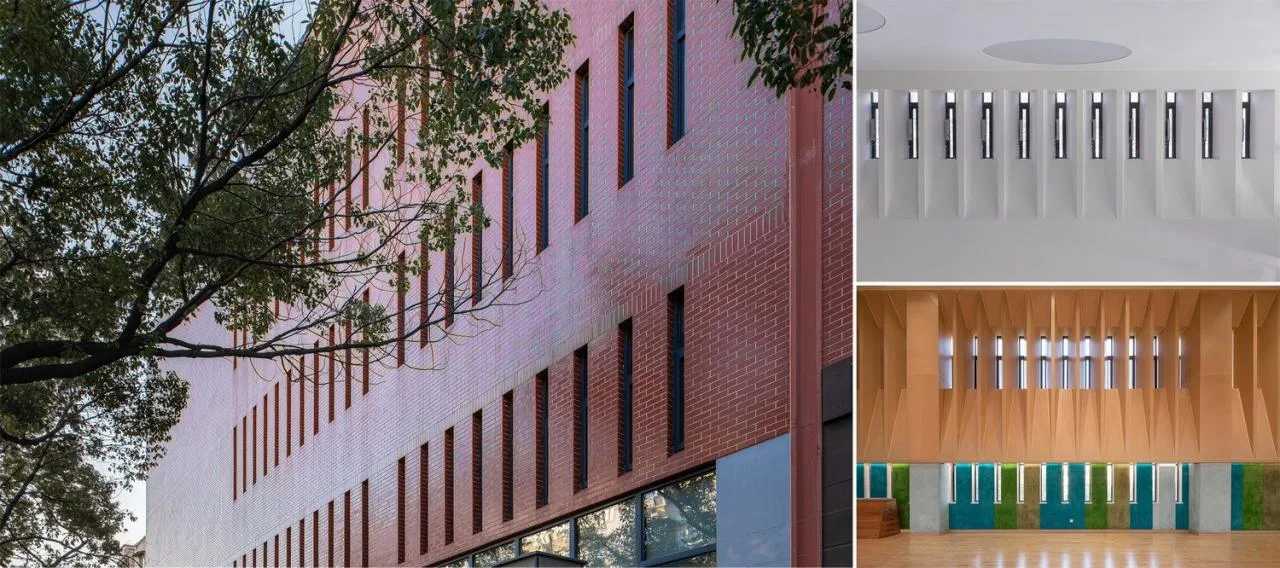
Vertical strip windows on the north facade © TANGXUGUO
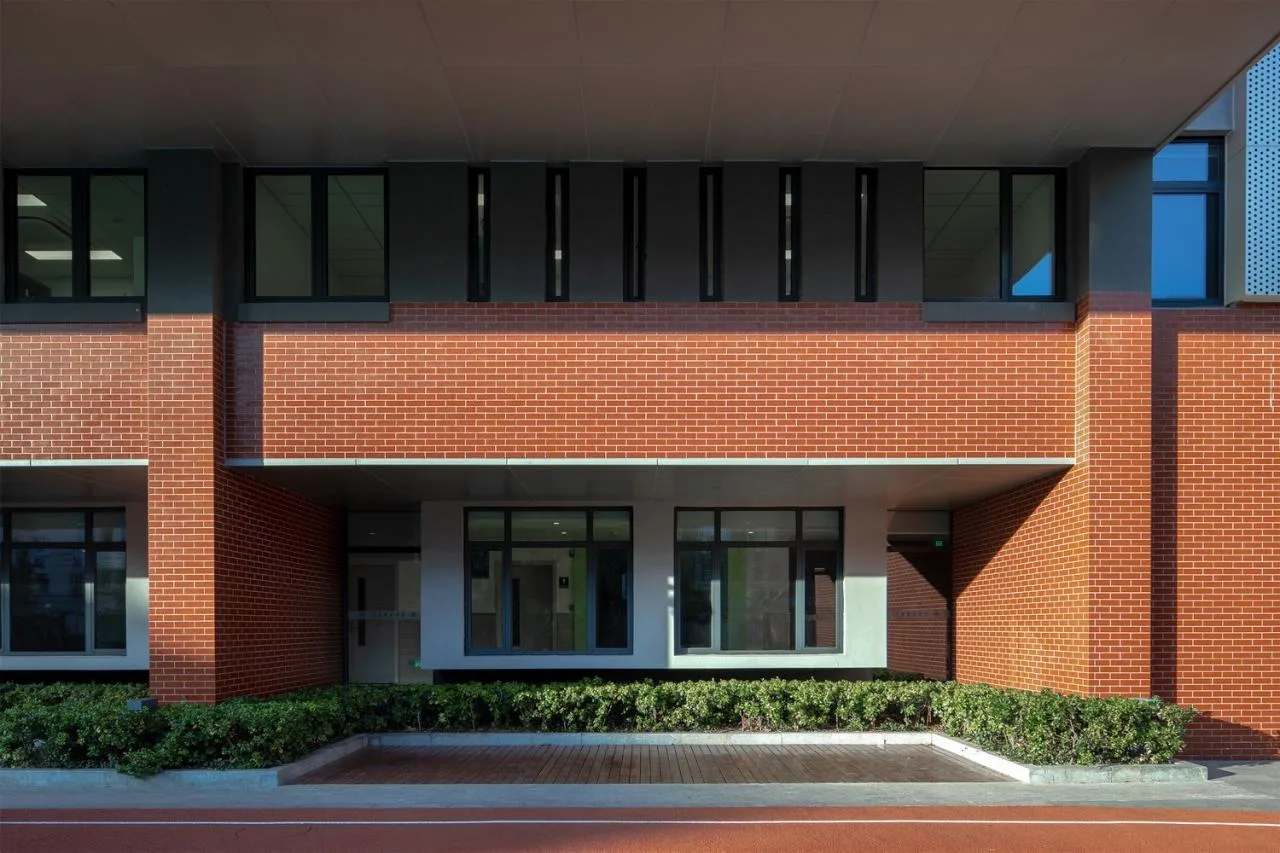
Bay window platform along the playground corridor © TANGXUGUO
Conclusion
The campus is the starting point for every individual’s journey into learning and social integration. Architecture holds the city’s memories, and campus architecture carries the cherished memories of youth. Respecting the original campus plan, building structure, and surrounding environment, this renovation and expansion project achieves a multi-layered, multi-system integration of old and new buildings.
With a focus on teachers and students, the project employs an intensive design strategy to enrich functional campus spaces, reshape the campus layout, and foster a meaningful dialogue across time and space.
Project Information
Project Name: Lansheng Fudan Middle School Guohe Road Campus Renovation and Expansion Project
Developer: Fudan Lansheng Siyuan Middle School
Location: Campus of No. 128 Guohe Road (formerly Guohe New Village First Primary School, Yangpu District, Shanghai)
Architectural Design: Shanghai Huadu Architectural Planning and Design Co., Ltd. (HDD)
Project Leader: Dong Weiwei
Architectural Team: Shen Yi, Dong Weiwei, He Yuwei, Liu Yan
Structural Design Team: Zhou Zhen, Zhang Yongqiang, Chai Jingyuan
Water Supply and Drainage Team: Jiang Yi, Wu Wenwen, Wang Yikun
Electrical Design Team: Zhang Xiaoqing, Zhang Yi, Wei Quan
HVAC Team: Chai Yunliang, Dong Yunfeng
Interior Design Team: Ge Qing, Ai Jingwen, Liu Haitao
Landscape Design Team: Zhu Yiyu, Shao Shi, Wang Dandan, Fei Yidong
Cost Management Team: Yang Qinglin, Zhuang Qin
Current Total Construction Area: 4,235.12 m²
Total Area after Expansion: 7,688.12 m²
Project Status: Completed
Design Period: October 2017
Construction Period: October 2019
Photography/Image Credit: TANGXUGUO / Shanghai Liban Culture and Media Center















Must log in before commenting!
Sign Up