
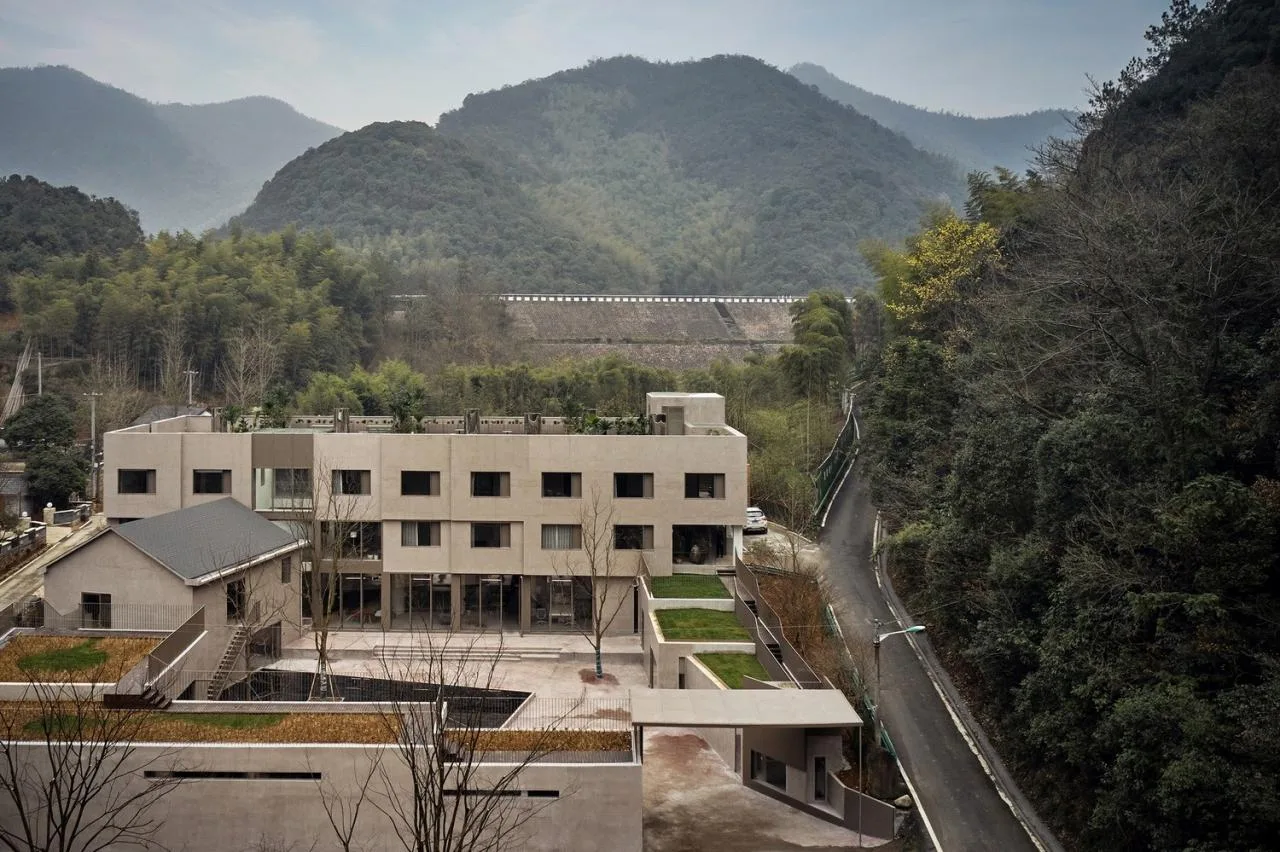
In the summer of 2021, TEAM-BLDG was commissioned by Qingshan Village in Hangzhou to transform the abandoned Longwu Spring Water Factory into the Qingshan Youth Society. This new space accommodates accommodation, office, exhibition, and retail functions, providing a shared residence for visitors engaging in short-term vacation-style office work, village-based entrepreneurship, and leisure. The project aims to create a building that supports co-living and co-working, not only addressing the structural issues of the old factory but also fostering a deeper connection between people and the village. Both new and long-term residents are encouraged to participate and share this communal space.
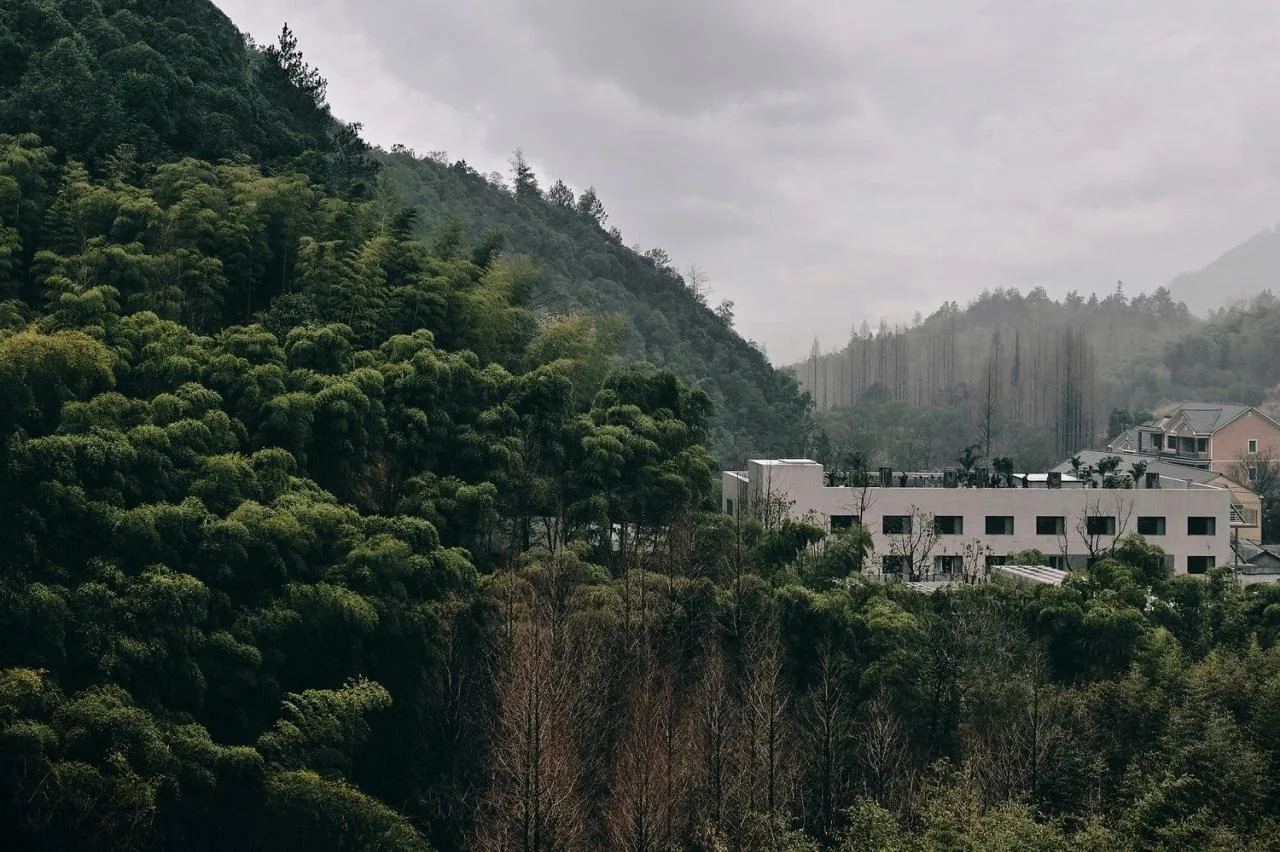
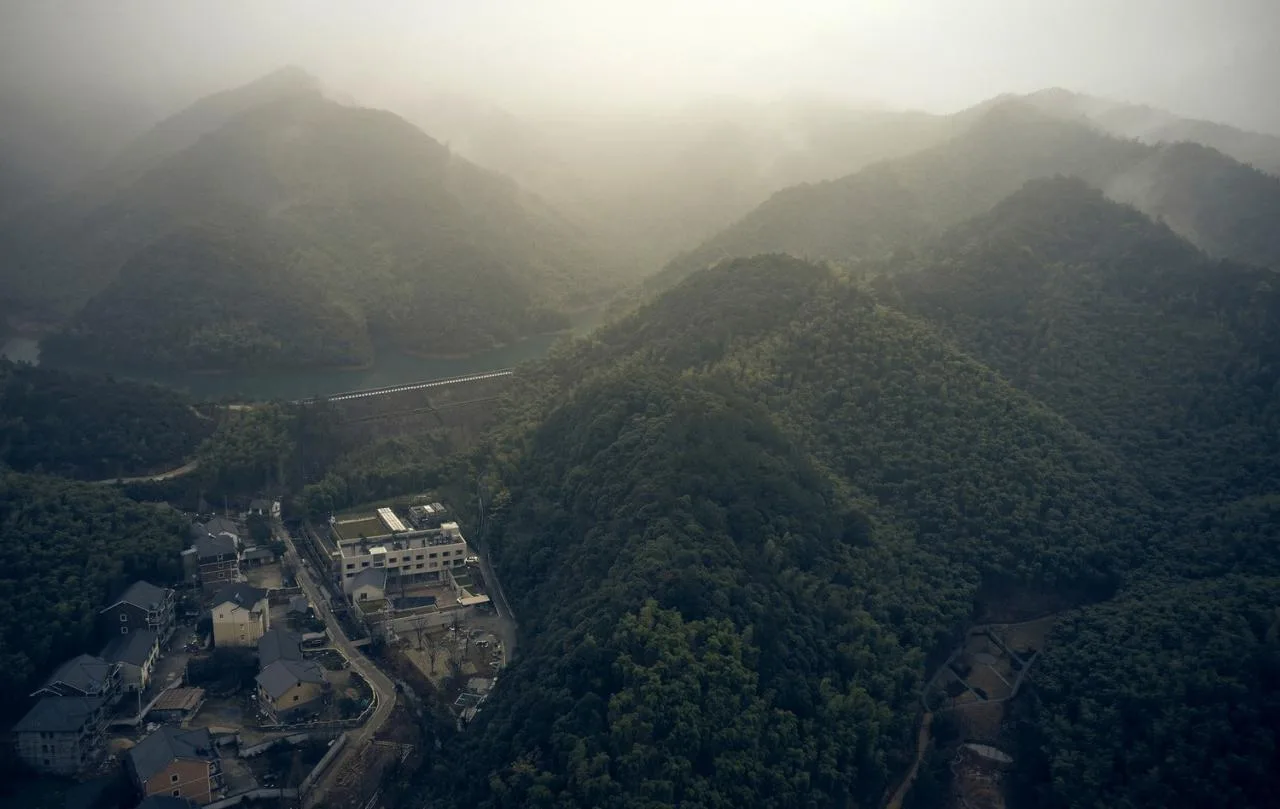
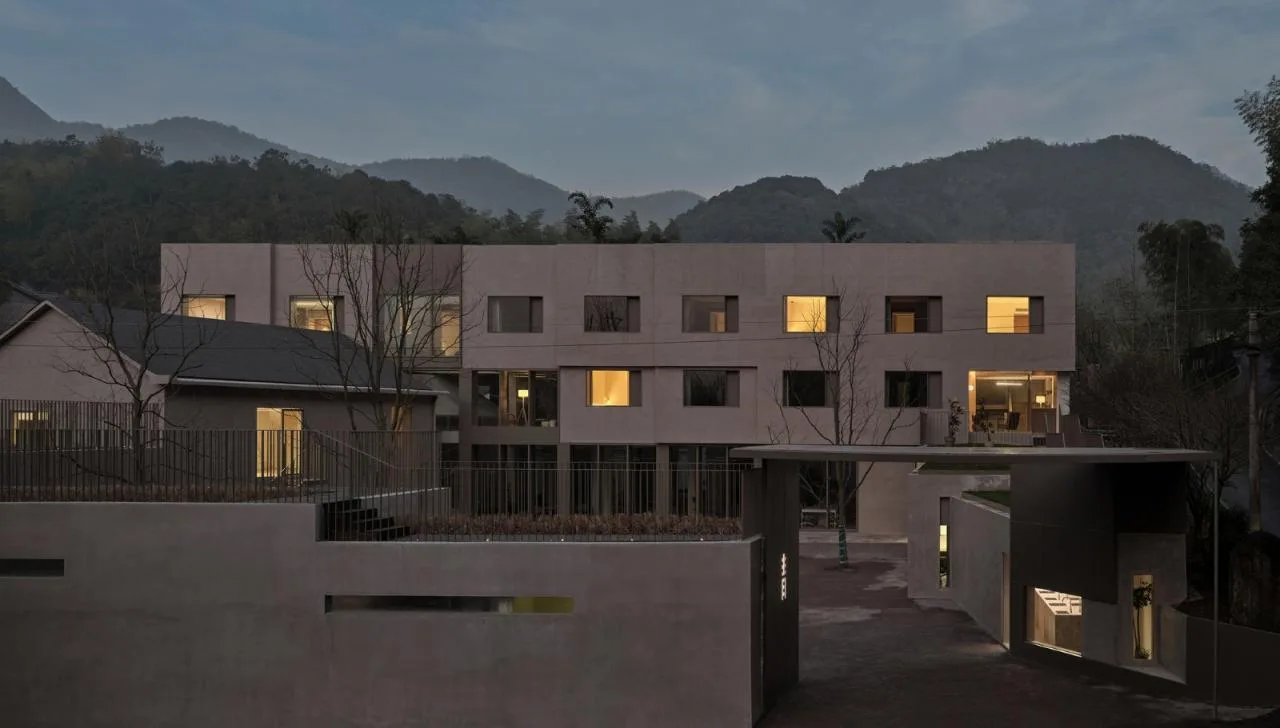
Qingshan Village is located in the Yuhang District of Hangzhou, an area with a robust rural economy. Unlike traditional dwellings, wealthier locals mostly reside in newly built villas. Most of the old houses have been renovated and are now occupied by new residents. Although traditional rural architecture is scarce, the village’s natural layout centered around water bodies remains well preserved. Upstream, farmland and houses alternate alongside bamboo forests and narrowing roads. The Longwu Reservoir at the mountain’s base serves as the village’s main water source, with the Youth Society project located among the last buildings before the reservoir.
During initial site visits, the architects noted a steep, narrow road leading to the reservoir, causing most visitors to stop and continue on foot regardless of their mode of transportation. This strong sense of “pause” inspired the design concept: if the village is likened to a home, the Youth Society serves as a study or bedroom—comfortable during the day and peaceful at night.
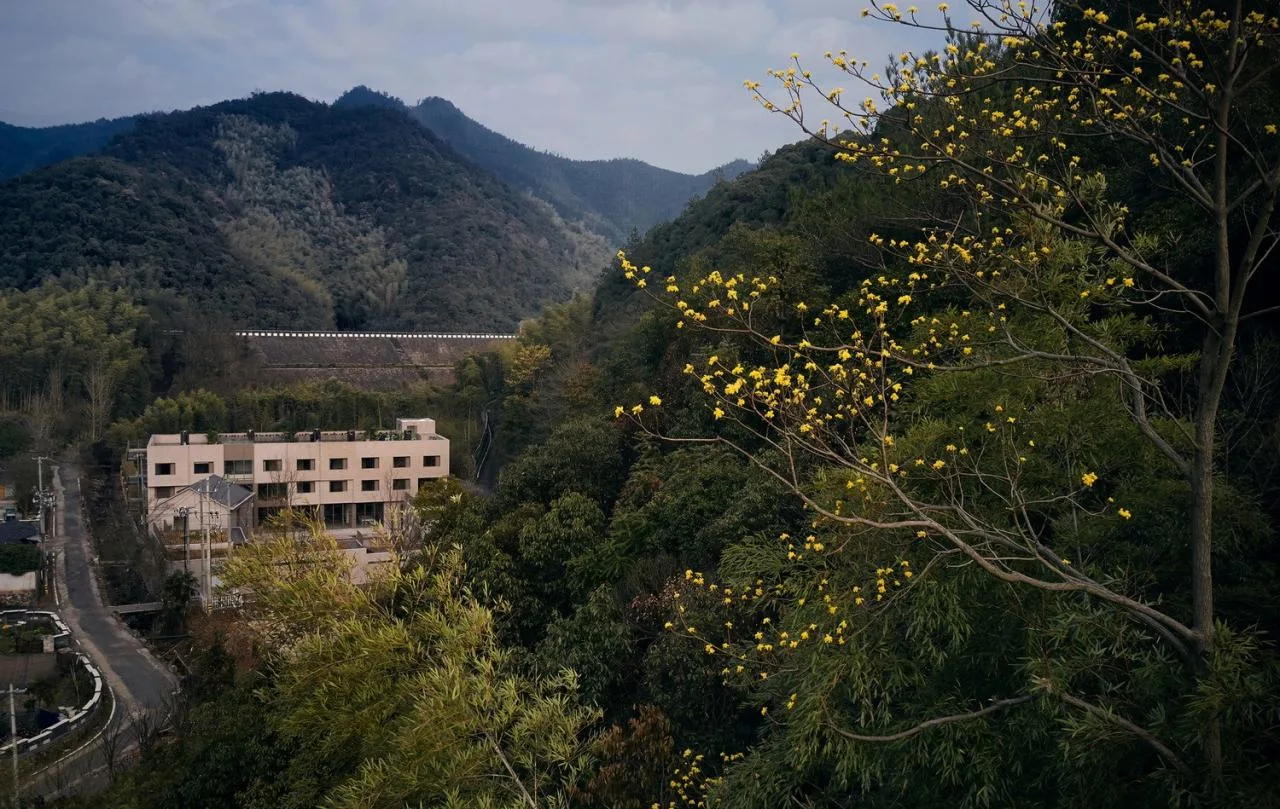
Architecture: Integrating with Environment and Habits
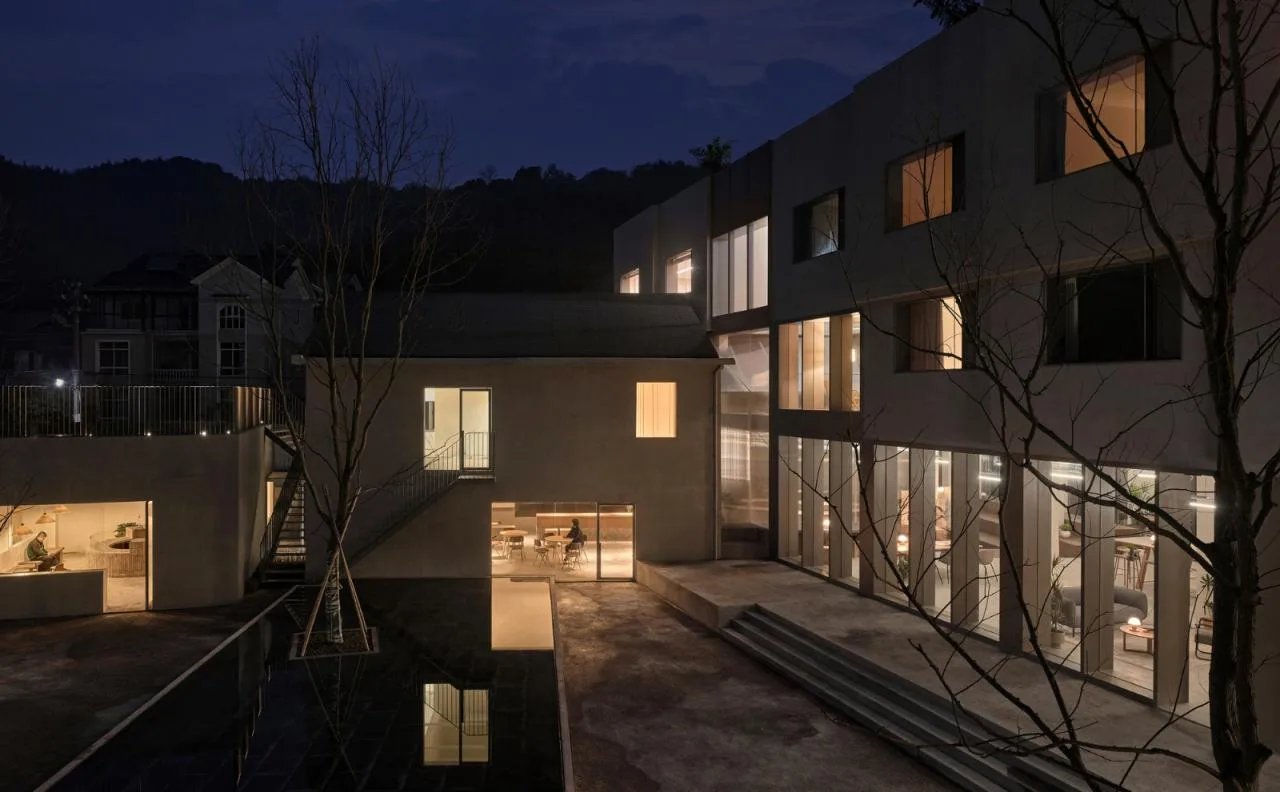
The original building was a three-and-a-half-story framed structure with a double-pitched roof and several single-story annexes. These interconnected factory buildings stepped down from east to west, designed to support the water plant’s production and transportation flow while aligning with the surrounding terrain. The south side borders a biodiverse mountain with stunning natural views, and a stream runs along the north side.
The owner’s brief was straightforward: create functional spaces that integrate well with the environment and embody what they called a “real space.” Originally, the main building had red ceramic tile exterior walls, and other structures were painted white. However, the old buildings lacked harmony with nature, sometimes feeling opposed to it. While changing exterior materials and colors could help blend the building into the surroundings, this approach felt too simplistic and uninspired. Instead, the team explored the idea of integration through the lens of local habits and daily life.
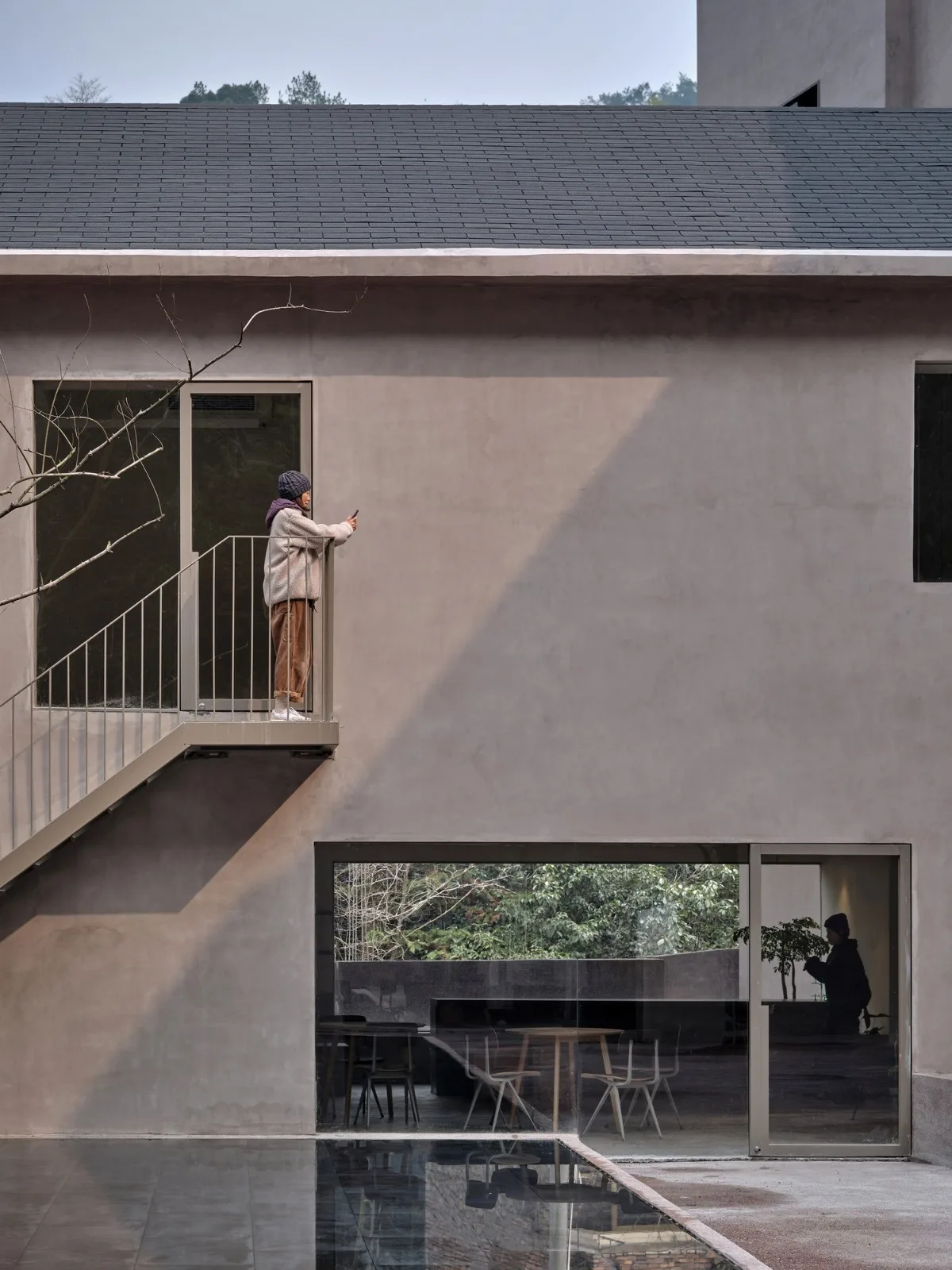
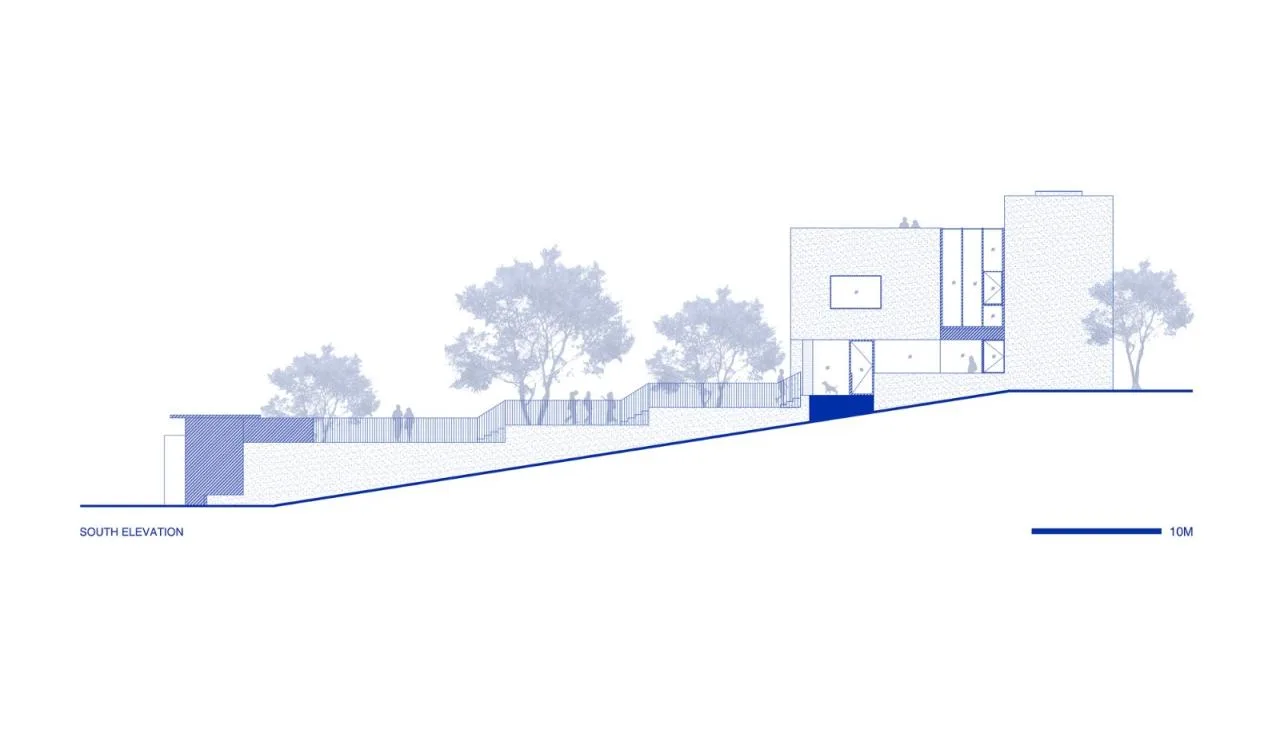
Originally designed as a factory for “processing,” the terraced fields concept was reinterpreted to emphasize “planting,” which aligns with village life. The design preserved the connectivity between factory buildings, increasing the podium’s spatial units from five to seven. A stepped roof with a 0.75-meter rise creates a “back”-shaped layered form that accommodates the site’s slope and enriches outdoor spaces and circulation.
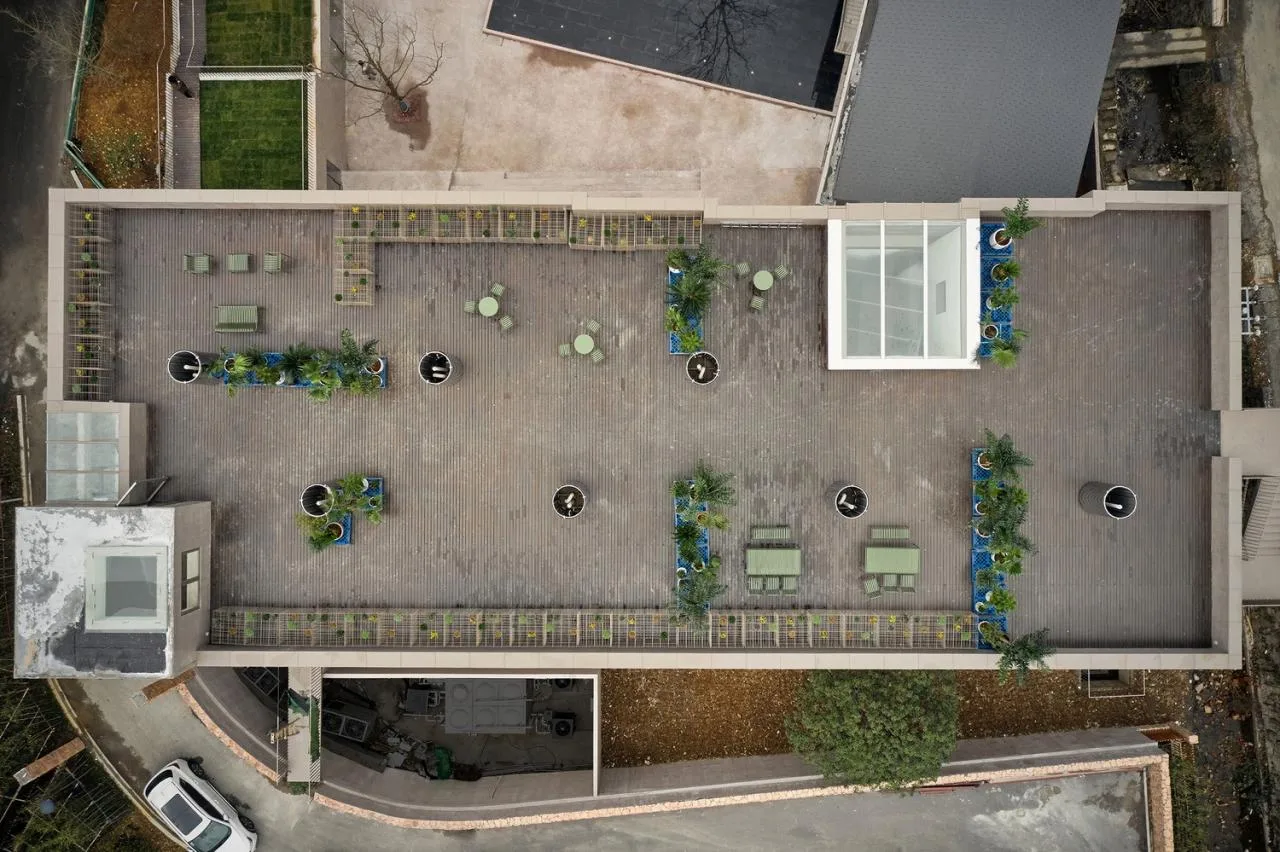
The rooftop includes several planting and resting zones separated by two 1.2-meter-wide walkways, allowing long-term residents to cultivate vegetables and herbs. The main building’s roof is enclosed with more than 60 movable plant racks, each one meter high, creating multiple leisure areas. These staggered roof levels offer varied perspectives and enhance the relationship between the architecture, terrain, and natural surroundings.
Many modern indoor greenhouse environments maintain constant light and temperature, making it difficult for occupants to feel natural changes throughout the day. In Qingshan Village, despite modern amenities, residents’ daily routines still depend heavily on natural light. For example, even with well-lit roads, people rarely walk outside after sunset.
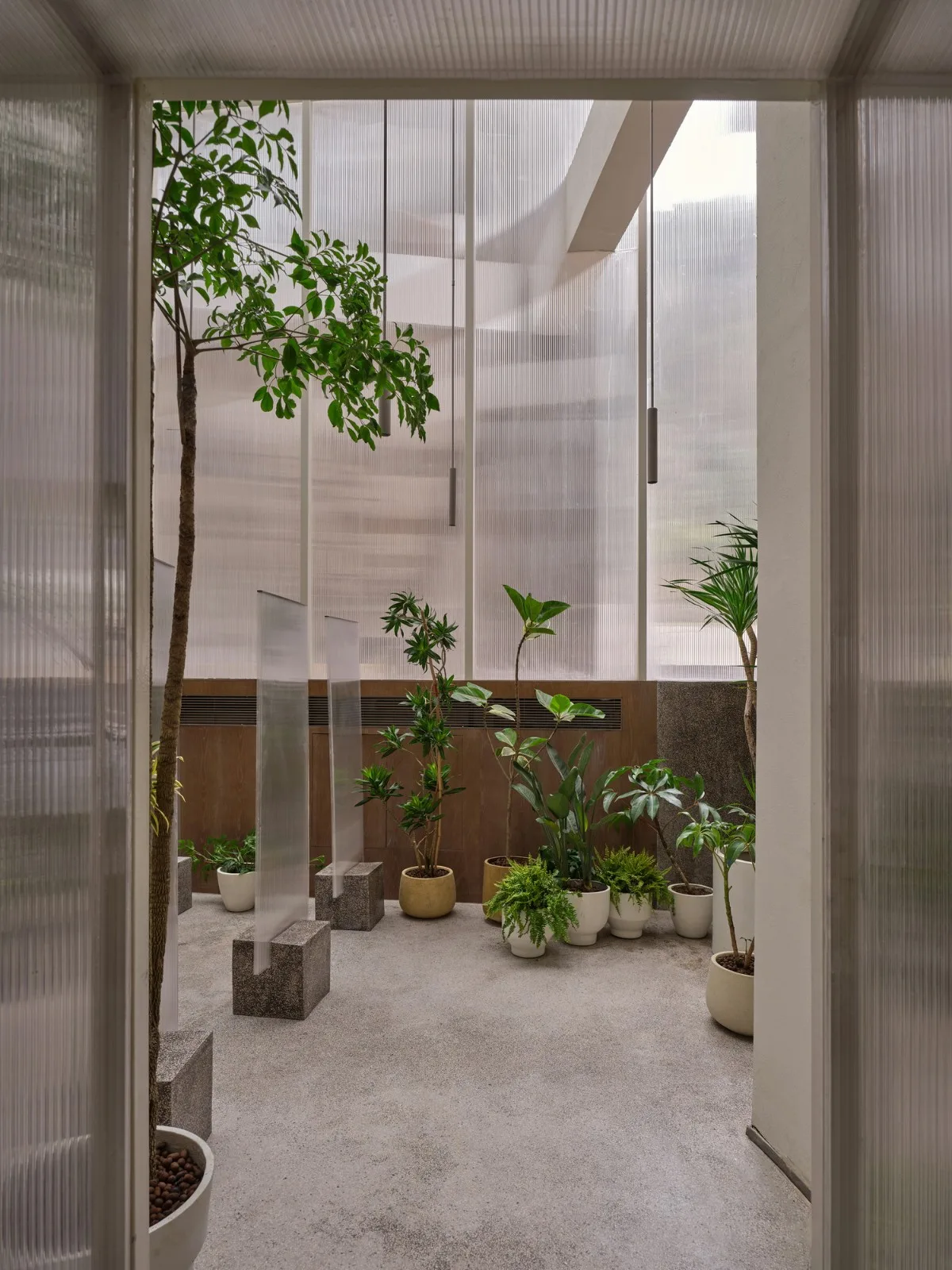
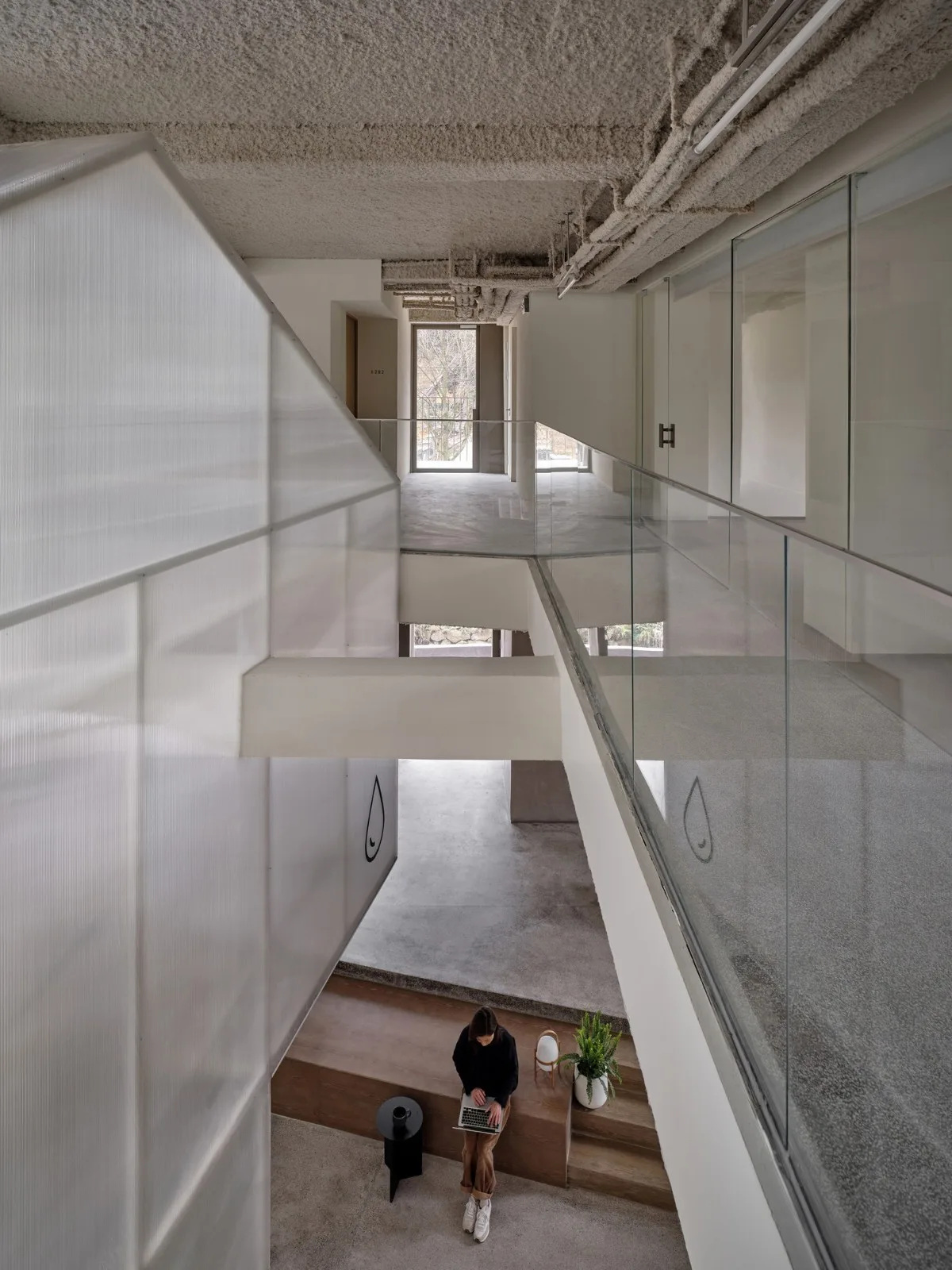
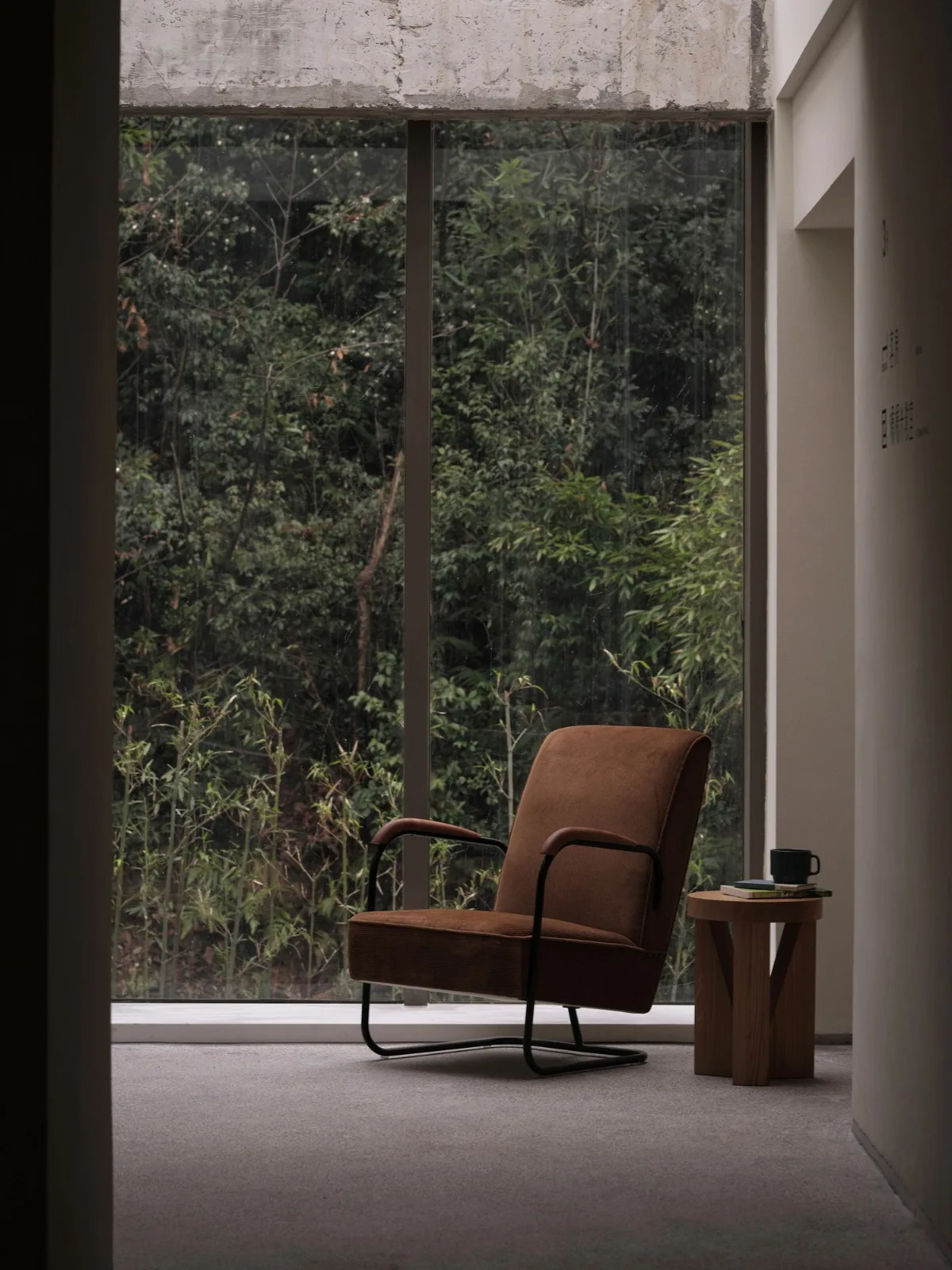
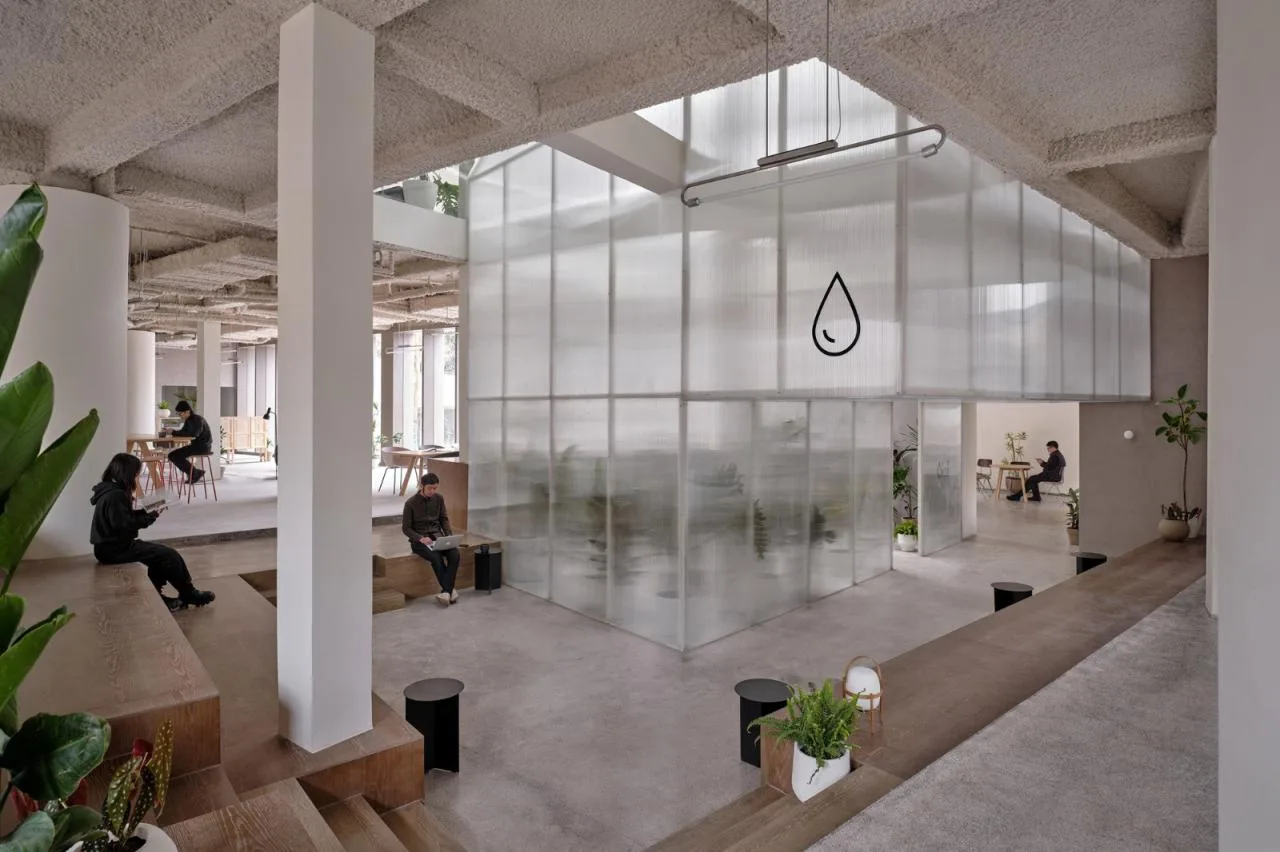
Building on these habits, the design aims to bring more natural light inside and introduce variability to the space. The owner requested an exhibition space themed around “water” in the main building, accommodating diverse display forms. Inspired by the surroundings, plants symbolize water in the design. The double-sloped roof was scaled proportionally and “grown” into the main building, forming a greenhouse approximately 7 meters tall, spanning three floors.
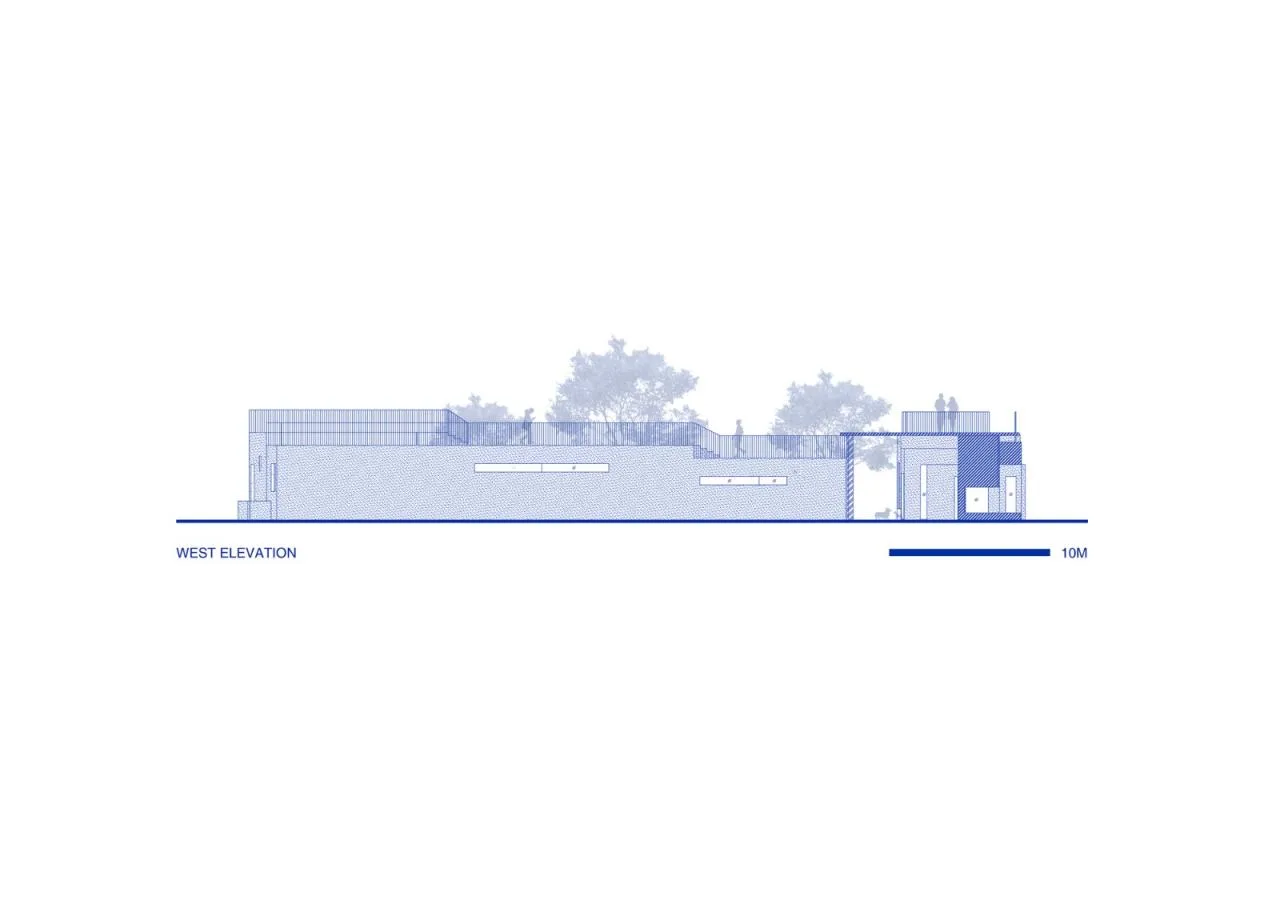
Natural light floods the greenhouse through skylights and sun panels, creating refraction and scattering effects that change colors and atmosphere throughout the day. This ensures plant health and makes the greenhouse the transparent, eye-catching core of the project. The west facade was deconstructed into 11 units, with the greenhouse as the centerpiece, creating an inward-extending wall that appears to be pushed by the greenhouse’s growth. This complements the building’s terraced form.
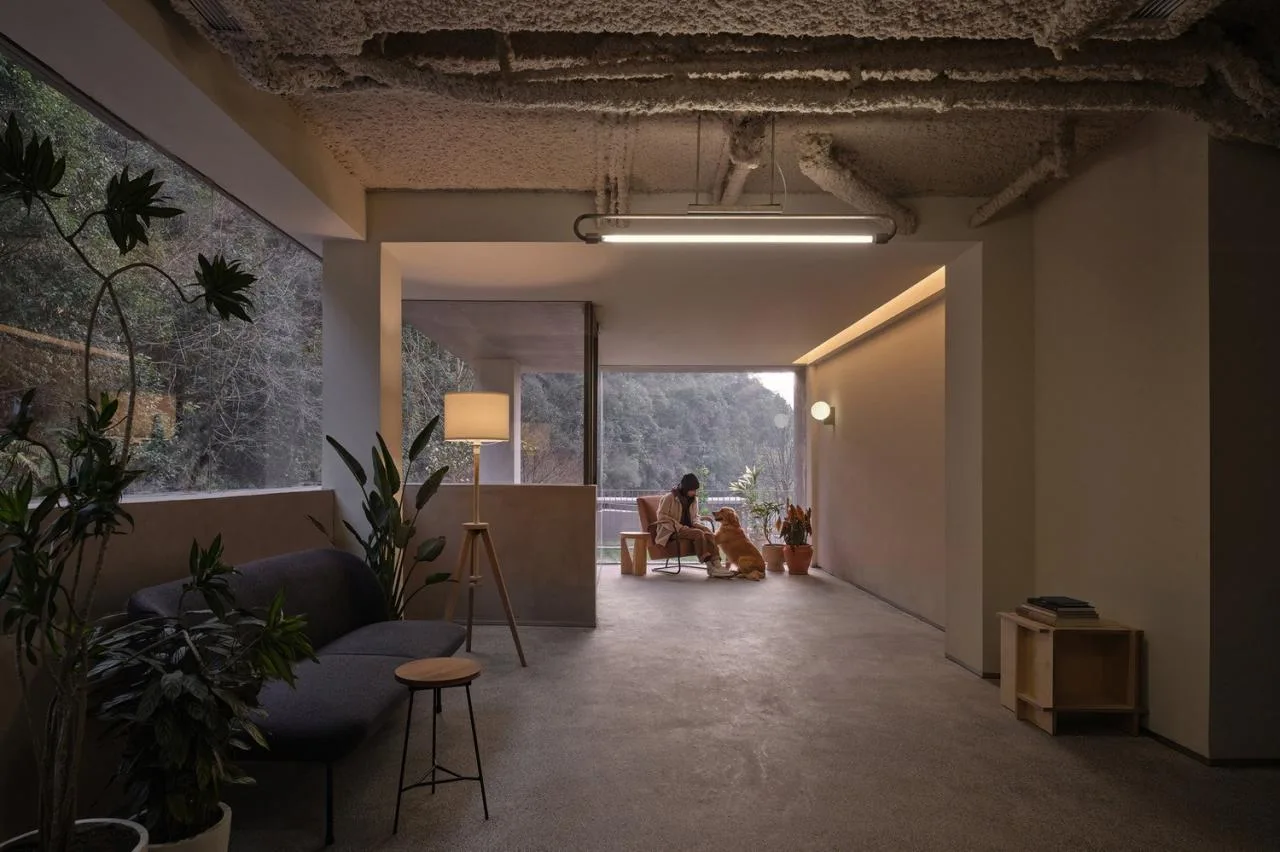
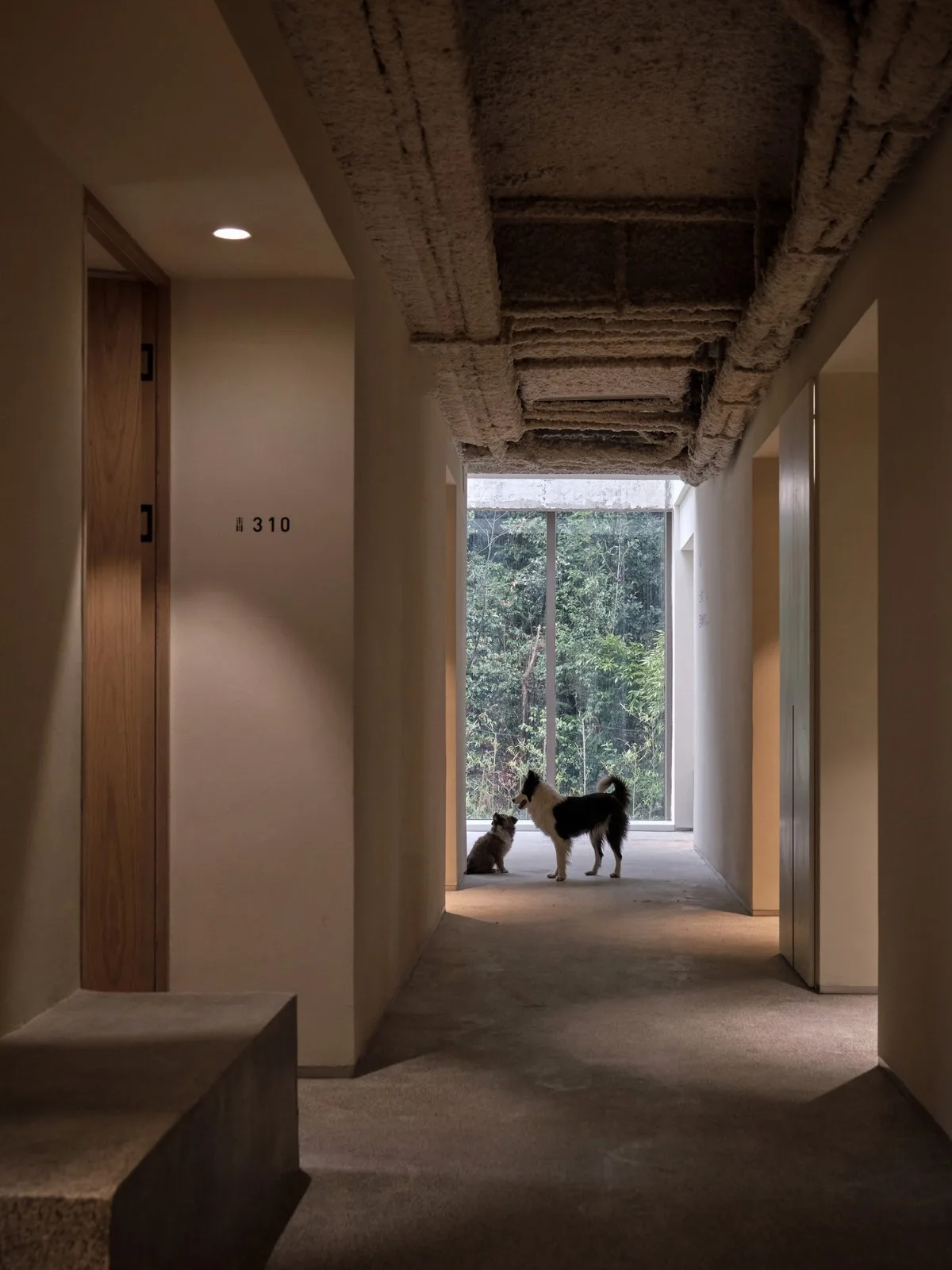
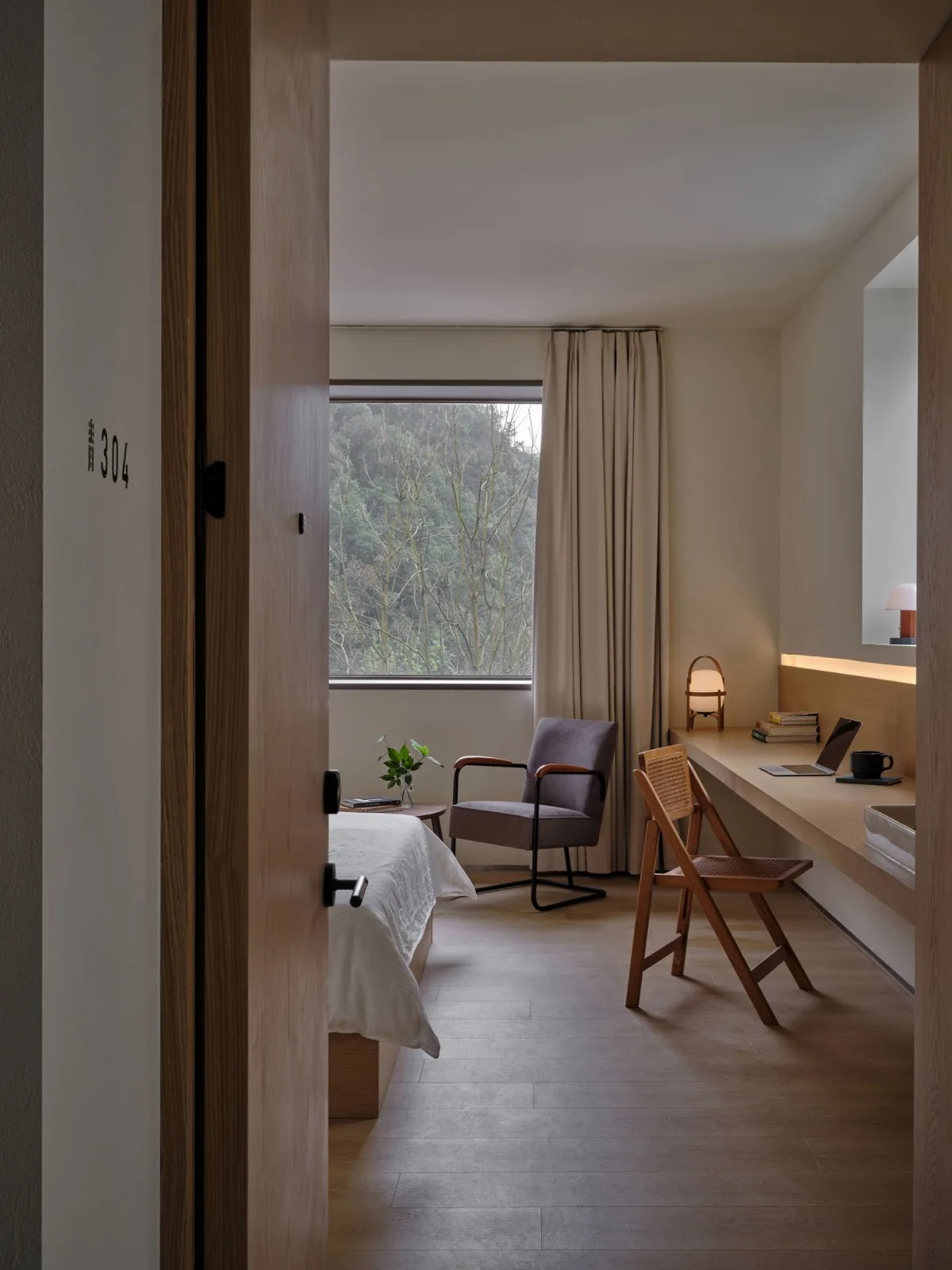
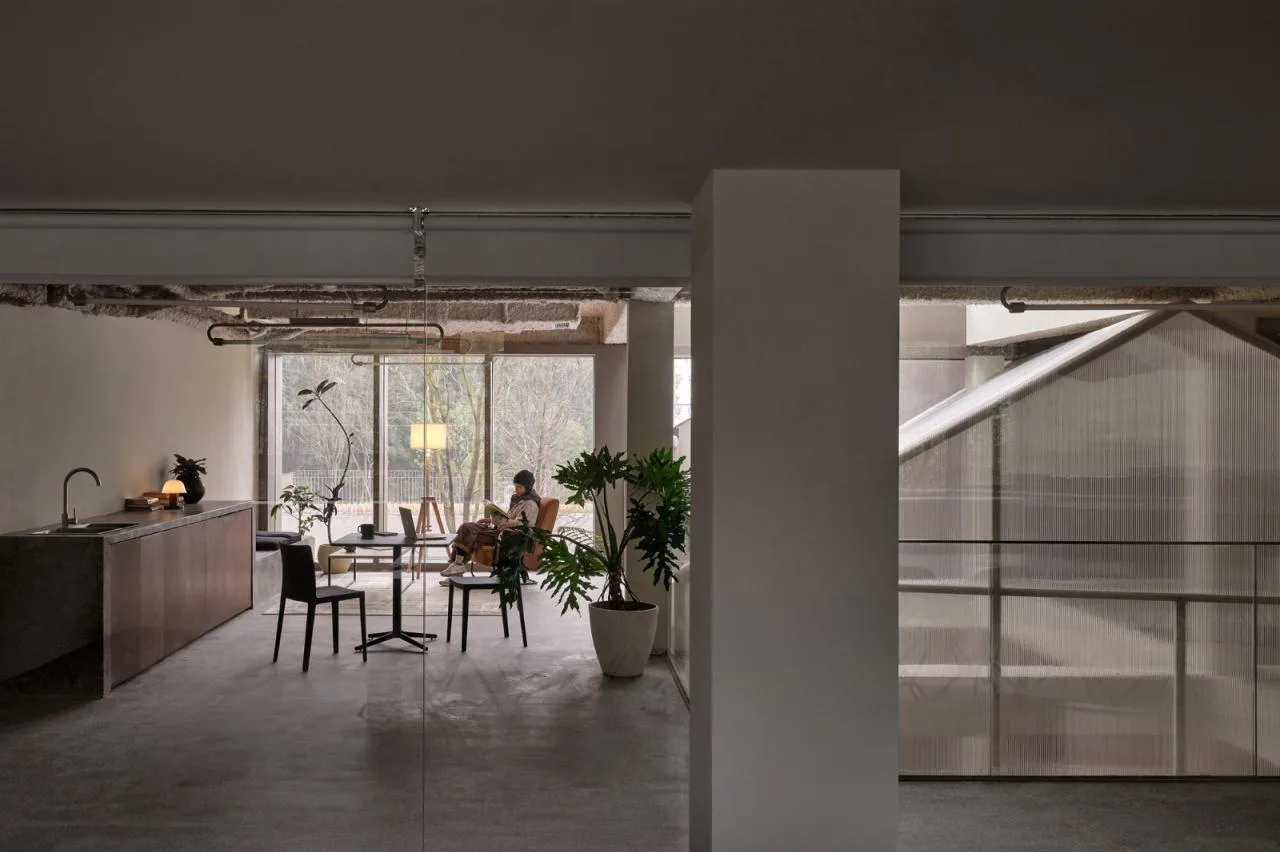
The first floor houses a shared office space with glass curtain walls replacing most original walls, allowing for ventilation and an indoor-outdoor connection that enhances light and shadow dynamics. On the third floor, two leisure areas open to nature were created by opening the south wall and roof at the end of the guest room corridor.
Indoor Space and User Flow
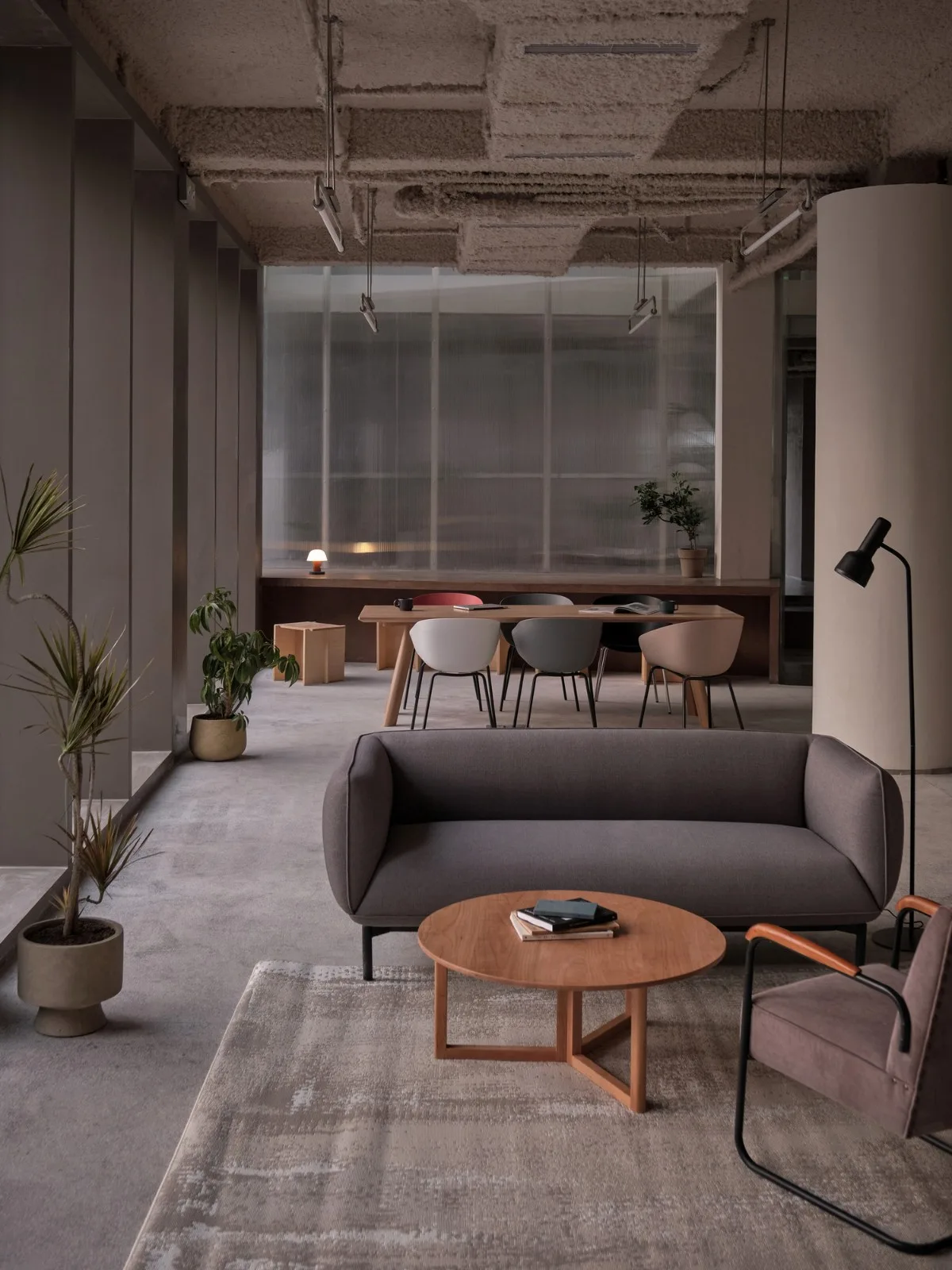
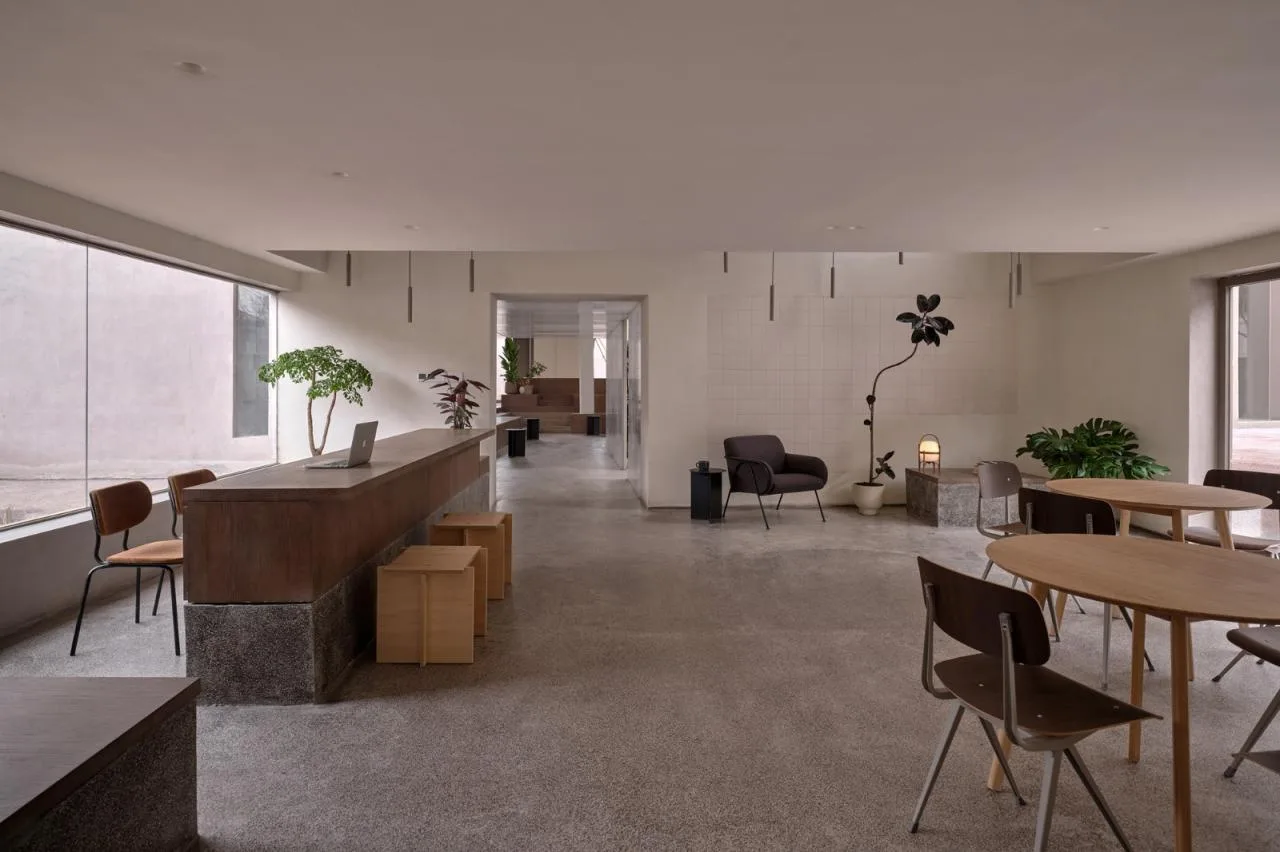
The 2,000-square-meter indoor area supports multiple functions including office, dining, visiting, gatherings, cooking, workshops, long-term rentals, and short-term stays. While dividing and rearranging spaces could minimize conflicts between these user groups, such segregation would undermine the openness and spontaneity the “real space” concept promotes.
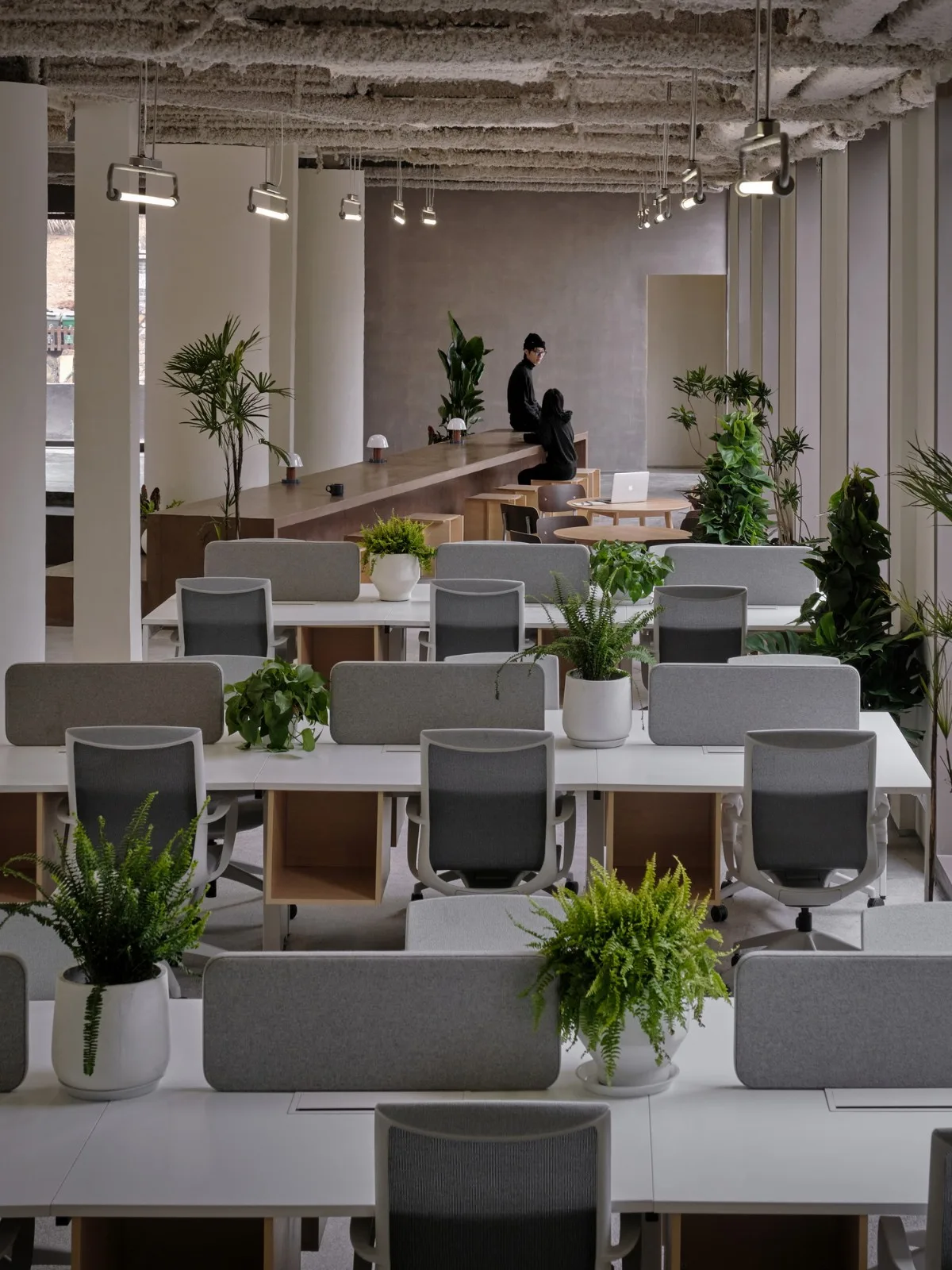
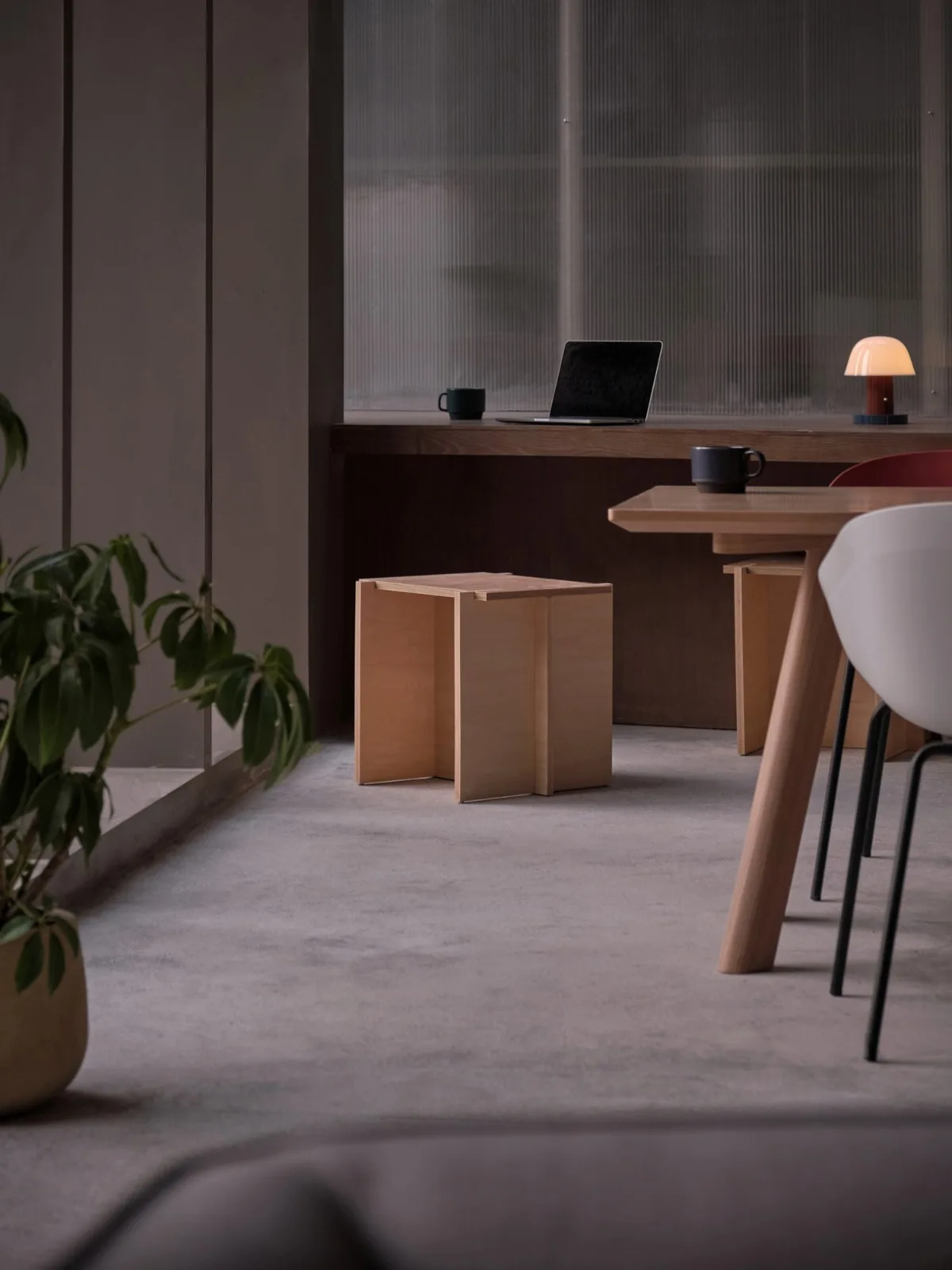
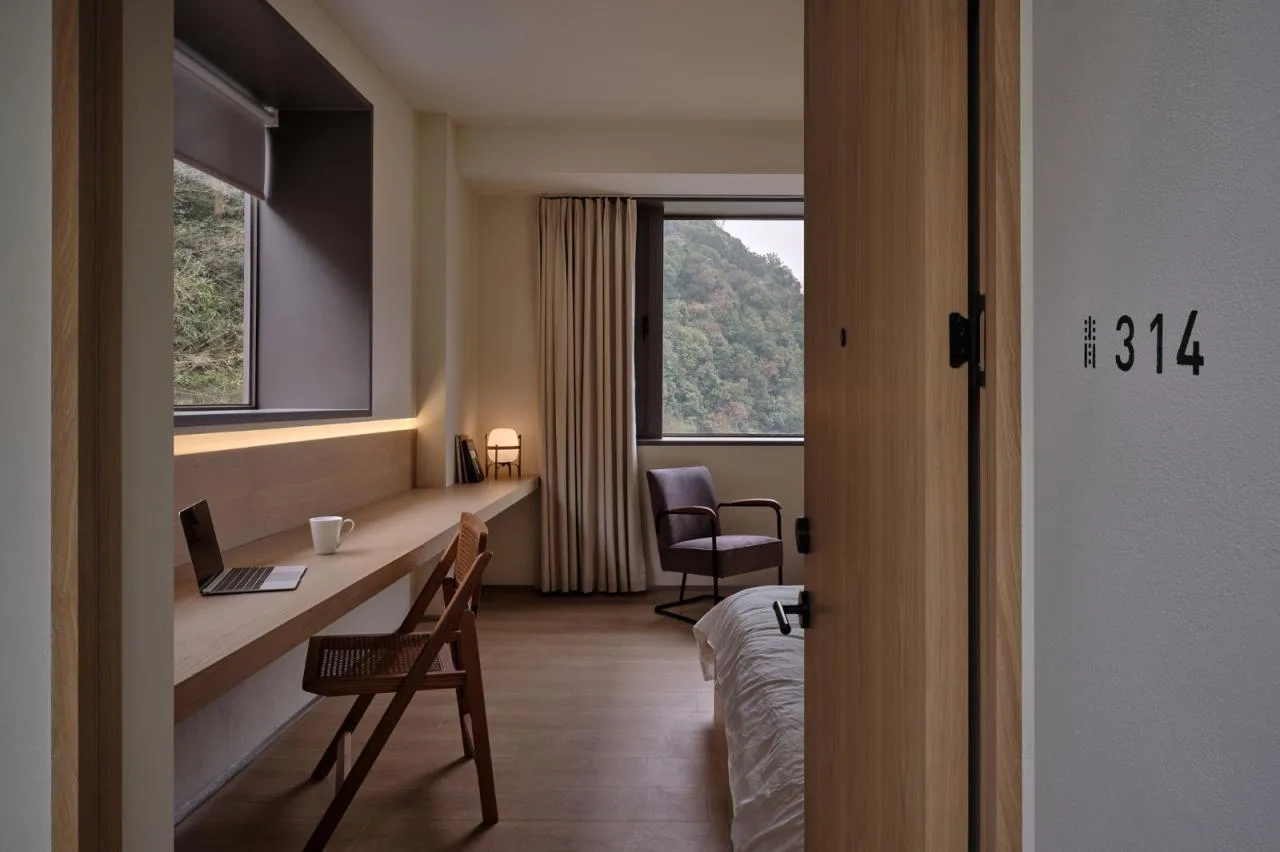
The design organizes users by privacy needs: the 23 guest rooms on the second and third floors have the highest privacy, while public spaces are given varying degrees of freedom. On the first floor, the shared office area, accessible by swipe card, and the public exhibition reading area connect visually, separated only by greenery. Most of the office area is an open, continuous space, divided only by subtle changes in floor elevation, with no fixed functional zones, allowing users to adapt layouts freely.
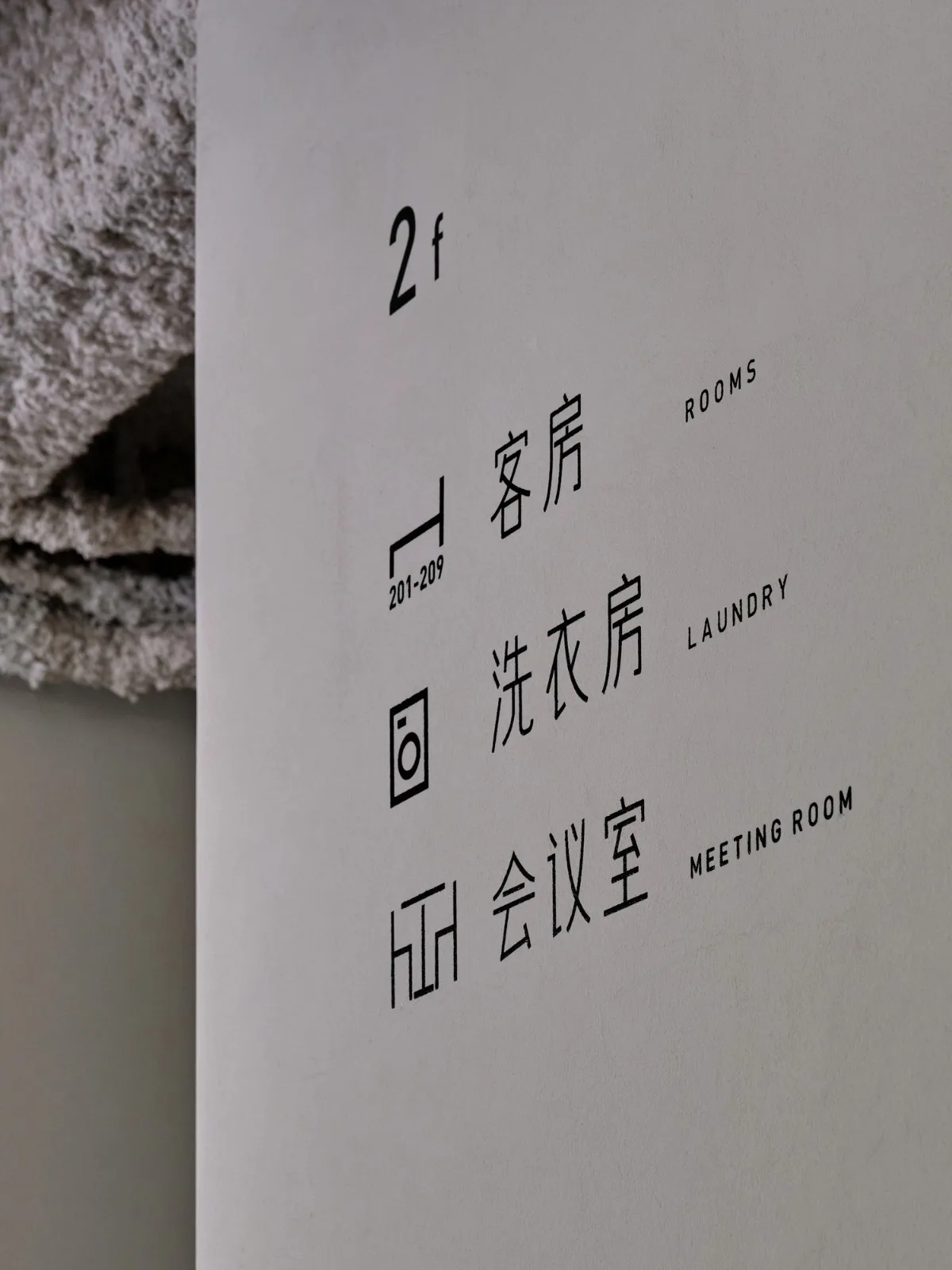
To balance openness with privacy, semi-enclosed “post station” style spaces were introduced along key circulation paths. To ensure usability in this free-flowing environment, the architect carefully designed all signage and wayfinding elements.
Inner Courtyard: Empowering Users
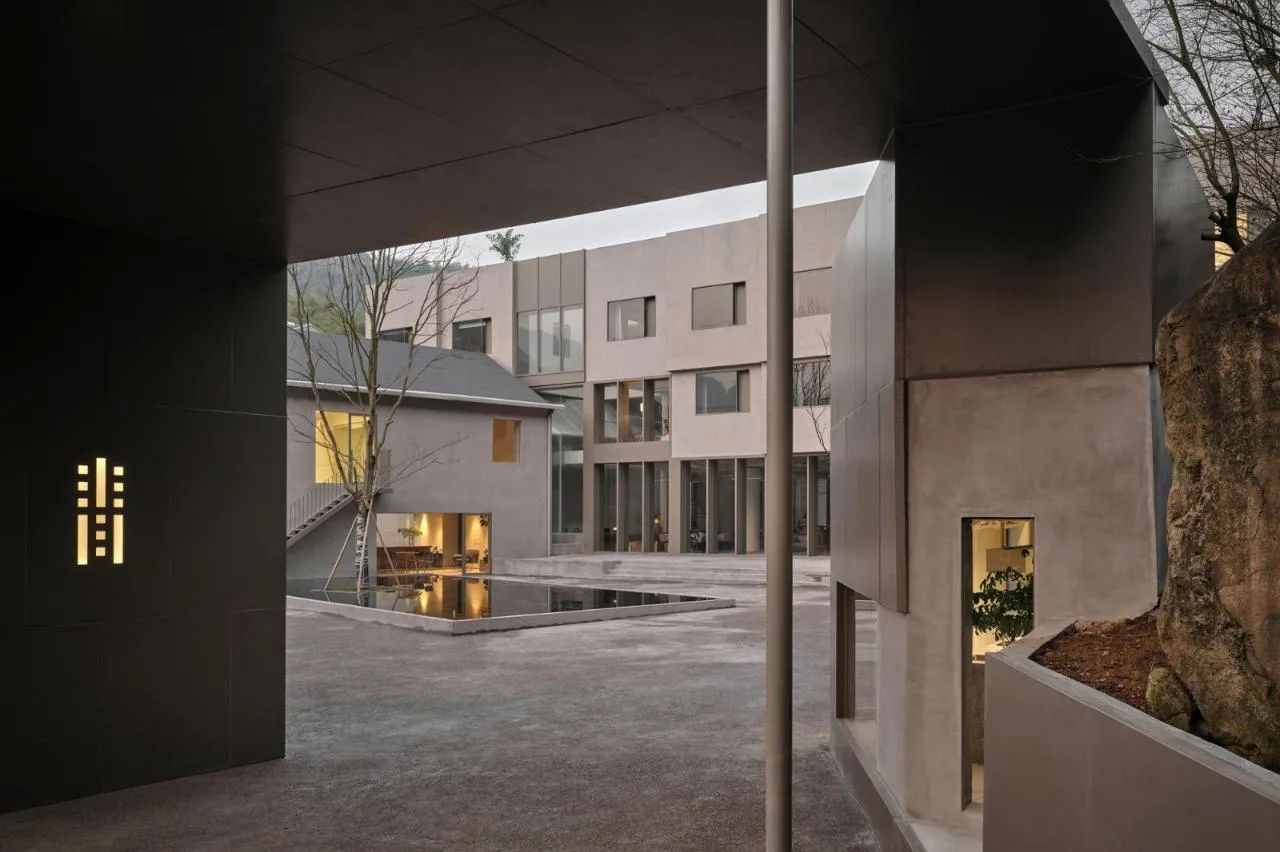
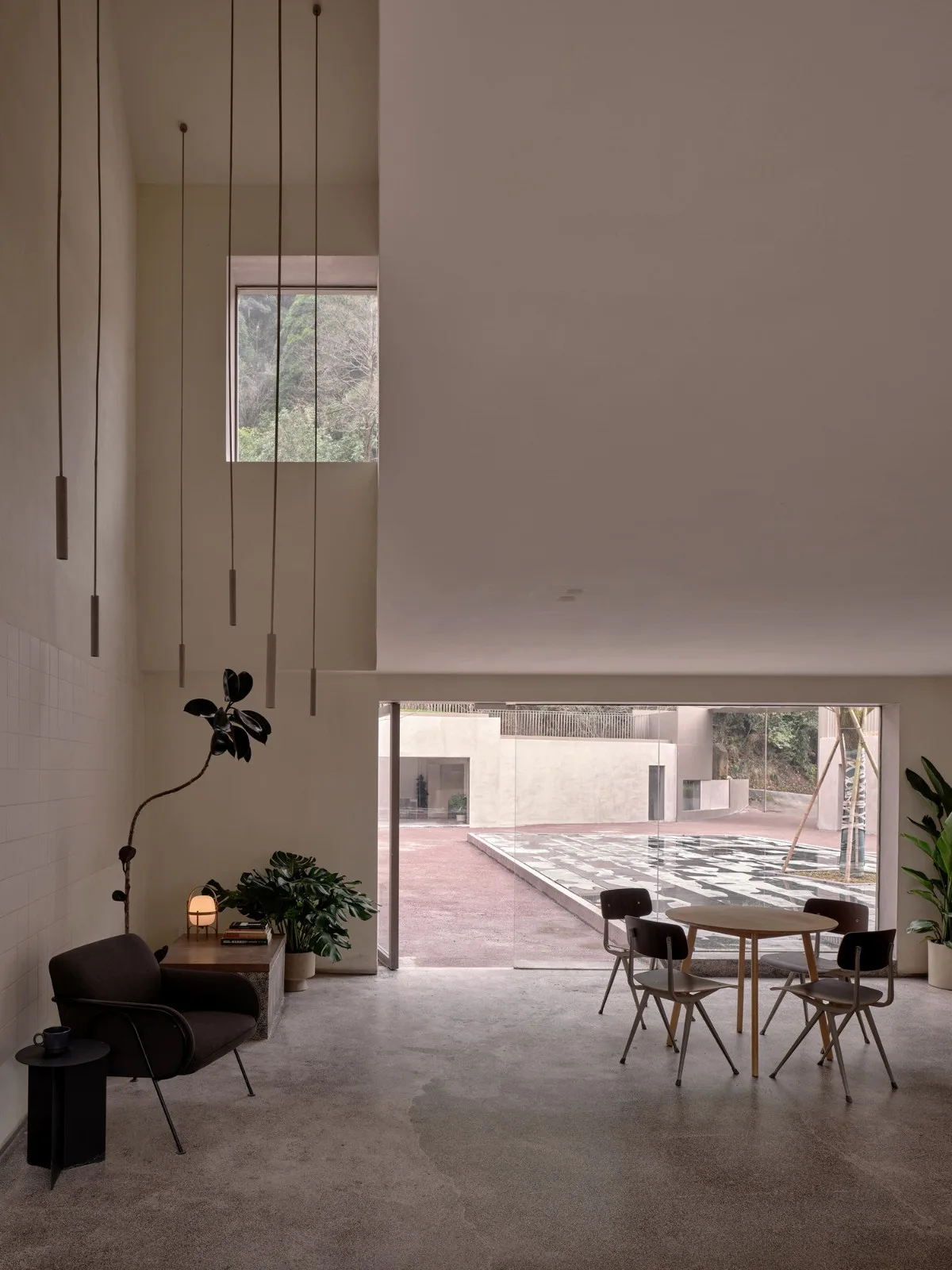
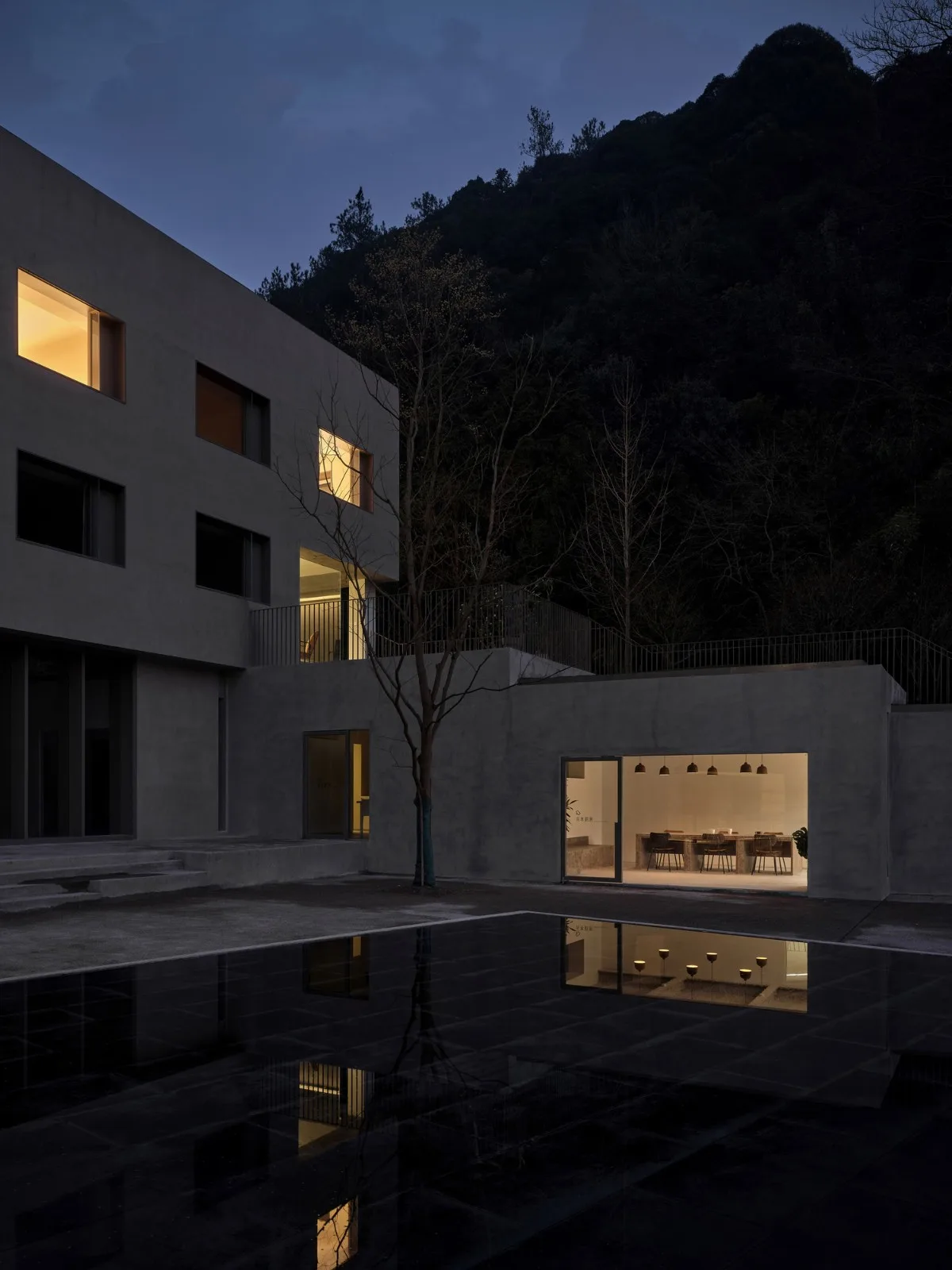
The inner courtyard is a space where the designer intentionally handed control back to the users. Though multiple layout plans were considered early on, the architect felt these imposed too much design intent. Eventually, only the trees and water pool were preserved.
Local residents, who have lived in the village for six or seven years, emphasized that “a big tree gathers people here; everything else is secondary.” The architect selected three Chinese parasol trees with broad canopies that bloom from May to July, providing shade and reflecting seasonal changes.
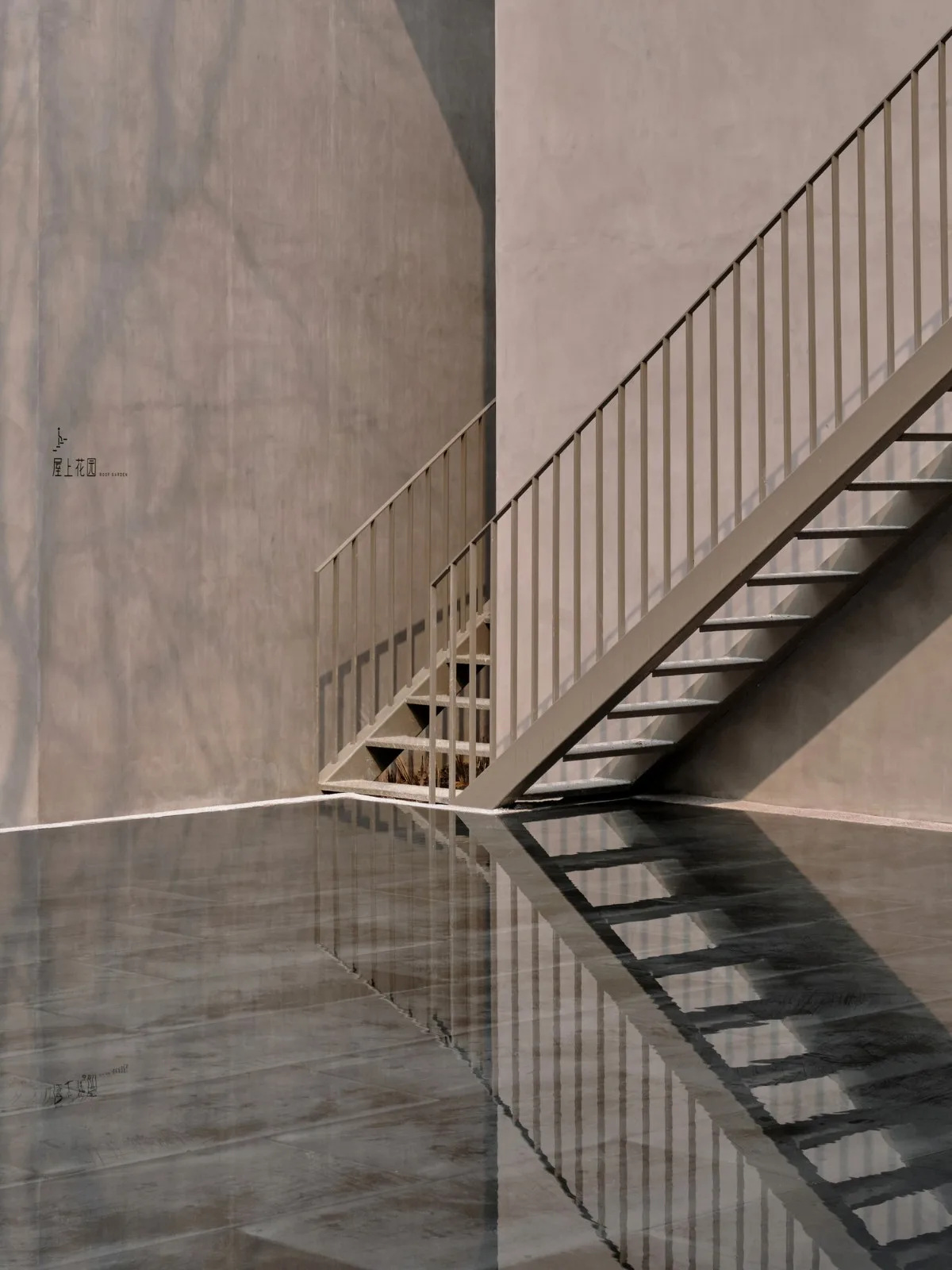
The courtyard pool extends the double-pitched roof house outdoors, maintaining a vertical spatial relationship. The shallow, 30-centimeter-deep pool has a stone bottom that creates fluid reflections, imbuing the square courtyard with a sense of spatial flexibility. This area naturally serves as an open-air stage and communal gathering space.
Building Process: Preserving Craftsmanship
Building in rural areas requires a different approach compared to cities. Due to differences in construction expertise and design awareness, architects often function more as craftsmen, personally overseeing every detail during the labor-intensive construction phase. Although the Youth Society adopted a low-tech, low-cost construction strategy, the design team spent several months testing over 80 material samples together.
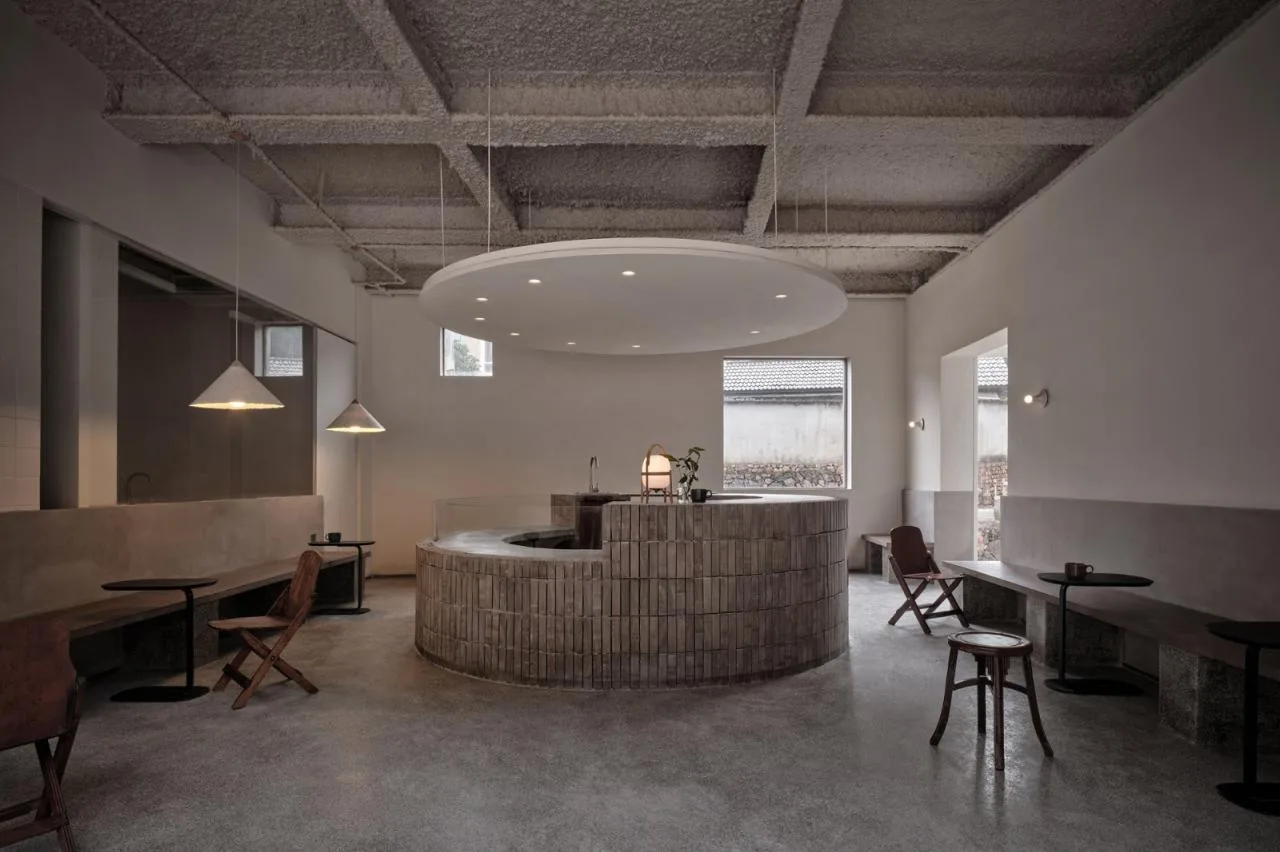
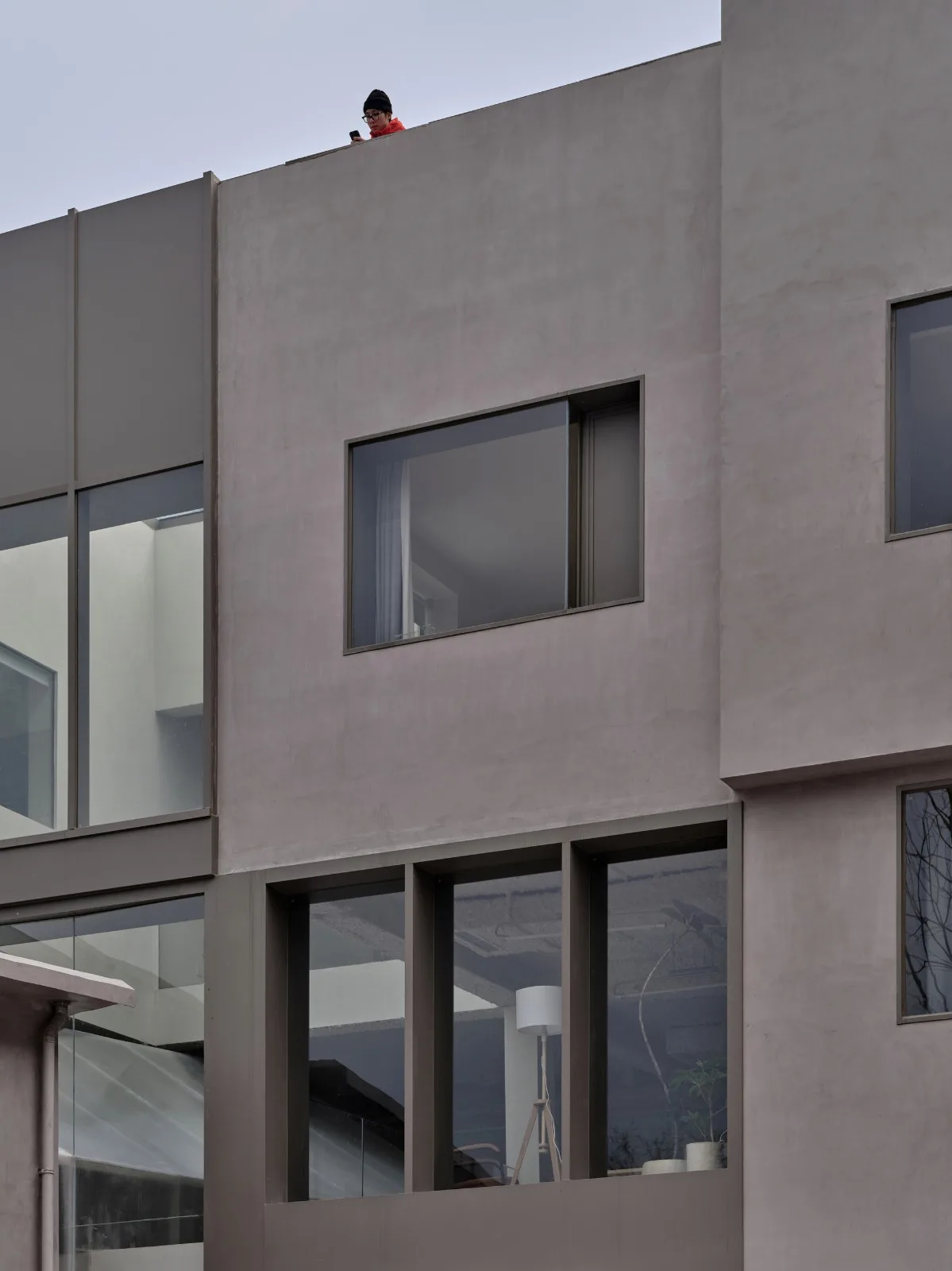
They discovered many traditional rural construction techniques are fading, such as the washed stone facades typical of the 1970s and 1980s, with skilled workers becoming scarce. Simply changing exterior materials to yellow sand lime did not resolve construction challenges, leading to the use of textured coatings with less “rural” character. During exterior wall construction, the architect increased site visits and collaborated closely with experienced contractors to test paint color, texture, and thickness. This process created rough, uneven handmade textures that harmonize with the environment and the local mountainous red soil tones.
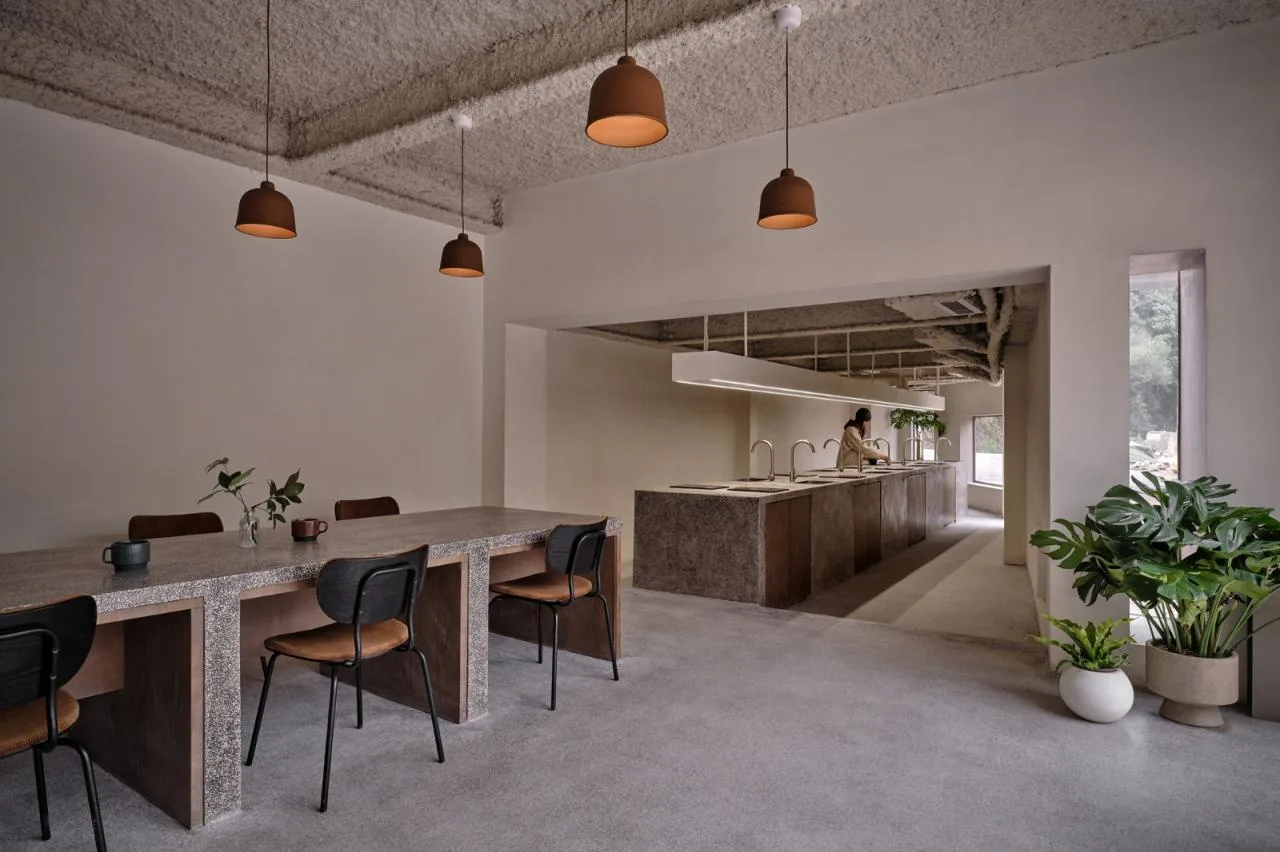
From a design perspective, the project avoided industrialized, standardized products in favor of customized, on-site fabricated elements. The design team created two plywood furniture pieces specifically for this project and restored an original factory chandelier. Rather than insisting on strict rework for on-site errors, adjustments were made locally to ensure functionality and aesthetic harmony.
Project Drawings
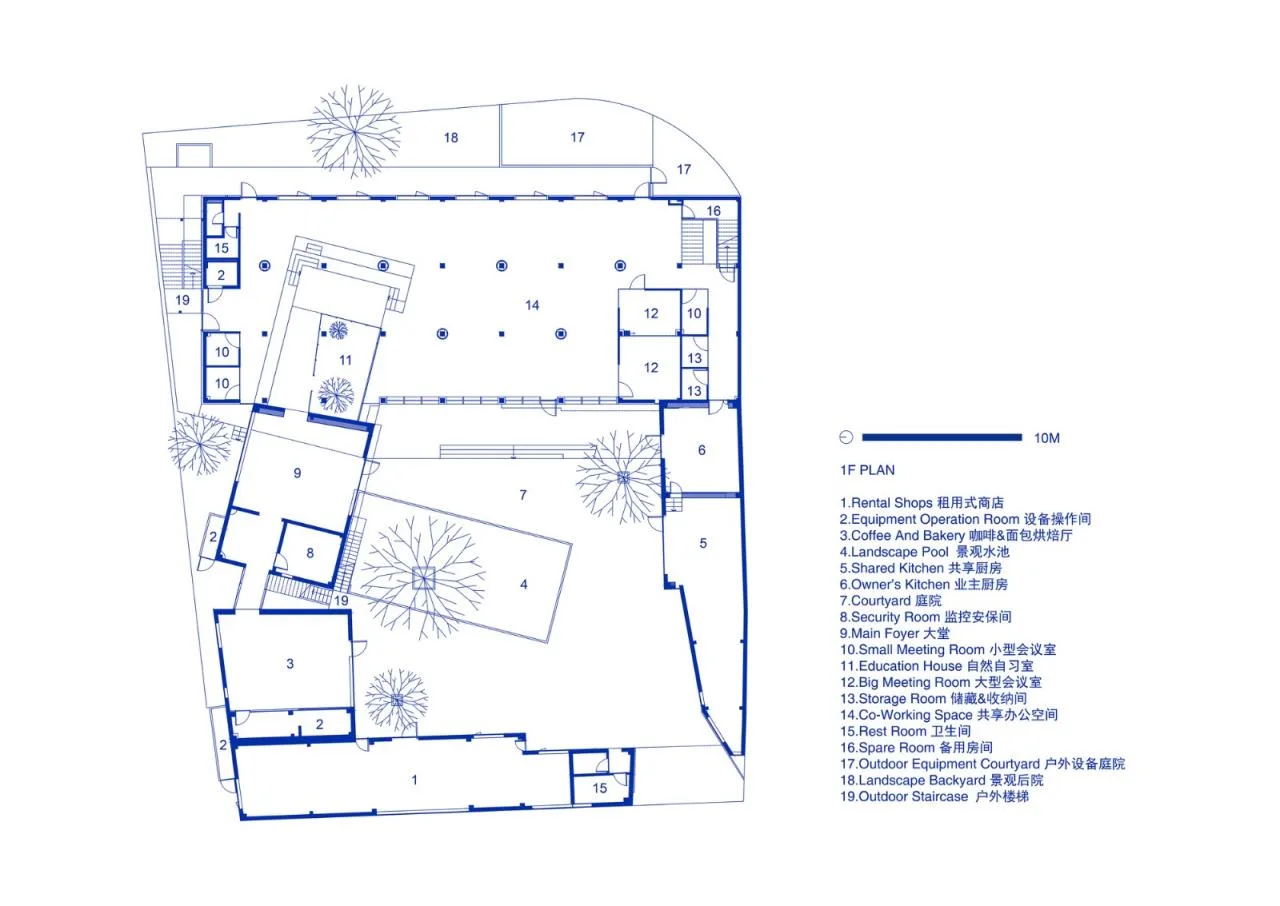
△ First Floor Plan
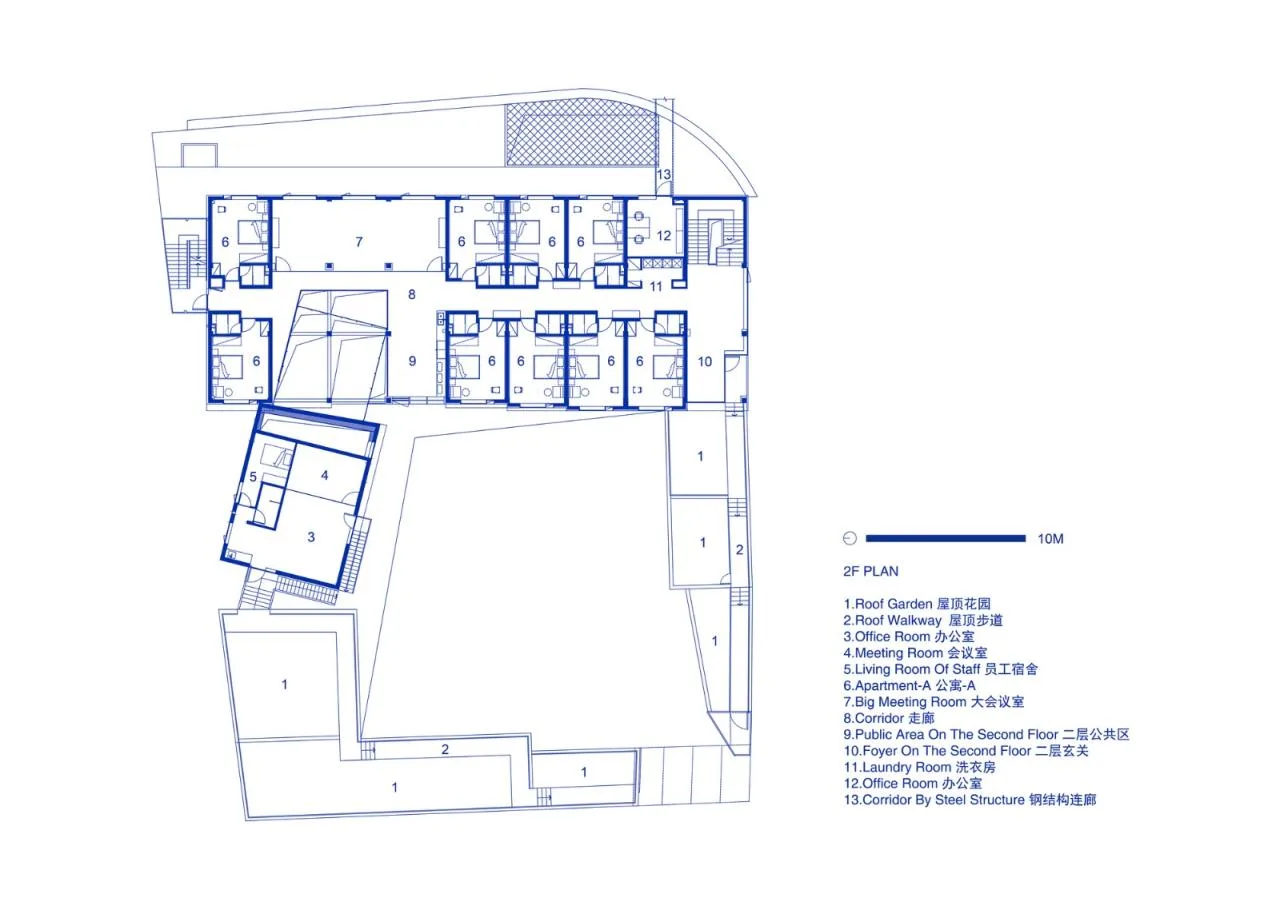
△ Second Floor Plan
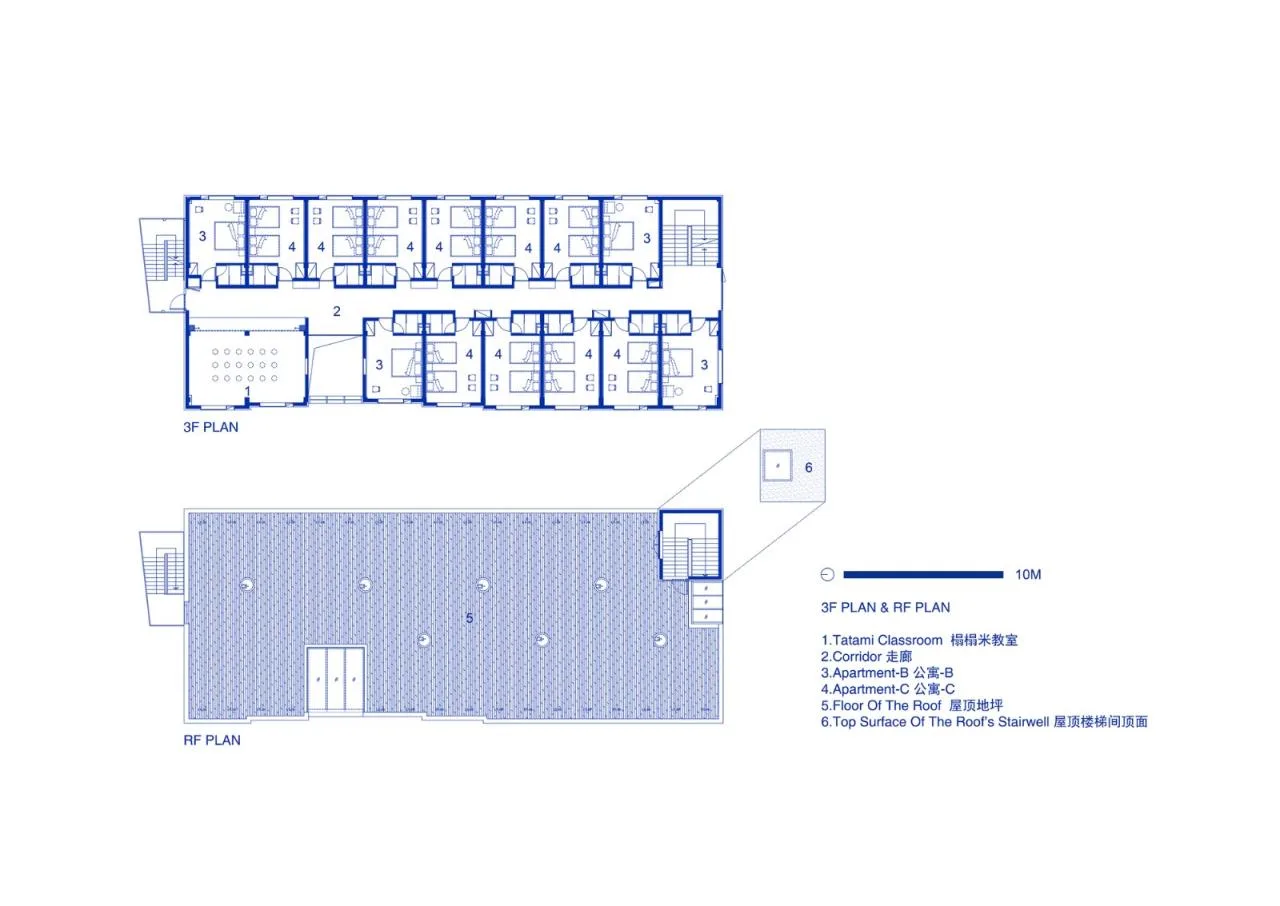
△ Third Floor Plan
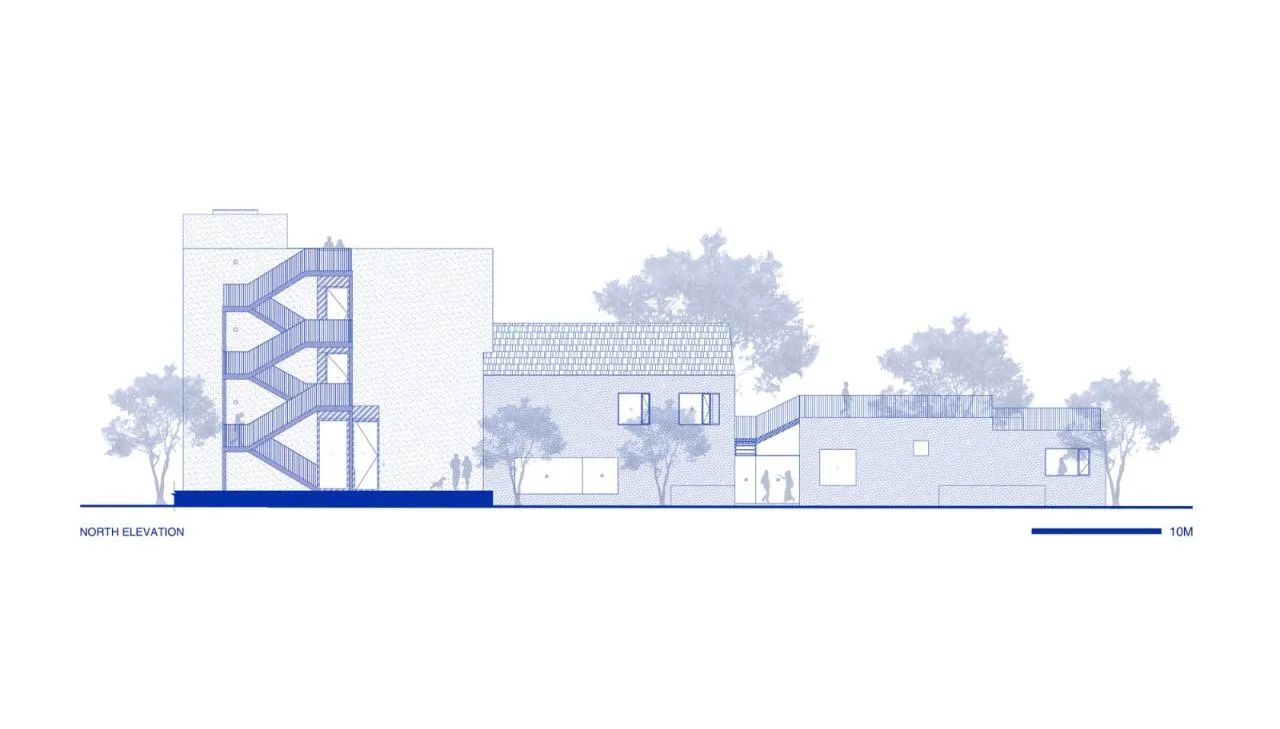
△ Elevation Drawings
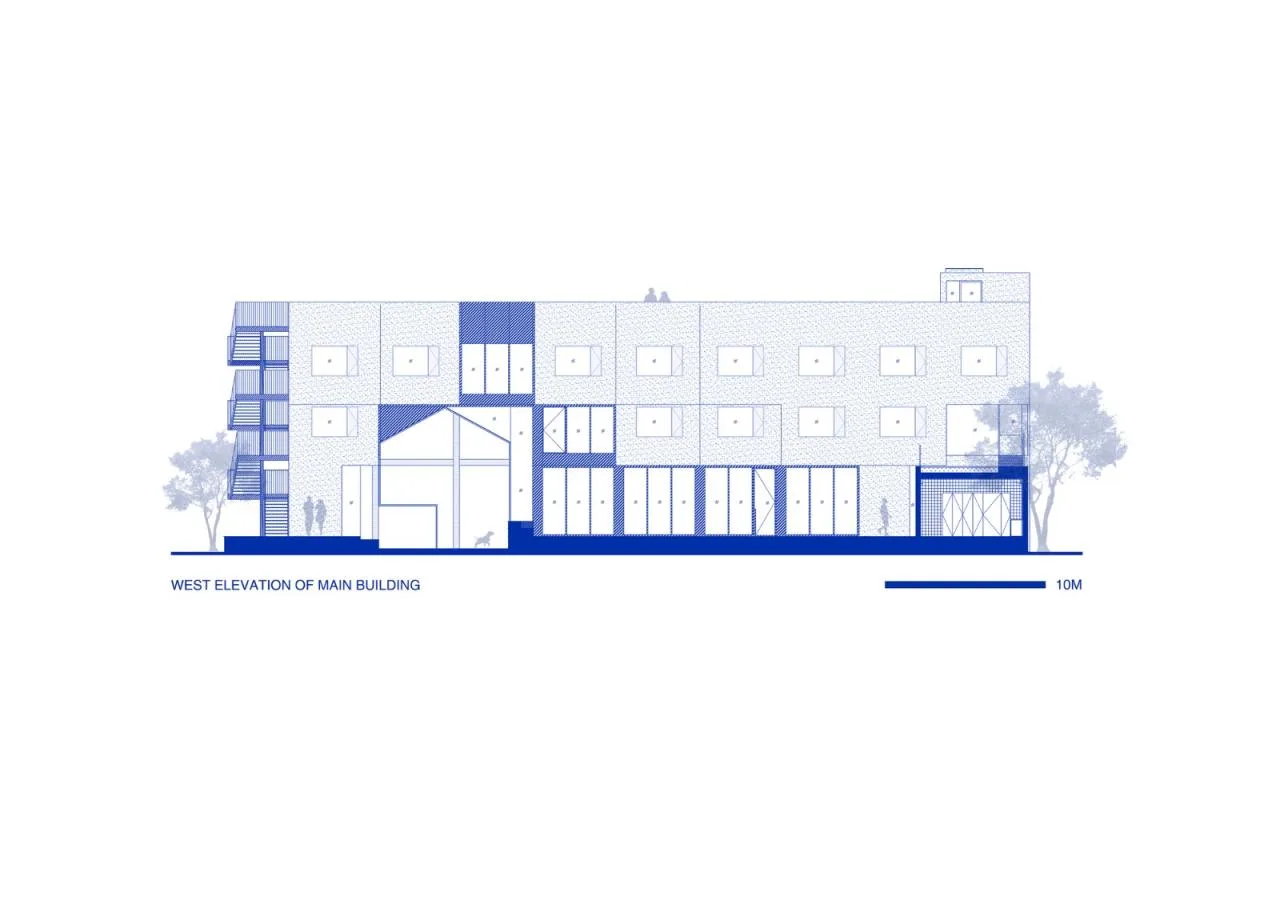
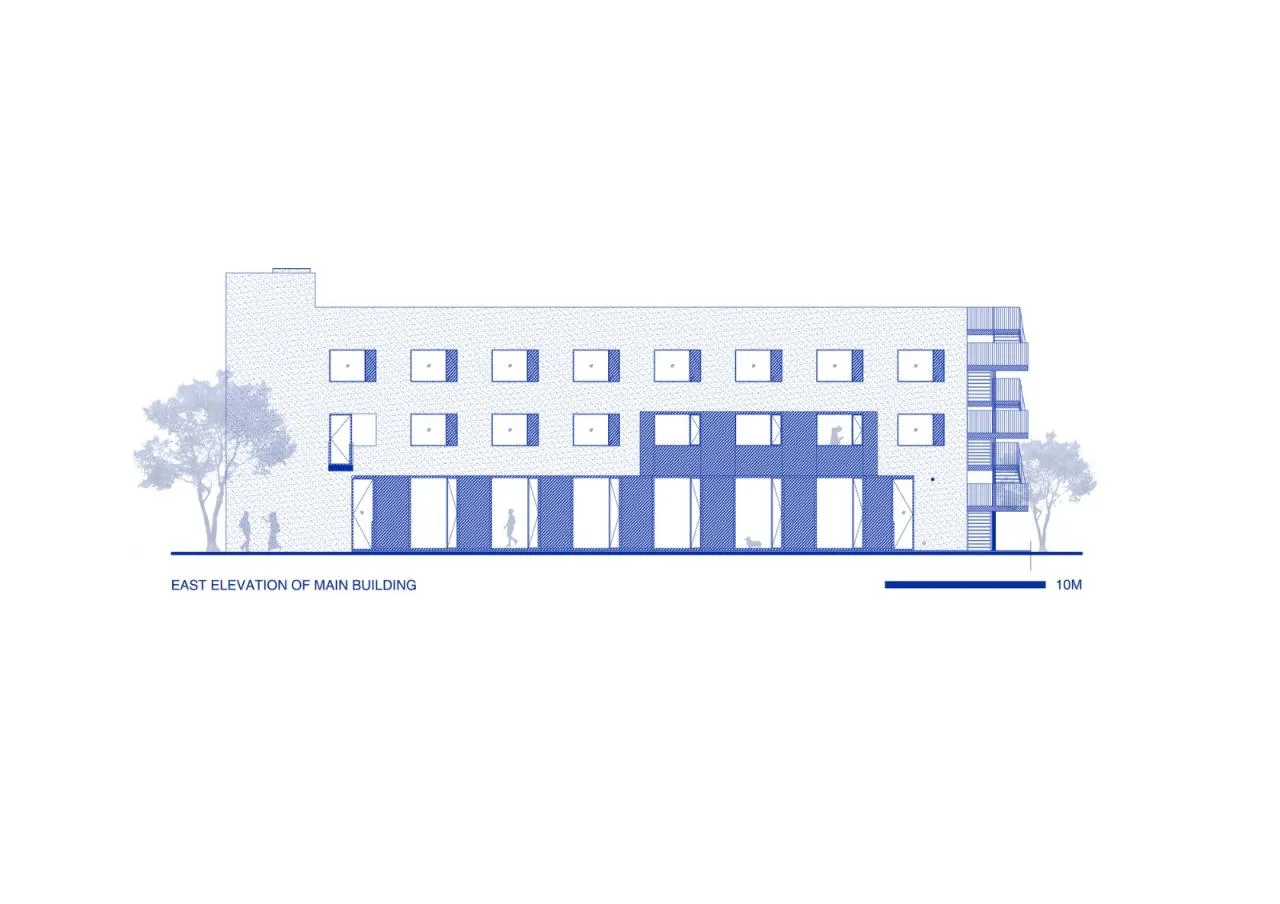
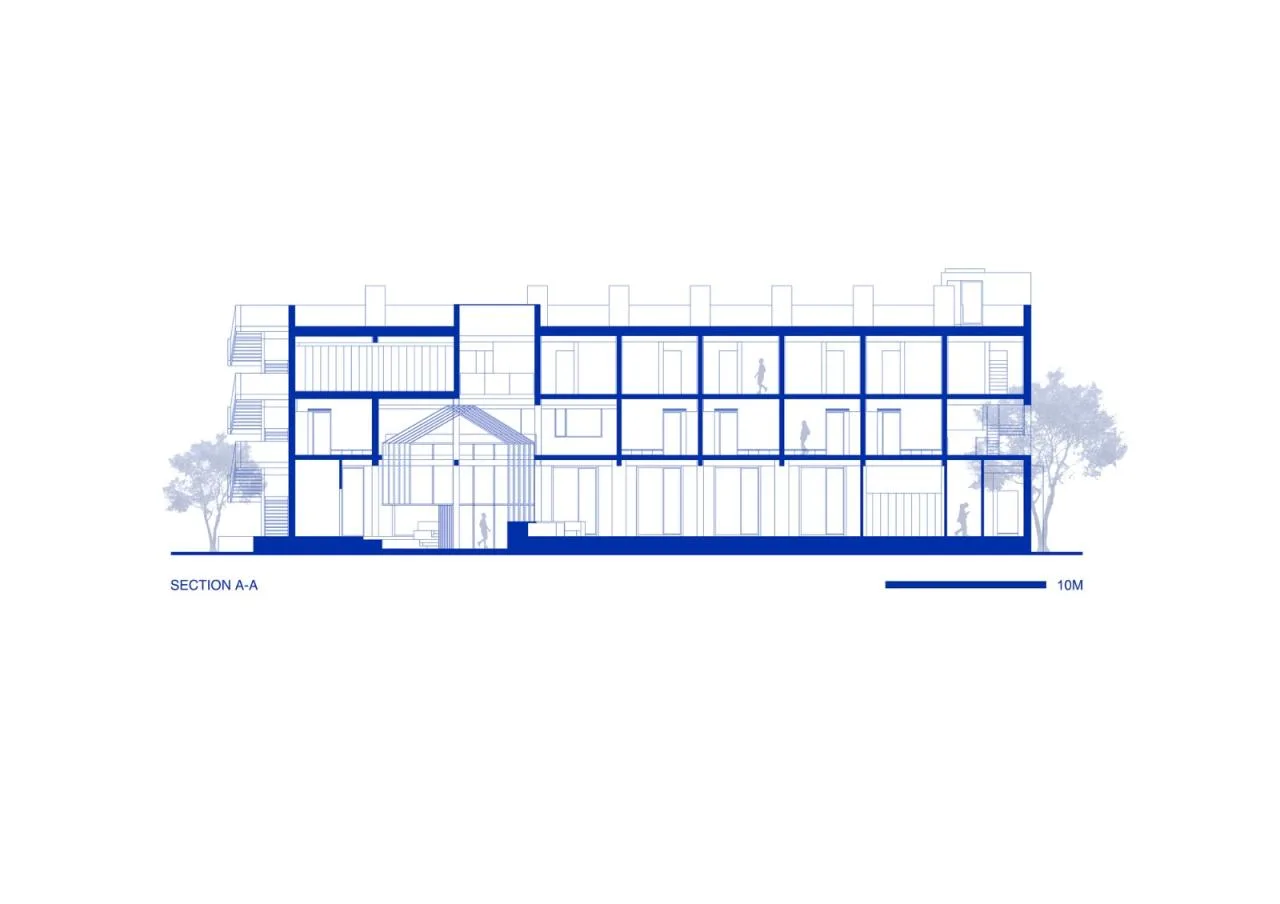
△ Section Diagram
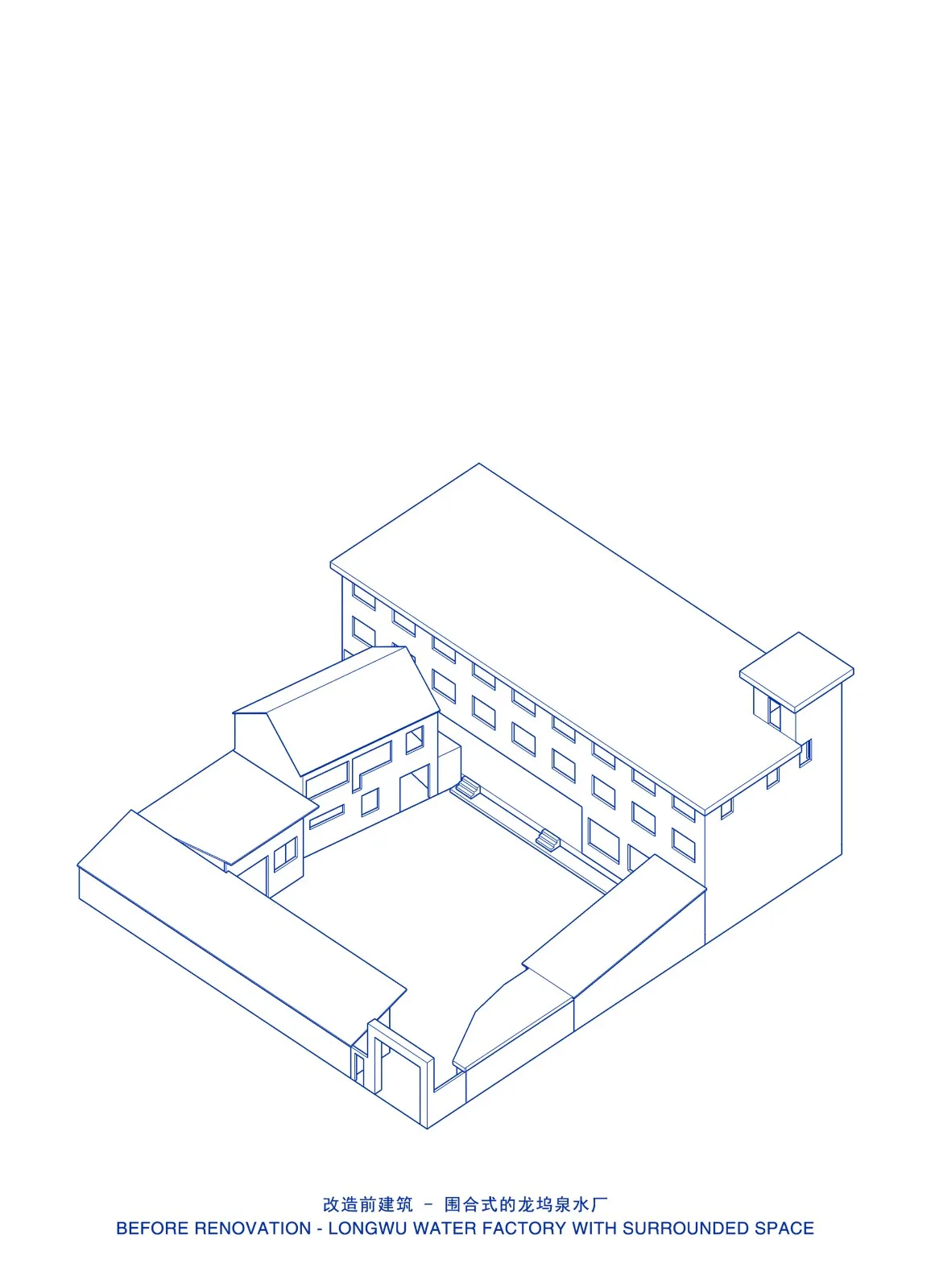
△ Building Before Renovation
Project Information
Architect: Architectural Design
Area: 2033 m²
Project Year: 2023
Photographer: Jonathan Leijonhufvud
Architects: Xiao Lei, Yang Yuqiong, Deng Zhaojing, Li Jiajun
Owner: Hangzhou Yuhang Green Water Future Rural Development Co., Ltd
Customized Furniture: Architectural Design
Location: Hangzhou















Must log in before commenting!
Sign Up