
The Era of Prefabricated Interior Decoration Is Arriving
On April 3rd, the Ministry of Housing and Urban-Rural Development released the “Technical Standards for Prefabricated Interior Decoration (Draft for Comments),” inviting public feedback from society.

The Ministry also issued and implemented the Evaluation Standards for Prefabricated Buildings, explicitly stating that one of the key directions to promote prefabricated buildings is the integration of decoration and main structure, encouraging full decoration and prefabricated decoration methods.
With strong support from national policies and growing market demand, the development of prefabricated buildings—especially prefabricated finished housing—has accelerated rapidly across the country. This progress has propelled the construction and decoration industries into a new phase of high-quality development, advancing fields such as green environmental protection, intelligent construction, precision decoration, and prefabricated decoration into fast-growth lanes.
So, what exactly is prefabricated decoration? What are its defining features, advantages, and challenges? Read on to find out!
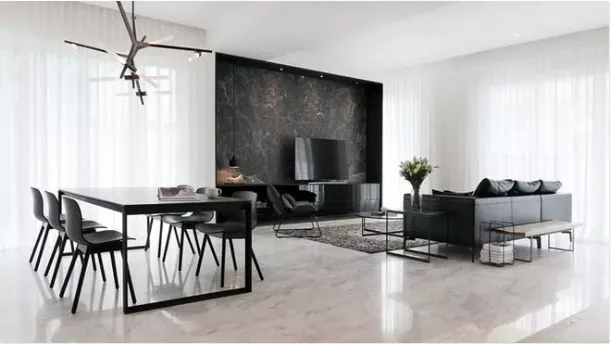
Prefabricated Decoration
Definition
Prefabricated decoration, also known as industrial decoration, involves the use of factory-produced prefabricated parts and components such as elevated flooring, integrated ceilings, prefabricated partition walls, integrated kitchens and bathrooms, modular furniture, and integrated electromechanical equipment. These components are then assembled and installed on-site following standardized procedures.
Core Concept
Most primary decoration materials are industrial manufactured and then precisely assembled on-site using advanced core technologies.
Characteristics
Prefabricated decoration is characterized by standardized design, factory production, assembly-based construction, and integrated decoration. High-end prefabricated decoration requires enterprises to have a comprehensive technology system, strong product research and development capabilities, and extensive experience managing high-end decoration projects.
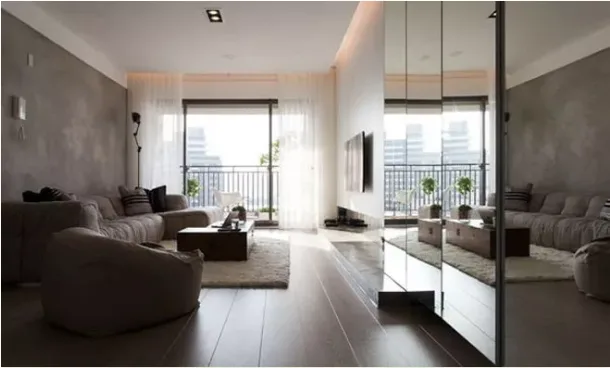
Evaluation Standards for Prefabricated Buildings
According to the “Evaluation Standards for Prefabricated Buildings,” decoration accounts for 40 points in the scoring system. Specifically, interior walls contribute 10 points, while decoration and equipment pipelines represent 30 points.
Below is a breakdown of the evaluation criteria based on current conditions of each component.
1. Prefabricated Floor and Underfloor Heating Modules
Raised flooring systems serve as the floor base without requiring mortar leveling or wooden bases, and avoid drilling holes that could damage the structure. These floors support dry installation of a variety of surface materials such as stone, tiles, and wood flooring, and can integrate dry underfloor heating modules.
This system allows for disassembly during secondary decoration, enabling reuse of the base layer. It offers a pollution-free working environment, reduces floor load, significantly improves construction efficiency, and shortens project timelines.
2. Prefabricated Bathrooms
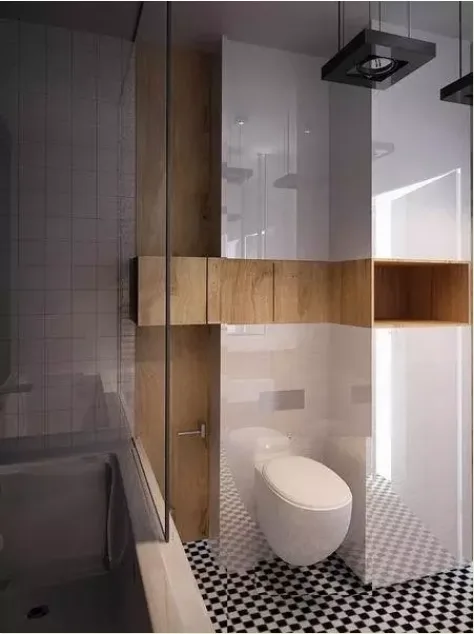
Using finished bathroom structures, the floor is made with an overall waterproof chassis ensuring a leak-proof seal. Shower bases are typically manufactured from materials like artificial stone or fiberglass, customizable through adaptable molds to various sizes. Dedicated floor drains support centralized drainage, and the overall bathroom layout utilizes integrated same-level drainage design for easy maintenance.
Walls are fitted with specialized aluminum plate accessories that simulate ceramic tiles or stone, featuring flexible moisture-proof membranes inside. Bathroom cabinets are custom-tailored to fit the space and accommodate various dry-assembled toilet sizes.
3. Prefabricated Kitchens
Eliminating the traditional wet pasting process, kitchen walls are installed through fully dry installation using integrated cabinet designs mounted on pre-installed wall hangers.
4. Prefabricated Water Supply System
Raised floors house the water supply system, which uses a PB pipe parallel water supply setup without joints from the water collector to terminal equipment, ensuring no leaks, durability, and stable water pressure. Alternatively, water pipes can be routed through ceilings for easier maintenance. Pipes are connected with dedicated fast connectors for secure and efficient installation.
5. Prefabricated Drainage System
Drainage pipes are installed beneath elevated floors, supported by specialized components on the structural ground and sloped to main pipelines. This same-level drainage system reduces noise typically associated with lower-level drainage, improving living quality. Compared to traditional lower-level drainage setups, this method is easier to maintain and minimizes disturbance to residents below.
6. Prefabricated Ceiling System
The ceiling plays a vital role in decoration and renovation. Aluminum plate integrated ceilings are widely used, especially in bathrooms and kitchens, commonly sized at 300mm × 600mm or 300mm × 300mm.
Applications in commercial spaces are broader, including aluminum square through ceilings, perforated sound-absorbing panels, aluminum grids, veneers, and imitation wood grain finishes. These can be customized in various shapes and integrated seamlessly with equipment such as air conditioning vents, fire sprinklers, and lighting fixtures to balance functionality and aesthetics.
7. Prefabricated Wall System
Internal partition walls are a key evaluation component for prefabricated construction. The widely adopted method in decoration is the light steel keel partition wall system, which is lightweight, supports dry construction, enables rapid assembly, offers strong structural support, is reusable, and meets both architectural and decorative functional requirements.
Aluminum alloy glass and panel partition systems are common in tooling projects, particularly in office environments.
Regarding surface materials, finishes such as stone, wood veneers, glass walls, metal veneers, and soft or hard wall coverings can now be prefabricated and assembled. However, in wet areas like bathrooms and kitchens, significant improvements remain necessary for prefabricated applications.
Challenges in the Interior Decoration Industry
China’s real estate market is entering a significant development phase for prefabricated buildings, sparking new competition among real estate enterprises. Both conceptual and technological challenges are emerging for developers.
Addressing Secondary Decoration
Handling prefabricated decoration in the vast secondary decoration market presents new challenges. Unlike new commercial residential buildings, secondary renovation projects are scattered and complex, especially concerning integrated kitchens and bathrooms. Managing equipment pipelines is difficult, and customization costs per unit are relatively high.
Low Consumer Awareness
For a long time, developers delivered commercial residential properties as unfinished units. Consumers believed that unfinished homes allowed them to decorate according to personal preferences and supervise construction themselves, offering peace of mind. Moreover, unfinished homes were usually priced lower than fully furnished ones. Developers also viewed “blank delivery” as a way to avoid future quality disputes.
However, this mindset has led to many hidden issues: wasted materials, labor, and time during renovation; excessive construction waste; persistent noise; and neighborhood conflicts—experiences familiar to many homeowners.
Since 2008, furnished homes have gradually gained market acceptance. Yet, many buyers still prefer traditional wet-laying installation for living rooms, kitchens, and bathrooms, showing low awareness and acceptance of integrated kitchens and bathrooms.
Raising consumer awareness and promoting the benefits of prefabricated decoration remain essential.
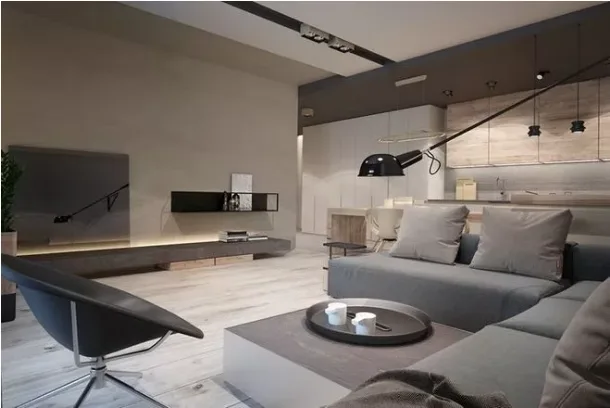
Immature Application
The adoption of prefabricated decoration, particularly integrated kitchens and bathrooms, depends heavily on cost considerations, factory production capabilities, and construction readiness. Currently, these factors pose an investment risk for real estate developers, limiting widespread adoption and confining use mainly to pilot projects.
Essential steps include establishing an integrated design approach for prefabricated buildings that embraces human-centered design, factory production, assembly construction, and integrated decoration. This approach coordinates building, structural, mechanical, electrical, and decoration systems, leveraging advanced technologies like BIM digital platforms to achieve modularization, standardization, and multidisciplinary collaboration. It also promotes integration across architecture, interior decoration, components, soft furnishings, and supporting facilities.
With growing national policy support and the promising market potential of prefabricated decoration, real estate companies must increase R&D investment, seize market opportunities, win consumer favor, and claim their share in this emerging field.
Balancing Personalization and Standardized Products
Prefabricated design, production, and construction must reconcile consumers’ growing desire for personalized decoration with the efficiency of mass-produced finished products.
As people’s pursuit of quality of life rises, so do individual preferences and customization demands. Meeting these needs within prefabricated decoration is a practical and pressing challenge. Globally, most residential properties in developed regions such as Europe, America, and Japan come fully decorated with highly commodified interiors, which drives the industrialization of interior construction.
Consequently, factory-assembled decoration methods will significantly propel building industrialization. The shift from large-scale construction to enhanced functional quality in residential building necessitates transformation and upgrading of construction methods, fostering sustainable social development.
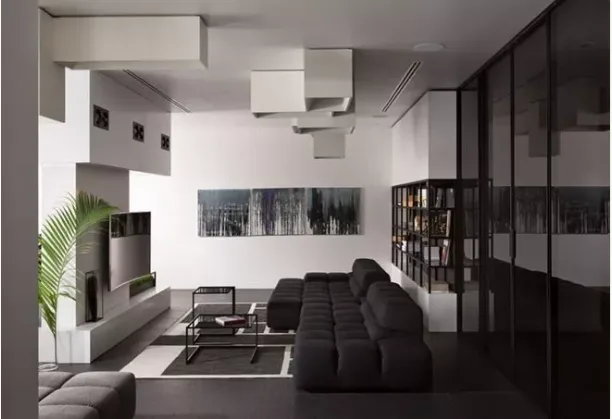
As society advances and architectural decoration technology innovates alongside new materials, the cost of prefabricated decoration continues to decrease. Meanwhile, traditional decoration labor becomes scarcer, resource utilization remains low, and costs rise. The advantages of prefabricated decoration are becoming increasingly evident, positioning it as the mainstream trend in future urban development.
Furthermore, as the concept of prefabricated construction gains recognition by the construction industry and government, enterprises involved in production and decoration design can continuously improve their technical material standardization, enhance design capabilities, diversify prefabrication methods, and raise quality standards. This will boost market competitiveness and cultivate more specialized technical talents, laying a solid foundation for future assembly and industrialized development.












Must log in before commenting!
Sign Up