
Introduction
When hazardous projects occur, their impact can be widespread, emergency response becomes challenging, and the consequences for human life can be severe. To prevent accidents in hazardous engineering projects, construction companies must maintain strong awareness and implement effective response measures.
Understanding 1: Misconceptions in Safety Management of Subprojects
Hazardous engineering projects cover a broad scope and have profound impacts. Their safety and quality supervision should be a top priority within construction enterprises. However, in practice, some companies only focus on common projects such as foundation pit engineering, concrete formwork support, load-bearing support systems, lifting and hoisting, machinery installation and dismantling, floor-standing steel pipe scaffolding, and attached lifting scaffolding. They concentrate on whether construction plans have been expert-approved or if equipment has passed inspections, but often neglect supervision of the actual implementation process. Even more concerning is the disregard for safety oversight across various construction stages within the project.
Some enterprises have layered management systems, but their enforcement is often inadequate, untimely, or incomplete. Management efforts may be reactive, negotiated, or improvised. These gaps introduce unpredictable safety hazards in managing high-risk subprojects, jeopardizing workers’ safety and the company’s future.
Understanding 2: No Safety Hazard Should Be Ignored
Since the start of this year, several severe safety incidents nationwide have been linked to hazardous engineering projects. According to the Ministry of Housing and Urban-Rural Development, on April 2nd, a high-altitude fall occurred at the Jiaheyuan project in Nankang City, Ganzhou City, Jiangxi Province, resulting in two fatalities.
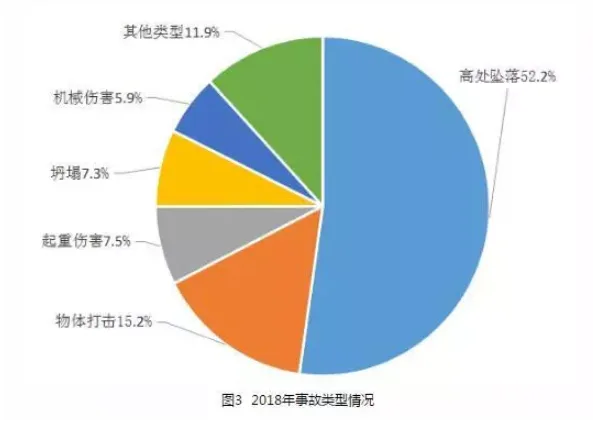
Besides collapse accidents and lifting injuries, high-risk subprojects also cause other injuries, including falls from heights, struck-by-object incidents, mechanical injuries, electric shocks, vehicle accidents, poisoning, suffocation, fires, and explosions, all potentially resulting in serious casualties.
In 2018, during the prefabricated construction research and development phase, there were 22 major or higher-level safety accidents nationwide in housing and municipal engineering, resulting in 87 deaths. Compared to the previous year, the number of accidents decreased by one (4.3%), and deaths decreased by three (3.3%). Major accidents occurred in 15 regions, including Guangdong (1 major accident, 12 deaths), Anhui (2 major accidents, 10 deaths), Shandong (2 major accidents, 9 deaths), Shanghai, Guangxi, Guizhou (each with 2 major accidents and 6 deaths), Jiangxi, Henan, Hainan, Ningxia (each with 1 major accident and 4 deaths), and Tianjin, Hebei, Hubei, Sichuan, Shaanxi (each with 1 major accident and 3 deaths).
The industry remains shaken by the tragic “2.7” water seepage collapse accident during the Foshan Metro Line 2 Phase 1 construction in Guangdong Province. This disaster caused significant casualties and property damage, serving as a painful lesson. Hence, construction companies must thoroughly understand the dangers inherent in hazardous engineering projects and properly address common quality issues and preventive measures.
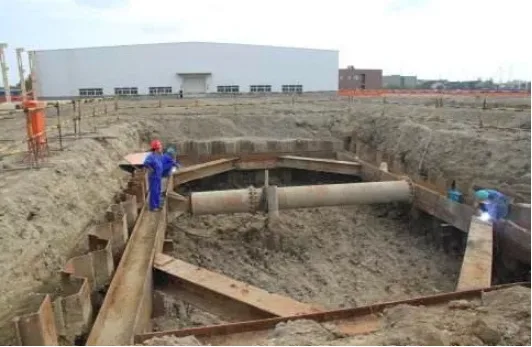
Excavation Engineering Measures
Common issues in foundation pit engineering include excessive displacement and collapse of the foundation pit system, bulging or soil surges at the pit bottom, retaining structure defects, cracks in surrounding buildings, and uneven settlement. To address these, the following measures are essential:
- Excavate according to the specialized construction plan for foundation pit support and earthwork excavation, guided by the “spatiotemporal effect” theory. Excavation should be layered, segmented, symmetrical, balanced, and time-limited. Each soil layer’s thickness should not exceed 2.5m. Multiple excavation machines should work from the sides toward the center to comply with the foundation pit enclosure design and maintain proper support system stress.
- Strengthen open drainage around the foundation pit and implement effective measures to prevent surface water ingress.
- Upon reaching the pit bottom, establish settlement observation points every 20 meters, monitored twice daily. The warning threshold for uplift settlement is 10mm per observation. If this is exceeded three times consecutively, report immediately and take corrective action.
- Ensure waterproof curtain quality by controlling cement mixing pile quality. Overlaps must meet design specs, avoiding cold joints during construction. Cement content and water-cement ratio must comply with design. Cement slurry should be evenly mixed, filtered, and high-pressure jet grouting applied to thoroughly mix soil and cement before initial setting.
- Follow expert-reviewed foundation pit support and excavation plans strictly. Monitor the foundation pit carefully to avoid exceeding warning levels: building tilt warning at 1%, settlement rate at 5mm/day, and cumulative settlement at 30mm.
Formwork Engineering Measures
Common formwork issues include axis displacement, loose joints, elevation deviations, structural deformation, and improper release agent use. The following measures should be adopted:
- Minimize errors during formwork axis measurement and placement. After positioning, a dedicated team should conduct a technical review and acceptance before proceeding.
- Perform elevation checks at four corners of the building and elevator shaft using laser plumb lines, measuring control points upward from the lower floors during construction.
- Draw horizontal and vertical lines during formwork support to avoid axis position deviations between the building and columns or walls.
- Strictly control template moisture content. Ensure firm support at beam-column junctions, tight joints, and no gaps to prevent concrete leakage.
- Apply grout stop measures at splicing points, padding formwork joints with foam double-sided adhesive tape to ensure tight, seamless connections.
- Pre-wet wooden formworks before concrete pouring to prevent honeycombing, voids, and exposed reinforcement caused by expansion.
- Set sufficient elevation control points per floor; level vertical formwork bases and mark elevations on top, adhering strictly to these during construction.
- Control building floor elevations relative to the first floor ± 0.000 elevation; avoid cumulative errors by prohibiting upward layer-by-layer measurement. For buildings taller than 30m, establish an additional elevation control line with at least two measurement points per floor for verification.
- Verify pre-embedded parts and reserved holes against drawings before installation; accurately fix them in design positions. Pour concrete evenly in layers around these elements.
- Consider decorative layer thickness when installing stair step templates.
- Ensure sufficient rigidity of templates and brackets; design template structures to prevent differential deformation and resultant concrete cracking.
- Install temporary support heads atop beam and wall formworks to maintain consistent beam and wall opening widths during concrete pouring and compaction.
- Set proper settlement joints and limit expansion joint spacing to prevent significant concrete cracks that could impact subsequent construction.
- Clean formworks thoroughly before applying release agents. Avoid using waste engine oil; choose chemical release agents like soap solution, talcum powder, or lime water.
- Apply release agents uniformly to avoid contamination of steel-concrete joints. Use brush or spray coating methods, applying thin layers. Apply the second layer quickly before the first fully cures to ensure bonding and avoid peeling.
Tower Crane Engineering Measures
Common Accidents
- Foundation endurance fails to meet tower crane regulations, with blind construction lacking pile driving or cast-in-place piles. This leads to excessive settlement and vertical tilt post-installation, causing accidents.
- Insufficient reinforcement steel or inadequate concrete pouring and low concrete strength result in tower crane installation accidents.
- Non-compliant spacing between tower crane and wall, overly long support rods, or use of substandard materials combined with poor welding practices can lead to weld seam failure and rod breakage.
- Incorrect lifting point selection and improper lifting rope choice cause unbalanced crane arms, leading to rope detachment and ground injuries.
- Improper steel wire rope tying causes detachment during lowering, resulting in sudden loss of tension, crane swinging, and collapse.
- Improper tilting during tower cap or balance arm installation causes tower top to tilt backward, triggering accidents.
- Failure to follow disassembly procedures, such as removing counterweights before lifting arms, causes crane center of gravity shifts and overturns.
- During transport and disassembly, inadequate protection of torque limiters, incorrect tower top placement, or operator error causes deformation and failure of torque limiters, compromising safety mechanisms.
Preventive Measures
- Strictly follow reinforcement guidelines; do not arbitrarily alter them. Use concrete grade C30 or higher. Cure poured concrete properly, prepare pressure test blocks at 7 and 28 days, and establish settlement observation points. Install cranes only after concrete reaches at least 95% strength. Regularly monitor and record tower crane verticality post-installation.
- Verify forces on ultra-long attached walls through factory designers or technical engineers, and obtain approval from supervising authorities. Use national standard materials and certified welders who follow welding specifications strictly.
- Before dismantling crossbars between crane arm base and tower body, secure the tower and arm base with steel wire ropes or large ropes. Only remove ropes after smooth arm detachment. Ensure lifting points meet distance and angle requirements and are balanced; mark permanent standard positions.
- Use steel wire ropes of 22.5mm diameter and 9–11m length tied with a “walking horse” method to allow smooth sliding during lowering.
- Before removing counterweights and balance arms, connect slewing supports properly. Never remove the crane boom without counterweights and always maintain required counterweight. Do not leave balance arms suspended overnight post-dismantling.
- Carefully debug travel switches to protect against abnormal tower crane operations.
- Provide effective waterproofing for torque limiter switches to ensure dry, clean environments and enhance tower crane safety.
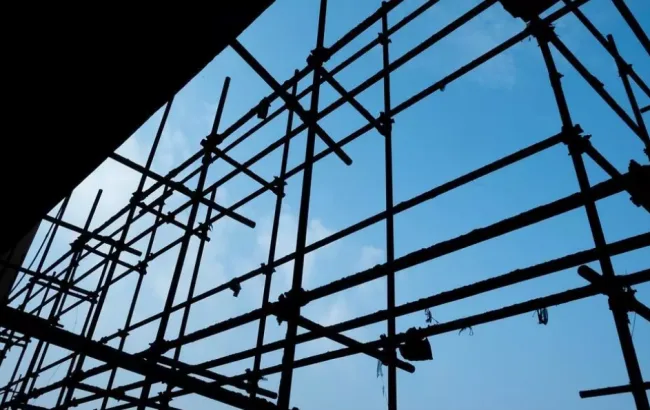
Scaffolding Engineering Measures
Key Construction Points
- Vertical deviation of upright poles must not exceed 1/200 of the frame height. Upright poles should extend 1.5m above the building roof. Except for the top layer where overlapping is allowed, all other upright pole joints must be connected with butt fasteners.
- Install vertical and horizontal sweeping rods at scaffold bases. Vertical rods should be fixed within 200mm of pad iron blocks with right-angle fasteners; horizontal rods should be fixed immediately below vertical rods on uprights.
- Place large horizontal bars below small ones, inside the uprights, fastened with right-angle fasteners. Large horizontal bars must span at least three spans or six meters.
- Securely tie every other layer of the outer frame to the structure during installation for safety. Correct verticality and horizontal deviations as installation proceeds, tightening fasteners appropriately.
- Connect all scissor brace joints (except the overlapping top layer) using docking fasteners. Fix scissor braces to protruding ends or uprights of intersecting small horizontal bars with rotating fasteners, ensuring centerline distances do not exceed 150mm.
Key Demolition Points
- Dismantle scaffolding layer by layer from top to bottom; simultaneous operations are prohibited. Remove wall connecting components layer by layer alongside scaffolding. Do not remove entire or multiple layers of connecting components before dismantling scaffolding.
- Remove nearby power lines before dismantling scaffolding. If underground power lines exist, implement protective measures. Do not throw fasteners or steel pipes near power lines.
- Dismantle vertical poles (6m length) with two people. Do not dismantle poles within 30cm below main horizontal poles alone; this must precede dismantling the prior horizontal bridge step to prevent high-altitude falls.
- Remove middle butt fasteners first on large cross bars, cross bracing, and slant supports; loosen end buckles after holding the middle. These supports may only be removed on the designated layer, not all at once. Use safety belts and cooperate with multiple workers during removal.
- Do not prematurely remove connecting wall components; only remove them layer by layer with scaffolding. Before removing the last connecting component, place a support on the pole to maintain stability.
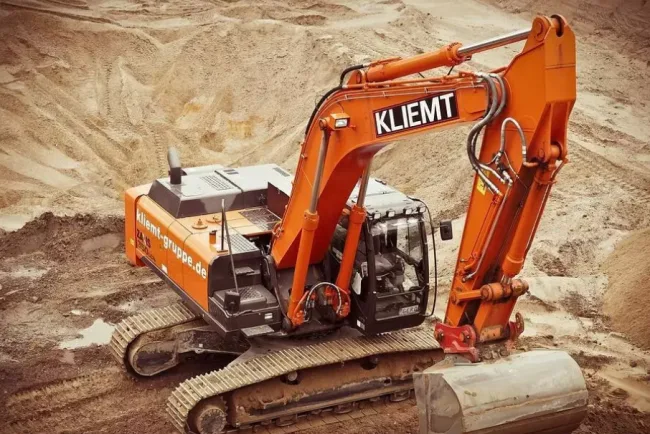
Demolition Engineering Measures
- Demolish multi-story brick-concrete structures layer by layer from top to bottom; avoid simultaneous demolition of multiple layers. Dismantle structural components piece by piece—starting with slabs and beams, then walls and columns. Except for bungalows, avoid pushing or pulling demolition methods.
- Ensure strong engineering supervision on-site during demolition to enhance safety oversight and promptly identify and mitigate hazards.
- Avoid oversimplifying or formalizing demolition plans and technical disclosures. Plans should include written instructions and necessary drawings detailing methods and procedures. Implement staged, itemized technical disclosures. Technical personnel must supervise demolition operations on-site.
- During demolition, apply reliable reinforcement and safety measures such as supports and bracing to floor slabs and residual walls to prevent collapse.
- Account for environmental and climatic impacts on structures during demolition to prevent accidents.
- Consider surrounding environment and safety before demolition. Assess the safety of the building and surroundings, install protective nets and sheds, evacuate the area, designate demolition zones with clear warnings, and assign dedicated guards. In densely populated or traffic-heavy areas, fully enclose scaffolding and equip protective isolation sheds.
Underground Engineering Measures
Common underground engineering accidents often arise from inadequate post-excavation support, resulting in falling “floating stones” at tunnel tops; insufficient technical measures at tunnel entrances causing collapses and rock mass landslides; failure to implement temporary support design due to soft, fragmented surrounding rock; inaccurate geological surveys causing construction method mismatches and widespread tunnel collapse; and improper excavation methods leading to accidents.
To address these challenges, the following technical measures should be observed:
- Steel Frame Construction: Secure steel frames during transport to prevent collisions, vehicle tilting, and falling components. Installation must be led by a dedicated operator who monitors surrounding rock dynamics and concrete spraying to prevent injuries from falling rocks or collapse. When tightening bolts, operators should stand on stable scaffolds and wear safety harnesses to prevent falls.
- Anchor Rod Construction: Assign dedicated personnel to regularly check anchor rod pull-out resistance. Grouting workers must wear protective gear including gloves, masks, goggles, and covers. Inspect and clean mechanical pipelines and joints before and after grouting. Perform trial runs before formal operation to prevent vibrations and blockages. Repair blockages after pressure relief.
- Spray Concrete Construction: Inspect and clean the rock surface thoroughly before spraying. Assign dedicated inspectors to check pipelines and joints to prevent hose damage or disconnections during spraying. Use appropriate protective equipment and dust control measures based on spraying method and concrete mix. Conduct regular health checks for spray operators.
Article source: Architectural Technology Magazine













Must log in before commenting!
Sign Up