
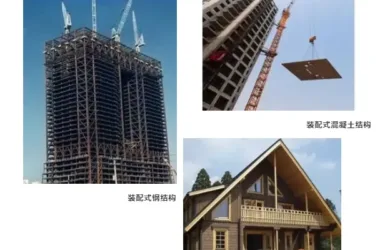
In recent years, the domestic housing industry has seen significant modernization, with prefabricated buildings becoming widely adopted in both industrial and residential construction. These buildings offer numerous benefits, including high efficiency, energy conservation, environmental friendliness, cost savings, and reliable residential performance. To enhance the management of prefabricated building construction, optimize the construction sequence, shorten the timeline, and accelerate project progress while ensuring quality, this plan has been carefully developed.
Below, we present a detailed installation and construction plan for prefabricated components used in prefabricated buildings.
1. Characteristics of Prefabricated Buildings
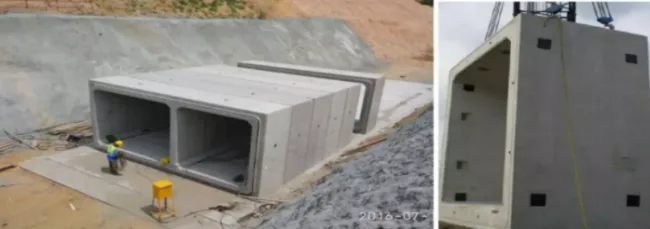
1.1 Prefabricated building components are factory-produced and include exterior and interior wall panels, composite panels, balconies, air conditioning panels, stairs, prefabricated beams, and columns.
1.2 On-site work primarily involves assembly, significantly reducing traditional cast-in-place operations.
1.3 The design and construction integrate architecture and decoration, ideally allowing decoration to proceed simultaneously with main construction.
1.4 Standardized design combined with digital management enhances production efficiency and reduces component costs, achieving both increased efficiency and lower prices. This digital factory management boosts the overall cost-effectiveness of prefabricated buildings.
1.5 Prefabricated buildings comply with green building standards.
2. Lifting Sequence Planning
Determine the quantity and model of tower cranes based on the floor plan. Establish the sequence for lifting components to ensure that all processes can proceed smoothly and alternately.
3. Technical Workflow and Process Breakdown
3.1 Workflow
Measurement and control axis → floor snap line → horizontal elevation measurement → sequential installation of prefabricated wall panels (including placement of control elevation cushion blocks, lifting and positioning, temporary fixation, decoupling and adjustment, anchor bar installation) → steel bar binding for cast-in-place shear walls (with pre-embedded mechanical and electrical conduits) → shear wall formwork setup → installation of prefabricated stairs, balcony panels, and air conditioning panels → steel bar binding for cast-in-place floor slabs (with pre-embedded conduits) → concrete pouring and compaction → curing. This process repeats for floors 2 through 11.
3.2 Process Breakdown Diagram
Step 1: Draw baseline and measure horizontal elevation at the building’s base.
Step 2: Lift exterior wall panels in designated directions.
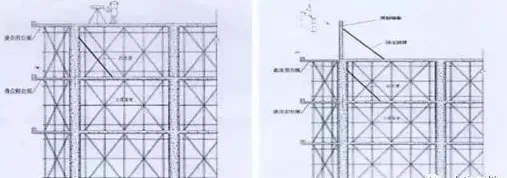
Step 3: Complete lifting and calibration of exterior wall panels.
Step 4: Bind steel bars for shear walls and columns.
Step 5: Pour concrete for shear walls and beams, install floor slab and prefabricated beam scaffolding.
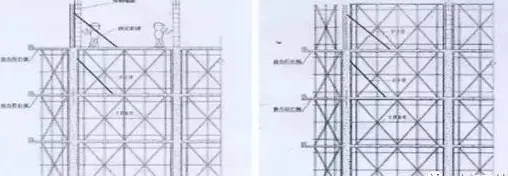
Step 6: Lift prefabricated beams and composite panel components.
Step 7: Conduct subsequent floor construction such as beam and slab reinforcement.
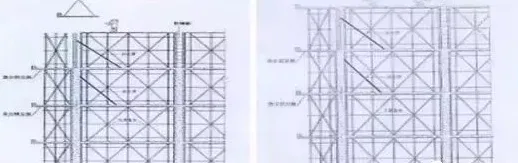
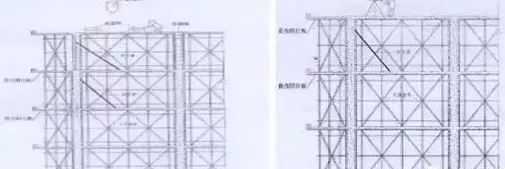
Step 8: Pour, compact, and cure floor concrete.
Step 9: Repeat the above steps to construct the next floor.
4. Hoisting Construction of Prefabricated Interior and Exterior Walls
4.1 Lifting
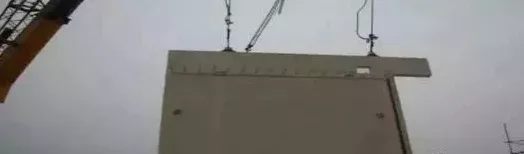
Tower cranes are used to prevent deformation caused by single-point lifting, and steel poles assist in lifting and positioning. Lifting points should be strategically placed to keep components horizontal and prevent collisions with edges or corners. Once lifted smoothly, the crane arm should move steadily, with manual alignment when the component nears the building.
4.2 Pre-Embedded Lifting Points
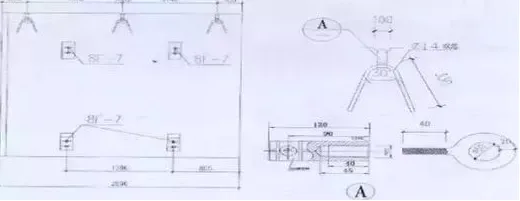
Prefabricated concrete exterior wall components come with hanging points and embedded support elements.
4.3 Construction Conditions for Wall Assembly Components
Condition 1: Prefabricated components arrive on site, are numbered, and counted according to the lifting schedule.
Condition 2: Clean the placement points for the lifted components and place firm cushion blocks aligned with the elevation control line.
Condition 3: Install limit devices for wall panels and floor slabs, referencing axis and control lines based on the lifting sequence.
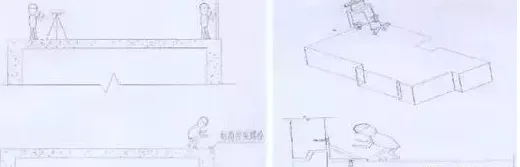
Condition 4: Set up component supports and temporary fixations, adjusting wall panel vertical dimensions.
Condition 5: Detach tower crane lifting points, proceed with the installation of the next wall panel, and repeat the cycle.
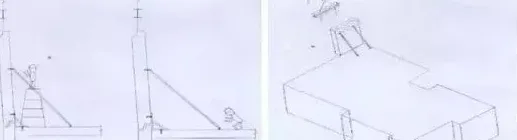
Condition 6: After concrete pouring and curing meet design specifications, remove component supports and temporary fixations.
4.4 Construction Method for Prefabricated Wall Panels
4.4.1 The temporary support system includes two sets of channel steel limits and two sets of adjustable diagonal screws. For overweight or cantilevered components, add two horizontal connections at both ends and three adjustable screws evenly distributed to ensure safety.
4.4.2 Using the given level elevation and control axis, mark horizontal elevation lines and axes, then install supporting parts under panels accordingly. The wall panel plastering uses hard cushion blocks and soft mortar: place hard cushion blocks matching wall thickness at the base, then spread mortar before lifting and positioning the panel.
4.4.3 After hoisting, check the panel’s verticality with a ruler and adjust with an adjusting rod if needed.
4.4.4 Fix prefabricated wall panels to the cast-in-place structure using adjustable screws made of 45# medium carbon steel, ensuring tensile strength per Grade II steel standards.
After installation and fixation, continue with the subsequent structural layer construction procedures.
5. Prefabricated Beam Hoisting Construction
5.1 Inspection, Acceptance, Numbering, and Marking
5.1.1 Concrete strength must meet design requirements before lifting beams.
5.1.2 Inspect components for integrity (check for severe distortion, fractures, or damage), verify geometric dimensions, embedded parts, reinforcement, lifting rings, and surface treatment. Arrange beams for lifting in numerical order according to drawings and lifting sequence.
5.2 Hoisting Process
The installation of each prefabricated beam follows this sequence: bind and lift lifting components → position → calibrate → fix → detach → bind and lift the next beam.
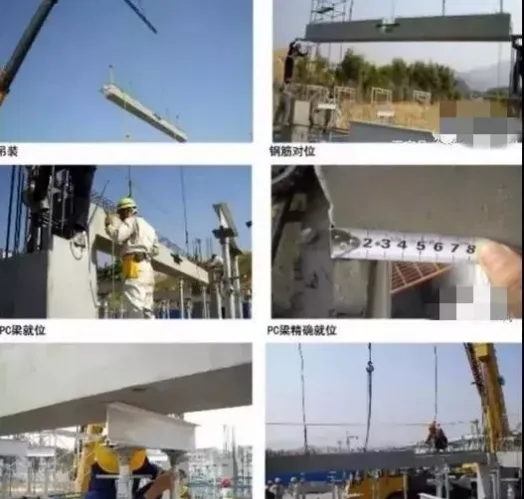
Ensure the safety and secure connection between lifting components and hooks throughout the process. The crane operator must lift slowly and steadily, avoiding sudden movements. Upon reaching the beam support location, gently lower the hook, aligning with the reference lines. Pre-supported scaffolding should be fixed at the beam bottom elevation and adjustable supports fine-tuned as the beam is lowered.
Using measured support axes and edge lines, pull steel wires along the beam’s centerline or at integer distances from it. Use a pry bar to straighten the beam longitudinally. Hang vertical lines to check verticality, adjust supports accordingly, and fix once positioned.
After final calibration passes inspection, weld and fix steel bars for beams and columns per drawing specifications. Then proceed to lift the next beam.
6. Construction of Truss Reinforced Concrete Composite Panels
6.1 Unloading and Stacking
(1) The temporary storage area must be within crane operation range, flat, stable, and meet stacking requirements.
(2) Before unloading, verify that lifting equipment and pre-embedded lifting rings are properly secured to the composite panels.
(3) Stack truss reinforced concrete composite panels and decorative panels separately by model and specification, with no more than four panels per stack.
(4) Use at least four support points per stack, preferably wooden blocks as cushions to protect panel surfaces.
6.2 Installation Preparation
Set up walls at laminated plate positions. Attach elevation positioning square steel on wall formwork (25mm width). Adjust elevation before concrete pouring to ensure levelness and flatness.
Inspect wall or beam top surface elevation and adjust as necessary. Remove excess height and fill low spots per grouting standards. Straighten and align overlapping steel bars to avoid interference with panel placement.
6.3 Temporary Support Frame Setup
Composite panels require full temporary support underneath. Adjust support elevation to match reserved wall elevations before floor slab installation.
6.4 Installation Process and Requirements
(1) Use lifting equipment that applies simultaneous, balanced stress on steel beams to prevent cracking or twisting during lifting.
(2) Slowly lift the prefabricated board with the tower crane, pausing when the bottom edge reaches 500mm above ground to verify lifting security and panel condition. Address any issues before continuing.
(3) Install composite panels vertically from top to bottom, pausing slightly 20cm above the working surface. Workers should hold and adjust the panel, aligning edges with placement lines on walls. Avoid collisions between reserved steel bars on panels and walls. Lower panels steadily and slowly; avoid rapid or forceful placement to prevent damage. Cease lifting if wind exceeds level 5.
(4) Use small wooden blocks as cushions when adjusting panel position; do not use pry bars directly to prevent edge damage. Ensure panel alignment with an allowable deviation under 5mm.
(5) After installation, perform standard calibration and adjust supports beneath the slab as needed.



6.5 Construction of Board Joints and Laminated Layers
The laminated steel bars consist of double-sided, single-layer steel bars.
Before binding steel bars, clean debris from the composite panel. Bind bars precisely according to spacing, inserting them into the truss during binding. Ensure iron hooks on the bars stand upright, never lying flat.
For two-way reinforcement bars: if diameters and spacing are equal, place shorter-span bars below longer-span bars. If diameters or spacing differ, the direction with greater reinforcement should be placed underneath.
All reinforcement at joints must be correctly placed. During concrete pouring, seal the underside with formwork.
7. Prefabricated Stairs Construction Plan
7.1 Node Introduction
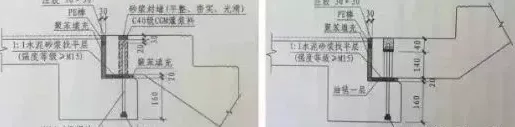
The prefabricated stairs connect to beams with one end fixed and the other sliding. Railing holes are reserved at stair sections, allowing stair railings to be anchored with grout anchors.
7.2 Process Flow
7.3 Installation Preparation
Review drawings, verify component numbers, determine installation positions, and plan lifting sequence.
7.4 Control Line Marking
Set up staircase installation control lines per drawings and verify elevations. Maintain a 20mm gap between the staircase and structural wall to allow for plaster layer installation. Reserve gaps between stairwells as required for railing installation.
7.5 Surface Preparation
Before hoisting, clean mortar, ash, and other debris from embedded stair parts to ensure quality connections. Lay a 20mm thick leveling layer of 1:1 cement mortar (strength ≥ M15) on upper and lower ladder beams, carefully controlling elevation.
7.6 Staircase Lifting
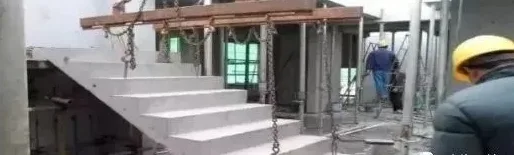
Lift prefabricated stair slabs horizontally, attaching universal lifting ears to embedded nuts with bolts. Confirm secure locking of lifting buckles before proceeding with a slow lift.
7.7 Positioning Staircase Slabs
Pause briefly when the stair slab reaches 500mm above the working surface. Adjust the direction carefully and position slowly, avoiding rapid or forceful placement to prevent vibration damage.
7.8 Staircase Section Alignment
Once the stair slab is roughly in place, use a pry bar to fine-tune alignment according to control lines. Ensure bolt holes in reserved bolts and prefabricated stairs are centered and aligned.
7.9 Staircase Placement
After final corrections, level the staircase section and grout pre-embedded bolts and reserved holes with special material. Seal reserved hole openings with mortar.
7.10 Gap Treatment
After grouting and fixing reserved holes, fill gaps between prefabricated stairs and rest platforms with polystyrene. Seal gaps with PE rods and inject adhesive. Follow design drawings if specific requirements exist.
7.11 Installation and Protection of Prefabricated Stair Panels
7.11.1 Do not stack prefabricated stair slabs more than four layers on-site. Use wooden pads beneath lifting points during stacking.
7.11.2 After installation, protect stair surfaces by nailing multiple layers of boards into a complete step shape, securing sides with several board layers.
Summary
In conclusion, installation and construction of prefabricated buildings often reveal various challenges. To address these, rigorous quality control is essential. Before construction, understanding design intent, reviewing all professional construction drawings, preparing an organizational chart, and identifying project control points are critical. Effective management before, during, and after construction ensures the delivery of safe and secure housing.













Must log in before commenting!
Sign Up