
I. Overview
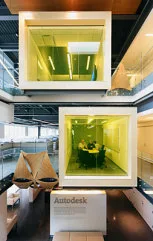
The Autodesk AEC Headquarters was recognized as a flagship BIM application by the American Institute of Architects in 2009.
Figure 1: Internal Structure of Autodesk AEC Headquarters
In 2014, the Ice Hockey Arena at Binfa State University was also selected as a star BIM application case by the American Academy of Architects.
Figure 2: Exterior of the Ice Hockey Arena at Binfa State University

Overall question: Five years later, how much progress has BIM truly made in the United States?
II. BIM Application
(1) Contract Issuance Model
The Autodesk AEC Headquarters employs the modern Integrated Project Delivery (IPD) approach for BIM.
In contrast, the Ice Hockey Arena at Binfa State University uses the Construction Manager at Risk (CM at Risk) model.
Figure 3: IPD Concept Diagram
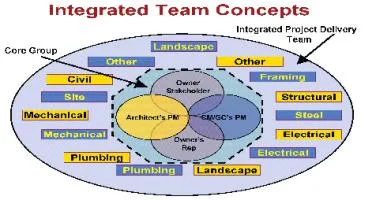
Question: Given the industry’s strong endorsement of IPD, why does the Ice Hockey Arena at Binfa State University still use the CM at Risk model as a BIM star project after five years?
Let’s first compare the CM at Risk and IPD models:
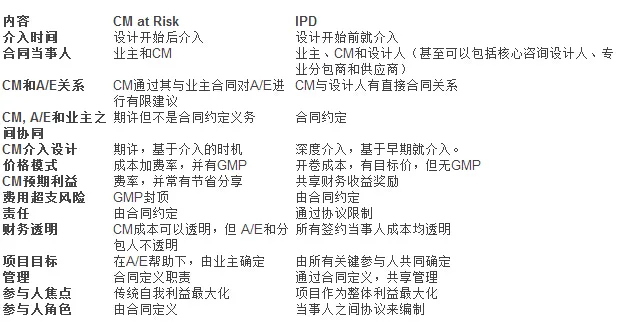
From this comparison, it is clear that IPD draws heavily from agile development principles found in the software industry. Its core philosophy emphasizes collaboration, mutual trust, and shared benefits among parties to maximize BIM’s value and achieve a win-win outcome for all participants.
However, IPD contracts present several challenges:
- Will the owner willingly share equal decision-making and project management rights with designers and contractors regarding project goals?
- The construction industry traditionally operates under a culture of confrontation, competition, and lack of trust, which severely undermines IPD if any party lacks integrity.
- Contracts involving multiple parties can complicate relationships and responsibilities.
- There is generally no culture of cost transparency within the construction industry.
Given these challenges, it is understandable why the Binfa State Ice Hockey Center opts for the CM at Risk model. However, to promote BIM adoption, the Binfa State Ice Hockey Arena has taken significant steps towards IPD through management practices rather than contractual agreements.
Figure 4: Team Integration Platform at Binfa State Ice Hockey Arena
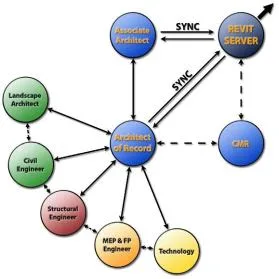
Therefore, if we view CM at Risk and IPD as opposite ends of a spectrum, parties will typically position their BIM contracts somewhere between these two extremes, based on their project’s specific characteristics.
(2) Remuneration Mechanism
The compensation structure for the Autodesk AEC Headquarters is as follows:
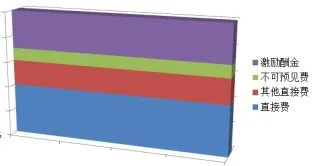
Total Project Cost = Direct Expenses + Other Direct Expenses + Unforeseeable Expenses + Incentive Remuneration
The total project cost is determined collaboratively by the owner, designer, contractor, and key subcontractors (including equipment, fire prevention, electrical, and drywall).
- Direct costs include labor, materials, equipment, and other expenses incurred by designers, contractors, and key subcontractors.
- Other direct costs cover necessary project expenses not directly related to the above, such as costs from subcontractors outside the IPD agreement.
- Unforeseeable expenses account for force majeure events, price increases, etc., and represent 5% of the total project cost.
- Incentive compensation subsidizes projects that exceed budget. If a surplus remains after project completion, 40% of it goes to the owner, while 60% is shared by the designer, contractor, and key subcontractors. Delays incur penalties deducted from the incentive pay. Additionally, an independent architectural professor evaluates design and construction performance, allowing incentive compensation to be adjusted by up to ±20% of the total project cost.
Figure 5: Compensation Structure of Autodesk AEC Headquarters
Question: Guaranteed Maximum Price (GMP) contracts typically feature incentive compensation. How does the incentive mechanism in GMP differ from that in IPD?
(3) Visual Communication of the Plan
At Autodesk AEC Headquarters, real-time animated visualizations generated from data allow the owner to perceive how floors connect seamlessly, creating impressive spatial effects. This dynamic demonstration convinced the owner to invest more, reversing a previous decision to cancel this part of the project. Traditional architectural perspectives lacked this level of persuasiveness.
Figure 6: Visual Communication during the Solution Phase at Autodesk AEC Headquarters

During the feasibility study phase, multiple modeling methods supplemented traditional 2D media to evaluate and communicate project viability. This approach played a key role in securing the largest private donation in Binzhou State University’s history—$120 million—plus an additional $6 million later on.
Figure 7: Visual Communication of the Binfa State Ice Hockey Arena
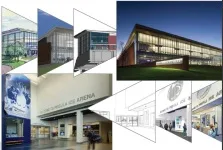
Clearly, BIM plays a vital role in visual communication during the proposal phase for both Autodesk AEC Headquarters and Binfa’s Ice Hockey Arena, helping drive projects forward.
(4) Design for Implementation / Design to Fabrication
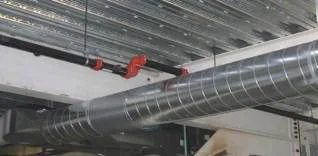
At Autodesk AEC Headquarters, the team used BIM to prefabricate HVAC equipment, piping, fire protection systems, and wood products. Manufacturing information was embedded directly into the 3D model and shared with manufacturers, who could provide design input, thereby reducing costs and lead times. The comprehensive BIM coordination also allowed the project team to confidently specify higher ceiling heights.
Figure 8: Ceiling Layout of Autodesk AEC Headquarters
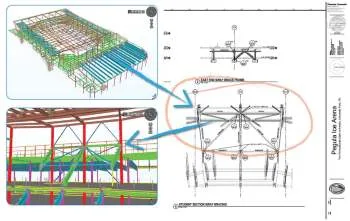
For the Binfa State University Ice Hockey Arena, the steel structure model leveraged BIM and trust-based collaboration to accelerate and simplify the traditional submission process. Structural engineers produced Tekla models for manufacturing steel components, advancing the schedule by five weeks. These models were then handed off to detailing personnel for construction documentation as per the BIM implementation plan.
Figure 9: Steel Structure Model Process of Binfa State University Ice Hockey Arena
Question: Current Western BIM standards and implementation plans emphasize that BIM adoption does not increase design implementation responsibilities under existing contracts, nor does it increase design liability for construction. However, does integrating design and manufacturing bring additional implementation risks to designers and increased design liability to contractors?
Historically, from the 15th century to today, architects were responsible only for drawings and models, not the buildings themselves. Architectural drawings primarily provide visual guidance, with construction details addressed later by others. Architects simulate designs through drawings, while construction methods are developed separately.
BIM challenges this tradition by advocating “design for implementation” or “design integrated with manufacturing,” fundamentally changing roles and responsibilities.
However, this shift also raises new legal concerns, as seen in the first BIM-related court case in the United States where architects took on integrated design-implementation roles.
IPD may have contributed to this issue. The proposed solutions include:
- Ensuring thorough communication among all parties to minimize conflicts between design and implementation.
- Mutual waiver of claims among parties (except for exceptional cases), with all related costs offset against the total project cost.












Must log in before commenting!
Sign Up