
In recent years, the promotion of prefabricated housing has led to its widespread adoption in residential construction across various countries. Nations such as the United States, Germany, Sweden, Denmark, Australia, and Singapore have notably high proportions of prefabricated buildings. In Germany, for instance, prefabricated residential components account for an impressive 94.5% of new housing. According to Grasse Ludwig, Vice President of the German Construction Industry Association (GCIA), Germany leads the world in the rapid development of residential assembly and reduction of building energy consumption.
Germany’s construction industry focuses on sustainable development throughout the entire green ecological supply chain. This includes environmental protection, energy conservation, and the ongoing industrial optimization of organizational processes, production technology, management, maintenance, and environmental recycling in the industrialization of prefabricated residential buildings.
Q: What are the key characteristics and emerging trends in Germany’s prefabricated housing technology?
Prefabricated residential buildings in Germany predominantly use composite panels, concrete, and shear wall structural systems. Components include shear wall panels, beams, columns, floor slabs, interior and exterior partition panels, balcony panels, and more. The prefabrication and assembly of these components have become highly industrialized, featuring specialized design, standardization, modularity, and universal production methods.
These components are easy to store and transport, can be reused multiple times, and offer durable performance in terms of energy savings, low consumption, and environmental friendliness. Germany has a long and mature history of advancing prefabricated product technologies and promoting green, energy-saving assembly methods. This has resulted in a comprehensive system of green assembly and product technology.
DIN Design System
Introduced in November 1990 by the Building and Civil Engineering Standards Committee and the German Committee, the DIN Design System for prefabricated buildings has become an integral part of Germany’s industrial standards. It standardizes and serializes component dimensions, connections, and more, based on modular coordination principles. This system is well-established and widely used, with an 80% market share of residential assembly components in Germany.
The design principles of the DIN system include:
1. Design Concept: The system promotes module combinations that scale from local elements to the overall building. Functional modules are developed for specific rooms like bedrooms, living rooms, kitchens, and bathrooms. These are then assembled into unit types (e.g., A, B, C, D), which form the basis for various building configurations.
2. Modular Coordination: The design adheres to modular coordination between buildings and components, facilitating integration of civil engineering and decoration. This modular approach supports standardized industrial production and ensures that decoration can be completed efficiently in one stage.
3. Building Codes: Emphasizes simplicity and uniform distribution of stiffness, mass, and load capacity. Large open layouts enhance residential flexibility. The system carefully considers the integration of mechanical and electrical pipelines with structural systems, optimizes module sizes and types, and promotes the use of stacked floor slabs with concrete poured between slabs and walls for overall structural integrity.
4. Structural Principles: Building shapes, layouts, and structures comply with seismic design requirements. The system prioritizes reasonable stress distribution, simple connections, ease of construction, and modular versatility. Vertical load-bearing elements are continuous, and door and window openings are aligned vertically without corner windows.
Additional regulations cover energy-saving design, pipeline specifications, quality control, and cost management.
AB Technology System
The AB Technology System, also known as the prefabricated building technology system, encompasses various prefabrication methods used in Germany:
1. Block Structure Technology: Utilizes prefabricated block materials to construct walls, suitable for 3-5 story buildings. This method is adaptable, simple to produce, easy to build, cost-effective, and allows the use of local materials and industrial waste.
2. Sheet Structure Technology: Involves assembling large prefabricated interior and exterior wall panels, floor slabs, and roof panels. This is the primary method for fully prefabricated buildings within the industrial architecture system, though it imposes certain constraints on building shape and layout.
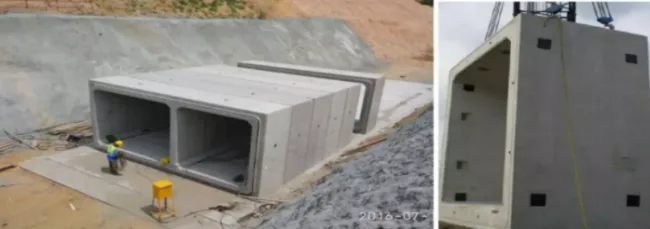
3. Box Structure Technology: An advanced prefabrication method developed from sheet metal construction, offering high industrialization and rapid on-site assembly. Box-type buildings include cast-in-place elements, skeleton strip assemblies, and prefabricated panel assemblies. Typically, structural parts, interior decoration, equipment, and even furnishings are completed in the factory. Once the box is lifted and connected to pipelines, it is ready for use. Assembly methods include full box type, board box type, core box type, and skeleton box type.
Other technologies include skeleton plate structures, sliding formwork structures, guide rod lifting plate structures, and various prefabricated assembly building methods.
RAP Technology System
RAP refers to the robot automation production technology system. In recent years, Germany has developed robotic production technologies for manufacturing complex components used in prefabricated buildings, such as sandwich walls, insulated sandwich or double-sided walls, solid partition walls, and irregular floor slabs.
BIM Technology System
Building Information Modeling (BIM) is a data-driven innovation used extensively in Germany’s prefabricated industry. BIM integrates diverse project-related information through parametric models, enabling seamless sharing and transmission throughout the entire lifecycle of prefabricated building projects—from planning to operation and maintenance.
This technology equips engineers and technical personnel with accurate building data, facilitating efficient research and development. It also supports collaborative workflows among design teams, construction entities, and building operators, significantly enhancing production efficiency, reducing costs, and shortening construction timelines.
Dr. Kotler Frank, Director of the German Institute for Prefabricated Building Research (GABRI), describes new prefabricated buildings as systematic, integrated structures that combine design, production, construction, decoration, and management. These buildings embody five key industrialization features: standardized design, factory production, prefabricated construction, integrated decoration, and information management.
DGNB Evaluation System
The DGNB Sustainable Building Assessment System, established in 2007 by the German Sustainable Building Council in cooperation with the German government, is recognized as the world’s most advanced and comprehensive sustainable building certification system. It functions essentially as a national standard and covers the entire German construction industry chain, including ecological buildings, energy-efficient buildings, intelligent buildings, integrated buildings, and prefabricated residential buildings.
The DGNB system employs strict and comprehensive evaluation criteria supported by sophisticated software tools. It offers transparent certification that clearly defines the quality of all new constructions, including prefabricated homes.
This system evaluates buildings across 10 key areas and 60 standards, with notable advantages such as:
1. It is a second-generation sustainable building assessment system addressing ecological, economic, and social factors, including integrated and prefabricated buildings.
2. It incorporates full life cycle cost calculations, covering construction, operation, and recovery costs, thereby enabling effective cost control and risk management.
3. It demonstrates how sustainability improvements can lead to greater economic returns.
4. The system focuses on building performance rather than prescriptive measures, ensuring quality and offering flexibility for owners and designers to meet their objectives.
5. It provides comprehensive evaluations of different technological applications, such as solar energy and reclaimed water use.
6. The system is based on the high-quality standards of the German construction industry.
7. It aligns with EU standard principles, making it adaptable to various climate and economic contexts worldwide.












Must log in before commenting!
Sign Up