
In today’s urban environments, one of the biggest challenges in housing is meeting the growing and increasingly diverse demands. More people are opting for single-room apartments—not out of preference, but due to practical necessity. Their key needs and concerns can be summarized as follows:
Residential buildings are often perceived as “boxes” with little emphasis on quality of life or the deeper human needs for belonging and identity in their living spaces (BIM learning). These environments typically lack good access to natural light and scenic views.
Small plot sizes and dense layouts result in limited privacy—both visually and acoustically.
These shortcomings contribute to living conditions that often feel uncomfortable and lack true comfort.
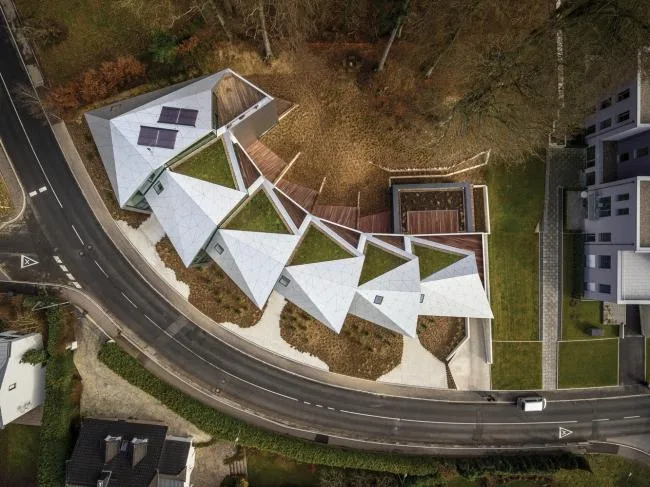
Our design strategy begins by thoroughly analyzing these challenges and transforming them into opportunities. We use these insights as a foundation to create quality living spaces, offering a fresh perspective and innovative approach to collective housing.
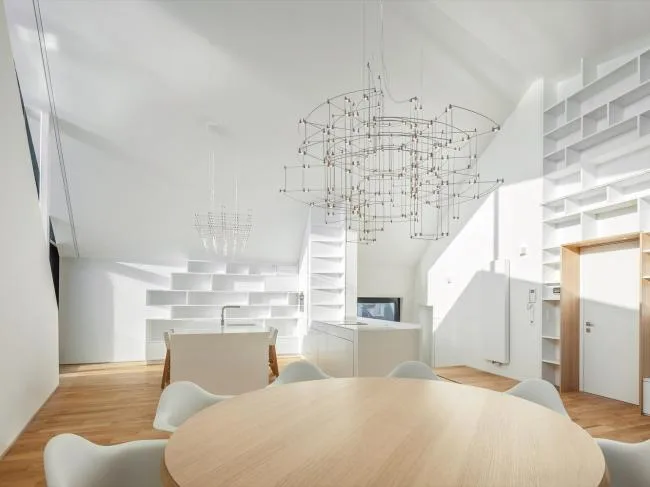
We explored various design possibilities by considering urban context, specific terrain features, and plot shapes, addressing the key issues through thoughtful architectural responses.
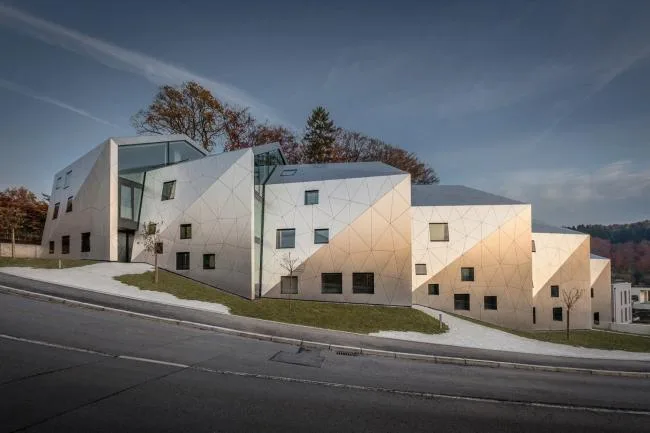
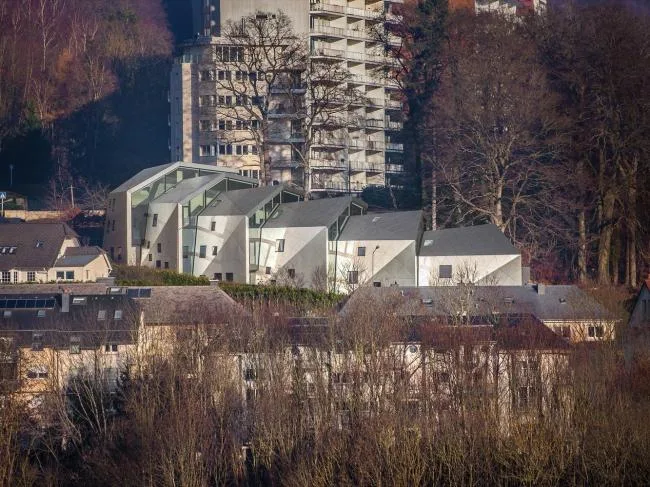
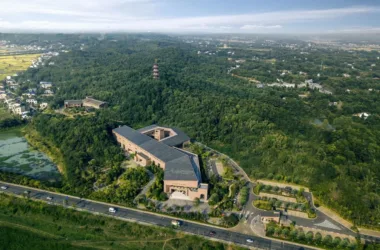
The site’s winding streets, steep slopes, and protected 300-year-old trees all conform to its original topography. Located between small housing units on one side and a large apartment building on the other, the design divides the building into six vertically shifting blocks. This clever segmentation allows the structure to blend harmoniously with its surroundings, making full use of the available density while preserving a sense of belonging, identity, and human scale.
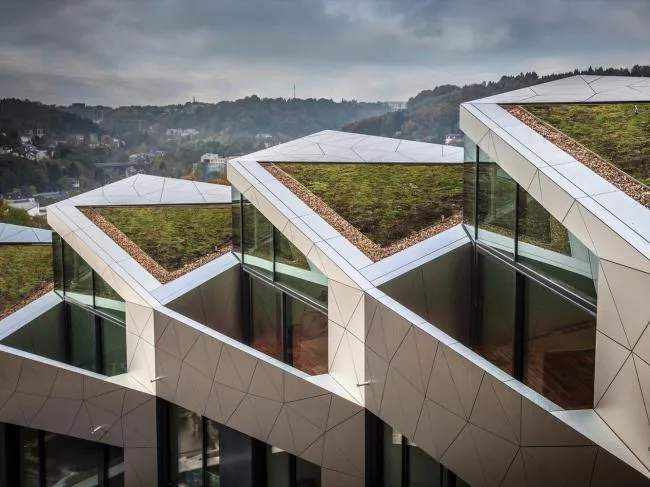
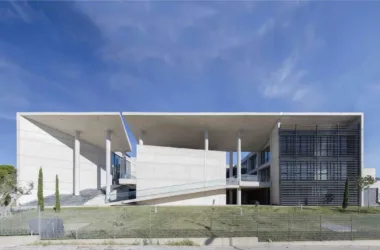
The architect uses techniques such as segmentation and movement to fill the building with ample natural light, creating panoramic views of the surrounding landscape and maintaining visual connections to the sky.
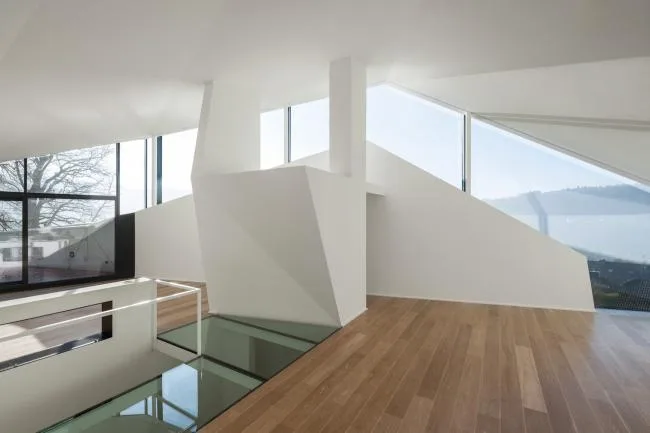
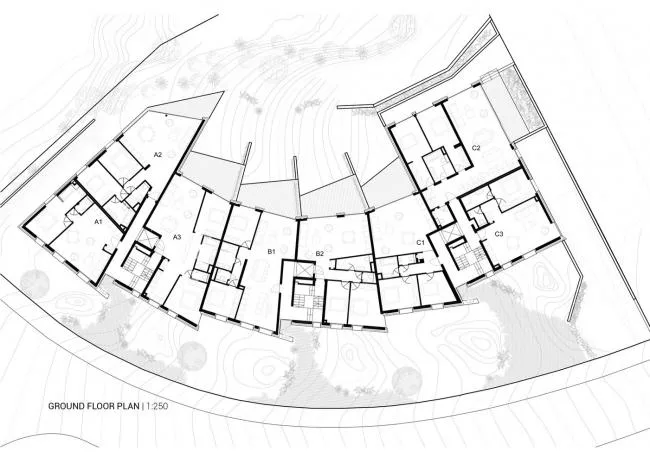
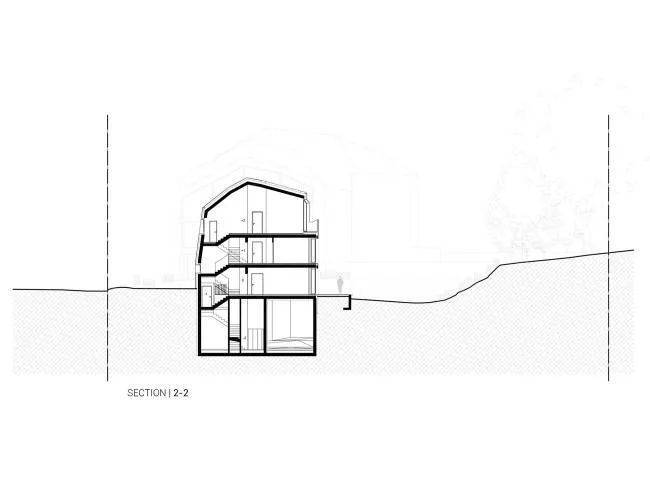
The vertical circulation allows horizontal apartments to have three-sided exposure. Public indoor spaces are designed to encourage social interaction while balancing privacy, fostering community life alongside comfort and relaxation.
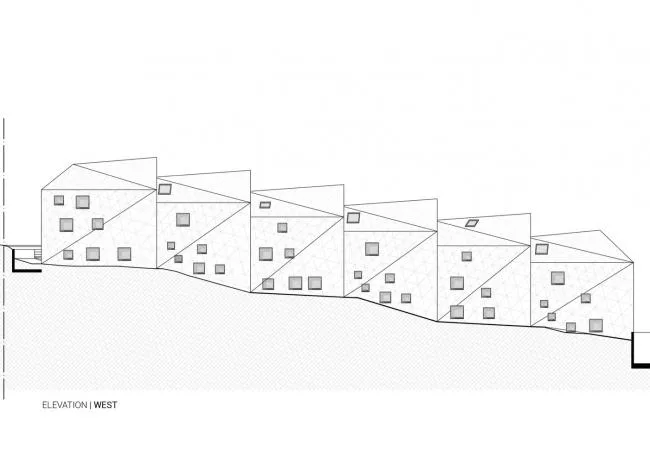
Our overarching design concept is to integrate current housing demands with the specific conditions of the site, creating a high-quality collective housing building that fosters a strong sense of belonging, identity, and community.
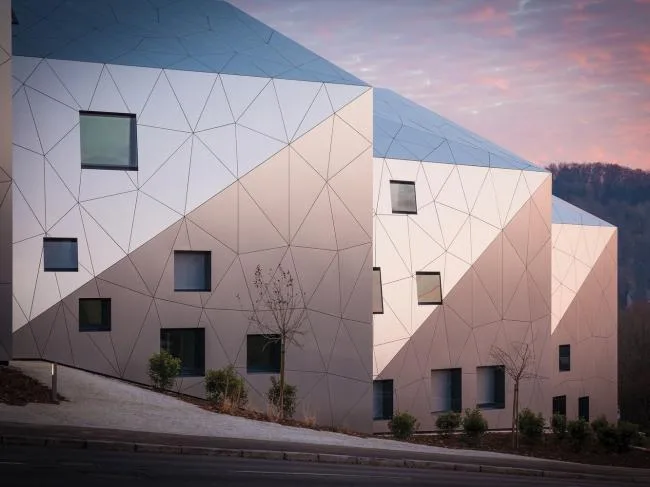
Building Materials and Structural Design
The building primarily consists of reinforced concrete structures. The ventilated facade facing the exterior is clad with triangular aluminum panels. The insulation layer uses mineral fiber materials, and openings are fitted with triple-glazed glass within aluminum frames. Large glass sections are coated with UV-protective film to reduce energy consumption.
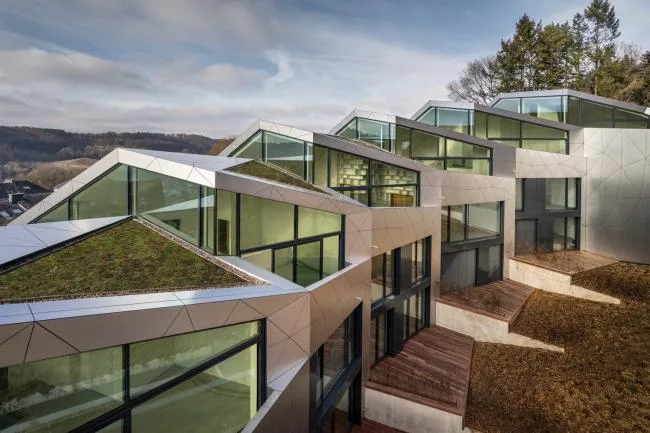
A key element of the building’s energy concept is its orientation: large openings are concentrated on the south and east facades, while the north facade remains mostly closed. In compliance with Luxembourg’s building regulations, the project has been classified as a green building with the lowest energy consumption level (BB level). It features centralized air conditioning and solar panels for hot water production, maximizing energy efficiency.
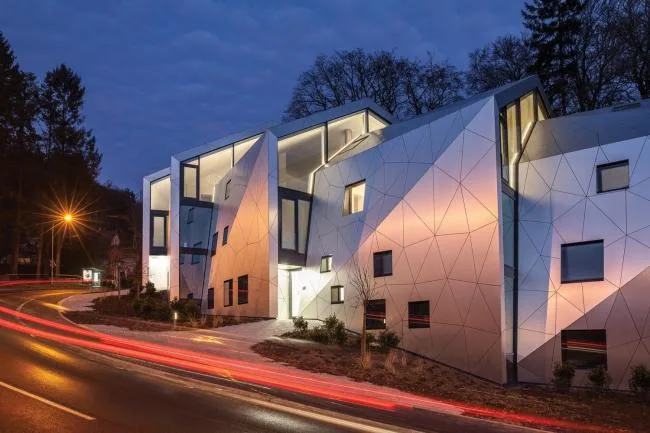
The choice of exterior wall materials also considers long-term maintenance and operational cost minimization.
Drawings
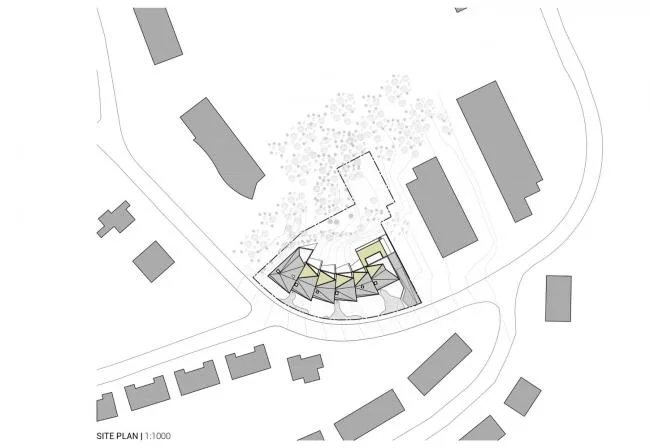
Master Plan
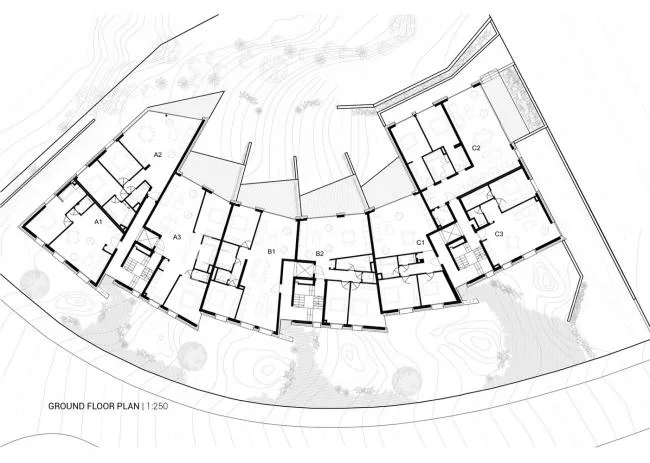
Ground Floor Plan
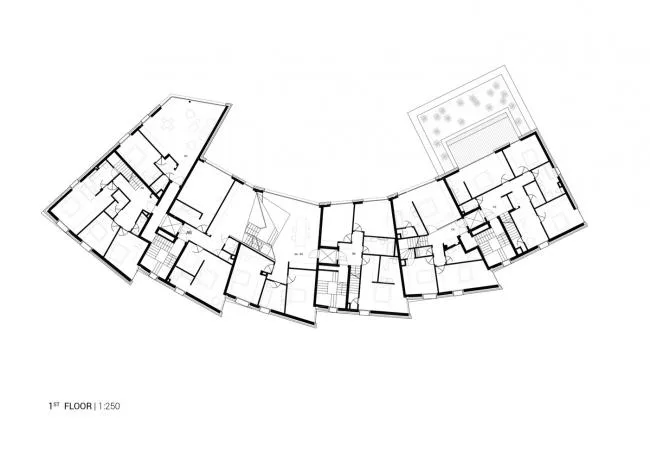
Second Floor Plan
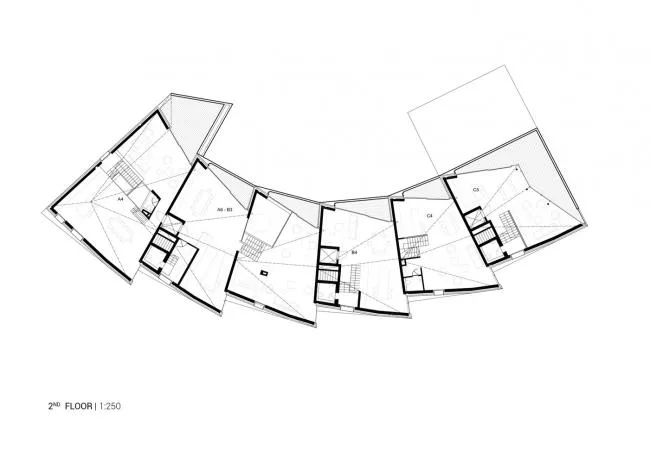
Third Floor Plan
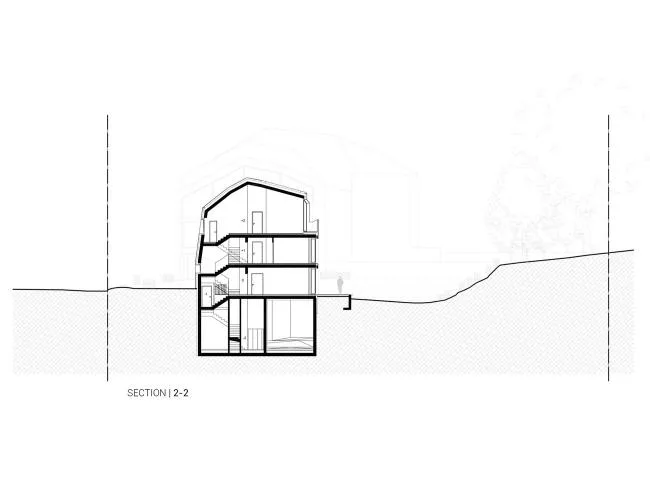
Sectional View
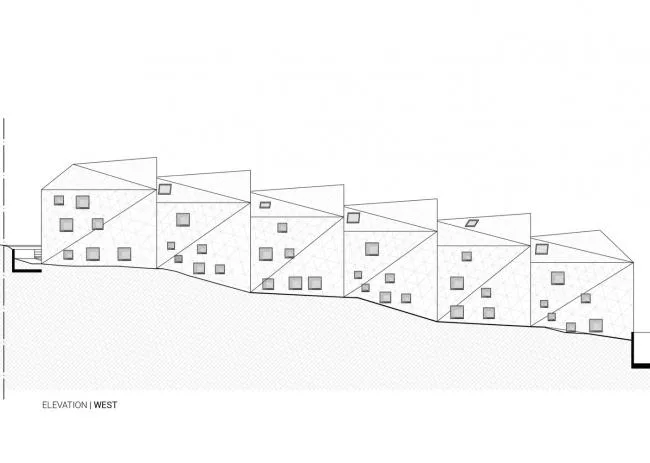
Elevation Drawing
Project Information
Architect: METAFORM Architectural Firm
Location: Dommeldange (L), 2552 Luxembourg
Lead Architects: Shahram Agaajani, Bénédic (BIM Engineer) teHerr, Yves Schlesser
Building Area: 2,250 square meters
Project Year: 2016
Building Type: Apartment
Manufacturers: Schüco, Reynobond
Client: ASARS Construction












Must log in before commenting!
Sign Up