
PDM (Product Data Management) and ERP (Enterprise Resource Planning) are two essential technologies in modern enterprise management and information systems, particularly within advanced manufacturing industries. PDM focuses on managing and integrating all product-related information and processes, providing a unified platform for remote collaborative design that is compatible with various computing environments. ERP, evolving from MRP II, incorporates modern management principles, supporting integrated management of resources and processes across enterprise activities and manufacturing. This is especially valuable in remote collaborative design scenarios.
Each system has a distinct focus, yet both play crucial roles in the development of Product Lifecycle Management (PLM). As a result, integrating PDM and ERP is a major technical challenge for remote collaborative design, offering substantial practical benefits for engineering. Enterprises often select different PDM and ERP systems based on their specific requirements, resulting in diverse integration strategies and platforms. However, the core integration principles remain consistent. For organizations engaged in remote collaborative design, transferring collaborative design data into manufacturing systems is critical for digital design, manufacturing, and achieving PLM.
This article explores the similarities and differences between PDM and ERP in remote collaborative design, presents an integrated architecture and workflow, and proposes a method for integrating design BOM and manufacturing BOM information to address data transfer and consistency challenges within enterprises.
Differences and Connections Between PDM and ERP
In remote collaborative design environments:
- PDM manages collaborative product information and processes, focusing on the flow of product composition data. It is foundational for product formation in concurrent engineering, driven by logical product information and process conditions. Key PDM functions include engineering data management, product structure and configuration management, project management, workflow management, change management, and standard part management. PDM supports the entire product lifecycle, facilitating rapid product development and business process transformation. Its application spans document management, interdepartmental data management, and inter-enterprise data management, with the latter being most relevant in remote collaborative design.
- ERP manages all manufacturing resources and processes, focusing on manufacturing management functions such as Master Production Planning (MPS), Material Requirements Planning (MRP), procurement planning, shop floor operations, tooling and equipment management, financial management, inventory, and distribution. ERP serves as both a decision-making and operational tool for enterprise leadership.
The Bill of Materials (BOM) is the critical information input for both systems:
- The Design BOM in PDM represents the product from a design perspective (“As Designed”), detailing what the product is and how it is represented through engineering data.
- The Manufacturing BOM in ERP describes the product from a manufacturing perspective (“As Built”), outlining how the product is constructed and assembled.
PDM and ERP also differ in their underlying technologies and application structures. ERP systems are closely integrated with other organizational systems, while PDM is built to adapt rapidly to changing engineering computing environments.
The main differences in collaborative design environments are highlighted in several aspects:
- Management Objects: PDM captures and shares all product definition data throughout the design lifecycle, supporting early-stage processes and collaboration. ERP manages manufacturing resources and processes, covering procurement, sales, and service. The scope, timing, and tools supporting each process differ significantly.
- Degree of Customization: PDM systems typically offer APIs for integration with various design, manufacturing, and analysis tools, providing high customization flexibility. ERP systems are less customizable, relying on standardized management models, and excessive customization can increase business risks.
- Product Structure and Definition Data: The initial product structure usually originates from engineering part lists generated by the design department, which are manually entered into ERP to create the manufacturing BOM. Modern PDM systems provide graphical interfaces and object-oriented management tools, linking product definition data with structures and subassemblies for efficient navigation and access.
- Change Management: PDM tracks all change processes, from proposal to implementation, ensuring relevant departments are notified and tasks are assigned. ERP manages changes from a production planning perspective; once approved, manufacturing plans are updated to meet new resource and component requirements.
- Configuration Management: PDM enables multiple views of a product throughout its lifecycle and maintains links between components and their defining data. ERP manages configurations based on production planning.
The Necessity and Methods of Integrating PDM and ERP
Although PDM and ERP cover different tasks and stages, they are fundamentally interdependent. Currently, these systems often operate separately, making seamless information exchange difficult and leading to inconsistencies between collaborative design and manufacturing. Common issues include:
- ERP cannot automatically receive data from PDM, requiring manual data entry.
- PDM cannot track or provide feedback on frequent production changes, risking data inconsistencies.
- Errors in shared data can propagate, resulting in significant losses.
Therefore, integrating PDM and ERP is essential for timely and accurate information flow, streamlined workflows, and maintaining enterprise competitiveness. As both systems evolve, their functions increasingly overlap, making information sharing throughout the PLM cycle critical for remote collaborative design and manufacturing.
Four main integration models are commonly discussed in the literature, particularly in the context of remote collaborative design:
- Team-Level PDM Integration: Closely integrates with specific CAD/CAM systems, offering low cost and simplicity but limited to homogeneous environments. ERP integration is usually indirect, involving intermediate files or databases.
- Enterprise-Level PDM Integration: Centralizes product information to support integration with various applications and long-term enterprise needs. This approach is complex and costly, making it suitable for large organizations.
- Combined Team and Enterprise-Level PDM: Organizes enterprise data hierarchically for systematic management, suitable for large enterprises but involves higher complexity and cost.
- Enterprise Integration Platforms (Frameworks): Both PDM and ERP connect to a shared platform, enabling equal-footed information exchange. This model is highly adaptable and supports broad enterprise integration. Although it represents the future direction, it is limited by the maturity of available platforms and high technical requirements.
Enterprises should choose the integration model that best suits their needs. Leading international enterprise management software solutions—such as SAP, Oracle, and IFS—typically employ the fourth model. For remote collaborative design, using PDM as an enabling tool within such an integration framework is recommended to ensure consistent and efficient integration of information and workflows between PDM and ERP.
Architecture and Workflow for Integrating PDM and ERP Information
Integration Entry Point
The core of PDM and ERP integration is to connect design, process, enterprise management, production, quality control, and finance—merging product and business information for comprehensive enterprise integration. Figure 1 illustrates this relationship using the BOM as an example.
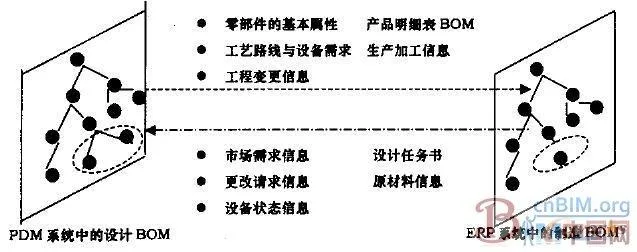
Figure 1: Relationship between PDM and ERP Information Integration in Remote Collaborative Design
As depicted in Figure 1, PDM provides ERP with process information, design and process cost data, and engineering change records. In return, ERP supplies PDM with market data, design tasks, change requests, raw material information, and equipment status. The integration hinges on ensuring consistency between the BOM in PDM (design-focused) and the BOM in ERP (manufacturing-focused). For remote collaborative products, the structures and component hierarchies of these BOMs may differ. Therefore, successful information integration depends on reconciling the design BOM and manufacturing BOM, ensuring unified product data throughout the lifecycle.
Integration Architecture and Workflow
Integrating PDM and ERP requires a strong foundation and carrier for integration, which must:
- Cover both PDM and ERP domains, ensuring comprehensive system information integration.
- Functionally bridge or mask the differences between PDM and ERP, as discussed above.
PDM, leveraging network and database technology, integrates information silos generated by CAD, CAM, CAPP, and CAE in design, analysis, manufacturing, process planning, and quality management. Unified data management across the product lifecycle addresses bottlenecks in CAD/CAM application. CAD/CAPP/CAM/CAE systems on the PDM platform can extract and return information, achieving true integration (4C integration). Thus, PDM acts as an integration platform for these systems, and as a bridge to ERP, enabling timely information exchange and comprehensive enterprise information sharing (see Figure 2).
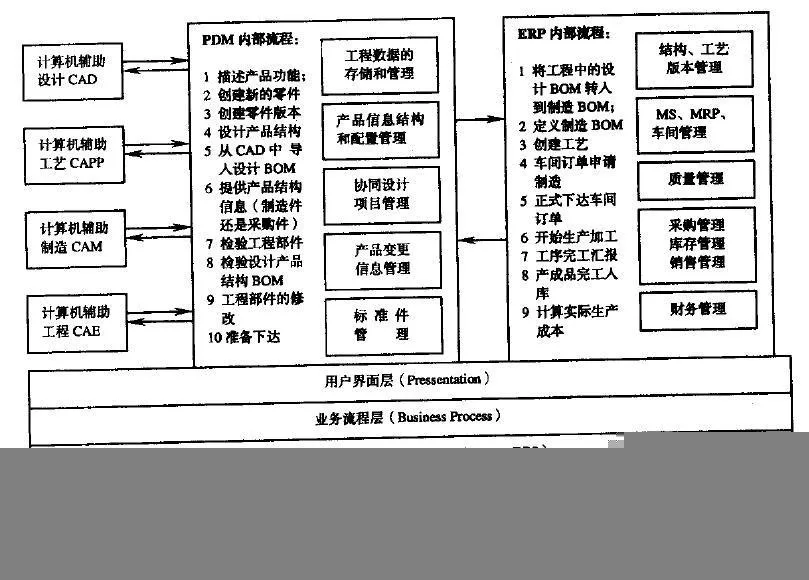
Figure 2: Architecture and Internal Workflow of PDM and ERP Information Integration for Remote Collaborative Design
With advancements in distributed computing and Internet/Intranet technologies, PDM systems now support information and resource sharing in heterogeneous environments via CORBA, DCOM, and web technologies. These capabilities make PDM suitable for collaborative design across different sites and platforms. Leading PDM solutions like IMAN and Sherpa offer modular, component-based systems tailored to user requirements, with tools for application modeling, CAD integration, and secondary development, supporting both information and technical integration.
Figure 2 illustrates the integration framework for CAD/CAPP/CAM/CAE and PDM/ERP, highlighting core modules (gray boxes) and the overall architecture for remote collaborative design and manufacturing.
Conclusion
This article compared the roles of PDM and ERP in remote collaborative design, emphasizing that integration is essential for efficient information transfer and data consistency. Within a PLM-oriented information management framework, a system architecture and workflow for integrating PDM and ERP in remote collaborative design were developed. Using a case study involving a Jiangsu-based company and the Swedish IFS system, the integration of design BOM and manufacturing BOM was validated. Information is transferred from PDM to ERP via engineering components and BOM releases, and from ERP to PDM via change requests, achieving comprehensive integration.
Due to the complexity of integrating PDM and ERP, successful implementation typically requires large teams and standardized management methods. While major international enterprise software solutions are developed by extensive R&D teams, many domestic developments lack standardized practices. The theoretical analysis in this article aims to assist Chinese software engineers in planning systematic integration by learning from large-scale international solutions, and to help enterprise managers propose integrated information flow solutions for remote collaborative design and manufacturing—ultimately enabling comprehensive product lifecycle management.














Must log in before commenting!
Sign Up