
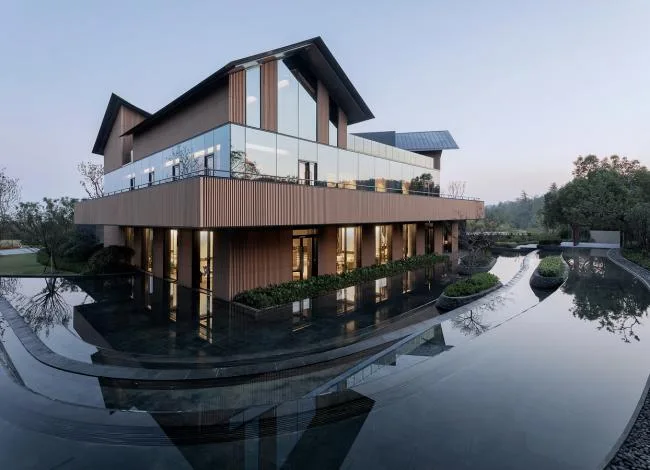
Southwest Corner Water View
Origin
The hot springs of Nanjing, including the famous Tangshan and Laoshan Hot Springs, are well-known throughout the Jiangnan region. This hot spring club is nestled on a gentle slope at the southeast corner of the Renheng Phoenix Mountain Residence project, located at the northern foot of Laoshan Mountain in Nanjing.
Surrounded by mountains, trees, water, and natural hot springs, the site faces away from the city’s hustle and bustle. Here, only lush greenery and mountains are visible—no urban structures intrude. Morning mists rise, birds sing at dawn, and dewdrops linger until sunset, creating a rare and tranquil rural mountain retreat.
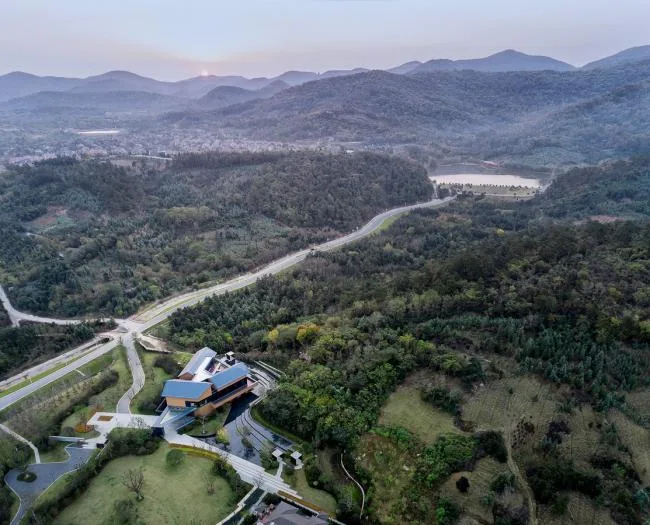
Bird’s-Eye View
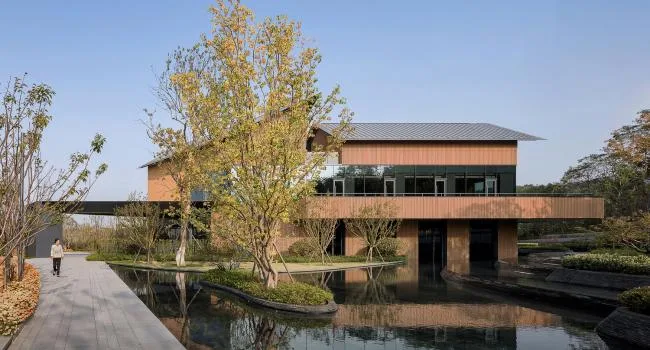
Realistic View from the West Side
The site features a unique land configuration due to the boundary line extending deeply into the Laoshan National Forest Park. This creates a small pocket of land that faces the city on one side and opens extensively toward the forest on the other.
The project covers 1,830 square meters, with a basement level housing the hot spring pools. Reception and private banquet areas occupy the ground and second floors, while an independent SPA area is located on the third floor. The total construction area is 2,676 square meters.
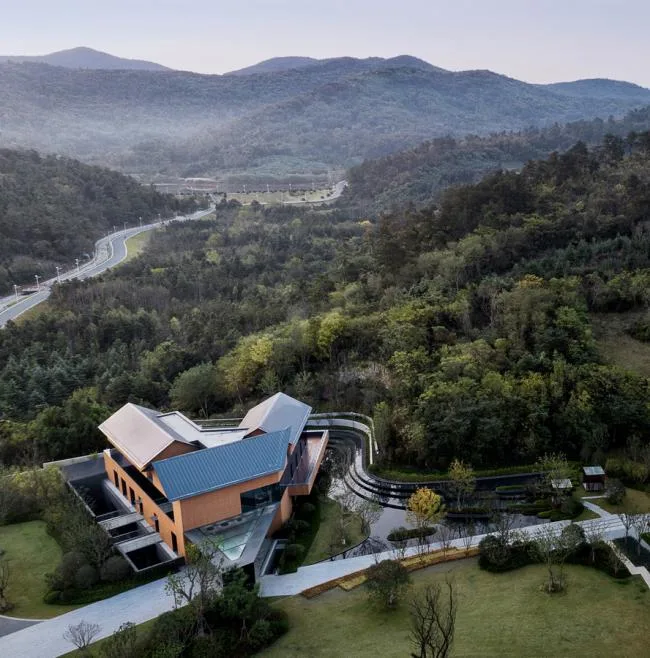
Bird’s-Eye View
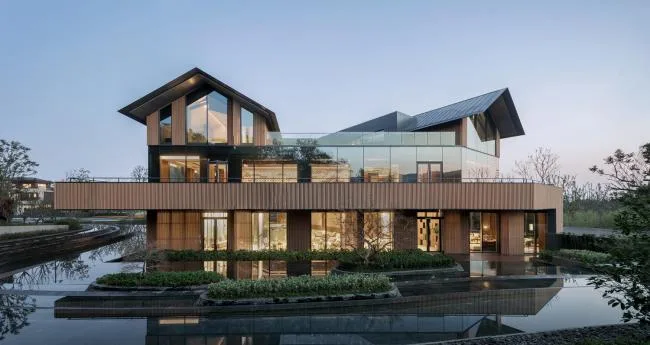
South Side Night View
Inspiration
The design concept begins with embracing nature while looking back towards the city. The ethereal mist and softly steaming hot springs in the mountains inspired the architectural expression.
This project incorporates an open ceramic rod curtain wall, blending glass with ceramic rod grids to form a continuous façade that transitions from transparent to semi-transparent to opaque. This design blurs the line between indoors and outdoors, bringing the essence of the hot springs into the building and harmonizing it with the surrounding natural environment.
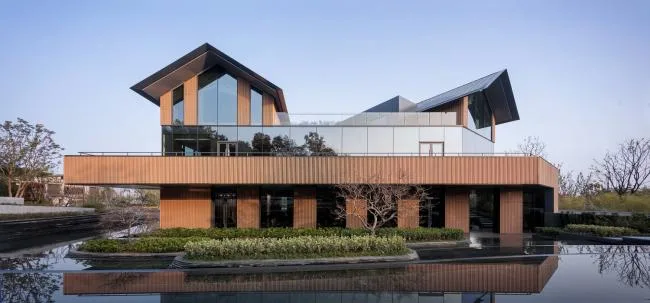
South Side View
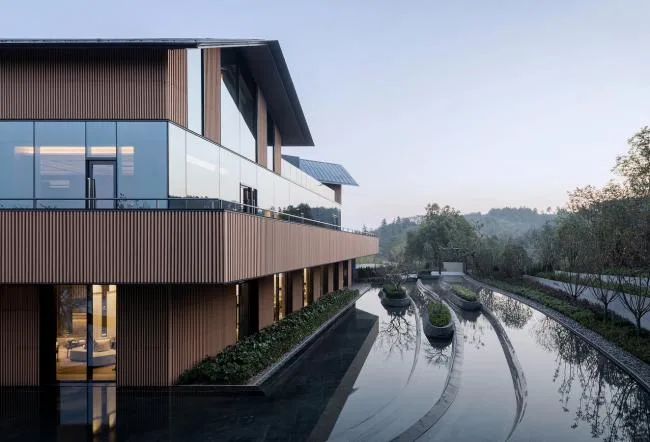
Local Southwest Corner
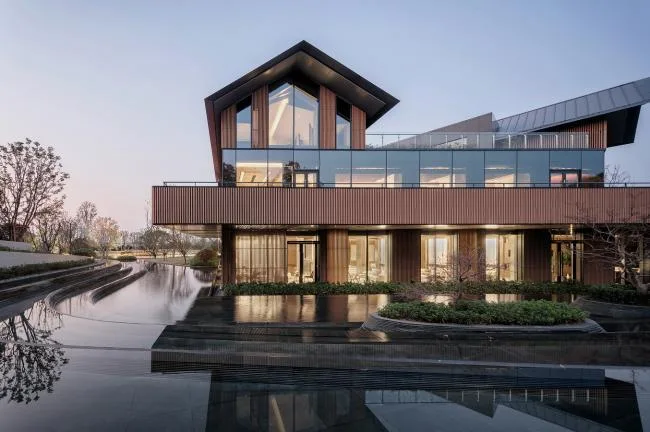
South Side View
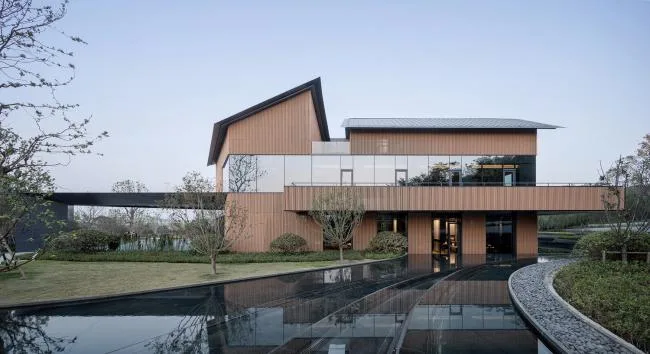
Realistic View from the West Side
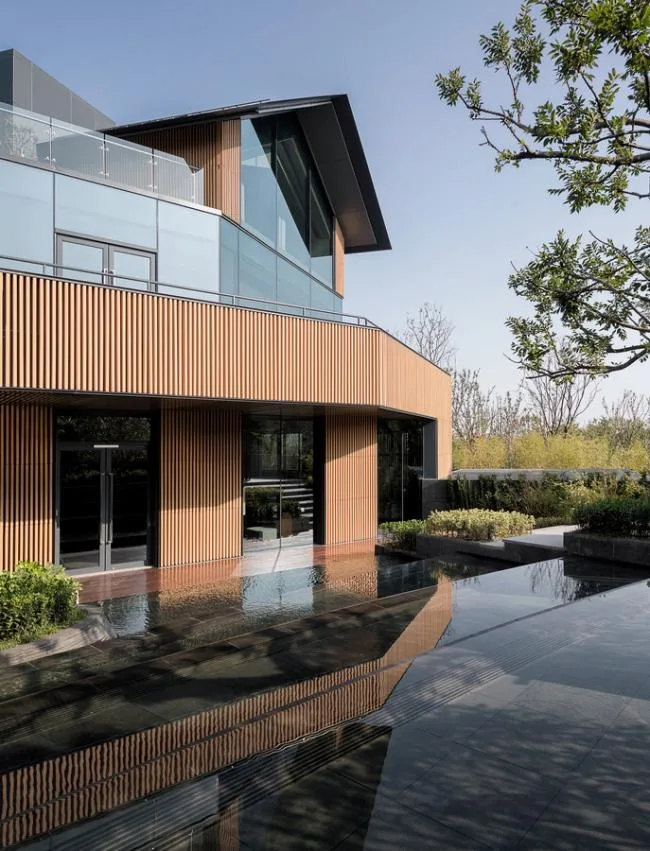
Architectural Details
Volume
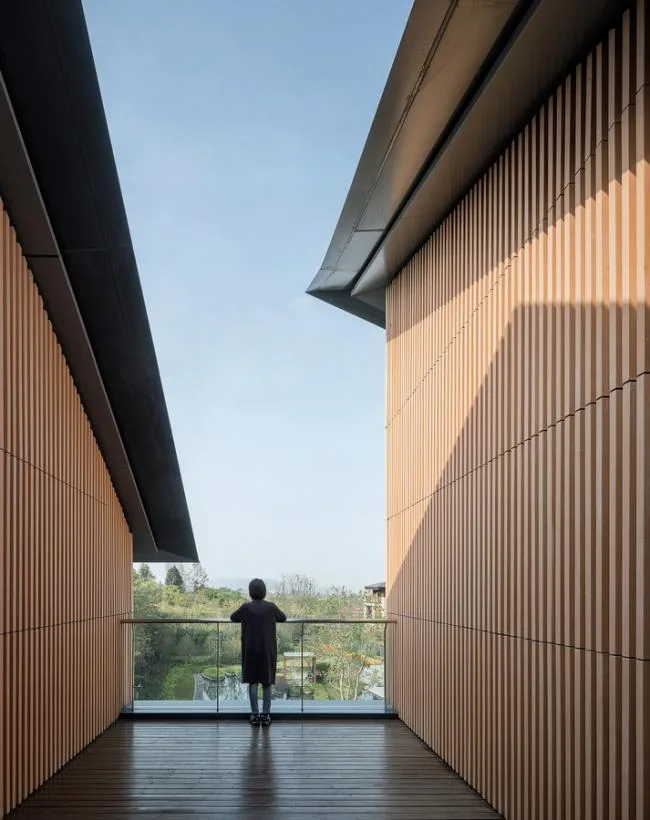
The building’s form is shaped by the irregular land boundaries, beginning with an irregular quadrilateral base. The three-story structure envelops a large terrace that faces Laoshan Forest Park and is segmented into three sloping roofs. This design reduces the perceived mass of the building and embraces nature with a gentle V-shaped posture.
At the entrance, a triangular rain shelter extends the passenger area outward, softening the building’s form and creating a welcoming gesture.
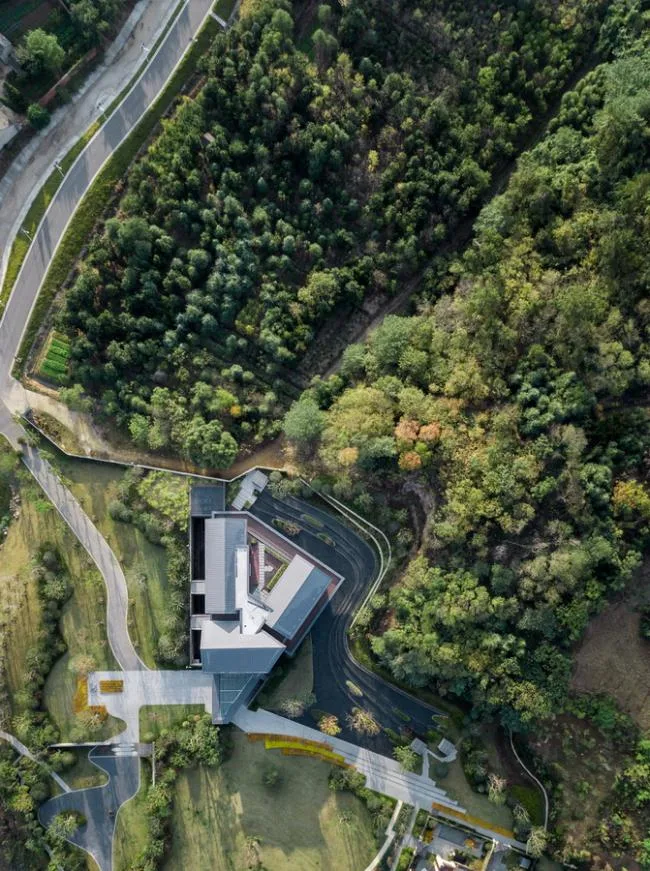
Bird’s-Eye View
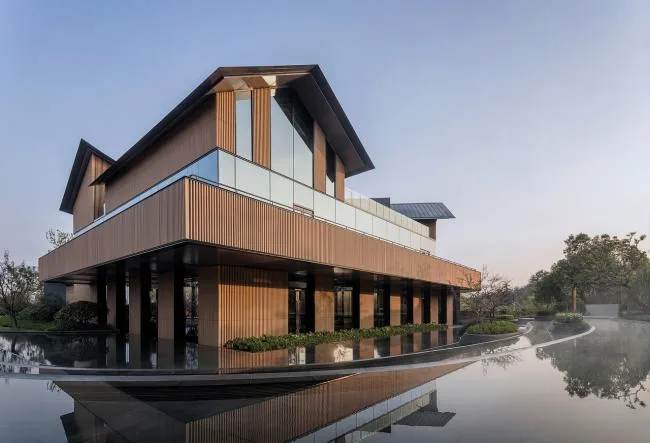
Southwest Corner Water View
Line of Sight
The design carefully controls visual connections, orienting the building to look back toward the city and mountains. The city-facing side is mostly solid with few or no windows, gradually transitioning to a fully transparent glass curtain wall facing the mountain.
As the building rises, the view changes from close-up to mid-range to distant mountain scenery. To accommodate these shifting perspectives, the façade varies in openness. A double-layer ceramic stick curtain wall balances the contrast between solid and transparent, creating a harmonious blend of reality and illusion.
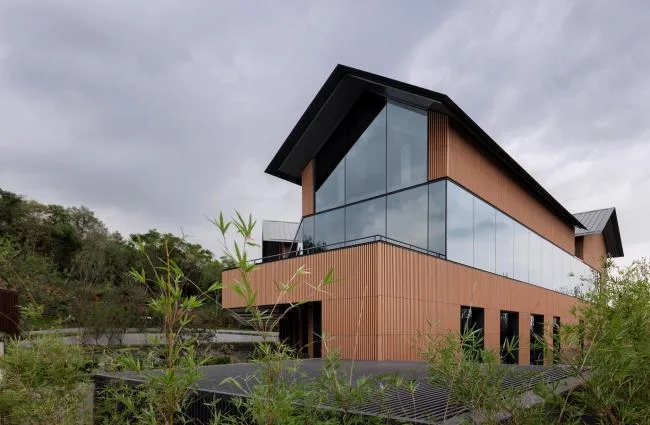
Realistic View Along the Southeast Mountain Side
Details
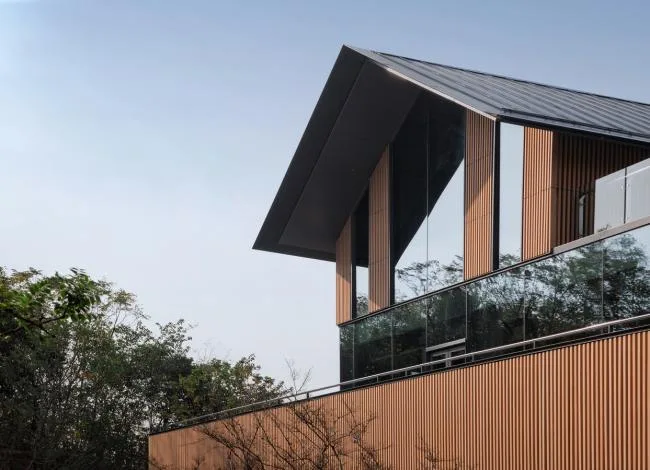
The ceramic rods used in the façade are thin rectangular profiles with the narrow side facing outward. The connection method has been optimized by using angle steel instead of traditional square steel. Load-bearing components are embedded inside hollow ceramic rods, while L-shaped aluminum profiles minimize visible surfaces, resulting in a slimmer appearance.
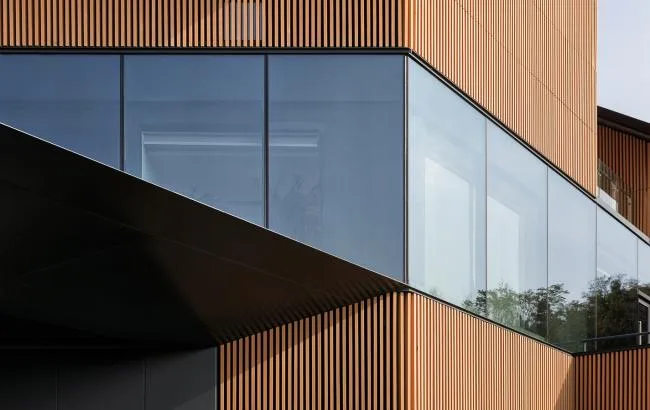
Thin Canopy Details
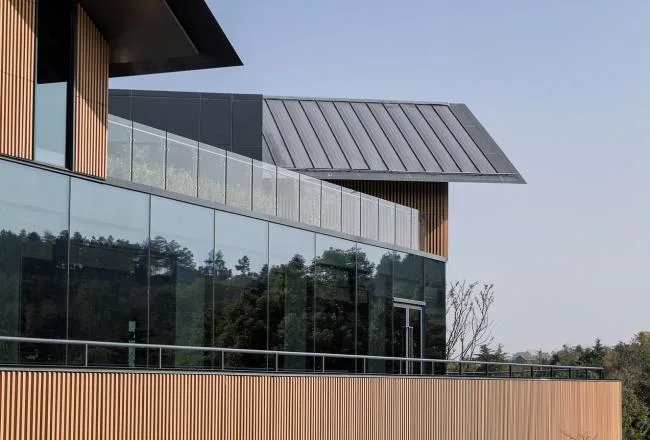
Architectural Details
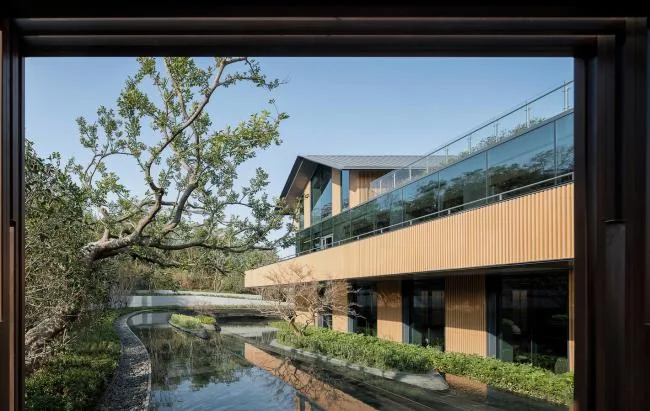
Partial Construction
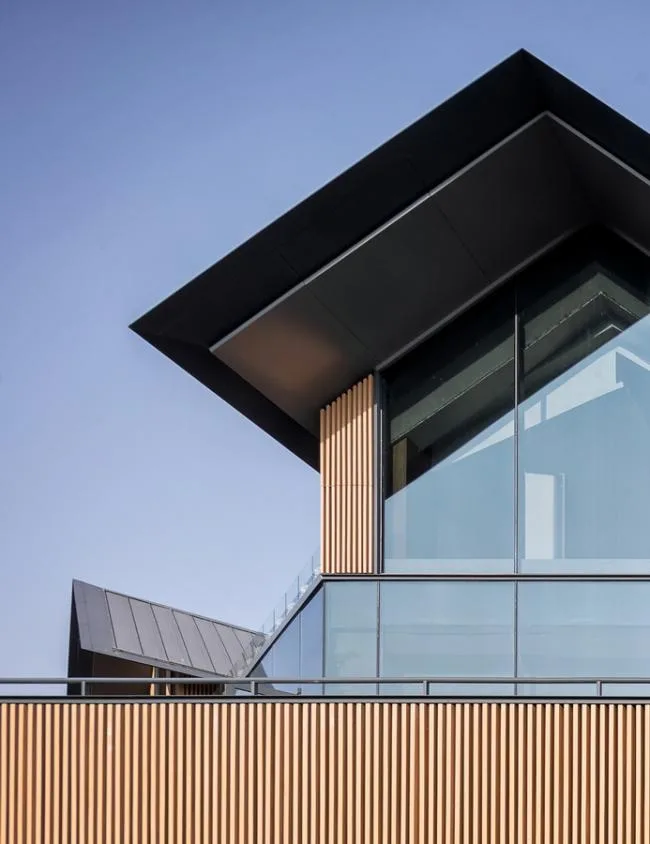
The overhanging eaves are supported by a steel structure without gutters, allowing rainwater to fall freely. Aluminum profiles are extruded at the eaves’ edges and hung dry, with concave cross-colored grooves concealing thick cast-in-place concrete eaves. This careful detailing ensures a slim, lightweight appearance.
Spa Area Details
Spa Area Details
Third Floor Terrace
Architectural Details
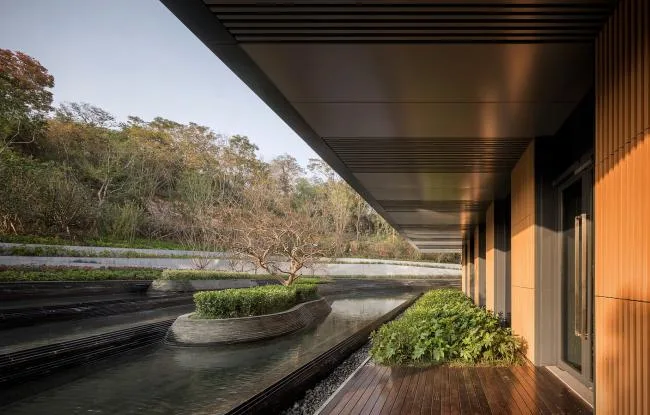
Under the First Floor Corridor
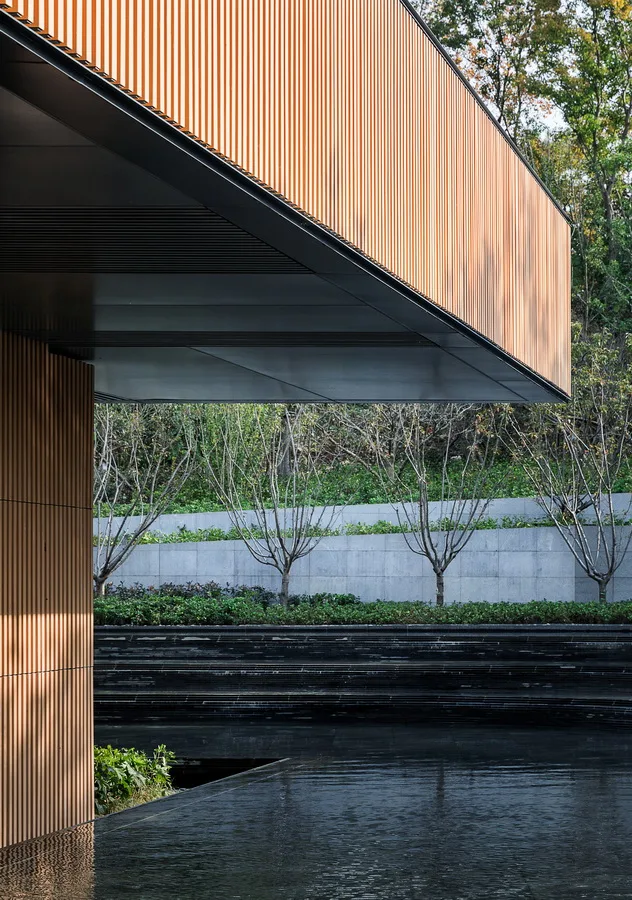
The spacious entrance canopy extends outward with spans ranging from 13 to 16 meters. The steel beams are notably thick, but to reduce the sense of heaviness, inverted triangular aluminum plates are used to cut the eaves. The landing columns are decorated similarly, employing an “origami”-inspired technique that balances structural stability with a lightweight appearance.
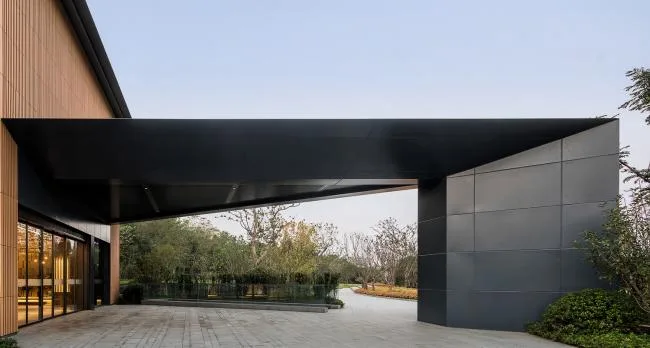
Entrance Space
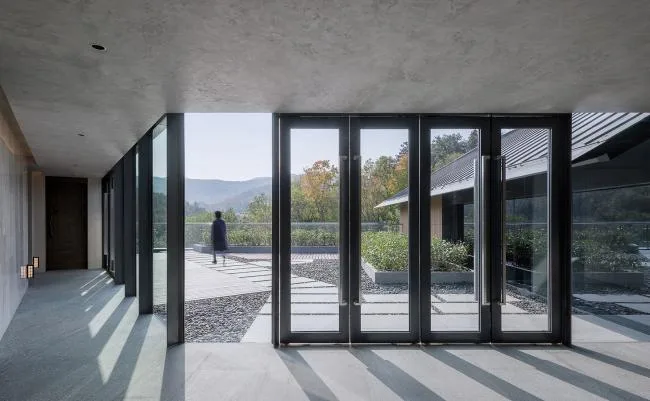
Three-Story Exposed Corridor
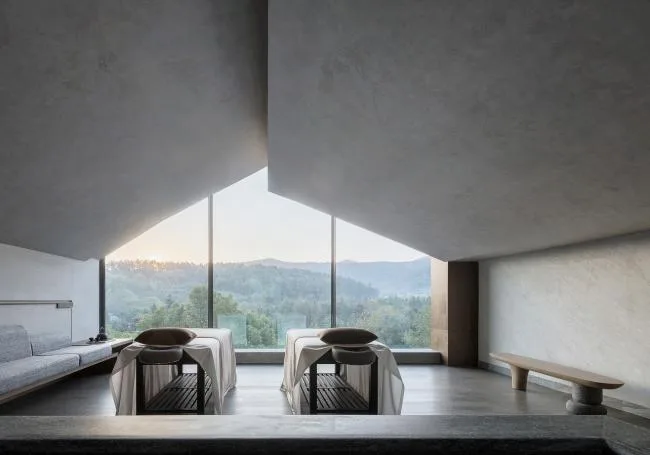
Indoor Spa Area
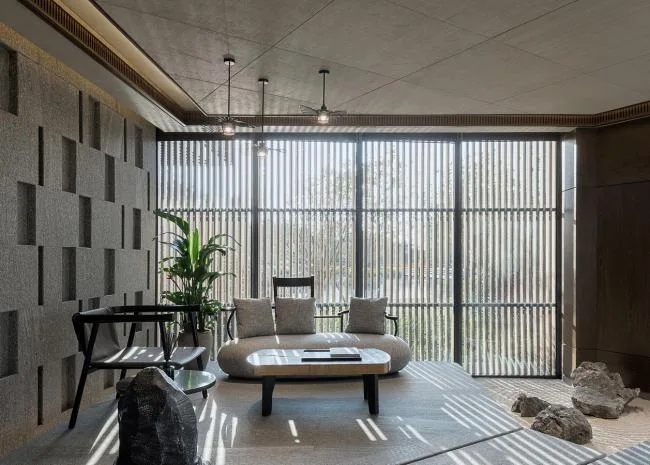
Lobby Rest Area
Drawings
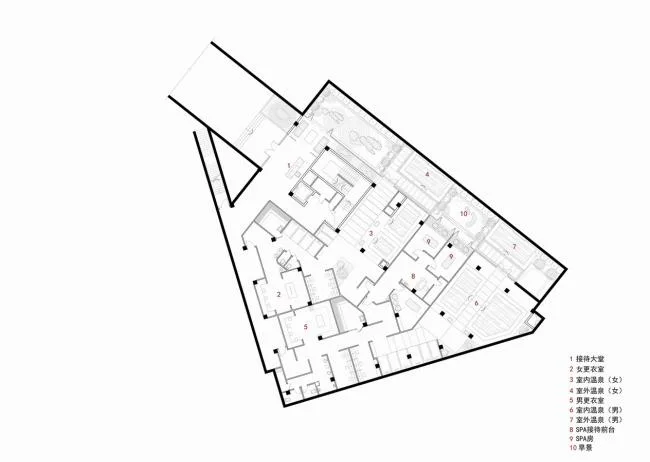
Basement Floor Plan
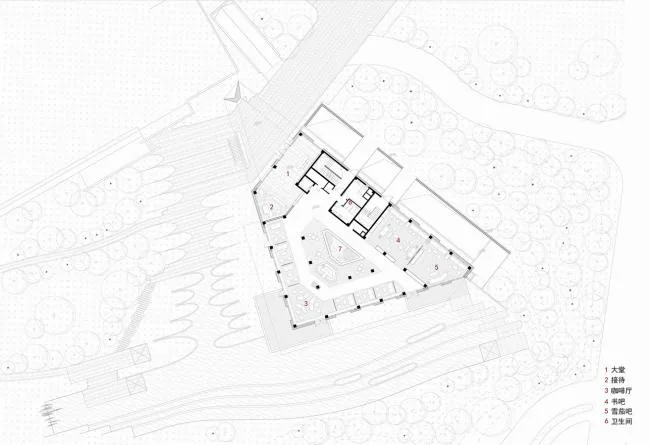
First Floor Plan
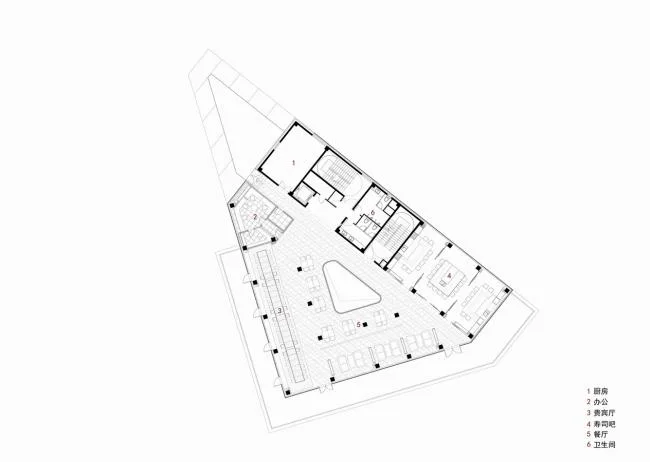
Second Floor Plan
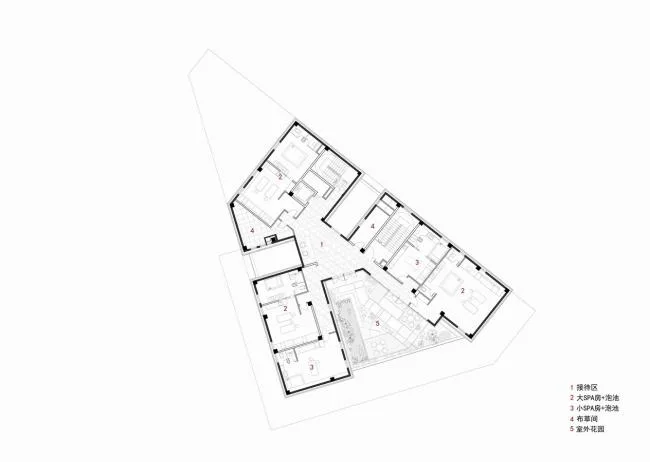
Third Floor Plan
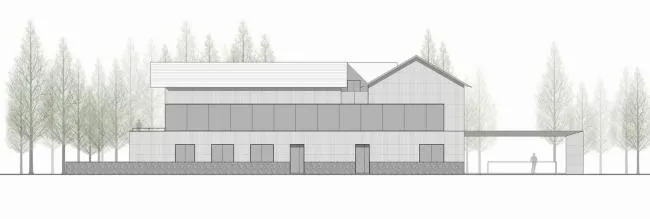
East Elevation
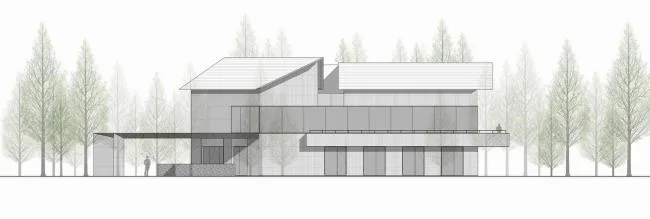
West Facade
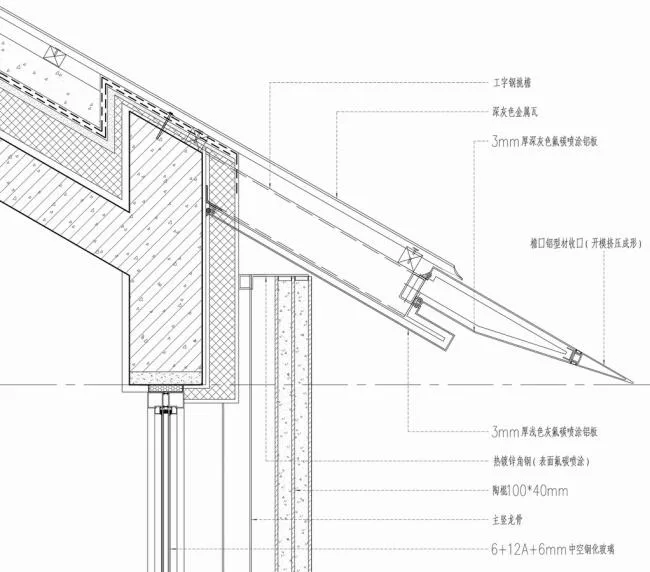
Cornice Detail
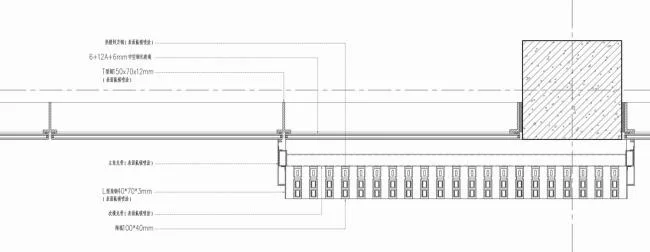
Ceramic Stick Curtain Wall Detail
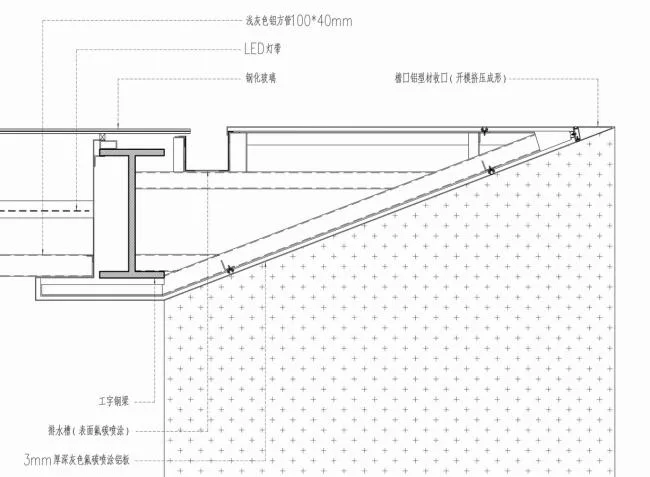
Canopy Detail
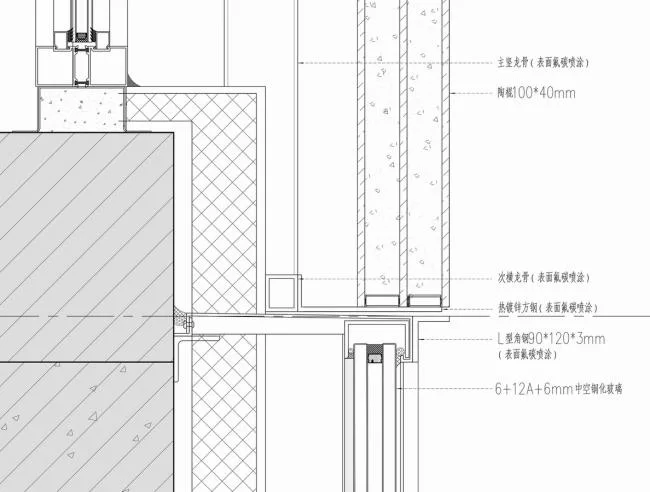
Intersection Detail Between Ceramic Rod and Glass
Project Information
Architect: Shanghai Zhongfang Architectural Design
Address: No. 3 Gaoke Sixth Road, Pukou District, Nanjing City, Jiangsu Province, China
Design Team: Huang Tao, Bian Hui, Yue Xiao, Li Yongmin, Fang Wenrui, Li Chungang, Wang Lian, Wang Zhaoqiang, Wang Hui, Jiao Manyong
Building Area for BIM Training: 2,676.0 square meters
Project Year: 2018
Photographer: Liang Shan
Developer: Nanjing Renheng Land
Landscape Design: Cicada, Singapore
Interior Design: Liang Zhitian Design Group Co., Ltd. (SLD)
Lighting Design: Century Brilliance















Must log in before commenting!
Sign Up