
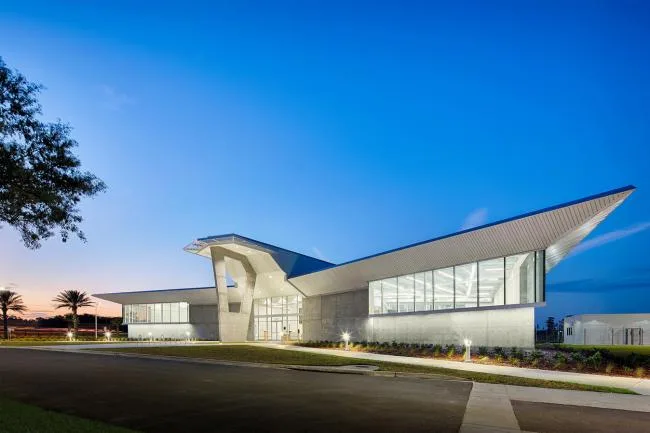
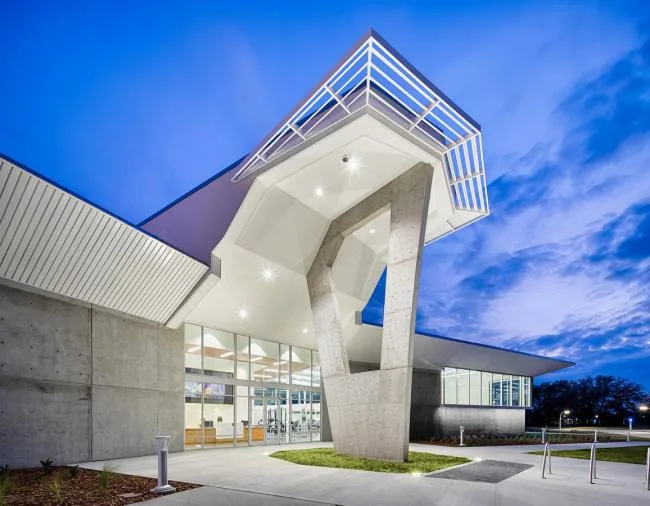
The sleek Student Activity Center (SDC) at the Florida Institute of Technology (FPU) in Lakeland, Florida, USA, embodies the dynamic academic environment of this research-focused university. Positioned in the new technological era, it fosters innovation and collaboration among students and faculty alike.
The student-chosen mascot inspired the architectural design, integrating elements such as San Diego Calatrava’s iconic innovative material board, the Science and Technology (IST) building, and the original campus master plan. This building was constructed to motivate students, faculty, staff, and the wider community to engage in physical activity, supporting their academic ambitions.
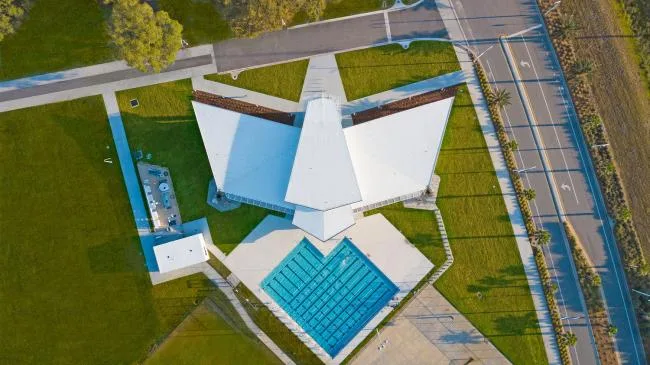
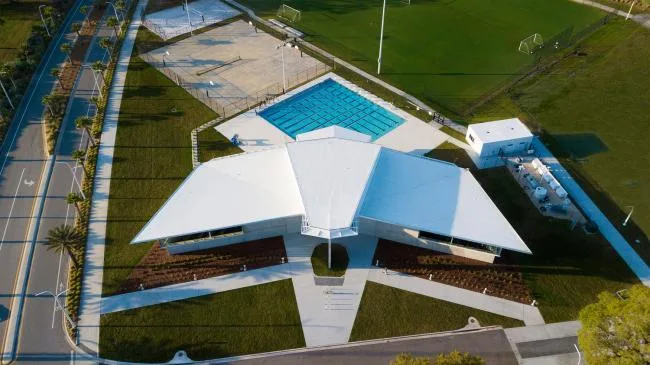
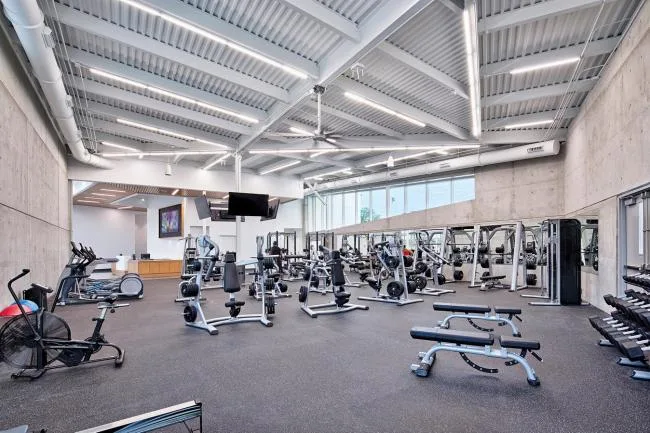
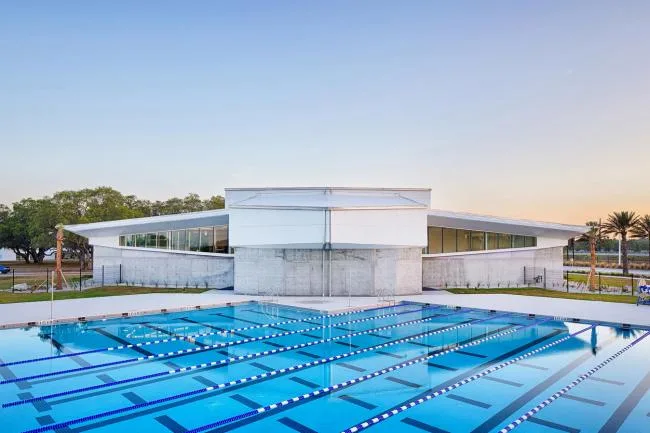
The Student Activity Center, directly tied to student wellness, takes the form of the recently selected phoenix mascot, reflecting the vibrant student culture at Florida Tech. The phoenix symbolizes the university’s research focus and represents the aspiration for physical and mental well-being.
Specifically, the phoenix image conveys the idea that regular exercise can rejuvenate and renew individuals, much like the mythical phoenix rising from the ashes. Lead architect Tim Hoeft, AIA, describes the building as a “talking building,” using modern architectural language to elevate the university’s identity.
Thanks to its prominent location visible from the nearby highway, the building serves as a beacon showcasing the university’s spirit and style to the outside world.
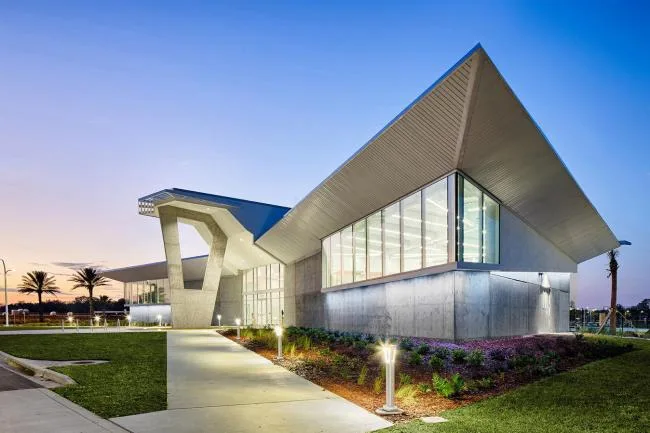
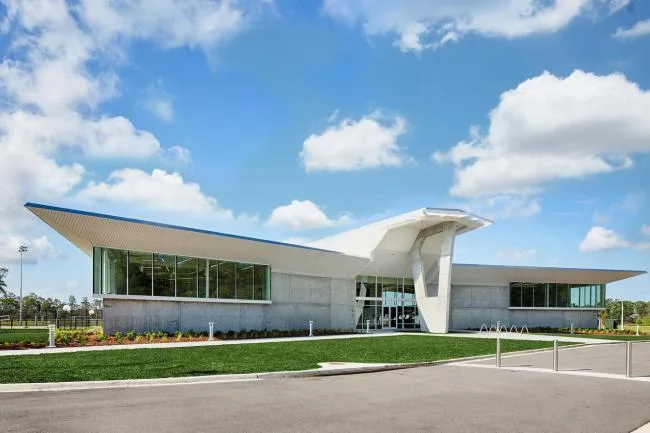
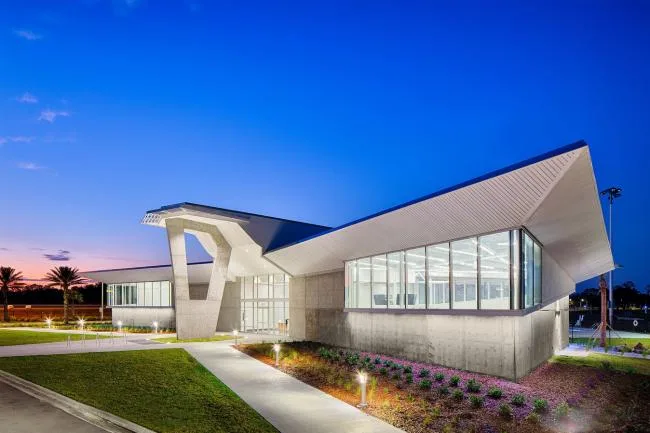
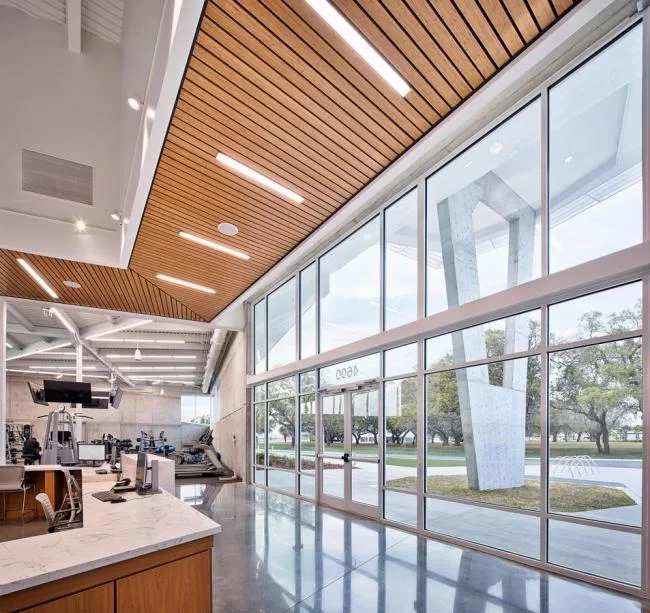
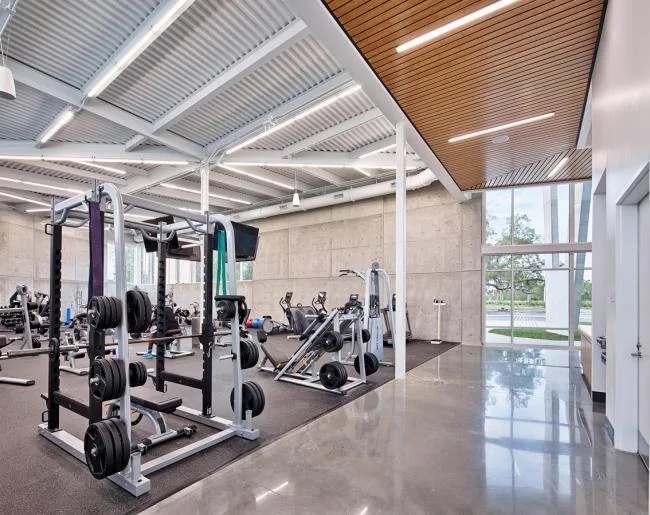
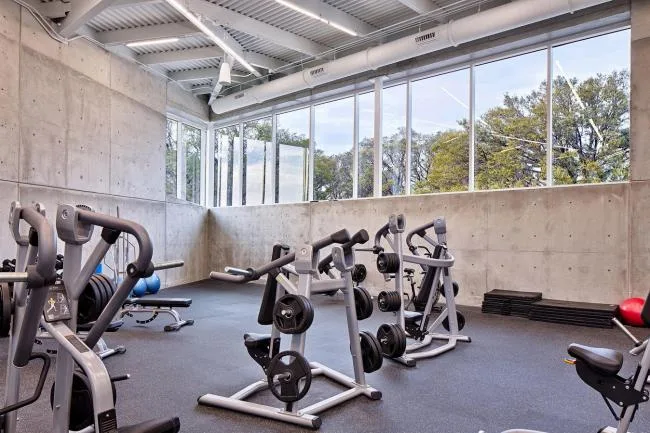
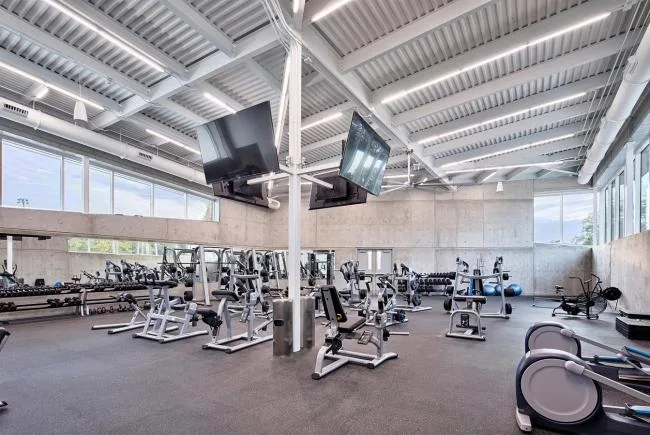
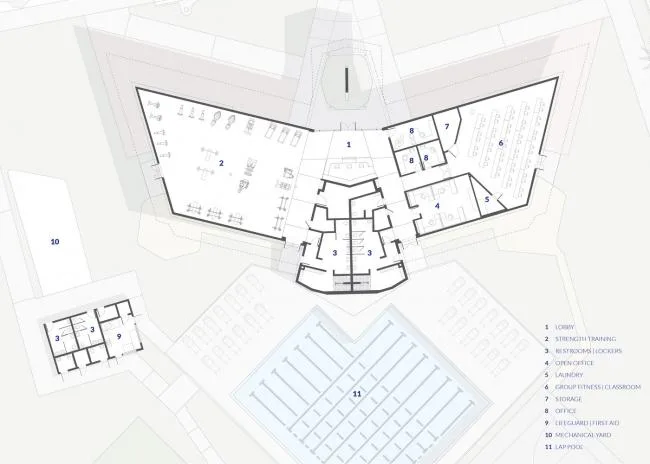
This building combines indoor recreational spaces, outdoor water sports facilities, and student services, highlighting the university’s emphasis on information technology. The architectural design employs Fauvist techniques with symmetrical forms inspired by natural shapes.
It pays homage to Calatrava’s design philosophy and draws inspiration from Frank Lloyd Wright’s work at nearby Florida Southern University, just 10 miles (16 kilometers) away.
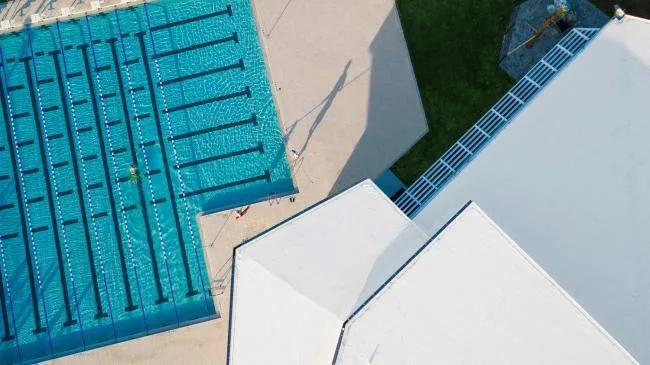
In terms of biomimetic aerodynamics, the unconventional butterfly-shaped roof directs rainwater into drainage pipes that lead to greenery near the swimming pool. The building’s exterior form and interior space result from the interplay of structural blocks and forms.
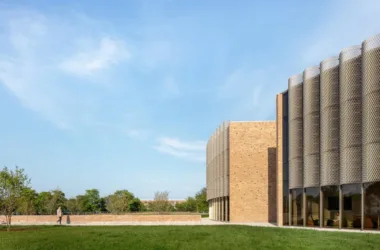
Natural light floods the main interior areas, with beams arranged simply and clearly. The primary construction materials are concrete, glass, and steel, with a large expanse of monochromatic materials on the exterior, while natural wood and stone create a warm, coordinated interior atmosphere.
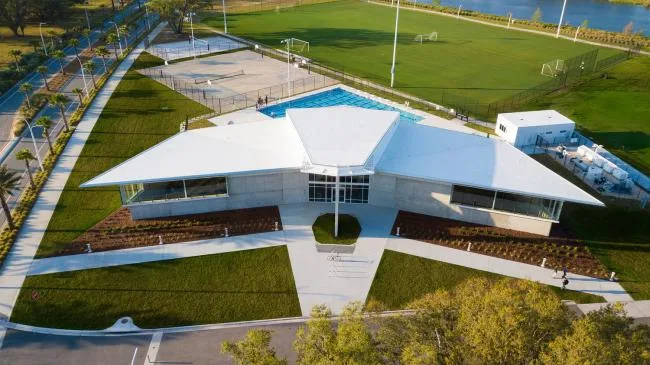
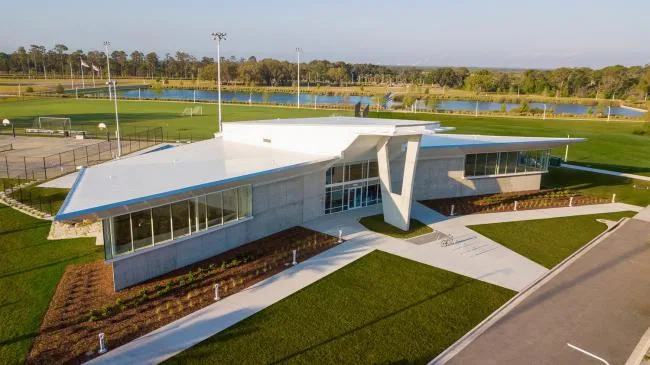
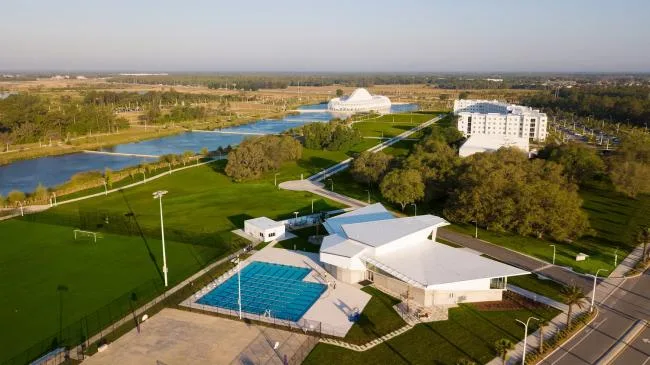
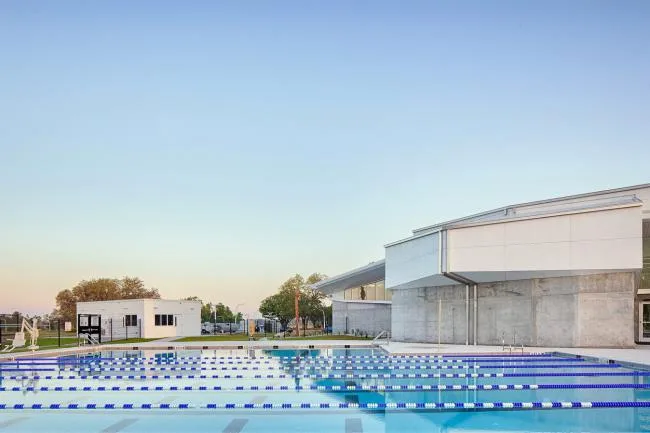
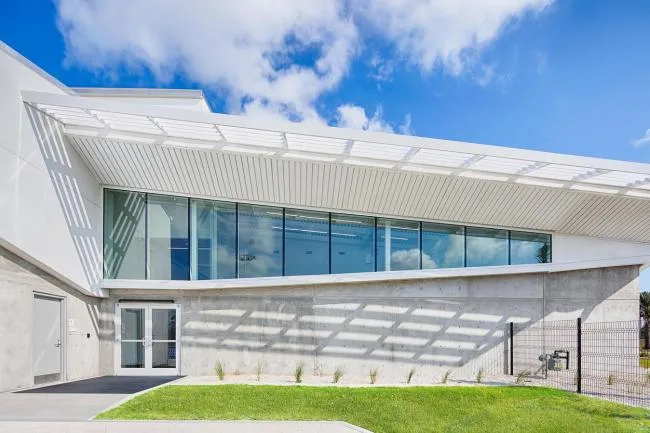
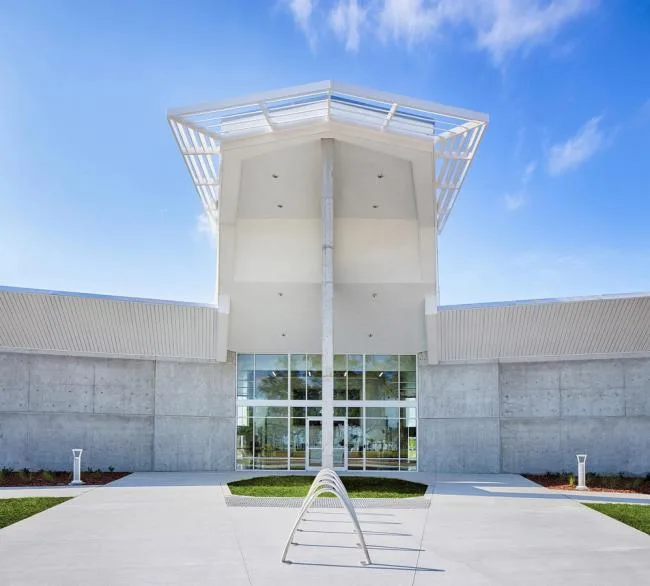
(BIM Tutorial)
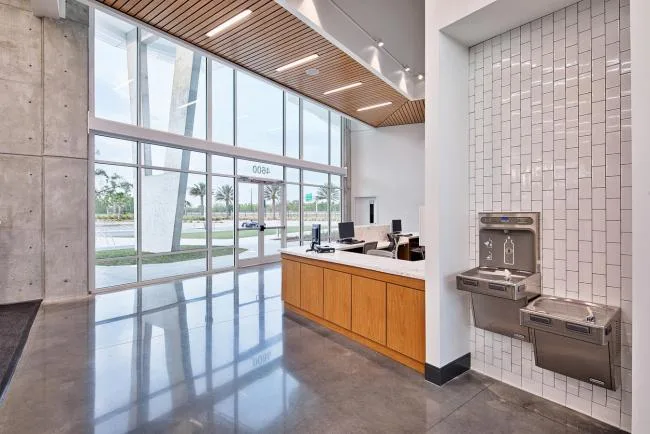
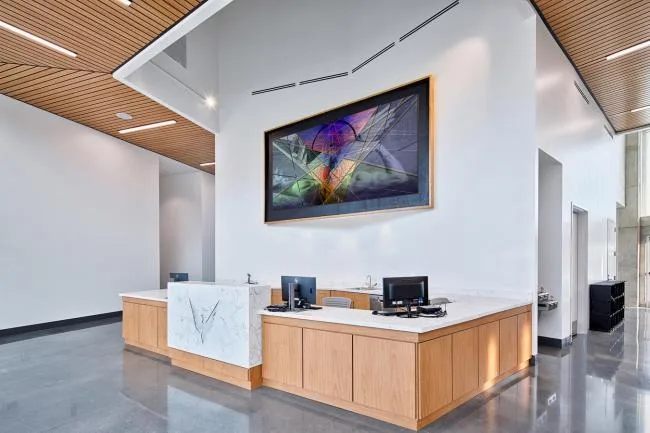
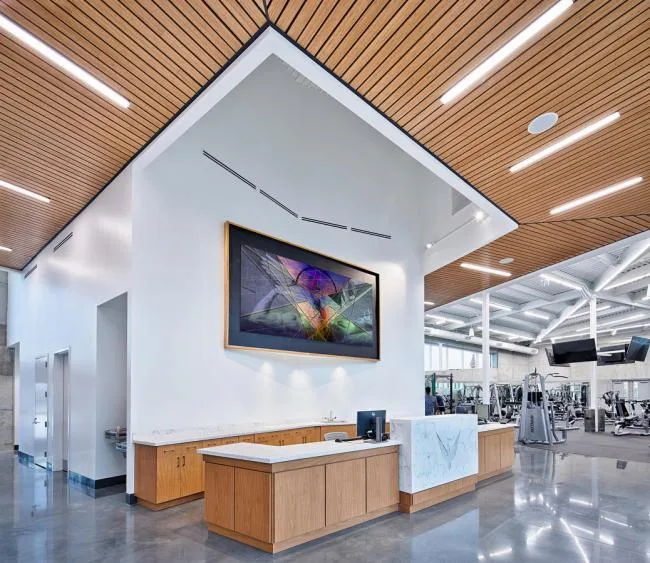
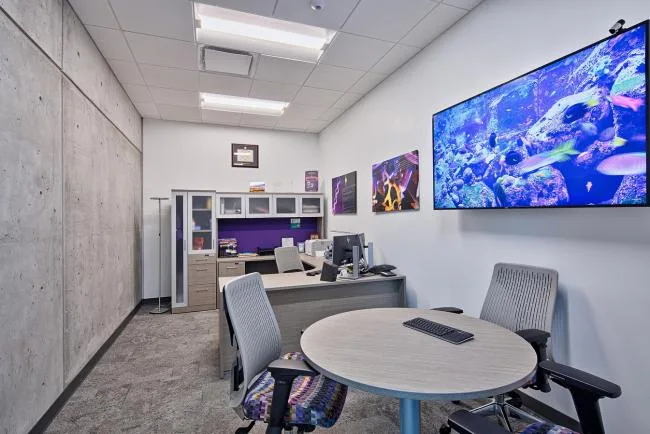
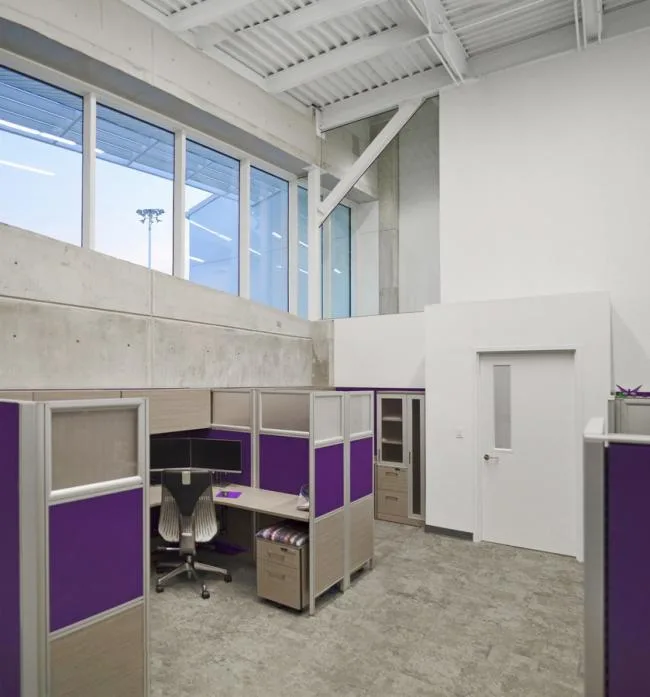
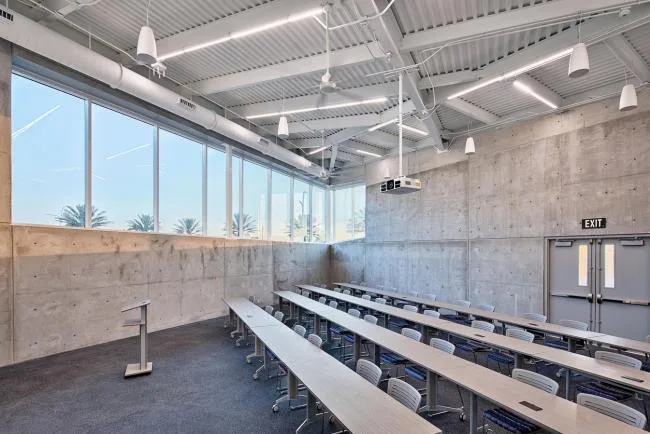
Passive energy savings are achieved through precise north-south orientation and extended roof overhangs on all sides. The glass on the north facade, including the entrance hall, is strategically positioned to reduce solar heat gain and glare typical in subtropical climates.
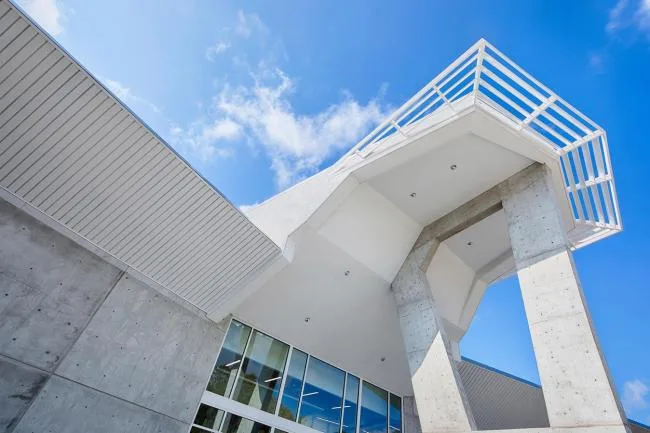
From here, occupants can enjoy views of the campus and the oak conservation area to the north, surrounded by lush trees. This space is ideal for gatherings and relaxation.
The central roof supports and shields a planned 30-foot (9-meter) BIM climbing wall—currently unbuilt—outside the main entrance. The design maximizes photovoltaic panels to generate renewable solar energy in real-time and supports ongoing research.
Heating and cooling for the building and swimming pool are efficiently managed through a combined ground source heat pump system (GSHP).
Drawings
Floor Plan
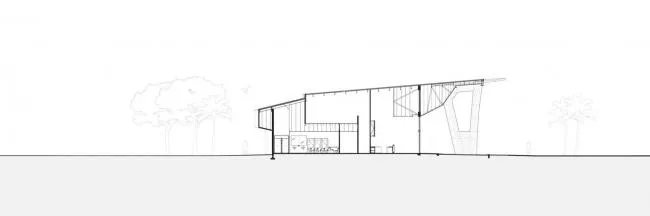
Sectional View
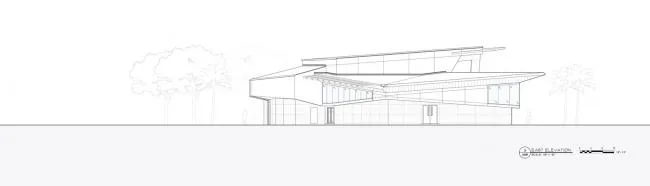
East Elevation
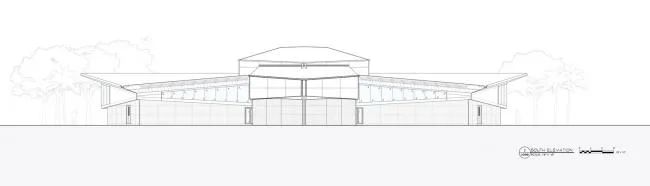
South Elevation
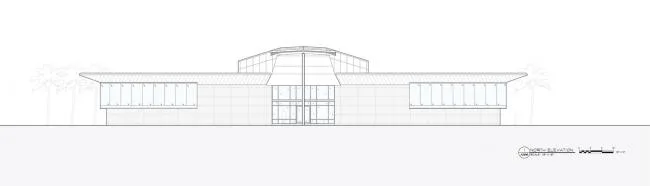
North Elevation
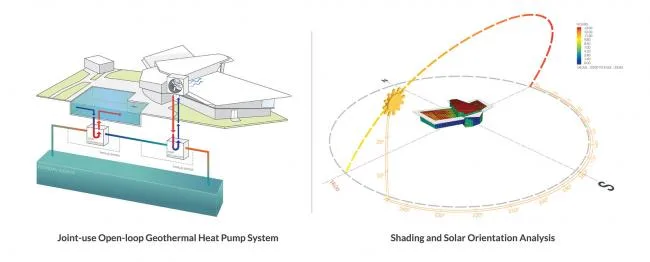
Analysis Diagram
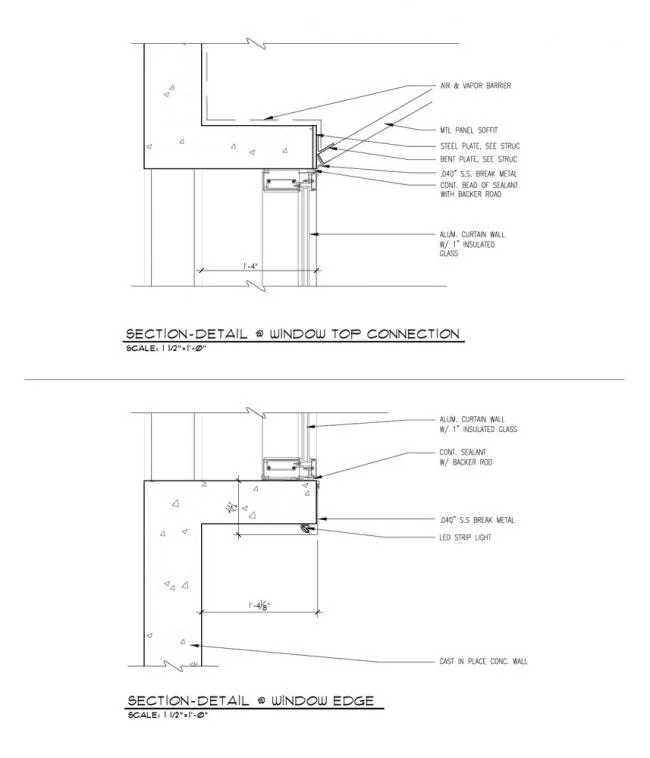
Window Details
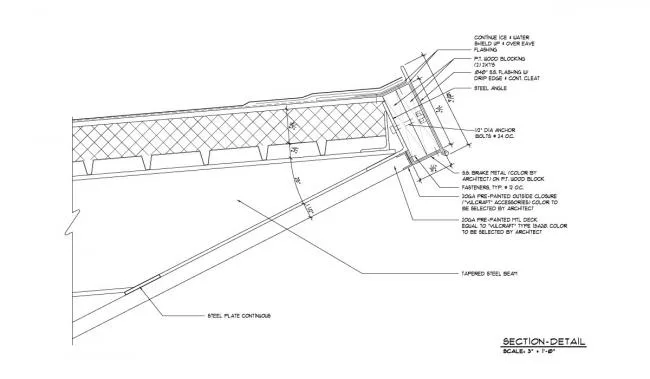
Window Section
Project Information
Architect: Straughn Trout Architects
Address: 4600 Research Way, Lakeland, FL 33805, United States
Lead Architect: Tim Hoeft, AIA
Building Area: 10,192 square feet
Project Year: 2018
Photographer: Chad Baumer
Manufacturers: Big Ass Fans, Solarban, Lithonia Lighting, Armstrong, Kawneer












Must log in before commenting!
Sign Up