
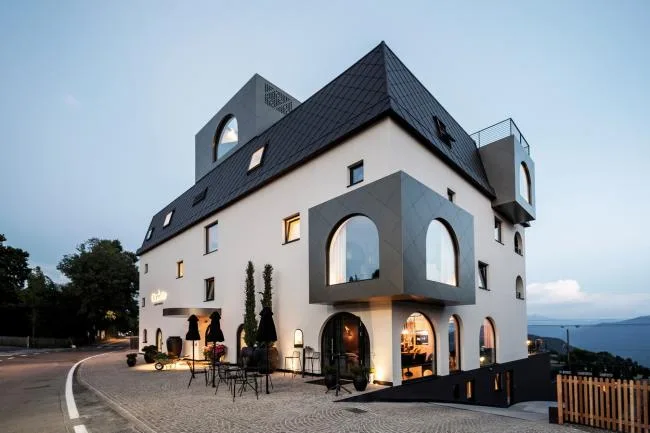
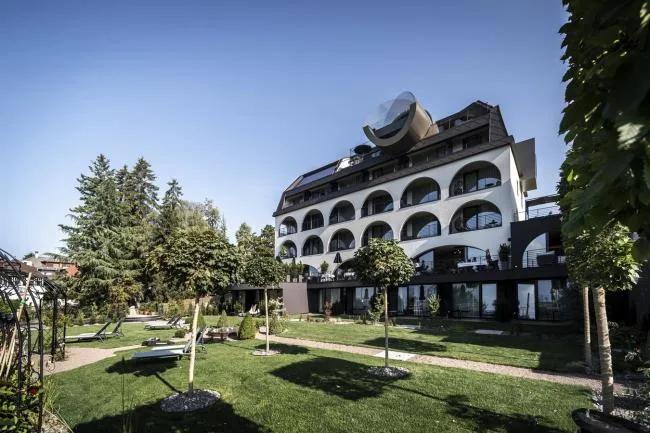
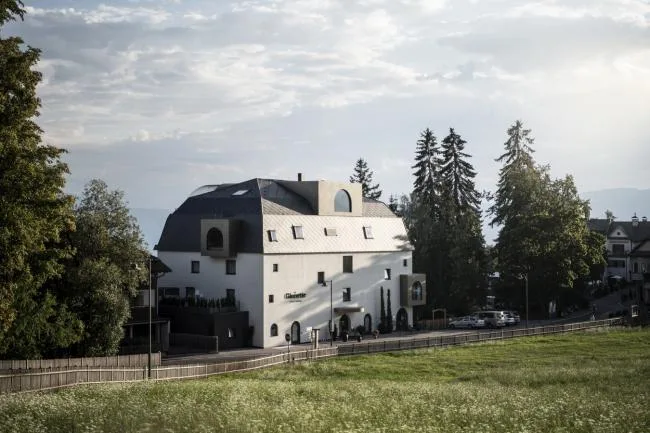
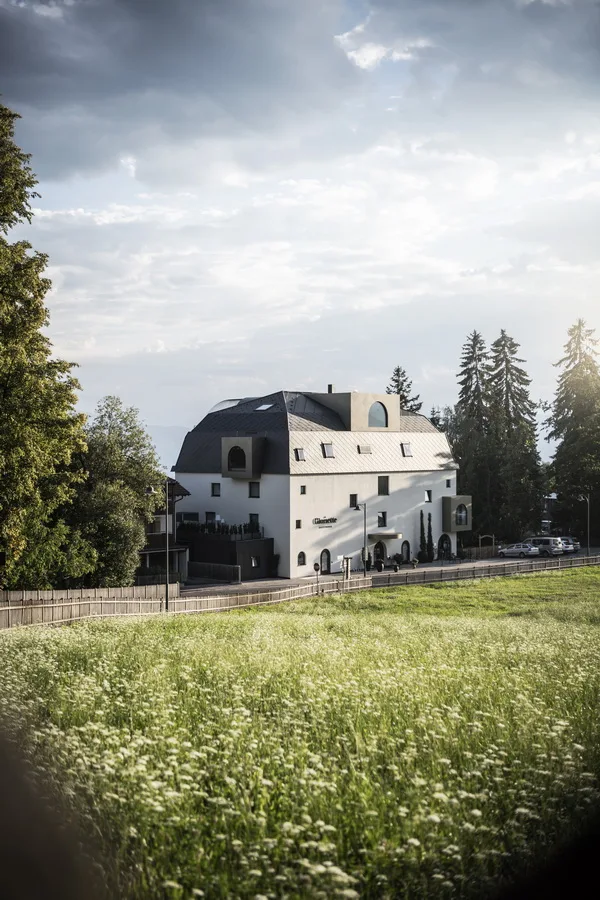
This small hotel, formerly known as Bergfink, is situated in the bourgeois residential area on the urban-rural fringe, serving as a landmark of village architecture. Originally built by wealthy merchants in Bolzano at the beginning of the 20th century, it was later demolished and replaced with a new treasure on the same site. The new building draws inspiration from the classic and elegant Art Nouveau architectural style, embodying the charm of that era.
At the time, city architecture was modest, with simple and generous forms. However, the Ritten area introduced a touch of luxury and comfort, featuring classic, straightforward, and welcoming architectural elements that avoided any sense of solemnity.
The Arch as the Central Theme
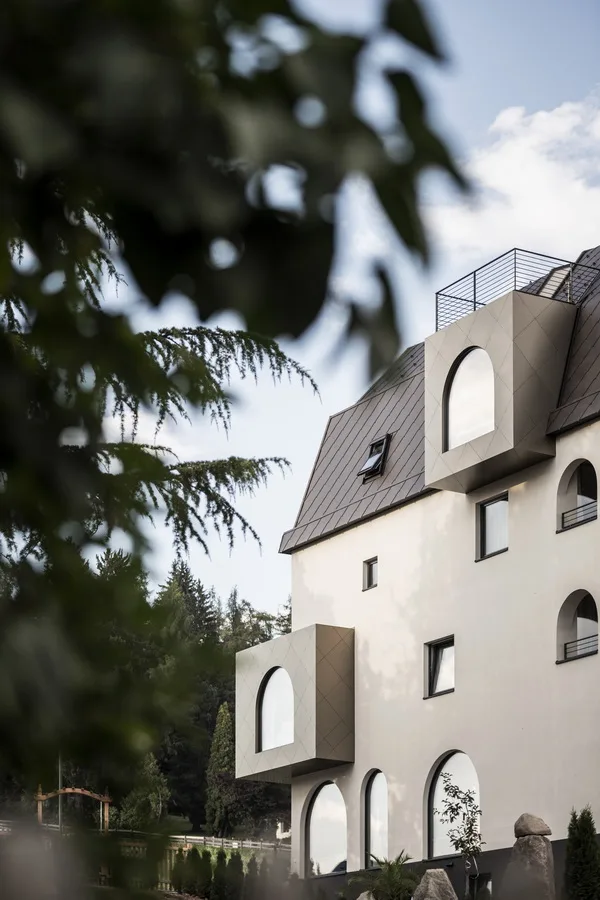
The architects incorporated local traditional elements into their design, such as façade arches and herringbone roofs, reflecting the heritage of Oberbozen village. Decorative diamond patterns, commonly found on houses along the Ritten railway, were also integrated.
The overall design strategy is clear and cohesive: to express the main theme through numerous detailed elements that unify the entire project.
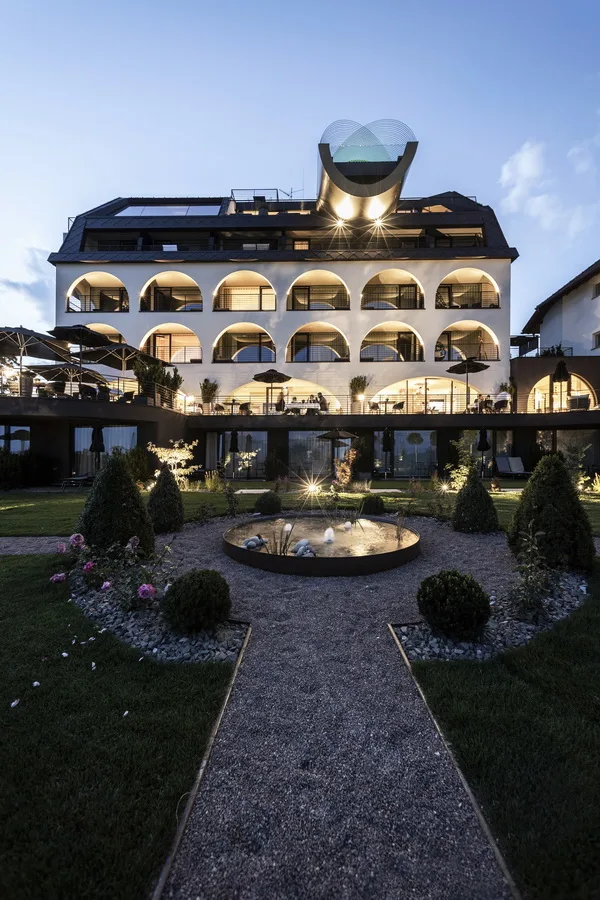
An interesting feature is how the hotel’s layout adapts smoothly to the terrain. The garage occupies the ground floor, topped by 25 guest rooms. The parking area has been extended to accommodate seven garden suites, each with its own private courtyard. The courtyard itself serves as a communal space, housing the reception, lobby, restaurant, and an adjacent terrace.
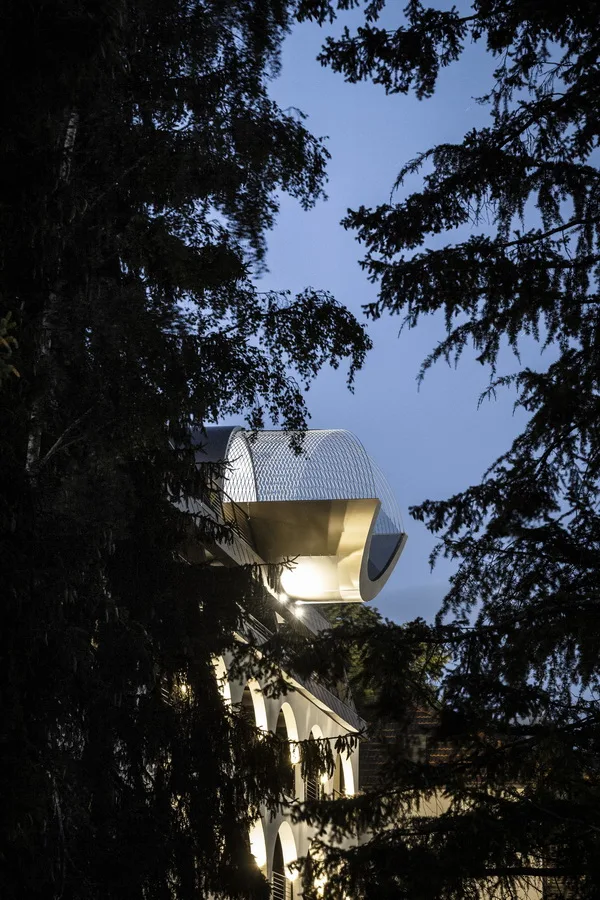
The semi-circular terrace extends gracefully outward, offering views over the courtyard and beyond. The architectural drawings and building facades engage in an intimate dialogue, providing a unique perspective that reveals the interior from the outside while maintaining privacy and avoiding excessive exposure.
The guest rooms above the public areas are spread over three floors. The suites are located on both sides of the building and are easily distinguished by their square bay windows, which emphasize the architectural language of the façade.
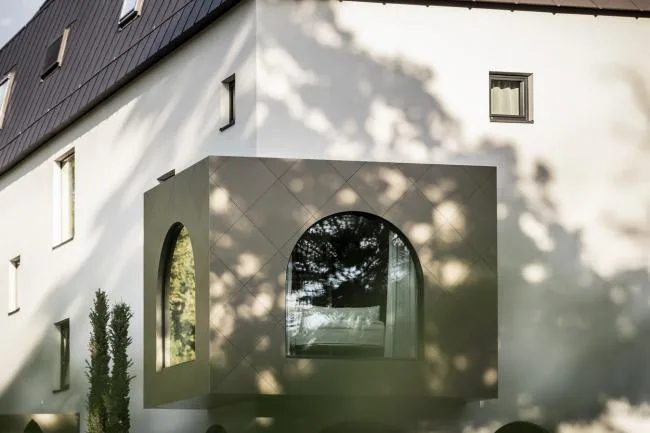
The exterior façade features arches that increase in scale from a flat double arch at the base to a simple single arch on the upper levels. This emphasizes the summer retreat character of the outdoor spaces. The space between the inner and outer arches merges seamlessly, connected by a cooling corridor.
From afar, the rooms appear linked to the balcony railing through frameless windows. Reflective black glass mirrors the distant landscape, serving as a visual partition between the balcony and interior, enriching the arch motif.
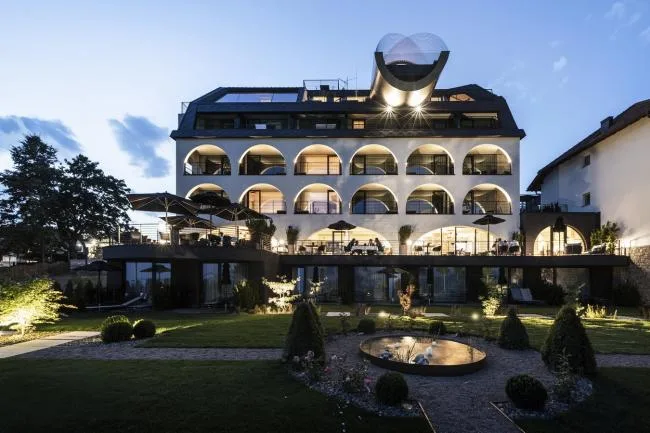
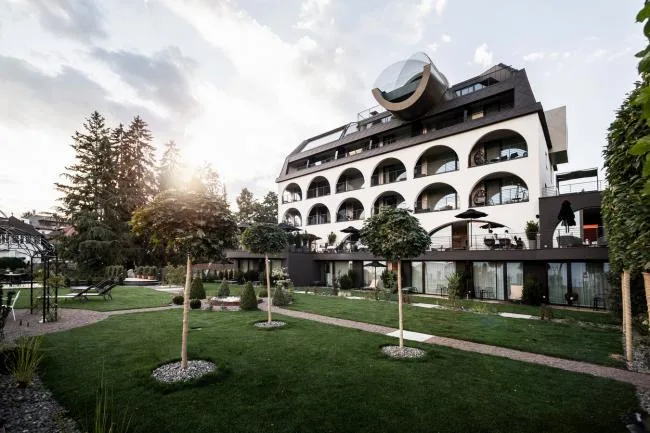
The fitness area, topped with an owner-shaped roof, occupies the top floor and stands out as almost an independent structure. Arch elements, clad in bronze-colored shells, disrupt the original roof form and establish a distinctive architectural language through asymmetrical arrangement.
Building Construction
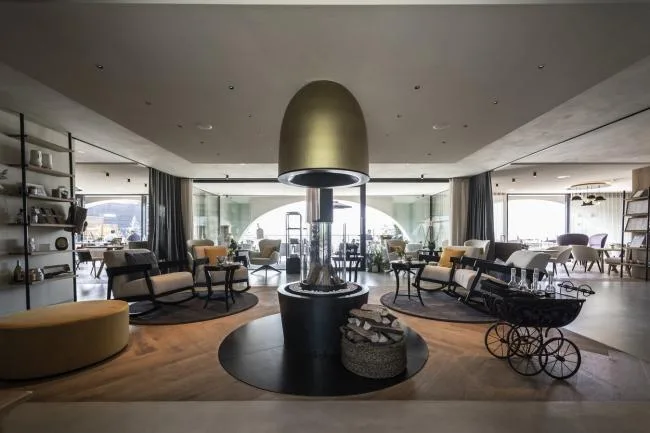
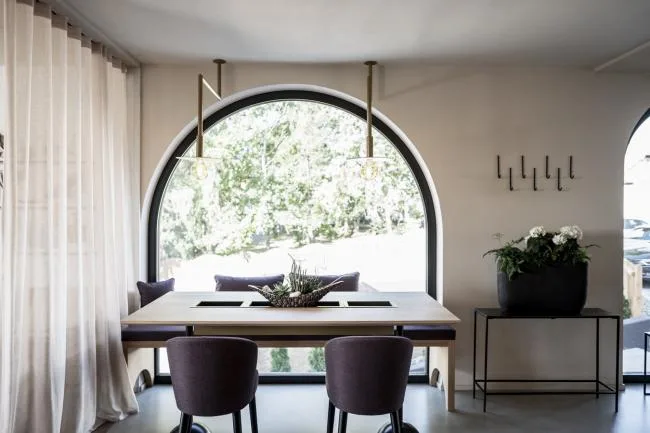
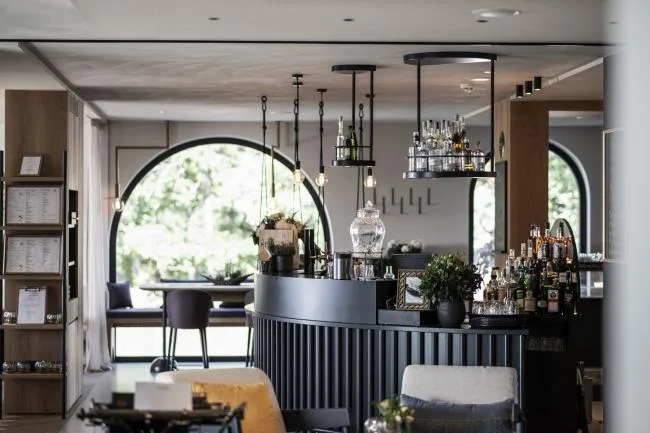
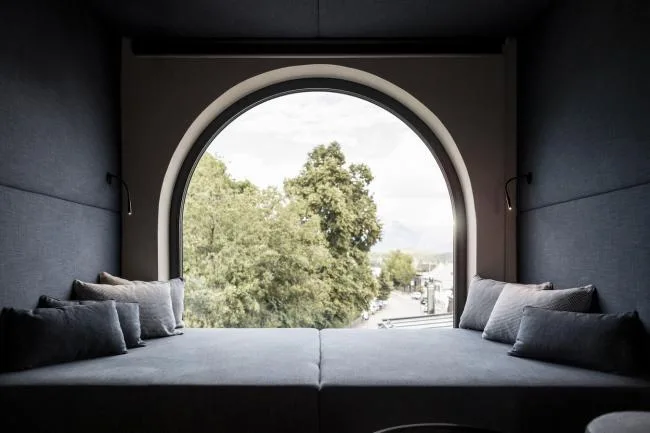
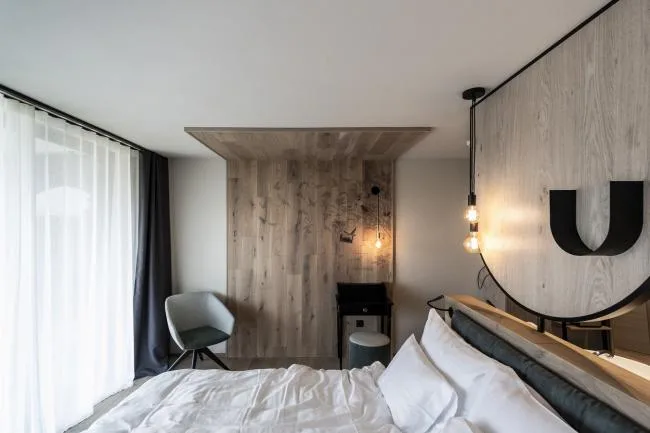
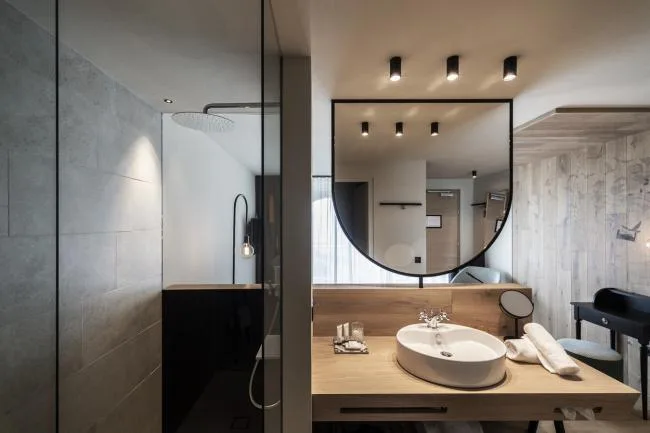
The classic Art Nouveau style prevalent in the Ritten area is abstracted and expressed throughout the building. This style manifests as flowing, continuous details that unify the design. The arch motif also appears internally — in elements such as the round mirror at the base of a room, the arch framing the lounge fireplace, or the curved backrest of a lounge chair in the spa area.
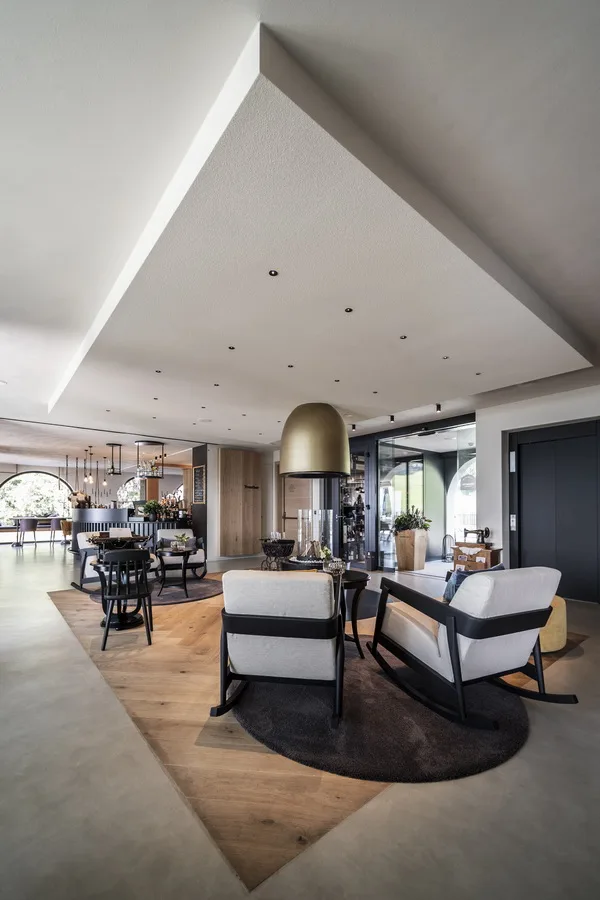
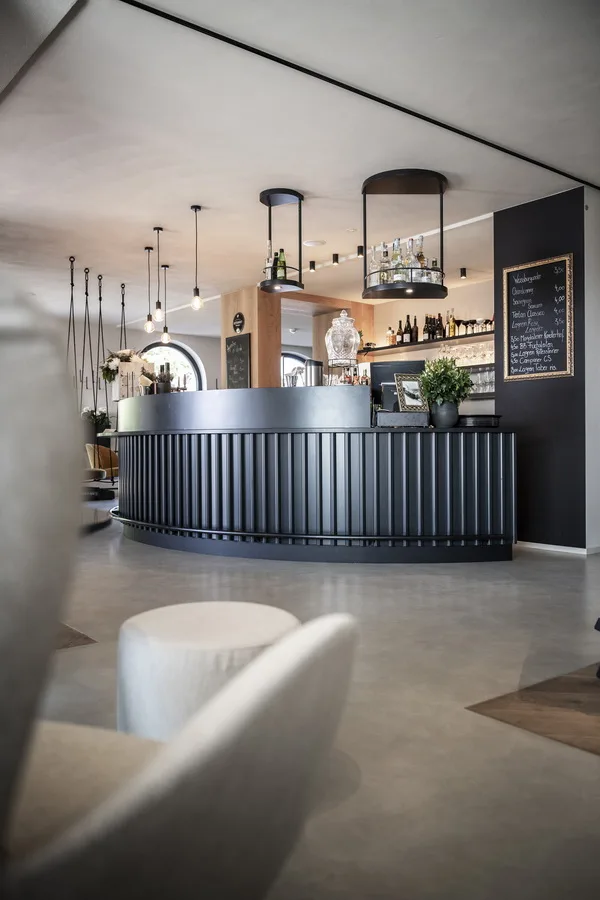
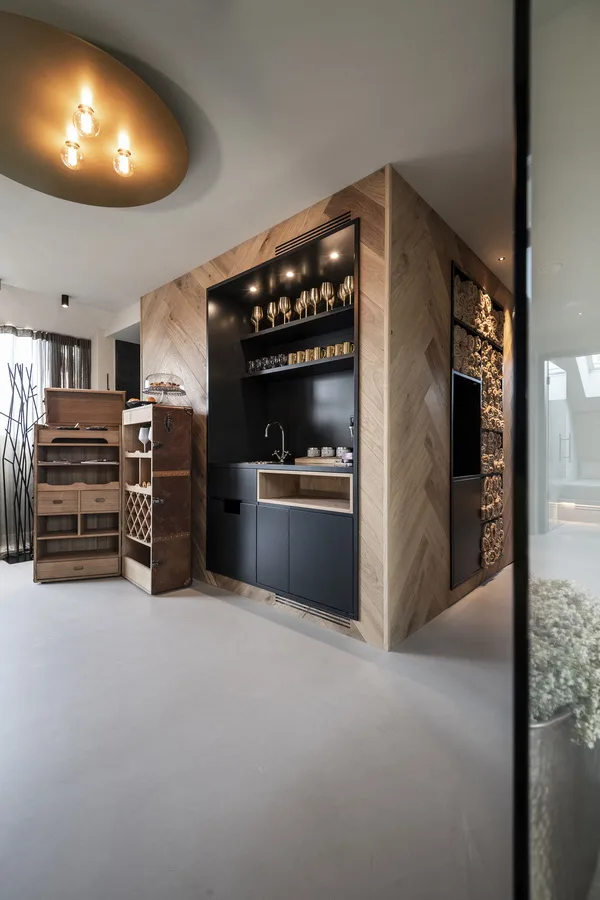
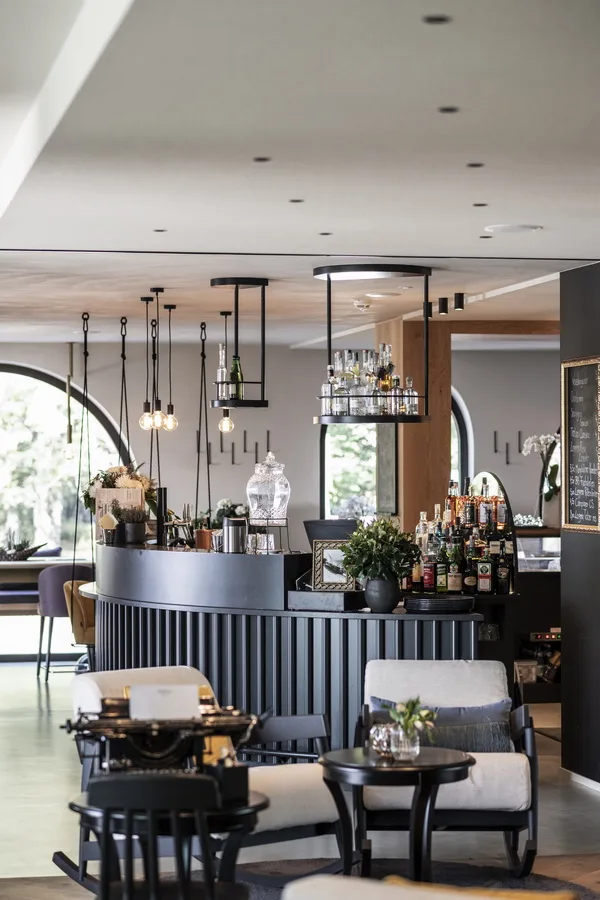
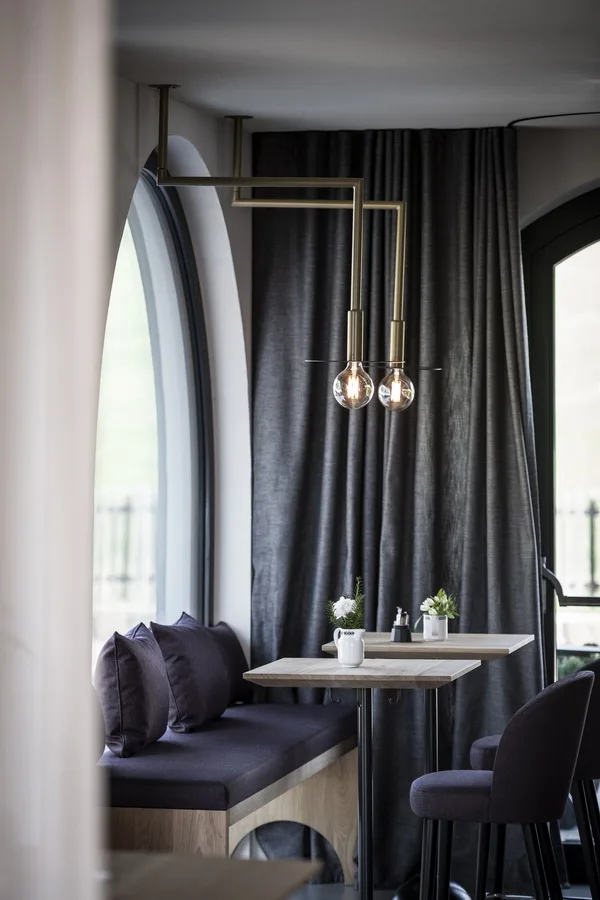
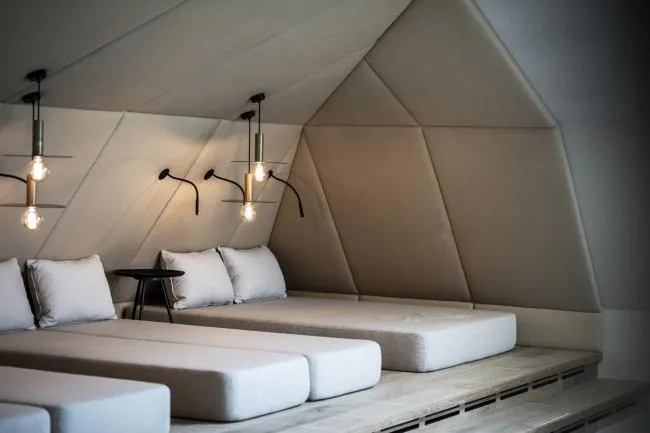
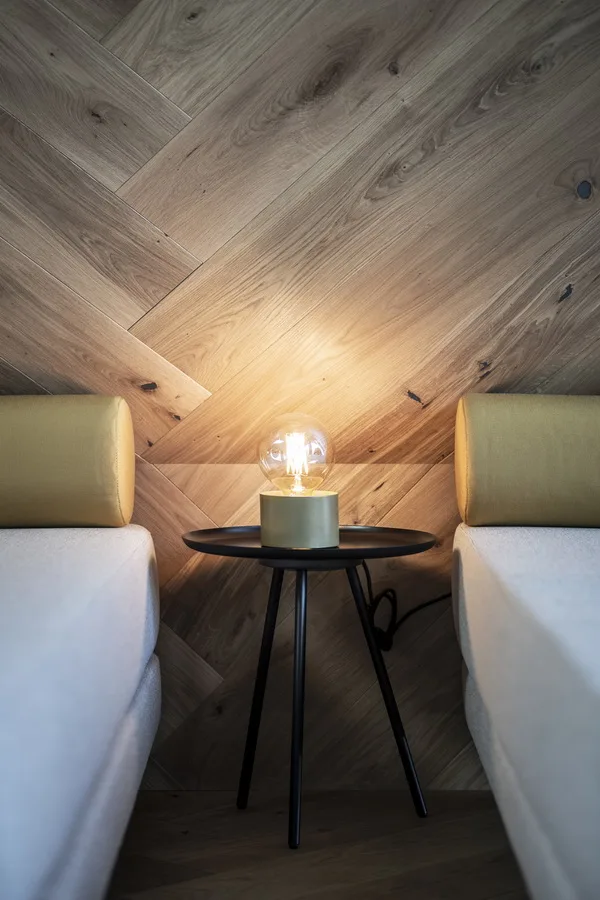
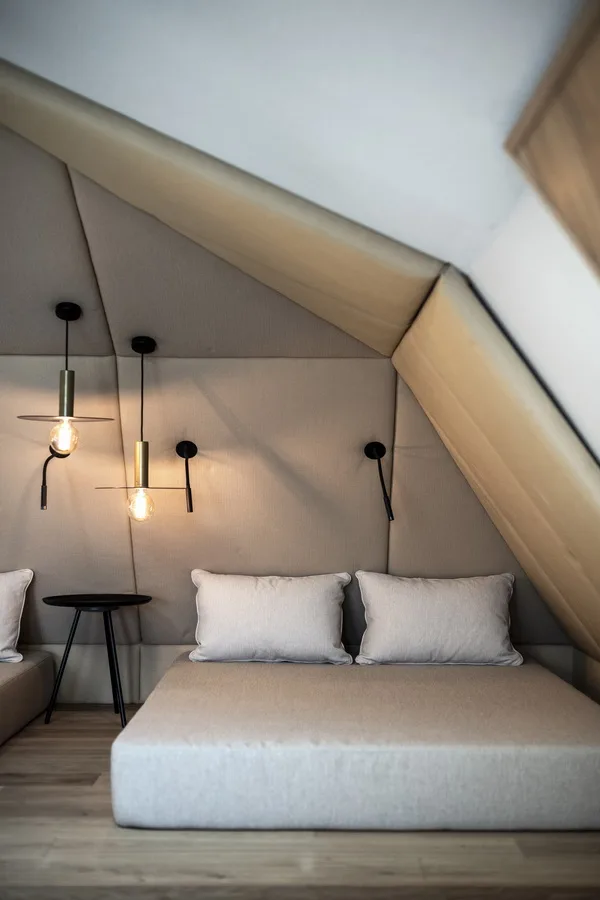
Indoor furniture is arranged casually and independently, with elegant, solid-colored cushions enhancing the atmosphere. Unique pieces found in flea markets or remnants from the original hotel add character. Golden light fixtures hang from the ceilings, scattered throughout the building.
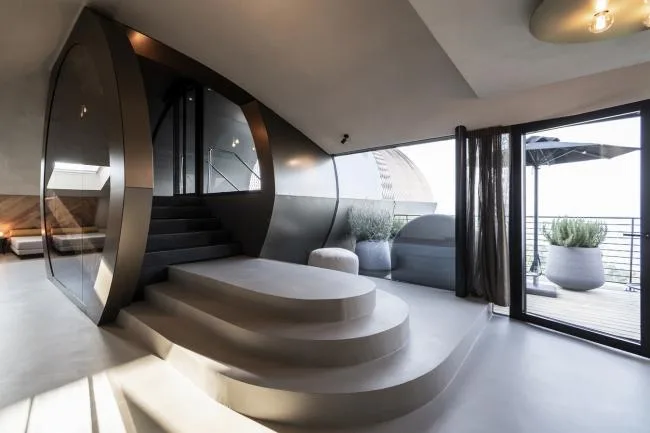
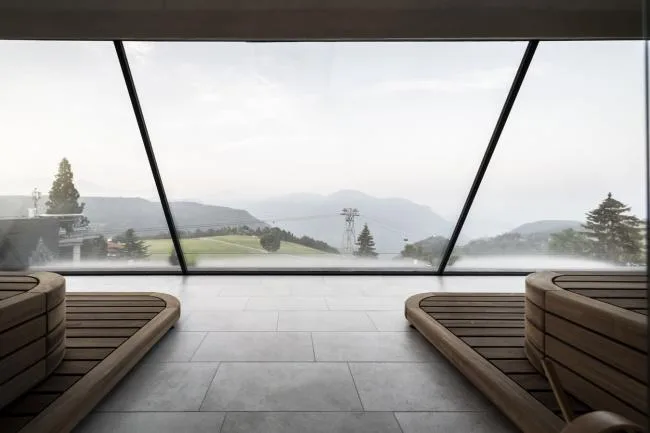
Seamless resin flooring connects public areas, creating a sense of flow. Wooden flooring forms an “island” that subtly defines the lounge and restaurant spaces. This concept extends to the rooftop spa area as well.
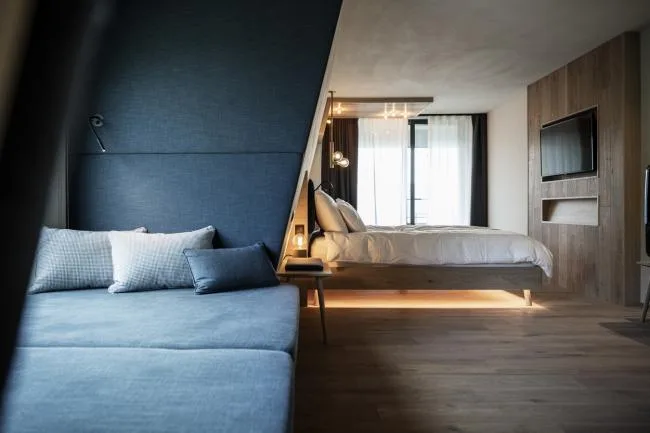
Particular attention was given to every corner of the guest rooms and suites. The bay windows are key features, offering fireplaces, separate bathtubs, or sofa areas for relaxation. Spaces are layered with nested shells, with walls, floors, and ceilings finished in matching materials. Wood adds warmth, luxury, and cohesion, making the interiors especially inviting.
Endless Journey
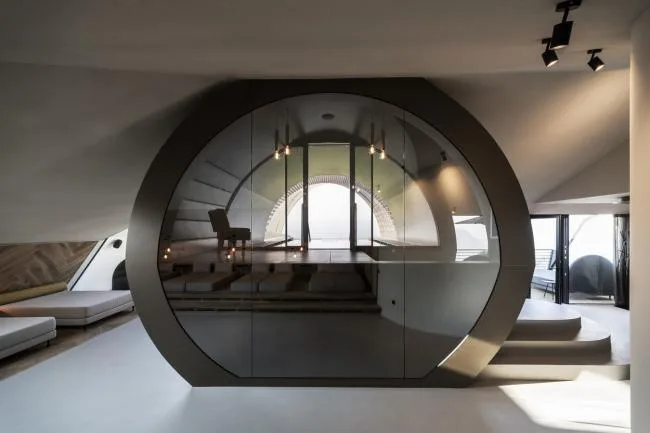
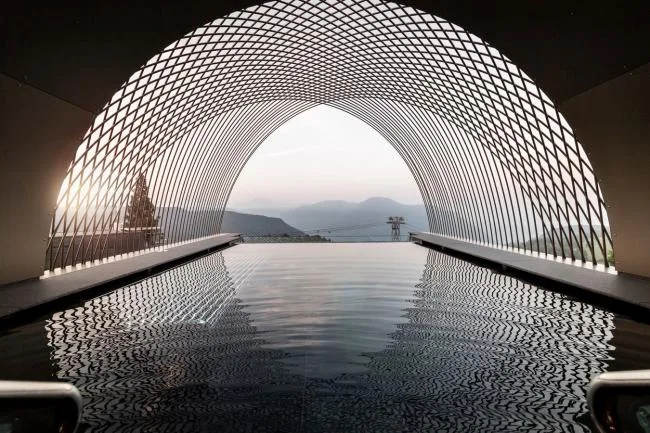
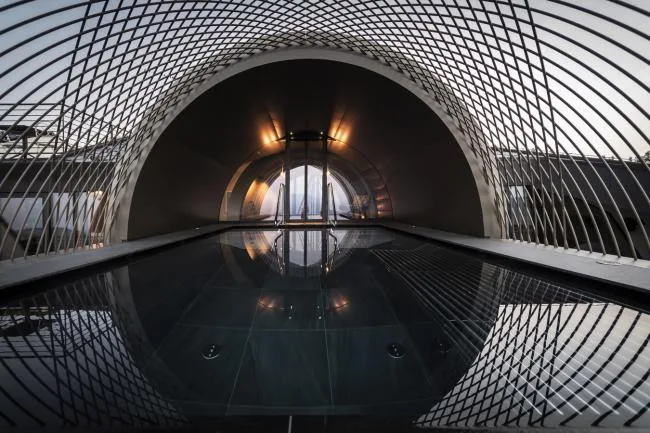
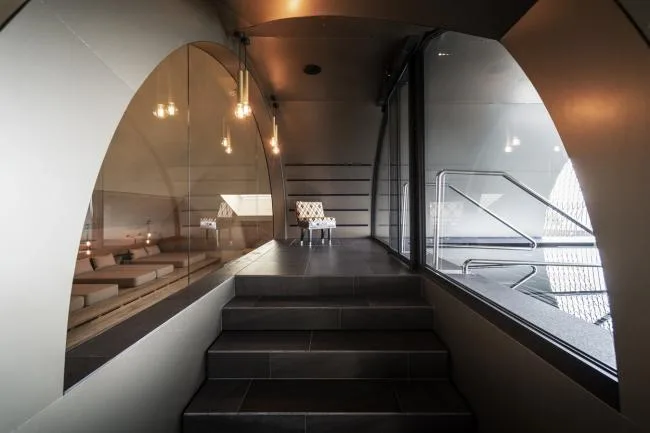
The building’s standout feature is its spa area with a luxurious cantilevered swimming pool, visible from afar. This expansive leisure zone is located at the top of bay windows and some private roof terraces, offering guests a tranquil space to relax and enjoy fresh air.
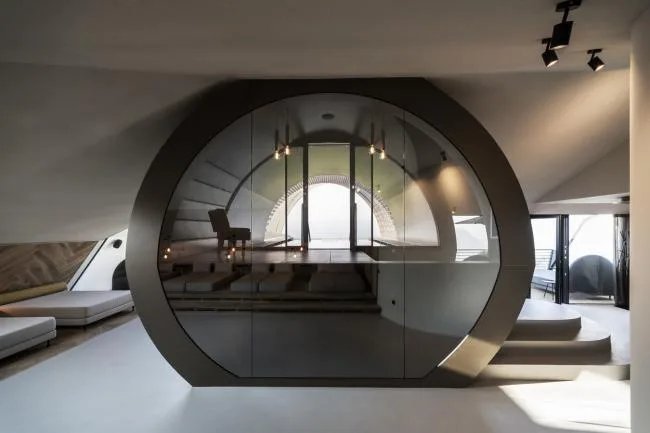
The curved cylinder, a major architectural highlight, is integrated into the herringbone roof on the building’s south side. It extends as an inverted arch, forming the attached swimming pool on the north side. The pool’s shell is clad in bronze aluminum plates reminiscent of square convex windows, providing a striking contrast to the dark brown herringbone roof and creating a captivating spiral form.
Multiple staircases lead to the cylinder’s center inside. The sliding door opens automatically, with one section hidden in the water alongside the curved shell, and the other extending toward the horizon as an infinity pool.
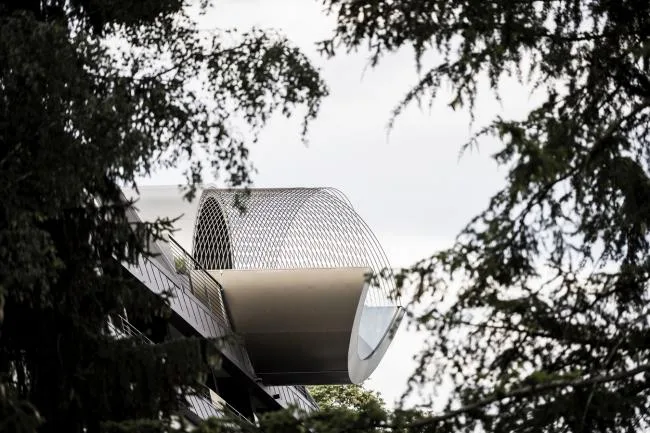
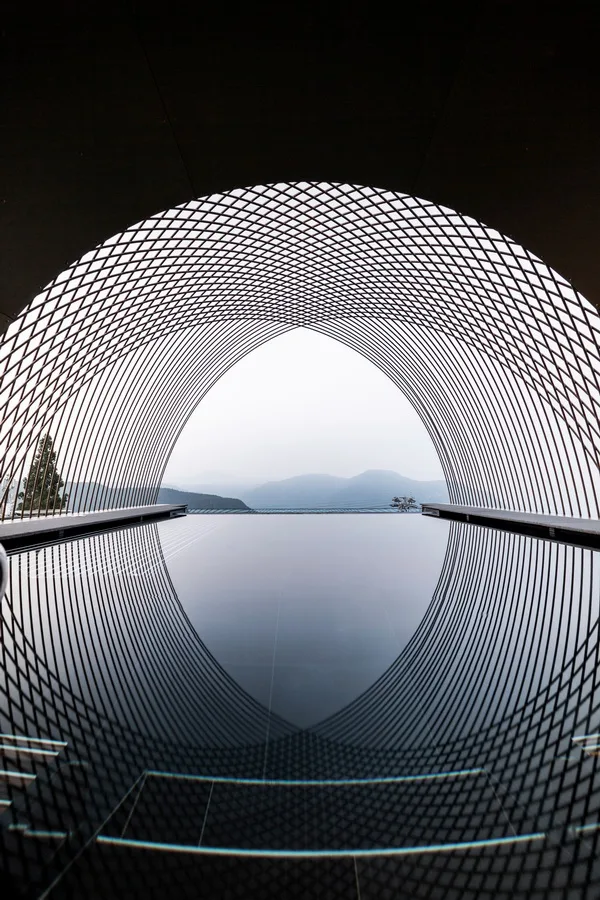
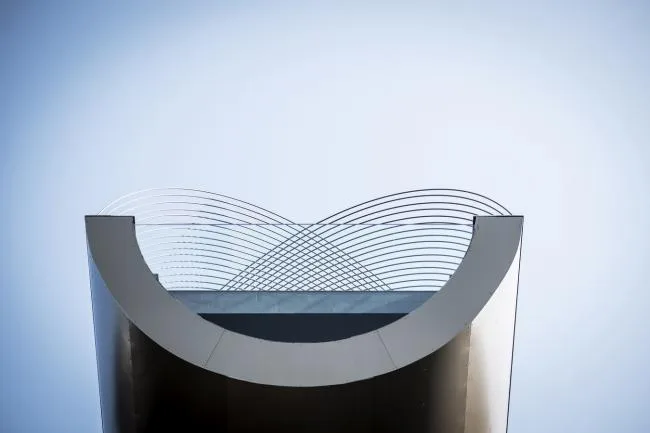
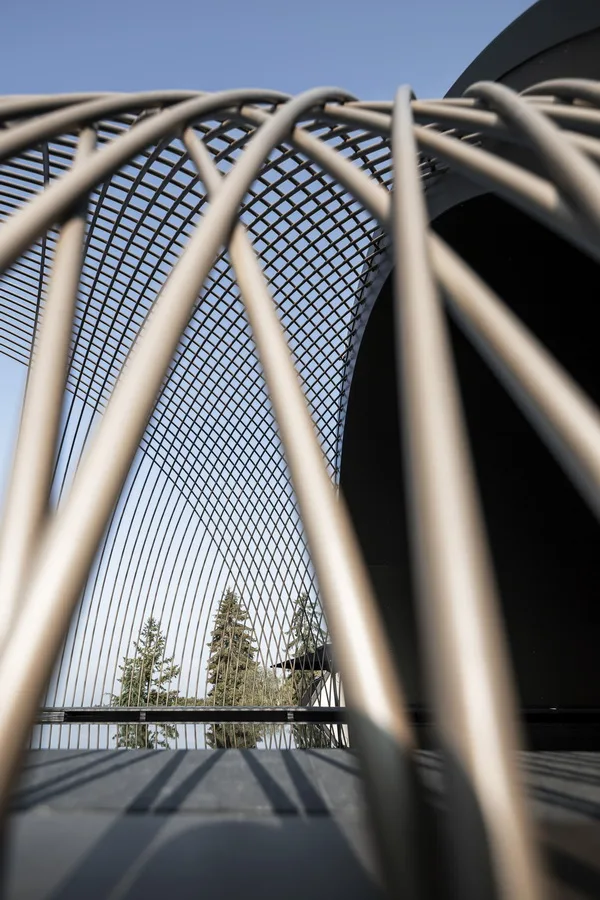
The curve, transparency, and gentle reflection created by the nearly six-meter-long circular pole over the pool form a sculptural element that permeates the building. Viewed from behind, the pool is enveloped by a bronze-colored circular shell that gradually transitions into a semi-circular pole structure, reaching toward the sky. Here, metal and water interact, embodying infinite freedom.
This soft transition dissolves the cylindrical shell visually, creating a floating sensation while framing distant views. The sculptural pole structure represents the repeated arches and diamond patterns found throughout the design. Close examination reveals that intersecting curved poles form diamond shapes, symbolizing the pinnacle of this architectural journey, inviting anticipation before entering the building.
Drawings
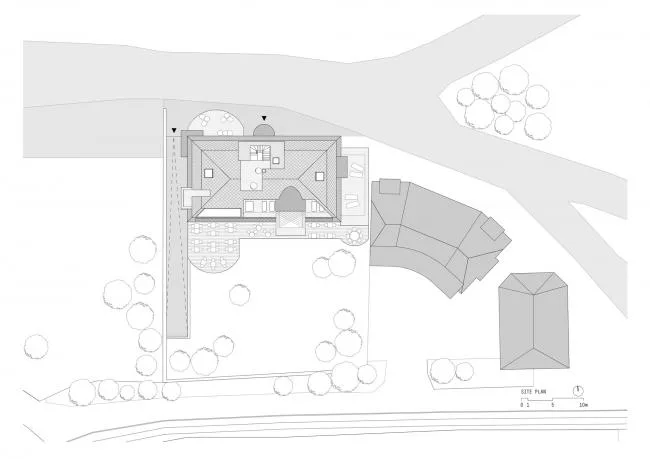
Master Plan
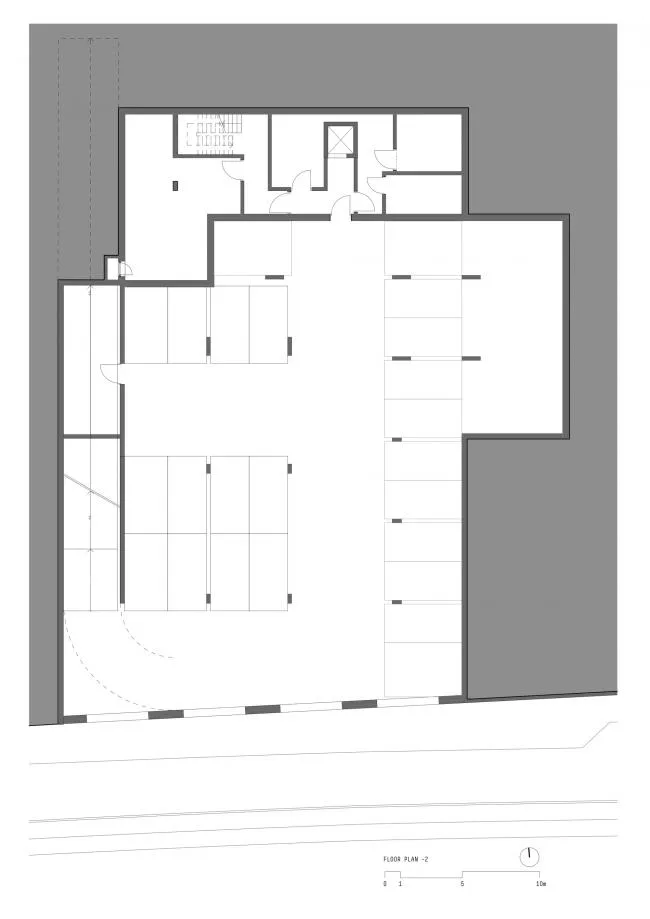
Underground Second Floor Plan
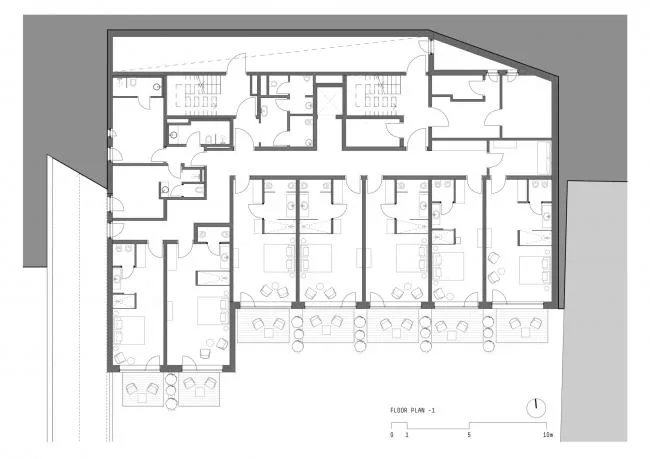
Underground Floor Plan
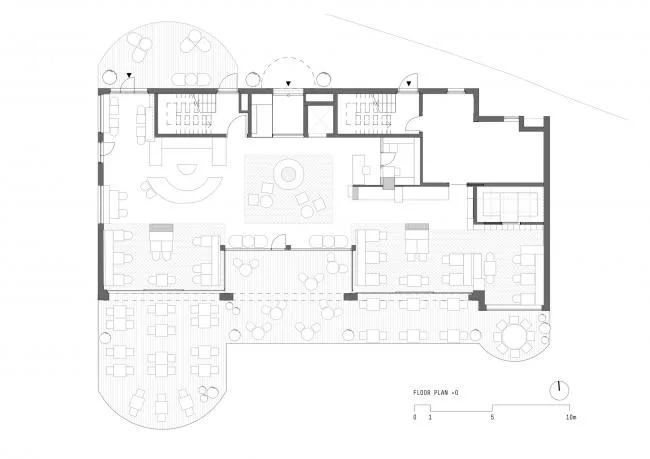
Foundation Plan
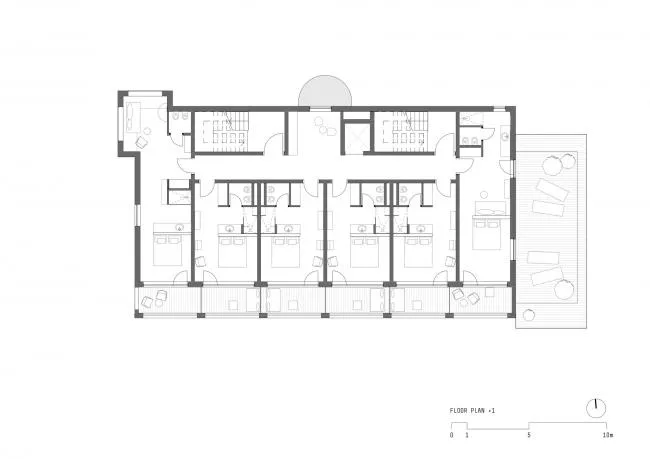
First Floor Plan
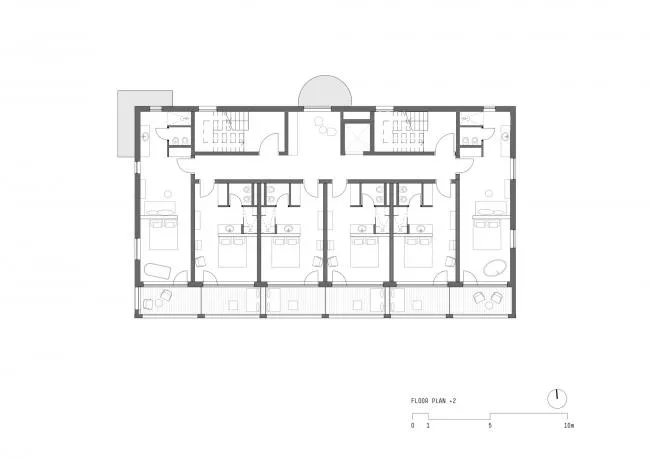
Second Floor Plan
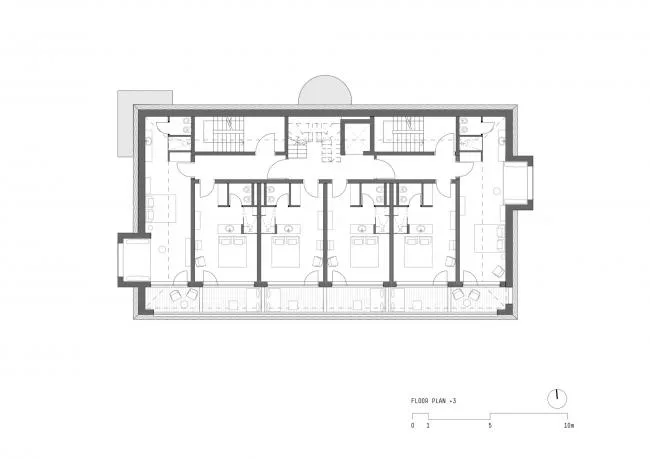
Third Floor Plan
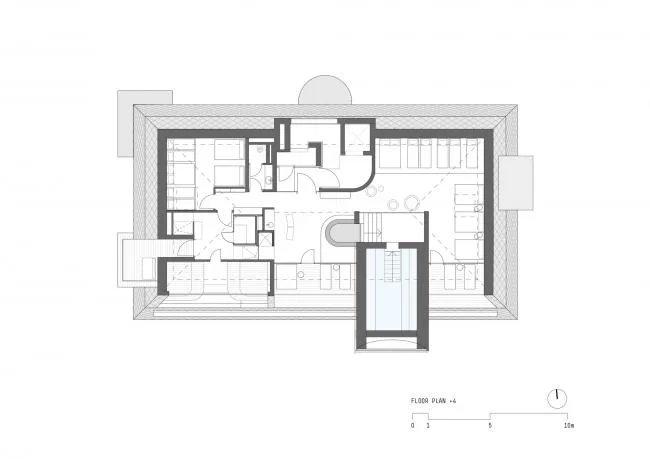
Fourth Floor Plan
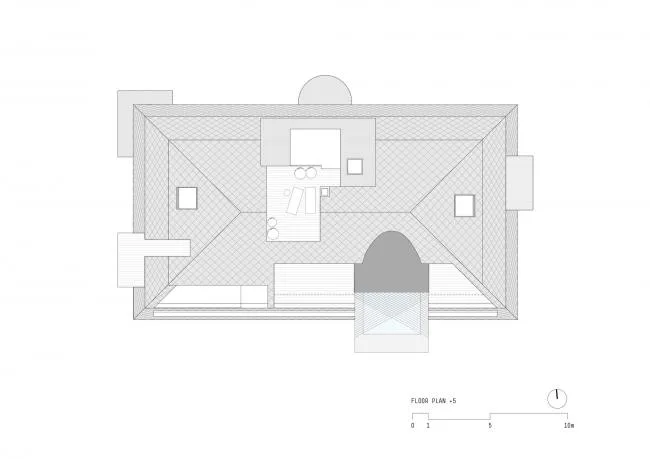
Roof Plan
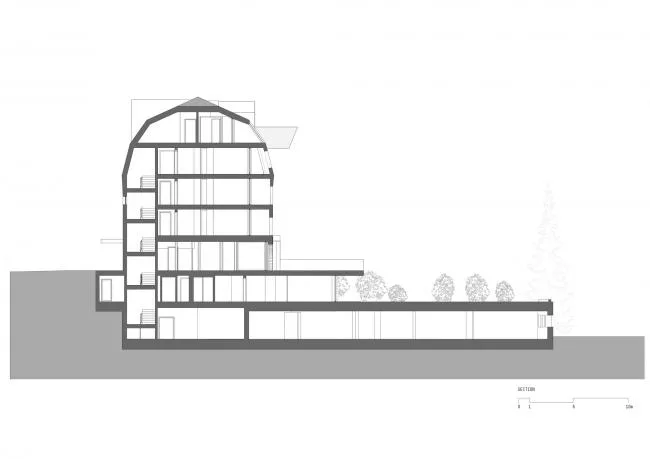
Sectional View
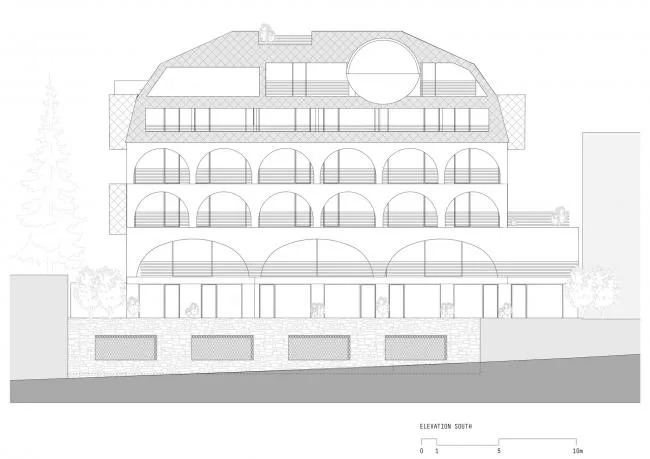
South Elevation
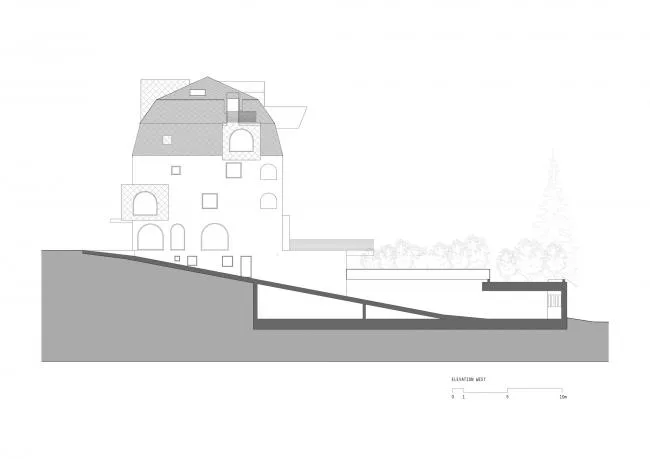
West Elevation
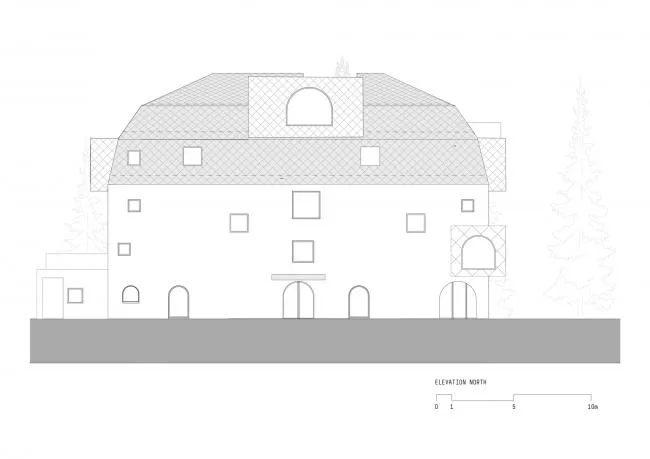
North Elevation
Project Information
Architect: noa * network of architecture
Address: 39054 Soprabolzano BZ, Italy
Design Team: Lukas Rungger, Christian Rottensteiner, Barbara Runggatscher, Lea Mittelberger
Client: Family Alber
Building Area: 2000.0 m²
Project Year: 2018
Photographer: Alex Filz
Manufacturers: RUBNER, Bozen, Starpool












Must log in before commenting!
Sign Up