
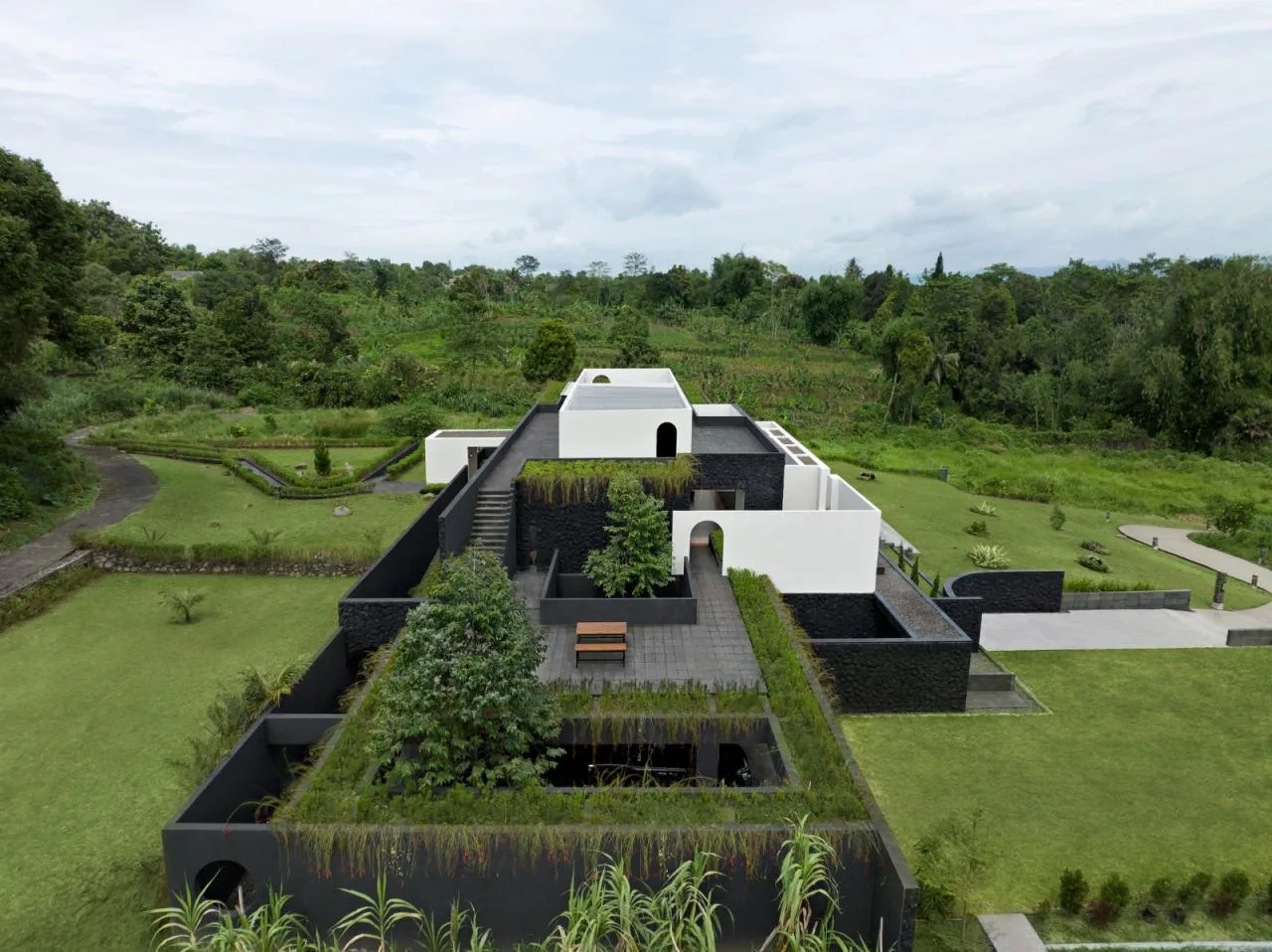
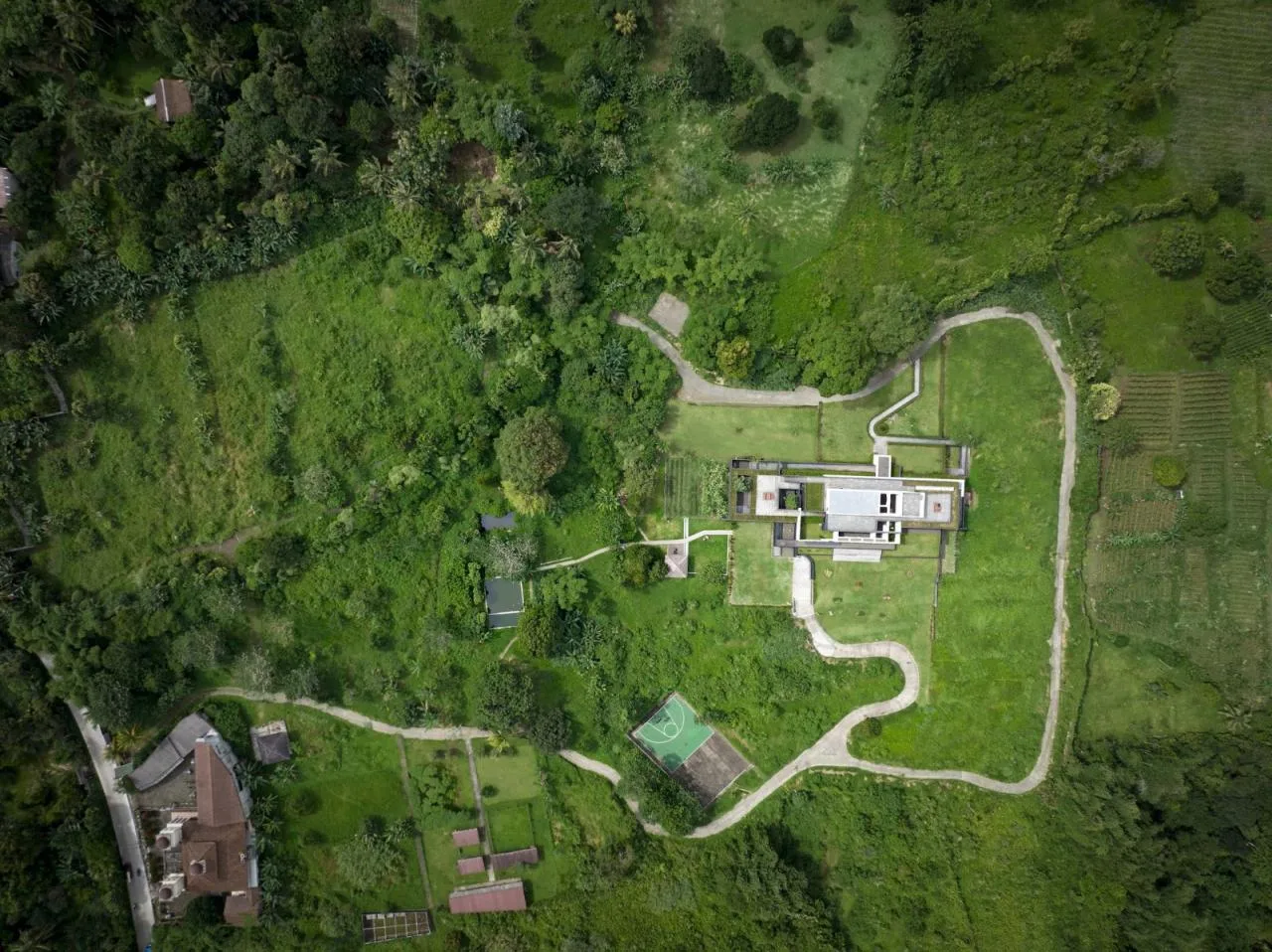
Villarci is a classic, spacious villa perched atop Mount Bogor in western Java. It embraces the unique natural environment, offering breathtaking 360-degree views of Salak Mountain, the sprawling cityscape of Bogor, and the immediate surroundings. The client was deeply inspired by the distinctive qualities of this location, choosing it as a family vacation retreat and even postponing the planning of his Jakarta residence, also designed by Gets Architectural Firm, to prioritize this project.
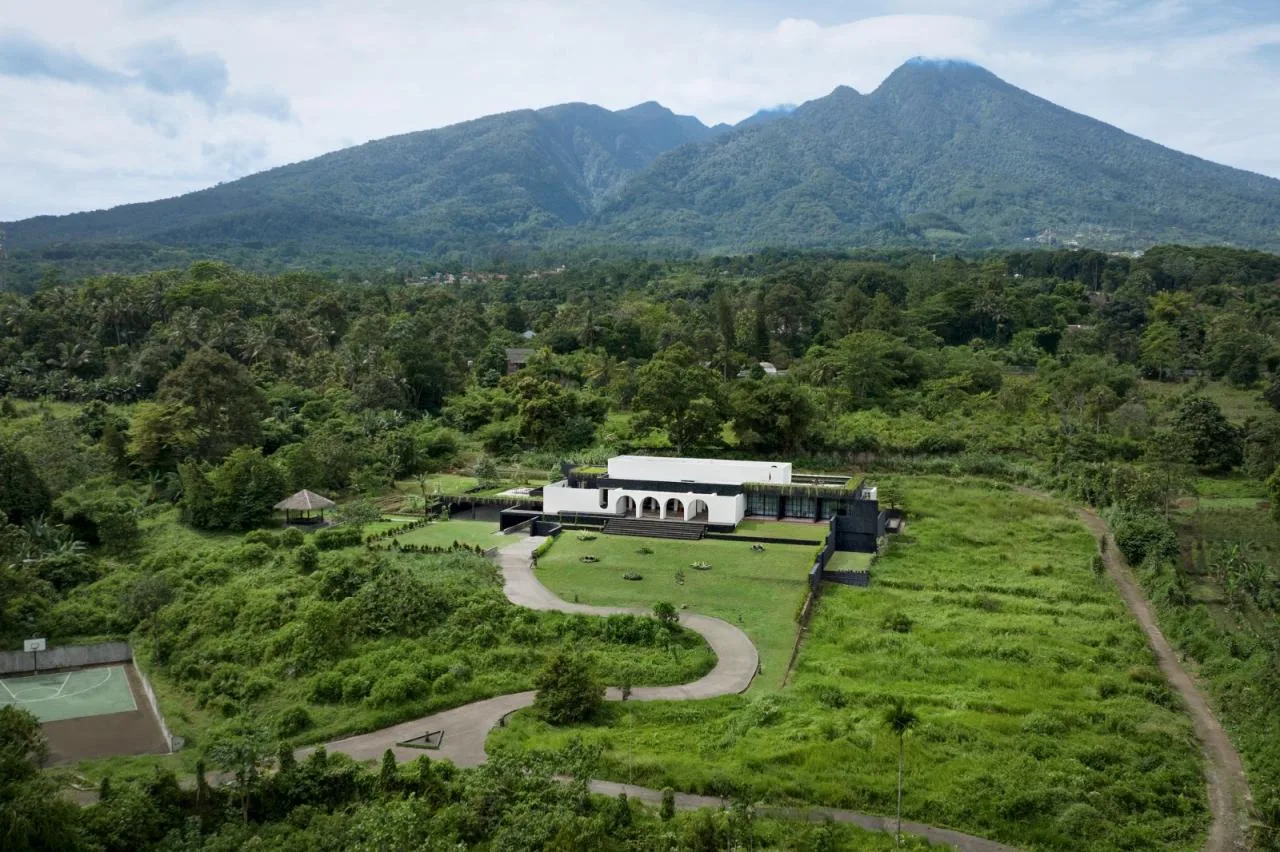
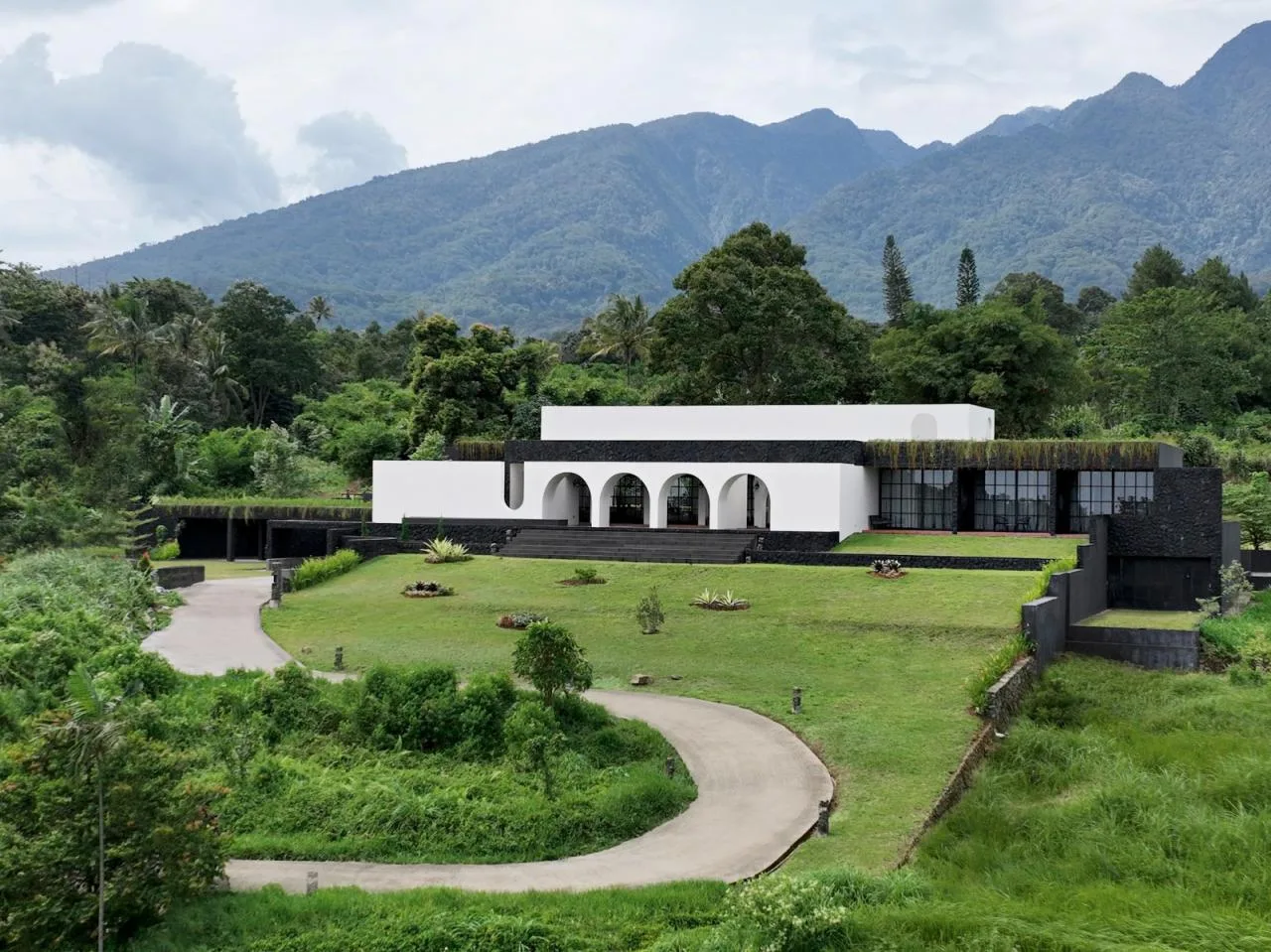
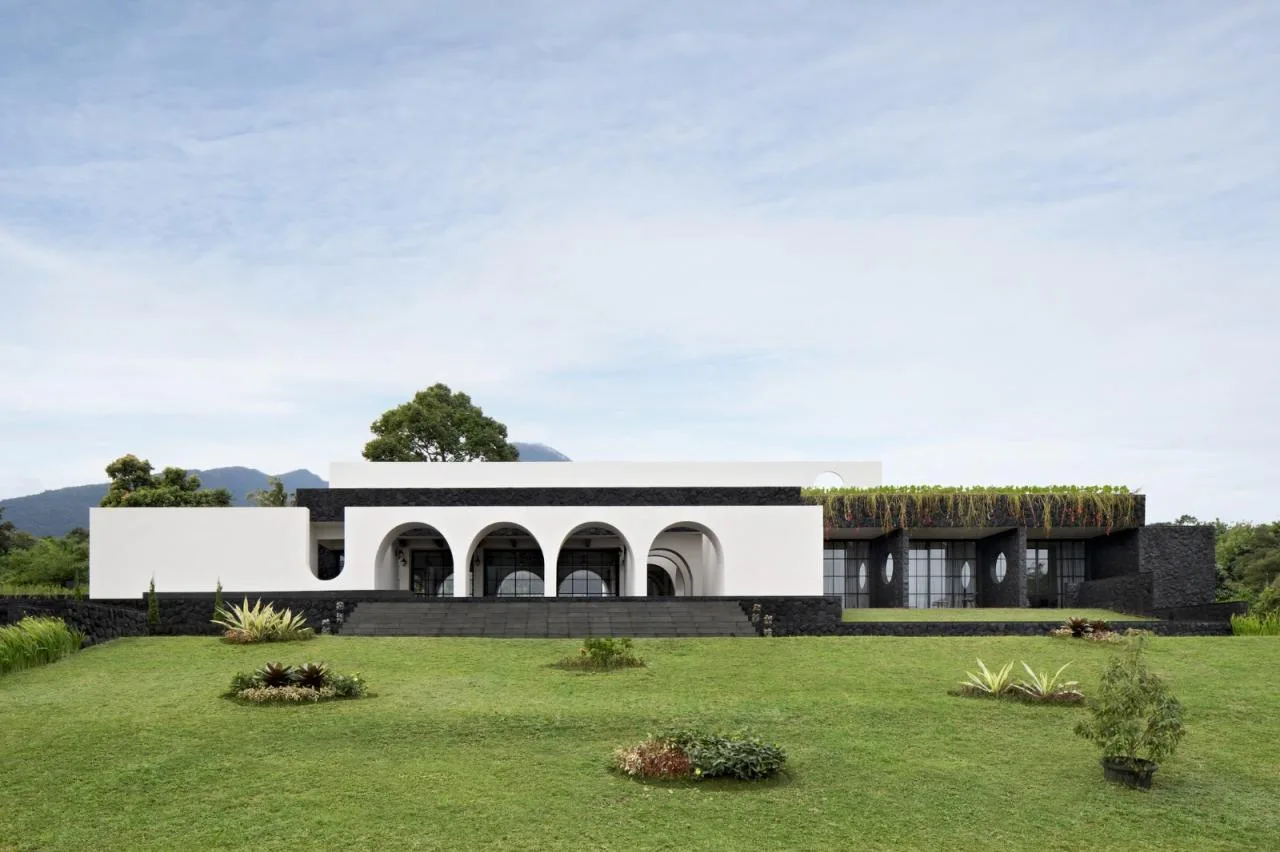
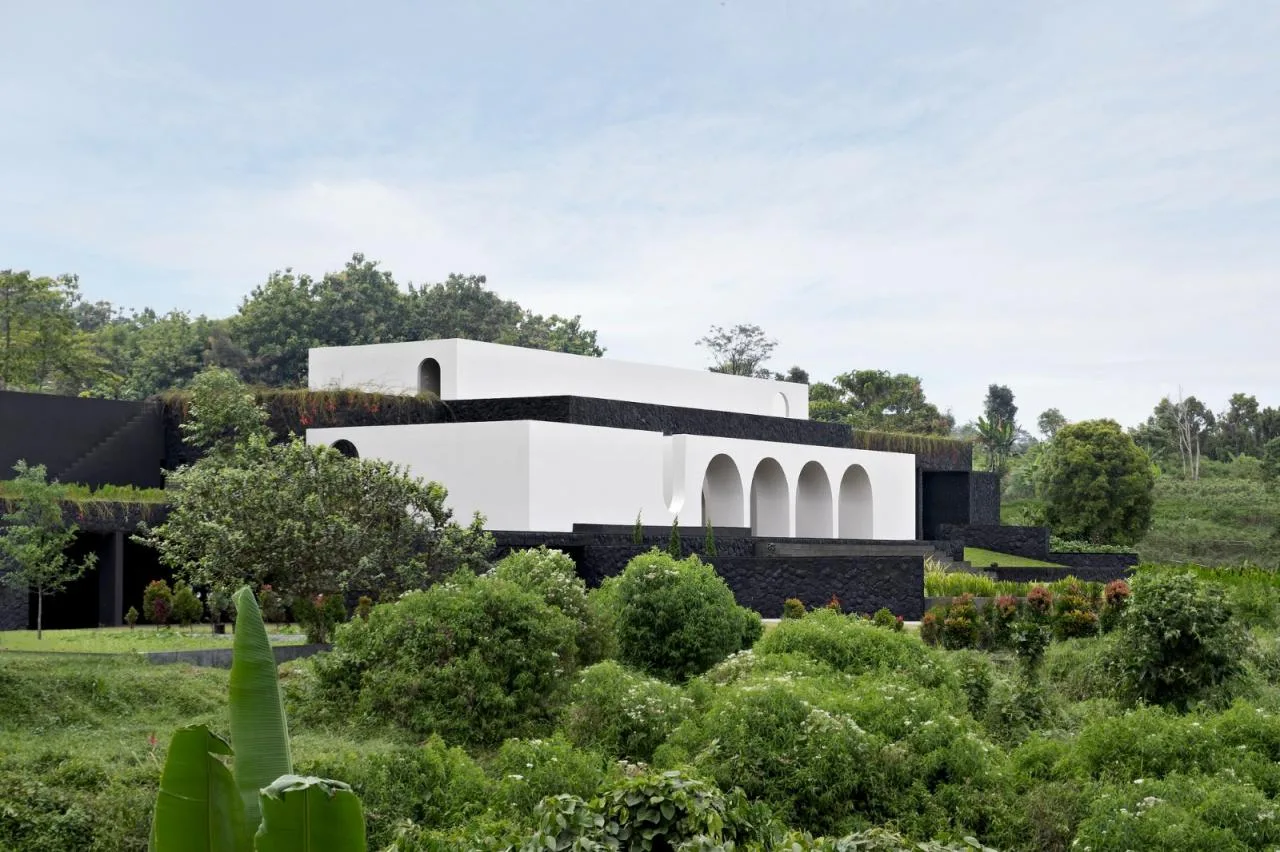
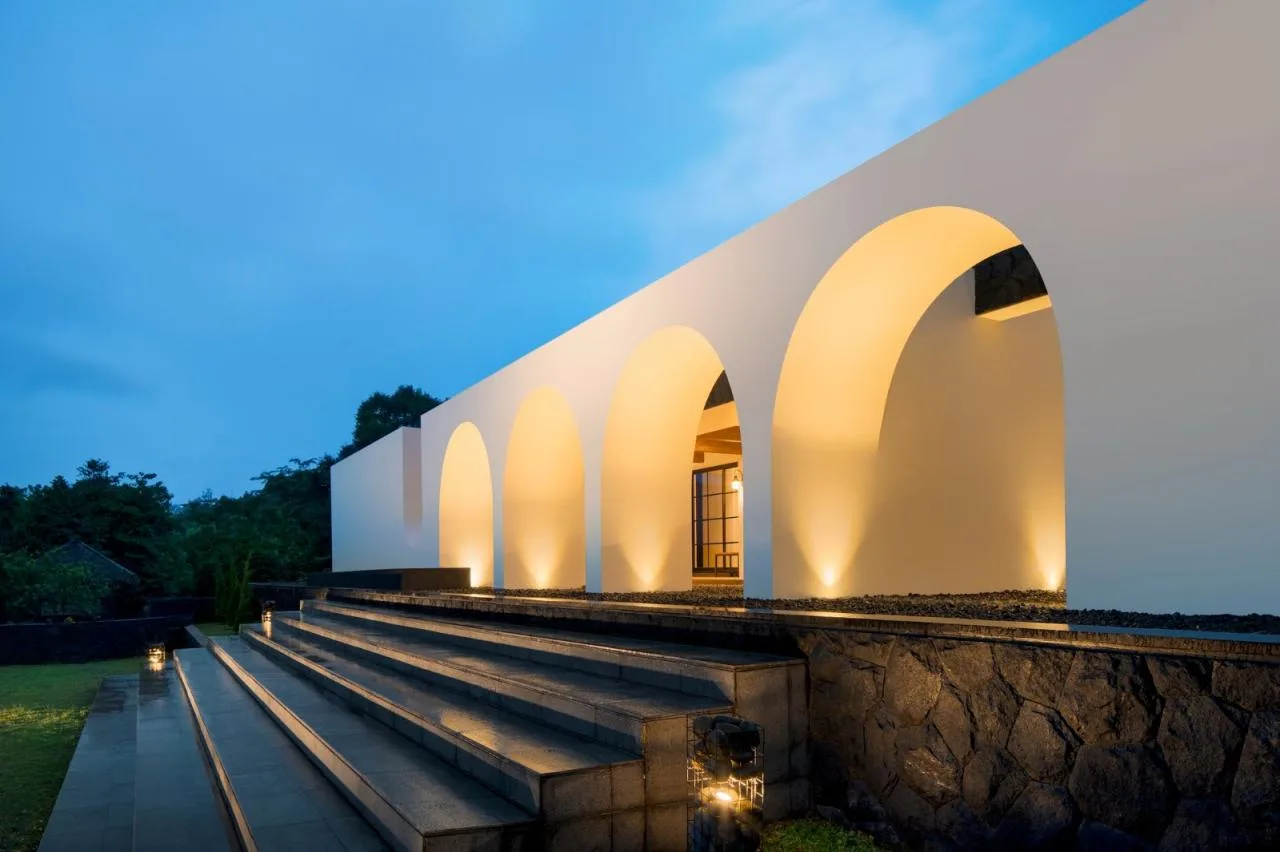
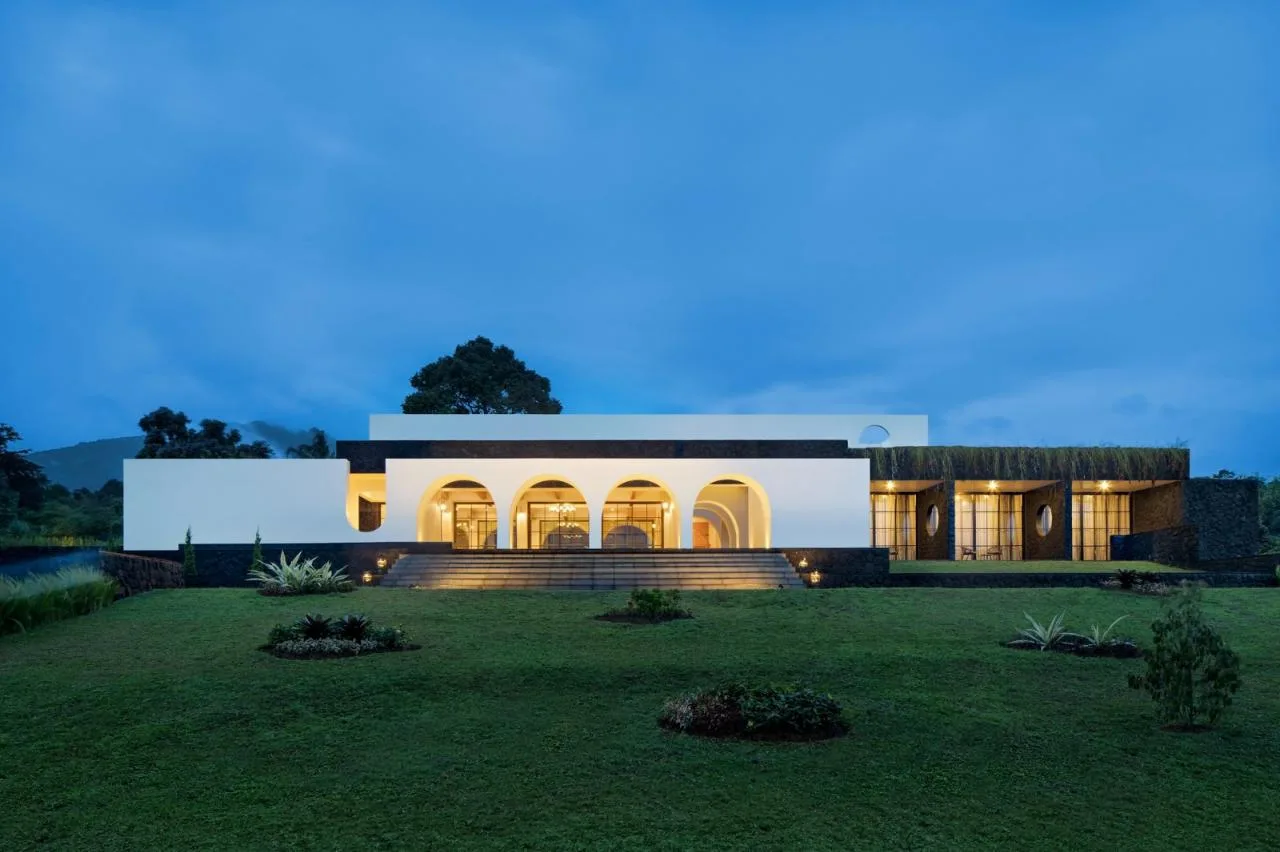
The project’s goal was to design a family vacation villa that harmoniously integrates with the landscape, capturing panoramic views both inside and out. Villarci’s construction respects the natural slope of the terrain, effectively making the building part of the environment. The villa features a lightweight white rectangular block accented by a prominent long arched corridor, blending seamlessly with the surroundings. It gently rises above the land, becoming a significant landmark within the landscape.
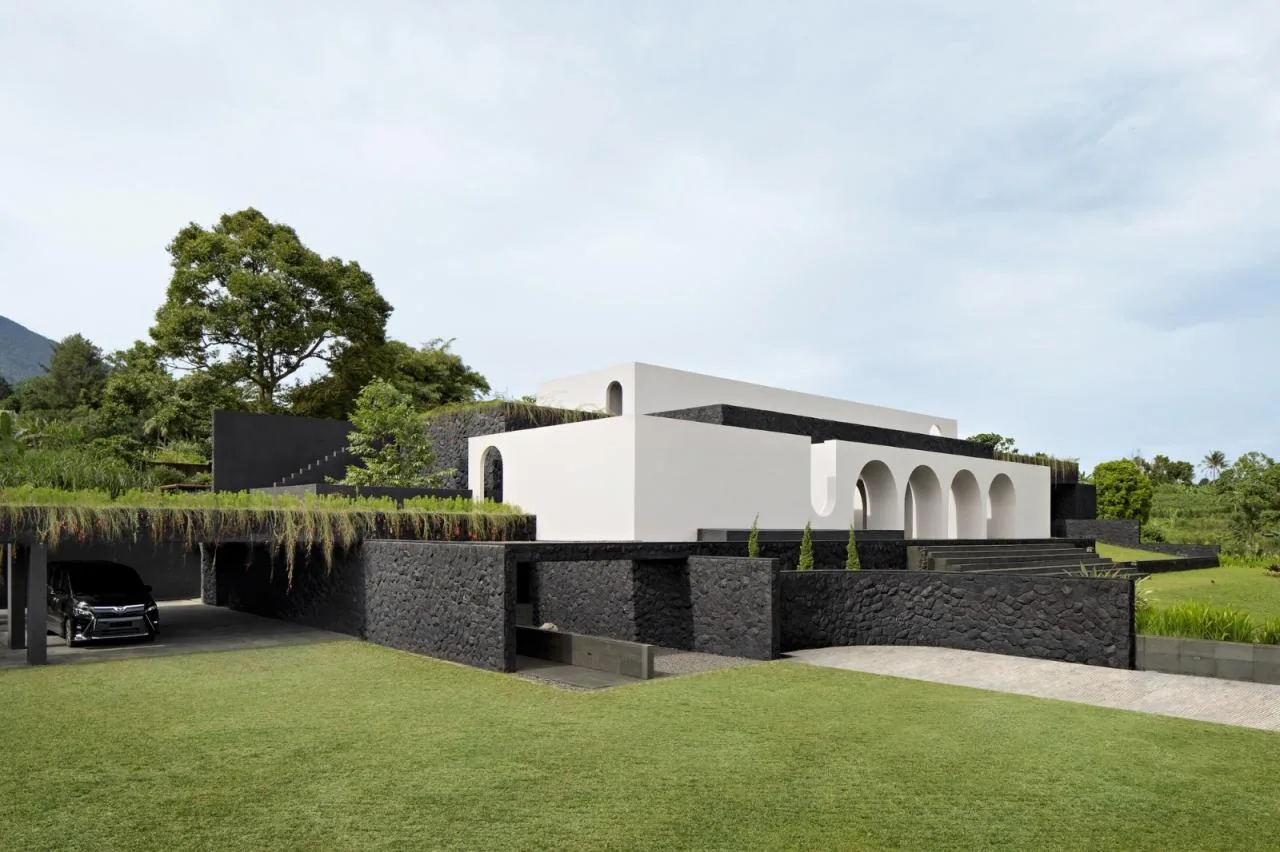
Surrounded by lush, undeveloped terrain, the site is home to native wildlife including snakes, eagles, and scorpions. The client utilizes the expansive fertile land for agricultural pursuits. The tropical mountain air, filled with gentle breezes and earthy scents of wet soil and grass, enriches the sensory experience. Weather here is dynamic—clear, hot days reveal sharp mountain views, while foggy, rainy days cloak the peaks in a delicate mist, evoking a dreamlike atmosphere. Villarci balances human scale, architectural form, and site connection, responding directly to the client’s desire for a timeless, practical, livable family villa.
Ciapus Arch — The villa’s design draws inspiration from the Spanish Mission Revival architectural movement of the late 18th and early 19th centuries, which the client admires. Villarci presents a contemporary interpretation of this traditional style, incorporating its distinctive features with a modern sensibility.
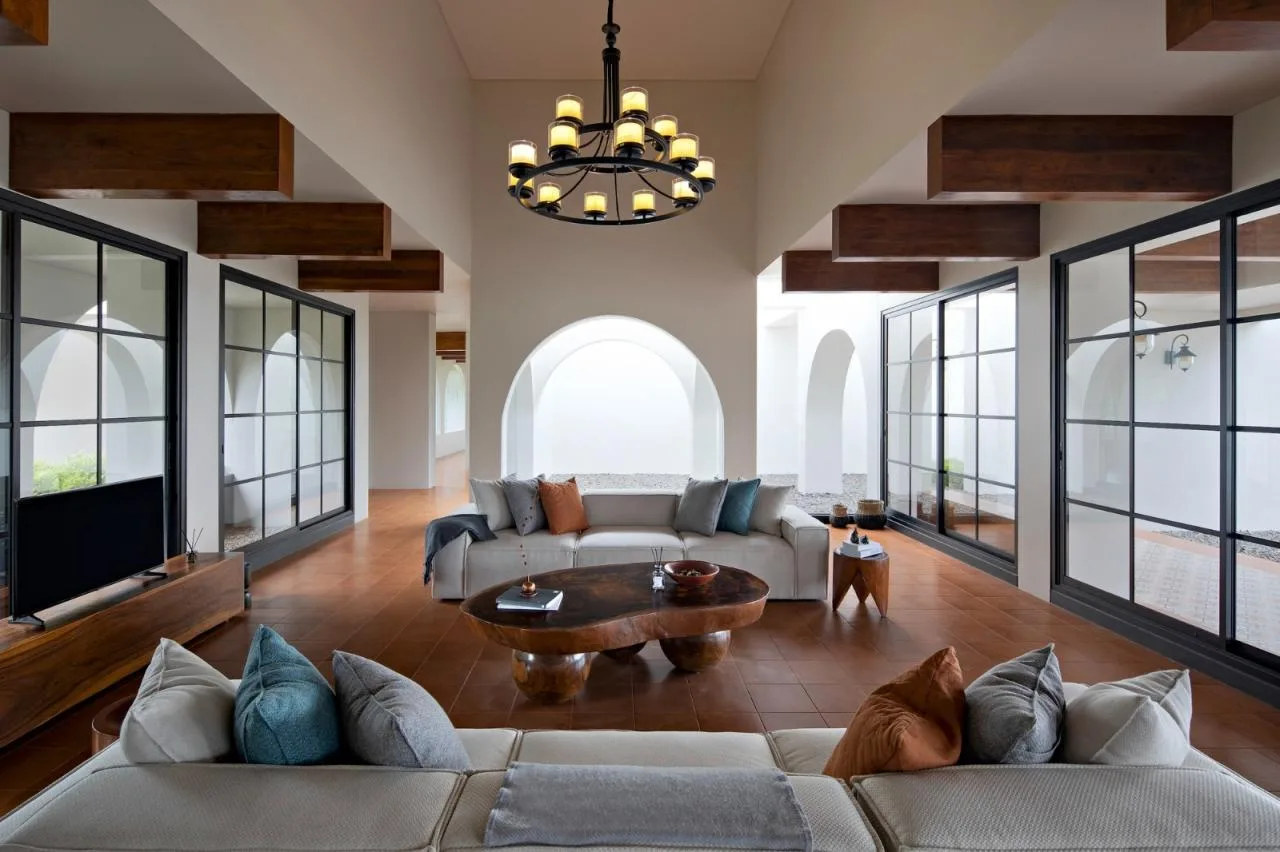
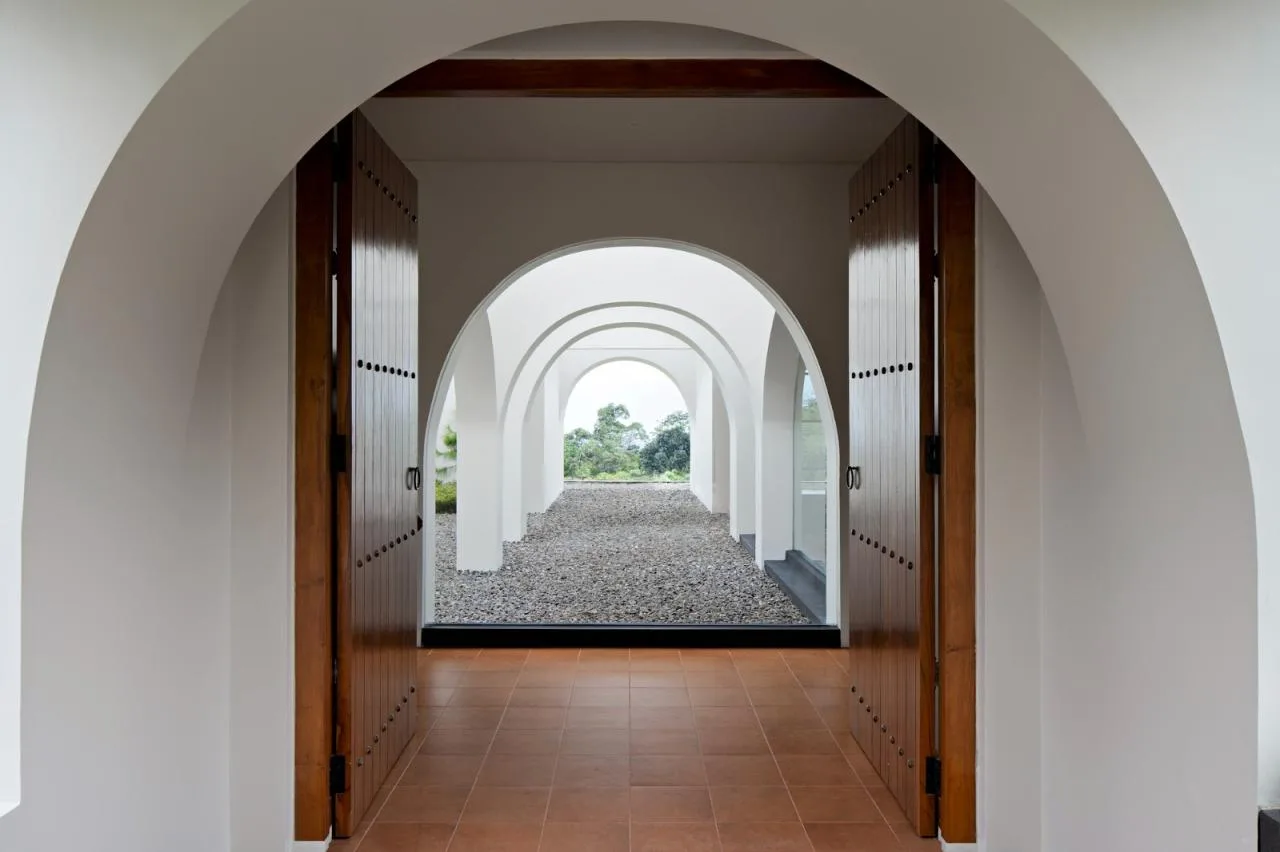
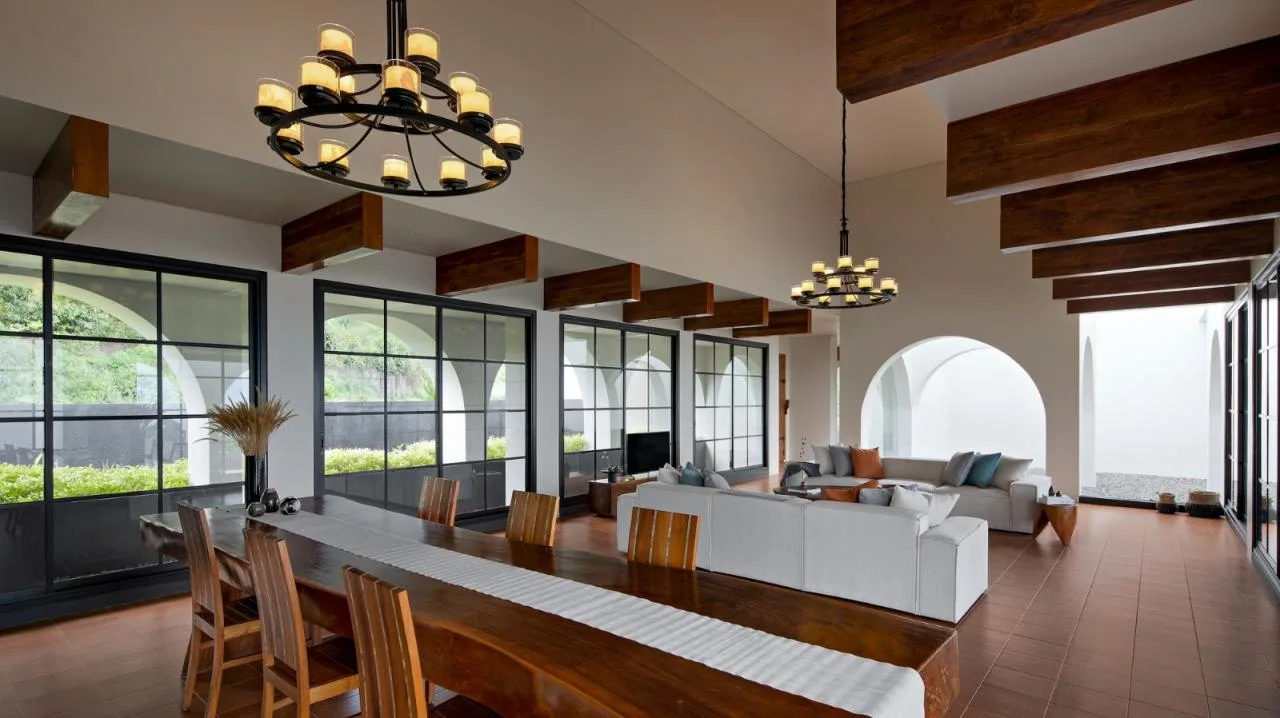
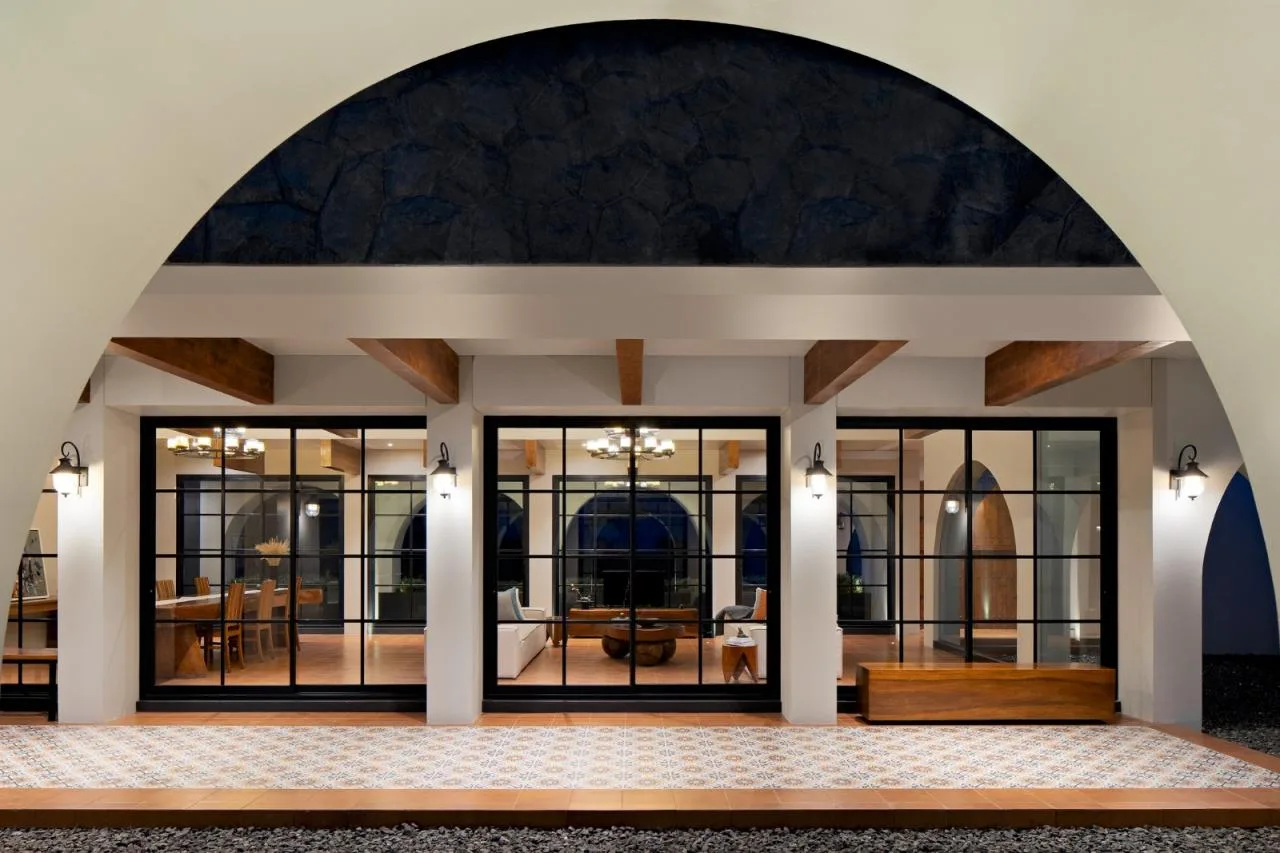
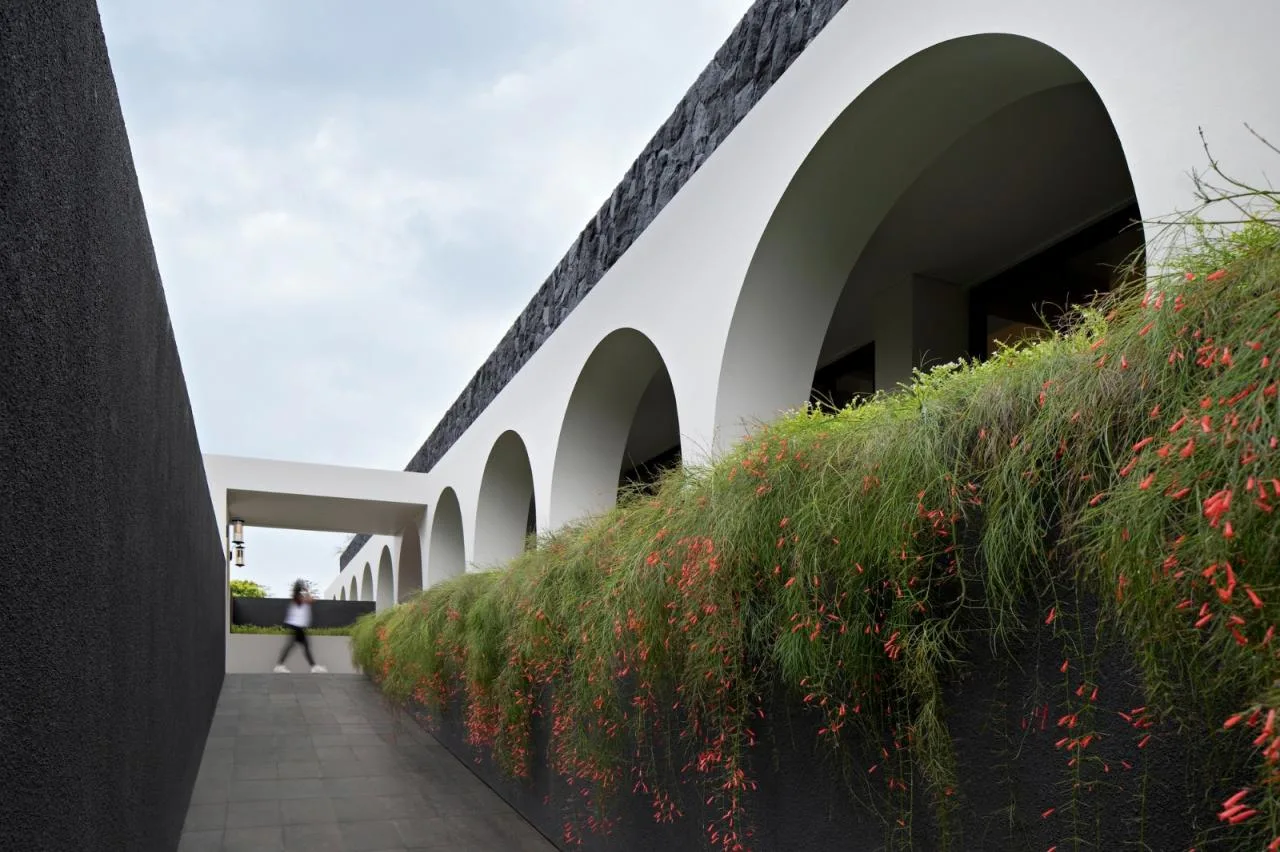
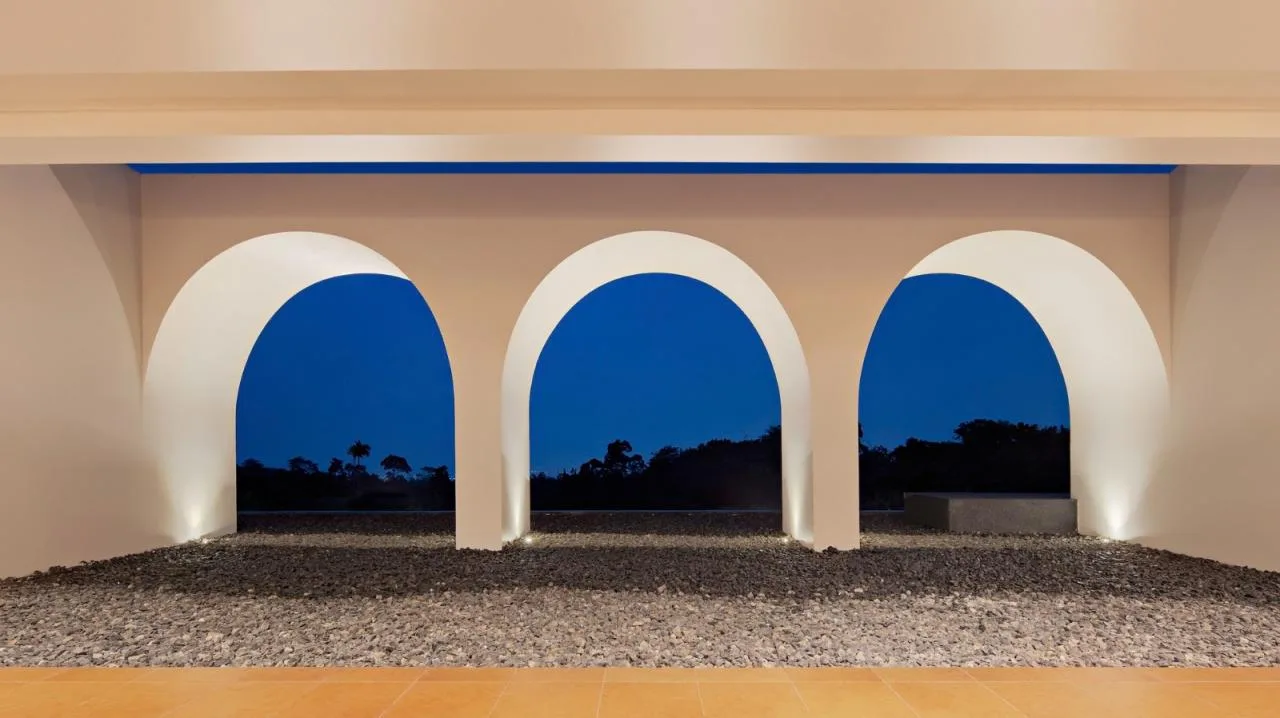
The architectural design emphasizes simple forms: a lightweight white rectangular block featuring a thick, long corridor arch. While this represents a contemporary aesthetic update, it also enhances air circulation, provides shading for indoor openings, protects outdoor spaces from heavy rain, and offers a comfortable area for rest and socializing. This arch serves as a striking visual anchor within the natural landscape and blurs the boundary between façade and environment by responding directly to site conditions.
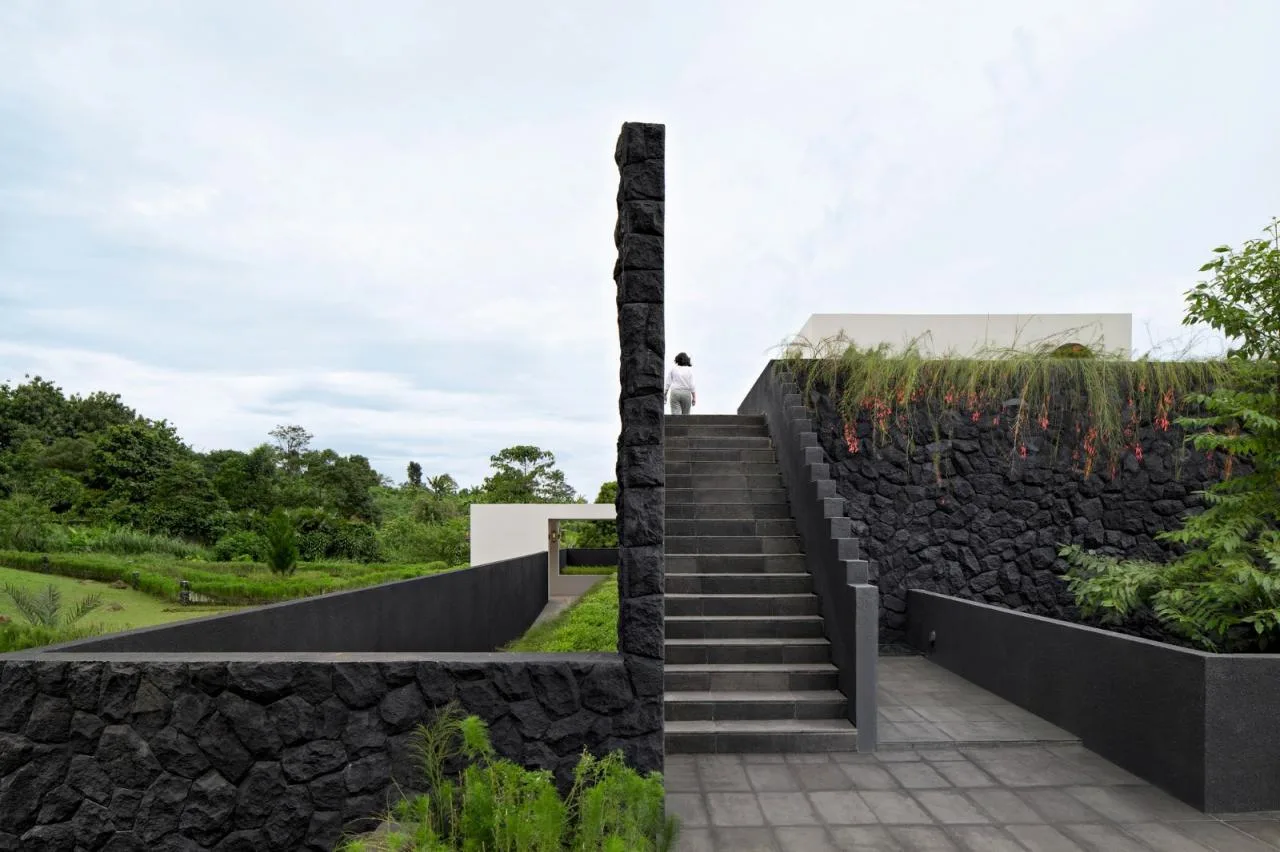
In contrast, the use of black stone introduces a strong visual contrast, distinguishing itself from the subtle Dutch colonial architecture typical of Bogor. This stone material acts as a transitional element linking the structure to the natural surroundings.
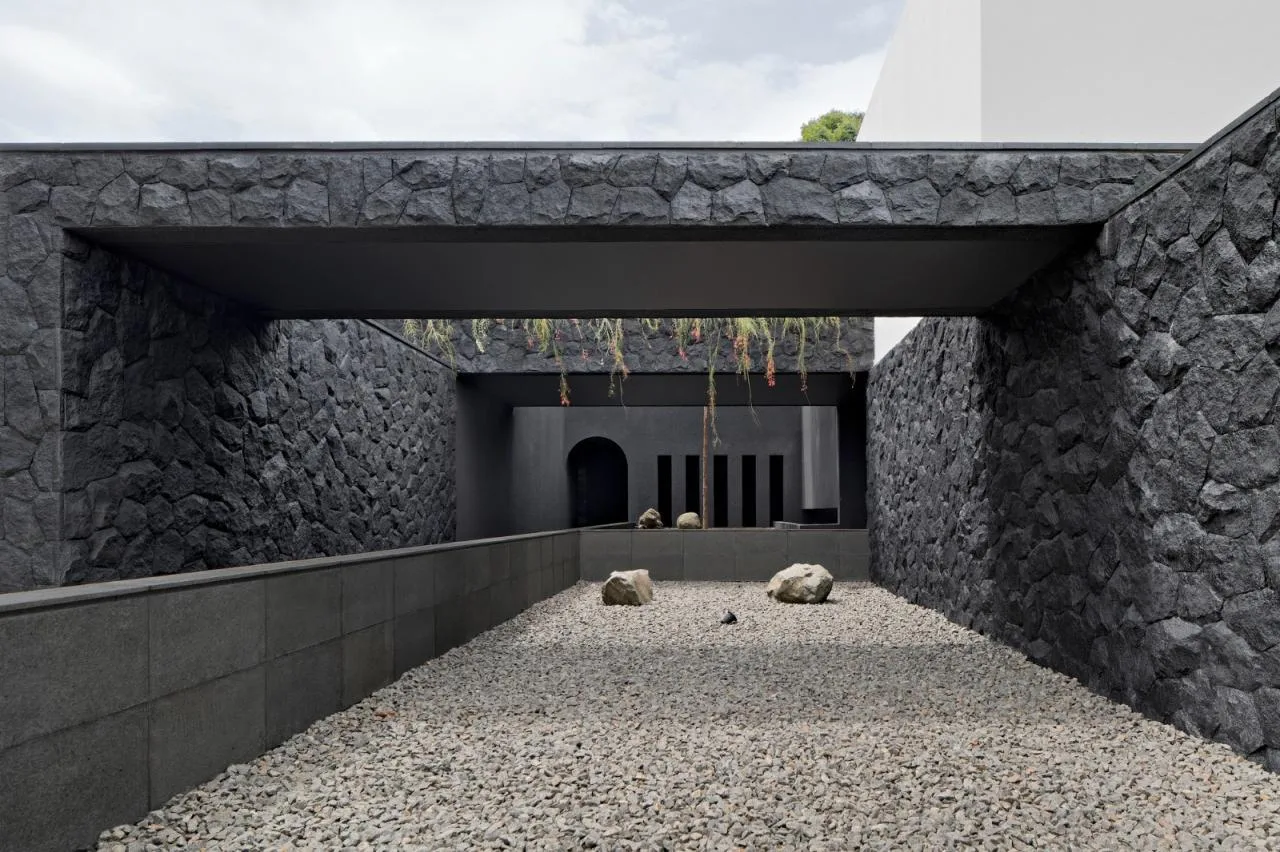
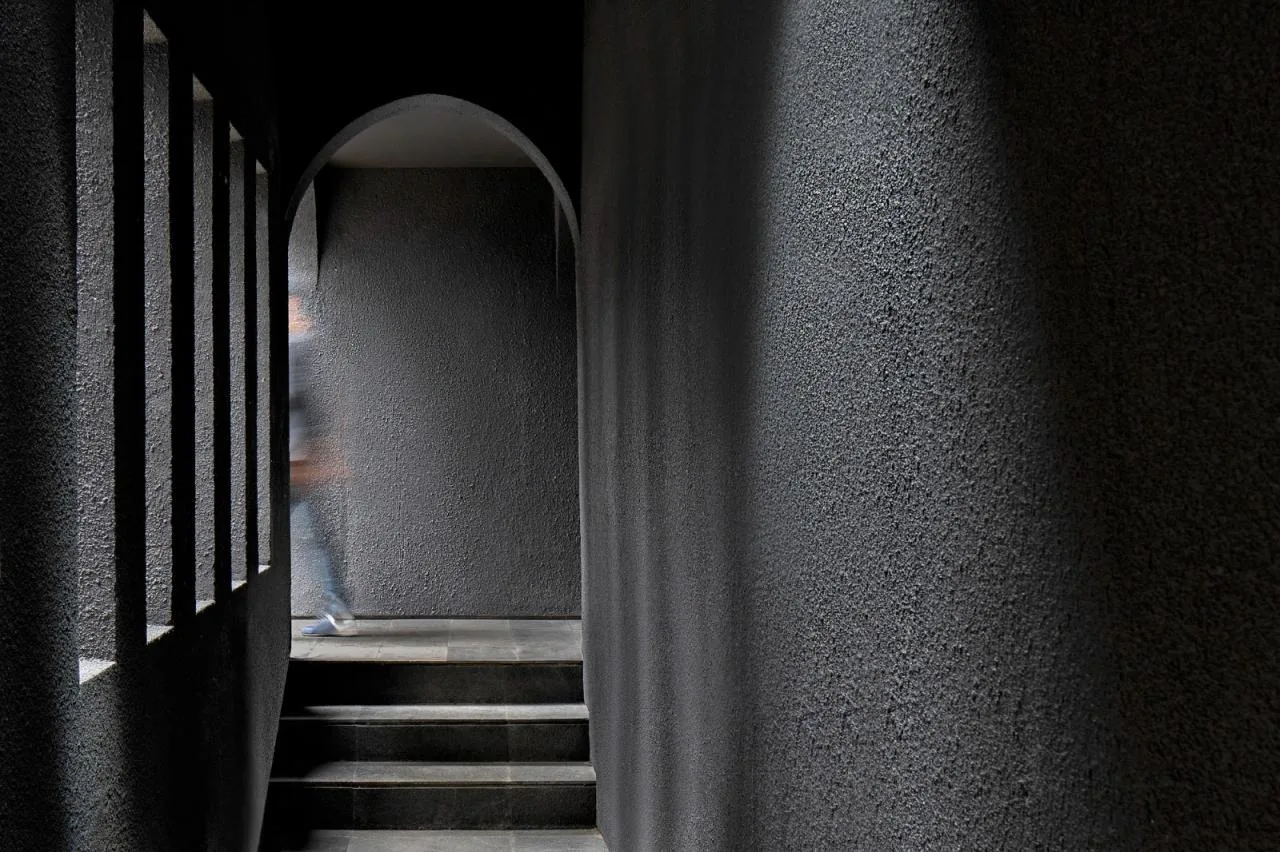
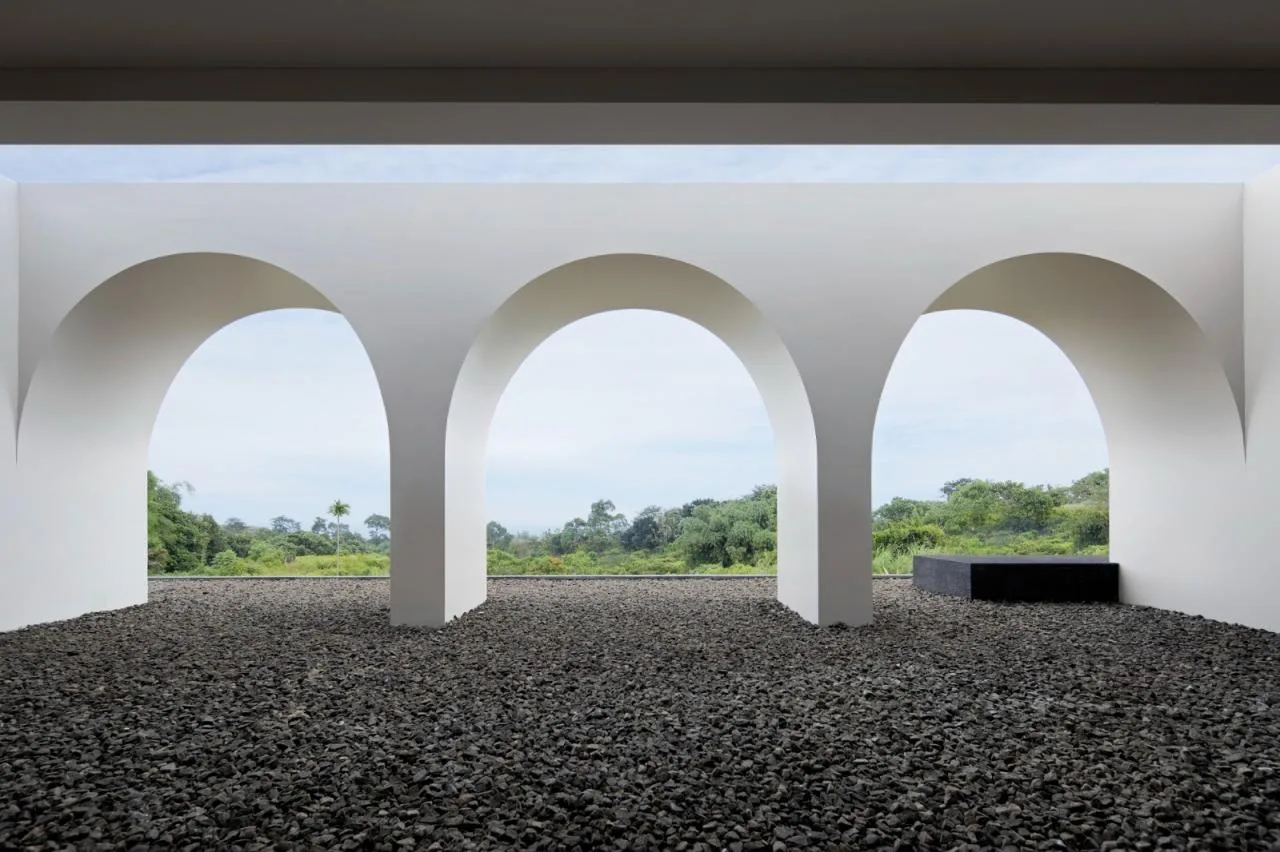
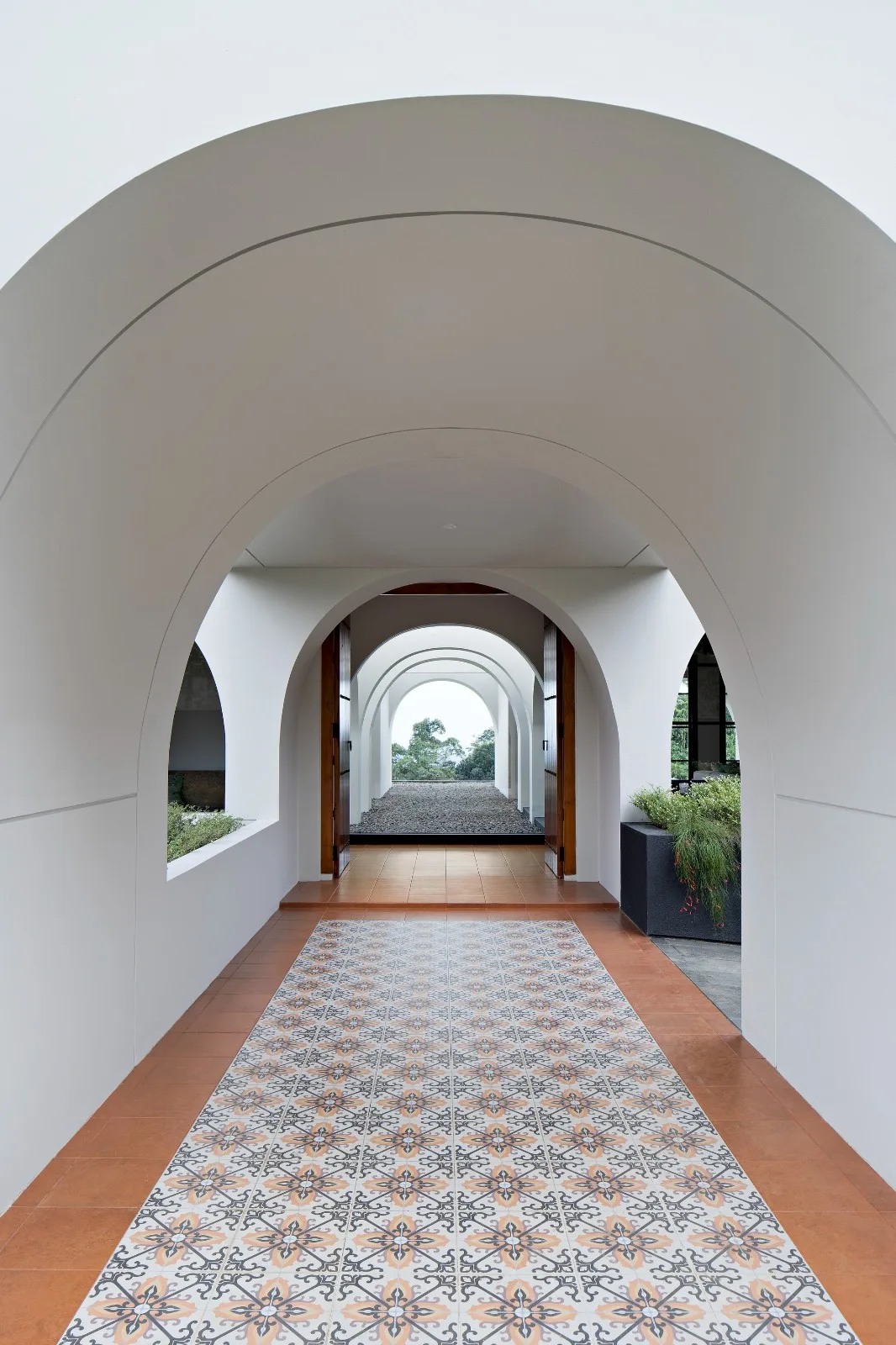
The villa’s solid rectangular features and bold contours are softened by the gentle curves inside the arch, which are echoed throughout the interior, especially in the carved wooden arched doors. Oversized faux wooden beams complement other Spanish Mission Revival buildings, conveying a sense of age and warmth. Exterior materials are modest, while the interiors harmonize ceramic tiles and Taravira patterned tiles, adding color and character to the spacious white plaster surfaces. Veneer wood and colored tiles create an atmosphere of softness, warmth, and comfort. Large windows introduce a humanizing element to the stark black and white structure.
Overall, Villarci’s architecture carefully balances protected interior areas with open sides that embrace the spectacular views, all while reflecting the villa’s lifestyle through exquisite furnishings.
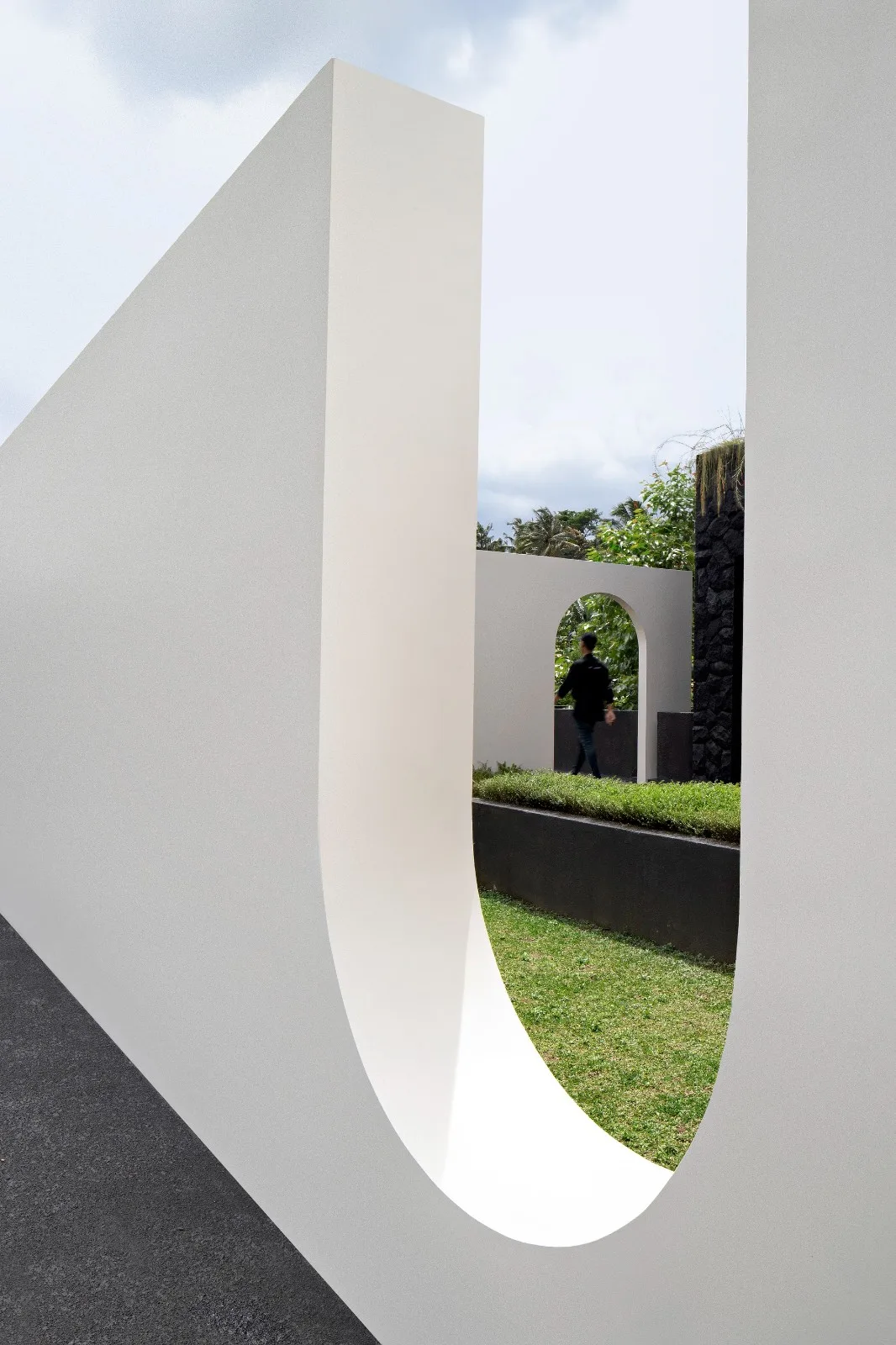
Space — Originally planned as a simple family villa, Villa Villarci’s design and construction evolved alongside the changing needs of the client’s family. The functional layout and thoughtful problem-solving ensure the villa’s design is adaptable, able to accommodate future adjustments as the family grows and changes.
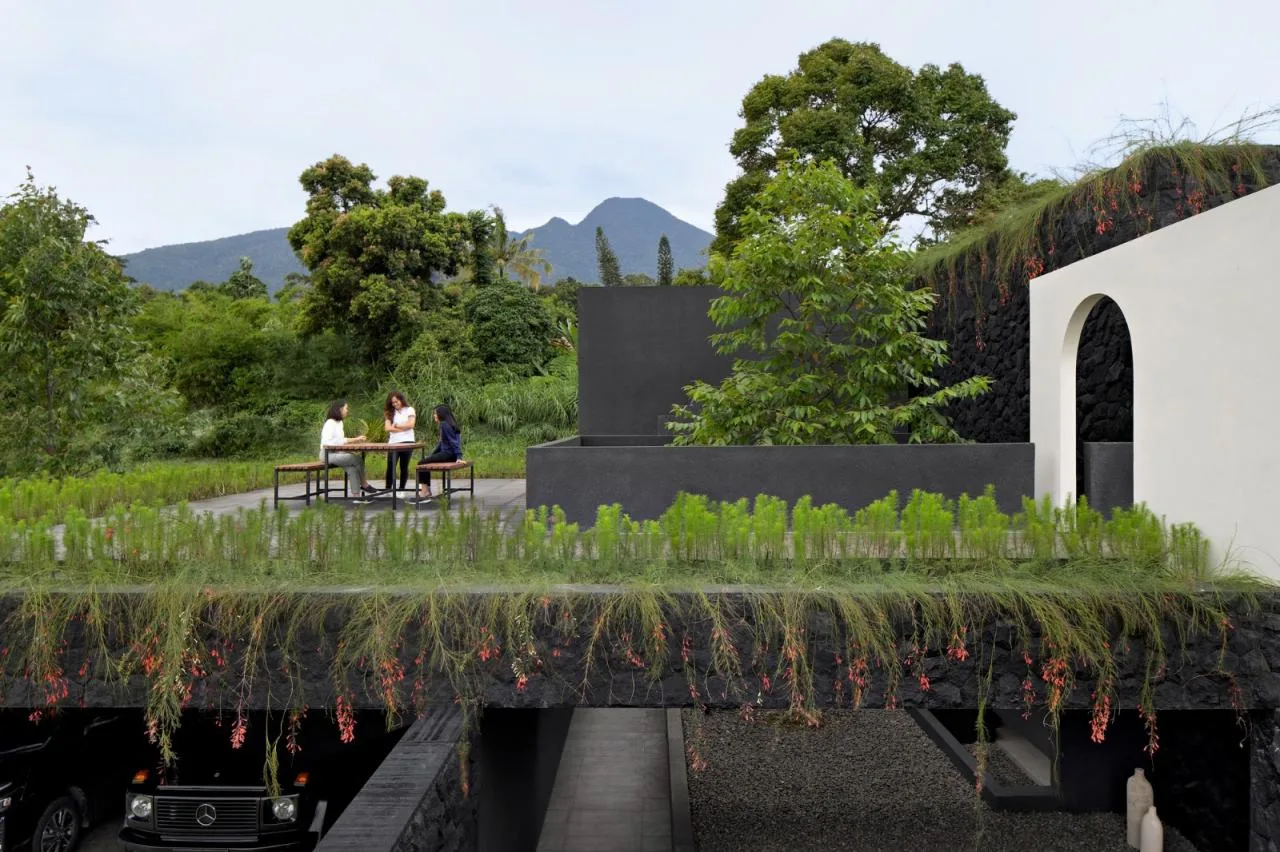
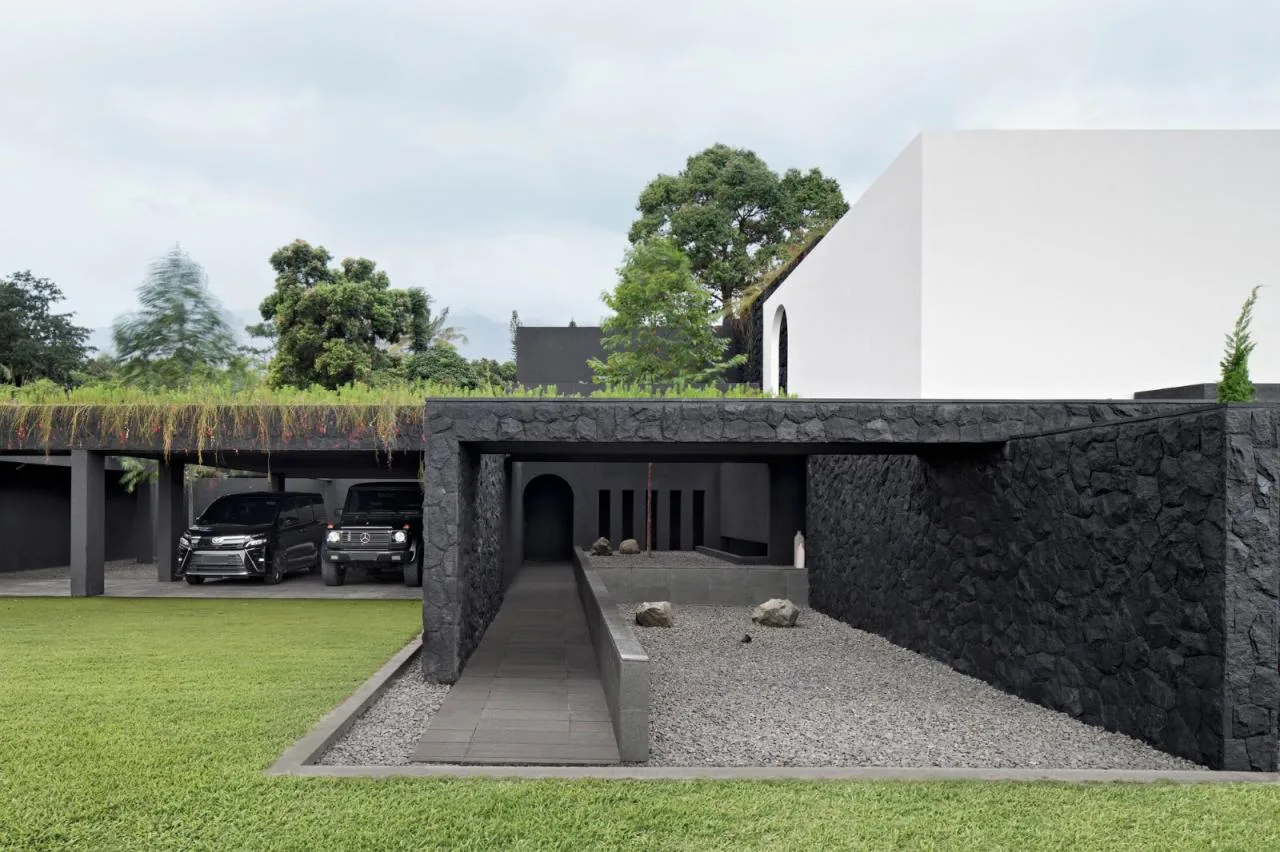
Gets Architecture Firm developed a 600-square-meter villa on a 6-hectare site, with 177 square meters on the ground floor and 439 square meters on the upper floor. Subtle changes in the interior and exterior levels create expansive, light-filled spaces. The solid black stone serves as both a foundation and retaining wall, while the concrete roof doubles as a gathering and relaxation space.
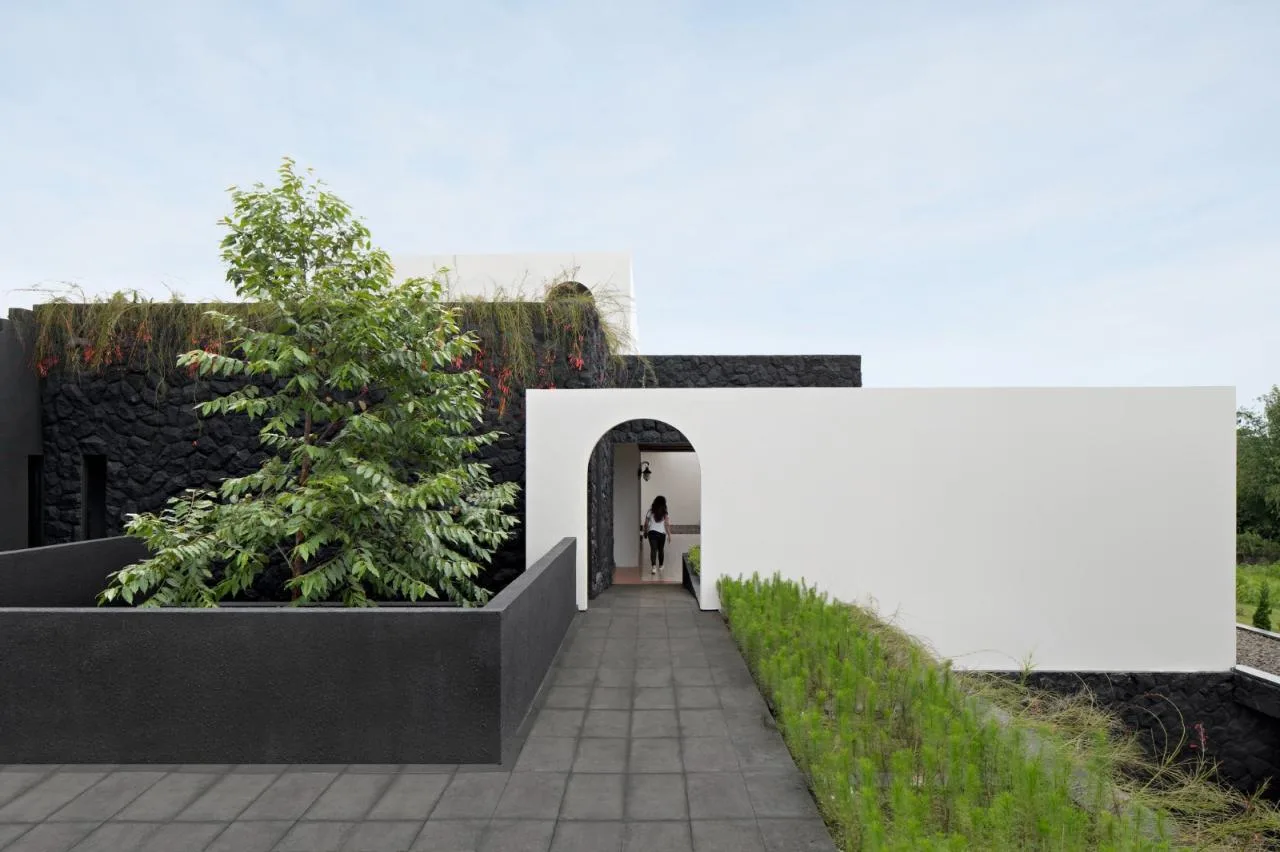
The ground floor houses a garage and service area, with a semi-open courtyard offering a poetic transition to the vast outdoor landscape while maintaining privacy. From the entrance to the upper levels, landscaping elements like stairways trace the slope, enhancing the connection to the site.
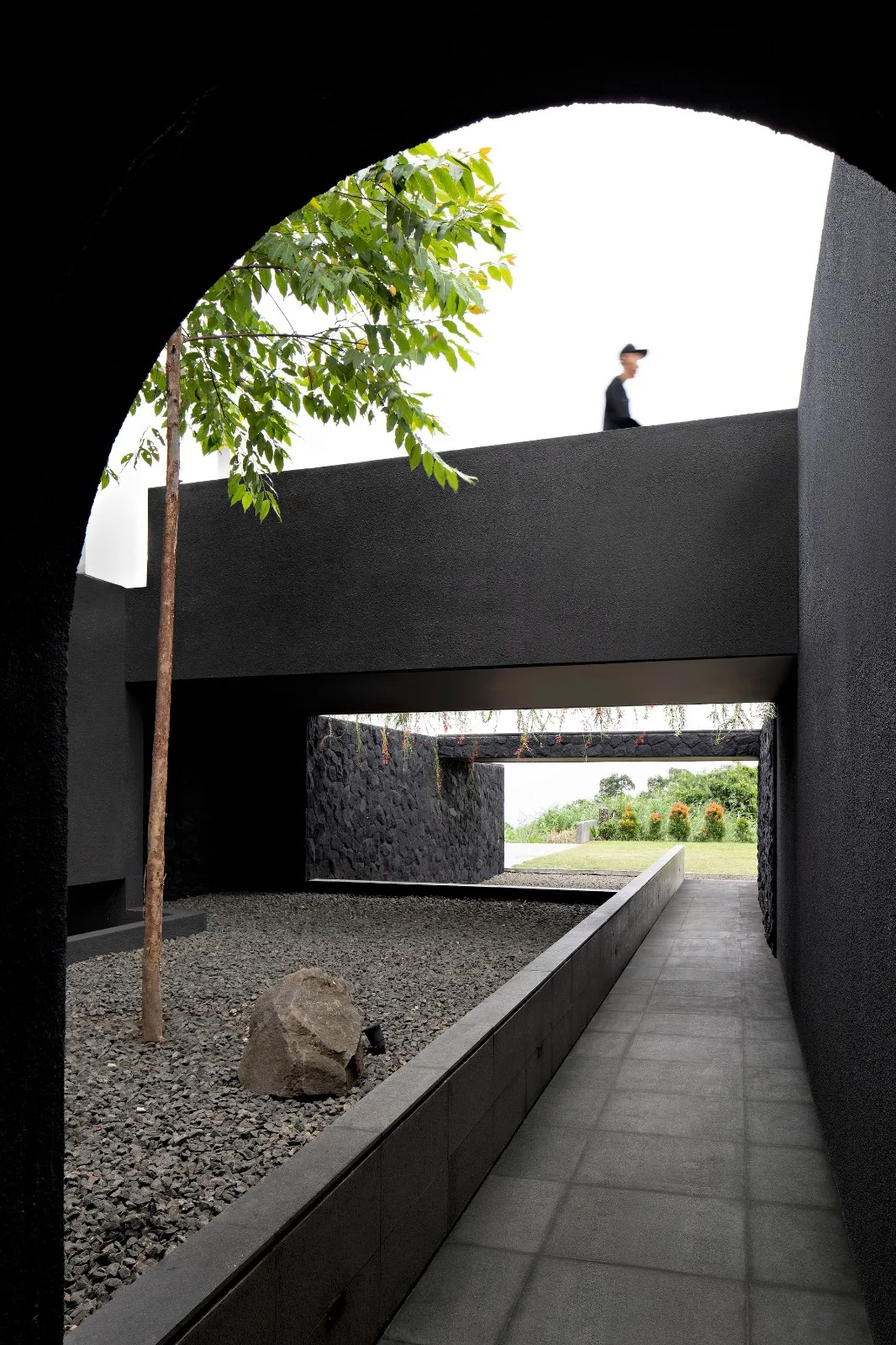
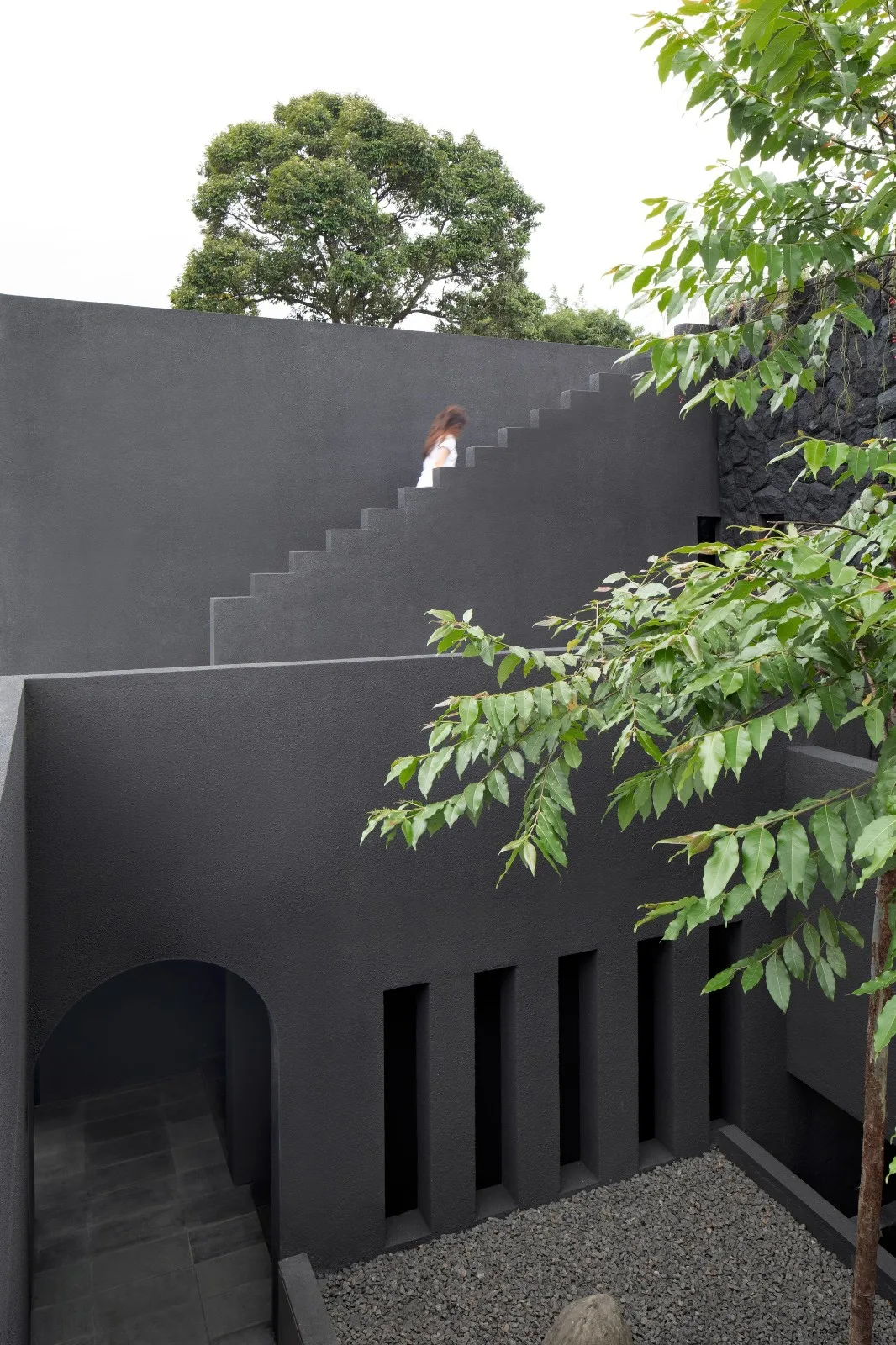
The villa’s distinctive thick arches of the long outdoor arcade immediately capture visitors’ attention, guiding them toward the entrance. The black stone complements the lush vegetation, emphasizing the connection between architecture and nature. Villarci is conceived as a livable sculpture, with a simple architectural scheme that prioritizes communal family spaces.
The layout is linear: the kitchen, dry food storage, and bathrooms are discreetly tucked behind a decorated wall. The sleeping wing, with three ensuite bedrooms, extends away from entertainment zones to accommodate a growing family. The thick arches enclose a courtyard that creates a comfortable microclimate, serving as the vibrant core of the home with captivating views from both inside and out.
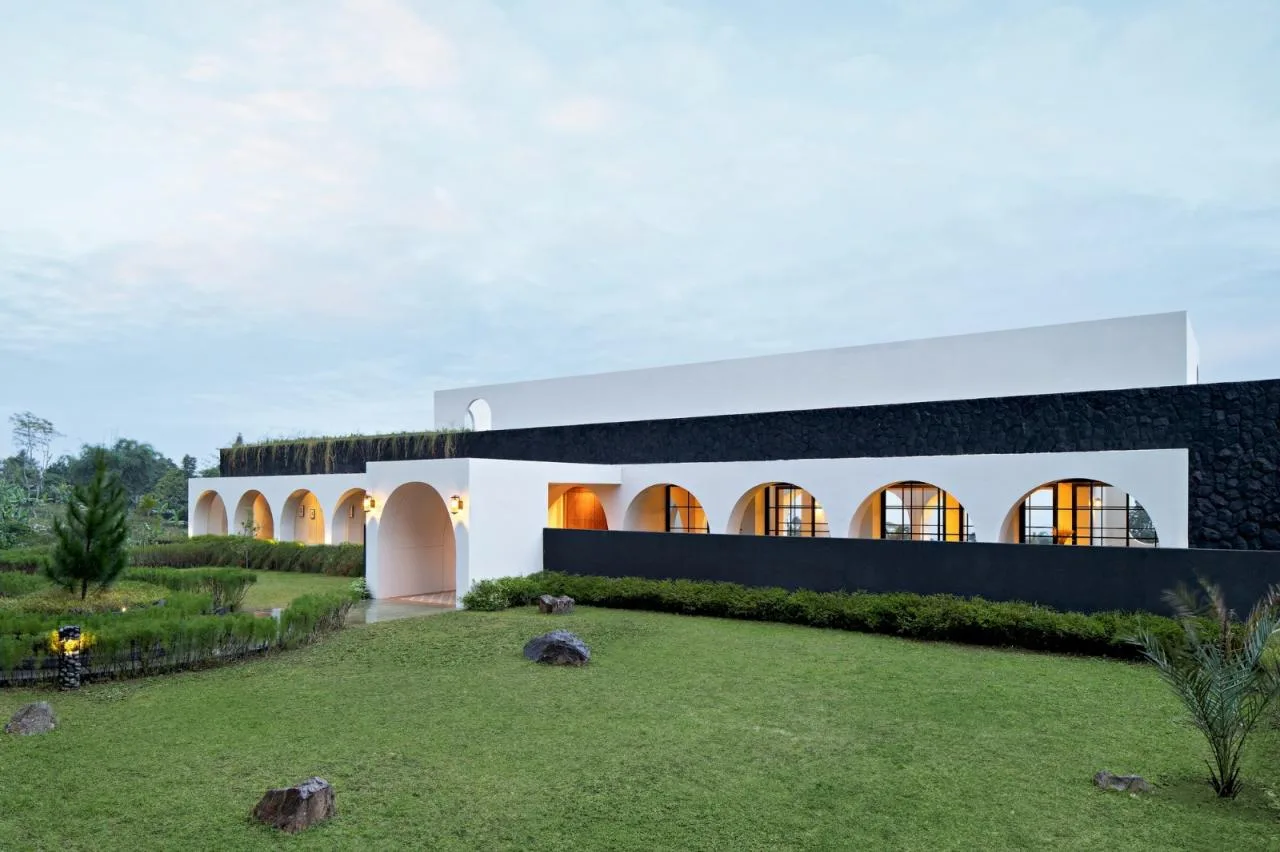
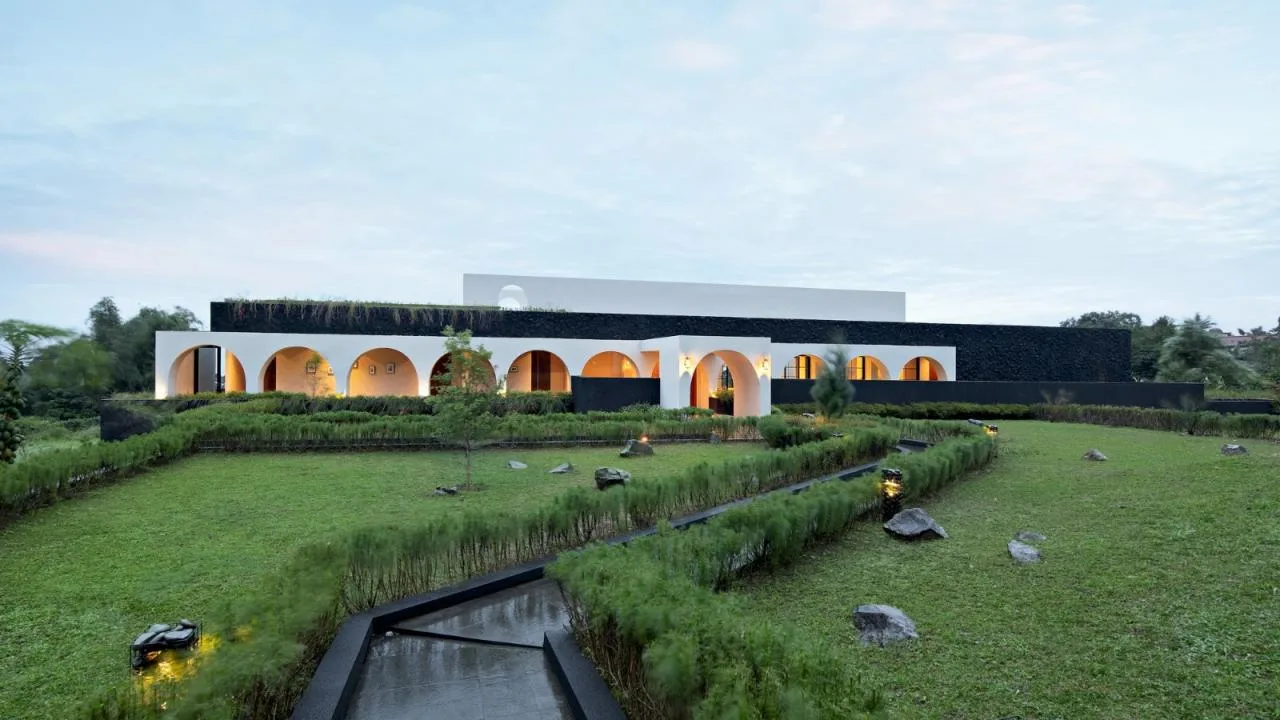
The villa functions as a stacked arched shell, skillfully balanced on the stone base. Arranged perpendicular to contour lines and connected with other volumes, the design takes full advantage of its unique position.
By engaging local craftsmen and blending diverse architectural influences, the project strengthens its ties to the Ciapus landscape. This collaborative process has introduced new construction techniques and fostered a sense of pride, achievement, and identity within the local community.
Project Drawings
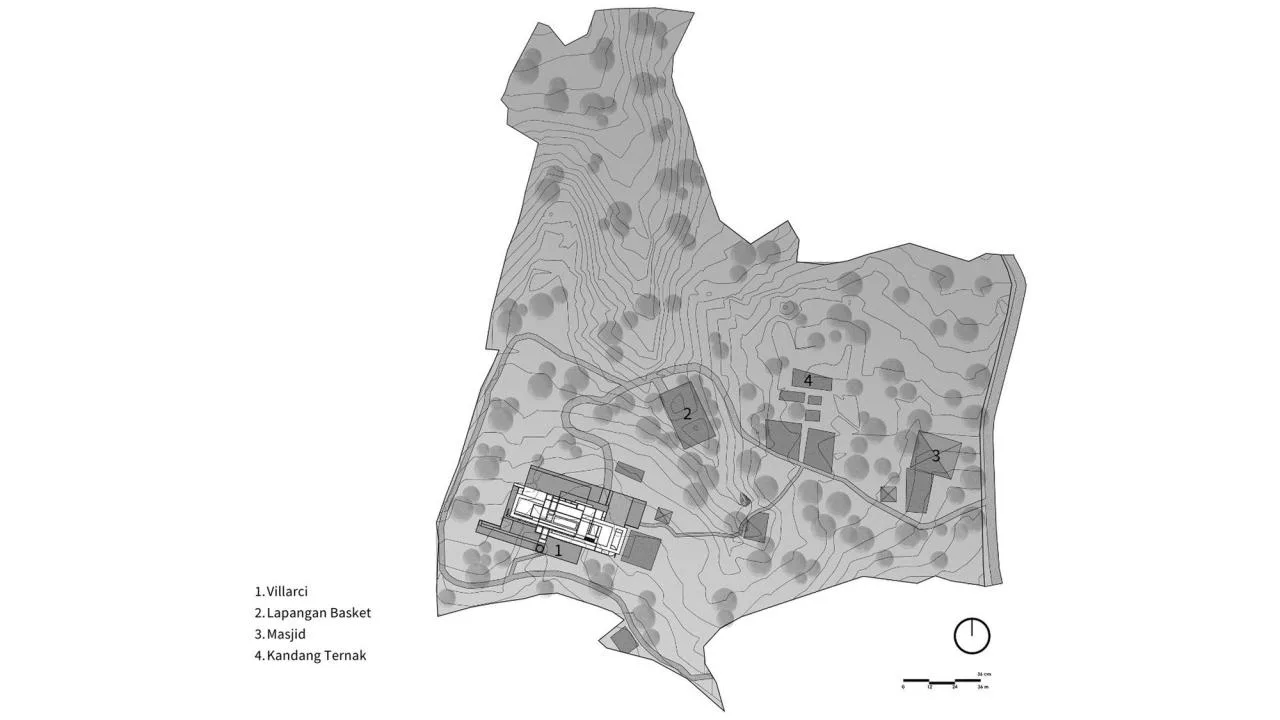
△ General Layout Plan
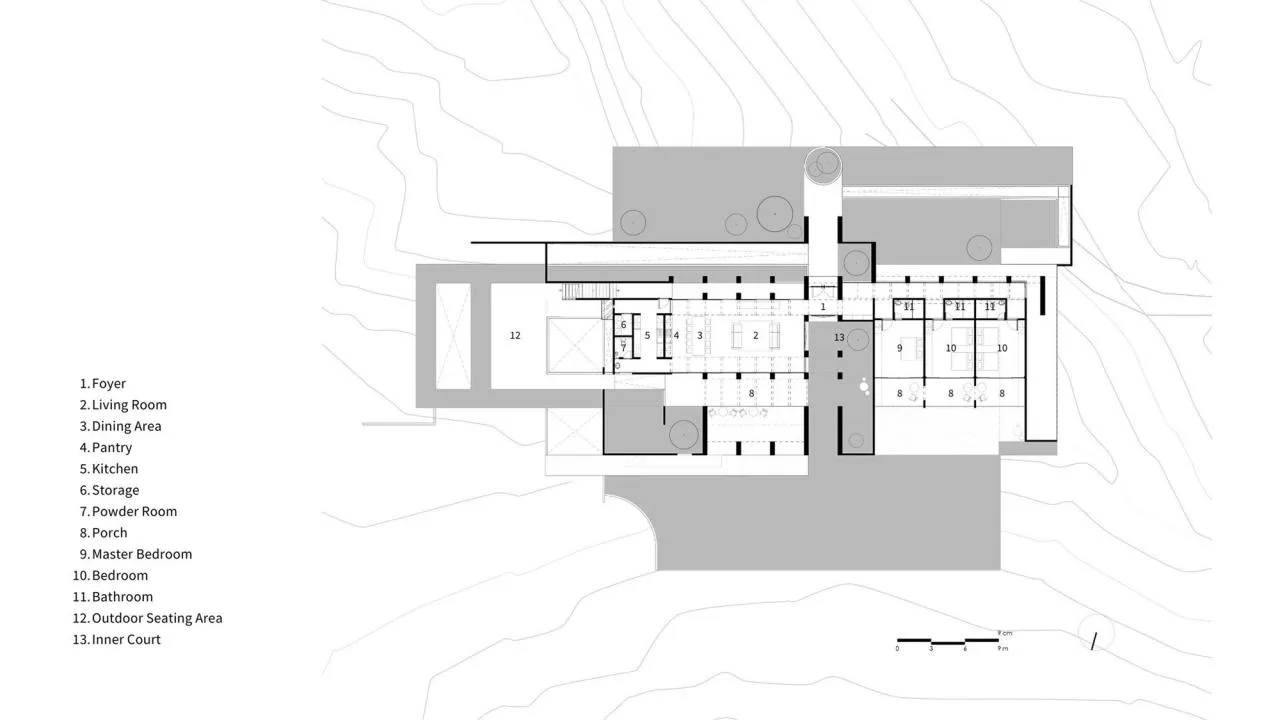
△ First Floor Plan
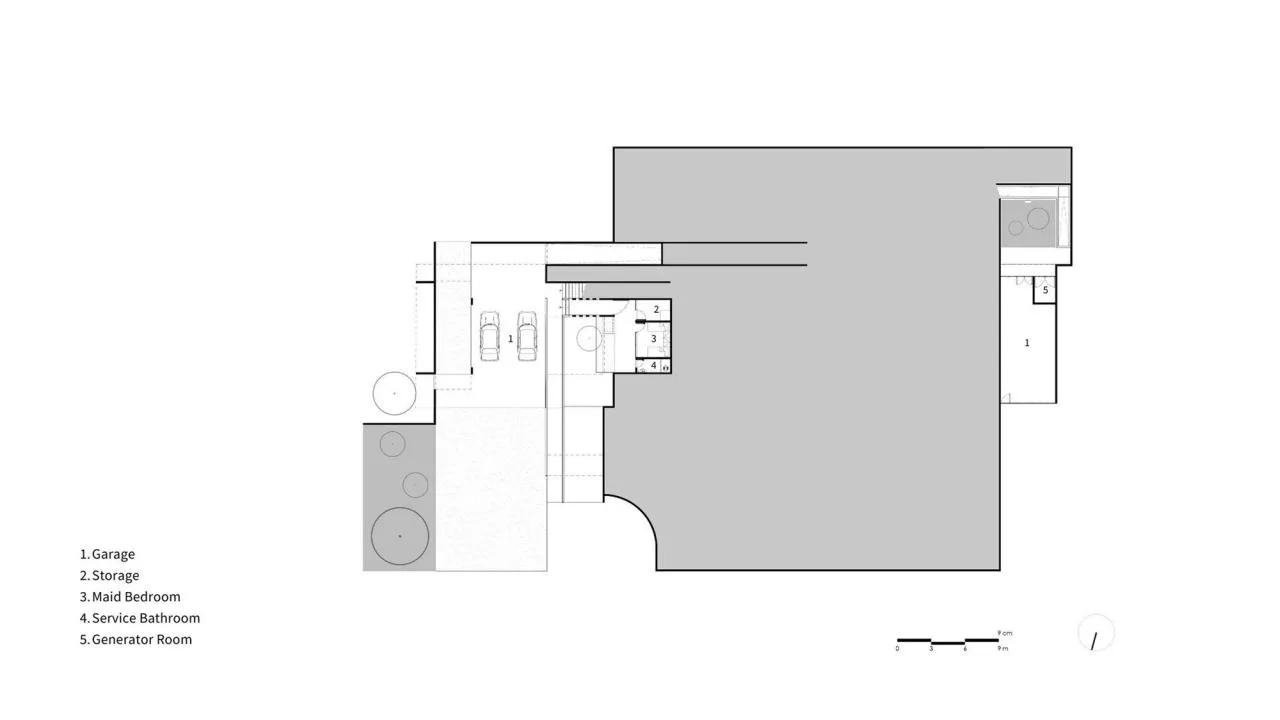
△ Underground Floor Plan
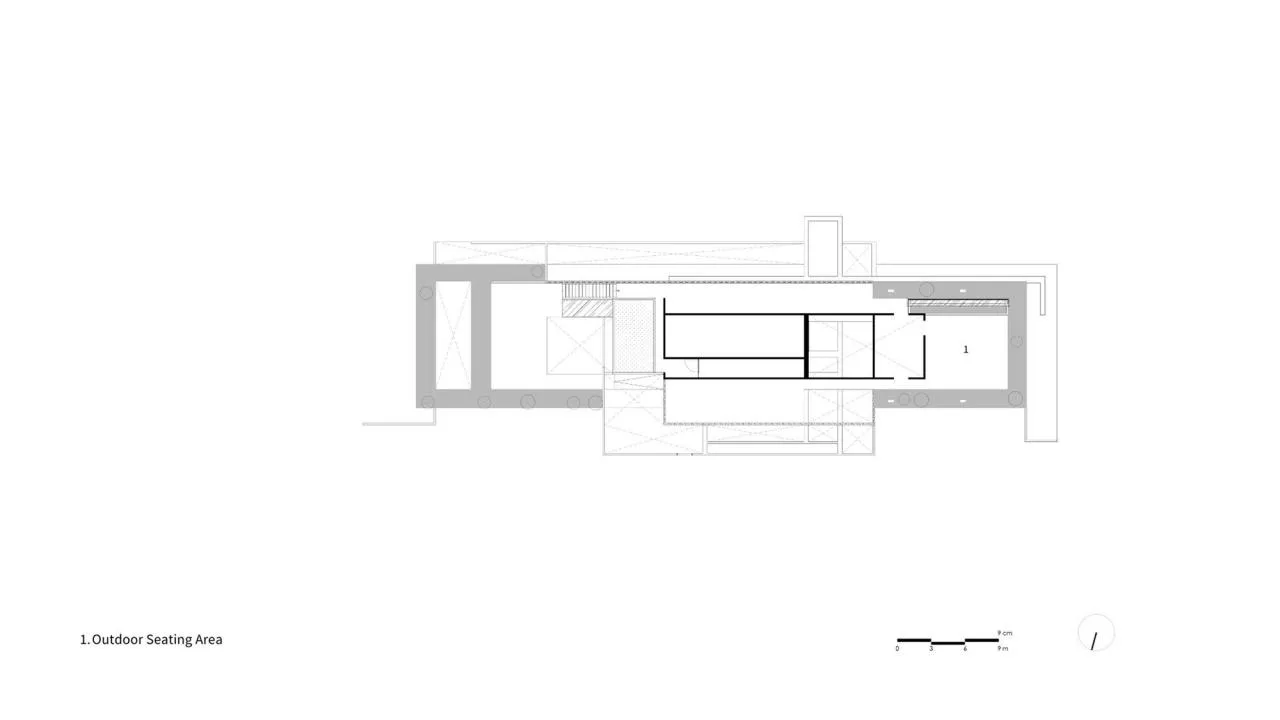
△ Roof Plan
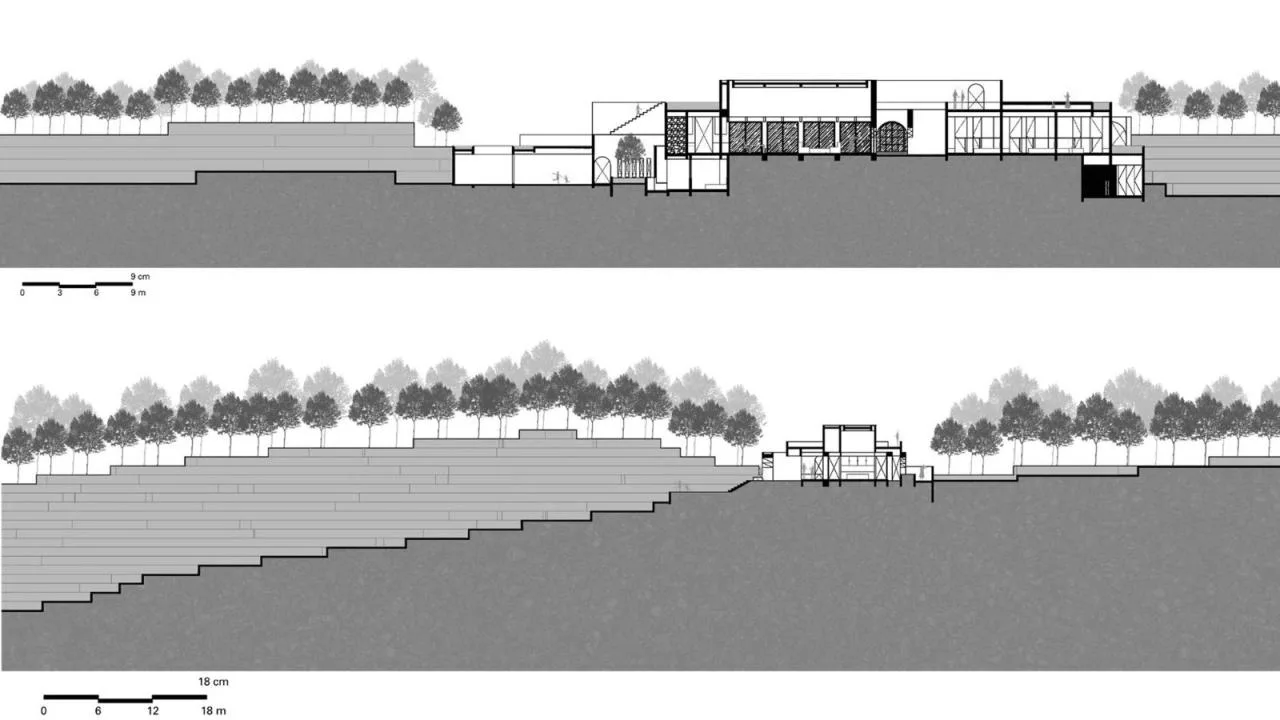
△ Section Diagram
Project Information
Architect: Gets Architects
Area: 617 m²
Year: 2021
Photographer: Mario Wibowo
Lead Architect: Gerard Tambunan
Project Designers: Aleicia Vidya, Joshua Raharjo
Design Team: Reza Fadillah, Farhan Fadillah
Interior Design: Diana Pardede
Location: Bogor, Indonesia












Must log in before commenting!
Sign Up