
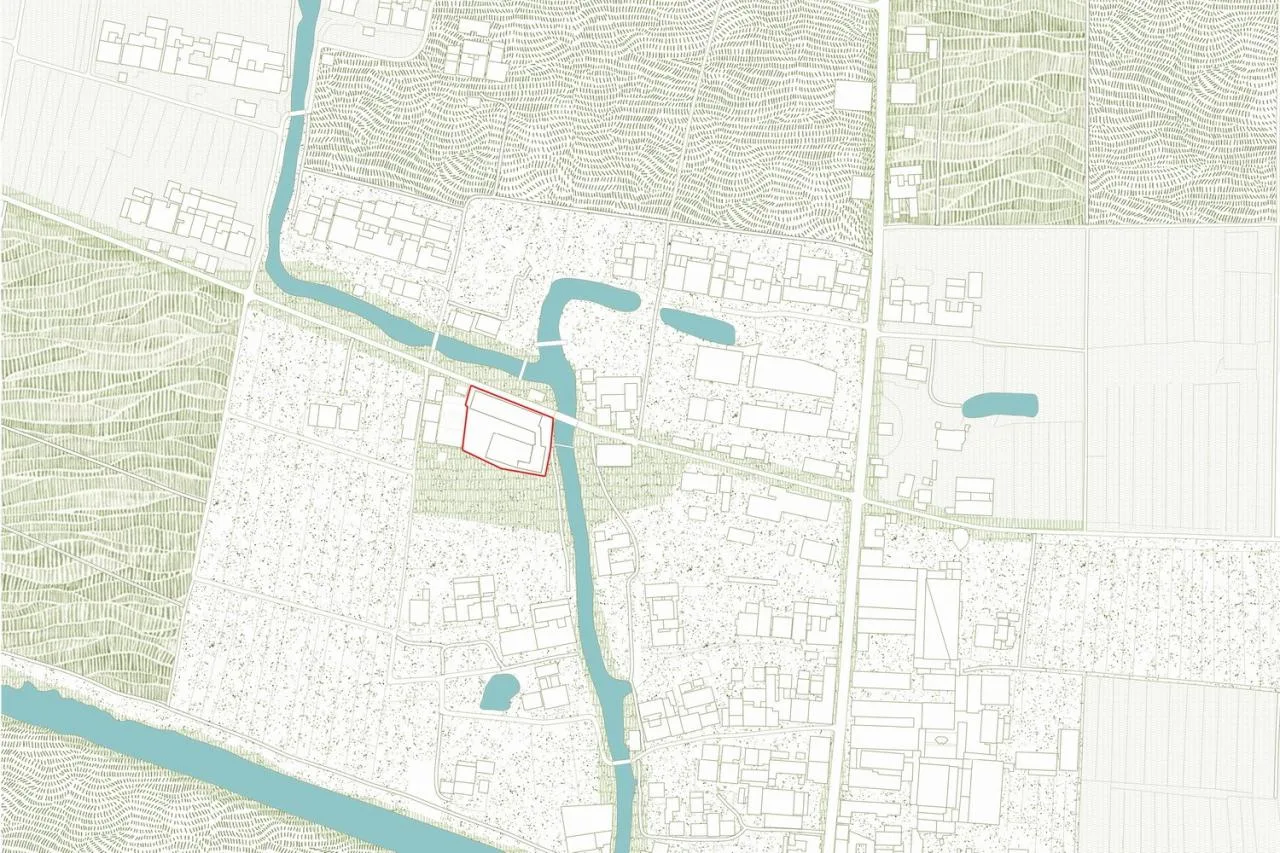
Longnan Village is situated in the southwest of the Tongxiang Development Zone (Gaoqiao Street). Recognized as one of the third batch of provincial-level future rural creation villages in Zhejiang Province, the village has recently focused on both infrastructure upgrades and the exploration of its rich historical and cultural heritage. Embracing themes such as water town, painting town, poetry town, and silkworm town, Longnan Village has crafted a distinct cultural identity under the motto “Poetry and Painting Longnan.”
The village is surrounded by expansive farmland shaded by trees, with rivers winding from north to south, creating a picturesque pastoral landscape. The site itself borders the water, featuring an old L-shaped house originally built as a school with a spacious courtyard. Over time, an additional warehouse was added, transforming the site into a small processing plant. Today, the factory has been relocated, leaving behind the old house in a fragile condition and an ancient wutong tree that has stood witness throughout its history.
Longnan Village aims to preserve the legacy of this site by establishing a cultural center dedicated to recording history, alongside an office building to provide convenient services. Together, these will form a new Party and Mass Center for the community.
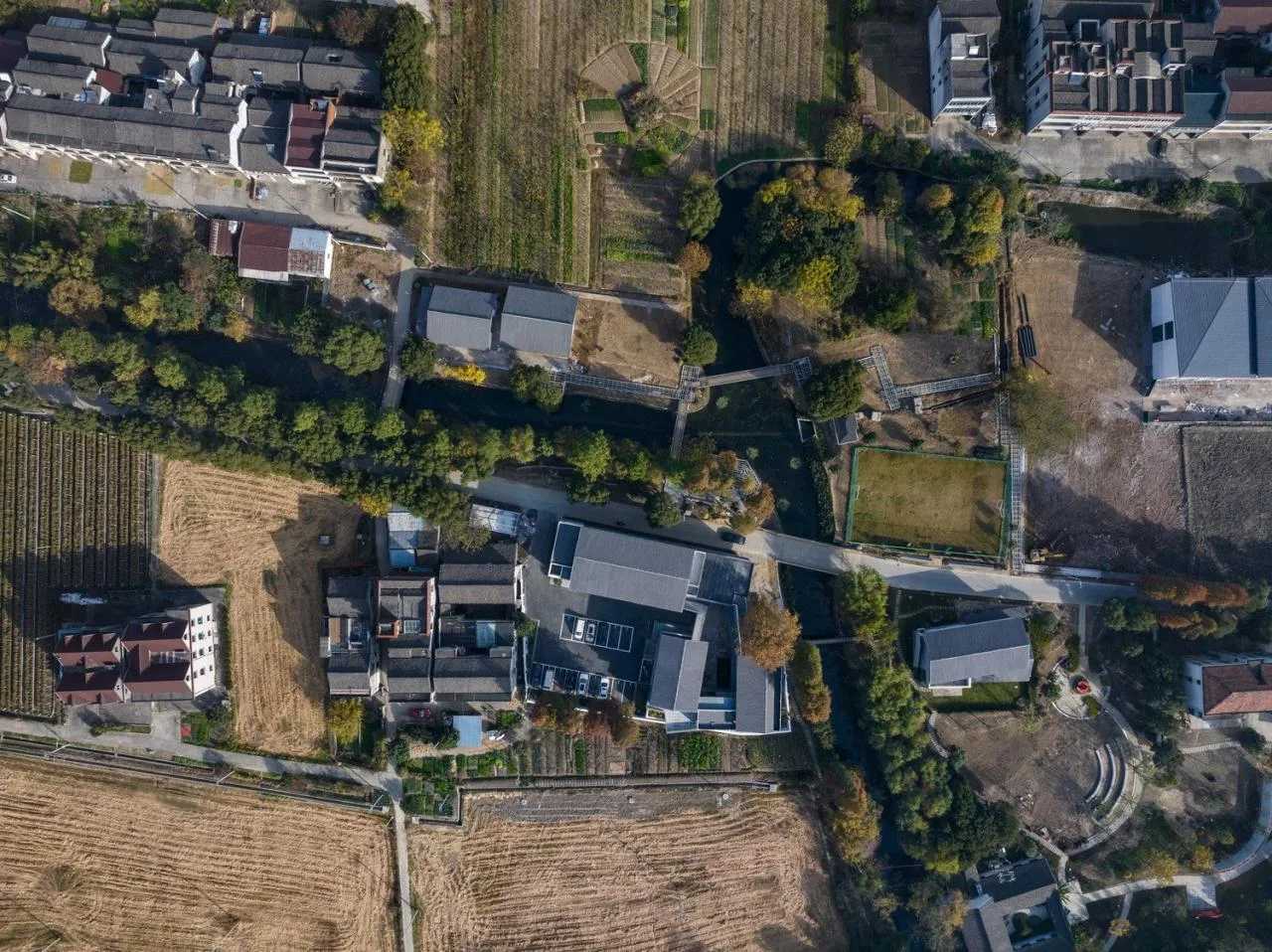
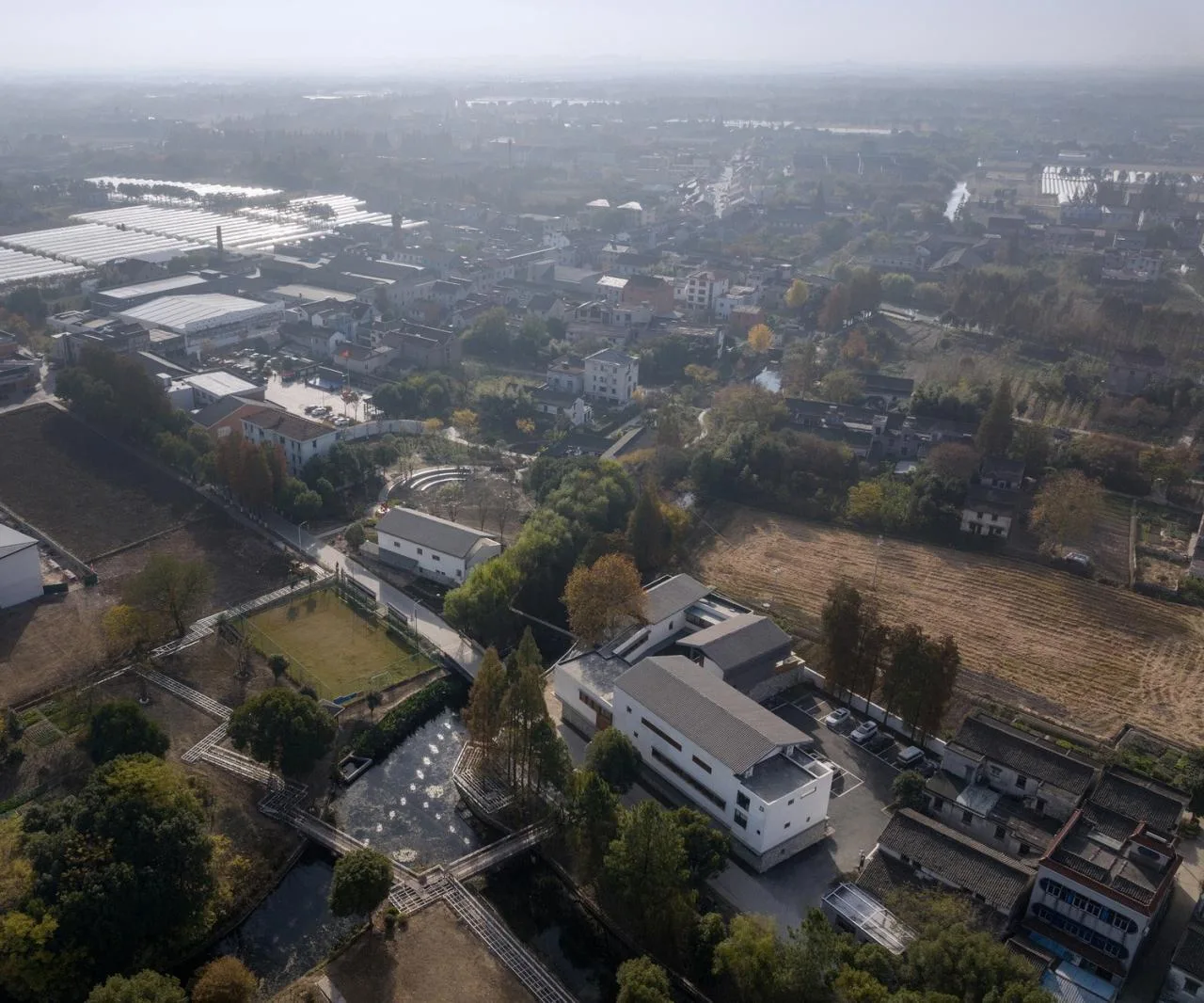
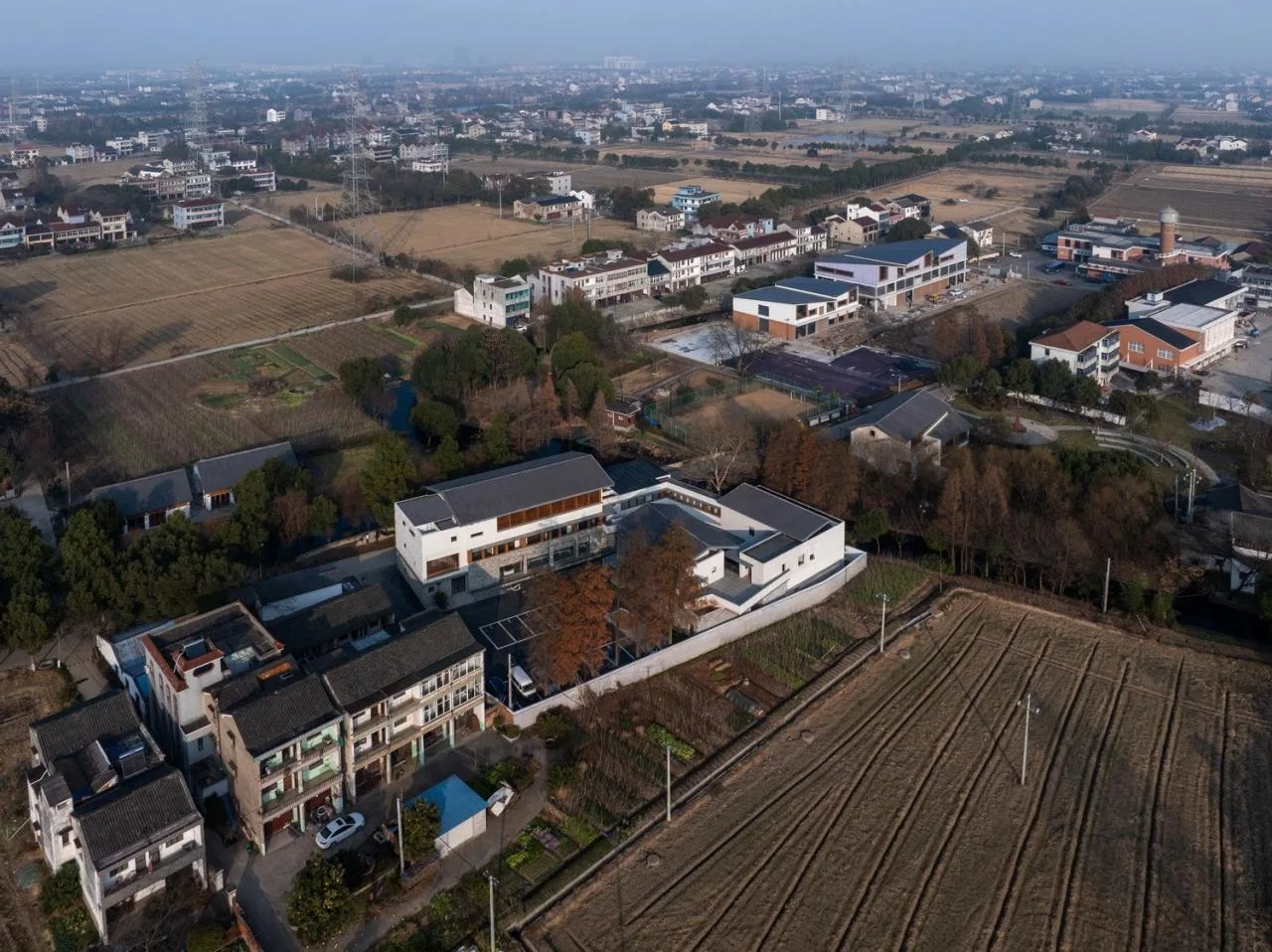
△ Aerial view
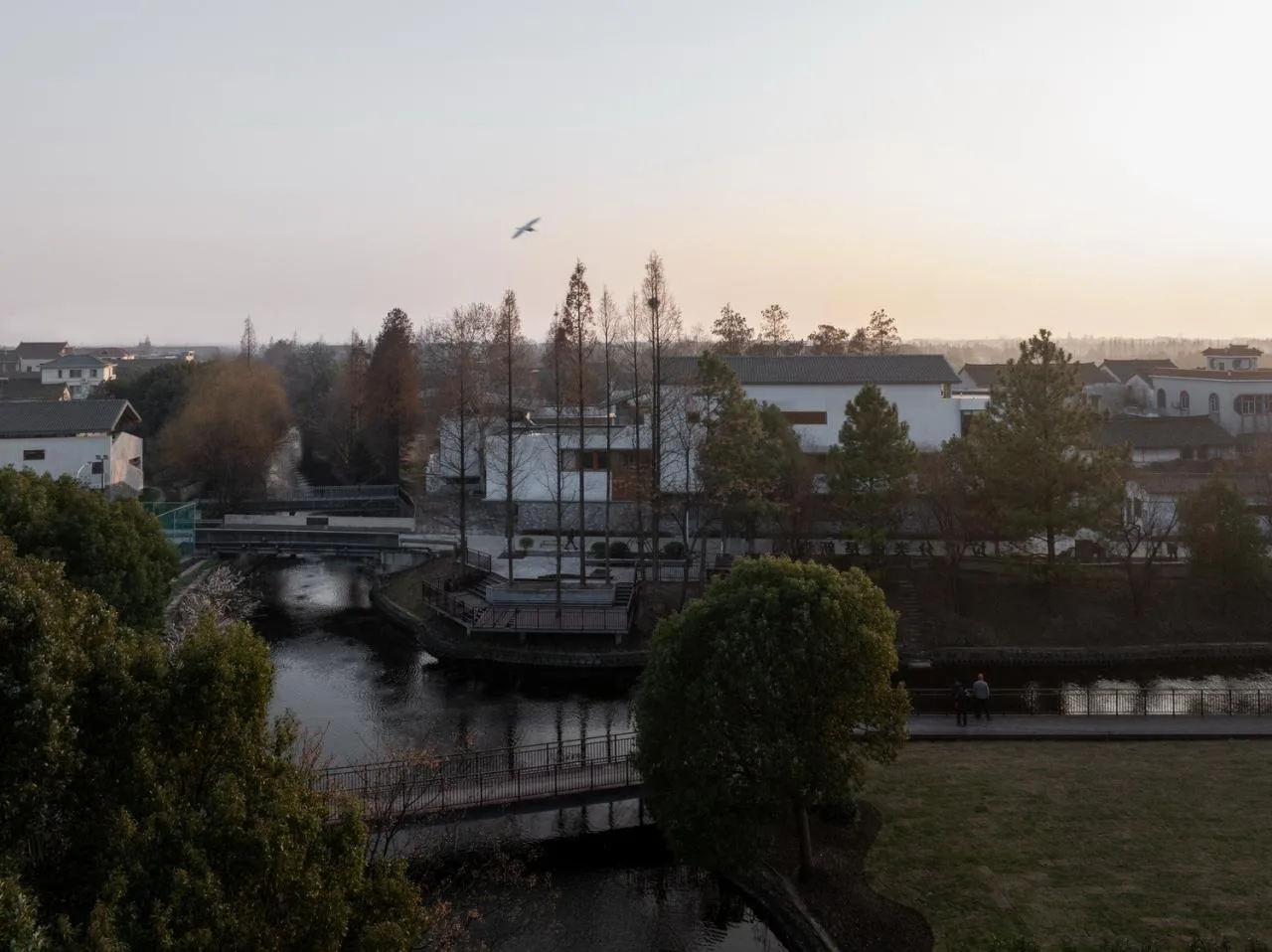
△ Waterfront environment
Venue: Shuiyuan – Courtyard – Grand Courtyard
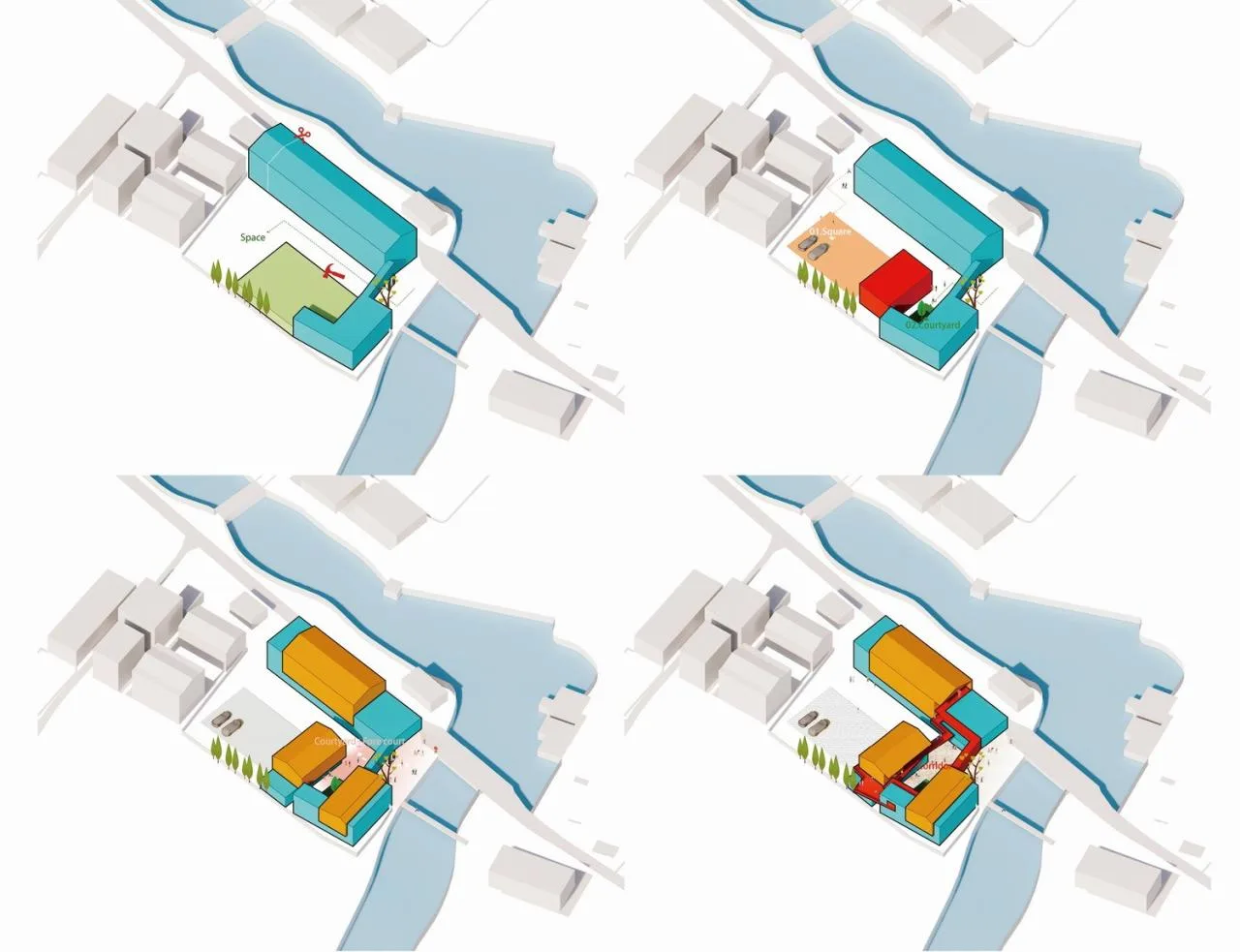
The surrounding environment and architecture still maintain the traditional layout of residential buildings. Courtyard spaces remain in nearby primary schools and art galleries, while the river shaped by roads and bridges forms a water courtyard.
This design seeks to preserve the rural settlement’s texture within its cultural context by arranging the Party and Mass Center and the Historical and Cultural Museum around a courtyard space. Half of the site, where the warehouse was demolished, will be rebuilt, while the other half will be enclosed by preserved buildings to form an inner courtyard. This space offers visitors to the cultural museum a public leisure area where they can engage with history and experience traditional courtyard culture. The original square within the site will be preserved as much as possible, serving as a compound for party and mass activities, with parking and distribution functions as its core.
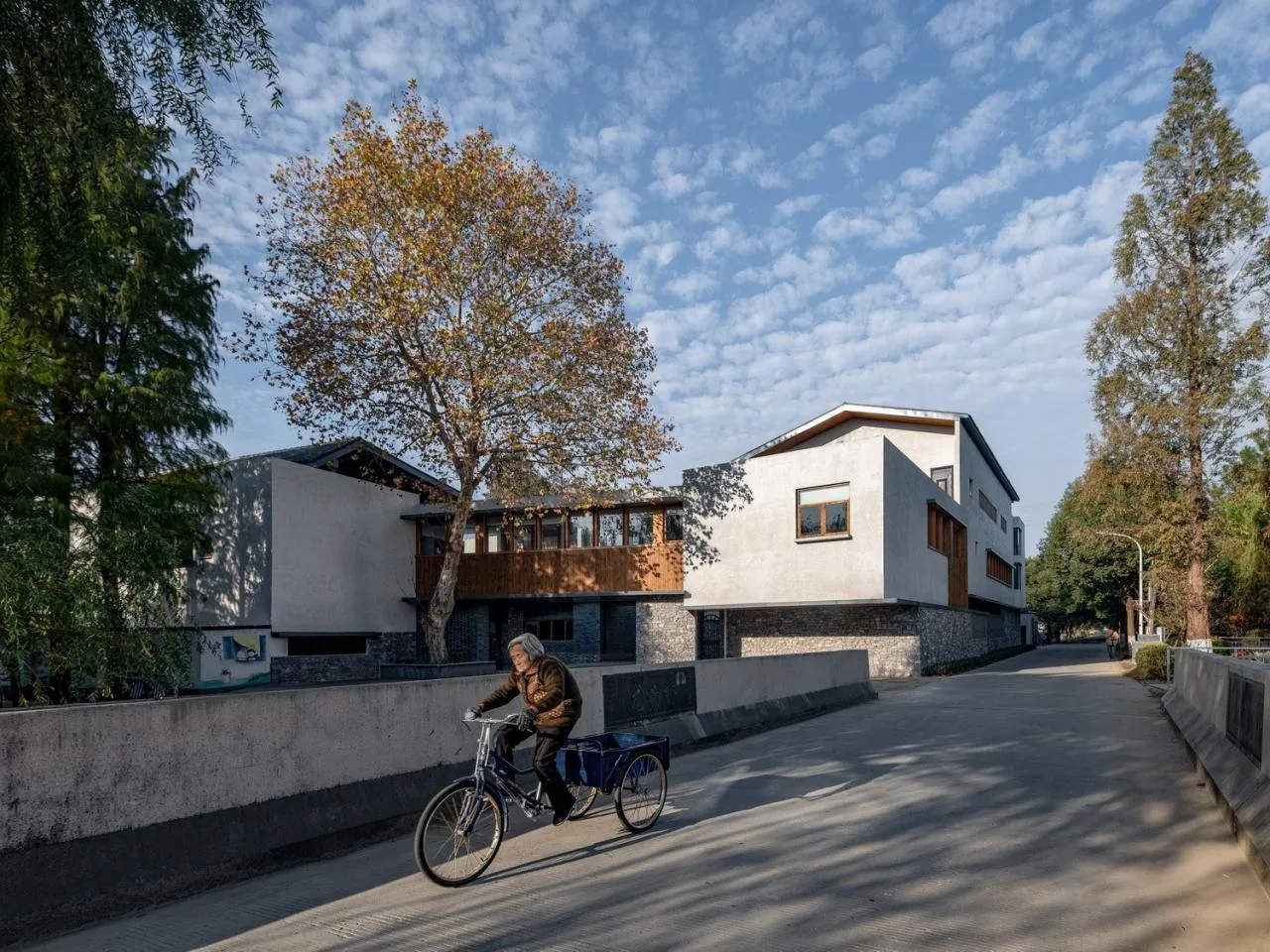
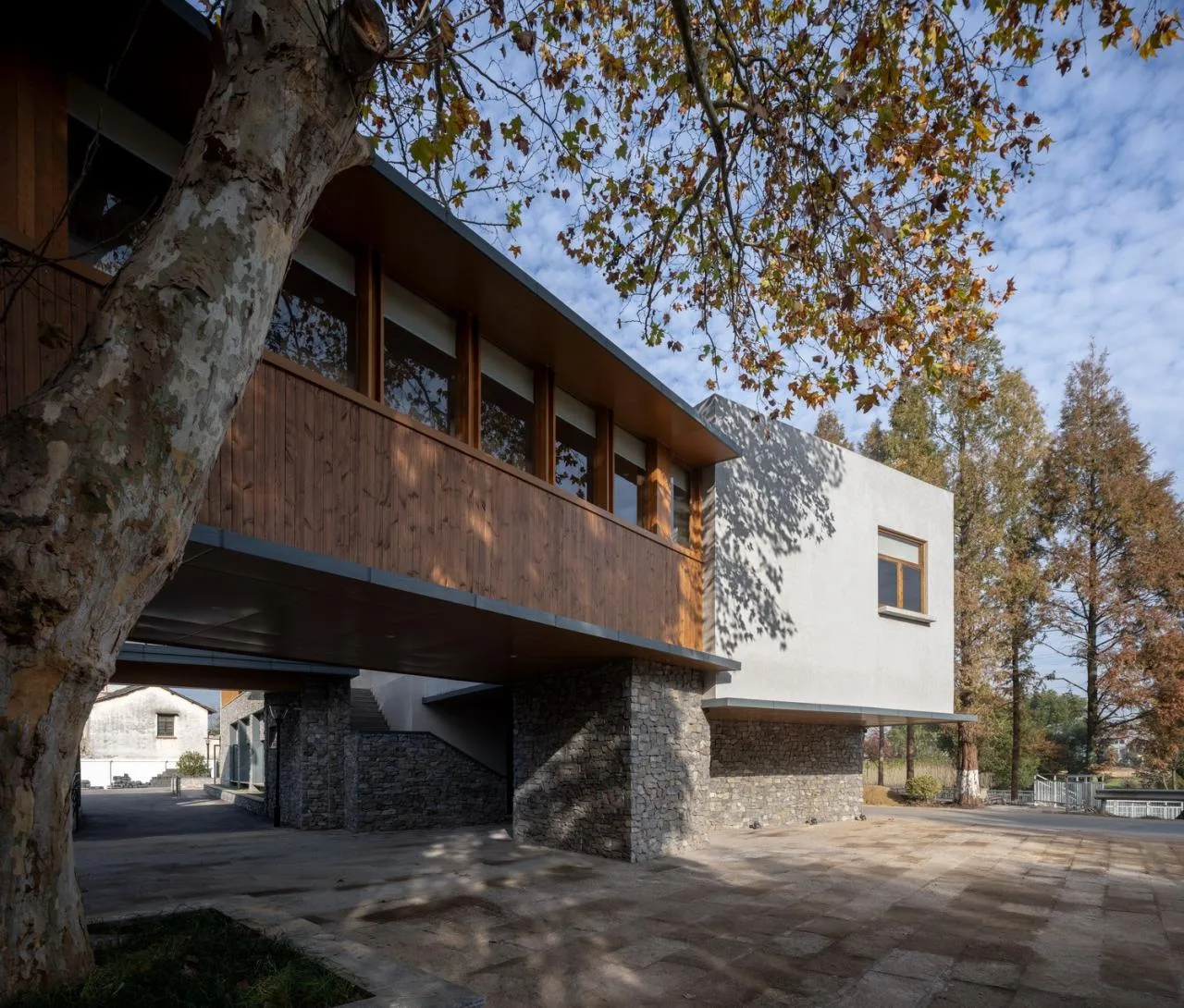
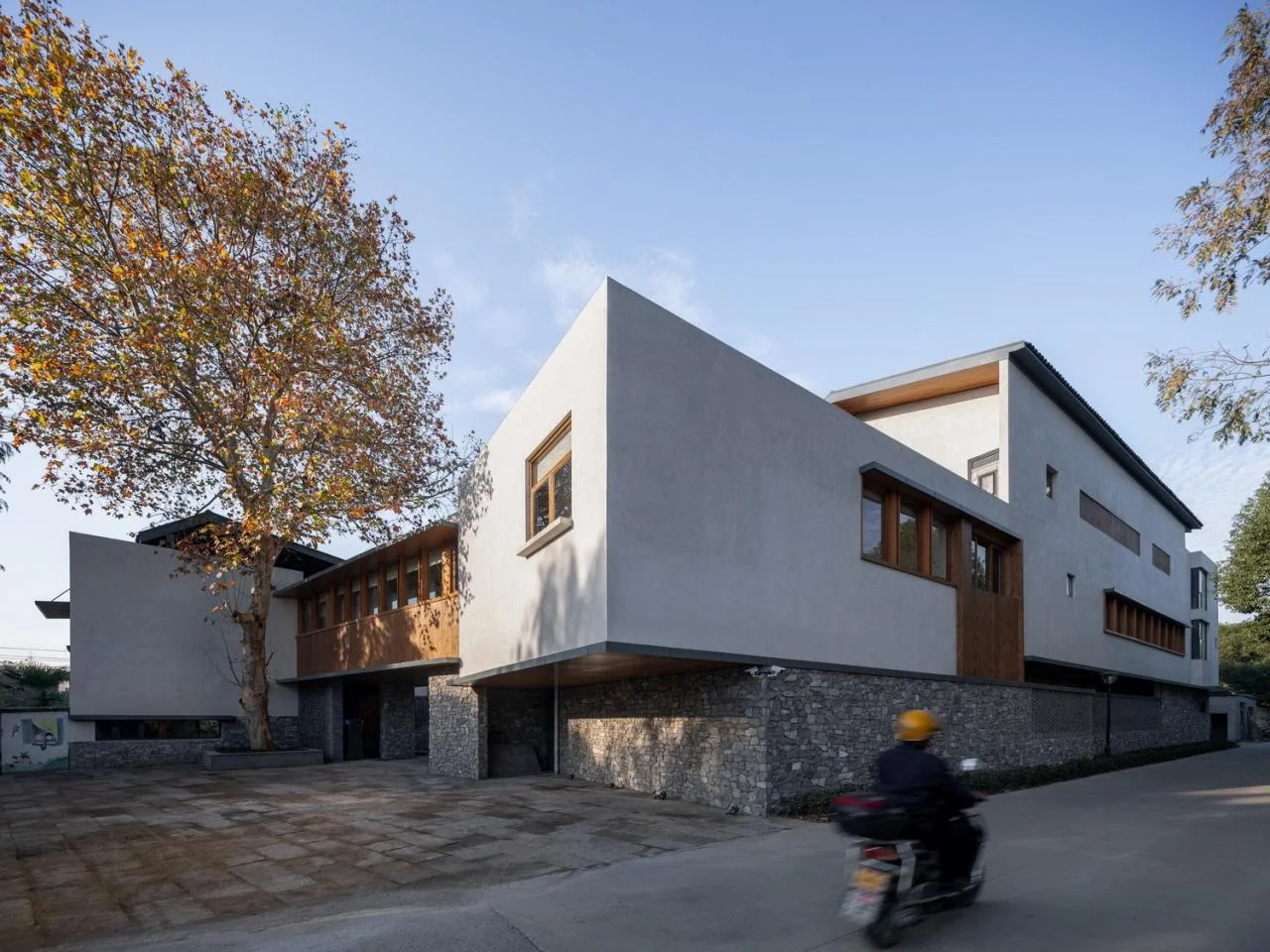
The “bridge house” located by the village roadside
△ Front courtyard
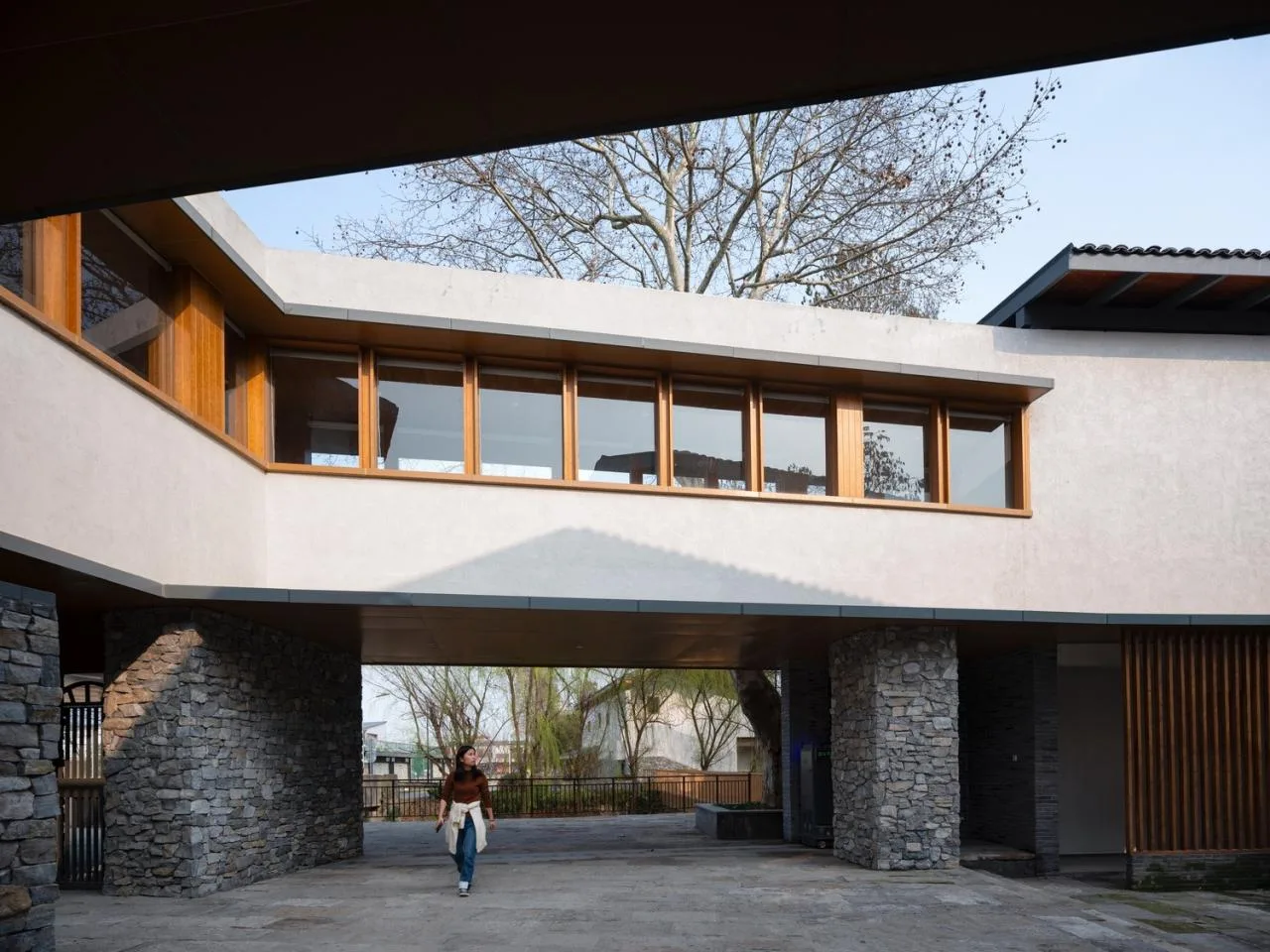
△ Entrance
The spatial sequence of “water courtyard courtyard courtyard courtyard” integrates the surrounding environment into the architectural cluster. It effectively organizes public and private spaces to meet diverse functional requirements, creating a site that embodies rural cultural spatial identity.
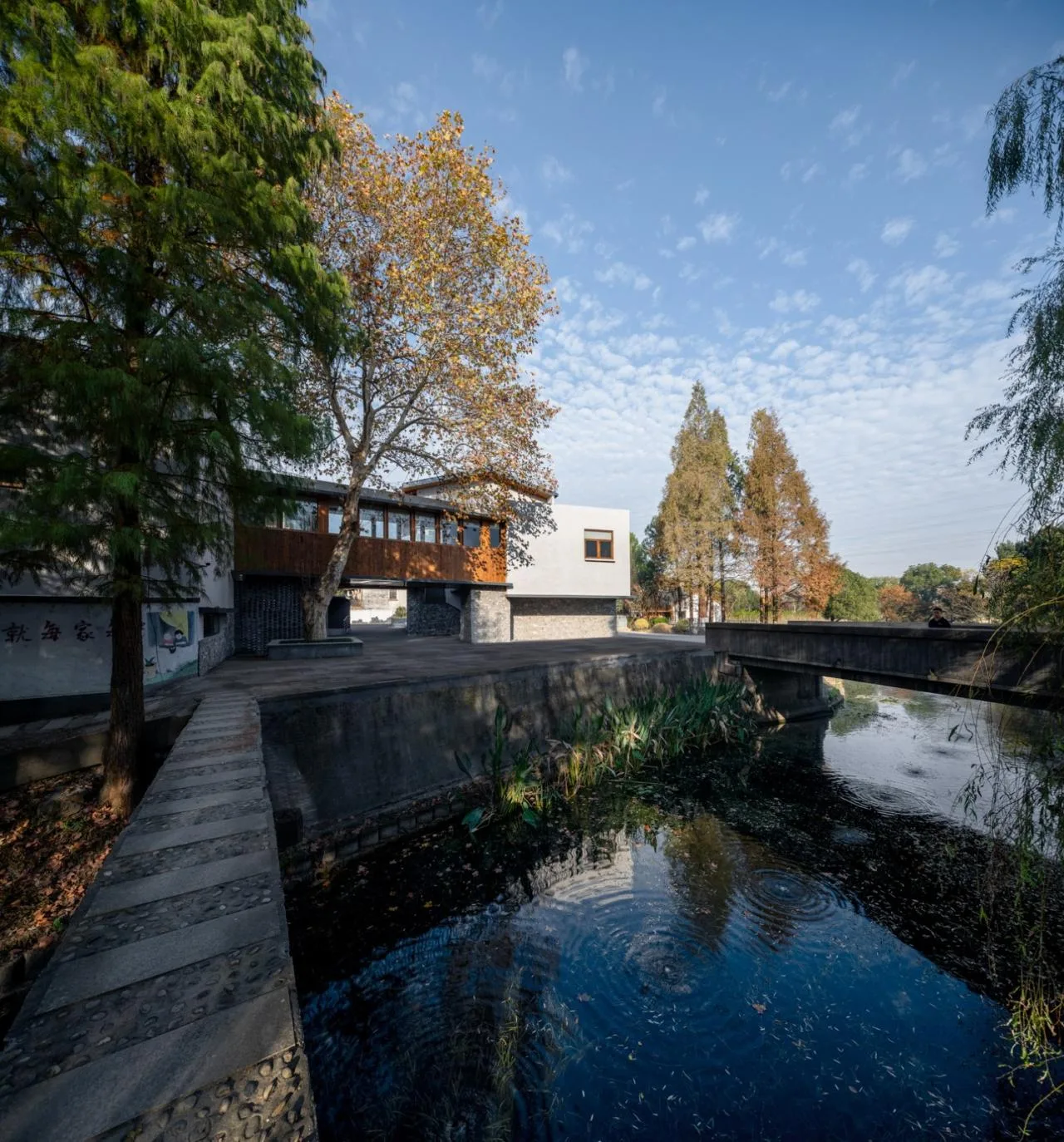
△ Water Institute
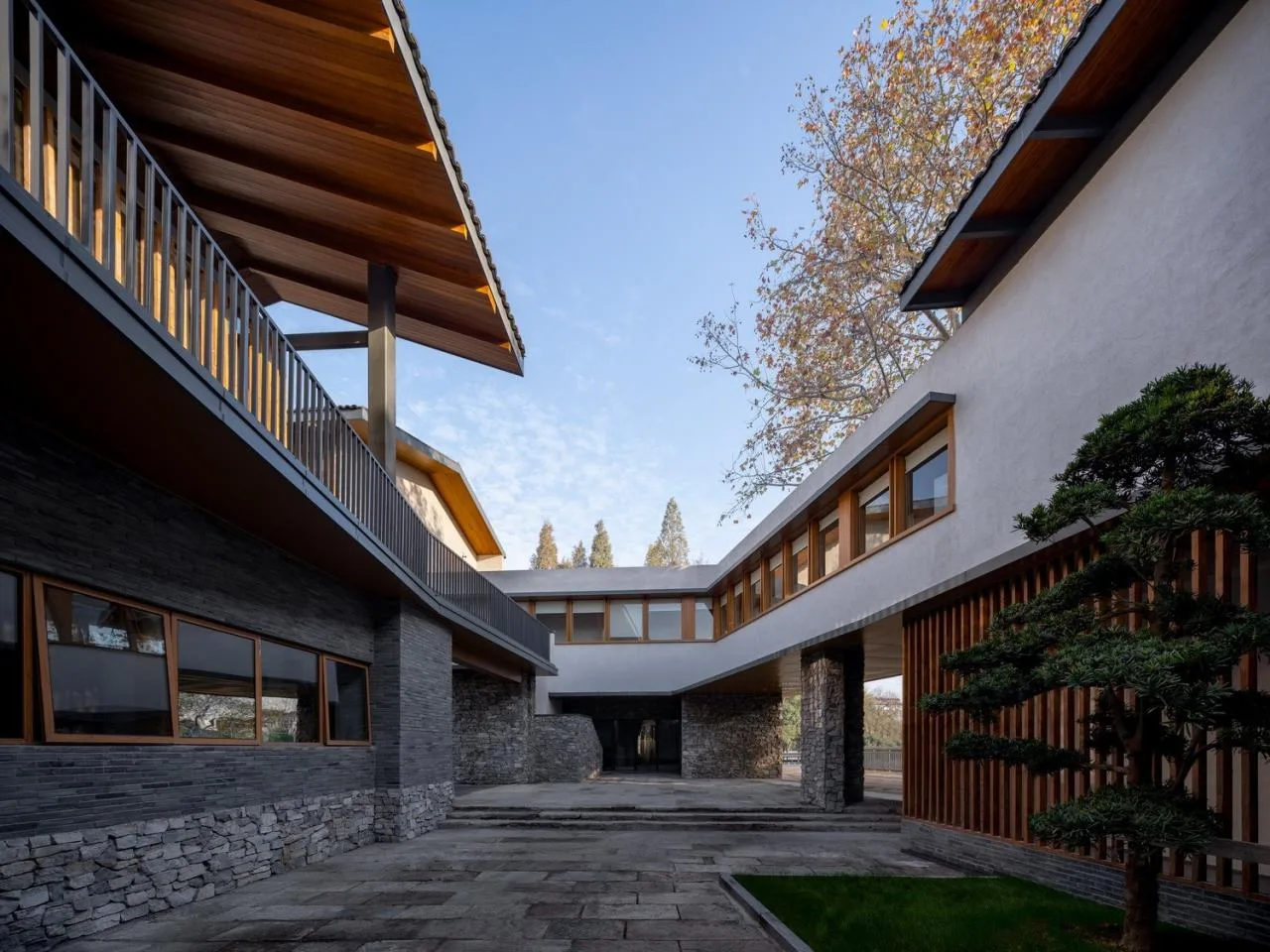
△ Courtyard
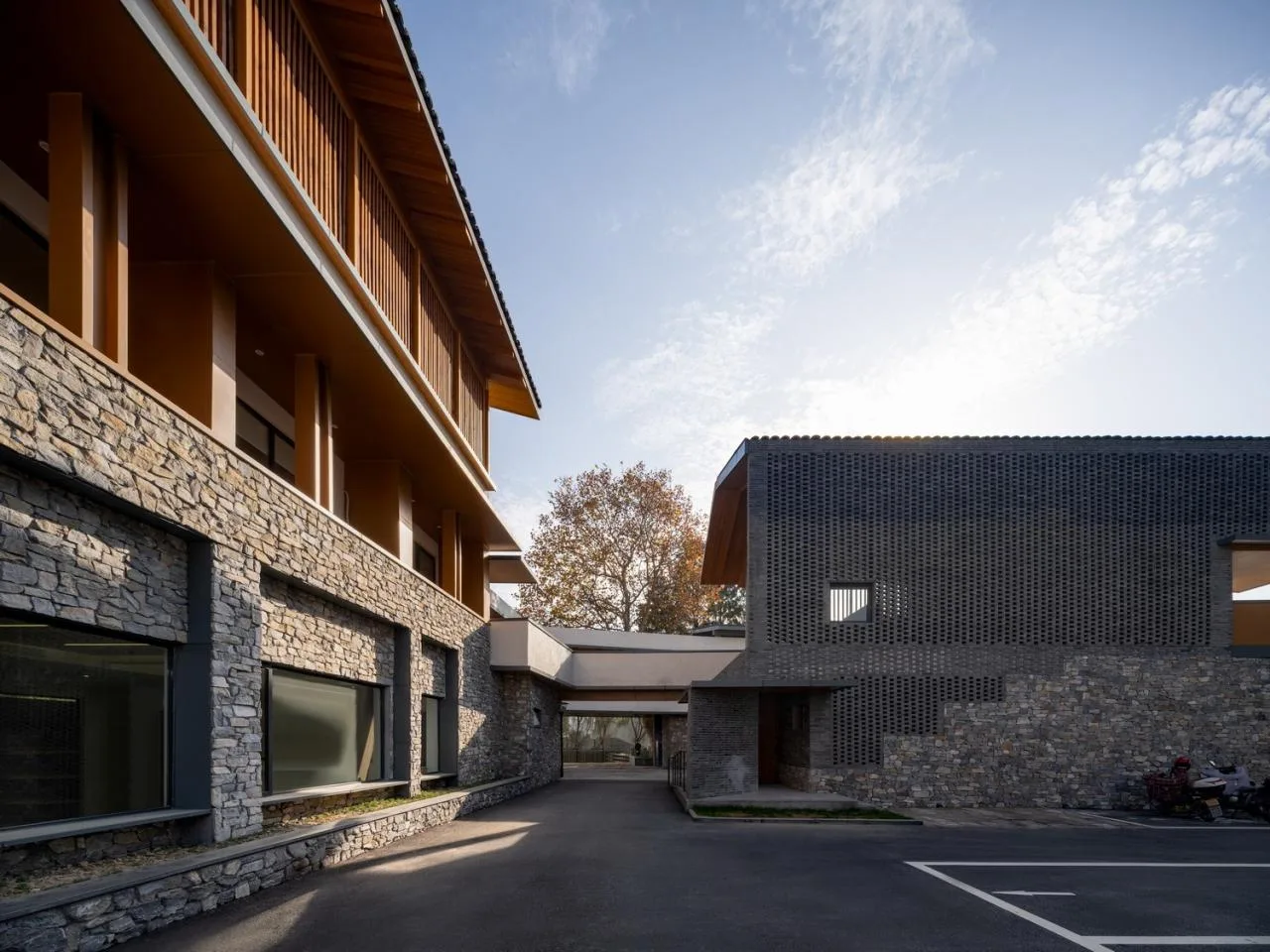
△ Courtyard
Design Concept: The Story of the Bridge
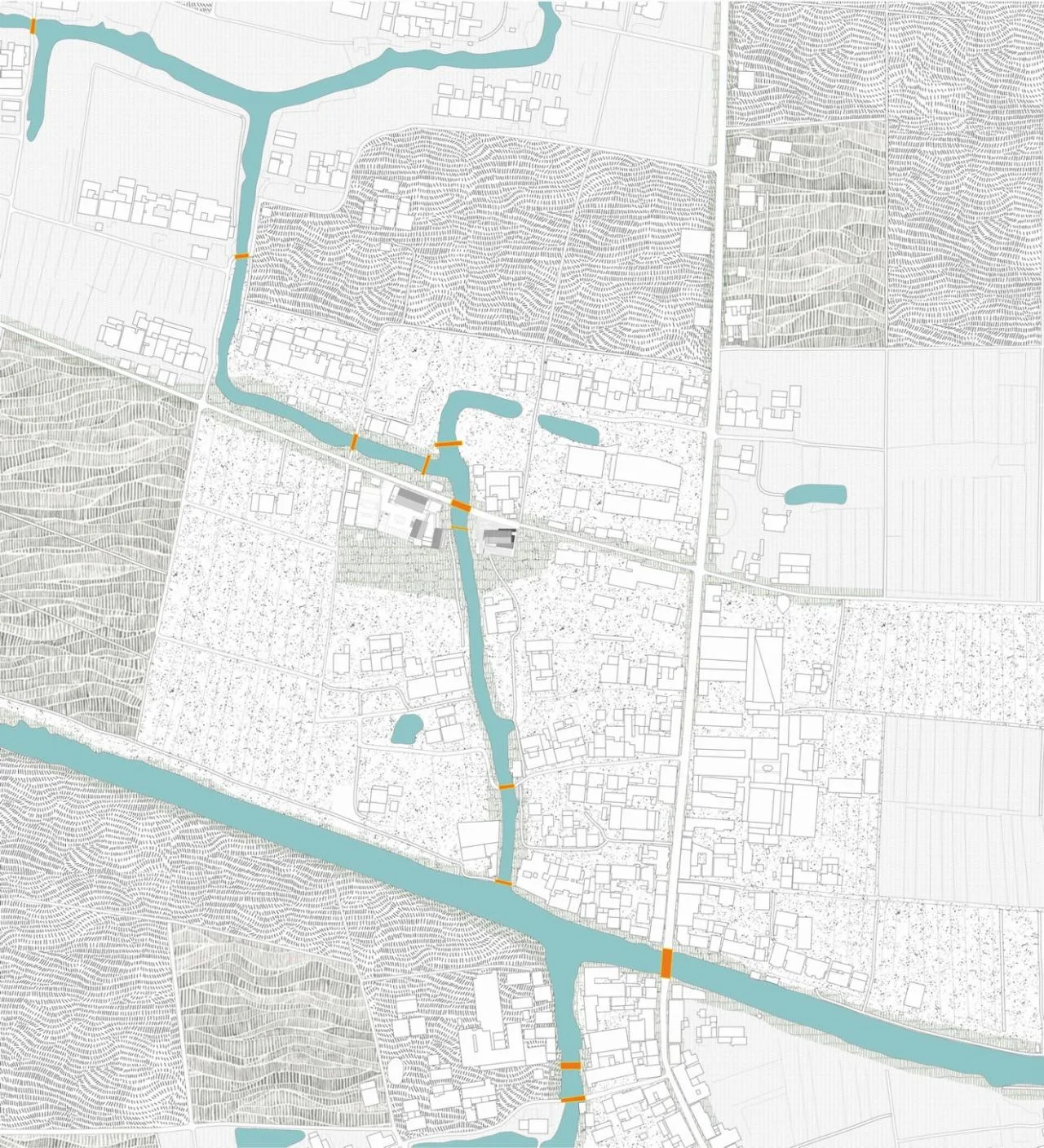
The bridge on the site
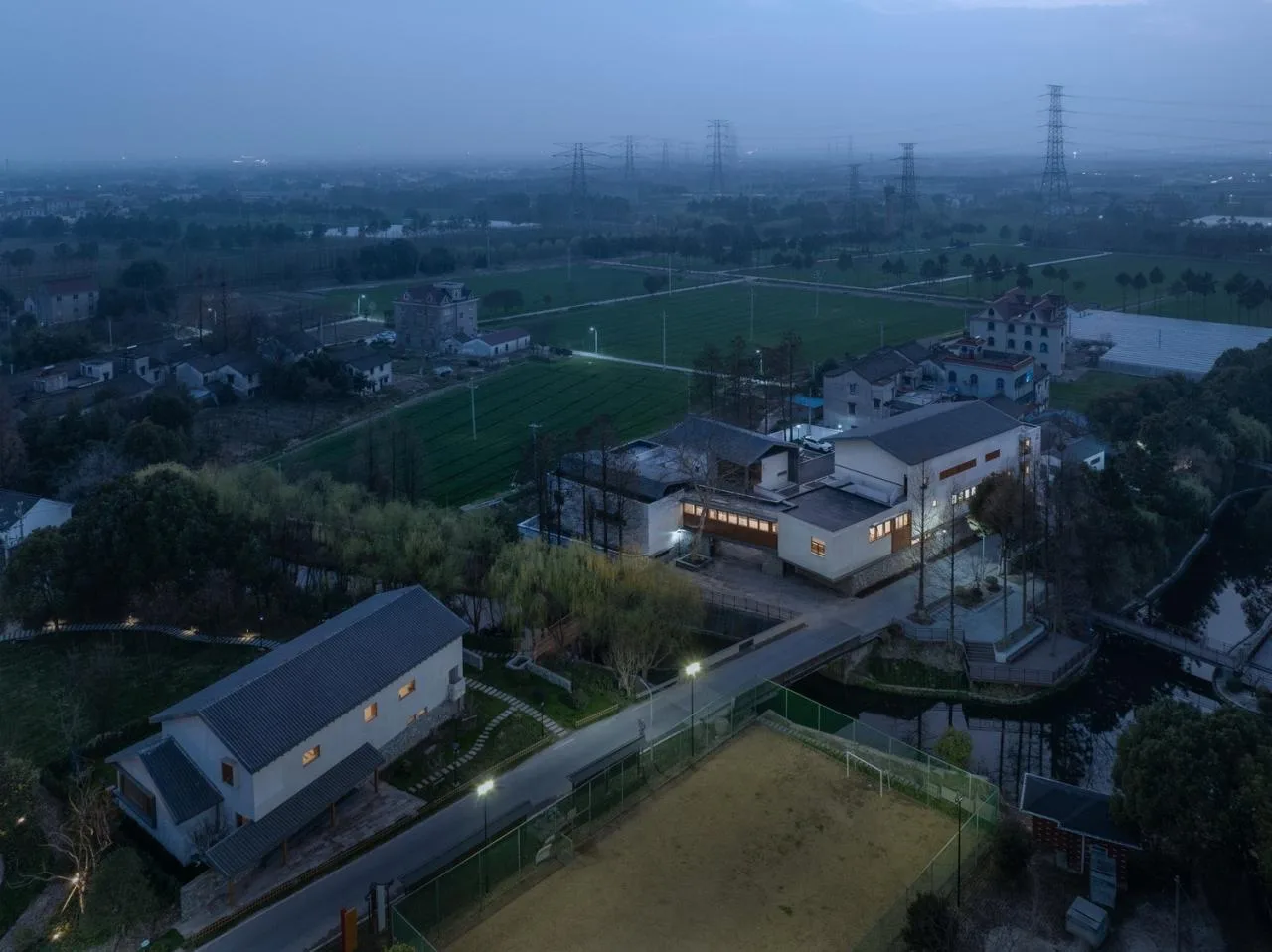
△ Waterfront and Bridge
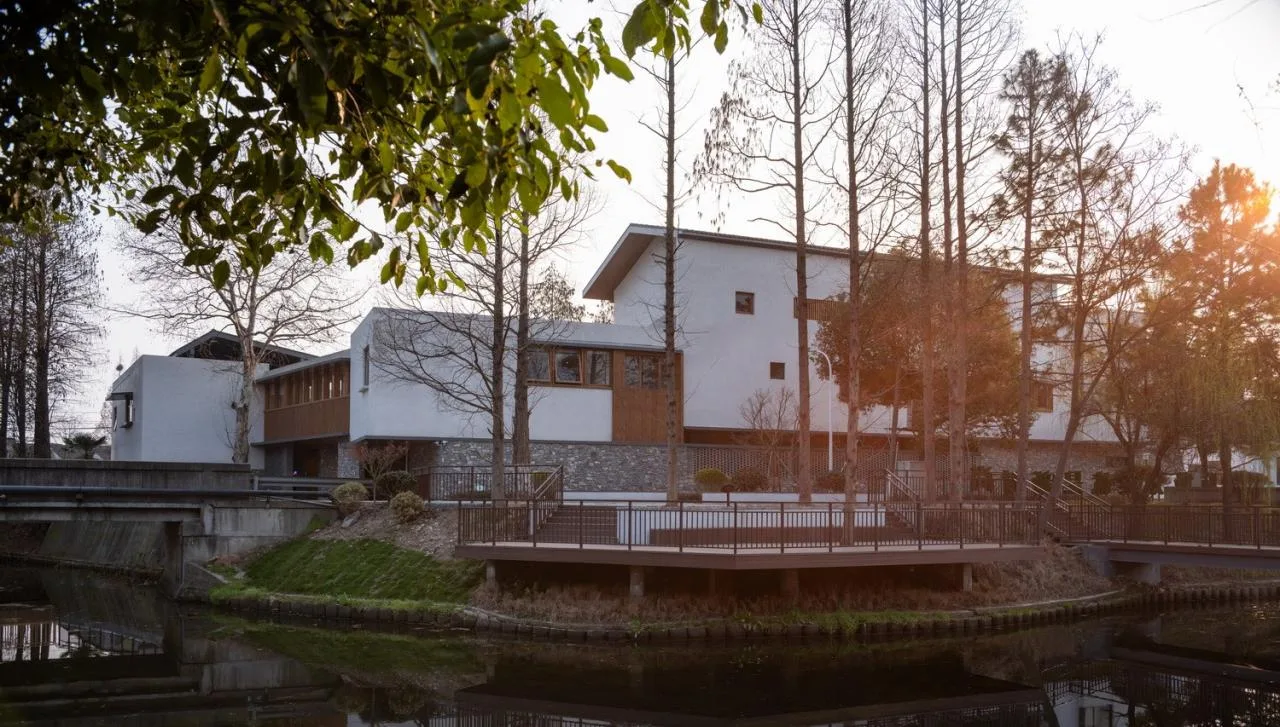
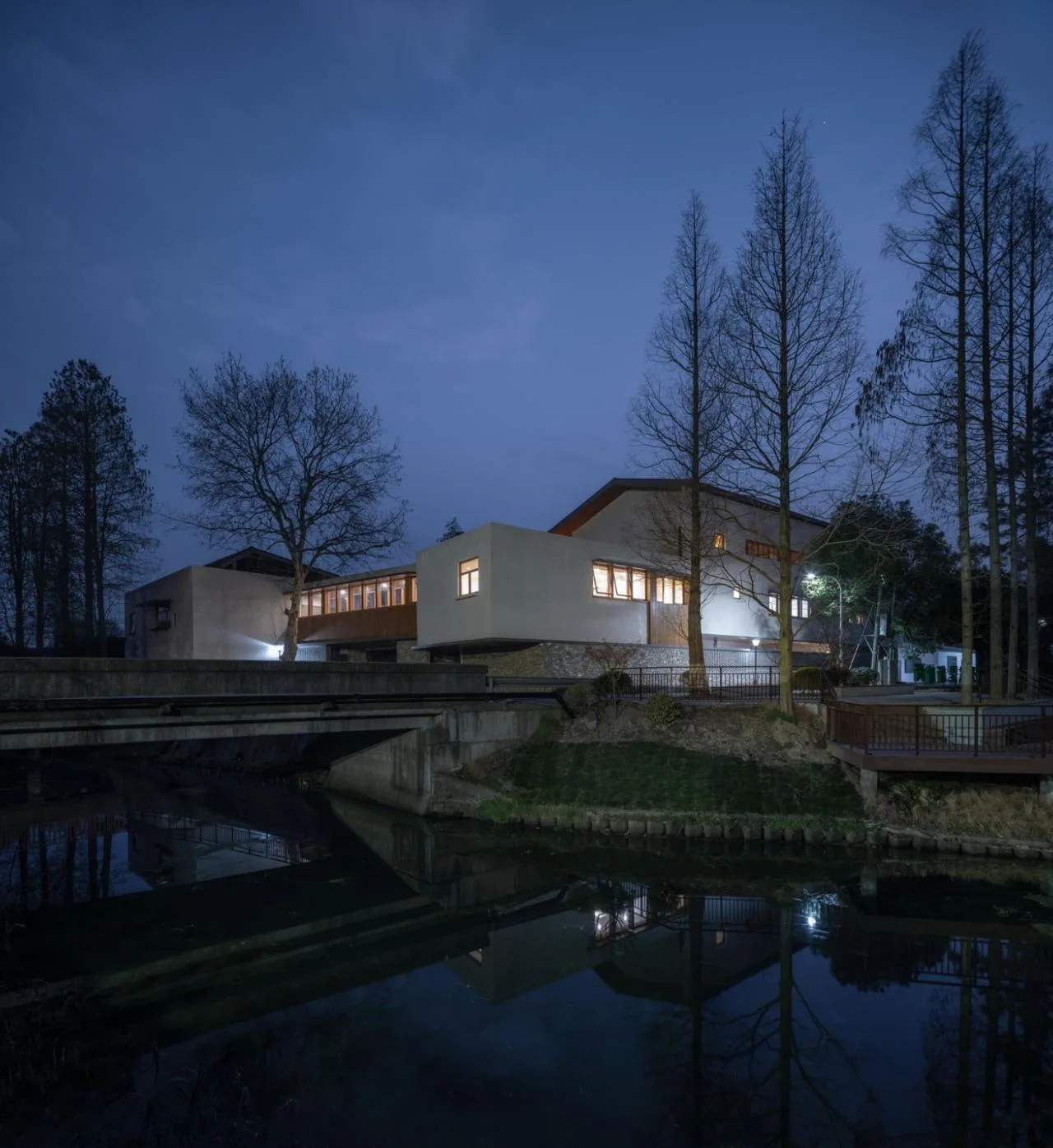
The river flows through Longnan Village like a lifeline, while the intersecting roads form a bridge of connectivity. The bridge, a hallmark of water towns, symbolizes the cultural essence of the village. Leveraging the unique environmental features, the design creates multi-layered spatial experiences through revetments, rivers, steps, and more. Crossing the river via the bridge leads visitors into the main facility, where the architectural form resembles a “bridge” with the courtyard as its heart, seamlessly linking new and old buildings and diverse functional zones.
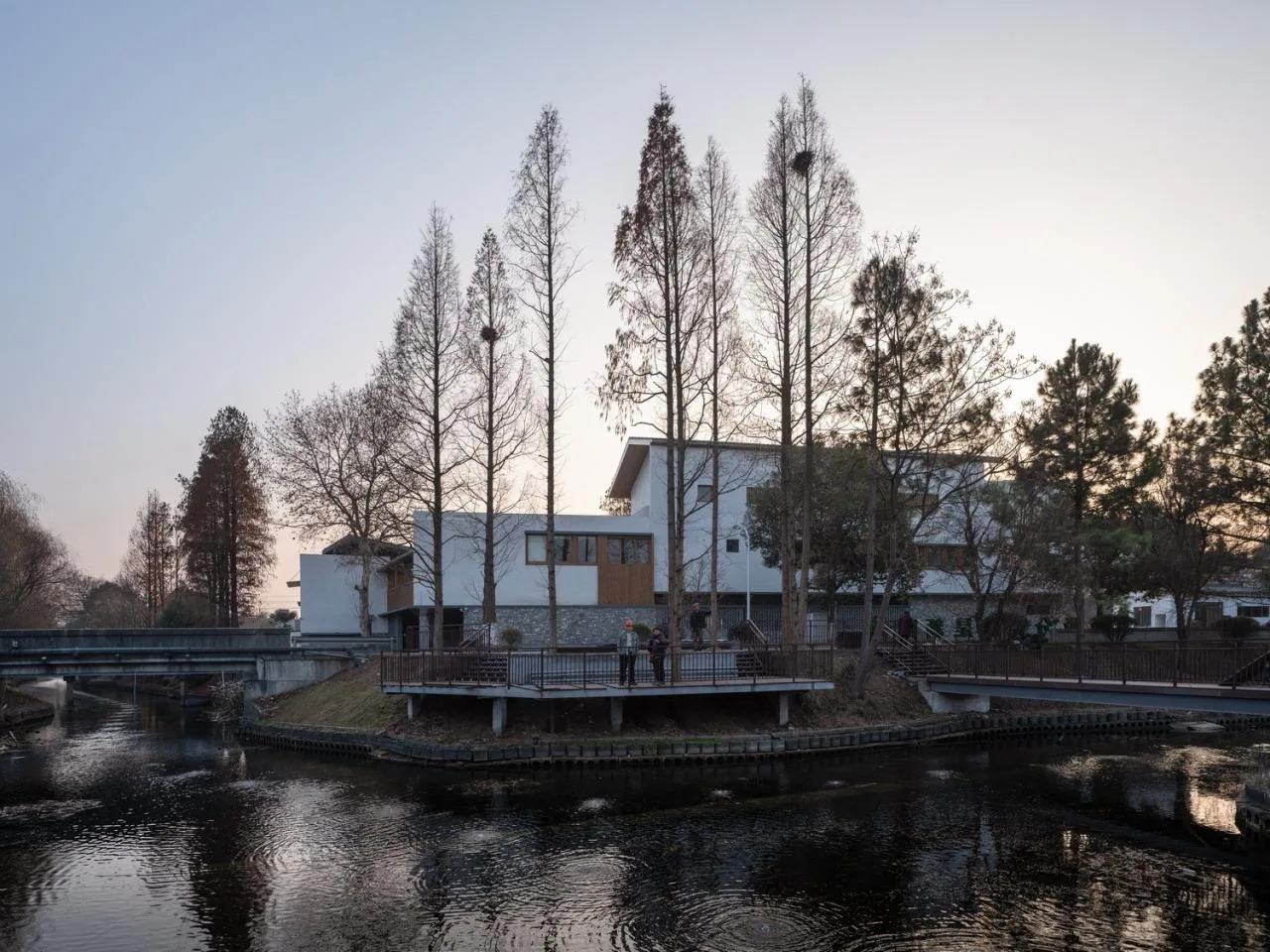
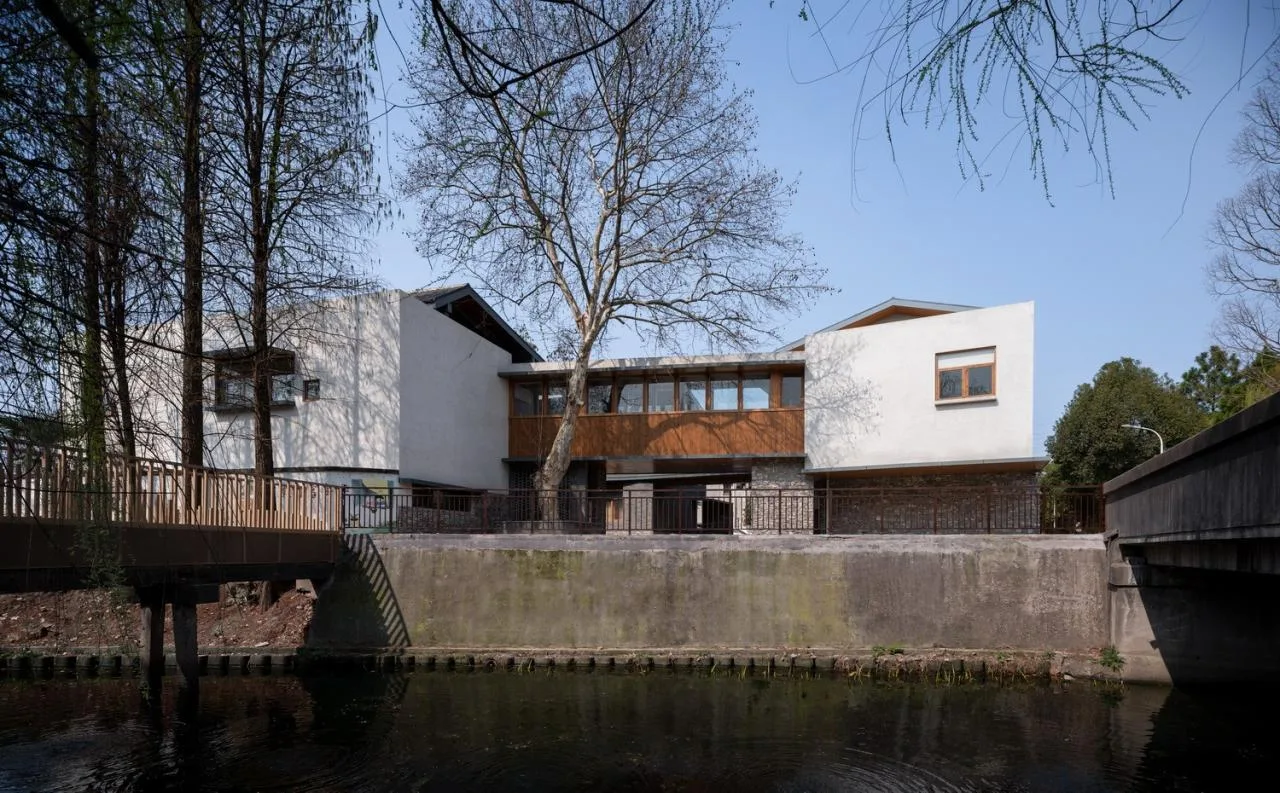
The “bridge house” beside the waterfront
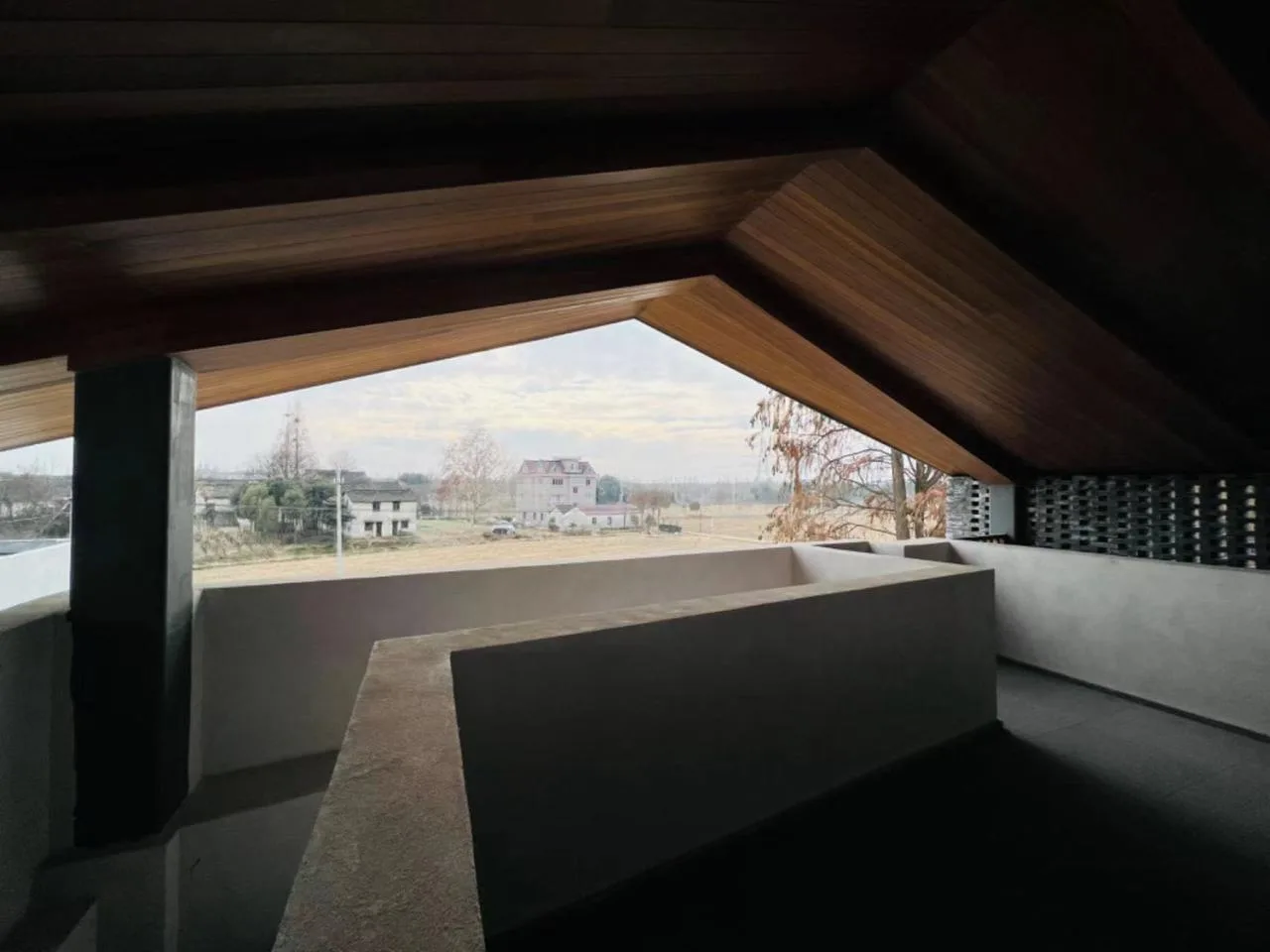
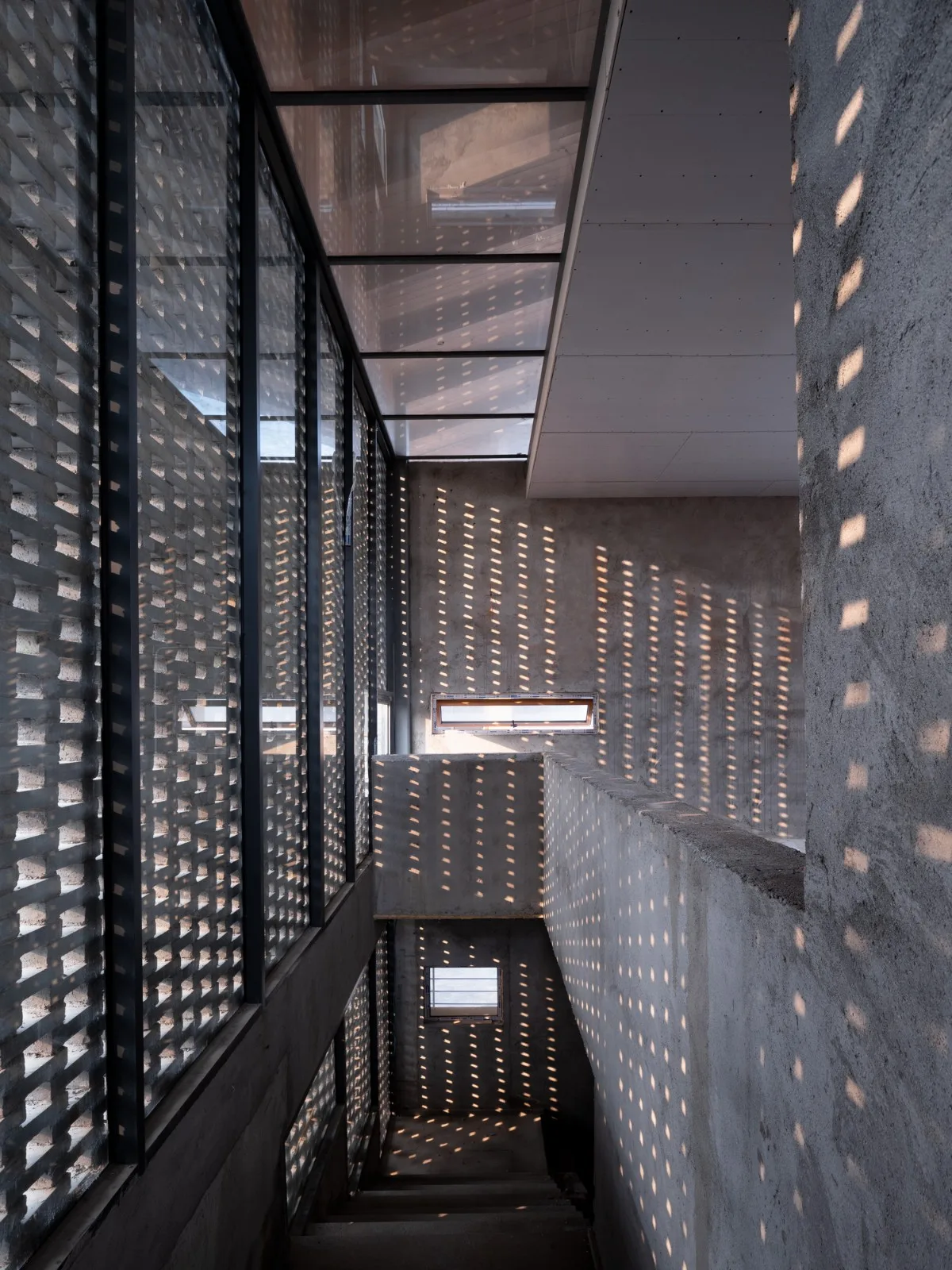
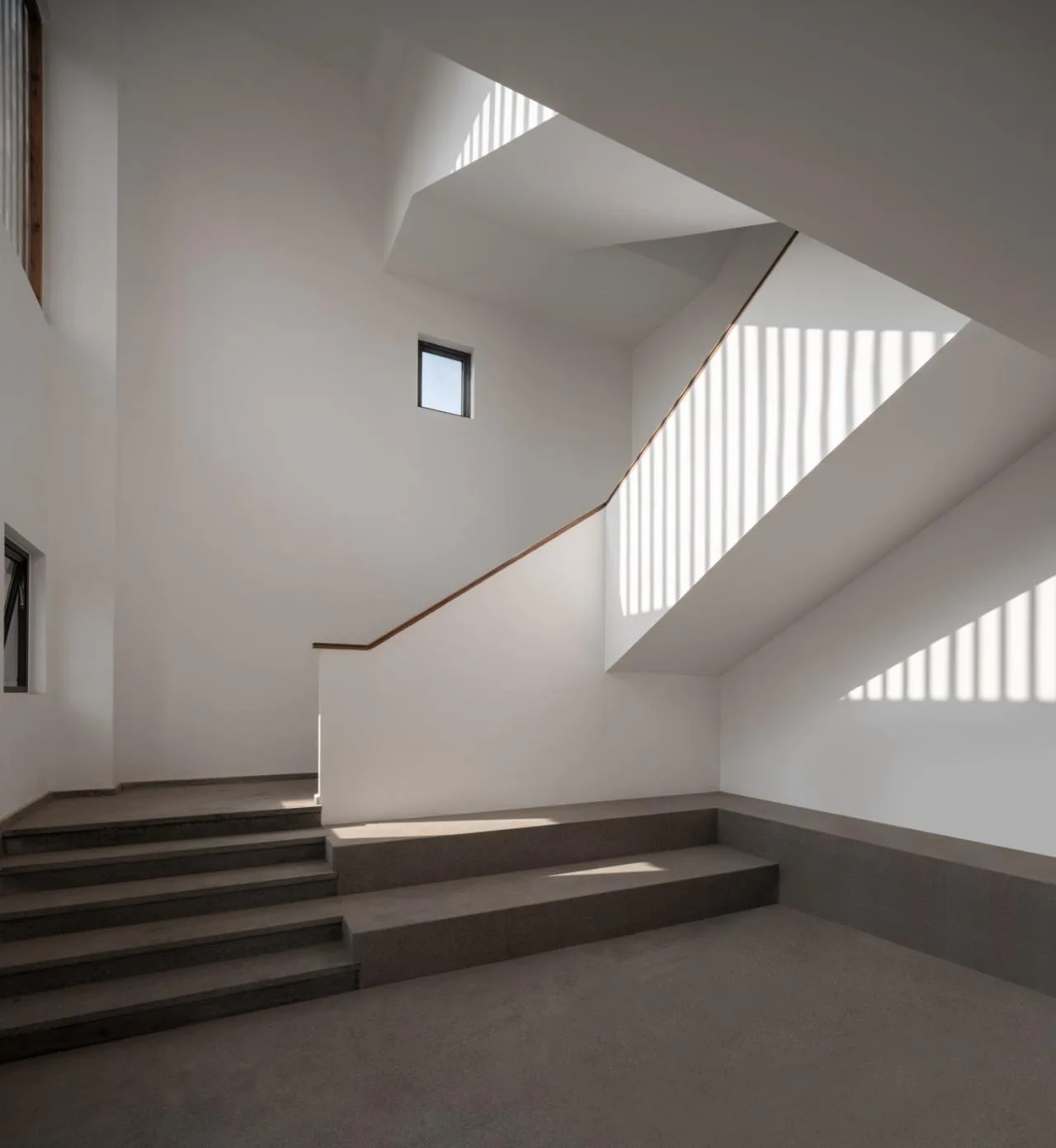
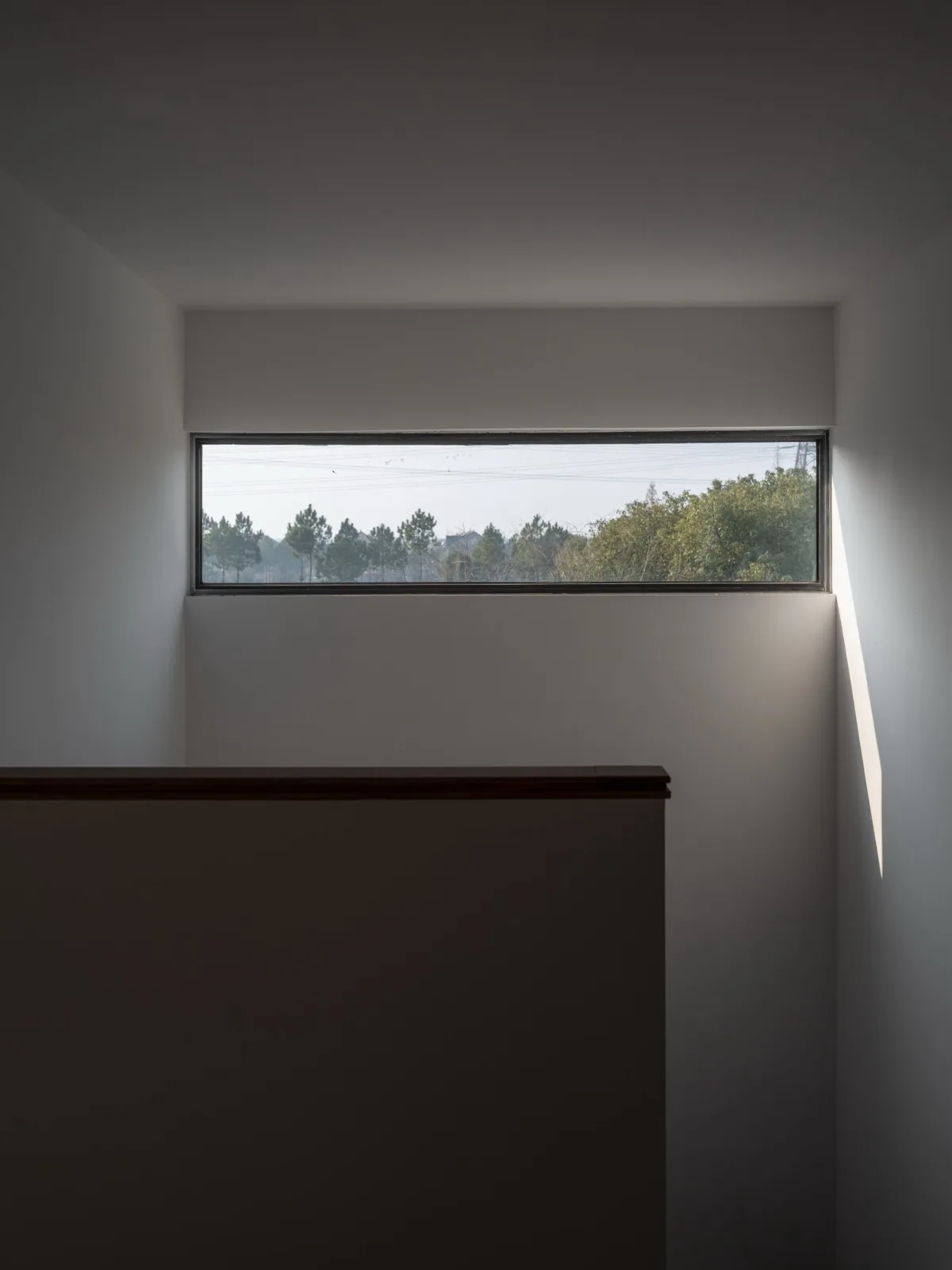
The bridge system includes exterior corridors, connecting walkways between building clusters, and interior corridors, with the main traffic flow running throughout the courtyard and building complex. Terraces, semi-outdoor spaces, and entrance halls are strategically placed at turning points and key junctions along the path to facilitate smooth transitions in space and function. This cohesive circulation network also gathers vertical transportation elements, guiding visitors from the entrance through the courtyard, exhibition halls, and up to the rooftop platform—each serving as important spatial nodes in the visitor journey.
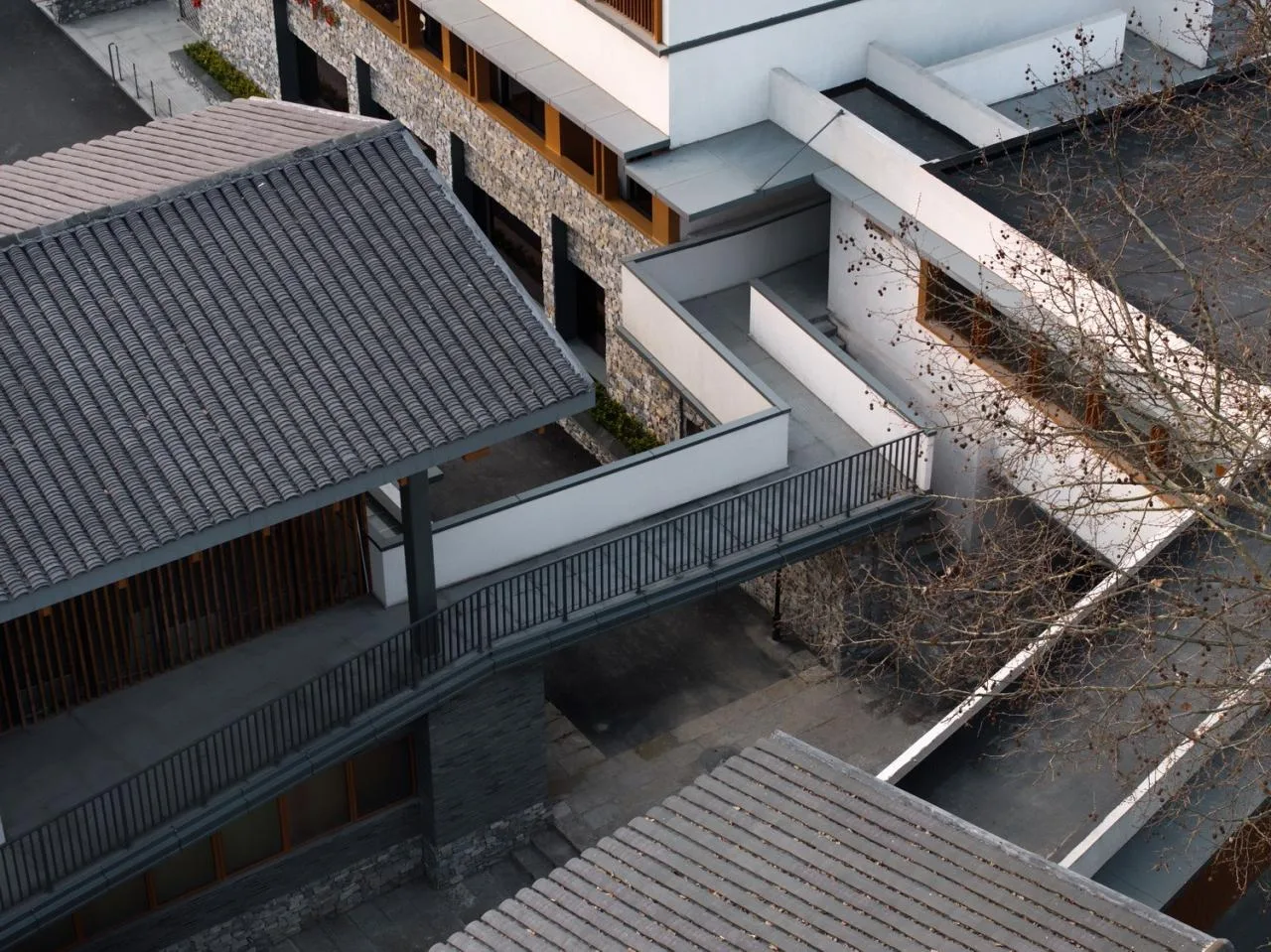
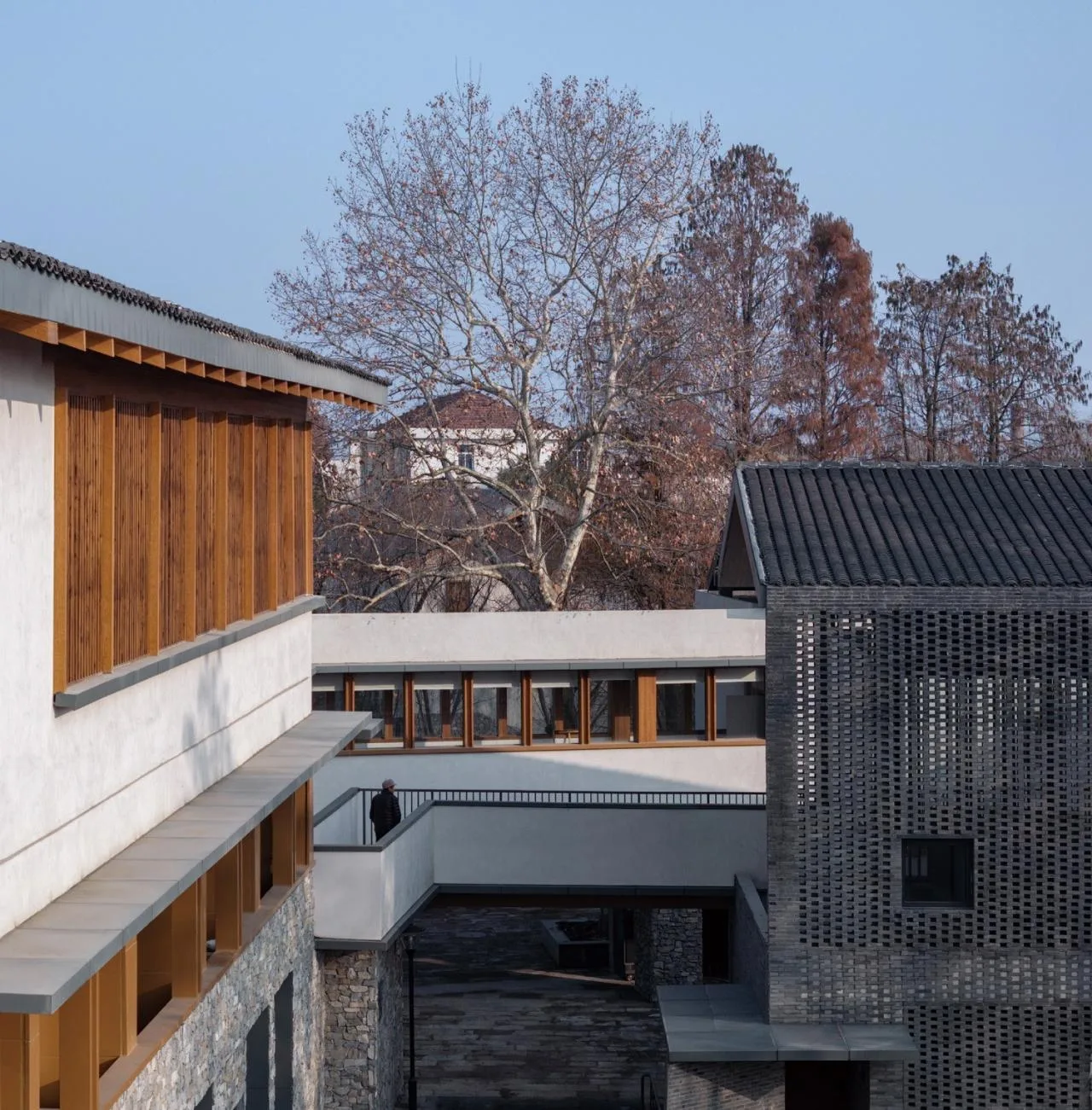
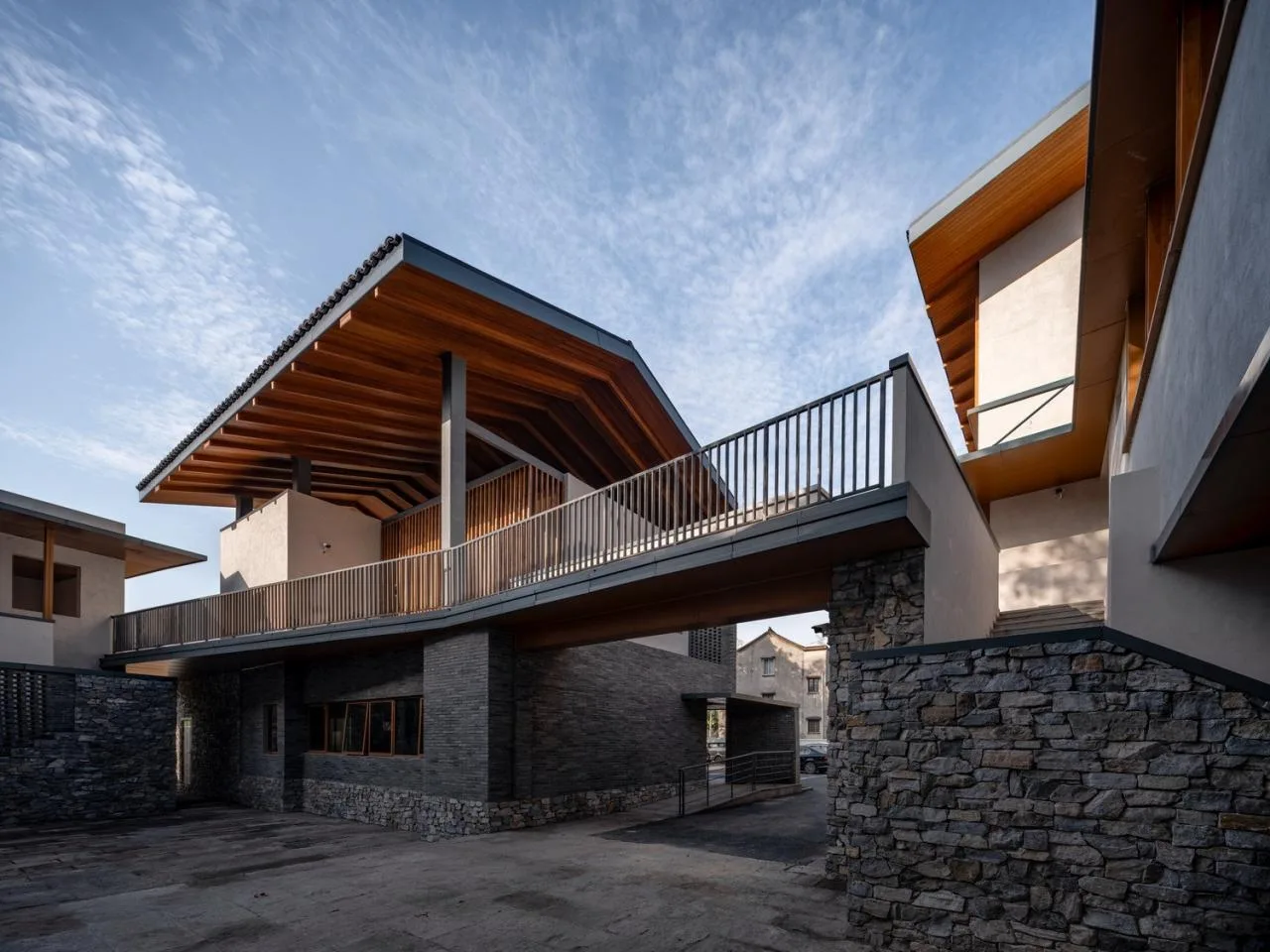
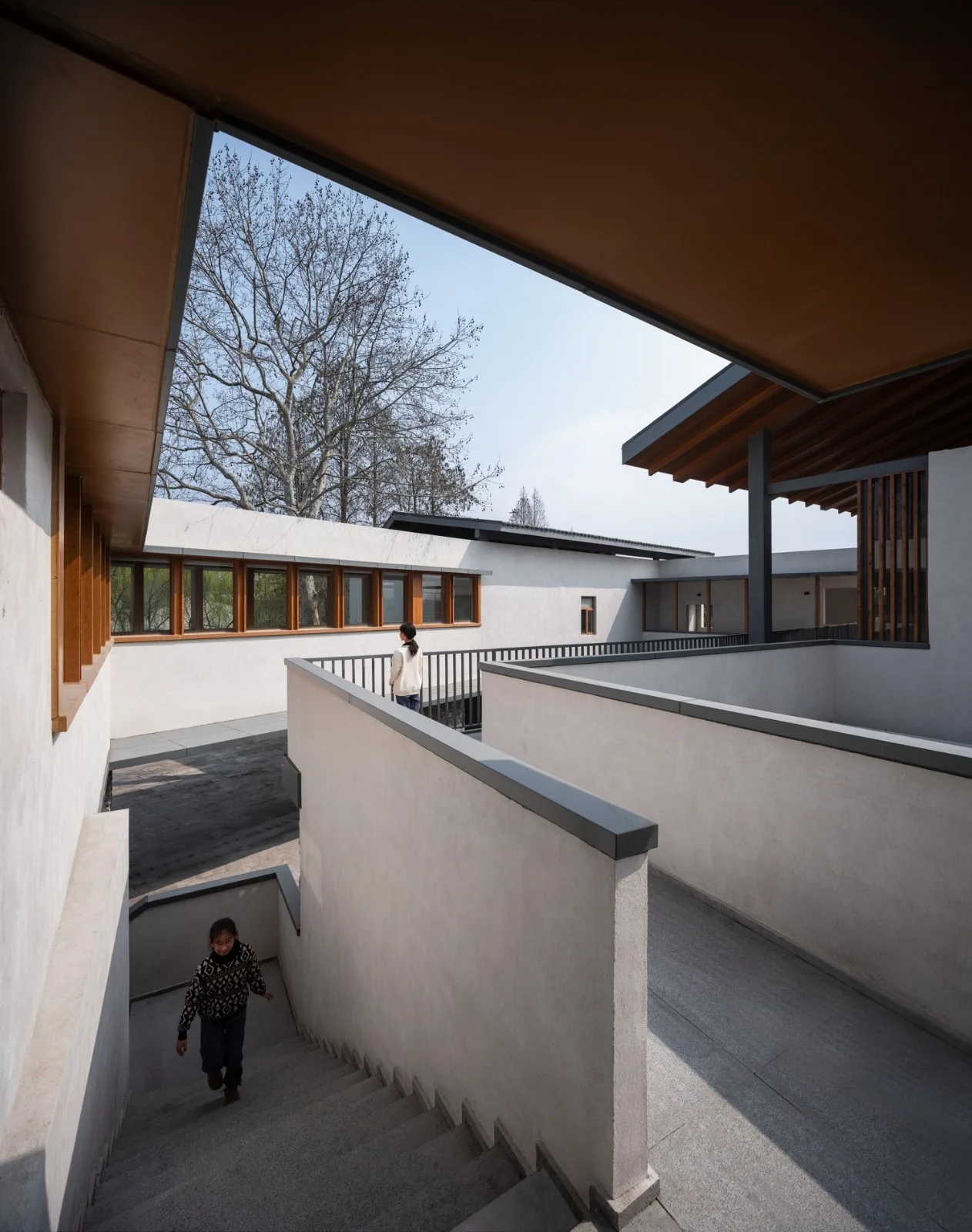
△ “Bridge” system
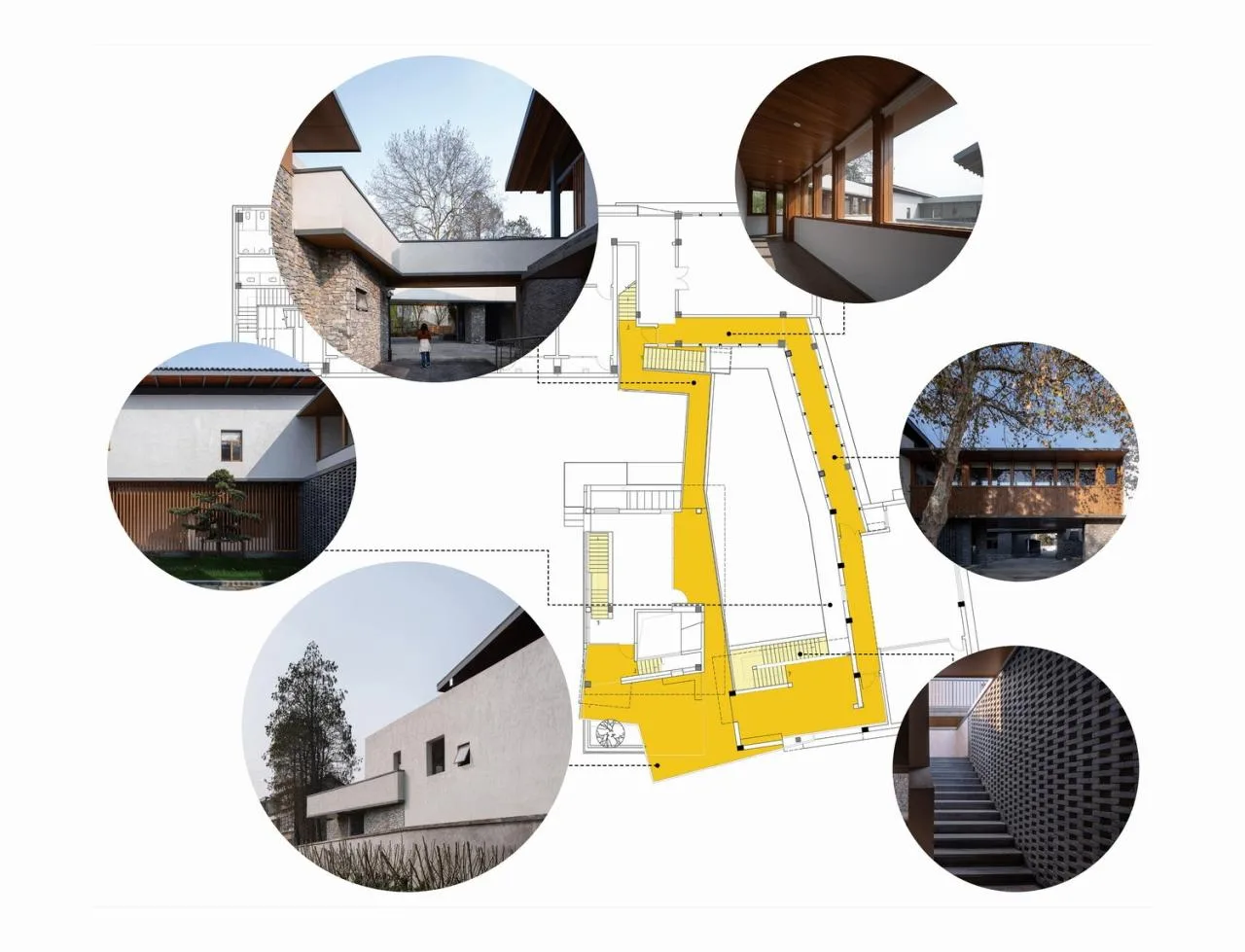
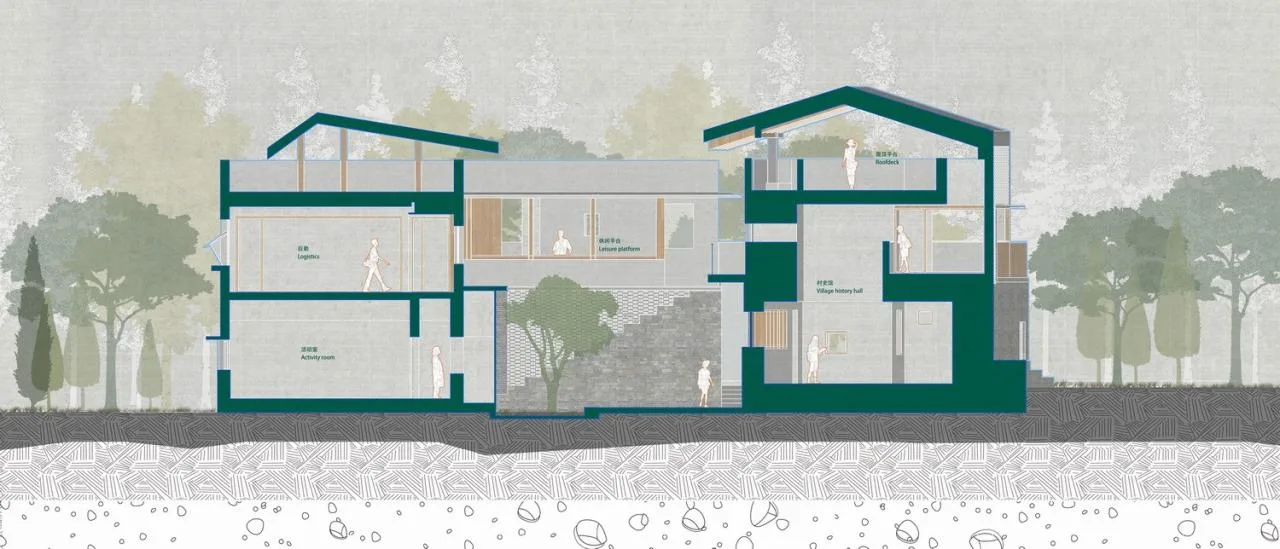
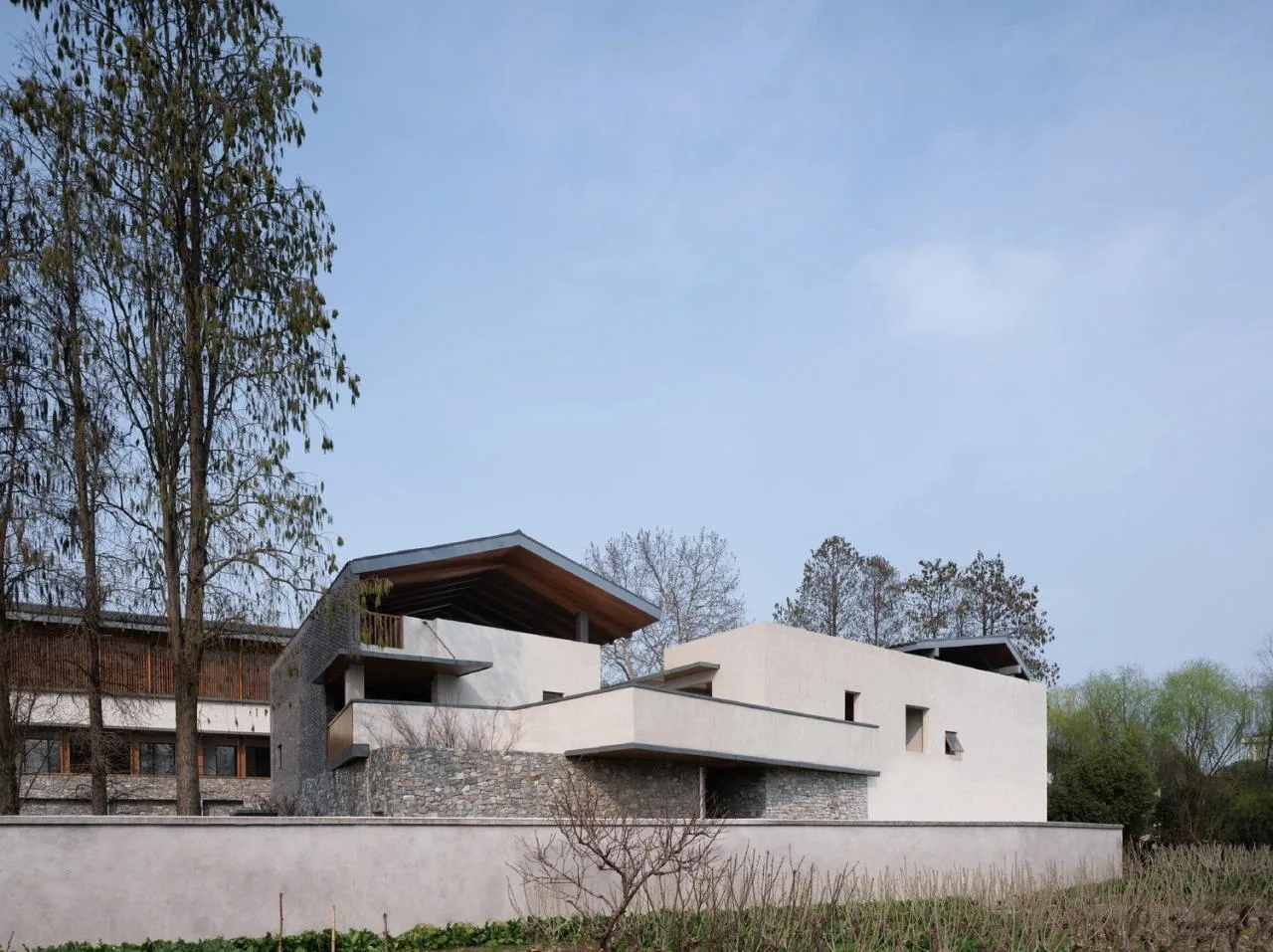
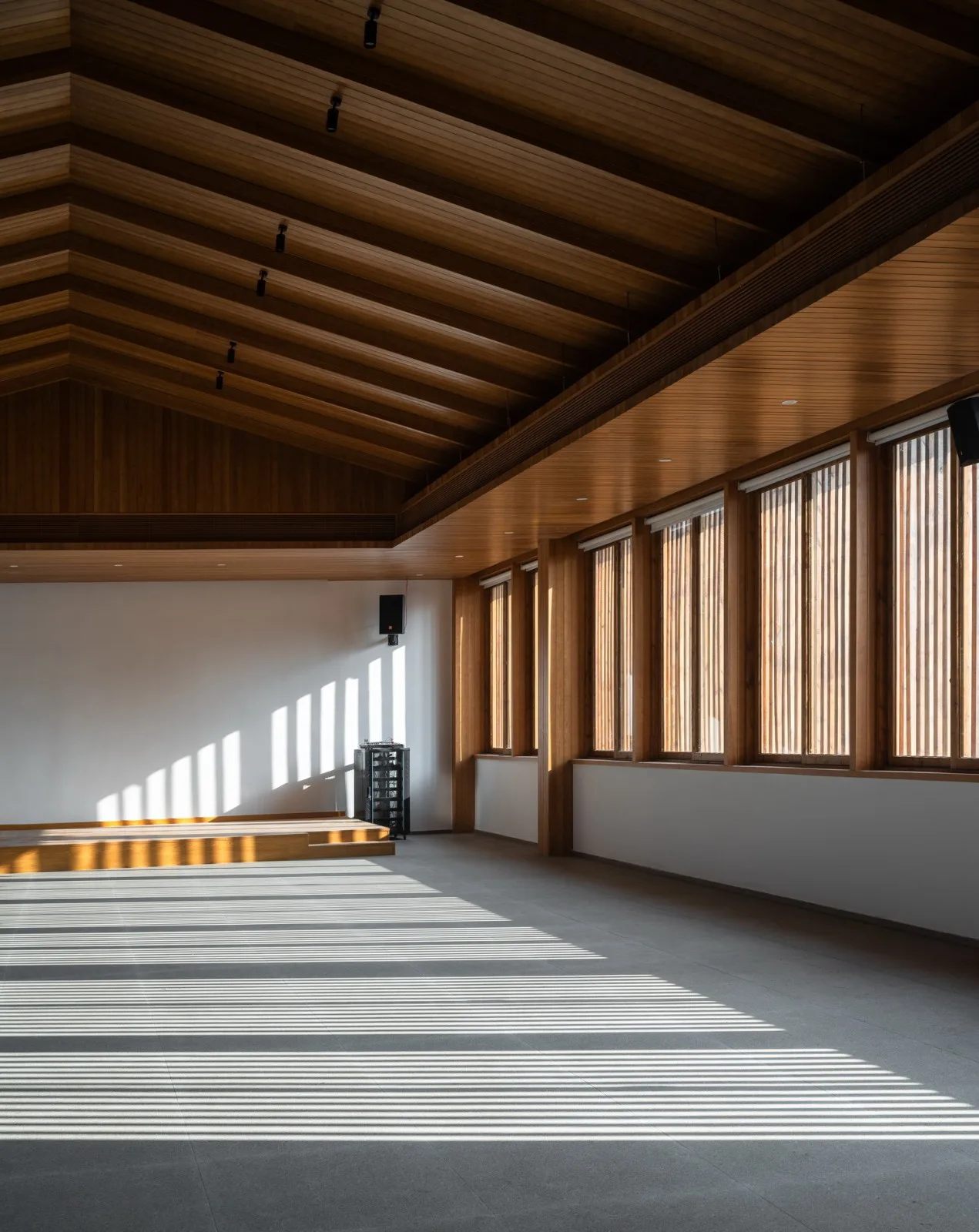
The main building functions as an office service area, including a reception hall, offices of various sizes, and a large conference room. The second floor connects to the logistics support area via a corridor in the original building. Unlike a standalone office area, the village history museum emphasizes openness and spatial continuity with the riverside environment. Entrance and exit platforms connect to corridors featuring twists and turns, combined with steps and stairs, guiding visitors smoothly through the different building spaces. The “Bridge House” continues to narrate the story of Longnan Village through its architecture and spatial experience.
Map: Cultural Map
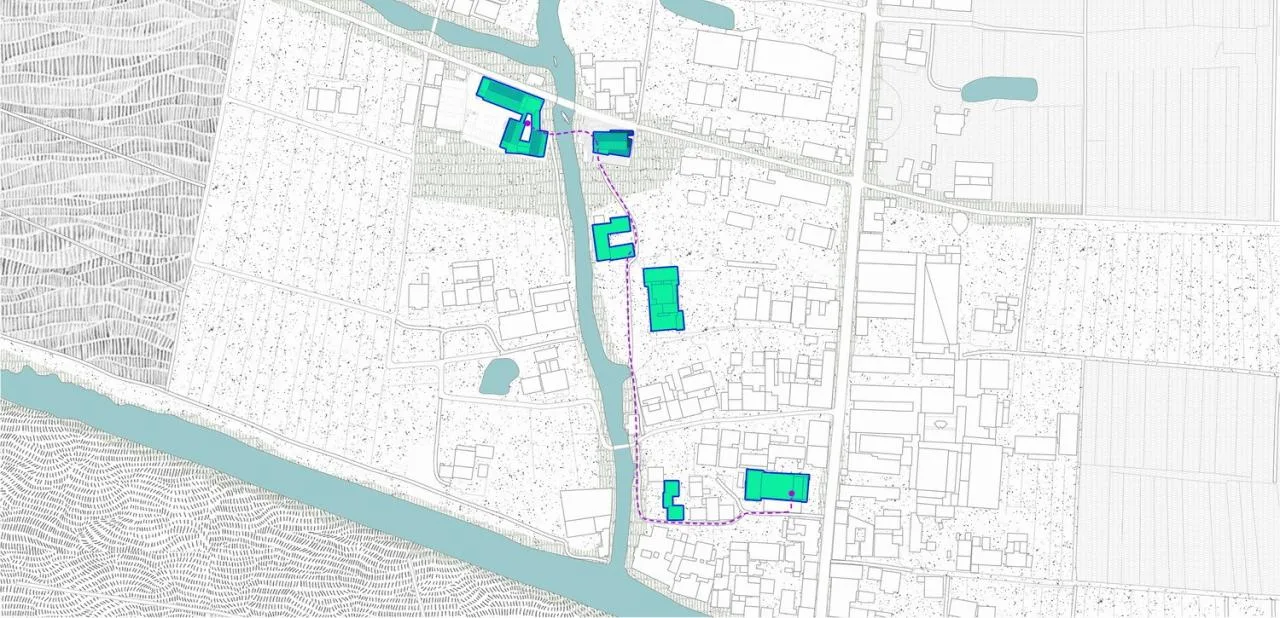
In recent years, Longnan Village has actively explored its unique cultural heritage through various events such as the “Most Beautiful Family” contest, the “Ten Zhejiang Style Gifts” lecture series, and the “Changing Customs and Traditions” forum. Along the riverside, courtyard settlements with rich humanistic and artistic features have emerged, including Baoyuejing Art Museum, Bohong Bookstore, Chenjiating, and Expert Study Homestay. Upon completion, the Party and Mass Center will serve as a vital cultural node on Longnan Village’s cultural map, forming part of a tourism route that integrates travel, training, publicity, and education. This project continues to write a new chapter in rural cultural history, fostering the inheritance, innovation, and development of traditional culture.
Project Drawings
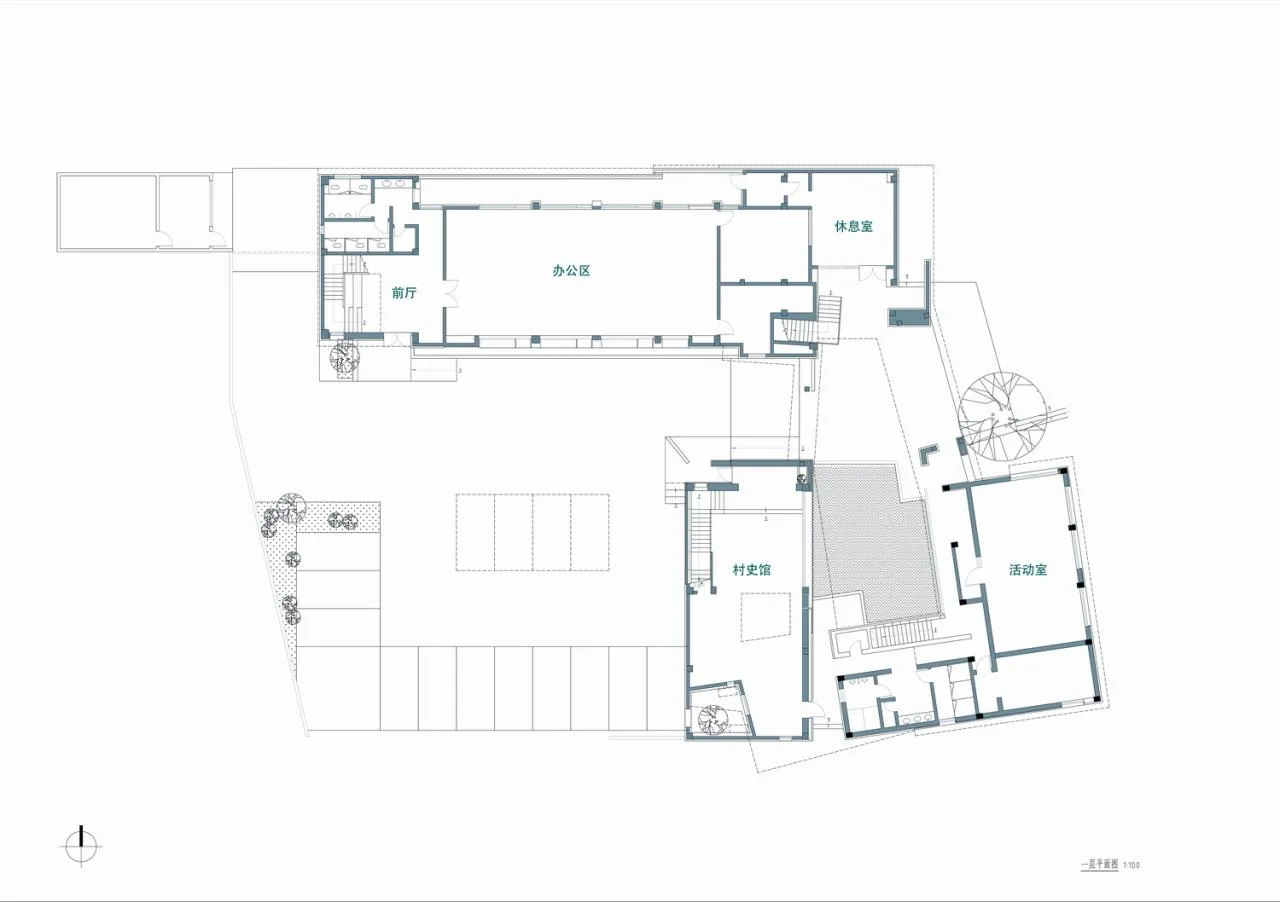
△ First floor plan
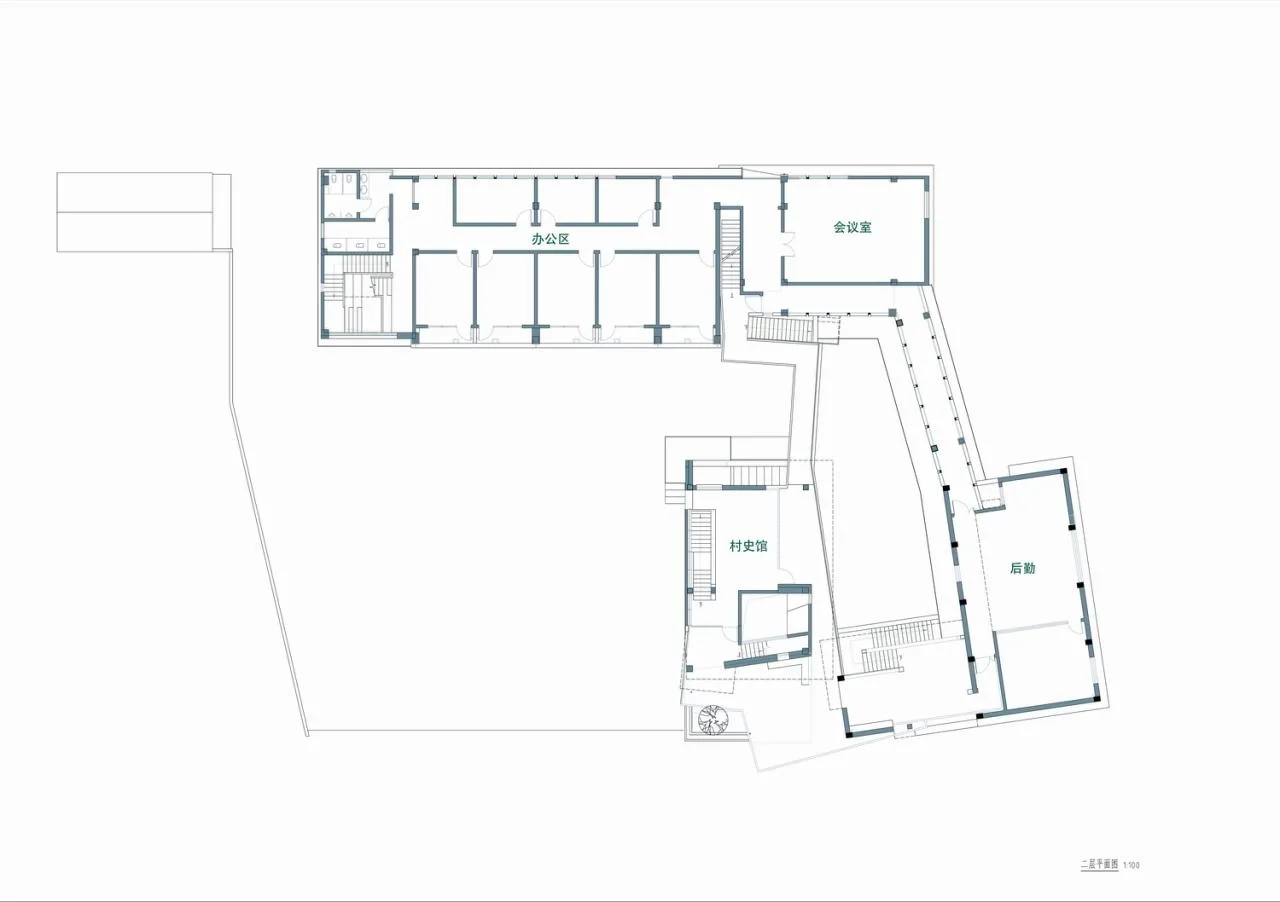
△ Second floor plan
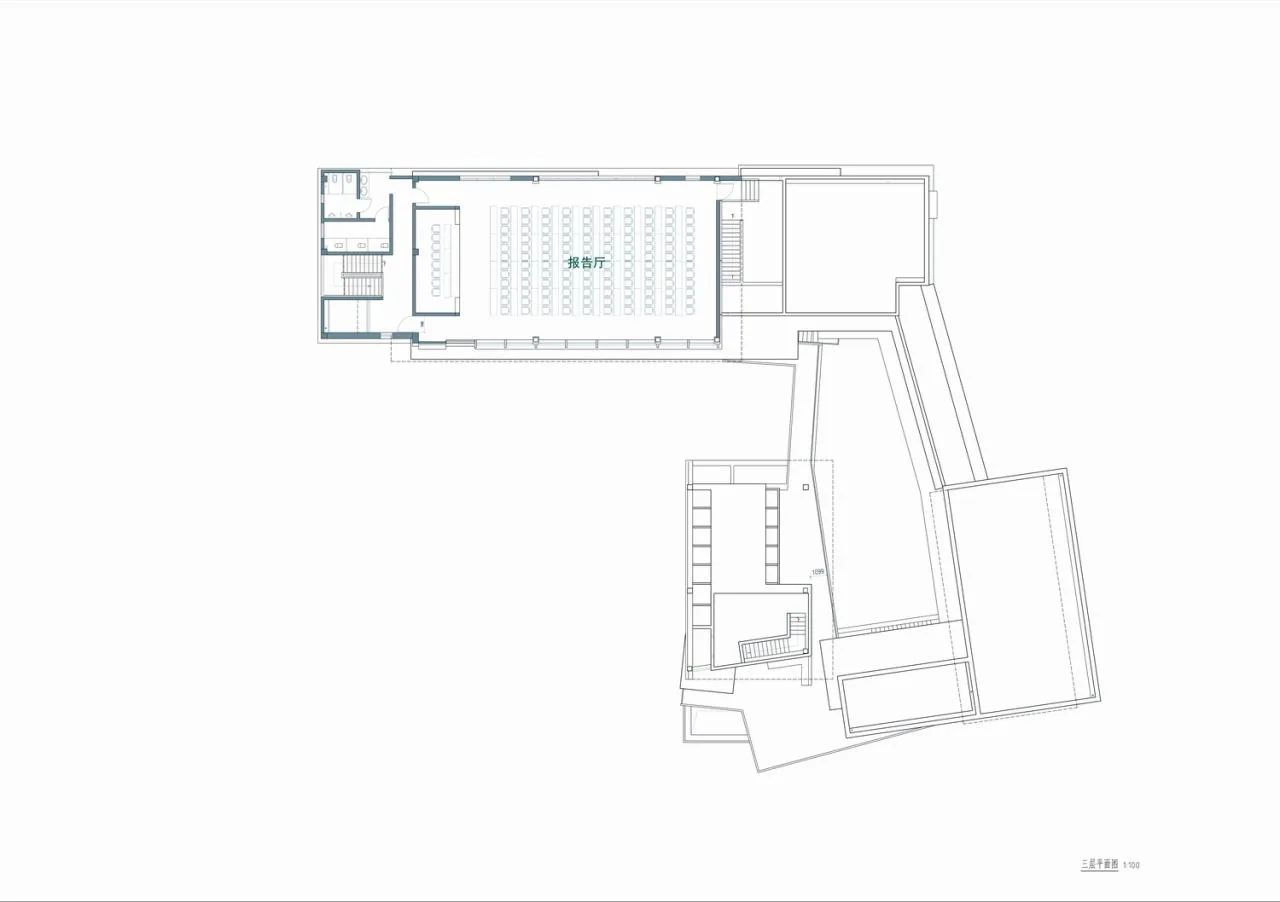
△ Third floor plan
Project Information
Project Name: Longnan Village Party and Mass Center
Project Type: Architectural Design
Designer: Forest Architecture
Design Date: September 2022
Completion Date: March 2024
Main Design Team: Zhang Juntian, Sun Hongfei, Wang Xin, Ouyang Dan
Collaboration Team: Structural Consultant: Su Qinjun
Project Location: Tongxiang, Zhejiang
Building Area: 2000 square meters
Photography Credit: Wu Qingshan
Client: Longnan Stock Economic Cooperative, Gaoqiao Street, Tongxiang City
Materials: Steel, Concrete, Blue Brick














Must log in before commenting!
Sign Up