
Implementing interactive collaboration solutions within the Architecture, Engineering, and Construction (AEC) industry can significantly reduce costs and deliver rapid returns on investment. This finding is supported by research conducted by the Center for Facility Integration Engineering (CIFE) at Stanford University, illustrating the strong support for these technologies among architectural design firms. According to the study, the payback period for such investments ranges from as little as one week to no more than two months. Furthermore, real-world case studies show that companies employing interactive collaboration technologies have experienced net revenue increases of nearly 20%.
CIFE commissioned an economic impact study for SMART Technologies (NASDAQ: SMT) (TSX: SMA), surveying 54 participants, including professionals from architectural design firms and students from Stanford University’s BIM School. The findings indicate that every company implementing interactive collaboration solutions saw tangible benefits. For example, one contractor reduced costs by almost $3 million, while a design firm saved close to $300,000.
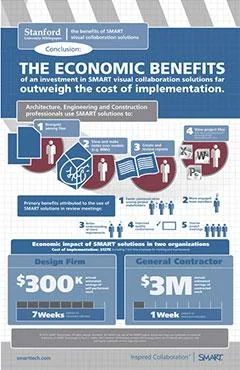
John Kunz, Executive Director of CIFE at Stanford University, commented: “Our survey demonstrates that users of advanced interactive collaboration solutions deeply value the significant advantages these technologies bring to design and construction. The analysis provides convincing evidence that interactive technology is ideally suited for this industry.”
The study, titled “User Maturity and Actual Benefit Enhancement Report of SMART Whiteboard Interaction Technology in the Field of Interactive Technology,” was published on Stanford University’s intranet. Among organizations already utilizing SMART solutions, the survey revealed a substantial reduction in communication time and improved alignment with client expectations. The data affirms that SMART’s advanced technology is a key factor in lowering costs and increasing net income.
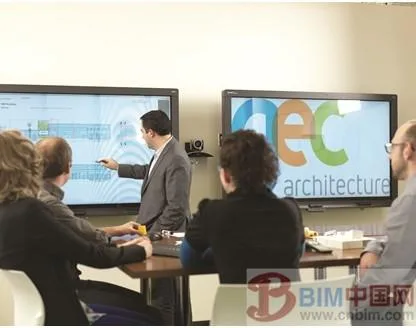
Ken Cartier, Partner and Chief Architect at GEC Architecture—one of North America’s most established architectural firms—shared his perspective: “After integrating the SMART interactive whiteboard and SMART Bridget software, we have achieved substantial returns on investment. The SMART interactive solution allows our team and clients to access detailed design drawings at any time, offering a powerful and convenient collaborative experience. This is especially valuable in meetings, making discussions more effective and productive. In fact, we can recoup our investment in SMART solutions with the successful completion of just one project.”
The study also evaluated the economic impact of SMART’s interactive collaboration solutions by analyzing cost savings, economic value, and equipment investments. Investment costs were detailed into training for team interaction and communication, capital expenditures, and labor costs. Additional benefits for users include:
• Enhanced team connectivity
• Real-time communication among partners
• Better understanding of client requirements
• More efficient project meetings
• Fewer Requests for Information (RFIs)
• Increased consistency in equipment standards
• Improved security
Scott Brown, Business Product Manager at SMART Technology, stated: “The SMART interactive collaboration solution, compatible with CAD and BIM software, offers significant advantages to the AEC industry. Supported by quantitative research from Stanford University, this study demonstrates how SMART products enable users to collaborate interactively, boost productivity and efficiency, and reduce operational costs.”

Stanford Center for Facility Integration Engineering (Stanford CIFE)
Founded in 1988 by Stanford University’s Departments of Civil Engineering and Computer Science, CIFE is a multidisciplinary center focused on researching and developing information technologies, tools, and methodologies. The center’s mission is to advance scientific research that increases productivity in the construction industry, supports industry digitalization, enhances the value of built facilities throughout their lifecycle, improves project team performance, and promotes sustainability in the built environment. CIFE’s research is recognized as leading in these fields worldwide.














Must log in before commenting!
Sign Up