
Prefabricated concrete components can develop cracks, but the causes vary depending on the location. Understanding these causes helps prevent the need for sealing in prefabricated projects.
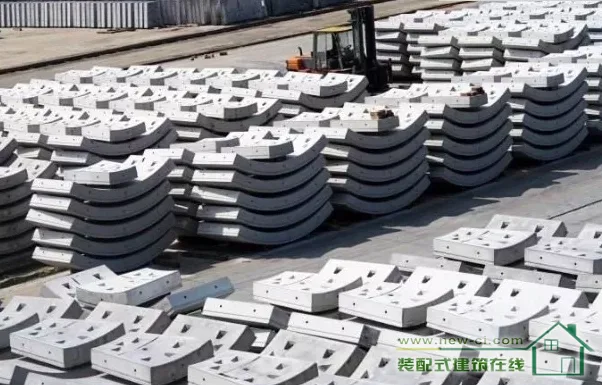
Cracks Caused During Production
Cracks may form during the manufacturing process of prefabricated components due to issues such as template leakage, improper vibration, material leakage, or inadequate quality control. Common defects after production include missing or uneven edges and corners, warping, protruding ribs, rough surfaces, peeling, sanding, contamination, honeycombing, and holes.
Although prefabrication plants have quality inspection systems, components not meeting standards might still develop cracks later due to environmental factors or other external conditions once they leave the factory.
Additionally, large-span prefabricated panels are vulnerable to compression during transport or excessive bending during lifting, which can cause cracks or damage that may extend across the entire panel. Special care is required in producing and handling large-span components, and construction teams should pay particular attention during material customization.
Cracks Caused by Installation
Cracks may occur in various parts during installation, with causes and solutions differing by area. The following sections focus on floor slabs, roofs, and walls.
Floor Area
There are multiple reasons for floor slab cracks. For example, failing to grout or uneven grouting before installing the floor slab reduces the constraint on the slab, causing instability. During construction, diagonal shaking or twisting can accelerate longitudinal cracking.
Moreover, improper adjustment of slab joints after installation can cause some joints to be too narrow or blind, making the joints overly dense and impairing their ability to transfer forces effectively. Floating ash on slab edges may also weaken the bond between the concrete and slab, reducing adhesion strength.
Roof Panel Area
1. Direct Causes Related to Assembly
- Poor installation and improper overlapping of roof tiles on reinforced concrete lightweight roofs.
- Loose filling of fine stone concrete and mortar between joints of hollow slabs and large roof panels.
- Displacement of roof panels due to various factors causing cracks.
- Inadequate extension or adhesion of waterproof coatings and joint materials, leading to tearing or detachment.
- Poor construction quality of waterproof coatings, resulting in bubbles, delamination, damage, and weak bonding of joint materials.
- Aging and cracking of waterproof coatings and joint materials.
2. Indirect Causes
- Lack of appropriate measures for concealed pipe installation within panel joints. Insufficient joint width and varying conduit thickness can cause conduits to get stuck, resulting in uneven joint filling and poor joint integrity.
- Following up sealing immediately with subsequent processes without adequate technical intervals. For example, filling joints immediately after floor slab installation and then constructing the upper structure can cause slab deflection under load before joint concrete gains sufficient strength, compromising force transmission.
- Excessive local loads during construction, such as concentrated material stacking, can overload floor slabs causing deformation and hidden risks for joint cracking.
Wall Area
- Poor curing practices, such as not moistening joints before filling, cause rapid dehydration of joint mortar on dry surfaces, reducing joint mortar strength and weakening force transmission.
- Improper removal of temporary supports at beam cantilever sections. Formwork should only be removed when concrete reaches full design strength.
- Weak bonding between surface layers and floor slabs, coupled with poor stiffness of prefabricated floor slabs.
Cracks Caused by Material Factors
Variations in cementitious materials and fine aggregates during manufacturing contribute to increased cracking. Due to the scarcity of natural sand, medium sand suitable for production is hard to obtain, leading to increased use of fine sand, mountain sand, and manufactured sand. Because fine aggregates require strict quality standards, concrete made with these alternative sands is more prone to cracking.
Solutions and Preventive Measures
- Enhance Quality Inspection: Ensure floor slabs have proper certification before site delivery. Conduct spot checks on deviations, surface quality, and concrete density. Remove slabs with significant thickness differences or visible cracks. Avoid installing prestressed slabs with joints.
- Ensure Proper Grouting: When installing concrete floor slabs, grout gaps fully, level the slabs, and secure them firmly. Grout thickness should be 10-15mm, with flat supports and consistent slab bottom heights. Lift slabs into place in one go. If not feasible, level the floor post-installation and address grout deficiencies when adjusting joints.
- Joint Filling Timing: After installing prefabricated floor slabs as per design, fill joints only after the main structure of the previous floor is complete to prevent deformation and cracking. Similarly, upper structures should be constructed only when roof panel joints have gained sufficient strength.
- Pre-Jointing Preparation: Clean joints thoroughly by removing debris such as wood or brick slag, rinse with clean water, and use hard, non-deformable materials as backing for joint molds.
- Quality Control of Joint Filling and Curing: Ensure joint filling materials meet quality standards and curing processes are properly followed.
- Control Construction Loads: Distribute materials evenly and feed in batches to avoid excessive local loads. When load reduction is not possible, provide temporary supports beneath the floor slabs.
Article source: Prefabricated Building Online












Must log in before commenting!
Sign Up